ManualGo.com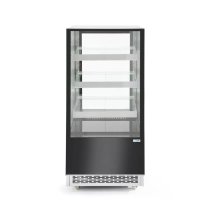
233320 - Fridge Arktic - Free user manual and instructions
Find the device manual for free 233320 Arktic in PDF.



| Technical specifications | Arktic 233320 refrigerator with a capacity of 230 liters, energy class A++, dimensions 60 x 60 x 185 cm, static cooling system. |
|---|---|
| Usage | Designed for domestic use, ideal for keeping fresh food and drinks at an optimal temperature. |
| Maintenance and repair | Regular cleaning of interior and exterior surfaces, checking door seals, defrosting if necessary. |
| Safety | Equipped with an overload protection system, compliant with electrical safety standards. |
| General information | 2-year warranty, annual energy consumption of 200 kWh, noise level of 42 dB. |
Frequently Asked Questions - 233320 Arktic
Download the instructions for your Fridge in PDF format for free! Find your manual 233320 - Arktic and take your electronic device back in hand. On this page are published all the documents necessary for the use of your device. 233320 by Arktic.
USER MANUAL 233320 Arktic
Dear Customer, Thank you for purchasing this Arktic appliance. Before using the appliance for the first time, please read this manual carefully, paying particular attention to the safety regulations outlined below. Safety regulations
- This appliance is intended for commercial use only.
- The appliance must only be used for the purpose for which it was intended and designed. The manufacturer is not liable for any damage caused by incorrect operation and improper use.
- Keep the appliance and electrical plug away from water and any other liquids. In the event that the appliance should fall into water, immediately remove plug from the socket and do not use until the appliance has been checked by a certified technician. Failure to follow these instructions could cause a risk to lives.
- Never attempt to open the casing of the appliance yourself.
- Do not insert any objects in the casing of the appliance.
- Do not touch the plug with wet or damp hands.
Danger of electric shock! Do not attempt to repair the appliance yourself. In case of malfunctions, repairs are to be conducted by qualified personnel only.
- Never use a damaged appliance! Disconnect the appliance from the electrical outlet and contact the retailer if it is damaged.
- Warning! Do not immerse the electrical parts of the appliance in water or other liquids. Never hold the appliance under running water.
- Regularly check the power plug and cord for any damage. If the power plug or power cord is damaged, it must be replaced by a service agent or similarly qualified persons in order to avoid danger or injury.
- Make sure the cord does not come in contact with sharp or hot objects and keep it away from open fire. To pull the plug out of the socket, always pull on the plug and not on the cord.
Ensure that the cord (or extension cord) is positioned so that it will not cause a trip hazard.
- Always keep an eye on the appliance when in use.
- Warning! As long as the plug is in the socket the appliance is connected to the power source.
- Turn off the appliance before pulling the plug out of the socket.
- Never carry the appliance by the cord.
- Do not use any extra devices that are not supplied along with the appliance.
- Only connect the appliance to an electrical outlet with the voltage and frequency mentioned on the appliance label.
- Connect the power plug to an easily accessible electrical outlet so that in case of emergency the appliance can be unplugged immediately. To completely switch off the appliance pull the power plug out of the electrical outlet.
- Always turn the appliance off before disconnecting the plug.4
- Never use accessories other than those recommended by the manufacturer. Failure to do so could pose a safety risk to the user and could damage the appliance. Only use original parts and accessories.
- This appliance is not intended for use by persons (including children) with reduced physical, sensory or mental capabilities, or lack of experience and knowledge.
- This appliance must not be used by children under any circumstances.
- Keep the appliance and its cord out of reach of children.
- Always disconnect the appliance from the mains if it is left unattended or is not in use, and before assembly, disassembly or cleaning.
- Never leave the appliance unattended during use. Special Safety Regulations
- This appliance is designed for short-time storage and display of foodstuffs such as desserts including cake or packaged food lettuce, vegetables, drinks, fruits, etc. under low temperature. This appliance is capable of con tinuously maintaining the temperature of foodstuffs within prescribed limits at chilled operating temperature. Do not store any other materials in the appliance. Do not place any dangerous products, such as fuel, alcohol, paint, flammable or explosives, etc. inside or near the appliance. No medicine is allowed to keep inside the appliance.
- Products put in the appliance must be already pre-cooled. Otherwise, moisture evaporating while cooling food products can condensate inside the cooling compartment, this is natural and does not indicate any malfunction of the appliance.
- This appliance must be installed, commissioned and services by a qualified or trained person. And this appliance is intended to be used by trained or qualified personnel such as kitchen or bar staff.
- WARNING: Do not use mechanical devices or other means to accelerate the defrosting process, other than those recommended by the manufacturer.
- WARNING: Do not damage the refrigerant circuit.
Caution! Risk of fire! The refrigerant used is R290. It is a flammable refrigerant which is environmentally friendly. Although it is flammable, it does not damage the ozone layer and does not increase the greenhouse effect. The use of this coolant has, however, led to a slight increase in the noise level of the appliance. In addition to the noise of the compressor, you might be able to hear the coolant flowing around the system. This is unavoidable, and does not have any adverse effect on the performance of the appliance. Care must be taken during the transportation and setting up of the appliance that no parts of the cooling system are damaged. Leaking coolant can damage the eyes.
- The foam blowing agent used is C
in this appliance. It is highly flammable.
- WARNING: Keep all ventilation openings in the appliance enclosure clear of obstruction. Provide sufficient ventilation in the surrounding structure when building-in. Never block the air flow suction and air outlet in order to keep air circulation.
- WARNING: Do not use electrical appliances inside the food storage compartments of the appliance, unless they are of the type recommended by the manufacturer.5
- Place the appliance on a clean, stable, dry, level surface only.
- Keep the appliance away from any hot surfaces and open flames. Protect the appliance against heat, dust, direct sunlight, moisture, dripping and splashing water.
- During use, keep 10cm around the appliance free for ventilation.
- Do not use hard utensils on the glass surface. Do not use water jets or steam cleaners during cleaning, do not immerse the whole appliance in water as the parts will get wet and electric shock might be resulted.
- Do not place articles on top of the appliance. Do not place objects with open sources of fire (e.g. candles) on top or beside the appliance. Do not place objects filled with water (e.g. vases) on or near the appliance.
- Never cover the appliance during use. This may cause a fire hazard.
- Do not wash the appliance with water. Washing can cause leakages and increase the risk of electric shock.
- Do not make any additional openings on the appliance. Do not install any gadgets in the appliance.
- Do not overload the racks inside to avoid damage. Max. loading of each rack is about 18kg.
- Do not attempt to climb up to the top of the appliance. Installing the appliance
- The appliance should not be tipped over an angle of 45°. After installing the appliance, wait for 2 hours before connecting it to the electrical power supply to switch on. The same applies if the appliance is moved at a later date.
- The appliance must always be installed in a dry environment.
- When installing, leave at least 10 cm clearance to the rear and to the left and right for adequate ventilation. Leaving less room for ventilation may affect the efficiency.
- We strongly recommend to install the appliance in a place with good natural ventilation to increase ventilation properties. Electrical components and other dangers
- No other appliances should be plugged into the same socket as with this appliance.
- Do not place any dangerous products, such as fuel, alcohol, paint, flammable or explosives, etc. inside or near the appliance as it may result a fire hazard.
- Do not store any medications in the appliance.
- Wait about 5 minutes before switch on the appliance again after the appliance has been switched off or unplu gged from the electrical power supply.
- Do not wash the appliance with water. Washing can cause leakage and increase the risk of electric shock. No any parts/accessories can be under dishwasher.6
- This appliance is intended for professional use.
This appliance is designed only to keep food or beverages, under cool state and to display them for retail sale. Any other use may lead to damage of the appliance or personal injury.
- Operating the appliance for any other purpose shall be deemed a misuse of the device. The user shall be solely liable for improper use of the de- vice. Grounding installation This appliance is classified as protection class I appliance and must be connected to a protective ground. Grounding reduces the risk of electric shock by providing an escape wire for the electric current. This appliance is equipped with a cord having a grounding wire with a grounding plug. The plug must be plugged into an outlet that is properly installed and grounded. Different operation parts Air outlet
- Never block the air outlet. Let inside circulating cold air flow out. Glass door Castor Glass shelf Air suction
- Never block the suction. Air is sucked in and cold air in circulated inside the refrigerator.7
Preparation before using for the first time
Remove all protective packaging and wrapping.
Check for the completeness of the product. In case of incomplete delivery and damages. Please contact supplier (See == > Warranty).
Clean all components as described (See == > Cleaning and Maintenance).
Place all the racks inside the appliance. Note: Due to manufacturing residues, the appli- ance may emit a slight odor in the first few cycles. This is normal and does not indicate any defect or hazard. Make sure the appliance is well ventilated. Operation
Connect the power plug with a suitable electrical outlet. Leaving the appliance for running some hours to reach the cooling temperature before placing the beverage or food inside the appliance.
Press SET to enter into the setting mode. The set temperature is displayed.
Press or to increase or decrease the set temperature.
Press SET again to confirm the setting and exit. Then, inside cabinet temperature is displayed. 2). Illumination inside the cabinet Note:
If no button is pressed within 10 seconds. The newly set temperature will be stored.
The temperature setting range from 2°C to 6°C. The actual temperature inside the appliance can be affected by the ambient temperature.
Keep the door open time as short as possible in order to keep a cool temperature inside.
- Press to switch ON the light. Press again to switch OFF the light. 3). Refrigerant LED indicator
- During the cooling operation (compressor ena- bled), this refrigerant LED indicator will lights up constantly.
- After the inside cabinet reach the set temper- ature, the refrigerant LED indicator will flashes continuously.
During the defrost operation, this defrost LED indicator will lights up constantly.
After the defrost operation, defrost LED indica- tor will lights off.8
Cleaning and Maintenance Attention: Always unplug the appliance from the electrical power outlet before cleaning & maintenance. Cleaning
The exterior and interior surfaces can be cleaned with a damp cloth and a little detergent.
Racks can be removed and washed in water.
Do not use water jet or steam cleaner for cleaning and do not push the appliance under the water.
No any parts can be cleaned in the dishwasher.
Clean the appliance regularly. Parts How to clean Remark All accessories such as rack holders, etc.
- Soak in warm, soapy water for about 10 to 20 minutes.
- Rinse under running water thoroughly. Dry all parts well at last. External glass surfaces
- Wipe clean with a soft cloth and a little neutral detergent. Make sure no water or moisture en- ters inside the of the appliance. Interior glass surfaces
- Remove any food deposits.
- Wipe clean with a soft cloth and a little mild detergent. Make sure no water or moisture en- ters inside the of the appliance. Glass door, Glass Rack Putting the appliance out of reach for a long period of time
- Attention: Always unplug the appliance from the electrical power outlet.
- Remove all the food and beverage inside the ap- pliance.
- Clean the appliance as described in Cleaning. (See == > Cleaning).
- Store the appliance in a cool, clean place and keep out of reach of the children.9
Troubleshooting If the appliance does not function properly, please check the below table for the solution. If you are still unable to solve the problem, please contact the supplier/service provider. Problems Possible cause Possible solution The appliance does not start cooling after con- nect to electrical pow- er supply. Thermal cut-out activated Contact with the supplier/service pro- vider for repair. The compressor is defective. The power plug is connected correctly with the power supply outlet. Check the connection and make sure all the connections are correctly con- nected. Cooling is not enough. The appliance is under strong sunlight radiation or close to a heat source. Move the appliance a new location to avoid direct sunlight. The doors are not properly closed or the sealing gasket is defective. Close the doors properly. Too much food is placed inside the appliance. Place less food inside the appliance. Surrounding ventilation is insufficient. Check that if sufficient ventilation is provided by allowing at least 10cm away from other objects or wall. Too much noise The appliance is not placed horizon- tally. Check to make sure the appliance is placed horizontally. The appliance touches surrounding wall or other objects. Check to make sure that at least 10cm away from other objects or wall. There are some loose parts inside the appliance. Contact with the supplier/service pro- vider for repair.10
Circuit diagram (Item 233320, 233443) Defrost probe Thermostat probe Overheating Protective probe Digital Temperature Controller Fan Motor Fan Motor Fan Motor Fan Motor Lamp DC 12V PTC Over Load Protector Display panel Compressor 220-240V~ /50Hz Power Switch Warranty Any defect affecting the functionality of the ap- pliance which becomes apparent within one year after purchase will be repaired by free repair or re- placement provided the appliance has been used and maintained in accordance with the instructions and has not been abused or misused in any way. Your statutory rights are not affected. If the appli- ance is claimed under warranty, state where and when it was purchased and include proof of pur- chase (e.g. receipt). In line with our policy of continuous product devel- opment we reserve the right to change the product, packaging and documentation specifications with- out notice. Discarding & Environment When decommissioning the appliance, the prod- uct must not be disposed of with other household waste. Instead, it is your responsibility to dispose to your waste equipment by handing it over to a des- ignated collection point. Failure to follow this rule may be penalized in accordance with applicable regulations on waste disposal. The separate col- lection and recycling of your waste equipment at the time of disposal will help conserve natural re- sources and ensure that it is recycled in a manner that protects human health and the environment. For more information about where you can drop off your waste for recycling, please contact your local waste collection company. The manufacturers and importers do not take responsibility for recycling, treatment and ecological disposal, either directly or through a public system.12