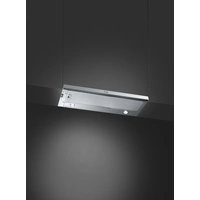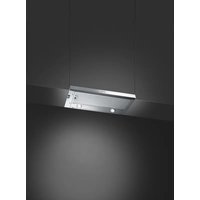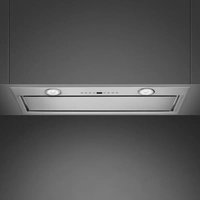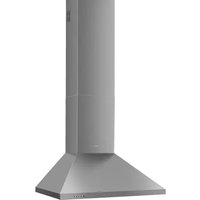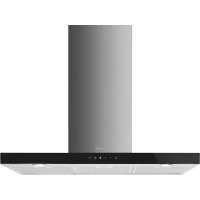
KS905NXE2 - Basket SMEG - Free user manual and instructions
Find the device manual for free KS905NXE2 SMEG in PDF.


Frequently Asked Questions - KS905NXE2 SMEG
User questions about KS905NXE2 SMEG
0 question about this device. Answer the ones you know or ask your own.
Ask a new question about this device
Download the instructions for your Basket in PDF format for free! Find your manual KS905NXE2 - SMEG and take your electronic device back in hand. On this page are published all the documents necessary for the use of your device. KS905NXE2 by SMEG.
USER MANUAL KS905NXE2 SMEG
Instruction booklet (EN)
L (AR)
Mode d'emploi (FR)
Instruction booklet (EN)
L (AR)
Mode d'emploi (FR)
- Read the instructions closely before installing and/or using the hood.
- The manufacturer will not be held liable for damage caused by installation that is incorrect or not up to standard.
- We recommend that all installation and adjustment procedures are carried out by trained personnel.
- When the hood is taken out of its packaging inspect it to ensure that it is intact. If the product is damaged, do not use it and contact the Smeg assistance service.
- Before making any connections, make sure that the mains voltage corresponds to the voltage shown on the label located inside the appliance.
- For Class I appliances, check that the domestic power supply guarantees adequate earthing.
- The minimum distance between the hob and the lower part of the hood must be at least 650mm .
- The extracted air must not be conveyed in a duct used to conduct fumes from appliances powered by gas or other fuel.
- Connect the outlet for the air extracted by the hood to fumes dischargedsucts with a suitable internal diameter, and no less than 120~mm
- The room must be adequately ventilated when the hood or gas appliances are used simultaneously.
- If the power cable is damaged it must be replaced by the manufacturer or its technical assistance service, or nonetheless by an individual with a similar qualification, so as to prevent any risk.
- Comply with any legal regulations relative to the extraction of air when operating the extraction hood.
OPERATION
- Do not cook or fry in a way that creates strong flames. These could be drawn into the hood during operation and cause a fire.
- Do not flambé food under the kitchen hood; Fire hazard
- The hood can be used by individuals under the age of 8 and by individuals with physical, sensorial or mental impairments, or without experience or the required knowledge, as long as they are under supervision or have been given instructions on safe use of the appliance and are familiar with
the dangers it entails.
Children must be supervised to ensure that they do not play with the appliance
- ATTENTION: The accessible parts can become very hot if they are used with cooking equipment.
MAINTENANCE
- Before carrying out any maintenance procedure or cleaning, disconnect the appliance from the electricity supply.
- Carry out thorough and timely maintenance of the filters in accordance with the intervals recommended by the manufacturer.
- To clean the hood surfaces, use a damp cloth and a mild liquid detergent.
- Cleaning and maintenance carried out by the user must not be performed by children without supervision;
- THE MANUFACTURER DECLINES ALL RESPONSIBILITY IF THE ABOVE INDICATIONS ARE NOT FOLLOWED
USE:
- This appliance was designed to be used as an EXTRACTION (extraction of air to the outside) or FILTER hood (recirculation of air indoors).
- EXTRACTION VERSION: To turn the hood into the extraction version connect the motor inlet, by means of a rigid or flexible pipe with a suitable internal diameter and no less than 120mm , directly to the external vapour and odour extraction duct.
NB. Remove any active carbon odour-control filters.
- FILTER VERSION: If it is not possible to direct the air outdoors, the hood can be transformed into the filter version. In this version, the air and vapours are purified by active carbon filters and recirculated into the room through the lateral ventilation grilles of the flue.
Note: using the hood in filter mode can increase the level of noise perceived.
INSTALLATION INSTRUCTIONS:
The hood is supplied with all the accessories necessary for its installation. The minimum distance between the lower surface of the hood and the hob must be at least 650mm for electric hobs (Fig. 1). If the motor inlet is equipped with a non-return valve for fumes, make sure it can open and close freely.
For easy installation it is recommended to follow the procedures described below:
1) The hood must be centred with respect to the hob surface.
2) There are different installation procedures depending on the hood model. Choose one of the following fixing systems:
a) 2 levelling hooks that fasten on with the supplied expansion plugs (Fig. 2)
b) Rear levelling bracket that fastens on with the supplied expansion plugs (Fig. 3)
c) For island models refer to the special installation attachment.
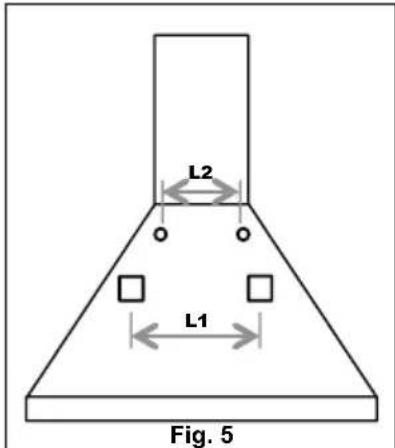
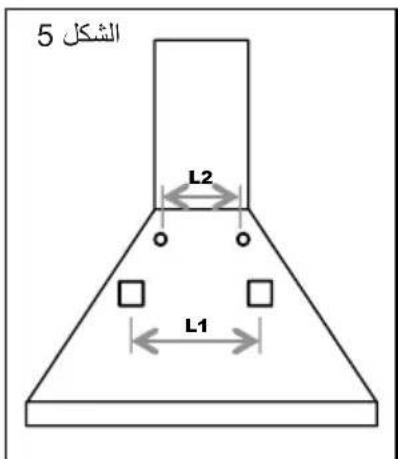
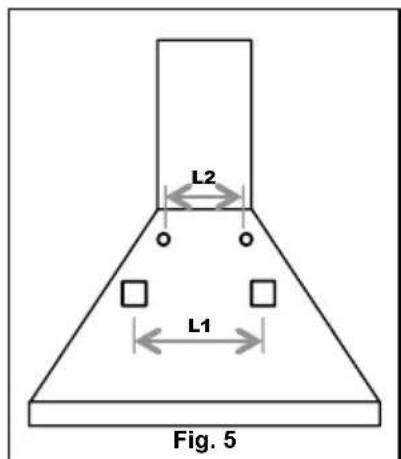
N.B.: Fixing systems a) and b) fit on to the back of the hood in the holes L1 (Fig. 5).
3) Remove the grease filters and position the hood on the wall and mark the reference position for the holes to anchor the relative fixing system.
4) Drill the 2 holes previously marked after removing the hood from the wall
5) Anchor the fixing system to the wall by tightening the expansion plug
6) Mark holes L2 on the wall to secure the plugs safely in the holes. (plugs supplied)
7) Hang the hood on the fixing system (fig. 2 and 3) and level it using the adjustment screws ( fig.2 ).
8) Securely fix the hood by fully tightening the two expansion screws of the holes L2
AIR CONNECTION SYSTEMS:
EXTRACTION version:
Connect the fume expulsion duct (inside diameter 150 mm) to the exhaust of the motor inlet. The expulsion duct must not have a diameter of less than 120~mm .
Note that if the hood is supplied with an active carbon filter, this must be removed (see page 8)
Deviation for Germany:
When the hood and other appliances powered by energy other than electricity are simultaneously ON, the negative pressure in the room must not exceed 4Pa (4× 10^-5 bar).
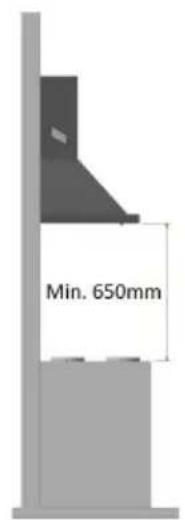
Fig. 1

Fig. 2
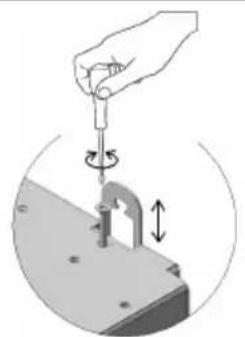
Fig. 3
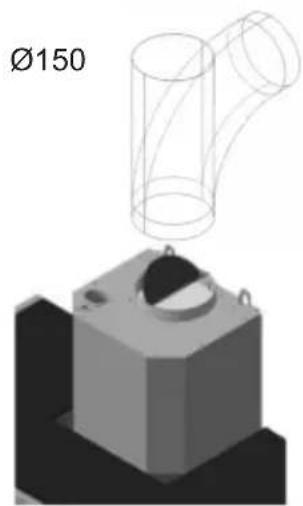
Fig. 4
FILTER version:
Leave the motor inlet free. Install the active carbon filters as shown on page 8.
If the hood is not supplied with an active carbon filter you must buy it separately at your nearest authorised Smeg dealer.
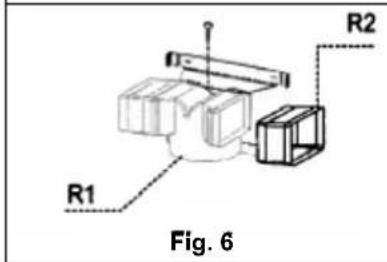
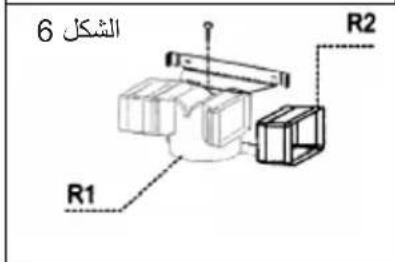
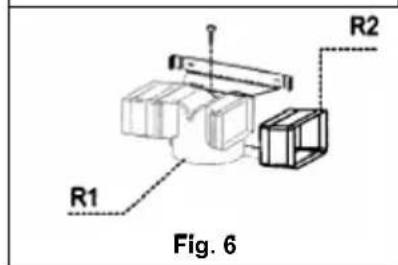
For some models there is a standard set of fittings (fig.6) to be fixed to the wall by expansion plugs at a suitable height in order to channel the airflow in correspondence with the flue slits. Insert laterally the extensions R2 on the fitting R1. Connect the fitting R1 at the outlet of the hood body by means of a tube of diameter D.150mm.
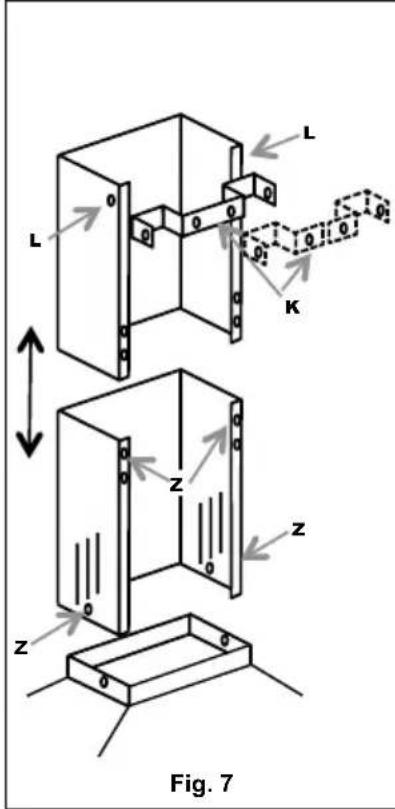
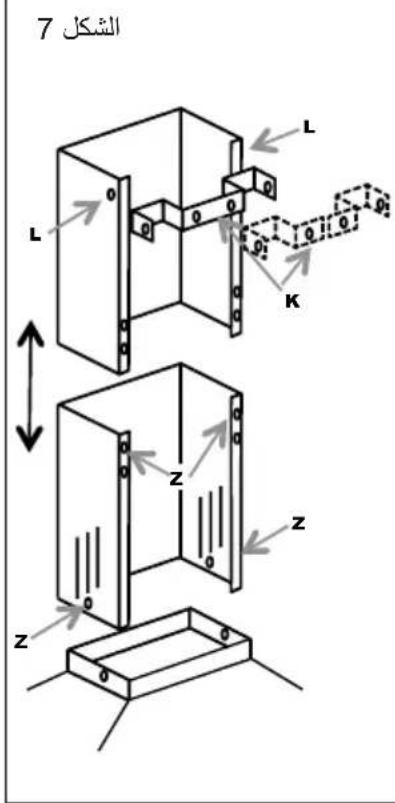
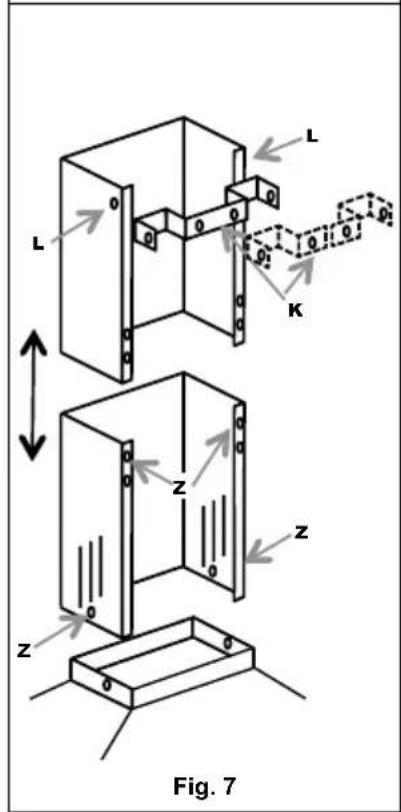
- FLUE ASSEMBLY (fig. 7):
Position the one-piece or two-piece (K) flue bracket to the required top limit.
Mark the two holes on the wall to fix the bracket. Drill and fix the bracket with the supplied expansion plugs.
Carefully position the flue unit on the hood. Fix the lower flue to the hood by means of the screws Z. Carefully extend the top flue to the upper limit.
Secure the top flue to the flue bracket K using the screws L.
ELECTRIC CONNECTION
- We recommend that electric connections are carried out by a professional installer.
In the case of a direct electric connection to the mains, between the appliance and the mains, place a bipolar switch with a minimum opening of 3mm between contacts, sized to the load and compliant with the current regulations.
USERINSTRUCTIONS
CONTROLS UNIT
For an optimal and efficient use of the product it is advisable to start the hood a few minutes before you start cooking and to keep it on for at least 15min after you have finished cooking or until steam and odours have completely disappeared.
To start the hood, identify the command type of the hood and then follow the relative indications:
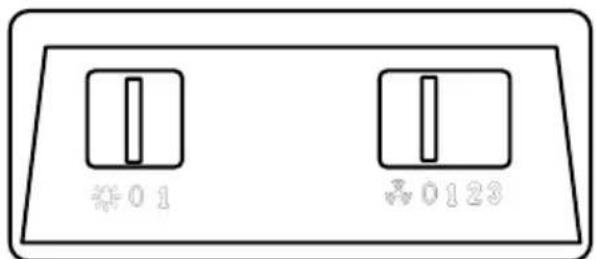
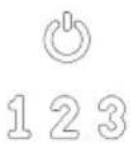
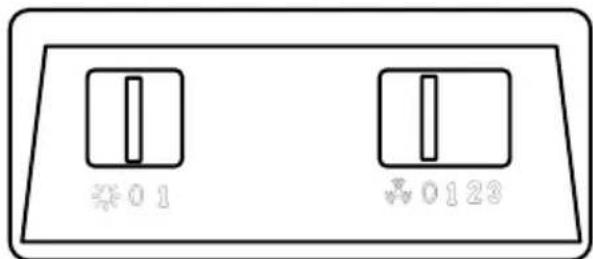
SLIDER:
- Slider (A) lighting ON/OFF
- Slider (B) with four positions:
0
Motor OFF
123
ON/Speed selection
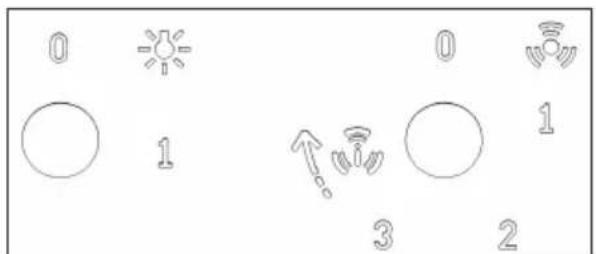
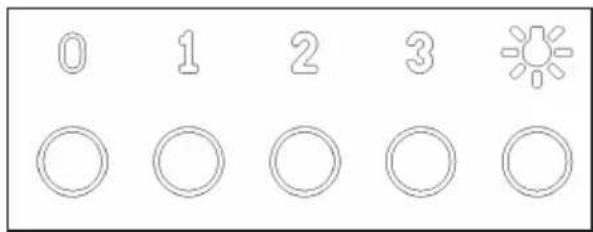
ELECTRO-MECHANICAL PUSHBUTTON PANEL:

Lights ON/OFF key
0
Motor OFF key
123
Power key/hood speed selection
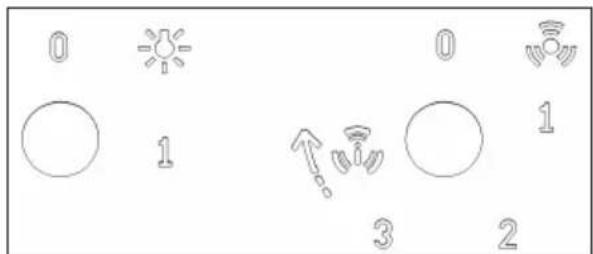
KNOBS:
Hood speed selection

Start timed intensive speed
(A)
(B)
(A)
(B)

Timed intensive speed:
The timed intensive function is that mode of service for which the hood, for a limited time, works at its maximum capacity. The timed intensive speed of the hood is activated by turning the knob (B) clockwise from position 3. Once the timed intensive speed is activated, the knob automatically turns to position 3. The intensive speed can be switched off by turning the control (B) counter-clockwise again. When the intensive speed timer has expired it returns to the third speed by default.
2-DIGIT 10-KEY CAPACITIVE PUSHBUTTON BOARD:

| Key Function Display | ||
| A Turns the suction motor on / off. Displays the set speed | ||
| B Decreases the operation speed. Displays the set speed | ||
| C Increases the operation speed. Displays the set speed | ||
| D | Activates the Intensive speed from any speed even with the motor off, this speed is timed. At the end, the system returns to the speed previously set. Suitable for dealing with the maximum emissions of cooking fumes. | Displays alternatively HI |
| Hold the button down for about 5 seconds, when all loads are off (Motor + Light), to switch the keyboard lock On / Off. | " - " Keyboard lock On. | |
| E | 24 H function Activates the motor at the first speed and allows extraction for 10 minutes every hour. | It displays 24 and the point at the bottom right flashes once a second, while the motor is in operation. Press the key to disable it. |
| Holding the button down for about 5 seconds when all loads are off (Motor + Light), holding key "B" down during the animation, the Active Carbon Filters Alarm switches On / Off. | Displays a rotary animation for 5 seconds. "EF" flashes twice in activation. "EF" flashes once in deactivation. | |
| F | Delay function Enables the automatic shutdown delay of 30'. Suitable for removing residual odours. Can be activated from any position. You disable it by pressing the key or turning the motor off. | Displays the operating speed and the point on the lower right flashes. |
| G | With the filter alarm in progress, pressing the key for about 3 seconds resets the alarm. | After the procedure, the signal previously displayed turns off: FF signals the need to wash the metallic grease filters. The alarm comes on after 100 hours of actual operation of the Hood. EF signals the need to replace the active carbon filters and the metallic grease filters must also be washed. The alarm comes on after 200 hours of actual operation of the Hood. |
| H | Decreases the light intensity at each press of the Key in a cyclic manner. | |
| 1 Turns the lighting system on and off at maximum intensity. | ||
| L | Increases the light intensity at each press of the Key in a cyclic manner. | |
Keyboard lock command: you can lock the keyboard, for example, to clean the glass surface, when the Hood has the motor and lights switched off. By pressing key D for about 5 seconds, you can enable or disable the keyboard lock which is always confirmed with:
"Keyboard lock On.
1-DIGIT CAPACITIVE PUSHBUTTON BOARD:
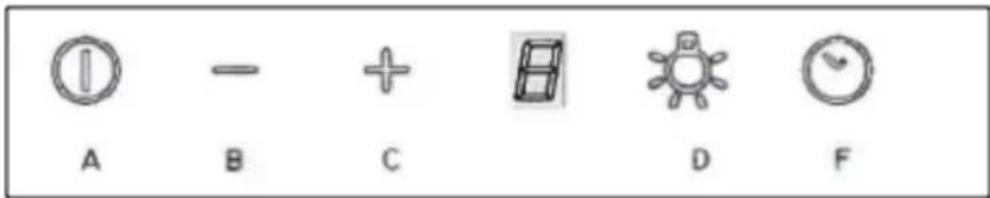
| KEY FUNCTION DISPLAY | ||
| A SW | TCH THE SUCTION MOTOR ON / OFF. DISPLAYS THE SET SPEED | PEED |
| B | CREASE THE OPERATING SPEED DISPLAYS THE SET SPEED | |
| C | INCREASE THE OPERATING SPEED START TIMED INTENSIVE SPEED | DISPLAYS THE SET SPEED FLASHING TIMED INTENSIVE SPEED |
| D | TURN THE LIGHTING SYSTEM ON AND OFF | |
| F ENABLES THE AUTOMATIC SHUTDOWN DELAY OF 15' FLASHES | ||
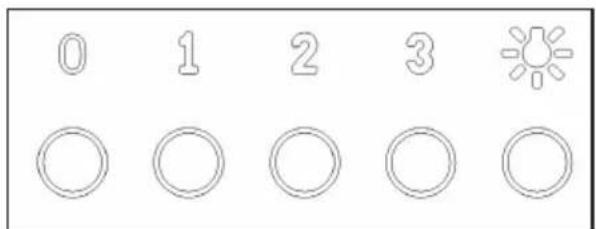
SOFT TOUCH ELECTRONIC PUSHBUTTON BOARD:
Motor OFF key/ Filters reset key
Power key/hood speed selection
Start timed intensive speed
Lights ON/OFF key
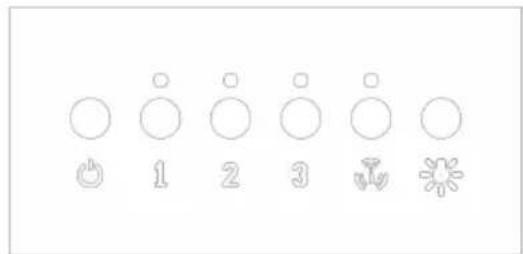
The timed intensive function is that mode of service for which the hood, for a limited time, works at its maximum capacity.
Activating the function is displayed by the LED located under the key flashing. When the intensive speed timer has expired it returns to the third speed by default.
OPTIONAL FUNCTIONS:
-
TIMED AUTO POWER OFF: By pressing one of the motor speed keys (2-3), twice, you will activate the function "Timed Auto Power Off" which turns off both lights and hood motor after 10 mins. Activating this function is demonstrated by the LED immediately above the pressed button flashing.
-
FILTER CLEANING SIGNAL: the simultaneous flashing of the 4 LEDs, (programmed to run every 200h of operation), is to indicate the need to clean /replace the filters.
By pressing the OFF button, the 200h time can be reset. N.B. Accidentally pressing the OFF button before the 200h does not result in the filter being reset in the filter cleaning memory. It is good practice to clean the grease filters and replace the active carbon filters every 200h of operation.
N.B. In some countries, the 4-speed version is also available, with the layout shown on the right, where:


Filters Reset Key
FUNCTIONS AND MAINTENANCE:
Before performing any maintenance and/or cleaning always disconnect the hood from the power supply
Regular cleaning guarantees good operation and a long appliance service life. The grease filters and filter hoods with carbon filters require special care.
N.B. The accumulation of grease inside the filter panels as well as affecting the performance of the extractor, can also create a fire hazard.
EXTERNAL CLEANING: The external and internal cleaning of the hood must be carried out using a damp cloth and mild liquid detergent. Completely avoid the use of solvents or abrasives. It is recommended to use specific products, following the instructions on the product. It is advisable to clean the hood by always rubbing the steel in the direction of the surface finish.
METAL FILTER CLEANING:
Particular attention should be paid to the metal grease filter panels. The accumulation of grease inside the filter panels as well as affecting the performance of the extractor, can also create a fire hazard.
In order to minimise the risk of fire, the filters must be cleaned regularly, at least once a month or with greater frequency in the case of a particularly intensive use of the appliance.
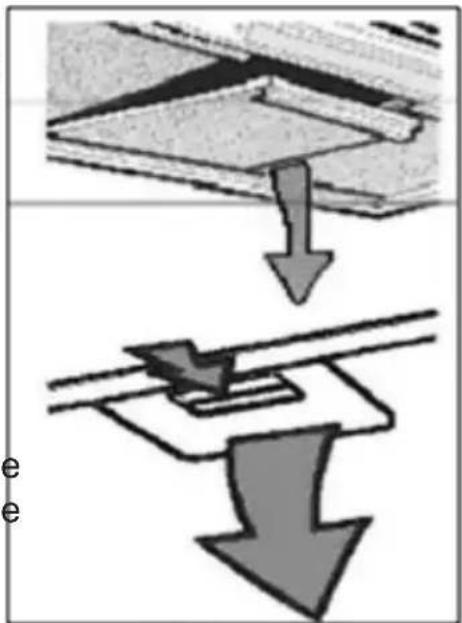
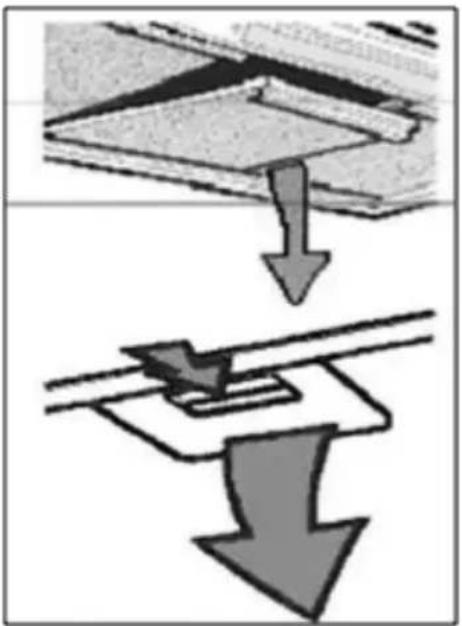
After identifying your hood model, remove one filter at a time as shown in the next figure. Thoroughly wash filters with a mild detergent either by hand or in the dishwasher. Replace the filters, making sure that the handle is on the outside of the hood
REPLACING CARBON FILTERS: (Only for the filter version)
The carbon filters are capable of retaining odours until the carbon reaches saturation level. They cannot be washed and they are not renewable, therefore, it is recommended to replace them at least every six months or more often if the hood is used often.
Before starting operations make sure the electrical power supply to the hood is disconnected.
Access the active carbon filters by removing the metal filters as described above.
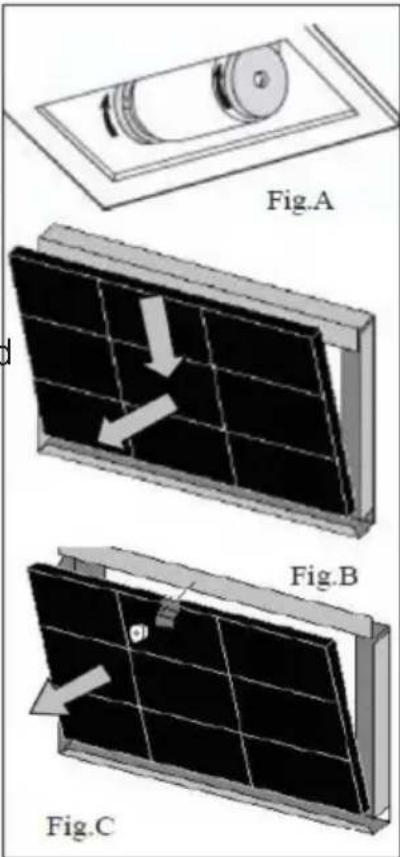
With the help of the figures, identify the carbon filters kit supplied with the hood.
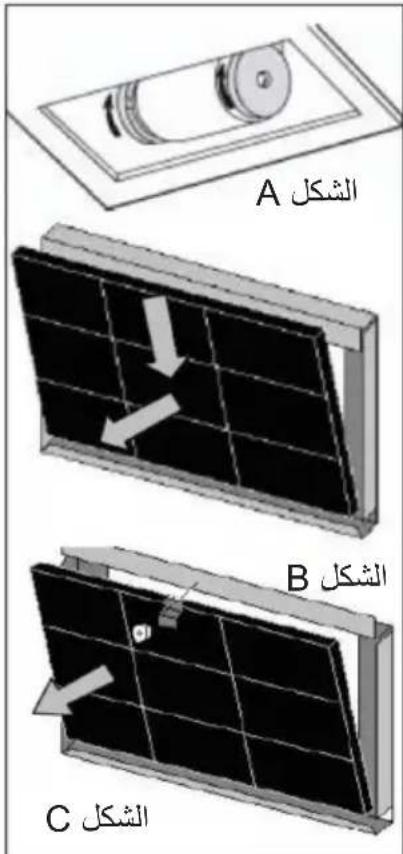
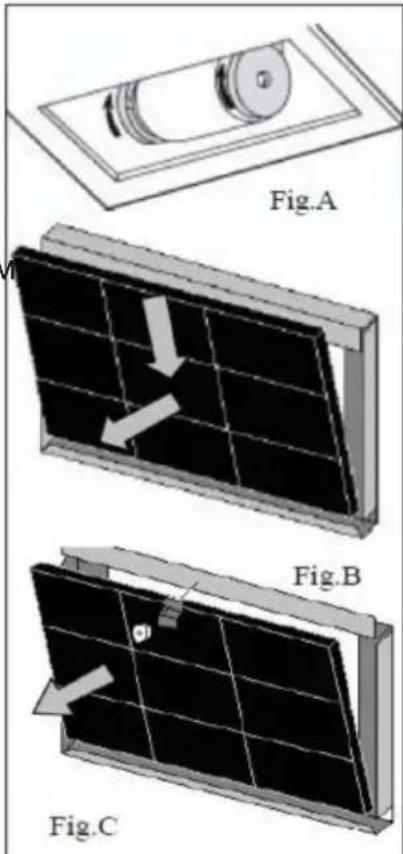
In the case of the disc filter, simply tilt the two filters by 90^ as shown in (fig.A) and then extract them from their housing.
In the case of a cartridge filter attached with springs, (fig.B) exert the pressure required to counteract the resistance of the spring and then remove the filter
In the case of a cartridge filter blocked with a bracket and threaded knob, (fig. C), unscrew the knob, remove the locking bracket and then remove the active carbon filter. Replace the carbon filters and the metal non-grease filters by performing the operations in inverse order
REPLACEMENT LAMPS:
Before performing any maintenance and/or cleaning always disconnect the hood from the power supply
Depending on the model, the hood can be equipped with different types of lighting, with LED or halogen lamps:
a) WITH LED LIGHTS: The LED lights guarantee a significant number of hours of operation. Should it be replace due to being worn or faulty, the entire spotlight must be replaced. In this case, contact qualified Technical Support. This appliance is equipped with Class 1M white LED light, in accordance with EN standard 60825-1: 1994 + A1:2002 + A2:2001; maximum emitted optical power@439nm: 7μW. Do not look directly at the light with optical instruments (binoculars, magnifying glass...).
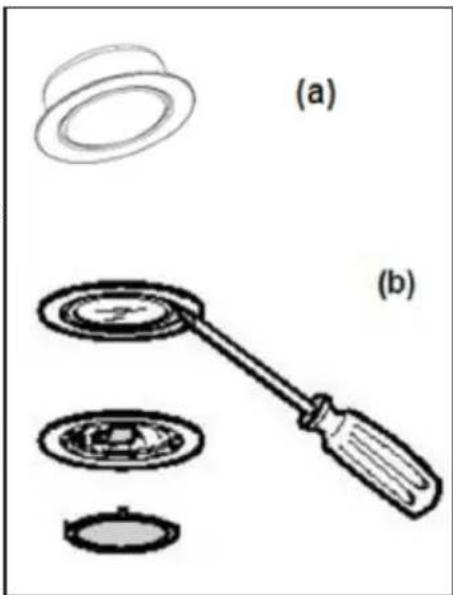
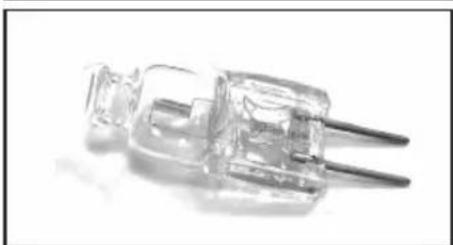
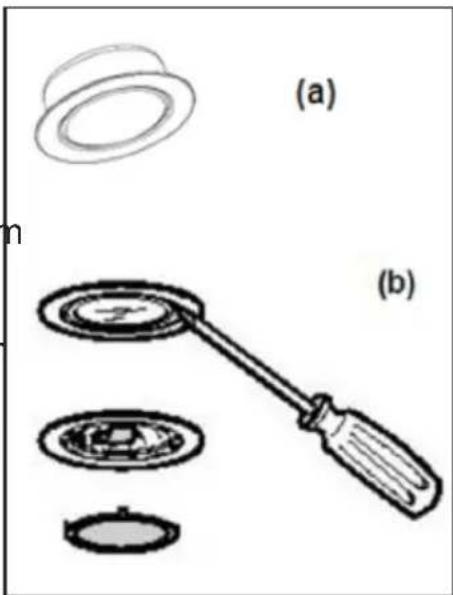
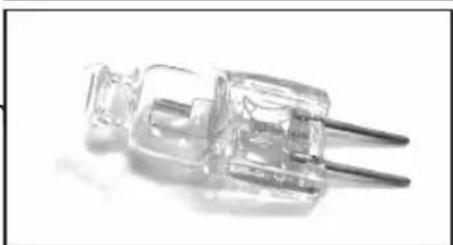
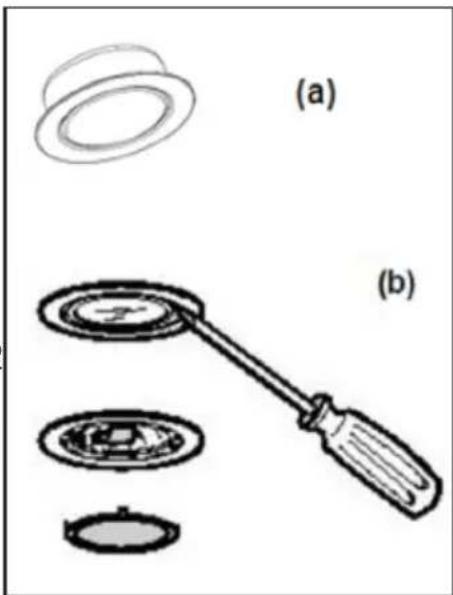
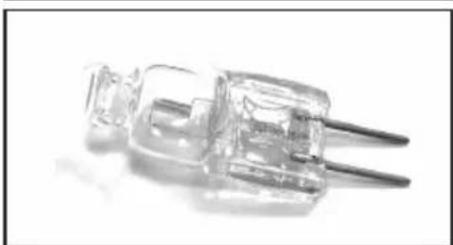
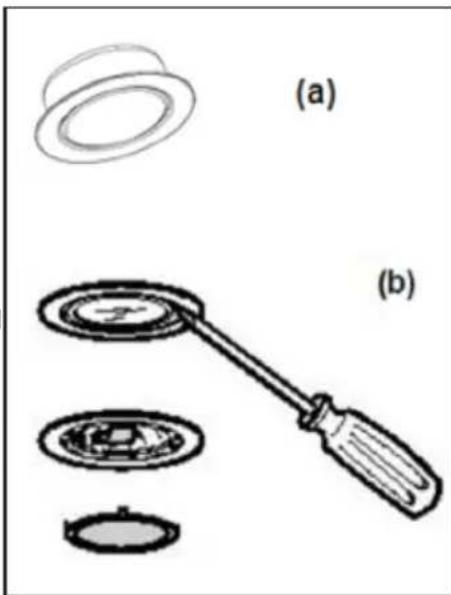
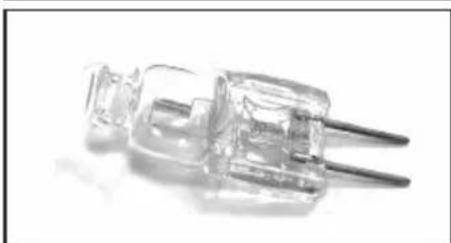
b) Halogen: lamp with G4 fitting, 20W power and 12V voltage. Replace the lamp by removing the glass support ring of the spotlight with a screwdriver. Once the glass is removed, remove the faulty lamp from its housing and fit the new lamp. Replace the glass of the spotlight by blocking it with the ring. Code ILCOS: HSG/C/UB-20-12-G4
WEEE DISPOSAL:
Pursuant to art. 26 of the Italian Legislative Decree dated 14 March 2014, no. 49 "Implementation of directive 2012/19/EU on Waste Electrical and Electronic Equipment (WEEE)"
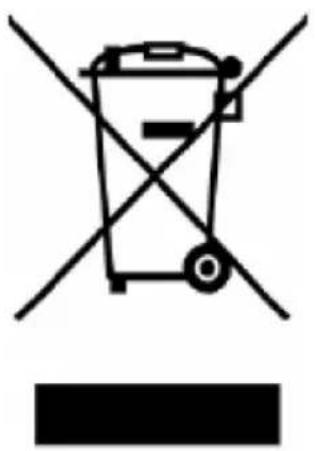
The crossed out wheeled bin symbol on the equipment or its packaging indicates that the product at the end of its useful life must be collected separately from other waste.
Therefore, any products that have reached the end of their useful life must be given to waste disposal centres specializing in separate collection of waste electrical and electronic equipment.
As an alternative to autonomous disposal, the device you want to dispose of can be given back to the retailer at the time of purchasing new similar equipment.
At electronic product retailers with a sales area of at least 400m^2 , it is possible to return, without any obligation to buy, electronic products to dispose of with dimensions below 25 cm free of charge.
The separate collection for the delivery of the equipment to recycling, to treatment and environmentally compatible disposal helps avoid possible negative effects on the environment and health and promotes the reuse and/or recycling of materials that make up the equipment.
a 1

ue/2012/19 2014 14 49 26 000000000000000000000000000000000000000000000
y j 100 240 y 25 25 25 25 25 25 25 25 25 25 25 25 25 25 25 25 25 25 25 25 25 25 25 25 25 25 25 25 25 25 25 25 25 25
():
J 111111111111111111111111111111111111111111111111
90° 1234567890000000000000000000000000000000000000000000000000000000000000000000000
(C)(jill)nssllgogg 1y jilll g 1s jcl. bill l y jil 1j 1iill 1iill 1iill 1iill 1iill 1iill 1iill 1iill 1iill
:
J 1
J 1
ylll cIbly" aIg 12-3) jgall ac g Jrj 12 I bizally: "agally
LLED
(100 4 Jn
jlll / 1
200 200 200
102 2

a
J 1 J 1 J 1 J 1 J 1 J 1 J 1 J 1 J 1 J 1 J 1 J 1 J 1 J 1 J 1 J 1 J 1 J 1 J 1 J 1 J 1 J 1 J 1 J 1 J 1 J 1 J 1 J 1 J 1 J 1 J 1 J 1 J 1 J 1 J
Instruction booklet (EN)
L (AR)
Mode d'emploi (FR)
m = 311

2 : x^ ( x) = y^ ( x) : 2 : x^ ( x) = y^ ( x) : y = 10( x)

E
88

F

G


:

L
REEMPLACEMENT DES LAMPES:
Instruction booklet (EN)
L (AR)
Mode d'emploi (FR)
m = 311

山

,
88.
A
B
C
D
E


F
G
H
1
L
ILCOS-Code: HSG/C/UB-20-12-G4
Instruction booklet (EN)
L (AR)
Mode d'emploi (FR)
Tast OFF motor/Reset fibre

Taending/regulering hastighed

Instruction booklet (EN)
L (AR)
Mode d'emploi (FR)
Instruction booklet (EN)
Cai (AR)
Mode d'emploi (FR)
Kod ILCOS: HSG/C/UB-20-12-G4
LIKWIDACJA ZSEE:
Instruction booklet (EN)
L (AR)
Mode d'emploi (FR)
m = 311

2 : x^ ( x) = y^ ( x) : 2 : x^ ( x) = y^ ( x) : y = 10( x)

E
88

F

G


H

L
Instruction booklet (EN)
L (AR)
Mode d'emploi (FR)
Instruction booklet (EN)
L (AR)
Mode d'emploi (FR)
Knapp OFF motor/Resetknapp for fibre
123
Tast for á slà pá/justere hastigheten til ventilatorhetten
Aktivering av tidsinnstilt intensiv hastighet

Knapp ON/OFF lys
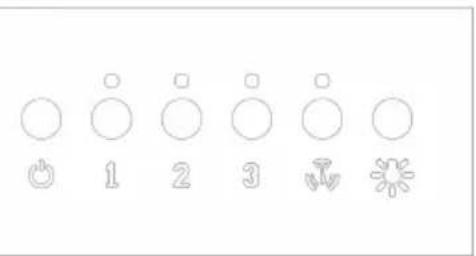
Tidsinnstilt intensiv funksjon er modus for maksimal kapasitet i et begrenset tidsintervall. Aktivering av funksjonen vises ved at LED-lampen iærheten av tasten blinker. När tidsinnstilt intensiv hastighet er fertig går den automatisk tilbake til hastighet 3.
TILLEGGSFUNKSJONER:
Instruction booklet (EN)
Cai jie (AR)
Mode d'emploi (FR)
MEPbI INPEIOCTOPOXHOCTN!
YCTAHOBKA
- Ipeed yctaHOBkoI n/IIIN NcNoJIb3OBaHHeM BbITJxKn, BHIMaTeIbHO npOHTaIte HNCTpyKznn.
- I3ROTOBNTeIb CHIMaET C Ce6y BCaKyHO OTBeTCTBeHHocTb 3a yUep6, HaHeCeHHbI B pe3yIbTaTe He npabnIbHOH nIi He COOTBcTCTByIOuSei O6uEpnHrTbIM npabnAm yCTaHOBKn.
- PekomEnyETc, YTObI BCE Oepaunn No yCTaHOBKe n HalaDke BblOJIINcKBAJIINΦuNpOBaHHbIM NepcoHaJOM.
- Посл e n3BneueHn BbITJxKn n3 ynaKOBKn, npOBepbTe ee ueIoNcTHocTb. EcIn n3dJIe NOBpeXKeHO, He nOJIb3yIteCb nM n O6paTntecb B CeTb TEXHnueCKoro 06cnyKBAHn «Smeq».
- Ipeed BbINOJIHeHnEM KaKnx-JIbO NOkJIuOeHn, y6eINTEcB, YTO HApJxHeHne cETn COOTBeTCTByET HApJxKeHnIO, yKa3aHHOMy Ha 3TNKeTke CO CNeUΦNkaCnYMaN, KOTopApaNoJoxHa BHyTpN yCTpO'CTBa.
Bcnyae npnbopob knacca I Heo6xOIMO y6eHTbc8, YTO DOMaHnra 3JIeKTPnueeckara cetb o6ecneuBaET npaBnIbHOe 3a3emJHe. - МинимальhoepacctoHneMeKdy HIXHeNIOBepxHOCTbHO BbITJXKNI I BapOCHNOBEPxHO DOJIJKHO COCTaBnTb He MeHee 650 MM.
BcacbIbAeMbI BO3dyX He DoJxHcTcB KaHaJI, NcNoJIb3yEmbl InBbInycka DbIMOB OT yCTpOHT Ba60TaOT Ha ra3y nn Ha dpyrom TOpJIbE.
Heo6xOIMO NOcOeINHTb BbIXoB CaCbIBaEMORO BO3dyxa BbITJxKn K DbIMOXOy NOxOJaIero BHyTpeHHeRo DnaMeTp a, He Mehee 120 MM.
Korda BbITgKa Hn paOtaHcne Ha ra3y yCTPOIcTba NcNOJb3yIOTCs OdHOBpeMeHHO, DOnjKHa 6bItb PpeYCMOTpeHa COOTBEcTByIOUa a3paun IOMeHn. - Ecni Ka6eIb 3JIeKTpOnHtAHnI NOBpeXdEh, Heo6xOJIMo erO 3aMeHITb.ДЯ 3TOrO cIeDyET O6paUaTbC8 K n3r0ToBNTeJIIO, B erO cIyX6by texHnuecko IODePJKn IJIi NOpYuHTb 3TO pa6OTHnky co CXOXeI KBaJIInΦnKauzne, BO n36exKaHHe JIO6Oro poJa PnCKa.
CobnoaTe Tpe6oBaHna 3aKOHOaTeIbCTBa B OTHOHeHN Bblnycka OTBOIMORO BO3DVA npn BCacbIBaHcEM yHKUNOHPOBaHN BBITJKKN.
3KcπIyATAU
He BbINOJIHnIe BapKy nIIJ XapKy TaKIM o6pa3OM, YTO6bl O6pa3OBbIBaIOCb CINbHOE OTKpbIToe PnAm, KOtOpoe MOXET 6bITb NOxBaUeHO pa6OtaUoJe BbITJIKKOn, IPOBOuNpya NoXap.
- Iod kyxohno BbITgKo3aIpeuHcIJam6upObaHne: onachoctb noxapa.
BbIgKoMgT NOIb3OBaTbCg Detn MnaDwe 8 let n Iuca c OpaHueHHbIMn fN3nueckmN, ceHCOPHBIMn yMCTBEHHbIMn CnOCO6HOCTaMn, a TaKke Iuca, He IMeIOUne ONbITA nn Heo6XODMbIX 3HaHn, pni ycIOBn, YTO OHn HaxOJaTc npd Ha6JIIODeHnEM nn NOnyUHn INHCTpyKcnn No 6e3ONaCHOMy NOIb3OBaHnIO npi6Opom n OCO3HaOT CBraHHbIe C 3TIm ONaCHOCTn.
Heo6xOIMO npncMaTpNBaTb 3a DeTbMn, YTO6bl OHI He irpaJIc np6bOpom
BHIMAHHE! DoctynbIe qactn MOyT HarpeBaTbcr DO BbICOKo TeMnepaTpybI npN IcNoJIb3OBAHmBapOuHbIX npNCnocO6JIeHm.
TEXO6CJNYKUBAHNE
- Ipeed npoBeHnem liobbIX pa6OT no texHnueckomy o6cnyxHBnIO nnnuCTke, OTKIouHTe yCTpOJCTBO OT 3JIeKtpUeCKOTo NITaHn.
- BbIOnHnTe TuaTeJIbHOe n CBOEbpemEHoe TexHueeCKoe 06CnyKuBaHne pNlTpOB, npndepXNBaRcB rpaqka, peKOMeHDoBAHHoro npOu3BOIDTeJEM.
- Дя чьн NOВерхноcteи Bытяжки дОCTаTOUHO ИСПОЛБ3OBaТь ВЯЖHyO Betoши HeITpaJIbHoe XИДКOE MOJOоee CpeIcTBO.
OuNCTky n Texo6cnyxHBaHne, Bo3JaraIOUncEca Ha NOpb3OBaTeJIa, He DOnKHbI BbINOHNrTb DeTn 6e3 npNCMOtpa B3POCnblx;
B CJIyuaE HeBbINOJHEnra BblIeYka3AHhbIX PPeDncaHn, IPOIN3BOIDNTIEL OTKIOHReT KAKYIO-JINBO OTBETCTBEHHOCTb.
NCNoJb3OBAHNE:
- -Данhoe yctpoiCTBO cnpoeKtnpOBAHO dIЯ nCNoJb3OBaHnB KaueCTBe BCACbIBAIOUeI (BbIBoD Bo3dyxa Hapxky) nII nΦNJIbTPYIOUeI (peunpkyIpyIzra BO3dyxa B NOMEuEHN) BbITJXKN.
BAPNAHT C ACINIPALUEN: IJIa noIyehn BepCNI BCacbIBaIOUeB bITJXKN, NOKIIOHTe BXoIDHOE OTBepCTne DBrAteTn, C NOMOUI IO rN6KO INI JxecTKO IN ty6bl NOxODJeBOHHTpeHHeRo DnaMeTpA, He Mehee 120 MM, K HapyHKOMy BBIOy napOB n 3anaxOB.
IprnmeaHne. Chmnte BO3MOXHbIe aHTN3aNaXOBbIe 7Ha AKTNBnPOBaHHOM yrIe.
BAPNAHT C ΦИЛБТРАЦЕN: B cIyuae OTCYCTBnA BO3MOXHOCTN BbIBOda ДыIMOB HApJxU, MoxHo IcNoJIb3OBAtB ΦИЛБТPyUOuYU BepCnIO BbITaKKn. B TakOH BepCnN BO3dUx N napbI OUnIaHOTcAHTN3aIaxOBbIMN ΦИЛbTpamN Ha aKTINBIPOBaHHOM yIe N BO3BpaUaIOTcR B pOcTPaHCTBO C NOMOuB 6OKOBbIX peWetOK a3paun BENTINaIauONHO Tpy6bl.
IprimeaHne. IcnoJIb3OBAHne ФИЛБТPyUоSeB BepCn BBITJxKm MOKeT yBeJIuHTb BOCpINHMaEmbl yPOBeHb ShyMa.
MHCTPYKUNIPOYCTAHOBKE:
BbITJXKA NOCTaBnIeTcR CO BCEMN KOMNJIeKTyOuIMM, Heo6xODnMbIMn IyraYcTaHOBKn. MInHMaIbHOe pacctOraHne MeKdY HnIXHe NOBepXHOCTbIO BbITJXKN I BapOCHON NOBepXHOCTbIO DOJXHO coCTaBnIaTb He MeHee 650 MM (Pnc.1). EcnN BxOHDoe OTBepCTne DBnIaTeJIa OChauSeHO HeBO3BpaTHbIM KlanahOM DbIMA, V6eINTEcB, YTO OH MOxET CBO6OJHO OTKpbIBaTBcR N 3aKpbIBaTBcR. Iyra npocTOTb yCTaHOBKn peKomeHnyeTcR CNeIOBaTb OpeaunrM, KOTOpbie N3IOKeHbl HNXe:
1) OToHtpnpoBaTb BbITaKky OTHOCHTeJIbHO BapOyHON NOBepXHOCTN.
2) B 3aBnCmOCTN OT MOeJIb BBITJXKN IpeDyCMOTpeHb pa3HbIcNoCo6bl yCTaHOBKn. HauTn CO6CTBeHHyIO CNCTEmy KpeJIneHnCRpeDN CNeDyUOxN:
a) 2 BbipabHnBaIOxN KpOka C KpeJIeHNEm Ha KInHOBbie aHKepbI B KOMnJIeKTe (Pnc. 2).
b) b) BbipaBnBaOuI 3aHn KPOHTeH C KpeJIeHneM Ha KInHOBble aHKepbI B KOMPNeKTe (Pnc. 3).
c) Дя модени OCTpoBHoro Tnna, CM. CneunalbHoe npniloxeHne no yctahOBKe.
PpimeaHne.Cntembl KpeIeHna a) n b) pa3MeuaOTcra c3aIN BbITJxKn B OTBepCTnx L1 (Pnc. 5).
3) CHaTb aHTNknpObIe qnIbTpbl, npCTaBnTb BbITKky K CTeHe n pa3MeNTb NOJIOKeHne OTBepCTNI NO CDOTBeTCTByUoJe e KpeJIeHne.
4) ChЯть Выгжky co CTeHbI IN pOcBepnITb ДBa npeДВapNTeNbHO pa3MeueHHbIX OTBepCTnIa
5) YcTaHOBtB CnCTeMy KpeIneHna Ha CTeHy, 3aTARBaKJINHOBbI aHKeP
6) Hametntb Ha cTeHe MeCTa OTBepCTn L2 dna HAdexHoro KpeJIeHn aHKePOB B OTBepCTnX. (aHKePbI B KOMNJIeKTe)
7) ChTb BbITaKKy CO CTeHbI IN PpOcBepnTb DBa NpeDbaPnteHbHO pa3MeueHHbIX OTBepCTNIA
8) HadejHo 3aKpeNtB BbITJxKky, 3aTgNBaI Do KOHca o6a pacu npuOxxCBa BNHTa L2
CNUCTEMblIOJKNJIUOUEHNA BO3DyXA:
Bapnantc ACINPAUEN BO3NYA: IoDCOeHNHTb K BbIXOy BXODHOrO OTBepCTN yDnIraTeNBAInyCKHO KaHaJ DbIMOB CBHyTpEHNM dIaMeTpOM D.150 MM. BbInyCKHO KaHaJ DOJIKeH IMeTb DnAmEtP He MeHee 120 MM.
BHHMaHne, ecn BbITJXKa OChaSeHa cNJIbTpOM Ha aKTHBnPoBAHHOM yrIe, erO cJeDyET ChrTb (cM. cTp. 8) OtctynHeHne dIra TepMaHnn:
Ipn OndHOBpeMeHHo pa6ote B NOMeUeHn KxOHHO BbITJkN I dpYnx np6opOB,pa6OtaUoUx Ha nCTOuHKe 3Heprn,OTJIuHOM OT 3JIeKTPo3Heprn,OTpuCaTeNbHoe daBLeHne BHyTpN NOMEUeHn He doJHKHO ppeBbIaTb 4 Pa (4 x 10-56ap).
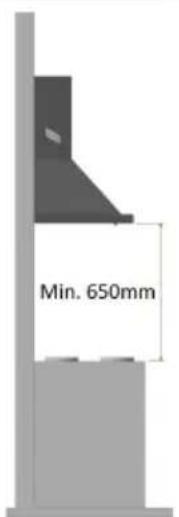
Fig. 1
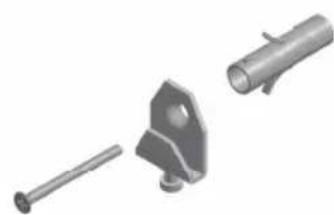
Fig. 2
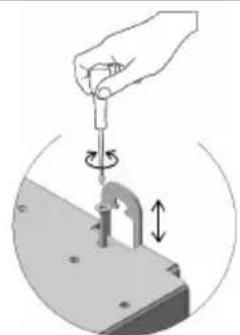
Fig. 3
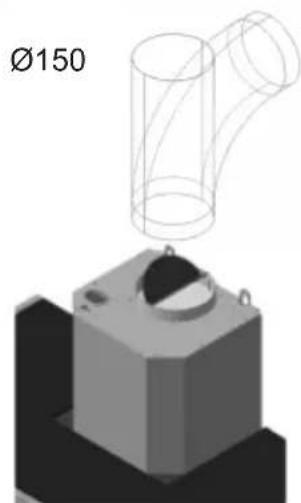
Fig. 4
BapnantcΦNltpaueBBO3dyxA:
OCTaBnTb CBO6oHbIM BXoHoe OTBepCTne DBuRatEny. YcTaHOBnTb cnIbTpbl Ha aKTINBupOBaHHOM yrIe, KaK noka3aHo Ha cTp.8.
EcnBbIgKa He OChaSeHa QnIbTpOM Ha aKTHBnPoBaHHOM yIe, Heo6xOdmo npno6pctn erO OTdeJIbHO B 6JnxKaHMe ABTOPn3OBaHHOM ueHTpe «Smeg».
Дя HeKOTopbIX moJen cepHNo npedyCMOTpeH ha6Op nepexoHNKOB (Pnc. 6) Дя крпленЯ Ha CTeHy nocpeiCTBOM KInHObIX anKePoB Ha noXOJaIeN Blicote Дя HanpaBJIeHnA NOTOKa BO3dYxa B COOTBeTcTBn C OTBepCTnMn BeHTnJIauCIOHOn Tpy6bl. BctaBtB c6oky ydnnHnteN R2 Ha nepexoHNk R1.
IopcoeHnHTb nepexoHNK R1 K BbIXOy n3 Kopnyca BbITaXKn npi nOMOUs Tpy6bl DnaMeTpom D.150 MM.
MOHTAXK DbIMOXOIOB (Pnc. 7):
PacnoIoxntb KpoHtTeH DbIMOXOa, COCToIuN I3 OJHOIIN DByX DeTaeN (K) B JeaemOn KpaHneBepxHe TOTKe.
Pa3MeNTb Dba OTBepCTna Ha CteHe dIra KpenneHn KaOHHTeHa. PocBepNTb OTBepCTna I 3aKpeNTb KPOHTeH KNIHOBBIMn AHKepaMn N3 KOMNJIeKTa.
AkkypaTHo pacnoJIOXnTb Ha6Op BEHTNJIaIIOHhbIX Tpy6 NaB BbITAAKKo. 3aKpeINtB HIXHIOU BEHTNJIaIIOHHyO Tpy6y BNHTAMZ K BbITAAKke. BHIMATEIbHO IpOTaHyTB BepxHIOU BEHTNJIaIIOHHyO Tpy6y Do BEPxHero npIDeJa.
3aKpeNtB C NOMOuB BNHTOB L BepxHIOB BeHTnIaONHO Tpy6y K KPOHSTeHy BeHTnIaONHOH Tpy6bl K.
- 3ЛЕКТРИСЕСКOE NOДКЛЮЧЕНЕ
PekomeHdyetcBbINOJIHeHne Oepaunno 3JeKtpnueckomy NOdkJIOUeHNIO KBaINOuNPOBaHHbIM yCTaHOBUNKOM.
B cnyuae npramoro 3neKtpnueckoro NOdknoyeHna K cetn, Mexdy yctpoiCTBOM n ceTbHO Heo6xOIMo IpeycmOTpeTb DBYXNOHCHbI BbIKIOUaTeJIb C MINHMaNbHbIMpacCTOAHnEM MEXdy KOHTaKTamN 3 MM, paccuHaHHbI Ha HxHy OHarpy3Ky N OTBeauOUsI DeIcTByUOIm CTaHdApTaM.
INHCTPYKUNI NO 3KcNlyATAUIN:
БЛOKУПРавЛЕнЯ:
Дя ONТIMаЛьНОи 3ффсгТИВHOrO NOЛьЗOBAHЯ ИЗделпeM, peKOMeHДуETСВКЛЮЧаТБ ВITЯЖу 3a HeCKOLьКо MInHyT Do HaчАla ПprIgTOВлЕнЯ eДы InpoДпeВaTb ee pa6OTy eшeHa 15 МИN NOcLte OKOHuaHЯ ПprIgTOВлЕня ИИн Ze Do NOJHOrO BbIBeDEня napa n 3aIaxOB.Дя BKПюЧЕнЯ BbITЯЖК, cIeDyET OnPeDEnITb TIN yPpAВЛeHЯ BbITЯЖК I cIeДОВaTb COOTBETCTByUOuIM yKa3aHЯМ:
NEPEKJIIOYATEJIb:
-Переклочател (A) ON/OFF (BKЛ/BblKЛ) noDCBeTkn
- IpeeknouateIb (B) Ha yeTbipe noJIOXeHnA:
010n.0:BbIK.MOTOp
123 Poi.1/2/3:BkI./PerynipoBka ckopocTn
3NEKTPOMEXAHHUECKA KHONOYHAR PAHEJIb:

Konka ON/OFF (BKJI/BblKJI) noDCBeTkn
KoNka OFF (BbIKI) motopa
123 KhoNka BkIIOueHnA/perynipOBKn CKOPOCTN BbITJXKN
(A) (B)
KPyTJIbIE PuyKN:
-Pyuka (A): ON/OFF (BKJI/BbIKJI) noDCBeTkn (0-1)
-Pyka(B):
0 IonoXeHne OFF (BblKJI) motopa
123 IonoXeHne BkIIOueHn/PeYnIpOBKa CKOPOCTN BbITJKKN

AKTINBaUH INHTeHCNBHO rpeKIMAbBbITAXKn
(A) (B)

Функци ИнтehсИВHorO peKIMa BbITJxKn C yCTaHOBJIeHHbIM BpeMeHem cpa6aTbIBAHNIA
Функци ИНтснвого ржима Быгхки C установленим Времен М срабатьаня - 3TO ORpaHnueHHb INВPemHem paxm pa60tbl, B TeueHne KOTOPO BbyTgKka pa3BnBaet MaKcIMaJIbHyO npOn3BOdnteJbHOCTb. AKTBAZIg INHTeHCNBHGOr O pexIma BbyTgKKn IPONCXODIT BpauSeHnEM pykN (B) no yacoboi cTpeJIke n3 noLoXeHnE 3. Ppi akTBAzIN pexIma INHTeHCNBHO CKOpocTN, NO npoWeCTBnY cTahOBHeHORO BpeMeHn, pykA aBTOMaTNUeCKN BO3BpauzaetcB NnoJoxHne 3. INHTeHCNBaR cKOpocMb MoKeT 6b1b OTknUoyeha nobopoTom pykN (B) npOTNb Yacoboi cTpeJIKN. IIO nCTeHnY cTahOBHeHORO BpeMeHn pa60tbl B INHTeHCNBHom pexIme, no yMOnuHaHIO BOCCTaHaBnIBaETcra TpeTbckopocTb.
EMKOCTHAR KHONOYHAR PAHEJIb 2 DIGIT HA 10 KHOJOK:


A

8

C


E


F

G


H

H


YXODI TEXHNUeCKOE OBCJNYKBAHNE:
Ipeed npoBeHeHem IIO6bIX pa6OT nO TexHnueckomy o6cnyXuBaHnO n/nn yxOy, OTKJIouHTe BbITJkKv OT 3NeKtpnueckoro NITaHn
PeryIaHbI yXoD oecneuBaET bcpe6oHyo pa6Otu I dInTeIbHbI cPoK cLyXbI np6opA. Oco6oe BnMaHHe cJeDuYet opaUaTb Ha OunchkY aHTNXnPOBbIX fNtBTPOB, a B BbITJkKaX C fNtBTPaUeN BO3dyxa - Ha fNtBTPbI Ha aKTINBnPOBaHHOM yIe.
YXOD 3A BHEUSHENIOBEPXHOCTbIO:
BHeuHnI BHyTpEHnIy NcCTKa BbITaKKn DOnJXHa NpOBoNTbcra C nCNoJIb3OBaHneM BnaXHOBEToUHn I HeITpaIbHOrO MOIOUero CpeDCTBa, KaTEROpNueckn N36eRa npIMeHEnra pactBOPHTeJeIINa 6pa3NBbIX BeueCTB. PekomeHdyetcNcNOb3OBaTb CneuaNbHbIe CpeDCTBa, Co6JIouda npINBeDEHHbIe Ha Hnx yka3AHn. PekomeHdyetc BblONHrTa YNCSTky BbITaKKn, BblTnpaR cTaIbHyU
NOBepxHOCTb NO HappaBHeHIO OTdJIKN.
CHNTKA METAJIINUeCKNX ΦиьТРОВ:
Oco6oe BnMaHne cJeNyET yDenTb MetaJIInueckm aHTNKnPoBbIM fNtBtpyUoI m naHeIam. HakOnnHeIe JInpOB BHyTpI fNtBtpyUoI x nAHeIe, KpOME HeratNBHO r BlnHnHa 3ΦΦeKTHBHOCTb BblrKk, MoKet TaKke npINBeCTN K ONaCHOCTN BO3HNKHOBEHnRA NOXapa.
Дя NCKIIOUeHЯ BO3MOXHOCTN BO3HNKHOBEHЯ NOXapa,ФильТры ДОЛХны ИрноИчecК ИОВЕрразьСЯ OYNCtKe, He peжЕODHOrO pa3a B Mecau Ипчаш, B CNYuae OCO6O INHTEHCBHOr 3KcPnyatauyn yctpoiCTBa.
OnpeenB moenb nCnoB3yEmoB BbITkN, CneDyET CHMaTb
NoOuepeHNO ODNOMy fNbtpy, KaK Noka3aHO Ha pncyHKax
PraDM. TsaTeNbHO Ipomblb fNlbTpbl HeItpaJIbHbIM MOUcIM
CpeCTBOM, BpyHyIO INN B NOcyDfOMoeHOB MaUNHe. YCTaHOBrB
fNlbTpbl ObpaTHO, ObpaAaB HnImaHne Ha To, UTO6bl pyka 6blna
HaNPabIeHa KnapxN BbITkN.
3AMEHA YTOJIbHbIX ΦIbTPOB: (ToIbKO dIyBaPnaHTa CΦIbTpauNei BO3duYa)
YroIbHbIe qnIbTpbl ImeIoT OcO6eHHocTh 3aIepXINBaTb 3aIaxN Do TOro MOMeHTa, Noka yroIb He DoCTnIHET YPOBnHaCbIuHEny. Hx HeJIb3raMbITb IN BOCCTaHaBnBaTb, NO3ToMy peKOMeHdyEtCn IX 3aMeHa He pExe OndHO ra3a B WeCTb MeCraUeB NII NaIe, B Cnyuae OcO6O INTHECNBbIX YcNOBn INCNoJIb3OBaHn BAItjXkN.
Ipeed hauaIOM onepaun y6eintecb, YTO BbITJkKa OTKJIouHeHa OT 3JeKTpOcETn.
ДяdoctураКфиьтамсakTNBnpoBaHHbIM yIeM Heo6xOdIMO ChTb MeaJIINueCKneФиьТрbl, KaK yka3aHO Bblwe. Cnomoшю nllIOCTpaCNI ONpeJeNTb Ha6op yroIbHbIXФиьТрOB,BXODAUXBX KOMNJIeKTaCNIHO BBITJKKN.
B cnyuae tapenbataoro fnilbtpa doctatoyho nobephytba 90° dBa fnilbtpa, kak noka3aHo Ha Pnc. A, a 3aTeuH3Bneyb nx n3 cBOero rHe3da. B cnyuae natpoHHoro fnilbtpa, 3akpenleHHoro c nomoou npjxHn, (Pnc.B), HadaBVt b TaK, YTObbl ppeOdoJeTb conpOTNBJIeHne npjxHbI, a 3aTeM CHrTb fnilbTp.
B cnyuae natpoHHoro fnilbtpa, 6IoknpoBaHHoro ckobon n pe3bboBOn pyko (Pnc. C), otKpyTntb pyky, BbHytb fNkCnpyUOyIO ckoby, a 3aTeM cHrTb fNilbTp c akTNBnPOBaHHbIM yIeM. YcTaHOBt bYroNbHbIe fNilbtpbl mTaJIInueckne npOTnBOxIpOBbIe fNilbTpbl, BblONHra paHee onNCaHHbIe OepaunB O6paTHOM nopAKe.
3AMEHA JAMN:
Ipeed npoBeHeHem IIO6bIX pa6OT no TexHnueckomy 06cnyKmbaHNO n/ nn OunchKe Bcerda OTKnIOuayTe BbITJkky OT 3JIeKTPnueckOcETN
B 3aBcHMOCTN OT MOdJI N BbITRAKKa MoKET 6bITb OChAueHa pa3NJUHbIM TINAMN OCBeTNTJIbHBIX
Pn60OB: CBeODIOHbIMN IJI rAIONHbIMN JAMnAmN.
a) CBeToDnOHDhIe JAmNbI: CBeToDnOHDhIe NCTOCHNI CBeta rapaHTnpyOT 60JIbJIoE KOJIHcEeTBO YAcOB pa6Otbl. B clyuae 3aMeHbI JAMNbI NO npUHHe n3HOca nn HeNCnPaBHOCTN Heo6XODIMO 3aMeHHTb CBETnJIbHNK ueNIkOM. B 3Tom clyuae lyuwe o6paNTbCra 3a KBaINΦnUPOBaHHo TExHNUeCKo NOMOUsHo. 3TO T np6op OchaueH CBeToDnOHDH JAMNOI C6eJIbIM CBeTOM KnaCCa1MBCOOTBETCTBUNCOCTaHdApTOMEN60825-1:1994 + A1:2002 + A2:2001; MaksMaJIbHa I3nyaemar ONTIuecka MOUHOCTb @439nm: 7uBT. He cmOTpeTb Ha JAMpy, INCnOLb3yR ONTIueckne IHCTpymeHTbl (6MHOKlb, Lyna...).
b) TanooreHHbIe JAmnbI: JAmna c KpePJIeHnEM G4, MOUHOCTbIO 20 Bt n HaprrKeHnEM 12 B. YTO6bI 3aMeHnTb JAMNy, C NOMOUsbIO OTBePTKn CHrTb ONOPHoe KOJIbCuO CTekNc CBETINbHnKa. IocNe ChrTnA CTekNa BByHyTb DeQeKTHyO JAMNy n3 rHe3Da n yCTaHOBnTb HOByo. UcTaHOBnTb Ha MeCTo CTekNo CBETINbHnKa, 3a6JOKnPOBaB erO KOJIbLcOM. KoI ILCOS: HSG/C/UB-20-12-G4
YTNJIIN3AUZNA O33O (RAEE):
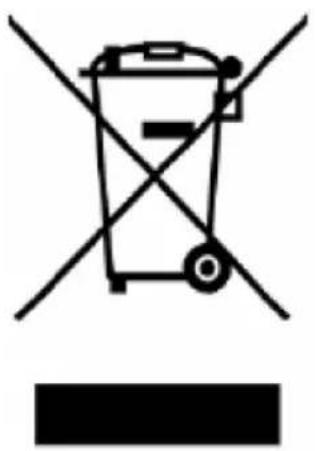
Cozaacno cm. 26 3aKoHodameJIbHoZo deKpema N# 49 om 14 Mapma 2014 zoDa «ИсpoJHHeué dupeKmuebl 2012/19/EC o6 ymuIzauuu omxodob 3JeKmpoHNo zu 3JeKmpuYeCKOzo obopydoeHaun (RAEE)»
3нakперецкунуTORO мсорногбак,првedeньиHa пибориНЯ erо упakOBKE,ОЗначаET,чTo NO 3aBepseHnCpOKa cnyKbI пибopaero Heo6xOДIMO yTINN3INPOBaTb OTdEJIbHO OT dpyrnx OTxODOB.
Iolb3OBaTeIbdoJxHcB6yJeT cdaT bOTcnyKbIIN npi6Op B IOxOJaIe MyHUnIaJIbHbIe cHTpbl NO pa3deJIbHOMy c6Opy OTXoIOB 3JIeKTPoHHOrO n 3JIeKTPnueckoro o6OpyDoBaHnI.
B kaueCTBe aIbTepeHaTnBbl CamOCToTeJbHOYtUIN3aCmN MOxHO cDaTb np6Op dInIepy B MOMENT npNo6pTeHnA HOBOr paBHO3HaHOro np6opa.
Kpome TOrO, B ToUkax npoJaxn 3JIeKTPoHHbIX n3dEInn, pIoUaDb KOTOpbIX npeBbIaAet 400 M², moXHo 6ecPnAThO, 6e3 o6ra3aTeIbCTBa npNo6peTaTb HOBoe n3dEInne, cDaBaTb 3JIeKTPoHHbIe npi6Opbl pa3Mepom MeHee 25 cm, noDJIeKaUne yTuIN3aUuN.
HaIJIeJauI pa3dJIbHbI c6Op OTXODOB IINa NocJeDyUOeRo HaIpaBHeHnY TUNIN3IPOBaHNO rPi6oBaOTKy, NOBTOpHOe NCIOJIb3OBAHHe MaTePnaIOB H COBMecTUMa C OxpaHOI npiPoDiY TUNIN3aUra N03BOJIAOT N36EkaTb OTPuCaTeJIbHOr BO3DeICTBnA Ha OKpyKaIOUcpeHy n 3dOpOBBe IIOdei, a TaKKe CNoCo6CTByHT IOBTOPHOMy NCIOJIb3OBAHnIO/pepepaOTke MaTePnaIOB, IN3 KOTOpbIX COCTOIT np6op.
smeg
Instruction booklet (EN)
L (AR)
Mode d'emploi (FR)
Instruction booklet (EN)
L (AR)
Mode d'emploi (FR)