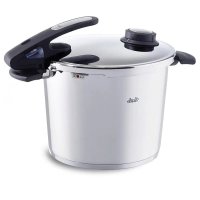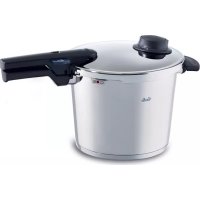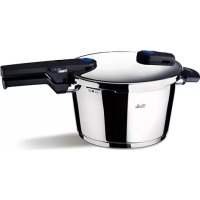
Vitavit Digital - Saucepan Fissler - Free user manual and instructions
Find the device manual for free Vitavit Digital Fissler in PDF.



| Product Type | Pressure Cooker |
| Brand | Fissler |
| Model | Vitavit Digital |
| Pot Material | Stainless Steel |
| Bottom Material | Cookstar (all stovetops including induction) |
| Nominal Capacity | Varies by diameter (e.g., 4.5 L for Ø 22 cm) |
| Available Diameters | 18 cm, 22 cm, 26 cm |
| Weight | Approximately 2.5 to 3.5 kg depending on diameter |
| Operating Pressure | 45 kPa (position 1) / 75 kPa (position 2) |
| Cooking Temperature | Approx. 110 °C (position 1) / 116 °C (position 2) |
| Power Supply | Battery for vitacontrol® digital cooking assistant (Bluetooth module) |
| Main Functions | Pressure cooking, steaming, searing, braising, frying (without lid), sterilizing, juice extraction, simultaneous cooking |
| Digital Cooking Assistant | vitacontrol® digital with LED display, visual/audible signals, Bluetooth connection, Fissler Cooking App |
| Cooking Indicator | Three-color signaling (yellow, green, red) for heat adjustment |
| Safety | Euromatic (safety lock), safety catch, pressure valve, lock indicator (green/red), automatic shutdown in case of overheating |
| Cleaning and Maintenance | Pot and lid dishwasher-safe; gasket, dial, and top handle hand-washable; replace wear parts every 2 years or 400 uses |
| Spare Parts | Sealing ring, dial, membrane, valve gaskets, Euromatic, handles, etc. (references by diameter) |
| Repairability | Spare parts available for at least 10 years after discontinuation; Fissler after-sales service |
| Warranty | 3 years manufacturer's warranty (excluding wear parts) |
| Included Accessories | Perforated basket, trivet, vitacontrol® digital cooking assistant (depending on model) |
| Stovetop Compatibility | All stovetops including induction (Cookstar base) |
| Origin | Made in Germany |
Frequently Asked Questions - Vitavit Digital Fissler
User questions about Vitavit Digital Fissler
0 question about this device. Answer the ones you know or ask your own.
Ask a new question about this device
Download the instructions for your Saucepan in PDF format for free! Find your manual Vitavit Digital - Fissler and take your electronic device back in hand. On this page are published all the documents necessary for the use of your device. Vitavit Digital by Fissler.
USER MANUAL Vitavit Digital Fissler
natural_image
Exterior view of a stainless steel cooking pot with black handles and lid (no text or symbols visible)vitavid ^® edition digital/vitavid ^® edition „Design“
natural_image
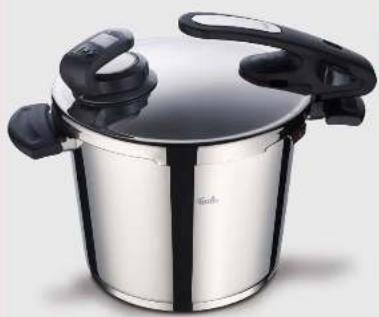
Exterior view of a stainless steel cooking pot with black handles and digital display (no text or symbols visible)

D Gebrauchsanetung Sale 01-2/
GB Instructions for Use Page 285-
F Mode d'emploi Page 55-01
NL Halleiding, Pagra E2-103
① ktn.roni per l'uso Pogins 109 135
E Instrucciones de uso Página 136-162
P Manuel de utilização Página 163-189
GR O###
TR Kulanri klasu: Sayla 21/4-3
RUSI Руководство по эксплуатации стенында
⑤ Brikaswning Sden 271-297
PL Instrukça otsług Strona 258-321
CZ Navod k použi. Sezniči 325-351
ARA
أDigital Security
3804357
text_image
Labeled diagram of a cooking pot with numbered parts for identification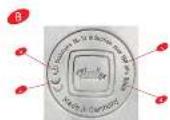
135 mm

Lara Grd Lien of 1954, 50% da Czernik Germany
The quick brown fox jumps over the lazy dog.
(一)本次股东大会的召集和召开程序
148 mm

vitavit ^® edition digital / vitavit ^® edition „Design“
1.46 ppm
137 mm

^1 (as a bary, n a r i d, n a r i d, n a r i d, n a r i d, n a r i d, n a r i d, n a r i d, n a r i d, n a r i d, n a r i d, n a r i d, n a r i d, n a r i d, n a r i d, n a r i d, n a r i d, n a r i d, n a t h e l y)
Dr. Kondner, 2013; Dr. Kondner, 2014; Dr. Kondner, 2015; Dr. Kondner, 2016; Dr. Kondner, 2017; Dr. Kondner, 2018; Dr. Kondner, 2019; Dr. Kondner, 2020; Dr. Kondner, 2021; Dr. Kondner, 2022; Dr. Kondner, 2023; Dr. Kondner, 2024; Dr. Kondner, 2025; Dr. Kondner, 2026; Dr. Kondner, 2027; Dr. Kondner, 2028; Dr. Kondner, 2029; Dr. Kondner, 2030; Dr. Kondner, 2031; Dr. Kondner, 2032; Dr. Kondner, 2033; Dr. Kondner, 2034; Dr. Kondner, 2035; Dr. Kondner, 2036; Dr. Kondner, 2037; Dr. Kondner, 2038; Dr. Kondner, 2039; Dr. Kondner, 2040; Dr. Kondner, 2041; Dr. Kondner, 2042; Dr. Kondner, 2043; Dr. Kondner, 2044; Dr. Kondner, 2045; Dr. Kondner, 2046; Dr. Kondner, 2047; Dr. Kondner, 2048; Dr. Kondner, 2049; Dr. Kondner, 2050; Dr. Kondner, 2051; Dr. Kondner, 2052; Dr. Kondner, 2053; Dr. Kondner, 2054; Dr. Kondner, 2055; Dr. Kondner, 2056; Dr. Kondner, 2057; Dr. Kondner, 2058; Dr. Kondner, 2059; Dr. Kondner, 2060; Dr. Kondner, 2061; Dr. Kondner, 2062; Dr. Kondner, 2063; Dr. Kondner, 2064; Dr. Kondner, 2065; Dr. Kondner, 2066; Dr. Kondner, 2067; Dr. Kondner, 2068; Dr. Kondner, 2069; Dr. Kondner, 2070; Dr. Kondner, 2071; Dr. Kondner, 2072; Dr. Kondner, 2073; Dr. Kondner, 2074; Dr. Kondner, 2075; Dr. Kondner, 2076; Dr. Kondner, 2077; Dr. Kondner, 2078; Dr. Kondner, 2079; Dr. Kondner, 2080; Dr. Kondner, 2081; Dr. Kondner, 2082; Dr. Kondner, 2083; Dr. Kondner, 2084; Dr. Kondner, 2085; Dr. Kondner, 2086; Dr. Kondner, 2087; Dr. Kondner, 2088; Dr. Kondner, 2089; Dr. Kondner, 2090; Dr. Kondner, 2091; Dr. Kondner, 2092; Dr. Kondner, 2093; Dr. Kondner, 2094; Dr. Kondner, 2095; Dr. Kondner, 2096; Dr. Kondner, 2097; Dr. Kondner, 2098; Dr. Kondner, 2099; Dr. Kondner, 2100
Pilgrim - Burell & Leve (1 - 3/14) Use of plants
and the following described information is given by the law of the United States
and in the case of the following: The Rev. Plan
- 2017, 4: 1963.
reparat haldgiv, dechess C. mechau d's m. kralidus n. m. m.
the an candidate to what Plan and view gives
Liberius: Non, facture and proper
Waves of the world Lamp and Laddiak News: New manufacturing in Class 2019 News: Pakistan (the company)
Lase: Schott mäss.
natural_image
Exterior view of a stainless steel cooking pot with black handles and digital display (no text or symbols visible)
Gebrauchsanleitung
15. cookstar-Allherdboden
natural_image
Exterior view of a stainless steel cooking pot with black handles and digital display (no text or symbols visible)
Instructions for Use
Thank you for your confidence ...
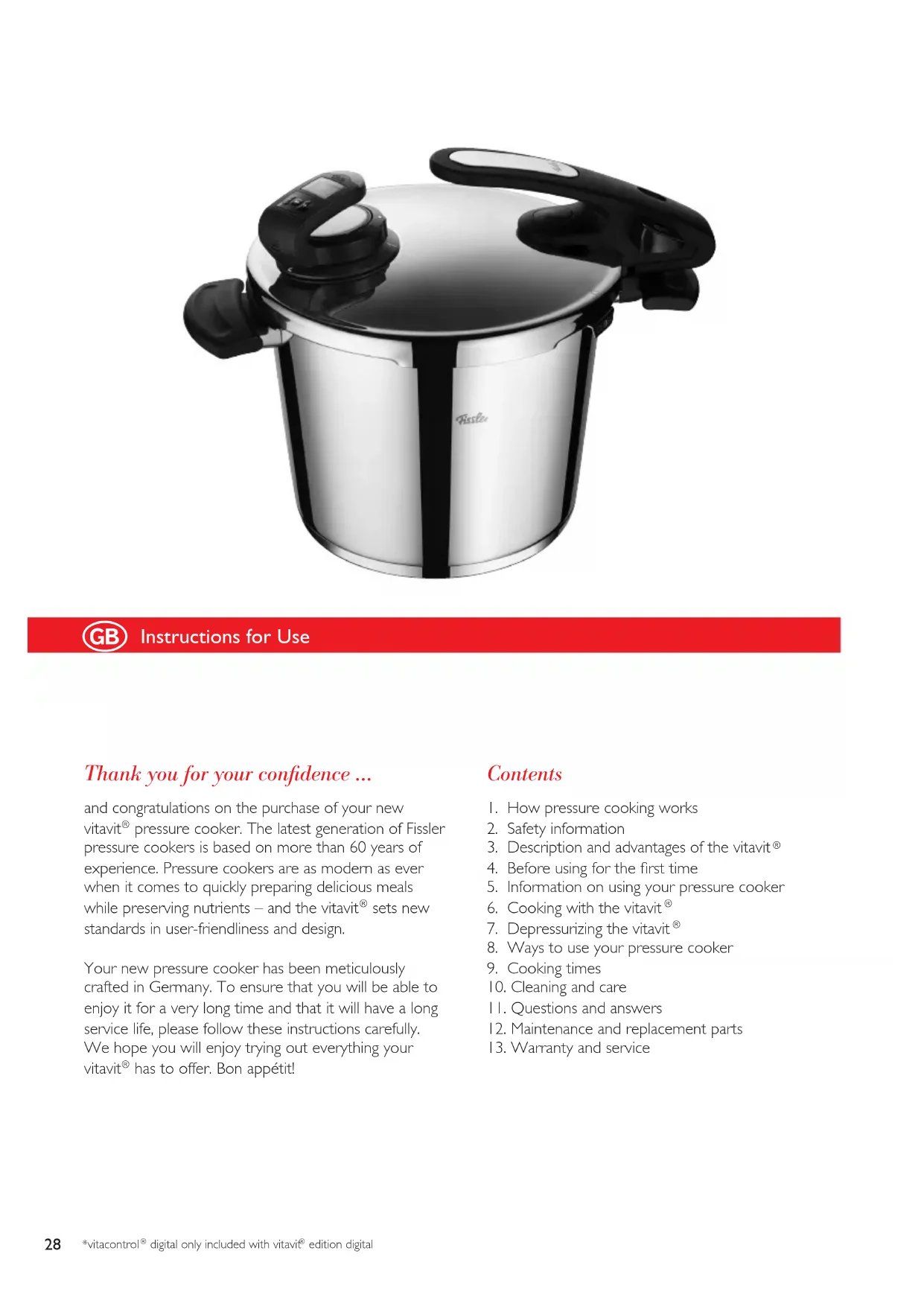
and congratulations on the purchase of your new vitavit® pressure cooker. The latest generation of Fissler pressure cookers is based on more than 60 years of experience. Pressure cookers are as modern as ever when it comes to quickly preparing delicious meals while preserving nutrients – and the vitavit® sets new standards in user-friendliness and design.
Your new pressure cooker has been meticulously crafted in Germany. To ensure that you will be able to enjoy it for a very long time and that it will have a long service life, please follow these instructions carefully. We hope you will enjoy trying out everything your vitavit ^ has to offer. Bon appétit!
Contents
- How pressure cooking works
- Safety information
- Description and advantages of the vitavit®
- Before using for the first time
- Information on using your pressure cooker
- Cooking with the vitavit®
- Depressurizing the vitavit®
- Ways to use your pressure cooker
- Cooking times
- Cleaning and care
II. Questions and answers - Maintenance and replacement parts
- Warranty and service
1. How pressure cooking works
Comparison of Total Cooking Times
| Raw Ingredients | Conventional Pot | vitavit ^B pressure cooker |
 |  |  |
| Broccoli | 14 min. | 8 min. |
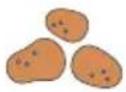 | 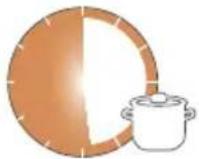 | 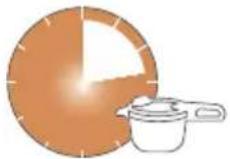 |
| Potatoes | 29 min. | 14 min. |
 | 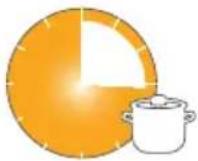 | 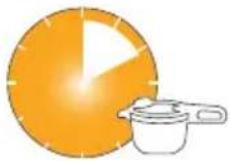 |
| Carrots | 16 min. | 11 min. |
Vitamin C retained compared to raw ingredients
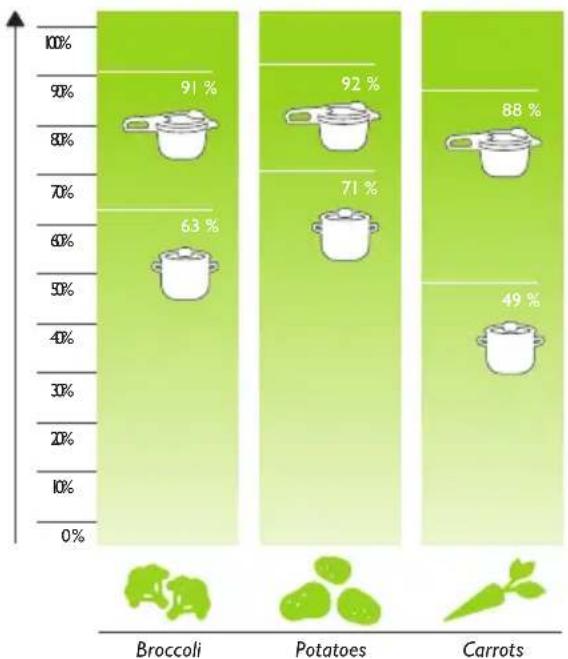
bar
| Vegetable | Value (%) | | :--- | :--- | | Broccoli | 91 | | Potatoes | 92 | | Carrots | 88 |The basic principle of pressure cooking hasn't changed since the first pressure cooker was invented. Foods are cooked in a tightly closed vessel under pressure, at temperatures of over 100°C, since the high pressure that develops inside the pot raises the boiling point of water. This shortens their cooking times substantially. Cooking with a pressure cooker saves a great deal of (cooking) time – about 70 percent on average.
The exclusion of harmful atmospheric oxygen and the shorter cooking times also make it possible to cook the foods very gently. Vitamins, minerals and aroma are preserved to a far greater extent than with conventional cooking methods. And you can taste this, too, for the foods' own flavor is surprisingly intense.
2. Safety information
Instructions for use
- Read the Instructions for Use and all other information thoroughly before you use the vitavit®. Incorrect use can be dangerous.
- Do not let anyone use the pressure cooker before reading the Instructions for Use.
- If you give your pressure cooker to anyone, make sure you also provide the Instructions for Use.
- Please take note of the separate Instructions for Use when using the electronic vitacontrol® digital* cooking assistant.
Supervision
• Never use the pressure cooker near children.
Uses for the pressure cooker
- Only use the pressure cooker for the purposes described in the Instructions for Use. (See Chapter 8)
- Never use the pressure cooker or pressure skillet in the oven. The handles, valves, and safety installations would be damaged by the high temperatures and would subsequently be unable to perform their safety functions.
- When deep-frying in the pressure cooker, do not cover it, and only fill it halfway with oil. Never deep-fry under pressure! (See Chapter 8)
- Pressure cookers may not be used for medical purposes – especially not as sterilizers, as pressure cookers are not designed to reach the temperatures necessary for sterilizing.
- Do not cook applesauce or stewed fruits in a pressure cooker, because pockets of steam often form that can spatter up when the cooker is opened and cause scalding.
- When meat is cooked in the pressure cooker, an overpressure develops in the meat. For this reason, after you open the pressure cooker wait a little while before you pierce or move the meat to avoid burning yourself.
Safety and maintenance
• Each time you use your pressure cooker, make sure beforehand that none of the valves and safety mechanisms are damaged or dirty and that they function properly. This is the only way to guarantee that it will operate safely. You will find information on this in Chapter 5.
- Do not alter the pressure cooker – especially the safety mechanisms – in any way, other than performing the maintenance measures mentioned in the Instructions for Use. Do not oil the valves.
- Replace parts which are subject to wear, such as the rubber gasket and other rubber parts, regularly with original Fissler spare parts after c. 400 cooking operations or at the latest after two years. Parts which are clearly damaged (e.g. hardening, cracks, discolorations, overheating, or deformation) or do not fit properly must be replaced immediately. Failure to do so will result in the efficiency and safety of your pressure cooker being reduced.
- Use only original Fissler replacement parts. It is especially important for you to only use pots and lids for the same model, as well as other replacement parts that are intended specifically for your cooker. (See Chapter 12)
- For your own safety, please retighten loosened screws immediately.
- For your own safety, you should immediately replace cracked or damaged plastic handles with original Fissler replacement parts.
Operation of the pressure cooker
- The cooker is under pressure when in use. Incorrect use can result in bums. Make sure that the cooker is properly closed before you build pressure. You will find information on this in Chapter 4. Never use the pressure cooker with the lid placed loosely on top of it.
Safety information / Description and advantages of the vitavit®
• Only use the heat sources that are mentioned in Chapter 5.
- Never heat the pressure cooker without any liquid in it as the overheating can result in damage to the device, the valves, the safety installations, and on the burner. Do not continue to use the pressure cooker as the functions of the safety installations are no longer guaranteed. Have your pressure cooker checked by the Fissler Customer Service Department. Minimum amount: 200-300 ml of water, depending on the diameter of your cooker. (See „min“ marking) In case of extreme overheating, plastic parts on the cooker or the aluminum in the base could melt and liquefy. If this should occur, turn off the heat source and do not move the cooker until it has cooled down completely. Air the room.
- Do not fill the pressure cooker to more than 23 of its volume. (See „max“ marking)
For foods that foam or expand during cooking, such as rice, broths, or dried vegetables, the pressure cooker may only be filled half full (see „½“ marking).
- When cooking beans and other pulses, fill the pressure cooker no higher than the 13 marking as their thin skin can easily rise and block the valves.
- Never leave your pressure cooker unattended. Regulate the energy source so that the traffic light indicator does not show the red ring. If the energy source is not turned down, steam will escape through the valve and the amount of liquid in the cooker will be reduced. If all of the liquid should vaporize, the food will burn and the cooker and burner may be damaged.
- Move the pressure cooker very carefully when it is under pressure. Do not touch the hot surfaces. Use the handles and controls and, if necessary, potholders.
Opening the cooker
- Never try to force the pressure cooker open. Do not open it before you are certain that it has been fully depressurized. You will find information on this in Chapter 7.
• Always shake the pressure cooker before you open it, to make sure that pockets of steam will not spatter up and scald you. This is especially important for quick depressurizing or if you cool the cooker under running water: - Always keep your hands, head and body out of the danger zone when depressurizing the pressure cooker, for the escaping steam could injure you. Be particularly careful about this when you are depressurizing quickly with the help of the release button or the control valve.
Important
- Do not use the pressure cooker if it – or any of its parts – is damaged or deformed or does not function as described in these Instructions for Use. In this case, get in touch immediately with the closest Fissler retailer or with the Customer Service Department at Fissler GmbH. (For the address, see Chapter 13.)
Take good care of these and of the Instructions for Use for the electronic vitacontrol® digital\* cooking assistant.
3. Description and advantages of the vitavit®
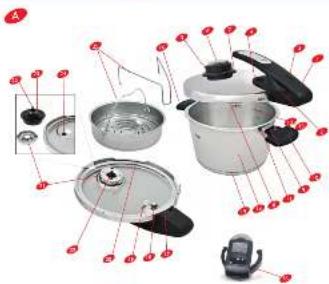
See Fig. A
I. Lid handle
- removable for easy cleaning
2. Release button
- for depressurizing and opening the cooker
3. Locking indicator
- shows whether the cooker is properly closed
4. Openings for steam escape
- while building pressure
- when the Euromatic is triggered
- when depressurizing with the release button
- for steaming without pressure
5. Control valve
- to set the cooking setting
- with the traffic light indicator
- with a vent for automatic pressure limitation (pressure guard)
- removable for easy cleaning
- with depressurizing setting and gradual pressure release
6. Traffic light system
- helps to regulate the energy source
7. Openings for steam release
- when the selected cooking setting is exceeded
- for depressurizing with the control valve
- for steaming without pressure
8. Positioning aid
- for simple positioning of the lid
9. Groove for positioning aid
- for inserting the positioning aid
10. Pot handle
- with deep handle recess for a secure grip
II. Flame guard
- protects the handles when used on gas stoves
12. Volume marking
- with „min“ marking for the minimum amount of liquid
- with „½" marking for the maximum amount of foods that rise
- with „max“ marking for the maximum amount of normal foods
13. Measuring scale
- for simple measuring of liquids – without a measuring cup
14. Conical pot bodies
- for stacking pots, even those with the same diameter
15. cookstar all-stove base
- for optimal heat properties on all types of stoves, including induction
16. Helper handle
- with deep recessed grip for safe carrying
17. Safety nubs (safety mechanism)
- prevents pressure from building if the cooker is not closed properly
18. Fissler Euromatic (safety mechanism)
- for automatic pressure building
- prevents pressure building if the cooker is not properly closed
- automatically limits pressure
- prevents the cooker from being opened as long as there is pressure
19. Fastening screw for lid handle
- no tools are needed
- with a flat gasket, fixed in the lid
Description and advantages of the vitavit® / Before using for the first time
20. Silicone gasket (safety mechanism)
- made of high-quality silicone
- with safety pockets to limit pressure
21. Bell-shaped nut for fastening the control valve
- with recessed grips, can be easily removed without tools
22. Silicone membrane
- for sealing the traffic light indicator
23. Molded valve seal
- for sealing the control valve
24. Valve base seal
- to seal the valve base
25. Insets for steaming (depending on model)
- elongated perforations for optimum penetration of steam
- with ridged surface for free steam flow, even with large items
- with a tripod stand
26. Electronic vitacontrol® digital\* cooking assistant (depending on the model)
- with integrated Bluetooth Low Energy Module for problem-free connection of your smart device to the new Fissler Cooking App digital
- with LED field and optical and acoustic signals for setting the stove
- with a display to show the cooking time and battery replacement and maintenance periods
- with control buttons for setting the cooking time and controlling other functions
- with clamping arms for attaching the control valve simply
- included with vitavit ^® edition digital
See Fig. B
a. CE symbol (ensures that the cooker complies with the EC directive for pressure cookers)
b. Nominal capacity (not equal to usable capacity)
c. Maximum operating pressure (maximum permissible steam release pressure of the valve)
d. Manufacturing date (calendar week/year)
4. Before using for the first time
Make sure you understand how the cooker is used before you try it out.
Opening the cooker
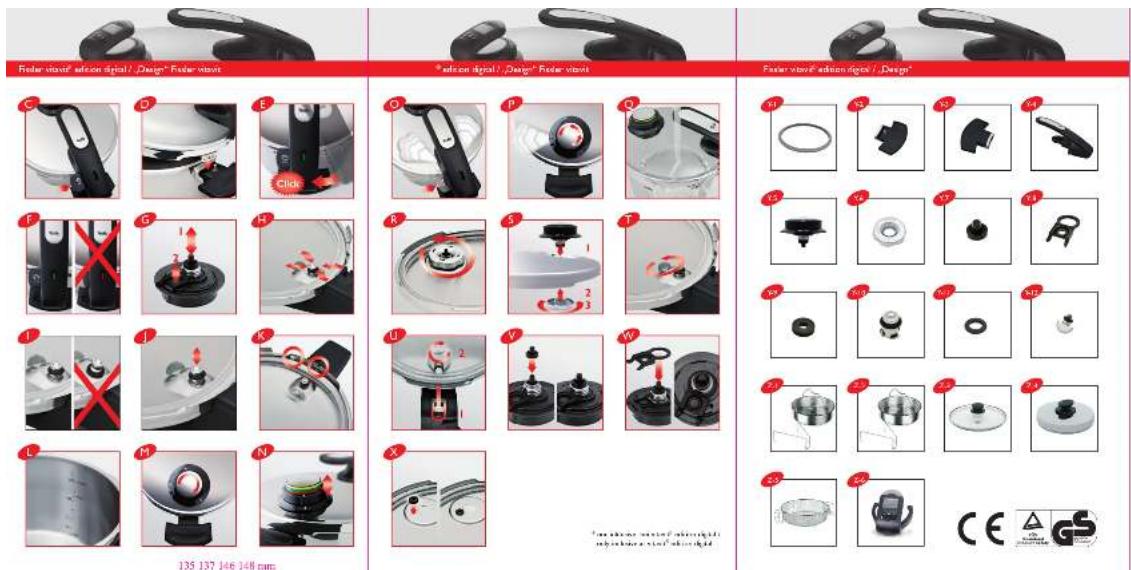
See Fig. C
Press the release button (Fig.A-2) on the lid handle in the direction shown by the arrow, and turn the lid to the right as far as possible. Now you can remove the lid.
Positioning aid
On the lid, there is a metal tab that says "Close" (Fig. A-8). The counterpart to it is a groove (Fig. A-9) in the pot handle. This makes it easy to place the lid in the correct position.
Closing the cooker
See Fig. D
To put the lid on the cooker, hold it slightly slanted, place the positioning aid in the groove on the pot handle, and then lower it. The correct position for the lid is also indicated by red dots on the positioning aid and the pot handle. If these dots are perfectly aligned, the lid can be put on the pot.
Before using for the first time / Information on using your pressure cooker
See Fig. E
To close, turn the lid to the left as far as possible, until the cooker locks with an audible "click."
Locking indicator
See Fig. F
The locking indicator (Fig.A-3) in the lid handle will tell you whether the cooker is correctly closed and ready to use:
Green = The cooker is properly closed and ready for use.
Red = The cooker is not properly closed, and no pressure can be built up.
Cleaning
Wash the pot, lid and silicone gasket thoroughly before using the pressure cooker for the first time. This will remove any traces of polishing dust and minor impurities.
We recommend the subsequent use of Fissler Stainless Steel Care (or another product for the care of stainless steel cookware) for the pot and lid. This will make the stainless steel more resistant to the influences of salts and acidic substances. Residues of the care product should be thoroughly washed off. Use the care product as needed or when you notice changes in the appearance of the stainless steel surface.
Welcome to the world of vitacontrol ^® digital ^* – Smart cooking is so simple.

Download the „Fissler Cooking App digital" under the same name free of charge in your App/(Play) Store. The app is compatible with the latest generation of smart devices (smartphones and tablets) for the
Apple/IOS Download on the App Store Android app on Google play
Further details on using the electronic vitacontrol® digital cooking assistant are provided in the device's Instructions for Use.
5. Information on using your pressure cooker
Safety mechanisms
Your vitavit® pressure cooker is equipped with various mechanisms that automatically make your pressure cooker safe. Before you use the pressure cooker, and each time you use it, be sure to check that the following safety mechanisms are functioning properly. Never alter these in any way. Make sure that the control valve and the lid handle are properly and firmly attached before you begin to cook. You will find information on this in Chapter 10.
Control valve (Fig. A-5)
See Fig. G
Remove the control valve from the lid and turn it to Setting 2. Use your finger to check whether the traffic light indicator(1) and the valve body(2) can move freely and spring back.
Euromatic (Fig. A-18)
See Fig. H+1
Make sure that the Euromatic is clean and can move freely in the lid. The o-ring must lie completely in the groove provided for it.
See Fig. J
Use your finger to check whether the white ball in the Euromatic does not stick and can move freely and spring back.
Silicone gasket (Fig. A-20) and safety nubs (Fig. A-17)
See Fig. K
Make sure that the silicone gasket and the edge of the lid are clean, that the silicone gasket has not been damaged, and that the safety nubs can move freely. Insert the silicone gasket so that it lies completely flat, under the part of the edge that curves inward, on the inside of the lid. The silicone gasket must fit in front of the safety nubs, that is, pressed away from the edge of the lid.
Filling capacity
See Fig. L
Please note the following information on filling amounts. A scale found on the inside of the pot will make it easier to measure these amounts.
„min“
Depending on the diameter of the pressure cooker, at least 200-300 ml of liquid is necessary to produce steam, regardless of whether you are using an inset or not. Never use the pressure cooker without having this minimum amount of liquid (see „min“ marking).
∅ 18 cm: 200 ml
∅ 22 cm: 250 ml
∅ 26 cm: 300 ml
„max“
The pressure cooker may only be filled up to 23 full to function safely (see „max“ marking).
„1/2“
For foods that foam or expand during cooking, such as rice, broths, or dried vegetables, the pressure cooker may only be filled half full (see „½“ marking).
„1/3“
When cooking beans and other pulses, fill the pressure cooker only 13 full (see „ 13 “ marking) as their thin skin can easily rise and block the valves.
Important note:
Never cook without sufficient liquid and ensure that the liquid in the pressure cooker never evaporates completely. Failure to observe this instruction may result in the food burning and damage to the pot, handles, valves, safety installations, and burner. Do not continue to use the pressure cooker as the functions of the valves and safety installations are no longer guaranteed. Have your pressure cooker checked by the Fissler Customer Service Department (see safety instructions).
Suitable stoves
The fully encapsulated cookstar all-stove base ensures optimal heat absorption, distribution and storage and can be used on all kinds of stoves, including induction. The integrated expansion joints, seen as a star on the bottom of the cooker, ensure that the base will be absolutely stable. The proper contact between the base and the burner is thus ensured – for the best of cooking results.




Regulating the heat source
| Heat source levels | ||||
| 1-12 levels 1-9 | levels 1-6 levels 1-3 | levels | ||
| Browning (open cooker) 9-12 6-9 | 4-6 2-3 | |||
| Building steam, expelling air 12 9 | 6 3 | |||
| Continuing to cook, steaming, heating up, thawing | 1-6 1-4 1-3 | 12 - 112 | ||
The indicated settings should serve as guidelines. For induction cooking, depending on the power, lower settings may be used. Please also refer to the information given in the instructions for your stove.
Whether empty or containing fat, an open pressure cooker may never be heated at the highest energy level for more than 2 minutes. If overheated, the base can turn golden. This discoloration does not affect how well the cooker functions, however.
Solid/glass ceramic (radiation/halogen): The diameter of the burner should be the same as or smaller than the diameter of the pot base.
Gas stove: Place the cooker in the center, and make sure that the flames do not extend up the sides of the cooker. Flames can damage the plastic handles.
Induction: Always place the cooker in the center of the cooking zone. The base of the pot should be the same size as or larger than the cooking zone. Otherwise, it is possible that the cooking zone will not be triggered by the pot base.
Special information for induction stoves: To prevent overheating and damage to the cookware as a result of the high induction power, never heat the cooker up empty or unattended. Please also adhere to the Instructions for Use provided by the stove manufacturer. A humming sound may come from your cooker while it is in use. This sound has technical reasons and does not indicate that there is a defect in your stove or cookware.
Tips for saving energy
- When cooking at the gentle or speed setting, regulate the energy source so that the traffic light indicator does not enter the red area and the valve does not begin to release steam.
- When cooking at the pressureless steaming setting, regulate the energy source so that only a slight plume of steam is released from the lid handle or control valve.
- Use a burner that is the right size. (See notes above)
- Choose cookware that is the right size for the amount of food you are preparing.
- Take advantage of the heat stored in the base. Turn off the heat source even before the end of the cooking period, so that you can use the cooling off period.
6. Cooking with the vitavit®
Numerous cooking methods are possible in your pressure cooker: stewing or braising, steaming with the inset, sautéing and deep-frying (without the lid), as well as thawing, preserving, and extracting juice. You will find more information on ways to use your pressure cooker, as well as on how to use the insets, in Chapter 8.
a) Using the app and smart device (digital mode):
Nine steps to success:
I) Start the Fissler Cooking App.
2) Switch the vitacontrol ^® digital on by holding down the button for some time 00min will appear in the display.
3) Connect the vitacontrol® digital to your smart device. The connection must be set up in the app under the menu item „Settings“ → „Connection status“. When the vitacontrol® digital is connected, the display will show the Bluetooth® icon. The system is operational.
4) Customize your vitacontrol ^® digital by giving it its own name.
5) Select the type of stove you are using.
6) Use the „Menu“ button in the app to choose a recipe or food which is to be pressure cooked or steamed.
7) Do not forget to specify the cooking setting on the pressure cooker's valve.
8) Now attach the vitacontrol® digital by pushing it onto your pressure cooker's control valve. Ensure that it fits properly.
9) Follow the cooking instructions in the app step by step.
The Fissler Cooking App also has other functions for customized control. The straightforward and user-friendly app will guide you simply and reliably through the cooking process. The precise timing of the pressure and trend display means that you know at all times what is happening in your pressure cooker.

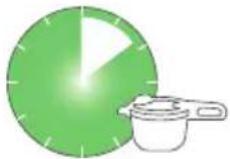
Heating-up phase

Pressure in cooker rising or is too low

Ideal temperature

Temperature too high, reduce temperature

Pressureless
Steaming function
Further details on using the electronic vitacontrol® digital* cooking assistant are provided in the device's Instructions for Use.
b) Using without the App
Preparing
Place the ingredients called for in your recipe in the pressure cooker. Make sure you observe the specified filling capacities. (See Chapter 5)
Then place the lid on the cooker and close it. If the locking indicator (Fig. A-3) in the lid handle is green, the cooker is ready to start cooking. (See Chapter 4)
Selecting the cooking setting
See Fig. M
Select the desired cooking setting on the control valve (Fig. A-5). The table of cooking times (Chapter 9) will give you suggestions for this.
Setting I, approx. 110°C (Gentle Setting)
(45 kPa operating pressure)
for delicate foods, such as fish or vegetables
Setting 2, approx. 116°C (Speed Setting)
(75 kPa operating pressure)
for all other foods, such as meats or stews
Steaming without pressure
In addition to settings for gentle and speed cooking, you can also select cooking settings for gentle steaming and conventional cooking. You will find additional information on the pressureless steaming setting in Chapter 8.
Building pressure and expelling air
Set your heat source to high to heat up the pressure cooker. Steam will escape from under the lid handle (Fig. A-1), along with the atmospheric oxygen that can destroy vitamins. This process can take a few minutes. As soon as the Euromatic closes and no more steam is expelled, pressure will begin to build up. The traffic light indicator (Fig. A-6) will soon begin to rise.
Traffic light system
See Fig. N
No matter which cooking setting you select (Setting 1 or 2), the traffic light indicator will show you three different colors. Much like a traffic light, these colors tell you the temperature in the cooker and help you to regulate the energy source.
When the electronic vitacontrol® digital* cooking assistant is used, this information is also provided by optical and acoustic signals, on the device itself or in the Fissler Cooking App (see separate Instructions for Use).
Yellow ring:
"The selected cooking setting will soon be reached. You can turn down the heat."
Depending on the kind of stove and what you are cooking, you may need to reduce the energy sooner or later. For solid burners or glass ceramic cooking surfaces at the beginning of the yellow ring, for induction or gas toward the end of the yellow ring.
Green ring:
"The selected cooking setting has been reached. The actual cooking time begins now."
Adjust the energy source so that the traffic light indicator remains in the green area during the entire cooking period.
Red ring:
"The temperature in the cooker is too high. The cooker will automatically begin to release steam to regulate the temperature. You need to turn down the heat source."
The energy source should be regulated so that the traffic light indicator does not enter the red zone. Otherwise, the cooker will lose liquid due to the release of steam.
Important:
Make sure that the liquid in the pressure cooker never completely vaporizes. (See information in Chapter 5.)
Cooking times
The actual cooking time begins once the selected cooking setting (green ring) has been reached. You will find the cooking times for various foods in Chapter 9.
Basic rules:
- The cooking time at Setting 2 is about 12 to 13 of the normal cooking time.
- The cooking time at Setting 1 is about 50% longer than at Setting 2.
- Cooking times for the same food can vary, since the amount, size and consistency of the foods influence the cooking time.
For example, boiled potatoes:
| Conventional cooking time | Cooking time at Setting 2 | Cooking time at Setting 1 |
| About 30 min. | About 8 - 12 min. | About 18 min |
At the end of the cooking time, remove the pressure cooker from the heat source and depressurize it. (See information in the following chapter.) Only then can you open it.
7. Depressurizing the vitavit®
Important:
Never try to force the pressure cooker open. The cooker can only be opened when the traffic light indicator has fallen into its socket completely and no more steam escapes when the release button is activated. Once the cooker has been depressurized, the release button can be easily pressed in order to open the cooker. Always gently shake the cooker before you open it, to release steam pockets that may have formed in the food. If you do not do this, you may be scalded by spattering food and steam.
When the electronic vitacontrol® digital* cooking assistant is used, remove this laterally from the control valve before depressurizing and opening the pressure cooker, and protect it from moisture to prevent the vitacontrol® digital* being damaged.
There are 4 ways to depressurize your vitavit®.
The way you depressurize depends on the food you are cooking. For foods that tend to foam or rise, such as legumes, soups or stews, or for foods with a delicate peel, such as jacket potatoes, do not select a method that reduces the pressure quickly, as this could cause the food to be ejected or the peel to burst.
Method I
"Quick depressurizing with the release button"
See Fig. O
Press the release button (Fig. A-2) gently in the direction shown by the arrow, and steam will escape from under the lid handle (Fig. A-4). Hold the button in until the traffic light indicator has fallen back into its socket completely and no more steam is escaping. Then release the button, shake the cooker gently, and press the release button again. Repeat this until no more steam escapes. Once the cooker is depressurized, the Euromatic will sink. The release button can now be pressed in completely to open the cooker.
Note:
As long as there is any pressure in the cooker, the release button cannot be pressed completely. This is normal, and it ensures that the cooker cannot be accidentally opened while under pressure. Do not try to force the release button!
Method 2
"Depressurizing setting on the control valve"
See Fig. P
If you turn the control valve little by little toward the depressurizing setting, steam will be released under the control valve (Fig. A-7). You can decide whether the steam should be released gently or more quickly. The larger the steps you activate in the control valve, the greater the amount of steam released. Finally, set the control valve at the depressurizing setting, and wait until no more steam is released. Shake the cooker gently and repeat this step until no more steam escapes. Once the cooker is fully depressurized, the Euromatic will sink. The release button can now be pressed completely to open the cooker.
Note:
Never turn the control valve directly from Setting 1 or 2 to the depressurizing setting, as the steam release would be extremely strong and food could be ejected as well. Always turn the control valve little by little until it reaches the depressurizing setting.
Method 3
"Let it cool off"
If you would like to take advantage of the residual energy in the cooker, use this method. Shortly before the end of the cooking time, take the cooker off the stove and just let it gradually cool down until the traffic light indicator has sunk completely.
Then press the release button gently in order to release any residual pressure. When no more steam escapes, let go of the button, shake the cooker gently, and then press the release button again. Repeat this step until no more steam escapes. When the cooker is fully depressurized, the Euromatic will sink again. Then the release button can be pressed in fully to open the cooker.
This method is especially good for foods with longer cooking times.
Method 4
"Depressurize under running water"
See Fig. Q
If the escaping steam bothers you, cool off the cooker under running water. Just place the cooker in the sink and let cold water run over the side of the lid (not over the lid handle or control valve) until the traffic light indicator has sunk completely.
Then press the release button gently to release any residual pressure. When no more steam escapes, let go of the button, shake the cooker gently, and then press the release button again. Repeat this step until no more steam escapes. When the cooker is fully depressurized, the Euromatic will sink. Then the release button can be pressed down fully to open the cooker.
8. Ways to use your pressure cooker
Braising meat
Braising is a combination of searing and stewing. The meat is first browned at a high temperature and then simmered in liquid.
- Heat the pressure cooker or pressure skillet without fat at medium heat ( 23 of stove power).
- Sprinkle a few drops of cold water into the pot. If they form clear pearls that "dance around" in the pot, this is the right temperature for browning meat, with or without fat. Carefully remove the water from the pot, using a paper towel, for example, before adding fat or placing the meat in the pot.
- Press the meat down firmly. After a few minutes, it will loosen by itself and can then be turned. Then you can add any other ingredients needed.
- Add the liquid called for in your recipe, but at least 200-300 ml. (See Chapter 5)
- Close the cooker.
- Select the cooking setting and build pressure in the cooker. (See Chapter 6)
Note: Meat is generally cooked at Setting 2. See Chapter 9.
Soups and stews
Soups and stews are always cooked without the inset.
- The cooker must never be more than 23 full („max“ marking). In the case of foods that swell or foam a great deal, only half full („ 12 “ marking).
- First heat the soup in the open cooker and scoop off all of the foam that forms.
• Stir. - Close the cooker.
- Select the cooking setting and build pressure. (See Chapter 6)
Note: Soups and stews are generally cooked at Setting 2. See Chapter 9.
Vegetables and potatoes
Vegetables and other delicate foods can be steamed very gently in the perforated inset. Depending on the model, the inset may be included or else sold separately.
- Add a minimum of 200-300 ml of liquid (see „min“ marking) to the pressure cooker. If desired, also add herbs, seasonings or wine.
- Place the washed vegetables in the perforated inset and put the inset on top of the tripod in the pot.
- Close the cooker.
- Select the desired cooking setting and build pressure. (See Chapter 6)
Note: Vegetables are generally cooked at Setting 1. See Chapter 9.
Cooking rice
Rice can be cooked in the pressure cooker without an inset. To prepare brown rice:
- Place rice and water in a 1:2 ratio in the pressure cooker.
- Add salt as desired.
- Add at least the minimum amount of liquid.
- Close the cooker.
- Select Setting 2 and build pressure until the proper temperature has been reached (green ring).
• Cook about 7-9 minutes at Setting 2, then depressurize and open the cooker. - Or else remove the cooker from the stove, set it aside, and let the rice simmer gently for about 15 minutes. Then open the cooker.
Note: Rice can also be cooked in the unperforated inset. Pour at least the minimum amount of liquid into the cooker. Then put the unperforated inset containing rice and water (ratio about 1:1) in the cooker.
Cooking fish
Fish can be cooked in its own juice, with the minimum amount of liquid, at the bottom of the cooker or else steamed in the perforated inset.
Note: Fish is generally cooked at Setting 2. See Chapter 9.
Deep-frying
Foods can only be deep-fried in the pressure cooker without the lid!
To prevent burns caused by foaming or spattering oil, make sure that the pot you use is high enough.
- Fill the cooker at most half full („½" marking) with fat.
• Heat the fat at medium. Do not overheat it. - The right temperature for deep-frying has been reached if bubbles immediately form around the handle of a wooden spoon when it is dipped in the hot fat.
- Never cover the cooker!
Steaming
This means cooking foods in steam at temperatures of around 100^ C. Hot steam surrounds the food and condenses on its surface. The food does not lie in the water while it is being cooked. This is why you need to use the perforated inset for steaming. Depending on the model, the inset may be included or else sold separately.
- Add a minimum of 200-300 ml of liquid (see „min“ marking) to the pressure cooker. If desired, also add herbs, seasonings or wine.
- Place the food in the perforated inset and place the inset on top of the tripod in the cooker.
- Close the cooker.
- Select the steaming setting and build pressure.
- No pressure is built up, and the traffic light indicator does not rise.
- You will know that the water is boiling and the right temperature has been reached by the fact that steam is expelled around the lid handle and/or control valve.
• Turn down the energy source.
• A slight release of steam during the cooking process is normal.
• Make sure that the liquid in the cooker does not boil off completely! - The cooking times for steaming are approximately the same as for normal cooking (though they tend to be a little longer).
The steaming setting can also be used without the inset for conventional cooking without pressure.
Note:
When cooking with the steaming setting, you can open the cooker at any time to stir or season the food. If the energy source is too high, the cooker may become locked for reasons of safety and the release button cannot be pressed in to open the cooker. If this should happen, remove the cooker from the stove,, wait just a moment, and you will be able to open the cooker again.
Preparing frozen foods
Frozen foods can be very easily prepared in the pressure cooker.
• Meat: Thaw a bit before browning.
- Foods without sauce: Place in the cooker in the perforated inset.
- Foods with sauce: Place in the cooker in the unperforated inset.
- Place at least 200-300 ml of liquid (see „min“ marking) in the pressure cooker.
- Close the cooker.
- Select the cooking level and build pressure. (See Chapter 6)
Preserving
The pressure cooker can also be used for preserving foods. Depending on the size of the preserving jars, you should use the 4.5 l model or larger.
- Fill the jars up to about one finger's breadth under the edge and close them.
- Place at least 200-300 ml of liquid (see „min“ marking) in the pressure cooker.
- Place the preserving jars in the cooker in the perforated inset.
- Close the cooker.
- Select the cooking setting and build pressure. (See Chapter 6)
| Preserving times: | ||
| Marmelade | Setting 1 | 1-2 min. |
| Fruits/pickled vegetables | Setting 1 | 8-10 min. |
| Vegetables/meat | Setting 2 | 20-25 min. |
Do not depressurize the cooker quickly, but let it cool off slowly, otherwise the jars could burst!
Extracting juice
Both the perforated and the unperforated insets are needed for extracting juice from small amounts of fruit.
• Prepare the fruit.
- Add at least 200-300 ml of liquid (see „min“ marking) to the pressure cooker.
- Place the fruit in the perforated inset.
- Put the perforated inset on the unperforated inset, and put this in the cooker.
- Close the cooker.
- Select Setting 2 and build pressure. (See Chapter 6)
| Juice extraction times: | ||
| Berries Setting 2 12 min. | ||
| Fruits with pits Setting 2 18 min. | ||
| Fruits with cores Setting 2 25 min. | ||
Do not depressurize the cooker quickly, but let it cool off slowly.
Sterilizing
Baby bottles or other items for use in the home (not for medical use) can be sterilized in the pressure cooker.
- Place at least 200-300 ml of liquid (see „min“ marking) in the pressure cooker.
- Place the bottles with their opening pointed downward in the perforated inset.
- Close the cooker.
- Select Setting 2, build pressure, and sterilize for 20 minutes.
Do not depressurize the cooker quickly, but let it cool off slowly.
Cooking a whole meal
By using the insets, you can prepare several foods at the same time, one on top of the other.
Rules:
• Cook fish over vegetables.
• Cook vegetables over meat.
- Foods with similar cooking times should be placed in the cooker and cooked at the same time.
- For foods with different cooking times, first place the food with the longest cooking time in the cooker and start cooking it. When the remaining cooking time of this food is the same as the cooking time of the other foods, remove the cooker from the stove, depressurize and open it, add the other foods, and then finish cooking.
- Since some steam will escape when the cooker is opened, at least 300 ml of liquid should be added to begin with.
Example:
Beef roulades (20 min.) with boiled potatoes (8 min.)
First place the roulades in the cooker and cook them at Setting 2 for 12 minutes. Then remove the cooker from the burner, depressurize it, open the cooker; and place the potatoes in the cooker in the perforated inset over the roulades by using the tripod. Close the cooker, build pressure, and cook at Setting 2 for an additional 8 minutes.
9. Cooking times
The cooking times shown here should serve as guidelines and are calculated on the basis of approximately 2-3 portions.
Basic rules:
- The cooking time at Setting 2 is about 12 to 13 of the normal cooking time.
- The cooking time at Setting I is about 50% longer than at Setting 2.
- Cooking times for the same food can vary, depending on the amount, shape, size and consistency.
- The smaller the pieces of food, the shorter the cooking time will be.
- The greater the total amount of food, the longer the cooking time
Example:
Jacket potatoes (whole), approx. 8 - 12 minutes; boiled potatoes (cut in half or quarters), about 8 minutes
Use the cooking times given here to work out your own personal times.
If you are not certain about a cooking time, cook the food for a shorter period to begin with. You can always continue cooking it.
Pork
| Spicy pork stew / Goulash | 15-20 min. Setting 2 |
| Pork roast | 25-30 min. Setting 2 |
| Pork shank 30-35 min. Setting 2 | |
| Pork knuckle, fresh | 30-40 min. Setting 2 |
Veal and beef
| Veal Stroganoff | 5-6 min. Setting 2 |
| Roast veal 15-20 min. Setting 2 | |
| Veal shank 15-20 min. Setting 2 | |
| Beef goulash | 15-20 min. Setting 2 |
| Beef shank (for soup) | 20-25 min. Setting 2 |
| Roulades / Roast fillet | 20-25 min. Setting 2 |
| Sauerbraten / Roast loin | 25-30 min. Setting 2 |
| Roast beef 30-40 min. Setting 2 | |
| Boiled beef | 40-60 min. Setting 2 |
Poultry
| Chicken breast/leg | 10-15 min. Setting 2 |
| Turkey breast/drumstick | 20-25 min. Setting 2 |
| Stewing/Soup chicken | 25-35 min. Setting 2 |
| (depending on size and age) |
Game and lamb
| Saddle of deer | about 15 min. Setting 2 |
| Roast deer venison | about 20 min. Setting 2 |
| Elk venison stew | 15-20 min. Setting 2 |
| Roast elk venison | about 25 min. Setting 2 |
| Wild boar goulash | 15-20 min. Setting 2 |
| Roast wild boar | about 25 min. Setting 2 |
| Roast hare | 15-20 min. Setting 2 |
| Lamb stew | 10-15 min. Setting 2 |
| Roast lamb | 15-20 min. Setting 2 |
Fish
| Fish stew | 3-4 min. Setting I |
| Salmon | 5-6 min. Setting I |
| Halibut | 6-7 min. Setting I |
| Haddock | 6-7 min. Setting I |
| Ocean perch | 7-8 min. Setting I |
Soups and stews
| Vegetable soup | 4-6 min. Setting 2 |
| Potato soup | 6-8 min. Setting 2 |
| Goulash soup | 10-15 min. Setting 2 |
| Beef broth 35-40 min. Setting 2 | |
Vegetables
| Artichokes (whole) | 15-20 min. Setting I |
| Cauliflower/broccoli (florets) | 2-3 min. Setting I |
| Cauliflower (whole) | 8-10 min. Setting I |
| Green beans (fresh) | 5-7 min. Setting I |
| Kohlrabi (pieces) | 5-8 min. Setting I |
| Corn on the cob | 5-6 min. Setting I |
| Mixed vegetables | 5-6 min. Setting I |
| Carrots | 4-6 min. Setting I |
| Green/red peppers | 1-2 min. Setting I |
| Red/white cabbage (strips) | 7-10 min. Setting I |
| White asparagus (whole) | 5-7 min. Setting I |
| Savoy cabbage (strips) | 7-10 min. Setting I |
| Boiled potatoes (in quarters) | 8-10 min. Setting 2 |
| Jacket potatoes (whole) | 12-15 min. Setting 2 |
Legumes and grains
| Lentils (not presoaked) | 10-15 min. Setting 2 |
| Peas (shelled, not presoaked) | 12-15 min. Setting 2 |
| Barley | 15-20 min. Setting 2 |
| Millet, buckwheat(do not leave to swell) | 6-7 min. Setting 2 |
| Brown rice(do not leave to swell) | 7-9 min. Setting 2 |
| Oats, wheat, barley, rye, spelt, unripe spelt grain(leave to swell) | 8-9 min. Setting 2 |
Depressurize the cooker and allow the contents to swell after cooking in the closed pot for about 15 minutes.
10. Cleaning and care
Cleaning
Always wash the pressure cooker after you have used it.
- Remove the silicone gasket from the lid and wash it by hand.
- Remove the control valve and wipe it off with a moist cloth.
- Remove the lid handle and rinse under running water.
- The pot, lid (without the silicone gasket, control valve, and lid handle), and insets can also be placed in the dish-washer.
Please note:
- To clean, use clear, hot water and dishwashing liquid and a dishwashing sponge or a soft brush. Do not use pointed, rough or sharp objects. If the inside or bottom is very dirty, you can use the rough side of the sponge.
- Do not let food residues dry onto the cooker; and do not store foods in the cooker for a long time, as this could cause stains in the stainless steel and changes in the surface.
- To maintain the stainless steel surface, use Fissler Stainless Steel Care regularly. It is outstanding for removing rainbow discolorations or films.
- When cleaning the cooker parts in the dishwasher, use only conventional household dishwashing products in the amounts recommended by the manufacturer. Do not use industrial detergents or highly concentrated cleaning products.
Mounting the control valve and lid handle
Control valve (Fig. A-5)
To remove: See Fig. R
Loosen the bell-shaped nut (Fig. A-21) by turning it in a counter-clockwise direction, and remove the control valve and the nut.
To mount: See Fig. S
Insert the control valve in the proper place in the lid, from the top, screw in the bell-shaped nut in a clockwise direction from the bottom, and tighten firmly.
Lid handle (Fig. A-1)
To remove: See Fig. T
Remove the lid handle by turning the lid screw (Fig. A-19) on the inside of the lid in a counter-clockwise direction. To mount: See Fig. U
Hold the lid handle in your hand and place the lid on it in the appropriate position. Turn the lid screw in a clockwise direction and tighten it firmly.
Storage
The silicone gasket should be stored in a dark place (protected from sunlight and UV radiation), dry and clean. The silicone gasket will last longer if you place the lid upside down on top of the pot after it is cleaned, so that the ring will not be crushed.
Maintenance
The parts of the pressure cooker that are subject to wear must be replaced regularly. You will find additional information on this in Chapter 12.
11. Questions and answers
Important: Always turn off the energy source and let the pressure cooker cool off before you attempt to eliminate a problem.
| Problem Possible reason How to correct the problem | ||
| When the cooker is building pressure, steam escapes longer than usual from under the lid handle (the Euromatic). | You have selected the pressureless steaming setting or a different setting below Setting 1.The cooker is not closed properly. (The indicator in the lid handle is red.)The heat source is not high enough.The cooking zone is not the right size for the pressure cooker.The lid handle is loose.The Fissler Euromatic or its o-ring is dirty or damaged. | With pressureless steaming, it is normal for some steam to escape. If you want to cook with pressure in a closed system, select Setting 1 or 2. (See Chapters 6 and 8)Close the cooker properly. (See Chapter 4) (The indicator in the lid handle is green.)Set the heat source at its highest level.Place the pressure cooker on a cooking zone with the right size. (See Chapter 5)Tighten the fastening screw of the lid handle on the inside of the lid.Clean or replace the part.(See Chapter 13) |
| No steam escapes when the cooker is building pressure. | Too little liquid was placed in the cooker.The heat source is not set high enough. | Add the minimum amount of liquid (200-300 ml). (See Chapter 5)Set the heat source on high. |
| Steam and/or drops of water escape at the edge of the lid before the traffic light indicator begins to rise. | The silicone gasket is not properly in place.The silicone gasket is dirty or damaged.The cooker is not closed properly. (The indicator in the lid handle is red). | Insert the silicone gasket properly. (See Chapter 5)Clean or replace the silicone gasket.Close the cooker properly.(See Chapter 4)(The indicator in the lid handle is green). |
| The traffic light indicator does not rise. | Steam is escaping near the lid handle.Steam is escaping at the edge of the lid.Too little liquid was placed in the cooker.The control valve is not attached correctly and firmly.The molded valve seal, valve base seal, or silicone membrane is missing, defective, or incorrectly attached. | See previous page.See previous page.Add the minimum amount of liquid (200-300 ml). (See Chapter 5)Attach the control valve correctly and tighten the bell-shaped nut.(See Chapter 10)Replace the seal or attach it correctly.(See Chapter 12) |
| Steam is escaping near the control valve. | The temperature is too high for the selected cooking setting. (The traffic light indicator is red.)You have selected the pressureless steaming setting or a different setting below Setting 1.The control valve is not attached correctly and firmly.The molded valve seal, valve base seal, or silicone membrane is missing, defective, or incorrectly attached. | Turn the heat source down. Adjust the energy source so that the traffic light indicator remains green during the entire cooking period. (See Chapter 6)With pressureless steaming, it is normal for some steam to escape. If you would like to cook with pressure in a closed system, select Setting 1 or 2.(See Chapters 6 and 8).Attach the control valve correctly and tighten the bell-shaped nut.(See Chapter 10)Replace the seal or attach it correctly.(See Chapter 12) |
| Steam is escaping under the lid handle (near the Euromatic), although the traffic light indicator has already risen. | The lid handle is loose.The flat gasket for the fastening screw of the lid handle or the o-ring for the Euromatic is missing, defective, or mounted incorrectly.If a great deal of steam is released, the Euromatic may have been triggered as a safety mechanism. This happens if the valve is dirty or defective. | Tighten the fastening screw of the lid handle on the inside of the lid.Replace the gasket or o-ring or mount it correctly. (See Chapter 12)Remove the control valve and clean or replace it. (See Chapter 10 and 12) |
| A great deal of steam is escaping from the edge of the lid, although the traffic light indicator has already risen. | The silicone gasket is defective.The silicone gasket has been triggered as a safety mechanism. This happens if the valve and the Euromatic are dirty or defective. | Replace the silicone gasket.(See Chapter 5 and 12)Have the cooker checked by Fissler Customer Service. |
| Steam is escaping from under the round cover cap for the lid handle or the release button. | A seal is defective. Replace the lid handle or have it checkedby Fissler Customer Service. | |
| The cooker is difficult to close, or the release button does not pop out when it closes. | The lid handle and/or pot handle are not correctly mounted.The lid handle is defective.The silicone gasket is not properly in place.The cooker is not properly closed.(The indicator in the lid handle is red.) | Check how the handles are mounted and tighten screws if necessary.Replace the lid handle.Insert the silicone gasket properly.(See Chapter 5)Close the cooker properly.(See Chapter 4)(The indicator in the lid handle is green.) |
| The cooker cannot be opened. | There is still pressure in the cooker.The Euromatic is jammed. | Depressurize the cooker.(See Chapter 7)Let go of the release button. Push the lid handle a little to the left. |
| The lid handle is loose. The fastening screw has not been tightened. | Tighten the fastening screw of the lid handle on the inside of the lid. | |
| The handles on the pot are loose. | The handle screws have not been tightened. | Tighten the screws with a screwdriver. |
If you have any questions about the electronic vitacontrol® digital* cooking assistant, please refer to the separate Instructions for Use.
12. Maintenance and replacement parts
Please note
Replace parts which are subject to wear, such as the rubber gasket and other rubber parts, regularly with original Fissler spare parts after c. 400 cooking operations or at the latest after two years. Parts which are clearly damaged (e.g. hardening, cracks, discolorations, overheating, or deformation) or do not fit properly must be replaced immediately. Failure to do so will result in the efficiency and safety of your pressure cooker being reduced.
Information on replacing parts
Silicone gasket (Fig. A-20)
See Chapter 5.
Silicone membrane (Fig. A-22)
See Fig. V
Detach the control valve from the lid and remove the old silicone membrane. Place the new silicone membrane on the plastic rod of the traffic light indicator and press the edge onto the metal push rod as far as the beginning of the thread.
Molded valve seal (Fig. A-23)
See Fig. W
Detach the control valve from the lid and remove the old seal. Select Setting 2 on the control valve, because this will make it easier to mount the seal. First place the new seal over the metal push rod, then press the other side all the way up over the tappet. Ensure that the control valve seal is tight all the way round, and that the seal is contained in the indentation provided for it.
Valve base seal (Fig. A-24)
See Fig. X
Detach the control valve from the lid and remove the old seal. Put the new seal in place and make sure that the seal is perfectly flat on both sides of the lid.
O-ring for Euromatic (Fig. A-18)
See Fig. I
The o-ring is removed/mounted on the inside of the lid. Make sure that the ring lies totally in the groove provided for it.
Euromatic (Fig. A-18)
To remove/mount the Euromatic, you must first remove the lid handle. This is very simple, as you only have to loosen the screw on the inside of the lid. You can remove the Euromatic from the lid as soon as you have removed the o-ring. For mounting, guide the new Euromatic without the o-ring through the lid so that the side with the white ball is on the inside of the lid. Then you can mount the o-ring as described above.
Replacement parts
| Replacement parts Diameter Article Number | ||
| Silicone gasket (Fig. Y-1) 22 cm 600-000-22-795 | ||
| 26 cm 600-000-26-795 | ||
| Pot handle for pressure skillet (Fig. Y-2) 22 cm | 630-300-02-850 | |
| 26 cm 630-700-04-850 | ||
| Pot handle for pressure cooker (Fig. Y-2) 22 cm | 630-300-04-850 | |
| 26 cm 630-700-08-850 | ||
| Helper handle for pressure skillet (Fig. Y-3) 22 cm | 630-300-02-840 | |
| 26 cm 630-700-04-840 | ||
| Helper handle for pressure cooker (Fig. Y-3) | 630-300-04-840 | |
| 26 cm 630-700-08-840 | ||
| Lid handle (Fig. Y-4) all 630-000-00-770 | ||
| Control valve (Fig. Y-5) all 620-000-00-700 | ||
| Bell-shaped nut for control valve (Fig. Y-6) all | 610-000-00-734 | |
| Silicone membrane (Fig. Y-7) | all 610-000-00-711 | |
| Molded valve seal (Fig. Y-8) | all 610-000-00-706 | |
| Valve base seal (Fig. Y-9) | all 610-000-00-733 | |
| Set consisting of silicone membrane, molded valves seal, valve base seal (Fig. Y-7, 8, 9) | all 610-000-01-706 | |
| Euromatic, complete (Fig. Y-10) | all 011-631-00-750 | |
| O-ring for Euromatic (Fig. Y-11) | all 011-631-03-760 | |
| Fastening screw for lid handle, with flat gasket (Fig. Y-12) | all 600-000-00-712 | |
Accessories
| Accessories Diameter Article Number | ||
| Perforated inset (incl. tripod) (Fig. Z-1) 22 cm | 610-300-00-800 | |
| 26 cm | 610-700-00-800 | |
| Unperforated inset (incl. tripod) (Fig. Z-2) | 22 cm | 610-300-00-820 |
| 26 cm | 610-700-00-820 | |
| Additional lid, glass (Fig. Z-3) | 22 cm | 021-641-22-600 |
| Additional lid, metal (Fig. Z-4) | 22 cm | 623-000-22-700 |
| 26 cm | 623-000-26-700 | |
| Deep-frying basket (Fig. Z-5) | 26 cm | 022-656-04-600 |
| Electronic vitacontrol® digital* cooking assistant (Fig. Z-6) | all | 620-001-00-470 |
All replacement parts can be purchased from your Fissler retailer or in the specialty departments of department stores. Our Customer Service Department will also be happy to help you. (For addresses, see Chapter 13).
You will find a list of dealers, as well as additional information, at www.fissler.co.uk / www.fissler.com.
13. Warranty and service
All Fissler products are meticulously manufactured from high-quality materials. The quality of our products is checked several times during the manufacturing process. On completion, they are subjected to a stringent final check.
3-year manufacturer's warranty
This is why we provide a 3-year warranty on all of our pressure cookers beginning with the date of purchase. In the event of a complaint, please return the complete item, together with the sales receipt, to your retailer or send it, carefully packaged, directly to Fissler Customer Service (address below).
Not included in this warranty are all parts that are subject to wear, such as the:
- silicone gasket (Fig. Y-1)
- molded valve seal (Fig. Y-8)
- valve base seal (Fig. Y-9)
- silicone membrane (Fig. Y-7)
- o-ring for Euromatic (Fig. Y-11)
- flat gasket for the fastening screw of the lid handle (Fig. Y-12)
No warranty is granted for damage resulting from the following:
- incorrect or improper use
- faulty or negligent handling
- incorrectly executed repairs
- the use of replacement parts that are not original Fissler parts
- chemical or physical influences on the product surfaces
- noncompliance with the Instructions for Use
10-year availability guarantee for replacement parts
You will be able to purchase all functional parts/spare parts of your pressure cooker for at least ten years after the product has been discontinued.
Customer Service address
Fissler GmbH
Customer Service Department
For additional information, go to www.fissler.co.uk / www.fissler.com
natural_image
Exterior view of a stainless steel cooking pot with black handles and digital display (no text or symbols visible)
Mode d'emploi
cf. illustrations H + I

Heating-up phase Pressure in cooker rising or is too low


Ideal temperature

Temperature too high, reduce temperature

Pressureless
Steaming function
Montage : cf. illustration S
Montage : cf. illustration U
Joint de soupape (ill. A-23)
cf. illustration W
natural_image
Exterior view of a stainless steel cooking pot with black handles and digital display (no text or symbols visible)
Handleiding
Apple/IOS & Google Android besturings by
natural_image
Four simple line drawings of household appliances: a roll, a sun, a stove, and a coiled spring (no text or symbols)
Pressure in cooker rising or is too low

Ideal temperature

Temperature too high, reduce temperature

Pressureless
Steaming function
Runderlap 40-60 min Stand 2
Gevogelte
Kippenborst/-bout 10-15 min Stand 2
Kalkoenborst/-bout 20-25 min Stand 2
Soepkip 25-35 min Stand 2
natural_image
Exterior view of a stainless steel cooking pot with black handles and digital display (no text or symbols visible)Heating-up phase Pressure in cooker rising or is too low


Ideal temperature

Temperature too high, reduce temperature

Pressureless
Steaming function
natural_image
Exterior view of a stainless steel cooking pot with black handles and digital display (no text or symbols visible)
Heating-up phase Pressure in cooker rising or is too low


Ideal temperature

Temperature too high, reduce temperature

Pressureless
Steaming function
natural_image
Exterior view of a stainless steel cooking pot with black handles and digital display (no text or symbols visible)

Heating-up phase Pressure in cooker rising or is too low


Ideal temperature

Temperature too high, reduce temperature

Pressureless
Steaming function
natural_image
Exterior view of a stainless steel cooking pot with black handles and digital display (no text or symbols visible)GR Οδηγίες χρήσης

Heating-up phase Pressure in cooker rising or is too low


Ideal temperature

Temperature too high, reduce temperature

Pressureless
Steaming function
natural_image
Exterior view of a stainless steel cooking pot with black handles and digital display (no text or symbols visible)natural_image
Four black-and-white icons representing different electrical components or symbols: a battery, a circular fan, a stovetted lamp, and a coiled spring (no text or labels)Ocağın ayarlanması
Heating-up phase Pressure in cooker rising or is too low


Ideal temperature

Temperature too high, reduce temperature

Pressureless
Steaming function
natural_image
Exterior view of a stainless steel cooking pot with black handles and digital display (no text or symbols visible)
Heating-up phase Pressure in cooker rising or is too low


Ideal temperature

Temperature too high, reduce temperature

Pressureless
Steaming function
Shepkina street 58, Bldg 3, Office 316
129110 Moscow
Russia
Tel.: (495) 600 61 97, (495) 600 62 52
Mail: oreshkina@sander-msk.ru
natural_image
Exterior view of a stainless steel cooking pot with black handles and digital display (no text or symbols visible)S Bruksanvisning

Heating-up phase Pressure in cooker rising or is too low


Ideal temperature

Temperature too high, reduce temperature

Pressureless
Steaming function
natural_image
Exterior view of a stainless steel cooking pot with black handles and digital display (no text or symbols visible)
Instrukcja obsługi

Heating-up phase Pressure in cooker rising or is too low


Ideal temperature

Temperature too high, reduce temperature

Pressureless
Steaming function
natural_image
Exterior view of a stainless steel cooking pot with black handles and digital display (no text or symbols visible)CZ Návod k použití
Heating-up phase Pressure in cooker rising or is too low


Ideal temperature

Temperature too high, reduce temperature

Pressureless
Steaming function
ال residuation والработس

Temperature too high, reduce temperature

Ideal temperature

rising or is too low

Heating-up phasePressure in coo
natural_image
Four simple line drawings of electrical components: a battery, a circuit diagram, a lamp with flame, and a coiled spring (no text or symbols)التحكم في سطح الطهي
natural_image
Exterior view of a stainless steel cooking pot with black handles and digital display (no text or symbols visible)دليل الاستخدام ARA