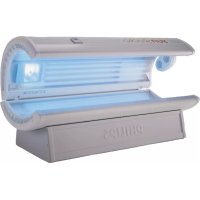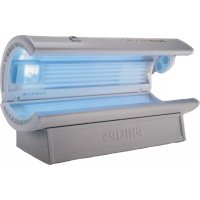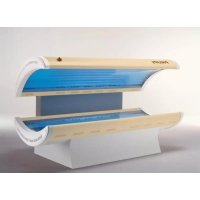
HB589 Suntudio - Solar bench PHILIPS - Free user manual and instructions
Find the device manual for free HB589 Suntudio PHILIPS in PDF.



Frequently Asked Questions - HB589 Suntudio PHILIPS
User questions about HB589 Suntudio PHILIPS
0 question about this device. Answer the ones you know or ask your own.
Ask a new question about this device
Download the instructions for your Solar bench in PDF format for free! Find your manual HB589 Suntudio - PHILIPS and take your electronic device back in hand. On this page are published all the documents necessary for the use of your device. HB589 Suntudio by PHILIPS.
USER MANUAL HB589 Suntudio PHILIPS
HB589, HB588 Sunstudio
PHILIPS
ENGLISH 4
DEUTsCH 10
FRANÇAIS 16
NEDERLANDS 22
ESPANOL 28
4 ENGLISH
Introduction
Full-body tanner
With this tanning appliance you can suntan comfortably at home. The tanning lamps emit visible light, heat and ultraviolet light, giving you the impression you are sunbathing in real sunlight. This appliance tans your whole body, including the sides, evenly from head to toe.
A timer ensures that each tanning session does not last longer than 30 minutes. Just as with natural sunlight, overexposure must be avoided (see chapter 'Tanning and your health').
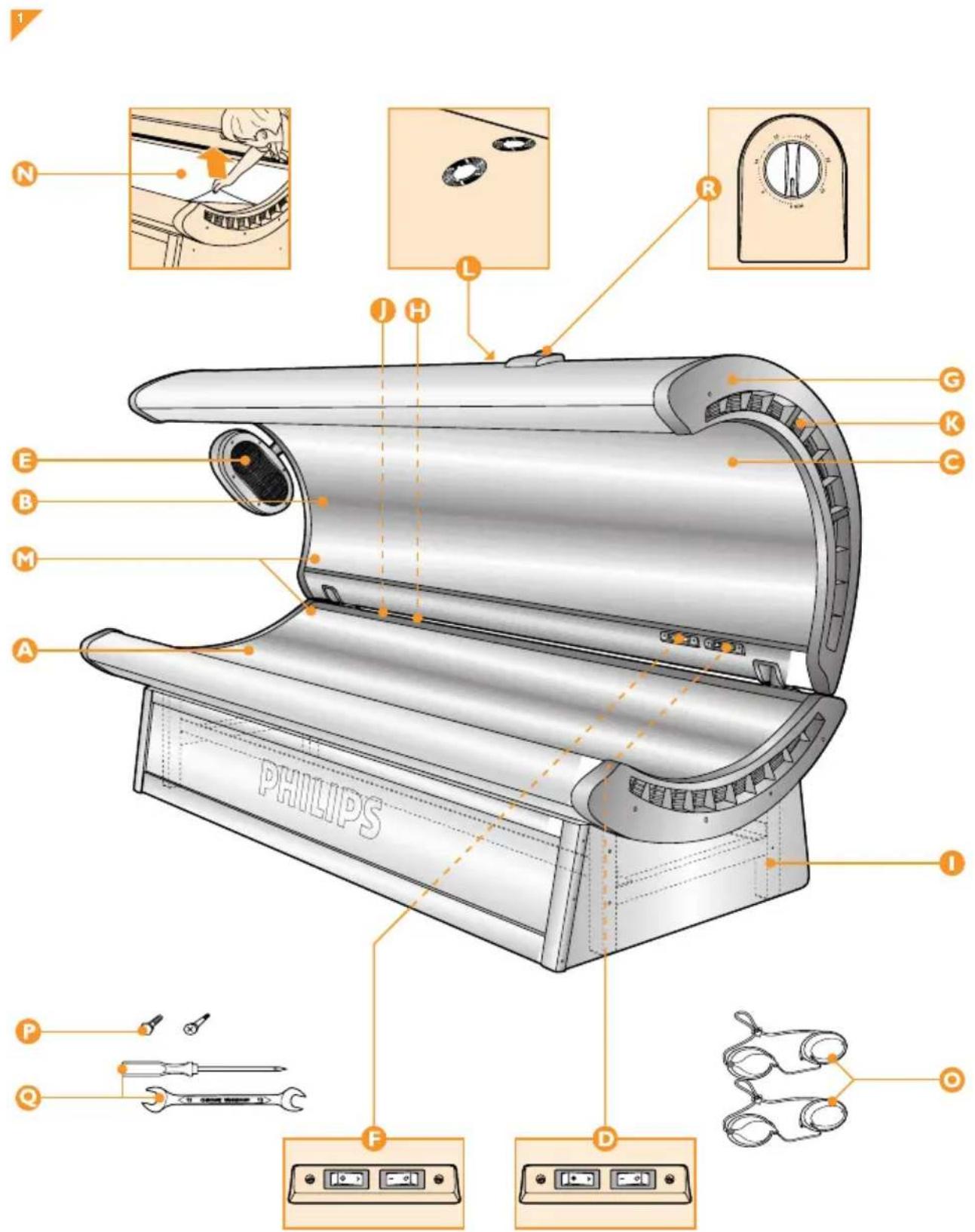
General description (fig. 1)
Tube lamps and starters of the couch
Tube lamps and starters of the canopy
Facial tanner - HB589 only
Switches for facial tanner - HB589 only
- O = facial tanner off
- I = facial tanner on
- I and = facial tanner on at 75% of its full intensity
- I and = facial tanner on at full intensity
Fan for body cooling
Switches for fan
- = fan off
-1 = fan on - I and = one fan on
- I and = both fans on
GEnd cover
HMains cord
Legs of the frame and side panel
J Connecting cable between couch and canopy
Fan to cool the facial tanner (HB589 only)
L Vents and fans to cool the tube lamps
MAcrylic sheets
NProtective foils
Protective goggles (2 pairs)
- (type no. HB072/service no. 4822 690 80147)
P Screws and bolts
Spanner and screwdriver
RTimer
Important
- Check if the voltage indicated on the canopy corresponds to the mains voltage in your home before you connect the appliance.
Water and electricity are a dangerous combination! Do not use this appliance in wet surroundings (e.g. in the bathroom or near a shower or swimming pool).
If you have just been swimming or have just taken a shower, dry yourself thoroughly before using the appliance.
The appliance must be connected to a circuit that is protected with a 16A standard fuse or an automatic fuse.
Always unplug the appliance after use. - Make sure the cord does not become trapped under one of the legs when you move the appliance.
-
Make sure the vents to cool the tanning lamps in the canopy and in the couch remain open during use.
-
Never use the appliance when the timer or an acrylic sheet is defective.
Make sure children do not play with the appliance. - Do not exceed the recommended tanning time and the maximum number of tanning hours (see 'Tanning sessions: how often and how long?').
- Do not tan a particular part of your body more than once a day. Avoid excessive exposure to natural sunlight on the same day.
- Do not use the tanning appliance if you have a disease and/or use medication or cosmetics that increase the sensitivity of your skin. Be extra careful if you are hypersensitive to UV light. Consult your doctor in case of doubt.
- Consult your doctor if persistent lumps or sores appear on the skin, or if there are changes in pigmented moles.
- The appliance is not to be used by people who get sunburnt without tanning when exposed to the sun, by persons suffering from sunburn, by children, or by persons who suffer (or have previously suffered) from skin cancer or who are predisposed to skin cancer.
- Always wear the protective goggles provided with the appliance while tanning to protect your eyes against overexposure (also see 'Tanning and your health').
- Remove creams, lipstick and other cosmetics well in advance of a tanning session.
- Do not use any sunscreens or suntan accelerators.
If your skin feels taut after the tanning session, you may apply a moisturising cream. - Colours may fade under the influence of the sun. The same effect may occur when using this appliance.
- Do not expect the appliance to yield better results than the natural sun.
If the mains cord of this appliance is damaged, it must always be replaced by Philips or a service centre authorised by Philips in order to avoid hazardous situations.
Tanning and your health
The sun, UV and tanning
The sun
The sun supplies various types of energy. Visible light enables us to see, ultraviolet (UV) light gives us a tan and the infrared (IR) light in sunrays provides the heat in which we like to bask.
UV and your health
Just as with natural sunlight, the tanning process will take some time. The first effect will only become visible after a few sessions (see 'Tanning sessions: how often and how long?').
Overexposure to ultraviolet light (natural sunlight or artificial light from your tanning appliance) can cause sunburn.
Besides many other factors, such as overexposure to natural sunlight, incorrect and excessive use of a tanning appliance may increase the risk of skin and eye problems. The degree to which these effects occur is determined by the nature, intensity and duration of the exposure on the one hand and the sensitivity of the person involved on the other hand.
The more the skin and the eyes are exposed to UV light, the higher the risk of keratitis, conjunctivitis, damage to the retina, cataracts, premature skin ageing and the development of skin tumours will be. Some medications and cosmetics increase the sensitivity of the skin.
Therefore it is highly important:
- that you follow the instructions given in 'Important' and 'Tanning sessions: how often and how long?'
- that you do not exceed the maximum number of tanning hours per year (see 'Tanning sessions: how often and how long?');
- that you always wear the goggles provided while tanning.
Tanning sessions: how often and how long?
Take one tanning session a day for five to ten days. Wait at least 48 hours after the first session before taking the second session. After this 5 to 10-day course, we advise you to give your skin a rest for a while.
- Approximately one month after a course, your skin will have lost much of its tan. You can then start a new course.
If you want to keep your tan, do not stop tanning after the course, but continue taking one or two tanning sessions a week.
Whether you choose to stop tanning for a while or whether you continue tanning on a lower frequency, always keep in mind that you must not exceed the maximum number of tanning hours. For this appliance the maximum is 20 hours (= 1200 minutes) a year.
Example
Suppose you are taking a 10-day course, consisting of a 8-minute tanning session on the first day and a 25-minute tanning session on the following nine days.
The entire course will then last (1× 8 minutes) +9× 25 minutes) = 233 minutes.
This means you can take 5 of these courses a year, as 5 × 233 minutes = 1165 minutes.
Table
As is shown in the table, the first session of a tanning course should always last 8 minutes, irrespective of the sensitivity of the skin.
If you think that the sessions are too long for you (e.g. if the skin gets taut and tender after the session), we advise you to reduce the sessions by e.g. 5 minutes.
| Duration of the tanning session in minutes | for persons with very sensitive skin | for persons with normal sensitive skin | for persons with less sensitive skin |
| 1st session | 8 | 8 | 8 |
| rest of at least 48 hours | |||
| 2nd session | 10 | 20-25 | 30 |
| 3rd session | 10 | 20-25 | 30 |
| 4th session | 10 | 20-25 | 30 |
| 5th session | 10 | 20-25 | 30 |
| 6th session | 10 | 20-25 | 30 |
| 7th session | 10 | 20-25 | 30 |
| 8th session | 10 | 20-25 | 30 |
| 9th session | 10 | 20-25 | 30 |
| 10th session | 10 | 20-25 | 30 |
Preparing for use
It requires two people to assemble and move the appliance.
- During assembly the appliance becomes heavier and more difficult to move. We therefore advise you to assemble the appliance at the place where it will be used. Make sure there is enough free space beside (at least 50~cm ) and behind (at least 30~cm ) the appliance.
- If the couch and/or canopy have to be placed on the floor, put them on the floor with the tube lamps facing downwards to avoid internal damage. Make sure you place them on a soft surface (e.g. a carpet or rug) to prevent damage to the housing (fig. 2).
1 First assemble the legs of the frame by fastening the angle sections with the bolts and then fit the side panels, if applicable (fig. 3).
- NB: the holes in the side panels must be on the front side.
2 Place the couch on the legs carefully. Make sure the legs slide steadily into the appropriate openings in the couch (fig. 4).
- NB: the openings for assembling the canopy must be located at the back of the couch.
3 If necessary, you can move the couch slightly by sliding its legs across the floor or by carefully lifting it slightly off the floor together with another person. Make sure there is enough free space beside (at least 50~cm ) and behind (at least 30~cm ) the appliance.
- Never try to move the appliance in the manner shown in the picture. This could cause the frame to become detached from the couch (fig. 5).
4 Lift the canopy together with another person and position its connecting tubes over the connecting holes. Slide the tubes steadily into the connecting holes of the couch (fig. 6).
Be careful not to get your fingers stuck between the couch and the canopy.
Make sure the cord does not get stuck between the couch and the canopy.
5 Remove the protective foil from the acrylic sheets of the canopy and couch (fig. 7).
Plug the connecting cable into the socket in the couch (fig. 8).
- If you want to remove the connecting cable, follow the instructions shown in the picture (fig. 9).
7 Place the front panel and fasten it with the screws (fig. 10).
The only purpose of the panel is to enhance the appearance of the appliance.
8 Insert the mains plug into the wall socket.
Using the appliance
Switch the appliance on by setting the required tanning time on the timer (fig. 11).
For the correct tanning times, see 'Tanning sessions: how often and how long?'
2 Push the canopy backwards so that you can lie down on the couch. When you are lying on the couch, pull the canopy back into horizontal position (fig. 12).
- NB: when the appliance has not been used for some time, the hinges of the canopy may squeak when you open or close the canopy for the first time.
3 Switch the body cooler on by means of the switch (fig. 13).
- Select the desired airflow: or (fig. 13).
HB589 only: if you like, you can also switch on the facial tanner (fig. 14). - Select for 75% of the full intensity or for full intensity (fig. 14).
5 Don't forget to put on the protective goggles provided.
6 During the last minute of the session you will hear a beeping sound.
Cleaning
Always unplug the appliance and let it cool down before you start cleaning it.
Do not use abrasives or scourers.
Never use liquids such as alcohol, methylated spirits, petrol or acetone to clean the acrylic sheet as this may cause irreparable damage.
- Clean the outside of the appliance with a damp cloth.
Do not let any water run into the appliance.
Replacement
The light emitted by the tanning lamps will become less bright in time (i.e. after a few years in case of normal use). When this happens, you will notice a decrease in the tanning capacity of the appliance. You can solve this problem by setting a slightly longer tanning time or by having the tanning lamps replaced.
Have the tanning lamps and/or starters replaced by a service centre authorised by Philips. They have the knowledge and skills required for this job and the original spare parts for your tanning appliance.
If you really insist on replacing the tube lamps and/or starters yourself, you should proceed as follows:
1 Remove the mains plug from the wall socket.
2 Remove the end cover at the head of the canopy by undoing the screws (fig. 15).
3 First pull the acrylic sheet approx. 10cm out of the appliance (1). Then undo the snap strip on the rear side of the canopy (2) (fig. 16).
4 Do the same with the snap strip on the front side of the canopy.
5 Remove the acrylic sheet (fig. 17).
- Now you can remove the tube lamps and the starters.
NB: you can now also clean the acrylic sheet, if you wish.
6 The lamps and/or starters of the couch and the canopy can in principle be replaced in the same way. The starters are located at one of the lamp ends.
7 To remove the lamps, turn them to the left or to the right so that you can lift them out of their holders.
8 The starters can be removed by turning them to the left.
Insert new lamps and/or starters and follow the instructions above in reverse direction and order to reassemble the appliance.
10 Do not forget to fasten the end cover with the screws again.
HB589 only
The HPA lamp of the facial tanner may only be replaced by a service centre authorised by Philips.
Environment
The lamps of the appliance contain substances that can be harmful to the environment. When you discard the lamps, do not throw them away with the normal household waste but hand them in at an official collection point.
- Do not throw the appliance away with the normal household waste at the end of its life, but hand it in at an official collection point for recycling. By doing this you will help to preserve the environment (fig. 18).
Guarantee & service
If you need service or information or if you have a problem, please visit the Philips Web site at www.philips.com or contact the Philips Customer Care Centre in your country (you will find its phone number in the worldwide guarantee leaflet). If there is no Customer Care Centre in your country, turn to your local Philips dealer or contact the Service Department of Philips Domestic Appliances and Personal Care BV.
Guarantee restrictions
The following parts are not covered by the terms of the international guarantee.
- tanning lamps
- acrylic plates, including cleaning costs
Troubleshooting
If the appliance has not been installed or is not used in accordance with the instructions, it may fail to work properly. In that case you will be able to solve the problem yourself by following the troubleshooting tips below.
If the problem is not mentioned in the list, the appliance may not work properly because it has a defect. In that case we advise you to contact your dealer or an authorised service centre.
| Problem | Possible causes |
| The appliance does not start. | The plug has not been properly inserted into the wall socket. |
| There is a power failure. Check if the power supply works by connecting another appliance. | |
| The timer has not been set. | |
| The canopy starts, but the couch does not. | Connecting cable (J) has not been plugged in (correctly). |
| The fuse cuts off the power when the appliance is switched on or during use. | Check the fuse of the circuit to which the appliance is connected. The correct fuse type is a 16A standard fuse or an automatic fuse. |
| Poor tanning result. | You are using an extension cord that is too long or does not have the correct current rating. Consult your dealer. Our general advice is not to use an extension cord. |
| You are not following the tanning schedule suitable for your skin type. Check the table in 'Tanning sessions: how often and how long?' | |
| When the lamps have been used for a long time, the UV light emitted will decrease. This effect only becomes noticeable after several years. You can solve this problem by selecting a slightly longer tanning time or by replacing the lamps. |
Einleitung
Ganzkorperbrauner
- (type no. HB072/service no. 4822 690 80147)