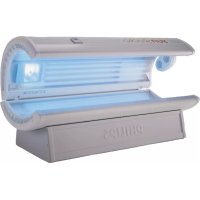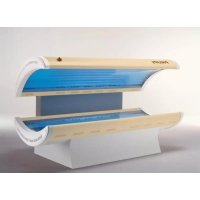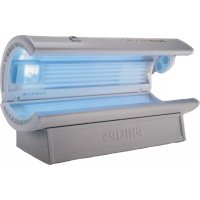
HB591 - Solar bench PHILIPS - Free user manual and instructions
Find the device manual for free HB591 PHILIPS in PDF.



User questions about HB591 PHILIPS
0 question about this device. Answer the ones you know or ask your own.
Ask a new question about this device
Download the instructions for your Solar bench in PDF format for free! Find your manual HB591 - PHILIPS and take your electronic device back in hand. On this page are published all the documents necessary for the use of your device. HB591 by PHILIPS.
USER MANUAL HB591 PHILIPS
HB591, HB590 Sunstudio

ENGLISH 4
DEUTsCH 8
FRANÇAIS 12
NEDERLANDS 16
ESPANOL 20
Pycckn 24
Introduction
Full-body tanner with integrated facial tanning unit
With this tanning appliance you can suntan comfortably at home. The tanning lamps emit visible light, heat and ultraviolet light, giving you the impression you are sunbathing in real sunlight. This appliance tans your whole body, including the sides, evenly from head to toe.
A timer ensures that each tanning session does not last longer than 30 minutes. Just as with natural sunlight, overexposure must be avoided (see chapter 'Tanning and your health').
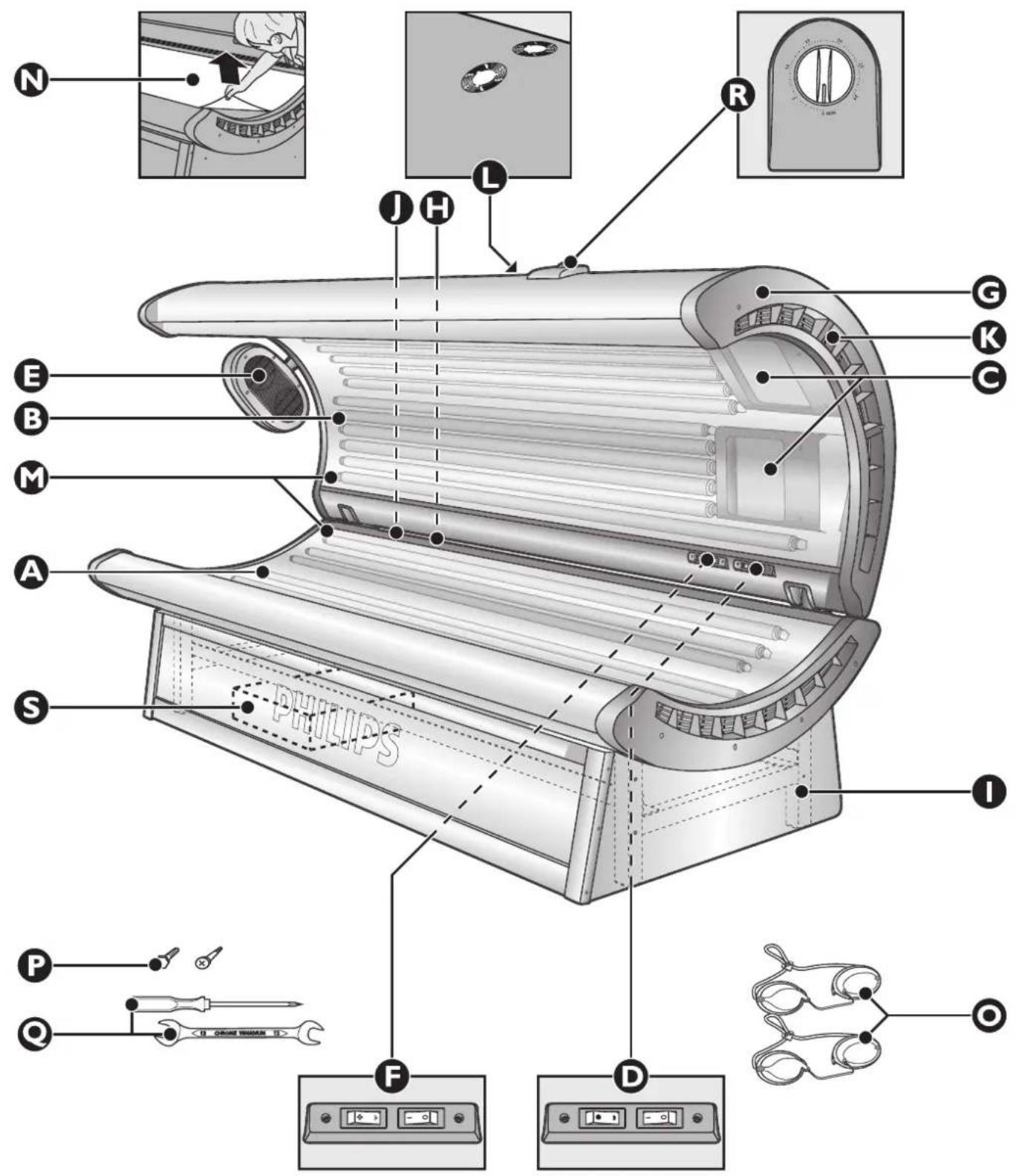
General description (fig. 1)
A Tube lamps and starters of the couch
Tube lamps and starters of the canopy
Facial tanner
Switches for facial tanner
- O = facial tanner off
-1=facialtanneron
-1 and = facial tanner on at 75% of its full intensity - I and = facial tanner on at full intensity
Fan for body cooling
Switches for fan
- O = fan off
-1 = fan on
-1 and = one fan on
-1 and = both fans on
End cover
Mains cord
Legs of the frame
Connecting cables between power supply unit and couch and canopy
Fans to cool the facial tanners
Vents and fans to cool the tube lamps
Acrylic sheets
NProtective foils
Protective goggles (2 pairs)
(type no.HB072/service no.482269080147)
Screws, bolts and decorative caps
Spanner and screwdriver
RTimer
Power supply unit
Important
Check if the voltage indicated on the canopy corresponds to the mains voltage in your home before you connect the appliance.
This appliance requires a mains voltage of 400 volts.
A high mains impedance may result in noticeable light intensity changes from light bulbs when the tanning appliance is switched on. To fulfil the legal EMC requirements on this point, the modulus of the mains impedance has to be lower than 0.3 ohm. For information, contact your utility.
Water and electricity are a dangerous combination! Do not use this appliance in wet surroundings (e.g. in the bathroom or near a shower or swimming pool).
If you have just been swimming or have just taken a shower, dry yourself thoroughly before using the appliance.
The appliance must be connected to a three-phase power supply that is protected with 16A standard fuses or automatic fuses.
Always unplug the appliance after use.
Make sure the cord does not become trapped under one of the legs when you move the appliance.
Make sure the vents to cool the tanning lamps in the canopy and in the couch remain open during use.
Never use the appliance when the timer or an acrylic sheet is defective.
Make sure children do not play with the appliance.
Do not exceed the recommended tanning time and the maximum number of tanning hours (see 'Tanning sessions: how often and how long?').
Do not tan a particular part of your body more than once a day.Avoid excessive exposure to natural sunlight on the same day.
Do not use the tanning appliance if you have a disease and/or use medication or cosmetics that increase the sensitivity of your skin. Be extra careful if you are hypersensitive to UV light. Consult your doctor in case of doubt.
Consult your doctor if persistent lumps or sores appear on the skin, or if there are changes in pigmented moles.
The appliance is not to be used by people who get sunburnt without tanning when exposed to the sun, by persons suffering from sunburn, by children, or by persons who suffer (or have previously suffered) from skin cancer or who are predisposed to skin cancer.
Always wear the protective goggles provided with the appliance while tanning to protect your eyes against overexposure (also see 'Tanning and your health').
- Remove creams, lipstick and other cosmetics well in advance of a tanning session.
Do not use any sunscreens or suntan accelerators.
If your skin feels taut after the tanning session, you may apply a moisturising cream.
- Colours may fade under the influence of the sun. The same effect may occur when using this appliance.
Do not expect the appliance to yield better results than the natural sun.
If the mains cord of this appliance is damaged, it must always be replaced by Philips or a service centre authorised by Philips in order to avoid hazardous situations.
If you require another type of plug than the one fitted to the appliance, please contact a registered electrician.
Tanning and your health
The sun, UV and tanning
The sun
The sun supplies various types of energy. Visible light enables us to see, ultraviolet (UV) light gives us a tan and the infrared (IR) light in sunrays provides the heat in which we like to bask.
UV and your health
Just as with natural sunlight, the tanning process will take some time. The first effect will only become visible after a few sessions (see 'Tanning sessions: how often and how long').
Overexposure to ultraviolet light (natural sunlight or artificial light from your tanning appliance) can cause sunburn.
Besides many other factors, such as overexposure to natural sunlight, incorrect and excessive use of a tanning appliance may increase the risk of skin and eye problems. The degree to which these effects occur is determined by the nature, intensity and duration of the exposure on the one hand and the sensitivity of the person involved on the other hand.
The more the skin and the eyes are exposed to UV light, the higher the risk of keratitis, conjunctivitis, damage to the retina, cataracts, premature skin ageing and the development of skin tumours will be. Some medications and cosmetics increase the sensitivity of the skin.
Therefore it is highly important:
that you follow the instructions given in 'Important' and 'Tanning sessions: how often and how long?';
that you do not exceed the maximum number of tanning hours per year (see 'Tanning sessions: how often and how long?');
- that you always wear the goggles provided while tanning.
Tanning sessions: how often and how long?
Take one tanning session a day for five to ten days. Wait at least 48 hours after the first session before taking the second session. After this 5 to 10-day course, we advise you to give your skin a rest for a while.
Approximately one month after a course, your skin will have lost much of its tan. You can then start a new course.
If you want to keep your tan, do not stop tanning after the course, but continue taking one or two tanning sessions a week.
Whether you choose to stop tanning for a while or whether you continue tanning on a lower frequency, always keep in mind that you must not exceed the maximum number of tanning hours. For this appliance the maximum is 17 hours ( = 1020 minutes) a year.
Example
Suppose you are taking a 10-day course, consisting of a 6-minute tanning session on the first day and a 20-minute tanning session on the following nine days.
The entire course will then last (1 × 6 minutes) + (9 × 20 minutes) = 186 minutes.
This means you can take 5 of these courses a year, as 5 × 186 minutes = 930 minutes.
Table
As is shown in the table, the first session of a tanning course should always last 6 minutes, irrespective of the sensitivity of the skin.
If you think that the sessions are too long for you (e.g. if the skin gets taut and tender after the session), we advise you to reduce the sessions by e.g. 5 minutes.
| Duration of the tanning session in minutes | for persons with very sensitive skin | for persons with normal sensitive skin | for persons with less sensitive skin |
| 1st session | 6 | 6 | 6 |
| rest of at least 48 hours | |||
| 2nd session | 10 | 15-20 | 25 |
| 3rd session | 10 | 15-20 | 25 |
| 4th session | 10 | 15-20 | 25 |
| 5th session | 10 | 15-20 | 25 |
| 6th session | 10 | 15-20 | 25 |
| 7th session | 10 | 15-20 | 25 |
| 8th session | 10 | 15-20 | 25 |
| 9th session | 10 | 15-20 | 25 |
| 10th session | 10 | 15-20 | 25 |
Preparing for use
It requires two people to assemble and move the tanning appliance.
During assembly the appliance becomes heavier and more difficult to move. We therefore advise you to assemble the appliance at the place where it will be used. Make sure there is enough free space beside (at least 50~cm ) and behind (at least 30~cm ) the appliance.
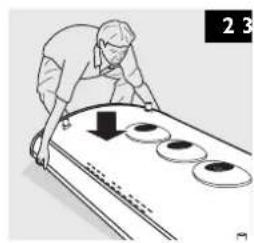
If the couch and/or canopy have to be placed on the floor, put them on the floor with the tube lamps facing downwards to avoid internal damage. Make sure you place them on a soft surface (e.g. a carpet or rug) to prevent damage to the housing (fig. 2).
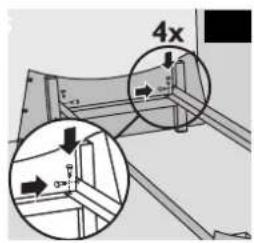
1 First assemble the legs of the frame by fastening the angle sections with the bolts and then fit the side panels, if applicable (fig. 3).
NB: the holes in the side panels must be on the front side.
2 Place the couch on the legs carefully. Make sure the legs slide steadily into the appropriate openings in the couch (fig. 4).
NB: the openings for assembling the canopy must be located at the back of the couch.
3 If necessary, you can move the couch slightly by sliding its legs across the floor or by carefully lifting it slightly off the floor together with another person. Make sure there is enough free space beside (at least 50~cm ) and behind (at least 30~cm ) the appliance.
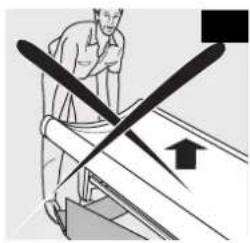
- Never try to move the appliance in the manner shown in the picture. This could cause the frame to become detached from the couch (fig. 5).
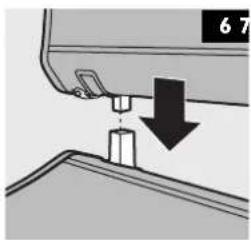
4 Lift the canopy together with another person and position its connecting tubes over the connecting holes. Slide the tubes steadily into the connecting holes of the couch (fig. 6).
Be careful not to get your fingers stuck between the couch and the canopy.
Make sure the cord does not get stuck between the couch and the canopy.
5 Remove the protective foil from the acrylic sheets of the canopy and couch (fig. 7).
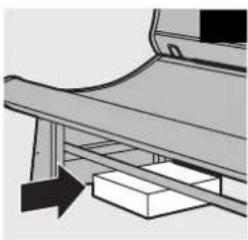
6 Push the power supply unit under the couch from the front (fig. 8).
NB: the plugs should be located at the back of the power supply unit. Make sure the mains cord does not get caught under the wheels.
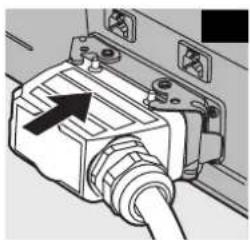
7 Insert the large plug into the socket of the power supply unit. This will take some effort (fig. 9).
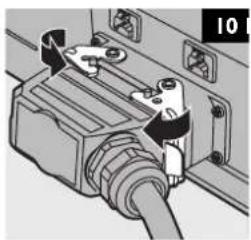
Lock the plug in position by means of the metal handles (fig. 10).
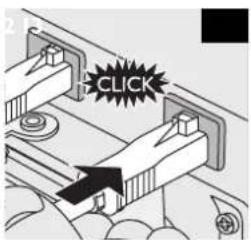
8 Put the plugs of the couch and the canopy in the socket of the power supply (fig. 11).
The small plugs are identical and interchangeable.
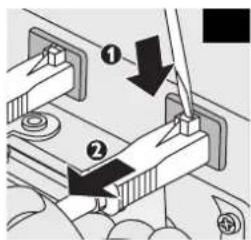
If you want to remove the small plugs, follow the instructions shown in the picture (fig. 12).
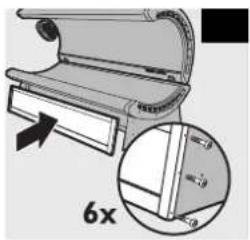
9 Place the front panel and fasten it with the screws (fig. 13).
The only purpose of the panel is to enhance the appearance of the appliance.
10 Insert the mains plug of the power supply unit into the wall socket.
Using the appliance
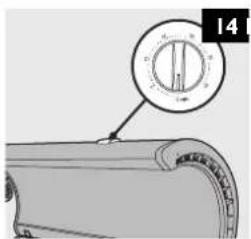
Switch the appliance on by setting the required tanning time on the timer (fig. 14).
For the correct tanning times, see 'Tanning sessions: how often and how long?'
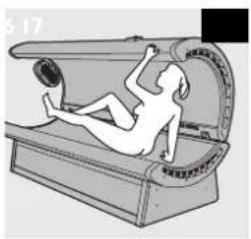
2 Push the canopy backwards so that you can lie down on the couch. When you are lying on the couch, pull the canopy back into horizontal position (fig. 15).
NB: when the appliance has not been used for some time, the hinges of the canopy may squeak when you open or close the canopy for the first time.
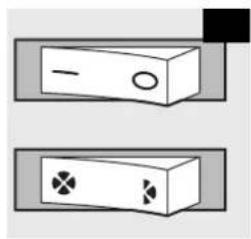
3 Switch the body cooler on by means of the switch (fig. 16).
Select the desired airflow: or (fig. 16).
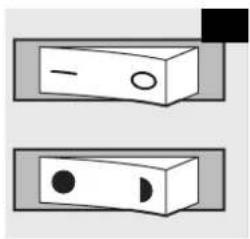
4 If you like, you can also switch on the facial tanner (fig. 17).
Select for 75% of the full intensity or for full intensity (fig. 17).
5 Don't forget to put on the protective goggles provided.
During the last minute of the session you will hear a beeping sound.
Cleaning
Always remove the mains plug from the wall socket and let the tanning appliance cool down before you start cleaning it.
Never use liquids such as alcohol, methylated spirits, petrol or acetone to clean the acrylic sheets as this may cause irreparable damage.
Clean the outside of the appliance with a damp cloth.
Do not let any water run into the appliance.
Replacement
The light emitted by the tanning lamps will become less bright in time (i.e. after a few years in case of normal use). When this happens, you will notice a decrease in the tanning capacity of the appliance. You can solve this problem by setting a slightly longer tanning time or by having the tanning lamps replaced.
Have the tanning lamps and/or starters replaced by a service centre authorised by Philips. They have the knowledge and skills required for this job and the original spare parts for your tanning appliance.
If you really insist on replacing the tube lamps and/or starters yourself, you should proceed as follows:
1 Remove the mains plug from the wall socket.
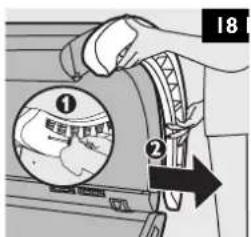
2 Remove the end cover at the head of the canopy by undoing the screws (fig. 18).
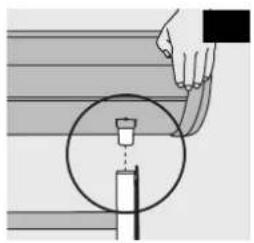
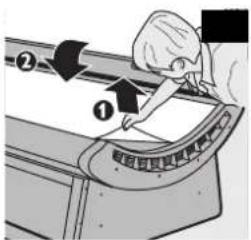
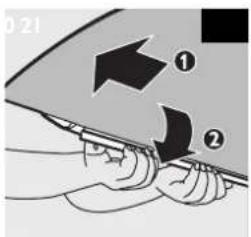
3 First pull the acrylic sheet approx. 10cm out of the appliance (1). Then undo the snap strip on the rear side of the canopy (2) (fig. 19).
4 Do the same with the snap strip on the front side of the canopy.
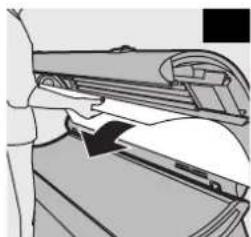
5 Remove the acrylic sheet (fig. 20).
Now you can remove the tube lamps and the starters.
NB: you can now also clean the acrylic sheet, if you wish.
6 The lamps and/or starters of the couch and the canopy can in principle be replaced in the same way. The starters are located at one of the lamp ends, except for three starters in the canopy which are located in a different place and which can only be replaced by removing the three lamps.
7 To remove the lamps, turn them to the left or to the right so that you can lift them out of their holders.
8 The starters can be removed by turning them to the left.
Insert new lamps and/or starters and follow the instructions above in reverse direction and order to reassemble the appliance.
10 Do not forget to fasten the end cover with the screws again.
NB: the HPA lamps of the facial tanner may only be replaced by a service centre authorised by Philips.
Coin box or remote control unit
This apian can also be connected to a coin box or a remote control unit.Thes devices may only be connected by a registered electrician. The connection instructions can be found on a sticker on the power supply unit.
Environment
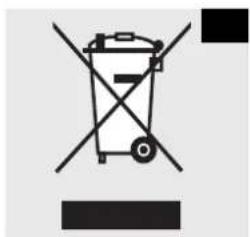
Do not throw the appliance away with the normal household waste at the end of its life, but hand it in at an official collection point for recycling. By doing this you will help to preserve the environment (fig. 21).
The lamps of this appliance contain substances that may pollute the environment. Always remove them and take them to an official collection point before you hand the appliance in for recycling.
Guarantee & service
If you need service or information or if you have a problem, please visit the Philips Web site at www.philips.com or contact the Philips Customer Care Centre in your country (you will find its phone number in the worldwide guarantee leaflet). If there is no Customer Care Centre in your country, turn to your local Philips dealer or contact the Service Department of Philips Domestic Appliances and Personal Care BV.
Guarantee restrictions
The following parts are not covered by the terms of the international guarantee.
- tanning lamps
- acrylic sheets and the costs of cleaning acrylic sheets
Troubleshooting
If the appliance has not been installed or is not used in accordance with the instructions, it may fail to work properly. In that case you will be able to solve the problem yourself by following the troubleshooting tips below.
If the problem is not mentioned in the list, the appliance may not work properly because it has a defect. In that case we advise you to contact your dealer or a Philips service centre.
| Problem | Possible causes |
| The appliance does not start. | The mains plug has not been properly inserted into the wall socket. |
| The timer has not been set. | |
| Connecting cables (J) have not been plugged in (correctly). | |
| One or more fuses of the three-phase power supply system cut off the power when you switch the appliance on or when it is in use. | Check the fuses.The correct fuse type is a 16A standard fuse or an automatic fuse. |
| Poor tanning result. | You are using an extension cord that is too long or does not have the correct current rating.Consult your dealer. Our general advice is not to use an extension cord. |
| You are not following the tanning schedule suitable for your skin type. Check the table in 'Tanning sessions: how often and how long?' | |
| When the lamps have been used for a long time, the UV light emitted will decrease.This effect only becomes noticeable after several years.You can solve this problem by selecting a slightly longer tanning time or by replacing the lamps. |
Einleitung
ATpy6haTbeAAMnBnCtapTepeAAMN KyWEeTKN
B Ty6haTbe AAMNbI cTapTebpAaMn KaHane
CoApyn dAAnu
PHepeKaIOUaTeAN COAIPINAAIULa
- O = CoAmpN DAAR ANLA BblKIOueH
-|=CoApynAAnAuaBkAIOueCH
-1n = coayn AAAAua BkIOueH Ha 75% MOUHOCTN
-1n = COARPN AAR ANLCA BKAIOHc HbNOAHyMOUHOCTb
EBeHTMnTOpAoxaXeHnTeAa
FbkiOaTeAeNBeHTnAToPa
- O = BEHTNAAITOP BbIKAOCH
-| = BEHTNAArTOp BKAIOueH
-|n=OaVHBeHTNAArTOpBkAIOueH
-1n=06aBEHTNAArTopaBkAIOeHbI
Topeu KpbiluKu
山Hyp niTaHn
HOxKpaMbI
CoeHNHTeBHeKaeAa KyuETKnKaHaHe 6oKa NITaHn
BeHTNAArTopbI OXAaKdEHNHcOARPNnAUNa
BHeHTNAAUHHO BTEBPCTN IN BEHTNATOpbI AAR OXAaKdEHHr Tpy6aTbIX AAMn
AKpNAOBbIC ANTbl
3aunTHa oAba
3aunTHbOcKn (2 npbl) -MoAeHB072/cepBncHbH HOpem 4822 690 80147
BnHtbl,60AThnAeKOpaTHBHe 3aayu
TaeHbI KAOU NTBePTKa
Taumep
S BAOK NITaHIN
BHHMaHne
IpeKae yem NOAIAIOHTb COARIN K 3AEKTPOcETn, y6eAnTEcB B TOM, qTO HApJKeHHe, yKa3aHHoe Ha KaHane, COOTBeTCTByet HApJKeHIO 3AEKTPOcETn y Bac OMa.
Apa60bI 3TOro np60pa Tpe6yeTc ceTeBOe HnpanjKeHne B 400 BOaBt.
BoaBooe cnpotnBaeHHe 3AekTpoceTH MoKeT pNBeCTN K 3aMeTHOMy 3MeHeHIO HHTeHCNBocTN CBeTa AAMN OCBeueHn npn BkAIOyeHHn coApHn. AAnco6AoDeHn Tpe6oBaHn EMC no daHHOMy BONPOcy, 3aHHeHne cnpotnBaeHn 3AekTpoceTH DOAXHO 6bITb Hnke 0,3 OM. 3a cnpaBkoI o6paTHecB CBOIO KOMMyHaBHyO Cayx6y.
Boa n 3AeKTPnueCTBO -3TO OAnCHOE CoeyTHe He NoAB3yIteCb Pn6OpOM B MecTx C NOBbIweHHo BAAxHocTbO (HaPnMep, BAHHoKOMHaTe, B AYPe, PdAmC 6accenHom).
Iocae Kynahnna Hnn npema Da ysa daHTe Tey BbCOxHytB NOAHocTbO, npeKde Yem Noa3OBaTbca Pnp6opom.
CoApyn DOAAKeH 6bTb IoAKIOueH K TpeXphi3HOI cTeN CO tAHApTHbIM PIABKM NAn ABOTMaTHueckm 16 A ppeOxApaHHTeAEM.
Bcerda OTKAouaHTe np6op OT 3AEKTPocETn nOCAe NcIOAb3OBaHna.
Korda Bbl nepeaburaete coaepn, caeinte yto6b ceTeBOH np He noan nOa ero HOKKy.
Y6eAnTeCb B TOM,HTO pN IOnb3OBaHm np6Opom BeHTnAIOHHbIe OTBepCTnHa N3AUYaIOxN 6AoKax KaHane N KyuETKn He 3aropoxKeHbl.
3aPpeaaetcnoAbaBbCpN6Opom B cayae, ean TaHmep nn akPnAObbn AHC TOBpeKAEH.
He no3BOAHTe AETM nIpaTb c np6Opom.
He npebblaIte peKOMeHDoBaHHo IPOdoAKnTeAhoCTn CeaHCoB HAn MaKcMaAHo DOyctmOrO KOAnueCTBa YacOB 3aropAHn (cm. pa3de "CeaHcbI 3aropAHn: kak cacto n KAK doAo?").
CeaHcbI 3aropAHnA DAn OTaeAbHbIX yAcTcKOB TeA CaeAyET PPOBOAnTb He aAe OAnHO p3a B AeH. B An H PPOBeEHHraOpAHn I36eraTe PPOAOXHTeABHO BO3eICTBnE cTeCTBHeHOrO coAHeHOrO n3AyeHHn.
Bam He caeayet noab30aBcra coarHem, ean Bbl 6oAbHb H/An ean Bbl npoxoate Kycp aeeyHn An nCnoab3yete KOcmetky, KOtopaonoblaaet ybcTBnTeaeHoCTb Baewen KxN. ByBe TocO6eHNO octopoXHb npn NobbiueHHo ybcTBnTeaBHOCTn KxN K YΦ n3ayehnIO. PpOKOHcybTpyntecb C bpAHom B cayae comHeHH.
Pn NOBaehnn Ha Koxe Onyxoae nn Bocnaee Hn, a TaKxe N3MeHeHH nTepnNtMeHTaun, 6paTntecb K Aeauemy BpaCy.
3aIpeaaetcnoabotbpcnp6opomAnam,KoKaKOTOpbIXNoDBepKeHa 6bICTpbIM COAHeuHbIM OxKOrAM,MeHEUOM COAHeuHbIE OXKOrn,DeTm,a TAKKe CTpaiaoum (nAn pahee cTpaadABWM) OT paka Koxn nn PpeapacNOOeHHbIM k paky KOxN.
PnIOAB3OBAHIN Pn6OpOM Bcerda HaDeBaHTe 3aunThbte OUYK, BXOAnue B KOMnAeKT NocTabKn Pn6opa, AAn PpeOxApeHnra3 OT Ype3MepHO BO3eICTBna H3ayehnna (CM. TaKke pa3deA "3aropHne n Baale 3Apobbe").
YdaAHTe C Anuca KpeMbI, r6HyIO NOMaMy I APyRyIO KOCMeTNU 3a6laorOBpeMeHNO nepe IPOBeDeHnEM ceaHc 3aropAHn.
He noAbyTebc KaKMMN-A6o KPeMaMn OT 3ara pa nn da 3araapa.
Ecan nocae npoBeeHncaeaopahn Bbl ouyaete HeKoTOpYIO cyXocb Koxn, cMaXbTe ee yBaAHHIOUHM KpeOM.
P O A BO3AeCTBnEM COAHU KpACKM MOrT NIO6AEKHyb.To Jx CaMOe MoXET PPOH3OHTN IN PN IIOABOHIN DAHHBM Pn6OpOM.
He cAeAyet OxNtB,TO coAarpn o6ecneHT AuyuHIN 300ekT, Yem eCTeTBehHOe coAheHHOe H3AUYHeH.
B Cuyae NOBpeKdEHNcTeBOrO uHpya eRo Heo6xOaHMo 3aMeHnTb ToAkbO B TOpROBoI OprAH3aunn HAN B yIOAHOOMOeHHOM cepBnCHOM LcHTpe KOMnHaHNC, YTO6bl ObecneHnTb 6e3OnaChyIO kCNAYaTaUIO np6opa.
EcamBAM Tpe6yeTcApyra CteBa BnAka BmecTO BnAKn, BXoAaueB KOMnAeKT NOCTABKn, 6paNTecb K npOeCCNOHaHOMy 3AEKTPNKy.
3aropanHe N BaWe 3ApOpOBbe
CoAHue, yΦ n 3aRopapHe
CoAHue
CoHHe 3AayaeT 3epnIO paAHNHyBx BNIOB. BuaMBy CBET N03BOAeT HAM BnAeTB, yAtpaNOAE (YΦ) 3aropatb, a nHpapkpaCHO E3AyeHne (NK), BXoAaee B CnEaTP coAheHOrO 3AueHn, aet HAM pnaTHoe TeAo.
yΦnBaWite3aOpOBbe
AIOBAAHNA 3aapa npn noab0bAHm coaepm,TOHn TaK Jke Ka n npn 3aropahn Ha coAHue, TpebyetcBpem. NepBbN 3oPfekt ctaHET 3aMeTeH TOABKO NOCAE HECKOABkX CEAHCOB (CM. «CeAHCbI 3aropahn: Ka K aacto N KaKdoATo?»).
Iocae npdoaXHTeBHO BO3AeCTBnY/ФAnyey(kak CoAHeuHbIX, TaK nOT coApyra)HaKOKe MOrT NOrBtbcOxOToN.
PpAaPyTPOB, TaK KAnTebHoe PpebHaHHe Ha coAHue, HnPaBnHoe IN PDOAOKHTAbHOe NOABOBAHHe COARPNEM MoXeYBEaHHTb pCK B03HNKHOEHHa 3a0oaeBaHm KOKN m3. XapaKTe, nHTehCnBHOCt b IN PDOAOKHTAbHOCTb O6ayHeHr, C OADHO CTOpOHbI, N yBCTBnTEbHOCTb YcAoBeKa, C apyro, RAAHOTc peaIoUHMn Ppi ONPeDeAEHm CTeneHn PnHHHeHrO Bpea.
Yem DOaBWe YΦ Aynu BO3AeCTByOT Ha Ia3a N KOxy, Tem 6oBbIe BepoTHOCTb NOBAeHnra TaKINx 3a0aBaHn, KAK BOCnAeHne porOBuIbI rA3a, KOHbIOHKTMBNT, NOBpeKdEHHcTeHaTkn, KaTapaKaTn, PpeKdEBpeMeHHoe cTapeHne KOHN oNyXoM. HeKOtOpbIE AeKapCTBa IN KOCMeTNUeCKNe CpeCTBa NIOBbIAoT YyBCTBnTEABHOCTb KOHN YΦ N3AYueHnO.
No3TOMyOyeHbBaXHO:
-CAEDOBaTb INHCTpyKUINMa pa3deAob "BHHMaHHe" n "CeaHcbI 3arOpaHnR: KaK YacTo N KaK DOAFO?"
He IpeBbIaTb MaKcMaaBHo OJOnyCTNtMO RoKAnYeCTBa YacOB 3aropAHn B rOg (cm. pa3Ae "CeahcbI 3aropAHn: Ka KAcTo N KaK DaAo?")
-BCERdaHaDCBaTb3aUNTHbIEOCHNBOBpEMcceHaC3aRopaHn.
CeaHcbl 3aropaHHa: KaK Yacto N KaK DaIaRo?
PnHMaTe OAHN CEAHC B AHeB B TeueHne 5-10AHeM. MeXy NepBbIM N BTOpbIM CeaHcMn DOAnxHO IPOHTn He MeHee 48 YacOB. Pocae 5-10-AHEBHorO Kypca CoBETyEM AaTB BaWei KOKe HEMHOrO OTAOxHyTb.
Pnmepe3 mea nocae npoxkgehny kpc 60abaa qacpa cogem. nocae moro Bb mojeme houmb HOBBI KPC
Ecm bix xomme noggepKmb 3arap, He npekpaamme ceahcb 3aropnna noae 3abepeHn Kypca npogkaime npHHmmb ognn m gba ceanb Hegao.
He3aBNCIMO OT TORo,peuNN M Bb I ppeKpaTNTc CeAcbI 3aropAHn HA Bpem N I npoAoAKNtB IN C MeHbWe YAcTOToN, TOMHIne, YTO Bbl He DOxKbI ppeBbIaTb MaKcMaAlbHO dOnyCTMIMO KOAnHeCTBa YacOB 3aropAHn. Aa DaHHOrO CoAepn MaKcMaAlbHO dOnyCTMNOE KOAnHeCTBO COCTaBmET 17 YacOB (=1020 MNHyT) B rOd.
PnMep
PpeIOAOHM, BII pOBOAnTe 10-HeBbI Kypc 3aIopAHn, COCToAun n3 6-MHHTHO CEAHCa B IepBbI DeHb N 20-MHHTbIX CEAHCOB TteHne IOCAEduOx DEBtN dHei.
PpOAOJXHTaeABHOCTb BCERO KUPCA B 3TOM CAYaue coCTaBNT (1x6 MNHyT) + (9x20 MNHyT) = 186 MNHyT.
3mo 03haem, mbo B meueHne roga bbl moKeme npobecm5 maKx Kypcoa, m.k. 5 x186 MHym = 930 MHym.
Ta6Anua
Kak yka3aHO B Ta6nue, npoaoXHTeABHocTb nepBOrO ceaHca Kypca Bcerda DOAnxHa COCTaBArTB 6 MHyT, BHe 3abNCMOCTN OT YBCBTBeAHOCTN KOHN.
Ean Bbl CHNTaTe,TO pOdoAOKnTEAbHOCTb ceaHc cMUKOM BeNkA DAB C (HaNPmep, Nocae ceaHc OUYuaeTcra CTHyTOCTb KOHN NIOBbIaETCe ee YBCTBnTEAbHOCTb), peKOMeHdyEM Bam yMeHBnITb Bpemr ceaHc, HApIMep, Ha 5 MNHT).
NoAroTOBka npn6opa K pa6oTe
Aa c6opkn npehockn coaepna HxHbI Dba YeAoBeka.
Pocae c60pkn coaepn ctaHET Tkkeee n ero Tpyahee nepehoctb. NoTOMy mbl COBeyem Co6hpabcoaepn Ha Tom MeTe, rde OH 6ydtncno30baTc. No 6okam coaepn doAxAHO 6bTTb DOCTaTOH O CBO6OHO R MecTa (He MeHoe 50 cm), TaKke dOAnxHO 6bTTb AOCTaTOH CBO6OHO MecTa C3aHn coaepn (He MeHoe 30 cm).
EcH Bam Tpe6yeTc NOCTaBnTB KUWEKy H/AN KaHane Ha NIO, NOBEPHTe Tpy6chatbIe AAMNBI BHN3, YTO6bi IpeoTbPaTtB NOAMky BHTpeHHero yctpoiCTBa. CTabBe INx HA MAnKyIO NOBepXHOCTb (HaPnMep, Ha KOEB, PAeA), YTO6bi IpeoTbPaTtB NOAMky KopnyCa (pnc. 2).
1 Chauala yctahOBHTe Ha pamy HOKKN,3aKpeINB YrAOBBie cekun 6oTaMn, a 3aTem ycTaHOBtE, eCAn HxKHO, 6okoble naHeAH (pnc.3).
PIMMEAHHE: OTBepCTn60KOBbIX NaHeAeI OAnKbI 6bITb Ha IpeAHeI CTopoHe.
2OCTOPOXHO NOCTABBTE KUWEKY HA HOXKN. POBEPbTe, YTO6bl HOXKN IAOTHO BOUAN B COOTBETCTBYUOHN EOTBepTnB KUWEtke (pnc. 4).
PIMMEAHHE:OTBepCTnAaYcTaHOBKnKaHaene DoAnKbI pa3MeaTbcra Ha 3aDHe CTOpOHe KyuETkn.
3 Pn Heo6xOAMOCTH Bbl MoKeTe CaERKa CABHyTb KUWeTKy,CTOaYIO Ha HOKkax, Hn CAERKa PpNIOAHB eBMeCTe C NOMOUIHKOM. POBepbTe, TTo6bI NO 6OKam CoAJPn 6bIAO AOCTaTOHcBO6oHOrO MeCTa (He MeHee 50 cm), TaKke DOAXHO 6bITb DOCTaTOHcBO6oHOrO MeCTa c3aIN CoAJPn (He MeHee 30 cm).
3aIpeaaetcA BnraTb KyweTKy TaK, KaK 3TO n3o6paKeHo Ha PnCyHke. TaKoI cnoCo6 MoKeT npBecTH K OTcoeAnHeHIO paMbI OT KyweTkn (pnc.5).
4 Bmecte c nOMOHNKOM NOAHMHTe KaHane n pacNOAOXHTe COEHNHTeABHbIe Tpy6Kn HaAD COEHNHTeABHbIMN OTBepCTnMn. IaOTHO BCTabBe Tpy6Kn B OTBepCTnK (Pnc. 6).
Cobogaime Mepi npegocmopokHocm, mObbi NckMOnmb nonagain naAbueb Mexgy KywmKo n KaHane.
Cobogaime Mebpnpegocmopoknocmmyo6bnckAonagane cemeboro npymaeymkynahane.
5 CHMMTE 3aunTHyO OaBry C aKpHnOBbIX ANCTOB KaHaIe N KyuETKN (pMc.7).
6 BABINbTe 6AOK NITAHN NOA KUWeTKy C ee nepeAHeN CTopoHbI (PNC.8).
PIMMEAHHE:pa3bembldoaXhblpa3MeaaTbcraHa 3aAHei cToPOHe 6oKa nHTaHn. CaeAnTe, YTO6bl ceTeBOI WHyp He nonaAan oA KOaecnKn.
7 BcTabBe 6oAwn pa3bem B rHe3AO 6oKa NtAHnA. Aa 3TOr Tpe6yEtca npAnoxNtB HeKOTOpoe ycHne (pnc.9).
3aФнсруTe pa3bem B HxHOM nOAnOKeHHn C nOMoUbO MeTaAunuecknx pbuKaKKOB (pnc.10).
8 BctaBtpe pa3bEmbl KUweTkn H KaHane B rHe3Do 6LoKa nHTaHn (pnc.11).
MehwnpepaebembiHaeHTnHybN B3aHMO3aMeHReMbl.
EaAMbHxHbBbHbTbMeHbHpa3bem,CAeAynTeykaaHnM,dAHHbIMHaPcYHke(pnc.12).
9 YctaHOBNTe nepeAHOIO nAHeAB n PnPKPeNITe ee BHTAMn (pnc. 13).
EHNCTBHeHHoe Ha3HaueHne IaHEA COCTOIN B TOM, YTO6bl yAYHHTB BHeUHNI BID COARPIA.
10 BctaBtce ceTeByIO bNkky 6IoKa nHaTHnB cTeByIO po3eTky.
Kak noA630Ba7b8c npH6opom
1 BkaOHTe coaApn, yCTaHOBn TaHMeP HxKHe BpMa (pnc. 14).
Ara npaaibho rbo bioopa BpeMeHn ceanca obpamimecck pa3gey "Ceacb3aoropan: kak yacmo n kak goar?
2 OTKnHbTe KaHaHe Ha3aTakm 6pa3om, OTO6bI Bb CMOTAH Aeyb Ha KYWETKy. IocAe TORO, KAK Bbl AAXKeTe Ha KyWETKy, NOTAHnte KaHane Ha3aD, paCNOAOXINB ERO B TOpN3OHTaABHom IOAOXEHNN (pnc.15).
PIMMEAHNE: eam KaHane HeKOMOpoe Bpem He ncoab0BaAocb, ern mMm HcHambckpneMb npn nepBOM omKpbmm 3akpbmin KaHane.
3 BKAIOHTe BEHTNAETOP OXAaXaDEHnTeA C NOMOUBBO BbKIAOHTeAra (pnc. 16).
3aAaHTe HxKbH pexHM uHTeHCnBHOCTu BO3ayHoro nOTOKa:HN (pnc.16).
4 Ecan XOTHTe, Bbl TAKKHe MOKKeTe BKAIOUHTb COAryn AAnAa (PNC. 17).
3aAaTe 75% MOHOCTH HAN OAOHO MOHOCTH (PNC.17).
5 He 3a6yabTe HaTe b 3aunTHbIe OChK, BXOJaune B KOMnAeKT NocTabKn.
B TeueHHe nocAeAHeMnHyTb ceaHaCba Bbl6yTe cblIaTa TpyAun 3Byk.
OuNTKa
Ipea oucctkOu coaepn o63aTeabHO BbHbTe ceTebyIO BNky n3 cTeBOI PO3eTK N DOxAnTEcb, Ioka coaepn octbHET.
3aIpeaaetcNIOA630BaTb AANCTKn AKPNAOBbIX ANCTOB TaKHe KINAKOCTN, KaK CnPT, MetNAOBbl CNPT, 6eH3HH Hn aTeOH, TaK KaK 3TO MOKET npNBecTN K HENONPaBmbl NOBpeKdEHNAM.
HapyxHyIO NOBepxHOctb pnp60pa MoXHO OuHuaTb C NOMOUsbIO BAaXHOI TKAHI.
Caegume 3a mem, ymo6bi boga He nanagana Bhympb npubopa.
3aMeHa
CoBpemHeM (uepe3 HeCKoAko Aet Ipi N O6bHOM IOA3OBaHn Ipi6Opom) H3Auyaoa CIOOCHOCTb YΦ AAMN NOCTeEHNO CHJKAeTc,TOI npBOADHT K CHIXKEHIO 000EKTUBHOCTn pa6OtBi Ipi6Opa. AAn KOMTeHCALIN CTapeHn AAMN Bbl MOKeTe HeCKoAko YBeAVHTbIPOAOAKNTAEHOCb ceAHCOB AN60 3ameHn7yΦAamnbl.
3aMeHybtpaOeTOBbIXAAMNIVANCTapTePOB CaeAyeT PpON3BOADMbBynoHOMeHHOM cepBCHOMLeHTpeKOMnHNK. CneuHaNCtby 3TOrO CEHTpa IMeiOT AOCTaTOHbIe ONbIT N KBaAMFikauMIO, Heo6xoAIMbIe AAR BbINOHAHEHNA TaKOn pa60Tb, a TAKKe FmpeHHbIe 3aNaChbIe qactn dBaWero coAJPn.
EeJx He BbHaCTaHbAeTe Ha cAmocToaBHO 3ameHe Tpy6aTbIX AAMN H/AN CTapTePOB, Bbl OAnKbI DeiCTBOBaTb CAEyIOUIM 06pa3OM:
OTKAIOHTBE BIAKY IHHpy NHTaHnO CTeBOI PO3eTKN.
2 CHINMITE TOPEU KpbuHKB RTOAOBHOn YaCTN KaHane,OTBePHyB BnHTbI (pnc.18).
3 Chauaaa BbITAHTE aKPNAOBbI ANCT H3 COAepn PpN6AN3HTeABHO Ha 10 cm (1). 3aTeM paccTeHIne peMeHb Ha TbIAbHOI CTopoHe KaHaane (2) (Pnc. 19).
4 CdaaIte To Jke camoe AЯ pemHЯ Ha npeAHe nCTopoHe KaHaIe
5 CHHMMTe aKPNAAOBbI ANCT (pnc.20).
Tenepb MoXHO CHImaTb Tpy6aTbe AAMnbl n CTapTepbI.
PIMMEYAHVE: npn keaHm Bbl maKke moKem oe Ocncmb akpnaobm Acm.
6 3aMeHa AaMn DAA 3arapa N/An NpCKaTeAe KUweTKN KaHane B pPinHUnne Ipon3BDoNTc TaKIM Je O6paOM. PycKaTeAa PaCNoAOKeHbHa H KOHua X AaMn DAA 3arapa, 3a NCKAUOyeHNem Tpex CTapTePOB, PaCNoAOKeHHbIX B ApYroN YaCTN KaHane, KOToPbIe MoXHO CHrTb TOAbKO IocAE TORO, KAK ChrTb TPr N AaMnbl.
7 ATO TTO6bI CHaTb AAMNy, NOBepHInTe ee BAEBO HAI BnPaBO TaK, YTO6bI MOKHO 6blO BbiO BbiHyTb ee 3A depKaTeA.
8 TyckaTeaM MoKHO CHrTb, NOBopauHBaBAeBO.
9 BcTaBbTe HOByIO AAMpy N/NNI PyckaTeAB N CLeAUYte IHCTpyKUIM, DAHHO BblIE B O6paTHOM NOPrAke.
10 He 3a6yTe OJrTb npKpeNHTb BVHTAMTo Topei, Kpbilikn.
I IPIVIMEYAHNE: 3aMeHa aamn HPA coaepn AAnuMa MoKeT 6bItb npOn3BeDeHa ToAkbO B yNoAHOMoHcHOM cepBcHOM cHTpe KOMnAHN (KnHNC).
MoHeToPnHMeHHK HAn NpAyt AnCTaHcHNOHnTO ynpaBAeHna
AaHb np6op TaKke MoKet 6bIt noKaIOeH K MOHeTOnpEmNHky Hm K NyABTy dNCTAHNOHHOrO ynpabEHN. 3TN ycToPcTbMoKet NOCoEHHb ToBko pOoecCnHOHaBHy 3AEkTpNK. HcTpyKuio No noKaIOeHIO MOKHO HaHTn Ha KaKe Ha 6Loke nITaHn.
AAMnbl AAR 3araPa
- aKpHAAOBBIE ANCTBI N CTOHMOCTb ONUCTKN AKNPAOBBIX ANCTOB
Bo3moKhbIe HncnpaBHoCTN MToOaIb Ix YcTpaHeHna
Pnp6op 0bHapKnBaet np3HaKn HeucnPabHOCTn, cAn npre yOcTaHOBe NkCnAyaTaN BbN HApUHeBcOoBTcTBIOuine
HCTpyKm. B 3OM CAYaee Bbl MOKeTe YcTpaHNTb HeucnPabHOCTb CaMOCTeABHo, CAdyra PnIBeAEHHbIM HNKe peKOMeHaauRM.
Ean HeucnPabHOCTn He fIpypIOT B cnICke, To, Bo3MOXHO, coaRpn He paOtae T3-3a HeucnPabHOCTn. B 3tOM CAYaae Mbl peKOMeHaeyem
CBBA3bCR C MeCTHBm IpeACTaBHTeABCTBOM NAn CepBNCbHM UeHTPOM KOMIaHIN "DAAHnic".
| HéncnPabHoctb | Bo3MOxHbIe HencPpABHocTn |
| CoIaPrn He BkAChyAcTcR. | CetEBAH BnAka PINOXO BCTAbAeHa B pO3eTKy. |
| He yctahOBaH TaIeMep. | |
| CoeAaHInTeBbHc KabcAn (J) He 6bAm (npabNtHo) NOACoAaHcHbI. | |
| При ВкLIOHEn coIaPrn Iam BO bPemr ergo ekCPlayatauZIM crabTaBaET OAVH NAM 60MbIe EKANcEeBO cTeBbIX IIpeDOxpaHITeAE TReXΦaHON CTIN. | ПropeBte ПepeOxpaHITeM. ПрavBbHbI TIN - cTaHdApTHbI nMaBKn IpeDOxpaHITeB Ha 16 A NAM ABTOMATUeCKN IpeDOxpaHITeB. |
| CoIaPrn pa6oTaET He3ΦΦeKTHBHO | CoIaPrn IpoAaHOne Hepez CanHKOM AmHHbI NAM He paccHTaHbI Ha Tpe6yEmy BeAMHNHY ToKa YdAMHITeBbHbI ShHyp. O6paHTeCB B TopROByO oprAHsAzMu. He peKOMeHdyEM Bam IpoAaHOnaTb CoIaPrn Hepez YdAMHITeBbHbI ShHyp. |
| Bb6paHbI h peKHM CeaHcOB ZaropAHm He COOTBeTCTByET BaSeMy TIny KoKn. IpropeBte peKHM IIO TabMue B pa3deLe "CeaHcB IzaropAHm KaK NaTo N KaK DoATo". | |
| IpcAe DAnTEbHOb 3KcPlyaTaUZIM Prinbopa N3MuaOuZa R CnoCobHocTb Aamn ChnKaeTc. ΘToT ΕΦeKT CTaHOBITcR 3aMeTHbIM ToAByKO No IcTceHenn HecKOaBHX Aet 3KcPlyaTaUZIM. ΔAor KOMPeHCAUH CTapeHNAaMn Bbl MoKeTe HeCKoAByo YBeAMHTb IpoDOxHITeBbHocTb CeaHCOB ZaropAHm N60 ZaMeHITb Aambl. |