RB 272250 - Refrigerator GAGGENAU - Free user manual and instructions
Find the device manual for free RB 272250 GAGGENAU in PDF.



| Product type | Refrigerator with freezer compartment |
| Cooling system | Automatic NoFrost (automatic defrost) |
| Power supply | 220-240 V, 50 Hz, grounded outlet, 10 A fuse |
| Freezing capacity | Up to 12 kg in 24 hours |
| Temperature ranges | Refrigerator: 2 to 8 °C; Freezer: -16 to -26 °C |
| Climate class | SN, N, ST, T (ambient temperature from 10 °C to 43 °C) |
| Super freezing | Yes, manual activation (Super button), max duration 52 h |
| Temperature alarm | Audible and visual (flashing) in case of excessive temperature rise in the freezer |
| Interior lighting | Bulb 15 W max, socket E14 |
| Freshness compartment | Yes, temperature below 0 °C, ideal for meat and fish |
| Shelves and storage | Adjustable glass shelves, bottle shelf, vegetable drawer, egg rack, freezer shelf |
| Door | Reversible (door opening direction adjustable as per instructions) |
| Refrigerant gas | Isobutane (R600a), flammable, handle with care |
| Stainless steel surface care | Clean with special Chromol product (ref. 310359) |
| General cleaning | Warm water and mild detergent (dish soap), do not use steam cleaner or abrasives |
| Safety instructions | Do not store explosive products or gas bottles in the freezer; do not obstruct ventilation grills |
| Spare parts and repairability | Bulb, shelves, drawers available; repairs by a professional only |
| Noise levels | Normal operating sounds (compressor, fluid circulation); cracking during defrosting |
Frequently Asked Questions - RB 272250 GAGGENAU
User questions about RB 272250 GAGGENAU
0 question about this device. Answer the ones you know or ask your own.
Ask a new question about this device
Download the instructions for your Refrigerator in PDF format for free! Find your manual RB 272250 - GAGGENAU and take your electronic device back in hand. On this page are published all the documents necessary for the use of your device. RB 272250 by GAGGENAU.
USER MANUAL RB 272250 GAGGENAU
GB Instructions for use
GB, FR, IT, NL, ES, PT, GR, TR
9000046475 (8504)
Disposal and safety 20, 21
Regulations 21
Observe ambient temperature 21
Installation 23
Getting to know your appliance
Switching ON and setting temperatures
Switching OFF and longer periods of disuse
Interior fittings
Food arrangement Ecoinking and staining
Freezing and stong. Cloning
Cleanning Power sealing tips
Information about operating pulses
Minor problems and how to rectify them yourself 32, 33
Customer Service 33
FR Sommaire
Bepalingen Let on id
Let up be ongmingsttemperatior
Old appliances are not worthless rubbish. Valuable raw materials can be reclaimed by recycling old appliances.
If an appliance is out-of-service, unplug the mains plug from socket. Cut off the mains cable and discard with the mains plug. To prevent children from locking themselves in the refrigerator and suffocating, REMOVE THE LOCK.
Refrigerants in refrigeration appliances and gases in the insulation must be disposed of professionally. Ensure that refrigeration tubing is not damaged prior to disposal.
You received your new appliance in a protective shipping carton. All packaging materials are environmentally friendly and recyclable. Please contribute to a better environment by disposing of packaging materials in an environmentally-friendly manner.
Keep children away from shipping carton and packaging components. Danger of suffocation from folding cartons and plastic film.
Please ask your dealer or inquire at your local authority about current means of disposal.

This appliance is labelled in accordance with European Directive 2002/96/EG concerning used
electrical and electronic appliances (waste electrical and electronic equipment - WEEE). The guideline determines the framework for the return and recycling of used appliances as applicable throughout the EU.
We use recycled paper to contribute to a better environment.
Safety
Before switching ON the appliance, please read the operating and installation instructions thoroughly. These instructions contain important information concerning installation, operation and maintenance.
Please retain these operating and installation instructions as they may be required by the next occupant of the house.
The manufacturer shall not be liable if the following instructions are not observed:
- Do NOT switch on a damaged appliance. If in doubt, please consult the supplier.
Install and connect the appliance in accordance with the installation instructions. Required electrical connections must correspond with the specifications on the rating plate.
NEVER use a steam cleaner to clean the appliance. Steam may come into contact with live components in the appliance and cause a short-circuit or an electric shock.
The electrical safety of the appliance can only be guaranteed if the earthing system in the house has been correctly installed.
If a fault occurs, or when servicing or cleaning the appliance, ALWAYS disconnect the appliance from the mains. Pull out the mains plug or disconnect the fuse. Do NOT pull out the plug by tugging the mains cable.
Electrical appliances may only be repaired by electrical engineers. Improper repairs put the user at considerable risk.
Bottles which contain a high percentage of alcohol must be sealed and placed upright in the refrigerator. NEVER store products which contain flammable propellant gases (e.g. cream dispensers, aerosols) or explosive substances in the appliance - EXPLOSION HAZARD!
GB
Disposal and safety
NEVER store bottled or canned drinks, especially carbonated beverages, in the freezer compartment. Bottles and tins will explode.
- Do NOT cover or block the ventilation slots on the appliance.
- Do NOT stand or support yourself on the base, drawers or doors, etc.
Do NOT allow children to play with the appliance.
If the appliance features a lock, keep the key out of the reach of children.
Do NOT put ice lollies or ice cubes directly from the freezer compartment into your mouth (risk of burns from very low temperatures).
NEVER touch frozen food with wet hands as hands could freeze to the food.
WARNING: Keep ventilation openings, in the appliance enclosure or in the built-in structure, clear of obstruction.
WARNING: Do not damage the refrigerant circuit.
WARNING: Do not use electrical appliances inside the food storage compartments of the appliance, unless they are of the type recommended by the manufacturer.

This unit contains the coolant isobutane (R 600a), a natural gas which is very
also combustible. When transporting and installing the unit care must be taken to ensure that none of the refrigeration circuit components become damaged. In the event of damage avoid naked flames or ignition sources and ventilate the room. In which the unit is placed for a few minutes.
Warning - Do not use mechanical devices or other artificial means to accelerate the defrosting process, other than those recommended by the manufacturer.
Regulations
The appliance is suitable for cooling and freezing food and for making ice.
The appliance is designed specifically for use in the house.
If the appliance is used in the commercial sector, the relevant regulations must be observed.
The appliance corresponds to the Regulations for the Prevention of Accidents for Refrigeration Appliances (VBG 20).
The appliance corresponds to the relevant safety regulations for electrical appliances.
The refrigeration circuit has been checked for leaks.
Observe ambient temperature
Depending on the "climatic category" (see rating plate), the appliance can be operated at the following ambient temperatures. (The rating plate can be found inside the appliance at the bottom left-hand side.
Fig. 6).
Climatic Ambient temperature category from ... to
SN+10°C to 82°C
N+16°C to 32°C
ST+18°C to 38°C
T+18°C to 43°C
If the temperature drops below the ambient-temperature range, the refrigerator compartment will become too cold. If the temperature exceeds the ambient-temperature range, the freezer compartment will become too warm.
If ambient temperatures are below +10^ fully automatic defrosting may malfunction.
GB
Installation
Installation location
The appliance should be installed in a dry, well ventilated room, but not exposed to direct sunlight and not placed near a heat source, e.g. a cooker, radiator, etc. If Installation next to a heat source is unavoidable, use a suitable insulating plate or comply with the following minimum distances to a heat source:
3 cm to an electric cooker
30 cm to an oil or coal-fired cooker.
If the appliance is installed next to another refrigerator or freezer, observe a minimum distance of 2cm to prevent condensation.
Changing over the door hinges
Take out the glass shelves.
Carefully place the appliance on its rear.
Warning! - The appliance is very heavy.
Proceed in numerical sequence (Fig. 19).
If the bolt (Fig. 19/A) does not fit into the bushing (Fig. 18/B), change the position of the bushing with a screwdriver until the bolt fits.
Installation
The appliance must stand firmly and level on the floor. Use the two front height-adjustable feet to compensate for an uneven floor (Fig. 17).
Fitting the anti-tilt device
Fig. 18
Electrical connection
Connect the appliance only to 220-240 V/50 Hz alternating current via a correctly installed earthed socket. The socket must be fused with a fuse ≥ 10A
If the appliance is to be operated in a non-European country, check on the rating plate whether the supply voltage and current type correspond with the values of your mains supply. The rating plate is located in the bottom left-hand side of the refrigerator compartment. Figure 10.
The main connection cable may be replaced only by an electrician.
Warning! NEVER connect the appliance to electronic energy saver plugs (e.g. Sava plug) or to power inverters which convert the direct current to 230V alternating current (e.g. solar equipment, power supplies on ships).
Ventilation
Figure 0
The heated air must be able to escape through the rear of the appliance. If the air flow is obstructed, the refrigerating unit must work harder which increases the power consumption. Therefore, NEVER cover the ventilation slots.
Following delivery ...
The appliance can be switched ON immediately.
GB
Getting to know your appliance
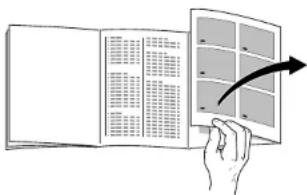
Before reading the instructions, please fold out the back pages.
The operating instructions refer to several models. Equipment and details in the diagrams may vary.
Overv
Figure 1
-9 Control panel
10 Multiflow system
(cold air distributor)
11 Interior light
12 Shelf
- 14 Bottle rack
15 Fruit and vegetable container
16 Storage compartment for small
cans, tubes
18 Storage compartment for small
bottles
19 Egg rack
20 Storage compartments for large bottles, milk cartons, etc.
21 Freezer tray
22/23 Frozen-food container
24 "Chiller" compartment
A Refrigerator compartment
B Freezer compartment
The fully automatic No-Frost system prevents ice from forming in the refrigerator and freezer compartments. Defrosting is therefore no longer required.
Function:
The food is frozen by a flow of cold air. The evaporator in the NO FROST system cools the air inside the appliance. The cold air is circulated by a fan. A second fan provides for air circulation in the refrigerator compartment. The moisture in the air condenses on the evaporator which is defrosted fully automatically whenever necessary.
The thawed water is directed to the refrigerating unit where it evaporates. The freezer section and the frozen food inside are kept free from ice.
GB
Getting to know your appliance
Control panel (Quick guide)
Figure 2
1 button
Appliance main switch for on/off
2 "alarm" button ("alarm off" switch)
a) For switching off the warning buzzer.
b) For displaying the warmest temperature which has prevailed in the freezer compartment (only if display 9 flashes).
3 Super button For maximum freezing capacity.
4 Freezer button Is used to display the set freezer-compartment temperature.
5Cooler button Is used to display the set refrigeratorcompartment temperature
6 Temperature selection button for freezer compartment or refrigerator compartment ^aC = colder,warmer
7 "alarm" display Only illuminates if the alarm function is activated.
8 "super" display
Only illuminates if the "super" button is pressed.
9 Display for a) "Warmest temperature" b) "AL" (Alarm) display c) Set temperature for refrigerator compartment d) Set temperature for free compartment
Description of control functions
Figure 2
1 button
Appliance main switch, serves for switching on and off the entire appliance.
2 "alarm" button
Serves for switching off the warning buzzer.
The warning buzzer sounds if the freezer temperature is too warm, i.e. if the frozen-food is in danger (display 9 flashes simultaneously).
There are occasions when the warning buzzer may sound without the frozen-food being in any danger:
- when you start up the appliance
- when placing fresh food in the freezer without switching on fast freezing
- and if the freezer compartment door is open too long.
Once the warning buzzer has been switched off, the "acoustic warning" automatically returns to stand-by, if the freezer compartment has reached its operating temperature again.
3 "Super" button
Used to switch "fast freeze" on and off. Display 8 "Super" and display 9 "SU" indicate that "fast freeze" is on. "Fast freeze" is used to freeze large quantities of fresh food and should be switched on up to 24 hours before the fresh food is placed in the freezer compartment.
The refrigerating unit operates continually after being switched on, a very low temperature is achieved in the freezer compartment.
4 "Freezer" button
Is used to display the set freezer-compartment temperature on the display 9 (see description of display 9d).
GB
Getting to know your appliance
5 "Cooler" button
Is used to display the set refrigerator-compartment temperature on display 9 (see description of display 9c).
6 Temperature selection button for freezer compartment or refrigerant compartment
a) (The refrigerator compartment temperature can be adjusted from 2^ to 8^ . Press the "Cooler" button and then the "C button. The temperature selection is indicated on display 9. Repeatedly press or hold down the selection button until the required temperature is displayed. (The temperature selection is displayed consecutively from 8^ to 2^ . 8^ is redisplayed after 2^ ).
b) (The freezer compartment temperature can be adjusted from -16^ to -26^ ). To select the required freezer compartment temperature, press the "Freezer" button and then the "C" button. The temperature selection is indicated on display 9. Repeatedly press or hold down the selection button until the required temperature is displayed. (The temperature selection is displayed consecutively from -16^ to -26^ .
7 "alarm" display
This illuminates only if the alarm function is activated. This occurs if it is too warm in the freezer compartment, endangering the frozen-food. It goes out when the operating temperature of the freezer compartment is reached again.
8 "super" display
This illuminates if the "super" button 3 is pressed and thus fast-freezing is switched on.
It goes out again if the "super" button is pressed again to switch it off.
It goes out automatically at the earliest, 52 hours after switching fast-freezing on
9 Multi-function display
Displays various temperatures.
a) Freezer-compartment temperature too warm
If display 9 flashes, the freezer compartment is or was too warm due to a power failure or a fault in the freezer compartment. If the Alarm button is pressed on display 9 (not flashing), the warmest temperature which was reached in the freezer compartment is displayed for five seconds. Then this value is deleted. The programmed freezer-compartment temperature is then indicated on display 9 without flashing.
b) "Al" (Alarm) display
Is displayed if the freezer compartment is too warm.
c) Set temperature for refrigerator compartment
If the "Cooler" button is pressed, the set temperature for the refrigerator compartment is displayed.
d) Set temperature for freezer compartment
If the "Freezer" button is pressed, the set temperature for the freezer compartment is displayed.
GB
Switching ON and setting temperatures
Fig. 2
Put the plug in the socket.
- Press appliance main switch 1. Warning signal is emitted, display 9 flashes and "AL" is indicated.
- Press "alarm" button 2. Warning signal stops. The current temperature is now displayed for 5 sec. "AL" is indicated on display 9.
- Set the temperature for the freezer compartment. To do this, press first the "freezer" button and then press the ^ C button. Press the ^ C button repeatedly or press and hold until the desired temperature is displayed (continuous sequence, after -26^ C, -16^ C appears again). We recommend setting the temperature of the freezer compartment at -20^ C .
- Set the temperature for the refrigerator compartment. To do this, press first the "cooler" button 5 and then press the ^ C button. Press the ^ C button repeatedly or press and hold until the desired temperature is displayed (continuous sequence, after 8^ C, 2^ C appears again). We recommend setting the temperature of the refrigerator compartment at +4^ C . The temperature setting can also only be corrected slowly.
Note
The temperature in the refrigerator compartment may fluctuate because: - The appliance door is opened frequently - Large quantities of fresh food are placed in the refrigerator compartment and/or freezer compartment - The ambient temperature changes - The temperature selector setting for the freezer compartment changes or "super" freeze has been activated.
To prevent condensation in the area of the door seal, the sides of the housing are partially heated.
26
Switching OFF and longer periods of disuse
Switching OFF
To switch OFF the appliance, press the main switch, Figure ②/1.
Longer periods of disuse
If the appliance is not to be used for a prolonged period: Press the main switch, Fig. 1 clean the appliance and leave the doors open.
The shelves in the refrigerator compartment can be re-arranged when the door is opened at a 90^ angle. Pull the shelf forwards, lower, pull out and re-insert in the desired position (Fig. 6).
- Bottle rack (Fig. 8)
The wire clip can be folded up.
All storage compartments and containers in the door can be removed for cleaning.
To remove containers and storage compartments, lift and pull out (Fig. ⑦).
"Chiller compartment (Fig. 6)
Pull the base of the compartment forwards, the flap opens.
The temperature in the "chiller" compartment is lower than in the refrigerator compartment and may drop below 0^ . Ideal for storing fish, meat and sausage.
Not suitable for salad ingredients, vegetables or cold-sensitive produce.
Not all models
GB
Food arrangementInterior fitting
When arranging food, please note
-Allow warm food and drinks to cool outside the appliance.
- If possible, always wrap the food or cover well. The food will then retain its aroma, colour, moisture and freshness. Furthermore, the flavour of one food will not be transferred to another. Only vegetables, fruit and lettuce do not require covering and should be stored in the vegetable containers.
To ensure that the cooling air circulates efficiently, distribute products as uniformly as possible in the compartments.
Do not block the air inlets or outlets with products, otherwise the air circulation will be impaired.
Product which is stored directly in front of the air outlets may freeze due to the outflowing cold air.
Do NOT allow oil or fat to come into contact with the plastic components or the door seal (otherwise they could become porous).
- Do NOT store any explosive substances in the appliance. Bottles containing a high percentage of alcohol must be sealed and stored upright.
- EXPLOSION HAZARD!
Bottled liquids which can freeze must NOT be stored in the freezer compartment. The bottles will explode during the freezing process.
GB
Food arrangement
Example of food arrangement
Fig. 1
Refrigerator compartment (A)
Cakes and pastries, ready meals, dairy products on shelves (12) from top to bottom.
Bottles on the shelf (14).
Vegetables, fruit and lettuce in the vegetable drawer (15).
Small bottles and tins in the storage compartment (18).
Eggs in the egg rack (19).
Large bottles in the bottle storage compartment (20).
Freezer compartment (B)
Store small items of frozen food on the freezer tray (21) and use it for making ice.
Store frozen food in the upper drawers (22).
Freeze and store food in the bottom frozen-food drawer (23).
Purchasing deep-frozen food:
Ensure that the wrapping is not damaged.
The best-before date must not have run out.
The temperature display on the supermarket freezer should be -18^ or lower.
Purchase deep-frozen food last, wrap in newspaper or place in a cold bag, take home quickly and place in the freezer compartment.
Freezing food yourself
If you wish to freeze food, use only fresh, undamaged food.
The following foods are suitable for freezing:
Meat and sausage products, poultry and game, fish, vegetables, herbs, fruit, cakes and pastries, pizza, ready meals, leftovers, egg yolk and egg-white.
The following foods are NOT suitable for freezing:
Eggs in shells, soured cream and mayonnaise, green salads, radishes and onions.
Blanching vegetables and fruit
To retain colour, flavour, aroma and vitamin C, vegetables and fruits should be blanched prior to freezing. (Blanching is the brief immersion of vegetables and fruit in boiling water - literature on freezing and blanching is available in bookshops.)
GB
Freezing and storing Freezing and storing
Wrapping food
Pack food in suitable portions for your household.
Vegetables and fruit portions must NOT be heavier than 1kg ; meat portions must NOT be heavier than 2.5kg . Smaller portions freeze quicker and maximum quality is retained during thawing and preparation.
To prevent food from losing its flavour or drying out, wrap the food in airtight containers.
The following products are suitable for wrapping/packing food:
Plastic film, polyethylene blown film, aluminium foil and freezer boxes. These products can be purchased from your dealer.
The following products are NOT suitable: Wrapping paper, greaseproof paper, cellophane, refuse bags and used shopping bags.
Wrap up the food. Press out all the air and seal the wrapping.
The following products are suitable for sealing the wrapped food:
Rubber bands, plastic clips, string, coldresistant adhesive tape or similar. Bags and polyethylene blown film can be sealed with a film sealer.
Before placing the food in the freezer compartment, label and date the wrapped food.
Food which is already frozen must NOT come into contact with fresh food which is to be frozen. If required, restack food.
Allow hot food and drinks to cool down to room temperature before placing them in the freezer compartment.
Fast freeze
If there is already food in the freezer compartment, switch ON Fast freeze several hours before freezing fresh products. As a rule, 4-6 hours is adequate. Smaller quantities of food (up to 2kg ) can be frozen without Fast freeze. To switch ON Fast freeze, simply press the "Fast freeze" button, Figure 3.
The "Fast freeze" display indicates that Fast freeze is ON. The refrigerating unit now operates continuously and the freezer compartment drops to a very low temperature. Fast freeze automatically switches OFF approx. 50 hours after it was switched ON.
Storage life of frozen food
Fish, sausage, ready meals, up to 4 months cakes and pastries
Cheese, poultry, meat up to 8 months
Vegetables, fruit up to 12 months
GB
Freezing and storing Informatio@leboing
* Freezer tray
Fig. 10
The freezer tray is suitable for storing ice cube trays and for freezing individual berries, pieces of fruit, herbs and vegetables.
To freeze individual items of food, distribute the product uniformly on the freezer tray and leave to freeze for approx. 10-12 hours. Then transfer the product into freezer bags or containers.
To thaw, spread out the individual items of food.
Thawing frozen food
Depending on the type of food and intended use, frozen products can be thawed:
At room temperature,
In the refrigerator,
In an electric oven,
With/without hot-air fan, in a microwave.
Thawed meat and fish which has risen above +3^ for no more than one day (other thawed food for no more than three days) may be refrozen.
Otherwise, if flavour, odour and appearance have changed, make a ready-made meal out of the food and refreeze.
No longer store the frozen product for the max. storage period.
Making ice
Figure 12
Fill the ice cube tray 3/4 full of water and place in the freezer compartment.
To remove the frozen ice cubes from the ice cube tray, twist the tray slightly.
Before cleaning the appliance, ALWAYS pull out the mains plug or disconnect/ unscrew the fuse.
NEVER clean the appliance with a steam or steam pressure cleaner. The hot steam may damage the surface and the electrics. Risk of electric shock!
Cleaning water must NOT drip onto the control fitting or light. Clean the whole appliance, except the door seal, with tepid water containing a mild, lightly disinfecting cleaning agent, e.g. liquid soap. Abrasive and acidic cleaning agents and chemical solvents are NOT suitable.
Wipe the door seal with water only and then dry thoroughly.
*Important information for the care of stainless steel surfaces
A trial pack of "Chromol" cleaning agent is enclosed with the appliance.
TO RETAIN THE HIGH-QUALITY APPEARANCE OF YOUR APPLIANCE, TREAT THE STAINLESS STEEL SURFACES OF THE APPLIANCE IMMEDIATELY AFTER INSTALLATION WITH THE LIQUID CLEANING AGENT "CHROMOL". REPEAT THIS TREATMENT AT REGULAR INTERVALS.
This cleaning agent is available on the market under the name "Chromol" or from your customer service under
Ident. no. 310359 as a 500 ml spray can
To prevent damage to surfaces, under no circumstances use abrasive sponges, metal brushes, sharp-edged implements or scouring agents. Chemically aggressive cleaning agents, such as defrosting sprays, oven sprays, solvents or stain removers must not be used either.
not on all models
GB
Cleaning
Attention!
Keep out of the reach of children.
Never use on surfaces which come into contact with food.
Do not use on hot surfaces.
Contains aliphatic hydrocarbons, oils and aromatic compounds.
Power saving tips
Install the appliance in a cool, well ventilated room, but NOT in direct sunlight and NOT near a heat source (radiator, etc.).
-Do NOT block the ventilation slots on the appliance.
-Allow warm food to cool down before placing in the refrigerator.
To thaw frozen products, place them in the refrigerator compartment. The low temperature of the frozen products is then used to cool the food in the refrigerator compartment.
- When inserting or removing food from the appliance, open and close the doors as quickly as possible.
operating noises
Operating noises
To keep the selected temperature constant, your appliance occasionally switches ON the compressor.
The resulting noises are quite normal.
As soon as the appliance has reached the operating temperature, the noises automatically reduce in volume.
The humming noise is emitted by the motor (compressor). When the motor switches ON, the noise may briefly increase in volume.
The bubbling, gurgling or whirring noise is emitted by the refrigerant as it flows through the pipes.
The clicking noise can always be heard when the thermostat switches ON/OFF the motor.
A multi-zone or Nofrost appliance may emit a low noise generated by the fan and air flow inside the appliance.
A clicking noise may occur when
- the automatic defrosting system is active.
- the appliance is cooling down or warming up (material expansion).
If these noises are excessively loud, the causes are probably not serious and are usually very easy to eliminate.
The appliance is not level
Please level the appliance with the aid of a spirit level. Use the height-adjustable feet or place packing under the feet.
The appliance is not free-standing
Please move the appliance away from kitchen units or other appliances.
Drawers, baskets or shelves are loose or stick
Please check the detachable components and, if required, refit them.
Bottles and/or receptacles are touching each other
Please move bottles and/or receptacles away from each other.
GB
Minor problems and how to rectify them yourself
Customer service should NOT be contacted for every fault. Most faults are minor. Therefore, before you call customer service, please check whether you can eliminate the fault yourself based on the following information.
A technician who is called out to rectify a minor fault will charge the customer, even if the appliance is still under guarantee.
If the display, Fig. 4/9, does not illuminate: check that the power is ON, that the plug is correctly inserted in the socket and that the appliance is switched ON.
If "E1" (flashing) (Fig. 2/9) is displayed while the appliance is being switched on: The temperature in the refrigerator compartment is very high. A few minutes after switching on the appliance, press the Cooler button to display the set refrigerator-compartment temperature. Otherwise, "AI" (freezer compartment is warm) or the set freezer-compartment temperature is displayed.
If "E2" (flashing) (Fig. 4/9) is displayed while the appliance is being switched on: The temperature in the freezer compartment is very high. A few minutes after switching on the appliance, press the Freezer button to display "AI" and then the set freezer-compartment temperature. Otherwise, the set refrigerator-compartment temperature is displayed.
If the refrigerator-compartment light does not function:
The light bulb is defective. Pull out the mains plug and remove the cover (Fig. 10/A). Replace the defective light bulb with a light bulb of the same type (max. 15 W, 230 V, E14 holder).
- The light switch is sticking. Check whether it can be moved. If not, please call customer service.
If the display, Fig. 2/9, flashes but the acoustic signal is not emitted: the freezer compartment was too warm due to a power failure or a fault.
When the Alarm button is pressed, the warmest temperature reached In the freezer compartment is indicated for five seconds on display 9 (not flashing). This value is then cleared. Display 9 then indicates the programmed freezer compartment temperature without flashing.
If a temperature greater than +3^ is displayed, check the frozen food.
If flavour, odour and appearance have changed, make a ready-made meal out of the food and refreeze.
No longer store the frozen produce for the max. storage period.
If the display fig. 4/9 flashes and the warning signal is emitted after the freezer compartment has been running for a prolonged period:
Fault, freezer compartment is too warm! The programmed freezer compartment temperature is displayed.
To switch off the warning signal, press the "Alarm" button.
Possible causes of the fault :
-
The gap above the appliance or in the base is blocked.
-
The freezer compartment door has not been closed properly.
-
Fresh food was frozen without "fast freeze".
-
Too much fresh food was frozen at once,
- High ambient temperature.
When the fault has been rectified, press the
"Alarm" button; the display stops flashing when the freezer compartment has reached its operating temperature again.
If the freezer section door has been kept open for a long time and the temperature inside now no longer reaches the pre-set level,
so much ice has formed on the evaporator (source of cold temperature) that it cannot be defrosted by the fully automatic defrosting system. In this case take the frozen goods out of the freezer, wrap them well to keep them cold and store them somewhere cool.
GB
Minor problems and how to rectify them yourself
Switch off the appliance and open the freezer section door. After about 12 hours the ice on the cooling system will have thawed. Switch the appliance on again and put the frozen goods back inside.
If you are not able to rectify the problem with the help of the suggestions listed here, please call Customer Service.
Do not open the door more often than necessary, so that the cold temperature inside is retained for as long as possible.
Do not take any further action, especially with regard to the electrical parts of the appliance.
Customer Service
Rating plate
Figure 16
When contacting customer service, please quote the E number and the FD number. Both numbers are indicated on the blackedged panel of the rating plate located in the bottom left-hand side of the refrigerator compartment, near the vegetable drawer.
The address and the telephone number of customer service can be found in the customer-service directory or in your telephone book.
FR
electrical and electronic equipment - WEEE).
compartment congelatuer
b) Mention "Al" (alarme)
24 Compartmento fresco
A Frigorifico
Advertencias de character general
electronics (waste electrical and electronic equipment - WEEE).
Queijo, aves, carne ate 8 meses
4 PAnjKToPo "Freezer"
XnqueeiYiYnVEvEoiN Tc
puuieuiyEeepuKaicacStovXwO
TcKaaupuCStmVEvEoiN9(BA.nepuapnTcEvEoiN95).
5 PAnKtpo "Cooler
Xncnueiuyia yntnvEvseinTNC pubicuvcnEepukpaccac cto xapo Tc ucvtnpcnc stnv Evsein9 (BA. neypapn 9y).
6 PAnjKToPo yia Tn puOuion Tns
aHBepuokpia cto xpo cuvtipnene npoep va puaiei afo 2 C ewc8C). Plntcte To NaKtpco "Cooler" kai KaToviv to naKtpo C. Hpuicvev Bepuokpia epaavici tai cvvEvSis9.
B) (H 68pukpaia cto xpo Tnc katauynmnpoe va puthetai tei ano-16 C ecwsc-26 C).
Pnte to NaKtoo Freeer) kai Katoivu to NaKtoo C.HpuBulouen Bepuokpacia eupaviciat cTnv evdeiE9.
Pnte to NaKtoo C ENaiveunueva n cuveyoeuva eoxia vuaepuviace TcTnv evdeiN emuunn Bepuokpacia (H puBmuiev Eepuokpacia eupaviciat cC cuveyn cepa an-16 C ECUC-26C. Meta an Touc-26 C eupavicovtai mai o-16 C).
GR
7 EvεiEη "alarm
Aut avoBoi movov,otav evpyoanB
Aeouyia alarm.Ato oupaivsi tav OTO xwpo katuucn avaei eBepokpaoia kai kauv uaneun unapexk Kivouoc aAoiooan twkateuyueuv Tpogipauv.
8Ev0ε1Eη "super"
Aun ava@jovov, otav nktcei to naiktope super 3 kai wc ek toutovepyoiaei tne npekatapueh.
Autn ohye, 6tav nnefoi akogua lja
phio ta nktpo super, yia va
aneyepononke i nunepkatauEn.
Autn ohye autojato tv vapitepo me t
tnv napelaeum 52 ow ar to tv
evyepnoi on tnc upekatauEn.
9EvSeIeN oaiwAeroyiav M'autn Tnv EvseIeIeYevov diapoeic eepkaiaoc;
H"uynlətepnθeppokpaiao"σto χρo kατιμεη
Otav n eviEe19 naovBaojVeH, toTe nBeopkaoka oTo xuopa KaiauEnc, elivnTnTav 0rnpaebvov, yoww diakotnic Tou epuatoc, nKanoiaC BApnc, nou upnA.
Meta to natau ta nnktpou "alarm"
β) Evειη "AL" (alarm)
EupavicTeaT atr n katauEn Eexi uunhepkoakpaia.
y) Pueiaeyn Bepokpaia yia Tox xapo TnCovtnponc Meta to nmau To nAiktpou "Cooler eapavicetai npueaueyn Bepokpaia yia To xapo Tnc Ouvtnponc otyn evdei.
8) PubjMuevN EepkoPaia yia To xpo TnK katauEnc
Meta to natma tou nAHTPOU Freezer) eupaiietai npuiaqouevn 8eepkaopaia yto xapo TNC katauajcnatnnyEv6iEi.
GR
Oean ae Ieitoupyia kai eniloyn 0epoikpaiaqVwpiate n oukeu
Eikova
- FR Sommaire
- Safety
- GB
- Disposal and safety
- Regulations
- Observe ambient temperature
- Fig. 6).
- Installation
- Installation location
- Changing over the door hinges
- Fitting the anti-tilt device
- Electrical connection
- Ventilation
- Following delivery ...
- Getting to know your appliance
- Overv
- Function:
- Control panel (Quick guide)
- Description of control functions
- button
- "alarm" button
- "Super" button
- "Freezer" button
- "Cooler" button
- Temperature selection button for freezer compartment or refrigerant compartment
- "alarm" display
- "super" display
- Multi-function display
- b) "Al" (Alarm) display
- c) Set temperature for refrigerator compartment
- d) Set temperature for freezer compartment
- Switching ON and setting temperatures
- Switching OFF and longer periods of disuse
- Switching OFF
- Longer periods of disuse
- Food arrangementInterior fitting
- When arranging food, please note
- Food arrangement
- Example of food arrangement
- Purchasing deep-frozen food:
- Freezing food yourself
- Freezing and storing Freezing and storing
- Wrapping food
- Fast freeze
- Storage life of frozen food
- Freezing and storing Informatio@leboing
- * Freezer tray
- Thawing frozen food
- Making ice
- *Important information for the care of stainless steel surfaces
- Cleaning
- Power saving tips
- operating noises
- Minor problems and how to rectify them yourself
- Customer Service
- Rating plate
- Figure 16
- FR
- GR
- EvεiEη "alarm
- 8Ev0ε1Eη "super"
- H"uynlətepnθeppokpaiao"σto χρo kατιμεη
- β) Evειη "AL" (alarm)
- 8) PubjMuevN EepkoPaia yia To xpo TnK katauEnc
- Oean ae Ieitoupyia kai eniloyn 0epoikpaiaqVwpiate n oukeu
- Eikova
Brand : GAGGENAU
Model : RB 272250
Category : Refrigerator