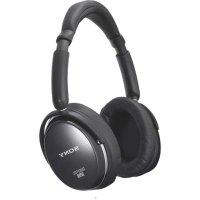
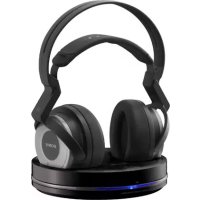
MDRNC500D - Earphones SONY - Free user manual and instructions
Find the device manual for free MDRNC500D SONY in PDF.



| Brand | Sony |
| Model | MDRNC500D |
| Type | Digital noise-canceling headphones |
| Weight | 195 g |
| Power source | Built-in rechargeable lithium-ion battery, LR03 (AA) alkaline batteries, or 100-240 V AC adapter |
| Noise canceling function | AI (Artificial Intelligence) with 3 modes: NC A (airplane), NC B (bus/train), NC C (office) |
| Reduction technology | Negative feedback with microphone near the ear |
| Transducer | Specialized with built-in microphone and reinforced diaphragm |
| Equalizer | Digital for optimal sound quality |
| Amplifier | BTL (Bridged Transformer-Less) for powerful sound |
| Control function | Allows you to hear ambient sounds by muting music |
| Cord | Detachable, with built-in battery compartment |
| Folding mechanism | Ear cup rotation for compact storage |
| Materials | Magnesium (ear cups) and aluminum 7075 (headband) |
| DSP processor | TMS320VC5503ZHH |
| Noise canceling performance | Total noise reduction rate (TNSR): up to 20.0 dB (airplane, NC A mode); Sony method >25 dB |
| Sound quality | Deep bass to smooth treble, superior signal-to-noise ratio |
Frequently Asked Questions - MDRNC500D SONY
User questions about MDRNC500D SONY
0 question about this device. Answer the ones you know or ask your own.
Ask a new question about this device
Download the instructions for your Earphones in PDF format for free! Find your manual MDRNC500D - SONY and take your electronic device back in hand. On this page are published all the documents necessary for the use of your device. MDRNC500D by SONY.
USER MANUAL MDRNC500D SONY
Noise Canceling Headphones
Product Information GB
Informations concernant le produit ____ FR
Produktinformationen ____ DE
Información del producto ____ ES
Informazioni sul prodotto ____
Informações sobre o produto ____ PT
Content
- Introduction ...... 4
- Principle of Operation of MDR-NC500D and Its Configuration .... 5
2.1. Feedback Type and Feedforward Type 6
2.2. System configuration of MDR-NC500D 7
2.3. Advantages of Digitization .... 8
- AI Noise Canceling Function 9
3.1. Operation of AI Noise Canceling function 10 - Specialized Driver Unit 10
- High-Quality Sound Unique to Digital 11
- Weight saving mechanism 12
- Other Features ...... 13
7.1. Monitor function.... 13
7.2. Swivel mechanism 13
7.3. Detachable connecting cord ...... 13
7.4. Power supply 13
7.5. High-quality sound BTL headphone amplifier.... 13
Appendix: Indication of Canceling Performance for Noise Canceling Headphones 14
1.1. Total Noise Suppression Ratio 14
MDR-NC500D is the Digital Noise Canceling Headphones, which Sony developed as the first of their kind in the world.
For this development, Sony put in all of its acoustical analysis technology, digital signal processing technology and transducer technology.
By digitizing the noise canceling function, we succeeded in improving the performance in the following points which, were difficult to be addressed with the conventional analog signal processing:
• High canceling performance
• AI (Artificial Intelligence) Noise Canceling function
• Excellent sound quality
• Higher Signal to Noise ratio
2. Principle of Operation of MDR-NC500D and Its Configuration
The noise canceling headphones make a canceling signal by analyzing with their noise canceling circuit the surrounding noise collected by the small noise detection microphone built in their main body.
With this canceling signal superimposed on the regenerative signal from the connected equipment, reproduction from the driver unit reduces surrounding noise and makes it possible to listen to music more clearly.
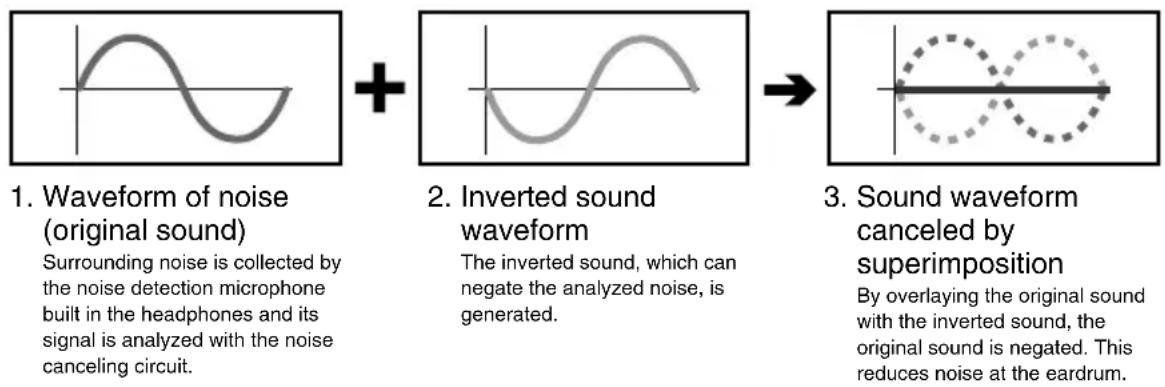
1. Waveform of noise (original sound)
Surrounding noise is collected by the noise detection microphone built in the headphones and its signal is analyzed with the noise canceling circuit.
2. Inverted sound waveform
The inverted sound, which can negate the analyzed noise, is generated.
3. Sound waveform canceled by superimposition
By overlaying the original sound with the inverted sound, the original sound is negated. This reduces noise at the eardrum.
For the noise canceling, the following two methods are mainly used:
- Feedback type
- Feedforward type
2.1. Feedback Type and Feedforward Type
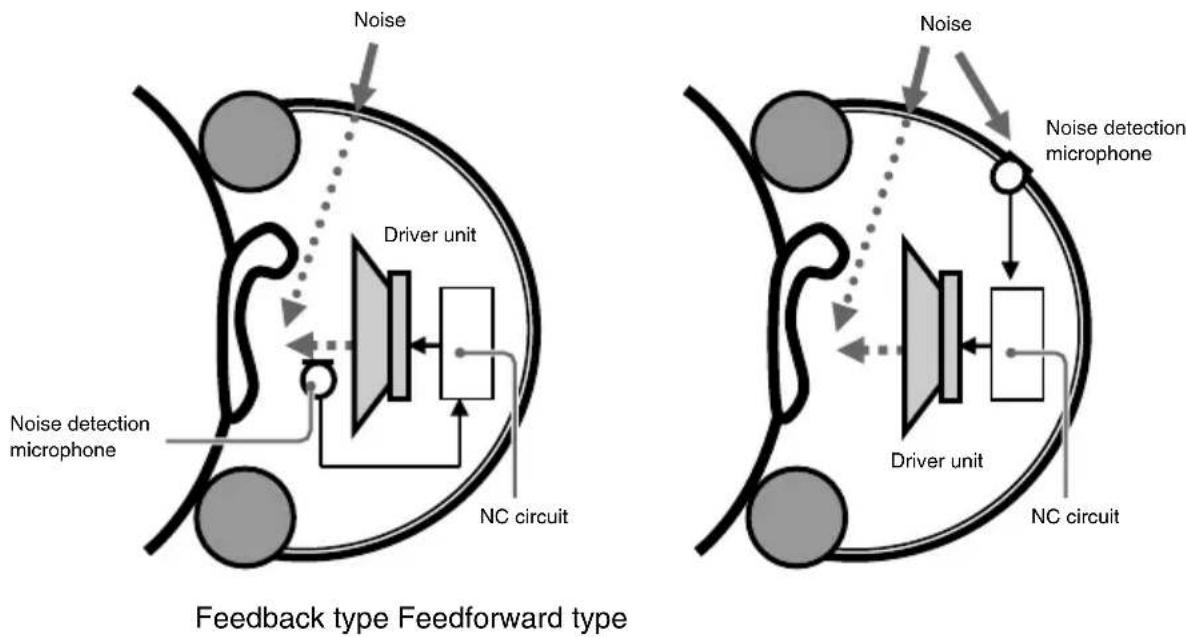
Feedback type
The noise canceling function of the "feedback type" is used in MDR-NC500D.
In the feedback type, the noise detection microphone is placed close to the ear.
By collecting noise in the position closer to the ear, a noise canceling effect with high accuracy can be obtained.
The audio signal of noise collected by the noise detection microphone is analyzed on real time with the noise canceling circuit (NC circuit), producing a canceling signal to always minimize the noise at the eardrum. The canceling signal is reproduced from the driver unit.
Using this method enables the cancellation effect to be increased with the changing environmental noise addressed.
Feedforward type
In the feedforward type, the noise detection microphone is attached outside the headphones.
The NC circuit analyzes the noise signal collected by the noise detection microphone to estimate what kind of sound the noise will become when it comes to the eardrum. And from this estimated result, a canceling signal to minimize the noise is made and it is reproduced from the driver unit.
This type enables miniaturization of the headphones since it is not necessary for the noise detection microphone to be located near the ear where space is limited.
Comparison between Feedback Type and Feedforward Type
| Feedback type | Feedforward type | |
| Noise canceling effect | Excellent | Good |
| Anti dependency of noise canceling effect against individual difference / fitting difference | Better | Average |
| Miniaturization | Less suitable | More suitable |
2.2. System configuration of MDR-NC500D
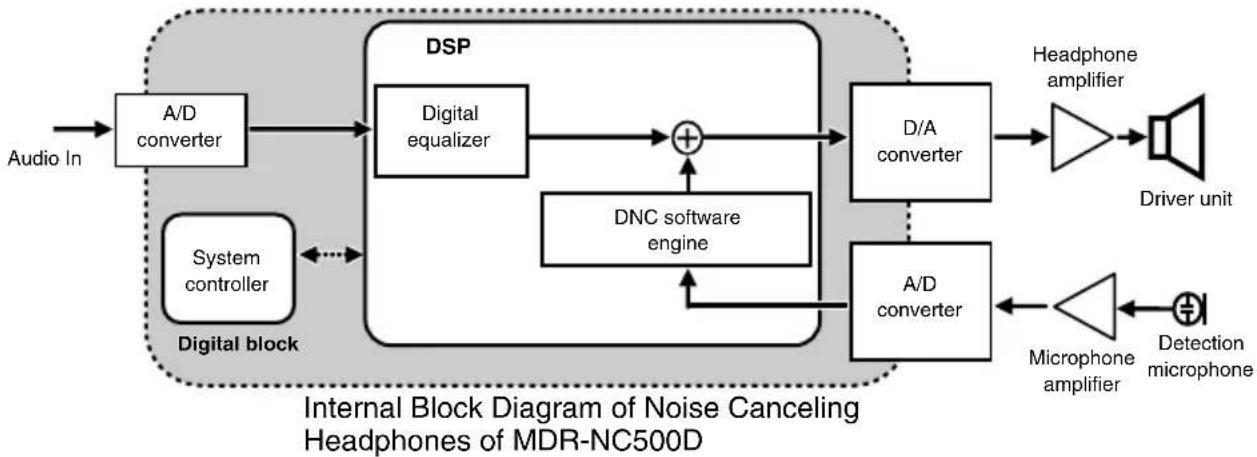
The Internal Block Diagram of MDR-NC500D is shown below:
flowchart
graph LR
    A["Audio In"] --> B["A/D converter"]
    B --> C["Digital equalizer"]
    C --> D["+"]
    E["System controller"] --> F["Digital block"]
    F --> G["DNC software engine"]
    G --> H["A/D converter"]
    H --> I["Headphone amplifier"]
    I --> J["Driver unit"]
    H --> K["A/D converter"]
    K --> L["Microphone amplifier"]
    L --> M["Detection microphone"]
    style A fill:#f9f,stroke:#333
    style B fill:#ccf,stroke:#333
    style C fill:#cfc,stroke:#333
    style D fill:#fcc,stroke:#333
    style E fill:#cff,stroke:#333
    style F fill:#ffc,stroke:#333
    style G fill:#fcf,stroke:#333
    style H fill:#cff,stroke:#333
    style I fill:#ffc,stroke:#333
    style J fill:#cfc,stroke:#333
    style K fill:#cfc,stroke:#333
    style L fill:#ffc,stroke:#333
    style M fill:#cfc,stroke:#333
The noise detection microphone of MDR-NC500D collects noise around the ear.
The noise signal is digitized through the microphone amplifier and high-speed A/D converter and is inputted in Digital Signal Processor (DSP). Then the DNC software engine inside DSP generates the canceling signal, which is inverted to the original noise.
Meanwhile, the regenerative signal of a music source supplied from the audio input terminal is digitized by the high-speed A/D converter and is inputted in DSP. Then, its frequency characteristic is adjusted by the digital equalizer inside DSP. After the canceling signal is added, the regenerative signal is reproduced as a sound by way of the high-speed D/A converter, the headphone amplifier and the driver unit.
Mixing of the reproduced sound and the outside noise at the ear negates only environmental noise, making it possible to enjoy music etc. calmly.
High-speed A/D, D/A converter
Continued
2.3. Advantages of Digitization
The performance of noise canceling headphones greatly depends on the efficiency of the filter circuit (NC filter) between the microphone to detect noise and the driver unit to reproduce the canceling signal.
In MDR-NC500D, the filter circuit for noise canceling is realized on the DSP as the digital signal processing of the newly developed “DNC software engine.”
In addition to general advantages such as accurate computation results, no theatrical variation, and no electric noise, the digital signal processing has also the advantage of making it possible to create special filter shapes, which were not able to be realized with existing analog filters.
During the development of the DNC software engine, the architecture of internal filter computation was thoroughly examined in order to implement a more effective noise canceling.
The know-how of Sony's digital sound treatment was used to construct a software engine specialized in the noise canceling treatment and the calculation accuracy was heightened. Noise canceling with less residual noise and higher Signal to Noise ratio was made possible.
Example of the characteristic of conventional NC filter
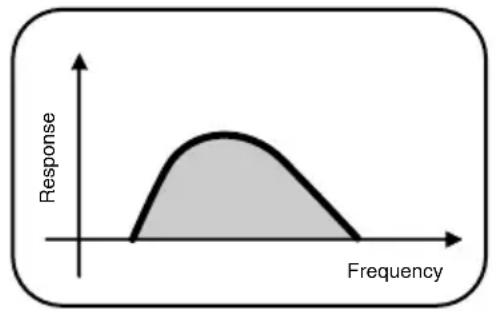
area
| Frequency | Response | | --------- | -------- | | Low | 0 | | Peak | High | | High | 0 |
Example of the characteristic of digital NC filter
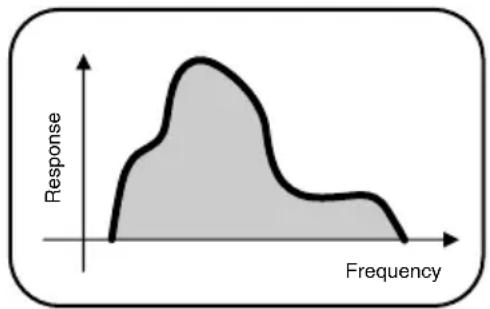
area
| Frequency | Response | | --------- | -------- | | Low | 0 | | Peak | High | | High | Decreasing |The characteristics of environmental noise vary with the scene to be used.
In an airplane, for example, low and midrange frequencies can have a large noise energy and other frequency ranges have a smaller noise energy.
On the other hand, in the environment such as an office, the noise energy is small but distributed over a wider range.
In MDR-NC500D, the filter circuit to control a noise canceling ratio was digitized and it is controlled by software.
This enables the filter characteristic to be switched: AI Noise Canceling function with which MDR-NC500D selects automatically the filter characteristic (noise canceling mode) that is the most suitable for the user's environment.
AI Noise Canceling function
Digital technology allows selection from multiple noise canceling modes.
The headphones analyze the outside noise and automatically select the optimal canceling mode.
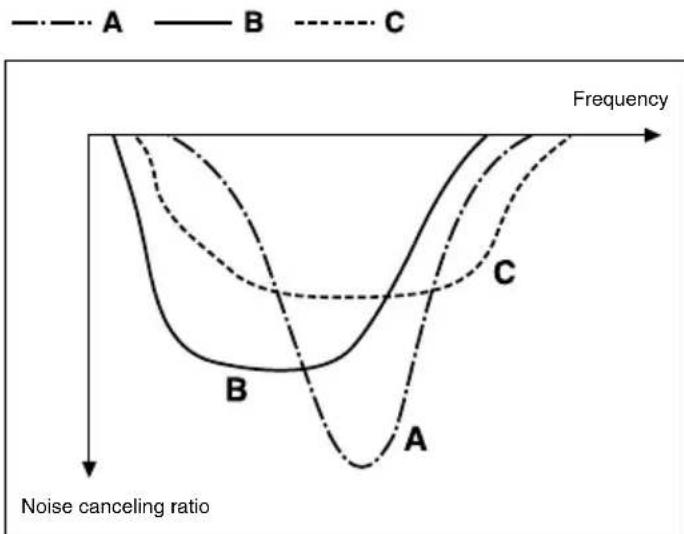
line
| Frequency | A | B | C | | --------- | ---- | ---- | ---- | | Low | High | High | High | | Mid | Medium| Low | Medium| | High | Low | Low | Low |* Manual mode selection is also possible.
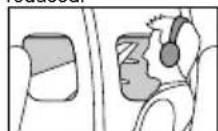
NC MODE A
Noise mainly in an airplane is effectively reduced.
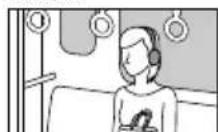
NC MODE B
Noise mainly in a bus or a train is effectively reduced.
NC MODE C
Noise mainly found in an office environment (PC, copier, air ventilation, etc.) is effectively reduced.

3.1. Operation of AI Noise Canceling function
The operation of actual AI Noise Canceling function is as follows:
- Press the AI NC MODE button to start the analysis program. *
- Built-in DSP analyzes the sound information of noise from the noise detection microphone.
Its specific value is extracted from the signal and the most effective noise canceling mode is selected. - The noise canceling operation is started in the selected mode.
* During analysis, reproduction of music source and noise canceling function are temporarily stopped in order to gather exact noise information.
MDR-NC500D completes the above-mentioned processing in a short time of about 3 seconds.
The analysis algorithm of AI Noise Canceling (AINC) developed a proprietary calculation technique based on the Auditory psychology emphasizing the frequencies, which make noise more audible to the ear.
It is the very realization of “smart headphones” which can follow man's feeling.
With the AI Noise Canceling function only made possible by Digital, please enjoy its comfortable canceling effect.
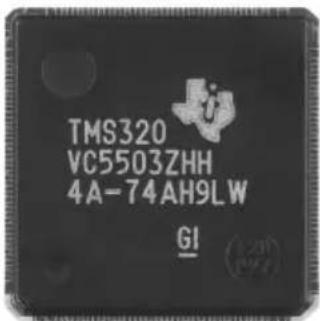
DSP used in MDR-NC500D
4. Specialized Driver Unit
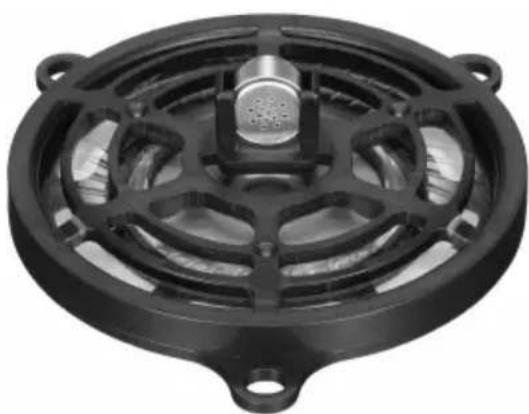
In order that feedback type headphones obtain a wider canceling range, it is necessary to minimize the time delay between the output of the driver unit and the input to the noise detection microphone.
By integrating the noise detection microphone with the driver unit to minimize the time delay, MDR-NC500D achieved a stable and wider range canceling performance.
Moreover, the use of re-informed diaphragm significantly improved the canceling performance against environmental noise with a high sound pressure that is generated in a very low frequency.
natural_image
Close-up of a black circular mechanical fan or vent with mounting holes and central hub (no text or symbols visible)Driver unit
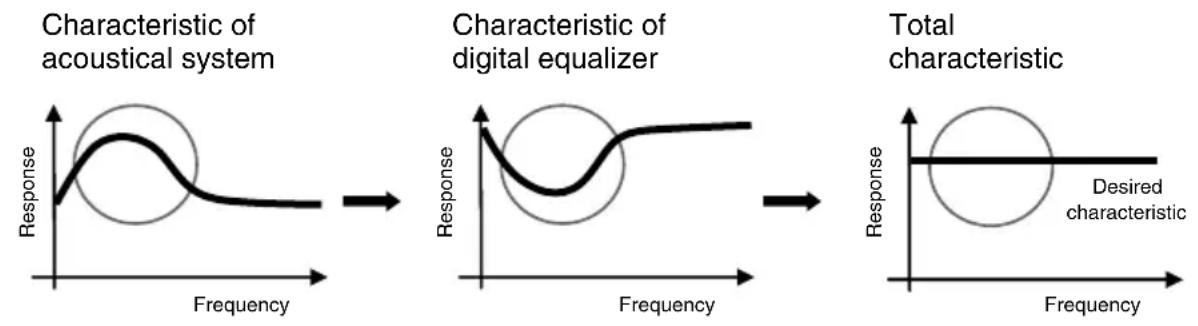
MDR-NC500D digitized the NC circuit and used the digital equalizer in the playback system.
The acoustical system of noise canceling headphones is generally based on the design, which emphasizes low frequency in order to maximize the effect with limited electric power.
Moreover, in the case of the noise canceling headphones of feedback type, in principle their music signal is impacted by the canceling function, so that the quality of the reproduced sound is also impacted.
To solve these problems, an equalizer circuit is prepared in the audio input side.
The digital equalizer mounted in MDR-NC500D blocks the impact on the sound quality and also brings about high-quality sound to maximize the intrinsic performance of the driver unit.
By generously providing the digital equalizing technology accumulated with Sony's AV amplifiers and Hi-Fi audiovisual apparatus and using the newly developed computation method optimized to the system, it was made possible to reproduce a music source with a sense of realism from deep bass to silky highs.
Magnesium and 7075 aluminum are used as the material for the housing and the headband, respectively.
By using these unstintingly, the mass is reduced to as small as 195 g or more than 10 % weight reduction. *
* In comparison with MDR-NC60.
7.1. Monitor function
MDR-NC500D is equipped with the monitor function to make the surrounding sound more audible by muting music etc. during reproduction when you are spoken to, for example.
While wearing the headphones, you can hear an announcement etc. in an airplane or in a train only by pressing the button.
During monitoring, disturbing noise can be reduced by the noise canceling function.
7.2. Swivel mechanism
A mechanism to reduce the storage thickness by rotation of the housing is used in order to enhance portability. (Swivel mechanism)
7.3. Detachable connecting cord
The main body side of the headphones connecting cord is detachable.
According to the equipment in combination, you can select the connecting cord of optimal length from accessories. When using the noise canceling function without any music playback, etc., disconnect the cord for comfortable use.
Moreover, the connecting cord with battery case also serves as power source.
MDR-NC500D can be used longer in combination with the built-in lithium ion rechargeable battery.
7.4. Power supply
MDR-NC500D supports three kinds of power supply methods: Built-in lithium-ion rechargeable battery, Alkaline LR03 (size AA) battery *^1 and AC power adaptor.
The AC power adaptor is of 100 V to 240 V multi-voltage type.
It can be used almost all over the world. *^2
*1 When the connecting cord with battery case is used. Two Alkaline LR03 (size AA) batteries are used.
*2 Use with the outlet of a different shape needs an optional plug adapter.
7.5. High-quality sound BTL headphone amplifier
The headphone amplifier is of BTL (Bridged Transformer-Less) type.
You can enjoy a powerful sound with a wide dynamic range.
1.1. Total Noise Suppression Ratio
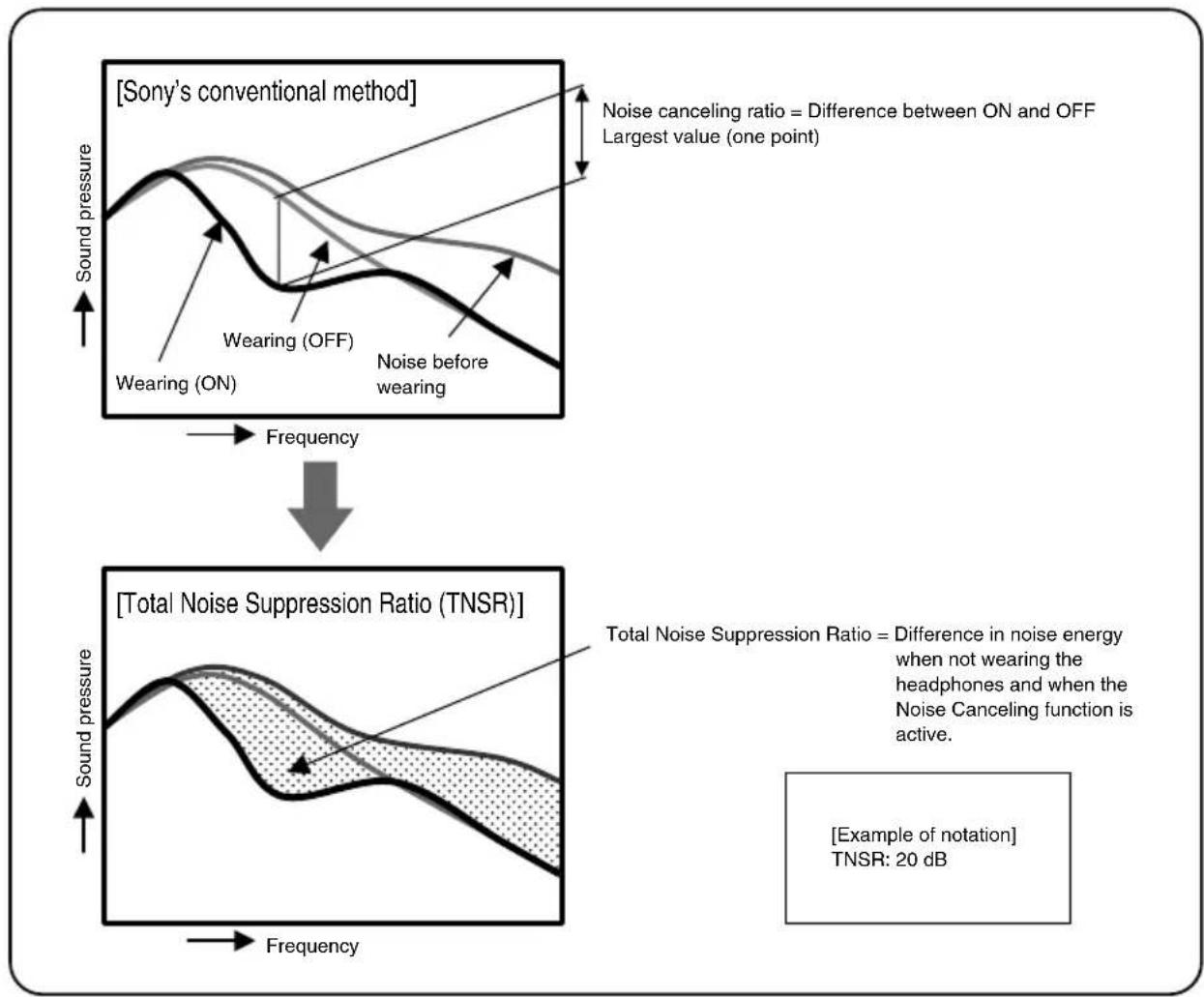
Total Noise Suppression Ratio (TNSR) of noise canceling headphones is expressed with the following formula:
$$ \mathrm{TNSR} = 1 0 \log \left(\mathrm{P} / \mathrm{P} _ {0}\right) $$
- P_0 = Energy of sound observed at the ear not wearing headphones
• P = Energy of sound observed at the ear wearing headphones
* The above energy of sound measurements are weighted.
TNSR is the value measured using the noise signal based on a broad spectrum.
As compared with the method of measuring the noise canceling ratio at a certain point of frequency, TNSR enables the canceling performance in the actual usage environment to be more objectively evaluated.
Moreover, it can evaluate the canceling performance in each noise environment by using the signals to simulate the spectrum distribution of real-world noise such as an airplane and a train.
flowchart
graph TD
    A["Sound pressure"] --> B["[Sony's conventional method"]]
    B --> C["Wearing (ON)"]
    B --> D["Wearing (OFF)"]
    B --> E["Noise before wearing"]
    C --> F["Noise canceling ratio = Difference between ON and OFF\nLargest value (one point)"]
    D --> F
    E --> F
    F --> G["[Total Noise Suppression Ratio (TNSR)"]]
    G --> H["Sound pressure"]
    H --> I["Noise suppression ratio = Difference in noise energy when not wearing the headphones and when the Noise Canceling function is active."]
    I --> J["[Example of notation"]\nTNSR: 20 dB]
Total Noise Suppression Ratio (typical values)
Unit: dB
| Airplane | Train/Bus | Office | |
| NC MODE A | 20.0 | 18.0 | 17.1 |
| NC MODE B | 17.0 | 20.3 | 18.3 |
| NC MODE C | 14.9 | 15.0 | 18.9 |
- Based on Sony's one noise source simulations.
- Note: Noise canceling ratio (Sony's conventional method) more than 25 dB (at MODE A)
Table des matières
natural_image
Simple wave diagram with no text or symbols1. Forme d'onde du bruit (son original)
natural_image
Simple wave diagram with no text or symbols, showing a continuous sinusoidal curve over a horizontal axis (no labels or values)natural_image
Pure geometric diagram with intersecting lines and dots, no text or symbols presentarea
| Fréquence | Réponse | | --------- | -------- | | 0 | 0 | | Peak | High | | 1 | Low | | 2 | 0 |
area
| Fréquence | Réponse | | --------- | -------- | | Low | 0 | | Peak | High | | Mid | Medium | | High | 0 |line
| Fréquence | A | B | C | | --------- | ---- | ---- | ---- | | Low | High | High | High | | Mid | Medium | Low | Low | | High | Low | Low | Low |natural_image
Close-up of a black circular mechanical fan or vent with radial slots and central hub (no text or symbols visible)Transducteur
area
| Frequency Range | Peak Frequency | | --------------- | -------------- | | Low | 0 | | Medium | High | | High | Decreasing |line
| Frequency | A | B | C | | --------- | ------- | ------- | ------- | | Low | High | High | High | | Mid | Medium | Low | Medium | | High | Low | Low | Low |natural_image
Close-up of a black plastic fan or vent with radial slots and central hub (no text or symbols visible)Treibereinheit
line
| Freqenz | Frequenzkurve | | ------- | ------------- | | Low | 0 | | Peak | High | | High | Decreasing |line
| Freqenz | Freqenzcurve | | ------- | ----------- | | Low | High | | Mid | Low | | High | Rising |TNSR = 10 log (P / P₀)
natural_image
Close-up of a black circular mechanical fan or vent with radial slots and central hub (no text or symbols visible)Auriculares
area
| Frequency | Risposta | | --------- | -------- | | Left | 0 | | Peak | High | | Right | Low |line
| Freqenza | A | B | C | | -------- | ---- | ---- | ---- | | Low | High | High | High | | Mid | Low | Low | Low | | High | High | High | High |natural_image
Close-up of a black circular mechanical fan or vent with radial slots and central hub (no text or symbols visible)Unità pilota
area
| Frequency | Resposta | | --------- | -------- | | Low | 0 | | Medium | Peak | | High | 0 |line
| Freqência | Curve A | Curve B | Curve C | | ---------- | ------- | ------- | ------- | | Low | High | High | High | | Mid | Medium | Low | Medium | | High | Low | Low | Low |natural_image
Close-up of a black plastic fan or vent with radial slots and central hub (no text or symbols visible)Unidade accionadora

- Noise Canceling Headphones
- Content
- Principle of Operation of MDR-NC500D and Its Configuration
- Waveform of noise (original sound)
- Inverted sound waveform
- Sound waveform canceled by superimposition
- Feedback Type and Feedforward Type
- Feedback type
- Feedforward type
- System configuration of MDR-NC500D
- Advantages of Digitization
- AI Noise Canceling function
- NC MODE A
- NC MODE B
- NC MODE C
- Operation of AI Noise Canceling function
- Specialized Driver Unit
- Monitor function
- Swivel mechanism
- Detachable connecting cord
- Power supply
- High-quality sound BTL headphone amplifier
- Total Noise Suppression Ratio
- Table des matières
- Forme d'onde du bruit (son original)
- TNSR = 10 log (P / P₀)
Brand : SONY
Model : MDRNC500D
Category : Earphones