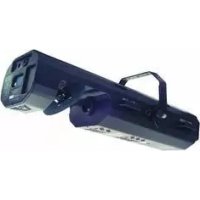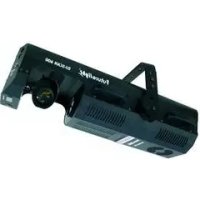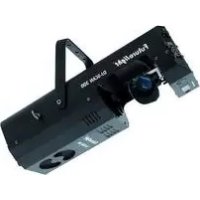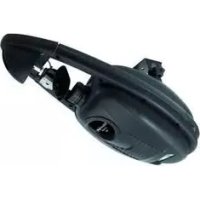
DJScan 260 - Effect machine Futurelight - Free user manual and instructions
Find the device manual for free DJScan 260 Futurelight in PDF.


| Product type | Light effect machine (scanner) |
| Brand | Futurelight |
| Model | DJScan 260 |
| Dimensions (W × D × H) | 665 × 260 × 290 mm |
| Weight | 10.5 kg |
| Power supply | 230 V AC, 50 Hz |
| Power consumption | 460 W |
| Compatible lamp | MSD/HSD 250, MSD 250/2 or MSD/HSD 200 (GY-9.5) |
| Fuse | T 4 A, 250 V |
| Number of DMX channels | 6 |
| DMX connection | XLR 3-pin |
| Control modes | DMX, Stand Alone, Master/Slave, sound control (built-in microphone) |
| Number of colors | 7 dichroic + white |
| Number of gobos | 7 rotating + open |
| Special effects | Bi-directional rainbow at variable speed, strobe (1-10 flashes/s), blackout |
| Focus | Manual (lens) |
| Max. ambient temperature | 45 °C |
| Max. housing temperature | 65 °C |
| Minimum distance to flammable surfaces | 0.5 m |
| Minimum distance to illuminated object | 0.5 m |
| Protection class | I (mandatory earth connection) |
| Routine maintenance | Cleaning of lenses, mirror, gobos; checking screws and cables |
| Spare parts and repairability | Lamp, fuse, gobos, Easy-2 remote control, DMX controllers (see manual) |
Frequently Asked Questions - DJScan 260 Futurelight
User questions about DJScan 260 Futurelight
0 question about this device. Answer the ones you know or ask your own.
Ask a new question about this device
Download the instructions for your Effect machine in PDF format for free! Find your manual DJScan 260 - Futurelight and take your electronic device back in hand. On this page are published all the documents necessary for the use of your device. DJScan 260 by Futurelight.
USER MANUAL DJScan 260 Futurelight
MULTI-LANGUAGE-INSTRUCTIONS
Delivery includes 19
SAFETY INSTRUCTIONS 20
OPERATING DETERMINATIONS 21
DESCRIPTION OF THE DEVICE 22
Features 22
Overview 23
INSTALLATION 24
Installing/Replacing the lamp 24
Lamp adjustment. 25
Overhead rigging 25
Master/Slave-operation 26
Blackout-socket 27
DMX-512 connection / connection between fixtures 27
Connection with the mains 28
OPERATION 28
Stand Alone operation 28
DMX-controlled operation 29
Addressing 29
DMX-protocol 30
CLEANING AND MAINTENANCE 31
Replacing the fuse 32
TECHNICAL SPECIFICATIONS 32
Français
INTRODUCTION 33
Operation Master/Slave 40
Douille Blackout 41
Operation Stand Alone 42
Controle par DMX 43
You can find the latest update of this user manual in the Internet under:
Adjust the lamp position by turning screws 1,2 and 3. LAMP: MSD 250
3
2
O
B
A
O Change the lamp by loosening screws A and B
10
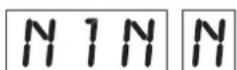
Master-mode: Sound-control

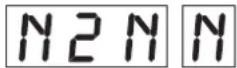
Master-mode: Slow

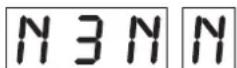
Service-mode: Standby

Keep this device away from rain and moisture! Unplug mains lead before opening the housing!
For your own safety, please read this user manual carefully before you initial start-up.
Every person involved with the installation, operation and maintenance of this device has to
- be qualified
- follow the instructions of this manual
- consider this manual to be part of the total product
- keep this manual for the entire service life of the product
- pass this manual on to every further owner or user of the product
- download the latest version of the user manual from the Internet
INTRODUCTION
Thank you for having chosen a FUTURELIGHT DJ-SCAN 260. You will see you have acquired a powerful and versatile device.
Unpack your DJ-SCAN 260.
Delivery includes
| 1 | Devi c e |
| 1 | User manual |
SAFETY INSTRUCTIONS
CAUTION!
Be careful with your operations. With a dangerous voltage you can suffer a dangerous electric shock when touching the wires!
This device has left our premises in absolutely perfect condition. In order to maintain this condition and to ensure a safe operation, it is absolutely necessary for the user to follow the safety instructions and warning notes written in this user manual.

Important:
Damages caused by the disregard of this user manual are not subject to warranty. The dealer will not accept liability for any resulting defects or problems.
If the device has been exposed to drastic temperature fluctuation (e.g. after transportation), do not switch it on immediately. The arising condensation water might damage your device. Leave the device switched off until it has reached room temperature.
Please make sure that there are no obvious transport damages. Should you notice any damages on the A/C connection cable or on the casing, do not take the device into operation and immediately consult your local dealer.
This device falls under protection-class I. The power plug must only be plugged into a protection class I outlet. The voltage and frequency must exactly be the same as stated on the device. Wrong voltages or power outlets can lead to the destruction of the device and to mortal electrical shock.
Always plug in the power plug last. The power plug must always be inserted without force. Make sure that the plug is tightly connected with the outlet.
Never let the power-cord come into contact with other cables! Handle the power-cord and all connections with the mains with particular caution! Never touch them with wet hands, as this could lead to mortal electrical shock.
Never modify, bend, strain mechanically, put pressure on, pull or heat up the power cord. Never operate next to sources of heat or cold. Disregard can lead to power cord damages, fire or mortal electrical shock.
The cable insert or the female part in the device must never be strained. There must always be sufficient cable to the device. Otherwise, the cable may be damaged which may lead to mortal damage.
Make sure that the power-cord is never crimped or damaged by sharp edges. Check the device and the power-cord from time to time.
If extension cords are used, make sure that the core diameter is sufficient for the required power consumption of the device. All warnings concerning the power cords are also valid for possible extension cords.
Always disconnect from the mains, when the device is not in use or before cleaning it. Only handle the power-cord by the plug. Never pull out the plug by tugging the power-cord. Otherwise, the cable or plug can be damaged leading to mortal electrical shock. If the power plug or the power switch is not accessible, the device must be disconnected via the mains.
If the power plug or the device is dusty, the device must be taken out of operation, disconnected and then be cleaned with a dry cloth. Dust can reduce the insulation which may lead to mortal electrical shock. More severe dirt in and at the device should only be removed by a specialist.
There must never enter any liquid into power outlets, extension cords or any holes in the housing of the device. If you suppose that also a minimal amount of liquid may have entered the device, it must immediately be disconnected. This is also valid, if the device was exposed to high humidity. Also if the device is still
English
running, the device must be checked by a specialist if the liquid has reduced any insulation. Reduced insulation can cause mortal electrical shock.
There must never be any objects entering into the device. This is especially valid for metal parts. If any metal parts like staples or coarse metal chips enter into the device, the device must be taken out of operation and disconnected immediately. Malfunction or short-circuits caused by metal parts may cause mortal injuries.
During the initial start-up some smoke or smell may arise. This is a normal process and does not necessarily mean that the device is defective.
Caution: During the operation, the housing becomes very hot.
Do not switch the device on and off in short intervals as this would reduce the lamp's life.

HEALTH HAZARD!
Never look directly into the light source, as sensitive persons may suffer an epileptic shock (especially meant for epileptics)!
Keep away children and amateurs!
Never leave this device running unattended.
OPERATING DETERMINATIONS
This device is a lighting effect for creating decorative effects. This product is only allowed to be operated with an alternating voltage of 230V , 50Hz and was designed for indoor use only.
This device is designed for professional use, e.g. on stages, in discotheques, theatres etc.
Lighting effects are not designed for permanent operation. Consistent operation breaks will ensure that the device will serve you for a long time without defects.
Do not shake the device. Avoid brute force when installing or operating the device.
When choosing the installation-spot, please make sure that the device is not exposed to extreme heat, moisture or dust. There should not be any cables lying around. You endanger your own and the safety of others!
This device must never be operated or stockpiled in sourroundings where splash water, rain, moisture or fog may harm the device. Moisture or very high humidity can reduce the insulation and lead to mortal electrical shocks. When using smoke machines, make sure that the device is never exposed to the direct smoke jet and is installed in a distance of 0.5 meters between smoke machine and device. The room must only be saturated with an amount of smoke that the visibility will always be more than 10 meters.
The ambient temperature must always be between -5^ and +45^ . Keep away from direct insulation (particularly in cars) and heaters.
The relative humidity must not exceed 50% with an ambient temperature of 45^
This device must only be operated in an altitude between -20 and 2000m over NN.
Never use the device during thunderstorms. Over voltage could destroy the device. Always disconnect the device during thunderstorms.
The symbol - -m determines the minimum distance from lighted objects. The minimum distance between light-output and the illuminated surface must be more than 0.5 meters.
This device is only allowed for an installation via the mounting bracket. In order to safeguard sufficient ventilation, leave 50~cm of free space around the device.
English
The housing must never touch surrounding surfaces or objects.
Make sure that the area below the installation place is blocked when rigging, derigging or servicing the fixture.
Always fix the fixture with an appropriate safety-rope.
The maximum ambient temperature T_a = 45^ must never be exceeded.
Operate the device only after having familiarized with its functions. Do not permit operation by persons not qualified for operating the device. Most damages are the result of unprofessional operation!
Never use solvents or aggressive detergents in order to clean the device! Rather use a soft and damp cloth.
Please use the original packaging if the device is to be transported. Make sure that you pack the device in the original state.
Please consider that unauthorized modifications on the device are forbidden due to safety reasons!
Never remove the serial barcode from the device as this would make the guarantee void.
If this device will be operated in any way different to the one described in this manual, the product may suffer damages and the guarantee becomes void. Furthermore, any other operation may lead to dangers like short-circuit, burns, electric shock, lamp explosion, crash etc.
DESCRIPTION OF THE DEVICE
Features
Innovative DJ-scanner with rotating gobos
- 7 different, dichroic colour-filters and white
- Rainbow-effect with adjustable speed in both directions
Gobo-wheel with 7 rotating gobos, open and blackout - Strobe-effect with adjustable speed (1-10 flashes/sec.) via separate shutter
- Strobe effect applicable with each color or gobo
- DMX-controlled operation or stand alone operation with Master/Slave-function (up to 4 slaves)
Sound-controlled via built-in microphone - Fuzzy-Sound-Control: program continues automatically during periods without music or bass-beat
- Blackout applicable in Stand Alone mode via optional FUTURELIGHT Easy-2 remote control
Control-Board with 4-digit display - Manual focus
- For MSD/HSD 250, MSD 250/2 or MSD/HSD 200 lamp
- DMX-control via every standard DMX-controller
English
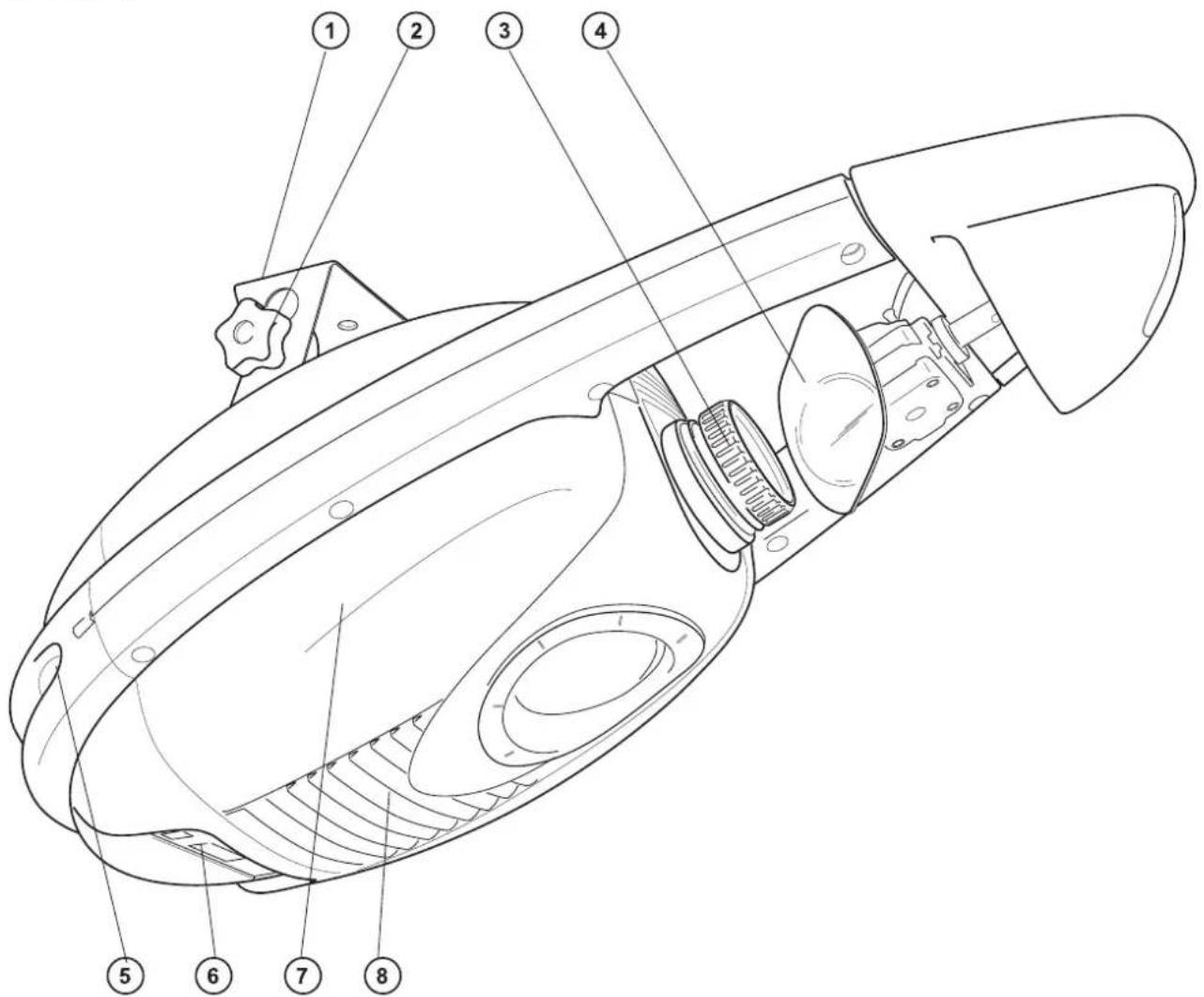
Overview
(1) Mounting bracket
(2) Fixation screw
(3) Objective-lens/Focus
(4) Mirror
(5) Housing screws
(6) Control Board
(7) Housing cover
(8) Venting slots
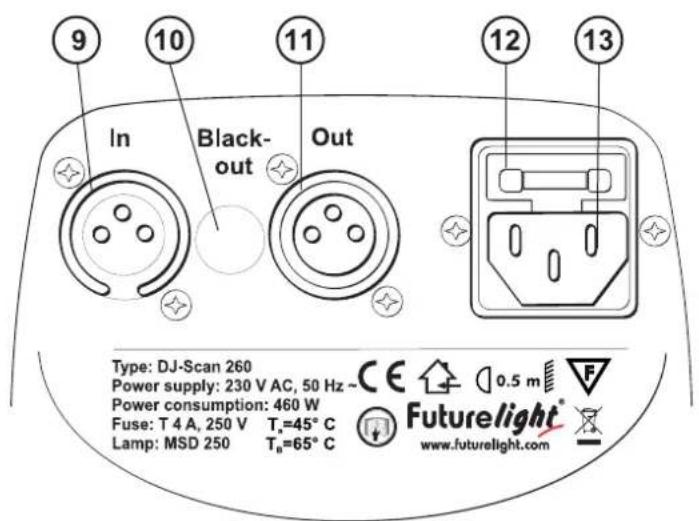
(9) DMX-In socket
(10) Blackout-socket
(11) DMX-Out socket
(12) Fuseholder
(13) Power supply
English
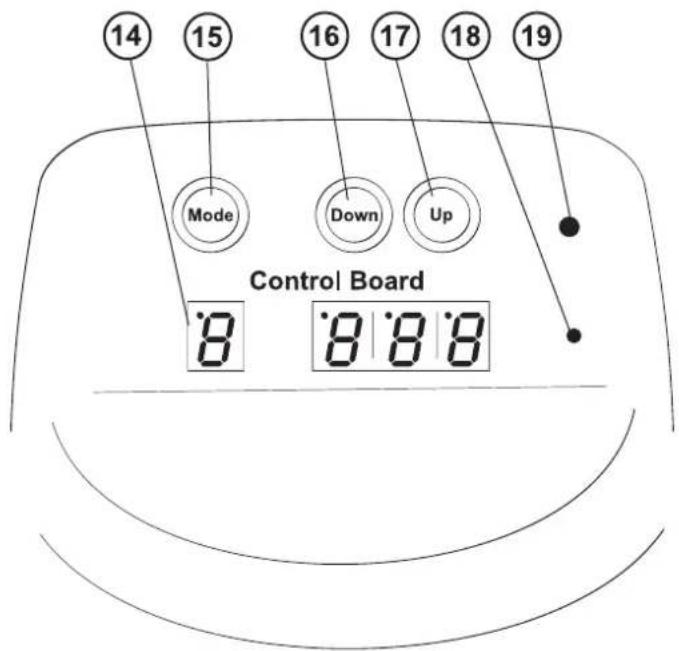
(14) LED display
(15) Mode-button
(16) Down-button
(17) Up-button
(18) Microphone
(19) Control LED
INSTALLATION
Installing/Replacing the lamp
DANGER TO LIFE!
Only install the lamp with the device switched off!
Unplug from mains before!
For the installation, you need one MSD/HSD 200 GY-9.5, MSD/HSD 250 GY-9.5 or MSD 250/2 GY-9.5 lamp.
The lamp must only be changed when wearing appropriate protective clothing (protection glasses, protection gloves, helmet with sight, leather apron).

CAUTION!
The lamp has to be replaced when it is damaged or deformed due to the heat!
The lamp life given by the manufacturer must never be exceeded. This is why you need to take notes on the operational time of the lamp and replace the lamp in time.
Keep exchanged lamp in a protective container and remove accordingly.
During the operation, the lamp reaches temperatures of up to 600^ .
Before replacing the lamp, unplug mains lead and let the lamp cool down (approx. 10 minutes).
During the installation do not touch the glass-bulbs bare-handed! Please follow the lamp manufacturer's notes!
Do not install lamps with a higher wattage! Lamps with a higher wattage generate temperatures the device was not designed for. Damages caused by non-observance are not subject to warranty.
English
Procedure:
Step 1: Carefully unscrew the two housing screws at the rear part of the appliance with an appropriate imbus key and remove the housing cover.
Step 2: Unscrew the fixation screws A, B of the lamp system and carefully remove it from the housing.
Step 3: If replacing the lamp, remove the old lamp from the lamp holder.
Step 4: Insert the lamp into the lamp holder.
Step 5: Replace the lamp system in the housing and tighten the fixation screws.
Step 6: Adjust the lamp as described under lamp adjustment.
Step 7: Replace the housing cover and tighten the housing screws.
Lamp adjustment
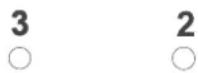
Adjust the lamp position by turning screws 1,2 and 3.
LAMP: MSD 250
3
2
O
O
B
A
O
Change the lamp by
0
loosening screws A and B
10
The lampholder is aligned at the factory. Due to differences between lamps, fine adjustment may improve light performance.
Strike the lamp, open the shutter and the iris, set the dimmer intensity onto 100% and focus the light on a flat surface (wall). Center the hot-spot (the brightest part of the beam) using the 3 adjustment screws "1,2,3". Turn one screw at a time to drag the hot-spot diagonally across the projected image. If you cannot detect a hotspot, adjust the lamp until the light is even.
To reduce a hot-spot, pull the lamp in by turning all three screws screws "1, 2, 3" clockwise 14 -turn at a time until the light is evenly distributed.
If the light is brighter around the edge than it is in the center, or if light output is low, the lamp is too far back in the reflector. "Push" the lamp out by turning the screws screws "1, 2, 3" counterclockwise 14 -turn at a time the light is bright and evenly distributed.

Do not operate this device with opened cover!
Overhead rigging

DANGER TO LIFE!
Please consider the EN 60598-2-17 and the respective national norms during the installation! The installation must only be carried out by an authorized dealer!
The installation of the projector has to be built and constructed in a way that it can hold 10 times the weight for 1 hour without any harming deformation.
The installation must always be secured with a secondary safety attachment, e.g. an appropriate catch net. This secondary safety attachment must be constructed in a way that no part of the installation can fall down if the main attachment fails.
When rigging, derigging or servicing the fixture staying in the area below the installation place, on bridges, under high working places and other endangered areas is forbidden.
The operator has to make sure that safety-relating and machine-technical installations are approved by an expert before taking into operation for the first time and after changes before taking into operation another time.
The operator has to make sure that safety-relating and machine-technical installations are approved by an expert after every four year in the course of an acceptance test.
English
The operator has to make sure that safety-relating and machine-technical installations are approved by a skilled person once a year.
Procedure:
The projector should be installed outside areas where persons may walk by or be seated.
IMPORTANT! OVERHEAD RIGGING REQUIRES EXTENSIVE EXPERIENCE, including (but not limited to) calculating working load limits, installation material being used, and periodic safety inspection of all installation material and the projector. If you lack these qualifications, do not attempt the installation yourself, but instead use a professional structural rigger. Improper installation can result in bodily injury and/or damage to property.
The projector has to be installed out of the reach of people.
If the projector shall be lowered from the ceiling or high joists, professional trussing systems have to be used. The projector must never be fixed swinging freely in the room.
Caution: Projectors may cause severe injuries when crashing down! If you have doubts concerning the safety of a possible installation, do NOT install the projector!
Before rigging make sure that the installation area can hold a minimum point load of 10 times the projector's weight.

DANGER OF FIRE!
When installing the device, make sure there is no highly-inflammable material (decoration articles, etc.) within a distance of min. 0.5m
Mount the projector with the mounting-bracket to your trussing system using an appropriate clamp.
For overhead use, always install a safety-rope that can hold at least 12 times the weight of the fixture. You must only use safety-ropes with quick links with screw cap. Pull the safety-rope through the hole in the mounting-bracket and over the trussing system or a safe fixation spot. Insert the end in the quick link and tighten the safety screw.
The maximum drop distance must never exceed 20~cm
A safety rope which already held the strain of a crash or which is defective must not be used again.
Adjust the desired inclination-angle via the mounting-bracket and tighten the fixation screws.

DANGER TO LIFE!
Before taking into operation for the first time, the installation has to be approved by an expert!
Master/Slave-operation
The master/slave-operation enables that several devices can be synchronized and controlled by one master-device.
On the rear panel of the DJ-SCAN 260 you can find an XLR-jack (DMX Out) and an XLR-plug (DMX In), which can be used for connecting several devices.
Choose the device which is to control the effects. This device then works as master-device and controls all other slave-devices, which are to be connected to the master-device via a balanced microphone lead. Connect the DMX OUT-jack with the DMX IN-plug of the next device.
English
Control Board:
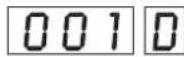
DMX-mode
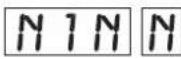
Master-mode: Sound-control
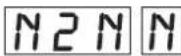
Master-mode: Slow
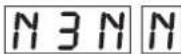
Service-mode: Standby
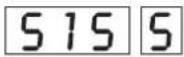
Slave-mode: Slave 1
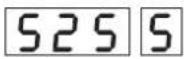
Slave-mode: Slave 2
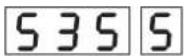
Slave-mode: Slave 3
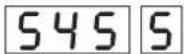
Slave-mode: Slave 4
Set the desired Master-mode for the master-device. Set the respective Slave-mode for all slave-devices.
Please note: The function N3N is only meant for service-purposes. Please do only use this function if you want to set the unit shortly into standby mode. If the unit remains on N3N, it cannot be controlled by DMX anymore!
Blackout-socket
If you wish to lock the light output - e.g. via an optional footswitch (Blackout-mode), connect your footswitch via a mono-jack plug to the Blackout-socket. Contact closure between tip and sleeve is reached when the footswitch is employed.
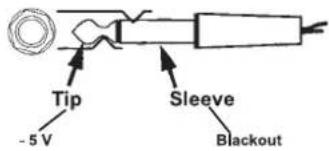
Occupation mono 1/4" jack-plug:
DMX-512 connection / connection between fixtures
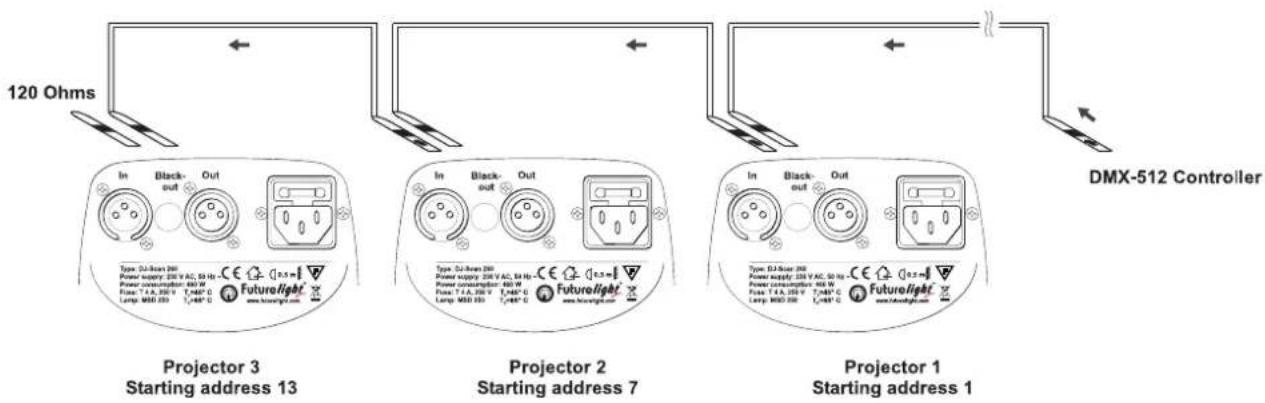

The wires must not come into contact with each other, otherwise the fixtures will not work at all, or will not work properly.


Please note, the starting address depends upon which controller is being used.

Only use a stereo shielded cable and 3-pin XLR-plugs and connectors in order to connect the controller with the fixture or one fixture with another.
English
Occupation of the XLR-connection:
DMX-output
XLR mounting-socket:
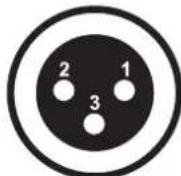
1: Ground
2: Signal (-)
3: Signal (+)
DMX-input
XLR mounting-plug:
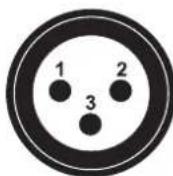
1:Ground
2: Signal (-)
3: Signal (+)
If you are using controllers with this occupation, you can connect the DMX-output of the controller directly with the DMX-input of the first fixture in the DMX-chain. If you wish to connect DMX-controllers with other XLR-outputs, you need to use adapter-cables.
Building a serial DMX-chain:
Connect the DMX-output of the first fixture in the DMX-chain with the DMX-input of the next fixture. Always connect one output with the input of the next fixture until all fixtures are connected.
Caution: At the last fixture, the DMX-cable has to be terminated with a terminator. Solder a 120 resistor between Signal (-) and Signal (+) into a 3-pin XLR-plug and plug it in the DMX-output of the last fixture.
Connection with the mains
Connect the device to the mains with the enclosed power supply cable.
The occupation of the connection-cables is as follows:
| Cable Pin International | |
| Brown Live L | |
| Blue Neutral N | |
| Yellow/Green Earth |
The earth has to be connected!
If the device will be directly connected with the local power supply network, a disconnection switch with a minimum opening of 3mm at every pole has to be included in the permanent electrical installation.
The device must only be connected with an electric installation carried out in compliance with the IEC-standards. The electric installation must be equipped with a Residual Current Device (RCD) with a maximum fault current of 30mA .
Lighting effects must not be connected to dimming-packs.
OPERATION
After you connected the effect to the mains, the DJ-SCAN 260 starts running. During the Reset, the motors are trimmed and the device is ready for use afterwards.
Turn the objective-lens for adjusting the focus in order to obtain a sharp projection.
Stand Alone operation
In the Stand Alone mode, the DJ-SCAN 260 can be used without controller. You can do without a controller as the DJ-SCAN 260features a built-in microphone, which provides automatic sound control.
Disconnect the DJ-SCAN 260 from the controller and select "Master Mode: Sound-control".
English
If you have connected a footswitch to the Blackout-socket, you can lock the light output (Blackout-mode) and turn it on again.
Master/Slave-operation
Connect the master and slave-devices and adjust the settings as described above.
Please note: If you wish to change from one operating mode into another, you have to unplug the projector from the mains and plug it again.
DMX-controlled operation
You can control the projectors individually via your DMX-controller. Every DMX-channel has a different occupation with different features. In order to call up the different features, you first have to open the light output (control channel 6, DMX-value 250-255).
Addressing
The Control Board allows you to assign the DMX fixture address, which is defined as the first channel from which the DJ-SCAN 260 will respond to the controller.
Please, be sure that you don't have any overlapping channels in order to control each DJ-SCAN 260 correctly and independently from any other fixture on the DMX data link.
If two, three or more DJ-SCAN 260 are addressed similarly, they will work similarly.
For address setting, press the Mode-button until the display shows "d" and set the desired address via the Up/Down Buttons.
Controlling:
After having addressed all DJ-SCAN 260, you may now start operating these via your lighting controller.
Note:
After switching on, the DJ-SCAN 260 will automatically detect whether DMX 512 data is received or not. If the data is received, the control LED flashes. If there is no data received at the DMX-input, the control LED lights up permanently.
This situation can occur if:
- the 3 PIN XLR plug (cable with DMX signal from controller) is not connected with the input of the DJ-SCAN 260.
- the controller is switched off or defective, if the cable or connector is defective or the signal wires are swap in the input connector.
Note:
It's necessary to insert the XLR termination plug (with 120 Ohm) in the last lighting in the link in order to ensure proper transmission on the DMX data link.
DMX-protocol
Control-channel 1 - Horizontal movement (Pan)
Push slider up in order to move the mirror horizontally (PAN).
Gradual mirror adjustment from one end of the slider to the other (0-255, 128-center).
The mirror can be stopped at any position you wish.
Control-channel 2 - Vertical movement (Tilt)
Push slider up in order to move the mirror vertically (TILT).
Gradual mirror adjustment from one end of the slider to the other (0-255, 128-center).
The mirror can be stopped at any position you wish.
Control-channel 3 - Colour-wheel
Linear colour change following the movement of the slider.
In this way you can stop the colour-wheel in any position.
Decimal Hexad. Percentage S/F Feature
| 0 | 18 00 | 12 | 0% | 7% | S | open/white | |
| 18 | 35 12 | 2 23 | 7% | 14% | S | Magenta | |
| 36 | 53 24 | 35 | 14% | 21% | S | Green | |
| 54 | 71 36 | 47 | 21% | 28% | S | Light blue | |
| 72 | 89 48 | 59 | 28% | 35% | S | Pink | |
| 90 | 107 | 5A 6B | 35% | 42% | S | Yellow | |
| 108 | 126 | 6C 7E | 42% | 49% | S | Orange | |
| 127 | 127 | 7F 7F | 50% | 50% | S | Dark blue | |
| 128 | 191 | 80 | BF | 50% | 75% | F | Forwards rainbow effect with increasing speed |
| 192 | 255 | C0 | FF | 75% | 100% | F | Backwards rainbow effect with increasing speed |
Control-channel 4 - Rotating gobo-wheel
Decimal Hexad. Percentage S/F Feature
| 0 | 15 | 00 | 0F | 0% | 6% | S | Open/white |
| 16 | 31 | 0 1F | 6% | 12% | S Rot. gobo 1 | ||
| 32 | 47 | 0 2F | 13% | 18% | Rot. gobo | 2 | |
| 48 | 63 | 0 3F | 19% | 25% | Rot. gobo | 3 | |
| 64 | 79 | 0 4F | 25% | 31% | Rot. gobo | 4 | |
| 80 | 95 | 0 5F | 31% | 37% | Rot. gobo | 5 | |
| 96 | 111 | 60 6F | 38% | 44% | S Rot. gobo | 6 | |
| 112 | 127 | 70 7F | 44% | 50% | S Rot. gobo | 7 | |
| 128 | 191 | 80 | BF | 50% | 75% | F | Forwards gobo-change with increasing speed |
| 192 | 255 | C0 | FF | 75% | 100% | F | Backwards gobo-change with increasing speed |
Control-channel 5 - Gobo rotation
Decimal Hexad. Percentage S/F Feature
| 0 | 15 | 0 | 0F | 0% | 6% | S No rotation | ||
| 16 | 135 | 10 | 87 | 6% | 53% | F | Forwards gobo rotation with decreasing speed | |
| 136 | 255 | 88 | FF | 53% | 100% | F | Backwards gobo rotation with increasing speed | |
Control-channel 6 - Shutter, Strobe
Decimal Hexad. Percentage S/F Feature
| 0 | 5 | 00 | 05 | 0% | 2% | S | Shutter closed |
| 6 | 128 | 06 | 80 | 2% | 50% | F | Dimmer control |
| 129 | 131 | 81 | 83 | 51% | 51% | S Reset (after 3-5 seconds) | |
| 132 | 139 | 84 | 8B | 52% | 55% | S No function (Shutter open) | |
| 140 | 199 | 8C | C7 | 55% | 78% | F | Strobe-effect with increasing speed |
| 200 | 249 | C8 | F9 | 78% | 98% | F | Random strobe effect with increasing speed |
| 250 | 255 | FA | FF | 98% | 100% | S No function (Shutter open) | |
CLEANING AND MAINTENANCE
The operator has to make sure that safety-relating and machine-technical installations are inspected by an expert after every four years in the course of an acceptance test.
The operator has to make sure that safety-relating and machine-technical installations are inspected by a skilled person once a year.
The following points have to be considered during the inspection:
1) All screws used for installing the devices or parts of the device have to be tightly connected and must not be corroded.
2) There must not be any deformations on housings, fixations and installation spots (ceiling, suspension, trussing).
3) Mechanically moved parts like axles, eyes and others must not show any traces of wearing (e.g. material, abrading or damages) and must not rotate with unbalances.
4) The electric power supply cables must not show any damages, material fatigue (e.g. porous cables) or sediments. Further instructions depending on the installation spot and usage have to be adhered by a skilled installer and any safety problems have to be removed.
DANGER TO LIFE!
Disconnect from mains before starting maintenance operation!
We recommend a frequent cleaning of the device. Please use a moist, lint-free cloth. Never use alcohol or solvents!

CAUTION!
The lens has to be replaced when it is obviously damaged, so that its function is impaired, e. g. due to cracks or deep scratches!
The front mirror and the objective lens will require weekly cleaning as smoke-fluid tends to building up residues, reducing the light-output very quickly. The cooling-fans should be cleaned monthly.
The gobos may be cleaned with a soft brush. The interior of the fixture should be cleaned at least annually using a vacuum-cleaner or an air-jet.
The dichroic colour-filters, the gobo-wheel and the internal lenses should be cleaned monthly.
To ensure a proper function of the gobo-wheel, we recommend lubrication in six month intervals. The quantity of oil must not be excessive in order to avoid that oil runs out when the gobo-wheel rotates.
There are no serviceable parts inside the device except for the lamp and the fuse. Maintenance and service operations are only to be carried out by authorized dealers.
Please refer to the instructions under "Installing/Replacing the lamp".
English
Replacing the fuse
If the fine-wire fuse of the device fuses, only replace the fuse by a fuse of same type and rating.
Before replacing the fuse, unplug mains lead.
Procedure:
Step 1: Open the fuseholder on the rearpanel with a fitting screwdriver.
Step 2: Remove the old fuse from the fuseholder.
Step 3: Install the new fuse in the fuseholder.
Step 4: Replace the fuseholder in the housing.
Should you need any spare parts, please use genuine parts.
If the power supply cable of this device becomes damaged, it has to be replaced by a special power supply cable available at your dealer.
Should you have further questions, please contact your dealer.
TECHNICAL SPECIFICATIONS
| Power supply: 230 V AC, 50 Hz ~ | |
| Power consumption: 460 W | |
| DMX-control-channels: 6 | |
| DMX-512-connection: 3-pin XLR | |
| Sound-control: via built-in microphone | |
| Flash-rate: 10 Hz | |
| Number of colours: 7 dichroic + white | |
| Number of gobos: 7 rotating gobos and open | |
| Dimensions (LxWxH): 665 x 260 x 290 mm | |
| Weight: 10.5 kg | |
| Maximum ambient temperature Ta: 45°C | |
| Maximum housing temperature TB (steady state): 65°C | |
| Min(distance from flammable surfaces): 0.5 m | |
| Min(distance to lighted object): 0.5 m | |
| Fuse: T 4 A, 250 V | |
| Accessory: | |
| SYLVANIA BA250/2 SE D 90V/250W GY-9.5 | No. 89106120 |
| GE CSD250/2 95V/250W GY-9.5 2000h 8500K | No. 89106100 |
| PHILIPS MSD250/2 90V/250W GY-9.5 2000h | No. 89106115 |
| OSRAM HSD250/80 90/250W GY9.5 3000h 8000K | No. 89106210 |
| FUTURELIGHT Easy-2 remote control | No. 51834011 |
| FUTURELIGHT EX-6/32 controller | No. 51834046 |
| FUTURELIGHT EX-8/32 controller | No. 51834047 |
| FUTURELIGHT CP-240 controller | No. 51834265 |
| FUTURELIGHT CP-256/64 controller 16bit | No. 51834288 |
| FUTURELIGHT CP-512/64 controller 16bit | No. 51834295 |
| Wizard-512 USB DMX-Software + Interface | No. 51860102 |
| Wizard-1024 USB DMX-Software + Interface | No. 51860110 |
| FUTURELIGHT DES-3 DMX-terminator 3-pin | No. 51834001 |
Please note: Every information is subject to change without prior notice. 22.05.2006 ©
Français
MODE D'EMPLOI
Futurelight
DJ-SCAN 260
DMX-Scanner
ATTENTION!
Adjust the lamp position by turning screws 1,2 and 3. LAMP: MSD 250
B A O Change the lamp by O loosening screws A and B

Operation Master/Slave
Operation Stand Alone
Operation Master/Slave
Adjust the lamp position by turning screws 1,2 and 3.
LAMP: MSD 250
3
O
2
O
B
A
0
Change the lamp by loosening screws A and
O
10
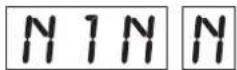
Master-mode: Sound-control

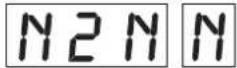
Master-mode: Slow

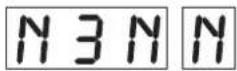
Service-mode: Standby