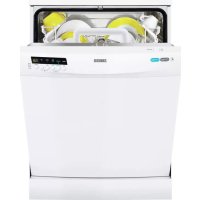
ZDT12041FA - Dishwasher ZANUSSI - Free user manual and instructions
Find the device manual for free ZDT12041FA ZANUSSI in PDF.



User questions about ZDT12041FA ZANUSSI
0 question about this device. Answer the ones you know or ask your own.
Ask a new question about this device
Download the instructions for your Dishwasher in PDF format for free! Find your manual ZDT12041FA - ZANUSSI and take your electronic device back in hand. On this page are published all the documents necessary for the use of your device. ZDT12041FA by ZANUSSI.
USER MANUAL ZDT12041FA ZANUSSI
natural_image
Simple line drawing of a washing machine on a dark background (no text or symbols)ZDT12041FA
text_image
1/2 70° 65° 65°A 30° CO 50° S m/ O → I CANCEL 3 sec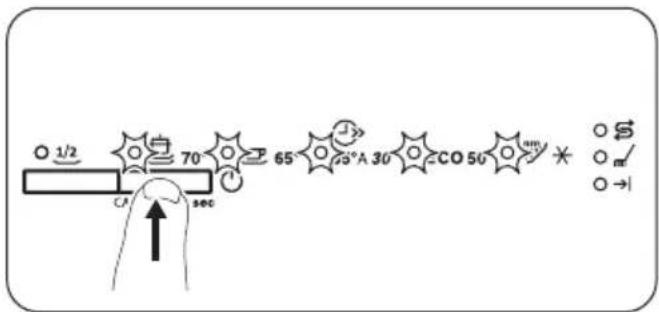
text_image
1/2 70° 65° 30° CO 50° * S m →1 Cf secflowchart
graph LR
    A["Reaction Step 1: Temperature 2, 70°C, 65°C, 30°C"] --> B["Reaction Condition: CO 50"]
    B --> C["Product: S, m, →"]

text_image
1/2 70° 65° 65°A 30° ECO 50° S m/ → C sectext_image
1/2 70° 65° 65°A 30° ECO 50° S → ○ →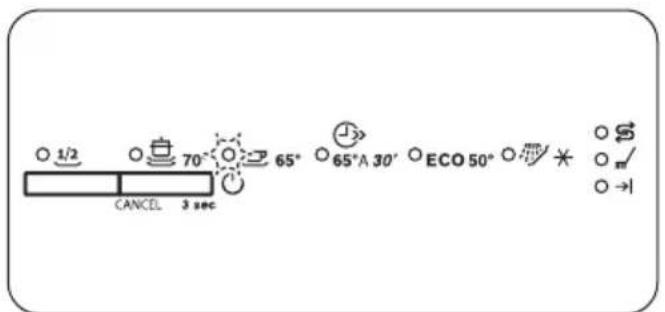
text_image
1/2 70° 65° 65°A 30° ECO 50° * ○ S ○ π/ ○ →1 CANCEL 3 sec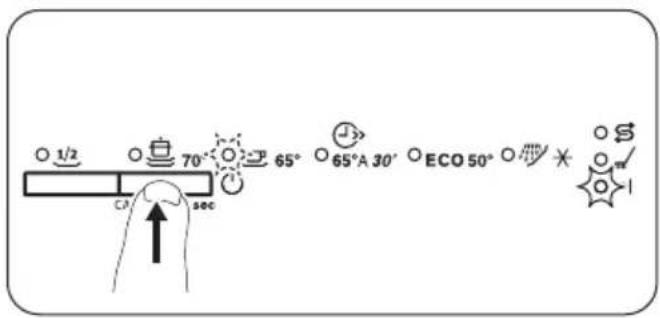
text_image
1/2 70° 65° 65°A 30° ECO 50° S C secnatural_image
Technical line drawing of a mechanical component with an inset showing a small rectangular feature (no text or symbols)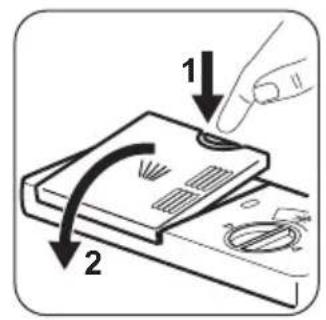
text_image
1 2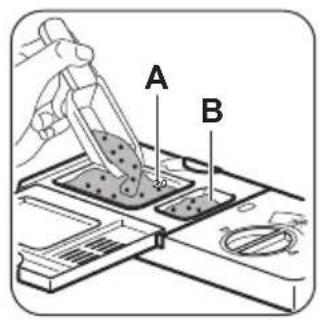
text_image
A B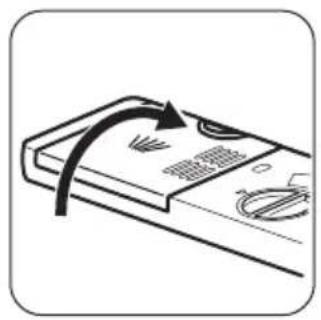
natural_image
Simple line drawing of a device with an arrow indicating rotation or change (no text or symbols)natural_image
Technical line drawing of a mechanical component with an inset showing a small cylindrical feature (no text or symbols)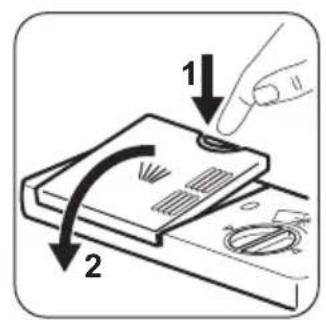
text_image
Diagram showing a hand pressing down on a device with labeled parts and directional arrows indicating motion or movement.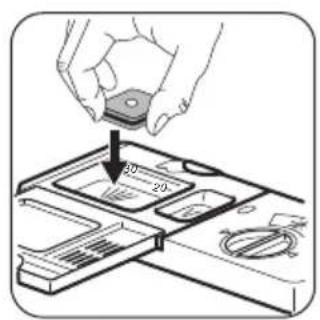
text_image
Diagram showing a hand holding a small electronic component with labeled parts and directional arrows indicating movement or assembly.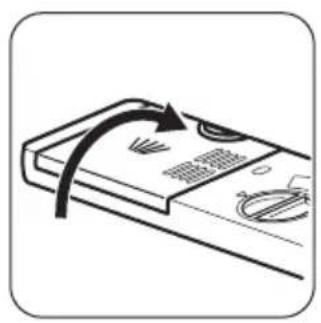
natural_image
Illustration of a device with a curved arrow indicating rotation or movement (no text or symbols)natural_image
Simple line drawing of a door latch with an arrow indicating rotation (no text or symbols)text_image
1/2 70° 65° 65°A 30° CO 50° S m →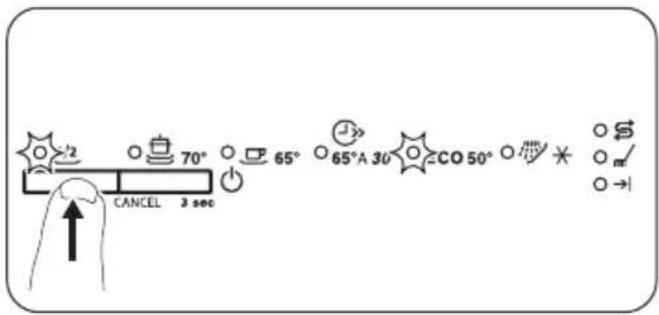
text_image
70° 65° 65°A 30° CO 50° S m → CANCEL 3 secDE DEUR OPENEN ALS HET APPARAAT IN WERKING IS
natural_image
Simple line drawing of a door latch with an arrow indicating rotation (no text or symbols)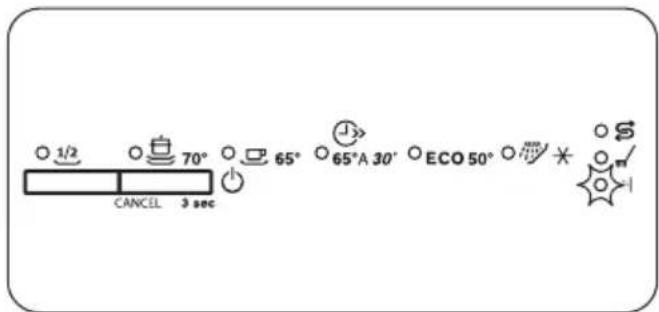
text_image
1/2 70° 65° 65°A 30° ECO 50° CANCEL 3 sec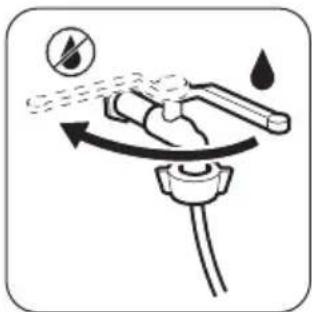
text_image
Diagram illustrating a hand valve mechanism with water droplets and directional arrows indicating flow or movement.text_image
Mod. .... Prod. No. .... Ser. No.Before the installation and use of the appliance, carefully read the supplied instructions. The manufacturer is not responsible if an incorrect installation and use causes injuries and damages.
Always keep the instructions with the appliance for future reference.
GENERAL SAFETY
- This appliance is intended to be used in household and similar applications such as:
- farm houses; staff kitchen areas in shops, offices and other working environments;
- by clients in hotels, motels, bed & breakfast and other residential type environments.
- Do not change the specification of this appliance.
- The operating water pressure (minimum and maximum) must be between 0.5 (0.05) / 8 (0.8) bar (Mpa)
- Obey the maximum number of 12 place settings.
- If the supply cord is damaged, it must be replaced by the manufacturer, its Authorised Service Centre or similarly qualified persons in order to avoid a hazard.
- Put knives and cutlery with sharp points in the cutlery basket with the points down or in a horizontal position.
- Do not keep the appliance door open without supervision to prevent to fall on it.
- Before maintenance, deactivate the appliance and disconnect the mains plug from the mains socket.
- Do not use water spray and steam to clean the appliance.
- The appliance is to be connected to the water mains using the new supplied hose-sets. Old hose sets must not be reused.
CHILDREN AND VULNERABLE PEOPLE SAFETY
- This appliance can be used by children aged from 8 years and above and persons with reduced physical, sensory or mental capabilities or lack of experience and knowledge if they have
been given supervision or instruction concerning use of the appliance in a safe way and understand the hazards involved.
- Do not let children play with the appliance.
- Keep all detergents away from children.
- Keep children and pets away from the appliance door when it is open.
- Cleaning and user maintenance shall not be made by children without supervision.
SAFETY INSTRUCTIONS
INSTALLATION
- Remove all the packaging.
- Do not install or use a damaged appliance.
- Do not install or use the appliance where the temperature is less than 0 °C.
- Obey the installation instruction supplied with the appliance.
- Make sure that the appliance is installed below and adjacent to safe structures.
ELECTRICAL CONNECTION

WARNING! Risk of fire and electrical shock.
- The appliance must be earthed.
- Make sure that the electrical information on the rating plate agrees with the power supply. If not contact an electrician.
- Always use a correctly installed shockproof socket.
- Do not use multi-plug adapters and extension cables.
- Make sure not to cause damage to the mains plug and to the mains cable. Should the mains cable need to be replaced, this must be carried out by our Authorised Service Centre.
- Connect the mains plug to the mains socket only at the end of the installation. Make sure that there is access to the mains plug after the installation.
- Do not pull the mains cable to disconnect the appliance. Always pull the mains plug.
- This appliance complies with the E.E.C. Directives.
- Only for UK and Ireland. The appliance has a 13 amp mains plug. If it is necessary to change the fuse in the mains plug, use a 13 amp ASTA (BS 1362) fuse.
WATER CONNECTION
- Make sure not to cause damage to the water hoses.
- Before you connect the appliance to new pipes or pipes not used for a long time, let the water flow until it is clean.
- The first time you use the appliance, make sure that there is no leakage.
- The water inlet hose has a safety valve and a sheath with an inner mains cable.



WARNING! Dangerous voltage.
- The water inlet hose has an external transparent sheath. If the hose is damaged, the water in the hose becomes dark.
- If the water inlet hose is damaged, immediately disconnect the mains plug from the mains socket. Contact the Authorised Service Centre to replace the water inlet hose.
USE
- Do not sit or stand on the open door.
- Dishwasher detergents are dangerous. Obey the safety instructions on the detergent packaging.
-
Do not drink and play with the water in the appliance.
-
Do not remove the dishes from the appliance until the programme is completed. There can be detergent on the dishes.
- The appliance can release hot steam if you open the door while a programme operates.
- Do not put flammable products or items that are wet with flammable products in, near or on the appliance.
SERVICE
- Contact the Authorised Service Centre to repair the appliance. We recommend only the use of original spare parts.
- When you contact the Authorised Service Centre, ensure that you have the following information that is available on the rating plate.
Model :
PNC :
Serial Number :
DISPOSAL

WARNING! Risk of injury or suffocation.
- Disconnect the appliance from the mains supply.
- Cut off the mains cable and discard it.
- Remove the door catch to prevent children and pets to get closed in the appliance.
EASY START
text_image
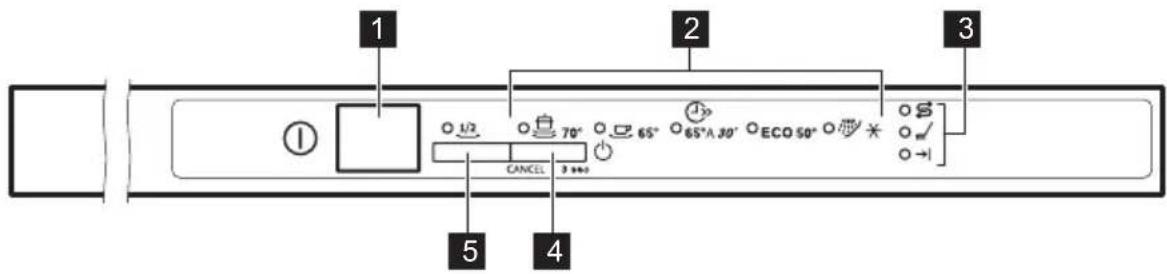
1 2 3 ① 1/2 70° 65° 65°A 30° ECO 50° CANCEL 3 +++ 4 51 On/off button
5 Half load button
2 Programme indicators
3 Indicators
4 Programme button
INDICATORS

Washing phase. It comes on when the washing phase operates.

End indicator.

Salt indicator. It is always off while the programme operates.
PROGRAMMES
| Programme | Degree of soil Type of load | Programme phases | Consumption values1) | ||
| Duration (min) | Energy (kWh) | Water (l) | |||
| ECO2) | Normal soil Crockery and cutlery | ·Prewash·Wash 50 °C·Rinses·Dry | 195 1.02 11 | ||
| Heavy soil Crockery, cutlery, pots and pans | ·Prewash·Wash 70 °C·Rinses·Dry | 130 - 150 | 1.3 - 1.4 13 | - 15 | |
| Normal soil Crockery and cutlery | ·Prewash·Wash 65 °C·Rinses·Dry | 100 - 110 | 1.2 - 1.6 15 | - 16 | |
| 3) | Fresh soil Crockery and cutlery | ·Wash 60 °C or 65 °C·Rinses | 30 0.8 9 | ||
| 4) | All • Prewash 14 | 0.1 4 | |||
1) The pressure and the temperature of the water, the variations of the mains supply, the options and the quantity of dishes can change the values.
2) With this programme you have the most efficient use of water and energy consumption for crockery and cutlery with normal soil. (This is the standard programme for test institutes).
3) With this programme you can wash a load with fresh soil. It gives good washing results in a short time.
4) Use this programme to quickly rinse the dishes. This prevents the remaining food to bond on the dishes and bad odours to come out from the appliance. Do not use detergent with this programme.
SETTINGS
PROGRAMME SELECTION MODE
text_image
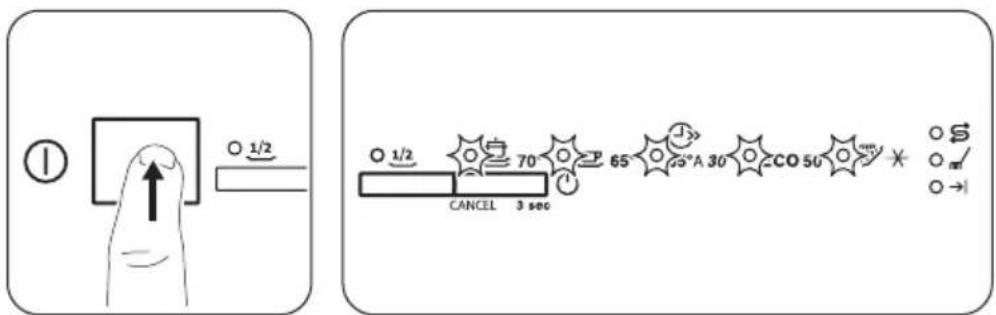
① O 1/2 CANCEL 3 sec 65° 30° CO 50° * ○ S ○ m/ ○ →The appliance is in programme selection mode when all programme indicators are on.
When the appliance is in programme selection mode, it is possible to set a programme and to enter the user mode.
If the control panel does not show this condition, do the cancel function.
CANCEL FUNCTION
text_image
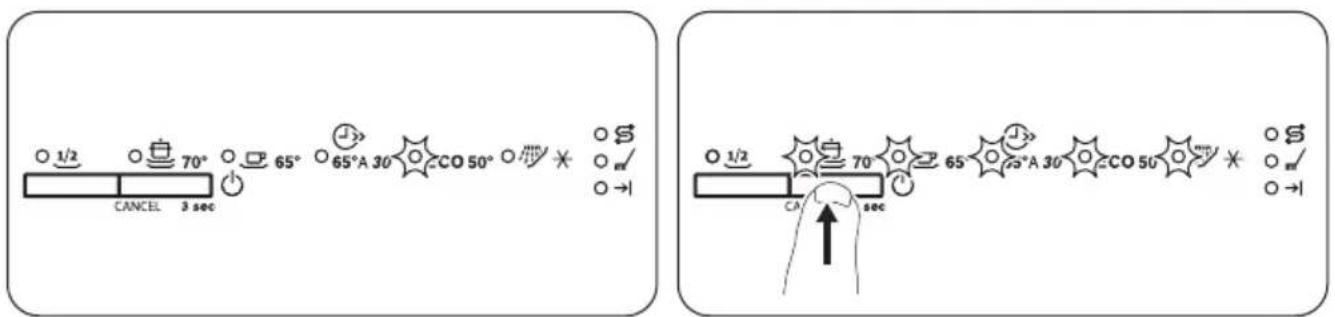
1/2 70° 65° 65°A 30° CO 50° S m →1 CANCEL 3 sec O 1/2 70° 65° 65°A 30° CO 50° S m →1 CA secPress the programme button until all programme indicators are on (Programme selection mode). With this function you can cancel the running programme.
USER MODE
flowchart
graph LR
    A["CANCEL"] --> B["70 sec"]
    B --> C["65°"]
    C --> D["30°"]
    D --> E["CO 50"]
    E --> F["*"]
    style A fill:#f9f,stroke:#333
    style F fill:#ccf,stroke:#333
    note1["CANCEL 3 sec"] --> A
    note2["CO 50"] --> E
    note3["CO 50"] --> F
    note4["CO 50"] --> G["*"]
    note5["CO 50"] --> H["O → I"]
    note6["CO 50"] --> I["O → S"]
    note7["CO 50"] --> J["O → m/"]
    note8["CO 50"] --> K["O → S"]
    note9["CO 50"] --> L["O → S"]
    note10["CO 50"] --> M["O → S"]
    note11["CO 50"] --> N["O → S"]
    note12["CO 50"] --> O["O → S"]
    note13["CO 50"] --> P["O → S"]
    note14["CO 50"] --> Q["O → S"]
    note15["CO 50"] --> R["O → S"]
    note16["CO 50"] --> S["O → S"]
    note17["CO 50"] --> T["O → S"]
    note18["CO 50"] --> U["O → S"]
    note19["CO 50"] --> V["O → S"]
    note20["CO 50"] --> W["O → S"]
    note21["CO 50"] --> X["O → S"]
    note22["CO 50"] --> Y["O → S"]
    note23["CO 50"] --> Z["O → S"]
    note24["CO 50"] --> AA["O → S"]
    note25["CO 50"] --> AB["O → S"]
    note26["CO 50"] --> AC["O → S"]
    note27["CO 50"] --> AD["O → S"]
    note28["CO 50"] --> AE["O → S"]
    note29["CO 50"] --> AF["O → S"]
    note30["CO 50"] --> AG["O → S"]
    note31["CO 50"] --> AH["O → S"]
    note32["CO 50"] --> AI["O → S"]
    note33["CO 50"] --> AJ["O → S"]
    note34["CO 50"] --> AK["O → S"]
    note35["CO 50"] --> AL["O → S"]
    note36["CO 50"] --> AM["O → S"]
    note37["CO 50"] --> AN["O → S"]
    note38["CO 50"] --> AO["O → S"]
    note39["CO 50"] --> AP["O → S"]
    note40["CO 50"] --> AQ["O → S"]
    note41["CO 50"] --> AR["O → S"]
    note42["CO 50"] --> AS["O → S"]
    note43["CO 50"] --> AT["O → S"]
    note44["CO 50"] --> AU["O → S"]
    note45["CO 50"] --> AV["O → S"]
    note46["CO 50"] --> AW["O → S"]
    note47["CO 50"] --> AX["O → S"]
    note48["CO 50"] --> AY["O → S"]
    note49["CO 50"] --> AZ["O → S"]
    note50["CO 50"] --> BA["O → S"]
    note51["CO 50"] --> BB["O → S"]
    note52["CO 50"] --> BC["O → S"]
    note53["CO 50"] --> BD["O → S"]
    note54["CO 50"] --> BE["O → S"]
    note55["CO 50"] --> BF["O → S"]
    note56["CO 50"] --> BG["O → S"]
    note57["CO 50"] --> BH["O → S"]
    note58["CO 50"] --> BI["O → S"]
    note59["CO 50"] --> BJ["O → S"]
    note60["CO 50"] --> BK["O → S"]
    note61["CO 50"] --> BL["O → S"]
    note62["CO 50"] --> BM["O → S"]
    note63["CO 50"] --> BN["O → S"]
    note64["CO 50"] --> BO["O → S"]
    note65["CO 50"] --> BP["O → S"]
    note66["CO 50"] --> BQ["O → S"]
    note67["CO 50"] --> BR["O → S"]
    note68["CO 50"] --> BS["O → S"]
    note69["CO 50"] --> BT["O → S"]
    note70["CO 50"] --> BU["O → S"]
    note71["CO 50"] --> BV["O → S"]
    note72["CO 50"] --> BW["O → S"]
    note73["CO 50"] --> BX["O → S"]
    note74["CO 50"] --> BY"W"
    note75["CO 50"] --> BZ"W"
    note76["CO 50"] --> CA"W"
    note77["CO 50"] --> CB"W"
    note78["CO 50"] --> CC"W"
    note79["CO 50"] --> DD"W"
    note80["CO 50"] --> DE"W"
    note81["CO 50"] --> DF"W"
    note82["CO 50"] --> DG"W"
    note83["CO 50"] --> DH"W"
    note84["CO 50"] --> DI"W"
    note85["CO 50"] --> DJ"W"
    note86["CO 50"] --> DK"W"
    note87["CO 50"] --> DL"W"
    note88["CO 50"] --> DV"W"
    note89["CO 50"] --> DW"W"
    note90["CO 50"] --> DX"W"
    note91["CO 50"] --> DXW
    note92["CO 50"] --> DXX
    note93["CO 50"] --> DXY
    note94["CO 50"] --> DXZ
    note95["CO 50"] --> DXR
    note96["CO 50"] --> DXS
    note97["CO 50"] --> DXT
    note98["CO 50"] --> DXU
    note99["CO 50"] --> DXV
    note100["CO 50"] --> DXW
text_image
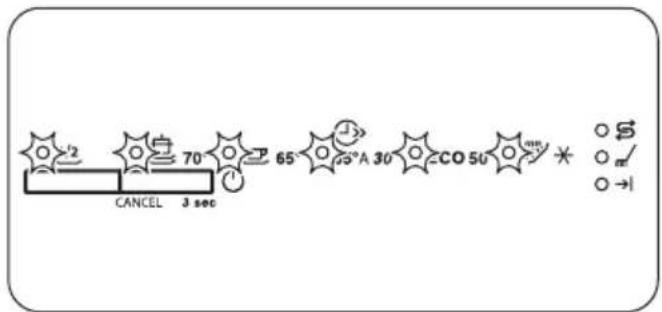
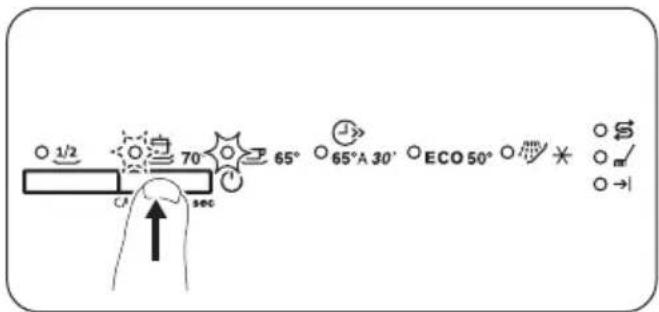
1/2 70° 65° 65°A 30° ECO 50° S m/ →1 secWhile the appliance is in programme selection mode:
- Press and hold programme button until the indicator ☑ starts to flash and the indicator 📋 is on. In user mode can be changed:
- The level of the water softener according to the water hardness.
- The activation or the deactivation of the acoustic signal for end of programme.
These settings will be saved until you change them again.
ADJUSTING THE WATER SOFTENER
text_image
1/2 70° 65° 65°A 30° ECO 50° 5x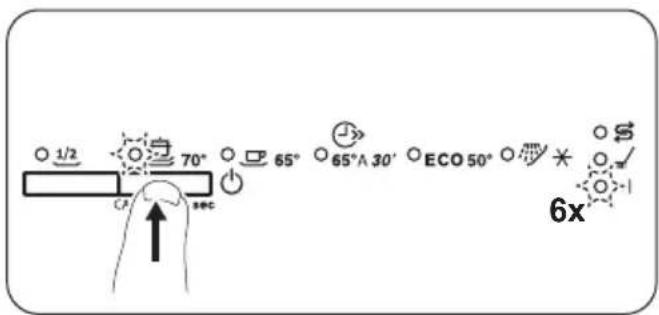
text_image
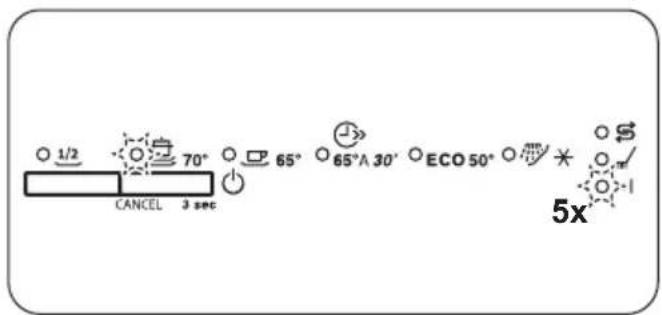
1/2 70° 65° 65°A 30° ECO 50° 6x- While the appliance is in user mode, wait until the indicator go off and the indicator → starts to flash. The current setting is indicated by the number of flashes of the indicator (e.g. 5 flashes + pause + 5 flashes = level 5).
- Press the programme button to change the setting. Each time you press the button, the level increases. After level 10 you will start again from level 1.
- Press the on/off button to confirm the setting.
THE WATER HARDNESS TABLE
| German degrees (°dH) | French degrees (°fH) | mmol/l Clarke degrees | Water softener level |
| 47 -50 84 | 90 8.4 - 9.0 58 - 63 10 | ||
| 43 - 46 76 | 83 7.6 - 8.3 53 - 57 9 | ||
| 37 - 42 65 | 75 6.5 - 7.5 46 - 52 8 | ||
| 29 - 36 51 | 64 5.1 - 6.4 36 - 45 7 | ||
| 23 - 28 40 | 50 4.0 - 5.0 28 - 35 6 | ||
| 19 - 22 33 | 39 3.3 - 3.9 23 - 27 | 5^1) | |
| 15 - 18 26 | 32 2.6 - 3.2 18 - 22 4 | ||
| 11 - 14 19 | 25 1.9 - 2.5 13 - 17 3 | ||
| 4 - 10 7 - 1 | 8 0.7 - 1.8 5 - 12 2 | ||
| <4 <7 <0.7 < 5 | 1^2) | ||
1) Factory setting
2) Do not use salt at this level.
ACTIVATING THE ACOUSTIC SIGNAL FOR THE END OF PROGRAMME
text_image
1/2 70° 65° 65°A 30° ECO 50° S √ →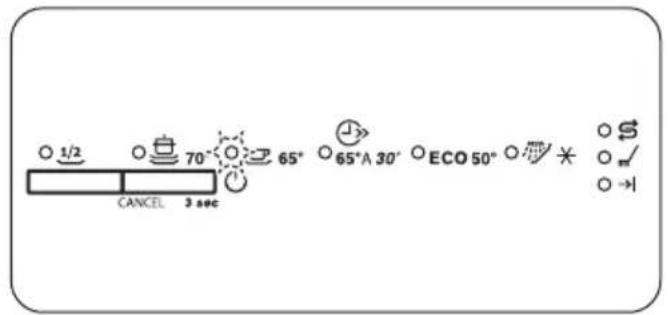
text_image
1/2 70° 65° 65°A 30° ECO 50° S OK Cancel 3 sec O→I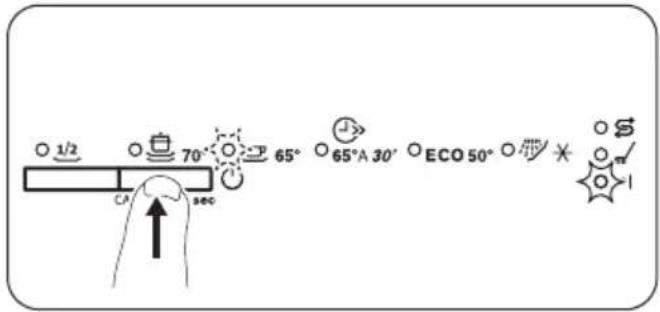
text_image
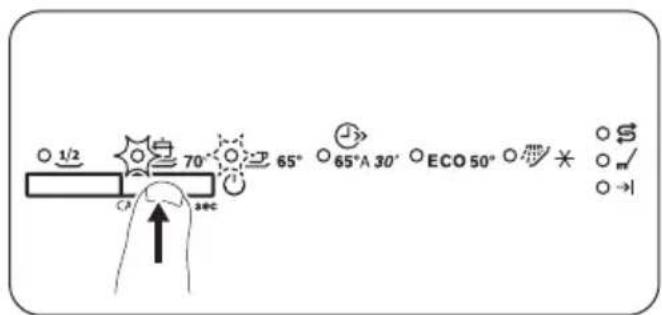
1/2 70° 65° 65°A 30° ECO 50° S CP secBy default this acoustic signal is deactivated but it is possible to activate it.
- While the appliance is in user mode, within about 5 seconds press programme button: the indicator is on and the indicator starts to flash.
- Wait until the indicator goes off. The indicator is off. The acoustic signal is off.
- Press programme button to change the setting. The indicator → is on. The acoustic signal is on.
- Press on/off button to confirm the setting.
BEFORE FIRST USE
-
Make sure that the current level of the water softener agrees with the hardness of the water supply. If not, adjust the level of the water softener.
-
Fill the salt container.
- Fill the rinse aid dispenser.
- Open the water tap.
- Start a programme to remove any processing residuals that can still be inside the appliance.
Do not use detergent and do not load the baskets.
When you start a programme, the appliance can take up to 5 minutes to recharge the resin in the water softener. It seems that the appliance is not working. The washing phase starts only after this procedure is completed. The procedure will be repeated periodically.
ADDING SALT
natural_image
Technical line drawing of a mechanical assembly with a circular inset showing a component (no text or symbols)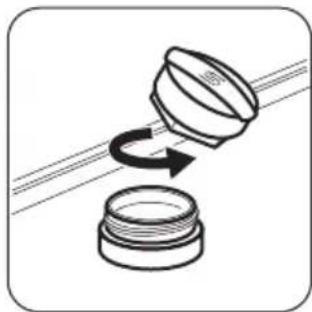
natural_image
Diagram showing a mechanical component being rotated by a curved arrow, with no visible text or symbols.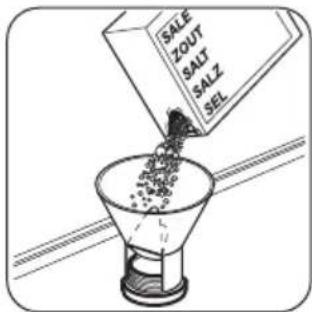
text_image
SALE ZOUT SALT SALZ SEL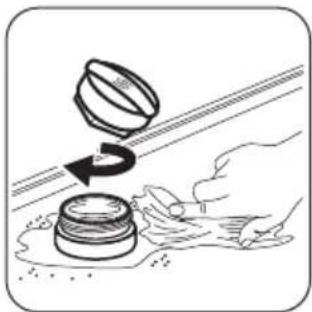
natural_image
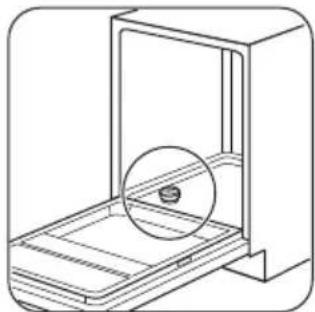
Illustration of a hand cleaning a mechanical component with a rotating knob (no text or symbols)Before first use put one litre of water in the salt container.
Water and salt can come out from the salt container when you fill it. Risk of corrosion. To prevent it, after you fill the salt container, start a programme.
ADDING RINSE AID
natural_image
Technical line drawing of a mechanical component with a magnified inset showing a small cylindrical feature (no text or symbols)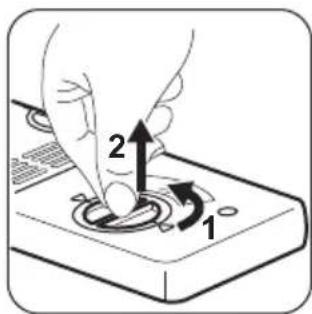
text_image
Diagram showing a hand pressing a button on a device with labeled parts 1 and 2, indicating a step in the process.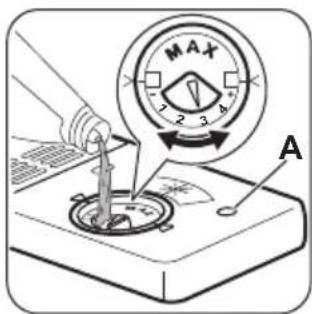
text_image
MAX A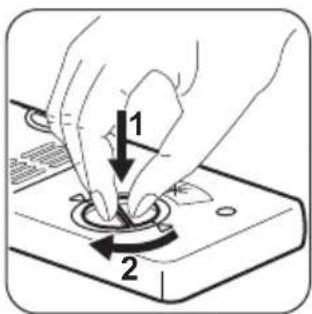
text_image
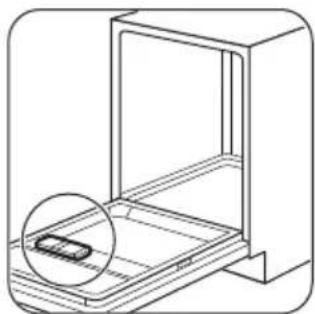
Diagram showing two hands operating a button with labeled parts, numbered 1 and 2The rinse aid helps to dry the dishes without streaks and stains. It is automatically released during the hot rinse phase. Fill the rinse aid dispenser when the lens (A) is clear.
DAILY USE
- Open the water tap.
- Press the on/off button to activate the appliance.
Make sure that the appliance is in programme selection mode.
- If the salt indicator is on, fill the salt container.
- Load the baskets.
- Add the detergent.
- Set and start the correct programme for the type of load and the degree of soil.
ADDING DETERGENT
natural_image
Technical line drawing of a mechanical component with an inset showing a small cylindrical feature (no text or symbols)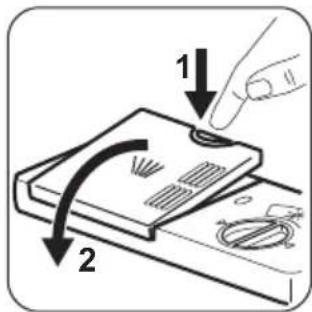
text_image
Diagram showing a hand pressing down on a device with labeled parts 1 and 2, indicating a process or operation.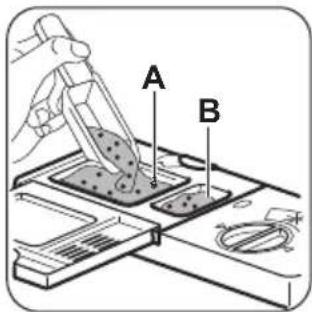
text_image
A B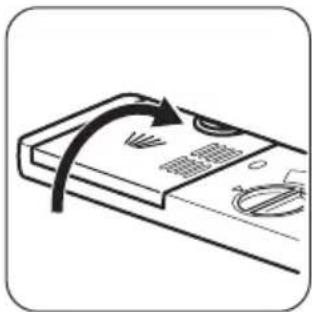
natural_image
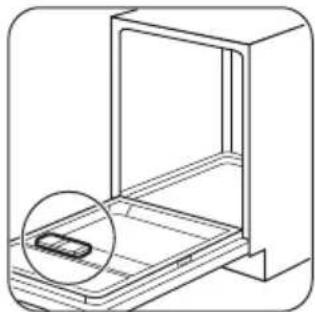
Illustration of a kitchen appliance with a curved arrow indicating rotation or motion (no text or symbols)If the programme has a prewash phase, put a small quantity of detergent also in compartment B.
ADDING MULTI-TABLETS
natural_image
Technical line drawing of a mechanical component with a magnified inset showing a small rectangular feature (no text or symbols)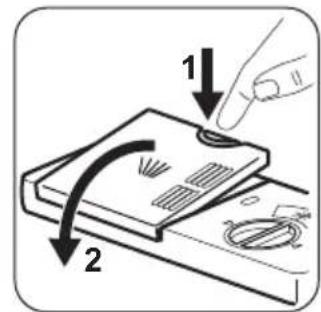
text_image
1 2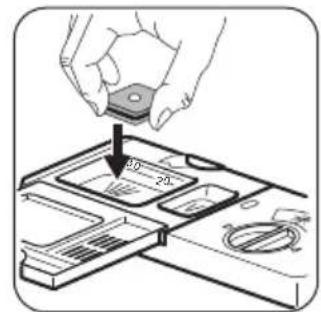
text_image
20-24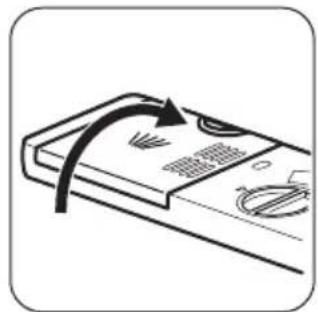
natural_image
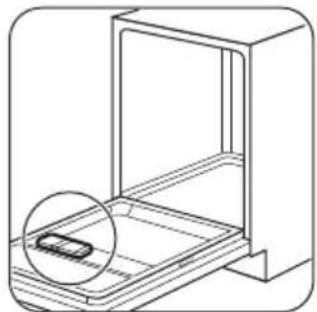
Illustration of a device with a curved arrow indicating rotation or change, no text or symbols present- Do not fill the salt container and the rinse aid dispenser.
- Adjust the water softener to the lowest level.
- Set the rinse aid dispenser to the lowest position.
STARTING A PROGRAMME
text_image
① ↑ ○ 1/2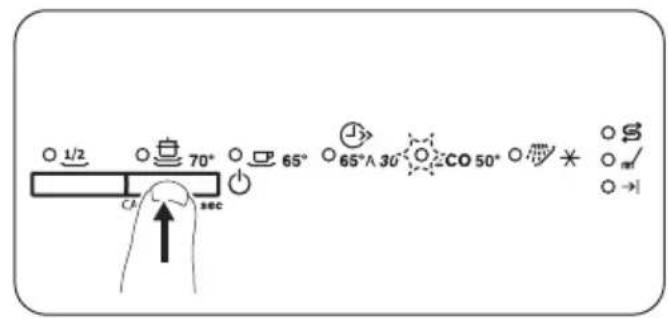
text_image
1/2 70° 65° 65°A 30° CO 50° S m/ →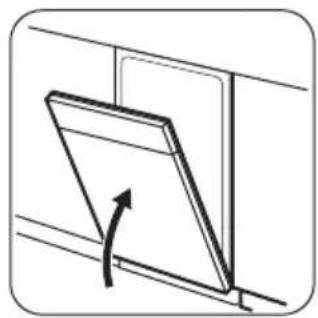
natural_image
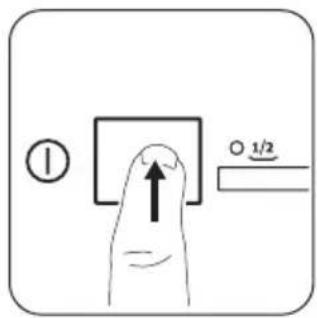
Simple line drawing of a door or shelf with an arrow indicating rotation (no text or symbols)- Keep the appliance door ajar.
- Press the on/off button to activate the appliance. Make sure that the appliance is in programme selection mode.
- Press the programme button until the indicator of the programme you want to set comes on.
- Close the appliance door to start the programme.
OPTION HALF LOAD
text_image
1/2 70° 65° 65°A 30° CO 50° S m →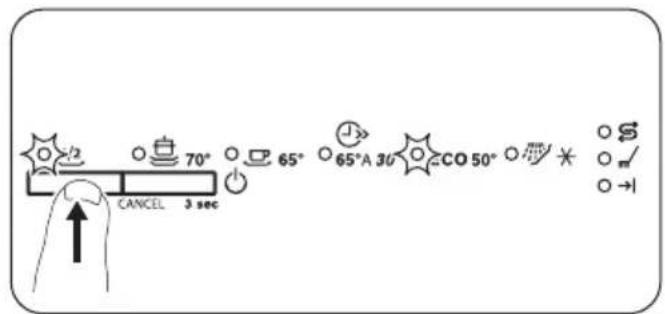
text_image
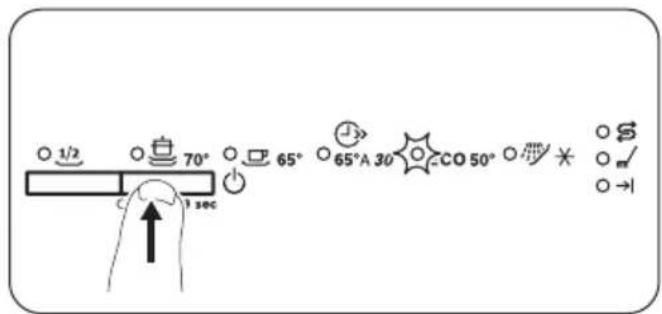
70° 65° 65°A 30° CO 50° S ○ ○→1 CANCEL 3 secThis option is available with ECO and
With this option you can wash a small load of tableware and cookware. The option decreases the programme duration and the consumption of water and energy. Load both baskets and use less quantity of detergent.
OPENING THE DOOR WHILE THE APPLIANCE OPERATES
If you open the door while a programme is running, the appliance stops. When you close the door, the appliance continues from the point of interruption.
END OF THE PROGRAMME
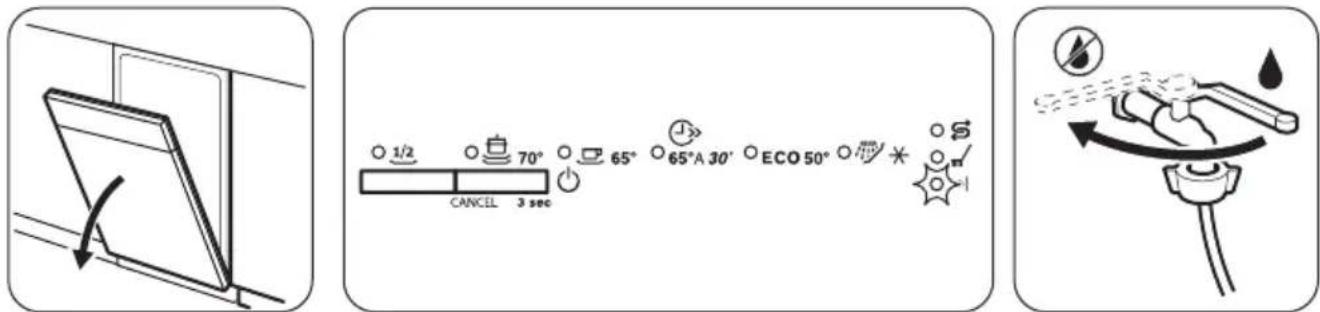
- Press the on/off button to deactivate the appliance.
- Close the water tap.
If you do not press the on/off button, after few minutes from the end of the programme all the indicators go off. This helps to decrease the energy consumption.
HINTS AND TIPS
GENERAL
The following hints will ensure optimal cleaning and drying results in daily use and also help to protect the environment.
- Remove larger residues of food from the dishes into the waste bin.
- Do not pre-rinse dishes by hand. When needed, use the prewash programme (if available) or select a programme with a prewash phase.
- Always use the whole space of the baskets.
- When loading the appliance, make sure that the dishes can be completely reached and washed by the water released from the spray arm nozzles. Make sure that items do not touch or cover each other.
- You can use dishwasher detergent, rinse aid and salt separately or you can use the multi-tablets (e.g. "3in1", "4in1", "All in 1"). Follow the instructions written on the packaging.
- Select the programme according to the type of load and degree of soil. With the ECO programme you have the most efficient use of water and energy consumption for crockery and cutlery with normal soil.
THE WATER SOFTENER
The water softener removes minerals from the water supply, which would have a detrimental effect on the washing results and on the appliance.
The higher the content of these minerals, the harder your water is. Water hardness is measured in equivalent scales.
The water softener should be adjusted according to the hardness of the water in your area. Your local water authority can advise you on the hardness of the water in your area. It is important to set the right level of the water softener to assure good washing results.
USING SALT, RINSE AID AND DETERGENT
- Only use salt, rinse aid and detergent for dishwasher. Other products can cause damage to the appliance.
- Multi-tablets are usually suitable in areas with a water hardness up to 21 °dH. In areas exceeding this limit, rinse aid and salt must be used in addition to the multi-tablets. However, in areas with hard and very hard water we recommend to use solo-detergent (powder, gel, tablets without additional functions), rinse aid and salt separately for optimal cleaning and drying results.
- If you use multi-tablets you can select the Multitab option (if available). This option increases the cleaning and drying results with the use of multi-tablets.
- Detergent tablets do not fully dissolve with short programmes. To prevent detergent residues on the tableware, we recommend that you use the tablets with long programmes.
- Do not use more than the correct quantity of detergent. Refer to the instructions on the detergent packaging.
WHAT TO DO IF YOU WANT TO STOP USING MULTI-TABLETS
Before you start to use separately detergent, salt and rinse aid do the following procedure.
- Set the highest level of the water softener.
-
Make sure that the salt and rinse aid containers are full.
-
Start the shortest programme with a rinsing phase. Do not add detergent and do not load the baskets.
- When the programme is completed, adjust the water softener according to the water hardness in your area.
- Adjust the released quantity of rinse aid.
LOADING THE BASKETS
- Only use the appliance to wash items that are dishwasher-safe.
- Do not put in the appliance items made of wood, horn, aluminium, pewter and copper.
- Do not put in the appliance items that can absorb water (sponges, household cloths).
- Remove larger residues of food from the dishes into the waste bin.
- Make soft the remaining burned food on the items.
- Put hollow items (cups, glasses and pans) with the opening down.
- Make sure that glasses do not touch other glasses.
- Put cutlery and small items in the cutlery basket.
- Put light items in the upper basket. Make sure that the items do not move.
- Make sure that the spray arm can move freely before you start a programme.
BEFORE STARTING A PROGRAMME
Make sure that:
- The filters are clean and correctly installed.
- The cap of the salt container is tight.
- The spray arms are not clogged.
- There is dishwasher salt and rinse aid (unless you use combi detergent tablets).
- The position of the items in the baskets is correct.
- The programme is applicable for the type of load and for the degree of soil.
- The correct quantity of detergent is used.
UNLOADING THE BASKETS
- Let the tableware cool down before you remove it from the appliance. Hot items can be easily damaged.
- First remove items from the lower basket, then from the upper basket.

At the end of the programme water can still remain on the sides and on the door of the appliance.
CARE AND CLEANING

WARNING! Before maintenance, deactivate the appliance and disconnect the mains plug from the main socket.

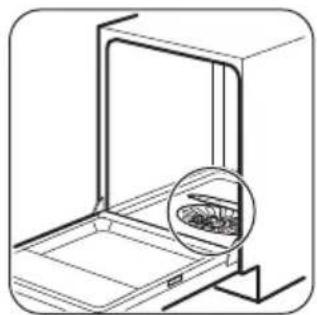
Dirty filters and clogged spay arms decrease the washing results. Make a check regularly and, if necessary, clean them.
CLEANING THE FILTERS
natural_image
Line drawing of a kitchen appliance with an open door and a magnified inset showing internal components (no text or symbols)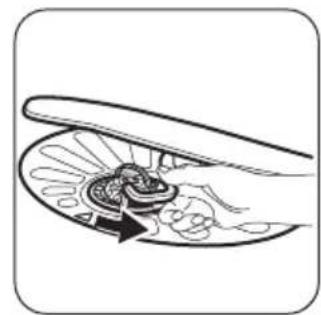
natural_image
Illustration of a hand holding a small object inside a bowl-like container (no text or symbols)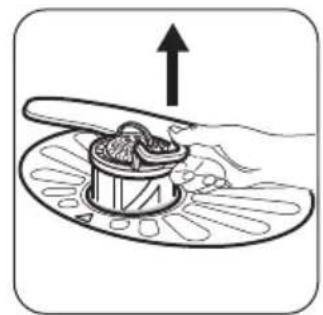
natural_image
Illustration of a cooking pan with an upward arrow indicating rotation (no text or symbols)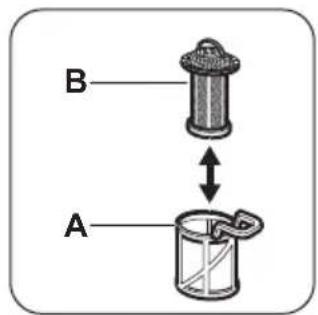
text_image
B A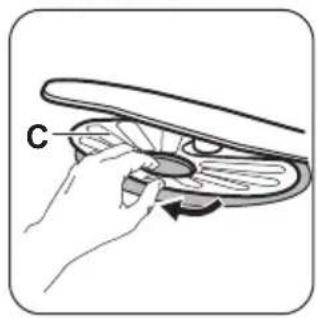
natural_image
Illustration of a hand holding a circular object with a curved arrow, labeled 'C' (no text or symbols on the object itself)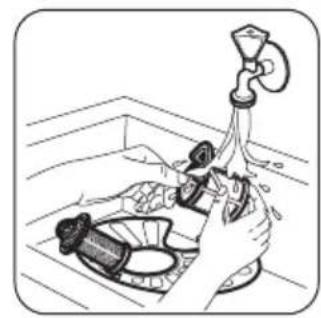
natural_image
Illustration of a hand washing a showerhead on a sink (no text or symbols)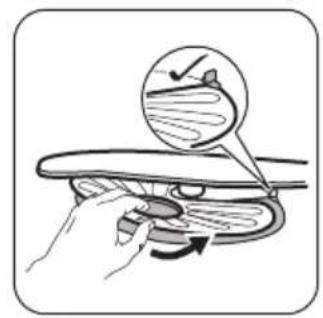
natural_image
Illustration of a hand holding a curved object with a checkmark and arrow, no text or symbols present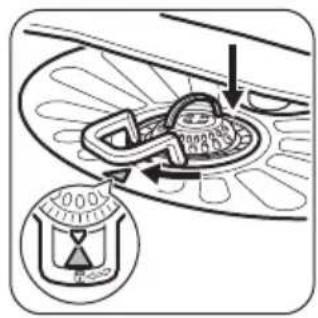
text_image
Diagram showing a mechanical component with an arrow indicating direction and a labeled dial indicator below.- Make sure that there are no residues of food or soil in or around the edge of the sump.
- Put back in place the flat filter (C). Make sure that it is correctly positioned under the 2 guides.
- Reassemble the filters (A) and (B).
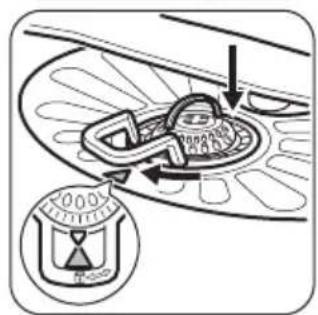
- Put back the filter (A) in the flat filter (C). Turn it clockwise until it locks.

An incorrect position of the filters can cause bad washing results and damage to the appliance
CLEANING THE SPRAY ARMS
Do not remove the spray arms. If the holes in the spray arms are clogged, remove remaining parts of soil with a thin pointed object.
EXTERNAL CLEANING
- Clean the appliance with a moist soft cloth.
- Only use neutral detergents.
- Do not use abrasive products, abrasive cleaning pads or solvents.
TROUBLESHOOTING
If the appliance does not start or it stops during operation, before you contact an Authorised Service Centre, check if you can solve the problem by yourself with the help of the information in the table.
INTERNAL CLEANING
- Carefully clean the appliance, including the rubber gasket of the door, with a soft moist cloth.
- If you regularly use short duration programmes, these can leave deposits of grease and limescale inside the appliance. To prevent this, we recommend to run long duration programmes at least 2 times per month.
With some problems the end indicator flashes intermittently indicating a malfunction.
| Problem and alarm code Possible solution | |
| You cannot activate the appliance.▪ Make sure that the mains plug is connected to the mains socket.▪ Make sure that there is no a damage fuse in the fuse box. | |
| The programme does not start.▪ Make sure that the appliance door is closed.▪ The appliance has started the procedure to re-charge the resin inside the water softener. The duration of the procedure is approximately 5 minutes. | |
| The appliance does not fill with water.▪ The end indicator flashes 1 time intermittently.▪ Acoustic signal sounds 1 time intermittently. | ▪ Make sure that the water tap is open.▪ Make sure that the pressure of the water supply is not too low. For this information, contact your local water authority.▪ Make sure that the water tap is not clogged.▪ Make sure that the filter in the inlet hose is not clogged.▪ Make sure that the inlet hose has no kinks or bends. |
| The appliance does not drain the water.▪ The end indicator flashes 2 times intermittently.▪ Acoustic signal sounds 2 times intermittently. | ▪ Make sure that the sink spigot is not clogged.▪ Make sure that the drain hose has no kinks or bends. |
| The anti-flood device is on.▪ The end indicator flashes 3 times intermittently.▪ Acoustic signal sounds 3 times intermittently. | ▪ Close the water tap and contact an Authorised Service Centre. |
Once you have checked the appliance, deactivate and activate the appliance. If the problem occurs again, contact an Authorised Service Centre.
For alarm codes not described in the table, contact an Authorised Service Centre.
THE WASHING AND DRYING RESULTS ARE NOT SATISFACTORY
| Problem Possible solution | |
| There are whitish streaks or bluish layers on glasses and dishes. | The release quantity of rinse aid is too much. Adjust the rinse aid selector to a lower position.The quantity of detergent is too much. |
| There are stains and dry water drops on glasses and dishes. | The released quantity of rinse aid is not sufficient. Adjust the rinse aid selector to a higher position.The quality of the rinse aid can be the cause. |
| The dishes are wet. The programme does not have a drying phase or has a drying phase with low temperature.The rinse aid dispenser is empty.The quality of the rinse aid can be the cause. | |

Refer to "Hints and tips" for other possible causes.
TECHNICAL INFORMATION
| Dimensions Width / height / depth (mm) 596 / 818-898 / 555 | ||
| Electrical connection1) | Voltage (V) 220-240 | |
| Frequency (Hz) 50 | ||
| Water supply pressure Min. / max. bar (MPa) 0.5 (0.05) / 8 (0.8) | ||
| Water supply | Cold water or hot water2) | max 60 °C |
| Capacity Place settings 12 | ||
| Power consumption Left-on mode (W) 0.50 | ||
| Power consumption Off-mode (W) 0.50 | ||
1) Refer to the rating plate for other values.
2) f the hot water comes from alternative source of energy, (e.g. solar panels, aeolian energy), use the hot water supply to decrease energy consumption.
RATING PLATE
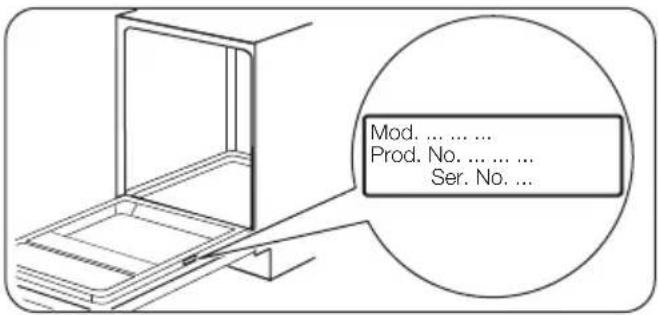
text_image
Mod. .... Prod. No. .... Ser. No. ....ENVIRONMENTAL CONCERNS
Recycle the materials with the symbol Put the packaging in applicable containers to recycle it. Help protect the environment and human health and to recycle waste of electrical and electronic appliances. Do not dispose appliances marked with the symbol with the household waste. Return the product to your local recycling facility or contact your municipal office.
INFORMATION FOR TEST INSTITUTES
For all the necessary information for test performance, send an email to:
info.test@dishwasher-production.com
Write down the product number (PNC) that is on the rating plate.
text_image
Safety warning symbol and diagram showing a warning sign with lightning bolt and a valve above a pipe fitting
AVERTISSEMENT! Tension dangereuse.
text_image
① O 1/2 CANCEL 3 sec O 1/2 70 65° 30° CO 50° S O →text_image
1/2 70° 65° 30° CO 50° S m →1 sectext_image
1/2 70° 65° 65°A 30° ECO 50° S m/ → Ct sectext_image
1/2 70° 65° 65°A 30° ECO 50° S S →1 sec CP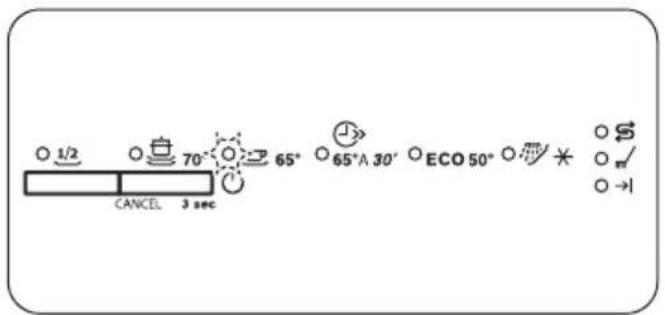
text_image
1/2 70° 65° 65°A 30° ECO 50° S OK Cancel 3 sec O→1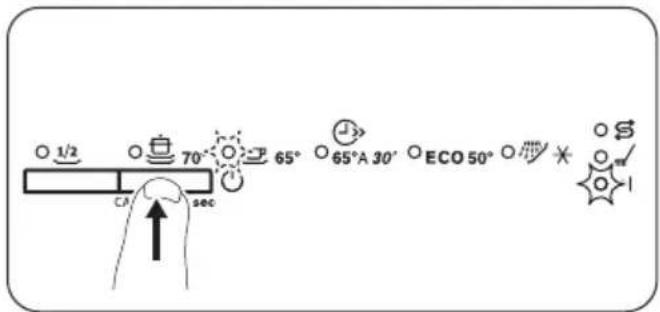
text_image
1/2 70° 65° 65°A 30° ECO 50° S secnatural_image
Technical line drawing of a mechanical assembly with a circular inset showing a component (no text or symbols)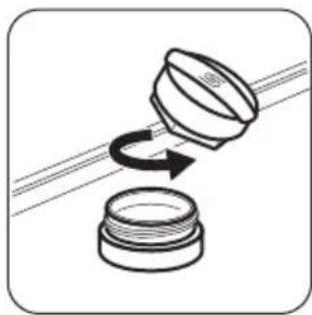
natural_image
Diagram showing a mechanical assembly with a rotating component and a base, no text or symbols present.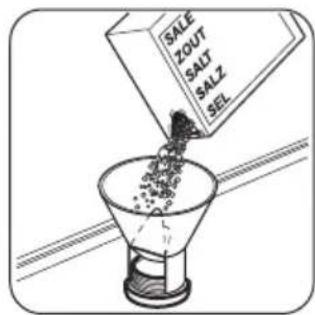
text_image
SALE ZOUT SALT SALZ SALZ SEL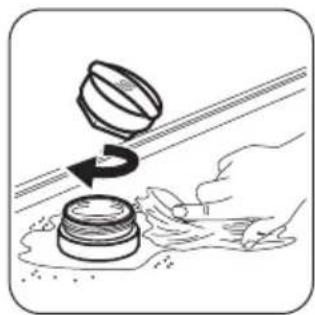
natural_image
Illustration of a hand using a tool to press or rotate a mechanical component, showing motion with no text or symbols.natural_image
Technical line drawing of a mechanical assembly with a magnified inset showing a component (no text or symbols)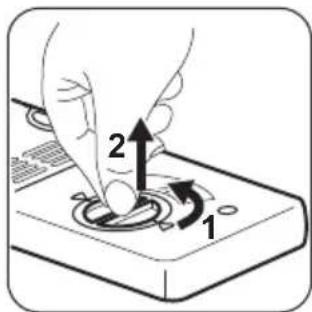
text_image
Diagram showing a hand using a tool to press or install a component, labeled with arrows 1 and 2 indicating motion or movement.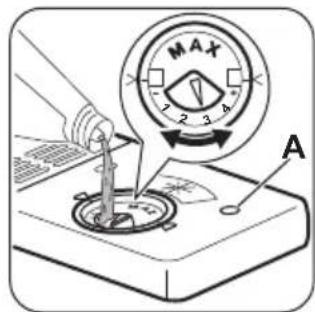
text_image
MAX A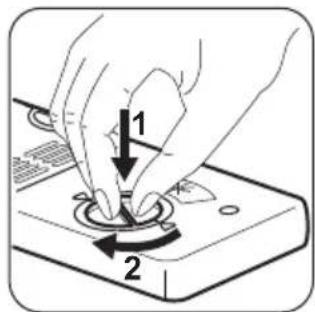
text_image
Diagram showing a hand pressing a button on a device with labeled parts 1 and 2natural_image
Technical line drawing of a mechanical component with an inset showing a small rectangular feature (no text or symbols)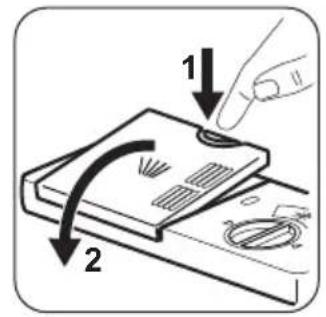
text_image
1 2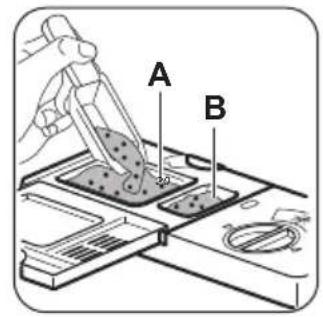
text_image
A B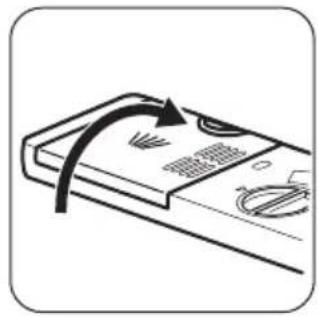
natural_image
Illustration of a device with an arrow indicating rotation or change, showing no text or symbols on the device itself.natural_image
Technical line drawing of a mechanical component with an inset showing a small cylindrical feature (no text or symbols)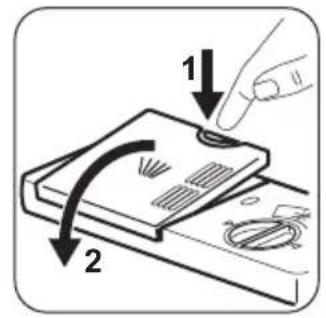
text_image
1 2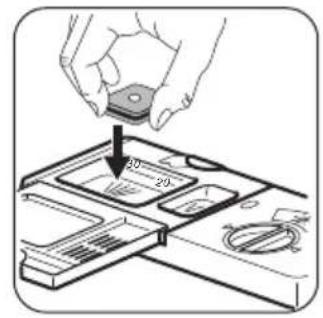
text_image
Diagram showing a hand inserting a component into a device with labeled parts and arrows indicating direction.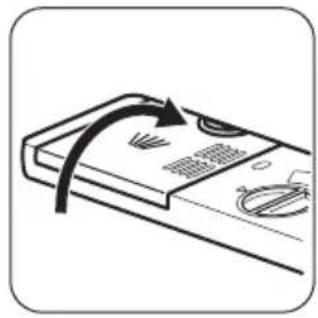
natural_image
Illustration of a device with a curved arrow indicating rotation or movement (no text or symbols)text_image
1/2 70° 65° 65°A 30° CO 50° S m →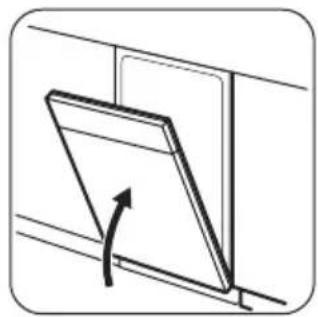
natural_image
Simple line drawing of a door or shelf with an arrow indicating rotation (no text or symbols)text_image
70° 65° 65°A 30° CO 50° S m → CANCEL 3 secnatural_image
Simple line drawing of a door latch with an arrow indicating rotation (no text or symbols)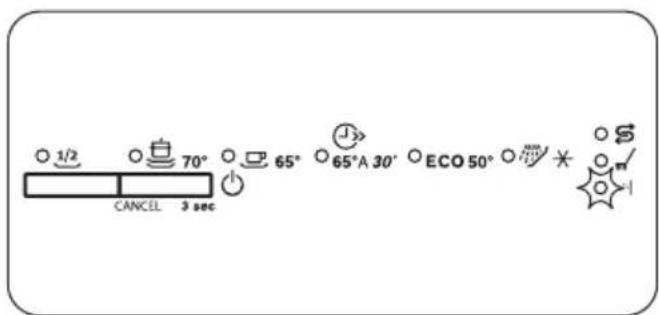
text_image
1/2 70° 65° 65°A 30° ECO 50° CANCEL 3 sec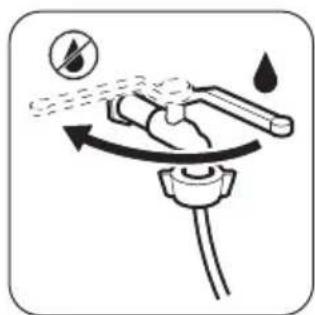
text_image
Diagram illustrating a mechanical or fluidic process with labeled components and directional arrows indicating flow or movement.natural_image
Line drawing of a door with an open lid and a magnified inset showing a small object inside (no text or symbols)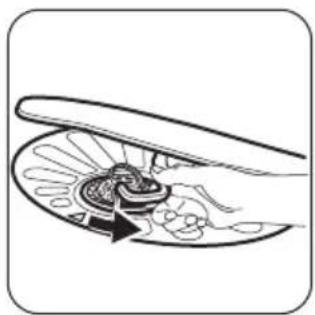
natural_image
Diagram of a biological structure with internal components and directional arrow (no text or labels)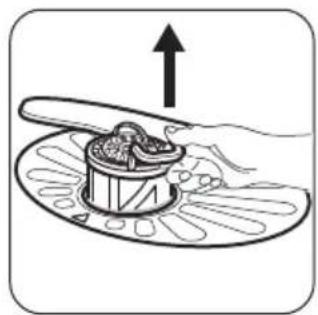
natural_image
Illustration of a hand rolling out a plate with an upward arrow, no text or symbols present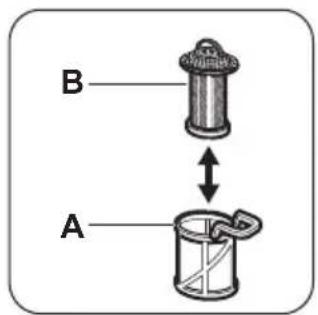
text_image
B A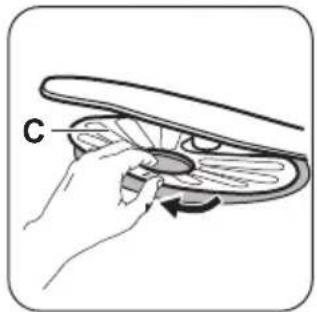
natural_image
Illustration of a hand holding a curved object with a label 'C' and an arrow indicating rotation (no text or symbols beyond label)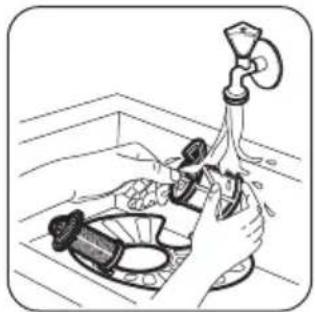
natural_image
Illustration of hands washing a kitchen sink with a faucet (no text or symbols)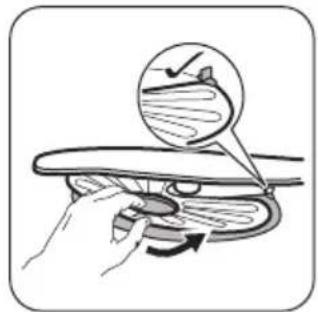
natural_image
Illustration of a hand holding a curved object with a checkmark and arrow, no text or symbols present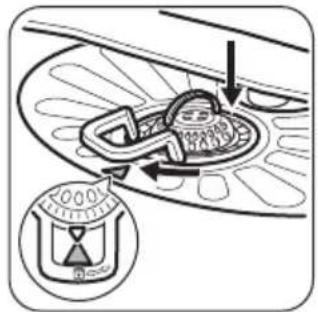
text_image
Diagram showing a car interior with a valve and a magnified view of the valve mechanism, labeled '1000'.text_image
1/2 70° 65° 65°A 30° CO 50° S m →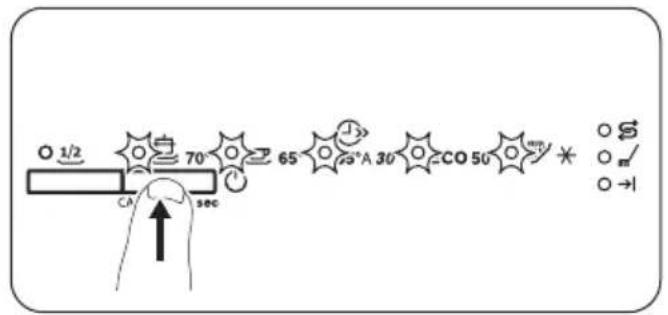
text_image
O 1/2 70° 65° 30° CO 50° * S π →1 C6 sectext_image
1/2 70° 65° 65°A 30° ECO 50° S → sec ○ S ○ → ○ →text_image
1/2 70° 65° 65°A 30° ECO 50° S .π 6x sectext_image
1/2 70° 65° 65°A 30° ECO 50° S m →l C# sec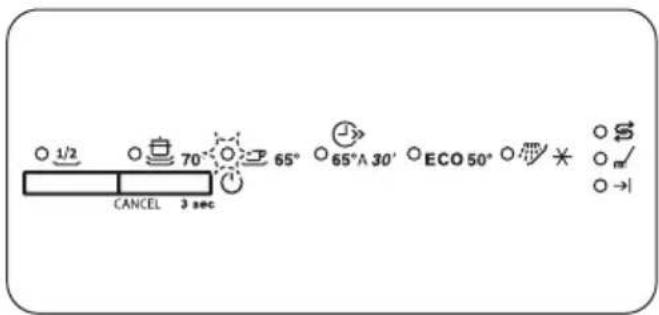
text_image
1/2 70° 65° 65°A 30° ECO 50° * S m/ ○→| CANCEL 3 sec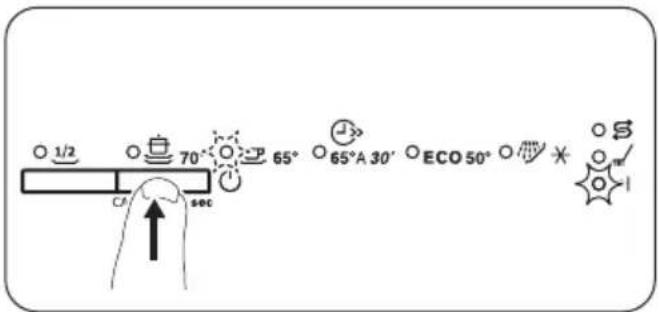
text_image
1/2 70° 65° 65°A 30° ECO 50° S secnatural_image
Technical line drawing of a mechanical assembly with a circular component inserted into a housing (no text or symbols)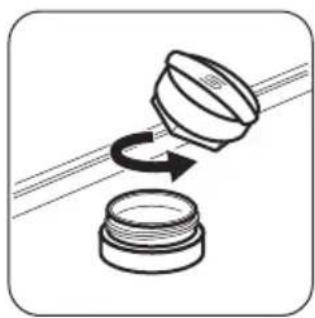
natural_image
Diagram showing a mechanical assembly with a rotating component and a base, no text or symbols present.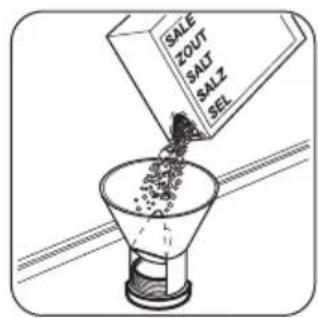
text_image
SALE OUT SALT SALZ SAL SEL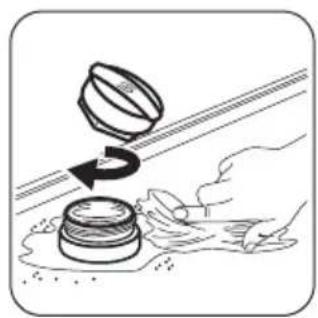
natural_image
Illustration of a hand pressing down on stacked containers with a curved arrow indicating motion (no text or symbols)natural_image
Technical line drawing of a mechanical component with a highlighted section (no text or symbols)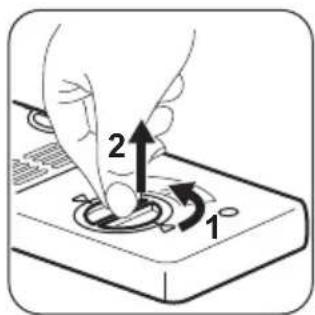
text_image
Diagram showing a hand pressing a button on a device with labeled parts 1 and 2, indicating a step in the process.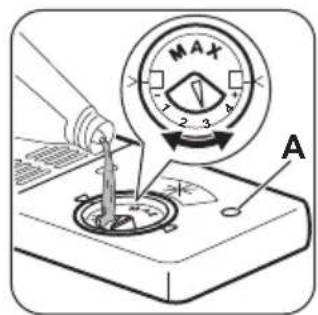
text_image
MAX A
text_image
Diagram showing a hand pressing a button on a device with labeled parts 1 and 2natural_image
Technical line drawing of a mechanical component with an inset showing a small rectangular feature (no text or symbols)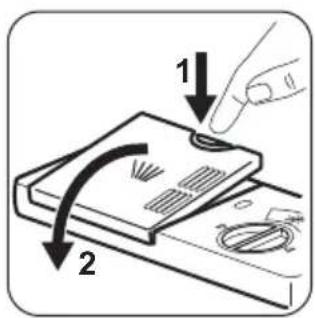
text_image
Diagram showing a hand pressing down on a device with labeled parts and directional arrows indicating motion or movement.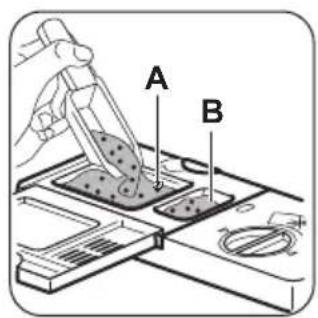
text_image
A B
natural_image
Illustration of a thermocouple with a curved arrow indicating rotation (no text or symbols)natural_image
Technical line drawing of a mechanical component with an inset showing a small rectangular feature (no text or symbols)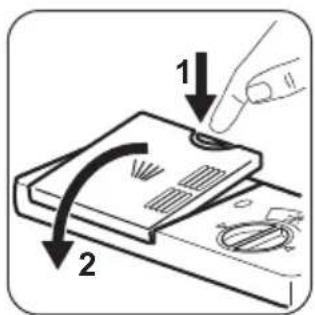
text_image
Diagram showing a hand pressing down on a device with labeled parts and directional arrows indicating motion or movement.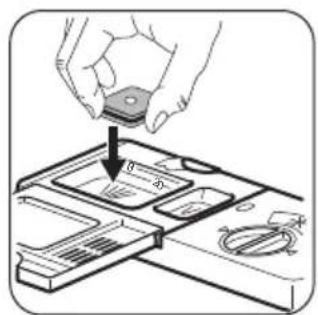
text_image
Diagram showing a hand placing a small component into a device with labeled parts and directional arrow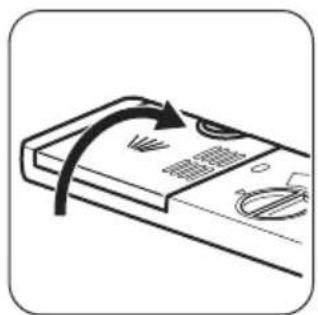
natural_image
Illustration of a device with a curved arrow indicating rotation or change (no text or symbols)text_image
1/2 70° 65° 65°A 30° CO 50° S m → sec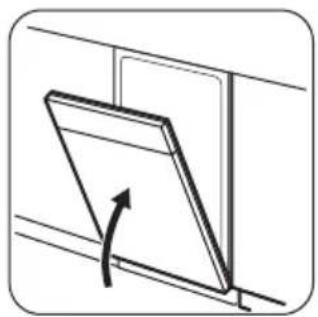
natural_image
Simple line drawing of a door frame with an arrow indicating rotation (no text or symbols)text_image
1/2 70° 65° 65°A 30° CO 50° S m →1 3 sec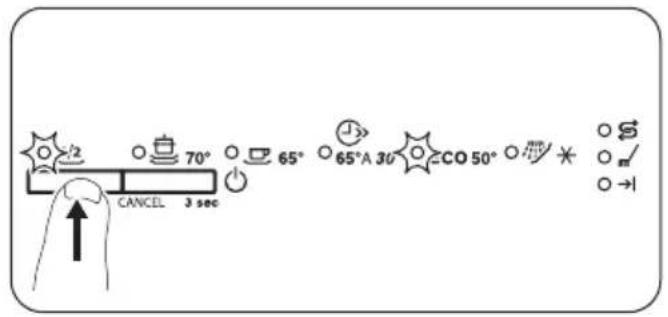
text_image
70° 65° 65°A 30° CO 50° S ○ ○→1 CANCEL 3 secnatural_image
Simple line drawing of a folding panel with an arrow indicating rotation (no text or symbols)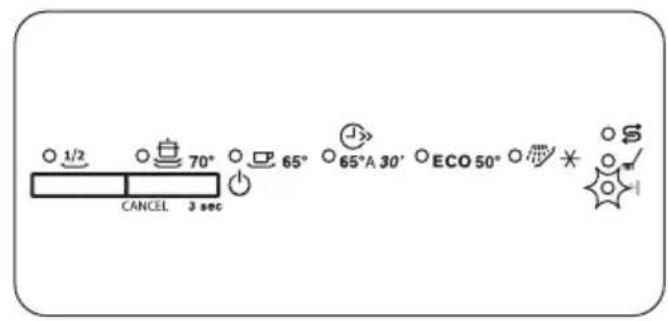
text_image
1/2 70° 65° 65°A 30° ECO 50° S CANCEL 3 sec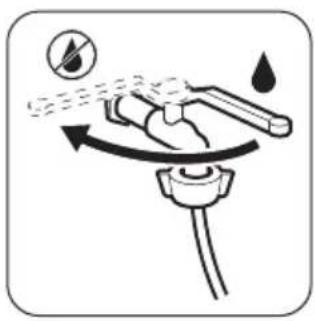
natural_image
Diagram of a hand valve mechanism with no text or symbolsnatural_image
Diagram of a refrigerator interior with an open door and a magnified inset showing internal components (no text or symbols)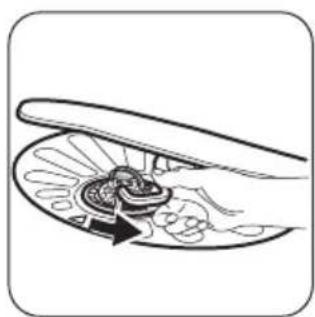
natural_image
Diagram of a hand holding a small object with a curved arrow indicating direction (no text or symbols)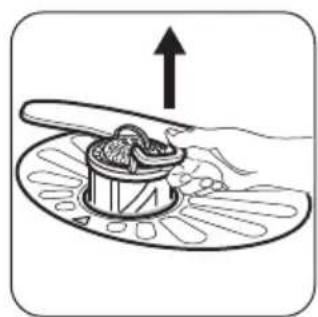
natural_image
Illustration of a cooking pan with an upward arrow indicating motion (no text or symbols)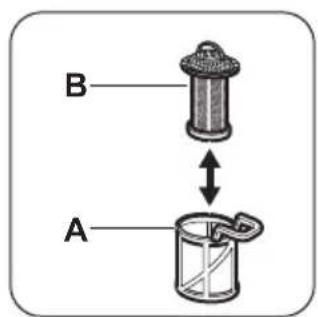
text_image
B A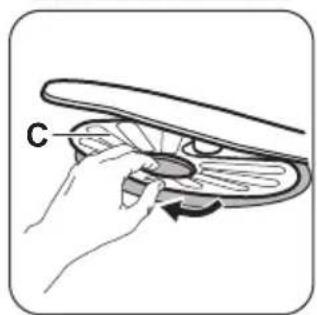
natural_image
Illustration of a hand holding a circular object with a label 'C' and an arrow, no text or symbols present.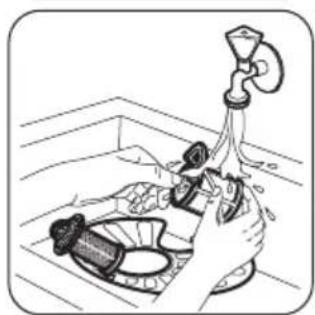
natural_image
Illustration of a hand washing dishes with a showerhead, no text or symbols present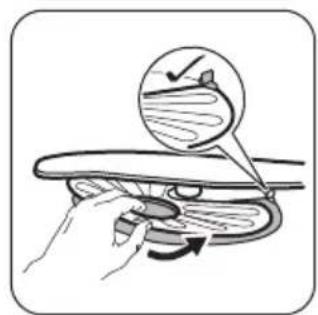
natural_image
Illustration of a hand holding a curved object with a magnified circular detail (no text or symbols)