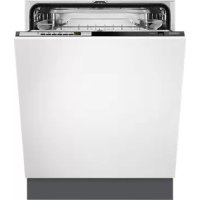
ZDF1001 - Dishwasher ZANUSSI - Free user manual and instructions
Find the device manual for free ZDF1001 ZANUSSI in PDF.



User questions about ZDF1001 ZANUSSI
0 question about this device. Answer the ones you know or ask your own.
Ask a new question about this device
Download the instructions for your Dishwasher in PDF format for free! Find your manual ZDF1001 - ZANUSSI and take your electronic device back in hand. On this page are published all the documents necessary for the use of your device. ZDF1001 by ZANUSSI.
USER MANUAL ZDF1001 ZANUSSI
HCTpyKcnn 3a cnrypnoct 2
Onncnne Ha ypeda 4
KoMaHnHo Ta6No 4
PporpaMn 5
Ipei npBaTa ynoTe6a 5
BceKnDHeBHa ynoTpe6a 7
Ppenopbkn n cBBeTu 10
PnKn n noocTbaHe 11
OToTpaHraBaHe Ha Heu3npaBHOcTn 12
TexHnuecka HnΦopMaun 14
Ona3BaHe Ha OKoJHaTa cpeDa 14
3ana3BaMe cn npaBOTO Ha N3MeHeHn.
! HNctpyKuIN 3a cnrypHOCT
IpeHn HCTaHnpaH e n EKcNlOaTaun Ha ypeHa npoTeTe BHNMaTeJHo npeOCTaBeHnTe HnCTpyKUn. Ipon3BOAnTeJrT He Hocn OTROBOPHOCT, aKO HnPaBnHOTo HnCTaHnpaHe N ekCnloatauŋn ppeu3BVKat HapaHbAHnN u ets. Pa3eTe HnCTpyKUnTe B 6nn30CT Do ypeDa 3a 6bDeu n CnpaBKn.
БezonaachocT 3a Deuata n Xopata c orpaHnueHn cnoc6hocTH
I PNEyPExEHNIE! Pnck OT
3aDywaBaHe, HapaHyaHe IIN TpaHNO yBpeXdaHe.
He no3BOJRAIte Ha IINa, B TOBa YNCIO n Deca, C NOHIXeHa 0n3NueCKa CeTNBHOCT, HAMJIeHN yMCTBeHN 0yHKUIN NII INCa HA ONIT N IO3HaHNA Da N3NOJ3BaTypeA. Te Tp8Ba Da ca PoD NaI3Opa Ha INI Da 6bDaT INHCTpyKtupAHN 3a pa6oTa c UpeDa OT IInCe, OTROBOPHO 3a TExHaTa 6e3OnacHOCT.
He no3B0JIaIe Ha deuata da cn irpaT cypeHa.
CbxpaHЯBaITe BCnUKN ONaKOBbUHN MaTePpnaN DaJIeU OT Deua.
- Пазе Тбчкп пpenapatn далу OT De-za.
- Пазete DeцаТи ДомашнITE Лобимцидамоче OT ВраТа Na урета, korato eOTBорета.
HcTaJnpaHe
- OTeTaPaHeTe BCnUKN OnaKOBKn.
He nHcTaInpaIte Hn He n3POn3BaITe noBpeDeH ypeI.
He nHCTaIIpaIe n He n3noJI3BaIte ypeJa Ha MeCTa, KbJeTo TempePaTypata e noD 0^
CnataBaIte INHCTpyKcNITe 3a INHCTaIInpaHe, npINIOXeHN KbM ypeDa.
Cbbp3BaHe KbmeEneKtpnueckaTa Mpeka
I PEPENPEXEHENIE! Pnck OT noxap N TOKOB ynap.
- YpeIbT TpI6Ba Ia e 3a3eMeH.
- YBepTe ce, ye INHΦopMaζηra 3a eNEKTPnueCTBOTO OT Ta6eJIkata C DaHHN CbOTBETCTBa Ha eNEKtpo3axpaHbaHeto. B npOTnBeH cIyaua Ce CBbpXeTe c eNEKTPOTExHnK.
BnHaHn n3NoJ3BaIte npaBnHNO nHCTaIIpaH, 3aUHTeH OT yDapN KOHTaKT.
He n3noJ3BaIte pa3KIOHHTeIN yDbJI-XHTeHN Ka6eIN.
He nobpejdaIte 3axpaHbuaJn IeIcEIn 3axpaHbuaJn Ka6eI. CbByKeTe ce cbccePbN3a NIIeKtpoTeXnK 3a cmHaTa Ha NobpeJeH 3axpaHbau K6eI.
Bknoute 3axpaHbua nia quencel KbM KOHTaKaTa cMo B KpaHa HnctaIauura. YBepTe ce, ye uencelbT 3a 3axpaHbaHe e DoCTbneh Cnei HnctaIInpaHeTo.
He IbpaIte 3axpaHbaIaIka6eI, 3a da n3KIIIOHTe ypeIa. BnHarn n3DbpNBAIte Ieencena.
He nuaTe 3axpaHbauaKabeI nnu IeNceLa C MOKpn Pbue. - YpeIbT cBOTBeTcTba Ha IInpeKtNBnTe Ha E.E.C.
Bodno cbeHHeHne
He noBpeKdaiTe MapkyuHte 3a Boda.
- Празда CBpKTeуpeda KbM HOBn Tpb6илТakNBA, KOnTO He ca 6nIIN3- NOJ3BaHn DbJIro BpeMe, OCTaBeTe MaJko BOda Da NoteNe IO TEx, Dokato 6bDat YnCTN.
Korato n3noJ3BaTe ypeDa 3a nbpBn nbT, ce yBepeTe, ye Hma TeOBe.
MapkybT 3a noDaBaHe Ha Boda mAm npedna3eH BeHTnI n O6wnBka C BbTpewen 3axpaHbau Ka6eJ.

PPEyPExEHNe!OnacHoHa- npexHne.
AkoMapkybT3aNoJaBaHeHaBoa e noBpeDen,He3a6abHNO3KIOUyeTeIeNceNaOT KOHTaKa.3aNoMnaHaHa Mapkya 3aNoJaBaHe Ha Boa ce CbpxeTe c"O6cJyKBaHe".
Ynotpe6a
- YpeIbTe npeHa3HaueH 3a DOMaKINHcN n dpyrn 6ntOBn HxkDn KaTo:
Cnyxke6Hn KuxHn B MaRa3HHn, OΦncn I pyrnpa60THn NomeeHn
-Φepmn
- OT KlnHeHTN B XOTeJI, MOTeJI N IpyrIMecTa 3a HaCTaHЯBaHe
-Пансоин,обцжntи n coциалн 3a-BeDEHn.

PNEyPEXKDEHNE! PnCK OT
HapaHЯBaHe,ИЗ grapяня,TOKOB yДap ИПИ NOЖAP.
KoJInueCTBOTOOCBO6OeH npenapaT3a n3PnakBaHe He e DOCTaTbUHo. HAcTpOte
ceJIeKTopa 3a npenapata 3a n3nlaKBaHe Ha NO-BvcoKa N03nCn.
- Пиунота може дa в КачевTO на пpenapata 3a МнeHe.
CbdoBeTa MOKpn
Safety instructions 39
Product description 41
Control panel 41
Programmes 42
Before first use 42
Daily use 44
Hints and tips 46
Care and cleaning 47
Troubleshooting 48
Technical information 49
Environment concerns 50
Subject to change without notice.
! Safety instructions
Before the installation and use of the appliance, carefully read the supplied instructions. The manufacturer is not responsible if an incorrect installation and use causes injuries and damages. Always keep the instructions with the appliance for future reference.
Children and vulnerable people safety
Warning! Risk of suffocation, injury or permanent disability.
- Do not let persons, children included, with reduced physical sensory, reduced mental functions or lack of experience and knowledge use the appliance. They must have supervision or instruction for the operation of the appliance by a person who is responsible for their safety.
- Do not let children play with the appliance.
- Keep all packaging away from children.
- Keep all detergents away from children.
- Keep children and pets away from the appliance door when it is open.
Installation
- Remove all the packaging.
- Do not install or use a damaged appliance.
- Do not install or use the appliance where the temperature is less than 0^ .
- Obey the installation instruction supplied with the appliance.
Electrical connection
Warning! Risk of fire and electrical shock.
- The appliance must be earthed.
- Make sure that the electrical information on the rating plate agrees with the power supply. If not, contact an electrician.
- Always use a correctly installed shockproof socket.
- Do not use multi-plug adapters and extension cables.
- Make sure not to cause damage to the mains plug and to the mains cable. Should the appliance power supply cable need to be replaced, this must be carried out by our Service Centre.
- Connect the mains plug to the mains socket only at the end of the installation. Make sure that there is access to the mains plug after the installation.
- Do not pull the mains cable to disconnect the appliance. Always pull the mains plug.
- Do not touch the mains cable or the mains plug with wet hands.
- This appliance complies with the E.E.C. Directives.
Water connection
- Make sure not to cause damage to the water hoses.
- Before you connect the appliance to new pipes or pipes not used for a long time, let the water flow until it is clean.
- The first time you use the appliance, make sure that there is no leakage.
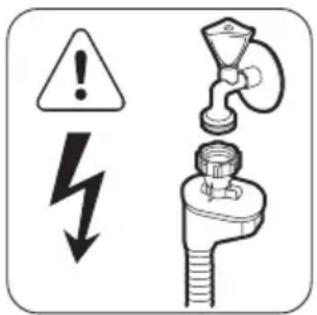
- The water inlet hose has a safety valve and a sheath with an inner mains cable.
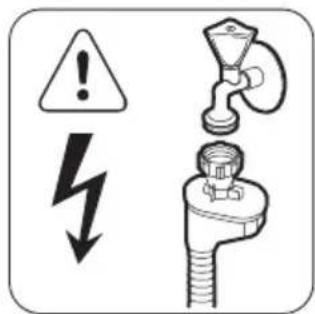

Warning! Dangerous voltage.
- If the water inlet hose is damaged, immediately disconnect the mains plug from the mains socket. Contact Service to replace the water inlet hose.
Use
This appliance is intended to be used in household and similar applications such as:
Staff kitchen areas in shops, offices and other working environments
-
Farm houses
-
By clients in hotels, motels and other residential type environments
-
Bed and breakfast type environments.

Warning! Risk of injury, burns, electrical shock or fire.
-
Do not change the specification of this appliance.
-
Put knives and cutlery with sharp points in the cutlery basket with the points down or in a horizontal position.
-
Do not keep the appliance door open without supervision to prevent to fall on it.
-
Do not sit or stand on the open door.
-
Dishwasher detergents are dangerous. Obey the safety instructions on the detergent packaging.
- Do not drink and play with the water in the appliance.
- Do not remove the dishes from the appliance until the programme is completed. There can be detergent on the dishes.
- The appliance can release hot steam if you open the door while a programme operates.
- Do not put flammable products or items that are wet with flammable products in, near or on the appliance.
- Do not use water spray and steam to clean the appliance.
Disposal

Warning! Risk of injury or suffocation.
- Disconnect the appliance from the mains supply.
- Cut off the mains cable and discard it.
- Remove the door catch to prevent children and pets to get closed in the appliance.
Service
- Contact the Service to repair the appliance. We recommend only the use of original spare parts.
- When you contact the Service, ensure that you have the following information that is available on the rating plate.
Model :
PNC:
Serial Number :
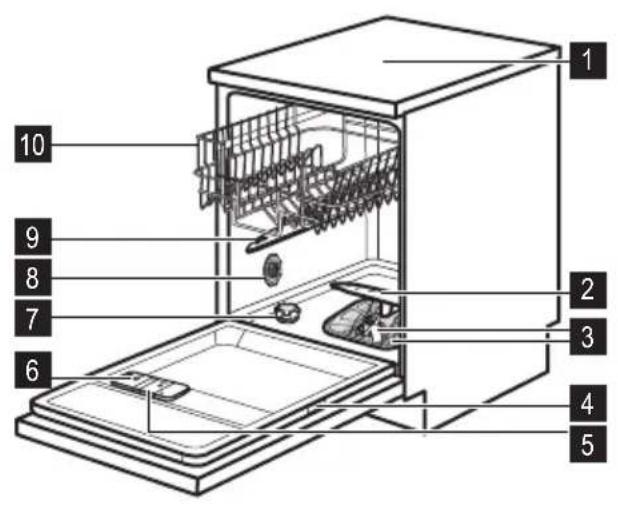
1 Worktop
2 Lower spray arm
3 Filters
4 Rating plate
5Rinse aid dispenser
6 Detergent dispenser
Salt container
Water hardness dial
Upper spray arm
10 Upper basket
Control panel
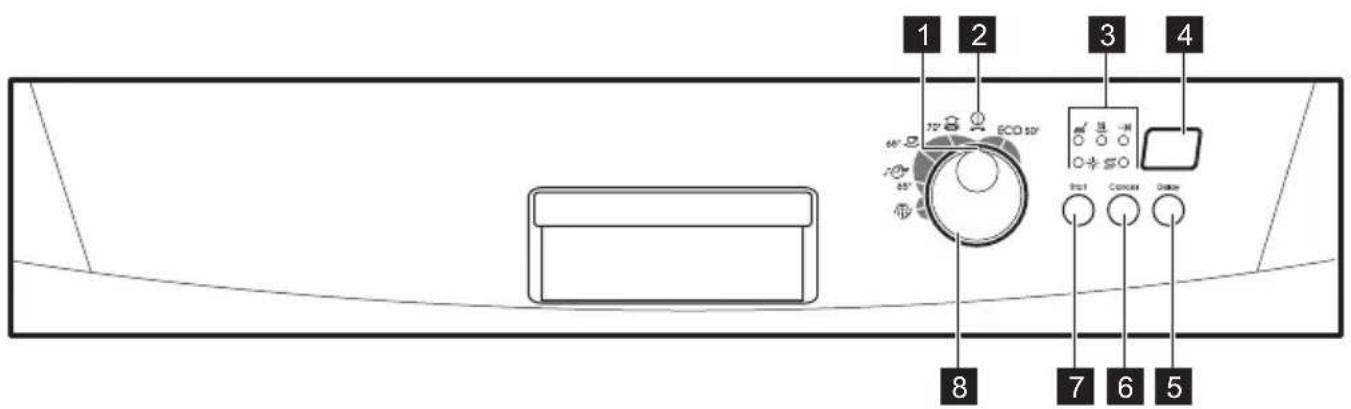
1 Programme marker
2 Off position
3 Indicators
4 Display
5 Delay button
6 Cancel button
7 Start button
8 Programme knob
| Indicators Description | |
| / | Washing phase indicator. |
| / | Drying phase indicator. |
| → | End indicator. |
| Rinse aid indicator. This indicator is off while the programme oper-ates. | |
| S | Salt indicator. This indicator is off while the programme operates. |
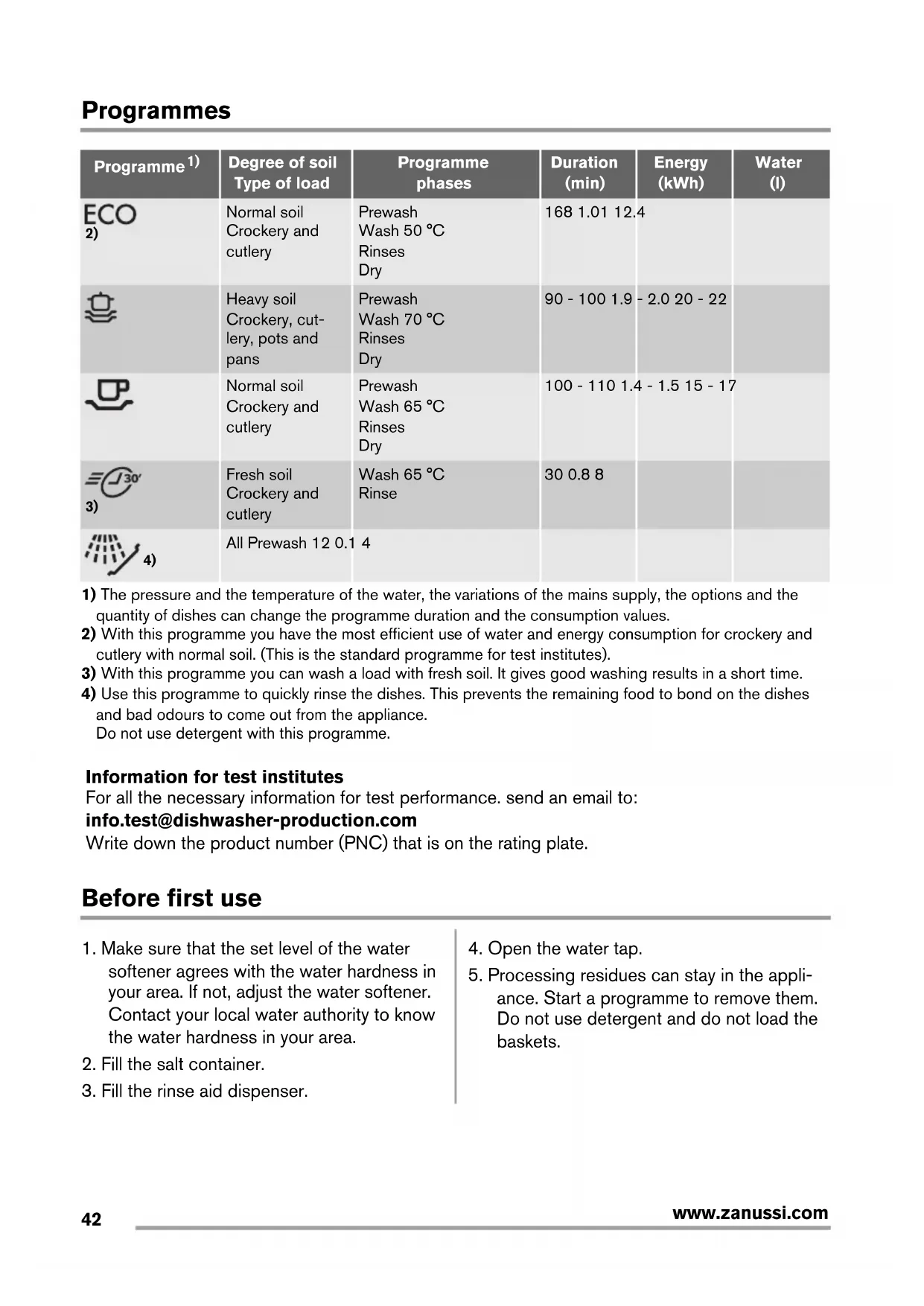
| Programme1) | Degree of soil Type of load | Programme phases | Duration (min) | Energy (kWh) | Water (l) |
| ECO 2) | Normal soil Crockery and cutlery | Prewash Wash 50 °C Rinses Dry | 168 1.01 12.4 | ||
| Heavy soil Crockery, cutlery, pots and pans | Prewash Wash 70 °C Rinses Dry | 90 - 100 1.9 | - 2.0 20 - 22 | ||
| Normal soil Crockery and cutlery | Prewash Wash 65 °C Rinses Dry | 100 - 110 1.4 | - 1.5 15 - 17 | ||
| 3) | Fresh soil Crockery and cutlery | Wash 65 °C Rinse | 30 0.8 8 | ||
| 4) | All Prewash 12 0.1 4 |
1) The pressure and the temperature of the water, the variations of the mains supply, the options and the quantity of dishes can change the programme duration and the consumption values.
2) With this programme you have the most efficient use of water and energy consumption for crockery and cutlery with normal soil. (This is the standard programme for test institutes).
3) With this programme you can wash a load with fresh soil. It gives good washing results in a short time.
4) Use this programme to quickly rinse the dishes. This prevents the remaining food to bond on the dishes and bad odours to come out from the appliance.
Do not use detergent with this programme.
Information for test institutes
For all the necessary information for test performance. send an email to:
info.test@dishwasher-production.com
Write down the product number (PNC) that is on the rating plate.
Before first use
- Make sure that the set level of the water softener agrees with the water hardness in your area. If not, adjust the water softener. Contact your local water authority to know the water hardness in your area.
- Fill the salt container.
-
Fill the rinse aid dispenser.
-
Open the water tap.
- Processing residues can stay in the appliance. Start a programme to remove them. Do not use detergent and do not load the baskets.
Adjusting the water softener
| Water hardness | Water softener adjustment | |||
| German degrees (°dH) | French degrees (°fH) | mmol/l Clarke degrees | Level | |
| 47 - 50 84 - 90 8.4. - 9.0 58 - 63 | 10 | |||
| 43 - 46 76 - 83 7.6 - 8.3 53 - 57 | 9 | |||
| 37 - 42 65 - 75 6.5 - 7.5 46 - 52 | 8 | |||
| 29 - 36 51 - 64 5.1 - 6.4 36 - 45 | 7 | |||
| 23 - 28 40 - 50 4.0 - 5.0 28 - 35 | 6 | |||
| 19 - 22 33 - 39 3.3 - 3.9 23 - 27 | 5 1) | |||
| 15 - 18 26 - 32 2.6 - 3.2 18 - 22 | 4 | |||
| 11 - 14 19 - 25 1.9 - 2.5 13 - 17 | 3 | |||
| 4 - 10 | 7 - 18 | 0.7 - 1.8 | 5 - 12 | 2 |
| < 4 < 7 < 0.7 < 5 | 1 2) | |||
1) Factory position.
2) Do not use salt at this level.
Electronic adjustment
The appliance must be in setting mode. Refer to 'SETTING AND STARTING A PROGRAMME'.
- Make sure that the programme marker on the programme knob is aligned with the off position.
- Press and hold Start. At the same time turn the programme knob counterclockwise until the programme marker is aligned with the first programme on the control panel.
- Release Start when the display shows the setting of the water softener.
Example: = level 5.
- Press Start again and again to change the setting.
- To confirm the setting, turn the programme knob until the programme marker is aligned with the off position.
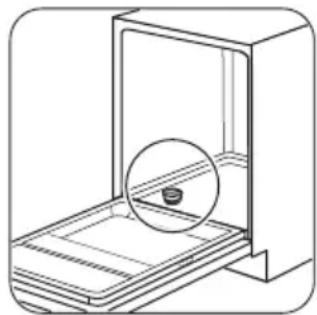
Filling the salt container

Caution! Water and salt can come out from the salt container when you fill it.
Risk of corrosion. To prevent it, after you fill the salt container, start a programme.
1
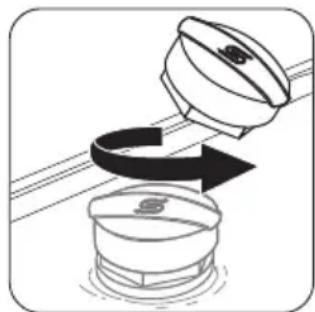
2
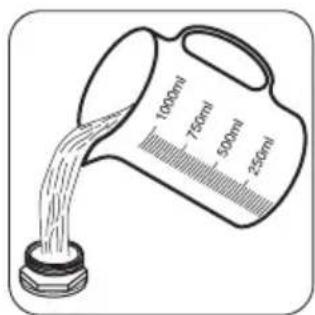
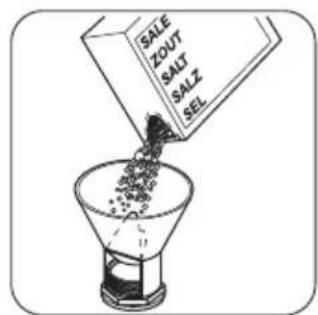

Put 1 litre of water in the salt container (only for the first time).

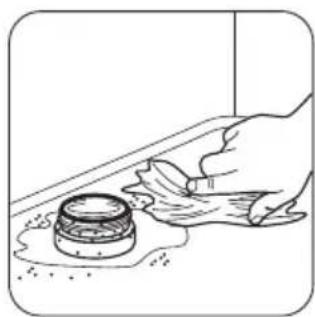
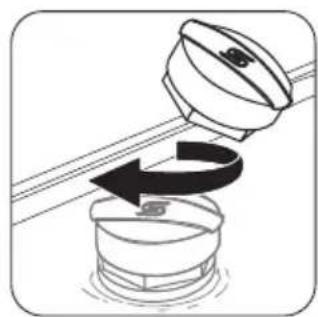

Filling the rinse aid dispenser

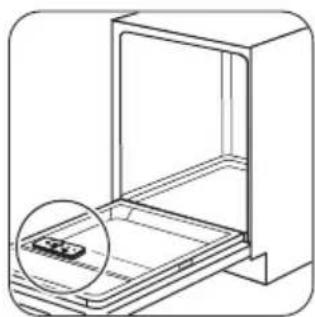
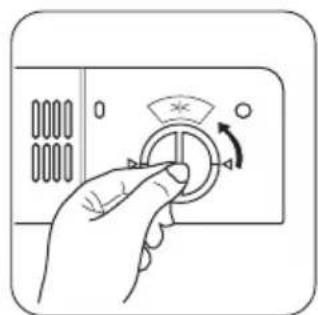

Daily use

-
Open the water tap.
-
Turn the programme knob until the programme marker is aligned with a programme on the control panel. Make sure that the appliance is in setting mode, refer to 'SETTING AND STARTING A PROGRAMME'.
-
If the salt indicator is on, fill the salt container.
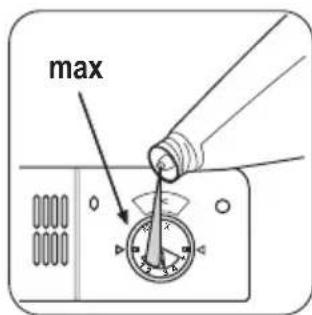
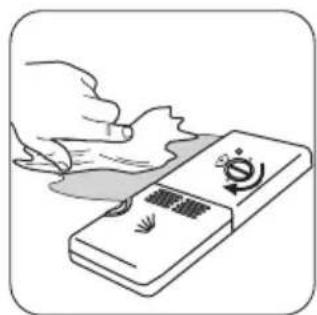


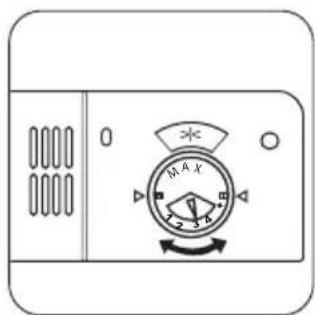
To adjust the released quantity of rinse aid, turn the selector between position 1 (lowest quantity) and position 4 (highest quantity).
If the rinse aid indicator is on, fill the rinse aid dispenser.
- Load the baskets.
- Add the detergent.
- Set and start the correct programme for the type of load and the degree of soil.
Using the detergent
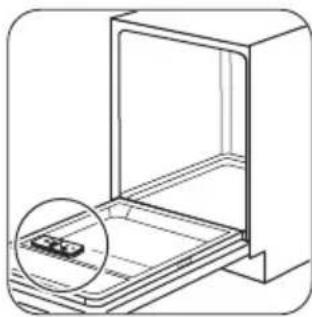
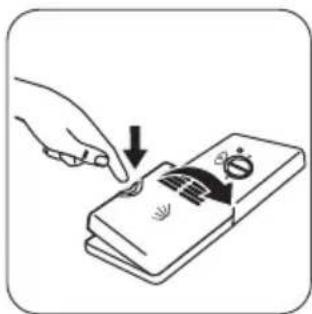
2
1
3
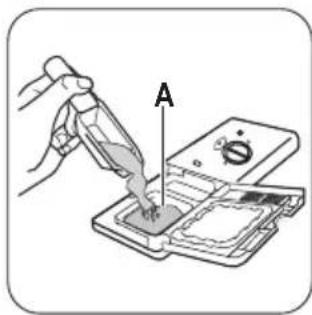
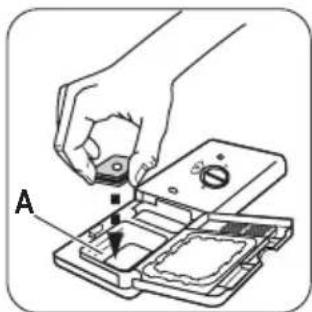
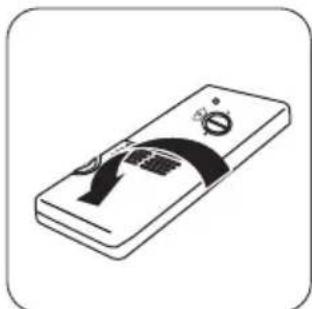
Put the detergent or the tablet in compartment (A).
4
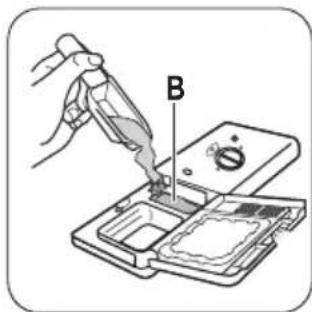
If the programme has a prewash phase, put a small quantity of detergent in compartment (B).
Combi detergent tablets
These tablets contain detergent, rinse aid and other added agents. Be sure that these tablets are applicable to the water hardness in your area. Refer to the instructions on the packaging of the products.
When you use tablets, that contain salt and rinse aid, do not fill the salt container and the rinse aid dispenser. The rinse aid indicator always comes on if the rinse aid dispenser is empty.
- Adjust the water softener to the lowest level.
- Set the rinse aid dispenser to the lowest position.
If you stop to use the combi detergent tablets, before you start to use separately detergent, rinse aid and dishwasher salt, do these steps:
- Press the on/off button to activate the appliance.
- Set the water softener to the highest level.
- Make sure that the salt container and the rinse aid dispenser are full.
- Start the shortest programme with a rinsing phase, without detergent and without dishes.
- Adjust the water softener to the water hardness in your area.
- Adjust the released quantity of rinse aid.
Setting and starting a programme
Setting mode

The appliance must be in setting mode to:
- Start a programme.
- Set the level of the water softener.
Turn the programme knob until the programme marker is aligned with a programme on the control panel:
- If the programme duration flashes in the display, the appliance is in setting mode.
- If the programme duration in the display is not flashing, the appliance is not in setting mode.
To put the appliance in setting mode, press and hold Cancel until the programme duration flashes in the display and the phase indicators for the programme come on.
Starting a programme without delay start
- Open the water tap.
- Close the appliance door.
- Turn the programme knob until the programme marker is aligned with the pro
gramme you want to set. Make sure that the appliance is in setting mode.
-
The programme duration flashes in the display.
The phase indicators of the set programme come on. -
Press Start. The programme starts.
-
The programme duration stops flashing in the display and starts to decrease with steps of 1 minute.
- Only the indicator of the phase in operation stays on.
Starting a programme with delay start
- Set the programme.
- Press Delay again and again until the display shows the delay time you want to set (from 1 to 9 hours).
-
The delay time flashes in the display.
-
Press Start. The countdown starts.
-
The delay time stops flashing in the display. The countdown starts to decrease with steps of 1 hour.
The phase indicators of the set programme go off. -
When the countdown is completed, the programme starts.
- The indicator of the phase in operation comes on.
Opening the door while the appliance operates
If you open the door, the appliance stops. When you close the door, the appliance continues from the point of interruption.
Cancelling the delay start while the countdown operates
Press the Cancel button until the display shows the programme duration and the phase
Hints and tips
The water softener
Hard water contains a high quantity of minerals that can cause damage to the appliance
indicators of the set programme come on.
Press the Start button, the programme starts.
Cancelling the programme
Press and hold the Cancel button until the programme duration flashes.
Make sure that there is detergent in the detergent dispenser before you start a new programme.
At the end of the programme
When the programme is completed, the display shows 0 and the phase indicators go off.
- To deactivate the appliance, turn the programme knob until the programme marker is aligned with the off position.
- Close the water tap.
If you do not deactivate the appliance, after a few minutes from the end of the programme:
- All the indicators go off.
- The display shows one horizontal status bar.
This helps to decrease the energy consumption.
Press one of the buttons, the display and the indicators come on again.
i -Let the dishes become cold before you remove them from the appliance. Hot dishes can be easily damaged.
- First remove the items from the lower basket, then from the upper basket.
- There can be water on the sides and on the door of the appliance. Stainless steel becomes cool more quickly than the dishes.
and bad washing results. The water softener neutralises these minerals.
The dishwasher salt keeps the water softener clean and in good conditions. It is important to
set the right level of the water softener. This makes sure that the water softener uses the correct quantity of dishwasher salt and water.
Using salt, rinse aid and detergent
- Only use salt, rinse aid and detergent for dishwasher. Other products can cause damage to the appliance.
The rinse aid helps, during the last rinsing phase, to dry the dishes without streaks and stains. - Combi detergent tablets contain detergent, rinse aid and other added agents. Be sure that these tablets are applicable to the water hardness in your area. Refer to the instructions on the packaging of the products.
- Detergent tablets do not fully dissolve with short programmes. To prevent detergent residues on the tableware, we recommend that you use the tablets with long programmes.
Do not use more than the correct quantity of detergent. Refer to the instructions on the detergent packaging.
Loading the baskets
i Refer to the supplied leaflet with examples of the load of the baskets.
- Only use the appliance to wash items that are dishwasher-safe.
- Do not put in the appliance items made of wood, horn, aluminium, pewter and copper.
Care and cleaning
Warning! Before maintenance, deactivate the appliance and disconnect the mains plug from the mains socket.
i Dirty filters and clogged spray arms decrease the washing results. Make a check regularly and, if necessary, clean them.
- Do not put in the appliance items that can absorb water (sponges, household cloths).
- Remove remaining food from the items.
- To remove easily remaining burned food, soak pots and pans in water before you put them in the appliance.
- Put hollow items (cups, glasses and pans) with the opening down.
- Make sure that cutlery and dishes do not bond together. Mix spoons with other cutlery.
- Make sure that glasses do not touch other glasses.
- Put the small items in the cutlery basket.
- Put the light items in the upper basket. Make sure that they do not move.
- Make sure that the spray arms can move freely before you start a programme.
Before starting a programme
Make sure that:
- The filters are clean and correctly installed.
- The spray arms are not clogged.
- The position of the items in the baskets is correct.
The programme is applicable for the type of load and for the degree of soil. - The correct quantity of detergent is used.
- There is dishwasher salt and rinse aid (unless you use combi detergent tablets).
- The cap of the salt container is tight.
Cleaning the filters
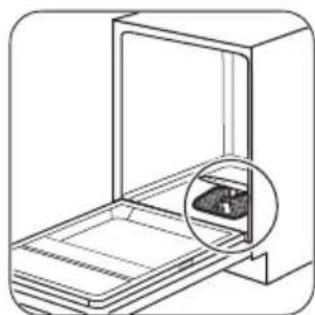
1
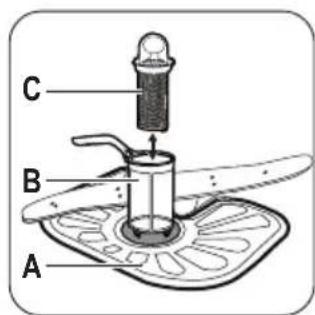
2
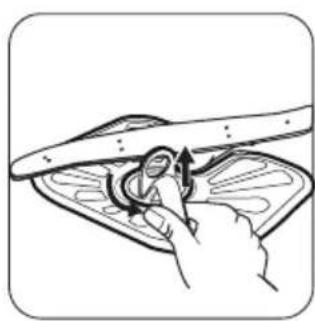
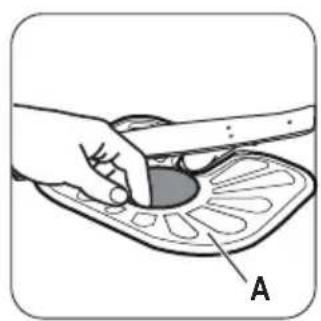
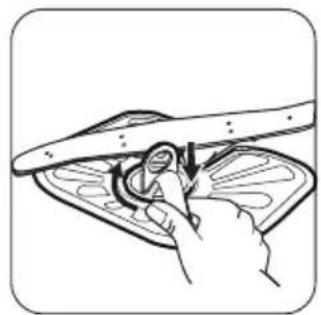
3 To remove filters (B) and (C), turn the handle counterclockwise and remove. Pull apart filter (B) and (C). Wash the filters with water.
4 Remove filter (A). Wash the filter with water.
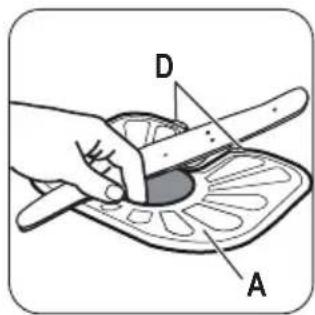
Put filter (A) to its initial position. Make sure that it assembles correctly under the two guides (D).
6 Assemble filters (B) and (C).Put them into position in filter A).Turn the handle clockwise until it locks.
An incorrect position of the filters can cause bad washing results and damage to the appliance.
Cleaning the spray arms
Do not remove the spray arms. If the holes in the spray arms are clogged, remove remaining parts of soil with a thin pointed object.
External cleaning
Clean the appliance with a moist soft cloth. Only use neutral detergents. Do not use abrasive products, abrasive cleaning pads or solvents.
Internal cleaning
If you regularly use short duration programmes, these can leave deposits of grease and limescale inside the appliance.
To prevent this, we recommend to run long duration programmes at least 2 times per month.
Troubleshooting
The appliance does not start or it stops during operation.
Before you contact the Service, refer to the information that follows for a solution to the problem.
With some problems, the display shows an alarm code:
-
The appliance does not fill with water.
-
- The appliance does not drain the water.
-30 - The anti-flood device is on.
- The appliance does not drain the water.
Warning! Deactivate the appliance before you do the checks. Turn the programme knob until the programme marker is aligned with the off position.
Problem Possible cause Possible solution
The programme does not start.
The mains plug is not connected in the mains socket.
Connect the mains plug.
| Problem Possible | cause Possible solution | |
| The appliance door is open. | Close the appliance door. | |
| You did not press Start. | Press Start. | |
| The fuse in the fuse box is damaged. Replace the fuse. | ||
| The delay start is set. | Cancel the delay start or wait for the end of the countdown. | |
| The appliance does not fill with water. | The water tap is closed. Open the water tap. | |
| The water pressure is too low. | Contact your local water authority. | |
| The water tap is clogged or there is limescale on it. | Clean the water tap. | |
| The filter in the water inlet hose is clogged. | Clean the filter. | |
| The water inlet hose has a kink or a bend. | Make sure that the position of the hose is correct. | |
| The anti-flood device is on. There are water leakages in the appliance. | Close the water tap and contact the Service. | |
| The appliance does not drain the water. | The sink spigot is clogged. Clean the sink spigot. | |
| The water drain hose has a kink or a bend. | Make sure that the position of the hose is correct. |
After the checks are completed, turn the programme knob until the programme marker is aligned with the programme that was in operation when the problem occurred. The programme continues from the point of interruption.
If the problem occurs again, contact the Service.
If the display shows other alarm codes, contact the Service.
If the washing and drying results are not satisfactory
Whitish streaks or bluish layers on glasses and dishes
- The released quantity of rinse aid is too much. Adjust the rinse aid selector to a lower position.
- The quantity of detergent is too much.
Technical information
Stains and dry water drops on glasses and dishes
- The released quantity of rinse aid is not sufficient. Adjust the rinse aid selector to a higher position.
The quality of the detergent can be the cause.
Dishes are wet
The programme is without a drying phase or with a low temperature drying phase.
- The rinse aid dispenser is empty.
The quality of the rinse aid can be the cause.
i Refer to HINTS AND TIPS' for other possible causes.
Dimensions Width / Height / Depth (mm) 600 / 850 / 610
| Electrical connection Refer to the rating plate. | ||
| Voltage 220-240 V | ||
| Frequency 50 Hz | ||
| Water supply pressure | Min. / max. (bar / MPa) | (0.5 / 0.05) / (8 / 0.8) |
| Water supply1) | Cold water or hot water2) | max. 60 °C |
| Capacity Place settings 12 | ||
| Power consumption Left-on mode | 0.99 W | |
| Off-mode 0.10 W | ||
1) Connect the water inlet hose to a water tap with a 3/4 thread.
2) If the hot water comes from alternative sources of energy, (e.g. solar panels, aeolian energy), use the hot water supply to decrease energy consumption.
Environment concerns
Recycle the materials with the symbol Put the packaging in applicable containers to recycle it.
Help protect the environment and human health and to recycle waste of electrical and electronic appliances. Do not dispose
appliances marked with the symbol with the household waste. Return the product to your local recycling facility or contact your municipal office.
- Discard correctly the packaging material. Recycle the materials with the symbol .
Sommaire
www.zanussi.com/shop

C