WITXL 1051 - Washing machine INDESIT - Free user manual and instructions
Find the device manual for free WITXL 1051 INDESIT in PDF.



User questions about WITXL 1051 INDESIT
0 question about this device. Answer the ones you know or ask your own.
Ask a new question about this device
Download the instructions for your Washing machine in PDF format for free! Find your manual WITXL 1051 - INDESIT and take your electronic device back in hand. On this page are published all the documents necessary for the use of your device. WITXL 1051 by INDESIT.
USER MANUAL WITXL 1051 INDESIT
Unpacking and levelling
Electric and water connections
The first wash cycle
Technical details
Care and maintenance, 4
Cutting off the water or electricity supply
Cleaning your appliance
Caring for your appliance door and drum
Cleaning the pump
Checking the water inlet hose
Cleaning the detergent dispenser
Precautions and advice, 5
General safety
Disposal
Saving energy and respecting the environment
Washing machine description, 6-7
Control panel
How to open and shut the drum
Leds
Starting and Programmes, 8
Briefly: how to start a programme
Programme table
Personalisations, 9
Setting the temperature
Setting the spin cycle
Functions
Detergents and laundry, 10
Detergent dispenser
Bleach cycle
Preparing your laundry
Special items
Troubleshooting, 11
Service, 12
Before calling for Assistance

indesit
GB
! Keep this instruction manual in a safe place for future reference. Should the appliance be sold, transferred or moved, make sure the instruction manual accompanies the washing machine to inform the new owner as to its operation and features.
! Read these instructions carefully: they contain vital information on installation, use and safety.
Unpacking and levelling
Unpacking
- Unpack the washing machine.
- Check whether the washing machine has been damaged during transport. If this is the case, do not install it and contact your retailer.
text_image
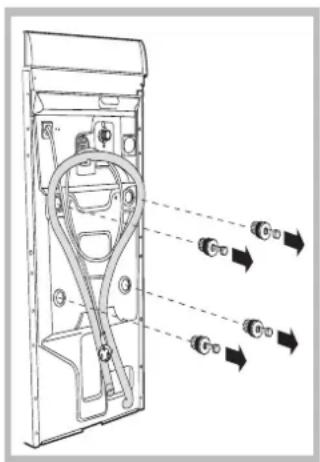
Technical diagram of a device rear panel with labeled components and directional arrows indicating assembly or movement.- Remove the four protective screws and the rubber washer with the respective spacer, situated on the rear of the appliance (see figure).
- Seal the gaps using the plastic plugs provided.
- Keep all the parts: you will need them again if the washing machine needs to be moved to another location. Warning: should the screws be re-used, make sure you fasten
the shorter ones at the top.
! Packaging materials are not children's toys.
Levelling
- Install the washing machine on a flat sturdy floor, without resting it up against walls, furniture cabinets or other.
natural_image
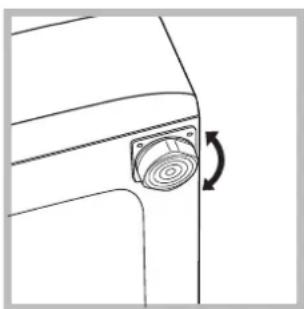
Line drawing of a car door corner with a spiral-patterned button and an arrow indicating rotation (no text or symbols)- If the floor is not perfectly level, compensate for any unevenness by tightening or loosening the adjustable front feet (see figure); the angle of inclination, measured according to the worktop, must not exceed 2^ .
Levelling your appliance
correctly will provide it with stability and avoid any vibrations, noise and shifting during operation.
If it is placed on a fitted or loose carpet, adjust the feet in such a way as to allow enough room for ventilation beneath the washing machine.
Putting your appliance in place and moving it.
natural_image
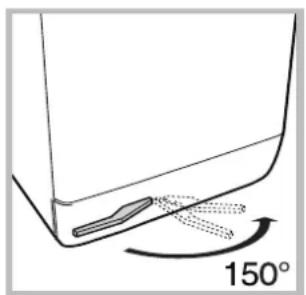
Diagram of a mechanical component with a 150° angle标注 (no text or symbols beyond the angle marker)If your washing machine is equipped with a special set of retractable wheels you can easy move it. To lower the wheels and thus move the appliance effortlessly, just pull the lever, situated on the left-
hand side beneath the base. Once the appliance is in the required position, put the lever back in place. The washing machine is now firmly in place (see figure).
Electric and water connections Connecting the water inlet hose
natural_image
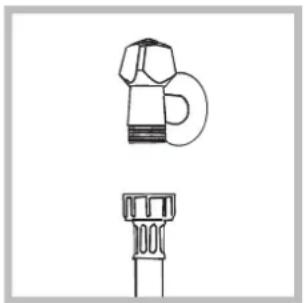
Technical line drawings of two mechanical components: a cap and a flanged base (no text or symbols)- Connect the supply pipe by screwing it to a cold water tab using a 34 gas threaded connection (see figure). Before performing the connection, allow the water to run freely until it is perfectly clear.
natural_image
Diagram of a mechanical device with a lever and valve, showing rotational motion (no text or symbols)-
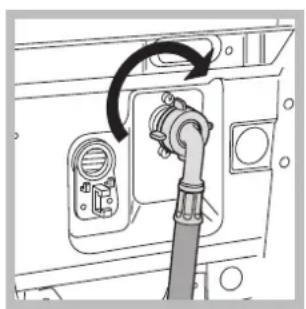
Connect the other end of the water inlet hose to the washing machine, screwing it onto the appliance's cold water inlet, situated on the top right-hand side on the rear of the appliance (see figure).
-
Make sure there are no kinks or bends in the hose.
! The water pressure at the tap must be within the values indicated in the Technical details table (on the next page).
! If the water inlet hose is not long enough, contact a specialist store or an authorised serviceman.
! Never use hoses that have already been used.
Connecting the drain hose
text_image
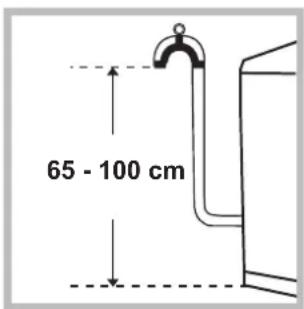
65 - 100 cmConnect the drain hose, without bending it, to a drainage duct or a wall drain located at a height between 65 and 100 cm from the floor;
natural_image
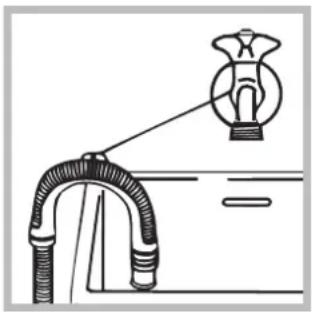
Simple line drawing of a bulb connected to a pipe, no text or symbols presentalternatively, rest it on the side of a washbasin or bathtub, fastening the duct supplied to the tap (see figure). The free end of the hose should not be underwater.
! We advise against the use of hose extensions; if it is absolutely necessary, the extension must have the same diameter as the original hose and must not exceed 150 cm in length.
Electrical connections
Before plugging the appliance into the electricity socket, make sure that:
- the socket is earthed and complies with all applicable laws;
- the socket is able to withstand the maximum power load of the appliance as indicated in the Technical data table (see opposite);
- the power supply voltage falls within the values indicated in the Technical data table (see opposite);
- the socket is compatible with the plug of the washing machine. If this is not the case, replace the socket or the plug.
! The washing machine must not be installed outdoors, even in covered areas. It is extremely dangerous to leave the appliance exposed to rain, storms and other weather conditions.
! When the washing machine has been installed, the electricity socket must be within easy reach.
! Do not use extension cords or multiple sockets
! The cable should not be bent or compressed.
! The power supply cable must only be replaced by authorised technicians.
Warning! The company shall not be held responsible in the event that these regulations are not respected.
The first wash cycle
Once the appliance has been installed, and before you use it for the first time, run a wash cycle with detergent and no laundry, setting the 90°C programme without a pre-wash cycle.
| Technical details | |
| Model | WITXL 1051 |
| Dimensions | 40 cm wide85 cm high60 cm deep |
| Capacity | from 1 to 6 kg |
| Electric connections | Please refer to the technical data plate fixed to the machine. |
| Water connections | maximum pressure 1 MPa (10 bar) minimum pressure 0.05 MPa (0.5 bar) drum capacity 42 litres |
| Spin speed | up to 1000 rpm |
| Test wash cycles in accordance with directives 1061/2010 and 1015/2010. | Programme 60°C : Cotton standard 60°C;Programme 40°C : Cotton standard 40°C. |
| This appliance is compliant with the following European Community Directives:- 2004/108/CE (Electromagnetic Compatibility)- 2006/95/CE (Low Voltage)- 2002/96/CE | |
GB
Cutting off the water and electricity supplies
- Turn off the water tap after every wash cycle. This will limit wear on the hydraulic system inside the washing machine and help to prevent leaks.
- Unplug the washing machine when cleaning it and during all maintenance work.
Cleaning the washing machine
The outer parts and rubber components of the appliance can be cleaned using a soft cloth soaked in lukewarm soapy water. Do not use solvents or abrasives.
Caring for the door and drum of your appliance
- Always leave the porthole door ajar in order to prevent unpleasant odours from forming.
Cleaning the pump
The washing machine is fitted with a self-cleaning pump which does not require any maintenance. Sometimes, small items (such as coins or buttons) may fall into the pre-chamber which protects the pump, situated in its bottom part.
! Make sure the wash cycle has finished and unplug the appliance.
To access the pre-chamber:
natural_image
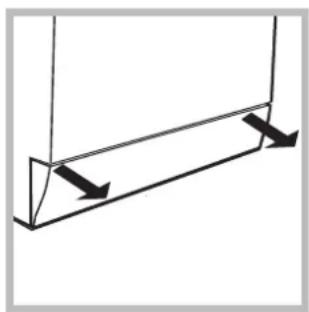
Pure geometric diagram showing a right triangle with two arrows indicating direction (no text or symbols)- using a screwdriver, remove the cover panel on the lower front part of the washing machine (see figure);
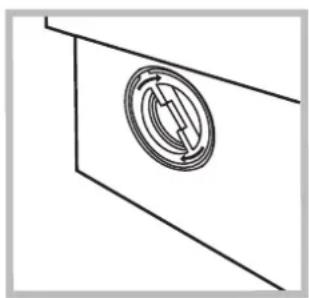
- unscrew the lid by rotating it anti-clockwise (see figure): a little water may trickle out. This is perfectly normal;
natural_image
Pure technical line drawing of a mechanical component with no text or symbols- clean the inside thoroughly;
- screw the lid back on;
- reposition the panel, making sure the hooks are securely in place before you push it onto the appliance.
Checking the water inlet hose
Check the inlet hose at least once a year. If there are any cracks, it should be replaced immediately: during the wash cycles, water pressure is very strong and a cracked hose could easily split open.
! Never use second-hand hoses.
How to clean the detergent dispenser
Disassembly:
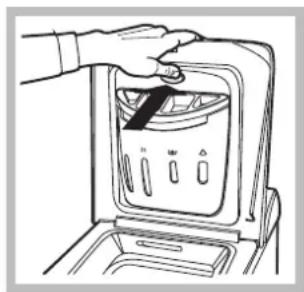
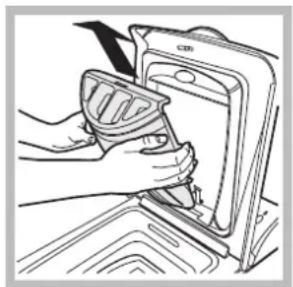
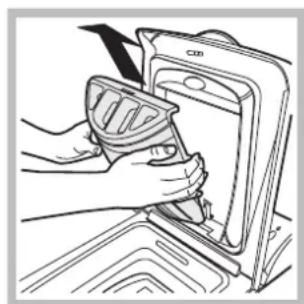
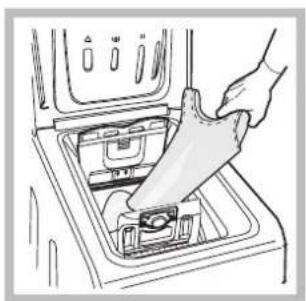
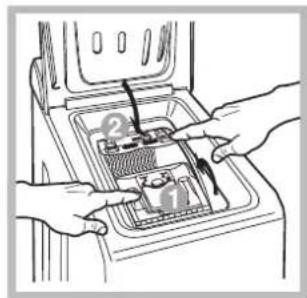
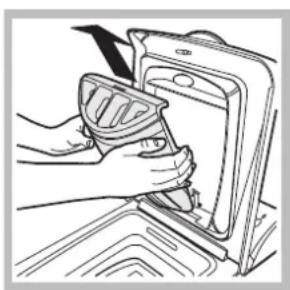
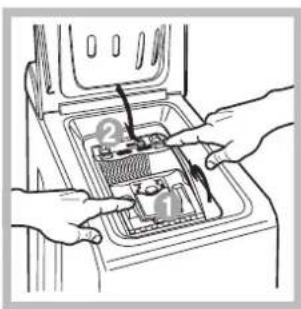
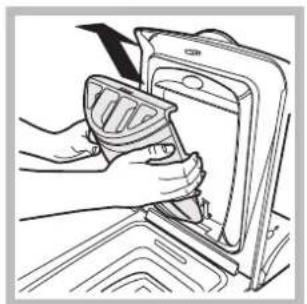
Press lightly on the large button on the front of the detergent dispenser and pull it upwards (fig. 1).
Cleaning:
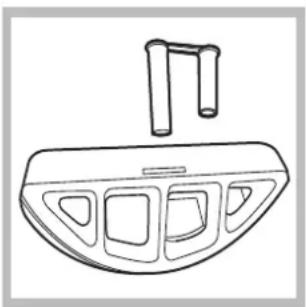
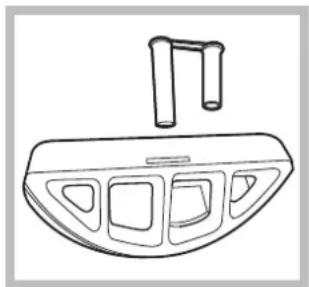
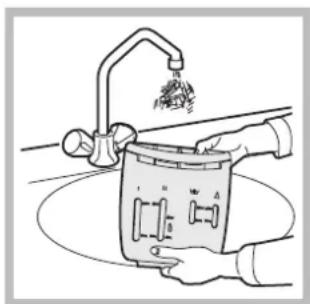
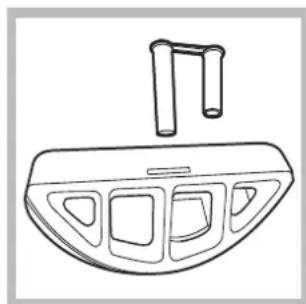
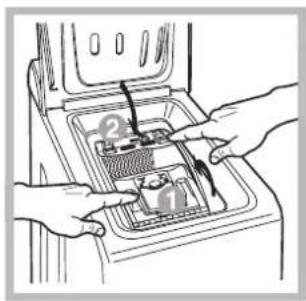
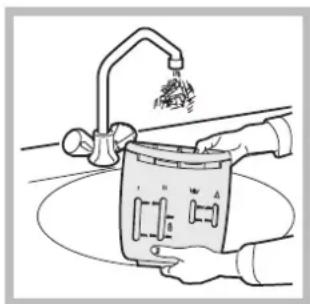
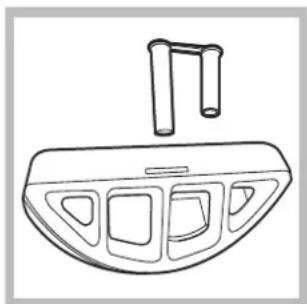
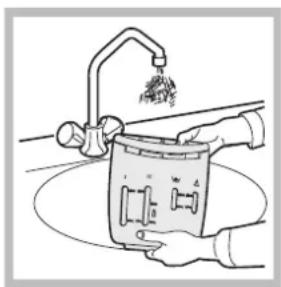
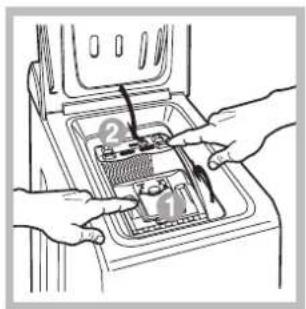
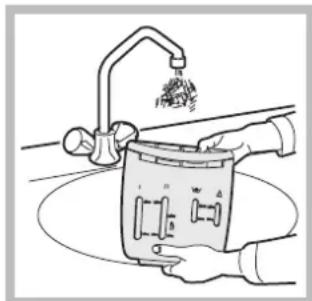
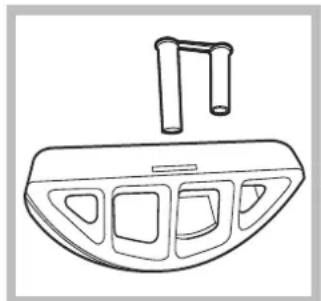
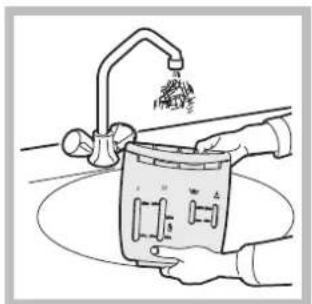
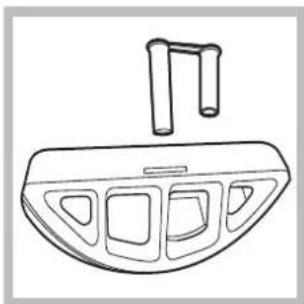
Then clean the dispenser under a tap (fig. 3) using an old toothbrush and, once the pair of siphons inserted in the top of compartments 1 and 2 (fig. 4) have been pulled out, check whether the same are not clogged and then rinse them.
Reassembly:
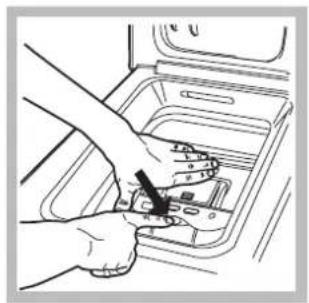
Do not forget to reinsert the pair of siphons into the special housings and then to replace the dispenser into its seat, clicking it into place (fig. 4, 2 and 1).
natural_image
Line drawing of a hand placing a small object into a washing machine (no text or symbols)Fig. 1 Fig. 2
natural_image
Illustration of hands using a tool to clean or adjust a device (no text or symbols visible)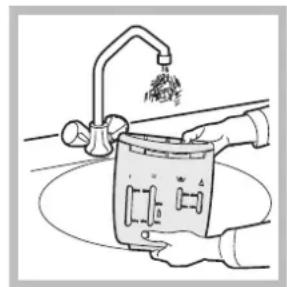
natural_image
Line drawing of hands using a manual water tap to clean or wash material (no text or symbols)Fig. 3
natural_image
Line drawing of a mechanical component with two cylindrical pins (no text or symbols)Fig. 4
! The washing machine was designed and built in compliance with the applicable international safety regulations. The following information is provided for your safety and should consequently be read carefully.
General safety
- This appliance has been designed for non-professional, household use and its functions must not be changed.
- This appliance can be used by children aged from 8 years and above and persons with reduced physical, sensory or mental capabilities or lack of experience and knowledge if they have been given supervision or instruction concerning use of the appliance in a safe way and understand the hazards involved. Children shall not play with the appliance. Cleaning and user maintenance shall not be made by children without supervision.
- Never touch the washing machine when barefoot or with wet or damp hands or feet.
- Do not pull on the power supply cable to unplug the appliance from the electricity socket. Pull the plug out yourself.
- Do not touch the drain water as it could reach very high temperatures.
- Never force the washing machine door: this could damage the safety lock mechanism designed to prevent any accidental openings.
- In the event of a malfunction, do not under any circumstances touch internal parts in order to attempt repairs.
- Always keep children well away from the appliance while in operation.
- Should it have to be moved, proceed with the help of two or three people and handle it with the utmost care. Never try to do this alone, because the appliance is very heavy.
- Before loading your laundry into the washing machine, make sure the drum is empty.
Disposal
The European Directive 2002/96/EC on Waste Electrical and Electronic Equipment, requires that old household electrical appliances must not be disposed of in the normal unsorted municipal waste stream. Old appliances must be collected separately in order to optimise the recovery and recycling of the materials they contain and reduce the impact on human health and the environment.
The crossed out “wheeled bin” symbol on the product reminds you of your obligation, that when you dispose of the appliance it must be separately collected. Consumers may take their old appliance to public waste collection areas, other communal collection areas, or if national legislation allows return it to a retailer when purchasing a similar new product. All major household appliance manufacturers are active in the creation of systems to manage the collection and disposal of old appliances.
Saving energy and respecting the environment
Environmentally-friendly technology
If you only see a little water through your appliance door, this is because thanks to the latest technology, your washing machine only needs less than half the amount of water to get the best results: an objective reached to respect the environment.
Saving on detergent, water, energy and time
- To avoid wasting resources, the washing machine should be used with a full load. A full load instead of two half loads allows you to save up to 50% on energy.
- The pre-wash cycle is only necessary on extremely soiled garments. Avoiding it will save on detergent, time, water and between 5 and 15% energy.
- Treating stains with a stain remover or leaving them to soak before washing will cut down the need to wash them at high temperatures. A programme at 60°C instead of 90°C or one at 40°C instead of 60°C will save up to 50% on energy.
- Use the correct quantity of detergent depending on the water hardness, how soiled the garments are and the amount of laundry you have, to avoid wastage and to protect the environment: despite being biodegradable, detergents do contain ingredients that alter the natural balance of the environment. In addition, avoid using fabric softener as much as possible.
- If you use your washing machine from late in the afternoon until the early hours of the morning, you will help reduce the electricity board's peak load. The Delay Timer option helps to organise your wash cycles accordingly.
- If your laundry has to be dried in a tumble dryer, select a high spin speed. Having the least water possible in your laundry will save you time and energy in the drying process.
Washing machine description
GB
Control panel
text_image
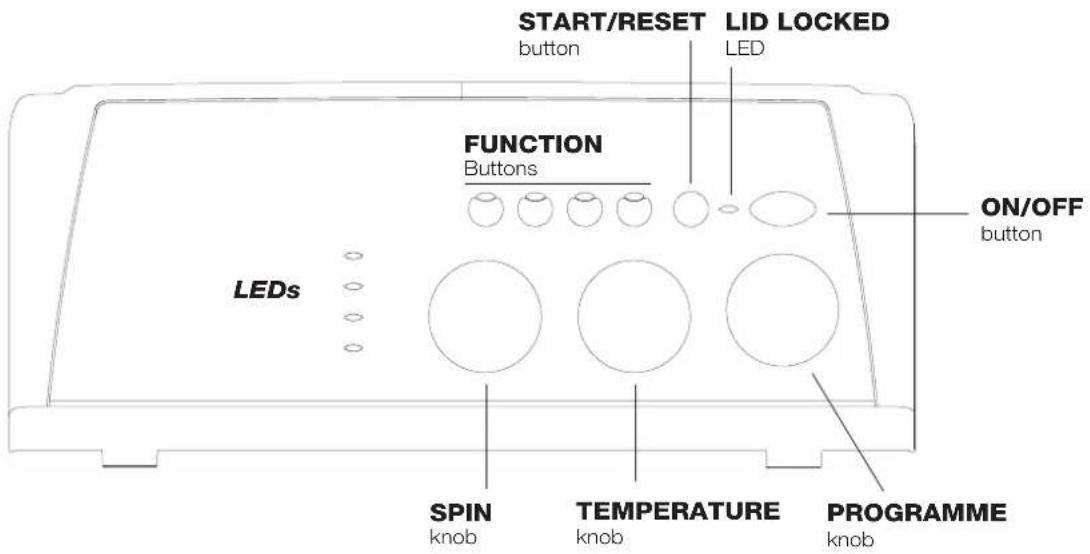
START/RESET LID LOCKED button LED FUNCTION Buttons ON/OFF button LEDs SPIN TEMPERATURE PROGRAMME knob knob knob knobDetergent dispenser to add detergent and fabric softener.
LEDs to find out which wash cycle phase is under way. If the Delay Timer function has been set, the time left until the programme starts will be indicated.
FUNCTION keys to select the functions available. The button corresponding to the function selected will remain on.
SPIN SPEED knob to set the spin speed or exclude the spin cycle completely.
TEMPERATURE knob to set the temperature or the cold wash cycle.
ON/OFF key to turn the washing machine on and off.
START/RESET key to start the programmes or cancel incorrect settings.
ON-OFF/LID LOCK led, to find out whether the washing machine is on (flashing) and if the lid may be opened.
PROGRAMME knob to set the programmes.
The knob stays still during the cycle.
Standby mode
This washing machine, in compliance with new energy saving regulations, is fitted with an automatic standby system which is enabled after about 30 minutes if no activity is detected. Press the ON/OFF button briefly and wait for the machine to start up again.
Consumption in off-mode: 0,5 W
Consumption in Left-on: 0,5 W
ON-OFF/LID LOCK led:
If this LED is on, the appliance Lid is locked to prevent it from being opened accidentally; to avoid any damages, you must wait for the lamp to flash before you open the Lid.
! The rapid flashing of the ON-OFF/LID LOCK Led together with the flashing of at least one other LED indicates there is an abnormality.
How to open and to close the drum
natural_image
Line drawing of a kitchen appliance with a door and drawer, showing a curved arrow indicating rotation (no text or symbols)Fig. 1
natural_image
Illustration of hands installing or adjusting a component inside a container (no text or symbols visible)Fig. 2
natural_image
Line drawing of a hand inserting a plastic bag into a washing machine (no text or symbols)Fig. 3
natural_image
Illustration of hands inserting a device into a container with arrows indicating internal components (no text or symbols)Fig. 4
Leds
The LEDS provide important information. This is what they can tell you:
Delay set:
If the Delay Timer function has been enabled (see page.9), once you have started the programme, the LED corresponding to the delay set will begin to flash:

As time passes, the remaining delay will be displayed, and the corresponding LED will flash:

Once the set delay is complete, the flashing LED will turn off and the programme set will start.
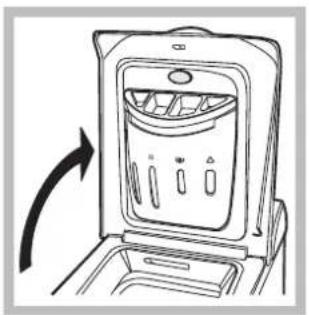
A) Opening (Fig. 1).
Lift the external lid and open it completely.
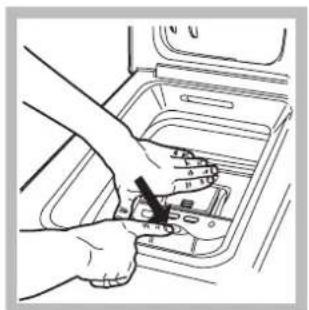
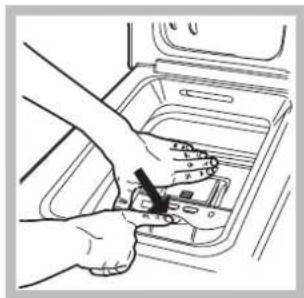
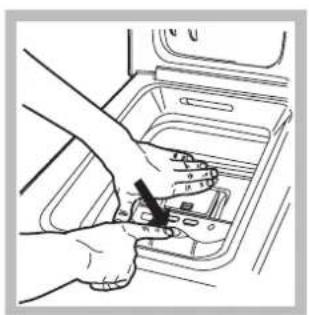
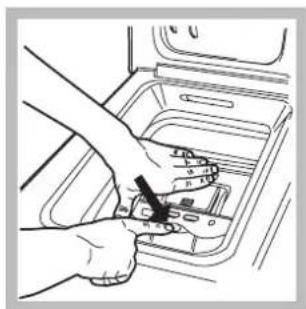
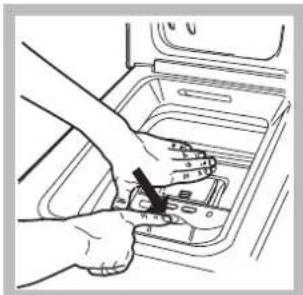
B) Then open the drum using both hands as shown in Fig. 2:
- press the button indicated by the arrow in Fig. 2 lightly downwards, with one hand firmly resting on the doors to prevent them from suddenly opening and hurting your fingers; - therefore follow the appliance doors along as these unhook and open easily.
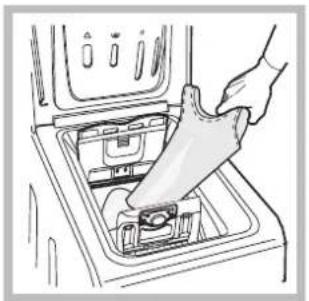
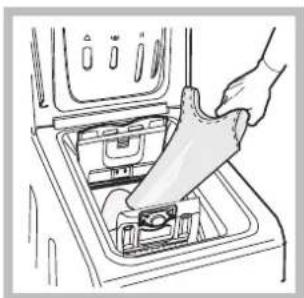
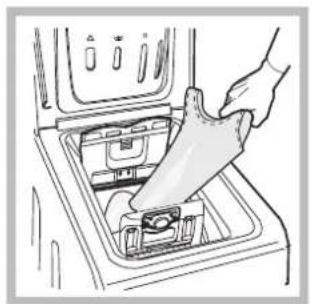
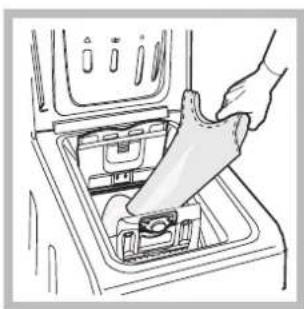
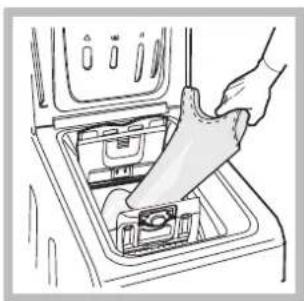
C) Loading the washing machine. (Fig. 3). D) Shutting (Fig. 4).
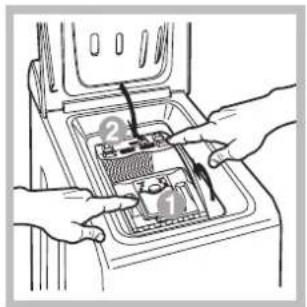
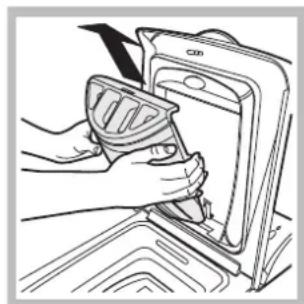
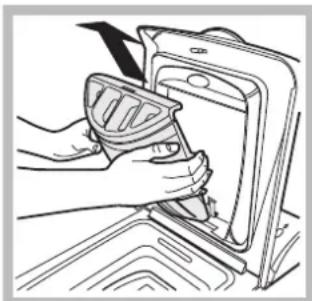
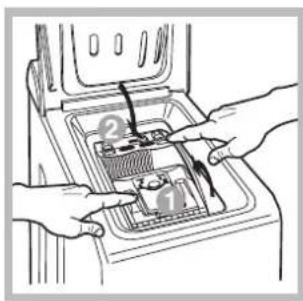
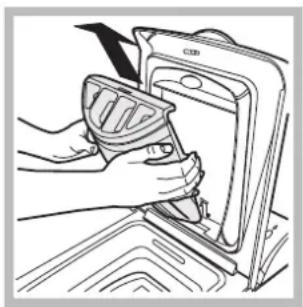
- close the drum fully by first shutting the front door followed by the rear one;
- then ensure the hooks on the front door are perfectly housed within the seat of the rear door;
- after the hooks have clicked into position, press both doors lightly downwards to make sure they do not come loose;
- finally shut the external lid.
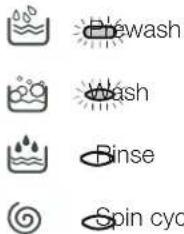
Cycle phase under way:
During the wash cycle, the LEDs gradually illuminate on to indicate the cycle phase under way:
text_image
Péwash Wash Rinse Spin cycNote: during draining, the LED corresponding to the Spin cycle phase will be turned on.
Function buttons
The FUNCTION BUTTONS also act like LEDS.
When a function is selected, the corresponding button is illuminated.
If the function selected is incompatible with the programme set, the button will flash and the function will not be enabled.
If you set a function that is incompatible with another function you selected previously, only the last one selected will be enabled.
Starting and Programmes
GB
Briefly: starting a programme
- Switch the washing machine on by pressing button. All the LEDS will light up for a few seconds and the ON-OFF/DOOR LOCK Led will begin to flash.
- Load your laundry into the washing machine, add the detergent and any fabric softener and shut the appliance door.
- Set the PROGRAMME knob to the programme required.
-
Set the wash temperature.
-
Set the spin speed.
- Start the programme by pressing the START/RESET button. To cancel it, keep the START/RESET button pressed for at least 2 seconds.
- When the programme is finished, the ON-OFF/DOOR LOCK Led will flash to indicate that the appliance door can be opened. Take out your laundry and leave the appliance door ajar to allow the drum to dry thoroughly. Turn the washing machine off by pressing button (!)
Programme table
| Wash cycles | Description of the wash cycle | Max. temp. (°C) | Max. speed (rpm) | Detergents | Max. load (kg) | Residual dampness % | Energy consumption kWh | Total water It | Cycle duration | ||||
| Prewash | Wash | Fabric softener | Bleach | ||||||||||
| Standard | |||||||||||||
| 1 | Cotton with prewash: extremely soiled whites. 90° 1000 | ● | ● | ● | -6 | 62 1,92 | 67 160' | ||||||
| 2 | Cotton: extremely soiled whites. | 90° | 1000 | - | ● | ● | ● | 6 62 | 1,99 62 145' | ||||
| 3 | Coloured Cottons: lightly soiled whites and delicate colours. | 40° | 1000 | - | ● | ● | ● | 6 62 | 0,65 54 90' | ||||
| 4 | Synthetics: heavily soiled resistant colours. | 60° | 800 | - | ● | ● | ● | 3 | 44 0 | 85 39 | 110' | ||
| 4 | Synthetics (3): lightly soiled resistant colours. | 40° | 800 | - | ● | ● | ● | 3 | 44 0 | 53 39 | 100' | ||
| 60°C | Cotton Standard 60°C (1): heavily soiled whites and resistant colours. | 60° | 1000 | - | ● | ● | ● | 6 | 62 1 | 02 50 | 185' | ||
| 40°C | Cotton Standard 40°C (2): lightly soiled whites and delicate colours. | 40° | 1000 | - | ● | ● | ● | 6 | 62 1 | 09 92 | 175' | ||
| 7 | Wool: for wool, cashmere, etc. | 40° 800 | - | ● | ● | - | 1 | - | - | - | 65' | ||
| 8 | Cotton Standard 20°C | 20° 1000 | - | ● | ● | ● | 6 | - | - | - 180' | |||
| Time 4 you | |||||||||||||
| 9 | Cotton: Heavily soiled whites and fast colours | 60° | 1000 | - | ● | ● | - | 3,5 | - | - | - | 60' | |
| 10 | Cotton: Lightly soiled whites and delicate colours (shirts, jumpers, etc.) | 40° | 1000 | - | ● | ● | - | 3,5 | - | - | - | 50' | |
| 11 | Synthetics: Delicate colours (all types of slightly soiled garments) | 40° | 800 | - | ● | ● | - | 2,5 | - | - | - | 40' | |
| 12 | Express: to refresh lightly soiled garments quickly (not suitable for wool, silk and clothes which require washing by hand). | 30° | 800 | - | ● | ● | -3 | 71 | 0,25 33 | 30' | |||
| Sport | |||||||||||||
| 13 | Special Shoes | 30° | 600 | - | ● | ● | - | Max. 2 pairs | - | - | - | 55' | |
| 14 | Sport Intensive | 30° | 600 | - | ● | ● | - | 3 | - | - | - | 85' | |
| Partial programmes | |||||||||||||
| Rinse | - | 1000 | -- | ● | ● | 6 | - | - | - | 36' | |||
| Spin + Drain | - | 1000 | - | - | - | - | 6 | - | - | - | 16' | ||
The length of cycle shown on the display or in this booklet is an estimation only and is calculated assuming standard working conditions. The actual duration can vary according to factors such as water temperature and pressure, the amount of detergent used, the amount and type of load inserted, load balancing and any wash options selected.
1) Test wash cycle in compliance with directive 1061/2010: set wash cycle 60°C with a temperature of 60°C.
This cycle is designed for cotton loads with a normal soil level and is the most efficient in terms of both electricity and water consumption; it should be used for garments which can be washed at 60^ C. The actual washing temperature may differ from the indicated value.
2) Test wash cycle in compliance with directive 1061/2010: set wash cycle with a temperature of 40°C.
This cycle is designed for cotton loads with a normal soil level and is the most efficient in terms of both electricity and water consumption; it should be used for garments which can be washed at 40^ C. The actual washing temperature may differ from the indicated value.
For all Test Institutes:
2) Long wash cycle for cottons: set wash cycle 40^ with a temperature of 40^ .
3) Long wash cycle for synthetics: set wash cycle 4; with a temperature of 40^ C.
Notes
-For programmes 9 and 10, we advise against exceeding a wash load of 3.5 kg. -For programme 14 we advise against exceeding a wash load of 3 kg.
Cotton Standard 20°C (wash cycle 8) ideal for heavily soiled cotton loads. The effective performance levels achieved at cold temperatures, which are comparable to washing at 40°, are guaranteed by a mechanical action which operates at varying speed, with repeated and frequent peaks.
Express (wash cycle 12) this wash cycle was designed to wash lightly soiled garments quickly: it lasts just 30 minutes and therefore saves both energy and time. By selecting this wash cycle (12 at 30^ C), it is possible to wash different fabrics together (except for wool and silk items), with a maximum load of 3 kg.

Setting the temperature
Turn the TEMPERATURE knob to set the wash temperature (see Programme table).
The temperature can be lowered, or even set to a cold wash (※
GB

Setting the spin speed
Turn the SPIN SPEED knob to set the spin speed for the programme selected.
The maximum spin speeds for each programme are as follows:
Programmes Maximum spin speed
Cottone 1000 rpm
Synthetics 800 rpm
Wool 800 rpm
Silk no
The spin speed can be lowered, or the spin cycle can be excluded altogether by selecting symbol
The washing machine will automatically prevent you from selecting a spin speed higher than the maximum speed for each programme.
Note. To avoid excessive vibrations, before every spin cycle the machine distributes the load in a uniform manner by continuously rotating the drum at a speed which is slightly faster than the normal washing speed.
When, despite repeated attempts, the load is still not evenly distributed, the machine spins at a lower speed than the set frequency.
If the load is excessively unbalanced, the machine attempts to distribute it instead of spinning.
The balancing attempts may extend the total duration of the cycle, up to a maximum of 10 minutes.
Functions
To enable a function:
- press the button corresponding to the desired function, according to the table below;
- the function is enabled when the corresponding button is illuminated.
Note: The rapid flashing of the button indicates that the corresponding function cannot be selected for the programme set.
| Option Effect Comments Enabled with | programmes: | ||
 Delay Timer Delay Timer | Delays the start of the wash by up to 9 hours. | Pess the button repeatedly until the LED corresponding to the desired delay is turned on. The fifth time the button is pressed, the function will be disabled.N.B.: Once you have pressed the Start/Reset button, the delay can only be decreased if you wish to modify it. | All |
 Bleaching Bleaching | Bleaching cycle de-signed to remove the toughest stains. | Please remember to pour the bleach into extra compartment 4 (see page 10).This option is incompatible with the EASY IRON option. | 2, 3, 4,60°C,40°C8 and Rinse cycle. |
 Easy iron Easy iron | By selecting this function, the wash and spin cycles will be modified in order to reduce the formation of creases.At the end of the cycle the washing machine will perform slow rotations of the drum. | To drain the water so that the laundry may be removed, press the START/PAUSE button.This option is incompatible with the BLEACHING option. | 1, 2, 3, 4,60°C,40°C8, 9, 10, 11. |
 Extra Rinse Extra Rinse | Increases the efficiency of the rinse. | Recommended when the appliance has a full load or with large quantities of detergent. | 1, 2, 3, 4,60°C,40°C7, 8, 9, 10, 11, 13, 14, and Rinse cycle. |
GB
Detergent dispenser
Good washing results also depend on the correct dose of detergent: adding too much detergent won't necessarily make for a more efficient wash, and may in fact cause build up on the interior of your appliance and even pollute the environment.
! Use powder detergent for white cotton garments, for pre-washing, and for washing at temperatures over 60°C.
! Follow the instructions given on the detergent packaging.
text_image
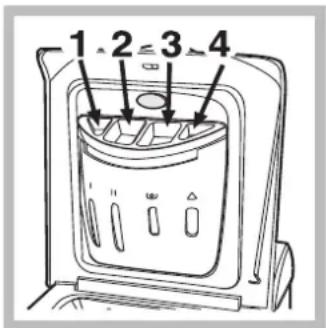
1 2 3 4Open up the detergent dispenser and pour in the detergent and fabric softener, as follows.
compartment 1: Detergent for pre-wash (powder)
compartment 2: Detergent for the wash cycle (powder or liquid)
Liquid detergent should only be poured in immediately prior to the wash cycle start.
! Do not use hand wash detergent because it may form too much foam.
compartment 3: Additives (fabric softeners, etc.)
When pouring the softener in compartment 3, avoid exceeding the “max” level indicated.
The softener is added automatically into the machine during the last wash. At the end of the wash programme, some water will be left in compartment 3. This is used for the inlet of denser fabric softeners into the machine, i.e. to dilute the more concentrated softeners. Should more than a normal amount of water remain in compartment 3, this means the emptying device is blocked. For cleaning instructions, see page 4. The fabric softener should not overflow from the grid.
compartment 4: Bleach
Bleach cycle
Traditional bleach should be used on sturdy white fabrics, and delicate bleach for coloured fabrics, synthetics and for wool. When pouring in the bleach, be careful not to exceed the "max" level indicated on compartment 4 (see figure).
To run the bleach cycle alone, pour the bleach into compartment 4 and set the Rinse programme (for cotton fabrics) and push the button bleaching.
Preparing your laundry
- Divide your laundry according to:
- the type of fabric/the symbol on the label.
- the colours: separate coloured garments from whites.
• Empty all pockets and check for loose buttons. - Do not exceed the values listed in the “Table of wash cycles”, which refer to the weight of the laundry when dry.
How much does your laundry weigh?
1 sheet 400-500 g
1 pillow case 150-200 g
1 tablecloth 400-500 g
1 bathrobe 900-1,200 g
1 towel 150-250 g
Special items
Wool: for best results, use a specific detergent, taking care not to exceed a load of 1 kg.
Your washing machine could fail to work. Before calling for Assistance (see page 12), make sure the problem can't easily be solved by consulting the following list.
GB
Problem
| The washing machine won't start. | · The appliance is not plugged into the socket, or not enough to make contact.· There has been a power failure. |
| The wash cycle won't start. | · The appliance door is not shut properly. The Lid locked Led flashes.· The ⏻button has not been pressed.· The START/RESET button has not been pressed.· The water tap is not turned on.· A delayed start has been set (using the Delay Timer, see page 9). |
| The washing machine fails to load water. | · The water inlet hose is not connected to the tap.· The hose is bent.· The water tap is not turned on.· There is a water shortage.· The water pressure is insufficient.· The START/RESET button has not been pressed. |
| The washing machine continuously loads and unloads water. | · The drain hose is not fitted between 65 and 100 cm from the floor (see page 3).· The free end of the hose is underwater (see page 3).· The wall drainage system doesn't have a breather pipe.If the problem persists even after these checks, turn off the water tap, switch the appliance off and call for Assistance. If the dwelling is on one of the upper floors of a building, there may be drain trap problems causing the washing machine to load and unload water continuously. In order to avoid such an inconvenience, special anti-drain trap valves are available in shops. |
| The washing machine does not drain or spin. | · The programme does not foresee the draining: some programmes require enabling the draining manually.· The Easy iron option is enabled: to complete the programme, press the START/RESET button.· The drain hose is bent (see page 3).· The drain duct is clogged. |
| The washing machine vibrates too much during the spin cycle. | · The drum was not unblocked correctly during installation (see page 2).· The washing machine is not level (see page 2).· The washing machine is closed in between furniture cabinets and the wall (see page 2). |
| The washing machine leaks. | · The water inlet hose is not screwed on correctly (see page 2).· The detergent dispenser is obstructed (to clean it, see page 4).· The drain hose is not secured properly (see page 3). |
| The ON-OFF/DOOR LOCK Led flashes rapidly at the same time as at least one other LED. | · Switch off the machine and unplug the appliance; wait for approximately 1 minute then switch it on again.If the problem persists, contact Assistance. |
| There is too much foam. | · The detergent is not suitable for machine washing (it should bear the definition “for washing machines” or “hand and machine wash”,or the like).· You used too much detergent. |
Before calling for Assistance:
- Check whether you can solve the problem on your own (see page 11);
- Restart the programme to check whether the problem has been solved;
- If this is not the case, contact an authorised Technical Service Centre on the telephone number provided on the guarantee certificate.
! Always request the assistance of authorised servicemen.
Notify the operator of:
- the type of problem;
• the appliance model (Mod.);
• the serial number (S/N).
This information can be found on the data plate situated on the rear of the washing machine.

БЪЛГАРСКИ
Съдържание
BG
Монтиране, 14-15
text_image
Technical diagram of a device rear panel with labeled ports and directional arrows indicating assembly or connection.natural_image
Line drawing of a car door corner with a scroll wheel and directional arrow (no text or symbols)natural_image
Diagram showing a 150-degree angle with a curved arrow and dotted line indicating rotation (no text or symbols)natural_image
Technical line drawing of a mechanical component with two views: top shows a bolt and ring, bottom shows a flanged pin (no text or symbols)natural_image
Diagram of a mechanical device with a pipe and valve, showing rotational motion (no text or symbols)natural_image
Simple line drawing of a pipe with a bulb above it, no text or symbols presentnatural_image
Pure geometric diagram showing two horizontal lines with arrows indicating direction, no text or symbols presentnatural_image
Pure technical diagram showing a circular component with internal structure, no text or symbols presentnatural_image
Line drawing of a hand placing a bag into a trash bin (no text or symbols)Фиг. 1
natural_image
Illustration of hands using a tool to clean or adjust a device (no text or symbols visible)Фиг. 2
natural_image
Illustration of hands washing a small appliance with a faucet, no text or symbols presentФиг. 3
natural_image
Line drawing of a mechanical component with a bracket and four rectangular cutouts (no text or symbols)Фиг. 4
natural_image
Line drawing of a kitchen appliance with a right-hand arrow indicating rotation (no text or symbols)Фиг. 1
natural_image
Line drawing of hands installing or adjusting a component inside a storage unit (no text or symbols visible)Фиг. 2
natural_image
Line drawing of a hand inserting a plastic into an appliance inside a washing machine (no text or symbols)Фиг. 3 Фиг. 4
natural_image
Illustration of hands installing or adjusting a component inside a container (no text or symbols visible)text_image
Technical diagram of a device rear panel with labeled components and directional arrows indicating assembly or movement.natural_image
Line drawing of a car door corner with a scroll wheel and directional arrow (no text or symbols)natural_image
Diagram of a corner panel with a 150-degree angle indicator (no text or symbols beyond the angle marker)natural_image
Technical line drawing of two mechanical components: a hexagonal nut and a flanged bolt (no text or symbols)natural_image
Diagram of a mechanical device with a piping bag and valve, showing rotational motion (no text or symbols)natural_image
Diagram of a pipe connection with a valve and tubing, no text or symbols presentnatural_image
Pure structural diagram of a beam with triangular support and two downward arrows indicating load or force (no text or symbols)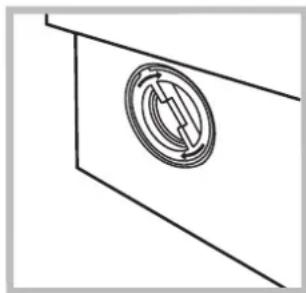
natural_image
Pure technical line drawing of a mechanical component with no text or symbolsnatural_image
Line drawing of a hand placing a bag into a trash bin (no text or symbols)Eik. 1
natural_image
Illustration of hands cleaning a device with a tool, no text or symbols visibleEik. 2
natural_image
Illustration of a hand washing a small appliance with a faucet, no text or symbols presentEik. 3
natural_image
Line drawing of a mechanical component with a bracket and internal slots (no text or symbols)Eik. 4
natural_image
Diagram of a kitchen appliance with a directional arrow indicating rotation (no text or symbols)Eik. 1
natural_image
Line drawing of hands installing or adjusting a component inside a storage unit (no text or symbols visible)Eik. 2
natural_image
Line drawing of a hand inserting a plastic into a shared drawer (no text or symbols)Eik. 3
natural_image
Illustration of hands installing or adjusting a device into a container (no text or symbols visible)Eik. 4
text_image
Technical diagram of a device rear panel with labeled components and directional arrows indicating assembly or movement.natural_image
Line drawing of a car door corner with a circular button and directional arrow (no text or symbols)natural_image
Diagram of a mechanical component with a 150-degree angle标注 (no text or symbols beyond the angle indicator)natural_image
Technical line drawings of two mechanical components: a hexagonal bolt and a flanged pin (no text or symbols)natural_image
Diagram of a mechanical device with a piping bag and valve, showing no text or symbolsnatural_image
Diagram of a pipe connection with a bulb above a container (no text or symbols)natural_image
Pure structural diagram showing two horizontal beams with downward arrows indicating forces or motion (no text or symbols)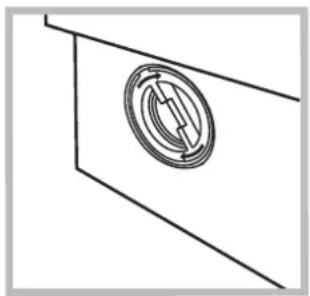
natural_image
Simple line drawing of a mechanical component with a circular feature on a rectangular base (no text or symbols)natural_image
Line drawing of a hand placing a small object into a washing machine (no text or symbols)Fig. 1
natural_image
Illustration of hands cleaning a laptop with a cloth (no text or symbols)Fig. 2
natural_image
Line drawing of hands using a water tap to clean or wash material (no text or symbols)Fig. 3
Reinstalación:
natural_image
Line drawing of a mechanical component with a bracket and internal slots (no text or symbols)Fig. 4
natural_image
Diagram of a kitchen appliance with a directional arrow indicating rotation (no text or symbols)Fig. 1
natural_image
Illustration of hands installing or adjusting a component inside a storage unit (no text or symbols visible)Fig. 2
natural_image
Illustration of a hand inserting a plastic into a washing machine (no text or symbols visible)Fig. 3
natural_image
Illustration of hands installing or adjusting a device into a container (no text or symbols visible)Fig. 4
Luces testigo
text_image
Technical diagram of a device rear panel with labeled components and directional arrows indicating assembly or movement.natural_image
Line drawing of a car door corner with a circular vent or sensor mounted on the side (no text or symbols)natural_image
Technical line drawings of two mechanical components: a hexagonal nut and a flanged pin (no text or symbols)natural_image
Diagram of a mechanical device with a pipe and valve, showing a rotational arrow indicating motion (no text or symbols present)natural_image
Diagram of a pipe connection with a magnified inset showing a component (no text or symbols)natural_image
Pure geometric diagram showing a right triangle with two arrows indicating direction (no text or symbols)natural_image
Simple line drawing of a mechanical component with a circular feature on a stepped surface (no text or symbols)natural_image
Line drawing of a hand placing a bag into a washing machine (no text or symbols)Fig. 1
natural_image
Illustration of a hand using a tool to clean or adjust a device (no text or symbols visible)Fig. 2
natural_image
Illustration of hands cleaning a kitchen sink with a faucet (no text or symbols)Fig. 3
natural_image
Line drawing of a car dashboard with handle and seat (no text or symbols)Fig. 4
natural_image
Line drawing of a kitchen appliance with a scroll wheel and directional arrow (no text or symbols)Fig. 1
natural_image
Illustration of hands installing or adjusting a component inside a storage unit (no text or symbols visible)Fig. 2
natural_image
Line drawing of a hand inserting a plastic bag into a shared appliance inside a washing machine (no text or symbols)Fig. 3 Fig. 4
natural_image
Illustration of hands installing or adjusting a device into a container (no text or symbols visible)Causes / Solutions possibles:
text_image
Technical diagram of a device rear panel with labeled cable connectors and directional arrows indicating assembly or connection.natural_image
Line drawing of a car door corner with a scroll wheel and directional arrow (no text or symbols)natural_image
Diagram of a mechanical component with a 150° angle标注 and dashed arrows indicating rotation (no text or symbols beyond the angle marker)natural_image
Technical line drawing of a mechanical component with two views: top shows a knob-like shape, bottom shows a flanged base (no text or symbols)natural_image
Diagram of a mechanical device with a pipe and valve, showing a rotational arrow indicating motion (no text or symbols present)natural_image
Diagram of a pipe connection with a bulb above it, no text or symbols presentnatural_image
Pure structural diagram showing two horizontal beams with downward arrows, no text or symbols presentnatural_image
Simple line drawing of a mechanical component with a circular feature on a rectangular base (no text or symbols)natural_image
Line drawing of a hand placing a small object into a washing machine (no text or symbols)Мал. 1
natural_image
Illustration of hands using a tool to adjust or install a device (no text or symbols visible)Мал. 2
natural_image
Illustration of a hand washing a small appliance with a faucet, no text or symbols presentМал. 3 Мал. 4
natural_image
Line drawing of a mechanical component with a bracket and internal slots (no text or symbols)text_image
Technical diagram of a device rear panel with labeled components and directional arrows indicating assembly or connection.natural_image
Line drawing of a car door corner with a circular vent or sensor mounted on the side (no text or symbols)natural_image
Diagram of a device corner with a 150-degree angle标注 (no other text or symbols)natural_image
Technical line drawing of a mechanical component with two views: top shows a bolt and ring, bottom shows a flanged base (no text or symbols)natural_image
Diagram of a mechanical device with a pipe fitting and directional arrow indicating rotation (no text or symbols)natural_image
Diagram of a pipe fitting with a magnified inset showing a component (no text or symbols)natural_image
Line drawing of a kitchen appliance with a scroll wheel and directional arrow indicating rotation (no text or symbols)рис. 1
natural_image
Hand inserting a component into a device inside a container (no text or symbols visible)рис. 2
natural_image
Line drawing of a hand placing a plastic bag into a shared drawer inside a kitchen appliance (no text or symbols)рис. 3 рис. 4
natural_image
Illustration of hands inserting a device into a container with arrows indicating internal components (no text or symbols)Индикаторы
text_image
1 2 ≤ 3 4natural_image
Pure structural diagram showing a beam with two downward forces and a triangular support (no text or symbols)natural_image
Simple line drawing of a mechanical component with a circular feature and directional arrows (no text or symbols)natural_image
Line drawing of a hand placing a black object into a washing machine (no text or symbols)Рис. 1 Рис. 2
natural_image
Illustration of hands cleaning a CD3 device (no text or symbols visible)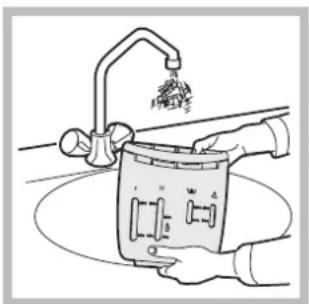
natural_image
Illustration of hands using a water dispenser to clean or wash a machine (no text or symbols visible)Рис. 3 Рис. 4