for illy plus - Coffee machine GAGGIA - Free user manual and instructions
Find the device manual for free for illy plus GAGGIA in PDF.


| Product type | Espresso coffee machine |
| Brand | GAGGIA |
| Model | for illy plus |
| References | GXI/01, GXI/02 |
| Dimensions (L x D x H) | 216 x 332 x 273 mm |
| Weight | 4 kg |
| Power supply | 220-240 V ~ 50/60 Hz |
| Water tank | 1.0 L removable |
| Used capsules container capacity | 12 capsules |
| Pump pressure | 15-19 bar |
| Boiler | Stainless steel |
| Body material | Thermoplastic |
| Power cord length | 1.2 m |
| Functions | Espresso, hot water, steam (GXI/02), pre-infusion, automatic shutdown, stand-by mode |
| Safety | Thermal cut-off |
| Maintenance | Descaling every 3-4 months, daily cleaning of drip tray |
| Cleaning | Clean nozzles after each use, capsule holder every week |
| Optional accessories | Pannarello (milk frother) |
| Capsule compatibility | Only illy Metodo Iperespresso capsules |
| Usage type | Domestic |
Frequently Asked Questions - for illy plus GAGGIA
User questions about for illy plus GAGGIA
0 question about this device. Answer the ones you know or ask your own.
Ask a new question about this device
Download the instructions for your Coffee machine in PDF format for free! Find your manual for illy plus - GAGGIA and take your electronic device back in hand. On this page are published all the documents necessary for the use of your device. for illy plus by GAGGIA.
USER MANUAL for illy plus GAGGIA
natural_image
Line drawing of a portable toaster with a flower inside, no text or symbols presentLEGGERE ATTENTAMENTE LE ISTRUZIONI
READ CAREFULLY THE INSTRUCTIONS
LIRE ATTENTIVEMENT LES INSTRUCTIONS
natural_image
Technical line drawing of a mechanical device with internal components (no text or symbols)natural_image
Technical line drawing of a mechanical component with no visible text or symbolsnatural_image
Line drawing of a coffee machine with a cup and tray, no text or symbols presentGXI/01
natural_image
Illustration of a cooking pot with chopsticks and a tool, next to a kitchen appliance (no text or symbols)GXI/02
natural_image
Technical line drawing of a mechanical component with a downward arrow indicating a feature (no text or symbols present)natural_image
Mechanical assembly diagram showing a rotating component with no visible text or symbols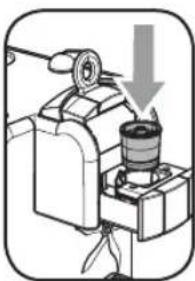
natural_image
Mechanical assembly diagram showing a presser lifting a cylindrical component (no text or symbols visible)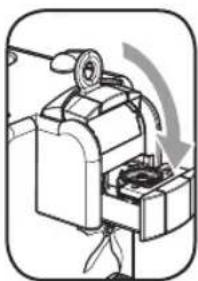
natural_image
Diagram of a mechanical device with a rotating arm and base, showing motion direction (no text or symbols)natural_image
Technical diagram of a mechanical component with a downward arrow indicating a feature (no text or symbols present)GXI/01
natural_image
Technical diagram of a mechanical component with mounting holes and a downward arrow indicating a detail (no text or symbols present)GXI/02
natural_image
Line drawing of a coffee machine with a cup and tray, showing a coffee maker's side view (no text or symbols)natural_image
Line drawing of a mailbox with a flower inside and a tray below (no text or symbols)Fig.1
natural_image
Illustration of a kitchen sink with a hanging bag and a pipe bag, showing a downward arrow pointing to the drain (no text or symbols present)Fig.2 Fig.3
natural_image
Line drawing of a mailbox with a leaf and arrow pointing to its side (no text or symbols)natural_image
Illustration of a kitchen appliance with a pot and stirrer, showing a rotating handle (no text or symbols)natural_image
Mechanical assembly diagram showing a bracket with bolts and a downward arrow (no text or symbols)natural_image
Illustration of a kitchen appliance with a pot and utensils, showing a hand holding a knife (no text or symbols)natural_image
Illustration of a kitchen appliance with a pot and utensils, showing a rotating handle (no text or symbols)natural_image
Line drawing of a refrigerator with a handle and side panel, no text or symbols presentnatural_image
Mechanical assembly diagram showing a housing with an upward arrow indicating motion (no text or symbols present)natural_image
Line drawing of a coffee machine with a cup and tray, showing a drop in the air (no text or symbols)GXI/01
natural_image
Illustration of a hand using a tool to clean or store items from a kitchen appliance (no text or symbols visible)GXI/02
natural_image
Technical line drawing of a mechanical component with an arrow pointing to a detail (no text or symbols present)Acceso fisso
natural_image
Mechanical component diagram showing a bracket with mounting holes and a downward arrow indicating force or direction (no text or symbols)Acceso fisso
natural_image
Symbol of a trash bin crossed with no visible text or labelsnatural_image
Technical diagram of a mechanical component with mounting holes and a downward arrow indicating direction (no text or symbols)Acceso fisso
natural_image
Technical diagram of a mechanical component with mounting holes and a downward arrow indicating a detail (no text or symbols present)Acceso fisso
natural_image
Technical line drawing of a mechanical component with mounting holes and a downward arrow indicating direction (no text or symbols)When using electrical appliances, basic safety precautions should always be followed, including the following:
- Read all instructions.
- Do not touch hot surfaces. Use handles or knobs.
- To protect against fire, electric shock and injury to person do not immerse cord, plugs, or machine in water or other liquid.
- Close supervision is necessary when the appliance is used by or near children.
- Unplug from outlet when not in use and before cleaning. Allow to cool before putting on or taking off parts, and before cleaning the appliance.
- Do not operate any appliance with a damaged cord or plug or after the appliance malfunctions, or has been damaged in any manner. Return appliance to the nearest authorized service facility for examination, repair or adjustment.
- The use accessory attachments not recommended by the appliance manufacturer may result in fi re, electric shock or injury to persons.
- Do not use outdoors.
- Do not let cords hang over edge of table or counter, or touch hot surfaces.
- Do not place on or near a hot gas or electric burner, or in a heated oven.
- Always attach plug to appliance first, then plug cord into wall outlet. To disconnect, turn any control to "off", then remove plug from wall outlet.
- Do not use appliance for other than intended use.
- Save these Instructions.
SAVE THESE INSTRUCTIONS
INSTRUCTIONS FOR THE POWER SUPPLY CORD
English
A. A short power-supply cord (or detachable power-supply cord) is to be provided to reduce risks resulting from becoming entangled in or tripping over a longer cord.
B. Longer detachable power-supply cords or extension cords are available and may used if care is exercised in their use.
C. If a long detachable power-supply cord or extension cord is used,
- The marked electrical rating of the detachable power-supply cord or extension cord should be at least as great as the electrical rating of the appliance
- If the appliance is of the grounded type, the extension cord should be a grounding-type 3-wire cord, and
- The longer cord should be arranged so that it will not drape over the counter top or table top where it can be pulled on by children or tripped over.
Dear Customer,
Thank you for purchasing the "Gaggia for illy" espresso coffee machine and for your confidence in our products.
Before operating the machine, we recommend you to carefully read the operating instructions in this manual, which explain how to use, clean and maintain the machine in perfect working order.
And now, just enjoy a perfect illy espresso coff ee whenever you wish thanks to Gaggia and Metodo Ipe-respresso.
illy Metodo Iperespresso capsules
can be purchased via
www.illy.com.
GXI/02GXI/01
English
INSTALLATION
Preliminary Operations
- Remove the coffee machine from the packaging and position it in a suitable place.
Using the Machine for the First Time
natural_image
Technical line drawing of a mechanical component or housing (no text or symbols visible)- Remove the water tank from its seat, rinse it and fill it with still drinking water. Do not exceed the level (MAX) indicated on the water tank. Put the water tank back in its seat.
Hot water or any other liquid may damage the tank and/or the machine. Do not turn on the machine when the tank is empty: Make sure there is enough water in the tank.
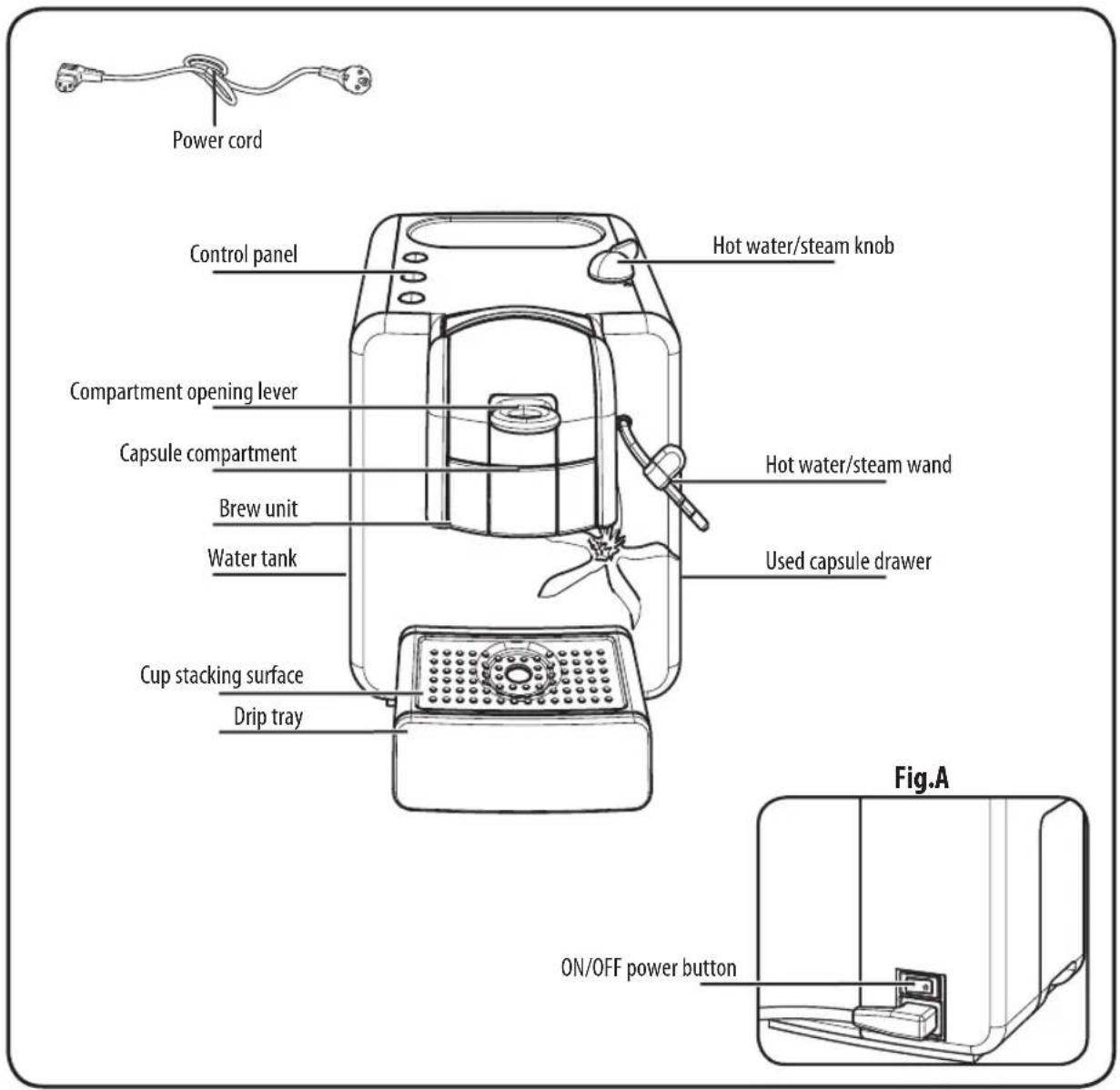
- Insert the plug into the socket on the back of the machine (see Fig. A) and insert the plug of the other end of the cable into a wall socket with suitable power voltage.
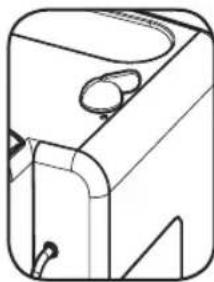
natural_image
Technical line drawing of a mechanical component with no visible text or symbols- (GXI/02) - Make sure the switch is on "/" position; if this is not the case, turn it onto that position. - To switch on the machine, set the power button ON/OFF (on the back of the machine) to "I".
Note: Before starting the machine for the first time or if the water tank has been completely emptied, prime the water circuit.
Priming the Water Circuit
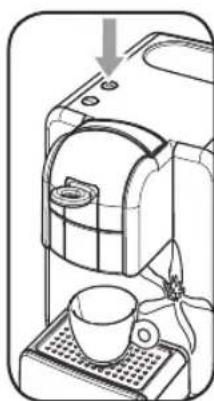
natural_image
Line drawing of a coffee machine with a cup and tray, no text or symbols presentGXI/01
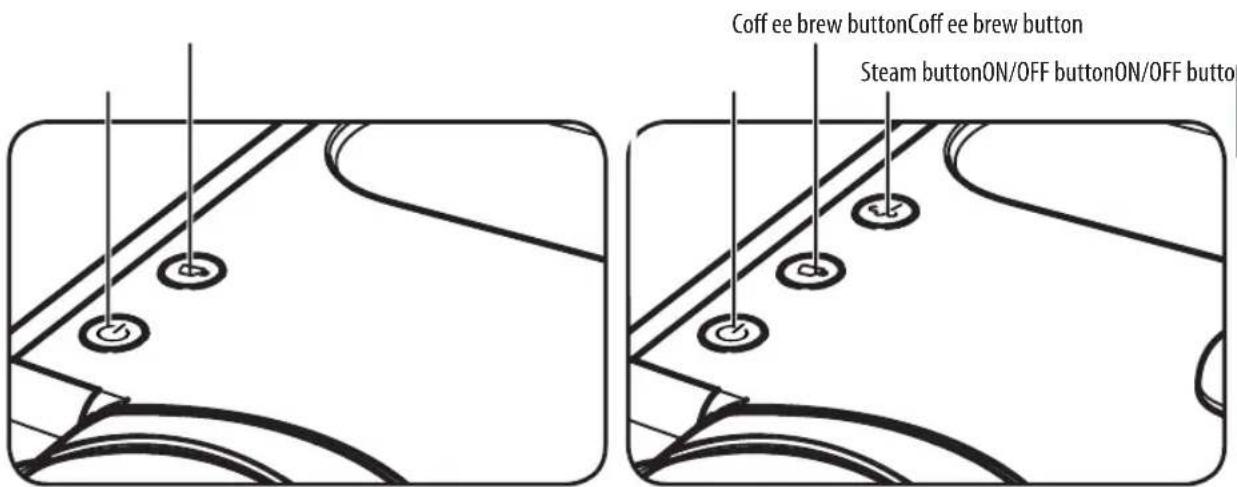
- The "☐" button turns on and the "☐" button blinks..
- Place a cup under the dispensing spout.
- Press the "button."
When water is dispensed correctly, press the "button again to stop dispensing.
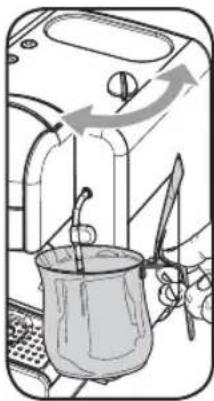
natural_image
Illustration of a cooking pot with chopsticks and a tool, next to a kitchen appliance (no text or symbols)GXI/02
- The "⏻" button turns on and the " " and " 🔊" buttons blink.
• To prime the water circuit, place a container below the steam wand. - Turn the hot water / steam knob clockwise to its limit stop.
When the "button turns off, rotate the switch counter-clockwise to set it back to its former position.
Note (for all the machine models): After priming the water circuit, it is recommended to use the same procedure to dispense an entire water tank. At the end of this operation, fill the tank again with fresh drinking water.
Stand-by
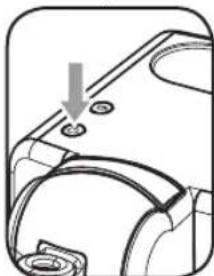
natural_image
Technical line drawing of a mechanical component with a downward arrow indicating a feature (no text or symbols present)The machine is designed for energy saving.
The machine automatically goes into stand-by mode after 1 hour of inactivity.
When the machine is in standby mode, the "⏻" button blinks slowly, while the other buttons are off.
To turn the machine on again simply press the "⏻" button.
It is possible to manually activate the stand-by function by pressing the "⏻" button.
Note (for all the machine models): When restarting the machine, brew once without capsule to optimize the system.
COFFEE BREWING
The machine has been specifically designed to use "Metodo Iper-espresso" illy capsules.
Before brewing coffee, check that the "button light is steady one and that the water tank is full.
Do not put your fingers or any other object in the compartment. Single-dose capsules brew a single coff ee. DO NOT use capsules more than once. When the brewing phase starts, the machine performs a prebrewing cycle. During this cycle, coff ee cannot be brewed.
When starting the machine, brew once without capsule to optimize the system.
natural_image
Mechanical assembly diagram showing a rotating component with no visible text or symbols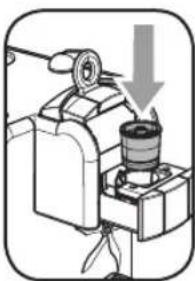
natural_image
Mechanical assembly diagram showing a piston and connecting rod (no text or symbols)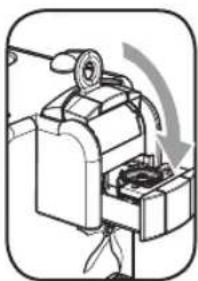
natural_image
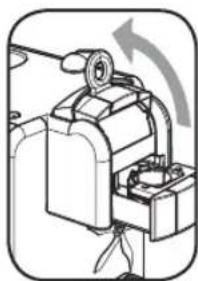
Diagram of a mechanical device with a rotating arm and base, showing motion direction (no text or symbols)- Place 1 cup under the dispensing spout.
- Lift the capsule compartment opening lever.
- Insert the capsule as shown in the figure.
- Lower the lever to close the capsule compartment.
If the compartment closing operation proves to be difficult, check that the capsule is correctly inserted and that the used capsule drawer is not full.
natural_image
Mechanical component diagram showing a bracket with a downward arrow indicating a force or direction (no text or symbols present)GXI/01
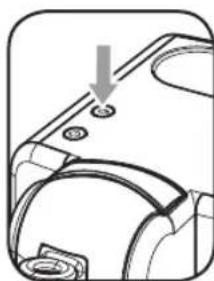
- Press the "button."
- Coff ee brewing begins. Once the desired quantity of coffee has been reached, stop brewing by pressing "☐" once again.
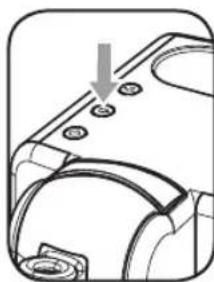
GXI/02
- Press the "button."
- Coff ee brewing stops automatically when the pre-programmed level is reached; however, it is possible to interrupt coff ee brewing by pressing the "☐" button.
natural_image
Technical diagram of a mechanical component with mounting holes and a downward arrow indicating direction (no text or symbols)Adjusting the Brewed Coff ee (GXI/02)
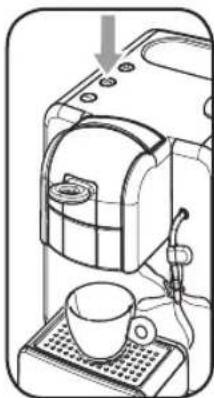
The machine allows you to adjust the amount of brewed coffee according to your taste and the size of your cups.
natural_image
Line drawing of a coffee machine with a cup and tray, showing a coffee maker's side view (no text or symbols)desired level.
Each time "☐" is pressed, the machine is set to brew a coffee of approximately 30 cc.
This amount may be reprogrammed to your taste.
Proceed as follows to reprogram this quantity:
- Place a cup under the dispensing spout.
- Press and hold the "button."
- Release the "button" button when the amount of coffee in the cup reaches the
At this point the button "☐" is programmed; each time it is released, the machine will brew the same amount of coffee that was just programmed.
Drip Tray Height
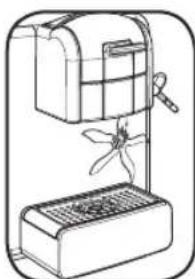
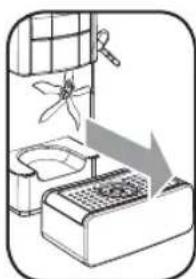
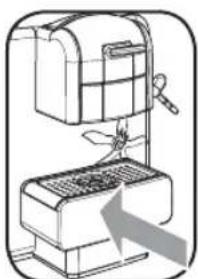
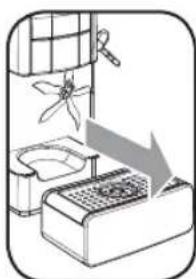
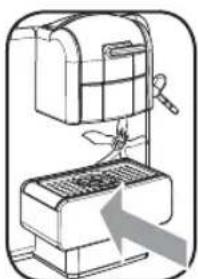
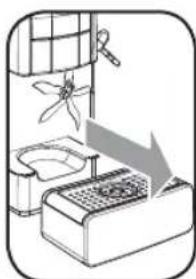
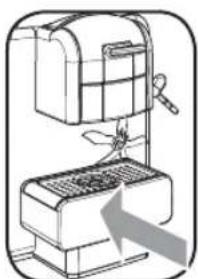
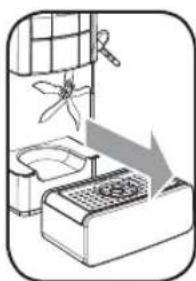
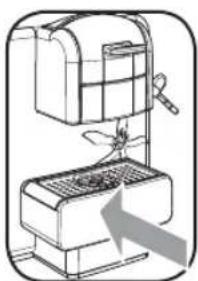
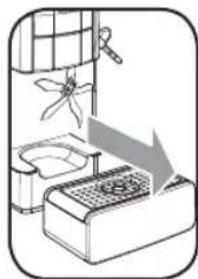
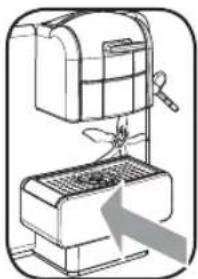
The drip tray height can be adjusted to adapt to the cups to be used.
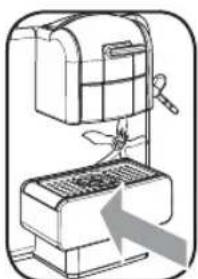
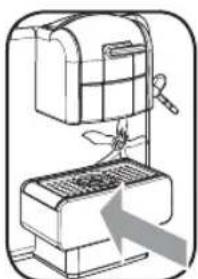
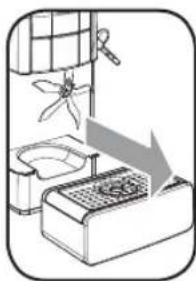
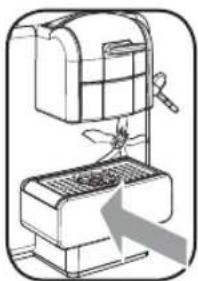
Figure 1 shows how the drip tray has been adjusted to the best height for tall cups.
natural_image
Line drawing of a mailbox with a flower inside and a tray below (no text or symbols)Fig.1
natural_image
Illustration of a kitchen sink with a bag and a pipe bag, showing a downward arrow indicating flow or direction (no text or symbols)Fig.2 Fig.3
natural_image
Line drawing of a mailbox with a flag and arrow indicating access (no text or symbols)For espresso cups, the best height is shown in figure 3.
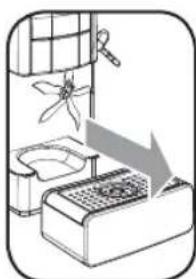
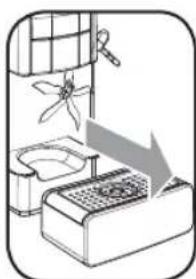
To change the height of the drip tray, remove it from its seat by pulling it outwards (fi g. 2). Place it on the support guides and push it to its limit stop (fi g. 3).
DISPENSING HOT WATER / STEAM / CAPPUCCINO (MOD. GXI/02)
Warning: At the beginning, short spurts of hot water may come out: Danger of scalding. The hot water wand may reach high temperatures: Never touch it with bare hands.
Hot Water
natural_image
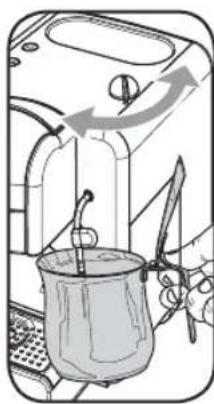
Illustration of a hand using a tool to interact with a cup and fan inside a microwave oven (no text or symbols)- Before dispensing hot water, check that the "☐" button is steady on.
- Place a suitable container (preferably, a metal one) under the steam wand.
- Turn the hot water / steam knob clockwise to its limit stop.
- Dispense the desired quantity of hot water; turn the knob counter-clockwise to its original position to stop dispensing hot water.
With this procedure max 180 cc of water can be dispensed.
Steam / Cappuccino
Steam may be used to froth milk for a cappuccino, as well as to reheat other beverages.
natural_image
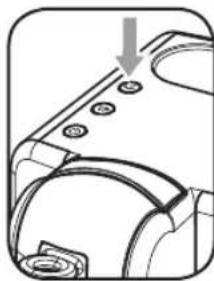
Technical line drawing of a mechanical component with mounting holes and a downward arrow indicating direction (no text or symbols)- Press the "J" button.
- When the "button is steady on, the machine is ready.
- Place a container under the steam wand.
- Turn the knob clockwise to its limit stop; the machine will start dispensing; after a brief moment, only steam will come out of the wand.
natural_image
Illustration of a hand using a tool to clean or stir contents from a kitchen appliance (no text or symbols visible)Turn the knob to its original position to stop dispensing steam.
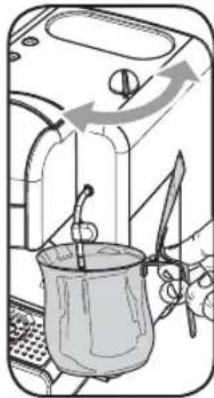
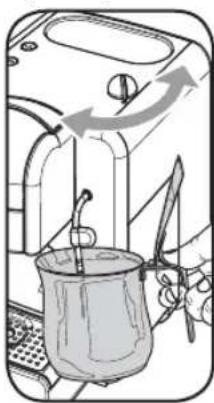
• To prepare froth for cappuccinos, fi II 1/3 of the container (preferably, a metal one) with fresh milk.
- Immerse the steam wand in the milk to be heated and turn the knob clockwise to its limit stop to dispense steam.
- Whilst rotating the container, gently move it up and down to obtain uniform foam.
- Once the desired result has been achieved, turn the knob to its original position to stop dispensing steam.
- The same procedure can be used to heat other beverages.
After using the steam wand, clean it thoroughly to remove any milk residue, as described in the "Cleaning and Maintenance" section.
After using the steam wand, proceed as follows before performing any other operation:
natural_image
Illustration of a cooking pot with chopsticks and a tool, no text or symbols present- Place a suitable container under the steam wand.
- Turn the hot water / steam knob clockwise to its limit stop.
When the "button turns off, rotate the switch counter-clockwise to set it back to its former position.
If idle, the machine reaches automatically its coff ee brewing temperature. To restore the correct temperature for steam dispensing, press the "button."
For better cappuccinos, always use milk at fridge temperature.
CLEANING AND MAINTENANCE DESCALING
General Cleaning
- Cleaning can only be carried out when the machine is cold and disconnected from the electric network
- Do not immerse the machine in water.
- Do not wash any of its parts in the dishwasher.
- Do not use sharp objects or harsh chemical products (solvents) for cleaning.
- Use a soft, dampened cloth to clean the machine.
- Do not dry the machine and/or its components using a microwave and/or standard oven.
natural_image
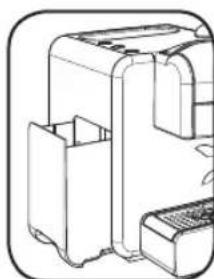
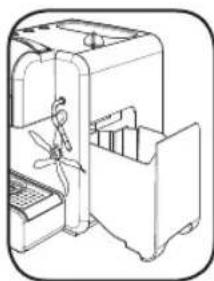
Line drawing of a mechanical device with a fan and base, no text or symbols present- Remove the used capsule drawer. Empty the drawer from the liquids. Empty the drawer from used capsules. Clean and dry before inserting it again.
Check periodically that the capsule drawer is not full so as to avoid malfunctioning and damages to the machine.
• After using the hot water/steam wand, dispense hot water for some seconds. Clean the wand externally with a damp cloth.
• Empty and wash the drip tray daily.
- It is recommended to clean the water tank daily:
- Remove the small white filter in the water tank and wash it under running drinking water.
- Reposition the small white filter in its housing by gently pressing and turning it at the same time.
- Fill the water tank with fresh drinking water.
natural_image
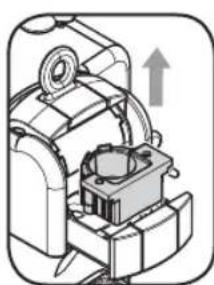
Mechanical assembly diagram showing a housing with an upward arrow indicating motion (no text or symbols present)- Rinse the capsule compartment weekly for both models. - Open the compartment and remove the capsule compartment. Wash it with lukewarm water and dry it before inserting it back in its seat.
Limescale normally builds up with the use of the appliance. The machine needs descaling every 3 - 4 months or whenever a reduction in water flow is noticed.
It is recommended to use Gaggia descaling solution, whose formula has been designed to respect the technical features of the machine, ensuring its performance will not decrease with time, and for a safe and risk-free use. The descaling solution is to be disposed of according to the manufacturer's instructions and/or regulations in force in the country of use.
Warning! Never use vinegar as a descaling solution.
- Drain the tank and fi ll it up with descaling solution mixed with water, as specified on the descaling solution package.
- Turn the machine on by means of the ON/OFF power button.
natural_image
Line drawing of a coffee machine with a cup and tray, showing a drop in the air (no text or symbols)GXI/01
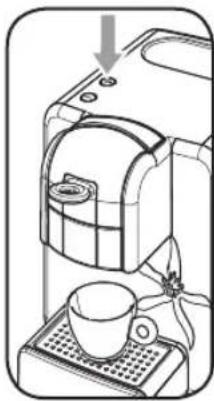
- Place a container under the dispensing spout.
- Check that the "☐" button light is on; press the "☐" button to dispense the whole water tank content at regular intervals, a cup at a time; press the "☐" button again to stop dispensing. After each dispensing operation, wait for 15 minutes before the next one.
-
When the descaling solution in the tank is fi nished, wash the tank thoroughly, and fi ll water.
-
Dispense all the water just introduced in the tank into a container, by pressing the "☐" button.
- Once the tank is empty, stop dispensing and fi ll the tank again. The machine is now ready for use.
natural_image
Illustration of a hand using a tool to clean or adjust a container with a handle, next to a kitchen appliance (no text or symbols visible)GXI/02
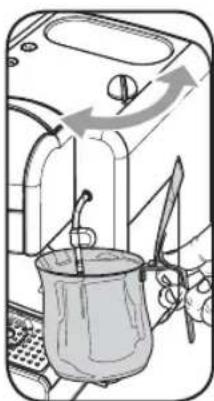
- Place a container under the steam wand.
- Check that the "☐" button light is on; turn the knob clockwise to its limit stop to dispense the whole water tank content at regular intervals, a cup at a time; set the knob back to its original position to stop dispensing. After each dispensing operation, wait for 15 minutes before the next one.
- When the descaling solution in the tank is finished, wash the tank thoroughly, and fill it with fresh drinking water.
- Dispense all the water just introduced in the tank into a container, by rotating the knob clockwise.
MACHINE WARNINGS
- Once the tank is empty, stop dispensing and fill the tank again. The machine is now ready for use.
PANNARELLO (OPTIONAL)
The Pannarello can be bought separately from your dealer.
The Pannarello allows preparing creamy cappuccinos. In order to use the Pannarello you need to prepare the machine for dispensing hot water and steam as described in the relevant section.
The Pannarello must be removed and completely washed once a week.
MACHINE DISPOSAL
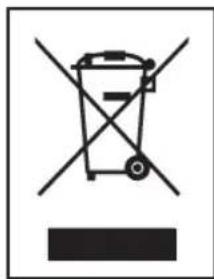
This product complies with EU Directive 2002/96/EC.
natural_image
Symbol of a trash bin crossed with no text or numbers, representing waste sorting or disposal (no text present)The symbol on the product or on its packaging indicates that this product may not be treated as household waste. Instead it shall be handed over to the applicable collection point for the recycling of electrical and electronic equipment.
By ensuring this product is disposed of correctly, you will help prevent potential negative consequences for the environment and human health, which could otherwise be
caused by inappropriate waste handling of this product. For more detailed information about recycling of this product, please contact your local city office, your household waste disposal service or the shop where you purchased the product.
All models
natural_image
Technical line drawing of a mechanical component with an arrow pointing to a detail (no text or symbols present)Steady on
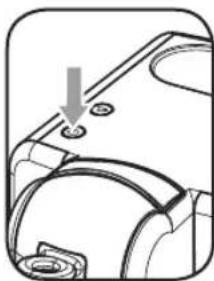
Machine power ON.
Slow blinking
Machine in Stand-by. Press the button to start the machine.
GXI/01
natural_image
Mechanical component diagram showing a bracket with a downward arrow indicating a force or direction (no text or symbols present)Steady on
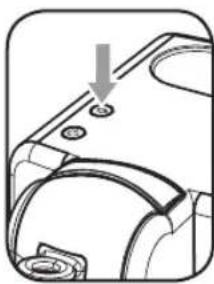
The machine is ready for coffee brewing.
Slow blinking
The machine is warming up for coffee brewing.
GXI/02
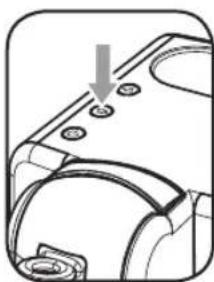
natural_image
Technical diagram of a mechanical component with a downward arrow indicating a feature (no text or symbols present)Steady on
The machine is ready for espresso coffee brewing and hot water dispensing.
Slow blinking
The machine is warming up to brew coffee and dispense hot water.
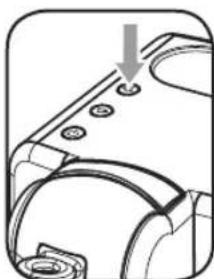
natural_image
Technical diagram of a mechanical component with mounting holes and a downward arrow indicating direction (no text or symbols)Steady on
The machine is ready for steam dispensing.
Slow blinking
The machine is warming up for steam dispensing.
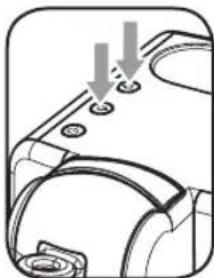
natural_image
Technical line drawing of a mechanical component with mounting holes and a downward arrow indicating direction (no text or symbols)Blinking simultaneously
The machine is overheating (prime the circuit)
The water circuit is empty (prime the circuit)
The hot water/steam knob is open (close it by turning it counter-clockwise).
TROUBLESHOOTING
Machine Actions Causes Solutions
| The machine does not switch on. The machine is not connected to the electric network. | Connect the machine to the electric network. | |
| Contact the authorized service centre. | ||
| The machine requires a lot of time to heat up. | The appliance is full of limescale. Descale the machine. | |
| The pump is noisy No water in the tank. | Refi II with fresh drinking water. | |
| The tank has been filled without priming the water circuit. | Prime the water circuit (see section "Priming the water cir-cuit"). | |
| The lever cannot reach the dispensing position. | Used capsule drawer full. Empty the used capsules drawer. Insert the capsule by repeat-ing the whole sequence. If this should not prove successful, dis-connect the machine from the electric network and intervene manually to remove the capsule from the compartment | |
| The capsule is not inserted correctly. Insert the capsule again. | ||
| The coffee is cold. | (GXI/01) - The " " button was blinking when pressed. | Wait until the " " button turns on and remain fixed. |
| No coffee without capsule (as suggested) has been brewed. | Brew a coffee without capsule and then brew another one with a capsule. | |
| The coffee is brewed too fast or the brewed coffee is not creamy. | Used capsule. | Insert a new capsule and repeat the steps. |
| Coffee is not brewed or brewed in drips only. | (GXI/02) - The " " button was blinking when pressed. | Wait until the " " button turns on and remain fixed. |
| No water in the tank. Refi II with fresh drinking water. | ||
| The water circuit is empty. | Prime the circuit (section "Using the Machine for the First Time"). | |
| Hot water or steam not dispensed (GXI/02) | Clogged steam wand. | Clean the spout with a needle.(The machine should be turned off and cold, and the hot water / steam knob should be closed). |
| The hot water/steam knob is open incorrectly. | Turn the hot water / steam knob to its limit stop. | |
| The milk does not froth. | Not suitable milk. | Use fresh, partially skimmed milk. |
| The milk is too hot. | Use milk at fridge temperature. | |
Please contact customer service for any problems not covered in the above table or when the suggested solutions do not solve the problem.
TECHNICAL SPECIFICATIONS
The manufacturer reserves the right to make changes to the technical specifications of the product.
Nominal Voltage - Power Rating - Power Supply .... See label on the inside of the service door
Housing material .... Thermoplastic material
Size (width x depth x height) (mm) 216 x 332 x 273
Weight 4 kg
Power Cord Length 1.2 m
Control Panel....On the upper part
Water Tank 1.0 litres – Removable
Used capsule drawer capacity 12
Pump pressure 15÷19 bar
Boiler .... Stainless steel
Safety mechanisms .... Thermal fuse
SAFETY REGULATIONS

Never allow water to come into contact with any of the electrical parts of the machine: Danger of short circuit! Steam and hot water may cause scalding! Do not direct the steam or hot water jet towards body parts. Carefully handle the steam/hot water spout by its grip: Danger of scalding!
Intended Use
The coffee machine is intended for domestic use only. Do not make any technical changes or use the machine for unauthorised purposes since this would create serious hazards! The appliance is not to be used by persons (including children) with reduced physical, mental or sensory abilities or with limited experience and/or expertise, unless they are supervised by a person responsible for their safety, or they are instructed by this person on how to properly use the machine.
Power Supply - Power Cord
Only connect the coffee machine to a suitable socket.
The voltage must correspond to that indicated on the machine label. Never use the coffee machine if the power cord is defective or damaged. If the power cord is damaged, it must be replaced with a proper cord having the same features of the one provided with the machine. Do not pass the power cord around corners, over sharp edges or over hot objects and keep it away from oil. Do not use the power cord to carry or pull the coffee machine. Do not pull out the plug by the power cord or touch it with wet hands. Do not let the power cord hang freely from tables or shelves.
For the Safety of Others
Prevent children from playing with the machine. Children are not aware of the risks related to electric household appliances. Do not leave the machine packaging materials within the reach of children.
Danger of Burns
Never direct the jet of hot steam and/or hot water towards yourself or others: Danger of scalding! Brewing may be preceded by small jets of hot water. The steam / hot water wand can reach very high temperatures: Never touch it with bare hands, use the appropriate knob.
Machine Location - Suitable Location for Operation and Maintenance
For best use, it is recommended to:
- Choose a safe, level surface, where there will be no danger of overturning it or being injured.
- Choose a location that is sufficiently well-lit, clean and near an easily reachable socket.
- Allow for a minimum distance of approximately 15 cm from the sides of the machine.
Do not keep the machine at a temperature below 0^ C. Frost may damage the machine. Do not use the coffee machine outdoors. In order to prevent its housing from melting or being damaged, do not place the machine on very hot surfaces and close to open flames.
Storing the Machine - Cleaning
Before cleaning the machine, turn the power button to OFF, and unplug the machine from the socket: Wait until it has cooled down. Never immerse the machine in water!
It is strictly forbidden to tamper with the internal parts of the machine. (Only for GXI/02 model) - If the machine will not be used for a long time, dispense water from the steam wand, and clean it thoroughly, then turn the machine off by means of the ON/OFF power button and unplug it from the socket. Store it in a dry place, out of the reach of children. Keep it protected from dust and dirt.
Water Tank:
Fill the tank only with fresh, non-sparkling, drinking water. Do not operate the machine if the water is not at least above the minimum level indicated on the tank. Do not use the water left in the tank for some days for food purposes.
Capsule Compartment:
Only "Metodo Iperespresso" illy capsule can be inserted in the capsule compartment; do not put your fingers or any other object in. Capsules can only be used once. Do not open the capsule compartment when brewing coffees.
Repairs / Maintenance
In case of failure, problems or a suspected fault resulting from the falling of the machine, immediately remove the plug from the socket. Never attempt to operate a faulty machine.
Servicing and repairs may only be carried out by authorised service centres. All liability for damages resulting from work not carried out by professionals is declined. Keep the packaging for future transport.
Fire Safety Precautions
In case of fire, use carbon dioxide (CO) extinguishers. Do not use water or dry powder extinguishers.
EC DECLARATION OF CONFORMITY
YEAR 09
EC 2006/95, EC 2004/108,
Gaggia S.p.A.
20087 Robeco sul Naviglio (MI) Italy
declare under our responsibility that the product :
COFFEE MAKER
TYPE : SIN 030H - SIN 030HRD
to which this declaration relates is in conformity with the following standards or other normative documents :
- Safety of household and electrical appliances - General requirements EN 60335-1(2002) + A1(2004) + A2(2006) + A11(2004) + A12(2006) + A13(2008).
- Safety of household and electrical appliances - Part 2-15 Particular requirements for appliances for heating liquids EN 60335-2-15(2002) + A1(2005)
- Household and similar electrical appliances - Electromagnetic fields - methods for evaluation and measurement EN 50366 (2003) + A1 (2006).
- Electromagnetic compatibility (EMC) - Requirements for household appliances, electric tools and similar apparatus - Part 1 Emission EN 55014-1 (2006).
- Electromagnetic compatibility (EMC) Part. 3^ Limits - Section 2 : Limits for harmonic current emissions (equipment input current ≤ 16A for phase) - EN 61000-3-2 (2006).
- Electromagnetic compatibility (EMC) Part 3^ : Limits - Section 3 : Limitation of voltage changes, voltage fluctuations and fl icker in public low - voltage supply systems, for equipment with rated current ≤ 16 A for phase and not subject to conditional connection EN 61000-3-3 (1995) + corr.(1997) + A1 (2001) + A2 (2005).
- Electromagnetic compatibility - Requirements for household appliances, electric tools and similar apparatus - Part 2. Immunity - Product family standard EN 55014-2 (1997) + A1 (2001)
following the provisions of the Directives : EC 2006/95, EC 2004/108.
Robeco sul Naviglio
2009-04-28
R & D Manager
Mr. Andrea Castellani

natural_image
Technical line drawing of a mechanical device with internal components (no text or symbols)natural_image
Technical line drawing of a mechanical component with no visible text or symbolsnatural_image
Line drawing of a coffee machine with a cup and tray, no text or symbols presentGXI/01
natural_image
Illustration of a kitchen appliance with a pot and utensils, showing a rotating handle (no text or symbols)GXI/02
natural_image
Technical line drawing of a mechanical component with an arrow indicating direction (no text or symbols)natural_image
Mechanical assembly diagram showing a rotating component with a curved arrow indicating rotation (no text or symbols)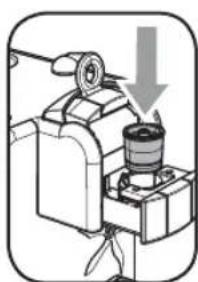
natural_image
Mechanical device with a downward arrow indicating force or motion (no text or symbols visible)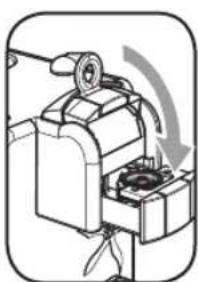
natural_image
Mechanical device with rotating arm and base mount (no text or symbols visible)natural_image
Mechanical component diagram showing a bolt inserted into a housing (no text or symbols)GXI/01
natural_image
Technical diagram of a mechanical component with mounting holes and a downward arrow indicating direction (no text or symbols)GXI/02
natural_image
Line drawing of a coffee machine with a cup and tray, no text or symbols presentnatural_image
Line drawing of a mailbox with a flower inside and a base tray (no text or symbols)Abb.1
natural_image
Simple line drawing of a kitchen sink with a bag and a flower, no text or symbols presentAbb.2 Abb.3
natural_image
Line drawing of a mechanical device with a handle and base, no text or symbols presentnatural_image
Illustration of a kitchen appliance with a pot and stirrer, showing a hand holding a knife (no text or symbols)natural_image
Technical line drawing of a mechanical component with bolt holes and a downward arrow (no text or symbols)natural_image
Illustration of a kitchen appliance with a pot and utensils, showing a hand holding a knife (no text or symbols present)natural_image
Illustration of a kitchen appliance with a pot and utensils, showing a rotating handle (no text or symbols)natural_image
Line drawing of an open refrigerator with a handle and side panel (no text or symbols)natural_image
Mechanical assembly diagram showing a housing with an upward arrow indicating motion (no text or symbols present)natural_image
Line drawing of a coffee machine with a cup and tray, no text or symbols presentGXI/01
natural_image
Illustration of a kitchen appliance with a pot and utensils, showing a rotating handle (no text or symbols)GXI/02
natural_image
Symbol of a trash bin crossed with no text or numbers, representing waste sorting or disposal (no text present)natural_image
Technical line drawing of a mechanical component with an arrow indicating a detail (no text or symbols present)natural_image
Mechanical component diagram showing a bracket with mounting holes and a downward arrow indicating force or direction (no text or symbols)natural_image
Technical diagram of a mechanical component with a downward arrow indicating a feature (no text or symbols present)natural_image
Technical diagram of a mechanical component with a downward arrow indicating a feature (no text or symbols present)natural_image
Technical diagram of a mechanical component with mounting holes and arrows indicating assembly or force (no text or symbols)2006/95/EG, 2004/108/EG,
Gaggia S.p.A.
20087 Robeco sul Naviglio (MI) Italy
natural_image
Technical line drawing of a mechanical device with no visible text or symbolsnatural_image
Technical line drawing of a mechanical component with no visible text or symbolsnatural_image
Line drawing of a coffee machine with a cup and tray, showing a drop in the air (no text or symbols)GXI/01
natural_image
Illustration of a kitchen appliance with a pot and utensils, showing a hand holding a knife (no text or symbols)GXI/02
natural_image
Technical line drawing of a mechanical component with a downward arrow indicating a feature (no text or symbols present)natural_image
Mechanical assembly diagram showing a rotating component with no visible text or symbols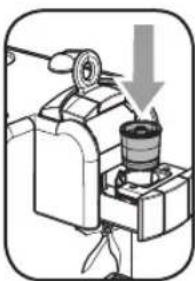
natural_image
Mechanical assembly diagram showing a presser lifting a cylindrical component with a downward arrow (no text or symbols)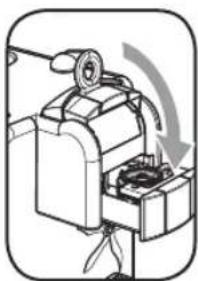
natural_image
Diagram of a mechanical device with a rotating arm and base, showing motion direction (no text or symbols)natural_image
Mechanical component diagram showing a bolted joint with an arrow indicating direction (no text or symbols)GXI/01
natural_image
Technical diagram of a mechanical component with mounting holes and a downward arrow indicating a feature (no text or symbols present)natural_image
Line drawing of a coffee machine with a cup and tray, no text or symbols presentnatural_image
Line drawing of a mailbox with a flower inside and a tray holding a flower (no text or symbols)Fig.1
natural_image
Illustration of a kitchen sink with a hanging bag and a pipe, showing a downward arrow indicating flow or direction (no text or symbols present)Fig.2 Fig.3
natural_image
Line drawing of a mailbox with a leaf inside and an arrow pointing to the base (no text or symbols)natural_image
Illustration of a hand using a tool to interact with a cup and stand (no text or symbols visible)natural_image
Technical diagram of a mechanical component with bolt holes and an arrow indicating direction (no text or symbols)natural_image
Illustration of a kitchen appliance with a pot and utensils, showing a hand holding a knife (no text or symbols)natural_image
Illustration of a kitchen appliance with a pot and utensils, showing a hand holding a knife (no text or symbols)natural_image
Line drawing of a refrigerator with open door and side drawer (no text or symbols)natural_image
Mechanical assembly diagram showing a housing with an upward arrow indicating motion (no text or symbols present)natural_image
Line drawing of a coffee machine with a cup and tray, showing a drop in the air (no text or symbols)GXI/01
natural_image
Illustration of a hand pouring liquid from a container into a washing machine (no text or symbols)GXI/02
natural_image
Technical line drawing of a mechanical component with an arrow indicating a detail (no text or symbols present)natural_image
Symbol of a trash bin crossed with no visible text or labelsnatural_image
Mechanical component diagram showing a bracket with mounting holes and a downward arrow indicating force or direction (no text or symbols)natural_image
Technical diagram of a mechanical component with mounting holes and a downward arrow indicating a feature (no text or symbols present)natural_image
Technical diagram of a mechanical component with mounting holes and a downward arrow indicating a detail (no text or symbols present)natural_image
Technical diagram of a mechanical component with mounting holes and arrows indicating assembly or force (no text or symbols)DÉCLARATION CE DE CONFORMITÉ
AN 09
2006/95/CE, 2004/108/CE,
Gaggia S.p.A.
20087 Robeco sul Naviglio (MI) Italy
natural_image
Technical line drawing of a mechanical device with internal components (no text or symbols)natural_image
Technical line drawing of a mechanical component with no visible text or symbolsnatural_image
Line drawing of a coffee machine with a cup and tray, no text or symbols presentGXI/01
natural_image
Illustration of a kitchen appliance with a pot and utensils, showing a rotating handle (no text or symbols)GXI/02
natural_image
Technical line drawing of a mechanical component with a downward arrow indicating a feature (no text or symbols present)natural_image
Mechanical assembly diagram showing a rotating component with no visible text or symbols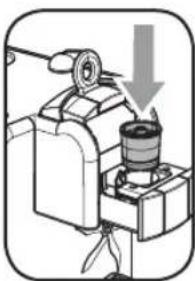
natural_image
Mechanical assembly diagram showing a presser lifting a cylindrical component with a downward arrow (no text or symbols)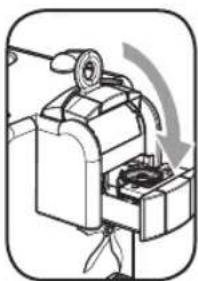
natural_image
Diagram of a mechanical device with a rotating arm and housing (no text or symbols)natural_image
Mechanical component diagram showing a bolted joint with an arrow indicating direction (no text or symbols)GXI/01
natural_image
Technical diagram of a mechanical component with mounting holes and a downward arrow indicating a detail (no text or symbols present)GXI/02
natural_image
Line drawing of a coffee machine with a cup and tray, showing a coffee maker's side view (no text or symbols)natural_image
Line drawing of a mailbox with a flower inside and a tray below (no text or symbols)Fig.1
natural_image
Simple line drawing of a kitchen sink with a pipe bag and a hanging container (no text or symbols)Fig.2 Fig.3
natural_image
Line drawing of a mailbox with a flag, no text or symbols presentnatural_image
Illustration of a hand using a tool to interact with a bowl of liquid, no text or symbols presentnatural_image
Technical line drawing of a mechanical component with bolt holes and a downward arrow (no text or symbols)natural_image
Illustration of a kitchen appliance with a pot and utensils, showing a rotating handle (no text or symbols)natural_image
Illustration of a hand using a tool to interact with a container, showing a rotating arrow (no text or symbols)natural_image
Line drawing of a person operating a refrigerator with a computer and open shelf (no text or symbols)natural_image
Mechanical assembly diagram showing a housing with an upward arrow indicating motion (no text or symbols present)natural_image
Line drawing of a coffee machine with a cup and tray, showing a drop in the air (no text or symbols)GXI/01
natural_image
Illustration of a hand using a tool to interact with a container, showing mechanical components and motion arrows (no text or symbols)GXI/02
natural_image
Symbol of a trash bin crossed with no text or numbers, representing waste sorting or restriction (no text present)natural_image
Technical diagram of a mechanical component with an arrow indicating a detail (no text or symbols present)Encendido fi jo
Máquina alimentada.
Parpadeo lento
natural_image
Mechanical component diagram showing a bracket with mounting holes and a downward arrow indicating force or direction (no text or symbols)Encendido fi jo
natural_image
Technical diagram of a mechanical component with a downward arrow indicating a feature (no text or symbols present)Encendido fi jo
natural_image
Technical line drawing of a mechanical component with mounting holes and a downward arrow indicator (no text or symbols)Encendido fi jo
natural_image
Technical diagram of a mechanical component with mounting holes and arrows indicating features (no text or symbols)2006/95/CE, 2004/108/CE,
Gaggia S.p.A.
20087 Robeco sul Naviglio (MI) Italy
natural_image
Technical line drawing of a mechanical device with internal components (no text or symbols)natural_image
Technical line drawing of a mechanical device with no visible text or symbolsnatural_image
Line drawing of a coffee machine with a cup and tray, no text or symbols presentGXI/01
natural_image
Illustration of a kitchen appliance with a pot and utensils, showing a rotating handle (no text or symbols)GXI/02
natural_image
Technical line drawing of a mechanical component with a downward arrow indicating a feature (no text or symbols present)natural_image
Mechanical assembly diagram showing a rotating component with no visible text or symbols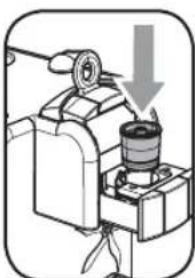
natural_image
Mechanical assembly diagram showing a piston and connecting rod with a downward arrow indicating motion (no text or symbols)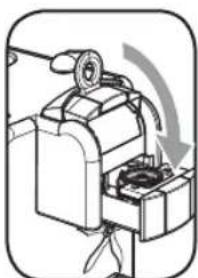
natural_image
Mechanical device with rotating arm and housing (no text or symbols visible)natural_image
Technical diagram of a mechanical component with an arrow indicating a point of interest (no text or symbols present)GXI/01
natural_image
Mechanical component diagram showing a bracket with mounting holes and a downward arrow indicating force or direction (no text or symbols)GXI/02
natural_image
Line drawing of a coffee machine with a cup and tray, no text or symbols presentnatural_image
Line drawing of a mailbox with a flower inside and a tray below (no text or symbols)Fig.1
natural_image
Illustration of a kitchen sink with a bag and a pipe bag, showing a directional arrow (no text or symbols)Fig.2 Fig.3
natural_image
Line drawing of a mailbox with a flag, no text or symbols presentnatural_image
Illustration of a kitchen appliance with a pot and utensils, showing a hand holding a knife (no text or symbols)natural_image
Technical line drawing of a mechanical component with mounting holes and a downward arrow indicating direction (no text or symbols)natural_image
Illustration of a kitchen appliance with a glass bowl and kitchen utensils, no text or symbols presentnatural_image
Illustration of a hand using a tool to interact with a container, showing a curved arrow indicating rotation (no text or symbols present)natural_image
Line drawing of a refrigerator with open door and side drawer (no text or symbols)- Extraia a gaveta de recolha das cápsulas usadas.
natural_image
Mechanical assembly diagram showing a housing with an upward arrow indicating motion (no text or symbols present)natural_image
Line drawing of a coffee maker with a cup and tray, no text or symbols presentGXI/01
natural_image
Illustration of a hand using a tool to interact with a container, showing mechanical components and motion arrows (no text or symbols)GXI/02
natural_image
Mechanical component diagram showing a bracket with mounting holes and a downward arrow indicating direction (no text or symbols)natural_image
Symbol of a trash bin crossed with no text or numbers, representing waste sorting or disposal (no text present)natural_image
Mechanical component diagram showing a bolted joint with an arrow indicating direction (no text or symbols)natural_image
Technical diagram showing a mechanical component with mounting holes and a downward arrow indicating force or direction (no text or symbols present)natural_image
Technical line drawing of a mechanical component with mounting holes and a downward arrow indicating direction (no text or symbols)natural_image
Mechanical component diagram showing mounting holes and a bracket (no text or symbols)2006/95/CE, 2004/108/CE,
Gaggia S.p.A.
20087 Robeco sul Naviglio (MI) Italy
natural_image
Technical line drawing of a mechanical device with internal components (no text or symbols)natural_image
Pure technical line drawing of a mechanical component without any text, numbers, or symbolsnatural_image
Line drawing of a coffee machine with a cup and tray, no text or symbols presentGXI/01
natural_image
Illustration of a kitchen appliance with a pot and utensils, no text or symbols presentGXI/02
natural_image
Technical line drawing of a mechanical component with a downward arrow indicating a feature (no text or symbols present)natural_image
Mechanical assembly diagram showing a rotating component with no visible text or symbols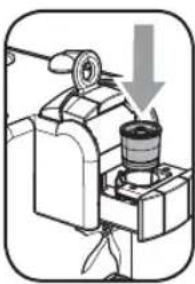
natural_image
Mechanical assembly diagram showing a piston and rotating component with a downward arrow indicating motion (no text or symbols)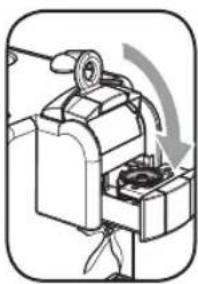
natural_image
Diagram of a mechanical device with a rotating shaft and housing, showing motion direction (no text or symbols)natural_image
Mechanical component diagram showing a bolted joint with an arrow indicating direction (no text or symbols)GXI/01
natural_image
Technical diagram of a mechanical component with mounting holes and a downward arrow indicating direction (no text or symbols)GXI/02
natural_image
Line drawing of a coffee machine with a cup and tray, showing a drop in the air (no text or symbols)natural_image
Line drawing of a mailbox with a flower inside and a tray holding a container (no text or symbols)Afb.1
natural_image
Simple line drawing of a kitchen sink with a grater and a pipe bag (no text or symbols)Afb.2 Afb.3
natural_image
Line drawing of a mailbox with a tray and a window, no text or symbols presentnatural_image
Illustration of a hand using a tool to clean or store food using a steamer (no text or symbols visible)natural_image
Technical diagram of a mechanical component with bolt holes and an arrow indicating direction (no text or symbols)natural_image
Illustration of a kitchen appliance with a pot and utensils, showing a hand holding a knife (no text or symbols)natural_image
Illustration of a kitchen appliance with a pot and utensils, showing a hand holding a knife (no text or symbols)natural_image
Line drawing of a mechanical device with a handle and internal components (no text or symbols)natural_image
Mechanical assembly diagram showing a housing with an upward arrow indicating motion (no text or symbols present)natural_image
Line drawing of a coffee maker with a cup and tray, no text or symbols presentGXI/01
natural_image
Illustration of a kitchen appliance with a pot and stirrer, no text or symbols presentGXI/02
natural_image
Technical line drawing of a mechanical component with an arrow indicating a detail (no text or symbols present)Brandt voortdurend
De machine is aan.
Langzaam knipperend
natural_image
Mechanical component diagram showing a bracket with mounting holes and a downward arrow indicating force or direction (no text or symbols)Brandt voortdurend
natural_image
Technical diagram of a mechanical component with mounting holes and a downward arrow indicating a process (no text or symbols present)Brandt voortdurend
natural_image
Mechanical component diagram showing a bracket with mounting holes and a downward arrow indicating force or direction (no text or symbols)Brandt voortdurend
natural_image
Technical line drawing of a mechanical component with mounting holes and arrows indicating assembly or inspection (no text or symbols)Tegelijk knipperend
2006/95/EG, 2004/108/EG,
Gaggia S.p.A.
20087 Robeco sul Naviglio (MI) Italy
natural_image
Technical line drawing of a mechanical component or housing (no text or symbols visible)natural_image
Technical line drawing of a mechanical component with no visible text or symbolsnatural_image
Line drawing of a coffee machine with a cup and tray, no text or symbols presentGXI/01
natural_image
Illustration of a cooking pot with stirrer and knife inside a kitchen (no text or symbols)GXI/02
natural_image
Technical line drawing of a mechanical component with a downward arrow indicating a feature (no text or symbols present)natural_image
Mechanical assembly diagram showing a rotating component with no visible text or symbols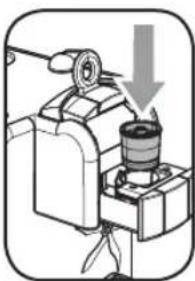
natural_image
Mechanical assembly diagram showing a piston and connecting rod with a downward arrow indicating force or motion (no text or symbols)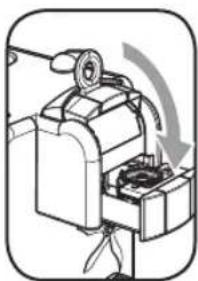
natural_image
Diagram of a mechanical device with a rotating arm and base, showing motion direction (no text or symbols)natural_image
Mechanical component diagram showing a bolted joint with an arrow indicating direction (no text or symbols)GXI/01
natural_image
Technical diagram of a mechanical component with mounting holes and a downward arrow indicating direction (no text or symbols)GXI/02
natural_image
Line drawing of a coffee machine with a cup and tray, showing a coffee maker's side view (no text or symbols)natural_image
Line drawing of a mailbox with a flower inside and a base tray (no text or symbols)Fig.1
natural_image
Simple line drawing of a kitchen sink with a bag and a tray, no text or symbols presentFig.2 Fig.3
natural_image
Line drawing of a mailbox with a hand inserting a fan into the base (no text or symbols)natural_image
Illustration of a kitchen appliance with a pot and stirrer, showing a hand holding a knife (no text or symbols)natural_image
Technical line drawing of a mechanical component with bolt holes and a downward arrow (no text or symbols)natural_image
Illustration of a hand using a tool to interact with a container, showing a curved arrow indicating rotation (no text or symbols present)Drej knappen tilbage i den oprindelige position for at stoppe dampen.
- Cremaen til cappuccinoen tilberedes ved at man fylder en beholder (helst i metal) 1/3 med frisk mælk.
natural_image
Illustration of a hand using a tool to interact with a container, showing a rotating arrow (no text or symbols)natural_image
Line drawing of a refrigerator with a person operating it, no text or symbols presentnatural_image
Mechanical assembly diagram showing a housing with an upward arrow indicating motion (no text or symbols present)natural_image
Line drawing of a coffee machine with a cup and tray, showing a drop in the air (no text or symbols)GXI/01
natural_image
Illustration of a kitchen appliance with a pot and utensils, showing a hand holding a knife (no text or symbols)GXI/02
natural_image
Technical diagram of a mechanical component with an arrow indicating a detail (no text or symbols present)Lyser fast
natural_image
Mechanical component diagram showing a bracket with mounting holes and a downward arrow indicating force or direction (no text or symbols)Lyser fast
natural_image
Symbol of a trash bin crossed with no visible text or labelsnatural_image
Mechanical component diagram showing a bracket with mounting holes and a downward arrow indicating force or direction (no text or symbols)Lyser fast
natural_image
Technical diagram of a mechanical component with mounting holes and a downward arrow indicating a feature (no text or symbols present)Lyser fast
natural_image
Technical diagram of a mechanical component with mounting holes and arrows indicating features (no text or symbols)Blinker samtidig
2006/95/EF, 2004/108/EF.
Gaggia S.p.A.
20087 Robeco sul Naviglio (MI) Italy
GAGGIA S.p.a. reserves the right to carry out all modifications which might be considered necessary.

- GXI/01
- GXI/02
- SAVE THESE INSTRUCTIONS
- INSTRUCTIONS FOR THE POWER SUPPLY CORD
- GXI/02GXI/01
- INSTALLATION
- Preliminary Operations
- Using the Machine for the First Time
- Priming the Water Circuit
- Stand-by
- COFFEE BREWING
- Adjusting the Brewed Coff ee (GXI/02)
- Drip Tray Height
- DISPENSING HOT WATER / STEAM / CAPPUCCINO (MOD. GXI/02)
- Steam / Cappuccino
- CLEANING AND MAINTENANCE DESCALING
- General Cleaning
- Check periodically that the capsule drawer is not full so as to avoid malfunctioning and damages to the machine.
- Warning! Never use vinegar as a descaling solution.
- MACHINE WARNINGS
- PANNARELLO (OPTIONAL)
- MACHINE DISPOSAL
- All models
- TECHNICAL SPECIFICATIONS
- SAFETY REGULATIONS
- Intended Use
- Power Supply - Power Cord
- For the Safety of Others
- Danger of Burns
- Machine Location - Suitable Location for Operation and Maintenance
- Storing the Machine - Cleaning
- Water Tank:
- Capsule Compartment:
- Repairs / Maintenance
- Fire Safety Precautions
- Gaggia S.p.A.
- Robeco sul Naviglio (MI) Italy
Brand : GAGGIA
Model : for illy plus
Category : Coffee machine