HB311 - Solar bench PHILIPS - Free user manual and instructions
Find the device manual for free HB311 PHILIPS in PDF.



User questions about HB311 PHILIPS
0 question about this device. Answer the ones you know or ask your own.
Ask a new question about this device
Download the instructions for your Solar bench in PDF format for free! Find your manual HB311 - PHILIPS and take your electronic device back in hand. On this page are published all the documents necessary for the use of your device. HB311 by PHILIPS.
USER MANUAL HB311 PHILIPS
natural_image
White Philips 3000 home air conditioner unit with control knobs and indicator lights (no visible text or symbols on main body)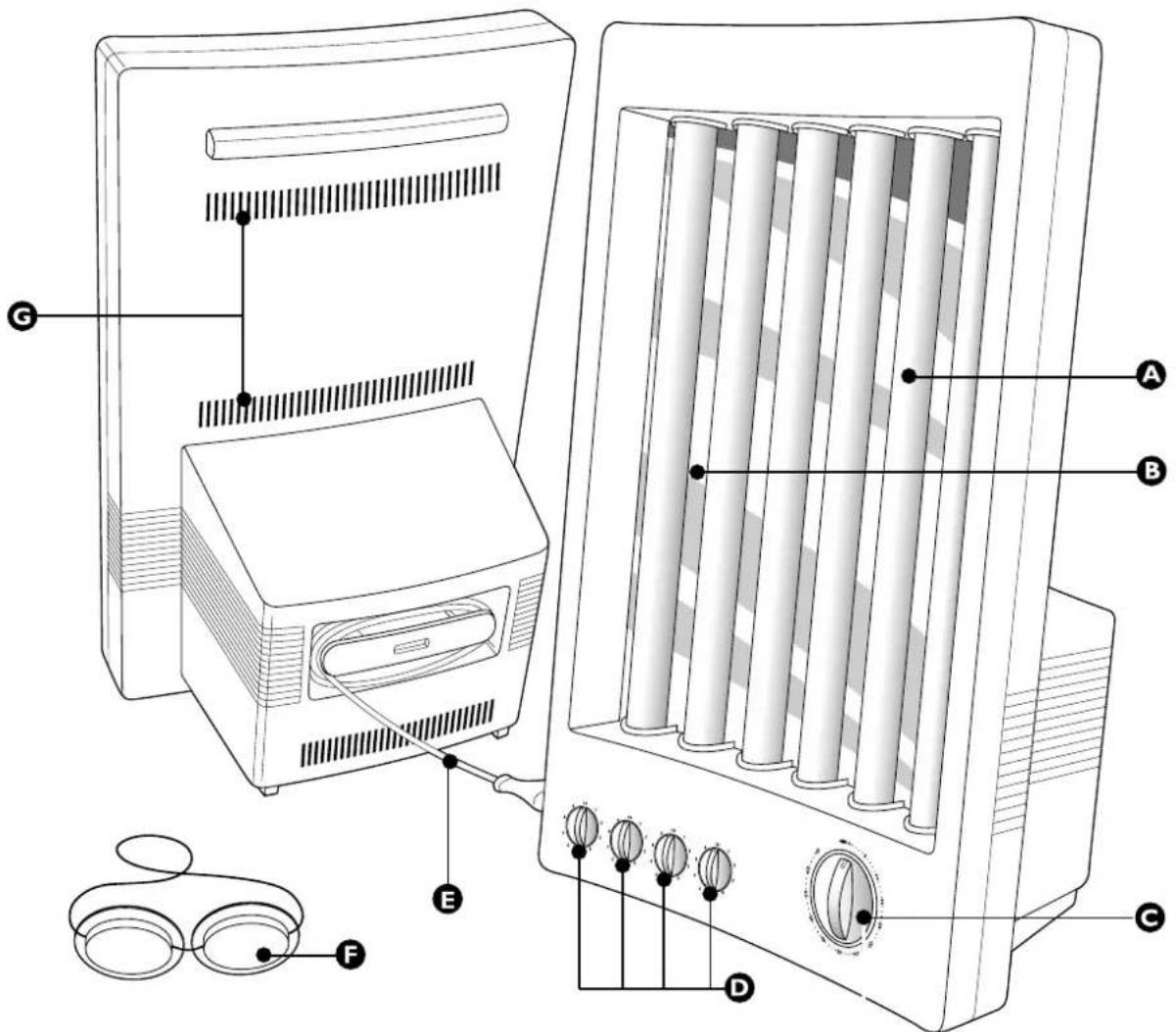
text_image
Technical diagram of an air conditioner unit with labeled components including front panel, rear panel, and control knobsI
text_image
18cm 10cm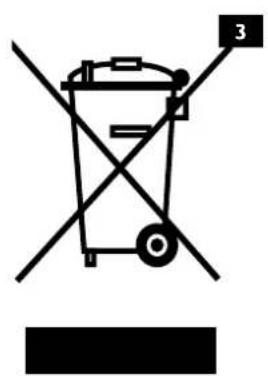
text_image
Diagram showing a trash bin with crossed lines and a label '3' pointing to it, below a black rectangular block.ENGLISH 4
DEUTSCH 7
FRANÇAIS 10
NEDERLANDS 13
ESPAÑOL 16
ITALIANO 19
NORSK 22
General description (fig. 1)
A Tube lamps (type Philips Cleo 20W) with starters (type Philips S2)
BReflector
©Timer
D Memory knobs for four persons
E Mains cord
F Protective goggles (2x) (type HB071, service number 4822 690 80123)
G Vents
Important
Read these instructions for use carefully before using the appliance and save them for future reference.
Check if the voltage indicated on the appliance corresponds to the mains voltage in your home before you connect the appliance.
Never use this appliance when the timer is defective.
If the mains cord is damaged, it must be replaced by Philips, a service centre authorised by Philips or similarly qualified persons in order to avoid a hazard.
Water and electricity are a dangerous combination! Do not use the appliance in wet surroundings (e.g. in a bathroom or shower-room or near a swimming pool).
If you have just been swimming or have just taken a shower, dry yourself thoroughly before using the appliance.
Make sure that children do not play with the appliance.
Make sure the vents in the back of the appliance remain open during use
Do not exceed the recommended tanning times and the maximum number of tanning hours (see the chapter 'Tanning sessions: How often and how long?').
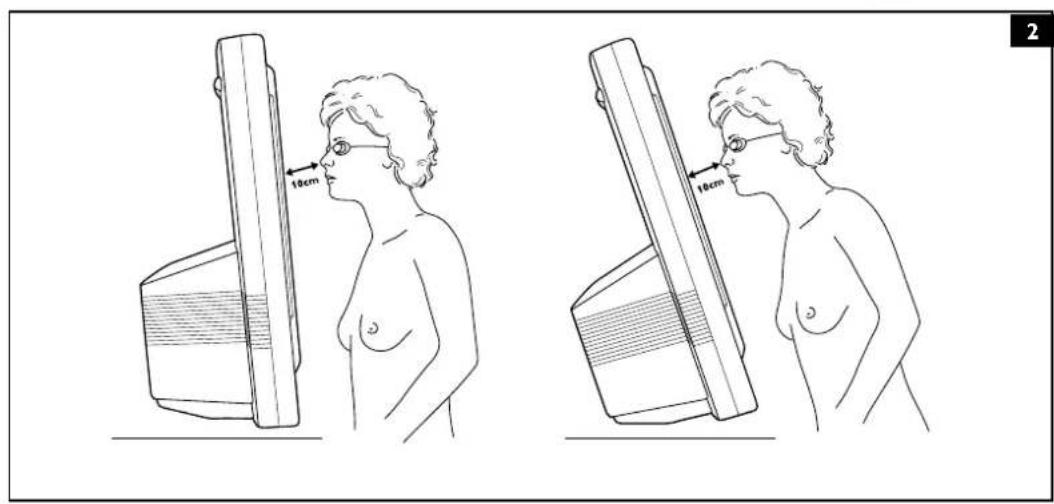
Do not choose a tanning distance of less than 10 cm.
Do not tan a particular part of your body more than once a day. Avoid excessive exposure to natural sunlight on the same day.
Do not use this tanning appliance if you have a disease and/or if you use a medicine that increases the sensitivity of your skin. Consult your doctor in case of doubt.
The appliance is not to be used by people who get sunburnt without tanning when exposed to the sun, by persons suffering from sunburn, by children, or by persons who suffer (or have previously suffered) from skin cancer or who are predisposed to skin cancer.
Consult your doctor if persistent lumps or sores appear on the skin, or if there are changes in pigmented moles.
Always wear the protective goggles supplied while tanning to protect your eyes against overexposure (see also the section 'UV, tanning and your health').
Remove creams, lipstick and other cosmetics well in advance of a tanning session.
Do not use any sunscreens or suntan accelerators.
If your skin feels taut after the tanning session, you may apply a moisturising cream.
Colours may fade under the influence of the sun. The same effect may occur when using the appliance.
Do not expect the appliance to yield better results than natural sunlight.
▶ Always unplug the appliance after use.
Let the appliance cool down for approx. 15 minutes before storing it.
Tanning and your health
The sun
The sun supplies various types of energy. Visible light enables us to see, ultraviolet (UV) light gives us a tan and the infrared (IR) light in sunrays provides the heat in which we like to bask.
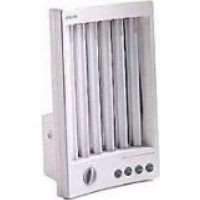
Table-top tanning appliance
With this table-top tanning appliance you can suntan comfortably at home. A timer ensures that each session does not last longer than 60 minutes. Just as with natural sunlight, overexposure must be avoided (see the section 'UV, tanning and your health').
UV, tanning and your health
Just as with natural sunlight, the tanning process will take some time. The first effect will only become visible after a few sessions.
Besides many other factors, such as overexposure to natural sunlight, incorrect and excessive use of a tanning appliance may increase the risk of skin and eye problems. The degree to which these effects occur is determined by the nature, intensity and duration of the exposure on the one hand and the sensitivity of the person involved on the other.
The more the skin and the eyes are exposed to UV light, the higher the risk of keratitis, conjunctivitis, damage to the retina, cataracts, premature skin ageing and the development of skin tumours will be. Some medications and cosmetics increase the sensitivity of the skin.
It is therefore highly important:
- that you follow the instructions in the chapters 'Important' and 'Tanning sessions: how often and how long?';
- that the tanning distance (distance between the lamps and the body) is at least 10 cm.
- that you do not exceed the maximum number of tanning hours per year (i.e. 30 hours or 1800 minutes);
- that you always wear the goggles provided while tanning.
Tanning sessions: how often and how long?
Do not take more than one tanning session per day, over a period of five to ten days.
- Allow an interval of at least 48 hours between the first and the second session.
After this 5- to 10-day course, we advise you to give your skin a rest for a while.
Approximately one month after a course, your skin will have lost much of its tan. You can then start a new course.
If you want to keep your tan, do not stop tanning after the course, but continue taking one or two tanning sessions a week.
Whether you choose to stop tanning for a while or whether you continue tanning on a lower frequency, always keep in mind that you must not exceed the maximum number of tanning hours.
For this appliance the maximum is 30 tanning hours (=1800 minutes) a year.
Example
Suppose you take a 10-day tanning course, with a 10-minute session on the first day and a 25-minute session on the nine following days. The entire course will then last (1 × 10 minutes) + (9 × 25 minutes) = 235 minutes.
This means you can take 7 of these courses in a year, as 7 × 235 minutes = 1645 minutes.
As is shown in the table, the first session of a tanning course should always last 10 minutes, irrespective of the sensitivity of the skin.
| Duration of the tanning session for each separately treated part of the body | For persons with very sensitive skin | For persons with normal sensitive skin | For persons with less sensitive skin |
| 1st session | 10 minutes | 10 minutes | 10 minutes |
| rest of at least 48 hours | |||
| 2nd session | 10 - 15 minutes | 20 - 25 minutes | 30 - 40 minutes |
| 3rd session | 10 - 15 minutes | 20 - 25 minutes | 30 - 40 minutes |
| 4th session | 10 - 15 minutes | 20 - 25 minutes | 30 - 40 minutes |
| 5th session | 10 - 15 minutes | 20 - 25 minutes | 30 - 40 minutes |
| 6th session | 10 - 15 minutes | 20 - 25 minutes | 30 - 40 minutes |
| 7th session | 10 - 15 minutes | 20 - 25 minutes | 30 - 40 minutes |
| 8th session | 10 - 15 minutes | 20 - 25 minutes | 30 - 40 minutes |
| 9th session | 10 - 15 minutes | 20 - 25 minutes | 30 - 40 minutes |
| 10th session | 10 - 15 minutes | 20 - 25 minutes | 30 - 40 minutes |
If you think that the sessions are too long for you (e.g. because your skin feels taut and tender after the session), we advise you to reduce the length of the sessions by e.g. 5 minutes.
For a beautiful, even tan, turn your face and body to the left and right from time to time during the session so that the sides of the face and body are equally exposed.
Using the appliance
Place the appliance on a solid, flat and stable surface.
2 Fully unwind the mains cord.
3 Put the plug in the wall socket.
4 Consult the table (see the chapter 'Tanning sessions: how often and how long?') to determine the appropriate duration of the session.
5 Put on the protective goggles provided.
6 Position yourself in front of the appliance.
During tanning, the distance between the lamps and the part of the body to be tanned must be at least 10 cm (fig.2).
7 Always unplug the appliance after use.
8 Keep track of the number of sessions you have had by means of the memory knobs.
The appliance has four memory knobs for four persons.
You can set a new time before the set time has elapsed if you want a longer tanning session or if you want to tan more parts of your body successively. The appliance does not need to cool down first.
Cleaning
Always unplug the appliance and let it cool down before cleaning it.
Clean the outside of the appliance with a damp cloth. Do not let any water run into the appliance.
Never use abrasive liquids such as scouring agents, petrol or acetone to clean the appliance.
Storage
Always unplug the appliance and let it cool down before storing it.
I You can wind the cord round the hooks on the back of the appliance.
Replacement
The light emitted by the tanning lamps will become less bright in time. When this happens, you will notice a decrease in the tanning capacity of the appliance. You can solve this problem by setting a slightly longer tanning time or by replacing the tanning lamps.
Always have the tube lamps and starters replaced by an authorised Philips dealer or service centre. Only they have the knowledge and skills required for this job and the original spare parts for the appliance.
Environment
Do not throw the appliance away with the normal household waste at the end of its life, but hand it in at an official collection point for recycling. By doing this you will help to preserve the environment (fig. 3).
The lamps of the appliance contain substances that can be harmful to the environment. When you discard the lamps, do not throw them away with the normal household waste but hand them in at an official collection point.
Guarantee & service
If you need service or information or if you have a problem, please visit the Philips website at www.philips.com or contact the Philips Customer Care Centre in your country (you will find its phone number in the worldwide guarantee leaflet). If there is no Customer Care Centre in your country, turn to your local Philips dealer or contact the Service Department of Philips Domestic Appliances and Personal Care BV.
Guarantee restrictions
The tube lamps are not covered by the terms of the international guarantee.