
CO8MS - Carbon monoxide detector HONEYWELL - Free user manual and instructions
Find the device manual for free CO8MS HONEYWELL in PDF.



| Product Type | Carbon Monoxide Detector |
| Brand | Honeywell |
| Model | CO8MS |
| Dimensions | 120 mm × 105 mm × 40 mm |
| Weight | 178 g |
| Power Supply | Sealed lithium battery (non-replaceable, 6-year life) |
| Sensor | Electrochemical, conforms to BS EN 50291:2001 |
| Audible Alarm | 85 dB(A) minimum at 3 m |
| Communications | 868 MHz radio for Evohome security hub |
| Operating Temperature | -10 °C to 40 °C |
| Humidity | 15% to 95% RH (non-condensing) |
| Lifespan | 6 years |
| Main Features | CO detection, audible and visual alarm (red, amber, green LEDs), alarm memory, self-test, end-of-life indicator |
| Maintenance and Cleaning | Clean exterior with damp cloth; vacuum slots; do not paint, disassemble, or use chemicals |
| Safety | Install by professional; test weekly; follow emergency procedure when alarm sounds |
| Spare Parts and Repairability | No repairable parts; non-replaceable battery; replace unit at end of life |
| General Information | Does not replace ventilation; does not detect combustible gases (methane, butane); limited protection for sensitive individuals |
Frequently Asked Questions - CO8MS HONEYWELL
User questions about CO8MS HONEYWELL
0 question about this device. Answer the ones you know or ask your own.
Ask a new question about this device
Download the instructions for your Carbon monoxide detector in PDF format for free! Find your manual CO8MS - HONEYWELL and take your electronic device back in hand. On this page are published all the documents necessary for the use of your device. CO8MS by HONEYWELL.
USER MANUAL CO8MS HONEYWELL
Carbon Monoxide detector – Installation Instructions
1 General Information
Warning: the installation of this alarm should not be used as a substitute for proper installation, use and maintenance of fuel burning appliances including appropriate ventilation and exhaust systems. This CO (Carbon Monoxide) alarm is designed to protect individuals from the acute effects of carbon monoxide exposure. It will not fully safeguard individuals with specific medical conditions. If in doubt consult a medical practitioner.
This alarm should be installed by a competent person.
Test the alarm weekly by pressing the test button.
The average life span of the alarm is 6 years.
- Do not fit alarm until all building work is completed to avoid getting it dirty.
2 Working Principle
2.1 What is carbon monoxide?
Many people are killed each year, and many more suffer ill health from carbon monoxide (CO) poisoning. CO is an invisible, odorless, tasteless and extremely toxic gas. It is produced by appliances and vehicles burning fuels, such as coal, oil, natural/bottled gas, paraffin, wood, petrol, diesel, charcoal etc. CO is absorbed by red blood cells in the lungs in preference to oxygen resulting in rapid damage to the heart and brain from oxygen starvation.
High levels of CO in a building can be caused by:
Incorrectly or poorly installed fuel-burning appliances.
- Restricted or cracked chimneys/flues.
- Blocked vents or draught-proofing which makes areas with fuel burning appliances or fireplaces airtight.
- Engines of cars, lawnmowers etc. left running in confined spaces.
- Portable paraffin or gas heaters in badly ventilated rooms.
2.2 Symptoms of carbon monoxide poisoning
The following symptoms are related to carbon monoxide poisoning and should be discussed with all members of the building.
Mild Exposure: Slight headache, nausea, vomiting, fatigue (often described as "flu-like" symptoms).
Medium Exposure: Severe throbbing headache, drowsiness, confusion, fast heart rate. Extreme Exposure: Unconsciousness, convulsions, cardio respiratory failure, death.
A high level of CO for a short period (e.g. 350 ppm CO for 30 minutes) will cause the same symptoms, a slight headache, as a lower level for a longer time (e.g. 150 ppm for 90 minutes). Table A shows how exposure to different concentrations of CO generally affects people. Many cases of reported carbon monoxide poisoning indicate that while victims are aware they are not well, they become so disoriented that they are unable to save themselves by either leaving the building or calling for assistance. Young children and household pets may be the first affected.
Table A - Effects of carbon monoxide poisoning
| CO in Air (ppm) | Inhalation Time (approx) and symptoms developed. |
| 35 | The maximum allowable concentration for continuous exposure in any 8 hour period according to OSHA (Occupational Safety & Health Association). |
| 150 | Slight headache after 1.5 hours. |
| 200 | Slight headache, fatigue, dizziness, nausea after 2-3 hours. |
| 400 | Frontal headaches within 1-2 hours, life threatening after 3 hours, also maximum parts per million in flue gas (on an air free basis) according to US Environmental Protection Agency. |
| 800 | Dizziness, nausea and convulsions within 45 minutes. Unconsciousness within 2 hours. Death within 2-3 hours. |
| 1,600 | Headache, dizziness and nausea within 20 minutes. Death within 1 hour. |
| 3,200 | Headache, dizziness and nausea within 5-10 minutes. Death within 25-30 minutes. |
| 6,400 | Headache, dizziness and nausea within 1-2 minutes. Death within 10-15 minutes. |
| 12,800 | Death within 1-3 minutes. |
Note: ppm = parts per million
2.3 What happens when your CO alarm detects carbon monoxide?
When the alarm detects potentially dangerous levels of CO, it flashes the red Pre-alarm light immediately and then sounds a loud alarm if the CO persists. Table B below shows how the CO alarm reacts to different levels of CO gas and exposure time.
C08MS
Carbon Monoxide detector – Installation Instructions
Table B - CO alarm response
| CO Level (in ppm) | Red light | Horn / Sounder | Red light |
| 0 to 43 | off | off | off |
| 43 to 80 | 1 flash every 2 second | On within 72 minutes approx. | 2 flashes every 50 seconds |
| 80 to 150 | 1 flash every second | On within 18 minutes approx. | 4 flashes every 50 second |
| > 150 | 2 flashes every second | On within 40 seconds approx. | 8 flashes every 50 seconds |
2.4 Pre-alarm (red light flashing)
When the alarm detects over 43 ppm CO the red light flashes immediately. The rate that it flashes will depend on the CO level detected as outlined in Table B. Note the Pre-alarm signal may be triggered by CO coming for example, from cooking with gas, from car engines or from nearby barbecues. This is usually not a concern, unless the pre-alarm signal persists until the alarm sounds and the CO source is unknown.
2.5 Full alarm (horn sounding)
If the CO level persists at a dangerous level the Horn will sound at 85 dB(A). The interval time between the Pre-alarm and activation of the horn will depend on the concentration of CO detected as described in Table B.
2.6 CO Alarm memory
The CO Alarm memory is a useful and important feature. If the house is unoccupied it warns the homeowner if the unit has detected CO gas and been in alarm in their absence. The memory feature has two operation modes:
24 hour memory: After alarm, the RED light will flash at different rates every 50 seconds depending on the level of CO detected - see Table B (24 hour Memory Response)
Memory recall on demand: To review the memory status after the 24 hour period press and hold the test button, the red led will flash at the same rate as if CO was present - See table B (Alarm response to CO being present)
Reset memory: Hold down the test button for over 12 seconds until the red light stops flashing. Cover the horn with a cloth to muffle the alarm during this time. Please note that the memory will also be reset when the unit is switched off.
2.7 What to do when the alarm sounds
- Open the doors and windows to ventilate the area.
- Turn off all fuel appliances where possible and stop using them.
- Evacuate the property leaving the doors and windows open.
- Get medical help immediately for anyone suffering the effects of carbon monoxide poisoning (headache, nausea), and advise that carbon monoxide poisoning is suspected.
- Call your gas or other fuel supplier on their emergency number. Always keep this number in a prominent place.
- Do not re-enter the property until the alarm has stopped. (If the alarm has been silenced by pressing the test button, wait at least 5 minutes so the alarm can check that the CO has cleared).
- Do not use the fuel appliances again until they have been checked by a registered installer or equivalent expert.
3 Installation
3.1 Where to place CO alarms
This alarm should be installed by a competent person. Ideally a carbon monoxide alarm should be installed in:
- Every room containing a fuel burning appliance, and
- Remote rooms where occupants spend a considerable amount of time.
Every bedroom.
However if the number of carbon monoxide alarms to be fitted is limited, the following points should be considered when deciding where best to fit the alarm(s).
If there is an appliance in a room where people sleep, place a CO alarm in this room.
- Locate a CO alarm in a room containing a flueless or open-flued appliance.
- Locate an alarm in a room where the occupant(s) spend most of their time. (e.g. sitting room).
- In a bedset, the CO alarm should be placed as far away from the cooking appliance as possible, but near to where the person sleeps.
Honeywell | Connected Home
3.2 Unsuitable locations
Do not place the CO alarm in any of the following areas.
- In an enclosed space (for example in a cupboard or behind a curtain).
- Where it can be obstructed (for example by furniture, curtains, etc.).
- In a damp or humid area, e.g. Bathrooms, Wet rooms, etc.
- Directly above a sink, cooker, steaming pots or kettles.
- Next to an extractor fan, air vent, door, window or similar ventilation openings.
Over heat sources such as radiators or hot air vents. - Where the temperature could drop below -10^ or rise above 40^ and never outside.
Where dirt or dust could block the sensor.
Near paint, thinners, solvent fumes or air fresheners.
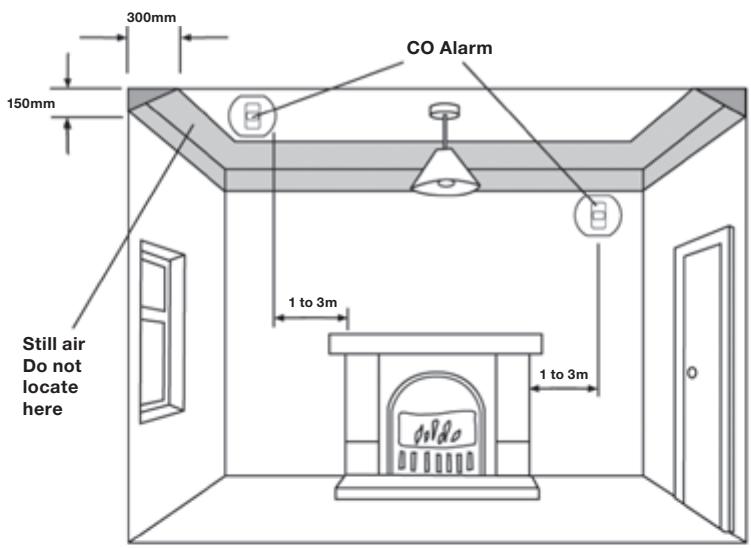
If locating the CO alarm in a room with a fuel burning appliance (see figure 1)
- If the alarm is mounted on a wall, it should be located at a height greater than the height of any door or window but still be at least 15 cm from the ceiling.
If it is mounted on the ceiling it should be at least 30~cm from any wall or light fitting. - The CO alarm should be a horizontal distance of between 1m and 3m from the potential CO source.
- If there is a partition in the room, the CO alarm should be located on the same side of the partition as the potential source.
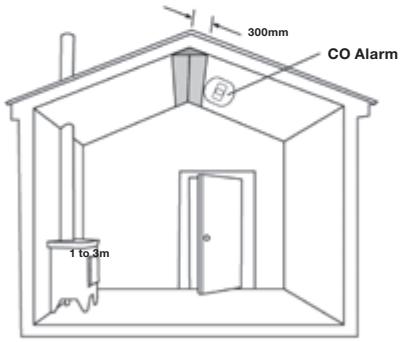
- In rooms with sloped ceilings, the CO alarm should be located at the high side of the room (see fig 2).
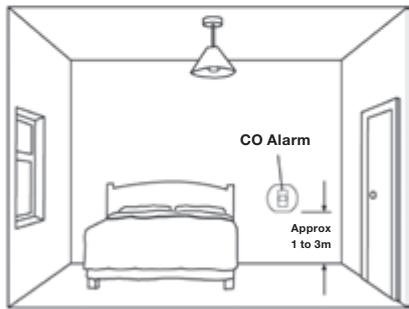
If locating the CO alarm in a bedroom or in rooms remote from a fuel burning appliance (see figure 3)
- Mount the CO alarm relatively close to the breathing zone of the occupants.
Whatever position is chosen make sure it is possible to view the three light indicators, when in the vicinity of the alarm.
WARNING: Do not use the CO alarm on an intermittent basis, or as a portable detector.
4 Installation Procedure
- Select a suitable location (paragraph 3.1).
- Remove the mounting plate from the packaging/alarm.
- Place the mounting plate on the ceiling or wall exactly where you want to mount the alarm. With a pencil, mark the location of the two screw holes.
-
Take care to avoid any electrical wiring already present in the ceiling or the wall; drill holes using a 5.0mm drill bit through the centre of the marked locations. Push the plastic screw anchors provided into the drilled holes. Screw the mounting plate to the ceiling or wall.
-
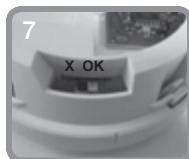
Do not mount the cover on the base when switch is on position "X" (figure7).
- Carefully line up the alarm on the base, then press home & twist on (this connects the batteries). The red, amber & green lights will immediately flash in sequence to show they are working.
- Press the test button (after 15 seconds) to ensure that the alarm works.
- Install all the other alarms similarly.
4.1 How to tamperproof the alarm
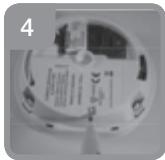
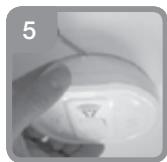
It is possible to protect against unauthorized removal of the alarm. Break off the small pillar on the base of the alarm as shown in figure 4. To remove the alarm, use a small screwdriver to release the catch (push the catch towards the ceiling) and then twist off the alarm (figure 5).
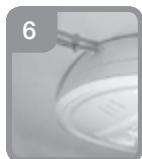
If necessary it is possible to further secure or tamperproof the alarm by using a No.2 or No.4 self tapping screw (2 to 3mm diameter by 6 to 8mm long- not supplied), to firmly lock the alarm and its mounting plate together (figure 6).
5 Registering the Detector
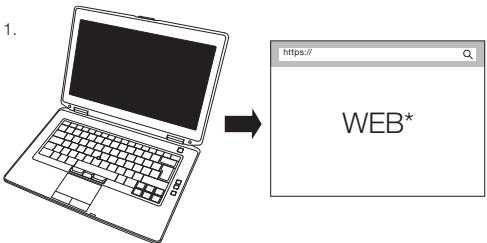
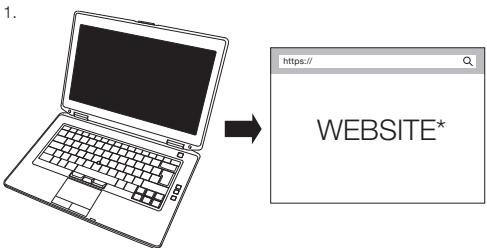
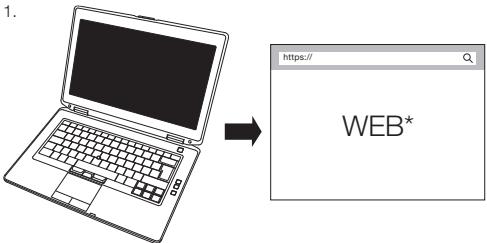
Registration is the procedure that associates the detector with the evohome security hub.
1.
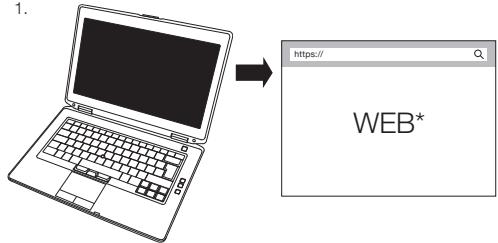
*https://international.mytotalconnectcomfort.com
- Remove and re-fit the unit to the wall mount.
- A confirmation message appears after several seconds (up to 10 sec), indicating registration of the sensor at the evohome security hub.
- Two beeps will confirm the successful enrolment. always register a sensor in its final position.
Note: The switch on the PCB is for manufacturing purposes only (this is not for registration).
6 Maintenance or After Sales
Clean the outside case by occasionally wiping with a clean damp cloth. Do not use any cleaning agents, bleaches, detergents or polishes, including those in aerosol cans. Avoid spraying air fresheners, hair spray, paint or other aerosols near the CO alarm. Do not place air fresheners near the unit.
Use the narrow nozzle of a vacuum cleaner to remove fluff and other contamination from the cover slots and gas entry holes.
Caution: Do not paint the CO alarm.
Remove the CO alarm when decorating. Do not allow the alarm to be sprayed with water or contaminated with dust.
WARNING: Do not open the CO alarm or tamper with its parts. There are no user serviceable parts inside and this can damage the alarm.
6.1 Test button
It is recommended that you test your CO alarm once a week to make sure the alarm is working.
Press and hold the test button until the alarm sounds (it may take up to 5 seconds) and the green light flashes (once per second). The audible alarm will sound at a diminished sound output level initially and then quickly reach maximum sound output level. The alarm will stop sounding shortly after the button is released.
Test button activation will not send any message to the evohome security hub.
Note: pressing this test button will not send a radio frame to response personnel.
6.2 Low battery indicator
If the alarm beeps and the green and amber lights flash simultaneously every 50 seconds, then the battery is depleted and must be replaced.
Note: this defect is reported to response personnel via a radio frame.
6.3 Sensor fault indicator
If the amber light flashes twice and the alarm's horn beeps simultaneously every 50 seconds the self-checking circuitry may have detected a fault. The alarm must be replaced.
Note: this defect is not reported to response personnel via a radio frame.
6.4 End-of-life Indicator
When the unit has completed 6 years of operation the amber light will flash three times every 50 seconds and beeps simultaneously. This indicates that the alarm has reached its end-of-life and must be replaced.
Note: this defect is reported to response personnel via a radio frame.
6.5 Technical Specifications
CO Sensitivity: Meets BS EN 50291:2001
Electromagnetic compatibility: Complies with BS EN 50270
Alarm lifetime: 6 Years expected
Battery: Sealed Lithium (non replaceable, powered for life)
Operating Temperature: -10^ to 40^
Humidity Range: 15% to 95% R.H. (non-condensing)
Audible alarm: 85dB(A) at 3m minimum
Dimensions: 120mm× 105mm× 40mm
Weight: 178g
Radio frequency: 868 MHz
Removal from mounting: Power cut off
6.6 Troubleshooting
Alarm does not work when pushing the test button:
- Wait 15 seconds after connecting the power before button testing.
- Hold button down firmly for at least 5 seconds.
- Check the alarm is secured correctly on the mounting plate.
- If there is no response replace the alarm.
Alarm sounds for no apparent reason:
Follow the detailed instructions in paragraph 2.7 entitled "What to do when the alarm sounds". If there are still problems:
- Ensure there are no fuel burning appliances in the vicinity which could be leaking CO gas (e.g. even from next door).
- Ensure there are no fumes in the area (e.g. paint, thinners, hair spray, chemical cleaners aerosol sprays etc).
- Ensure there is no outdoor source of CO in the vicinity (e.g. a car with engine running, heavy traffic, heavy air pollution, barbecue fumes etc).
- Ensure there is no source of hydrogen such as batteries being charged (e.g. on boats or in Uninterruptable Power Supplies (UPS)).
- Ensure there is not excessive smoke or fumes from devices such as Egyptian shisha, hookah or hubblebly bubbly pipes, especially those that use coal or charcoal to heat the tobacco.
- Press and hold the test button for 5 seconds to silence the alarm (muted), only when the alarm is located at low or medium range heights; not applicable for high-level alarms.
If the unit continues to sound it is possibly defective and should be replaced.
Periodic or annual maintenance checks:
Pressing the test button will give a CO alarm condition status. This action will indicate if the CO alarm is operating normally or has a fault or CO memory condition. See Table C for details.
Table C - Periodic or annual maintenance checks
| Status | Red light | Amber Light | Green Light | Horn |
| Normal | Off | Off | Off | Off |
| Alarm | Flash (table B) | Off | Off | Loud, full sound |
| Low Battery | Off | 1 flash every 50 seconds | 1 flash every 50 seconds | Horn beeps & LED flashes the same time |
| Sensor Fault | Off | 2 flashes every 50 seconds | Off | Horn beeps & LED flashes the same time |
| End of Life | Off | 3 flashes every 50 seconds | Off | Horn beeps & LED flashes the same time |
| 24 Hour Memory Recall | Flash (table B) | Off | Off | Off |
| Memory Recall | Flash (table B) | Off | Off | Loud, full sound |
| Memory Erase* | Flash (table B) | Off | Flashes after 12 seconds | Loud, full sound |
| *Hold the test button for at least 12 seconds. Green LED will flash once. This indicates memory has been erased. | ||||
6.7 Limitations of CO alarms
- The CO alarm will not work without a battery. If the battery has been drained the alarm will not give protection. Press the test button weekly and on return from holidays and other long absences.
-
Carbon monoxide must enter the unit for it to be detected. There may be carbon monoxide in other areas of the house (e.g. downstairs, in a closed room etc) but not in the vicinity of the CO alarm. Doors, air draughts and obstructions can prevent the CO reaching the alarm. For these reasons we recommend CO alarms are fitted both near and in bedrooms, particularly if bedroom doors are closed at night. Additionally install in rooms where members of the household spend much of their time, and in rooms with potential sources of CO gas.
-
CO alarms are not a substitute for life insurance. House-holders are responsible for their own insurance. The CO alarm warns of increasing CO levels, but we do not guarantee that this will protect everyone from CO poisoning.
- The CO alarm does not detect the presence of natural gas (methane), bottled gas (propane, butane) or other combustible gases. Fit combustion Gas alarms to detect these.
- Carbon monoxide alarms are equipped with electrochemical sensors. They have a cross sensitivity to hydrogen. This means that they can alarm due to sensing hydrogen if it is present. The unit will alarm with 500 ppm H2 (approx) after between 10 and 40 minutes exposure.
6.8 How to protect your family
Following these guidelines will help reduce the risk of carbon monoxide poisoning.
- Know and look out for tell-tale signs that carbon monoxide may be present.
These include:
The CO alarm warning of abnormal levels.
- Staining, sooting or discoloration on or around appliances.
A pilot light frequently going out.
- A strange smell when an appliance is operating.
- A naked gas flame (installation of fuel burning appliances) which is yellow or orange, instead of the normal blue.
- Family members (including pets) exhibiting the "flu-like" symptoms of CO poisoning described above. If any of these signs are noticed get the appliance checked out by an expert before further use. If family members are ill get medical help.
2. Choose all appliances and vehicles which burn fossil fuels such as coal, oil, natural/bottled gas, paraffin, wood, petrol, diesel, charcoal etc. with care and have them professionally installed and regularly maintained.
3. These appliances must "breathe in" air to burn the fuel properly. Know where the air comes from and ensure vents/air bricks etc. remain unobstructed (particularly after building work).
4. The appliances must also "breathe out" the waste gases (including the CO) – usually through a flue or chimney. Ensure chimneys and flues are not blocked or leaking, and get them checked every year. Check for excessive rust or cracks on appliances and pipe work.
Honeywell
Connected Home
- Never leave any car, motor bike or lawnmower engine running in the garage with the garage door closed. Never leave the door from the house to the garage open if the car is running.
- Never adjust your own gas pilot lights.
- Never use a gas cooker or a barbecue for home heating.
-
Children should be warned of the dangers of CO poisoning and instructed never to touch, or interfere with the CO alarm. Do not allow small children to press the test button as they could be subjected to excessive noise when the unit alarms.
-
Leaving windows or doors slightly open (even a few inches) will significantly reduce the risk of high levels of CO occurring. The high levels of draught-proofing in modern houses reduce ventilation and can allow dangerous gases to build up.
Recognize that CO poisoning may be the cause when family members suffer from "flu-like" symptoms when at home but feel better when they are away for extended periods.
1 Location in a room with a fuel burning appliance
2
Location in a rooms with sloped ceilings, the CO alarm should be located at the high side of the room
3
Location in bedrooms and other rooms remote from the appliance (i.e. at breathing level)
C08MS
Honeywell | Connected Home
3.2 Ungeeignete Montageorte
*https://international.mytotalconnectcomfort.com
Funkfrequency: 868 MHz
Honeywell | Connected Home
Honeywell | Connected Home
*https://international.mytotalconnectcomfort.com
Honeywell | Connected Home
3.2 Ongeschikte locaties
*https://international.mytotalconnectcomfort.com
Radiofrequency: 868 MHz
Honeywell | Connected Home
*https://international.mytotalconnectcomfort.com
Honeywell | Connected Home
*https://international.mytotalconnectcomfort.com