USER MANUAL 14S42 C XAD929C - 14S42 C XAD929C VALBERG
This product is guaranteed for a period of 2 years from the date of purchase* against any failure resulting from a manufacturing or material defect. This warranty does not cover defects or damage resulting from incorrect installation, improper use or abnormal wear of the product.
*as shown on the sales receipt.
CONDITION DE GARANTIE
FR
Thank you for choosing this VALBERG product.
Chosen, tested and recommended by ELECTRO DEPOT,
the products of the VALBERG brand are easy to use,
reliable and of an impeccable standard.
Thanks to this appliance, you can be sure that each
use will bring you satisfaction.
Welcome to ELECTRO DEPOT.
Visit our website: www.electrodepot.fr

Overview of the appliance
Appliance presentation
Control panel

Using the appliance
Using your dishwasher
Tips for using the rack
Installation instructions
Loading the racks
Tips for using the cutlery compartment
Quick start guide
Water softener
Preparing and loading tableware
The purpose of rinse aid and detergent
Filling the rinse aid dispenser
Filling the detergent dispenser
Programming the dishwasher
Starting a wash cycle
Changing the programme during a cycle
Adding forgotten tableware
Automatic opening / ActivDoor

Useful information
Exterior maintenance of the appliance
Interior maintenance of the appliance
General dishwasher maintenance
Error codes
Appliance presentation
PLEASE NOTE
To get the best results from your dishwasher, read all of the operating instructions before using it for the first time
1 Inner hose
Lower spray arm
3 Micro-filter
Salt container
Detergent dispenser
Cup compartment
Upper spray arm
Cutlery compartment
Upper rack
Lower rack
PLEASE NOTE
Images are for illustrative purposes only, specifications vary by model. Please refer to your specific model.
Control panel
| 1 Power | | Press this button to turn on your dishwasher; the screen lights up. |
| 2 Dual zone wash | | Press this button to select either the upper or lower rack and the corresponding indicator will light up. |
| 3 Functions | | Press this button to select a function and the corresponding indicator will light up. |
| 4 Delay Start | | Press the Delay Start button to delay the start time. You can delay a cycle for up to 24 hours in one hour increments. After setting the length of the delay, press the Start/Pause button to start. |
| 5 Programmes | P | Press this button to select the appropriate washing programme and the corresponding indicator will light up. |
| 6 Programme indicator lights | ECO | ECO
This is the standard programme for normally soiled tableware, such as lightly soiled pots, plates, glasses and pans. |
| AUTO | Auto
For dishes either lightly, normally or extremely soiled with or without sticky food residue. |
| Intensive
Very dirty dishes, including pots and pans with sticky food residue. |
| Universal
For normally dirty items, such as lightly soiled plates, glasses and cooking utensils. |
| Glasses
For glasses and lightly soiled tableware. |
| 90' | 90° min
For normally soiled dishes requiring a quick wash. |
| Quick
A shorter cycle for lightly soiled dishes that do not require drying. |
| Soak
To rinse dishes that you plan to wash later in the day. |
Spray arm selection indicator

Upper
When you select "Upper", only the upper spray arm jets are activated. The lower jets will not work.

Lower
When you select "Lower", only the lower spray arm jets are activated. The upper jets will not work.

Additional drying
This function allows the dishes to be dried further. (It can only be used with the Auto, Intensive, Normal, ECO, Glass and 90 min. programmes)

Turbo speed+
This lets you reduce the duration of the programme.
Function indicator
Warning lights
10 Warning lights
Warning lights
Rinse aid
If the "indicator lights up, it means that the rinse agent level in the dishwasher is low and needs to be refilled.
Salt
If the "S" indicator lights up, it means that the salt level in the dishwasher is low and needs to be refilled.
Indicators for the pre-wash, main wash, rinse and drying phases. Two indicators light up during the pre-wash phase, then four during the main wash phase, six during the rinsing phase and eight during the drying phase. The eight indicator lights go out when the wash cycle is finished.
Displays remaining time, delayed start, error codes, etc.
Using your dishwasher
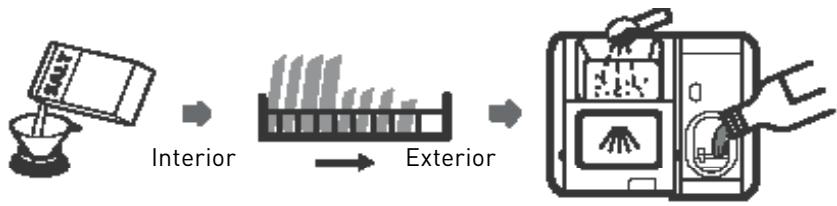
Before using your dishwasher:
- Set the water softener.
- Add salt to the water softener
- Load the rack
- Fill the container
PLEASE NOTE
You can refer to the "water softener" section if you need to adjust the water softener.
Adding salt to the water softener:
If your model does not have a water softener, you can skip this section. Always use salt that is intended for use in a dishwasher.
The salt container is located under the lower rack and should be filled as described below:
WARNING
- Only use salt specifically for use in dishwashers!
- Any other type of salt that is not specifically for use in a dishwasher, especially table salt, will damage the water softener. In the event of damage caused by the use of unsuitable salt, the manufacturer will decline any warranty claim and may not be held liable for the damage caused.
- Wait until you are ready to start a wash cycle before filling the salt container.
- This will prevent any grains of salt or salt water that may have been spilled and left at the bottom of the machine for any length of time from causing corrosion.
Follow the steps below to add regenerating salt:
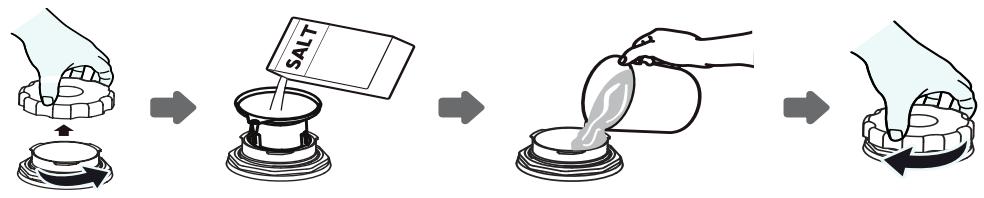
- Remove the lower rack and unscrew the container cap.
- Place the end of the funnel into the hole and pour in approximately 1.5kg of regenerating salt.
- Fill the salt container with water up to the maximum limit. It is normal for a small amount of water to spill out of the container.
After filling the container, screw the cap back on tightly.
- The salt indicator light will turn off once the container has been filled with salt.
- Immediately after filling the salt container, a wash programme should be started (we suggest using a short programme). If not, the filter system, pump or other important parts of the machine could be damaged by the salt water. This is not covered by the warranty.
PLEASE NOTE
The salt container should only be filled when the corresponding indicator light () on the control panel lights up. Depending on how quickly the salt dissolves, the salt indicator light may remain on even though the container is full.
- CAUTION: Risk of corrosion and perforation of the tank or parts of the appliance: If you have spilled salt into the tank during filling, please immediately rinse the area where the salt has been spilt or start a washing programme.
Be especially careful when starting a programme with a delayed start.
Tips for using the rack
Adjusting the upper rack
Option 1
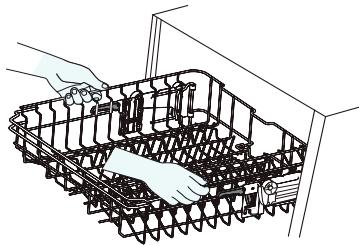
- To raise the top rack, simply lift the top rack with your hands in the middle of each side until the rack clicks into the upper position. It is not necessary to lift the adjustment handles.
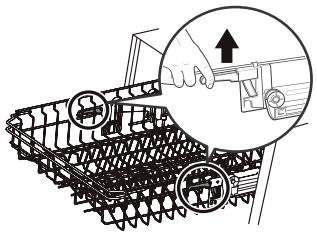
- To lower the top rack, lift the adjustment handles on either side to release the basket and place it in the lower position.
Folding the cup shelves
To make room for larger items in the upper rack, raise the cup shelf. You can then lean the large glasses against the shelf. The shelf can be removed if you are not using it.
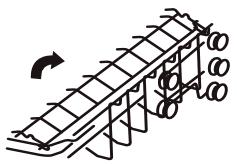

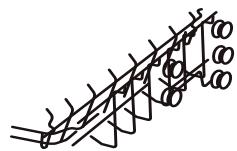
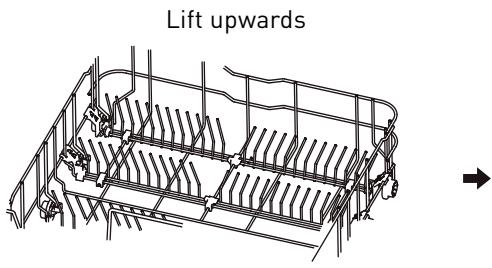
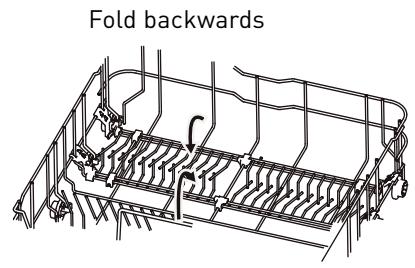
Folding the tines
The tines in the lower rack are used to hold plates and dishes. They can be folded to make room for large items.
Installation instructions
CAUTION
Risk of electric shock!
Disconnect the power supply before installing the dishwasher. Failure to do so could result in death or electric shock.
WARNING
For your personal safety:
- Do not use an extension cord or adapter with this appliance.
- Under no circumstances should you cut or remove the earthed connection from the power cord.
- CAUTION: Risk of overheating, fire and electric shock:
-
Please observe the technical characteristics of the appliance in the data sheet attached to the instructions (voltage, frequency, power, required water pressure, etc.) for your installation.
-
A 20A circuit breaker or a 16A fuse on the appliance's dedicated circuit must be used. The cross-section of the supply cables must be 2.5 ~mm^2 and the differential switch, 30 ~mA .
- The outlet must be equipped with a protective ground plug. If the plug is unsuitable or damaged, replace it and check the electrical installation to ensure that it meets the above requirements.
WATER INLET AND OUTLET
Cold water connection
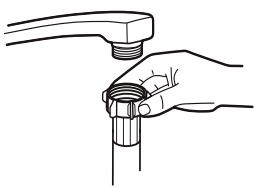
- Connect the cold water supply hose to a 1.9cm threaded fitting and ensure that it is tight.
- If the water supply pipes are new or have not been used for a long time, let the water run to check it is clear. This is required to avoid the risk of the water supply being blocked, which could damage the appliance.
CAUTION
A hose connected to a spray tap can burst if it is installed on the same water pipe as the dishwasher. If your sink is equipped with one, it is recommended disconnecting the pipe and blocking the hole.
How do I disconnect the safety inlet hose?
- Close the water supply.
- Unscrew the safety inlet hose from the tap.
CONNECTING THE DRAIN HOSES
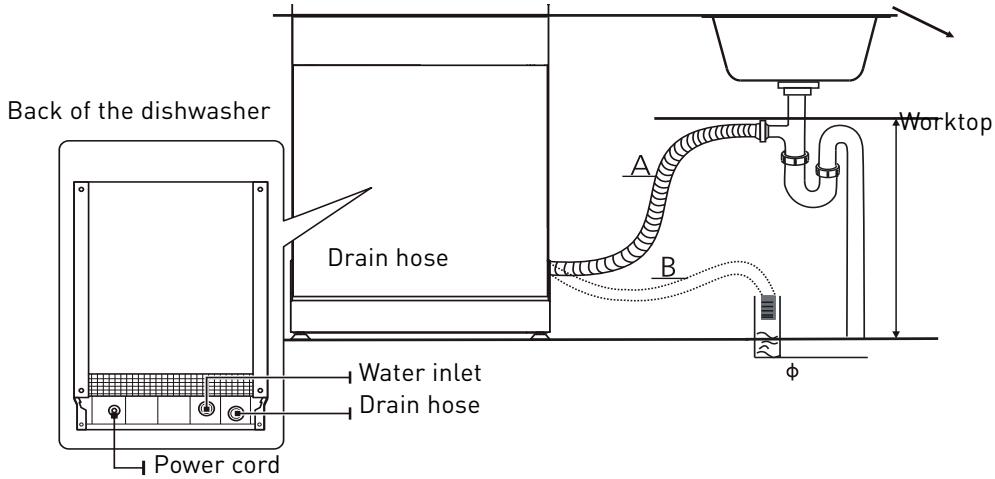
- Insert the drain hose into a drain pipe with a minimum diameter of 4cm , or let it run into the sink, being careful to avoid bending or pinching the hose. The height of the drain
pipe should not exceed 1000mm . To avoid backflow, the free end of the hose should not be submerged in water.
- Ensure that the drain hose is securely fastened either in position A or position B.
Draining excess water from hoses
- If the sink is more than 1000mm above the floor, excess water from the hoses cannot be drained directly into the sink. It will be necessary to drain it into a bowl or other suitable container that is lower than the sink.
Water outlet
- Connect the drain hose. Ensure it is securely attached to prevent water leakage. Check the drain hose is not twisted or crushed.
Hose extension
- If you need a drain hose extension, make sure you use the same type of hose. It should not be longer than 4 metres, otherwise the cleaning performance of your dishwasher may be reduced.
Connecting the siphon
- The waste water connection must be less than 100cm (maximum) from the bottom of the tub. The water drain hose must be attached.
POSITIONING OF THE APPLIANCE
- Place the dishwasher in the desired location. The back of the appliance should rest against the wall behind, and the sides against adjacent cabinets or walls. This dishwasher is fitted with water supply and drain hoses which can be positioned on the left or right-hand side for ease of installation; the hose should not be submerged in water to avoid backflow.
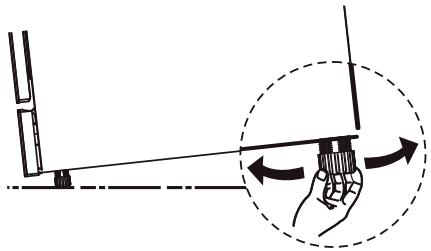
Levelling the appliance
- Once the appliance has been positioned in the required location, the height of the dishwasher can be changed by turning the adjustment feet. The appliance must never be inclined by more than 2^ .
PLEASE NOTE
This section applies to stand-alone dishwashers only.
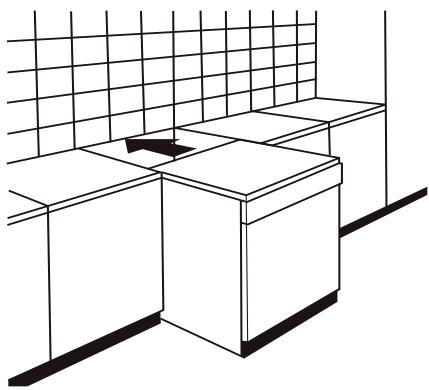
Installation between existing cabinets
- Once the appliance has been positioned in the required location, the height of the dishwasher can be changed by turning the adjustment feet. The appliance must never be inclined by more than 2^ .
- The height of this dishwasher (845 mm) is designed to allow it to be installed between existing cabinets of the same height in modern fitted kitchens. The feet can be adjusted to the correct height.
- The laminated top surface of the appliance does not require any special care, as it is resistant to heat, scratches and stains.
Under an existing worktop (in case of installation under a worktop)
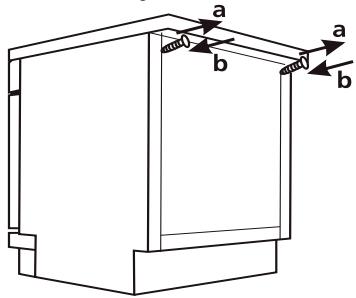
- In most modern fitted kitchens, there is a single worktop under which the cabinets and appliances are installed. In this case, remove the worktop from the dishwasher by removing the screws under the rear edge of the top section).
CAUTION
After removing the worktop, the screws must be reinstalled under the rear edge of the upper section). The height of the appliance will then be reduced to 815 mm, in accordance with international (ISO) regulations, and the dishwasher will fit perfectly under the kitchen worktop.
Loading the racks
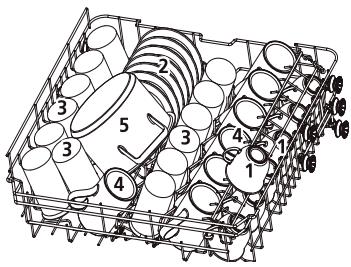
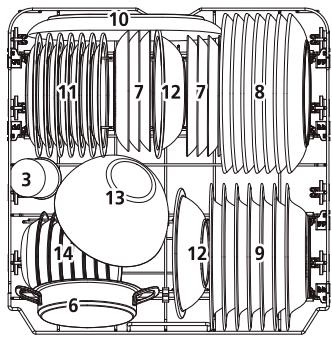
1. UPPER RACK
Cups
Saucers
3 Glasses
4 Small bowls
5 Small saucepan
Pot
2. LOWER RACK
6 Oven-safe casserole dish
Dessert plates
Large plates
9 Soup dishes
10 Oval plates
Melamine dessert plates
Large melamine bowls
Large glass bowl
Dessert bowls
3.CUTLERYCOMPARTMENT
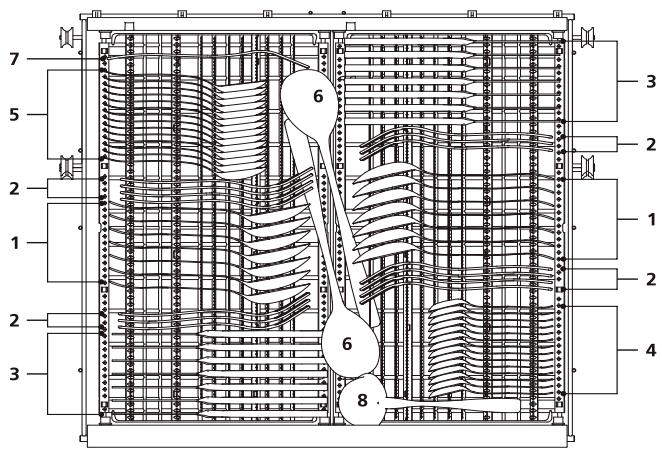
Soup spoons
2 Forks
3 Knives
Teaspoons
Dessert spoons
Serving spoons
Serving forks
Sauce ladle
Quick start guide
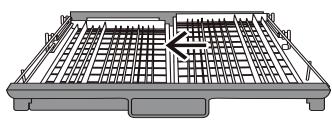
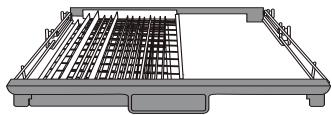
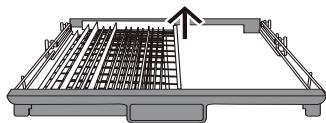
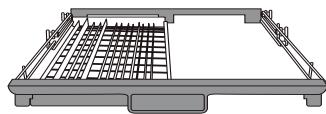
- Move the right basket from the right to the left, so that the two baskets overlap.
- Remove the right basket from the frame, leaving only the left basket.
↓
↓
Quick start guide
Please read the relevant chapters in the user guide for more detailed operating instructions.
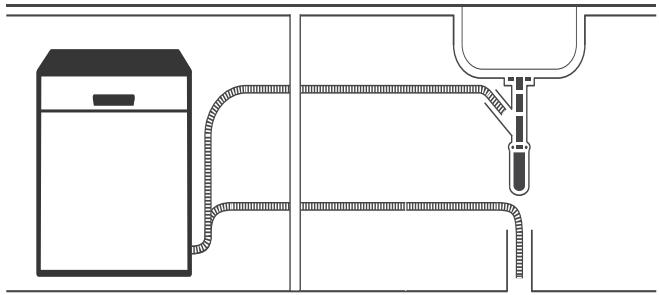
- Install the dishwasher (Please refer to the section on "INSTALLATION INSTRUCTIONS").

- Remove large food residue from the tableware.
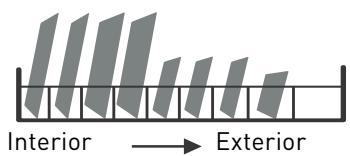
- Load the racks.
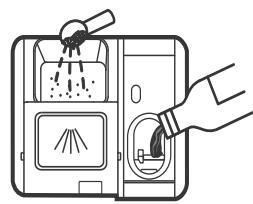
- Fill the corresponding compartments.
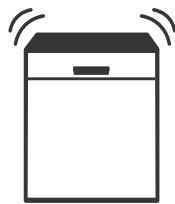
Water softener
Select a programme and start. The water softener must be adjusted manually, using the water hardness indicator.
- The water softener is designed to eliminate mineral salts contained in the water, which may affect the correct operation of the appliance.
- The higher the mineral content of your water, the harder it is.
- The softener should be adjusted according to the water hardness in your area.
- Your local water authority can give you information on the hardness of the in your area.
Adjusting salt consumption
| Water hardness | Water softener setting | Salt consumption (grams/cycle) |
| German degrees | French degrees fH | British degrees Clark | Mmol/l |
| 0 - 5 | 0 - 9 | 0 - 6 | 0 - 0.94 | H1 | 0 |
| 6 - 11 | 10 - 20 | 7 - 14 | 1.0 - 2.0 | H2 | 9 |
| 12 - 17 | 21 - 30 | 15 - 21 | 2.1 - 3.0 | H3 | 12 |
| 18 - 22 | 31 - 40 | 22 - 28 | 3.1 - 4.0 | H4 | 20 |
| 23 - 34 | 41 - 60 | 29 - 42 | 4.1 - 6.0 | H5 | 30 |
| 35 - 55 | 61 - 98 | 43 - 69 | 6.1 - 9.8 | H6 | 60 |
1^ = 1.25^ Clarke = 1.78^ = 0.178mmol / L
Factory setting: H3
Contact your local water company for information on the hardness of your water.
PLEASE NOTE
If your model does not have a water softener, you can skip this section.
- Water hardness varies depending on the region. If hard water is used in the dishwasher, limescale will accumulate on dishes and utensils.
- This appliance is equipped with a special softener that uses a salt container specifically designed to remove limescale and minerals from the water.
Preparing and loading tableware
Consider buying utensils that are labelled "dishwasher safe".
For fragile items, select a programme with the lowest possible temperature. To avoid damage, do not remove glasses and cutlery from the dishwasher immediately after the programme has finished.
DISHWASHER SAFE CUTLERY/DISHES
Unsuitable
Cutlery with wooden, horn, porcelain or mother of pearl handles
- Plastic products that are not heat resistant
- Old cutlery with glued parts that do not tolerate high temperatures
- Glued tableware or cutlery
- Pewter or copper utensils
Crystal glasses
- Steel items prone to rust
Wooden platters
- Items made from synthetic fibres
Limited suitability
- Some types of glass can become cloudy after many washes
Silver and aluminium items have a tendency to discolour during washing
- Varnished designs may fade if they are frequently washed in the machine
Recommendations for loading the dishwasher
Remove any large food residue. Soften the remains of burnt food on cooking utensils. It is not necessary to rinse tableware under running water. To ensure optimal results from your dishwasher, follow these loading tips. (The features and appearance of the racks and cutlery baskets may vary depending on the model.)
Recommendations for loading the dishwasher
Remove any large food residue. Soften the remains of burnt food on cooking utensils. It is not necessary to rinse tableware under running water. To ensure optimal results from your dishwasher, follow these loading tips. (The features and appearance of the racks and cutlery baskets may vary depending on the model.)
PLEASE NOTE
Very small items should not be washed in the dishwasher as they can easily fall out of the rack.
Unloading the dishwasher
- To avoid water dripping from the upper rack onto the lower rack, we recommend emptying the lower rack first and then the upper level.
CAUTION
The dishes will be hot! To avoid damage, wait about 15 minutes after the end of the programme before removing glasses and cutlery from the dishwasher.
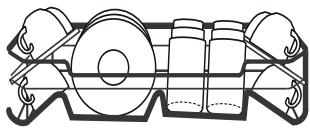
Loading the upper rack
- The upper rack is designed to store more delicate and lightweight tableware, such as glasses, saucers, coffee or tea cups, as well as plates, small bowls and shallow dishes (provided they are not too dirty). Place tableware and cooking utensils so that they cannot be moved by the spray jet.
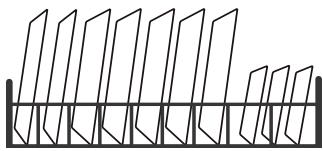
Loading the lower rack
- We suggest that you place large items and items that are hard to clean in the lower rack: pots, pans, lids, serving dishes and bowls, as shown in the diagram below. It is advisable to place serving dishes and lids to the side of the racks to avoid blocking the rotation of the upper spray arm. The maximum recommended diameter for plates placed in front of the detergent dispenser is 19~cm , to prevent obstructing the opening.
Loading the cutlery compartment
- Cutlery must be placed in the cutlery compartment, separated and positioned in the correct direction. Make sure that the utensils are not stacked on top of each other, as this may affect the performance of your appliance.
CAUTION
Do not allow cutlery to stick out of the bottom of the basket. Always place sharp utensils with the point facing downwards!
PLEASE NOTE
For optimal washing, please load the racks by referring to the standard loading recommendations in the section "Loading the racks".
The purpose of rinse aid and detergent
The rinse agent is released during the last rinse to prevent the water from forming droplets on your tableware, which can leave marks and stains. It also improves the drying process by allowing water to run off the tableware. Your dishwasher is designed to use liquid rinse agents.
CAUTION
Always use a branded rinse agent for your dishwasher. Never fill the rinse aid dispenser with any other substance (such as dishwasher cleaner or liquid detergent). This will damage your appliance.
When should the rinse aid dispenser be refilled?
The frequency with which the rinse aid compartment should be filled depends on the frequency of dishwashing and the rinse aid setting used.
Avoid overfilling the rinse aid compartment.
- The low rinse aid level indicator (0) will light up as soon as the rinse aid dispenser needs to be refilled.
- Avoid overfilling the rinse aid compartment.
Purpose of the detergent
The chemical ingredients of the detergent are required to remove the dirt, break it down and remove it from the dishwasher. Most commercial grade detergents are suitable for this purpose.
CAUTION
Correct use of detergent Only use detergents specifically for use in dishwashers. Store your detergent in a cool, dry place.
Only place powdered detergent in the dispenser when you are ready to start the dishwasher.
Filling the rinse aid dispenser
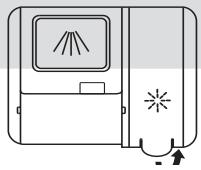
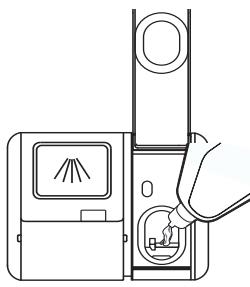
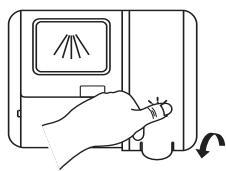
- Remove the rinse aid compartment cover by lifting the tab.
- Pour the rinse aid into the compartment, taking care not to overfill it.
- Then close the compartment by lowering the lid.
Adjusting the rinse aid dispenser
To achieve optimum drying performance with the least amount of rinse aid, the dishwasher is designed to adjust consumption according to the user. Please follow the steps below.
- Open the door and turn on the appliance.
- Within 60 seconds after completing step 1, press and hold the "Programmes" button for more than 5 seconds, then press the "Delay Start" button to enter the settings mode; the rinse aid indicator will flash at a frequency of 1Hz .
- Press the "Programmes" button to select the right setting as usual. The settings display order is as follows: D1 -> D2 -> D3 -> D4 -> D5 -> D1. The higher the number, the more rinse agent the dishwasher will use.
- Confirm and exit the setting by pressing the power button or not performing any other operation for 5 seconds.
Filling the detergent dispenser
-
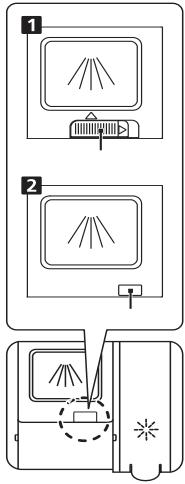
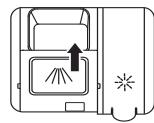
Please choose a type of opening depending on the situation.
-
Open the cover by sliding the release latch.
-
Open the cover by pressing the release latch.
-
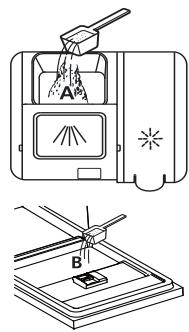
Add detergent to the largest compartment (A) for the main wash cycle. For optimal washing, especially if the dishes are very dirty, pour a small amount of detergent on the door. This additional detergent dose will be activated during the prewash phase.
- Close the cover by sliding it forward while pressing down.
PLEASE NOTE
Please note that the settings may vary depending on the degree of soiling on the tableware. Please follow the manufacturer's recommendations displayed on the detergent packet.
Programming the dishwasher
Washing cycle table
The table below shows which programmes are most suitable depending on the amount of food residue left on the dishes and the amount of detergent
required. It also provides various information on the programmes.
() means: that you should fill the rinse aid dispenser.
| Programmes | Cycle description | Prewash/
Main wash
detergent | Running time
(min) | Energy
(kWh) | Water (L) | Rinse aid |
| AUTO
Auto | Prewash (45 °C)
Wash (55 ~ 65 °C)
Rinse (45 ~ 55 °C)
Dry | 5/30 g
(1 or 2
tablets) | 90-180 | 0.85-1.55 | 8.5-18 | ● |
| Intensive | Prewash (50 °C)
Wash (65 °C) Rinse
Rinse
Rinse (55 °C) Dry | 5/30 g
(1 or 2
tablets) | 205 | 1.5 | 16.6 | ● |
| Universal | Prewash (45 °C)
Wash (55 °C)
Rinse
Rinse (55 °C) Dry | 5/30 g
(1 or 2
tablets) | 175 | 0.98 | 13.6 | ● |
| ECO | Pre-wash
Wash (50 °C)
Rinse (45 °C) Dry | 5/30 g
(1 or 2
tablets) | 198 | 0.747 | 9.8 | ● |
| Glasses | Prewash (40 °C)
Wash (50 °C)
Rinse
Rinse (50 °C) Dry | 5/30 g
(1 tablet) | 120 | 0.95 | 13.5 | ● |
| 90° min | Wash (60 °C)
Rinse
Rinse (65 °C) Dry | 35 g
(1 tablet) | 90 | 1.18 | 12.5 | ● |
| Quick | Wash (40 °C)
Rinse (55 °C) | 20 g
(1 tablet) | 30 | 0.82 | 11.2 | ○ |
| Soak | Pre-wash | | 15 | | 4.1 | ○ |
Starting a wash cycle
- Pull out the upper and lower racks, load the tableware and then push them back in. It is recommended to load the lower rack first and then the upper rack.
- Add detergent.
- Insert the plug into the socket. For more information on the power supply, refer to the "Product Sheet" on the last page. Ensure that the water supply is open at full pressure.
- Open the door, press the power button.
- Choose a programme, the corresponding indicator will light up. Then close the door and the dishwasher will start the wash cycle.
Changing the programme during a cycle
A wash cycle can only be changed if it has recently started. If the cycle has progressed further, the detergent may have already been released and the machine may have already drained the wash water. If this occurs, the dishwasher will need to be reprogrammed and the detergent dispenser refilled. To reprogram the dishwasher, follow the instructions below:
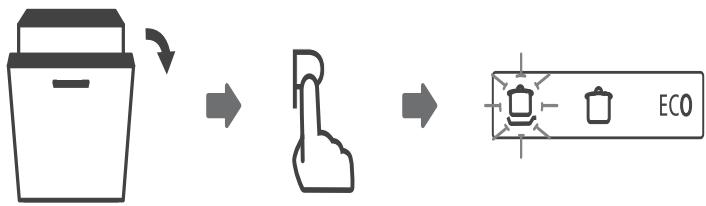
- Open the door slightly to stop the dishwasher. Once the wash arm has stopped working, you can open the door fully.
- Press and hold the "Programmes" button for more than three seconds to pause the machine.
- You can then change the programme to the desired cycle.
Adding forgotten tableware
You can add forgotten tableware at any time before the detergent dispenser has opened. In this event, follow the instructions below:
- Open the door slightly to stop the wash.
- Once the spray arms have stopped running, you can fully open the door.
- Add the forgotten tableware.
- Close the door.
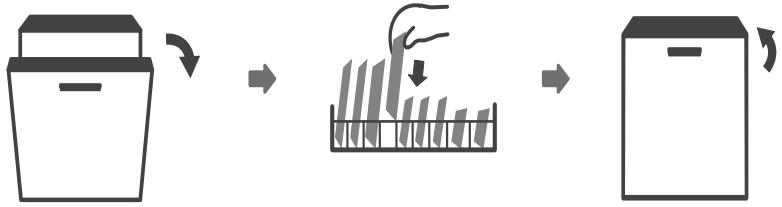
- The dishwasher will resume operation.
CAUTION
It is dangerous to open the door during the cycle as the hot steam could burn you.
Automatic opening / Activ'Door
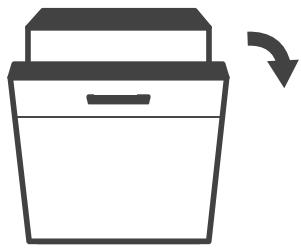
At the end of the wash, the door will open automatically for optimal drying.
PLEASE NOTE
The dishwasher door must not be obstructed when set to open automatically.
This could damage the locking function of the door.
Exterior maintenance of the appliance
Door and door seal
Regularly clean the door seals with a soft damp cloth to remove food residue. When loading the dishwasher, food and drink residue can spill down the sides of the dishwasher door. These surfaces are outside of the tub and the water from the spray arms does not reach them. Any residue should be wiped off before closing the door.
Control panel
If necessary, the control panel should only be wiped with a soft damp cloth.
CAUTION
To prevent water from entering the door lock and electrical components, never use any type of cleaning spray. Never use abrasive pads or cleaners on the external surfaces of the appliance, as they may scratch the finish. Some paper towels can also scratch or leave marks on the surface.
Interior maintenance of the appliance
Filtration system
The filtration system inside bottom of the tub catches large residue during the wash cycle. The residue collected can block the filters. Regularly check the condition of the filters and clean them under running water if necessary. Follow the steps below to clean the filters.
PLEASE NOTE
Images are for guidance only, filter systems and spray arm models may vary.
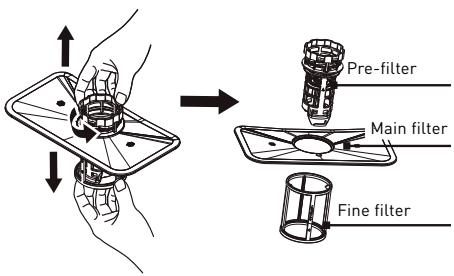
- Hold the pre-filter and turn it anti-clockwise to unlock it. Pull the filter up and out of the dishwasher.
- Pull the fine filter down to remove it from the filter unit. The pre-filter can be separated from the main filter by gently pressing the tabs at the top of the filter and pulling the filter out.
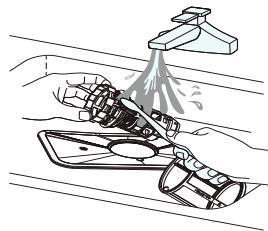
- Large food residue can be removed by rinsing the filter under running water. For more thorough cleaning, use a soft cleaning brush.
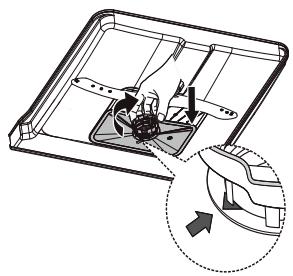
- Reassemble the filters by reversing the disassembly order, replace the filter system and turn it clockwise to the arrow indicating the closed position.
CAUTION
Do not overtighten the filters. Replace the filters correctly and in order, otherwise large food particles could enter the system causing a blockage. Never use the dishwasher without installing the filters. If the filters are not correctly replaced, the performance of the appliance may be impaired potentially damaging the dishes and utensils.
Spray arms
You should regularly clean the spray arms to prevent the hard water mineral content from clogging the jets and spray arm bearings.
To clean the spray arms, follow the instructions below:
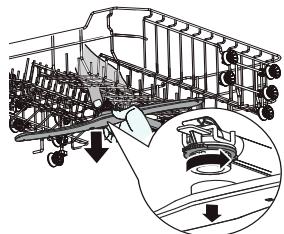
To remove the upper spray arm, hold the centre locknut still and rotate the spray arm anticlockwise to release it.
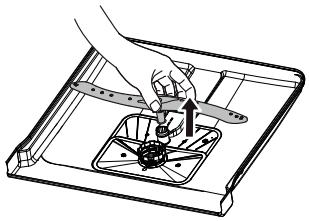
To remove the lower spray arm, lift it upwards.
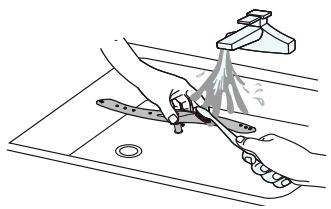
Wash the spray arms with warm soapy water and use a soft brush to clean the jets. After rinsing well, position them back inside the machine.
General dishwasher maintenance
Protect the appliance from frost
-
In winter, you should take measures to protect your dishwasher from freezing. After each wash cycle, please follow the procedure below:
-
Disconnect the dishwasher from the power source.
- Turn off the water supply and disconnect the water inlet hose from the water tap.
- Drain the water from the inlet hose and the tap (use a bucket to catch the water).
- Reconnect the water inlet hose to the tap.
- Remove the filter at the bottom of the tub and use a sponge to soak up the water in the settling chamber.
After each wash
- After each wash, turn off the water supply to the appliance and leave the door ajar to prevent moisture and odours from forming inside.
Disconnecting the plug
- Before any cleaning or maintenance work, always remove the plug from the socket.
- Do not clean with solvents or abrasive substances.
- Do not use solvents or abrasive cleaning agents to clean the exterior or rubber parts of the dishwasher. Only use a cloth with warm soapy water.
- To remove stains or dirt from the interior surface, use a cloth moistened with water and a little vinegar, or a cleaning product specially designed for dishwashers.
If it has not been used for a long time
- We recommend that you perform an empty wash cycle, then disconnect the plug from the socket, turn off the water supply and leave the appliance door slightly open. This will extend the life of the door seals and prevent odours from forming inside the appliance.
If it has not been used for a long time
- If you need to move the appliance, try to keep it in an upright position. If necessary, you can lay the appliance on its back.
Seals
- One of the contributing factors to odours in the dishwasher is food particles stuck in the seals. Regular cleaning with a damp sponge will prevent this.
Error codes
In the event of a malfunction, the dishwasher will display error codes to help you identify the problem:
| Codes | Meaning | Possible causes |
| E1 | | The taps are not open, the water supply is blocked or the water pressure is too low. |
| E4 | Overflow | A dishwasher component is leaking. |
| E8 | Incorrect orientation of the dispensing valve | Open circuit or defective dispensing valve. |
CAUTION
- In the event of an overflow, turn off the main water supply before calling a technician.
- If there is water at the bottom of the tub due to an overflow or small leak, this water must be removed before restarting the dishwasher.
Merci!
Instructions d-installation
ATTENTION