USER MANUAL 14S40 B WAD929C VALBERG
Thank you for choosing this VALBERG product. VALBERG products are chosen, tested, and recommended by ELECTRO DEPOT, so you can be sure you are getting a top-quality, easy-to-use product that won't let you down. We're confident your new device will be a pleasure to use every day!
Welcome to ELECTRO DEPOT.
Table of Contents

Parts

Installation instruction Before using your dishwasher Loading the baskets according to EN50242 Loading the baskets according to EN60436

Maintenance and cleaning Troubleshooting tips

IMPORTANT:
To get the best performance from your dishwasher, read all operating instructions before using it for the first time.
Parts
Dispenser B Salt container C Inner pipe D Top spray arm Lower spray arm Filter assembly Cutlery basket Upper basket (1) Cutlery rack (2) Upper spray arm Cup rack Lower basket

NOTE:
Pictures are only for reference, different models may be different.
Installation instruction

Electrical Shock Hazard!
- Disconnect electrical power before installing dishwasher.
- Failure to do so could result in death or electrical shock.

Attention!
The installation of the pipes and electrical equipment should be done by professionals.
About power connection

WARNING!
For personal safety:
- Do not use an extension cord or an adapter plug with this appliance.
- Do not, under any circumstances, cut or remove the earthing connection from the power cord.
Electrical requirements
Please look at the rating label to know the rating voltage and connect the dishwasher to the appropriate power supply. Use the required fuse 10A/13A/16A, time delay fuse or circuit breaker recommended and provide separate circuit serving only this appliance.
Electrical connection
Ensure the voltage and frequency of the power being corresponds to those on the rating plate. Only insert the plug into an electrical socket which is earthed properly. If the electrical socket to which the appliance must be connected is not appropriate for the plug, replace the socket, rather than using adaptors or the like as they could cause overheating and burns.

WARNING!
Ensure that proper earthing exists before use.
Water supply and drain
Cold water connection
Connect the cold water supply hose to a threaded 3/4-inch connector and make sure that it is fastened tightly in place.
If the water pipes are new or have not been used for an extended period of time, let the water run to make sure that the water is clear. This precaution is needed to avoid the risk of the water inlet being blocked and damaging the appliance.
B Product usage
Ordinary supply hose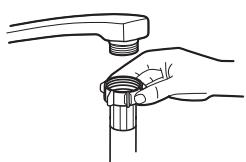
Safety supply hose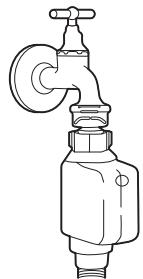
About the safety supply hose
The safety supply hose consists of double walls. The system guarantees its intervention by blocking the flow of water in case of the supply hose breaking and when the air space between the supply hose itself and the outer corrugated hose is full of water.

WARNING!
A hose that attaches to a tap can burst if it is installed on the same water line as the dishwasher. If your sink has one, it is recommended that the hose be disconnected and the hole plugged.
How to connect the safety supply hose
- Pull the safety supply hoses out from the storage compartment located at the rear of the dishwasher.
- Tighten the screws of the safety supply hose to the faucet with a 3/4-inch thread.
- Turn the water fully on before starting the dishwasher.
How to disconnect the safety supply hose
- Turn off the water.
- Unscrew the safety supply hose from the faucet.
Connection of drain hoses
Insert the drain hose into a drain pipe with a minimum diameter of 4 cm, or let it run into the sink, making sure to avoid bending or crimping it. The height of the drain pipe must be less than 1000 mm. The free end of the hose must not be immersed in water to avoid backflow.

WARNING!
Please securely fix the drain hose in either position A or position B.
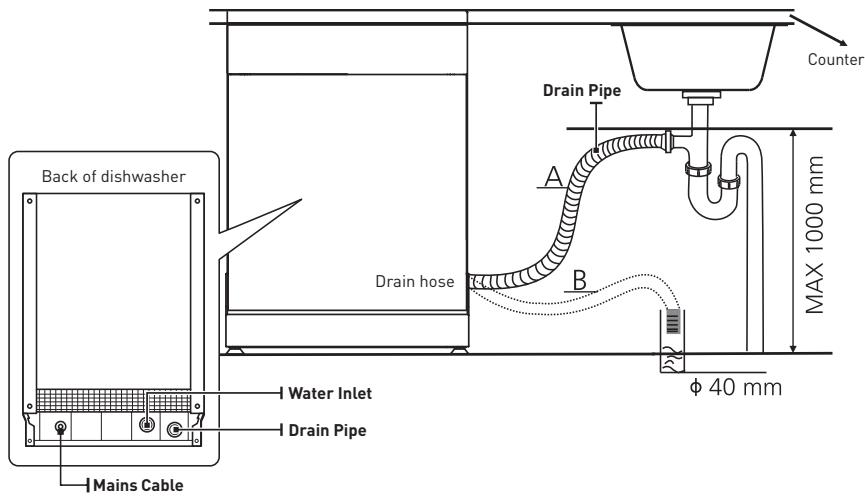
How to drain excess water from hoses
If the connection to the drain pipe is positioned higher than 1000 mm, excess water may remain in the drain hose. It will be necessary to drain excess water from the hose into a bowl or suitable container that is held outside and lower than the sink.
Water outlet
Connect the water drain hose. The drain hose must be correctly fitted to avoid water leaks. Ensure that the water drain hose is not kinked or squashed.
Extension hose
If you need a drain hose extension, make sure to use a similar drain hose.
It must not be longer than 4 meters, otherwise the cleaning effect of the dishwasher could be reduced.
Syphon connection
The waste connection must be at a height less than 1000 mm (maximum) from the bottom of the dishwasher.
Positioning the appliance
Position the appliance in the desired location. The back should rest against the wall behind it, and the sides, along the adjacent cabinets or walls. The dishwasher is equipped with water supply and drain hoses that can be positioned either to the right or the left sides to facilitate proper installation.
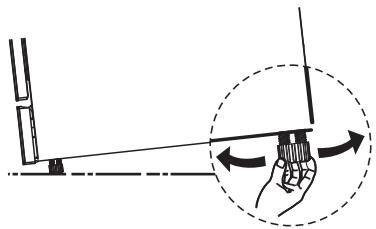
Levelling the appliance
Once the appliance is positioned for levelling, the height of the dishwasher may be altered via adjustment of the screwing level of the feet.
In any case, the appliance should not be inclined more than 2° .
B Product usage
Free standing installation
Step 1. Fitting between existing cabinets
The height of the dishwasher, 845mm , has been designed in order to allow the machine to be fitted between existing cabinets of the same height in modern fitted kitchens.
The laminated top of the machine does not require any particular care since it is heatproof, scratchproof and stainproof.
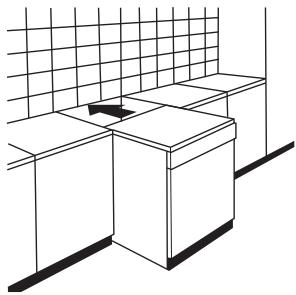
Step 2. Underneath existing work top
(When fitting beneath a work top)
In most modern fitted kitchens there is only one single work top under which cabinets and electrical appliances are fitted. In this case remove the work top of the dishwasher by unscrewing the screws under the rear edge of the top (a).
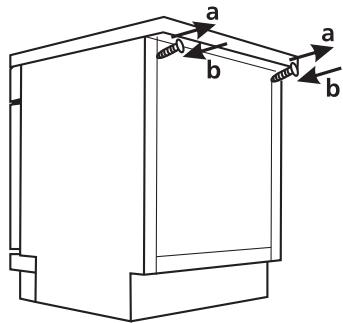

Attention!
After removing the work top, the screws must be screwed again under the rear edge of the top [b].
B Product usage
Selecting the best location for the dishwasher
The installation position of the dishwasher should be near the existing inlet and drain hose and power socket.
Illustrations of cabinet dimensions and installation position of the dishwasher.
- Less than 5 mm between the top of dishwasher and cabinet and the outer door aligned to cabinet.
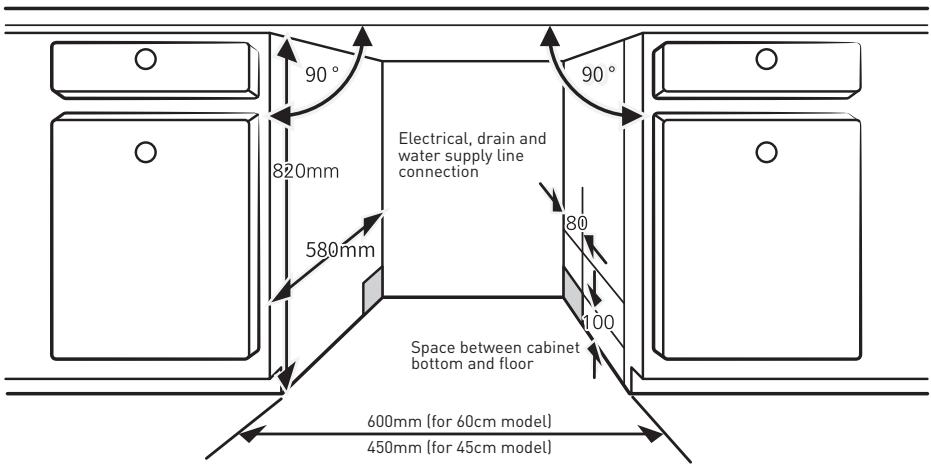
- If dishwasher is installed at the corner of the cabinet, there should be some space when the door is opened.
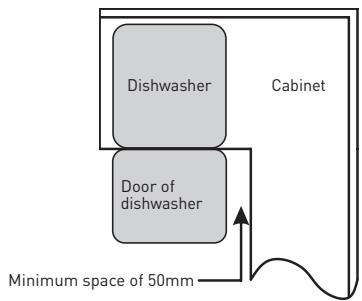

NOTE:
Depending on where your electrical outlet is, you may need to cut a hole in the opposite cabinet side.
Before using your dishwasher

- Set the water softener
- Loading the salt Into the softener
- Loading the basket
- Fill the detergent dispenser

NOTE:
Please check the section "Water Softener", if you need to set the water softener.
Loading the salt into the softener

NOTE:
If your model does not have any water softener, you may skip this section. Always use salt intended for dishwasher use. The salt container is located beneath the lower basket and should be filled as explained in the following:

WARNING!
Only use salt specifically designed for dishwasher use!
Every other type of salt not specifically designed for dishwasher use, especially table salt, will damage the water softener. In case of damages caused by the use of unsuitable salt, the manufacturer does not give any warranty nor is liable for any damages caused.
Only fill with salt before running a cycle.
This will prevent any grains of salt or salty water, which may have been spilled, remaining on the bottom of the machine for any period of time, which may cause corrosion.
B Product usage
Please follow the steps below for adding dishwasher salt:
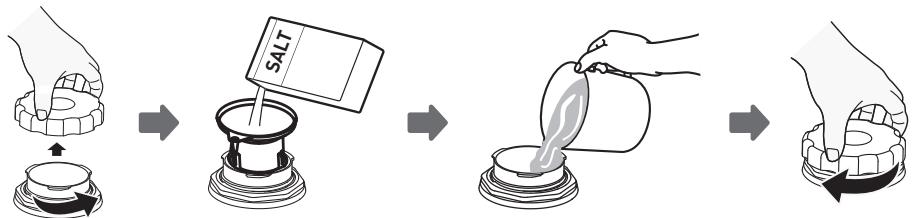
- Remove the lower basket and unscrew the reservoir cap.
- Place the end of the funnel (if supplied) into the hole and pour in about 1.5 kg of dishwasher salt.
- Fill the salt container to its maximum limit with water. It is normal for a small amount of water to come out of the salt container.
- After filling the container, screw back the cap tightly.
- The salt warning light will turn off after the salt container has been filled with salt.
- Immediately after filling the salt into the salt container, a washing program should be started (we suggest using a short program). Otherwise, the filter system, pump, or other important parts of the machine may be damaged by salty water. This is out of warranty.

NOTE:
- The salt container must only be refilled when the salt warning light (三) in the control panel comes on. Depending on how well the salt dissolves, the salt warning light may still be on even though the salt container is filled. If there is no salt warning light in the control panel (for some models), you can estimate when to fill the salt into the softener by the cycles that the dishwasher has run. If salt has spilled, run a soak or quick program to remove it.
Basket loading tips
Type 1:
The height of the upper basket can be easily adjusted to accommodate taller dishes in either the upper or lower basket.
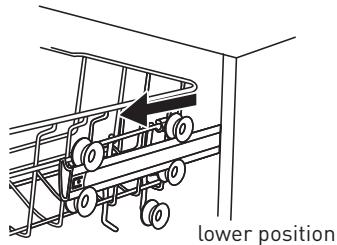
To adjust the height of the upper rack, follow these steps:
- Pull out the upper basket.
B Product usage
- Remove the upper basket.
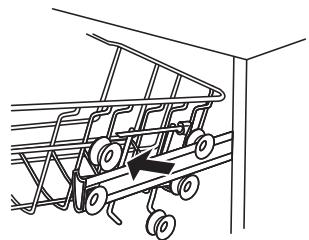
- Re-attach the upper basket to upper or lower rollers.
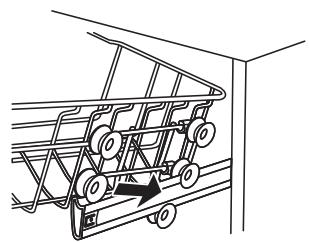
- Push in the upper basket.
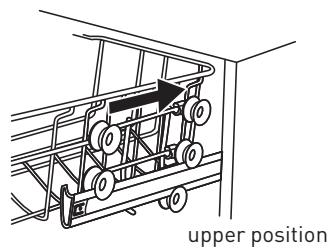
Type 2:
- To raise the upper basket, just lift the upper basket at the center of each side until the basket locks into place in the upper position. It is not necessary to lift the adjuster handle.
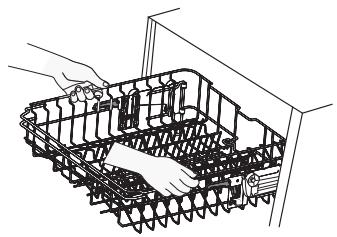
B Product usage
- To lower the upper basket, lift the adjust handles on each side to release the basket and lower it to the lower position.
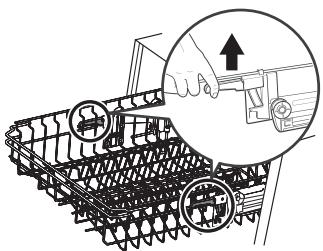
Folding back the cup shelves
To make room for taller items in the upper basket, raise the cup rack upwards. You can then lean the tall glasses against it.
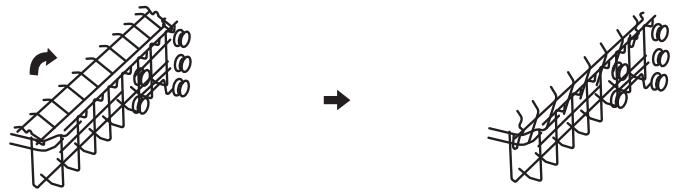
Folding back the rack shelves
The spikes of the lower basket are used for holding plates and a platter. They can be lowered to make more room for large items.
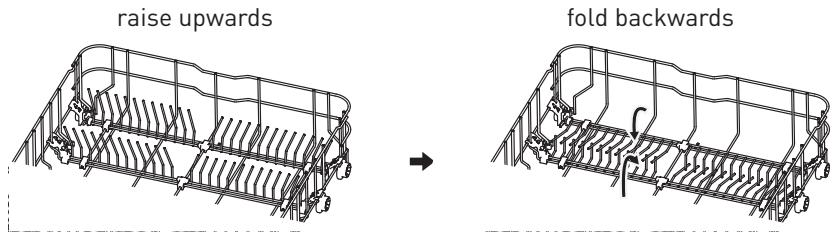
Loading the baskets according to EN50242
Loading the dishwasher to its full capacity will contribute to energy and water savings.
1. Upper basket:
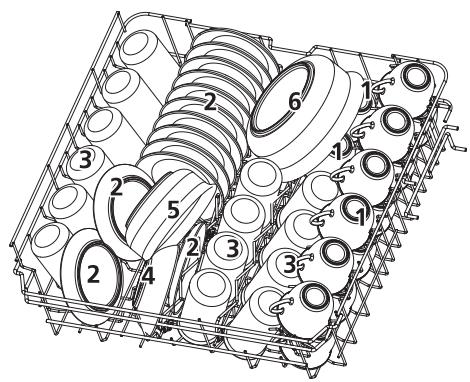
Number
Item

Cups

Saucers

Glasses

Small serving bowl

Medium serving bowl

Large serving bowl
2. Lower basket:
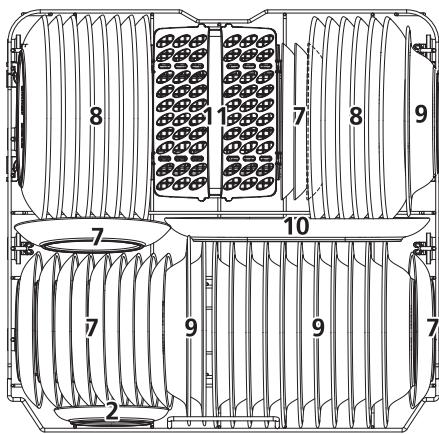
Number
Item

Dessert plates

Dinner plates

Soup plates

Oval platter

Cutlery basket
3. Cutlery rack:
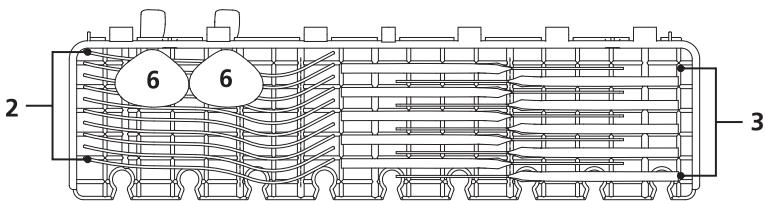

NOTE:
Please place the light flat wares on the shelf. The maximum loading weight is 1.5 kg.
4. Cutlery basket:
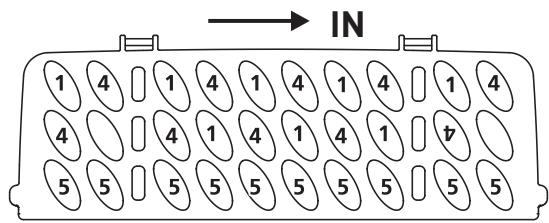
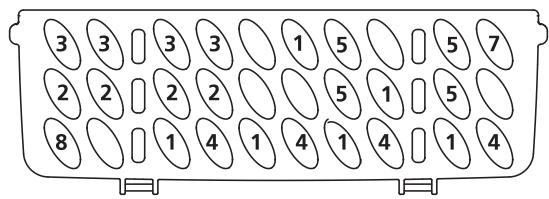
Information for comparability tests in accordance with EN50242
Capacity: 14 place settings
Position of the upper basket: lower position
Program: ECO
Rinse aid setting: Max
Softener setting: H3
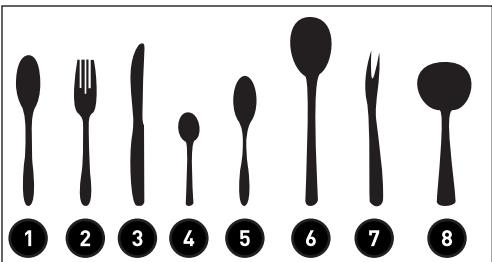
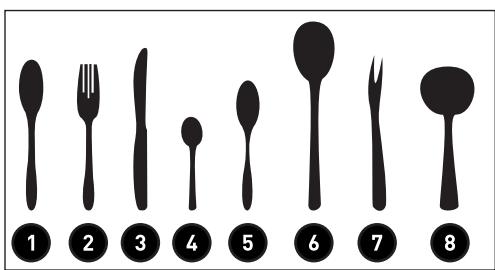
| Number | Item |
| 1 | Soup spoons |
| 2 | Forks |
| 3 | Knives |
| 4 | Tea spoons |
| 5 | Dessert spoons |
| 6 | Serving spoons |
| 7 | Serving fork |
| 8 | Gravy ladle |
Loading the baskets according to EN60436
Loading the dishwasher to its full capacity will contribute to energy and water savings.
1. Upper basket:
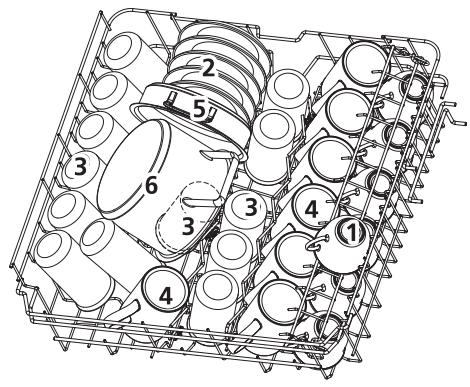
Number
Item

Cups

Saucers

Glasses

Mugs

Oven pot

Small pot
2. Lower basket:
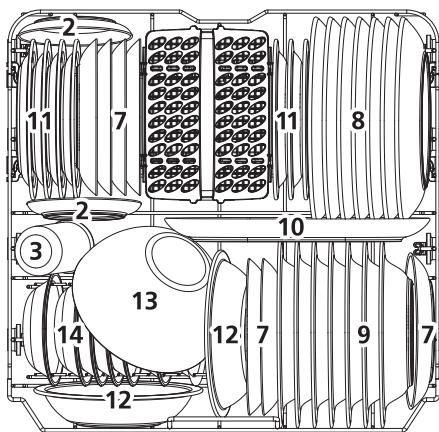
Number
Item

Dessert plates

Dinner plates

Soup plates

Oval platter

Melamine dessert plates

Melamine bowls

Glass bowl

Dessert bowls

Cutlery basket
3. Cutlery rack:
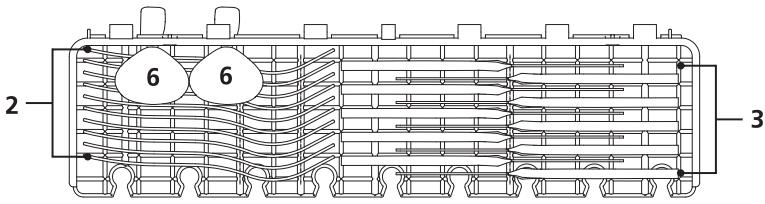

NOTE:
Please place the light flat wares on the shelf. The maximum loading weight is 1.5 kg.
4. Cutlery basket:
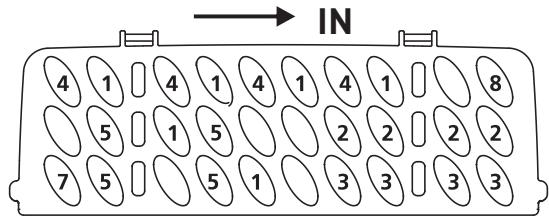
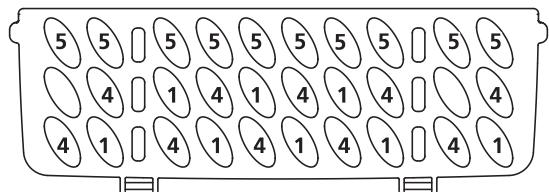
| Number | Item |
| 1 | Soup spoons |
| 2 | Forks |
| 3 | Knives |
| 4 | Tea spoons |
Information for comparability tests in
accordance with EN60436
Capacity: 14 place settings
Position of the upper basket: lower position
Program: ECO
Rinse aid setting: Max
Softener setting: H3

Dessert spoons

Serving spoons

Serving fork

Gravy Ladle
Auto Open: Activ'door
After washing, the door will open automatically to achieve better drying effect.
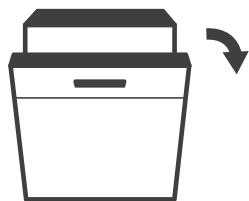

NOTE:
The dishwasher door must not be blocked when set to open automatically.
This can disrupt door lock functionality.
Maintenance and cleaning
External Care
The door and the door seal
Clean the door seals regularly with a soft damp cloth to remove food deposits.
When the dishwasher is being loaded, food and drink residues may drip onto the sides of the dishwasher door. These surfaces are outside the wash cabinet and are not accessed by water from the spray arms. Any deposits should be wiped off before the door is closed.
The control panel
If cleaning is required, the control panel should be wiped with a soft damp cloth only.

WARNING!
- To avoid penetration of water into the door lock and electrical components, do not use a spray cleaner of any kind.
- Never use abrasive cleaners or scouring pads on the outer surfaces because they may scratch the finish. Some paper towels may also scratch or leave marks on the surface.
Internal Care
Filtering system
The filtering system in the base of the wash cabinet retains coarse debris from the washing cycle, including foreign objects such as toothpicks or shards. The collected coarse debris may cause the filters to clog. Check the condition of the filters regularly, carefully remove foreign objects, and clean the parts of the filtering system if necessary with water. Follow the steps below to clean the filter.

NOTE:
Pictures are only for reference; different models of the filtering system and spray arms may be different.
- Hold the coarse filter and rotate it anticlockwise to unlock the filter. Lift the filter upwards and out of the dishwasher.
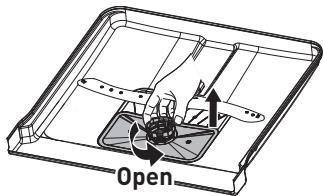
- The fine filter can be pulled off the bottom of the filter assembly. The coarse filter can be detached from the main filter by gently squeezing the tabs at the top and pulling it away.
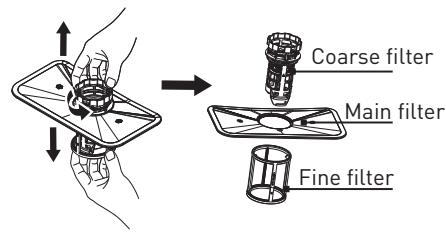
- Larger food remnants can be cleaned by rinsing the filter under running water. For a more thorough clean, use a soft cleaning brush.
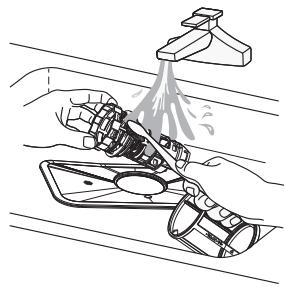
- Reassemble the filters in the reverse order of the disassembly, replace the filter insert, and rotate clockwise to the close arrow.


WARNING!
- Do not over tighten the filters. Put the filters back in sequence securely, otherwise coarse debris could get into the system and cause a blockage.
- Never use the dishwasher without filters in place. Improper replacement of the filter may reduce the performance level of the appliance and damage dishes and utensils.
Spray arms
It is necessary to clean the spray arms regularly, for hard water chemicals will clog the spray arm jets and bearings.
To clean the spray arms, follow the instructions below:
- To remove the upper spray arm, hold the nut in the center still and rotate the spray arm counterclockwise to remove it.
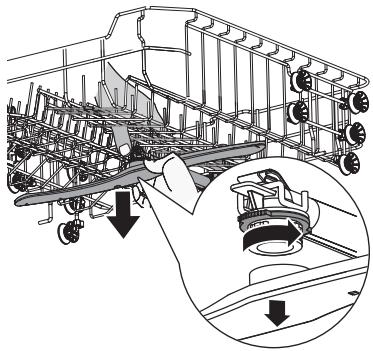
C Cleaning and maintenance
- To remove the lower spray arm, pull the spray arm upward.
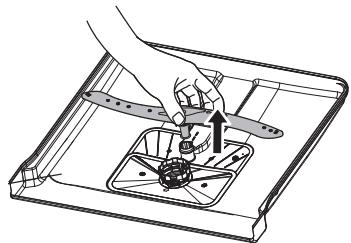
- Wash the arms in soapy, warm water and use a soft brush to clean the jets.
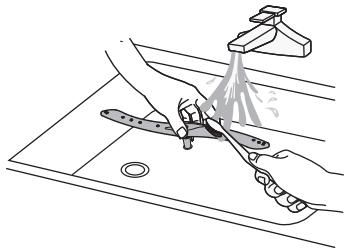
Caring for the Dishwasher
Frost precaution
Please take frost protection measures on the dishwasher in winter. After every washing cycle, please operate as follows:
- Cut off the electrical power to the dishwasher at the supply source.
- Turn off the water supply and disconnect the water inlet pipe from the water valve.
- Drain the water from the inlet pipe and water valve. (Use a pan to gather the water)
- Reconnect the water inlet pipe to the water valve.
- Remove the filter at the bottom of the tub and use a sponge to soak up water in the sump.
After every wash
After every wash, turn off the water supply to the appliance and leave the door slightly open for a while so that moisture and odors are not trapped inside.
Remove the plug
Before cleaning or performing maintenance, always remove the plug from the socket.
No solvents or abrasive cleaning
To clean the exterior and rubber parts of the dishwasher, do not use solvents or abrasive cleaning products. Only use a cloth with warm soapy water.
To remove spots or stains from the surface of the interior, use a cloth dampened with water and a little vinegar, or a cleaning product made specifically for dishwashers.
When not in use for a long time
It is recommended that you run a wash cycle with the dishwasher empty and then remove the plug from the socket, turn off the water supply and leave the door of the appliance slightly open. This will help the door seals to last longer and prevent odors from forming within the appliance.
Moving the appliance
If the appliance must be moved, try to keep it in the vertical position. If absolutely necessary, it can be positioned on its back.
Seals
One of the factors that cause odours to form in the dishwasher is food that remains trapped in the seals. Periodic cleaning with a damp sponge will prevent this from occurring.
Troubleshooting tips
Before Calling For Service
Reviewing the charts on the following pages may save you from calling for service.
| Problem | Possible Causes | What To Do |
| Dishwasher doesn’t start | • Fuse blown, or the circuit break tripped.
• Power supply is not turned on.
• Water pressure is low
• Door of dishwasher not properly closed. | • Replace fuse or reset circuit breaker.
Remove any other appliances sharing the same circuit with the dishwasher.
• Make sure the dishwasher is turned on and the door is closed securely.
Make sure the power cord is properly plugged into the wall socket.
• Check that the water supply is connected properly and the water is turned on.
• Make sure to close the door properly and latch it. |
| Water not pumped form dishwasher | • Twisted or trapped drain hose.
• Filter clogged.
• Kitchen sink clogged. | • Check the drain hose.
• Check the filter system.
• Check the kitchen sink to make sure it is draining well. If the problem is the kitchen sink that is not draining, you may need a plumber rather than a serviceman for dishwashers. |
| Foam in the tub | • Wrong detergent.
• Spilled rinse aid. | • Use only the special dishwasher detergent to avoid suds. If this occurs, open the dishwasher and let suds evaporate. Add 1 liter of cold water to the bottom of the dishwasher.
Close the dishwasher door, then select any cycle. Initially, the dishwasher will drain out the water. Open the door after draining stage is complete and check if the suds have disappeared.
Repeat if necessary.
• Always wipe up rinse aid spills immediately. |
| Stained tub interior | • Detergent with colourant may have been used. | • Make sure that the detergent has no colourant. |
| White film on inside surface | ·Hard water minerals. | ·To clean the interior, use the damp soft cloth with dishwasher detergent and wear rubber gloves. Never use any other cleaner than dishwasher detergent otherwise, it may cause foaming or suds. |
| There are rust stains on cutlery | ·The affected items are not corrosion resistant.
·A program was not run after dishwasher salt was added. Traces of salt have gotten into the wash cycle.
·The lid of the softer is loose. | ·Avoid washing items that are not corrosion resistant in the dishwasher.
·Always run a wash program without any crockery after adding salt. Do not select the Turbo function (if present), after adding dishwasher salt.
·Check the softener lid is secure. |
| Knocking noise in the dishwasher | ·A spray arm is knocking against an item in a basket | ·Interrupt the program and rearrange the items which are obstructing the spray arm. |
| Rattling noise in the dishwasher | ·Items of crockery are loose in the dishwasher. | ·Interrupt the program and rearrange the items of crockery. |
| Knocking noise in the water pipes | ·This may be caused by on-site installation or the cross-section of the piping. | ·This has no influence on the dishwasher function. If in doubt, contact a qualified plumber. |
| The dishes are not clean | ·The dishes were not loaded correctly.
·The program was not powerful enough.
·Not enough detergent was dispensed.
·Items are blocking the movement of the spray arms.
·The filter combination is not clean or is not correctly fitted in the base of wash cabinet.
This may cause the spray arm jets to get blocked. | ·See section “Preparing and loading dishes”.
·Select a more intensive program.
·Use more detergent, or change your detergent.
·Rearrange the items so that the spray can rotate freely.
·Clean and/or fit the filter correctly.
Clean the spray arm jets. |
| Cloudiness on glassware. | ·Combination of soft water and too much detergent. | ·Use less detergent if you have soft water and select a shorter cycle to wash the glassware and to get them clean. |
| White spots appear on dishes and glasses. | ·Hard water area can cause limescale deposits. | ·Check water softener settings or fill status of salt container. |
| Black or grey marks on dishes | ·Aluminium utensils have rubbed against dishes | ·Use a mild abrasive cleaner to eliminate those marks. |
| Detergent left in dispenser | ·Dishes block detergent dispenser | ·Re-loading the dishes properly. |
| The dishes aren't drying | • Improper loading
• Dishes are removed too soon
• Wrong program has been selected.
• Use of cutlery with a low-quality coating. | • Use gloves if detergent residue can be found on dishes to avoid skin irritations.
• Do not empty your dishwasher immediately after washing. Open the door slightly so that the steam can come out. Take out the dishes until the inside temperature is safe to touch. Unload the lower basket first to prevent the dropping water from the upper basket.
• With a short program, the washing temperature is lower, decreasing cleaning performance. Choose a program with a long washing time.
• Water drainage is more difficult with these items. Cutlery or dishes of this type are not suitable for washing in the dishwasher. |

WARNING!
Self-repair or non-professional repair may cause serious risks to the safety of the user of the appliance and impact warranty.
| Nummer | Item |
| 1 | Soeplepels |
| 2 | Vorken |
| 3 | Messen |
| 4 | Theelepels |
| 5 | Dessertlepels |
| 6 | Serveerlepels |
| 7 | Serveervork |
| 8 | Juslepel |
This product is guaranteed against faults caused by defects in manufacturing or the materials used for a period of two years, starting from the date of purchase.* This warranty does not cover defects or damage caused by failure to install the device correctly, incorrect use of the product, or excessive wear and tear.
*proof of purchase required.