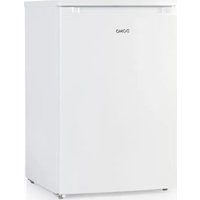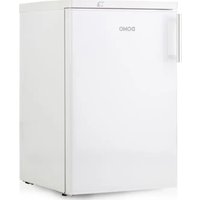
DO924DV - Freezer DOMO - Free user manual and instructions
Find the device manual for free DO924DV DOMO in PDF.


| Brand | DOMO |
| Model | DO924DV |
| Product type | Upright freezer with drawers |
| Power supply | 220-240 V ~ 50 Hz |
| Temperature adjustment | Rotary knob (positions MIN, middle, MAX) |
| Freezing capacity | Approximately 100 kg/24h (estimate) |
| Number of drawers | Multiple freezer drawers |
| Reversible door | Yes, reversible |
| Adjustable feet | Yes |
| Refrigerant | R600a (isobutane) |
| Climate class | Temperate (N/ST) - estimate |
| Energy consumption | Approx. 250 kWh/year (estimate) |
| Noise level | Approx. 40 dB (estimate) |
| Dimensions (H x W x D) | Approximately 145 x 60 x 65 cm (estimate) |
| Weight | Approximately 45 kg (estimate) |
| Main functions | Freezing, frozen food storage, ice making |
| Defrosting | Manual |
| Maintenance and cleaning | Soft cloth and soapy water; door gasket with clean water only |
| Safety | Do not use external timer; repair by professional |
| Spare parts | Available through after-sales service or online |
| Warranty | 2 years (accessories and wear parts: 6 months) |
Frequently Asked Questions - DO924DV DOMO
User questions about DO924DV DOMO
0 question about this device. Answer the ones you know or ask your own.
Ask a new question about this device
Download the instructions for your Freezer in PDF format for free! Find your manual DO924DV - DOMO and take your electronic device back in hand. On this page are published all the documents necessary for the use of your device. DO924DV by DOMO.
USER MANUAL DO924DV DOMO
HET APPARAAT VERPLAATSEN
All of our products are always submitted to a strict quality control before they are sold to you. Should you nevertheless experience problems with your device, we sincerely regret this.
In that case, we kindly request you to contact our customer service.
Our staff will gladly assist you.

+32 14 21 71 91

info@linea2000.be
Monday-Thursday:8.30-12.00 and 13.00-17.00
Friday: 8.30-12.00 and 13.00-16.30
This appliance has a two year warranty period. During this period the manufacturer is responsible for any failures that are the direct result of construction failure. When these failures occur the appliance will be repaired or replaced if necessary. The warranty will not be valid when the damage to the appliance is caused by wrong use, not following the instructions or repairs executed by a third party. The guarantee is issued with the original till receipt. All parts, which are subject to wear, are excluded from the warranty.
If your device breaks down within the 2-year warranty period, you can return the device together with your receipt to the shop where you purchased it.
The guarantee on accessories and components that are liable to wear-and-tear is only 6 months.
The guarantee and responsibility of the supplier and manufacturer lapse automatically in the following cases:
If the instructions in this manual have not been followed.
In case of incorrect connection, e.g., electrical voltage that is too high.
In case of incorrect, rough or abnormal use.
In case of insufficient or incorrect maintenance.
In case of repairs or alterations to the device by the consumer or non-authorised third parties.
If the customer used parts or accessories that are not recommended or provided by the supplier / manufacturer.
SAFETY INSTRUCTIONS
Read all instructions before use.
This appliance may be used by children from the age of 16 and up, and also by persons with a physical or sensorly limitation, as well as mentally limited persons or persons with a lack of experience and knowledge. But only on the condition that these persons have received the necessary instructions on how to use this appliance in a safe way and know the dangers that can occur by using this appliance.
Children cannot be allowed to play with the appliance.
- Maintenance and cleaning of the appliance may not be done by children, unless they are older than 16 years old and are under supervision. Keep the appliance out of reach of children younger than 16 years old.
This appliance is suitable to be used in a household environment and in similar surroundings such as:
Kitchen for personnel of shops, offices or other similar professional surroundings
Farms
Hotel or motel rooms and other surroundings with a residential character
Guest rooms or similar
- Attention: This appliance cannot be used with an external timer or a separate remote control.
- Before use, check if the voltage stated on the appliance corresponds with the voltage of the power net at your home.
- Do not let the cord hang on a hot surface or on the edge of a table or counter top.
- Never use the appliance when the cord or plug is damaged, after malfunction or when the appliance itself is damaged. In that case, take the appliance to the nearest qualified service center for check-up and repair.
- Close supervision is necessary when the appliance is used near or by children.
- The use of accessories that are not recommended or sold by the manufacturer can cause fire, electrical shock or injuries.
- Unplug the appliance when it is not in use, before assembling or disassembling any parts and before cleaning the appliance. Unplug the appliance by grasping the plug. Never unplug by pulling the cord.
-
Never place this appliance near a gas stove or electrical stove or in a place where it may come into contact with a warm appliance.
Do not use the appliance outdoors.
Only use the appliance for its intended use.
Always use the appliance on a steady, dry and level surface.
The manufacturer can not be held responsible for accidents that result from improper use of the appliance or not following the instructions described in this manual.
All repairs should be carried out by the manufacturer or its aftersales service. -
Never immerse the appliance, the cord or the plug in water or any other liquid.
Make sure that children do not touch the cord or appliance. - Keep the cord away from sharp edges and hot parts or other heat sources.
Before use, remove all packaging materials and any promotional stickers. - Keep the ventilation openings free of obstructions.
- Do not use any other electrical appliance inside the fridge, unless they are approved for this purpose by the manufacturer.
- Do not keep any explosive substances inside the appliance, like for instance aerosol cans with a flammable propellant.
- Make sure that the refrigerant circuit does not get damaged, for instance during transportation or installation.
- Make sure that the plug does not get squashed or damaged by the back of the appliance. A squashed or damaged power plug may overheat and cause fire.
Make sure that you have access to the plug of the appliance.
Do not pull the cord.
If the socket is loose, do not plug in the appliance. (risk of electric shock or fire)
This is a heavy appliance. Be careful when moving it.
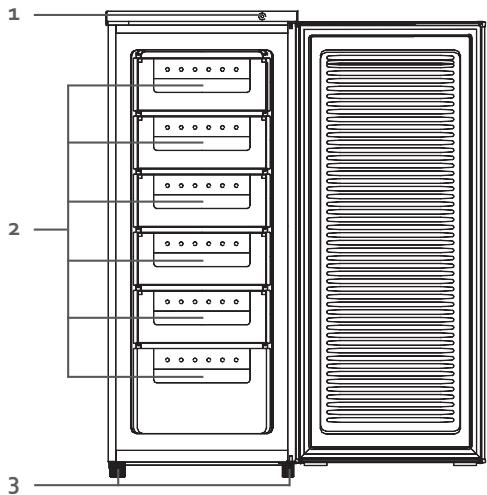
PARTS
- Temperature control knob
- Freezer drawers
- Levelling feet
INSTALLATION
- Remove the exterior and interior packing, wipe the outside thoroughly with a soft dry cloth and the inside with a wet, lukewarm cloth.
-
Avoid direct sunlight and heat. Direct sunlight may affect the acrylic coating. Heat sources nearby will cause higher electricity consumption.
-
Avoid very moist places.
- Before connecting your refrigerator to the power supply, check that the voltage stated on the rating label of your appliance corresponds to the voltage in your home. A different voltage could damage the appliance.
- Make sure that the air can circulate around the refrigerator. Spacers have been provided with the refrigerator to ensure that it cannot be pushed right up against the wall. Fasten these to the back of the refrigerator.
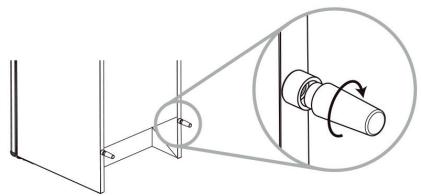
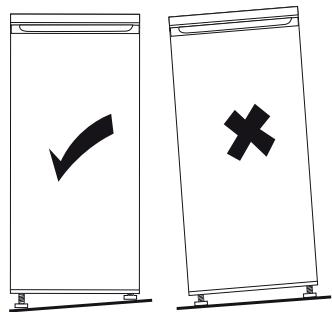
For uneven surfaces, front feet can be aligned.
Install the handle.
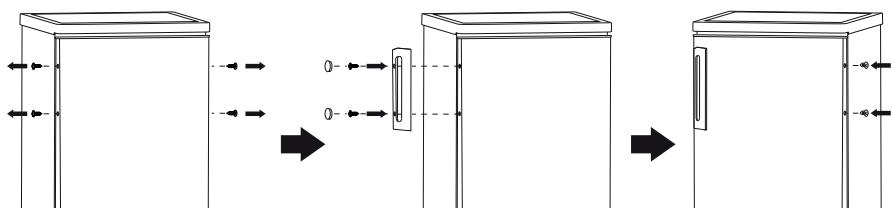
- Allow the appliance to stand for 2 hours before turning it on. This allows the cooling agent to settle.
After installation, leave the freezer for 12 hours before turning it on. This way the refrigerant can settle.
DOORCONVERSION
The freezer has a reversible door. If you need to hinge your door on the opposite side it is recommended that you call your local authorised service agent to make this conversion or ask
a technician.
Before you reverse the door, you should ensure the appliance is unplugged and empty.
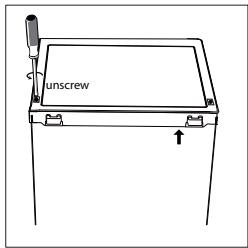
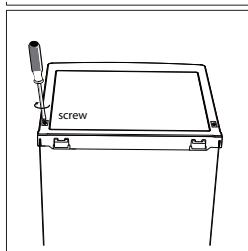
- Remove the screws on the back of the top cover.
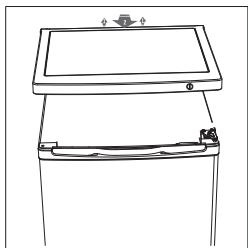
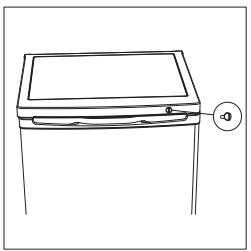
- Remove the top cover and temperature control from the freezer.
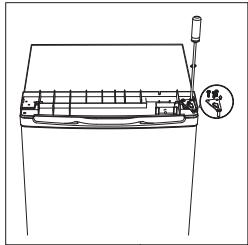
- Remove the three screws and then remove the top hinge that holds the door in place. Lift the door and place it on a padded surface to prevent it from being scratched.
- Remove the bottom screw, hinge bracket and adjustable foot from the bottom of the appliance.
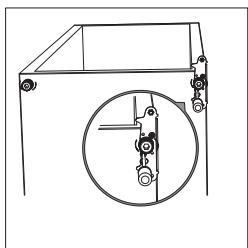
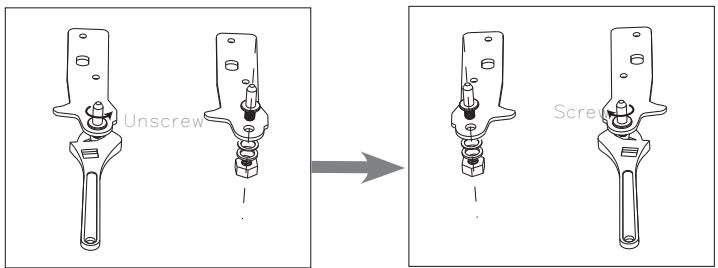
- Take the hinge pin out of the hinge bracket. Turn the bracket around and tighten the pin again.
- Attach the screws, hinge bracket and adjustable foot to the opposite side of the bottom. Loosely secure.
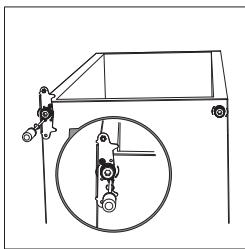
- Carefully set the door back into place. Ensure the door is aligned horizontally and vertically so that the seals are closed on all sides before finally tightening the top hinge. Insert the hinge back and screw it to the top of the appliance.
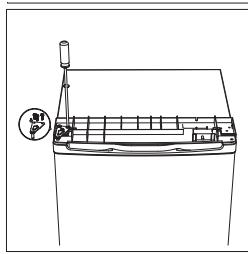
- Put the top cover back and fix it in place with the screws.
- Replace the temperature control.
MOVING YOUR APPLIANCE
If the appliance is turned off for any reason, wait for 10 minutes before turning it back on. This will allow the refrigeration system pressures to equalise before restarting.
- Turn off the appliance and unplug it from the mains socket. Remove all food. Also remove all mobile parts (shelves, accessories, etc.) or fix them into the freezer to avoid any shock.
- Relocate and install. If the appliance has been left on its side for any length of time, leave it standing upright for at least 10 minutes.
- Your appliance uses isobutane (R600a) as a refrigerant. Although R600a is an environmentally friendly and natural gas, it is explosive. Therefore you should be careful during shipment and installation to prevent your appliance's cooler elements from being damaged. In the event of a leak caused by damage to the cooler elements, move your fridge from open flame or heat sources and ventilate the room where the appliance is located for a few minutes.
USE
TEMPERATURE CONTROL
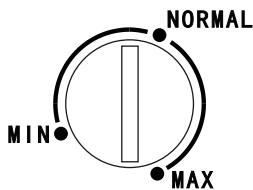
The freezer is controlled with a temperature control knob located inside the appliance. Adjust the control knob as desired to suit your individual preference. There
are three different setting, with MIN being the warmest and MAX the coldest.
- The running time and temperature are affected by where the freezer is located, how often the door is opened and the temperature of the room the freezer is located in.
- When you use the appliance for the first time or after defrosting, adjust the control knob to the coldest setting for at least 2 hours before introducing food to be stored, and then readjust to the middle setting.
FREEZING AND STORING FOOD IN THE FREEZER
Use the freezer
To store deep-frozen food.
To make ice cubes.
To freeze food.
Note: Ensure that the freezer door has been closed properly. Avoid opening the freezer drawers unnecessarily.
Purchasing frozen food
- Packaging must not be damaged.
Use by the 'use by /best before/best by/' date.
If possible, transport deep-frozen food in an insulated bag and place quickly in the freezer.
Freezing fresh food
Freeze fresh and undamaged food only. To retain the best possible nutritional value, flavour and colour, vegetables should be blanched before freezing.
Aubergines, peppers, zucchini and asparagus do not require blanching.
Note: Keep food to be frozen away from food which is already frozen.
The following foods are suitable for freezing: Cakes and pastries, fish and seafood, meat, game, poultry, vegetables, fruit, herbs, eggs without shells, dairy products such as cheese and butter, ready meals and leftovers such as soups, stews, cooked meat and fish, potato dishes, souffles and desserts.
The following foods are not suitable for freezing: Types of vegetables, which are usually consumed raw, such as lettuce or radishes, eggs in shells, grapes, whole apples, pears and peaches, hard-boiled eggs, yoghurt, soured milk, sour cream, and mayonnaise.
Packing frozen food
To prevent food from losing its flavour or drying out, place food in airtight packaging.
- Place food in packaging.
- Remove air.
- Seal the wrapping.
- Label packaging with contents and dates of freezing.
Suitable packaging: Plastic film, tubular film made of polyethylene, aluminium foil, freezer containers.
Recommended storage times of frozen food in the freezer
These times vary depending on the type of food. The food that you freeze can be preserved from 1 to 12 months (minimum at -18^ ).
| Food | Storage time |
| Bacon, casseroles, milk | 1 month |
| Bread, ice cream, sausages, pies, prepared shellfish, oily fish | 2 months |
| Non-oily fish, shellfish, pizza, scones and muffins | 3 months |
| Ham, cakes, biscuits, beef and lamb chops, poultry pieces | 4 months |
| Butter, vegetables (blanched), eggs whole and yolks, cooked crayfish, minced meat (raw), pork (raw) | 6 months |
| Fruit (dry or in syrup), egg whites, beef (raw), whole chicken, lamb (raw), fruit cakes | 12 months |
Never forget:
- When you freeze fresh foods whit a 'use by /best before/best by/' date, you must freeze them before the expiry of this date.
- Check that the food was not already frozen. Indeed, frozen food that has thawed completely must not be refrozen.
Once defrosted, food should be consumed quickly.
CLEANING AND MAINTENANCE
CLEANING
Do not use abrasive cleaning agents or solvents.
- Turn the appliance off. Disconnect the mains plug from the mains socket.
- Take out the food and store in a cool location.
- Clean the appliance with a soft cloth, warm water and detergent.
- Wipe the door seal with clear water only and then wipe dry thoroughly.
- After cleaning reconnect and adjust the temperature control knob as desired.
- Put the food back into the appliance.
DEFROSTING
A layer of frost in the freezer will impair refrigeration of the frozen food and increases power consumption. Remove the layer of frost regularly. Do not scrape off frost or ice with a knife or pointed object. Doing this may damage the refrigerant tubes.
- Remove the frozen food and place temporarily in a cool location.
- Disconnect the appliance from the mains socket.
- To accelerate the defrosting process, place a pan of hot water on a stand in the freezer.
- Wipe up condensation with a cloth or sponge.
- Wipe dry the freezer compartment.
- Plug in the appliance and adjust the temperature control knob as desired.
- Put the frozen food back in the freezer.
VACATION TIME
For short vacation periods, leave the control knobs at their usual settings. During longer absences;
- Remove all foods.
- Disconnect from electrical outlet.
Clean the refrigerator thoroughly, including defrost pan. - Leave door open to avoid possible formations of condensate, mold or odors.
POWER FAILURE
- Most power failures are corrected within an hour or two and will not affect your refrigerator temperatures. However, you should minimize the number of door openings while the power is off. During power failures of longer duration, take steps to protect your food by blacking dry ice on top of packages.
- Frozen food should not be affected if the power failure lasts for less than 15 hours.
- Do not refreeze frozen foods that have thawed completely. The food may be dangerous to eat.
TROUBLESHOOTING
Frequently, a problem is minor and a service call may not be necessary, use this trouble shooting guide for a possible solution.
Does not work.
- Check connection of power cord to power source.
Plug in unit
Use proper voltage.
The appliance is too cold.
The temperature has been set too cold. Raise the temperature slightly.
The food is not frozen.
The temperature has not been set correctly. Reset the temperature.
The door has been left open too long. Only open the door when it is necessary.
The appliance is positioned too close to a source of heat.
Formation of ice on the seal of the door.
- The seal of the door does not seal properly. Thaw the ice on the seal and reshape the rubber with your hand so that the door closes properly.
Unusual noise.
The appliance is touching the wall or another object. Gently move the appliance.
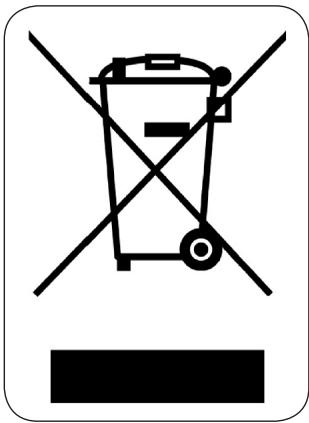
This symbol on the product or on its packaging indicates that this product may not be treated as household waste. Instead it must be brought to the applicable collection point for recycling of electrical and electronic equipment. By ensuring this product is disposed of correctly, you will help prevent potential negative consequences for the environment and human health, which could otherwise be caused by inappropriate waste handling of this product. For more detailed information about recycling of this product, please contact your local city office, your household waste disposal service or the shop where you purchased the product.
The packaging is recyclable. Please treat the packaging ecologically.