
HBP60 - Range hood HOOVER - Free user manual and instructions
Find the device manual for free HBP60 HOOVER in PDF.



| Product type | Extractor hood |
| Brand | HOOVER |
| Model | HBP60 |
| Width | 60 cm |
| Weight | 15 kg (estimated) |
| Electrical supply | 220-240 V, 50 Hz |
| Total power | 200 W (estimated) |
| Lighting | 2 bulbs of 40 W max, type E14 |
| Number of motor speeds | Multiple speeds (min. 3) |
| Air outlet diameter | 120 mm (extraction version) |
| Use version | Extraction (external venting) or recirculation (charcoal filter) |
| Grease filter | Washable (needle felt or stretched aluminum) |
| Charcoal filter | Active, non-washable, replace every 4 months |
| Minimum distance to cooking surface | 65 cm (electric), 70 cm (gas or mixed) |
| Maximum length of exhaust duct | 4 meters with few bends |
| Installation | Wall-mounted or under-element, with drilling templates provided |
| Exterior cleaning | Cloth soaked with alcohol or neutral liquid detergent |
| Safety instructions | Do not flambé under the hood, disconnect before maintenance |
| Repairability | Filters and bulbs replaceable by the user |
Frequently Asked Questions - HBP60 HOOVER
User questions about HBP60 HOOVER
0 question about this device. Answer the ones you know or ask your own.
Ask a new question about this device
Download the instructions for your Range hood in PDF format for free! Find your manual HBP60 - HOOVER and take your electronic device back in hand. On this page are published all the documents necessary for the use of your device. HBP60 by HOOVER.
USER MANUAL HBP60 HOOVER
| D | MONTAGE- UND GEBRAUCHSANWEISUNG |
| GB | INSTRUCTION ON MOUNTING AND USE |
| F | PRESCRIPTIONS DE MONTAGE ET MODE D'EMPLOI |
| E | MONTAJE Y MODO DE EMPLEO |
| P | INSTRUÇÕES PARA MONTAGEM E UTILIZAÇÃO |
| I | ISTRUZIONI DI MONTAGGIO E D'USO |
| NL | MONTAGEVOORSCHRIFTEN EN GEBRUIKSAANWIIIZING |
| RU | ИНСТРУКЦИμ ПО МОНТАЖУ У ЭКСПЛУАТАЦИИ |
| CZ | NÁVOD NA MONTÁŽ A POUŽÍVÁNÍ |
| GR | ΟΔΗΓΙΕΣ ΤΟΠΟΘΕΤΗΣΗΣ ΚΑΙ ΧΡΗΣΗΣ |
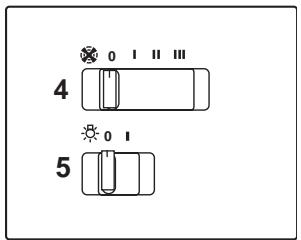
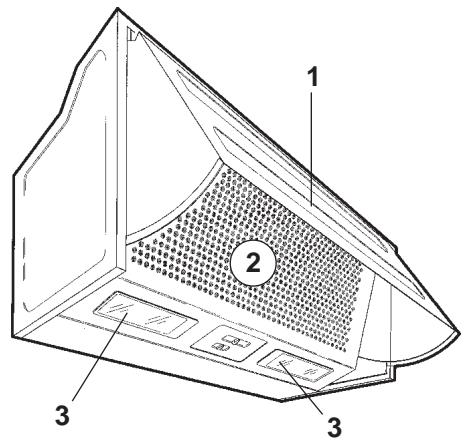
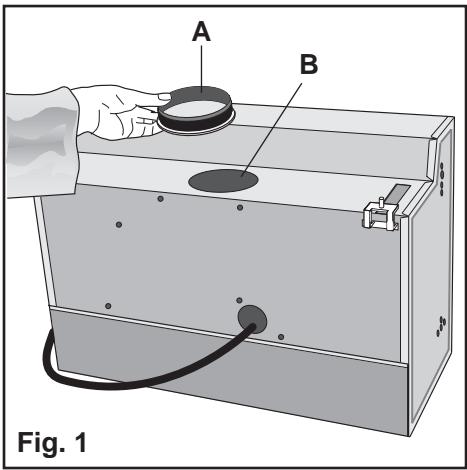
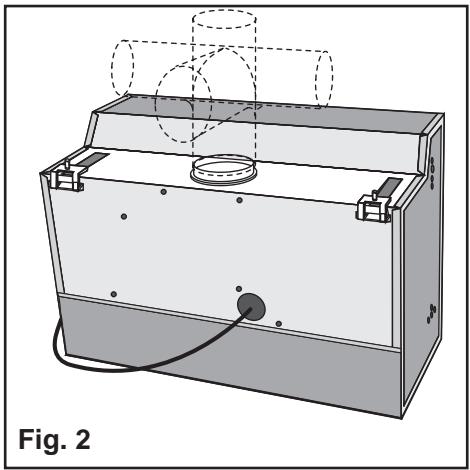
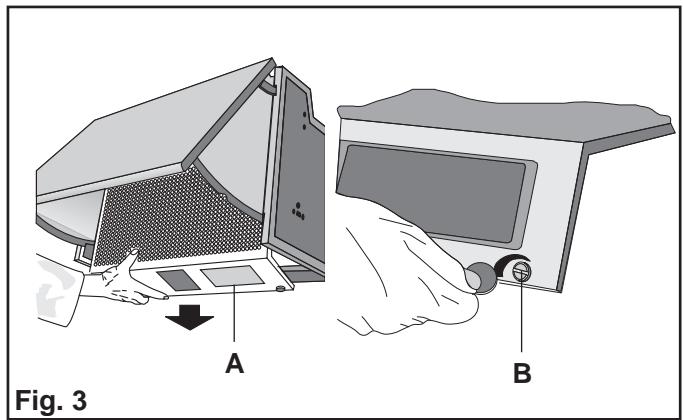
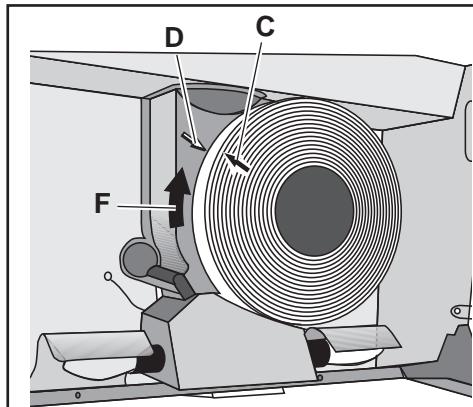
Fig. 4
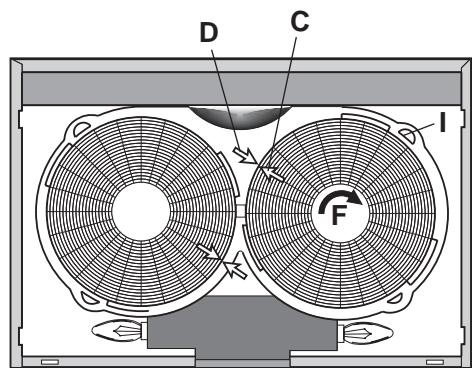
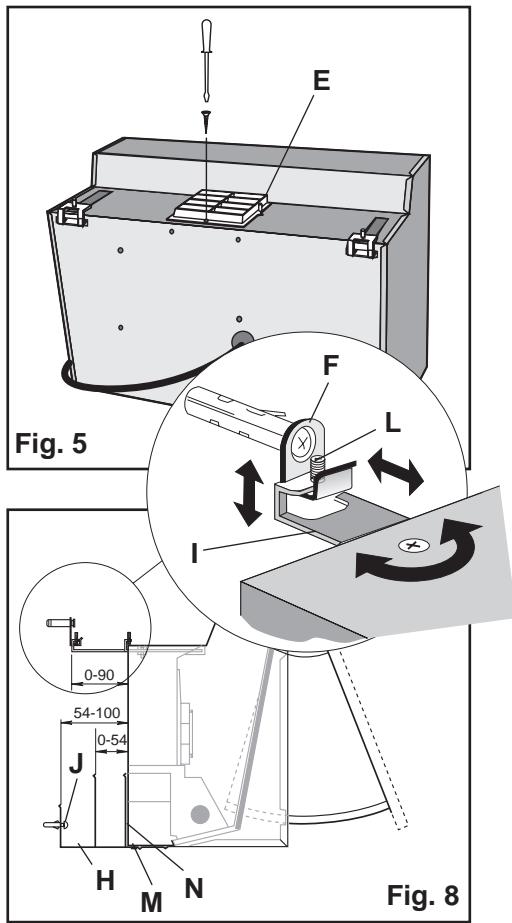
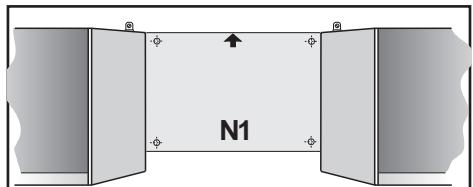
Fig. 6
![graph TD A["Rectangular Block 1"] -->|F| B["Rectangular Block 2"] C["Rectangular Block 1"] -->|G| B["Rectangular Block 2"] D["Rectangular Block 1"] -->|●| C["Rectangular Block 2"] E["Rectangular Block 2"] -->|●| C["Rectangular Block 2"]](/content/2020/04/131560/images/e98039038cfc008ad5479bbd8f7bf955e5a7b66dbef04866908401689d03a6e6.jpg)
Fig. 7

Gerateansicht
Two systems are available:
External exhausting version
In this case the fumes are conveyed outside by means of a special pipe connected with the coupling flange A, placed in the hole B (fig. 1).
According to your exigencies the pipe can be directed either toward the ceiling or towards the walls (fig. 2).
Internal recycling version (filtering)
The air is filtered through a carbon filter and returned to the room.
To use the hood in this version proceed as follows:
— Order the carbon filter (1 filter for a hood with one motor, 2 filters for a hood with 2 motors) from your Service Centre, making sure to specify the hood model.
— Remove the grid A using locking device B (fig. 3).
— Insert the carbon filter between points I so that arrow D on the fan cowling of the hood matches up with reference point C on the carbon filter.
Turn the carbon filter clockwise (F) until it locks (fig. 4).
The deflector E (fig. 5) must be fitted on the hole B (fig. 1) fixing it with the special screw provided.
The deflector conveys the air frontwards avoiding to dirty the rear wall.
Installation
When installed. the hood must be not less than 65 cm. above electric burners or 70 cm. above gas or mixed-fuel burners.
In the vented exhaust version the fumes outlet duct must be 120 mm. in diameter.
In the horizontal runs the duct must be slightly slanted (about 10° ) and directed upwards to vent the air easily from the room
to the outside.
Do not tile, grout or silicone this appliance to the wall. Surface mounting only.
Do not fix chimney flue to furniture or fly over shelves unless the chimney flue can be easily removed, in case maintenance is ever required.
Electrical connection
Before completing any connection, make sure the house voltage corresponds with the voltage indicated on the label affixed inside the hood
It is advisable to call a qualified technician to make the electrical connection.
Appliance fitted with plug.
Connect it to a socket which conforms with current regulations.
If you intend to connect it directly to the electric mains, remove the plug and fit an approved bipolar switch with a minimum contact opening of no less than 3mm.
If the plug is not accessible once it has been inserted in the socket, it will however be necessary to fit an approved bipolar switch with a minimum contact opening of no less than 3mm.
Appliance without plug
Fit an approved plug or an approved bipolar switch with a minimum contact opening of not less than 3mm.
The manufacturers are not liable for any problems caused by the user's failure to observer the above instructions.
Mounting the hood on the wall
Make use of the scheme nr. 1 provided, applying it on the wall.
Drill where indicated (fig. 6).
Place the hooks F provided with screws and blocks in the upper holes.
Place the expansion plugs G supplied with the hood in the lower holes (fig. 7).
Fix the angle frame H (using either the long or the short arm, depending on the depth of the side cupboards) to the wall at the right height.
Adjust the position of the upper brackets I, fix the hood to the hooks F, check that the hood is at the right height (to eventually adjust
the height work on the screws L, fig. 8).
Fix the hood to the lower angle frame by means of the screws M.
For a further adjustment act on the screws J through the holes N (fig. 8).
Fixing the front panel
Remove the grid.
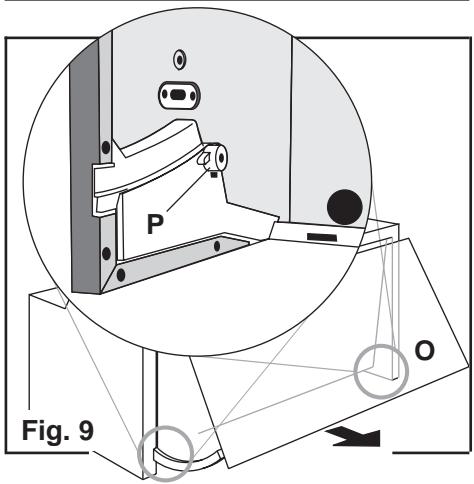
Take off the door O (fig. 9) turning the rear locking knobs P.
Apply the scheme nr. 3 on the rear side of the front panel, considering that the arrow indicates the upper side (fig. 10), drill where indicated by the scheme.
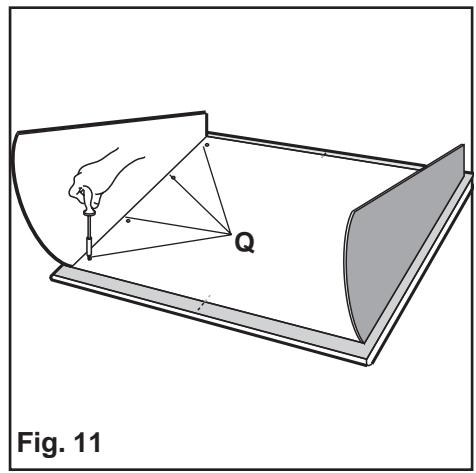
Then fix the door to the front panel by means of the screws Q (fig. 11).
Fixing
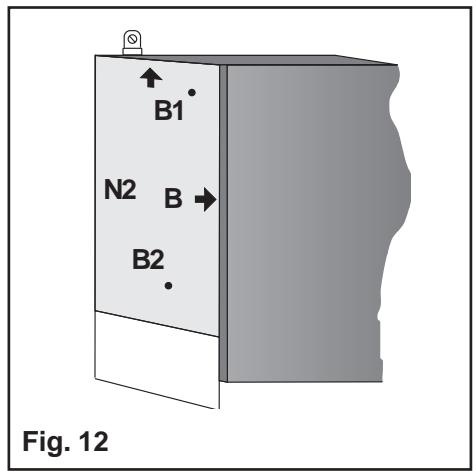
Apply the scheme nr. 2 on the side of the right cupboard, so that the side B matches the front part of the cupboard (disregard the thickness of the flap) and drill two holes 2,5 mm diameter in the points B1 and B2 (fig. 12).
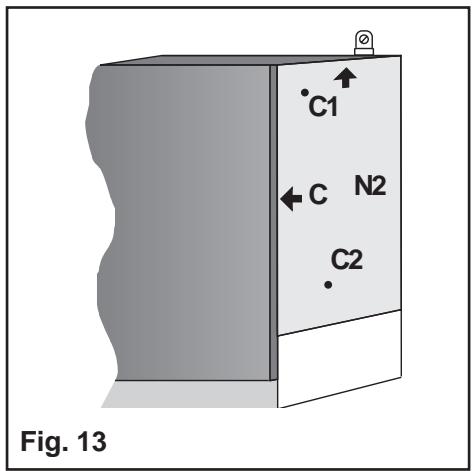
Then apply the same scheme on the side of the left cupboard, matching the side C with the front part of the cupboard (disregard the thickness of the flap) and drill two holes 2,5 mm diameter in the points C1 and C2 (fig. 13).
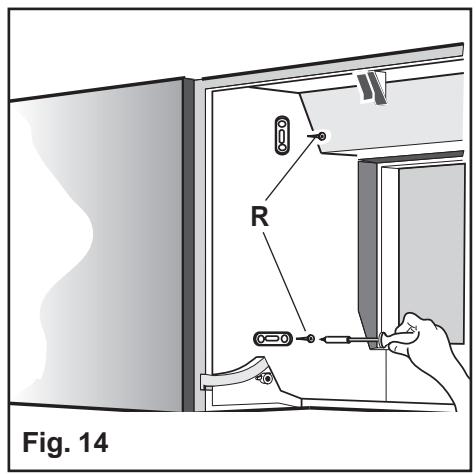
Fix the hood to the cupboards by means of the screws R (fig. 14).
Replace the door, inserting it first in the upper then in the lower slides, turn the rear locking knobs P and then mount the metal filters, following in revers, the operations described under paragraph “Internal recycling version”.
Adjust the angle frame tightly to the wall, making use of the apposite screws M (fig. 8).
The angle frame has one long arm and one short arm, to be used in alternative depending on the depth of the cupboards.
Using the hood
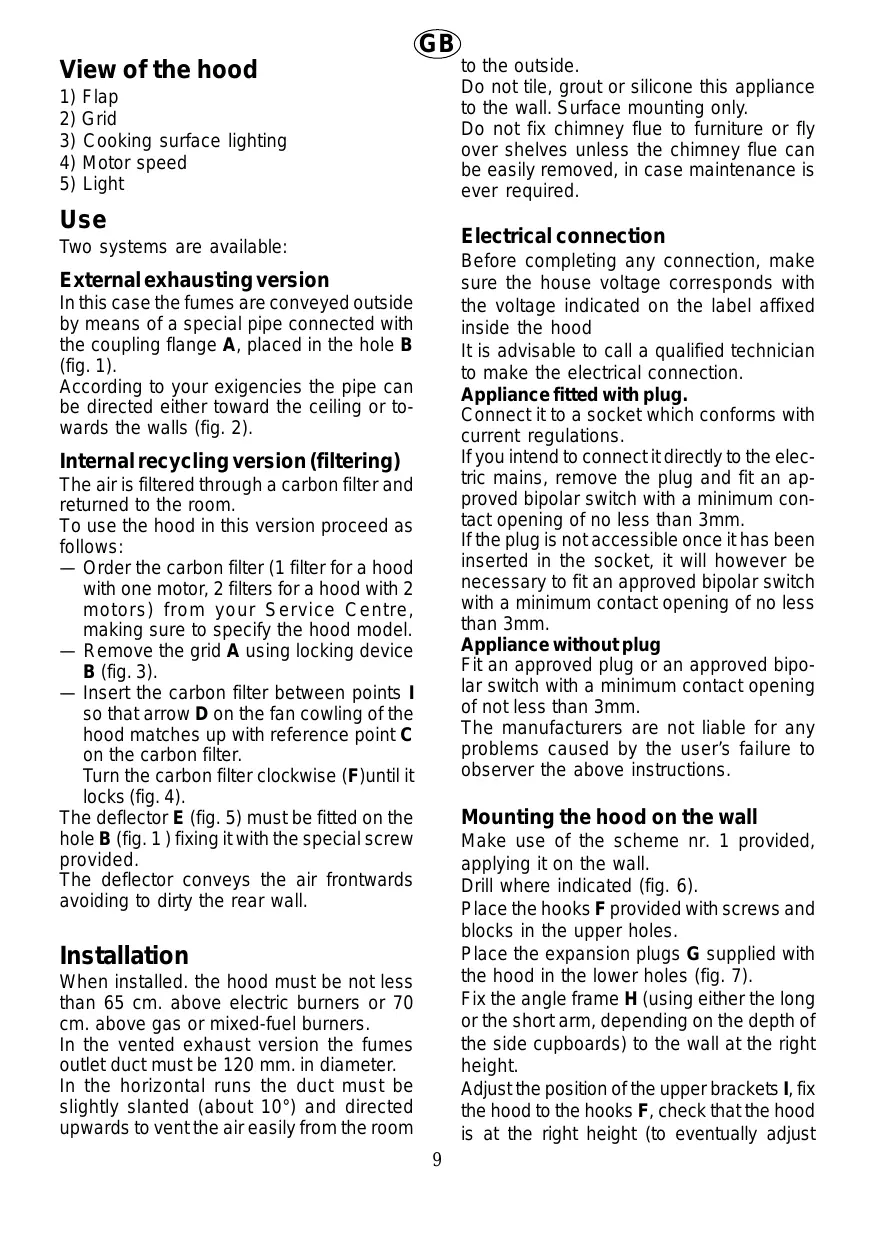
— The hood is provided with several speeds. For the best performance, we recommend using the low speeds in normal
conditions and the high speeds in particular cases of strong odour and vapour concentration. The hood is fitted with a microswitch connected to the flap: with the flap pushed in, the motors switch off; with the flap pulled out, the function previously set will be reactivated.
— It is advisable to switch on the extractor hood a few minutes before starting cooking and then to leave it running for approximately 15 minutes afterwards to ensure that all odours are extracted.
Warning!
— The hood cannot be connected to flues of other appliances that run on energy sources other than electricity.
— When the hood is used at the same time of other appliances that run on energy sources other than electricity, provision must be made for an adequate supply of air.
— No food must be cooked flambé underneath the hood.
The use of an unprotected flame is dangerous for the filters and could cause fires.
Therefore, never use an open flame under the hood. When frying foods, never leave the pan alone because the cooking oil could flare up.
— Please, keep to the provisions of official directives regarding the question of fume discharge.
— The manufacturers refuse to accept any responsibility for damage to the hood or its catching on fire because of failure to observe the above instructions.
Suggestions for the installation and use of the hood
— The horizontal sections of the pipe must be slanted slightly upwards (about 10%) to ensure an easy flow of the air outwards.
— The best performance of the unit is obtained in the external exhaust model (suction), therefore in the limits of the possibilities it is advised to use the ex-
ternal exhaust (suction) type.
— The best performances are obtained with short pipes (max. 4 m) and with few curves.
Maintenance
Before performing any maintenance operation, disconnect the hood from the electricity.
Grease filter
The grease filter traps the suspended grease particles.
There are three different types of grease filter:
1) Synthetic grease filter - washable (10/15 mm thick): With normal domestic use, the synthetic filter should be washed in lukewarm water at least every 30 days. Do not wring after washing.
2) Special paper filter - not washable (approx. 1 mm thick with pink diagonal stripes): The filter should be replaced when the stripes become visible through the holes of the grid.
3) Filters in layers of stretched aluminium: Should be washed in the dishwasher or in soapy water at least once every 30 days of normal use or at more or less frequent intervals, depending on the use of the appliance. Let the filter dry thoroughly before refitting it.
To remove the grease filters, proceed as follows:
To remove the filter, proceed as follows:
a) Remove the grid (fig.3).
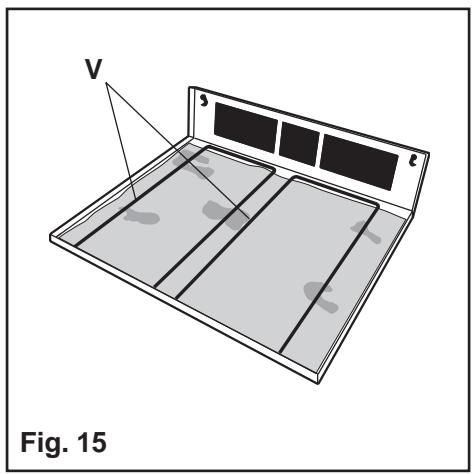
b) Extract the filter after removing clips V (fig.15).
c) It is advisable to clean the grill whenever the filter is washed.
d) Ensure that the grill is completely dry before refitting it.
Carbon Filter
The active carbon filter serves to dissolve odours from food that is cooking.
It cannot be washed or regenerated.
Replace it every four months.
To dismount the carbon filters refer to what is described on paragraph "Internal recycling version".
Attention
Failure to observe the rules for cleaning the appliance and changing and cleaning the filters may cause fires. Therefore, we recommend observing these instructions.
Replacement of lamps
Disconnect the appliance from the mains. Remove the metal filters.
For the lighting, use a normal commercially obtainable lamp of 40 W (E 14).
— Before calling for technical assistance because the hood fails to light up, make sure the lamps are well mounted.
Cleaning
To clean the outside of the hood use a cloth moistened with denatured alcohol or neutral liquid detergents. Never use products containing abrasives.
Presentation de la hotte
Do not tile, grout or silicone this appliance to the wall. Surface mounting only.
- GERATEANSICHT
- EXTERNAL EXHAUSTING VERSION
- INTERNAL RECYCLING VERSION (FILTERING)
- INSTALLATION
- ELECTRICAL CONNECTION
- APPLIANCE FITTED WITH PLUG
- APPLIANCE WITHOUT PLUG
- MOUNTING THE HOOD ON THE WALL
- FIXING THE FRONT PANEL
- FIXING
- USING THE HOOD
- WARNING
- SUGGESTIONS FOR THE INSTALLATION AND USE OF THE HOOD
- MAINTENANCE
- GREASE FILTER
- CARBON FILTER
- ATTENTION
- REPLACEMENT OF LAMPS
- CLEANING
- PRESENTATION DE LA HOTTE
Brand : HOOVER
Model : HBP60
Category : Range hood