
CP 78S F8 - Air-conditioner HOTPOINT - Free user manual and instructions
Find the device manual for free CP 78S F8 HOTPOINT in PDF.



| Brand | HOTPOINT |
| Model | CP 78S F8 |
| Product type | Gas cooker with electric oven |
| Oven dimensions (W x D x H) | 43.5 x 40 x 32 cm |
| Oven volume | 56 litres |
| Warming drawer dimensions (W x D x H) | 46 x 42 x 8.5 cm |
| Gas supply | Liquefied gas (G30/G31) or natural gas (G20/G25) – adaptable |
| Power supply | 230-240 V ~ 50/60 Hz |
| Maximum electrical power | 2800 W (Pizza function) |
| Oven cooking functions | Traditional, Multi-cooking, Grill, Gratin, Pizza, Pastry, Fast Cooking, Defrost |
| Automatic cleaning | Pyrolysis (Fast Clean) – adjustable duration from 60 to 120 minutes |
| Hob burners | 3 gas burners: Rapid (3.00 kW), Semi-rapid (1.90 kW), Auxiliary (1.00 kW) – flame safety |
| Ignition | Instant electronic ignition |
| Programmer | Electronic: timer, cooking duration and end, delayed cooking |
| Oven lighting | Bulb 15 W, base E14, 230-240 V |
| Safety | Automatic door lock during pyrolysis, gas safety on burners (thermocouple), omnipolar switch required |
| Sound level | Not specified |
| Weight | Approximately 50 kg (estimate) |
| Care and cleaning | Clean with warm water, avoid abrasive products; pyrolysis for the oven; regular cleaning of burners |
| Spare parts and repairability | Original parts exclusively from approved centers; replaceable bulb and injectors |
| Installation | Free-standing or built-in (class 2 / subclass 1), requires ventilation and gas connection by a professional |
Frequently Asked Questions - CP 78S F8 HOTPOINT
User questions about CP 78S F8 HOTPOINT
0 question about this device. Answer the ones you know or ask your own.
Ask a new question about this device
Download the instructions for your Air-conditioner in PDF format for free! Find your manual CP 78S F8 - HOTPOINT and take your electronic device back in hand. On this page are published all the documents necessary for the use of your device. CP 78S F8 by HOTPOINT.
USER MANUAL CP 78S F8 HOTPOINT
natural_image
Simple line drawing of a house interior with a stove, air ducts, and airflow indicators (no text or symbols)natural_image
Simple line drawing of a house interior with a stove, air ducts, and heating elements (no text or symbols)natural_image
Technical line drawing of a mechanical assembly with a central component and base (no text or symbols)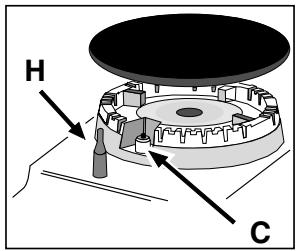
To maintain the efficiency and safety of this appliance, we recommend that you do the following:
• only call the Service Centres authorised by the manufacturer
• always use original spare parts
1 This appliance is intended for non-professional use within the home.
2 These instructions are only for those countries whose symbols appear in the booklet and on the matriculation plate of the appliance.
3 This owner's manual is for a class 1 appliance (installed independently) or class 2 - sub-class 1 appliances (installed between two cabinets).
4 Before using your appliance, read the instructions in this owner's manual carefully since you will find all the instructions you require to ensure safe installation, use and maintenance. Always keep this owner's manual close to hand since you may need to refer to it in the future.
5 When you have removed the packing, check that the appliance is not damaged. If in doubt, do not use the appliance and contact professionally qualified personnel. Never leave the packing components (plastic bags, foamed polystyrene, nails, etc.) within the reach of children since they are a source of potential danger.
6 The appliance must be installed only by a qualified person in compliance with the instructions provided. The manufacturer declines all responsibility for improper installation which may harm persons and animals and damage property.
7 The electrical safety of this appliance can only be guaranteed if the cooker is correctly and efficiently earthed, in compliance with regulations on electrical safety. Always ensure that the earthing is efficient; if you have any doubts call in a qualified technician to check the system. The manufacturer denies all responsibility for damage resulting from a system which has not been earthed.
8 Before plugging the appliance into the mains, check that the specifications indicated on the date plate (on the appliance and/or packaging) correspond to those of the electrical and gas mains of your home.
9 Check that the electrical capacity of the system and sockets will support the maximum power of the appliance, as indicated on the data plate. If in doubt, consult a professionally qualified technician.
10 An omnipolar switch with a contact opening of at least 3 mm or more, is required for the installation.
11 If the socket and appliance plug are not compatible, have the socket replaced with a suitable model by a qualified technician. The latter, in particular, will also have to ensure that the cross section of the socket cables are suitable for the power absorbed by the appliance. The use of adapters, multiple sockets and/or extensions, is not recommended. If their use cannot be avoided, remember to use only single or multiple adapters and extensions which comply with current safety regulations. In these cases, never exceed the maximum current capacity indicated on the single adapter or extension and the maximum power indicated on the multiple adapter.
12 Do not leave the appliance plugged in if it is not in use. Switch off the main switch and gas supply when you are not using the cooker.
13 The openings and slots used for ventilation and dispersion of heat on the rear and below the control panel must never be covered.
14 The user must not replace the supply cable of this appliance. Always call an after-sales servicing centre authorised by the manufacturer in the case of cable damage or replacement.
15 This appliance must be used for the purpose for which it was expressly designed. Any other use (for example: heating rooms) is considered to be improper and consequently dangerous. The manufacturer declines all responsibility for damage resulting from improper and irresponsible use.
16 A number of fundamental rules must be followed when using electrical appliances. The following are of particular importance:
- do not touch the appliance when your hands or feet are wet
• do not use the appliance barefooted - do not use extensions, but if these are necessary caution must be exercised.
- never pull the power supply cable or the appliance to unplug the appliance plug from the mains.
- never leave the appliance exposed to atmospheric agents (rain, sun etc.)
- do not allow children or persons who are not familiar with the appliance to use it, without supervision.
17 Always unplug the hob from the mains or switch off the main switch before cleaning or carrying out maintenance operations.
18 If you are no longer using an appliance of this type, remember to make it unserviceable by unplugging the appliance from the mains and cutting the supply cable. Also make all potentially dangerous parts of the appliance, safe, above all for children who could play with the appliance.
19 To avoid accidental spillage do not use cookware with uneven or deformed bottoms on the burners. Turn the handles of pots and pans inwards to avoid knocking them over accidentally.
20 Some parts of the appliance remain heated for a long time after use. Make sure not to touch them.
21 Never use flammable liquids such as alcohol or gasoline, etc. near the appliance when it is in use.
22 When using small electric appliances near the hob, keep the power supply cable away from the hot parts.
23 Make sure the knobs are in the “•”/“i” position when the appliance is not in use.
24 When the appliance is in use, the heating elements and some parts of the oven door become extremely hot. Make sure you don't touch them and keep children well away.
25 Gas appliances require regular air exchange to ensure trouble-free performance. When installing the cooker, follow the instructions provided in the paragraph on "Positioning" the appliance.
26 Some of the models have a glass hob cover. This could crack if overheated so make sure all the burners or electric hot plates are off before closing it.
27 If the cooker is placed on a pedestal, take the necessary precautions to prevent the same from sliding off the pedestal itself.
The following instructions should be read by a qualified technician to ensure that the appliance is installed, regulated and technically serviced correctly in compliance with current regulations.
Important: remember to unplug the appliance from the mains before regulating the appliance or carrying out any maintenance work.
Positioning
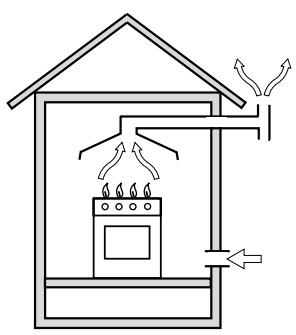
Important: this appliance may be installed and used only in permanently ventilated rooms in compliance with current Norms in force. The following requirements must be observed.
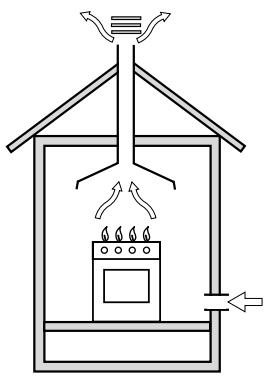
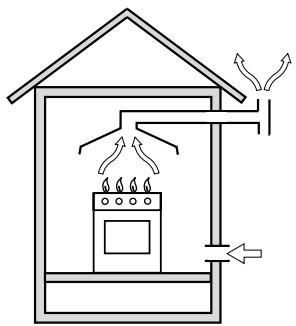
a) The room must be equipped with an exhaust system that vents the combustion fumes to the outside. It may consist of a hood or an electric fan that automatically starts each time the appliance is turned on.
natural_image
Simple line drawing of a house interior with a stove, roof, and air duct (no text or symbols)In a chimney stack or branched flue (exclusively for cooking appliances)
natural_image
Simple line drawing of a house interior with a stove, air ducts, and cooling unit (no text or symbols)Directly to the outside
b) The room must also have a system to permit proper air circulation, needed for combustion to occur normally. The flow of air needed for combustion must not be less than 3 m^3/h per kW of installed power. The air circulation system may take air directly from the outside by means of a pipe with an inner cross section of at least 100 cm^2 ; the opening must not be able to be accidentally blocked. For those appliances not equipped with a safety device for accidental flame loss, the ventilation apertures must be increased by 100%, with the minimum being 200 cm^2 (Fig. A). The system can also provide the air needed for combustion by indirect means, i.e. from adjacent rooms fitted with air circulation tubes as described above. However, these rooms must not be common rooms or bedrooms.
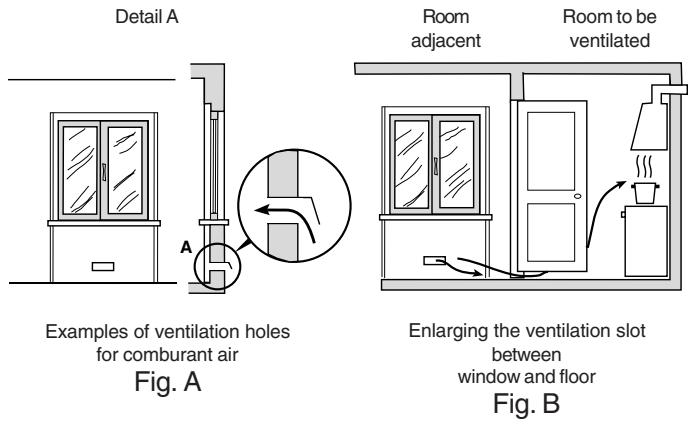
c) Intensive and prolonged use of the appliance may result in the need for supplemental air circulation, e.g. opening windows or increasing mechanical venting (if present).
d) Liquid petroleum gas descends towards the floor as it is heavier than air. Thus, rooms containing LPG cylinders must also be equipped with apertures to the outside for ventilation of gas in the event of leaks. LPG cylinders must not, therefore, be installed or stored in rooms or storage areas that are below ground level (cellars, etc.) whether they are partially or completely full. It is a good idea to keep only the cylinder being used in the room, positioned so that it is not subject to heat produced by external sources (ovens, fireplaces, stoves, etc.) which could raise the temperature of the cylinder to above 50°C.
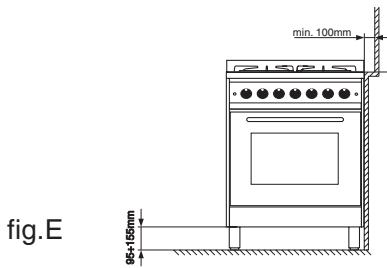
Prior to installing the cooker, 95 ÷ 155 mm high supporting feet (provided) should be fitted into the holes to be found in the bottom of the cooker (fig.F). These feet are screw-adjustable and whenever necessary should be used to make sure the cooker stands level.
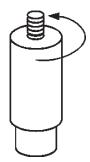
fig.F
Installation of the cooker
The appliance can be installed next to furniture units which are no taller than the top of the cooker hob. The wall in direct contact with the back panel of the cooker must be made of non-flammable materials. During operation the back panel of the cooker could reach a temperature of 50^ C above room temperature. For proper installation of the cooker, the following precautions must be taken:
For trouble-free operation of appliances installed in housing units, the minimum distances shown in fig.E should be observed. Adjacent surfaces and the wall at the rear should also be able to withstand an overheating temperature of 65^ C
a) The appliance can be placed in a kitchen, dining room or bedsit, but not in a bathroom.
b) Any hoods must be installed according to the requirements in the installation manual for the hoods themselves.
c) If the cooker is installed beneath a wall cabinet, the latter must be situated at a minimum of 420 mm above the hob. The minimum distance between the worktop and kitchen units made of combustible material is 700 mm (Fig. C and D).
d) The wall in direct contact with the back panel of the cooker must be made of non-flammable materials.

Fig. C
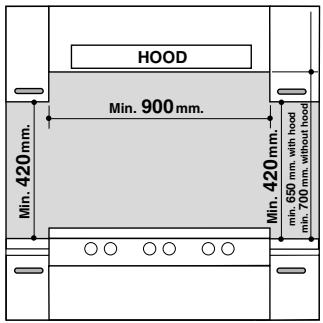
Fig. D
Gas connecting
The appliance should be connected to the gas mains or to a gas cylinder in compliance with current Norms in force. Before making the connection, check that the cooker is regulated for the gas supply you are using. If not, follow the instructions indicated in the paragraph “Adapting to different types of gas.” On some models the gas supply can be connected on the left or on the right, as necessary; to change the connection, reverse the position of the hose holder with that of the cap and replace the gasket (supplied with the appliance). When using liquid gas from a cylinder, install a pressure regulator which complies with current Norms in force.
Important: Check that the supply pressure complies with the values indicated in table 1 “Burner and Nozzle Characteristics” since this will ensure safe operation, correct consumption and ensure a longer life to your appliance.
Connection with hose
Make the connection using a gas hose that complies with requirements set forth by the current standards. The inner diameters of the pipe are as follows:
- 8 mm for liquid gas;
-13mm for methane gas;
When installing the hose, remember to take the following precautions:
- No part of the hose should touch parts whose temperature exceeds 50^ C;
• The length of the hose should be less than 1500 mm; - The hose should not be subject to twisting or pulling, and should not have bends or kinks.
- The hose should not touch objects with sharp edges, moving parts, and it should not be crushed;
- The full length of the hose should be easy to inspect in order to check its condition;
Check that the hose fits firmly into place at the two ends and fix it with clamps complying with current standards. If any of the above recommendations can not be followed, flexible metal pipes should be used.
If the cooker is installed according to the conditions of Class 2, subdivision 1, only a flexible metal pipe which is in compliance with current safety standards should be used to make the connection to the gas mains.
Connecting a flexible jointless stainless steel pipe to a threaded attachment
Remove the hose holder fitted on the appliance. The gas supply pipe fitting is a threaded 1/2 gas cylindrical male attachment. Only use pipes and gaskets complying with current standards. The full length of the pipe must not exceed 2000 mm.
Checking that the connection is tight
Important: When installation has been completed, check the pipe fittings for leaks using a soapy solution. Never use a flame.
Once the connection has been made, ensure that the flexible metal pipe does not touch any moving parts and is not crushed.
Connecting the supply cable to the mains
Install a standardised plug corresponding to the load indicated on the data plate. When connecting the cable directly to the mains, install an omnipolar circuit-breaker with a minimum contact opening of 3 mm between the appliance and the mains. The omnipolar circuit breaker should be sized according to the load and should comply with current regulations (the earth wire should not be interrupted by the circuit breaker). The supply cable must be in such a position that no part of it can reach a temperature of 50^ C above room temperature. Before connecting to the power supply, make sure that:
- the limiter valve and the domestic system can withstand the load from the appliance (see rating plate);
- the mains are properly earthed in compliance with current directives and regulations;
- there is easy access to the socket and omnipolar circuit breaker, once the hob has been installed.
N.B.: never use reducers, adapters or shunts since they can cause heating or burning.
Adapting the cooker to different types of gas
In order to adapt the cooker to a different type of gas with respect to the gas for which it was manufactured (indicated on the label attached to the back of the appliance and to the packaging), follow these steps:
a) replace the hose holder mounted on the appliance with that supplied in the bag of "cooker accessories".
Warning: The hose holder for liquid gas is marked 8, the hose holder for methane gas is marked 13. Always fit a new sealing gasket.
b) Replacing the burner nozzles on the hob:
- remove the grids and slide the burners from their housings;
- unscrew the nozzles using a 7 mm socket spanner, and replace them with nozzles for the new type of gas (see table 1 “Burner and nozzle characteristics”).
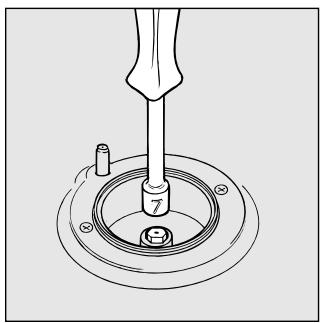
natural_image
Technical line drawing of a mechanical assembly with a central shaft and base (no text or symbols)- Replace all the parts, following the steps described above in the reverse order.
Instructions for installation
c) Minimum regulation of the hob burners:
• turn the tap to minimum;
- remove the knob and adjust the regulation screw, which is positioned in or next to the tap pin, until the flame is small but steady.
N.B.: In the case of liquid gas, the regulation screw must be screwed in all the way.
- check that the flame does not go out when you turn the tap quickly from high to low.
d) Regulating the primary air of the burners:
The primary air of the burners does not need to be regulated.
Warning
On completion of this operation, replace the old rating sticker with one indicating the new type of gas used, which can be found in the nozzle kit provided.
Note
Should the pressure of the gas used be different (or vary) from the recommended pressure, it is necessary to fit a suitable pressure regulator onto the inlet pipe in compliance with current National Regulations relative to “regulators for channelled gas”.
Burner and Nozzle specifications
| Table 1 | Liquid gas | Natural gas | |||||||
| BURNER | Diameter (mm) | Thermal power kW (H.s.*) | By-pass 1/100 (mm) | Injector 1/100 (mm) | Flow * g/h | Injector 1/100 (mm) | Flow* l/h G20 | ||
| Nomin. | Reduc. | G30 | G31 | ||||||
| C.Rapid | 100 | 3.00 | 0.7 | 40 | 86 | 218 | 214 | 116 | 286 |
| B. Semi-rapid | 75 | 1.90 | 0.4 | 30 | 70 | 138 | 136 | 106 | 181 |
| A. Auxiliary | 55 | 1.00 | 0.3 | 27 | 50 | 73 | 71 | 71 | 95 |
| D. Triple Ring (Liquid Gas) | 130 | 3.25 | 1.5 | 63 | 91 | 236 | 232 | ||
| D. Triple Ring (Natural gas) | 130 | 3.40 | 1.5 | 133 | 324 | ||||
| Supply pressure | Nominal Minimum Maximum | 28-30 20 35 | 37 25 45 | 20 17 25 | |||||
* At 15°C and 1013 mbar-dry gas
Propane P.C.S. = 50.37 MJ/Kg
Butane P.C.S. = 49.47 MJ/Kg
Natural P.C.S. = 37.78 MJ/m3
Technical Specifications
Inner dimensions of the oven:
Width 43,5
Depth 40
Height 32
Inner Volume of the Oven:
56 litres
Inner Dimensions of the Food Warmer:
Width 46
Depth 42
Height 8,5
ENERGY LABEL
Directive 2002/40/EC on the label of electric ovens
Norm EN 50304
Energy consumption for Natural convection
heating mode: □ Convection
Declared energy consumption for Forced convection Class
heating mode: ☐ Baking
Voltage and Frequency of Power Supply:
see data plate
Burners:
adaptable for use with all the types of gas indicated on the data plate.

This appliance conforms with the following European Community directives:
- 73/23/EEC of 19/02/73 (Low Voltage) and subsequent amendments;
- 89/336/EEC of 03/05/89 (Electromagnetic Compatibility) and subsequent amendments;
- 90/396/EEC of 29/06/90 and subsequent amendments;
- 93/68/EEC of 22/07/93 and subsequent amendments.
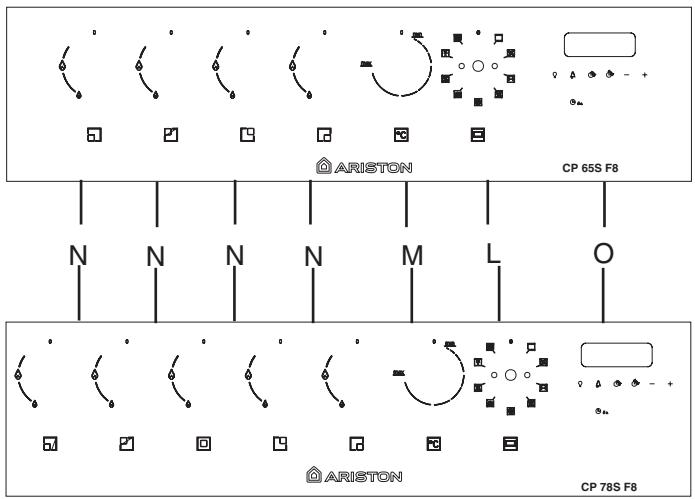
The cooker with Pirò oven
flowchart
graph TD
    subgraph_CP_65S_F8["CP 65S F8"]
        A1["•"] --> B1["□"] --> C1["□"] --> D1["□"] --> E1["="] --> F1["○"] --> G1["□"] --> H1["□"] --> I1["□"] --> J1["□"] --> K1["□"] --> L1["□"] --> M1["○"] --> N1["N"] --> O1["N"] --> P1["N"] --> Q1["N"] --> R1["M"] --> S1["L"] --> T1["○"]
    end
    subgraph_CP_78S_F8["CP 78S F8"]
        A2["•"] --> B2["□"] --> C2["□"] --> D2["□"] --> E2["="] --> F2["○"] --> G2["□"] --> H2["□"] --> I2["□"] --> J2["□"] --> K2["□"] --> L2["□"] --> M2["○"] --> N2["□"] --> O2["□"] --> P2["○"] --> Q2["□"] --> R2["□"] --> S2["□"] --> T2["○"] --> U2["□"] --> V2["□"] --> W2["□"] --> X2["□"] --> Y2["○"] --> Z2["□"] --> AA2["□"] --> AB2["□"] --> AC2["□"] --> AD2["□"] --> AE2["□"] --> AF2["○"] --> AG2["□"] --> AH2["□"] --> AI2["□"] --> AJ2["□"] --> AK2["□"] --> AL2["□"] --> AM2["○"] --> AN2["□"] --> AO2["□"] --> AP2["□"] --> AQ2["□"] --> AR2["□"] --> AS2["□"] --> AT2["○"] --> AU2["□"] --> AV2["□"] --> AW2["□"] --> AX2["□"] --> AY2["□"] --> AZ2["□"] --> BA2["□"] --> BB2["□"] --> BC2["○"] --> BD2["□"] --> BE2["□"] --> BF2["□"] --> BG2["□"] --> BH2["○"] --> BI2["□"] --> BJ2["□"] --> BK2["□"] --> BL2["○"] --> BM2["□"] --> BN2["□"] --> BO2["○"] --> BP2["□"] --> BQ2["□"] --> BR2["○"] --> BS2["□"] --> BT2["○"] --> BU2["□"] --> BV2["○"] --> BW2["○"] --> BX2["○"] --> BY2["○"] --> BZ2["○"] --> CA2["○"] --> CB2["○"] --> CC2["○"]
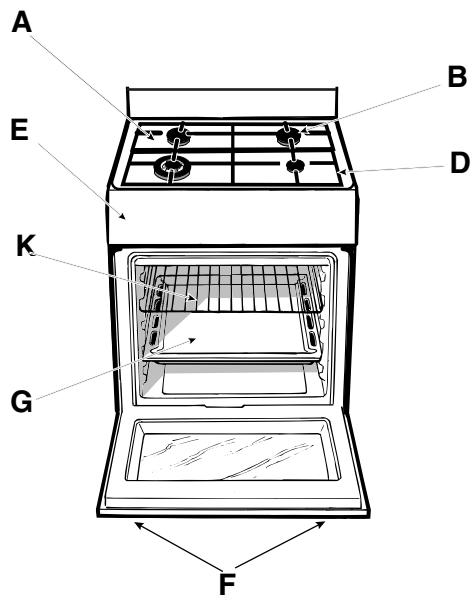
A Hob surface
B Gas Burner
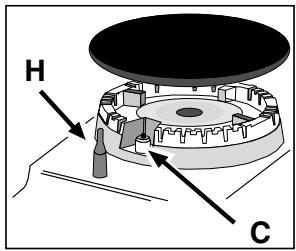
C Electronic Lighting Device
D Top Grate
E Control panel
F Adjustable Feet or Legs
G Dripping Pan or Baking Sheet
H Flame Failure Device for Cooktop Burners
K Oven Rack
L Cooking mode selection knob
M Cooking temperature selection knob
N Control Knobs for Gas Burners on Hob
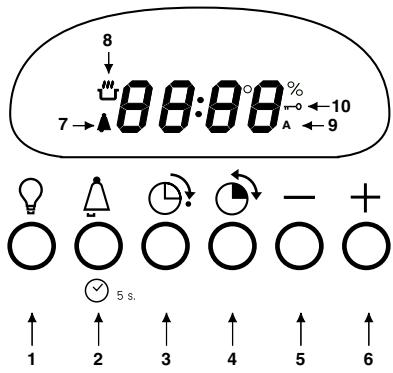
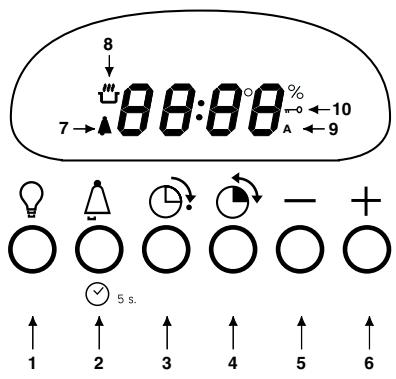
Electronic programmer - Allows you to programme the desired cooking mode by selecting the cooking time and the end cooking time. It can also be used as a timer.
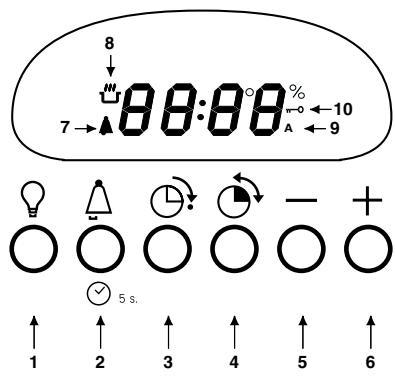
1 Oven Light
2 Timer/clock adjustment
3 End cooking time
4 Cooking time
5 Decrease minutes
6 Increase minutes
7 Timer indicator enabled
8 Pre-heating (flashing) or cooking (on) under way indicator
9 Duration/ end cooking time programme indicator
10 Door lock indicator
Instructions for use
The various features of cooker are controlled through the knobs and buttons located on the control panel.
HOB
Control Knobs for the Gas Burners on the Hob (N)
The position of the gas burner controlled by each one of the knobs is shown by a solid ring ^● . To light one of the burners, hold a lighted match or lighter near the burner and, at the same time, press down and turn the corresponding knob counter clockwise to the maximum setting ^▲ . Each burner can be operated at its maximum, minimum or intermediate power. Shown on the knob are the different symbols for off ^● (the knob is on this setting when the symbol corresponds with the reference mark on the control panel), for maximum ^▲ and minimum ^▲ .
To obtain these settings, turn the knob counter clockwise with respect to the off position. To turn off the burner, turn the knob clockwise until it stops (corresponding again with the symbol).
Electronic Ignition for the Gas Cooktop
To light a specific burner push the corresponding knob all the way in and turn it counter-clockwise to maximum ⚙ keeping it pressed down until the burner lights.
Warning: Should the burner flames accidentally go out, turn off the control knob and wait at least 1 minute before trying to re-light.
Models with Flame Failure Device
These models are identified by the presence of a flame detection device (see detail H).
Important: since the top burners are equipped with a safety device, after lighting the burner keep the knob pressed in for about 3 seconds to allow the gas to pass until the safety thermocouple is heated.
Practical advice on using the burners
For the best performance of your burners, keep the following in mind:
- use the appropriate cookware for each burner (see table) so that the flames do not extend beyond the bottom of the cookware;
• only flat bottom cookware should be used;
• at the boiling point, turn the knob to minimum;
• always use a lid with the cookware.
| Burner | ø Cookware Diameter (cm) |
| Fast (R) | 24 - 26 |
| Semi Fast (S) | 16 - 20 |
| Auxiliary (A) | 10 - 14 |
| Triple Crown (TC) | 24 - 26 |
N.B. On the models supplied with a reducer shelf, remember that this should be used only for the auxiliary burner when you use casserole dishes with a diameter under 12 cm.
OVEN:
The 7 Cuochi oven combines the advantages of traditional convection ovens with those of the more modern fan assisted models in a single appliance.
It is an extremely versatile appliance that allows you to choose easily and safely between 7 different cooking modes. The various features offered by the oven are selected by means of selector knob "L" situated on the control panel.
Warning: The first time you use your appliance, we recommend that you set the thermostat to the highest setting and leave the oven on for about half an hour with nothing in it, with the oven door shut. Then, open the oven door and let the room air. The odour that is often detected during this initial use is due to the evaporation of substances used to protect the oven during storage and until it is installed.
“Demo Mode” disabled
If the message “DEMO ON” appears on the display, place the knob “L” in the 0 position and then press keys “1” to “6” in sequence to bring the kitchen back into operating mode.
Setting the digital clock
The time can only be set on the clock when knob “L” is in position 0.
After connecting to the electricity mains or after a power failure, update the time by holding down key "2" until the time
appears on the display again and then adjust using the keys — and/or +.
Timer Feature
Please remember that the timer does not control the starting or stopping of the oven, it merely sounds a buzzer when the time is up and can be interrupted at any time just by pressing a button.
To set the timer, press key “2” and adjust using keys — and/or +. The 🔊 icon will remind you the timer is on.
Once the countdown is over, a buzzer will sound, and will stop doing so after 1 minute or if you press any button whatsoever.
N.B.: When the display is on “end”, the timer may not be set.
The oven light
It can be turned on/off at any time with the oven turned off, simply by pressing button "1" or by opening the door. It always remains on during cooking.
Cooling ventilation
In order to reduce the temperature of the exterior of the oven, some models are fitted with a cooling fan that generates a flow of air that can be heard exiting between the oven door and the control panel.
Note: When cooking is done, the fan stays on until the oven cools down sufficiently.
Note: In “Fast cooking” and in “Baking” mode, the fan comes on automatically only when the oven is hot.
Warning: the appliance is fitted with a diagnosis system which detects any malfunctions. The user is informed of the latter by messages such as “Er xy” (xy=numerical code between 01 and 99). In these cases, you need to call for technical assistance as the oven is faulty.
How To Use Your Oven
Note: When the oven door is locked (for example, right after a FAST CLEAN programme has been completed), it is not possible to start cooking due to the high temperature inside the oven. The display will indicate this status by means of the word “HOT”. You will only be able to cook again once the “key” symbol has gone off.
Turn knob "L" to select the desired cooking mode.
The oven will immediately start the pre-heating phase, during which the icon 📋 will flash on the display, and the cooking temperature associated with the mode selected will be displayed: should this value not be the one you desire, you can modify it simply by turning knob “M”.
Once pre-heating is complete, three consecutive beeps will sound and the icon "will come on permanently. Now you can place the food to be cooked inside the pre-heated oven.
Note: the FAST COOKING and GRILL modes do not include a pre-heating phase.
Please remember that you can always do the following when cooking is under way:
- change the cooking mode by turning knob "L";
- change the temperature by turning knob "M";
- programme the cooking time and end cooking time (see paragraph entitled “Programming the cooking mode”).
- stop it at any time by setting knob "L" back to 0.
• to set the timer
Warning: Place the dripping pan provided on the bottom shelf of the oven to prevent any sauce and/or grease from dripping onto the bottom of the oven only when grilling food or when using the rotisserie (only available on certain models). For all other types of cooking, never use the bottom rack and never place anything on the bottom of the oven when it is in operation because this could damage the enamel coating. Always place your cookware (dishes, aluminium foil, etc. etc.) on the grid provided with the appliance inserted especially along the oven guides.
Convection Mode
Position of thermostat knob "M": Between 40°C and 250°C. On this setting, the top and bottom heating elements come on. This is the classic, traditional type of oven which has been perfected, with exceptional heat distribution and reduced energy consumption. The convection oven is still unequalled when it comes to cooking dishes made up of several ingredients, e.g. cabbage with ribs, local stockfish recipes, tender veal with rice, etc... Excellent results are achieved when preparing beef- or veal-based dishes as well: braised meats, stew, goulash, wild game, ham etc., which need to cook slowly and require basting or the addition of liquid. It nonetheless remains the best system for cooking pastries as well as fruit and cooking casseroles in the oven. When cooking in convection mode, use only one rack, as the temperature would not be distributed evenly on several racks. Using the different rack heights available, you can balance the amount of heat between the top and the bottom of the oven. Select from among the various rack heights based on whether the dish needs more or less heat from the top.
Multi-Cooking Mode ✗
Position of thermostat knob "M": Between 40°C and 250°C. The heating elements and the fan come on alternately. Since the heat remains constant and uniform throughout the oven, the air cooks and browns food uniformly over its entire surface. With this mode, you can also cook various dishes at the same time, as long as their respective cooking temperatures are the same. A maximum of 2 racks can be used at the same time, following the instructions in the section entitled: "Cooking On More Than One Rack".
This cooking mode is particularly recommended for dishes requiring a gratin finish or for those requiring considerably prolonged cooking times, such as for example: lasagne, pasta bakes, roast chicken and potatoes, etc... Moreover, the excellent heat distribution makes it possible to use lower temperatures when cooking roasts. This results in less loss of juices, meat which is more tender and a decrease in the loss of weight of the roast. The Multi-cooking mode is especially suited for cooking fish, which can be prepared with the addition of a limited amount of condiments, thus maintaining their flavour and appearance. Excellent results can be attained when cooking vegetable-based side dishes like courgettes, aubergines, peppers, etc. Desserts: this mode is also perfect for baking leavened cakes.
Moreover, this mode can also be used to thaw quickly white or red meat and bread by setting the temperature to 80 °C. To
Instructions for use
thaw more delicate foods, set the thermostat to 60^ C or use only the cold air circulation feature by setting the thermostat to 0^ C.
Grill
Position of thermostat knob "M": 50%, 75%, 100%.
The top heating element and the turnspit (where present) come on.
The extremely high and direct temperature of the grill makes it possible to brown the surface of meats and roasts while locking in the juices to keep them tender. The grill is also highly recommended for dishes that require a high temperature on the surface: such as beef steaks, veal, rib steak, filets, hamburgers etc...
Always cook in this mode with the oven door closed
Some grilling examples are included in the “Practical Cooking Advice” paragraph.
Note: turn knob “M” and the display will indicate the 3 different energy percentages which represent the minimum (50%), medium (75%) and maximum setting (100%) respectively.
Gratin
Position of thermostat knob "M": Between 40°C and 250°C. The top heating element, the fan and the turnspit (where present) come on.
This combination of features increases the effectiveness of the unidirectional thermal radiation of the heating elements through forced circulation of the air throughout the oven. This helps prevent food from burning on the surface, allowing the heat to penetrate right into the food. Excellent results are achieved with kebabs made with meats and vegetables, sausages, ribs, lamb chops, chicken in a spicy sauce, quail, pork chops, etc.
All “gratin” cooking must be done with the oven door shut., by setting the maximum temperature to 200^ C
The “gratin” mode is ideal for cooking grouper steaks, tuna, swordfish, stuffed cuttlefish etc.
Pizza Mode
Position of thermostat knob “M”: Between 40^ C and 250^ C. The bottom and circular heating elements, as well as the fan, will come on. This combination rapidly heats the oven due to the large amounts of power used by the appliance (2800 W), which results in the production of considerable heat coming prevalently from the bottom.
The pizza mode is ideal for foods requiring high temperatures to cook, like pizzas and large roasts. pizzas and large roasts. Only use one dripping pan or rack at a time. However, if more than one is used, these must be switched halfway through the cooking process.
Baking Mode
Position of thermostat knob "M": Between 40°C and 250°C. The rear heating element and the fan come on, guaranteeing delicate heat distributed uniformly throughout the oven.
This mode is ideal for baking and cooking delicate foods - especially cakes that need to rise - and for the preparation of certain tartlets on 3 shelves at the same time. Here are a few examples: cream puffs, sweet and savoury biscuits, savoury puffs, Swiss rolls and small portions of vegetables au gratin, etc.....
"Fast cooking" Mode
Position of thermostat knob "M": Between 40°C and 250°C. The heating elements and the fan come on, guaranteeing constant heat distributed uniformly throughout the oven.
This mode is especially recommended for cooking pre-packed food quickly (as pre-heating is not necessary), such as for example: frozen or pre-cooked food) as well as for a few “home-made” dishes.
The best results when cooking using the “Fast cooking” mode are obtained if you use one cooking rack only (the second from the bottom), please see the table entitled “Practical Cooking Advice”.
"Defrosting" Mode
Position of thermostat knob "M": any
The fan located on the bottom of the oven makes the air circulate at room temperature around the food. This is recommended for the defrosting of all types of food, but in particular for delicate types of food which do not require heat, such as for example: ice cream cakes, cream desserts, fruit sweets. By using the fan, the defrosting time is approximately halved. In the case of meat, fish and bread, it is possible to accelerate the process using the “multi-cooking” mode and setting the temperature to 80^ - 100^ C.
Automatic cleaning with the fast clean function
This function is designed to clean your oven thoroughly. For details on the fast clean function, please refer to the paragraph entitled “Automatic cleaning with the fast clean function”.
Restoring after a blackout
If the temperature inside the oven has not dropped below a value that is too low, the appliance comes with a system that allows you to resume cooking/pyrolysis from the point in which it was interrupted at the time of the black-out. Remember that this function will be disabled if the knobs "L" and "M" are turned during the power failure. Once the cooking/pyrolysis has been completed, remember to update the time if you want to.
NOTE
Please bear in mind that, for safety reasons, cooking/pyrolysis programmes waiting to start are not restored when the power comes back on.
Programming the cooking mode
The cooking time and/or end cooking time can be programmed after the desired cooking mode has been selected.
Programming the cooking time
Press button “4” and then adjust the cooking time by pressing keys — and +. Press the “4” button to store the setting. The temperature selected (which can be adjusted using knob “M”) and the amount of time left until cooking is complete will be displayed alternately
Once this time is up, the word «end» will be displayed and a sequence of acoustic signals will be emitted to indicate that cooking is complete.
- Press any button to silence the acoustic signal.
- Turn knob “L” back to position 0 to remove the word «end» from the display.
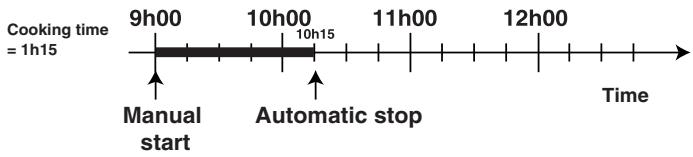
For example
It is 9:00 a.m. and a cooking time of 1 hour and 15 minutes is programmed. Cooking will stop automatically at 10:15 a.m..
Programming the end cooking time
Press button “3” and then adjust by pressing keys — and +. Press the “3” button to store the setting. The display will remind you alternately of the temperature selected and the amount of time left until cooking is complete.
When the end cooking time selected previously is up, the word «end» will be displayed and a sequence of acoustic signals will be emitted to indicate that cooking is complete..
- Press any button to silence the acoustic signal.
- Turn knob “L” back to position 0 to remove the word «end» from the display.
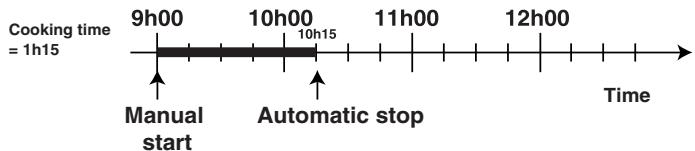
For example
It is 9:00 a.m. and the end cooking time is set at 10:15 a.m.. Cooking will last 1 hour and 15 minutes.
Delayed cooking programming
Press button “4” and then adjust the cooking time by pressing keys — and +. Press the “4” to store the setting. The temperature and the time set previously will be displayed alternately.
Press button "3" and then adjust end cooking time by pressing keys — and +. Press the "3" button to store the setting and the display will remind you of the end cooking time and of the temperature set alternately.
For example
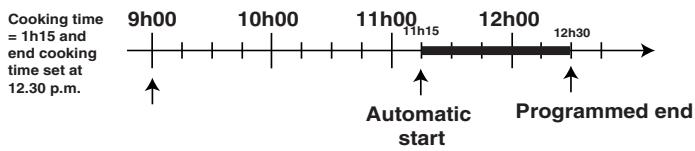
It is 9:00 a.m. and a cooking time of 1 hour and 15 minutes and 12:20 as the end cooking time are programmed. Cooking will start automatically at 11:15 a.m..
line
| Time Period | Event | | ----------- | --------------- | | 9h00 | Cooking Time | | 10h00 | Cooking Time | | 11h00 | Cooking Time | | 11h15 | Automatic Start| | 12h00 | Cooking Time | | 12h30 | Programmed End |The icon A will remind you that you have programmed the cooking time and/or the end cooking time.
To cancel a programmed time
To cancel any programming you have made, set knob "L" to position "0".
Automatic cleaning with the fast clean function
When the fast clean function has been enabled, the temperature inside the oven reaches 500^ C, which is necessary to burn all food residue that has built up inside it. If you look through the oven glass, you may notice some particles that light up as they are destroyed by pyrolysis upon contact with the heating elements: this is simply spontaneous combustion: it is perfectly normal and hazard-free.
A few useful tips before automatic cleaning begins
1- Try to remove large scraps of food and caked-on dirt with a damp sponge. Avoid using detergents or any other special products recommended for oven cleaning.
2- Remove all the accessories from the oven, as these are not designed to withstand such high temperatures. In addition, some accessories could affect the efficiency of the automatic cleaning cycle by obstructing the circulation of heat along all the interior walls of the oven. The accessories can easily be washed like everyday crockery (even in your dishwasher).
3- Do not place tea towels over the oven handle.
Warning: during the automatic cleaning cycle, the surfaces
may become very hot. Keep children away from these.
How to enable the fast clean function
- Shut the oven door.
- Set the selector knob to ☐
- To programme the fast clean cycle time and/or cycle end time, follow the instructions provided in the paragraph entitled “Fast clean programming”. Please note that you can choose a cycle time of between 60 and 120 minutes, depending on the degree of soil in your oven.
Safety devices
Given the high temperatures reached inside it, the oven is fitted with several safety devices:
- the door is locked automatically as soon as the temperature exceeds a certain value, to avoid all risk of burns;
- the heating elements are no longer electrically powered, as a precautionary measure, should a fault occur.
Automatic cleaning with the fast clean function
- Once the oven door has been locked, you cannot make any changes to the cycle time and cycle end settings.
- If the temperature in appliance's electrical component area has reached a safe value, it is not possible to start the “Fast clean” cycle. The word “HOT” will appear on the display. Wait for the cooling fan to switch off before restarting the “Fast clean” programme.
What happens at the end of an automatic cleaning cycle?
At the end of the automatic cleaning cycle, the word "end" is displayed and an acoustic signal is sounded, which can be silenced just by pressing any one of the buttons. Turn knob "L" to the "0" setting and the word "end" will disappear.
To open the oven door, you will have to wait until the temperature inside it has dropped to a suitable value.
You will notice some white dust deposits on the bottom and sides of your oven; remove them with a damp sponge once the oven has cooled down completely.
You may on the other hand prefer to take advantage of the heat accumulated to start cooking immediately; in this case the dust can stay where it is: it is completely harmless and will not affect your food in any way.
Warning: to maximise the efficiency and life of the appliance, we recommend that automatic clean is carried out with the hob off.
Fast clean programming
The fast clean cycle time and/or cycle end time can be programmed after selecting the fast clean mode, and within the 10 first minutes of operation..
Programming the fast clean cycle time
Press button “4” and then adjust the cooking time by pressing keys — and +. Press the “4” button to store the setting. The time left until the end of the fast clean cycle will be displayed.
Once this time is up, the word «end» will be displayed and a sequence of acoustic signals will be sounded to indicate that the cleaning cycle is complete.
- Press any button to silence the acoustic signal.
- Turn knob “L” back to position 0 to remove the word «end» from the display.
For example
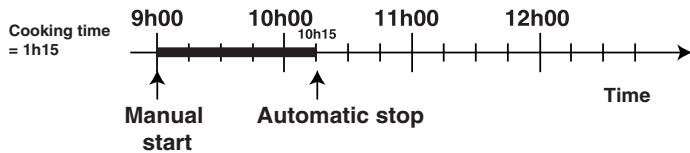
It is 9:00 a.m. and a fast clean cycle time of 1 hour and 15 minutes is programmed. The fast clean cycle will end automatically at 10:15 a.m..
Programming the fast clean cycle end time
Press button “3” and then adjust by pressing keys — and +. Press the “3” button to store the setting. The time left until the end of the fast clean cycle will be displayed. When the previously selected fast clean cycle time is up, the word «end» will be displayed and a sequence of acoustic signals will be sounded to indicate that the fast-clean mode is complete.
- Press any button to silence the acoustic signal.
- Turn knob “L” back to position 0 to remove the word «end» from the display.
For example
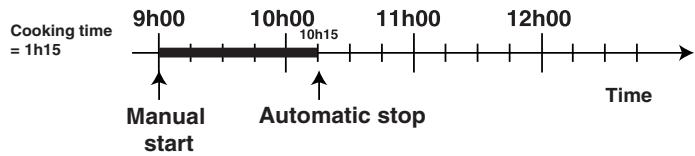
It is 9:00 a.m. and the fast clean cycle end time is set at 10:15 a.m.. Fast clean will last 1 hour and 15 minutes.
Delayed fast clean cycle programming
Press button "4" and then adjust the cooking time by pressing keys — and +. Press the "4" button to store the setting and display it.
Press button "3" and then adjust end cooking time by pressing keys — and +. Press the "3" button to store the setting and the display will remind you of the end cooking time and of the temperature set alternately.
For example
It is 9:00 a.m. and a fast clean cycle time of 1 hour and 15 minutes and 12:20 as the cycle end time are programmed. The fast clean cycle will start automatically at 11:15 a.m..
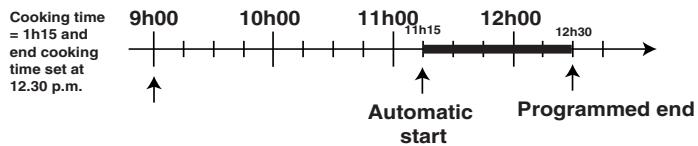
The icon A will remind you that you have programmed the fast clean cycle time and/or the cycle end time.
To cancel a programmed time
To cancel any programming you have made, set knob "L" to position "0".
Do not worry if
1 the cooling fan is operating at low speed at the start of the fast clean cycle;
2 the electrical system limiter blows when Fast Clean is in use: this is due to a mains overload (too many electric household appliances used at the same time);
3 the oven door is locked during the Fast Clean programme: this is an appliance safety device; the door will only open when the oven has cooled completely;
4 small stains are left on the interior surface of the oven after the Fast Clean cycle: we recommend you remove the toughest grease spots and large scraps of food before the self-cleaning cycle and that you set the cy-
cle time in accordance with the degree of soil in your oven;
5 you see ventilated air exiting the oven for a while when cooking is complete: it is due to the normal cooling phase of the oven interior;
6 when using the "grill" mode, the top heating element isn't always on (red in colour): its operation is controlled by a thermostat;
7 a blast of hot steam exits the oven when you open the door during cooking;
8 drops of water or steam form inside the oven if you leave food inside the oven after cooking is complete;
Practical Cooking Advice
The oven offers a wide range of alternatives which allow you to cook any type of food in the best possible way. With time you will learn to make the best use of this versatile cooking appliance and the following directions are only a guideline which may be varied according to your own personal experience.
Cooking on More Than One Rack
If you have to cook food using several racks, use either the “pastry” mode 📄 or the “Multi-cooking mode” mode ✗, as these are the only modes that allow you to do so.
When cooking delicate food on more than one rack, use the “pastry” mode which allows you to cook on 3 racks at the same time (the 1st, 3rd and 5th). Some examples are included in the “Practical Cooking Advice” table.
When cooking other food on several racks, use the “Multi-cooking” mode ✗, keeping the following suggestions in mind:
- The oven is fitted with 5 racks. During fan assisted cooking, use two of the three central racks; the lowest and highest racks receive the hot air directly and therefore delicate foodstuffs could be burnt on these racks.
- As a general rule, use the 2nd and 4th rack from the bottom, placing the foodstuffs that require greater heat on the 2nd rack from the bottom. For example, when cooking meat roasts together with other food, place the roast on the 2nd rack from the bottom and the more delicate food on the 4th rack from the bottom.
- When cooking food that requires differing times and temperatures, set a temperature that is somewhere between the two temperatures required, place the more delicate food on the 4th rack from the bottom and take the food requiring less time out of the oven first.
- Use the dripping pan on the lower rack and the grid on the upper;
Using the "Fast Cooking" Mode
Functional, fast and practical for those of you who use pre-packed products (such as for example: frozen or pre-cooked food) along with other food items. You will find useful suggestions in the “Practical Cooking Advice” table.
Using the Grill
The “7 Cuochi” oven offers you several different grilling modes..
Use the “grill” mode ☐, with the oven door closed, placing the food under the centre of the grill (situated on the 3rd or 4th rack from the bottom).
To catch any fat and/or grease that may drip from the rack, place the dripping pan provided on the first rack from the bottom.
When using this mode, we recommend you set the energy level to the highest setting, even though lower levels can be set, simply by adjusting the thermostat knob to the desired level.
The ☒“Gratin”, only with the oven door shut, , is extremely useful for grilling foods rapidly, as the distribution of heat makes it possible not only to brown the surface, but also to cook the bottom part.
Moreover, it can also be used for browning foods at the end of the cooking process, such as adding that gratin finish to pasta bakes, for example.
When using this mode, place the grid on the 2nd or 3rd oven rack from the bottom (see cooking table) then, to prevent fat and grease from dripping onto the bottom of the oven and thus smoke from forming, place a dripping-pan on the 1st rack from the bottom.
Important: always use the “Gratin” with the oven door shut. This will allow you both to obtain excellent results and to save on energy (approximately 10%).
When using this mode, we advise you to set the thermostat to 200^ C, as it is the most efficient way to use the grill, which is based on the use of infrared rays. However, this does not mean you cannot use lower temperatures, simply by adjusting the thermostat knob to the desired temperature.
Therefore the best results when using the grill modes are obtained by placing the grid on the lower racks (see cooking table) then, to prevent fat and grease from dripping onto the bottom of the oven and smoke from forming, place a dripping-pan on the 1st oven rack from the bottom.
Baking Cakes
When baking cakes, always place them in a preheated oven. Do not open the oven door during baking to prevent the cake from dropping. In general:
Cake too dry
The next time, set a temperature which is greater by 10^ C and reduce the cooking time.a.
Cake flattens
Use less liquid or lower the temperature by 10^ C.
Cake blackens on top
Insert it a lower height, set a lower temperature and lengthen the cooking time.
Well cooked on the outside but gluey inside
Use less liquid, reduce the temperature and increase the cooking time.
The cake is stuck to the baking tin
Grease the baking tin well and sprinkle it with a dusting of flour or use greaseproof paper.
I used more than one rack (in the "fan-assisted" mode) and they are not all at the same stage of cooking
Use a lower temperature setting. It is not necessary to remove the food from all the racks at the same time.
Cooking Pizza
For best results when cooking pizza, use the ☑ “pizza mode”:
• Preheat the oven for at least 10 minutes
- Use a light aluminium pizza pan, placing it on the rack supplied with the oven. If the dripping pan is used, this will extend the cooking time, making it difficult to get a crispy crust;
- Do not open the oven door frequently while the pizza is cooking;
- If the pizza has a lot of toppings (three or four), we recommend you add the mozzarella cheese on top halfway through the cooking process.
- If cooking on more than one rack (up to 2), we advise you to use the Multi-cooking Mode ✗, as the Pizza Mode ⚙ would heat the bottom rack more than the others.
Cooking Fish and Meat
When cooking white meat, fowl and fish, use temperature settings from 180 °C to 200 °C.
For red meat that should be well done on the outside while tender and juicy in the inside, it is a good idea to start with a high temperature setting (200°C-220°C) for a short time, then turn the oven down afterwards.
In general, the larger the roast, the lower the temperature setting. Place the meat on the centre of the grid and place the dripping pan beneath it to catch the fat.
Make sure that the grid is inserted so that it is in the centre of the oven. If you would like to increase the amount of heat from below, use the low rack heights. For savoury roasts (especially duck and wild game), dress the meat with lard or bacon on the top.
Practical Cooking Advice
| Setting made | Type of food | Weight (in kg) | Position of the rack from the oven bottom | Preheating time (min.) | Thermostat setting | Cooking time (min.) |
| 1 Traditional[STX] | Duck | 1 | 3 | 15 | 200 | 65-75 |
| Roast veal or beef | 1 | 3 | 15 | 200 | 70-75 | |
| Pork roast | 1 | 3 | 15 | 200 | 70-80 | |
| Biscuits (short pastry) | - | 3 | 15 | 180 | 15-20 | |
| Tarts | 1 | 3 | 15 | 180 | 30-35 | |
| 2 Baking[O3X2] | Tarts | 0.5 | 3 | 15 | 180 | 20-30 |
| Fruit cakes | 1 | 2/3 | 15 | 180 | 40-45 | |
| Plum cake | 0.7 | 3 | 15 | 180 | 40-50 | |
| Sponge cake | 0.5 | 3 | 15 | 160 | 25-30 | |
| Stuffed pancakes (on 2 racks) | 1.2 | 2-4 | 15 | 200 | 30-35 | |
| Small cakes (on 2 racks) | 0.6 | 2-4 | 15 | 190 | 20-25 | |
| Cheese puffs (on 2 racks) | 0.4 | 2-4 | 15 | 210 | 15-20 | |
| Cream puffs (on 3 racks) | 0.7 | 1-3-5 | 15 | 180 | 20-25 | |
| Biscuits (on 3 racks) | 0.7 | 1-3-5 | 15 | 180 | 20-25 | |
| Meringues (on 3 racks) | 0.5 | 1-3-5 | 15 | 90 | 180 | |
| 3 Fast cooking[4833] | Frozen food | |||||
| Pizza | 0.3 | 2 | - | Max | 12 | |
| Courgette and prawn pie | 0.4 | 2 | - | 200 | 20 | |
| Country style spinach pie | 0.5 | 2 | - | 220 | 30-35 | |
| Turnovers | 0.3 | 2 | - | 200 | 25 | |
| Lasagne | 0.5 | 2 | - | 200 | 35 | |
| Golden Rolls | 0.4 | 2 | - | 180 | 25-30 | |
| Chicken morsels | 0.4 | 2 | - | 220 | 15-20 | |
| Pre-cooked food | ||||||
| Golden chicken wings | 0.4 | 2 | - | 200 | 20-25 | |
| Fresh Food | ||||||
| Biscuits (short pastry) | 0.3 | 2 | - | 200 | 15-18 | |
| Plum cake | 0.6 | 2 | - | 180 | 45 | |
| Cheese puffs | 0.2 | 2 | - | 210 | 10-12 | |
| 4 Multi-cooking[GWDO] | Pizza (on 2 racks) | 1 | 2-4 | 15 | 230 | 15-20 |
| Lasagne | 1 | 3 | 10 | 180 | 30-35 | |
| Lamb | 1 | 2 | 10 | 180 | 40-45 | |
| Roast chicken + potatoes | 1+1 | 2-4 | 15 | 200 | 60-70 | |
| Mackerel | 1 | 2 | 10 | 180 | 30-35 | |
| Plum cake | 1 | 2 | 10 | 170 | 40-50 | |
| Cream puffs (on 2 racks) | 0.5 | 2-4 | 10 | 190 | 20-25 | |
| Biscuits (on 2 racks) | 0.5 | 2-4 | 10 | 180 | 10-15 | |
| Sponge cake (on 1 rack) | 0.5 | 2 | 10 | 170 | 15-20 | |
| Sponge cake (on 2 racks) | 1.0 | 2-4 | 10 | 170 | 20-25 | |
| Savoury pies | 1.5 | 3 | 15 | 200 | 25-30 | |
| 5 Pizza[TOY] | Pizza | 0.5 | 3 | 15 | 220 | 15-20 |
| Roast veal or beef | 1 | 2 | 10 | 220 | 25-30 | |
| Chicken | 1 | 2/3 | 10 | 180 | 60-70 | |
| 6 Grill[O368] | Soles and cuttlefish | 1 | 4 | - | 5 | 8-10 |
| Squid and prawn kebabs | 1 | 4 | - | 5 | 6-8 | |
| Cod filet | 1 | 4 | - | 5 | 10 | |
| Grilled vegetables | 1 | 3/4 | - | 5 | 10-15 | |
| Veal steak | 1 | 4 | - | 5 | 15-20 | |
| Cutlets | 1 | 4 | - | 5 | 15-20 | |
| Hamburgers | 1 | 4 | - | 5 | 7-10 | |
| Mackerels | 1 | 4 | - | 5 | 15-20 | |
| Toasted sandwiches | n.° 4 | 4 | - | 5 | 2-3 | |
| 7 Gratin[O527] | Grilled chicken | 1.5 | 3 | 10 | 200 | 55-60 |
| Cuttlefish | 1.5 | 3 | 10 | 200 | 30-35 |
N.B.: cooking times are approximate and may vary according to personal taste. When cooking using the grill or gratin, the dripping pan must always be placed on the 1st oven rack from the bottom.
Before each operation, disconnect the cooker from the electrical supply. To ensure that the appliance stands the test of time, it must be thoroughly cleaned frequently, keeping in mind that:
• do not use steam equipment to clean the appliance
- the enamelled parts and the self-cleaning panels, where present, are washed with warm water without using any abrasive powders or corrosive substances which could ruin them;
- the inside of the oven should be cleaned fairly often while it is still warm, using warm water and detergent followed by careful rinsing and drying;
- the flame spreaders should be washed frequently with hot water and detergent, taking care to eliminate any scale;
- In cookers equipped with automatic lighting, the terminal part of the electronic instant lighting devices should be cleaned frequently (C) and the gas outlet holes on the flame spreaders should be checked to make sure they are free of any obstructions;
- stainless steel may become marked if it comes into contact with very hard water or harsh detergents (containing phosphorous) for long periods of time. After cleaning, rinse and dry thoroughly. It is also recommended that any remaining drops of water be dried;
- On models with glass covers, the covers should be cleaned with hot water; the use of rough cloths or abrasives is to be avoided
N.B.: Avoid closing the cover while the gas burners are still warm. Remove any liquid from the lid before opening it.
Important: periodically check the wear of the gas hose and substitute it if there are any defects; we recommended changing it every year.
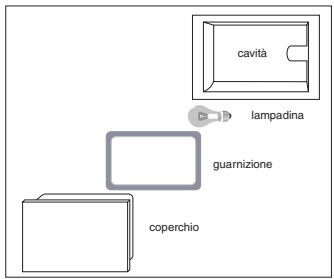
Replacing the oven light bulb
- Before any operation, disconnect the hob from the electrical supply by pulling out the plug or using the switch that connects the oven to the electricity mains.
- Using a narrow, thin object (screwdriver, spoon handle, etc.), remove the glass lid.
-
Remove the lamp and replace it with one that has the same properties:
-
Voltage: 230/240 V
- power 15W
- E 14 cap
- Replace the glass cover taking care to position the seal correctly.
The taps may jam in time or they may become difficult to turn. If so, the tap itself must be replaced.
N.B.: This procedure must be performed by a technician authorised by the manufacturer.
natural_image
Simple line drawing of a house interior with a stove, roof, and air duct (no text or symbols)natural_image
Simple line drawing of a house interior with a stove, air ducts, and cooling pipes (no text or symbols)natural_image
Technical line drawing of a mechanical assembly with a central shaft and base plate (no text or symbols)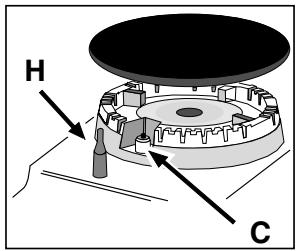
Position bouton thermostat "M": 50%, 75%, 100%.
Four "Décongélation"
Position bouton thermostat "M" : quelconque
natural_image
Simple line drawing of a house interior with a stove, roof, and air duct (no text or symbols)natural_image
Simple line drawing of a house interior with a stove, roof, and ventilation duct (no text or symbols)Direkt ins Freie
natural_image
Technical line drawing of a mechanical assembly with a central shaft and base (no text or symbols)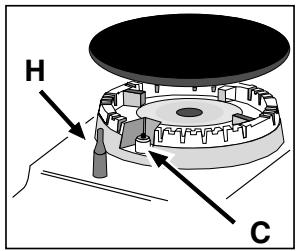
natural_image
Simple line drawing of a house interior with a stove, air ducts, and roof structure (no text or symbols)natural_image
Simple line drawing of a house interior with a stove, air ducts, and cooling unit (no text or symbols)natural_image
Technical line drawing of a mechanical assembly with a central shaft and base (no text or symbols)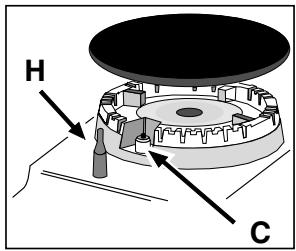
natural_image
Simple line drawing of a house interior with a stove, roof, and air duct (no text or symbols)Em chaminé ou tubo de chaminé ramificado (reservada aos aparelhos de cozedura)
natural_image
Simple line drawing of a house interior with a stove, air ducts, and airflow indicators (no text or symbols)natural_image
Technical line drawing of a mechanical assembly with a central shaft and base plate (no text or symbols)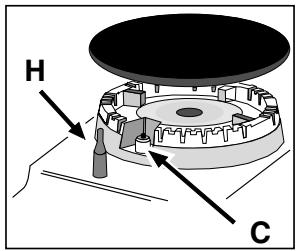
- Positioning
- Installation of the cooker
- Gas connecting
- Connection with hose
- Connecting a flexible jointless stainless steel pipe to a threaded attachment
- Checking that the connection is tight
- Connecting the supply cable to the mains
- Adapting the cooker to different types of gas
- Instructions for installation
- Warning
- Note
- Burner and Nozzle specifications
- Technical Specifications
- ENERGY LABEL
- This appliance conforms with the following European Community directives:
- The cooker with Pirò oven
- Instructions for use
- HOB
- Control Knobs for the Gas Burners on the Hob (N)
- Electronic Ignition for the Gas Cooktop
- Models with Flame Failure Device
- Practical advice on using the burners
- OVEN:
- “Demo Mode” disabled
- Setting the digital clock
- Timer Feature
- The oven light
- Cooling ventilation
- Note: When cooking is done, the fan stays on until the oven cools down sufficiently.
- How To Use Your Oven
- Convection Mode
- Multi-Cooking Mode ✗
- Grill
- Gratin
- Pizza Mode
- Baking Mode
- "Fast cooking" Mode
- "Defrosting" Mode
- Automatic cleaning with the fast clean function
- Restoring after a blackout
- Programming the cooking mode
- Programming the cooking time
- For example
- Programming the end cooking time
- Delayed cooking programming
- To cancel a programmed time
- A few useful tips before automatic cleaning begins
- may become very hot. Keep children away from these.
- How to enable the fast clean function
- Safety devices
- What happens at the end of an automatic cleaning cycle?
- Fast clean programming
- Programming the fast clean cycle time
- Programming the fast clean cycle end time
- Delayed fast clean cycle programming
- Do not worry if
- Practical Cooking Advice
- Cooking on More Than One Rack
- Using the "Fast Cooking" Mode
- Using the Grill
- Baking Cakes
- Cake too dry
- Cake flattens
- Cake blackens on top
- Well cooked on the outside but gluey inside
- The cake is stuck to the baking tin
- I used more than one rack (in the "fan-assisted" mode) and they are not all at the same stage of cooking
- Cooking Pizza
- Cooking Fish and Meat
- Replacing the oven light bulb
- Four "Décongélation"
Brand : HOTPOINT
Model : CP 78S F8
Category : Air-conditioner