
TL-BASES - Microscope LEICA - Notice d'utilisation et mode d'emploi gratuit
Retrouvez gratuitement la notice de l'appareil TL-BASES LEICA au format PDF.
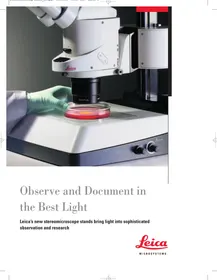


| Type de produit | Socle pour stéréomicroscope |
| Marque | Leica |
| Modèle | Série TL-BASES (TL ST, TL BFDF, TL RC, TL RCI) |
| Dimensions (TL ST) | 340 × 430 × 85 mm |
| Dimensions (TL BFDF) | 340 × 390 × 90 mm |
| Dimensions (TL RC / TL RCI) | 340 × 390 × 95 mm / 340 × 440 × 95 mm |
| Dimensions (socle à lumière incidente) | 280 × 300 × 24 mm |
| Poids (socle à lumière incidente) | Moins de 2 kg |
| Alimentation | Halogène 12V/20W (modèles TL ST, TL RCI) ou source froide externe (TL BFDF, TL RC) |
| Fonctions principales | Éclairage en fond clair/fond noir, contraste Rottermann, variation d'angle du miroir, diaphragmes intégrés |
| Contrôle de la luminosité | Potentiomètre, contrôle USB (TL RCI), commande via logiciel LAS |
| Température de couleur | Constante avec CCIC (TL RCI) |
| Filtres | Filtre de jour en option, 3 emplacements pour filtres (TL RC/TL RCI) |
| Platine XY | Déplacement précis <10 μm, compatible SlideOn |
| Antivibrations | Pieds AntiShock (tous modèles) |
| Entretien et nettoyage | Nettoyer les surfaces avec un chiffon doux et sec; éviter les solvants. Remplacer les lampes après refroidissement. |
| Sécurité | Extinction automatique après coupure; lampe chaude, attendre refroidissement avant changement. |
| Pièces détachées et réparabilité | Lampes, filtres, platines, accessoires disponibles. Conception modulaire pour mise à niveau ultérieure. |
| Informations générales | Conçu pour stéréomicroscopes Leica MZ, M, S6; compatible avec logiciel LAS; accoudoir ErgoRest, platine chauffante MATS en option. |
FOIRE AUX QUESTIONS - TL-BASES LEICA
Questions des utilisateurs sur TL-BASES LEICA
0 question sur cet appareil. Repondez a celles que vous connaissez ou posez la votre.
Poser une nouvelle question sur cet appareil
Téléchargez la notice de votre Microscope au format PDF gratuitement ! Retrouvez votre notice TL-BASES - LEICA et reprennez votre appareil électronique en main. Sur cette page sont publiés tous les documents nécessaires à l'utilisation de votre appareil TL-BASES de la marque LEICA.
MODE D'EMPLOI TL-BASES LEICA
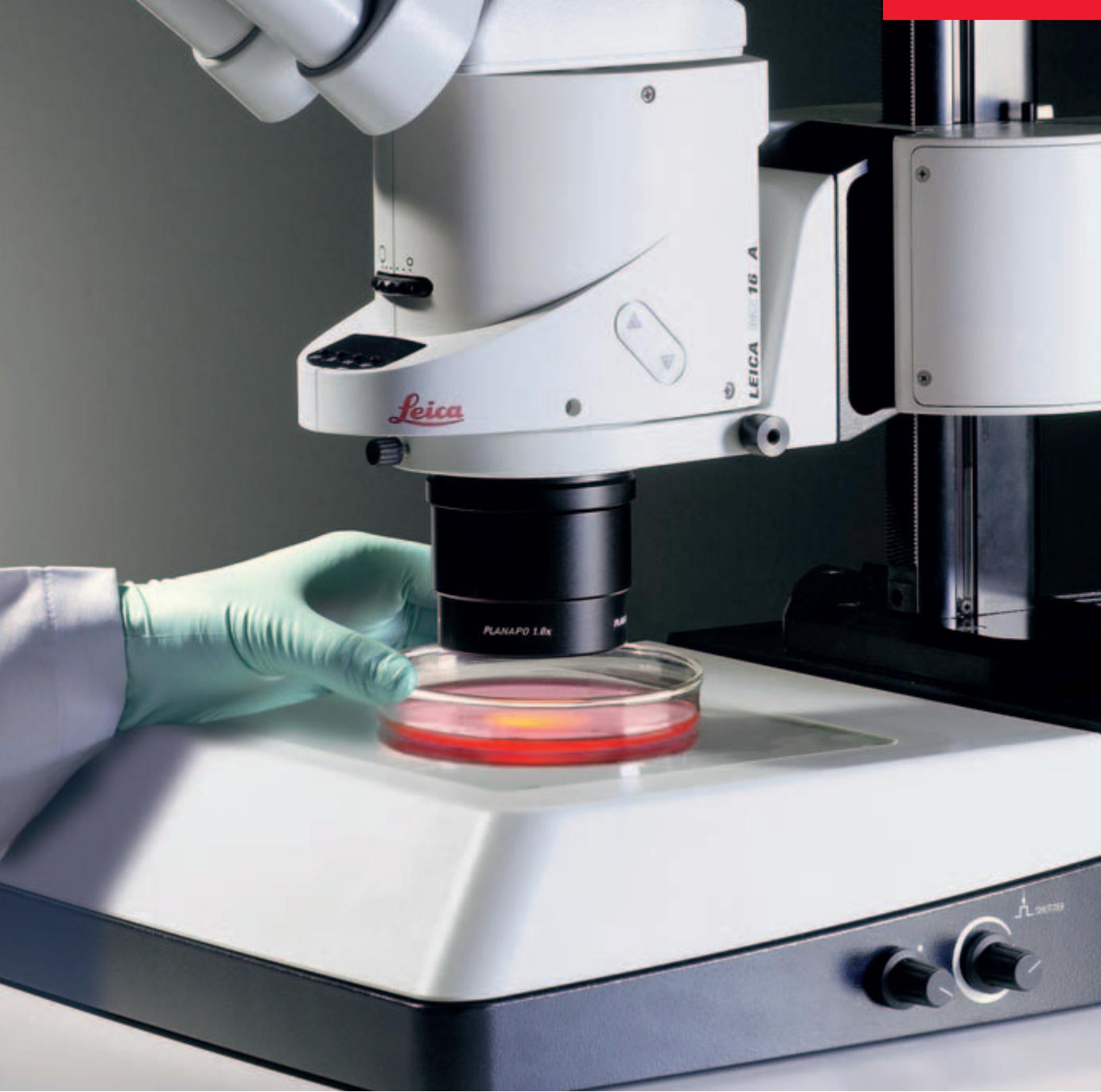
Observer et documenter dans les meilleures conditions de lumière
Les nouveaux supports de stéréomicroscope Leica apportent la lumière nécessaire à une observation et une recherche sophistiquées
La qualité de la lumière utilisée...
...joue un rôle fondamental dans les analyses microscopiques. La qualité de tout système optique dépend de la lumière disponible. Avec une nouvelle famille de supports de stéréomicroscope spécialisés, Leica continue d'offrir des performances de haut niveau, une modularité constante et une ergonomie optimale. Les stéréomicroscopes Leica sont réputés dans le monde entier pour leurs performances optiques exceptionnelles. Le stéréomicroscope Leica MZ16 avec un grossissement de 16× bénéficie particulièrement de ces nouveaux supports. Les nouveaux supports à lumière transmise Leica TL ST, les supports à champ clair/fond noir TL BFDF, et les supports haute performance TL RC™ et TL RCI™ offrent la solution adaptée à chaque tâche, à chaque espace et à chaque budget. Les supports à lumière incidente de Leica établissent de nouvelles normes de conception en termes de robustesse et de capacité de charge, sans compromettre l'ergonomie ni la capacité d'amortissement des vibrations.
Images d'un embryon de drosophile prises avec la technique Rottermann Contrast™ et différentes méthodes d'éclairage.
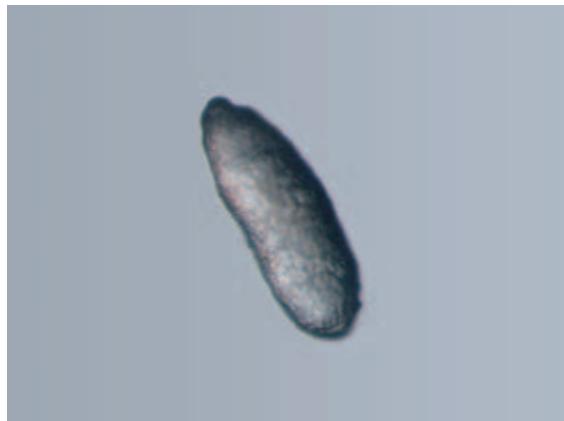
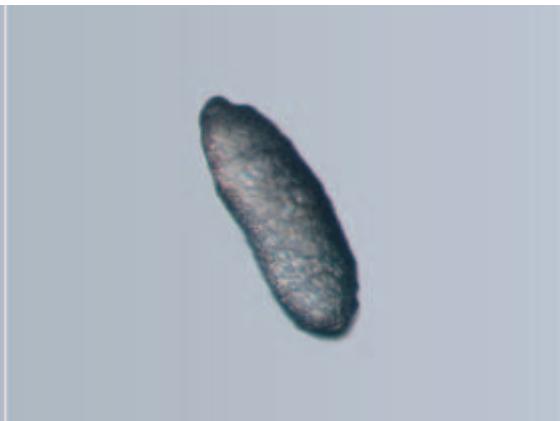
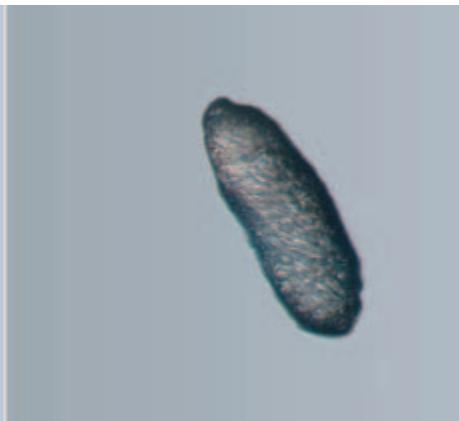
Images d'un embryon de drosophile prises à l'aide de la technique Rottermann ContrastTM avec différentes méthodes d'éclairage.
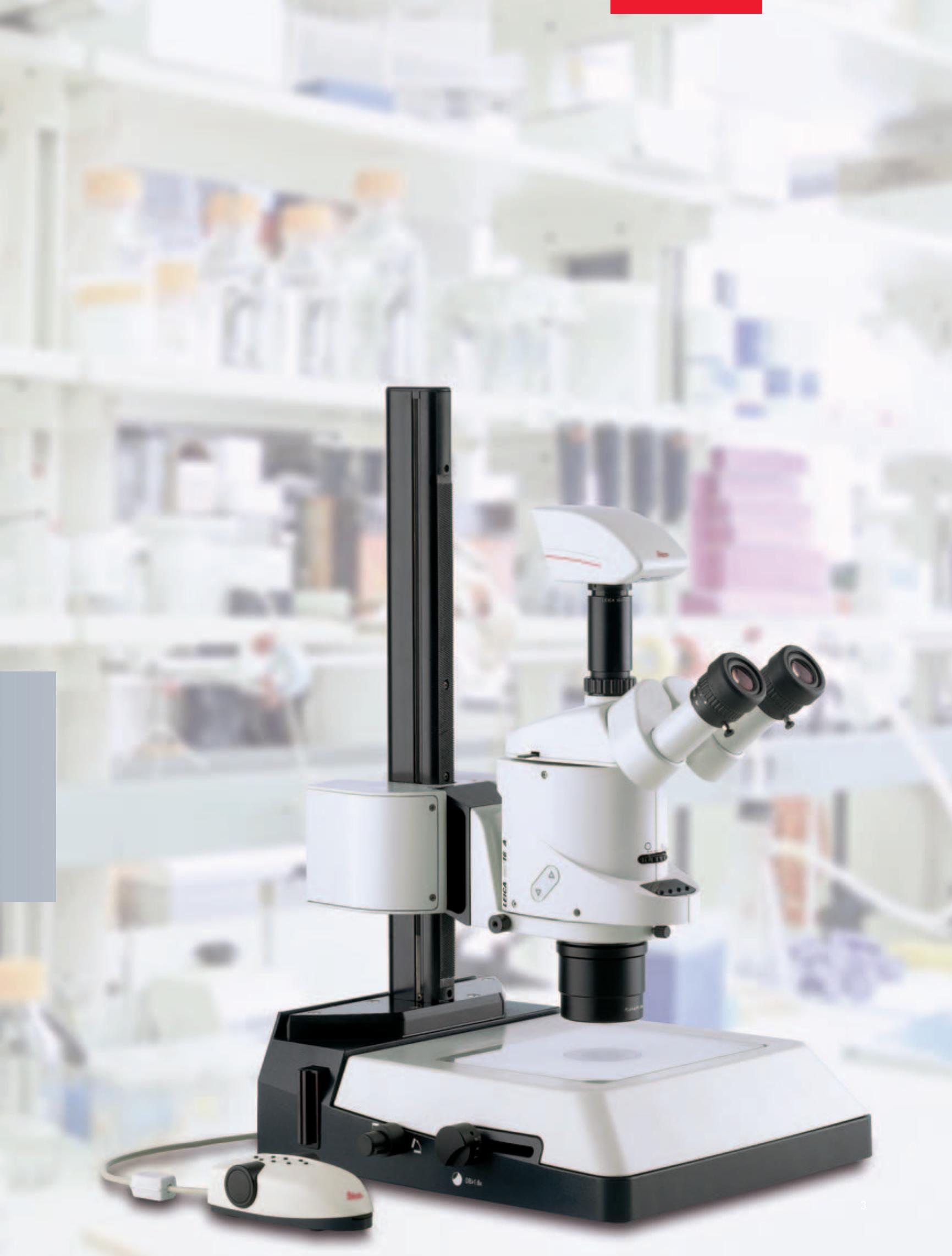
Support à lumière transmise
Contrôlez la luminosité de la source de lumière et le miroir entre les deux positions finales guidées.
La lampe halogène peut être remplacée rapidement et facilement.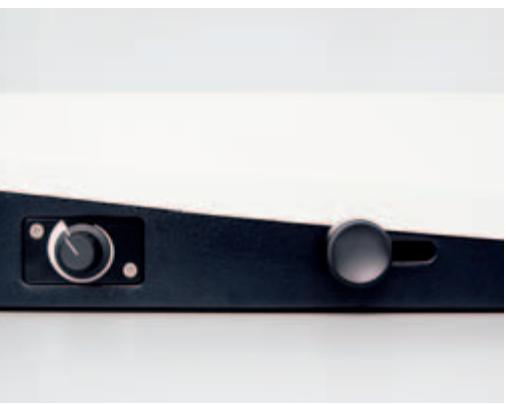
Guide de lumière variable pour un contrôle total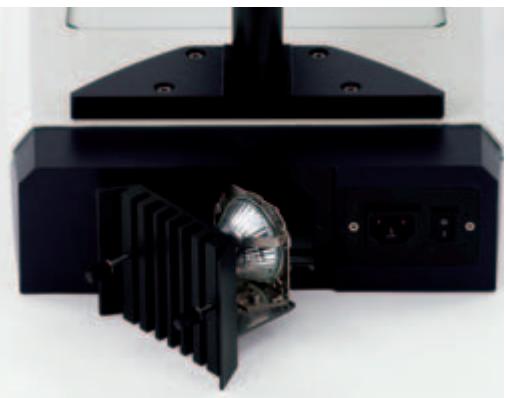
L'utilisation du support à lumière transmise Leica TL ST est simple. Il suffit de régler la luminosité avec un potentiomètre. Le miroir, qui guide la lumière à travers l'échantillon sous différents angles, peut glisser sur le plan horizontal. L'angle d'inclinaison du miroir est ensuite automatiquement aligné. Ainsi, l'utilisateur a un contrôle total sur la lumière transmise sans avoir à chercher le meilleur angle de lumière transmise.
La nouvelle lampe halogène de Leica est particulièrement efficace. Avec une puissance de seulement 20 W, elle atteint l'utilisation de la lumière d'une lampe de 35 W. L'effet de chauffe est nettement réduit, et les échantillons sensibles à la température bénéficient particulièrement de la puissance inférieure.
Filtre lumière du jour pour des couleurs naturelles
Leica propose un filtre lumière du jour en option pour le support à lumière transmise standard. Le verre hautement traité augmente la température de couleur et coupe le spectre infrarouge et UV de la lampe halogène. Cela fournit un spectre similaire à la lumière du jour.
Leica propose un accessoire de filtre lumière du jour pour le statif standard à lumière transmise. Le verre hautement traité augmente la température de couleur et coupe le spectre infrarouge et UV de la lampe halogène. Cela fournit un spectre similaire à la lumière du jour.
Remplacement des lampes en quelques secondes
Le nouveau mécanisme de changement de lampe, facile à utiliser, permet de remplacer rapidement une lampe halogène. Après une phase de refroidissement, l'utilisateur peut accéder directement au porte-lampe en retirant deux vis sur le dissipateur thermique.
Travaillez confortablement
La grande surface de travail du statif standard à lumière transmise permet l'analyse comparative de plusieurs spécimens. Pendant qu'un spécimen est analysé sous le stéréomicroscope, les autres spécimens peuvent rester sur le statif pour un changement rapide si nécessaire. Une grande plaque de verre protège le statif de tout liquide en cas de déversement.
Leica MZ125 avec ErgoTube, commande macro/micro, platine standard et statif à lumière transmise TL ST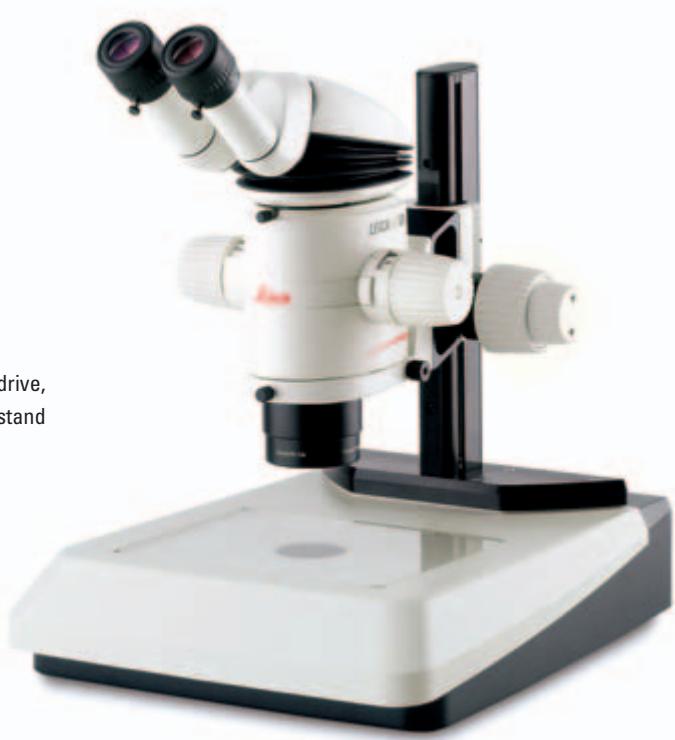
Leica TL BFDF
Statif à lumière transmise
Basculement en continu entre fond clair et fond sombre
Le fond clair direct à lumière transmise de Leica est disponible pour l'étude de spécimens colorés en amplitude avec un contraste suffisant. Le nouveau statif haute performance TL BFDF à lumière transmise offre des options polyvalentes. Les rayons lumineux peuvent être déviés à travers le spécimen, de l'incidence verticale à l'incidence rasante, et un degré de diffusion élevé ou faible peut être sélectionné. Par exemple, si les rayons lumineux sont déviés de manière absolument verticale à travers le spécimen, un fond clair exact avec une luminosité maximale est créé. Le spécimen apparaît avec un contraste complet, en couleur naturelle sur un fond clair et homogène.
Si la lumière est déviée à travers le spécimen selon un angle oblique, cela facilite la visualisation de spécimens semi-transparents tels que les foraminifères et les œufs de poisson. Plus les rayons lumineux sont déviés à plat dans les spécimens, plus le fond apparaît sombre. Les contours, les bords fins
et les structures sont mis en évidence de manière lumineuse et claire par la diffraction de la lumière sur un fond sombre.
La conception SlideOn™ permet un changement facile de la platine
Lors de l'achat d'un nouveau statif de stéréomicroscope Leica, si la platine standard est commandée au lieu de la nouvelle platine XY, la platine standard (avec la conception SlideOn™ brevetée de Leica) peut être rapidement remplacée par la nouvelle platine XY (voir p. 9).
Dissipation efficace des vibrations
Les pieds amortisseurs de vibrations du TL BFDF minimisent les perturbations lors de travaux délicats. Les vibrations externes qui influencent le statif (bruit d'impact, ventilateur pour sources de lumière externes, etc.) et toute perturbation directe sur le statif lui-même sont mieux amorties qu'avec les pieds de statif conventionnels.
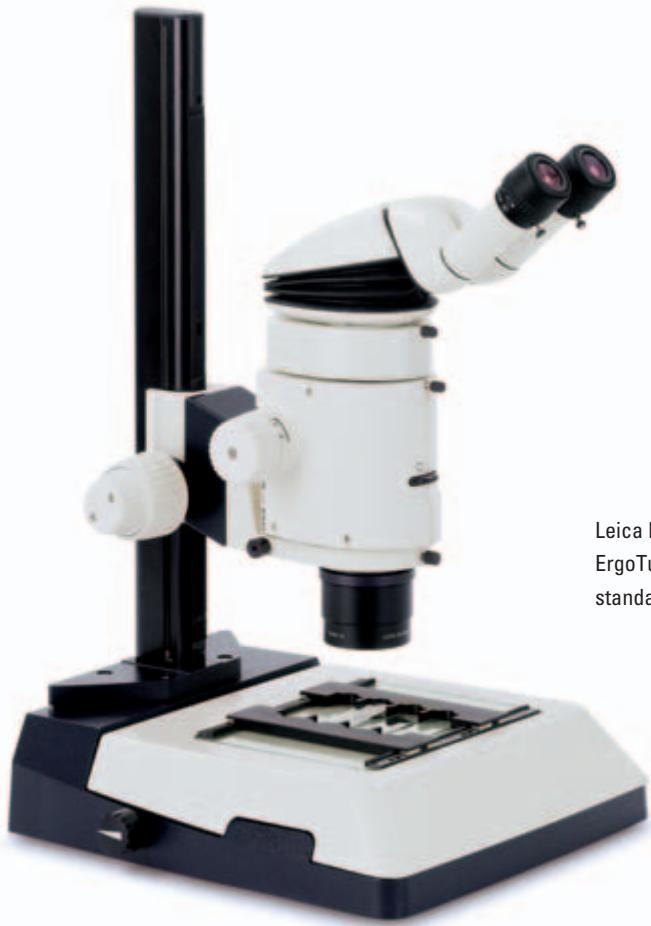
Microscope Leica MZ16 avec caméra numérique Leica IC D,
tube ErgoTube, commande de mise au point macro/micro, statif à lumière transmise TL BFDF,
platine standard et porte-objet en verre 4×
Coupe de pulpe de doigt humain, image en fond clair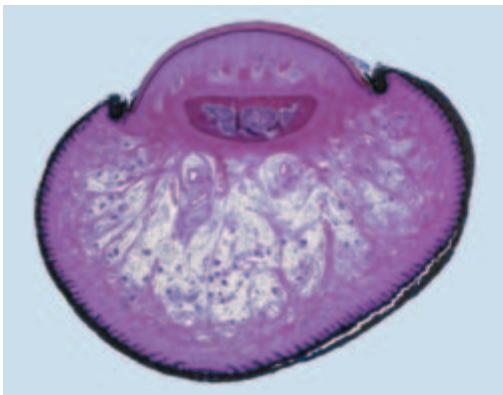
Coupe de pulpe de doigt humain, image en fond noir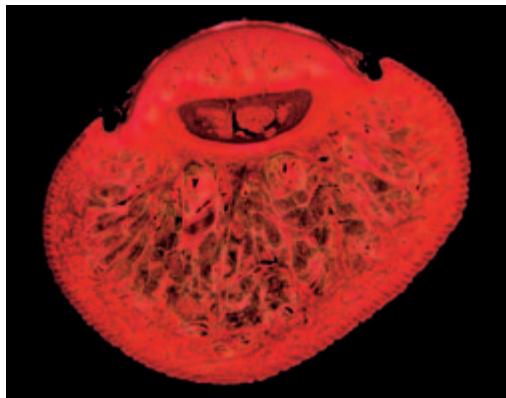
Leica TL RC™ / TL RCI™
Statif à lumière transmise
TL RCI™ : dissipateur thermique pour la source lumineuse intégrée et ports pour le contrôle externe (2×USB, 2×CAN).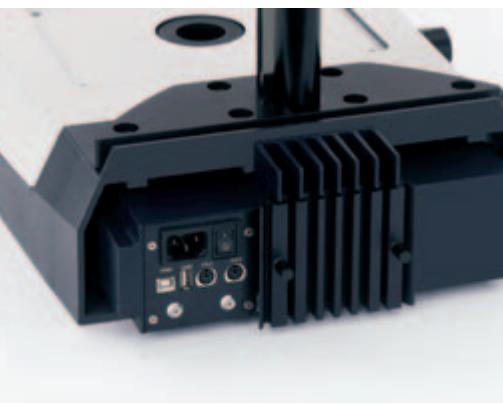
Unité de changement de filtres, porte-filtres individuels (non montés), boutons rotatifs pour le diaphragme supérieur et inférieur du contraste Rottermann™, bouton rotatif pour positionner et régler l'angle du miroir.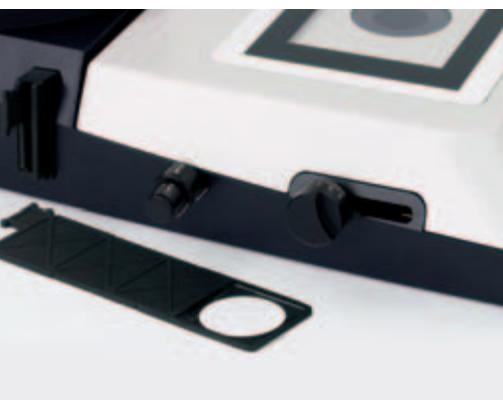
Méthode de contraste pour échantillons transparents et clairs
Le contraste Rottermann™ est une technique d'éclairage partiel qui révèle les variations de l'indice de réfraction sous forme de différences de luminosité. Les structures de phase apparaissent alors typiquement comme des images spatiales en relief – comme des collines en contraste de relief positif et comme des creux en contraste de relief inversé. Les deux diaphragmes intégrés qui créent l'effet de relief peuvent être positionnés individuellement de complètement ouvert à complètement fermé. L'effet de relief peut également être réglé de faible à fort en inclinant précisément le miroir repliable à l'aide du bouton rotatif situé sur le côté gauche du statif. Cette technique offre de nombreuses vues variables pour extraire le maximum d'informations de chaque échantillon.
Coordination parfaite avec les stéréomicroscopes automatisés
Le statif à lumière transmise Leica TL RCI™ est équipé de deux ports USB et de deux interfaces bus CAN. La luminosité de la source lumineuse peut être contrôlée via une souris USB. Combiné aux stéréomicroscopes et macroscopes motorisés Leica, à la mise au point motorisée et au logiciel Leica Application Suite (LAS), l'utilisateur dispose d'un contrôle informatique complet sur le niveau de zoom, la mise au point, la température de couleur, la luminosité et l'obturateur de l'éclairage. De nombreuses séries de tests peuvent être extraites du logiciel LAS et automatisées.
Température de couleur constante
La température de couleur et la luminosité sont contrôlées séparément avec les statifs haute performance de Leica. Grâce à la fonction CCIC, la luminosité est réglée de manière totalement indépendante de la température de couleur – et l'impression de couleur requise reste exactement la même lorsque l'intensité de l'éclairage change. Le potentiomètre de la température de couleur dispose également d'un obturateur à commande électronique ; si le statif est rallumé après une pause de travail, il revient automatiquement aux réglages précédents.
Trois emplacements pour filtres de couleur disponibles
Les TL RC™ et TL RCI™ sont chacun équipés de trois emplacements pour filtres de couleur. Ces emplacements peuvent accueillir des filtres disponibles en accessoires, tels que le filtre gris neutre, le filtre de fluorescence BG38 et le filtre UV, ou être équipés d'autres filtres selon les souhaits de l'utilisateur.
Choix entre source de lumière intégrée ou externe
Les supports haute performance de la série TL sont disponibles en deux versions : avec éclairage halogène intégré ou avec connexion pour sources de lumière froide externes. Si l'utilisateur possède déjà une source de lumière froide, elle peut être utilisée sur le nouveau support. De plus, la nouvelle source de lumière froide Leica CLS150 LS permet de contrôler directement l'obturateur interne via un PC.
Solutions totalement intégrées
Leica Application Suite (LAS) intègre les microscopes automatisés, les caméras numériques et les logiciels Leica dans un environnement commun, offrant une solution cohérente et facile à utiliser avec des performances inégalées. La flexibilité de LAS le rend adapté à une gamme diversifiée d'applications en sciences de la vie et dans l'industrie, telles que la pathologie, les tests pharmaceutiques, la recherche sur les matériaux, et bien d'autres.
LAS résout et accélère les analyses de routine et de recherche grâce à de riches fonctions de traitement d'image qui simplifient la visualisation, l'amélioration, la mesure et la documentation des images numériques. Un package LAS d'introduction est fourni avec les derniers microscopes et caméras numériques Leica, fournissant le logiciel de base pour leur configuration et leur contrôle, et permettant à l'utilisateur de commencer immédiatement à acquérir, analyser et traiter des images numériques de haute qualité. Ces capacités fondamentales peuvent être enrichies avec une gamme de modules et d'applications LAS avancés pour former un environnement d'imagerie microscopique intégré.
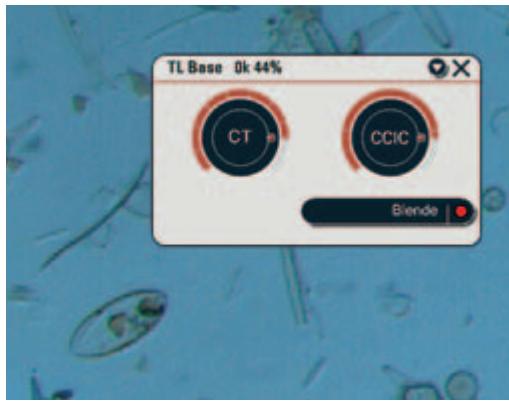
Contrôle de la température de la lumière et de la luminosité à l'aide de Leica Application Suite (LAS).
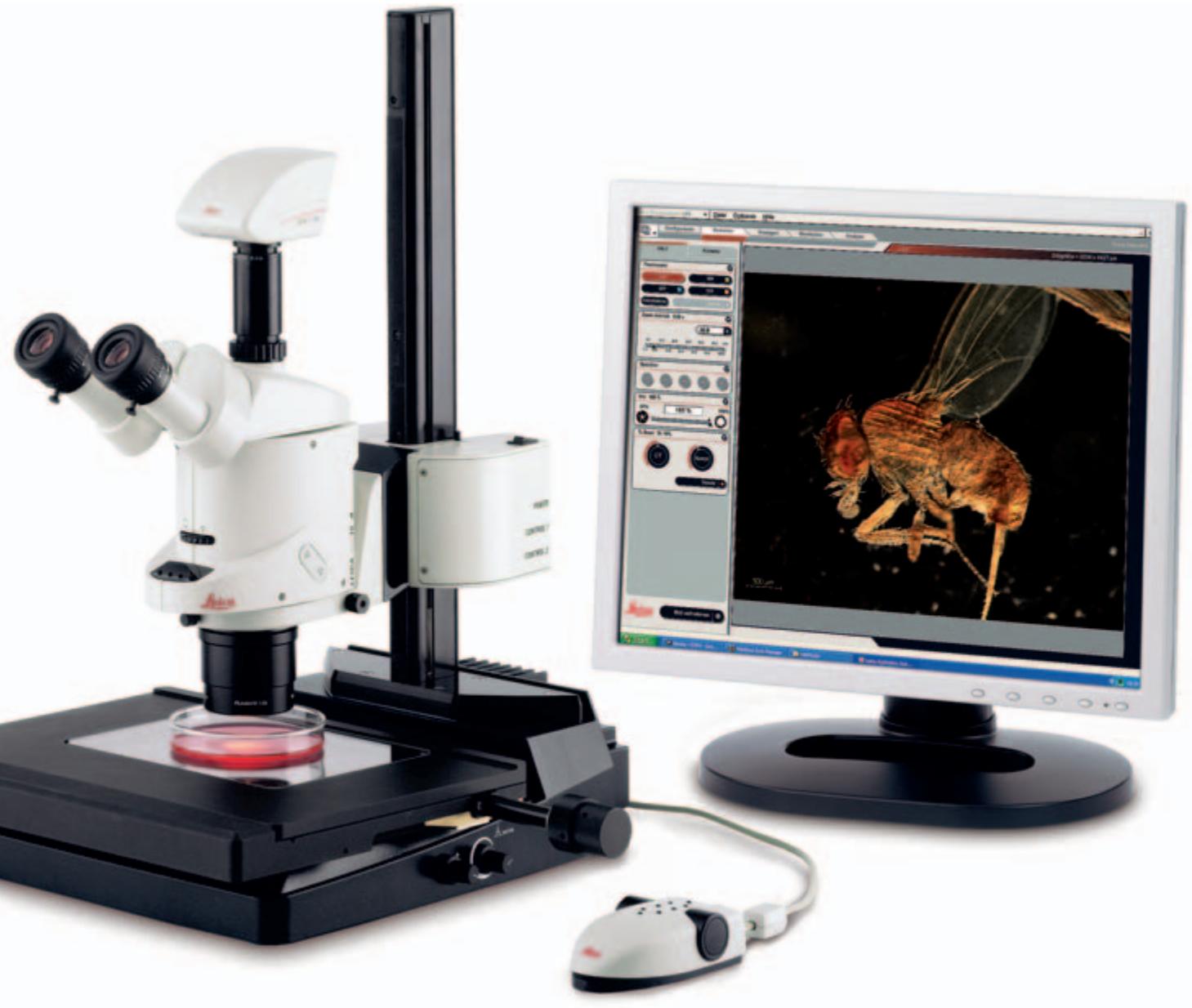
Support à lumière incidente
Stéréomicroscope Leica S6 D avec caméra numérique Leica DFC280 et support à lumière incidente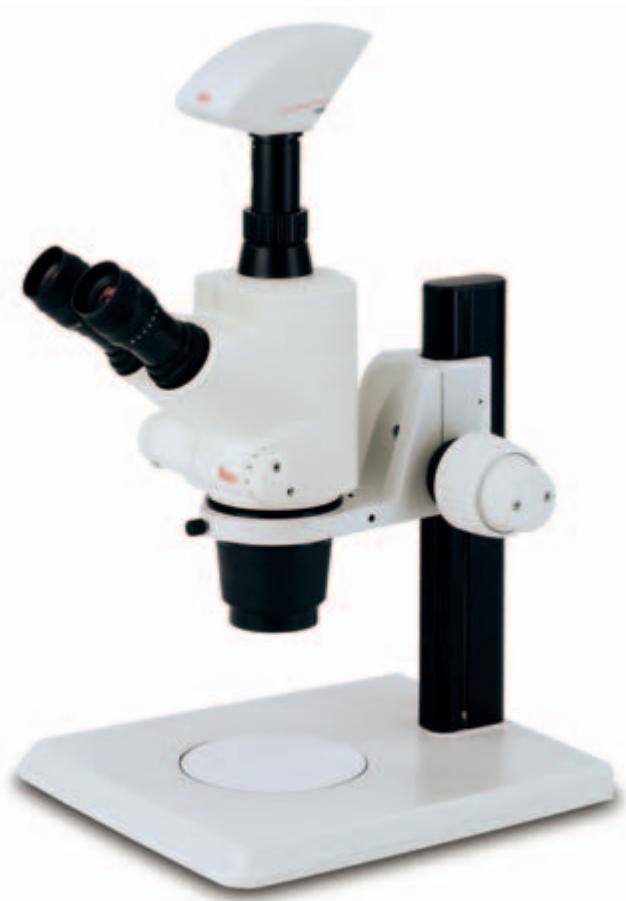
Mobilité et compacité
Les postes de travail de laboratoire offrent souvent très peu d'espace. Les nouveaux supports à lumière incidente de Leica sont conçus pour offrir exactement la bonne surface. Mais en même temps, ils nécessitent un minimum d'espace sur le poste de travail.
Haute stabilité et dissipation des vibrations
Leica a mis en œuvre une structure en nid d'abeille, ce qui rend les nouveaux supports à lumière incidente légers mais extrêmement rigides. Malgré un poids inférieur à 2 kg, les supports résistent au flambage. Les supports sont également équipés de pieds spéciaux AntiShock™ dissipant les vibrations. Par rapport aux patins conventionnels, les pieds AntiShock assurent jusqu'à 50 % de vibrations en moins. La combinaison de toutes ces caractéristiques garantit une image stable et d'excellente qualité lors de l'observation et de la documentation des spécimens.
Évolutif pour les besoins futurs
Comme la science évolue, les instruments requis évoluent également. Lors de l'achat d'un système de microscope, il n'est pas toujours possible de savoir quel équipement supplémentaire sera nécessaire à l'avenir. La conception modulaire de Leica garantit que des accessoires peuvent être ajoutés ultérieurement, qui s'adaptent parfaitement au système de stéréomicroscope Leica. Par exemple, une variété d'entraînements de mise au point est déjà disponible pour les nouveaux supports à lumière incidente.
Support à lumière incidente Leica avec structure en nid d'abeille.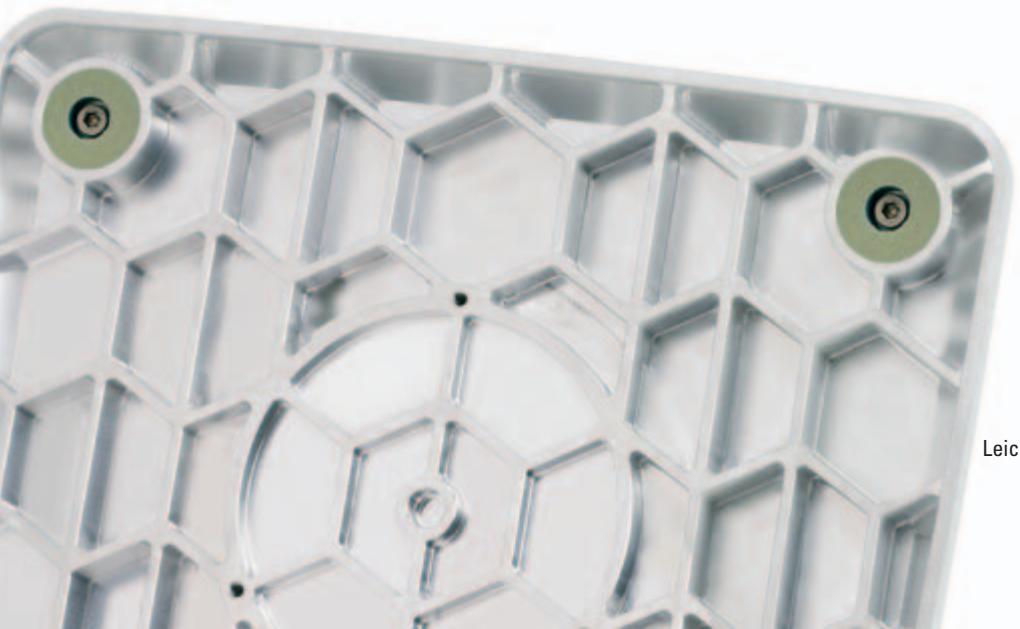
Guidage de précision de la
lumière incidente et transmise
L'axe avec les boutons de commande pour le mouvement X et Y de la platine peut être monté soit à gauche, soit à droite de la platine XY.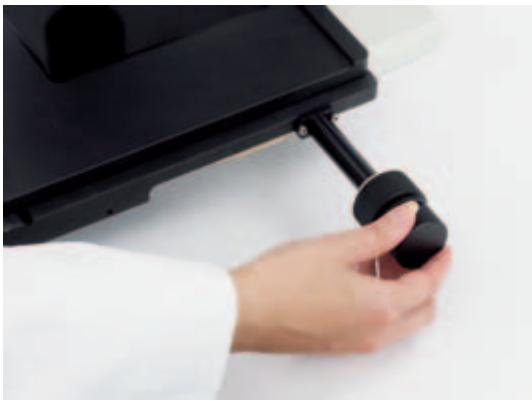
Précision et vitesse
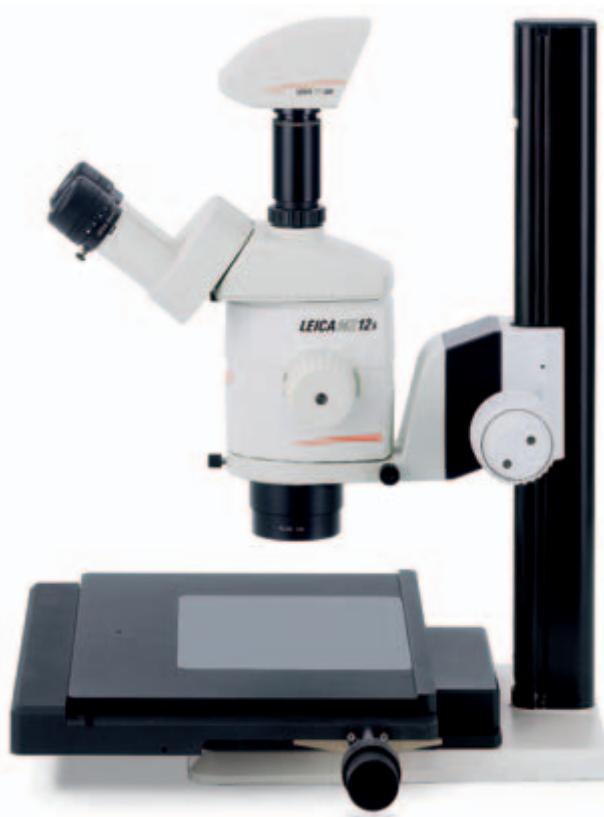
Avec la nouvelle platine XY Leica, la procédure fastidieuse de manipulation manuelle du spécimen pour le positionner correctement sous le stéréomicroscope n'est plus nécessaire. Grâce aux deux molettes de commande faciles à déplacer mais extrêmement précises, le spécimen peut être déplacé rapidement après le placement jusqu'à ce que la zone à examiner soit trouvée. En combinant la platine XY avec la lame de verre 4 ×, jusqu'à quatre préparations peuvent être placées sur la surface de travail et observées verticalement de manière rapide, précise et facile. La précision est inférieure à 10 µm.
Toujours au point
Les platines XY conventionnelles ont l'inconvénient d'être plus hautes et ne fournissent donc pas le meilleur niveau pour l'observation des spécimens lorsque des supports à lumière transmise sont utilisés. L'homogénéité et l'intensité de la zone éclairée diminuent, et la lumière ne peut plus être bien guidée à travers le spécimen. La nouvelle platine XY Leica résout ce problème. Après le changement de la platine standard (réf. 10447269), le niveau du spécimen reste exactement à la même hauteur qu'avant, et les réglages d'éclairage restent inchangés.
Conception SlideOn™ de Leica
Le passage d'une platine standard à la platine XY est étonnamment facile. En retirant simplement quelques vis, la platine standard peut être remplacée par la platine XY. Si une platine XY n'est pas achetée avec un nouveau support de stéréomicroscope Leica, l'utilisateur peut facilement compléter l'instrument à tout moment à l'avenir.
Leica MZ125 avec caméra numérique Leica DFC320, support à lumière incidente et platine XY.
Intégration parfaite
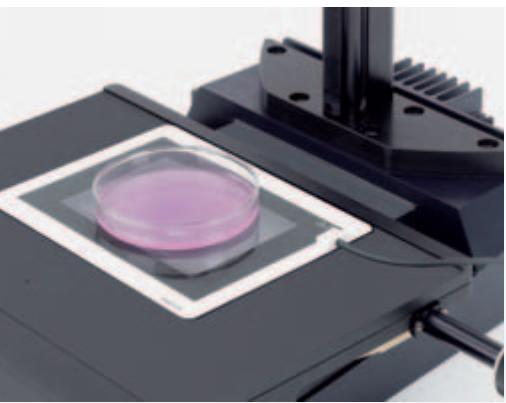
Platine chauffante Leica MATS
La Leica MATS est la solution la plus efficace pour protéger et préserver les cellules vivantes pendant l'analyse microscopique. La faible tolérance de 0.2°C entre la platine et le spécimen permet de mener des expériences de manière fiable avec des spécimens nécessitant une température constante.
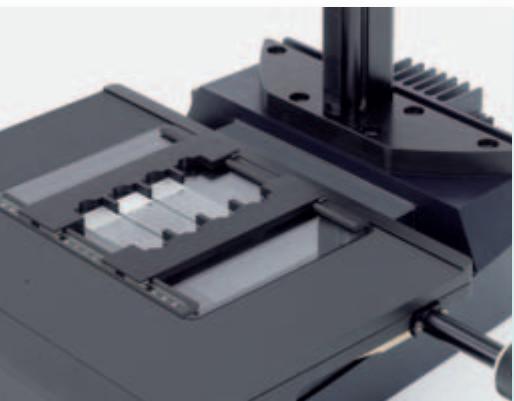
Adaptateur pour 4 lames de verre
Combiné à la platine XY, cet adaptateur est idéal pour l'analyse comparative de jusqu'à quatre échantillons sur lames de verre.
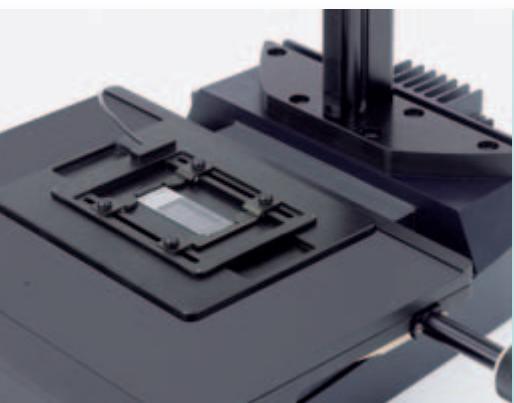
Live on Stage
La gamme de produits Live on Stage de Leica (systèmes d'incubation, contrôle du pH, systèmes de culture cellulaire, etc.) pour les microscopes inversés Leica permet à votre stéréomicroscope d'effectuer toutes les tâches possibles en sciences de la vie, aussi difficiles soient-elles.
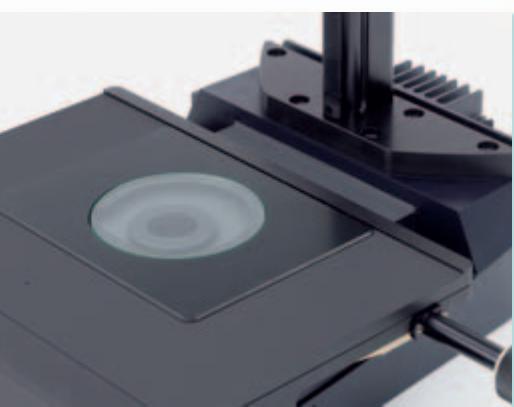
Adaptateur pour inserts de 120 mm
L'adaptateur de Leica pour inserts de 120 mm de diamètre permet d'utiliser des accessoires tels qu'une platine à glissement, une platine à coupelle et une platine de polarisation (voir le schéma de montage dans les spécifications).
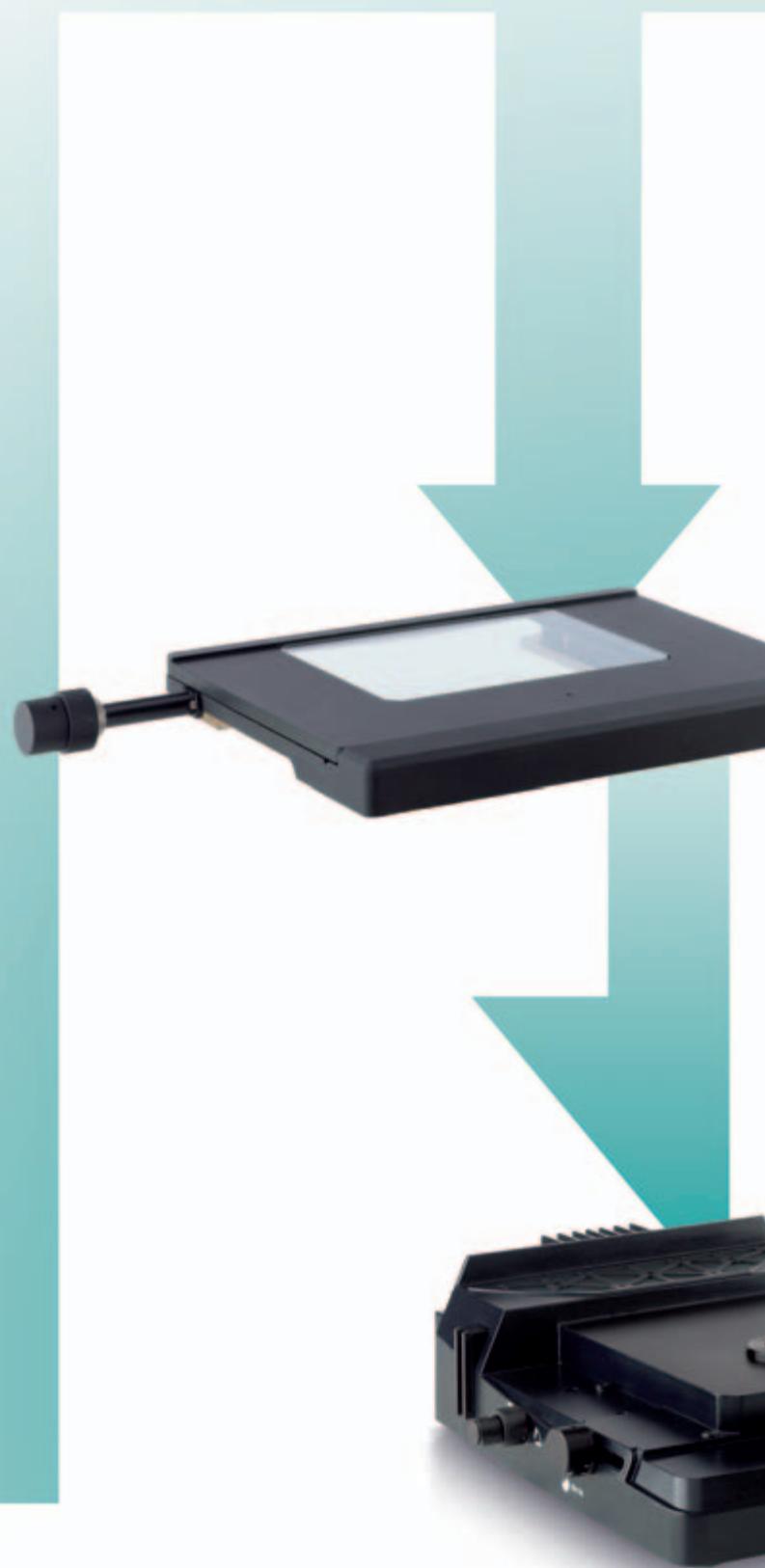
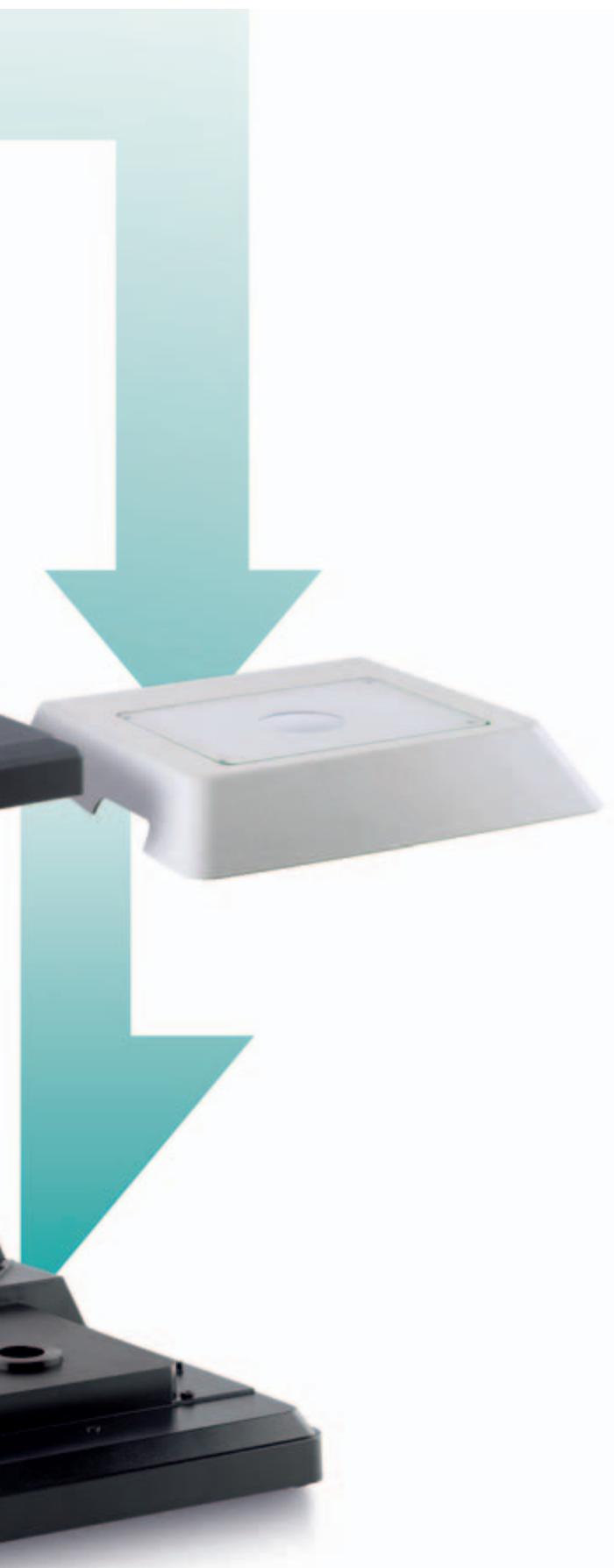
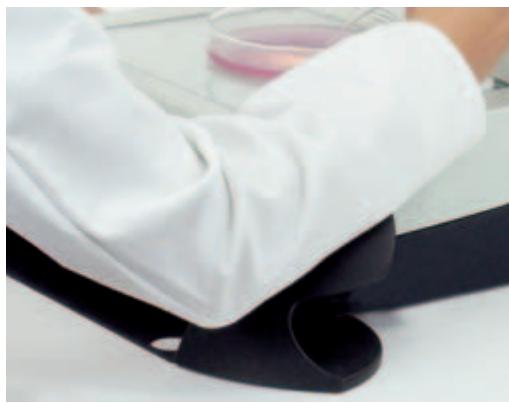
Leica ErgoRestTM
L'accoudoir Leica ErgoRestTM permet un travail précis et sans fatigue au stéréomicroscope. L'accoudoir offre deux niveaux de repos sur le support pour soutenir les bras lors de la mise au point ou du travail avec une boîte de Pétri.
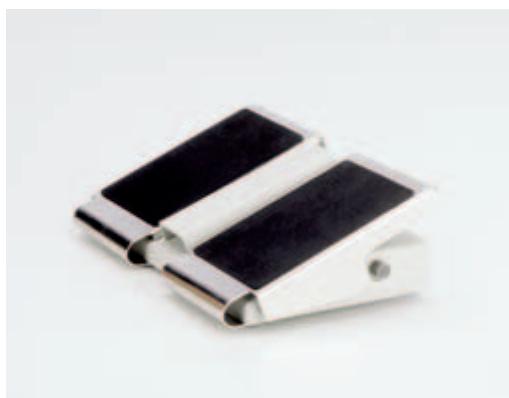
Pédale
La nouvelle pédale de Leica, contrôlée par un potentiomètre, dispose d'une interface CAN-Bus. Ainsi, les deux bascules peuvent être utilisées pour toute fonction du microscope, telles que la mise au point motorisée, le contrôle du zoom et le changement de filtre (par exemple Leica MZ16 FA).
Source de lumière froide Leica CLS150 LS
La CLS150 LS a été spécialement adaptée pour automatiser le contrôle du statif à lumière transmise TLRCI™ via LAS. Grâce à un port série, la luminosité, la température de couleur et l'obturateur électronique peuvent être contrôlés directement depuis un PC ou le Leica UMC (contrôle manuel).
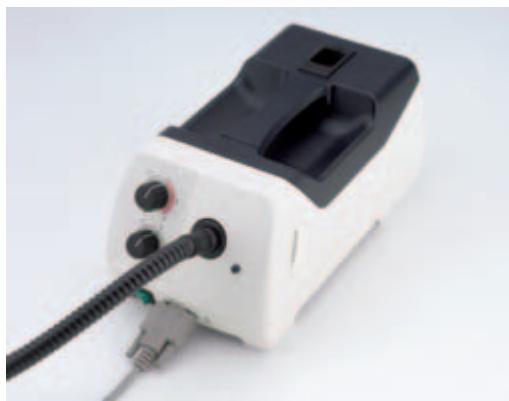
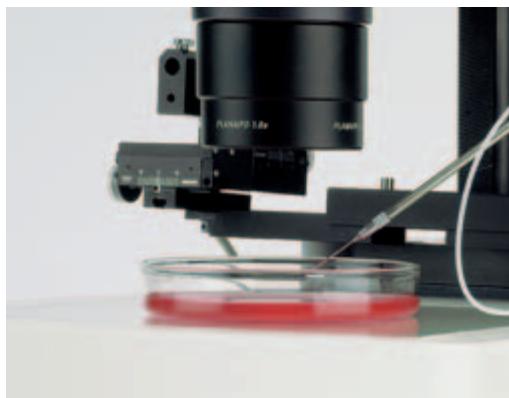
Micromanipulation
Grâce à l'adaptateur de Leica pour accessoires de micromanipulation, des applications telles que l'ICSI (injection intracytoplasmique de spermatozoïdes), les expériences transgéniques et électrophysiologiques sont possibles en stéréomicroscopie.
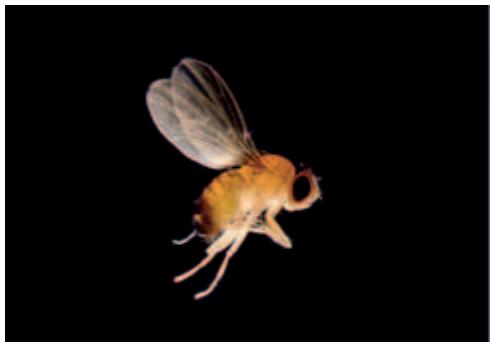
Images d'une drosophile utilisant différentes techniques d'éclairage.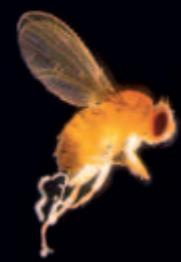
| Leica TL ST | Leica TL BFDF | Leica TL RCTM | Leica TL RCI™ | |
| Light source | Halogen lamp12V/20W | External via cold light source | External via cold light source | Halogen lamp12V/20W |
| Fast change of the illuminant | yes | - | - | yes |
| Illuminated field | 50mm | 40mm | 35mm | 35mm |
| Illumination modes | ||||
| Brightfield | yes | yes | yes | yes |
| Darkfield | yes* | yes | yes* | yes* |
| Inclined illumination | no | no | yes | yes |
| Relief Contrast system (RCTM) | no | no | yes | yes |
| CCIC(Constant Color Intensity Control) | no | no | no | yes |
| Internal shutter/lamp control | no | yes** | yes** | yes |
| Integrated filter holder | yes | no | yes | yes |
| Coated optics for raising the color temperature | yes | no | yes | yes |
| Adaptation for high num. aperture | no | no | yes*** | yes*** |
| Remote control possibilities | no | yes***** | yes***** | yes |
| AntiShock™ pads | yes | yes | yes | yes |
| Size of the stand (W×H×D in mm) | 340×430×85 | 340×390×90 | 340×390×95 | 340×440×95 |
| Accessories | ||||
| IsoProTM : XY stage support with optimized image level | no | yes | yes | yes |
| Integrated heating stage (optional) | yes | yes | yes | yes |
| Integrated glass slide (optional) | yes | yes | yes | yes |
| ErgoRest™ (optional) | yes | yes | yes | yes |
| Incident-light stand | ||||
| Size of the stand (W×H×D in mm) | 280×300×24 | |||
| AntiShock™ pads | yes | |||
| XY stage support | yes |
- unilatéral ** avec source de lumière froide Leica CLS150 LS *** miroir concave **** avec source de lumière externe

- OBSERVER ET DOCUMENTER DANS LES MEILLEURES CONDITIONS DE LUMIÈRE
- LA QUALITÉ DE LA LUMIÈRE UTILISÉE
- SUPPORT À LUMIÈRE TRANSMISE
- CONTRÔLEZ LA LUMINOSITÉ DE LA SOURCE DE LUMIÈRE ET LE MIROIR ENTRE LES DEUX POSITIONS FINALES GUIDÉES
- L'UTILISATION DU SUPPORT À LUMIÈRE TRANSMISE LEICA TL ST EST SIMPLE. IL SUFFIT DE RÉGLER LA LUMINOSITÉ AVEC UN POTENTIOMÈTRE. LE MIROIR, QUI GUIDE LA LUMIÈRE À TRAVERS L'ÉCHANTILLON SOUS DIFFÉRENTS ANGLES, PEUT GLISSER SUR LE PLAN HORIZONTAL. L'ANGLE D'INCLINAISON DU MIROIR EST ENSUITE AUTOMATIQUEMENT ALIGNÉ. AINSI, L'UTILISATEUR A UN CONTRÔLE TOTAL SUR LA LUMIÈRE TRANSMISE SANS AVOIR À CHERCHER LE MEILLEUR ANGLE DE LUMIÈRE TRANSMISE
- LEICA PROPOSE UN FILTRE LUMIÈRE DU JOUR EN OPTION POUR LE SUPPORT À LUMIÈRE TRANSMISE STANDARD. LE VERRE HAUTEMENT TRAITÉ AUGMENTE LA TEMPÉRATURE DE COULEUR ET COUPE LE SPECTRE INFRAROUGE ET UV DE LA LAMPE HALOGÈNE. CELA FOURNIT UN SPECTRE SIMILAIRE À LA LUMIÈRE DU JOUR
- REMPLACEMENT DES LAMPES EN QUELQUES SECONDES
- TRAVAILLEZ CONFORTABLEMENT
- LEICA TL BFDF
- STATIF À LUMIÈRE TRANSMISE
- BASCULEMENT EN CONTINU ENTRE FOND CLAIR ET FOND SOMBRE
- LA CONCEPTION SLIDEON™ PERMET UN CHANGEMENT FACILE DE LA PLATINE
- DISSIPATION EFFICACE DES VIBRATIONS
- LEICA TL RC™ / TL RCI™
- MÉTHODE DE CONTRASTE POUR ÉCHANTILLONS TRANSPARENTS ET CLAIRS
- COORDINATION PARFAITE AVEC LES STÉRÉOMICROSCOPES AUTOMATISÉS
- TEMPÉRATURE DE COULEUR CONSTANTE
- TROIS EMPLACEMENTS POUR FILTRES DE COULEUR DISPONIBLES
- CHOIX ENTRE SOURCE DE LUMIÈRE INTÉGRÉE OU EXTERNE
- SOLUTIONS TOTALEMENT INTÉGRÉES
- SUPPORT À LUMIÈRE INCIDENTE
- MOBILITÉ ET COMPACITÉ
- HAUTE STABILITÉ ET DISSIPATION DES VIBRATIONS
- ÉVOLUTIF POUR LES BESOINS FUTURS
- GUIDAGE DE PRÉCISION DE LA
- LUMIÈRE INCIDENTE ET TRANSMISE
- PRÉCISION ET VITESSE
- TOUJOURS AU POINT
- CONCEPTION SLIDEON™ DE LEICA
- INTÉGRATION PARFAITE
- PLATINE CHAUFFANTE LEICA MATS
- ADAPTATEUR POUR 4 LAMES DE VERRE
- LIVE ON STAGE
- ADAPTATEUR POUR INSERTS DE 120 MM
- LEICA ERGORESTTM
- PÉDALE
- SOURCE DE LUMIÈRE FROIDE LEICA CLS150 LS
- MICROMANIPULATION
Marque : LEICA
Modèle : TL-BASES
Catégorie : Microscope