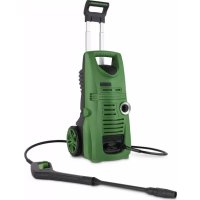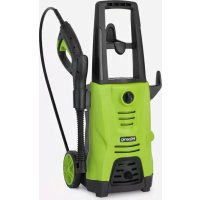
HWP3 - Hidrolimpiadora H.KOENIG - Manual de uso y guía de instrucciones gratis
Encuentra gratis el manual del aparato HWP3 H.KOENIG en formato PDF.



Elija su idioma y proporcione su correo: le enviaremos una version traducida especificamente para usted.
| Tipo de producto | Limpiador de alta presión |
| Marca | H.Koenig |
| Modelo | HWP3 |
| Uso previsto | Doméstico (limpieza de vehículos, terrazas, fachadas, herramientas de jardín, etc.) |
| Alimentación eléctrica | AC 220-240 V, 50/60 Hz |
| Potencia nominal | 1400 W |
| Presión de servicio | 6,5 MPa |
| Presión máxima | 11,0 MPa |
| Caudal de agua | 320 L/h |
| Temperatura de agua admisible | 0 a 40 °C |
| Presión de alimentación de agua máx. | 0,4 MPa |
| Dimensiones (L x A x H) | 321 x 257 x 664 mm |
| Peso aproximado | 7 kg |
| Longitud de la manguera de alta presión | 5 m |
| Pistola de pulverización | Con seguridad infantil y gatillo |
| Lanza de pulverización | Ajustable (chorro recto a abanico) |
| Ruedas | 2 ruedas para movilidad |
| Almacenamiento de accesorios | Soporte para pistola, gancho para lanza, almacenamiento de accesorios |
| Filtro de agua | Integrado (limpiable) |
| Protección contra heladas | Almacenar en un lugar libre de heladas después de vaciado |
| Mantenimiento habitual | Limpiar el filtro y la lanza con una aguja |
| Seguridad | Parada automática cuando se suelta el gatillo, bloqueo de seguridad |
| Reciclaje | No desechar con la basura doméstica (aparato eléctrico) |
Preguntas frecuentes - HWP3 H.KOENIG
¿Cómo instalar el limpiador de alta presión H.Koenig HWP3?
Fije el conector de entrada de agua (A), conecte la manguera de alta presión (B, K), instale el soporte de la pistola y el almacenamiento de accesorios (C), luego inserte la lanza en la pistola (F). Asegúrese de que todas las conexiones estén bien apretadas.
¿Cuál es la presión máxima del aparato?
La presión máxima es de 11,0 MPa (110 bar). La presión de servicio normal es de 6,5 MPa.
¿Se puede usar agua caliente con este limpiador?
No, la temperatura del agua no debe superar 40 °C. Use siempre agua fría o tibia.
¿Qué hacer si la presión es baja o fluctuante?
Verifique que la lanza no esté obstruida (limpie con una aguja), que el filtro de entrada de agua esté limpio, que la manguera no esté doblada y que el suministro de agua sea suficiente (caudal 10 L/min).
¿Cómo mantener el filtro del limpiador?
Retire el filtro (18) ubicado en el tapón del detergente o en el conector de agua. Límpielo bajo agua corriente. Use la aguja suministrada para eliminar los residuos (M).
El aparato no arranca, ¿qué verificar?
Asegúrese de que el aparato esté enchufado a una toma funcional, que el interruptor esté en ON, que el fusible no se haya fundido y que la tensión de red sea correcta (220-240 V).
¿Se pueden usar detergentes con este limpiador?
Sí, use detergentes aprobados por el fabricante. Siga las instrucciones proporcionadas con el detergente. Nunca use solventes, ácidos o productos inflamables.
¿Cómo almacenar el aparato en invierno?
Vacíe completamente el agua restante accionando la pistola. Guarde el aparato en un lugar seco y protegido de las heladas. Si es posible, limpie el filtro antes del almacenamiento.
¿Qué hacer si la pistola está bloqueada?
Verifique que el bloqueo de seguridad (9) esté bien desbloqueado. Si la pistola sigue bloqueada, contacte al servicio postventa.
El aparato gotea un poco por la bomba, ¿es normal?
Un ligero goteo de la bomba es normal. Si la fuga se vuelve importante, contacte a un centro de servicio autorizado.
Preguntas de los usuarios sobre HWP3 H.KOENIG
0 pregunta sobre este aparato. Responde a las que conoces o haz la tuya.
Hacer una nueva pregunta sobre este aparato
Aún no hay preguntas. Sé el primero en hacer una.
Descarga las instrucciones para tu Hidrolimpiadora en formato PDF gratis! Encuentra tus instrucciones HWP3 - H.KOENIG y toma tu dispositivo electrónico nuevamente en la mano. En esta página están publicados todos los documentos necesarios para el uso de su dispositivo. HWP3 de la marca H.KOENIG.
MANUAL DE USUARIO HWP3 H.KOENIG
H
Instruction Manual
Manuel d'instructions
Bedienungsanleitung
Gebruiksaanwijzing
Manual de instrucciones
Manuale d'uso

natural_image
Green and black Hohenig water heater with attached cable (no visible text or symbols)
High pressure washer
Nettoyeur haute pression
hochdruckreiniger
Hogedrukreiniger
Lavadora de alta presión
Rondella ad alta pressione

text_image
QR code image with red border, no readable text or symbols beyond the matrix pattern
ENGLISH
WARNING: READ THE INSTRUCTION BEFORE OPERATION
THIS MACHINE IS DESIGN ED FOR DOMESTIC USE ONLY! COMMERCIAL OR INDUSTRIAL USE ARE PROHIBITED.
Illustration of appliance
Spare parts are subject to the
specific model.
The right of modification is reserved.
1. High pressure hose
2. Water outlet
3. ON/OFF switch
4. Power cord hangar
5. Handle
6. Trigger gun holder
7. Wheels
8. Hose lock
9. Safety lock
10. Trigger gun
11. Spray lance
12. Coupling
13. Water in let
14. Lance holder
15. Hose hangar
16. Accessory storage
17. Power cord
18. Filter

text_image
Technical diagram of a water heater with numbered parts for identification and assembly reference.

text_image
Technical diagram of a tractor with numbered parts labeled for identification

natural_image
Technical line drawing of a mechanical assembly with labeled parts (no text or symbols)

natural_image
Line drawing of a mechanical device with a threaded bolt inserted, showing no text or symbols

natural_image
Technical line drawing of a mechanical device with no visible text or symbols

natural_image
Technical line drawing of a mechanical device with a mesh frame and internal components (no text or symbols)

natural_image
Illustration of two medical or surgical instruments with a pointed tip, shown in line style (no text or symbols)

natural_image
Diagram showing a mechanical assembly with a tool and rotating component (no text or symbols)

text_image
G

natural_image
Illustration of two optical fiber optic cables with a pointed tip, shown from different angles (no text or symbols)

natural_image
Line drawing of a fuel nozzle (no text or symbols present)

natural_image
Technical line drawing of a mechanical vehicle showing wheels, springs, and a plug (no text or symbols)

text_image
K
2
1

text_image
high pressure
low pressure

text_image
L
A
B

text_image
M
C
DO NOT use your high-pressure washer before reading this manual!
General instruction
This high-pressure washer is designed for domestic use only:
1. to clean cars, motorbikes, caravans, bicycles.
2. to clean patios, fences, garden walls, pathways, driveways and house facades, particularly useful for cleaning blocked driveway.
3. to remove of algae and mass from roofs, brickwork and guttering.
4. to clean garden tools and machinery, furniture and barbecues.
5. to clean hygienic of animal pens and their surrounding area.
With accessories, replacement parts and detergents approved by factory. Observe the instructions provided with these detergents.
The packing material can be recycled. Please do not place the packaging into the ordinary refuse for disposal, but arrange for the proper recycling.
Old appliances contain valuable materials that can be recycled. Please arrange for the proper recycling of old appliances. Please dispose your old appliances using appropriate collection systems.
Read symbols in the operating instructions
Danger: immediate danger that can cause severe injury or even death.
Warning: possible hazardous situation that could lead to severe injury or even death.
Caution: possible hazardous situation that could lead to mild injury to persons or damage to property.
The high-pressure washer may not be directed at persons, animals, live electrical equipment or at the appliance itself.
Protect the appliance against frost.
Safety instruction
Danger
1. Never touch the mains plug and the socket with wet hands.
2. The appliance must not be used if the power cord or important parts of the appliance, e.g. high-pressure hoses, trigger gun or safety devices are damaged. Please arrange for it to be replaced immediately by an authorised repair agent or a skilled electrician.
3. The appliance may not be used in areas where a risk of explosion is present.
4. The high-pressure washer must not be directed at other persons or directed by the user at him/herself to clean clothing or footwear.
5. If the appliance is used in hazardous areas (e.g. filling stations) all of the safety provisions and operating instructions detailed in this manual must be observed.
6. Never use the appliance to clean objects containing hazardous substances.
7. Vehicle tyres or tyre valves are susceptible to damage from the high-pressure washer and may burst. The first indication of this is a discoloration of the tyre. Damaged
vehicle tyres/tyre valves are highly dangerous. Ensure that a distance of at least 30 cm is observed when cleaning with the washer.
8. Risk of explosion. Do not spray flammable liquids. Never draw in fluids containing solvents or undiluted acids. This includes petrol, paint thinner and heating oil. The spray mist thus generated is highly inflammable, explosive and poisonous. Do not use acetone, undiluted acids or solvents as they are damaging to the materials from which is the appliance is made.
9. Do not operate this appliance if it has a damaged cord or plug, if it is not working properly or if it has been damaged or dropped. If the supply cord is damaged, it must be replaced by the manufacturer or its service agent or a similarly qualified person in order to avoid a hazard.
Warning
1. The mains plug and the coupling of an extension cable must be watertight and must never lay in the water.
2. Unsuitable extension cables can be hazardous. Only use extension cables outdoors which have been approved for this purpose and labeled with a sufficient cable cross-section: 1-10m: 1.5mm2 10-30m: 2.5mm2
3. Always fully unroll electrical cables.
4. High pressure hoses, fixtures and couplings are important for the safety of the appliance. Only use high pressure hoses, fixtures and couplings recommended by the manufacturer.
5. this appliance can be used by children aged from 8 years and above and persons with reduced physical, sensory or mental capabilities or lack of experience and knowledge if they have been given supervision or
instruction concerning use of the appliance in a safe way and understand the hazards involved.
Children should be supervised to prevent them from playing with the appliance.
6. The operator must use the appliance correctly. When working with the appliance, he must consider the local conditions and pay due care and attention to other persans, in particular children who are nearby.
Caution
1. Do not use the machine if the persans nearby do not wear safety protection device.
2. Wearing protective clothing and safety goggles to protect against splash back containing water or dirt.
3. Create stability for the appliance prior to ail work on or with the appliance to prevent accidents or damage. The stability of the appliance is warranted when it is placed on to an even surface.
4. For safety reasons, we recommend that you operate the appliance only via an earth-leakage circuit breaker (max. 30mA).
5. Make sure that the power cord or extension cables are not damaged by running over, pinching, dragging or similar. Protect the power cable from heat, oil, and sharp edges.
6. Never leave the appliance unattended when it is in operation.
Operation
Special accessories expand the possibilities of using your appliance. Please contact the dealer for further information.
Install accessories before start-up.
1. Install coupling for water connection (pic A).
Screw the coupling to the water connection on the appliance.
2. Install high pressure hose (pic B. pic K).
Insert the high-pressure hose tightly in to coupling on the appliance, it will lock in audibly. Note: make sure the connection nipple is aligned correctly. Check the secure connection by pulling on the high-pressure hose.
3. Install trigger gun holder and accessory storage (pic C).
Insert trigger gun holder and accessory storage. Then push down all the way.
4. Install spray lance (pic F).
Push the spray lance into the trigger gun and fasten it by turning it through 90 degree.
Water supply
Impurities in the water can damage the high-pressure pump and accessories. Ali high pressure washer (except hot water system) use the cold water. The suitable water temperature is 5^ C to 60^ C.
Water supply from mains
Observe regulations of water supply
For connection values, use fibre-reinforced water hose (not included) with a standard coupling, normally the length is Sm, connect the water hose to the appliance and water supply.
1. Open the water tap
2. Unlock the lever on the trigger gun
3. Pull on the lever of the trigger gun
4. Turn on the appliance (pic G ON: open OFF: close)
Start up
Dry runs lasting longer than two minutes lead to damages to the high-pressure pump.
If the appliance does not build up pressure within two minutes, switch it off and proceed as instructed in the Chapter "Troubleshooting".
The trigger gun is subjected to recoil force when the water washer is discharged.
Make sure that you have a firm footing and are also holding the trigger gun and spray lance firmly.
The spray lance is adjustable from stream to fan pattern for easy cleaning (pic H).
Caution
Prior to cleaning, make sure that the high-pressure washer is placed safely on level ground. Wear protective goggles and protective clothing du ring the cleaning process. Notes: Release the lever of the trigger gun, the device will switch off aga in. High pressure washer remains in the system.
Finish operation
1. Turn off tap.
2. Press the lever on the trigger gun to release any remaining pressure and water in the system.
3. Pull out the mains plug.
4. Store the water hose and high-pressure hose.
Maintenance and care
Turn off the appliance and remove the mains plug prior to any care and maintenance work. Prior to longer periods of storage, pull out the filter (18) in the detergent bottle and clean under running water. Pull out the filter in the water connection and clean under running water (pic J). Use the needle to clean the residue (pic M).
In winter, please do not put the machine outside without draining the water to avoid the damage to the machine.
Just put it in a room with frost prevention.
Troubleshooting
Symptom Cause Recommended action Appliance is not running 1. Machine not plugged in2. Defective socket3. Defective extension cable4. Incorrect mains voltage5. Switch off6. Fuse has blown 1. Plug in machine2. Try another socket3. Try another extension cable4. Check voltage correctly5. Turn on switch6. Replace fuse Pump stop working Lack of water lead to high temperature check water flow quantity - put the hose in the 10 bottle (per minute) Fluctuating pressure 1. Spray lance blocked2. Pump is sucking air3. Impurities in pump 1. Clean lance with needle2. Check that hoses and connections are airtight3. Contact the dealer Appliance does not reach operation pressure 1. Spray lance blocked or worn2. Short supply of water3. Hose kinked4. Filter blocked5. Hose blocked 1. Clean or change spray lance2. Check in let flow rate3. Straighten out hose4. Clean filter5. Clean hose Trigger gun can be used Trigger gun is locked Unlock trigger gun safety Machine often starts and stops by itself 1. Safety valve worn out2. Pump, high pressure hose, trigger gun is leakina 1. Contact the nearest service center2. Contact the nearest service center
The content in this instruction manual (include accessories) is kept the final modifying and explanation rights.
Appliance is leaking
Slight leakage from the appliance pump is normal. If the leakage increases contract the authorized customer service.
Transport isnstruction
Mind the balnace of appliance du ring moving. Put the appliance a level ground. Eco designed handle more comfortable to move the appliance (as Pic.D).
Storage
1. Place the appliance on a level ground
2. Disconnect trigger gun and high-pressure hose
3. Disconnect high pressure hose with outlet
4. Put the trigger gun into the trigger gun holder
5. Wind back power cord and high pressure
Please store the machine properly especially du ring winter
Technical specification
Voltage: AC220-240V Working pressure: 6.5Mpa Power: 1400W Water temperature 0-40°C Max. pressure: 11.0Mpa Working temp.: 5-50°C Flow rate: 320L/H Length: 321 mm Max. tap water : 0 .4Mpa Width: 257mm Heighth: 664mm
Schematic drawing

text_image
ON/OFF SWITCH
P Triggle handle
AC 220-240V
50/60HZ
Switch (normal close)
Capacitor
0.22uf
Motor
Thermistor
ENVIRONMENT
CAUTION:

Do not dispose of this product as it has with other household products. There is a separation of this waste product into communities, you will need to inform your local authorities about the places where you can return this product. In fact, electrical and electronic products contain hazardous substances that have harmful effects on the environment or human health should be recycled. The symbol here indicates that electrical and electronic equipment should chosen carefully, a wheeled waste container is marked with a cross.
FRANÇAIS
AVERTISSEMENT : LISEZ ATTENTIVEMENT LES INSTRUCTIONS AVANT D'UTILISER CET APPAREIL.
CET APPAREIL EST DESTINE A USAGE DOMESTIQUE, ET IL EST INTERDIT DE L'UTILISER A DES FINS COMMERCIALES OU INDUSTRIELLES.
Illustration de l'appareil
Chaque modelé comporte des pièces détachées spéciales.
Le fabricant se réserve le droit de modifier l'appareil.

text_image
Technical diagram of a water heater with numbered parts for identification and assembly reference.
z
1. Tuyau haute pression
2. Sortie d'eau
3. Interrupteur MARCHE/ARRET
4. Support du cordon d'alimentation
5. Poignée
6. Support du pistolet pulvérisateur
7. Roues
8. Verrou de tuyau
9. Verrou de sécurité
10. Pistolet pulvérisateur
11. Lance de pulvérisation
12. Raccord
13. Arrivée d'eau
14. Support de lance
15. Support à tuyau
16. Rangement d'accessoires
17. Cordon d'alimentation
18. Filtre

text_image
Technical diagram of a mechanical device with numbered parts labeled 12 through 18

natural_image
Technical line drawing of a mechanical assembly with labeled parts (no text or symbols)

natural_image
Technical line drawing of a mechanical device with a threaded connector and mounting bracket (no text or symbols)

natural_image
Technical line drawing of a mechanical device with labeled components and directional arrows (no text or symbols)

natural_image
Technical line drawing of a mechanical device with a mesh frame and mounting bracket (no text or symbols)

natural_image
Illustration of two elongated probes with a pointed tip, no text or symbols present

natural_image
Diagram showing a mechanical assembly with a lever and rotating component (no text or symbols)

natural_image
Technical line drawing of a mechanical device with no visible text or symbols

natural_image
Illustration of two connected cylindrical sensors with a pointed tip, no text or symbols present

natural_image
Line drawing of a handheld electric shock absorber (no text or symbols)

natural_image
Technical line drawing of a mechanical device with visible gears and springs (no text or symbols)

text_image
K
2
1

text_image
Haute pression
Basse pression

text_image
L
A
B

text_image
M
C
N'utilisez pas votre nettoyeur à haute pression avant d'avoir lu ce manuel !
Instructions Générales
Le nettoyeur à haute pression est destiné à un usage
domestique :
1. pour nettoyer les vélos, les motocyclettes et les caravanes.
2. pour nettoyer les patios, les barrières, les murs de jardin, les allées, les entrées et les façades de maisons. Il est particulièrement utile pour nettoyer les allées obstruées.
3. pour enlever les algues des toits, du briquetage et des gouttières. 4. pour nettoyer les outils de jardin, les machines, les meubles et les barbecues.
5. pour nettoyer les cages des animaux et les environs.
Dans le cas des accessoires, il faut utiliser les pièces de rechange et les détergents qui sont approuvés par l'usine. Vous devez suivre les instructions qui sont arrivées avec ces détergents.
Le matériel d'emballage peut être recyclé, et il ne doit pas être jeté dans la même poubelle que les autres ordures ; au contraire, vous devez l'apporter au centre de recyclage qui convient.
Les vieux appareils contiennent des pièces qui peuvent encore servir. Veuillez apporter vos vieux appareils au centre de recyclage, ou arrangez-vous pour que le centre de recyclage puisse passer le prendre chez vous.
Lisez les symboles qui se trouvent dans les instructions.
Danger : Danger immédiat qui peut causer des blessures, ou même la mort.
Avertissement : situation potentiellement dangereuse qui peut causer des blessures, ou même la mort.
Mise en garde : situation potentiellement dangereuse qui peut causer de légères blessures aux gens, ou qui peut endommager les possessions.
Le nettoyeur à haute pression ne doit pas être utilisé sur les champs, les animaux ou les équipements électriques branchés. Il ne doit pas non plus être utilisé pour cela avait lui-même.
Protégez l'appareil contre le givre.
Instructions sur la sécurité
Dangers
1. Ne touchez jamais la fiche de contact et la prise si vous avez les mains mouillées.
2. L'appareil ne doit pas être utilisé si le cordon alimentation ou si les pièces importantes de l'appareil (telles que les tuyaux à haute pression, le pistolet de pulvérisation ou les appareils de sécurité) sont endommagées. Si c'est le cas, ces pièces doivent immédiatement être remplacées par un agent de réparation ou un électricien qualifié.
3. L'appareil ne doit pas être utilisé dans les endroits où il y a un risque d'explosion.
4. Le nettoyeur à haute pression ne doit pas être utilisé pour laver les gens, les vêtements ou les chaussures.
5. Si l'appareil est utilisé dans des endroits dangereux (comme les stations à essence), il faut suivre attentivement les conseils de sécurité et les instructions qui se trouvent dans ce manuel.
6. Il ne faut jamais utiliser cet appareil pour nettoyer des objets qui contiennent des substances dangereuses.
7. Cet appareil peut endommager les pneus ou les valves de pneus, et ces derniers peuvent ensuite être crevés. Le premier signé de ce phénomène est une décoloration du pneu. Les pneus et les valves endommagés sont très dangereux, alors vous devez maintenir une distance d'au moins 30 cm lorsque vous utilisez le nettoyeur à haute pression pour le laver.
8. Risques d'explosion : il ne faut jamais vaporiser de liquides inflammables, ni utiliser des liquides contenant des solvants ou des acides non dilués, telles que l'essence, le diluant à peinture ou l'huile chaude. Le brouillard de pulvérisation qui apparaît est très inflammable, explosif et empoisonné. N'utilisez pas d'acétone, d'acides non dilués ou de solvants, car ils endommagent le matériel qui est utilisé pour fabriquer l'appareil.
9. N'utilisez pas l'appareil si son câble d'alimentation ou sa prise est endommagée, s'il ne fonctionne pas correctement, s'il a été abimé ou s'il est tombé. Si le câble d'alimentation est endommagé, il doit être remplacé par le fabricant ou son agent ou encore par une personne qualifiée afin d'éviter tout risque.
Avertissements
1. La fiche de secteur et le raccord de la rallonge doivent être étanches et ne doivent jamais être en contact avec l'eau.
2. Les rallonges inadaptées peuvent être dangereuses, alors il faut seulement utiliser celles qui ont été approuvées et qui sont équipées d'une étiquette indiquant une section de câbles appropriée : 1-10m : 1.5mm2 10-30m: 2.5mm2
3. Il faut toujours complètement dérouler les fils électriques.
4. Les tuyaux à haute pression, les installations et les raccords sont importants pour la sécurité de cet appareil. Vous devez seulement utiliser les tuyaux à haute pression, les installations et les raccords qui ont été approuvés par le fabricant.
5. L'appareil peut être utilisé par des enfants âgés de plus de 8 ans et par des personnes aux capacités physiques, sensorielles et mentales réduites, ou ayant l'expérience et les connaissances insuffisantes, à condition qu'ils soient rigoureusement surveillés ou formés sur la façon d'utiliser l'appareil en toute sécurité et sur les dangers que cela implique. Assurez-vous que les enfants ne jouent pas avec l'appareil. Les interventions de nettoyage et de maintenance qui reviennent à l'utilisateur ne doivent pas être effectuées par des enfants
6. L'opérateur doit utiliser l'appareil correctement et doit faire attention aux personnes et aux enfants qui se trouvent à proximité.
Précautions
1. L'appareil ne doit pas être utilisé si les personnes se trouvant à proximité ne portent pas de matériel de protection.
2. Lorsque vous utilisez cet appareil, il faut porter des vêtements de sécurité et des lunettes de protection, afin d'éviter que l'eau et la poussière n'atteigne vos yeux.
3. Avant d'utiliser cet appareil, vous devez vous assurer qu'il soit en équilibre. La stabilité de l'appareil est garantie lorsqu'il est placé sur une surface égale.
4. Pour des raisons de sécurité, nous vous conseillons d'utiliser l'appareil à travers un disjoncteur à courant de défaut externe (max. 30mA).
5. Il ne faut pas tirer ou pincer le cordon d'alimentation et les rallonges. Le câble d'alimentation doit être protégé contre la chaleur, l'huile et les bords aiguisés.
6. Ne laissez jamais l'appareil sans surveillance s'il est en opération.
Opération
Les accessoires spéciaux vous permettent d'utiliser votre appareil en plusieurs façons. Afin d'en savoir plus, veuillez contacter le revendeur.
Mettez les accessoires en place avant de commencer.
1. Installez le raccord pour la connexion de la fourniture d'eau (image A).
Vissez le raccord à la connexion d'eau sur l'appareil.
2. Installez le tuyau à haute pression (image B. image K).
Insérez le tuyau à haute pression dans le raccord sur l'appareil, et vous l'entendrez se mettre en place. Note : le raccord de connexion doit être aligné correctement, et vous pouvez vous en assurer en tirant sur le tuyau à haute pression.
3. Installez le support du pistolet de pulvérisation, ainsi que la partie pour ranger les accessoires (image C).
Insérez le support du pistolet de pulvérisation, ainsi que la partie pour ranger les accessoires, puis appuyez vers le bas.
4. Installez la lance de pulvérisation (image F).
Enfoncez la lance de pulvérisation dans le pistolet de pulvérisation et attachez-les ensemble en les inclinant à un angle de 90°.
Fourniture d'eau
Les impuretés qui se trouvent dans l'eau peuvent endommager la pompe à haute pression et les accessoires. Tous les nettoyeurs à haute pression (sauf ceux qui utilisent l'eau chaude) sont utilisés avec de l'eau froide. La température de leur qui convient est de 5°C à 60°C.
Fourniture d'eau à partir du réseau
Suivez les consignes de la fourniture d'eau.
Afin de pouvoir connecter votre appareil correctement, utilisez un tuyau à haute pression qui est renforcé par des fibres, ainsi qu'un raccord normal, dont la longueur est de 5 m, afin de connecter le tuyau à eau à la source d'eau.
1. Ouvrez le robinet
2. Débloquez le levier du pistolet de pulvérisation
3. Appuyez sur le levier du pistolet de pulvérisation
4. Allumez l'appareil (Image G MARCHE : ouvrir ARRET: fermer)
Démarrage
S'il n'y a pas d'eau pendant plus de deux minutes, ceci peut endommager la pompe à haute pression. S'il n'y a pas assez de pression dans l'appareil en deux minutes, éteignez-le et consultez la section "résolution des problèmes" du manuel.
Le pistolet de pulvérisation subite une force de recul lorsque le nettoyeur à eau est déchargé.
N'oubliez pas de maintenir un bon équilibre et de tenir fermement le pistolet et la lance de pulvérisation.
La lance de pulvérisation est ajustable, afin de faciliter le nettoyage (image H).
Précautions
Avant le nettoyage, placez l'appareil sur une surface nivelée. Portez des lunettes et des vêtements de protection durant le nettoyage. Conseil : relâchez le levier du pistolet de pulvérisation, afin d'éteindre l'appareil de nouveau.
Pour terminer l'opération
1. Fermez le robinet.
2. Appuyez sur le levier du pistolet de pulvérisation pour relâcher la pression et l'eau.
3. Débranchez la fiche de contact.
4. Rangez le tuyau à eau et le tuyau à haute pression.
Entretiens et soins
Eteignez l'appareil et enlevez la prise principale avant les soins d'entretien et de nettoyage. Si vous n'allez pas utiliser l'appareil pendant un long moment, enlevez le filtre (18) qui se trouve dans la bouteille de détergent et nettoyez-le avec de l'eau courante (image J). Utilisez l'aiguille pour nettoyer les résidus (image M).
En hiver, il ne faut pas mettre l'appareil dehors avant de l'avoir vidé. Il faut mieux le mettre dans une pièce où il sera protégé contre le givre.
Résolution des problèmes
Symptômes Causes Actions conseillées L'appareil ne fonctionne pas 1. L'appareil n'est pas branché2. La douille est défectueuse3. Le prolongateur est défectueux4. La tension de réseau est incorrecte5. L'appareil est éteint6. Le fusible est grillé 1. Branchez l'appareil2. Essayez une autre prise3. Utilisez un autre prolongateur4. Vérifiez la tension de secteur5. Allumez l'interrupteur6. Remplacez le fusible La pompe ne fonctionne plus Le manque d'eau cause une température élevée Vérifiez le flot de l'eau et mettez le tuyau dans la bouteille 10 (par minute) La pression est fluctuante 1. La lance de pulvérisation est bouchée2. La pompe aspire l'air3. Il y a des impuretés dans la pompe 1. Nettoyez le tuyau avec une aiguille2. Vérifiez si les tuyaux et les connexions sont hermétiques3. Contactez le vendeur L'appareil n'opère pas avec la pression désirée 1. La lance de pulvérisation est bouchée ou usagée2. Il n'y a pas suffisamment d'eau3. Le tuyau est entortillé4. Le filtre est bloqué5. Le tuyau est bloqué 1. Nettoyez ou changez le tuyau de pulvérisation2. Vérifiez le flot de l'eau3. Redressez le tuyau4. Nettoyez le filtre5. Nettoyez le tuyau Le pistolet de pulvérisation ne peut être utilisé Le pistolet de pulvérisation est bloqué Débloquez le pistolet de pulvérisation en toute sécurité L'appareil s'allume et s'éteint par lui-même 1. La soupape de sécurité est usagée2. La pompe, le tuyau à haute pression ou le pistolet de pulvérisation ont une fuite 1. Contactez le centre de service le plus proche2. Contactez le centre de service le plus proche
Le mode d'emploi (ainsi que les accessoires) parle des modifications définitives, ainsi que les explications au sujet du produit.
L'appareil a une fuite.
C'est normal que la pompe ait une petite fuite. Si la fuite est trop abondante, veuillez contacter le service clientèle.
Instructions au sujet du transport
L'appareil doit rester en équilibre durant le transport, il doit être posé sur un sol nivelé.
La poignée est bien plus efficace pour transporter l'appareil (selon l'image D).
Rangement
1. Placez l'appareil sur un sol nivelé
2. Déconnectez le pistolet de pulvérisation et le tuyau à haute pression
3. Déconnectez le tuyau à haute pression et la buse
4. Placez le pistolet de pulvérisation sur le support
5. Enroulez le cordon d'alimentation et le tuyau à haute pression
Rangez soigneusement l'appareil, surtout en hiver.
Spécifications techniques
Tension: AC220-240V Pression de l’eau : 6.5Mpa Courant: 1400W Température de l’eau: 0-40°C Pression maximum : 11.0Mpa Température : 5-50°C Débit: 320L/H Longueur: 321 mm Eau du robinet max : 0 .4Mpa Largeur: 257mm Hauteur: 664mm
Dessin schématique

text_image
ON/OFF SWITCH
P
Triggle handle
AC 220-240V
50/60HZ
Switch (normal close)
Capacitor
0.22uf
Motor
Thermistor
ENVIRONNEMENT
ATTENTION :

Vous ne devez pas vous débarrasser de cet appareil avec vos déchets ménagers. Un système de collecte sélective pour ce type de produit est mis en place par les communes, vous devez vous renseigner auprès de votre mairie afin d'en connaître les emplacements. En effet, les produits électriques et électroniques peuvent contenir des substances dangereuses qui ont des effets néfastes sur l'environnement ou la santé humaine et doivent être recyclés. Le symbole ci-contre indique que les équipements électriques et électroniques font l'objet d'une collecte sélective, il représente une poubelle sur roues barrée d'une croix.
DEUTSCH

WARNUNG: LESEN SIE DIE ANLETUNG VOR DER BEDIENUNG
DIESE MASCHINE IST AUSSCHLIESSLICH FÜR DIE HAUSHALTSNUTZUNG
GEEIGNET!
KOMMERZIELLE ODER INDUSTRIELLE NUTZUNG IST UNTERSAGT.
Beschreibung des Gerätes:
Ersatzteile sind an ein bestimmtes Modell angepasst.
Das Recht auf Modifikation wird vorbehalten.

text_image
Technical diagram of a water heater with numbered parts for identification and assembly reference.
1. Hochdruckschlauch
2. Wasserauslass
3. AN/AUS Schalter
4. Stromkabel-Halterung
5. Griff
6. Zapfpistolen-Halter
7. Räder
8. Schlauch-Sperre
9. Sicherheitssperre
10. Zapfpistole
11. Sprühlanze
12. Kupplung
13. Wasserzulauf
14. Lanzenhalter
15. Schlauch-Halterung
16. Zubehörablage
17. Netzkabel
18. Filter

text_image
Technical diagram of a mechanical device with numbered parts labeled 12 through 18

natural_image
Technical line drawing of a mechanical assembly with labeled parts (no text or symbols)

natural_image
Line drawing of a washing machine component with a threaded bolt inserted (no text or symbols)

natural_image
Technical line drawing of a mechanical device with no visible text or symbols

natural_image
Technical line drawing of a mechanical device with a mesh frame and internal components (no text or symbols)

natural_image
Illustration of two medical or surgical instruments with a pointed tip, shown in line style (no text or symbols)

natural_image
Diagram showing a mechanical assembly with a tool and directional arrow, no text or symbols present

natural_image
Technical line drawing of a mechanical device with no visible text or symbols

natural_image
Illustration of two coaxial cable connectors with a pointed tip, shown in line style (no text or symbols)

natural_image
Line drawing of a fuel nozzle (no text or symbols present)

natural_image
Technical line drawing of a mechanical vehicle showing base, wheels, and assembly components (no text or symbols)

text_image
K
2
1

text_image
Hoher druck
Niedriger druck

text_image
L
A
B

text_image
M
C
Liebe Kunden,
△□ benutzen Sie den Hochdruckreiniger NICHT, bevor Sie dieses Handbuch gelesen haben!
Allgemeine Anweisungen
Dieser Hochdruckreiniger ist ausschließlich für die Haushaltsnutzung geeignet:
1. um Autos, Motorräder, Wohnwagen und Fahrräder zu reinigen.
2. um Terrassen, Zäune, Gartenmauern, Wege, Einfahrten und Hausfassaden zu reinigen.
3. um Algen und Moose von Dächern, Mauerwerken und Regenrinnen zu entfernen.
4. um Gartengeräte und Maschinerien, Möbel und Grills zu reinigen.
5.um Tiergehege und die Umgebung zu Reinigen.
Mit dem von dem Werk empfohlenen Zubehör, Ersatzteilen und Spülmitteln. Beachten Sie die Anweisungen, die mit dem Reinigungsmittel zur Verfügung gestellt wurden.
Das Verpackungsmaterial kann recycelt werden. Platzieren Sie bitte die Verpackung nicht im normalen Müll, sondern organisieren Sie ein ordnungsgemäßes Recycling.
Alte Geräte beinhalten wertvolle Materialien, die recycelt werden können. Organisieren Sie bitte ein ordnungsgemäßes Recycling von alten Geräten. Entsorgen Sie bitte Ihre alten Geräte mithilfe eines Sammelsystems.
Lesen Sie die Symbole in den Bedienungsanweisungen.
Gefahr: unmittelbare Gefahr, die schwere Verletzungen oder sogar den Tod verursachen kann.
Warnung: möglichst gefährliche Situationen, die zu schweren Verletzungen oder sogar zum Tod führen könnten.
Achtung: mögliche gefährliche Situationen, die zu leichten Personenschäden oder Sachschäden führen kann.
Der Hochdruckreiniger darf nicht auf Personen, Tiere, elektrische Anlagen oder das Gerät selbst ausgerichtet werden. Schützen Sie das Gerät vor Frost.
Sicherheitsanweisungen
Gefahr
1. Fassen Sie den Stromstecker und die Steckdose nie mit nassen Händen an.
2. Das Gerät darf nicht benutzt werden, wenn das Stromkabel oder wichtige Teile des Gerätes, wie z.B. der Hochdruckschlauch, die Zapfpistole oder Sicherheitsgeräte beschädigt sind. Lassen Sie diese bitte unverzüglich von einem autorisierten Reparaturagenten oder einem geschulten Elektriker ersetzen.
3. Das Gerät darf nicht in Bereichen benutzt werden, wo das Risiko einer Explosion besteht.
4. Der Hochdruckreiniger darf nicht auf andere Personen oder auf den Nutzer selbst ausgerichtet werden, um die Kleidung oder das Schuhwerk zu reinigen.
5. Wenn das Gerät in einem gefährlichen Bereich benutzt wird (z.B. eine Tankstelle), müssen alle in diesem Handbuch beschriebenen Sicherheitsvorkehrungen und Bedienungsanweisungen beachtet werden.
6. Benutzen Sie das Gerät nie, um Objekte zu reinigen, die gefährliche Stoffe beinhalten.
7. Fahrzeugreifen und Reifenventile sind für Beschädigungen durch einen hohen Druck empfindlich und können platzen. Das erste Anzeichnen dafür ist die
Verfärbung der Reifen. Beschädigte Fahrzeugreifen/Reifenventile sind extrem gefährlich. Vergewissern Sie sich, dass ein Abstand von mindestens 30 cm bei Wasserreinigung eingehalten wird.
8. Explosionsgefahr. Sprühen Sie brennbare Flüssigkeiten nicht ein. Saugen Sie nie Flüssigkeiten an, die Lösungsmittel oder unverdünnte Säuren beinhalten. Dies betrifft Benzin, Farbverdünner und Heizöl. Der produzierte Sprühnebel ist höchst entzündlich, explosiv und giftig. Benutzen Sie kein Azeton, keine unverdünnten Säuren oder Lösungsmittel da diese schädlich für die Materialien sind, aus denen das Gerät gemacht ist.
9. Bedienen Sie das Gerät nicht, wenn das Kabel oder der Stecker beschädigt ist, wenn es nicht richtig funktioniert, heruntergefallen ist oder anderweitig beschädigt wurde. Wenn das Stromkabel in jeglicher Weise beschädigt ist, darf es nur vom Hersteller, einer von ihm beauftragen Werkstatt oder einer ähnlich qualifizierten Person ersetzt werden, um Gefährdungen zu vermeiden.
Warnung
1. Der Stromstecker und die Kupplung des Verlängerungskabels müssen wasserdicht sein und nie im Wasser liegen.
2. Ungeeignete Verlängerungskabel können gefährlich werden. Benutzen Sie ausschließlich die Verlängerungskabel draußen, die für den Zweck genehmigt worden und mit einem ausreichenden
Kabelquerschnitt markiert sind: 1-10m: 1,5mm ^2 10-30m: 2,5 mm ^2
3. Rollen Sie elektrische Kabel immer vollständig aus.
4. Hochdruckschläuche, Vorrichtungen und Kupplungen sind für die Sicherheit des Gerätes wichtig. Benutzen Sie ausschließlich von dem Hersteller empfohlene Hochdruckschläuche, Vorrichtungen und Kupplungen.
5. Das Gerät ist nicht dafür geeignet, von Personen mit eingeschränkten physischen, sensorischen oder geistigen Fähigkeiten benutzt werden. Das Gerät darf nicht durch Kinder und Personen bedient werden, die keine entsprechenden Anweisungen erhielten. Kinder müssen beaufsichtigt werden, um zu sichern, dass sie mit dem Gerät nicht spielen.
6. Der Betreiber muss das Gerät ordnungsgemäß benutzen. Bei der Arbeit mit dem Gerät muss man die lokalen Bedingungen beachten und sich Personen gegenüber mit besonderer Sorgfalt und Aufmerksamkeit verhalten, vor allem wenn sich Kinder in der Nähe befinden.
Achtung
1. Benutzen Sie die Maschine nicht, wenn die Personen in der Nähe keine Sicherheitsvorrichtungen anhaben.
2. Tragen Sie Schutzkleidung und Schutzbrillen, um sich vor den aus dem Gerät kommenden Spritzer aus Wasser und Schmutz zu schützen.
3. Schaffen Sie Stabilität für das Gerät, bevor Sie mit dem Gerät Arbeiten oder dieses bedienen, um Unfälle oder Beschädigungen zu vermeiden. Die Stabilität des
Gerätes ist gewährleistet, wenn das Gerät auf einer ebenen Fläche platziert ist.
4. Aus Sicherheitsgründen empfehlen wir Ihnen, das Gerät ausschließlich durch einen Fehlerstromschutzschalter (mit höchstens 30mA) zu bedienen.
5. Vergewissern Sie sich, dass das Stromkabel oder Verlängerungskabel nicht durch Überfahren, Kneifen, Schleppen oder ähnliches beschädigt wird. Schützen Sie das Stromkabel vor Hitze, Öl, und scharfen Kanten.
6. Lassen Sie nie das Gerät im Betrieb unbeaufsichtigt.
Bedienung
Zusätzliches Zubehör erweitert die Möglichkeiten der Nutzung Ihres Gerätes. Um mehr zu erfahren, kontaktieren Sie bitte Ihren Händler.
Montieren Sie das Zubehör vor der Inbetriebnahme.
1. Installieren Sie die Kupplung für die Wasserverbindung (Abb.1).
Schrauben Sie die Kupplung zu der Wasserverbindung auf dem Gerät.
2. Installieren Sie den Hochdruckschlauch (Abb. B Abb. K).
Setzen Sie den Hochdruckschlauch eng in die Kupplung auf dem Gerät, er wird hörbar einrasten. Hinweis: vergewissern Sie sich, dass der Anschlussnippel korrekt angepasst ist. Überprüfen Sie die sichere Verbindung, indem Sie an dem Hochdruckschlauch ziehen.
3. Installieren Sie den Zapfpistolen-Halter und die Zubehörablage (Abb. C).
Setzen Sie den Zapfpistolen-Halter und die Zubehörablage ein. Danach drücken Sie diese vollständig hinunter.
4. Installieren Sie die Sprühlanze.
Drücken Sie die Sprühlanze in die Zapfpistole und befestigen Sie diese, indem Sie sie um 90 Grad drehen.
Wasserversorgung
Unreinheiten im Wasser können den Hochdruckschlauch und das Zubehör beschädigen. Alle Hochdruckreiniger (außer Heißwasser-Systemen) benutzen kaltes Wasser. Die geeignete Wassertemperatur beträgt 5 °C bis 60 °C.
Wasserversorgung aus der Leitung
Beachten Sie die Vorschriften der Wasserversorgung.
Für Anschlusswerte, benutzen Sie einen faserverstärkten Wasserschlauch (nicht eingeschlossen) mit einer normalen Kupplung, normalerweise von 5m Länge, schließen Sie den Wasserschlauch an dem Gerät und der Wasserverbindung an.
1. Öffnen Sie den Wasserhahn.
2. Entsperren Sie den Hebel auf der Zapfpistole.
3. Ziehen Sie an dem Hebel der Zapfpistole.
4. Schalten Sie das Gerät an (Abb. G AN: offen AUS: geschlossen)
Inbetriebnahme
Wenn das Gerät länger als zwei Minuten trocken läuft, führt es zu Beschädigungen von der Hochdruckpumpe.
Wenn das Gerät kein Druck innerhalb von zwei Minuten aufgebaut hat, schalten Sie es aus und gehen Sie wie im Kapitel „Fehlersuche“ angegeben vor.
Die Zapfpistole ist der Rückstoßkraft ausgesetzt, wenn der Wasserreiniger entladen wird.
Vergewissern Sie sich, dass Sie eine solide Grundlage haben und die Zapfpistole und Sprühlanze festhalten.
Die Sprühlanze ist von einem Strahl zu dem Fächermuster für eine einfachere Reinigung einstellbar (Abb. H).
Achtung
Vor der Reinigung, vergewissern Sie sich, dass der Hochdruckreiniger sicher auf einer ebenen Fläche platziert ist. Tragen Sie Schutzkleidung und Schutzbrille während des Reinigungsvorgangs.
Hinweise: Lösen Sie den Hebel auf der Zapfpistole, das Gerät wird wieder ausgehen. Der Hochdruckreiniger bleibt im System.
Betrieb beenden
1. Machen Sie den Wasserhahn aus.
2. Drücken Sie auf dem Hebel an der Zapfpistole, um den restlichen Druck und das restliche Wasser zu lösen.
3. Ziehen Sie den Stromstecker.
4. Lagern Sie den Wasserschlauch und den Hochdruckschlauch.
Wartung und Pflege.
1. Schalten Sie das Gerät aus und ziehen Sie den Stromstecker vor jeder Pflege- oder Wartungshandlung.
2. Vor einer langzeitigen Lagerung, ziehen Sie den Filter (18) aus der Reinigungsmittel-Flasche und reinigen Sie diesen unter laufendem Wasser. Entnehmen Sie den Filter aus der Wasserverbindung und reinigen Sie diesen unter laufendem Wasser (Abb. J). Benutzen Sie eine Nadel, um die Rückstände zu reinigen (Abb. M).
3. Im Winter, platzieren Sie bitte das Gerät nicht draußen, ohne das Wasser abzulassen, um Beschädigungen der Maschine zu vermeiden. Lagern Sie diese einfach in einem frostgeschützten Raum.
Fehlersuche
Merkmal Ursache Empfohlene Handlung Das Gerät arbeitet nicht Die Maschine ist nicht angeschlossenFehlerhafte SteckdoseFehlerhaftes VerlängerungskabelFalsche NetzspannungDer Schalter ist ausDie Sicherung ist durchgebrannt Schließen Sie die Maschine an.Probieren Sie eine andere Steckdose ausProbieren Sie ein anderes Verlängerungskabel ausÜberprüfen Sie die SpannungMachen Sie den Schalter an.Ersetzen Sie die Sicherung Die Pumpe funktioniert nicht Wassermangel führt zu einer höhen Temperatur. Überprüfen Sie die Wasserfluss-Qualität- Platzieren Sie den Schlauch in der 10 Flasche (per Minute) Schwankende Druckverhältnisse Die Sprühlanze ist blockiertDie Pumpe saugt LuftVerunreinigungen befinden sich in der Pumpe Reinigen Sie die Sprühlanze mit einer NadelÜberprüfen Sie, dass der Schlauch und die Verbindungen Wasserdicht sindKontaktieren Sie den Händler. Das Gerät erreicht nicht die Arbeitstemperatur Die Sprühlanze ist blockiert oder abgenutzt.Ungenügender Wasservorrat.Der Schlauch ist geknickt.Der Filter ist blockiert.Der Schlauch ist blockiert. Reinigen oder ersetzen Sie die Lanze.Überprüfen Sie den Eingangsdurchfluss.Richten Sie den Schlauch gerade.Reinigen Sie den Filter.Reinigen Sie den Schlauch. Die Zapfpistole kann nicht benutzt werden Die Zapfpistole ist gesperrt. Entsperren Sie die Zapfpistolen-Sicherheit. Die Maschine startet und geht oft von alleine aus Das Sicherheitsventil ist abgenutzt.Die Pumpe, der Hochdruckschlauch oder die Zapfpistole hat eine Leckage. Kontaktieren Sie das nächstliegende Service-Zentrum.Kontaktieren Sie das nächstliegende Service-Zentrum.
Die Inhalte dieses Handbuchs (einschließlich Zubehör) behalten das endgültige Veränderungs- und Erklärungsrecht.
Das Gerät ist undicht.
Eine geringe Leckage aus der Pumpe des Gerätes ist normal. Wenn die Leckage größer wird, kontaktieren Sie einen autorisierten Kunden-Service.
Transport-Anweisungen.
Beachten Sie das Gleichgewicht des Gerätes während des Transports. Platzieren Sie das Gerät auf einer ebenen Fläche.
Eco-entwickelte Griffe passen am besten dazu, das Gerät zu bewegen (wie in Abb. D).
Lagerung
1. Platzieren Sie das Gerät auf einer ebenen Fläche.
2. Trennen Sie die Zapfpistole von dem Hochdruckschlauch.
3. Trennen Sie den Hochdruckschlauch von der Steckdose.
4. Platzieren Sie die Zapfpistole in dem Zapfpistolen-Halter.
5. Wickeln Sie das Stromkabel und den Hochdruckschlauch ab.
Bewahren Sie bitte die Maschine ordnungsgemäß auf, besonderes während der Winterzeit.
Technische Spezifikationen
Spannung: AC220-240V Arbeitstemperatur: 5-50°C Strom: 1400W Länge: 321mm Max. Druck: 11.0Mpa Breite: 257mm Abflussmenge: 320L/H Höhe:664mm Max. Leitungswasser: 0,4Mpa Arbeitsdruck: 6,5Mpa Wassertemperatur 0~40°C
Schematische Zeichnung

text_image
ON/OFF SWITCH
AC 220-240V
50/60HZ
IP Triggle handle
Switch (normal close)
Capacitor
0.22uf
Motor
Thermistor
UMWELT
ACHTUNG:

Werfen Sie nicht dieses Produkt, wie es mit anderen Haushaltsprodukten hat. Es gibt eine Mülltrennungs von diesem Produkt in Gemeinden, Sie müssen Ihre lokalen Behörden über die Orte, wo man dieses Produkt zurückgeben können zu informieren. In der Tat enthalten elektrische und elektronische Produkte gefährliche Stoffe, die schädliche Auswirkungen auf die Umwelt oder die menschliche Gesundheit haben und
sollte recycelt werden. Das Symbol hier darauf hinweisen, dass elektrische oder elektronische Geräte sollten sorgfältig ausgewählt werden, ist ein fahrbarer Abfallbehälter mit einem Kreuz markiert.
Adeva SAS / H.Koenig Europe - 8 rue Marc Seguin, 77290 Mitry-Mory, France www.hkoenig.com - https://kundenservice.hkoenig.com - Tél: +33 1 64 67 00 05
NEDERLANDS
WAARSCHUWING:LEES DE INSTRUCTRIES VOOR GEBRUIK
DIT APARAAT IS ALLEEN VOOR HUISHOUDELIJK GEBRUIK!
COMMERCIEEL OF INDUSTRUEEL GEBRUIK IS VERBODEN.
Afbeelding van het apparaat
Accessoires zijn afhankelijk van het model.
Het recht op modificatie is voorbehouden.

text_image
Technical diagram of a water heater with numbered parts for identification and assembly reference.
1. Hoge druk slang
2. Wateruitvoer
3. AAN/UIT schakelaar
4. Stroomkabelhouder
5. Handgreep
6. Spuithouder
7. Wielen
8. Slangslot
9. Veiligheidsslot
10. Spuit
11. Spuitlans
12. Koppeling
13. Watertoevoer
14. Lanshouder
15. Slanghouder
16. Accessoiresopslag
17. Stroomkabel
18. Filter

text_image
Technical diagram of a mechanical device with numbered parts labeled 12 through 18

natural_image
Technical line drawing of a mechanical assembly with labeled parts (no text or symbols)

natural_image
Line drawing of a mechanical device with a threaded bolt inserted, showing no text or symbols

natural_image
Technical line drawing of a mechanical device with no visible text or symbols

natural_image
Technical line drawing of a mechanical device with a mesh frame and internal components (no text or symbols)

natural_image
Illustration of two medical or surgical instruments with long rods and a pointed tip, no text or symbols present

natural_image
Diagram showing a mechanical assembly with a tool and rotating component (no text or symbols)

natural_image
Line drawing of a mechanical device with a dial indicator and handle (no text or symbols)

natural_image
Illustration of two optical fiber optic cables with a pointed tip, shown from different angles (no text or symbols)

natural_image
Line drawing of a fuel nozzle (no text or symbols)

natural_image
Technical line drawing of a mechanical vehicle showing wheels, springs, and a plug (no text or symbols)

text_image
K
2
1

text_image
Hoge druk
Lage druk

text_image
L
A
B

text_image
M
C
NIET uw hoge druk reiniger gebruiken voordat u deze handleiding heeft gelezen!
Algemene instructies
Deze hoge druk reiniger is alleen bedoeld voor huishoudelijk gebruik:
1. voor het schoonmaken van auto's, motoren, caravans en fietsen.
2. voor het schoonmaken van patio's, tuinmuren, wandelpaden, inritten, gevels, hij is uitermate geschikt voor verharde inritten.
3. voor het verwijderen van algen en mos van daken, stenen en goten.
4. voor het schoonmaken van tuingereedschap,- machines, -meubels en bbq's.
5. voor het hygiënisch schoonmaken van dierenhokken en hun omgeving.
Met accessoires, hulpstukken en schoonmaakmiddelen die worden aanbevolen door de fabriek. Volg de instructies meegeleverd bij deze schoonmaakmiddelen. Het verpakkingsmateriaal kan worden gerecycled. Voer het niet af met het normale afval, maar voer het af op de juiste manier.
Oude apparaten bevatten waardevolle materialen die gerecycled kunnen worden. Voer oude apparaten op de juiste manier af.
Lees de symbolen in de gebruikershandleiding.
Gevaar: direct gevaar dat kan leiden tot zware verwondingen en zelfs dood.
Waarschuwing: mogelijk gevaarlijke situatie die tot zware verwondingen en zelfs dood kan leiden.
Waarschuwing: mogelijk gevaarlijke situatie die tot verwonding of beschadiging aan spullen kan leiden. De hoge druk reiniger mag niet direct gericht worden op mensen, dieren en apparaten die aangesloten zijn op het lichtnet of op het apparaat zelf.
Bescherm het apparaat tegen vorst.
Veiligheidsinstructies
Gevaar
1. Nooit de stekker of stopcontact met natte handen vastpakken.
2. Het apparaat mag niet worden gebruikt als de stroomkabel of belangrijke onderdelen van het apparaat zoals de hoge druk slang, spuit, of veiligheidsvoorzieningen zijn beschadigd. Zorg dat het wordt gerepareerd door een reparatiepunt of een elektricien.
3. Het apparaat mag niet gebruikt worden op een plek met risico op explosie.
4. De hoge druk reiniger mag niet worden gericht op andere personen of op de gebruiker zelf om kleren of schoeisel schoon te maken.
5. Als het apparaat op gevaarlijke plekken wordt gebruikt (zoals tankstations) moeten alle veiligheidsinstructies opgevolgd worden.
6. Nooit het apparaat gebruiken bij objecten die een gevaarlijk inhoud hebben.
7. Banden of ventielen kunnen beschadigd raken bij gebruik van een hoge druk reiniger en kunnen knappen. De eerste indicatie is een verkleuring van de band. Beschadigde banden/ventielen zijn zeer gevaarlijk. Wees
zeker dat de hoge druk reiniger minimaal op 30 cm afstand wordt gehouden.
8. Risico op explosie. Spuit geen ontvlambare stoffen. Nooit oplosmiddelen of onverdunde zuren in het apparaten stoppen. Hieronder vallen ook benzine, verfverdunner en stookolie. De spray hiervan licht ontvlambaar, explosief en giftig. Gebruik geen aceton, oplosmiddelen of onverdunde zuren omdat deze de materialen waarvan het apparaat is gemaakt beschadigen.
9. Gebruik dit apparaat niet als het een beschadigde kabel of stekker heeft, het niet correct werkt of als het beschadigd is of is gevallen. Als de stroomkabel beschadigd is, moet het worden vervangen door de fabrikant, klantenservice, servicemonteur of een gelijkwaardig gekwalificeerd persoon, om gevaren te vermijden.
Waarschuwing
1. De stekker en de aansluiting op een verlengkabel moet waterdicht zijn en mag nooit in het water liggen.
2. Ongeschikte verlengkabels kunnen gevaarlijk zijn.
Gebruik alleen verlengkabels buiten die hierop getest zijn en een minimale dikte hebben van: 1-10m: 1.5mm2 10-30m: 2.5mm2
3. Altijd de hele kabel afrollen.
4.Hoge druk slangen en aankoppelingen zijn belangrijk voor de veiligheid van het
apparaat. Gebruik alleen hoge druk slangen en
aansluitingen die aanbevolen worden door de fabrikant.
5. Dit apparaat is niet bedoeld voor gebruik door mensen met een lichamelijke,
geestelijke of zintuigelijke beperking. Dit apparaat mag niet door kinderen of personen worden gebruikt die niet de juiste instructies hebben gehad. Kinderen moeten
onder toezicht worden gehouden zodat ze niet met het apparaat spelen.
6. De gebruiker moet het apparaat correct gebruiken. Bij het gebruik van dit
apparaat moet hij de lokale omstandigheden kennen en opletten op andere personen, in het bijzonder kinderen die in de buurt zijn.
Waarschuwing
1. Niet het apparaat gebruiken als de personen in de buurt geen bescherming dragen.
2. Draag beschermende kleding en een veiligheidsbril tegen opspattend water of viezigheid.
3.Zorg voor een stevige ondergrond voor het apparaat voordat u aan of met het apparaat gaat werken om ongelukken en schade te voorkomen. De stabiliteit van het apparaat is gewaarborgd als het op een vlakke ondergrond staat.
4. Voor de veiligheid raden we u aan het apparaat alleen te gebruiken op een geaard stopcontact (max. 30mA).
5. Verzeker dat de stroomkabel of verlengkabel niet beschadigd zijn door er overheen te lopen, bekneld zijn geweest, of op een andere manier. Houd de stroomkabel van hitte, olie en scherpe randen.
6.Laat het apparaat in gebruik nooit onbeheerd achter.
Gebruik
Speciale accessoires zorgen voor meer mogelijkheden met uw hoge druk reiniger, neem hiervoor contact op met uw dealer.
Plaats de accessoires voor u het apparaat inschakelt.
1. Plaats de water aansluiting (afb. A).
Schroef de koppeling van de wateraanvoer aan het apparaat.
2. Plaats de hoge druk slang (afb. B. afb. K).
Druk de hoge druk slang goed op de aansluiting aan, het zal zich hoorbaar vastklikken.
Opmerking: controleer dat de aansluiting goed geplaatst is. Controleer de verbinding door aan de hoge druk slang te trekken.
3. Plaats het spuitpistoolhouder en de accessoiresopslag (afb. C). Druk hem dan helemaal naar beneden.
4. Plaats de spuitlans (afb. F).
Druk de spuitlans in het spuitpistool en zet hem vast door 90 graden te draaien.
Watertoevoer
Onzuiverheden in het water kunnen de hoge druk pomp en accessoires beschadigen. Alle hoge druk reinigers (op warm water systemen na) gebruiken koud water. De geschikte watertemperatuur is 5°C tot 60°C.
Watertoevoer van de waterleiding
Volg de regels van de waterleverancier
Voor de juiste aansluiting, gebruik een fiberversterkte waterslang (niet meegeleverd) met een standaard aansluiting, de normale lengte is 5m, verbind de waterslang met de wateraansluiting.
1. Draai de kraan open
2.Haal de beveiliging van de hendel van het spuitpistool
3. Druk de hendel van het spuitpistool in
4.Schakel het apparaat in (afb. G ON: aan OFF: uit)
Opstarten
Als het apparaat langer dan twee minuten zonder water draait kan dit schade veroorzaken aan de hoge druk pomp. Als het apparaat binnen twee minuten geen druk heeft opgebouwd, schakel hem dan uit en neem het hoofdstuk "Probleemoplossing" door. Het spuitpistool kan een terugslag geven bij het inschakelen. Verzeker dat u het spuitpistool en lans goed stevig vast heeft. De spuitlans is verstelbaar van een stroom tot nevel voor het schoonmaken (afb. H)
Waarschuwing
Voor het schoonmaken altijd controleren dat de hoge druk reiniger op een vlakke ondergrond is geplaatst. Draag een beschermbril en beschermende kleding tijdens het schoonmaken.
Opmerking: Het loslaten van de hendel zal de hoge druk reiniger laten uitschakelen. De hoge druk blijft wel in het systeem.
Apparaat opbergen
1. Sluit de watertoevoer af.
2. Druk op de hendel van het pistool om overgebleven water uit het systeem te verwijderen.
3. Trek de stekker uit het stopcontact.
4. Berg de waterslang en de hoge druk slang op.
Onderhoud en verzorging
Schakel het apparaat uit en haal de stekker uit het stopcontact voor iedere vorm van onderhoud en verzorging. Voordat u het apparaat langere tijd opbergt, haal het filter (18) uit de schoonmaakfles en maak het schoon onder stromend water. Haal het filter uit de watertoevoer en maak het schoon onder stromend water (afb. J). Gebruik de naald om resten te verwijderen (afb. M). Laat het apparaat niet in de winter buiten staan zonder het water te laten aflopen om schade te voorkomen. Plaats hem anders in een ruimte waar het niet vriest.
Probleemoplossing
Symptoom Oorzaak Voorgestelde oplossing Apparaat werkt niet 1. Stekker niet aangesloten2. Defect stopcontact3. Defecte verlengkabel4. Incorrecte spanning5. Schakelaar staat op uit6. Zekering kapot 1. Doe de stekker erin2. Gebruik ander stopcontact3. Vervang verlengkabel4. Controleer de spanning5. Zet de schakelaar om6. Vervang zekering Pomp werkt niet meer Gebrek aan water leidt tot hoge temperatuur Controleer de watertoevoer Druk verandert steeds 1. Spuitlans geblokkeerd2. Pomp zuigt lucht aan3. Onzuiverheden in pomp 1. Maak met naald lans schoon2. Controleer de slangenNeem contact op met dealer Apparaat bouwt niet voldoende druk op 1. Spuitlans geblokkeerd of versleten2. Onvoldoende water3. Slang geknikt4. Filter geblokkeerd5. Slang geblokkeerd 1. Vervang spuitlans of maak hem schoon2. Controleer watertoevoer3. Haal de knik eruit4. Maak filter schoon5. Maak slang schoon Pistool is niet indrukbaar Beveiliging zit er nog op Schakel beveiliging uit Machine start en stopt uit zichzelf 1. Klep versleten2. Pomp/hoge druk slang/pistool lekt 1. Neem contact op met een reparatiedienst2. Neem contact op met een reparatiedienst
De inhoud van deze handleiding (en de accessoires) kan worden veranderd.
Apparaat lekt
Lichte lekkage bij de pomp van het apparaat is normaal. Als het erger wordt neem dan contact op met een reparatiedienst.
Transportinstructies
Houd het apparaat in balans tijdens vervoer. Plaats het apparaat op een vlakke ondergrond. Het ergonomisch ontwerp van de handgreep zorgt voor comfort (zoals afb. D).
Opslag
1. Plaats het apparaat op een vlakke ondergrond
2. Maak het pistool en de hoge druk slang los
3. Maak de hoge druk slang los van het apparaat
4. Plaats het pistool in de houder voor het pistool
5. Rol de stroomkabel en hoge druk slang op
Berg het apparaat goed op, vooral tijdens de winter
Technische specificaties
Spanning: AC220-240V Werkdruk: 6.5Mpa Vermogen: 1400W Watertemperatuur 0 ~40 °C Max. druk: 11.0Mpa Werktemp.: 5-50 °C Stroomsnelheid : 320L/H Lengte: 321 mm Max. kraanwater : 0.4Mpa Breedte: 257mm Hoogte: 664mm
Schematische tekening

text_image
AAN/UIT Schakelaar
Handgreepschakelaar
AC 220-240V
50/60HZ
Schakelaar (normaal dicht)
Condensator
0.2 uf
Motor
Thermo-
weerstand
MILIEU
ATTENTIE:

Dit apparaat mag niet met uw ander huishoudelijke toestellen worden verwijdert. Dit product moet op een geselecteerde stortplaats verwijdert worden. U kunt bij de gemeente een indiceerde plaats aanvragen. Elektrisch en elektronische producten kunnen gevaarlijke stoffen inhouden die schadelijk zijn voor mensen en het milieu en
moet recycled worden. Het symbool aan de kant geeft aan dat het een elektrisch en elektronisch toestel is en zijn dus artikelen van een selectieve collectie. Het beeld geeft een afvalbak met een X teken aan.
Adeva SAS / H.Koenig Europe - 8 rue Marc Seguin, 77290 Mitry-Mory, France
www.hkoenig.com - https://en.hkoenig.com - Tél: +33 1 64 67 00 05
ESPANOL

ADVERTENCIA: LEA LAS INTRUCCIONES ANTES DE USAR LA LAVADORA LA LAVADRA DE ALTA PRESIÓN ESTÁ DISEÑADA SOLO PARA USO DOMÉSTICO, USO COMERCIAL O INDUSTRIAL ESTÁN PROHIBIDOS.
La forma de las partes están sujetas al modelo específico. El derecho de modificación está reservado.

text_image
Technical diagram of a tractor with numbered parts labeled for identification

text_image
Technical diagram of a water heater with numbered parts for identification
Ilustración de la lavadora
1. Manguera de alta presión
2. Salida de agua
3. Botón de encendido/apagado
4. Suspensión del cable de alimentación
5. Manija
6. Soporte de la pistola
7. Ruedas
8. Traba de la manguera
9. Cerradura de seguridad
10. Pistola de disparo
11. Lanza pulverizadora
12. Acoplamiento
13. Entrada de agua
14. Soporte de la lanza
15. Suspensión de la manguera
16. Almacenamiento de accesorios
17. Cable de alimentación
18. Filtro

natural_image
Mechanical assembly diagram showing a vehicle with labeled components and a gear mechanism (no text or symbols present)

natural_image
Line drawing of a mechanical device with a screw and adjustment knob (no text or symbols)

natural_image
Technical line drawing of a mechanical device with no visible text or symbols

natural_image
Technical line drawing of a mechanical device with no visible text or symbols

natural_image
Illustration of two elongated probes with a pointed tip, no text or symbols present

natural_image
Diagram of a mechanical assembly with a lever and rotating component (no text or symbols)

natural_image
Line drawing of a vehicle front compartment with handle and seat (no text or symbols)

natural_image
Two parallel cables with segmented connectors, one pointed at the other (no text or symbols visible)

natural_image
Line drawing of a handheld electric shock absorber (no text or symbols)

natural_image
Technical line drawing of a mechanical assembly with labeled components (no text or symbols)

text_image
K
2
1

text_image
Alta presion
Baja presion

text_image
L
A
B

text_image
M
C
Queridos Clientes,
△ □
¡No use su lavadora de alta presión antes de leer este manual!
Instrucciones Generales
Esta lavadora de alta presión está diseñada solo para uso doméstico:
1. Para limpiar autos, motos, caravanas, bicicletas.
2. Para limpiar patios, cercas, paredes de jardín, caminos, entradas de vehículos y fachadas de casas, particularmente útil para limpiar accesos bloqueados.
3. Para eliminar las algas y el musgo de los techos, ladrillos y canaletas.
4. Para limpiar herramientas de jardín y maquinaria, muebles y barbacoas.
5. Para higienizar corrales de animales y sus área circundantes.
Usar accesorios, piezas de repuesto y detergentes aprobados por la fábrica. Observar siempre las instrucciones proporcionadas por los fabricantes de dichos productos.
El material de embalaje puede reciclarse. No coloque el embalaje en la basura ordinaria, para su eliminación haga los arreglos necesarios para el reciclaje adecuado.
Los electrodomésticos viejos contienen materiales
valiosos que pueden reciclarse. Haga arreglos necesarios para el reciclaje adecuado. Deseche sus electrodomésticos viejos utilizando los sistemas de recolección apropiados.
Descripción de símbolos presentes las instrucciones de funcionamiento:
Peligro: peligro inmediato que puede causar lesiones graves o incluso la muerte.
Advertencia: posible situación peligrosa que podría provocar lesiones graves o incluso la muerte.
Precaución: posible situación peligrosa que podría provocar lesiones leves a las personas o daños a la propiedad.

La lavadora de alta presión no debe usarse en personas, animales, equipos eléctricos o en el propio electrodoméstico. Proteger el aparato contra heladas.
Instrucciones de seguridad
Peligro
1. Nunca toque el enchufe o el tomacorriente con las manos mojadas.
2. La lavadora no debe usarse si el cable de alimentación o partes importantes de la misma, ejemplo, las mangueras de alta presión, la pistola de disparo o los dispositivos de seguridad están dañados. Llame un agente de reparación autorizado o un electricista com experiencia para que sean reemplazados inmediatamente.
3. La lavadora no debe usarse en áreas donde existe riesgo de explosión.
4. La lavadora de alta presión no debe ser usadas en personas o por el usuario a sí mismo para limpiar la ropa o el calzado.
5. Si la lavadora se usa en áreas peligrosas (por ejemplo, estaciones de servicio), toda la seguridad y las instrucciones de funcionamiento detalladas en este manual deben ser observadas.
6. Nunca use la lavadora para limpiar objetos que contengan sustancias peligrosas.
7. Neumáticos de vehículos o válvulas de neumáticos son susceptibles de sufrir daños por la alta presión de la lavadora y pueden estallar. La primera indicación de esto es una decoloración del neumático. Los neumáticos/válvulas de neumáticos dañados son altamente peligrosos. Asegúrese de mantener una distancia de al menos 30 cm cuando los esté limpiando.
8. Riesgo de explosión. No rocíe líquidos inflamables. Nunca aspire líquidos que contienen solventes o ácidos no diluidos. Esto incluye gasolina, diluyente de pintura y aceite de calefaccion. La niebla de pulverización generada es altamente inflamable, explosiva y venenosa. No use acetona, ácidos o solventes no diluidos, ya que son dañinos para los materiales de fabricación de su lavadora.
9. No use este aparato si su cable de alimentación o enchufe están dañados, si no está funcionando correctamente, está en mal estado o se ha caído. Si el cable de alimentación está deteriorado deberá ser remplazado por el fabricante, su personal técnico o un especialista similar para evitar riesgos potenciales.
Advertencia
1. El enchufe y el cable de alimentación deben ser herméticos y nunca deben colocarse en el agua.
2. Los cables de extensión inadecuados pueden ser peligrosos. Utilice únicamente cables de extensión que hayan sido aprobados para este propósito y con uma dimensión suficiente: 1-10m: 1.5mm² 10-30m: 2.5mm²
3. Siempre desenrolle completamente los cables eléctricos.
4. Las mangueras, accesorios y enganches de alta presión son importantes para la seguridad de la lavadora. Utilice únicamente los recomendados por el fabricante.
5. Esta lavadora no debe ser utilizada por personas con capacidades físicas, sensoriales o mentales reducidas. No debe ser operada por niños o personas que no hayan sido debidamente instruidas. Los niños deben ser supervisados para evitar que jueguen con la misma.
6. El operador debe usar la lavadora correctamente. Cuando trabaje con la misma, debe considerar las condiciones locales y prestar la debida atención al electrodoméstico, a otras personas y en particular a los niños que están cerca.
Precaución
1. No utilice la lavadora si las personas cercanas no están usando la debida protección.

2. Usar ropa protectora y gafas de seguridad para protegerse contra salpicaduras de agua o suciedad.
3. Para evitar accidentes o daños estabilice la lavadora antes de realizar cualquier trabajo. La estabilidad de la
misma está garantizada cuando se coloca sobre una superficie plana.
4. Por razones de seguridad, recomendamos que opere la lavadora solo a través de interruptores de cortocircuito de fuga a tierra (máximo 30 mA).
5. Asegúrese de que el cable de alimentación o los cables de extensión no se dañen al correr, pellizcar, arrastrar o similares. Proteja el cable de alimentación del calor, bordes y objetos filosos.
6. Nunca deje la lavadora desatendida cuando esté en funcionamiento.
Operación
Los accesorios especiales amplían las posibilidades de usar su lavadora. Póngase en contacto con el distribuidor para obtener más información.
Instale los accesorios antes de usar su lavadora.
1. Instalar el acoplamiento para la entrada de agua (imagen A). Atornille el acoplamiento a la entrada de agua en la lavadora.
2. Instale la manguera de alta presión (imagen B. imagen K). Inserte la manguera de alta presión firmemente en el acoplamiento de la lavadora, la misma se bloqueará de modo audible.
Nota: asegúrese de que la manguera esté asegurada correctamente. Verifique la conexión tirando de la manguera de alta presión.
3. Instale el soporte de la pistola y el almacenamiento de accesorios (imagen C). Inserte el soporte de la pistola y el almacenamiento de accesorios. Luego empuje todo hacia abajo.
4. Instalar la lanza pulverizadora (imagen F). Inserte la lanza pulverizadora en la pistola de disparo y fíjela girándola 90 grados.
Suministro de agua
Las impurezas en el agua pueden dañar la bomba de alta presión y los accesorios de su lavadora. Esta lavadora (excepto el sistema de agua caliente) usa agua fría. La temperatura del agua adecuada es de 5 °C a 60°C.
Suministro de agua desde el grifo
Observe las regulaciones de suministro de agua
Use una manguera de agua reforzada con fibra (no incluida) con un acoplamiento estándar, normalmente la longitud debe ser de 5m, conecte la manguera de agua a la lavadora y al grifo.
1. Abra el grifo del agua.
2. Desbloquee la pistola de disparo
3. Hale la palanca de la pistola de disparo
4. Encienda la lavaddora (imagen G: ENCENDER)
Encendiendo su lavadora
Las operaciones en seco que duren más de dos minutos provocan daños en la bomba de alta presión.
Si la lavadora no acumula presión en dos minutos, apáguela y proceda como se indica en el Capítulo "Solución de problemas".
La pistola de disparo está sometida a fuerza de retroceso cuando la lavadora de agua se descarga.
Asegúrese de sostener firmemente la pistola de disparo y la lanza pulverizadora.
La lanza pulverizadora se puede ajustar para facilitar la limpieza (imagen H).
Precaución
Antes de la limpieza, asegúrese de que la lavadora de alta presión esté colocada de forma segura en una superficie nivelada. Use gafas de protección y ropa protectora durante todo el proceso.
Nota: Si suelta la palanca de la pistola de disparo la lavadora se apagará pero el sistema permanecerá encendido.
Terminar operación
1. Cerrar el grifo.
2. Presione la palante de la pistola de disparo para liberar la presión y el agua restantes en el sistema.
3. Desconecte el enchufe del tomacorriente.
4. Guarde la manguera de agua y la manguera de alta presión.
Mantenimiento y Cuidados
Apague su lavadora desconectando el enchufe del tomacorriente antes de realizar cualquier trabajo de cuidado y mantenimiento.
Si va a guardar su lavadora por períodos largos, saque el filtro (18) y límpielo con agua corriente. Retire el filtro de la entrada de agua y límpielo con agua corriente (imagen J). Use la aguja para limpiar los residuos (imagen M).
En invierno, no ponga la lavadora afuera sin drenar el agua para evitar daños a la misma. Recomendamos colocarla en una habitación con prevención de heladas.
Solución de Problemas
Problemas Posibles Causas Solución La lavadora no enciende 1. Lavadora no conectada.2. Tomacorriente defectuoso.3. Cable de extensión defectuoso.4. Tensión de red incorrecta.5. Botón en posición de apagado.6. El fusible ha explotado. 1. Enchufe la lavadora.2. Intenta con otro tomacorriente.3. Probar otro cable de extensión.4. Controlar el voltaje correctamente.5. Presione el botón de encendido.6. Reemplace el fusible. La bomba dejó de funcionar La falta de agua conduce a altas temperaturas. Verifique la cantidad de flujo de agua – use la manguera para colocar 10 botellas (por minuto). Presión fluctuante 1. Lanza pulverizadora bloqueada.2. La bomba está succionando aire.3. Impurezas en la bomba. 1. Limpie la lanza con la aguja.2. Verifique que las mangueras y las conexiones sean herméticas.3. Póngase en contacto con el distribuidor. La lavadora no alcanza la presión requerida para operar 1. Lanza pulverizadora bloqueada o desgastada.2. Poco suministro de agua.3. Manguera doblada.4. Filtro bloqueado.5. Manguera bloqueada. 1. Limpie o cambie la lanza pulverizadora.2. Verifique el flujo de entrada de agua.3. Estirar la manguera.4. Limpiar el filtro.5. Limpiar la manguera. La pistola de disparo no funciona La pistola de disparo está bloqueada. Desbloquee la seguridad de la pistola de disparo. La lavadora comienza a funcionar y se detiene sola a menudo 1. Cerradura de seguridad desgastada.2. Bomba, manguera de alta presión o pistola están goteando. 1. Póngase en contacto con el centro de atención al cliente más cercano.2. Póngase en contacto con el centro de atención al cliente más cercano.
El contenido de este manual de instrucciones (incluidos los accesorios) se mantiene con los derechos de modificación y explicación finales.
La lavadora está goteando
Pequeña fuga de la bomba de la lavadora es normal. Si la fuga aumenta contactar el servicio de atención al cliente autorizado.
Transportación
Mantenga equilibrada la lavadora durante el movimiento. Colóquela a nivel del suelo. La manija diseñada es más cómoda para mover su lavadora (como imagen D).
Almacenamiento
1. Coloque el dispositivo en un terreno nivelado.
2. Desconecte la pistola de disparo y la manguera de alta presión.
3. Desconecte la manguera de alta presión de la salida de agua.
4. Coloque la pistola de disparo en el soporte correspondiente.
5. Enrolle atrás el cable de alimentación y la manguera de alta presión.
Almacene la máquina correctamente, especialmente durante el invierno.
Especificaciones Técnicas
Voltaje: AC220-240 V Temperatura de trabajo: 5-50 °C Potencia: 1400 W Longitud: 321 mm Presión máxima: 11.0 Mpa Ancho: 257 mm Velocidad de flujo: 320 L/H Altura: 664 mm Agua del grifo máxima: 0.4 Mpa Presión de trabajo: 6.5 Mpa Temperatura del agua: 0-40 °C
Dibujo Esquemático

text_image
Botón de encendido/apagado
AC 220-240V
50/60HZ
Disparador
Interruptor
(Cerrado normal)
Capacitor
0.22 uf
Motor
Termistor
MEDIO AMBIENTE
ATENCIÓN:

No se deshaga de este producto como lo hace con otros productos del hogar. Existe un sistema selectivo de colecta de este producto puesto en marcha por las comunidades, debe de informarse en su ayuntamiento acerca de los lugares en los que puede depositar este producto. De hecho, los productos eléctricos y electrónicos pueden contener
substancias peligrosas que tienen efectos nefastos para el medio ambiente o para la salud humana y deben ser reciclados. El símbolo aquí presente indica que los equipos eléctricos o electrónicos deben de ser cuidadosamente seleccionados, representa un recipiente de basura con ruedas marcado con una X.
Adeva SAS / H.Koenig Europe - 8 rue Marc Seguin, 77290 Mitry-Mory, France www.hkoenig.com - https://sac.hkoenig.com/ - Tél: +33 1 64 67 00 05
ITALIANO
ATTENZIONE: LEGGERE LE ISTRUZIONI PRIMA DELL'USO
QUESTA MACCHINA È PROGETTATA PER USO DOMESTICO! L'USO COMMERCIALE O INDUSTRIALE E' PROIBITO.
Illustrazione apparecchio
I pezzi di ricambio sono soggetti al modello specifico.
Si riserva il diritto di apportare modifiche.

text_image
Technical diagram of a water heater with numbered parts and labeled connectors
1. Tubo alta pressione
2. Uscita acqua
3. ON / OFF
4. Avvolgicavo di alimentazione
5. Maniglia
6. Porta pistola
7. Ruote
8. Blocco tubo flessibile
9. Blocco di Sicurezza
10. Pistola
11. Lancia
12. Giunto
13. Ingresso acqua
14. Alloggiamento lancia
15. Avvolgi tubo
16. Porta accessori
17. Cavo di alimentazione
18. Filtro

text_image
Technical diagram of a mechanical device with numbered parts labeled for identification.

natural_image
Technical line drawing of a mechanical assembly with labeled parts (no text or symbols)

natural_image
Line drawing of a mechanical device with a threaded bolt inserted, showing no text or symbols

natural_image
Technical line drawing of a mechanical device with no visible text or symbols

natural_image
Technical line drawing of a mechanical device with a mesh frame and internal components (no text or symbols)

natural_image
Diagram showing a mechanical assembly with a tool and directional arrows indicating motion (no text or symbols)

natural_image
Technical line drawing of a mechanical device with no visible text or symbols

natural_image
Illustration of two coaxial cable connectors with a pointed tip, no text or symbols present

natural_image
Line drawing of a handheld electric shock absorber (no text or symbols)

natural_image
Technical line drawing of a mechanical assembly with labeled parts (no text or symbols)

text_image
K
2
1

text_image
Alta pressione

text_image
L
A
B

text_image
M
C

text_image
Bassa pressione
NON utilizzare l'idropulitrice ad alta pressione prima di leggere il manuale!
Istruzioni generali
Questa idropulitrice è stata progettata solo per uso domestico:
1. per pulire auto, moto, caravan, biciclette.
2. per pulire patio, recinzioni, muri di giardino, sentieri, passi carrai e facciate delle case, particolarmente utile per la pulizia dei vialetti.
3. per rimuovere alghe e sporcizia dai tetti, dalle murature e dalle grondaie.
4. per pulire attrezzi da giardino e macchinari, mobili e barbecue.
5. per pulire recinti di animali e la loro area circostante.
Utilizzare con accessori, parti di ricambio e detergenti approvati dalla fabbrica. Osservare le istruzioni fornite con questi detergenti.
Il materiale di imballaggio può essere riciclato. Si prega di non mettere l'imballaggio nei normali rifiuti per lo smaltimento, ma provvedere al corretto riciclaggio.
I vecchi elettrodomestici contengono materiali preziosi che possono essere riciclati. Si prega di provvedere al corretto riciclaggio dei vecchi apparecchi. Si prega di smaltire i vecchi apparecchi utilizzando sistemi di raccolta appropriati.
Leggere i simboli nelle istruzioni operative
Pericolo: pericolo immediato che può causare gravi lesioni o persino la morte.
Avvertenza: possibile situazione pericolosa che potrebbe causare lesioni gravi o addirittura letali.
Attenzione: possibile situazione pericolosa che potrebbe causare lesioni lievi alle persone o danni materiali.
L'idropulitrice non deve essere rivolta verso persone, animali, apparecchiature elettriche o verso all'apparecchio stesso.
Proteggere l'apparecchio dal gelo.
Istruzioni di sicurezza
Pericolo
1. Non toccare mai la spina e la presa con le mani bagnate.
2. L'apparecchio non deve essere utilizzato se il cavo di alimentazione o parti importanti dell'apparecchio, ad es. tubi flessibili ad alta pressione, pistola o dispositivi di sicurezza sono danneggiati. Si prega di fare in modo che la parte danneggiata possa essere sostituita immediatamente da un riparatore autorizzato o da un elettricista qualificato.
3. L'apparecchio non deve essere utilizzato in aree in cui è presente il rischio di esplosione.
4. L'idropulitrice non deve essere diretta verso altre persone o essere diretta verso l'utilizzatore stesso per pulire indumenti o calzature.
5. Se l'apparecchio viene utilizzato in aree pericolose (ad esempio stazioni di rifornimento), è necessario osservare tutte le disposizioni di sicurezza e le istruzioni operative descritte in questo manuale.
6. Non utilizzare mai l'apparecchio per pulire oggetti contenenti sostanze pericolose.
7. Gli pneumatici dei veicoli o le valvole degli pneumatici sono suscettibili di danneggiamento dall'utilizzo dell'idropulitrice e potrebbero scoppiare. La prima indicazione del pericolo è una decolorazione dello pneumatico. Gli pneumatici e le valvole dello pneumatico danneggiati sono altamente pericolosi. Assicurarsi di osservare una distanza di almeno 30 cm durante la pulizia con l'idropulitrice.
8. Rischio di esplosione. Non spruzzare liquidi infiammabili. Non aspirare mai liquidi contenenti solventi o acidi non diluiti. Questo include benzina, diluente per vernici e olio per riscaldamento. La nebbia spray generata è altamente infiammabile, esplosiva e velenosa. Non usare acetone, acidi non diluiti o solventi poiché sono dannosi per i materiali dai quali è fatto l'apparecchio.
9. Non utilizzare l'apparecchio se il cavo o la spina sono danneggiati, se non funziona correttamente o se è stato danneggiato o caduto. Se il cavo di alimentazione è danneggiato, deve essere sostituito dal costruttore, da un suo rappresentante o da una persona qualificata al fine di evitare rischi.
Avvertenze
1. La spina di alimentazione e un'eventuale cavo di prolunga devono essere a tenuta stagna e non devono mai essere posati nell'acqua.
2. I cavi di estensione non adatti possono essere pericolosi. Utilizzare solo cavi di prolunga da esterno approvati a tale scopo ed etichettati con una sezione del cavo sufficiente: 1-10 m: 1,5 mm2 10-30 m: 2,5 mm2
3. Srotolare sempre completamente i cavi elettrici.
4. I tubi flessibili ad alta pressione, i dispositivi di fissaggio e i giunti sono importanti per la sicurezza dell'apparecchio. Utilizzare solo tubi flessibili ad alta pressione, dispositivi di fissaggio e giunti raccomandati dal produttore.
5. Questo apparecchio non è destinato all'uso da parte di persone con capacità fisiche, sensoriali o mentali ridotte. L'apparecchio non deve essere utilizzato da bambini o da persone che non sono state istruite all'uso. I bambini dovrebbero essere sorvegliati per impedire loro di giocare con l'apparecchio.
6. L'operatore deve utilizzare l'apparecchio correttamente. Quando si lavora con l'apparecchio, bisogna prendere in considerazione le condizioni in cui lo si utilizza e prestare la dovuta cura e la giusta attenzione alle altre persone, in particolare ai bambini che si trovano nelle vicinanze.
Attenzione
1. Non utilizzare la macchina se le persone vicine non indossano dispositivi di protezione.
2. Indossare abiti ed occhiali protettivi contro gli schizzi contenenti acqua o sporco.
3. Posate l'apparecchio stabilmente prima di lavorare con l'apparecchio per evitare incidenti o danni. La stabilità dell'apparecchio è corretta quando questo è posto su una superficie piana.
4. Per motivi di sicurezza, si consiglia di far funzionare l'apparecchio solo tramite un interruttore differenziale (max. 30 mA).
5. Assicurarsi che i cavi di alimentazione o di estensione non vengano danneggiati passandoci sopra, pizzicandoli,
trascinandoli o simili. Tenere il cavo di alimentazione lontano da calore, olio e spigoli vivi.
6. Non lasciare l'apparecchio incustodito quando è in funzione.
Funzionamento
Accessori speciali ampliano le possibilità di utilizzo dell'apparecchio. Si prega di contattare il rivenditore per ulteriori informazioni.
Installare gli accessori prima dell'avviamento.
1. Installare il collegamento dell'acqua (fig. A).
Avvitare il raccordo per il collegamento acqua sulla macchina.
2. Installare il tubo ad alta pressione (fig. B. fig. K).
Inserire il tubo ad alta pressione saldamente al giunto sull'apparecchio, si bloccherà con un click.
Nota: assicurarsi che il raccordo di collegamento sia allineato correttamente. Controllare la connessione tirando il tubo ad alta pressione.
3. Installare il portapistola e il porta accessori (fig C).
Inserire il supporto pistola e il porta accessori. Poi spingere verso il basso.
4. Installare la lancia (foto F). Spingete la lancia nella pistola e fissatela ruotandola di 90 gradi.
Rifornimento d'acqua
Le impurità nell' acqua possono danneggiare la pompa ad alta pressione e gli accessori. L'idropulitrice (tranne sistema di acqua calda) usa l'acqua fredda. La temperatura dell'acqua adatta è tra i 5 ° C e i 60 ° C.
Rifornimento acqua da rete
Osservare le regole di approvvigionamento idrico.
Per i valori di connessione, utilizzare un tubo dell'acqua rinforzato in fibra (non incluso) con un giunto standard, normalmente la lunghezza è Sm, collegare il tubo dell'acqua all'apparecchio e l'alimentazione idrica.
1. Aprire il rubinetto dell'acqua
2. Sbloccare la leva sulla pistola
3. Tirare la leva della pistola
4. Accendere l'apparecchio (foto G ON: aperto OFF: chiuso)
Avviamento
Il funzionamento a secco che dura più di due minuti porta danni alla pompa ad alta pressione. Se l'apparecchio non aumenta la pressione entro due minuti, spegnerlo e procedere come indicato nel capitolo "Risoluzione dei problemi".
La pistola viene sottoposta a forza di contraccolpo quando l'acqua di lavaggio viene scaricata. Accertarsi di avere un piede fermo e di tenere saldamente la pistola e la lancia.
La lancia spray è regolabile per una facile pulizia (foto H).
Attenzione
Prima della pulizia, assicurarsi che l'idropulitrice sia posizionata in modo sicuro su un terreno piano. Indossare occhiali protettivi e indumenti protettivi durante il processo di pulizia. Note: rilasciando la leva della pistola, il dispositivo si spegne. L'idropulitrice rimane nel sistema.
Operazioni a fine utilizzo
1. Chiudere il rubinetto.
2. Premere la leva sulla pistola per scaricare la pressione e l'acqua residue nel sistema.
3. Estrarre la spina di alimentazione.
4. Conservare il tubo dell'acqua e il tubo flessibile ad alta pressione.
Manutenzione e cura
Spegnere l'apparecchio e rimuovere la spina di alimentazione prima di qualsiasi intervento di cura e manutenzione. Prima di prolungati periodi di conservazione, estrarre il filtro (18) nel flacone del detersivo e pulirlo sotto l'acqua corrente. Estrarre il filtro nell'attacco dell'acqua e pulirlo sotto l'acqua corrente (fig. J). Utilizzare l'ago per pulire i residui (fig. M).
In inverno, non mettere la macchina all'esterno senza scaricare l'acqua per evitare danni. Riporre l'idropulitrice in una stanza con protezione antigelo.
Risoluzione dei problemi
Problema Causa Azione raccomandata L'apparecchio non funziona 1. Apparecchio non collegato2. Presa difettosa3. Cavo di prolunga difettoso4. Tensione di rete errata5. Spegnimento6. fusibile bruciato 1. Collegare macchina2. Provare un'altra presa3. Provare un altro cavo di prolunga4. Controllare la tensione in modo corretto5. Accendere l'interruttore6. Sostituire il fusibile Arresto della pompa Mancanza di piombo acqua ad alta temperatura controllare la quantità di flusso d'acqua - mettere il tubo nella bottiglia 10 (al minuto) Pressione fluttuante 1. lancia bloccata2. la pompa aspira aria3. Impurità nella pompa 1. Pulire la lancia con l'ago2. Controllare che i tubi e i collegamenti siano a tenuta d'aria3. Contattare il rivenditore L'apparecchio non raggiunge la pressione di funzionamento 1. lancia bloccata o usurata2. Fornitura a corto di acqua3. Tubo attorcigliato4. Filtro bloccato5. Tubo bloccato 1. Pulire o cambiare la lancia2. Controllare la portata dell'acqua3. Raddrizzare il tubo4. Pulire il filtro5. Pulire il tubo La pistola non può essere usata La pistola è bloccata Sbloccare la sicura della pistola L'apparecchio parte e si ferma da solo 1. Valvola di sicurezza usurata2. La pompa, il tubo ad alta pressione, o la pistola fanno acqua 1. Contattare il centro di assistenza più vicino2. Contattare il centro di assistenza più vicino
Il contenuto di questo manuale di istruzioni (inclusi gli accessori) si riserva il diritto di modifiche.
L'apparecchio perde acqua
Una leggera perdita dalla pompa apparecchio è normale. Se la perdita aumenta contattare il servizio clienti autorizzato.
Istruzioni di trasporto
Mantenere l'apparecchio in equilibrio durante il movimento. Mettere l'apparecchio un terreno pianeggiante.
Il maniglione Eco Design rende più comodo spostare l'apparecchio (come fig.D).
Conservazione
1. Posizionare l'apparecchio su una superficie piana
2. Scollegare pistola e tubo ad alta pressione
3. Scollegare il tubo ad alta pressione con uscita
4. Mettere la pistola nel supporto pistola
5. Riavvolgere il cavo di alimentazione e quello ad alta pressione
Si prega di conservare l'apparecchio correttamente soprattutto durante l'inverno.
Specifiche tecniche
Tensione: AC220-240V Pressione di esercizio: 6.5MPa Potenza: 1400W Temperatura dell'acqua 0-40 °C Max. Pressione: 11.0Mpa Temp funzionamento. : 5-50 °C Portata: 320L / H Lunghezza: 321 mm Max. acqua di rubinetto: 0 .4Mpa Larghezza: 257 mm Altezza: 664 mm
Disegno schematico

text_image
Interruttore ON/OFF
P
Maniglia grilletto
AC 220-240V
50/60HZ
Interruttore (normale
chiuso)
Condensatore
0.22uf
Motor
Termistore
AMBIENTE
ATTENZIONE:

Non gettare quest' apparecchio tra i rifiuti domestici. Per questo tipo di prodotti è fornito dai comuni un sistema di raccolta e ritiro in zona ed è quindi un dovere informarsi per conoscere il giusto smistamento del rifiuto. Infatti, i prodotti elettrici ed elettronici possono contenere sostanze pericolose che hanno effetti dannosi sull'ambiente o sulla nostra salute e quindi devono essere riciclati. Il simbolo al lato indica che le apparecchiature elettriche ed elettroniche fanno parte di una raccolta selettiva e differenziata (rappresentata da un bidone su due ruote sbarrato da una croce.
Adeva SAS / H.Koenig Europe - 8 rue Marc Seguin, 77290 Mitry-Mory, France www.hkoenig.com - https://assistenza.hkoenig.com - Tél: +33 1 64 67 00 05
Instruction Manual
Manuel d'instructions Bedienungsanleitung Gebruiksaanwijzing Manual de instrucciones Manuale d'uso natural_image
Green and black Hohenig water heater with attached cable (no visible text or symbols)High pressure washer
Nettoyeur haute pression hochdruckreiniger Hogedrukreiniger Lavadora de alta presión Rondella ad alta pressione text_image
QR code image with red border, no readable text or symbols beyond the matrix patternENGLISH
WARNING: READ THE INSTRUCTION BEFORE OPERATION THIS MACHINE IS DESIGN ED FOR DOMESTIC USE ONLY! COMMERCIAL OR INDUSTRIAL USE ARE PROHIBITED.Illustration of appliance
Spare parts are subject to the specific model. The right of modification is reserved. 1. High pressure hose 2. Water outlet 3. ON/OFF switch 4. Power cord hangar 5. Handle 6. Trigger gun holder 7. Wheels 8. Hose lock 9. Safety lock 10. Trigger gun 11. Spray lance 12. Coupling 13. Water in let 14. Lance holder 15. Hose hangar 16. Accessory storage 17. Power cord 18. Filter text_image
Technical diagram of a water heater with numbered parts for identification and assembly reference.text_image
Technical diagram of a tractor with numbered parts labeled for identificationnatural_image
Technical line drawing of a mechanical assembly with labeled parts (no text or symbols)natural_image
Line drawing of a mechanical device with a threaded bolt inserted, showing no text or symbolsnatural_image
Technical line drawing of a mechanical device with no visible text or symbolsnatural_image
Technical line drawing of a mechanical device with a mesh frame and internal components (no text or symbols)natural_image
Illustration of two medical or surgical instruments with a pointed tip, shown in line style (no text or symbols)natural_image
Diagram showing a mechanical assembly with a tool and rotating component (no text or symbols)text_image
Gnatural_image
Illustration of two optical fiber optic cables with a pointed tip, shown from different angles (no text or symbols)natural_image
Line drawing of a fuel nozzle (no text or symbols present)natural_image
Technical line drawing of a mechanical vehicle showing wheels, springs, and a plug (no text or symbols)text_image
K 2 1text_image
high pressure low pressuretext_image
L A Btext_image
M CDO NOT use your high-pressure washer before reading this manual!
General instruction
This high-pressure washer is designed for domestic use only: 1. to clean cars, motorbikes, caravans, bicycles. 2. to clean patios, fences, garden walls, pathways, driveways and house facades, particularly useful for cleaning blocked driveway. 3. to remove of algae and mass from roofs, brickwork and guttering. 4. to clean garden tools and machinery, furniture and barbecues. 5. to clean hygienic of animal pens and their surrounding area. With accessories, replacement parts and detergents approved by factory. Observe the instructions provided with these detergents. The packing material can be recycled. Please do not place the packaging into the ordinary refuse for disposal, but arrange for the proper recycling. Old appliances contain valuable materials that can be recycled. Please arrange for the proper recycling of old appliances. Please dispose your old appliances using appropriate collection systems. Read symbols in the operating instructions Danger: immediate danger that can cause severe injury or even death. Warning: possible hazardous situation that could lead to severe injury or even death. Caution: possible hazardous situation that could lead to mild injury to persons or damage to property. The high-pressure washer may not be directed at persons, animals, live electrical equipment or at the appliance itself. Protect the appliance against frost.Safety instruction
Danger
1. Never touch the mains plug and the socket with wet hands. 2. The appliance must not be used if the power cord or important parts of the appliance, e.g. high-pressure hoses, trigger gun or safety devices are damaged. Please arrange for it to be replaced immediately by an authorised repair agent or a skilled electrician. 3. The appliance may not be used in areas where a risk of explosion is present. 4. The high-pressure washer must not be directed at other persons or directed by the user at him/herself to clean clothing or footwear. 5. If the appliance is used in hazardous areas (e.g. filling stations) all of the safety provisions and operating instructions detailed in this manual must be observed. 6. Never use the appliance to clean objects containing hazardous substances. 7. Vehicle tyres or tyre valves are susceptible to damage from the high-pressure washer and may burst. The first indication of this is a discoloration of the tyre. Damaged vehicle tyres/tyre valves are highly dangerous. Ensure that a distance of at least 30 cm is observed when cleaning with the washer. 8. Risk of explosion. Do not spray flammable liquids. Never draw in fluids containing solvents or undiluted acids. This includes petrol, paint thinner and heating oil. The spray mist thus generated is highly inflammable, explosive and poisonous. Do not use acetone, undiluted acids or solvents as they are damaging to the materials from which is the appliance is made. 9. Do not operate this appliance if it has a damaged cord or plug, if it is not working properly or if it has been damaged or dropped. If the supply cord is damaged, it must be replaced by the manufacturer or its service agent or a similarly qualified person in order to avoid a hazard.Warning
1. The mains plug and the coupling of an extension cable must be watertight and must never lay in the water. 2. Unsuitable extension cables can be hazardous. Only use extension cables outdoors which have been approved for this purpose and labeled with a sufficient cable cross-section: 1-10m: 1.5mm2 10-30m: 2.5mm2 3. Always fully unroll electrical cables. 4. High pressure hoses, fixtures and couplings are important for the safety of the appliance. Only use high pressure hoses, fixtures and couplings recommended by the manufacturer. 5. this appliance can be used by children aged from 8 years and above and persons with reduced physical, sensory or mental capabilities or lack of experience and knowledge if they have been given supervision or instruction concerning use of the appliance in a safe way and understand the hazards involved. Children should be supervised to prevent them from playing with the appliance. 6. The operator must use the appliance correctly. When working with the appliance, he must consider the local conditions and pay due care and attention to other persans, in particular children who are nearby.Caution
1. Do not use the machine if the persans nearby do not wear safety protection device. 2. Wearing protective clothing and safety goggles to protect against splash back containing water or dirt. 3. Create stability for the appliance prior to ail work on or with the appliance to prevent accidents or damage. The stability of the appliance is warranted when it is placed on to an even surface. 4. For safety reasons, we recommend that you operate the appliance only via an earth-leakage circuit breaker (max. 30mA). 5. Make sure that the power cord or extension cables are not damaged by running over, pinching, dragging or similar. Protect the power cable from heat, oil, and sharp edges. 6. Never leave the appliance unattended when it is in operation.Operation
Special accessories expand the possibilities of using your appliance. Please contact the dealer for further information. Install accessories before start-up. 1. Install coupling for water connection (pic A). Screw the coupling to the water connection on the appliance. 2. Install high pressure hose (pic B. pic K). Insert the high-pressure hose tightly in to coupling on the appliance, it will lock in audibly. Note: make sure the connection nipple is aligned correctly. Check the secure connection by pulling on the high-pressure hose. 3. Install trigger gun holder and accessory storage (pic C). Insert trigger gun holder and accessory storage. Then push down all the way. 4. Install spray lance (pic F). Push the spray lance into the trigger gun and fasten it by turning it through 90 degree.Water supply
Impurities in the water can damage the high-pressure pump and accessories. Ali high pressure washer (except hot water system) use the cold water. The suitable water temperature is 5^ C to 60^ C.Water supply from mains
Observe regulations of water supply For connection values, use fibre-reinforced water hose (not included) with a standard coupling, normally the length is Sm, connect the water hose to the appliance and water supply. 1. Open the water tap 2. Unlock the lever on the trigger gun 3. Pull on the lever of the trigger gun 4. Turn on the appliance (pic G ON: open OFF: close)Start up
Dry runs lasting longer than two minutes lead to damages to the high-pressure pump. If the appliance does not build up pressure within two minutes, switch it off and proceed as instructed in the Chapter "Troubleshooting". The trigger gun is subjected to recoil force when the water washer is discharged. Make sure that you have a firm footing and are also holding the trigger gun and spray lance firmly. The spray lance is adjustable from stream to fan pattern for easy cleaning (pic H).Caution
Prior to cleaning, make sure that the high-pressure washer is placed safely on level ground. Wear protective goggles and protective clothing du ring the cleaning process. Notes: Release the lever of the trigger gun, the device will switch off aga in. High pressure washer remains in the system.Finish operation
1. Turn off tap. 2. Press the lever on the trigger gun to release any remaining pressure and water in the system. 3. Pull out the mains plug. 4. Store the water hose and high-pressure hose.Maintenance and care
Turn off the appliance and remove the mains plug prior to any care and maintenance work. Prior to longer periods of storage, pull out the filter (18) in the detergent bottle and clean under running water. Pull out the filter in the water connection and clean under running water (pic J). Use the needle to clean the residue (pic M). In winter, please do not put the machine outside without draining the water to avoid the damage to the machine. Just put it in a room with frost prevention.Troubleshooting
| Symptom | Cause | Recommended action |
| Appliance is not running | 1. Machine not plugged in2. Defective socket3. Defective extension cable4. Incorrect mains voltage5. Switch off6. Fuse has blown | 1. Plug in machine2. Try another socket3. Try another extension cable4. Check voltage correctly5. Turn on switch6. Replace fuse |
| Pump stop working | Lack of water lead to high temperature | check water flow quantity - put the hose in the 10 bottle (per minute) |
| Fluctuating pressure | 1. Spray lance blocked2. Pump is sucking air3. Impurities in pump | 1. Clean lance with needle2. Check that hoses and connections are airtight3. Contact the dealer |
| Appliance does not reach operation pressure | 1. Spray lance blocked or worn2. Short supply of water3. Hose kinked4. Filter blocked5. Hose blocked | 1. Clean or change spray lance2. Check in let flow rate3. Straighten out hose4. Clean filter5. Clean hose |
| Trigger gun can be used | Trigger gun is locked | Unlock trigger gun safety |
| Machine often starts and stops by itself | 1. Safety valve worn out2. Pump, high pressure hose, trigger gun is leakina | 1. Contact the nearest service center2. Contact the nearest service center |
Appliance is leaking
Slight leakage from the appliance pump is normal. If the leakage increases contract the authorized customer service.Transport isnstruction
Mind the balnace of appliance du ring moving. Put the appliance a level ground. Eco designed handle more comfortable to move the appliance (as Pic.D).Storage
1. Place the appliance on a level ground 2. Disconnect trigger gun and high-pressure hose 3. Disconnect high pressure hose with outlet 4. Put the trigger gun into the trigger gun holder 5. Wind back power cord and high pressure Please store the machine properly especially du ring winterTechnical specification
| Voltage: AC220-240V | Working pressure: 6.5Mpa |
| Power: 1400W | Water temperature 0-40°C |
| Max. pressure: 11.0Mpa | Working temp.: 5-50°C |
| Flow rate: 320L/H | Length: 321 mm |
| Max. tap water : 0 .4Mpa | Width: 257mm |
| Heighth: 664mm |
Schematic drawing
text_image
ON/OFF SWITCH P Triggle handle AC 220-240V 50/60HZ Switch (normal close) Capacitor 0.22uf Motor ThermistorENVIRONMENT
CAUTION:
 Do not dispose of this product as it has with other household products. There is a separation of this waste product into communities, you will need to inform your local authorities about the places where you can return this product. In fact, electrical and electronic products contain hazardous substances that have harmful effects on the environment or human health should be recycled. The symbol here indicates that electrical and electronic equipment should chosen carefully, a wheeled waste container is marked with a cross.FRANÇAIS
AVERTISSEMENT : LISEZ ATTENTIVEMENT LES INSTRUCTIONS AVANT D'UTILISER CET APPAREIL. CET APPAREIL EST DESTINE A USAGE DOMESTIQUE, ET IL EST INTERDIT DE L'UTILISER A DES FINS COMMERCIALES OU INDUSTRIELLES.Illustration de l'appareil
Chaque modelé comporte des pièces détachées spéciales. Le fabricant se réserve le droit de modifier l'appareil. text_image
Technical diagram of a water heater with numbered parts for identification and assembly reference.text_image
Technical diagram of a mechanical device with numbered parts labeled 12 through 18natural_image
Technical line drawing of a mechanical assembly with labeled parts (no text or symbols)natural_image
Technical line drawing of a mechanical device with a threaded connector and mounting bracket (no text or symbols)natural_image
Technical line drawing of a mechanical device with labeled components and directional arrows (no text or symbols)natural_image
Technical line drawing of a mechanical device with a mesh frame and mounting bracket (no text or symbols)natural_image
Illustration of two elongated probes with a pointed tip, no text or symbols presentnatural_image
Diagram showing a mechanical assembly with a lever and rotating component (no text or symbols)natural_image
Technical line drawing of a mechanical device with no visible text or symbolsnatural_image
Illustration of two connected cylindrical sensors with a pointed tip, no text or symbols presentnatural_image
Line drawing of a handheld electric shock absorber (no text or symbols)natural_image
Technical line drawing of a mechanical device with visible gears and springs (no text or symbols)text_image
K 2 1text_image
Haute pression Basse pressiontext_image
L A Btext_image
M CN'utilisez pas votre nettoyeur à haute pression avant d'avoir lu ce manuel !
Instructions Générales
Le nettoyeur à haute pression est destiné à un usage domestique : 1. pour nettoyer les vélos, les motocyclettes et les caravanes. 2. pour nettoyer les patios, les barrières, les murs de jardin, les allées, les entrées et les façades de maisons. Il est particulièrement utile pour nettoyer les allées obstruées. 3. pour enlever les algues des toits, du briquetage et des gouttières. 4. pour nettoyer les outils de jardin, les machines, les meubles et les barbecues. 5. pour nettoyer les cages des animaux et les environs. Dans le cas des accessoires, il faut utiliser les pièces de rechange et les détergents qui sont approuvés par l'usine. Vous devez suivre les instructions qui sont arrivées avec ces détergents. Le matériel d'emballage peut être recyclé, et il ne doit pas être jeté dans la même poubelle que les autres ordures ; au contraire, vous devez l'apporter au centre de recyclage qui convient. Les vieux appareils contiennent des pièces qui peuvent encore servir. Veuillez apporter vos vieux appareils au centre de recyclage, ou arrangez-vous pour que le centre de recyclage puisse passer le prendre chez vous. Lisez les symboles qui se trouvent dans les instructions. Danger : Danger immédiat qui peut causer des blessures, ou même la mort. Avertissement : situation potentiellement dangereuse qui peut causer des blessures, ou même la mort. Mise en garde : situation potentiellement dangereuse qui peut causer de légères blessures aux gens, ou qui peut endommager les possessions. Le nettoyeur à haute pression ne doit pas être utilisé sur les champs, les animaux ou les équipements électriques branchés. Il ne doit pas non plus être utilisé pour cela avait lui-même. Protégez l'appareil contre le givre.Instructions sur la sécurité
Dangers
1. Ne touchez jamais la fiche de contact et la prise si vous avez les mains mouillées. 2. L'appareil ne doit pas être utilisé si le cordon alimentation ou si les pièces importantes de l'appareil (telles que les tuyaux à haute pression, le pistolet de pulvérisation ou les appareils de sécurité) sont endommagées. Si c'est le cas, ces pièces doivent immédiatement être remplacées par un agent de réparation ou un électricien qualifié. 3. L'appareil ne doit pas être utilisé dans les endroits où il y a un risque d'explosion. 4. Le nettoyeur à haute pression ne doit pas être utilisé pour laver les gens, les vêtements ou les chaussures. 5. Si l'appareil est utilisé dans des endroits dangereux (comme les stations à essence), il faut suivre attentivement les conseils de sécurité et les instructions qui se trouvent dans ce manuel. 6. Il ne faut jamais utiliser cet appareil pour nettoyer des objets qui contiennent des substances dangereuses. 7. Cet appareil peut endommager les pneus ou les valves de pneus, et ces derniers peuvent ensuite être crevés. Le premier signé de ce phénomène est une décoloration du pneu. Les pneus et les valves endommagés sont très dangereux, alors vous devez maintenir une distance d'au moins 30 cm lorsque vous utilisez le nettoyeur à haute pression pour le laver. 8. Risques d'explosion : il ne faut jamais vaporiser de liquides inflammables, ni utiliser des liquides contenant des solvants ou des acides non dilués, telles que l'essence, le diluant à peinture ou l'huile chaude. Le brouillard de pulvérisation qui apparaît est très inflammable, explosif et empoisonné. N'utilisez pas d'acétone, d'acides non dilués ou de solvants, car ils endommagent le matériel qui est utilisé pour fabriquer l'appareil. 9. N'utilisez pas l'appareil si son câble d'alimentation ou sa prise est endommagée, s'il ne fonctionne pas correctement, s'il a été abimé ou s'il est tombé. Si le câble d'alimentation est endommagé, il doit être remplacé par le fabricant ou son agent ou encore par une personne qualifiée afin d'éviter tout risque.Avertissements
1. La fiche de secteur et le raccord de la rallonge doivent être étanches et ne doivent jamais être en contact avec l'eau. 2. Les rallonges inadaptées peuvent être dangereuses, alors il faut seulement utiliser celles qui ont été approuvées et qui sont équipées d'une étiquette indiquant une section de câbles appropriée : 1-10m : 1.5mm2 10-30m: 2.5mm2 3. Il faut toujours complètement dérouler les fils électriques. 4. Les tuyaux à haute pression, les installations et les raccords sont importants pour la sécurité de cet appareil. Vous devez seulement utiliser les tuyaux à haute pression, les installations et les raccords qui ont été approuvés par le fabricant. 5. L'appareil peut être utilisé par des enfants âgés de plus de 8 ans et par des personnes aux capacités physiques, sensorielles et mentales réduites, ou ayant l'expérience et les connaissances insuffisantes, à condition qu'ils soient rigoureusement surveillés ou formés sur la façon d'utiliser l'appareil en toute sécurité et sur les dangers que cela implique. Assurez-vous que les enfants ne jouent pas avec l'appareil. Les interventions de nettoyage et de maintenance qui reviennent à l'utilisateur ne doivent pas être effectuées par des enfants 6. L'opérateur doit utiliser l'appareil correctement et doit faire attention aux personnes et aux enfants qui se trouvent à proximité.Précautions
1. L'appareil ne doit pas être utilisé si les personnes se trouvant à proximité ne portent pas de matériel de protection. 2. Lorsque vous utilisez cet appareil, il faut porter des vêtements de sécurité et des lunettes de protection, afin d'éviter que l'eau et la poussière n'atteigne vos yeux. 3. Avant d'utiliser cet appareil, vous devez vous assurer qu'il soit en équilibre. La stabilité de l'appareil est garantie lorsqu'il est placé sur une surface égale. 4. Pour des raisons de sécurité, nous vous conseillons d'utiliser l'appareil à travers un disjoncteur à courant de défaut externe (max. 30mA). 5. Il ne faut pas tirer ou pincer le cordon d'alimentation et les rallonges. Le câble d'alimentation doit être protégé contre la chaleur, l'huile et les bords aiguisés. 6. Ne laissez jamais l'appareil sans surveillance s'il est en opération.Opération
Les accessoires spéciaux vous permettent d'utiliser votre appareil en plusieurs façons. Afin d'en savoir plus, veuillez contacter le revendeur. Mettez les accessoires en place avant de commencer. 1. Installez le raccord pour la connexion de la fourniture d'eau (image A). Vissez le raccord à la connexion d'eau sur l'appareil. 2. Installez le tuyau à haute pression (image B. image K). Insérez le tuyau à haute pression dans le raccord sur l'appareil, et vous l'entendrez se mettre en place. Note : le raccord de connexion doit être aligné correctement, et vous pouvez vous en assurer en tirant sur le tuyau à haute pression. 3. Installez le support du pistolet de pulvérisation, ainsi que la partie pour ranger les accessoires (image C). Insérez le support du pistolet de pulvérisation, ainsi que la partie pour ranger les accessoires, puis appuyez vers le bas. 4. Installez la lance de pulvérisation (image F). Enfoncez la lance de pulvérisation dans le pistolet de pulvérisation et attachez-les ensemble en les inclinant à un angle de 90°.Fourniture d'eau
Les impuretés qui se trouvent dans l'eau peuvent endommager la pompe à haute pression et les accessoires. Tous les nettoyeurs à haute pression (sauf ceux qui utilisent l'eau chaude) sont utilisés avec de l'eau froide. La température de leur qui convient est de 5°C à 60°C.Fourniture d'eau à partir du réseau
Suivez les consignes de la fourniture d'eau. Afin de pouvoir connecter votre appareil correctement, utilisez un tuyau à haute pression qui est renforcé par des fibres, ainsi qu'un raccord normal, dont la longueur est de 5 m, afin de connecter le tuyau à eau à la source d'eau. 1. Ouvrez le robinet 2. Débloquez le levier du pistolet de pulvérisation 3. Appuyez sur le levier du pistolet de pulvérisation 4. Allumez l'appareil (Image G MARCHE : ouvrir ARRET: fermer)Démarrage
S'il n'y a pas d'eau pendant plus de deux minutes, ceci peut endommager la pompe à haute pression. S'il n'y a pas assez de pression dans l'appareil en deux minutes, éteignez-le et consultez la section "résolution des problèmes" du manuel. Le pistolet de pulvérisation subite une force de recul lorsque le nettoyeur à eau est déchargé. N'oubliez pas de maintenir un bon équilibre et de tenir fermement le pistolet et la lance de pulvérisation. La lance de pulvérisation est ajustable, afin de faciliter le nettoyage (image H).Précautions
Avant le nettoyage, placez l'appareil sur une surface nivelée. Portez des lunettes et des vêtements de protection durant le nettoyage. Conseil : relâchez le levier du pistolet de pulvérisation, afin d'éteindre l'appareil de nouveau.Pour terminer l'opération
1. Fermez le robinet. 2. Appuyez sur le levier du pistolet de pulvérisation pour relâcher la pression et l'eau. 3. Débranchez la fiche de contact. 4. Rangez le tuyau à eau et le tuyau à haute pression.Entretiens et soins
Eteignez l'appareil et enlevez la prise principale avant les soins d'entretien et de nettoyage. Si vous n'allez pas utiliser l'appareil pendant un long moment, enlevez le filtre (18) qui se trouve dans la bouteille de détergent et nettoyez-le avec de l'eau courante (image J). Utilisez l'aiguille pour nettoyer les résidus (image M). En hiver, il ne faut pas mettre l'appareil dehors avant de l'avoir vidé. Il faut mieux le mettre dans une pièce où il sera protégé contre le givre.Résolution des problèmes
| Symptômes | Causes | Actions conseillées |
| L'appareil ne fonctionne pas | 1. L'appareil n'est pas branché2. La douille est défectueuse3. Le prolongateur est défectueux4. La tension de réseau est incorrecte5. L'appareil est éteint6. Le fusible est grillé | 1. Branchez l'appareil2. Essayez une autre prise3. Utilisez un autre prolongateur4. Vérifiez la tension de secteur5. Allumez l'interrupteur6. Remplacez le fusible |
| La pompe ne fonctionne plus | Le manque d'eau cause une température élevée | Vérifiez le flot de l'eau et mettez le tuyau dans la bouteille 10 (par minute) |
| La pression est fluctuante | 1. La lance de pulvérisation est bouchée2. La pompe aspire l'air3. Il y a des impuretés dans la pompe | 1. Nettoyez le tuyau avec une aiguille2. Vérifiez si les tuyaux et les connexions sont hermétiques3. Contactez le vendeur |
| L'appareil n'opère pas avec la pression désirée | 1. La lance de pulvérisation est bouchée ou usagée2. Il n'y a pas suffisamment d'eau3. Le tuyau est entortillé4. Le filtre est bloqué5. Le tuyau est bloqué | 1. Nettoyez ou changez le tuyau de pulvérisation2. Vérifiez le flot de l'eau3. Redressez le tuyau4. Nettoyez le filtre5. Nettoyez le tuyau |
| Le pistolet de pulvérisation ne peut être utilisé | Le pistolet de pulvérisation est bloqué | Débloquez le pistolet de pulvérisation en toute sécurité |
| L'appareil s'allume et s'éteint par lui-même | 1. La soupape de sécurité est usagée2. La pompe, le tuyau à haute pression ou le pistolet de pulvérisation ont une fuite | 1. Contactez le centre de service le plus proche2. Contactez le centre de service le plus proche |
L'appareil a une fuite.
C'est normal que la pompe ait une petite fuite. Si la fuite est trop abondante, veuillez contacter le service clientèle.Instructions au sujet du transport
L'appareil doit rester en équilibre durant le transport, il doit être posé sur un sol nivelé. La poignée est bien plus efficace pour transporter l'appareil (selon l'image D).Rangement
1. Placez l'appareil sur un sol nivelé 2. Déconnectez le pistolet de pulvérisation et le tuyau à haute pression 3. Déconnectez le tuyau à haute pression et la buse 4. Placez le pistolet de pulvérisation sur le support 5. Enroulez le cordon d'alimentation et le tuyau à haute pression Rangez soigneusement l'appareil, surtout en hiver. Spécifications techniques| Tension: AC220-240V | Pression de l’eau : 6.5Mpa |
| Courant: 1400W | Température de l’eau: 0-40°C |
| Pression maximum : 11.0Mpa | Température : 5-50°C |
| Débit: 320L/H | Longueur: 321 mm |
| Eau du robinet max : 0 .4Mpa | Largeur: 257mm |
| Hauteur: 664mm |
text_image
ON/OFF SWITCH P Triggle handle AC 220-240V 50/60HZ Switch (normal close) Capacitor 0.22uf Motor ThermistorENVIRONNEMENT
ATTENTION :
 Vous ne devez pas vous débarrasser de cet appareil avec vos déchets ménagers. Un système de collecte sélective pour ce type de produit est mis en place par les communes, vous devez vous renseigner auprès de votre mairie afin d'en connaître les emplacements. En effet, les produits électriques et électroniques peuvent contenir des substances dangereuses qui ont des effets néfastes sur l'environnement ou la santé humaine et doivent être recyclés. Le symbole ci-contre indique que les équipements électriques et électroniques font l'objet d'une collecte sélective, il représente une poubelle sur roues barrée d'une croix.DEUTSCH
 WARNUNG: LESEN SIE DIE ANLETUNG VOR DER BEDIENUNG DIESE MASCHINE IST AUSSCHLIESSLICH FÜR DIE HAUSHALTSNUTZUNG GEEIGNET! KOMMERZIELLE ODER INDUSTRIELLE NUTZUNG IST UNTERSAGT.Beschreibung des Gerätes:
Ersatzteile sind an ein bestimmtes Modell angepasst. Das Recht auf Modifikation wird vorbehalten. text_image
Technical diagram of a water heater with numbered parts for identification and assembly reference.text_image
Technical diagram of a mechanical device with numbered parts labeled 12 through 18natural_image
Technical line drawing of a mechanical assembly with labeled parts (no text or symbols)natural_image
Line drawing of a washing machine component with a threaded bolt inserted (no text or symbols)natural_image
Technical line drawing of a mechanical device with no visible text or symbolsnatural_image
Technical line drawing of a mechanical device with a mesh frame and internal components (no text or symbols)natural_image
Illustration of two medical or surgical instruments with a pointed tip, shown in line style (no text or symbols)natural_image
Diagram showing a mechanical assembly with a tool and directional arrow, no text or symbols presentnatural_image
Technical line drawing of a mechanical device with no visible text or symbolsnatural_image
Illustration of two coaxial cable connectors with a pointed tip, shown in line style (no text or symbols)natural_image
Line drawing of a fuel nozzle (no text or symbols present)natural_image
Technical line drawing of a mechanical vehicle showing base, wheels, and assembly components (no text or symbols)text_image
K 2 1text_image
Hoher druck Niedriger drucktext_image
L A Btext_image
M CLiebe Kunden,
△□ benutzen Sie den Hochdruckreiniger NICHT, bevor Sie dieses Handbuch gelesen haben!Allgemeine Anweisungen
Dieser Hochdruckreiniger ist ausschließlich für die Haushaltsnutzung geeignet: 1. um Autos, Motorräder, Wohnwagen und Fahrräder zu reinigen. 2. um Terrassen, Zäune, Gartenmauern, Wege, Einfahrten und Hausfassaden zu reinigen. 3. um Algen und Moose von Dächern, Mauerwerken und Regenrinnen zu entfernen. 4. um Gartengeräte und Maschinerien, Möbel und Grills zu reinigen. 5.um Tiergehege und die Umgebung zu Reinigen. Mit dem von dem Werk empfohlenen Zubehör, Ersatzteilen und Spülmitteln. Beachten Sie die Anweisungen, die mit dem Reinigungsmittel zur Verfügung gestellt wurden. Das Verpackungsmaterial kann recycelt werden. Platzieren Sie bitte die Verpackung nicht im normalen Müll, sondern organisieren Sie ein ordnungsgemäßes Recycling. Alte Geräte beinhalten wertvolle Materialien, die recycelt werden können. Organisieren Sie bitte ein ordnungsgemäßes Recycling von alten Geräten. Entsorgen Sie bitte Ihre alten Geräte mithilfe eines Sammelsystems. Lesen Sie die Symbole in den Bedienungsanweisungen. Gefahr: unmittelbare Gefahr, die schwere Verletzungen oder sogar den Tod verursachen kann. Warnung: möglichst gefährliche Situationen, die zu schweren Verletzungen oder sogar zum Tod führen könnten. Achtung: mögliche gefährliche Situationen, die zu leichten Personenschäden oder Sachschäden führen kann. Der Hochdruckreiniger darf nicht auf Personen, Tiere, elektrische Anlagen oder das Gerät selbst ausgerichtet werden. Schützen Sie das Gerät vor Frost.Sicherheitsanweisungen
Gefahr
1. Fassen Sie den Stromstecker und die Steckdose nie mit nassen Händen an. 2. Das Gerät darf nicht benutzt werden, wenn das Stromkabel oder wichtige Teile des Gerätes, wie z.B. der Hochdruckschlauch, die Zapfpistole oder Sicherheitsgeräte beschädigt sind. Lassen Sie diese bitte unverzüglich von einem autorisierten Reparaturagenten oder einem geschulten Elektriker ersetzen. 3. Das Gerät darf nicht in Bereichen benutzt werden, wo das Risiko einer Explosion besteht. 4. Der Hochdruckreiniger darf nicht auf andere Personen oder auf den Nutzer selbst ausgerichtet werden, um die Kleidung oder das Schuhwerk zu reinigen. 5. Wenn das Gerät in einem gefährlichen Bereich benutzt wird (z.B. eine Tankstelle), müssen alle in diesem Handbuch beschriebenen Sicherheitsvorkehrungen und Bedienungsanweisungen beachtet werden. 6. Benutzen Sie das Gerät nie, um Objekte zu reinigen, die gefährliche Stoffe beinhalten. 7. Fahrzeugreifen und Reifenventile sind für Beschädigungen durch einen hohen Druck empfindlich und können platzen. Das erste Anzeichnen dafür ist die Verfärbung der Reifen. Beschädigte Fahrzeugreifen/Reifenventile sind extrem gefährlich. Vergewissern Sie sich, dass ein Abstand von mindestens 30 cm bei Wasserreinigung eingehalten wird. 8. Explosionsgefahr. Sprühen Sie brennbare Flüssigkeiten nicht ein. Saugen Sie nie Flüssigkeiten an, die Lösungsmittel oder unverdünnte Säuren beinhalten. Dies betrifft Benzin, Farbverdünner und Heizöl. Der produzierte Sprühnebel ist höchst entzündlich, explosiv und giftig. Benutzen Sie kein Azeton, keine unverdünnten Säuren oder Lösungsmittel da diese schädlich für die Materialien sind, aus denen das Gerät gemacht ist. 9. Bedienen Sie das Gerät nicht, wenn das Kabel oder der Stecker beschädigt ist, wenn es nicht richtig funktioniert, heruntergefallen ist oder anderweitig beschädigt wurde. Wenn das Stromkabel in jeglicher Weise beschädigt ist, darf es nur vom Hersteller, einer von ihm beauftragen Werkstatt oder einer ähnlich qualifizierten Person ersetzt werden, um Gefährdungen zu vermeiden.Warnung
1. Der Stromstecker und die Kupplung des Verlängerungskabels müssen wasserdicht sein und nie im Wasser liegen. 2. Ungeeignete Verlängerungskabel können gefährlich werden. Benutzen Sie ausschließlich die Verlängerungskabel draußen, die für den Zweck genehmigt worden und mit einem ausreichenden Kabelquerschnitt markiert sind: 1-10m: 1,5mm ^2 10-30m: 2,5 mm ^2 3. Rollen Sie elektrische Kabel immer vollständig aus. 4. Hochdruckschläuche, Vorrichtungen und Kupplungen sind für die Sicherheit des Gerätes wichtig. Benutzen Sie ausschließlich von dem Hersteller empfohlene Hochdruckschläuche, Vorrichtungen und Kupplungen. 5. Das Gerät ist nicht dafür geeignet, von Personen mit eingeschränkten physischen, sensorischen oder geistigen Fähigkeiten benutzt werden. Das Gerät darf nicht durch Kinder und Personen bedient werden, die keine entsprechenden Anweisungen erhielten. Kinder müssen beaufsichtigt werden, um zu sichern, dass sie mit dem Gerät nicht spielen. 6. Der Betreiber muss das Gerät ordnungsgemäß benutzen. Bei der Arbeit mit dem Gerät muss man die lokalen Bedingungen beachten und sich Personen gegenüber mit besonderer Sorgfalt und Aufmerksamkeit verhalten, vor allem wenn sich Kinder in der Nähe befinden.Achtung
1. Benutzen Sie die Maschine nicht, wenn die Personen in der Nähe keine Sicherheitsvorrichtungen anhaben. 2. Tragen Sie Schutzkleidung und Schutzbrillen, um sich vor den aus dem Gerät kommenden Spritzer aus Wasser und Schmutz zu schützen. 3. Schaffen Sie Stabilität für das Gerät, bevor Sie mit dem Gerät Arbeiten oder dieses bedienen, um Unfälle oder Beschädigungen zu vermeiden. Die Stabilität des Gerätes ist gewährleistet, wenn das Gerät auf einer ebenen Fläche platziert ist. 4. Aus Sicherheitsgründen empfehlen wir Ihnen, das Gerät ausschließlich durch einen Fehlerstromschutzschalter (mit höchstens 30mA) zu bedienen. 5. Vergewissern Sie sich, dass das Stromkabel oder Verlängerungskabel nicht durch Überfahren, Kneifen, Schleppen oder ähnliches beschädigt wird. Schützen Sie das Stromkabel vor Hitze, Öl, und scharfen Kanten. 6. Lassen Sie nie das Gerät im Betrieb unbeaufsichtigt.Bedienung
Zusätzliches Zubehör erweitert die Möglichkeiten der Nutzung Ihres Gerätes. Um mehr zu erfahren, kontaktieren Sie bitte Ihren Händler. Montieren Sie das Zubehör vor der Inbetriebnahme. 1. Installieren Sie die Kupplung für die Wasserverbindung (Abb.1). Schrauben Sie die Kupplung zu der Wasserverbindung auf dem Gerät. 2. Installieren Sie den Hochdruckschlauch (Abb. B Abb. K). Setzen Sie den Hochdruckschlauch eng in die Kupplung auf dem Gerät, er wird hörbar einrasten. Hinweis: vergewissern Sie sich, dass der Anschlussnippel korrekt angepasst ist. Überprüfen Sie die sichere Verbindung, indem Sie an dem Hochdruckschlauch ziehen. 3. Installieren Sie den Zapfpistolen-Halter und die Zubehörablage (Abb. C). Setzen Sie den Zapfpistolen-Halter und die Zubehörablage ein. Danach drücken Sie diese vollständig hinunter. 4. Installieren Sie die Sprühlanze. Drücken Sie die Sprühlanze in die Zapfpistole und befestigen Sie diese, indem Sie sie um 90 Grad drehen.Wasserversorgung
Unreinheiten im Wasser können den Hochdruckschlauch und das Zubehör beschädigen. Alle Hochdruckreiniger (außer Heißwasser-Systemen) benutzen kaltes Wasser. Die geeignete Wassertemperatur beträgt 5 °C bis 60 °C.Wasserversorgung aus der Leitung
Beachten Sie die Vorschriften der Wasserversorgung. Für Anschlusswerte, benutzen Sie einen faserverstärkten Wasserschlauch (nicht eingeschlossen) mit einer normalen Kupplung, normalerweise von 5m Länge, schließen Sie den Wasserschlauch an dem Gerät und der Wasserverbindung an. 1. Öffnen Sie den Wasserhahn. 2. Entsperren Sie den Hebel auf der Zapfpistole. 3. Ziehen Sie an dem Hebel der Zapfpistole. 4. Schalten Sie das Gerät an (Abb. G AN: offen AUS: geschlossen)Inbetriebnahme
Wenn das Gerät länger als zwei Minuten trocken läuft, führt es zu Beschädigungen von der Hochdruckpumpe. Wenn das Gerät kein Druck innerhalb von zwei Minuten aufgebaut hat, schalten Sie es aus und gehen Sie wie im Kapitel „Fehlersuche“ angegeben vor. Die Zapfpistole ist der Rückstoßkraft ausgesetzt, wenn der Wasserreiniger entladen wird. Vergewissern Sie sich, dass Sie eine solide Grundlage haben und die Zapfpistole und Sprühlanze festhalten. Die Sprühlanze ist von einem Strahl zu dem Fächermuster für eine einfachere Reinigung einstellbar (Abb. H).Achtung
Vor der Reinigung, vergewissern Sie sich, dass der Hochdruckreiniger sicher auf einer ebenen Fläche platziert ist. Tragen Sie Schutzkleidung und Schutzbrille während des Reinigungsvorgangs. Hinweise: Lösen Sie den Hebel auf der Zapfpistole, das Gerät wird wieder ausgehen. Der Hochdruckreiniger bleibt im System.Betrieb beenden
1. Machen Sie den Wasserhahn aus. 2. Drücken Sie auf dem Hebel an der Zapfpistole, um den restlichen Druck und das restliche Wasser zu lösen. 3. Ziehen Sie den Stromstecker. 4. Lagern Sie den Wasserschlauch und den Hochdruckschlauch.Wartung und Pflege.
1. Schalten Sie das Gerät aus und ziehen Sie den Stromstecker vor jeder Pflege- oder Wartungshandlung. 2. Vor einer langzeitigen Lagerung, ziehen Sie den Filter (18) aus der Reinigungsmittel-Flasche und reinigen Sie diesen unter laufendem Wasser. Entnehmen Sie den Filter aus der Wasserverbindung und reinigen Sie diesen unter laufendem Wasser (Abb. J). Benutzen Sie eine Nadel, um die Rückstände zu reinigen (Abb. M). 3. Im Winter, platzieren Sie bitte das Gerät nicht draußen, ohne das Wasser abzulassen, um Beschädigungen der Maschine zu vermeiden. Lagern Sie diese einfach in einem frostgeschützten Raum.Fehlersuche
| Merkmal | Ursache | Empfohlene Handlung |
| Das Gerät arbeitet nicht | Die Maschine ist nicht angeschlossenFehlerhafte SteckdoseFehlerhaftes VerlängerungskabelFalsche NetzspannungDer Schalter ist ausDie Sicherung ist durchgebrannt | Schließen Sie die Maschine an.Probieren Sie eine andere Steckdose ausProbieren Sie ein anderes Verlängerungskabel ausÜberprüfen Sie die SpannungMachen Sie den Schalter an.Ersetzen Sie die Sicherung |
| Die Pumpe funktioniert nicht | Wassermangel führt zu einer höhen Temperatur. | Überprüfen Sie die Wasserfluss-Qualität- Platzieren Sie den Schlauch in der 10 Flasche (per Minute) |
| Schwankende Druckverhältnisse | Die Sprühlanze ist blockiertDie Pumpe saugt LuftVerunreinigungen befinden sich in der Pumpe | Reinigen Sie die Sprühlanze mit einer NadelÜberprüfen Sie, dass der Schlauch und die Verbindungen Wasserdicht sindKontaktieren Sie den Händler. |
| Das Gerät erreicht nicht die Arbeitstemperatur | Die Sprühlanze ist blockiert oder abgenutzt.Ungenügender Wasservorrat.Der Schlauch ist geknickt.Der Filter ist blockiert.Der Schlauch ist blockiert. | Reinigen oder ersetzen Sie die Lanze.Überprüfen Sie den Eingangsdurchfluss.Richten Sie den Schlauch gerade.Reinigen Sie den Filter.Reinigen Sie den Schlauch. |
| Die Zapfpistole kann nicht benutzt werden | Die Zapfpistole ist gesperrt. | Entsperren Sie die Zapfpistolen-Sicherheit. |
| Die Maschine startet und geht oft von alleine aus | Das Sicherheitsventil ist abgenutzt.Die Pumpe, der Hochdruckschlauch oder die Zapfpistole hat eine Leckage. | Kontaktieren Sie das nächstliegende Service-Zentrum.Kontaktieren Sie das nächstliegende Service-Zentrum. |
Das Gerät ist undicht.
Eine geringe Leckage aus der Pumpe des Gerätes ist normal. Wenn die Leckage größer wird, kontaktieren Sie einen autorisierten Kunden-Service.Transport-Anweisungen.
Beachten Sie das Gleichgewicht des Gerätes während des Transports. Platzieren Sie das Gerät auf einer ebenen Fläche. Eco-entwickelte Griffe passen am besten dazu, das Gerät zu bewegen (wie in Abb. D).Lagerung
1. Platzieren Sie das Gerät auf einer ebenen Fläche. 2. Trennen Sie die Zapfpistole von dem Hochdruckschlauch. 3. Trennen Sie den Hochdruckschlauch von der Steckdose. 4. Platzieren Sie die Zapfpistole in dem Zapfpistolen-Halter. 5. Wickeln Sie das Stromkabel und den Hochdruckschlauch ab. Bewahren Sie bitte die Maschine ordnungsgemäß auf, besonderes während der Winterzeit. Technische Spezifikationen| Spannung: AC220-240V | Arbeitstemperatur: 5-50°C |
| Strom: 1400W | Länge: 321mm |
| Max. Druck: 11.0Mpa | Breite: 257mm |
| Abflussmenge: 320L/H | Höhe:664mm |
| Max. Leitungswasser: 0,4Mpa | |
| Arbeitsdruck: 6,5Mpa | |
| Wassertemperatur 0~40°C |
text_image
ON/OFF SWITCH AC 220-240V 50/60HZ IP Triggle handle Switch (normal close) Capacitor 0.22uf Motor ThermistorUMWELT
ACHTUNG:
 Werfen Sie nicht dieses Produkt, wie es mit anderen Haushaltsprodukten hat. Es gibt eine Mülltrennungs von diesem Produkt in Gemeinden, Sie müssen Ihre lokalen Behörden über die Orte, wo man dieses Produkt zurückgeben können zu informieren. In der Tat enthalten elektrische und elektronische Produkte gefährliche Stoffe, die schädliche Auswirkungen auf die Umwelt oder die menschliche Gesundheit haben und sollte recycelt werden. Das Symbol hier darauf hinweisen, dass elektrische oder elektronische Geräte sollten sorgfältig ausgewählt werden, ist ein fahrbarer Abfallbehälter mit einem Kreuz markiert. Adeva SAS / H.Koenig Europe - 8 rue Marc Seguin, 77290 Mitry-Mory, France www.hkoenig.com - https://kundenservice.hkoenig.com - Tél: +33 1 64 67 00 05NEDERLANDS
WAARSCHUWING:LEES DE INSTRUCTRIES VOOR GEBRUIK DIT APARAAT IS ALLEEN VOOR HUISHOUDELIJK GEBRUIK! COMMERCIEEL OF INDUSTRUEEL GEBRUIK IS VERBODEN.Afbeelding van het apparaat
Accessoires zijn afhankelijk van het model. Het recht op modificatie is voorbehouden. text_image
Technical diagram of a water heater with numbered parts for identification and assembly reference.text_image
Technical diagram of a mechanical device with numbered parts labeled 12 through 18natural_image
Technical line drawing of a mechanical assembly with labeled parts (no text or symbols)natural_image
Line drawing of a mechanical device with a threaded bolt inserted, showing no text or symbolsnatural_image
Technical line drawing of a mechanical device with no visible text or symbolsnatural_image
Technical line drawing of a mechanical device with a mesh frame and internal components (no text or symbols)natural_image
Illustration of two medical or surgical instruments with long rods and a pointed tip, no text or symbols presentnatural_image
Diagram showing a mechanical assembly with a tool and rotating component (no text or symbols)natural_image
Line drawing of a mechanical device with a dial indicator and handle (no text or symbols)natural_image
Illustration of two optical fiber optic cables with a pointed tip, shown from different angles (no text or symbols)natural_image
Line drawing of a fuel nozzle (no text or symbols)natural_image
Technical line drawing of a mechanical vehicle showing wheels, springs, and a plug (no text or symbols)text_image
K 2 1text_image
Hoge druk Lage druktext_image
L A Btext_image
M CNIET uw hoge druk reiniger gebruiken voordat u deze handleiding heeft gelezen!
Algemene instructies
Deze hoge druk reiniger is alleen bedoeld voor huishoudelijk gebruik: 1. voor het schoonmaken van auto's, motoren, caravans en fietsen. 2. voor het schoonmaken van patio's, tuinmuren, wandelpaden, inritten, gevels, hij is uitermate geschikt voor verharde inritten. 3. voor het verwijderen van algen en mos van daken, stenen en goten. 4. voor het schoonmaken van tuingereedschap,- machines, -meubels en bbq's. 5. voor het hygiënisch schoonmaken van dierenhokken en hun omgeving. Met accessoires, hulpstukken en schoonmaakmiddelen die worden aanbevolen door de fabriek. Volg de instructies meegeleverd bij deze schoonmaakmiddelen. Het verpakkingsmateriaal kan worden gerecycled. Voer het niet af met het normale afval, maar voer het af op de juiste manier. Oude apparaten bevatten waardevolle materialen die gerecycled kunnen worden. Voer oude apparaten op de juiste manier af. Lees de symbolen in de gebruikershandleiding. Gevaar: direct gevaar dat kan leiden tot zware verwondingen en zelfs dood. Waarschuwing: mogelijk gevaarlijke situatie die tot zware verwondingen en zelfs dood kan leiden. Waarschuwing: mogelijk gevaarlijke situatie die tot verwonding of beschadiging aan spullen kan leiden. De hoge druk reiniger mag niet direct gericht worden op mensen, dieren en apparaten die aangesloten zijn op het lichtnet of op het apparaat zelf. Bescherm het apparaat tegen vorst.Veiligheidsinstructies
Gevaar
1. Nooit de stekker of stopcontact met natte handen vastpakken. 2. Het apparaat mag niet worden gebruikt als de stroomkabel of belangrijke onderdelen van het apparaat zoals de hoge druk slang, spuit, of veiligheidsvoorzieningen zijn beschadigd. Zorg dat het wordt gerepareerd door een reparatiepunt of een elektricien. 3. Het apparaat mag niet gebruikt worden op een plek met risico op explosie. 4. De hoge druk reiniger mag niet worden gericht op andere personen of op de gebruiker zelf om kleren of schoeisel schoon te maken. 5. Als het apparaat op gevaarlijke plekken wordt gebruikt (zoals tankstations) moeten alle veiligheidsinstructies opgevolgd worden. 6. Nooit het apparaat gebruiken bij objecten die een gevaarlijk inhoud hebben. 7. Banden of ventielen kunnen beschadigd raken bij gebruik van een hoge druk reiniger en kunnen knappen. De eerste indicatie is een verkleuring van de band. Beschadigde banden/ventielen zijn zeer gevaarlijk. Wees zeker dat de hoge druk reiniger minimaal op 30 cm afstand wordt gehouden. 8. Risico op explosie. Spuit geen ontvlambare stoffen. Nooit oplosmiddelen of onverdunde zuren in het apparaten stoppen. Hieronder vallen ook benzine, verfverdunner en stookolie. De spray hiervan licht ontvlambaar, explosief en giftig. Gebruik geen aceton, oplosmiddelen of onverdunde zuren omdat deze de materialen waarvan het apparaat is gemaakt beschadigen. 9. Gebruik dit apparaat niet als het een beschadigde kabel of stekker heeft, het niet correct werkt of als het beschadigd is of is gevallen. Als de stroomkabel beschadigd is, moet het worden vervangen door de fabrikant, klantenservice, servicemonteur of een gelijkwaardig gekwalificeerd persoon, om gevaren te vermijden.Waarschuwing
1. De stekker en de aansluiting op een verlengkabel moet waterdicht zijn en mag nooit in het water liggen. 2. Ongeschikte verlengkabels kunnen gevaarlijk zijn. Gebruik alleen verlengkabels buiten die hierop getest zijn en een minimale dikte hebben van: 1-10m: 1.5mm2 10-30m: 2.5mm2 3. Altijd de hele kabel afrollen. 4.Hoge druk slangen en aankoppelingen zijn belangrijk voor de veiligheid van het apparaat. Gebruik alleen hoge druk slangen en aansluitingen die aanbevolen worden door de fabrikant. 5. Dit apparaat is niet bedoeld voor gebruik door mensen met een lichamelijke, geestelijke of zintuigelijke beperking. Dit apparaat mag niet door kinderen of personen worden gebruikt die niet de juiste instructies hebben gehad. Kinderen moeten onder toezicht worden gehouden zodat ze niet met het apparaat spelen. 6. De gebruiker moet het apparaat correct gebruiken. Bij het gebruik van dit apparaat moet hij de lokale omstandigheden kennen en opletten op andere personen, in het bijzonder kinderen die in de buurt zijn.Waarschuwing
1. Niet het apparaat gebruiken als de personen in de buurt geen bescherming dragen. 2. Draag beschermende kleding en een veiligheidsbril tegen opspattend water of viezigheid. 3.Zorg voor een stevige ondergrond voor het apparaat voordat u aan of met het apparaat gaat werken om ongelukken en schade te voorkomen. De stabiliteit van het apparaat is gewaarborgd als het op een vlakke ondergrond staat. 4. Voor de veiligheid raden we u aan het apparaat alleen te gebruiken op een geaard stopcontact (max. 30mA). 5. Verzeker dat de stroomkabel of verlengkabel niet beschadigd zijn door er overheen te lopen, bekneld zijn geweest, of op een andere manier. Houd de stroomkabel van hitte, olie en scherpe randen. 6.Laat het apparaat in gebruik nooit onbeheerd achter.Gebruik
Speciale accessoires zorgen voor meer mogelijkheden met uw hoge druk reiniger, neem hiervoor contact op met uw dealer. Plaats de accessoires voor u het apparaat inschakelt. 1. Plaats de water aansluiting (afb. A). Schroef de koppeling van de wateraanvoer aan het apparaat. 2. Plaats de hoge druk slang (afb. B. afb. K). Druk de hoge druk slang goed op de aansluiting aan, het zal zich hoorbaar vastklikken. Opmerking: controleer dat de aansluiting goed geplaatst is. Controleer de verbinding door aan de hoge druk slang te trekken. 3. Plaats het spuitpistoolhouder en de accessoiresopslag (afb. C). Druk hem dan helemaal naar beneden. 4. Plaats de spuitlans (afb. F). Druk de spuitlans in het spuitpistool en zet hem vast door 90 graden te draaien.Watertoevoer
Onzuiverheden in het water kunnen de hoge druk pomp en accessoires beschadigen. Alle hoge druk reinigers (op warm water systemen na) gebruiken koud water. De geschikte watertemperatuur is 5°C tot 60°C.Watertoevoer van de waterleiding
Volg de regels van de waterleverancier Voor de juiste aansluiting, gebruik een fiberversterkte waterslang (niet meegeleverd) met een standaard aansluiting, de normale lengte is 5m, verbind de waterslang met de wateraansluiting. 1. Draai de kraan open 2.Haal de beveiliging van de hendel van het spuitpistool 3. Druk de hendel van het spuitpistool in 4.Schakel het apparaat in (afb. G ON: aan OFF: uit)Opstarten
Als het apparaat langer dan twee minuten zonder water draait kan dit schade veroorzaken aan de hoge druk pomp. Als het apparaat binnen twee minuten geen druk heeft opgebouwd, schakel hem dan uit en neem het hoofdstuk "Probleemoplossing" door. Het spuitpistool kan een terugslag geven bij het inschakelen. Verzeker dat u het spuitpistool en lans goed stevig vast heeft. De spuitlans is verstelbaar van een stroom tot nevel voor het schoonmaken (afb. H)Waarschuwing
Voor het schoonmaken altijd controleren dat de hoge druk reiniger op een vlakke ondergrond is geplaatst. Draag een beschermbril en beschermende kleding tijdens het schoonmaken. Opmerking: Het loslaten van de hendel zal de hoge druk reiniger laten uitschakelen. De hoge druk blijft wel in het systeem.Apparaat opbergen
1. Sluit de watertoevoer af. 2. Druk op de hendel van het pistool om overgebleven water uit het systeem te verwijderen. 3. Trek de stekker uit het stopcontact. 4. Berg de waterslang en de hoge druk slang op.Onderhoud en verzorging
Schakel het apparaat uit en haal de stekker uit het stopcontact voor iedere vorm van onderhoud en verzorging. Voordat u het apparaat langere tijd opbergt, haal het filter (18) uit de schoonmaakfles en maak het schoon onder stromend water. Haal het filter uit de watertoevoer en maak het schoon onder stromend water (afb. J). Gebruik de naald om resten te verwijderen (afb. M). Laat het apparaat niet in de winter buiten staan zonder het water te laten aflopen om schade te voorkomen. Plaats hem anders in een ruimte waar het niet vriest. Probleemoplossing| Symptoom | Oorzaak | Voorgestelde oplossing |
| Apparaat werkt niet | 1. Stekker niet aangesloten2. Defect stopcontact3. Defecte verlengkabel4. Incorrecte spanning5. Schakelaar staat op uit6. Zekering kapot | 1. Doe de stekker erin2. Gebruik ander stopcontact3. Vervang verlengkabel4. Controleer de spanning5. Zet de schakelaar om6. Vervang zekering |
| Pomp werkt niet meer | Gebrek aan water leidt tot hoge temperatuur | Controleer de watertoevoer |
| Druk verandert steeds | 1. Spuitlans geblokkeerd2. Pomp zuigt lucht aan3. Onzuiverheden in pomp | 1. Maak met naald lans schoon2. Controleer de slangenNeem contact op met dealer |
| Apparaat bouwt niet voldoende druk op | 1. Spuitlans geblokkeerd of versleten2. Onvoldoende water3. Slang geknikt4. Filter geblokkeerd5. Slang geblokkeerd | 1. Vervang spuitlans of maak hem schoon2. Controleer watertoevoer3. Haal de knik eruit4. Maak filter schoon5. Maak slang schoon |
| Pistool is niet indrukbaar | Beveiliging zit er nog op | Schakel beveiliging uit |
| Machine start en stopt uit zichzelf | 1. Klep versleten2. Pomp/hoge druk slang/pistool lekt | 1. Neem contact op met een reparatiedienst2. Neem contact op met een reparatiedienst |
Apparaat lekt
Lichte lekkage bij de pomp van het apparaat is normaal. Als het erger wordt neem dan contact op met een reparatiedienst.Transportinstructies
Houd het apparaat in balans tijdens vervoer. Plaats het apparaat op een vlakke ondergrond. Het ergonomisch ontwerp van de handgreep zorgt voor comfort (zoals afb. D).Opslag
1. Plaats het apparaat op een vlakke ondergrond 2. Maak het pistool en de hoge druk slang los 3. Maak de hoge druk slang los van het apparaat 4. Plaats het pistool in de houder voor het pistool 5. Rol de stroomkabel en hoge druk slang op Berg het apparaat goed op, vooral tijdens de winter Technische specificaties| Spanning: AC220-240V | Werkdruk: 6.5Mpa |
| Vermogen: 1400W | Watertemperatuur 0 ~40 °C |
| Max. druk: 11.0Mpa | Werktemp.: 5-50 °C |
| Stroomsnelheid : 320L/H | Lengte: 321 mm |
| Max. kraanwater : 0.4Mpa | Breedte: 257mm |
| Hoogte: 664mm |
text_image
AAN/UIT Schakelaar Handgreepschakelaar AC 220-240V 50/60HZ Schakelaar (normaal dicht) Condensator 0.2 uf Motor Thermo- weerstandMILIEU
ATTENTIE:  Dit apparaat mag niet met uw ander huishoudelijke toestellen worden verwijdert. Dit product moet op een geselecteerde stortplaats verwijdert worden. U kunt bij de gemeente een indiceerde plaats aanvragen. Elektrisch en elektronische producten kunnen gevaarlijke stoffen inhouden die schadelijk zijn voor mensen en het milieu en moet recycled worden. Het symbool aan de kant geeft aan dat het een elektrisch en elektronisch toestel is en zijn dus artikelen van een selectieve collectie. Het beeld geeft een afvalbak met een X teken aan. Adeva SAS / H.Koenig Europe - 8 rue Marc Seguin, 77290 Mitry-Mory, France www.hkoenig.com - https://en.hkoenig.com - Tél: +33 1 64 67 00 05ESPANOL
 ADVERTENCIA: LEA LAS INTRUCCIONES ANTES DE USAR LA LAVADORA LA LAVADRA DE ALTA PRESIÓN ESTÁ DISEÑADA SOLO PARA USO DOMÉSTICO, USO COMERCIAL O INDUSTRIAL ESTÁN PROHIBIDOS. La forma de las partes están sujetas al modelo específico. El derecho de modificación está reservado. text_image
Technical diagram of a tractor with numbered parts labeled for identificationtext_image
Technical diagram of a water heater with numbered parts for identificationIlustración de la lavadora
1. Manguera de alta presión 2. Salida de agua 3. Botón de encendido/apagado 4. Suspensión del cable de alimentación 5. Manija 6. Soporte de la pistola 7. Ruedas 8. Traba de la manguera 9. Cerradura de seguridad 10. Pistola de disparo 11. Lanza pulverizadora 12. Acoplamiento 13. Entrada de agua 14. Soporte de la lanza 15. Suspensión de la manguera 16. Almacenamiento de accesorios 17. Cable de alimentación 18. Filtro natural_image
Mechanical assembly diagram showing a vehicle with labeled components and a gear mechanism (no text or symbols present)natural_image
Line drawing of a mechanical device with a screw and adjustment knob (no text or symbols)natural_image
Technical line drawing of a mechanical device with no visible text or symbolsnatural_image
Technical line drawing of a mechanical device with no visible text or symbolsnatural_image
Illustration of two elongated probes with a pointed tip, no text or symbols presentnatural_image
Diagram of a mechanical assembly with a lever and rotating component (no text or symbols)natural_image
Line drawing of a vehicle front compartment with handle and seat (no text or symbols)natural_image
Two parallel cables with segmented connectors, one pointed at the other (no text or symbols visible)natural_image
Line drawing of a handheld electric shock absorber (no text or symbols)natural_image
Technical line drawing of a mechanical assembly with labeled components (no text or symbols)text_image
K 2 1text_image
Alta presion Baja presiontext_image
L A Btext_image
M CQueridos Clientes,
△ □¡No use su lavadora de alta presión antes de leer este manual!
Instrucciones Generales
Esta lavadora de alta presión está diseñada solo para uso doméstico: 1. Para limpiar autos, motos, caravanas, bicicletas. 2. Para limpiar patios, cercas, paredes de jardín, caminos, entradas de vehículos y fachadas de casas, particularmente útil para limpiar accesos bloqueados. 3. Para eliminar las algas y el musgo de los techos, ladrillos y canaletas. 4. Para limpiar herramientas de jardín y maquinaria, muebles y barbacoas. 5. Para higienizar corrales de animales y sus área circundantes. Usar accesorios, piezas de repuesto y detergentes aprobados por la fábrica. Observar siempre las instrucciones proporcionadas por los fabricantes de dichos productos. El material de embalaje puede reciclarse. No coloque el embalaje en la basura ordinaria, para su eliminación haga los arreglos necesarios para el reciclaje adecuado. Los electrodomésticos viejos contienen materiales valiosos que pueden reciclarse. Haga arreglos necesarios para el reciclaje adecuado. Deseche sus electrodomésticos viejos utilizando los sistemas de recolección apropiados.Descripción de símbolos presentes las instrucciones de funcionamiento:
Peligro: peligro inmediato que puede causar lesiones graves o incluso la muerte. Advertencia: posible situación peligrosa que podría provocar lesiones graves o incluso la muerte. Precaución: posible situación peligrosa que podría provocar lesiones leves a las personas o daños a la propiedad.  La lavadora de alta presión no debe usarse en personas, animales, equipos eléctricos o en el propio electrodoméstico. Proteger el aparato contra heladas.Instrucciones de seguridad
Peligro
1. Nunca toque el enchufe o el tomacorriente con las manos mojadas. 2. La lavadora no debe usarse si el cable de alimentación o partes importantes de la misma, ejemplo, las mangueras de alta presión, la pistola de disparo o los dispositivos de seguridad están dañados. Llame un agente de reparación autorizado o un electricista com experiencia para que sean reemplazados inmediatamente. 3. La lavadora no debe usarse en áreas donde existe riesgo de explosión. 4. La lavadora de alta presión no debe ser usadas en personas o por el usuario a sí mismo para limpiar la ropa o el calzado. 5. Si la lavadora se usa en áreas peligrosas (por ejemplo, estaciones de servicio), toda la seguridad y las instrucciones de funcionamiento detalladas en este manual deben ser observadas. 6. Nunca use la lavadora para limpiar objetos que contengan sustancias peligrosas. 7. Neumáticos de vehículos o válvulas de neumáticos son susceptibles de sufrir daños por la alta presión de la lavadora y pueden estallar. La primera indicación de esto es una decoloración del neumático. Los neumáticos/válvulas de neumáticos dañados son altamente peligrosos. Asegúrese de mantener una distancia de al menos 30 cm cuando los esté limpiando. 8. Riesgo de explosión. No rocíe líquidos inflamables. Nunca aspire líquidos que contienen solventes o ácidos no diluidos. Esto incluye gasolina, diluyente de pintura y aceite de calefaccion. La niebla de pulverización generada es altamente inflamable, explosiva y venenosa. No use acetona, ácidos o solventes no diluidos, ya que son dañinos para los materiales de fabricación de su lavadora. 9. No use este aparato si su cable de alimentación o enchufe están dañados, si no está funcionando correctamente, está en mal estado o se ha caído. Si el cable de alimentación está deteriorado deberá ser remplazado por el fabricante, su personal técnico o un especialista similar para evitar riesgos potenciales.Advertencia
1. El enchufe y el cable de alimentación deben ser herméticos y nunca deben colocarse en el agua. 2. Los cables de extensión inadecuados pueden ser peligrosos. Utilice únicamente cables de extensión que hayan sido aprobados para este propósito y con uma dimensión suficiente: 1-10m: 1.5mm² 10-30m: 2.5mm² 3. Siempre desenrolle completamente los cables eléctricos. 4. Las mangueras, accesorios y enganches de alta presión son importantes para la seguridad de la lavadora. Utilice únicamente los recomendados por el fabricante. 5. Esta lavadora no debe ser utilizada por personas con capacidades físicas, sensoriales o mentales reducidas. No debe ser operada por niños o personas que no hayan sido debidamente instruidas. Los niños deben ser supervisados para evitar que jueguen con la misma. 6. El operador debe usar la lavadora correctamente. Cuando trabaje con la misma, debe considerar las condiciones locales y prestar la debida atención al electrodoméstico, a otras personas y en particular a los niños que están cerca.Precaución
1. No utilice la lavadora si las personas cercanas no están usando la debida protección.  2. Usar ropa protectora y gafas de seguridad para protegerse contra salpicaduras de agua o suciedad. 3. Para evitar accidentes o daños estabilice la lavadora antes de realizar cualquier trabajo. La estabilidad de la misma está garantizada cuando se coloca sobre una superficie plana. 4. Por razones de seguridad, recomendamos que opere la lavadora solo a través de interruptores de cortocircuito de fuga a tierra (máximo 30 mA). 5. Asegúrese de que el cable de alimentación o los cables de extensión no se dañen al correr, pellizcar, arrastrar o similares. Proteja el cable de alimentación del calor, bordes y objetos filosos. 6. Nunca deje la lavadora desatendida cuando esté en funcionamiento.Operación
Los accesorios especiales amplían las posibilidades de usar su lavadora. Póngase en contacto con el distribuidor para obtener más información. Instale los accesorios antes de usar su lavadora. 1. Instalar el acoplamiento para la entrada de agua (imagen A). Atornille el acoplamiento a la entrada de agua en la lavadora. 2. Instale la manguera de alta presión (imagen B. imagen K). Inserte la manguera de alta presión firmemente en el acoplamiento de la lavadora, la misma se bloqueará de modo audible. Nota: asegúrese de que la manguera esté asegurada correctamente. Verifique la conexión tirando de la manguera de alta presión. 3. Instale el soporte de la pistola y el almacenamiento de accesorios (imagen C). Inserte el soporte de la pistola y el almacenamiento de accesorios. Luego empuje todo hacia abajo. 4. Instalar la lanza pulverizadora (imagen F). Inserte la lanza pulverizadora en la pistola de disparo y fíjela girándola 90 grados.Suministro de agua
Las impurezas en el agua pueden dañar la bomba de alta presión y los accesorios de su lavadora. Esta lavadora (excepto el sistema de agua caliente) usa agua fría. La temperatura del agua adecuada es de 5 °C a 60°C.Suministro de agua desde el grifo
Observe las regulaciones de suministro de agua Use una manguera de agua reforzada con fibra (no incluida) con un acoplamiento estándar, normalmente la longitud debe ser de 5m, conecte la manguera de agua a la lavadora y al grifo. 1. Abra el grifo del agua. 2. Desbloquee la pistola de disparo 3. Hale la palanca de la pistola de disparo 4. Encienda la lavaddora (imagen G: ENCENDER)Encendiendo su lavadora
Las operaciones en seco que duren más de dos minutos provocan daños en la bomba de alta presión. Si la lavadora no acumula presión en dos minutos, apáguela y proceda como se indica en el Capítulo "Solución de problemas". La pistola de disparo está sometida a fuerza de retroceso cuando la lavadora de agua se descarga. Asegúrese de sostener firmemente la pistola de disparo y la lanza pulverizadora. La lanza pulverizadora se puede ajustar para facilitar la limpieza (imagen H).Precaución
Antes de la limpieza, asegúrese de que la lavadora de alta presión esté colocada de forma segura en una superficie nivelada. Use gafas de protección y ropa protectora durante todo el proceso. Nota: Si suelta la palanca de la pistola de disparo la lavadora se apagará pero el sistema permanecerá encendido.Terminar operación
1. Cerrar el grifo. 2. Presione la palante de la pistola de disparo para liberar la presión y el agua restantes en el sistema. 3. Desconecte el enchufe del tomacorriente. 4. Guarde la manguera de agua y la manguera de alta presión.Mantenimiento y Cuidados
Apague su lavadora desconectando el enchufe del tomacorriente antes de realizar cualquier trabajo de cuidado y mantenimiento. Si va a guardar su lavadora por períodos largos, saque el filtro (18) y límpielo con agua corriente. Retire el filtro de la entrada de agua y límpielo con agua corriente (imagen J). Use la aguja para limpiar los residuos (imagen M). En invierno, no ponga la lavadora afuera sin drenar el agua para evitar daños a la misma. Recomendamos colocarla en una habitación con prevención de heladas. Solución de Problemas| Problemas | Posibles Causas | Solución |
| La lavadora no enciende | 1. Lavadora no conectada.2. Tomacorriente defectuoso.3. Cable de extensión defectuoso.4. Tensión de red incorrecta.5. Botón en posición de apagado.6. El fusible ha explotado. | 1. Enchufe la lavadora.2. Intenta con otro tomacorriente.3. Probar otro cable de extensión.4. Controlar el voltaje correctamente.5. Presione el botón de encendido.6. Reemplace el fusible. |
| La bomba dejó de funcionar | La falta de agua conduce a altas temperaturas. | Verifique la cantidad de flujo de agua – use la manguera para colocar 10 botellas (por minuto). |
| Presión fluctuante | 1. Lanza pulverizadora bloqueada.2. La bomba está succionando aire.3. Impurezas en la bomba. | 1. Limpie la lanza con la aguja.2. Verifique que las mangueras y las conexiones sean herméticas.3. Póngase en contacto con el distribuidor. |
| La lavadora no alcanza la presión requerida para operar | 1. Lanza pulverizadora bloqueada o desgastada.2. Poco suministro de agua.3. Manguera doblada.4. Filtro bloqueado.5. Manguera bloqueada. | 1. Limpie o cambie la lanza pulverizadora.2. Verifique el flujo de entrada de agua.3. Estirar la manguera.4. Limpiar el filtro.5. Limpiar la manguera. |
| La pistola de disparo no funciona | La pistola de disparo está bloqueada. | Desbloquee la seguridad de la pistola de disparo. |
| La lavadora comienza a funcionar y se detiene sola a menudo | 1. Cerradura de seguridad desgastada.2. Bomba, manguera de alta presión o pistola están goteando. | 1. Póngase en contacto con el centro de atención al cliente más cercano.2. Póngase en contacto con el centro de atención al cliente más cercano. |
La lavadora está goteando
Pequeña fuga de la bomba de la lavadora es normal. Si la fuga aumenta contactar el servicio de atención al cliente autorizado.Transportación
Mantenga equilibrada la lavadora durante el movimiento. Colóquela a nivel del suelo. La manija diseñada es más cómoda para mover su lavadora (como imagen D).Almacenamiento
1. Coloque el dispositivo en un terreno nivelado. 2. Desconecte la pistola de disparo y la manguera de alta presión. 3. Desconecte la manguera de alta presión de la salida de agua. 4. Coloque la pistola de disparo en el soporte correspondiente. 5. Enrolle atrás el cable de alimentación y la manguera de alta presión. Almacene la máquina correctamente, especialmente durante el invierno. Especificaciones Técnicas| Voltaje: AC220-240 V | Temperatura de trabajo: 5-50 °C |
| Potencia: 1400 W | Longitud: 321 mm |
| Presión máxima: 11.0 Mpa | Ancho: 257 mm |
| Velocidad de flujo: 320 L/H | Altura: 664 mm |
| Agua del grifo máxima: 0.4 Mpa | |
| Presión de trabajo: 6.5 Mpa | |
| Temperatura del agua: 0-40 °C |
text_image
Botón de encendido/apagado AC 220-240V 50/60HZ Disparador Interruptor (Cerrado normal) Capacitor 0.22 uf Motor TermistorMEDIO AMBIENTE
ATENCIÓN:
 No se deshaga de este producto como lo hace con otros productos del hogar. Existe un sistema selectivo de colecta de este producto puesto en marcha por las comunidades, debe de informarse en su ayuntamiento acerca de los lugares en los que puede depositar este producto. De hecho, los productos eléctricos y electrónicos pueden contener substancias peligrosas que tienen efectos nefastos para el medio ambiente o para la salud humana y deben ser reciclados. El símbolo aquí presente indica que los equipos eléctricos o electrónicos deben de ser cuidadosamente seleccionados, representa un recipiente de basura con ruedas marcado con una X. Adeva SAS / H.Koenig Europe - 8 rue Marc Seguin, 77290 Mitry-Mory, France www.hkoenig.com - https://sac.hkoenig.com/ - Tél: +33 1 64 67 00 05ITALIANO
ATTENZIONE: LEGGERE LE ISTRUZIONI PRIMA DELL'USO QUESTA MACCHINA È PROGETTATA PER USO DOMESTICO! L'USO COMMERCIALE O INDUSTRIALE E' PROIBITO.Illustrazione apparecchio
I pezzi di ricambio sono soggetti al modello specifico. Si riserva il diritto di apportare modifiche. text_image
Technical diagram of a water heater with numbered parts and labeled connectorstext_image
Technical diagram of a mechanical device with numbered parts labeled for identification.natural_image
Technical line drawing of a mechanical assembly with labeled parts (no text or symbols)natural_image
Line drawing of a mechanical device with a threaded bolt inserted, showing no text or symbolsnatural_image
Technical line drawing of a mechanical device with no visible text or symbolsnatural_image
Technical line drawing of a mechanical device with a mesh frame and internal components (no text or symbols)natural_image
Diagram showing a mechanical assembly with a tool and directional arrows indicating motion (no text or symbols)natural_image
Technical line drawing of a mechanical device with no visible text or symbolsnatural_image
Illustration of two coaxial cable connectors with a pointed tip, no text or symbols presentnatural_image
Line drawing of a handheld electric shock absorber (no text or symbols)natural_image
Technical line drawing of a mechanical assembly with labeled parts (no text or symbols)text_image
K 2 1text_image
Alta pressionetext_image
L A Btext_image
M Ctext_image
Bassa pressioneNON utilizzare l'idropulitrice ad alta pressione prima di leggere il manuale!
Istruzioni generali
Questa idropulitrice è stata progettata solo per uso domestico: 1. per pulire auto, moto, caravan, biciclette. 2. per pulire patio, recinzioni, muri di giardino, sentieri, passi carrai e facciate delle case, particolarmente utile per la pulizia dei vialetti. 3. per rimuovere alghe e sporcizia dai tetti, dalle murature e dalle grondaie. 4. per pulire attrezzi da giardino e macchinari, mobili e barbecue. 5. per pulire recinti di animali e la loro area circostante. Utilizzare con accessori, parti di ricambio e detergenti approvati dalla fabbrica. Osservare le istruzioni fornite con questi detergenti. Il materiale di imballaggio può essere riciclato. Si prega di non mettere l'imballaggio nei normali rifiuti per lo smaltimento, ma provvedere al corretto riciclaggio. I vecchi elettrodomestici contengono materiali preziosi che possono essere riciclati. Si prega di provvedere al corretto riciclaggio dei vecchi apparecchi. Si prega di smaltire i vecchi apparecchi utilizzando sistemi di raccolta appropriati. Leggere i simboli nelle istruzioni operative Pericolo: pericolo immediato che può causare gravi lesioni o persino la morte. Avvertenza: possibile situazione pericolosa che potrebbe causare lesioni gravi o addirittura letali. Attenzione: possibile situazione pericolosa che potrebbe causare lesioni lievi alle persone o danni materiali. L'idropulitrice non deve essere rivolta verso persone, animali, apparecchiature elettriche o verso all'apparecchio stesso. Proteggere l'apparecchio dal gelo.Istruzioni di sicurezza
Pericolo
1. Non toccare mai la spina e la presa con le mani bagnate. 2. L'apparecchio non deve essere utilizzato se il cavo di alimentazione o parti importanti dell'apparecchio, ad es. tubi flessibili ad alta pressione, pistola o dispositivi di sicurezza sono danneggiati. Si prega di fare in modo che la parte danneggiata possa essere sostituita immediatamente da un riparatore autorizzato o da un elettricista qualificato. 3. L'apparecchio non deve essere utilizzato in aree in cui è presente il rischio di esplosione. 4. L'idropulitrice non deve essere diretta verso altre persone o essere diretta verso l'utilizzatore stesso per pulire indumenti o calzature. 5. Se l'apparecchio viene utilizzato in aree pericolose (ad esempio stazioni di rifornimento), è necessario osservare tutte le disposizioni di sicurezza e le istruzioni operative descritte in questo manuale. 6. Non utilizzare mai l'apparecchio per pulire oggetti contenenti sostanze pericolose. 7. Gli pneumatici dei veicoli o le valvole degli pneumatici sono suscettibili di danneggiamento dall'utilizzo dell'idropulitrice e potrebbero scoppiare. La prima indicazione del pericolo è una decolorazione dello pneumatico. Gli pneumatici e le valvole dello pneumatico danneggiati sono altamente pericolosi. Assicurarsi di osservare una distanza di almeno 30 cm durante la pulizia con l'idropulitrice. 8. Rischio di esplosione. Non spruzzare liquidi infiammabili. Non aspirare mai liquidi contenenti solventi o acidi non diluiti. Questo include benzina, diluente per vernici e olio per riscaldamento. La nebbia spray generata è altamente infiammabile, esplosiva e velenosa. Non usare acetone, acidi non diluiti o solventi poiché sono dannosi per i materiali dai quali è fatto l'apparecchio. 9. Non utilizzare l'apparecchio se il cavo o la spina sono danneggiati, se non funziona correttamente o se è stato danneggiato o caduto. Se il cavo di alimentazione è danneggiato, deve essere sostituito dal costruttore, da un suo rappresentante o da una persona qualificata al fine di evitare rischi.Avvertenze
1. La spina di alimentazione e un'eventuale cavo di prolunga devono essere a tenuta stagna e non devono mai essere posati nell'acqua. 2. I cavi di estensione non adatti possono essere pericolosi. Utilizzare solo cavi di prolunga da esterno approvati a tale scopo ed etichettati con una sezione del cavo sufficiente: 1-10 m: 1,5 mm2 10-30 m: 2,5 mm2 3. Srotolare sempre completamente i cavi elettrici. 4. I tubi flessibili ad alta pressione, i dispositivi di fissaggio e i giunti sono importanti per la sicurezza dell'apparecchio. Utilizzare solo tubi flessibili ad alta pressione, dispositivi di fissaggio e giunti raccomandati dal produttore. 5. Questo apparecchio non è destinato all'uso da parte di persone con capacità fisiche, sensoriali o mentali ridotte. L'apparecchio non deve essere utilizzato da bambini o da persone che non sono state istruite all'uso. I bambini dovrebbero essere sorvegliati per impedire loro di giocare con l'apparecchio. 6. L'operatore deve utilizzare l'apparecchio correttamente. Quando si lavora con l'apparecchio, bisogna prendere in considerazione le condizioni in cui lo si utilizza e prestare la dovuta cura e la giusta attenzione alle altre persone, in particolare ai bambini che si trovano nelle vicinanze.Attenzione
1. Non utilizzare la macchina se le persone vicine non indossano dispositivi di protezione. 2. Indossare abiti ed occhiali protettivi contro gli schizzi contenenti acqua o sporco. 3. Posate l'apparecchio stabilmente prima di lavorare con l'apparecchio per evitare incidenti o danni. La stabilità dell'apparecchio è corretta quando questo è posto su una superficie piana. 4. Per motivi di sicurezza, si consiglia di far funzionare l'apparecchio solo tramite un interruttore differenziale (max. 30 mA). 5. Assicurarsi che i cavi di alimentazione o di estensione non vengano danneggiati passandoci sopra, pizzicandoli,trascinandoli o simili. Tenere il cavo di alimentazione lontano da calore, olio e spigoli vivi.
6. Non lasciare l'apparecchio incustodito quando è in funzione.
Funzionamento
Accessori speciali ampliano le possibilità di utilizzo dell'apparecchio. Si prega di contattare il rivenditore per ulteriori informazioni. Installare gli accessori prima dell'avviamento. 1. Installare il collegamento dell'acqua (fig. A). Avvitare il raccordo per il collegamento acqua sulla macchina. 2. Installare il tubo ad alta pressione (fig. B. fig. K). Inserire il tubo ad alta pressione saldamente al giunto sull'apparecchio, si bloccherà con un click. Nota: assicurarsi che il raccordo di collegamento sia allineato correttamente. Controllare la connessione tirando il tubo ad alta pressione. 3. Installare il portapistola e il porta accessori (fig C). Inserire il supporto pistola e il porta accessori. Poi spingere verso il basso. 4. Installare la lancia (foto F). Spingete la lancia nella pistola e fissatela ruotandola di 90 gradi.Rifornimento d'acqua
Le impurità nell' acqua possono danneggiare la pompa ad alta pressione e gli accessori. L'idropulitrice (tranne sistema di acqua calda) usa l'acqua fredda. La temperatura dell'acqua adatta è tra i 5 ° C e i 60 ° C.Rifornimento acqua da rete
Osservare le regole di approvvigionamento idrico. Per i valori di connessione, utilizzare un tubo dell'acqua rinforzato in fibra (non incluso) con un giunto standard, normalmente la lunghezza è Sm, collegare il tubo dell'acqua all'apparecchio e l'alimentazione idrica. 1. Aprire il rubinetto dell'acqua 2. Sbloccare la leva sulla pistola 3. Tirare la leva della pistola 4. Accendere l'apparecchio (foto G ON: aperto OFF: chiuso)Avviamento
Il funzionamento a secco che dura più di due minuti porta danni alla pompa ad alta pressione. Se l'apparecchio non aumenta la pressione entro due minuti, spegnerlo e procedere come indicato nel capitolo "Risoluzione dei problemi". La pistola viene sottoposta a forza di contraccolpo quando l'acqua di lavaggio viene scaricata. Accertarsi di avere un piede fermo e di tenere saldamente la pistola e la lancia. La lancia spray è regolabile per una facile pulizia (foto H).Attenzione
Prima della pulizia, assicurarsi che l'idropulitrice sia posizionata in modo sicuro su un terreno piano. Indossare occhiali protettivi e indumenti protettivi durante il processo di pulizia. Note: rilasciando la leva della pistola, il dispositivo si spegne. L'idropulitrice rimane nel sistema.Operazioni a fine utilizzo
1. Chiudere il rubinetto. 2. Premere la leva sulla pistola per scaricare la pressione e l'acqua residue nel sistema. 3. Estrarre la spina di alimentazione. 4. Conservare il tubo dell'acqua e il tubo flessibile ad alta pressione.Manutenzione e cura
Spegnere l'apparecchio e rimuovere la spina di alimentazione prima di qualsiasi intervento di cura e manutenzione. Prima di prolungati periodi di conservazione, estrarre il filtro (18) nel flacone del detersivo e pulirlo sotto l'acqua corrente. Estrarre il filtro nell'attacco dell'acqua e pulirlo sotto l'acqua corrente (fig. J). Utilizzare l'ago per pulire i residui (fig. M). In inverno, non mettere la macchina all'esterno senza scaricare l'acqua per evitare danni. Riporre l'idropulitrice in una stanza con protezione antigelo. Risoluzione dei problemi| Problema | Causa | Azione raccomandata |
| L'apparecchio non funziona | 1. Apparecchio non collegato2. Presa difettosa3. Cavo di prolunga difettoso4. Tensione di rete errata5. Spegnimento6. fusibile bruciato | 1. Collegare macchina2. Provare un'altra presa3. Provare un altro cavo di prolunga4. Controllare la tensione in modo corretto5. Accendere l'interruttore6. Sostituire il fusibile |
| Arresto della pompa | Mancanza di piombo acqua ad alta temperatura | controllare la quantità di flusso d'acqua - mettere il tubo nella bottiglia 10 (al minuto) |
| Pressione fluttuante | 1. lancia bloccata2. la pompa aspira aria3. Impurità nella pompa | 1. Pulire la lancia con l'ago2. Controllare che i tubi e i collegamenti siano a tenuta d'aria3. Contattare il rivenditore |
| L'apparecchio non raggiunge la pressione di funzionamento | 1. lancia bloccata o usurata2. Fornitura a corto di acqua3. Tubo attorcigliato4. Filtro bloccato5. Tubo bloccato | 1. Pulire o cambiare la lancia2. Controllare la portata dell'acqua3. Raddrizzare il tubo4. Pulire il filtro5. Pulire il tubo |
| La pistola non può essere usata | La pistola è bloccata | Sbloccare la sicura della pistola |
| L'apparecchio parte e si ferma da solo | 1. Valvola di sicurezza usurata2. La pompa, il tubo ad alta pressione, o la pistola fanno acqua | 1. Contattare il centro di assistenza più vicino2. Contattare il centro di assistenza più vicino |
L'apparecchio perde acqua
Una leggera perdita dalla pompa apparecchio è normale. Se la perdita aumenta contattare il servizio clienti autorizzato.Istruzioni di trasporto
Mantenere l'apparecchio in equilibrio durante il movimento. Mettere l'apparecchio un terreno pianeggiante. Il maniglione Eco Design rende più comodo spostare l'apparecchio (come fig.D).Conservazione
1. Posizionare l'apparecchio su una superficie piana 2. Scollegare pistola e tubo ad alta pressione 3. Scollegare il tubo ad alta pressione con uscita 4. Mettere la pistola nel supporto pistola 5. Riavvolgere il cavo di alimentazione e quello ad alta pressione Si prega di conservare l'apparecchio correttamente soprattutto durante l'inverno. Specifiche tecniche| Tensione: AC220-240V | Pressione di esercizio: 6.5MPa |
| Potenza: 1400W | Temperatura dell'acqua 0-40 °C |
| Max. Pressione: 11.0Mpa | Temp funzionamento. : 5-50 °C |
| Portata: 320L / H | Lunghezza: 321 mm |
| Max. acqua di rubinetto: 0 .4Mpa | Larghezza: 257 mm |
| Altezza: 664 mm |