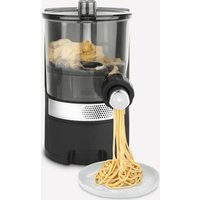
HOMY90 - Maquina para hacer pasta H.KOENIG - Manual de uso y guía de instrucciones gratis
Encuentra gratis el manual del aparato HOMY90 H.KOENIG en formato PDF.
Elija su idioma y proporcione su correo: le enviaremos una version traducida especificamente para usted.
Preguntas de los usuarios sobre HOMY90 H.KOENIG
0 pregunta sobre este aparato. Responde a las que conoces o haz la tuya.
Hacer una nueva pregunta sobre este aparato
Aún no hay preguntas. Sé el primero en hacer una.
Descarga las instrucciones para tu Maquina para hacer pasta en formato PDF gratis! Encuentra tus instrucciones HOMY90 - H.KOENIG y toma tu dispositivo electrónico nuevamente en la mano. En esta página están publicados todos los documentos necesarios para el uso de su dispositivo. HOMY90 de la marca H.KOENIG.

MANUAL DE USUARIO HOMY90 H.KOENIG
H
Instruction Manual
Manuel d'instructions
Bedienungsanleitung
Gebruiksaanwijzing
Manual de instrucciones
Manuale d'uso

natural_image
A modern kitchen machine with a piece of noodles being lifted by a griddle, placed on a white plate against a red background (no text or symbols visible).
Pasta maker
Machine à pâtes
Nudelmaschine
Pastamachine
Máquina para hacer pasta
Macchina per la pasta

text_image
QR code image with red border, containing machine-readable data for scanning
ENGLISH
Safety attentions
Please follow the rules in case of accidents caused by false operation.
Attention:
1. Please don't use your wet hand to take off or insert the plug in case of electric shock.
2. Don't put solid thing into the water mouth. Don't take off the mould cover and remove the mould, or even touch the screw in case of accidents.
3. Please don't put the housing into liquid in case of electric damage.
Attentions before using
1. Clean the mould before you use the product. Do not put heavy things above it.
2. Disable people and people lack of operation experience cannot use the product unless they get company. Keep children away from the product.
3. This product is only meant for family purpose.
4. Do not disassemble or reforming the product.
5. The product is I kind of electric appliance, make sure the ground line is well connected.
6. Please check if the power line, plug, measuring cup and screw is well. If there is damage, please call the service center. Do not try to fix it by yourself in case of danger.
7. Make sure the disassemble parts are all installed properly in case of danger.
8. This product is Y type connected, if the power line is damaged, you must let professional person to take over in case of danger.
9. This appliance may be used by persons with reduced physical, sensory or mental capabilities or lack of experience or knowledge, provided that they are supervised or instructed in the safe use of the appliance and that they fully understand the potential hazards.
10. Cleaning and maintenance should not be carried out by children unless they are at least 8 years of age and are supervised by an adult.
11. Keep the appliance and its power cord out of reach of children under 8 years of age.
12. When using electrical equipment, safety precautions must always be taken to prevent the risk of fire, electric shock and/or injury in the event of misuse.
13. Make sure that the voltage rating on the typeplate corresponds to your main voltage of your installation. If this is not the case, contact the dealer and do not connect the unit
14. The device must not be used if it has been dropped, it obvious signs of damage are visible or if it has leaks.
15. Please keep this document at hand and give it to the future owner in case of transfer of your device
16. Do not operate this appliance if it has a damaged cord or plug, if it is not working properly or if it has been damaged or dropped. If the supply cord is damaged, it must be replaced by the manufacturer or its service agent or a similarly qualified person in order to avoid a hazard.
17. This device is not intended for use by persons with reduced capacity on the physical, mental or sensory or lack of experience and knowledge (including children), unless he has them was asked to monitor or if they have had instructions on the use of the appliance by a person responsible for their safety. Children should be supervised to ensure they do not play with the device.
18. The device is not intended to be operated by external timer means or a remote-control system
19. Before cleaning the machine, make sure the machine is unplugged.
20. The machine is only used for household and indoor.
21. Never immerse the appliance, its power cord or plug in water or any other liquid
22. The robot should always be unplugged when not in use and before assembling, disassembling or cleaning, and before changing an accessory. Avoid contact with moving parts.
23. Your appliance has been designed for domestic use only. It is not intended for use in the following situations which are not covered by the warranty:
\- in staff kitchen areas in shops, offices and other professional environments,
\- in farm hostels,
\- by guests in hotels, motels and other residential environments,
\- in bed and breakfast type environments.
Attentions during using.
1. Don't put solid thing into the pasta cup in case the product gets damaged.
2. Don't put this product near the hot, Strong magnetic, Inflammable and explosive place in case of accidents.
3. The proportion of flour and water should be accordant to in case of the parts get damaged
4. When you connect the power, make sure that all parts are installed well, and disconnect the power when there is no one using it.
5. Please operate on flat surface, please don't operate it on clothing such as carpet, and paper, plastic as well.
6. When you are discharging, adjusting, cleaning or changing the parts, you must disconnect the power line.
7. When you disconnect the power, use you hand to hold and pull the plug instead of tearing the power line out.
8. This product can only be used with specific connector, stirring cup, and other parts. Don't use the parts of other products in case of accidents.
9. Wipe out the water before you make pasta so that the taste of pasta won't be affected.
10. The product cannot work consciously, if you want to constantly make pasta, you should at least stop the machine for 20 minutes.
11. Place the product on flat surface, don't let the hold feet off the ground. Don't touch the product or moving it in case it may fail to make pasta.
Attentions after using
1. Please wash it in time after washing, the parts that will touch the food should be washed by clean water. When you are discharging, cleaning parts, you should keep your guard up in case of accidents.
2. Do not heat the product directly, or put all the plastic parts into the disinfection cabinet, washing machine or hot water above Corrosive liquid 60 degree. And don't use steel wool and Abrasive cleaner and Corrosive liquid to wash the product.
3. Please clean the mould after it is dried. Be aware that the clean brush is clean, when there is no one using it, please turn off the switch. When you want to drop this product, please hand it over to qualified department. Cut the power line when you want to drop it.
Name and function of parts

text_image
1
2
3
4
5
6
7
8
9
10
11
12
13
14
15
---- 16
1. Lid
2. Control panel
3. Tank
4. Housing
5. Water inlet holes
6. Stir rod
7. Stir cup
8. Squeezing rod
9. Mould bracke
10. Mould cover
11. Pasta mould
12. Storage box
13. Water measuring cup
14. Flour measuring cup
15. Cleaning brush
16. Dough cutter


Fine spaghetti Normal spaghetti Thick spaghetti Narrow ribbon noodles Broad ribbon noodles Penne Lasagna
How to use
Before you use the product, please wash the parts that has directly contact with food.

text_image
H
F
E
C
B
I
G
8:8:8 g
ml
A1 A2 A3 M1
A4 A5 A6 M2
A
M
Start
Stop
ON
Standby
D
A
A ON/Standby button – to switch the appliance on or off B Start/Stop button – to start or stop the appliance C Button A – to select one of the 6 automatic programs D Button M – to select one of the 6 semiautomatic programs E Display F KNEADING button – to start dough kneading manually G EXTRUSION button – to start dough kneading manually H SCALES button – for taring the scales I WATER button – for additional water supply
How to use
1) Before first use
Please remove any protective films, advertising and packaging materials from the appliance and from the accessory parts. Clean the appliances and all removable accessory parts according to the cleaning instructions in this manual.
2) Install all parts as the picture below

text_image
Technical diagram of a kitchen appliance with numbered parts and directional arrows indicating assembly steps
3) Automatic programs
The appliance features 6 automatic programs. Depending on the type of flour and the selection of the corresponding program, up to 600 g of pasta can be produced fully automatically in one pass. The table below gives you an overview of the parameters of the individual automatic programs.

You can select the programs by pressing button A for several times.
NOTE : the water supply takes place automatically during the automatic
programs.
TIP : though the refiling hole you can optionally add a little bit olive oil to programs A1-A4
Program Recommended type of flour Automatic watering (ratio of water and flour) Recommended amount of flour Kneading time in minutes A1 Wheat flour type 00 Ca. 36 ml / 100 g 400 g (max. 600 g) 04:00 A2 Wheat flour type 00 Ca. 37 ml / 100 g 400 g (max. 600 g) 04:00 A3 Wheat flour type 405 Durum wheat semolina Wheat flour/durum wheat semolina mixed 50:50 Ca. 38 ml / 100 g 400 g (max. 600 g) 03:30 A4 Italian durum wheat semolina flour Ca. 39 ml / 100 g 400 g (max. 600 g) 04:00 A5 Wholemeal flour Ca. 36 ml / 100 g 400 g (max. 600 g) 07:00 A6 Gluten-free Ca. 58 ml / 100 g 400 g (max. 600 g) 03:00
4) Semiautomatic programs
There are two semiautomatic programs to produce up to 600 g of pasta in one pass, from individual recipes with ingredients of your choice. In contrast to the automatic programs, you have to add the liquid manually by yourself. The table below gives you and overview of the parameters of both semiautomatic programs.

You can select the programs by pressing button M for several times. NOTE: the display shows a suggestion for the required amount of liquid based on the flour filled in. The liquid has to be poured very slowly and evenly through the refilling hole.
Program Recommended type of flour Automatic watering (ratio water and flour) Recommended amount of flour Kneading time in minutes M1 Type 00 or type 5501 egg yolk (size M/L) per 200 g flour Ca. 37 ml / 100 g (mix the egg yolk in the measuring cup, fill up with water) 400 g 04:00 M2 Type 00 or type 5501 egg yolk (size M/L) per 200 g flour Ca. 38 ml / 100 g see program M1 400 g 03:00
5) Filling up the water tank
Remove the water tank and fill it with pure, cold water up to the mark on the upper edge of the tank.
Then push the water tank back into the base untis as far as it will go.
→ If the pilot lamp on the water tank lights up in blue, there is enough water in the tank
→ If the pilot lamp on the water tank lights up in red, there is not enough water in the tank

natural_image
Line drawing of a cylindrical mechanical component with a base and mounting bracket, enclosed in a dotted circle (no text or symbols)

natural_image
Line drawing of a cylindrical container with a lid and side supports, enclosed in a dotted circular border (no text or symbols)
6) Switching on the appliance

text_image
ON
Standby
Press ON/Standby button for about 2 seconds to switch the appliance on.
NOTE: if no further button is pressed within 2 minutes, the appliance switches back to standby mode.

natural_image
Simple rectangular frame with dashed black lines on gray background (no text or symbols)
The integrated scaled determine the total weight of the appliance.
A rotating bar lights up in the display.
NOTE: Do not move the appliance during weighing.

text_image
0
A1 A2 A3 | M1
A4 A5 A6 | M2
After the check, the appliance turns into operating mode.
→ All available programs are shown at the display
→ Additionally the display shows a flashing "0"
7) Taring the scales

natural_image
Symbol of a balance scale inside a circle (no text or numbers)
IMPORTANT: Before you tare the scales to zero position, make sure that:
- The appliance is properly assembled
- The selected pasta form is inserted
- The water tank is filled up completely to the mark
- There is no flour inside of the kneading container yet
Press the SCALES button to tare the scales.
NOTE: if you change the weight of the appliance after taring the scales, a re-taring is necessary.
NOTE: do not move the appliance during weighing!

text_image
0
A1 A2 A3 | M1
A4 A5 A6 | M2
After taring is completed, the appliance is in operating mode.
→ All available programs are shown at the display.
→ Additionally the symbol "g" appears.
8) Working with automatic programs

After you have filled in the desired amount of flour and after closing the lid, press button A to select one of the automatic programs.
You can switch between the programs by pressing this button for several times.

text_image
400
A1 A2 A3 M1
A4 A5 A6 M2
The selected program (e.g. A1) flashes at the display.

To start the selected program press Start/Stop button.

text_image
03:58
A1
03:28
A1
A1
00:10
A1
Kneading dough
The automatic program starts with the kneading of the dough.
→ The display shows the selected program permanently.
→The duration of kneading process is shown at the display by a descending
time sequence. Additionally, the

and

appear.
Automatic water supply
After a short time, the amount of the water determined by the electronics is automatically pumped into the kneading container via the water outlet.
The display shows symbol

Extruding dough
After the kneading process is finished, the appliance automatically starts with extrusion of the dough.
→ A rotation bar lights up in the display during the extrusion of the dough.
→ Additionally, the symbol appears
Ventilation
Shortly after beginning of dough extrusion, the fan starts to work.
→ The display shows symbol

Efficient dough yield
The electronics recognizes whether there is still some dough left in the kneading container and ensures a particularly high dough yield by the repeating the kneading or extrusion process.
The last 10 seconds of the program are shown at the display in a descending time sequence.
Automatic stop
After the program has ended, the appliance stops operating automatically. This is indicated by a 3-time acoustic signal
The display shows "--:--"
Additionally, the symbol appears
NOTE: if no further button is pressed within 2 minutes, the appliance switches back to operating mode. If again no further button is pressed within the next 2 minutes, the appliance switches to standby mode.

Switching off the appliance
Press button ON/Standby, to switch the appliance to standby mode.
The display shows a flashing "b".
9) Working with semiautomatic programs

text_image
M
144
ml
A1 A2 A3 M1
A4 A5 A6 M2
Start
/Stop
144
ml
M1
0 2:00
M1
M1
NOTE: please carry out steps 1 to 7 first, before you start working with the semiautomatic programs. Also provide the liquid to be sued in advance.
After you have filled in the desired amount of flour and after closing the lid, press button M to select one of the programs.
You can switch between the programs by pressing this button for several times.
The selected program (e.g. M1) flashed at the display.
To start the selected program press Start/Stop button.
Kneading dough
The automatic program starts with kneading of the dough and the suggested amount of liquid (e.g. 144 ml) is displayed.
The display shows the selected program permanently.
The suggested amount of liquid as well as symbol "ml" lights up.
Additionally, the symbols and appear.
Manual water supply
Pour the suggested amount of liquid slowly and evenly into the kneading container.
2 minutes before the kneading process has ended, the display changed and the remaining kneading duration is shown in a descending time sequence.
Extruding dough
After the kneading process is finished, the appliance automatically starts with extrusion of the dough.
A rotating bar lights up in the display during extrusion of the dough.
Additionally, the symbol appears.

text_image
M1
00:10
M1
Ventilation
Shortly after the beginning of dough extrusion, the fan starts to work.
→ The display shows symbol

Efficient dough yield
The electronics recognizes whether there is still some dough left in the kneading container and ensures a particularly high dough yield by the repeating the kneading or extrusion process.
The last 10 seconds of the program are shown at the display in a descending time sequence.
Automatic stop
After the program has ended, the appliance stops operating automatically.
This is indicated by a 3-time acoustic signal
The display shows "--:--"
Additionally, the symbol appears
NOTE: if no further button is pressed within 2 minutes, the appliance switches back to operating mode. If again no further button is pressed within the next 2 minutes, the appliance switches to standby mode.

Switching off the appliance
Press button ON/Standby, to switch the appliance to standby mode.
The display shows a flashing "b".
10) Manual kneading of the dough

text_image
10:00
You can select the function by pressing the KNEADING button.
NOTE: The process can be stopped at any time. Press the KNEADING button once again
The appliance starts the kneading process for a duration of max 10 mins.
→ The duration of kneading process is shown is a descending time sequence.
→ Additionally, the symbols 🏠 and 🔺 appear.

natural_image
Simple diagram with four oval shapes and a checkmark, no text or symbols present
Automatic stop
After the program has ended, the appliance stops operating automatically.
→ This is indicated by a 3-time acoustic signal.
→ Additionally, symbol appears.
NOTE: if no further button is pressed within 2 minutes, the appliance switches back to operating mode. If again no further button us pressed within the next 2 minutes, the appliance switches back to standby mode.
11) Manual extrusion of the dough

text_image
Digital display panel showing status indicators and time settings with icons for flight, navigation, and alarm.
You can select the function by pressing the EXTRUSION button.
NOTE: The process can be stopped at any time. Press the EXTRUSION button once again.
The appliance starts extruding the dough.
→ A rotating bar lights up in the display during extrusion of the dough.
→ Additionally the symbols 📋 and 🔍 appear.
Ventilation
Shortly after the beginning of dough extrusion, the fan starts to work.
→ The display shows symbol
Efficient dough yield
The electronics recognizes whether there is still some dough left in the kneading container and ensures a particularly high dough yield by the repeating the kneading or extrusion process.
The last 10 seconds of the program are shown at the display in a descending time sequence.
Automatic stop
After the program has ended, the appliance stops operating automatically.
→ This is indicated by a 3-time acoustic signal.
→ Additionally, symbol appears.
NOTE: if no further button is pressed within 2 minutes, the appliance switches back to operating mode. If again no further button us pressed within the next 2 minutes, the appliance switches back to standby mode.
12) Additional water supply

natural_image
Simple black-and-white water droplet symbol inside a circle (no text or labels)
You can select the function by pressing the water button.
The pump starts and an additional 5 ml is pumped into the kneading container for each key press.
→ For the duration of the water supply the display shows symbol

NOTE: The additional water supply can be repeated several times up to 30 seconds before the end of the kneading process. But be careful, if there is too much liquid the dough becomes too sticky and can only be extruded to a limited extent.
13) Ending the program/function prematurely


To end up a program or function prematurely press Start/Stop or ON/Standby button
14) Switching off the appliance permanently

For a permanent and safe switch-off, disconnect the power plug after each use.
Tips for good pasta
Pasta making
Please use strong or moderately strong flour.
To ensure good pasta, please use water in right volume according to the value on digital display or the reference table. In winter, you can increase 5-10mL water. In summer, you can decrease 5-10mL water.
Adding 3-5g salt inside water can make pasta chewier. Adding 3-5mL oil can make pasta smoother.
Pasta cooking
Please eat pasta in time since fresh pasta have better taste.
Adapt hot-cold method (add cold water when boiling, redo it for a few times) to cook for about 8 minutes(according to width and amount and of pasta to adjust cooking time)
Pasta storage
Use Freshness protection package to keep your pasta
Dough is too dry, we recommend adding a little water Perfect dough Dough is too moist, we recommend adding a little floor
Cleaning and maintenance
①After finish making pasta, unplug it and disassemble the parts after using.
②Disassembled parts(apart from housing) should be cleaned and dried.
③1) Dry the moulds or put the moulds into the refrigerator for half an hour, then hit it heavily so that the flour attached on the moulds can drop off easily.
2) You can also use the cleaning brush. Soaking the moulds in water is not suggested, since it may cause the flour attached on it become sticky and not easy to clean.
④Keep mould, cleaning brush and measuring cup in dry places and don't put it under direct sunshine.
Safety index
Rated voltage 220v Capacity range Flour:200-600g Rated power 180w Rated frequency 50hz Electronic scale range 0-5kg Electronic scale accuracy 2g Using environment Temperature:0-40 degree; wet: ≤90%RH
Trouble shooting
problems reasons solutions the machine doesn’t work after power on and press start button 1.power cord not installed properly 1. install power cord properly 2.self protection for motor long time working 2. reuse after cooling for 20-30 minutes 3. stir cup, stir cup lid not properly installed 3. stir cup, stir cup lid properly installed lights on, the machine doesn’t work 1.not pressing buttons 1. select function and press button 2.machine self breakdowns 2.repair at local service site machine stops during working process 1.material ratio not right, overload making stuck and stops working follow strictly as “volume ratio” to add material, add water if too dry, stir to pasta, select[extrude pasta]; if too wet add flour to stir, select[extrude pasta]. 2.other objects in the flour, overload making stuck and machine stops 2. power off to clean 3.motor temperature control protection 3.reuse after 20-30 minutes stop no response when pressing buttons 1. power off interval too short, system not reset 1. reuse after power off 3 minutes 2.the machine is under procedure 2.normal case 3. machine self breakdowns 2. repair at local service site pasta easily break 1. not using plain, strong protein flour 1. choosing plain or strong protein flour 2. water and flour ratio not proper, less water 2.add flour and water as cup mark pasta adhere water and flour ratio not proper, more water add water, flour as cup mark flour leftovers too much in the stir cup 1.low voltage 1.using household voltage stabilizer 2.module hole blocked 2.clean module holes 3.material matching mistake 3. follow strictly “ratio chart” to add material Sound and light alarm the machine blocked 1.check and clean cups2. follow strictly “ratio chart” to add material; add less water, select【knead dough】, stir 2 minutes and select 【knead dough】to rework
Error code list
Error code Reason Trouble shooting E02 The cover hasn’t been closed and function has not been motivated Close the cover and select function key E05 Temperature sensor open After sale service E06 Temperature sensor short circuit After sale service E09 Too little water or residue remained in the cup Adjusting water amount and get residue out. E14 Too much flour Add 200-600g flour E15 Residue in the stirring cup Get residue out. E17 Weighting sensor broken After sale service
Note: if the problem above cannot be solved, please do not dissemble products personally, send it to local after service center.
WARRANTY
The warranty period for our products is 2 years, unless otherwise stated, starting from the date of initial purchase or the date of delivery.
If you have any problems or questions, you can easily access our help pages, troubleshooting tips, FAQ, and user manuals on our service site: https://sav.hkoenig.com.
By typing the reference name of your device in the search bar, you can access all available online support, designed to best meet your needs.
If you still cannot find an answer to your question or problem, then click on “Did the answer solve your problem?”. This will direct you to the Customer Support Request Form, which you can fill out to validate your request and get help.
WARRANTY CONDITIONS
The warranty covers all failures occurring under normal use, in accordance with the usage and specifications in the user's manual.
This warranty does not apply to packaging or transportation problems during shipment of the product by the owner. It also does not include normal wear and tear of the product, nor maintenance or replacement of consumable parts.
EXCLUSION OF WARRANTY
- Accessories and wearing parts (\*).
- Normal maintenance of the device.
- All breakdowns resulting from improper use (shocks, failure to comply with power supply recommendations, poor conditions of use, etc.), insufficient maintenance or misuse of the device, as well as the use of unsuitable accessories.
- Damage of external origin: fire, water damage, electrical surge, etc.
- Any equipment that has been disassembled, even partially, by persons other than those authorized to do so (notably the user).
- The products whose serial number would be missing, deteriorated or illegible that would not allow its identification.
- The products subjected to leasing, demonstration, or exhibition.
(\*) Some parts of your device, called wear parts or consumables, deteriorate with time and frequency of use of your device. This wear and tear are normal but can be accentuated by poor conditions of use or maintenance of your device. These parts are therefore not covered by the warranty.
The accessories supplied with the device are also excluded from the warranty. They cannot be exchanged or refunded. However, some accessories can be purchased directly through our website: https://sav.hkoenig.com/.
ENVIRONMENT
CAUTION :

Do not dispose of this product as it has with other household products. There is a separation of this waste product into communities, you will need to inform your local authorities about the places where you can return this product. In fact, electrical and electronic products contain hazardous substances that have harmful effects on the environment or human health and should be recycled. The symbol here indicates that
electrical and electronic equipment should be chosen carefully, a wheeled waste container is marked with a cross.
Adeva SAS / H.Koenig Europe - 8 rue Marc Seguin, 77290 Mitry-Mory, France
www.hkoenig.com - https://en.hkoenig.com - Tél: +33 1 64 67 00 05
FRANÇAIS
Avertissements de sécurité
Veuillez suivre les règles en cas d'accident causé par une mauvaise utilisation.
Attention :
1. Veuillez ne pas utiliser vos mains mouillées pour brancher ou débrancher la prise afin d'éviter une décharge électrique.
2. Ne mettez pas de chose solide dans le réservoir d'eau.
3. N'enlevez pas le couvercle du moule, ni le moule, et ne touchez pas la vis afin d'éviter un accident.
4. Veuillez ne pas plonger le bloc-moteur dans un liquide afin d'éviter des dommages électriques.
Précautions avant utilisation
1. Nettoyez le moule avant d'utiliser le produit. Ne mettez pas de choses lourdes dessus.
2. Les personnes handicapées et celles sans expérience ne peuvent pas utiliser la machine à moins d'être surveillées. Gardez ce produit hors de portée des enfants !
3. Cette machine est uniquement destinée à un usage familial.
4. Ne démontez pas la machine et ne la modifiez pas.
5. Le produit est un appareil électrique, assurez-vous que le cordon d'alimentation soit correctement branché.
6. Veuillez vérifier si le cordon d'alimentation, la prise, la tasse à mesurer et la vis sont en bon état. S'il y a des dommages, veuillez appeler le service technique. N'essayez pas de réparer vous-même pour éviter tout accident.
7. Assurez-vous que toutes les pièces soient correctement montées.
8. Ce produit est de type Y, si le cordon d'alimentation est endommagé, vous devez laisser un professionnel le réparer ou le changer.
9. Cet appareil peut être utilisé par des personnes dont les capacités physiques, sensorielles ou mentales sont réduites ou dont l'expérience ou les connaissances ne sont pas suffisantes, à condition qu'elles bénéficient d'une surveillance ou qu'elles aient reçu des instructions quant à l'utilisation de l'appareil en toute sécurité et qu'elles en comprennent bien les dangers potentiels.
10. Le nettoyage et l'entretien ne doivent pas être effectués par des enfants, sauf s'ils ont au moins 8 ans et sont surveillés par un adulte.
11. Gardez l'appareil et son cordon d'alimentation hors de portée des enfants de moins de 8 ans.
12. Lors de l'utilisation d'appareils électriques, des précautions doivent toujours être prises pour éviter tout risque d'incendie, d'électrocution ou de blessure en cas de mauvaise utilisation.
13. Assurez-vous que la tension nominale indiquée sur la plaque signalétique corresponde à la tension principale de votre installation. Si ce n'est pas le cas, contactez le revendeur et ne branchez pas l'appareil.
14. L'appareil ne doit pas être utilisé s'il est tombé, s'il présente des signes évidents de dommages ou des fuites.
15. Veuillez conserver ce mode d'emploi en lieu sûr et le remettre au futur propriétaire en cas de transfert de votre appareil.
16. N'utilisez pas cet appareil si son cordon ou sa fiche est endommagée, s'il ne fonctionne pas correctement, s'il a été abîmé ou est tombé par terre. Si le cordon d'alimentation est endommagé, il doit être remplacé par le fabricant, son réparateur ou une personne de même qualification afin d'éviter tout accident.
17. Cet appareil n'est pas destiné à être utilisé par des personnes à capacité réduite sur le plan physique, mental ou sensoriel, ou manquant d'expérience et de connaissances (y compris les enfants), sauf si elles ont reçu des instructions sur l'utilisation de l'appareil par une personne responsable de leur sécurité. Les enfants doivent être surveillés pour s'assurer qu'ils ne jouent pas avec l'appareil.
18. L'appareil n'est pas conçu pour être utilisé à l'aide d'une minuterie externe ou d'un système de télécommande
19. Avant de nettoyer l'appareil, assurez-vous qu'il soit débranché.
20. L'appareil est uniquement destiné à un usage domestique et en intérieur.
21. Ne plongez jamais l'appareil, son cordon d'alimentation ou sa fiche dans l'eau ou tout autre liquide
22. L'appareil doit toujours être débranché lorsqu'il n'est pas utilisé, avant le montage, le démontage ou le nettoyage, et avant de changer un accessoire. Évitez tout contact avec les pièces en mouvement.
23. Votre appareil a été conçu pour un usage domestique seulement. Elle n'a pas été conçue pour être utilisée dans les cas suivants qui ne sont pas couverts par la garantie :
\- dans des coins de cuisines réservés au personnel dans des magasins, bureaux et autres environnements professionnels,
– dans des fermes auberges,
- par les clients des hôtels, motels et autres environnements à caractère résidentiel,
- dans des environnements de type chambres d'hôtes.
Précautions lors de l'utilisation
1. Ne mettez pas d'objet solide dans le bol pour ne pas abîmer l'appareil.
2. Ne placez pas ce produit à proximité d'un endroit chaud, magnétique, inflammable ou explosif pour éviter un accident.
3. La proportion de farine et d'eau doit être conforme à la Fiche de référence de la quantité de pâte et d'ingrédients pour ne pas endommager les pièces de l'appareil.
4. Lorsque vous branchez l'appareil, assurez-vous que toutes les pièces soient bien montées et débranchez-le lorsque personne ne l'utilise.
5. Veuillez l'utiliser sur une surface plane, non recouverte d'une nappe, de papier ou de plastique.
6. Lorsque vous montez/démontez, nettoyez ou changez les pièces, vous devez débrancher l'appareil.
7. Lorsque vous débranchez l'appareil, saisissez la fiche et non le cordon.
8. Ce produit ne peut être utilisé qu'avec un cordon d'alimentation, un agitateur et des accessoires recommandés par le fabricant. N'utilisez pas d'autres pièces pour éviter tout accident.
9. Essuyez l'eau avant de faire la pâte afin que son goût ne soit pas affecté.
10. Le produit ne peut pas fonctionner constamment. Vous devez au moins faire des pauses de 20 minutes.
11. Ne déplacez pas la machine en cours de fonctionnement.
Précautions après utilisation
1. Veuillez nettoyer l'appareil après chaque utilisation. Les pièces en contact avec les aliments doivent être lavées à l'eau propre. Lorsque vous démontez et nettoyez les pièces, soyez attentif à ne pas vous blesser.
2. Ne chauffez pas le produit directement, ne placez pas les pièces en plastique dans l'armoire de désinfection, la machine à laver ou de l'eau chaude à 60 °C. N'utilisez pas d'éponge métallique, de nettoyant abrasif ou de liquide corrosif pour laver le produit.
3. Lorsque vous souhaitez vous débarrasser de l'appareil, veuillez respecter les normes environnementales locales.
Description

text_image
1
2
3
4
5
6
7
8
9
10
11
12
13
14
15
---- 16
1. Couvercle
2. Panneau de commande
3. Réservoir
4. Bloc-moteur
5. Trous d'arrivée d'eau
6. Mélangeur
7. Bol de pétrissage
8. Vis d'extrusion
9. Support du moule
10. Couvercle du moule
11. Moule à pâtes
12. Récipient
13. Tasse à mesurer l'eau
14. Tasse à mesurer la farine
15. Brosse de nettoyage
16. Coupe-pâtes


Spaghettis fines Spaghettis normales Spaghettis épaisses Nouilles fines Nouilles épaisses Penne Lasagnes
Fonctionnement
Avant d'utiliser le produit, veuillez laver les pièces qui sont directement en contact avec les aliments.

text_image
H
F
E
C
B
I
G
8:0:88 g
ml
A1 A2 A3 | M1
A4 A5 A6 | M2
A
M
Start
Stop
ON
Standby
D
A
A ON/Standby – pour allumer/mettre en veille l’appareil B Start/Stop – pour démarrer ou arrêter l’appareil C A – pour choisir un programme automatique D M – pour choisir un programme semi-automatique E Affichage F Pétrissage – pour débuter le pétrissage manuel G Fabrication – pour débuter la fabrication manuelle H Balance – pour tarer la balance I Eau – pour ajouter de l’eau
1. Utilisation
1) Avant la première utilisation
Veuillez retirer les films de protection, les étiquettes et les matériaux d'emballage de l'appareil et des accessoires. Nettoyez l'appareil et toutes les pièces accessoires amovibles conformément aux instructions de nettoyage du mode d'emploi.
2) Montez toutes les pièces comme indiqué ci-dessous :

text_image
Technical diagram of a kitchen appliance with numbered parts and directional arrows indicating assembly steps
3) Programmes automatiques
L'appareil dispose de 6 programmes automatiques. En fonction du type de farine et de la sélection du programme correspondant, il est possible de produire jusqu'à 600 g de pâtes de manière entièrement automatique en une seule fois. Le tableau ci-dessous vous donne un aperçu des paramètres des différents programmes automatiques.

Vous pouvez sélectionner les programmes en appuyant sur le bouton A plusieurs fois.
REMARQUE : l'ajout d'eau se fait automatiquement durant les programmes.
Programme Type de farine recommandé Ajout d'eau (rapport d'eau et de farine) Quantité de farine recommandée Temps de pétrissage en minutes A1 Farine de blé type 00 Ca. 36 ml / 100 g 400 g (max. 600 g) 04:00 A2 Farine de blé type 00 Ca. 37 ml / 100 g 400 g (max. 600 g) 04:00 A3 Farine de blé type 405Farine de semoule deblé durFarine de blé / Farine desemoule de blé durmélangées à 50:50 Ca. 38 ml/100 g 400 g(max. 600 g) 03:30 A4 Farine de semoule deblé dur italienne Ca. 39 ml / 100 g 400 g(max. 600 g) 04:00 A5 Farine complète Ca. 36 ml / 100 g 400 g(max. 600 g) 07:00 A6 Sans gluten Ca. 58 ml / 100 g 400 g(max. 600 g) 03:00
CONSEIL : par l'ouverture de remplissage vous pouvez éventuellement ajouter un peu d'huile d'olive aux programmes A1-A4
4) Programmes semi-automatiques
Il existe deux programmes semi-automatiques pour fabriquer jusqu'à 600 g de pâtes en une seule fois, à partir de recettes individuelles avec les ingrédients de votre choix. Contrairement aux programmes automatiques, vous devez ajouter de l'eau manuellement. Le tableau ci-dessous vous donne un aperçu des paramètres des deux programmes semi-automatiques.

Vous pouvez sélectionner les programmes en appuyant plusieurs fois sur le bouton M.
REMARQUE : l'écran affiche une suggestion pour la quantité d'eau requise en fonction de celle de farine. L'eau doit être versée très lentement
et régulièrement par l'orifice de remplissage.
Programme Type de farine recommandé Ajout d'eau (rapport d'eau et de farine) Quantité de farine recommandée Temps de petrissage en minutes M1 Type 00 ou type 5501 jaune d'oeuf (grosseur M/L) pour 200 g de farine Ca. 37 ml / 100 g (mélanger le jaune d'œuf dans le gobelet doseur, remplir d'eau) 400 g 04:00 M2 Type 00 ou type 5501 jaune d'oeuf (grosseur M/L) pour 200 g de farine Ca. 38 ml / 100 g voir programme M1 400 g 03:00
5) Remplissage du réservoir d'eau
Retirez le réservoir d'eau et remplissez-le d'eau pure et froide jusqu'au repère situé sur le bord supérieur du réservoir.
Ensuite, remettez le réservoir dans le socle jusqu'à la butée.
→ Si le témoin lumineux du réservoir s'allume en bleu, il y a suffisamment d'eau.
→ Si le témoin lumineux du réservoir s'allume en rouge, il n'y a pas assez d'eau.

natural_image
Line drawing of a cylindrical mechanical part with a side outlet, enclosed in a dotted circle (no text or symbols)

natural_image
Line drawing of a cylindrical container with mounting flanges and a circular outline (no text or symbols)
6) Allumage de l'appareil

text_image
ON
Standby
Appuyez sur le bouton ON/Standby pendant environ 2 secondes pour mettre l'appareil en marche.
REMARQUE : si vous n'appuyez sur aucune autre touche dans les 2 minutes, l'appareil repasse en mode veille.

natural_image
Pure electrical circuit lines without any symbols
La balance intégrée détermine le poids total de l'appareil. Une barre rotative s'allume à l'écran.
REMARQUE : ne déplacez pas l'appareil pendant la pesée.

text_image
0
A1 A2 A3 | M1
A4 A5 A6 | M2
Après le contrôle, l'appareil passe en mode de fonctionnement.
→ Tous les programmes disponibles sont affichés sur l'écran
→ De plus, un "0" clignote sur l'écran
7) Tarage de la balance

natural_image
Symbol of a balance scale inside a circle (no text or numbers)
IMPORTANT : avant de tarer la balance à la position zéro, assurez-vous que :
- L'appareil soit correctement monté
- Le coupe-pâtes sélectionné soit inséré
- Le réservoir d'eau soit entièrement rempli jusqu'au repère.
- Il n'y a pas encore de farine dans le bol de pétrissage.
Appuyez sur le bouton correspondant pour tarer la balance.
REMARQUE : si vous modifiez le poids de l'appareil après le tarage de la balance, un nouveau tarage est nécessaire.
REMARQUE : ne pas déplacer l'appareil pendant la pesée

text_image
0
g
A1 A2 A3 | M1
A4 A5 A6 | M2
Une fois le tarage terminé, l'appareil est en mode de fonctionnement.
→ Tous les programmes disponibles sont affichés à l'écran.
→ En outre, le symbole "g" apparaît.
8) Fonctionnement des programmes automatiques

Après avoir rempli la quantité de farine souhaitée et après avoir fermé le couvercle, appuyez sur le bouton A pour sélectionner l'un des programmes automatiques.
Vous pouvez passer d'un programme à l'autre en appuyant plusieurs fois sur ce bouton.

text_image
400
A1 A2 A3 | M1
A4 A5 A6 | M2
Le programme sélectionné (A1) clignote sur l'écran.

Pour lancer le programme, appuyez sur le bouton Start/Stop.

text_image
03:58
A1
03:28
A1
A1
00:10
A1
Pétrissage de la pâte
Le programme automatique commence par le pétrissage de la pâte.
→ L'écran affiche en permanence le programme sélectionné.
→Le compte à rebours du processus de pétrissage est indiqué à l'écran. De
plus, les symboles et apparaissent.
Ajout d'eau automatique
Après un court instant, la quantité d'eau déterminée par l'appareil est automatiquement versée dans le bol de pétrissage par la sortie d'eau.
L'écran affiche le symbole

Fabrication des pâtes
Une fois le processus de pétrissage terminé, l'appareil démarre automatiquement la fabrication des pâtes.
→ De plus, le symbole apparaît.
Ventilation
Juste après le début de la fabrication des pâtes, le ventilateur se met en marche.
→ L'écran affiche le symbole

Rendement élevé de pâtes
L'appareil reconnaît s'il reste encore de la pâte dans le bol de pétrissage et assure un rendement particulièrement élevé de la pâte en répétant le processus de pétrissage ou de fabrication.
Les 10 dernières secondes du compte à rebours du programme sont affichées à l'écran.
Arrêt automatique
Une fois le programme terminé, l'appareil s'arrête automatiquement.
Ceci est indiqué par 3 bips.
L'écran affiche "--:--"
De plus, le symbole apparaît.
REMARQUE : si vous n'appuyez sur aucun autre bouton dans les 2 minutes qui suivent, l'appareil repasse en mode de fonctionnement. Si vous n'appuyez à nouveau sur aucune touche dans les 2 minutes qui suivent,
l'appareil passe en mode veille.

Mise en veille de l'appareil
Appuyez sur ON/Standby pour passer en mode veille.
Le symbole "b" clignote sur l'écran.
9) Fonctionnement des programmes semi-automatiques

text_image
M
144
ml
A1 A2 A3 M1
A4 A5 A6 M2
Start
/Stop
144
ml
M1
02:00
M1
T
M1
REMARQUE : veuillez d'abord effectuer les étapes 1 à 7, avant de commencer à travailler avec les programmes semi-automatiques. Prévoyez de remplir le réservoir d'eau à l'avance.
Après avoir mis la quantité de farine souhaitée et après avoir fermé le couvercle, appuyez sur la touche M pour sélectionner l'un des programmes.
Vous pouvez passer d'un programme à l'autre en appuyant plusieurs fois sur ce bouton.
Le programme sélectionné (M1) clignote sur l'écran.
Pour lancer le programme, appuyez sur le bouton Start/Stop.
Pétrissage de la pâte
Le programme automatique commence par le pétrissage de la pâte et la quantité d'eau suggérée (par exemple 144 ml) s'affiche.
L'écran affiche en permanence le programme sélectionné.
La quantité d'eau suggérée ainsi que le symbole "ml" s'allument.
De plus, les symboles et apparaissent.
Ajout d'eau manuel
Verser lentement et uniformément la quantité d'eau suggérée dans le bol de pétrissage.
2 minutes avant la fin du processus de pétrissage, l'affichage change et le compte à rebours s'affiche.
Fabrication des pâtes
Une fois le processus de pétrissage terminé, l'appareil démarre automatiquement la fabrication des pâtes.
Une barre rotative s'allume dans l'écran pendant la fabrication des pâtes.
De plus, le symbole apparaît.

text_image
M1
00:10
M1
Ventilation
Juste après le début de la fabrication des pâtes, le ventilateur se met en marche.
→ L'écran affiche le symbole

Rendement élevé de pâtes
L'appareil reconnaît s'il reste encore de la pâte dans le bol de pétrissage et assure un rendement particulièrement élevé de la pâte en répétant le processus de pétrissage ou de fabrication.
Les 10 dernières secondes du compte à rebours du programme sont affichées à l'écran.
Arrêt automatique
Une fois le programme terminé, l'appareil s'arrête automatiquement.
Ceci est indiqué par 3 bips.
L'écran affiche "--:--"
De plus, le symbole apparaît.
REMARQUE : si vous n'appuyez sur aucun autre bouton dans les 2 minutes qui suivent, l'appareil repasse en mode de fonctionnement. Si vous n'appuyez à nouveau sur aucune touche dans les 2 minutes qui suivent, l'appareil passe en mode veille.

Mise en veille de l'appareil
Appuyez sur ON/Standby pour passer en mode veille.
Le symbole "b" clignote sur l'écran.
10) Pétrissage manuel de la pâte

text_image
10:00
Vous pouvez sélectionner la fonction en appuyant sur le bouton correspondant.
REMARQUE : le processus peut être arrêté à tout moment. Pour cela, appuyez une nouvelle fois sur le bouton.
L'appareil démarre le processus de pétrissage pour une durée maximale de 10 minutes.
→ La durée du processus de pétrissage est indiquée sous forme de compte à rebours.
→ De plus, les symboles 🏠 et 📞 apparaissent.

natural_image
Simple diagram with a rectangular box containing four oval shapes and a checkmark on top (no text or symbols)
Arrêt automatique
Une fois le programme terminé, l'appareil s'arrête automatiquement.
→ Ceci est indiqué par 3 bips.
→ De plus, le symbole apparaît.
REMARQUE : si vous n'appuyez sur aucun autre bouton dans les 2 minutes qui suivent, l'appareil repasse en mode de fonctionnement. Si vous n'appuyez à nouveau sur aucune touche dans les 2 minutes qui suivent, l'appareil passe en mode veille.
11) Fabrication manuelle des pâtes

text_image
Control panel interface with digital display and operation icons, including timer, clock, and function buttons
Vous pouvez sélectionner la fonction en appuyant sur le bouton correspondant.
REMARQUE : le processus peut être arrêté à tout moment. Pour cela, appuyez une nouvelle fois sur le bouton.
L'appareil commence à fabriquer les pâtes.
→ Une barre rotative s'allume sur l'écran pendant l'opération.
→ De plus, les symboles et apparaissent.
Ventilation
Juste après le début de la fabrication des pâtes, le ventilateur se met en marche.
→ L'écran affiche le symbole

Rendement élevé de pâtes
L'appareil reconnaît s'il reste encore de la pâte dans le bol de pétrissage et assure un rendement particulièrement élevé de la pâte en répétant le processus de pétrissage ou de fabrication.
Les 10 dernières secondes du compte à rebours du programme sont affichées à l'écran.
Arrêt automatique
Une fois le programme terminé, l'appareil s'arrête automatiquement.
→ Ceci est indiqué par 3 bips.
→ De plus, le symbole apparaît.
REMARQUE : si vous n'appuyez sur aucun autre bouton dans les 2 minutes qui suivent, l'appareil repasse en mode de fonctionnement. Si vous n'appuyez à nouveau sur aucune touche dans les 2 minutes qui suivent, l'appareil passe en mode veille.
12) Ajout d'eau supplémentaire

natural_image
Simple black-and-white water droplet symbol inside a circle (no text or labels)
Vous pouvez sélectionner la fonction en appuyant sur la touche correspondante.
La pompe se met en marche et 5 ml supplémentaires sont versés dans le bol de pétrissage pour chaque pression sur la touche.
→ Pendant la durée de l'alimentation en eau, l'écran affiche

REMARQUE : l'apport d'eau supplémentaire peut être répété plusieurs fois jusqu'à 30 secondes avant la fin du processus de pétrissage. Mais attention, s'il y a trop de liquide, la pâte devient trop collante et gène la fabrication des pâtes.
13) Arrêt manuel des programmes


Pour arrêter un programme prématurément, appuyez sur Start/Stop ou ON/Standby.
14) Débranchement de l'appareil

Pour débrancher l'appareil totalement, retirez la fiche de la prise murale.
Conseils pour de bonnes pâtes
Fabrication de la pâte
Veuillez utiliser une farine de blé tendre ou dur.
Pour avoir de bonnes pâtes, veuillez mettre le volume l'eau indiqué par l'affichage ou le tableau de référence. En hiver, vous pouvez augmenter de 5 à 10 ml d'eau. En été, vous pouvez diminuer de 5 à 10 ml d'eau.
L'ajout de 3 à 5 g de sel dans l'eau peut rendre les pâtes plus moelleuses. L'ajout de 3 à 5 ml d'huile peut rendre les pâtes plus lisses.
Cuisson des pâtes
Veuillez manger les pâtes aussitôt, car les pâtes fraîches ont meilleur goût.
Adapter la méthode chaud-froid (ajouter de l'eau froide à l'ébullition, puis refaire plusieurs fois) pour cuire environ 8 minutes (selon la largeur et la quantité et des pâtes pour ajuster le temps de cuisson)
Conservation des pâtes
Utilisez le sac fraîcheur pour garder vos pâtes

natural_image
Three grayscale images showing granular material in different container compartments (no text or symbols visible)
La pâte est trop sèche, nous vous recommandons d'ajouter un peu d'eau. Pâte parfaite La pâte est trop humide, nous vous recommandons d'ajouter un peu de farine.
Nettoyage et entretien
①Après avoir fini de faire les pâtes, débranchez la machine et démontez les pièces.
②Les pièces (à l'exception du bloc-moteur) doivent être nettoyées et séchées.
③ 1) Séchez le moule ou mettez-le au réfrigérateur pendant une demi-heure, puis frappez-le fortement pour retirer la farine.
2) Vous pouvez également utiliser la brosse de nettoyage. Plonger le moule dans l'eau n'est pas recommandé, car cela peut rendre la farine collante et le moule difficile à nettoyer.
④Gardez le moule, la brosse de nettoyage et la tasse à mesurer dans un endroit sec et à l'abri du soleil direct.
Caractéristiques
Tension nominale 220 V Capacité Farine : 200 - 600 g Puissance 180 W Fréquence 50 Hz Poids 0 - 5 kg Précision + ou - 2 g Environnement Température : 0 - 40 °C – HR ≤90%
Guide de dépannage
PROBLÈMES CAUSES SOLUTIONS la machine ne fonctionne pas 1. cordon d'alimentation mal branché 1. brancher correctement le cordon d'alimentation 2.coupure de sécurité du moteur 2. attendre 20 à 30 minutes 3. bol ou couvercle mal installé 3. installer correctement le bol et son couvercle la machine ne fonctionne pas et les témoins sont allumés 1. vous n'avez pas appuyé sur les boutons 1. sélectionner la fonction et appuyer sur le bouton 2. la machine est en panne 2. voir le service technique la machine s'arrête en cours de fonctionnement 1. la quantité d'ingrédients est trop grande et bloque la machine suivre strictement les quantités d'ingrédients recommandées : ajouter de l'eau si la pâte est trop sèche, pétrir la pâte, sélectionner extrude pasta ; si trop humide, ajouter de la farine, pétrir, sélectionner extrude pasta 2. présence d'objets dans la farine, qui bloque la machine 2. éteindre pour nettoyer 3. coupure de sécurité du moteur 3. attendre 20 à 30 minutes aucune réponse en appuyant sur les boutons 1. intervalle de mise hors tension trop court, système non réinitialisé 1. attendre 3 minutes avant d'allumer 2. la machine est en cours de procédure 2.cas normal 3. panne de la machine 2. voir le service technique les pâtes se cassent facilement 1. vous n'utilisez pas une farine de blé tendre ou dur 1. utiliser une farine de blé tendre ou dur 2. le rapport eau et farine n'est pas correct, mettre moins d'eau 2. ajouter la farine et l'eau avec la tasse à mesurer les pâtes collent le rapport eau et farine n'est pas correct, mettre plus d'eau ajouter la farine et l'eau avec la tasse à mesurer trop de restes de farine dans le bol à pétrin 1. tension trop basse 1. utiliser un stabilisateur de tension domestique 2. trou du module bloqué 2. nettoyer les trous du module 3. proportions d'ingrédient incorrectes 3. suivre strictement le « tableau des proportions » des ingrédients alarme sonore et visuelle la machine est bloquée 1. vérifier et nettoyer le bol2. suivre strictement le « tableau des proportions » des ingrédients, ajouter moins d'eau, sélectionner knead dough, remuer 2 minutes et sélectionner knead dough pour la retravailler
Liste des codes d'erreur
Code d’erreur Cause Solution E02 Le couvercle n’a pas été fermé et la fonction n’a pas été activée Fermer le couvercle et appuyer sur la touche correspondante E05 Le capteur de température est ouvert Voir le service technique E06 Court-circuit du capteur de température Voir le service technique E09 Trop peu d’eau ou de résidus sont restés dans le bol Ajouter de l’eau et éliminer les résidus E14 Trop de farine Ajouter 200 – 600 g de farine E15 Présence de résidus dans le bol Éliminer les résidus E17 Le capteur de poids est cassé Voir le service technique
Remarque : si le problème ne peut pas être résolu, n'essayer pas de réparer la machine par vous-même et apportez-la au service technique
GARANTIE
La durée de garantie de nos produits est de 2 ans, sauf décret en vigueur, à compter de la date d'achat initiale ou la date de livraison.
En cas de problèmes ou d'interrogations, vous pouvez facilement accéder à nos pages d'aides, conseils de dépannage, FAQ et modes d'emplois sur notre site SAV : https://sav.hkoenig.com.
En tapant le nom de référence de votre appareil dans la barre de recherche, vous accédez à tous les supports en ligne disponibles, conçus pour vous répondre au mieux à vos besoins.
Si vous ne trouvez toujours pas de réponse à votre question ou votre problème, alors cliquez sur « Est-ce que la réponse a résolu votre problème ? ». Vous accéderez alors au formulaire de demande d'assistance SAV, qu'il vous suffira de compléter pour valider votre demande et obtenir de l'aide.
CONDITIONS DE GARANTIE
La garantie couvre l'ensemble des pannes survenant dans le cadre d'une utilisation normale, conforme aux usages et spécifications présentes sur le manuel d'utilisation.
Cette garantie ne s'applique pas aux problèmes d'emballage ou de transport pendant l'expédition du produit par son propriétaire. Elle n'inclut également pas l'usure normale du produit, ni la maintenance ou le remplacement de pièces consommables.
EXCLUSION DE GARANTIE
- Les accessoires et les pièces d'usure (\*).
- L'entretien normal de l'appareil.
- Toutes pannes survenant par suite d'une mauvaise utilisation (chocs, non-respect des préconisations d'alimentation électrique, mauvaises conditions d'utilisation, etc.), d'un entretien insuffisant ou d'un détournement de fonction de l'appareil, ainsi que l'usage d'accessoires non appropriés.
- Les dommages d'origine externe : incendie, dégâts des eaux, surtension électrique, etc.
- Tout matériel qui aura été démonté même partiellement par des personnes autres que celles habilitées (notamment l'utilisateur).
- Les produits dont le numéro de série serait absent, détérioré ou illisible que ne permettrait pas son identification.
- Les produits soumis à la location, à la démonstration ou à l'exposition.
(\*) Certaines pièces de votre appareil dites pièces d'usure ou consommables se détériorent avec le temps et la fréquence d'usage de votre appareil. Cette usure est normale, mais peut être accentuée par des mauvaises conditions d'utilisation ou entretien de votre appareil. Ces pièces ne sont donc pas couvertes par la garantie.
Les accessoires fournis avec l'appareil sont également exclus du champ de la garantie. Ils ne peuvent donc être ni échangés, ni remboursés. Toutefois, certains accessoires peuvent être directement achetés via notre site : https://sav.hkoenig.com/.
ENVIRONNEMENT
ATTENTION :

Vous ne devez pas vous débarrasser de cet appareil avec vos déchets ménagers. Un système de collecte sélective pour ce type de produit est mis en place par les communes, vous devez vous renseigner auprès de votre mairie afin d'en connaître les emplacements. En effet, les produits électriques et électroniques peuvent contenir des substances dangereuses qui ont des effets néfastes sur l'environnement ou la santé humaine et doivent être recyclés. Le symbole ci-contre indique que les équipements électriques et électroniques font l'objet d'une collecte sélective, il représente une poubelle sur roues barrée d'une croix.
Adeva SAS / H.Koenig Europe - 8 rue Marc Seguin, 77290 Mitry-Mory, France www.hkoenig.com - https://sav.hkoenig.com - Tél: +33 1 64 67 00 05
DEUTSCH
Sicherheitsanweisungen
Bitte folgen Sie den folgenden Anweisungen, um Unfälle durch eine unsachgemäße Nutzung zu vermeiden.
Achtung:
1. Entnehmen Sie den Stecker nicht und setzen Sie diesen nicht ein, wenn Ihre Hände nass sind, um einen Stromschlag zu vermeiden.
2. Setzen Sie keine festen Gegenstände in den Wasserauslauf ein. Nehmen Sie weder die Formabdeckung noch die Form selbst ab, fassen Sie sogar die Schraube nicht an, um Unfälle zu vermeiden.
3. Legen Sie das Gehäuse nicht in Flüssigkeiten, um elektrischen Beschädigungen vorzubeugen.
Anweisungen vor der Nutzung
1. Reinigen Sie die Einzelteile, bevor Sie das Gerät benutzen. Legen Sie keine schweren Gegenstände darauf.
2. Das Gerät darf nicht durch behinderte Menschen und Personen ohne Operationserfahrung bedient werden, es sei denn sie werden beaufsichtigt. Halten Sie Kinder fern von diesem Gerät.
3. Dieses Gerät ist ausschließlich für die Haushaltsnutzung geeignet.
4. Bauen Sie das Produkt nicht aus und verformen Sie dieses nicht.
5. Dieses Produkt ist ein elektrisches Gerät der Klasse I, vergewissern Sie sich, dass die Masseleitung gut angeschlossen ist.
6. Überprüfen Sie bitte, dass das Stromkabel, der Stecker, der Messbecher und die Schraube in einem guten Zustand sind. Wenn diese beschädigt sind, rufen Sie eine Dienststelle an. Versuchen Sie nicht, den Mangel selbständig zu beheben, um Gefahren vorzubeugen.
7. Vergewissern Sie sich, dass die ausgebauten Teile richtig installiert sind, um Gefahren zu vermeiden.
8. Dieses Produkt verfügt über einen Y-Typ Anschluss, wenn das Stromkabel beschädigt ist, muss eine Fachkraft die Reparatur übernehmen, um Gefahren zu vermeiden.
9. Dieses Gerät kann von Personen mit eingeschränkten körperlichen, sensorischen oder geistigen Fähigkeiten oder mangelnder Erfahrung und Kenntnis benutzt werden, vorausgesetzt, dass sie beaufsichtigt oder in der sicheren Benutzung des Gerätes unterwiesen werden und die möglichen Gefahren vollständig verstehen.
10. Die Reinigung und Wartung dürfen nicht von Kindern durchgeführt werden, es sei denn sie sind über 8 Jahre alt und werden von einem Erwachsenen beaufsichtigt.
11. Halten Sie das Gerät und dessen Kabel außer Reichweite von Kindern unter 8 Jahren.
12. Während der Nutzung von elektrischen Geräten müssen Sicherheitsanweisungen immer beachtet werden, um dem Risiko eines Brandes, eines Stromschlages und/oder einer Verletzung im Falle eines Missbrauchs vorzubeugen.
13. Vergewissern Sie sich, dass die auf dem Typenschild angegebene Spannung mit der Hauptspannung Ihrer
Einrichtung übereinstimmt. Wenn dies nicht der Fall ist, kontaktieren Sie den Händler und schließen Sie das Gerät nicht an.
14. Das Gerät darf nicht benutzt werden, wenn es fallen gelassen wurde, wenn es sichtbare Anzeichen einer Beschädigung aufweist oder eine Leckage hat.
15. Halten Sie bitte dieses Dokument griffbereit und geben Sie dieses an den künftigen Besitzer im Falle der Übergabe des Gerätes weiter.
16. Das Gerät darf nicht benutzt werden, wenn das Kabel oder der Stecker beschädigt sind, wenn es nicht richtig funktioniert, wenn es beschädigt oder fallen gelassen wurde. Wenn das Stromkabel beschädigt ist, muss es von dem Hersteller, seinem Dienstleister oder einer ähnlich qualifizierten Person ersetzt werden, um Gefahren zu vermeiden.
17. Dieses Gerät ist nicht dafür geeignet, von Personen mit eingeschränkten physischen, sensorischen oder geistigen Fähigkeiten oder mangels Erfahrung und Wissen (einschließlich Kindern) benutzt zu werden, es sei denn sie werden beaufsichtigt oder erhielten Anweisungen, von der für ihre Sicherheit zuständigen Person, wie das Gerät sicher zu benutzen ist. Kinder müssen beaufsichtigt werden, um sicherzustellen, dass sie mit dem Gerät nicht spielen.
18. Dieses Gerät ist nicht dafür geeignet, mithilfe einer externen Schaltuhr oder eines Fernbedienungssystems bedient zu werden.
19. Vor der Reinigung des Gerätes vergewissern Sie sich, dass die Maschine vom Netz getrennt ist.
20. Die Maschine darf nur im Haushalt und in Innenräumen benutzt werden.
21. Tauchen Sie das Gerät, das Stromkabel oder den Stecker niemals in Wasser oder andere Flüssigkeiten.
22. Das Gerät muss immer beim Nichtgebrauch, vor Montage, Demontage oder Reinigung, oder vor einem Zubehöraustausch von der Stromversorgung getrennt werden. Vermeiden Sie den Kontakt mit beweglichen Teilen.
23. Ihr Gerät ist nur für den Hausgebrauch bestimmt. Es ist nicht für die Verwendung in den folgenden Situationen vorgesehen, die nicht von der Garantie abgedeckt sind:
- in Personalküchen in Geschäften, Büros und anderen professionellen Umgebungen,
- in Landgasthöfen,
- von Gästen in Hotels, Motels und anderen Wohnumgebungen,
- in Bed-and-Breakfast-Umgebungen.
Anweisungen während der Nutzung.
1. Legen Sie keine festen Gegenstände in die Pasta-Form, das Gerät kann in diesem Fall beschädigt werden.
2. Platzieren Sie dieses Produkt nicht in der Nähe von heißen, entflammbaren und explosiven Stellen und in der Nähe von Stellen mit einem starken Magnetfeld, um Unfällen vorzubeugen.
3. Das Verhältnis von Mehl und Wasser muss der Referenztabelle zu der Menge von Pasta und Zutaten entsprechen, um Beschädigungen der Komponenten zu vermeiden.
4. Wenn Sie das Gerät an die Stromversorgung anschließen, vergewissern Sie sich, dass alle Teile richtig installiert sind. Trennen Sie das Gerät beim Nichtgebrauch vom Netz.
5. Bedienen Sie das Gerät bitte auf einer flachen Ebene, bedienen Sie es nicht auf Stoffen wie z.B. Teppichen, oder auf Papier und Plastik.
6. Wenn Sie das Gerät auseinandernehmen, anpassen, reinigen oder die Teile austauschen, muss es immer von der Stromversorgung getrennt werden.
7. Wenn Sie den Stecker ziehen, halten Sie den Stecker mit Ihrer Hand und ziehen Sie daran, anstatt am Stromkabel zu ziehen.
8. Das Gerät darf ausschließlich mit geeignetem Stecker, Rührbecher, und anderen Teilen benutzt werden. Benutzen Sie keine Teile von anderen Produkten, um Gefahren zu vermeiden.
9. Wischen Sie vor der Zubereitung von Pasta Wasser ab, so dass der Geschmack von Pasta nicht beeinflusst wird.
10. Das Gerät kann nicht kontinuierlich arbeiten; wenn Sie Pasta andauernd zubereiten möchten,
sollten Sie die Maschine für mindestens 20 Minuten stoppen.
11. Platzieren Sie das Gerät auf einer flachen Ebene, lassen Sie die Füße des Gerätes nicht abheben. Fassen Sie das Gerät nicht an und verstellen Sie dieses nicht, sonst kann der Pasta-Zubereitungsvorgang gestört werden.
Anweisungen nach der Nutzung.
1. Bitte reinigen Sie das Gerät gleich nach der Nutzung. Die Teile, die in Kontakt mit Lebensmitteln kommen, müssen mit sauberem Wasser gereinigt werden. Seien Sie besonders vorsichtig, wen Sie die Teile auseinandernehmen oder reinigen, um Unfällen vorzubeugen.
2. Das Gerät darf nicht direkt erhitzt werden; Setzen Sie keine Plastikteile in den Desinfektionsschrank, die Spülmaschine oder in heißes Wasser mit ätzenden Flüssigkeiten über 60 Grad ein. Benutzen Sie keine Stahlwolle und keine abrasiven Spülmittel, um das Gerät zu reinigen.
3. Reinigen Sie bitte die Form, nachdem es getrocknet ist. Vergewissern Sie sich, dass die Reinigungsbürste sauber ist, wenn diese nicht benutzt wird, schalten Sie das Gerät aus. Wenn Sie das Produkt entsorgen möchten, geben Sie dieses bitte an die Fachabteilung. Schneiden Sie das Stromkabel ab, bevor Sie das Gerät entsorgen.
Aufbau und Funktion der Einzelteile

text_image
1
2
3
4
5
6
7
8
9
10
11
12
13
14
15
---- 16
1. Deckel
2. Bedienfeld
3. Wasserbehälter
4. Motorblock
5. Öffnung für Wasser
6. Rührstab
7. Rührbecher
8. Auspressstab.
9. Form-Träger
10. Formabdeckung
11. Pasta-Form
12. Aufbewahrungsbox
13. Messbecher für Wasser
14. Messbecher für Mehl
15. Reinigungsbürste
16. Teigschneider


Feine Spaghetti Normale Spaghetti Dicke Spaghetti Dünne Bandnudeln Breite Bandnudeln Penne Lasagne
Bedienung
Bevor Sie dieses Gerät benutzen, reinigen Sie bitte die Komponenten, die unmittelbar in Kontakt mit Lebensmitteln kommen.

text_image
H
F
E
C
B
I
G
8:8:88 g
ml
A1 A2 A3 | M1
A4 A5 A6 | M2
A
M
Start
Stop
ON
Standby
D
A
A ON-/Standby- Taste – um das Gerät ein und auszuschalten B Start-/Stop-Taste – um das Gerät zu starten oder zu stoppen C Taste A – um eins aus 6 automatischen Programmen zu wählen D Taste M – um eins aus 6 halbautomatischen Programmen zu wählen E Display F KNETEN Taste – um das Kneten von Teig manuell zu starten G EXTRUDIEREN Taste – um das Extrudieren von Teig manuell zu starten H WAAGE Taste – um die Waage austarieren I WASSER Taste – für die zusätzliche Wasserversorgung
1. Anwendung
1) Vor der ersten Nutzung
Entfernen Sie bitte alle Schutzfolien sowie das Werbe- und Verpackungsmaterial von dem Gerät und dessen Zubehör. Reinigen Sie das Gerät und alle abnehmbaren Teile gemäß der Reinigungsanweisungen in dieser Bedienungsanleitung.
2) Installieren Sie alle Teile wie unten angezeigt

text_image
Technical diagram of a kitchen appliance with numbered parts and directional arrows indicating assembly steps
3) Automatische Programme
Das Gerät verfügt über 6 automatischen Programmen. Je nach der Mehlsorte und der Auswahl eines entsprechenden Programms, kann bis zu 600 g Pasta auf einmal automatisch produziert werden. Die untenstehende Tabelle verschafft Ihnen einen Überblick über die Parameter von individuellen automatischen Programmen.

Sie können ein Programm auswählen, indem Sie auf die Taste A mehrmals drücken.
HINWEIS: Die Wasserversorgung erfolgt während des automatischen Programms automatisch.
TIPP: Optional können Sie etwas Olivenöl zu Programmen A1-A4 durch die Nachfüllöffnung hinzufügen.
4) Halbautomatische Programme
Programm Empfohlene Mehlsorte Automatische Bewässerung (Verhältnis von Wasser und Mehl) Empfohlene Mehlmenge Knetzeit in Minuten A1 Weizenmehl Typ 00 Ca. 36 ml / 100 g 400 g (max. 600 g) 04:00 A2 Weizenmehl Typ 00 Ca. 37 ml / 100 g 400 g (max. 600 g) 04:00 A3 Weizenmehl Typ 405 Hartweizengrieß Weizenmehl / Hartweizengrieß gemischt 50:50 Ca. 38 ml / 100 g 400 g (max. 600 g) 03:30 A4 Italienisches Hartweizengrieß-Mehl Ca. 39 ml / 100 g 400 g (max. 600 g) 04:00 A5 Vollkornmehl Ca. 36 ml / 100 g 400 g (max. 600 g) 07:00 A6 Glutenfrei Ca. 58 ml / 100 g 400 g (max. 600 g) 03:00
Es gibt zwei halbautomatische Programme, um bis zu 600g Pasta auf einmal herzustellen, aus individuellen Rezepten mit Zutaten Ihrer Wahl. Im Gegensatz zu automatischen Programmen, müssen Sie die Flüssigkeit selbständig nachfüllen. Die untenstehende Tabelle gibt Ihnen einen Überblick über die Parameter von beiden automatischen Programmen.

Sie können ein Programm auswählen, indem Sie auf die Taste M mehrmals drücken.
HINWEIS: Auf dem Display wird die empfohlene Flüssigkeitsmenge basierend auf die verwendete Mehlmenge angezeigt. Die Flüssigkeit
muss sehr langsam und gleichmäßig durch die Nachfüllöffnung eingefüllt werden.
Programm Empfohlene Mehlsorte Automatische Bewässerung (Verhältnis von Wasser und Mehl) Empfohlene Mehlmenge Knetzeit in Minuten M1 Typ 00 oder Typ 5501 Eigelb (Größe M/L) pro 200 g Mehl Ca. 37 ml / 100 g (Verrühren Sie das Eigelb im Messbecher, befüllt mit Wasser) 400 g 04:00 M2 Typ 00 oder Typ 5501 Eigelb (Größe M/L) pro 200 g Mehl Ca. 38 ml / 100 g siehe das Programm M1 400 g 03:00
5) Den Wasserbehälter befüllen
Nehmen Sie den Wasserbehälter ab und befüllen Sie diesen mit sauberem kaltem Wasser bis zur Markierung auf der Oberkante des Behälters.
Dann schieben Sie den Wasserbehälter zurück in die Haupteinheit, soweit es geht.
→ Wenn die Kontrollleuchte auf dem Wasserbehälter blau leuchtet, gibt es ausreichend Wasser in dem Behälter.
→ Wenn die Kontrollleuchte auf dem Wasserbehälter rot leuchtet, gibt es zu wenig Wasser in dem Behälter.

natural_image
Simple line drawing of a cylindrical container with a side outlet, enclosed in a dashed circle (no text or symbols)

natural_image
Line drawing of a cylindrical container with a lid and side supports, enclosed in a dotted circular border (no text or symbols)
6) Das Gerät einschalten

text_image
ON
Standby
Halten Sie die ON/Standby Taste für ca. 2 Sekunden gedrückt, um das Gerät einzuschalten.
HINWEIS: Wenn keine weitere Taste innerhalb von 2 Minuten gedrückt wird, wird das Gerät zurück in den Stand-by-Modus gehen.

natural_image
Pure diagram of a rectangular structure with dashed and solid lines, no text or symbols present
Die integrierte Waage bestimmt das gesamte Gewicht des Gerätes. Ein drehender Balken geht auf dem Display an.
HINWEISE: Verstellen Sie das Gerät nicht während des Abwiegens.

text_image
0
A1 A2 A3 | M1
A4 A5 A6 | M2
Nach der Kontrolle geht das Gerät in den Betriebsmodus.
→ Alle verfügbaren Programme werden auf dem Display angezeigt.
→ Zusätzlich wird auf dem Display eine blinkende "0" angezeigt.
7) Die Waage austarieren

natural_image
Symbol of a balance scale inside a circle (no text or numbers)
WICHTIG: Bevor Sie Ihre Waage in die Null-Position austarieren, vergewissern Sie sich, dass:
- das Gerät ordnungsgemäß montiert ist.
- die ausgewählte Pastaform eingesetzt ist
- der Wasserbehälter bis zur Markierung befüllt ist.
\- noch kein Mehl in den Knetbehälter hinzugefügt wurde.
Drücken Sie auf die WAAGE-Taste, um die Waage auszutarieren.
HINWEIS: Wenn Sie das Gewicht des Gerätes nach dem Austarieren der Waage verändern, ist eine erneute Tarierung erforderlich.
HINWEIS: Bewegen Sie das Gerät nicht während der Tarierung.

text_image
0
A1 A2 A3 | M1
A4 A5 A6 | M2
Nachdem das Tarieren abgeschlossen ist, kommt das Gerät in den Betriebsmodus.
→ Alle verfügbaren Programme werden auf dem Display angezeigt.
→ Zusätzlich erscheint das Symbol "g".
8) Mit automatischen Programmen arbeiten

Nachdem Sie die gewünschte Mehlmenge hinzugefügt und den Deckel geschlossen haben, drücken Sie auf die Taste A, um eins von den automatischen Programmen auszuwählen.
Sie können zwischen den Programmen umschalten, indem Sie auf diese Taste mehrmals drücken.

text_image
400
A1 A2 A3 M1
A4 A5 A6 M2
Das ausgewählte Programm (z.B. A1) blinkt auf dem Display.

Um das erforderliche Programm zu wählen, drücken Sie auf die Start-/Stop- Taste.

text_image
03:58
A1
03:28
A1
A1
A1
00:10
A1
Teig kneten
Das automatische Programm startet mit dem Kneten von Teig.
→ Das ausgewählte Programm wird auf dem Display permanent angezeigt.
→ Die Dauer des Knetvorgangs wird auf dem Display als eine absteigende
Zeitfolge angezeigt. Zusätzlich erscheinen und

Automatische Wasserversorgung
Nach kurzer Zeit wird die Wassermenge, die durch das Gerät bestimmt wurde, automatisch über den Wasserauslass in den Knetbehälter gepumpt.
Das Display zeigt das Symbol

Teig extrudieren
→ Nachdem der Knetvorgang abgeschlossen ist, wird das Gerät automatisch die Extrusion von Teig starten.
→ Ein rotierender Balken wird auf dem Display während der Teigextrusion angezeigt.
→ Zusätzlich erscheint das Symbol .
Belüftung
→ Kurz nach dem Beginn des Extrudierens wird der Lüfter starten.
→ Das Display zeigt das Symbol
Effiziente Teigabgabe
Das Gerät erkennt, ob noch etwas Teig im Knetbehälter vorhanden ist und gewährleistet eine besonders hohe Teigabgabe, indem der Knet- und Extrusionsvorgang wiederholt wird.
Die letzten 10 Minuten des Programms werden auf dem Display als absteigende Zeitfolge angezeigt.
Automatischer Stopp
Nachdem das Programm abgeschlossen wurde, stellt das Gerät automatisch den Betrieb ein.
Dies wird durch einen dreimaligen Ton signalisiert.
Das Display zeigt das Symbol"--:--"
Zusätzlich erscheint das Symbol

HINWEIS: Wenn keine weitere Taste innerhalb von 2 Minuten gedrückt wird, wird das Gerät zurück in den Betriebsmodus umschalten. Wenn weiterhin keine Taste innerhalb von den nächsten 2 Minuten gedrückt wird, geht das Gerät in den Standby-Modus.

Das Gerät ausschalten
Drücken Sie auf die ON/Standby-Taste, um das Gerät in den Standby-Modus umzuschalten.
Ein blinkendes "b" wird auf dem Display angezeigt.
9) Mit halbautomatischen Programmen arbeiten

text_image
M
144
ml
A1 A2 A3 M1
A4 A5 A6 M2
Start
Stop
144
ml
M1
0 2:00
M1
M1
HINWEIS: führen Sie bitte die Schritte 1 bis 7 aus, bevor Sie anfangen mit halbautomatischen Programmen zu arbeiten. Bereiten Sie auch die erforderliche Flüssigkeitsmenge im Voraus vor.
Nachdem Sie die erforderliche Mehlmenge hinzugefügt und den Deckel geschlossen haben, drücken Sie auf Taste M, um eins der Programme zu wählen.
Sie können zwischen den Programmen umschalten, indem Sie auf diese Taste mehrmals drücken.
Das gewählte Programm (z.B. M1) wird auf dem Display blinken.
Um das erforderliche Programm zu starten, drücken Sie auf die Start-/Stop-Taste.
Teig kneten
Das automatische Programm startet mit dem Kneten von Teig und die empfohlene Flüssigkeitsmenge (z.B. 144 ml) wird angezeigt.
Das ausgewählte Programm wird auf dem Display permanent angezeigt.
Die empfohlene Flüssigkeitsmenge genauso wie das Symbol "ml" werden aufleuchten.
Zusätzlich erscheinen die Symbole


Manuelle Wasserversorgung
Gießen Sie die empfohlene Flüssigkeitsmenge langsam und gleichmäßig in den Knetbehälter.
2 Minuten vor dem Abschluss des Knetvorgangs wird das Display wechseln und die gebliebene Knetdauer wird in der absteigenden Zeitfolge auf dem Display angezeigt.
Teig extrudieren
Nachdem der Knetvorgang abgeschlossen ist, wird das Gerät automatisch die Extrusion von Teig starten.
Ein rotierender Balken wird auf dem Display während der Teigextrusion angezeigt.

text_image
M1
00:10
M1
Belüftung
Kurz nach dem Beginn des Extrudierens wird der Lüfter starten.
→ Das Display zeigt das Symbol

Effiziente Teigabgabe
Das Gerät erkennt, ob es noch etwas Teig im Knetbehälter vorhanden ist und gewährleistet eine besonders hohe Teigabgabe, indem der Knet- und Extrusionsvorgang wiederholt wird.
Die letzten 10 Minuten des Programms werden auf dem Display als absteigende Zeitfolge angezeigt.
Automatischer Stopp
Nachdem das Programm abgeschlossen wurde, stellt das Gerät automatisch den Betrieb ein.
Dies wird durch einen dreimaligen Ton signalisiert.
Das Display zeigt "--:--"
Zusätzlich erscheint das Symbol

HINWEIS: Wenn keine weitere Taste innerhalb von 2 Minuten gedrückt wird, wird das Gerät zurück in den Betriebsmodus umschalten. Wenn weiterhin keine Taste innerhalb von den nächsten 2 Minuten gedrückt wird, geht das Gerät in den Standby-Modus.

Das Gerät ausschalten
Drücken Sie auf die ON/Standby-Taste, um das Gerät in den Standby-Modus umzuschalten.
Das Display zeigt ein blinkendes "b".
10) Manuelles Teigkneten.

text_image
10:00
Sie können diese Funktion auswählen, indem Sie auf die Taste KNETEN drücken.
HINWEIS: Der Vorgang kann jederzeit abgebrochen werden. Drücken Sie bitte einfach noch einmal auf die Taste KNETEN.
Das Gerät startet den Knetvorgang für die Dauer von max. 10 Minuten.
→ Die Dauer des Knetvorgangs wird als eine absteigende Zeitfolge angezeigt.
→ Zusätzlich erscheinen die Symbole und

natural_image
Simple diagram with a rectangular box containing four oval shapes and a checkmark (no text or symbols)
Automatischer Stopp
Nachdem das Programm abgeschlossen wurde, stellt das Gerät automatisch den Betrieb ein.
→ Dies wird durch einen dreimaligen Ton signalisiert.
→ Zusätzlich erscheint das Symbol √
HINWEIS: Wenn keine weitere Taste innerhalb von 2 Minuten gedrückt wird, wird das Gerät zurück in den Betriebsmodus umschalten. Wenn weiterhin keine Taste innerhalb von den nächsten 2 Minuten gedrückt wird, geht das Gerät in den Standby-Modus.
11) Manuelle Teigextrusion

text_image
Control panel interface with flight symbol, navigation buttons, and digital display showing 00:10 time
Sie können diese Funktion auswählen, indem Sie auf die Taste EXTRUSION drücken.
HINWEIS: Der Vorgang kann jederzeit abgebrochen werden. Drücken Sie dafür noch einmal auf die Taste EXTRUSION.
Das Gerät startet die Extrusion von Teig.
→ Ein rotierender Balken wird auf dem Display während der Teigextrusion angezeigt.
→ Zusätzlich erscheinen die Symbole und
Belüftung
Kurz nach dem Beginn der Teigextrusion wird der Lüfter den Betrieb starten.
→ Das Display zeigt

Effiziente Teigabgabe
Das Gerät erkennt, ob noch etwas Teig im Knetbehälter vorhanden ist und gewährleistet eine besonderes hohe Teigabgabe, indem der Knet- und Extrusionsvorgang wiederholt wird.
Die letzten 10 Minuten des Programms werden auf dem Display als absteigende Zeitfolge angezeigt.
Automatischer Stopp
Nachdem das Programm abgeschlossen wurde, stellt das Gerät automatisch den Betrieb ein.
Dies wird durch einen dreimaligen Ton signalisiert.
→ Zusätzlich erscheint das Symbol

HINWEIS: Wenn keine weitere Taste innerhalb von 2 Minuten gedrückt wird, wird das Gerät zurück in den Betriebsmodus umschalten. Wenn weiterhin keine Taste innerhalb von den nächsten 2 Minuten gedrückt wird, geht das Gerät in den Standby-Modus.
12) Zusätzliche Wasserversorgung

Sie können diese Funktion wählen, indem Sie auf die Wassertaste drücken.
Die Pumpe startet und zusätzliche 5 ml Wasser werden in den Knetbehälter bei jedem Drücken der Taste gepumpt.
→ Für die Dauer des Wasserpumpens wird auf dem Display das Symbol angezeigt.
HINWEIS: Zusätzliche Wasserversorgung kann mehrmals vor dem Ende des Knetvorgangs für bis zu 30 Sekunden wiederholt werden. Seien Sie aber vorsichtig, wenn es zu viel Flüssigkeit im Teig gibt, wird dieser zu klebrig und kann nur eingeschränkt extrudiert werden.
13) Das Programm/die Funktion vorzeitig beenden.


Um ein Programm oder eine Funktion vorzeitig zu beenden, drücken Sie auf Start/Stop oder auf die ON/Standby-Taste.
14) Das Gerät dauerhaft ausschalten

Für ein permanentes und sicheres Ausschalten trennen Sie den Stecker nach jeder Nutzung von der Stromversorgung.
Hinweise für gute Pasta
Zubereitung von Pasta
Verwenden Sie bitte backstarkes oder mäßig starkes Mehl.
Um ein gutes Ergebnis zu erzielen, benutzen Sie bitte ausreichend Wasser gemäß der Mengenangabe auf dem Digitaldisplay oder in der Referenztabelle. Im Winter können Sie die Wassermenge um 5-10mL erhöhen. Im Sommer kann die Wassermenge um 5-10mL verringert werden.
Pasta wird zäher, wenn Sie 3-5g Salz in Wasser hinzufügen. Wenn Sie 3-5ml Öl dazugeben, wird Ihre Pasta weicher.
Pasta kochen
Bitte verzehren Sie Pasta rechtzeitig, da frische Pasta einen besseren Geschmack hat.
Wenden Sie die "heiß-kalt Methode" an (fügen Sie während des Kochens kaltes Wasser hinzu, wiederholen Sie den Vorgang mehrmals), kochen Sie diese für ca. 8 Minuten (gemäß der Breite und Menge von Pasta kann die Kochzeit angepasst werden).
Aufbewahrung von Pasta
Benutzen Sie eine Frischhalteverpackung, damit Ihre Paste frisch bleibt.

natural_image
Three grayscale images showing granular material in different containers, no visible text or symbols
Der Teig ist zu trocken, wir empfehlen Ihnen, etwas Wasser hinzuzufügen. Perfekter Teig Der Teig ist zu feucht, wir empfehlen Ihnen, etwas Mehl hinzuzufügen.
Reinigung und Wartung
①Nachdem Sie den Zubereitungsvorgang abgeschlossen haben, ziehen Sie den Stecker und bauen Sie das Gerät nach der Nutzung auseinander.
②Die abgebauten Teile (außer das Gehäuse) müssen gereinigt und getrocknet werden.
③1) Trocknen Sie die Einzelteile oder legen Sie diese für eine halbe Stunde in den Kühlschrank, dann klopfen Sie diese stark ab, so dass das angeklebte Mehl einfach abfallen kann.
2) Sie können auch eine Reinigungsbürste benutzen. Es wird nicht empfohlen, die Einzelteile in Wasser einweichen zu lassen, da es das Zukleben von Mehl an dem Teil und demzufolge Schwierigkeiten mit der Reinigung verursachen kann.
④ Halten Sie das Einzelteil, die Reinigungsbürste und den Messbecher an einer trockenen Stelle und setzen Sie diese keiner direkten Sonneneinstrahlung aus.
Sicherheitsindex
Nennspannung 220v Leistungsbereich Flour:200-600g Nennleistung 180w Nennfrequenz 50hz Elektronischer Skalabereich 0-5kg Skalagenauigkeit 2g Umgebung Temperatur:0-40 Grad; Feuchtigkeit: ≤90%RH
Fehlerbehebung
Probleme Ursachen Lösungen Das Gerät funktioniert nicht, nachdem es eingeschaltet wurde und die Powertaste betätigt wurde. 1.Das Stromkabel ist nicht sachgemäß angeschlossen 1. Installieren Sie das Stromkabel richtig. 2.Motor-Selbstschutz wegen der zu langen Betriebszeit. 2. Machen Sie das Gerät wieder an, nachdem es für 20—30 Minuten abgekühlt ist. 3. Der Rührbecher oder der Rührbecherdeckel sind nicht richtig installiert. 3. Installieren Sie den Rührbecher oder den Rührbecherdeckel ordnungsgemäß. Die Anzeigen leuchten, aber das Gerät funktioniert nicht. 1. Die Taste wurden nicht gedrückt. 1. Wählen Sie die Funktion aus und drücken Sie auf die entsprechende Taste. 2.Das Gerät ist kaputt gegangen. 2. Lassen Sie das Gerät in einem Servicezentrum reparieren. Die Maschine stoppt während des Betriebsvorgangs. 1. Die Zutatenmenge ist nicht richtig, die Überladung führt zum Feststecken und einer Betriebsstörung. Befolgen Sie streng die Mengenangaben, um die Zutaten hinzuzufügen, gießen Sie Wasser, wenn der Teig zu trocken ist, kneten Sie die Pasta, wählen Sie [Pasta extrudieren]; Wenn es zu feucht ist, fügen Sie Mehl zum Teighinzu, danach wählen Sie [Pasta extrudieren]; 2. Andere Zutaten sind im Mehl vorhanden, die Überladung führt zum Feststecken und einer Betriebsstörung. 2. Schalten Sie das Gerät zum Reinigen aus. 3. Der Motortemperatursteuerungsschutz. 3.Benutzen Sie das Gerät wieder nach einer 20-30-minütigen Pause. Keine Rückmeldung beim Drücken von Tasten 1. Die Erholungszeit war zu kurz, das System konnte nicht neugestartet werden. 1. Starten Sie das Gerät nach 3 Minuten neu. 2.Das Gerät funktioniert. 2. Normalfall 3. Das Gerät ist kaputt gegangen. 2. Lassen Sie das Gerät in einem Servicezentrum reparieren. Paste zerbricht einfach. 1. Sie benutzen kein backstarkes Mehr mit hohem Proteingehalt. 1. Benutzen Sie backstarkes Mehr mit hohem Proteingehalt. 2. Das Wasser-Mehl-Verhältnis ist nicht richtig, Sie brauchen weniger Wasser. 2. Fügen Sie Wasser und Mehl hinzu gemäß der Markierung auf dem Becher. Paste klebt. Das Wasser-Mehl-Verhältnis ist nicht richtig, Sie brauchen mehr Wasser. Fügen Sie Wasser und Mehl hinzu gemäß der Markierung auf dem Becher. Es gibt zu viele Mehlreste in dem Rührbecher. 1. Niedrige Spannung. 1.Benutzen Sie einen Haushalts-Spannungsstabilisator. 2. Die Modulöffnung ist blockiert. 2. Reinigen Sie die Modulöffnungen. 3. Falsche Zutatenmenge. 3. Befolgen Sie streng die Verhältnistabelle, wenn Sie Zutaten hinzufügen. Ton- und Lichtalarm Das Gerät wurde blockiert. 1. Überprüfen und reinigen Sie die Becher.2. Befolgen Sie streng die Mengenangaben, um die Zutaten hinzuzufügen, fügen Sie weniger Wasser hinzu, wählen Sie【Pasta kneten】, kneten Sie den Teig für 2 Minuten und wählen Sie【Pasta kneten】erneut, um den Vorgang zu wiederholen.;
Fehlercode-Liste
Fehlercode Gründe Fehlerbehebung E02 Die Abdeckung wurde nicht geschlossen und die Funktion wurde nicht ausgewählt. Schließen Sie den Deckel und wählen Sie die Funktionstaste aus. E05 Der Temperatursensor ist offen. Kundendienst E06 Ein Kurzschluss des Temperatursensors. Kundendienst E09 Zu wenig Wasser oder es bleiben Rückstände in dem Becher. Passen Sie die Wassermenge an und entfernen Sie die Rückstände. E14 Zu viel Mehl Fügen Sie 200-600g Mehl hinzu E15 Rückstände in dem Rührbecher. Entfernen Sie die Rückstände. E17 Der Gewichtssensor ist defekt. Kundendienst
Hinweis: wenn das oben erwähnte Problem nicht gelöst werden kann, bauen Sie das Gerät bitte nicht selbstständig auseinander, bringen Sie es zu der nächstliegenden Servicestelle.
GARANTIE
Die Garantiezeit für unsere Produkte beträgt 2 Jahre, sofern keine anderen Bestimmungen gelten, ab dem Datum des ursprünglichen Kaufs oder ab dem Lieferdatum.
Bei Problemen oder Fragen können Sie sich an unsere Hilfeseiten, Tipps zur Fehlerbehebung, FAQs und Bedienungsanleitungen auf unserer Kundendienst-Website wenden: https://sav.hkoenig.com. Wenn Sie den Referenznamen Ihres Geräts in die Suchleiste eingeben, erhalten Sie Zugang zu allen verfügbaren Online-Supports.
Wenn Sie immer noch keine Antwort auf Ihre Frage oder Ihr Problem finden, dann klicken Sie auf "Hat die Antwort Ihr Problem gelöst?". Sie können dieses Formular ausfüllen, um Ihre Anfrage zu bestätigen und Hilfe zu erhalten.
GARANTIEBEDINGUNGEN
Die Garantie deckt alle Defekte ab, die bei normalem, bestimmungsgemäßem Gebrauch und den in der Bedienungsanleitung enthaltenen Spezifikationen auftreten.
Diese Garantie gilt nicht für Probleme mit der Verpackung oder dem Transport während des Versands des Produkts durch den Eigentümer. Sie umfasst auch nicht den normalen Verschleiß des Produkts, die Wartung oder den Austausch von Verschleißteilen.
AUSSCHLUSS DER GARANTIE
- Zubehör und Verschleißteile (\*).
- Die normale Wartung des Geräts.
- Alle Defekte, die durch unsachgemäßen Gebrauch (Stöße, Nichteinhaltung der empfohlenen Stromzufuhr, schlechte Nutzungsbedingungen usw.), unzureichende Wartung oder
Zweckentfremdung des Geräts auftreten, sowie die Verwendung von ungeeignetem Zubehör.
- Schäden durch äußere Einflüsse: Brand, Wasserschäden, elektrische Überspannung usw.
- Alle Geräte, die von anderen als den befugten Personen (insbesondere dem Nutzer) auch nur teilweise auseinandergebaut wurden.
- Produkte, deren Seriennummer fehlt, beschädigt oder unleserlich ist, sodass sie nicht identifiziert werden können.
- Produkte, die vermietet, vorgeführt oder ausgestellt werden.
(\*) Einige Teile Ihres Geräts, die als Verschleißteile oder Verbrauchsmaterialien bezeichnet werden, verschleßen mit der Zeit und der Häufigkeit der Nutzung Ihres Geräts. Diese Abnutzung ist normal, kann aber durch falsche Nutzung oder Pflege Ihres Geräts noch verstärkt werden. Diese Teile sind daher nicht durch die Garantie abgedeckt.
Das mit dem Gerät gelieferte Zubehör ist ebenfalls von der Garantie ausgeschlossen. Sie können daher weder umgetauscht noch erstattet werden. Einige Zubehörteile können jedoch direkt über unsere Website https://sav.hkoenig.com/ erworben werden.
UMWELT
ACHTUNG :

Werfen Sie nicht dieses Produkt, wie es mit anderen Haushaltsprodukten hat. Es gibt eine Mülltrennungs von diesem Produkt in Gemeinden, Sie müssen Ihre lokalen Behörden über die Orte, wo man dieses Produkt zurückgeben können zu informieren. In der Tat enthalten elektrische und elektronische Produkte gefährliche Stoffe, die schädliche Auswirkungen auf die Umwelt oder die menschliche Gesundheit haben und sollte recycelt werden. Das Symbol hier darauf hinweisen, dass elektrische oder elektronische Geräte sollten sorgfältig ausgewählt werden, ist ein fahrbarer Abfallbehälter mit einem Kreuz markiert.
Adeva SAS / H.Koenig Europe - 8 rue Marc Seguin, 77290 Mitry-Mory, France
www.hkoenig.com - https://kundenservice.hkoenig.com - Tél: +33 1 64 67 00 05
NEDERLANDS
Veiligheidsmaatregelen
Volg de regels ter voorkoming van ongelukken door verkeerd gebruik.
Attentie:
1. Niet met een natte hand de stekker in of uit het stopcontact nemen wegens gevaar voor een elektrische schok.
2. Stop geen objecten in de watermond. Haal de vormer er niet af en haal geen schroeven eruit, dit kan leiden tot ongelukken.
3. Stop de behuizing niet in een vloeistof, dit kan tot elektrische schade leiden.
Aanwijzingen voor gebruik
1. Maak de onderdelen schoon voordat u het apparaat gebruikt. Zet er geen zware dingen op.
2. Het apparaat mag niet worden gebruikt door gehandicapten personen of door personen die geen ervaring met het apparaat hebben, tenzij deze onder toezicht is. Houd kinderen uit de buurt van dit apparaat.
3. Dit apparaat is uitsluitend bestemt voor huishoudelijk gebruik.
4. Haal het apparaat niet uit elkaar en maak ook geen aanpassingen.
5. Dit product is een elektrisch apparaat, zorg dat de kabel goed is aangesloten.
6. Controleer dat de kabel, stekker, maatbeker en as in goede staat zijn. Neem bij schade contact op met de klantenservice. Voer zelf geen reparaties uit, dit kan gevaarlijk zijn.
7. Zorg dat alle onderdelen juist geplaatst worden, dit kan anders gevaar opleveren.
8. Dit product heeft een Y-verbinding, als de stroomkabel beschadigd is, dient een gekwalificeerd persoon deze vervangen.
9. Dit apparaat kan worden gebruikt door personen met verminderde fysieke, zintuiglijke of mentale vermogens of met gebrek aan ervaring of kennis, op voorwaarde dat zij onder toezicht staan of instructies hebben gekregen over het veilige gebruik van het apparaat en dat zij de mogelijke gevaren volledig begrijpen.
10. Het schoonmaken en onderhoud mag niet worden uitgevoerd door kinderen tenzij ze 8 jaar of ouder zijn en er toezicht is.
11. Houd het apparaat en de stroomkabel uit de buurt van kinderen jonger dan 8 jaar.
12. Bij het gebruik van elektrische apparaten moeten altijd de standaard veiligheidsinstructies worden opgevolgd om de kans op vuur, elektrische schokken en/of verwondingen te voorkomen.
13. Controleer dat de aangegeven spanning op het typeplaatje overeenkomt met de spanning van uw spanningsbron. Als dit niet het geval is, neem dan contact op met de verkoper en sluit het apparaat niet aan.
14. Het apparaat mag niet gebruikt worden als het gevallen is, als er duidelijk zichtbare schade is of als het lekt.
15. Bewaar deze handleiding en geef het aan de toekomstige eigenaar als u het apparaat aan een ander geeft.
16. Niet het apparaat gebruiken als deze een beschadigde kabel of stekker heeft, als het niet goed werkt of beschadigd of gevallen is. Als de stroomkabel beschadigd is, moet het worden vervangen door de fabrikant, een servicemonteur of een gelijkwaardig gekwalificeerd persoon om gevaren te vermijden.
17. Dit apparaat mag niet gebruikt worden door personen met een beperkt fysiek of mentaal vermogen, of gebrek aan ervaring en kennis (waaronder kinderen) hebben van het apparaat, tenzij iemand toezicht houdt of ze instructies hebben gegeven over het gebruik van het apparaat door de persoon die verantwoordelijk is voor hun veiligheid.
Kinderen moeten onder toezicht worden gehouden, om te verzekeren dat ze niet met het apparaat spelen.
18. Het apparaat is niet bedoeld om gebruikt te worden met een externe timer of apart besturingssysteem.
19. Voor het schoonmaken eerst controleren dat de stekker uit het stopcontact is.
20. Het apparaat is alleen bedoeld voor huishoudelijk gebruik in het huis.
21. Nooit het apparaat, stroomkabel of stekker onder water of andere vloeistof dompelen.
22. De stekker van het apparaat dient altijd uit het stopcontact gehaald te worden buiten gebruik, voor assemblage en demontage, het schoonmaken en voor het verwisselen van een accessoire. Vermijd contact met bewegende delen.
23. Uw apparaat is uitsluitend ontworpen voor huishoudelijk gebruik. Het is niet bedoeld voor gebruik in de volgende
situaties, die niet onder de garantie vallen:
- in personeelskeukens in winkels, kantoren en andere professionele omgevingen,
- in boerderijherbergen,
- door gasten in hotels, motels en andere residentièle omgevingen,
- in bed & breakfast-omgevingen.
Aanwijzingen tijdens gebruik
1. Stop geen objecten in de pasta-opening, dit kan tot schade leiden.
2. Plaats dit product niet in de buurt van hete, ontvlambare en explosieve plaatsen of in de buurt van plaatsen met een sterk magnetisch veld om ongelukken te voorkomen.
3. De hoeveelheid bloem en water dient overeen te komen met de lijst van pasta en ingrediënten, anders kunnen er onderdelen beschadigd raken.
4. Als u de stekker in het stopcontact steekt, controleer dan dat alles juist is geplaatst, en haal de stekker eruit als het apparaat niet gebruikt wordt.
5. Gebruik het apparaat op een platte oppervlakte, niet op stoffen zoals tapijten, of op papier en plastic.
6. Als u onderdelen eraf neemt, aanpast, schoonmaakt of vervangt, dient u de stekker uit het stopcontact te halen.
7. Als u de stekker uit het stopcontact neemt, trek dan aan de stekker en niet aan de kabel.
8. Dit product kan alleen worden gebruikt met de specifieke aansluiting, mengbeker en andere delen. Gebruik geen andere objecten aangezien dit tot ongelukken kan leiden.
9. Veeg het water weg voor het pasta maken zodat de smaak van de pasta niet beïnvloed wordt.
10. Dit product kan niet langdurig achter elkaar gebruikt worden, laat het soms 20 min afkoelen.
11. Plaats het product op een platte oppervlakte, zorg dat de poten op de oppervlakte staan. Raak het product niet aan en verplaats deze niet in werking, dit kan de pasta verpesten.
Aanwijzingen na gebruik
1. Maak het apparaat na gebruik op tijd schoon, de onderdelen die in contact komen met voedsel dienen te worden schoongemaakt met schoon water. Als u onderdelen demonteert of schoonmaakt, dient u voorzichtig te zijn om ongelukken te voorkomen.
2. Verwarm het product niet op, doe de plastic onderdelen niet in de ontsmettingskast, vaatwasser, agressieve vloeistof of water dat warmer is dan 60 graden. Gebruik geen staalwol en bijtend schoonmaakmiddel of vloeistof om het product te wassen.
3. Veeg de stof weg als alles droog is. Controleer dat de borstel schoon is en als het niet gebruikt wordt, schakel het apparaat dan uit. Als het apparaat is gevallen dient het te worden gerepareerd door gekwalificeerd personeel. Haal de stekker uit het stopcontact als het apparaat gevallen is.
Namen en functies van de onderdelen

text_image
1
2
3
4
5
6
7
8
9
10
11
12
13
14
15
16
1. Deksel
2. Bedieningspaneel
3. Tank
4. Behuizing
5. Waterinlaatopeningen
6. Roerstaaf
7. Roerkop
8. Perser
9. Vormer
10. Vormklem
11. Pastamond
12. Opvangbak
13. Watermaatbeker
14. Bloemmaatbeker
15. Schoonmaakborstel
16. Deegsnijder

natural_image
Line drawings of seven different household appliances or fixtures, including a refrigerator, washing machine, and shower tube (no text or symbols present)
Hoe te gebruiken
Voordat u het product gebruikt, dient u alle onderdelen te wassen die in contact komen met voedsel.

text_image
H
F
E
C
B
I
G
8:8:8 g
ml
A1 A2 A3 M1
A4 A5 A6 M2
A
M
Start
Stop
ON
Standby
D
A
A ON/Stand-by-knop – om het apparaat in en uit te schakelen B Start/Stopknop – om het apparaat te laten starten of stoppen C Knop A – om een van de 6 automatische programma's te kiezen D Knop M - om een van de 6 semiautomatische programma's te kiezen E Display F KNEADING-knop – om het kneden handmatig te starten G EXTRUSION-knop – om het kneden handmatig te starten H SCALES-knop – voor het kalibreren van de weegschaal I WATER-knop – om meer water toe te voegen
1. Het gebruik
1) Voor het eerste gebruik
Verwijder eerst beschermende folies, reclame en verpakkingsmateriaal van het apparaat en de accessoires. Maak het apparaat en alle verwijderbare onderdelen schoon volgens de schoonmaakinstructies in deze handleiding.
2) Plaats alles zoals getoond in de onderstaande afbeelding

text_image
Technical diagram of a kitchen appliance with numbered parts and directional arrows indicating assembly steps
1) Automatische programma's
Het apparaat is voorzien van 6 automatische programma's. Afhankelijk van het soort bloem en de keuze van het bijbehorende programma kan tot 600 gr pasta in één doorgang automatisch worden gemaakt. De onderstaande tabel geeft u een overzicht van de gegevens van de aparte automatische programma's.

U kunt de programma's kiezen door meermaals op knop A te drukken.
OPMERKING: de toevoer van water vindt automatisch plaats tijdens de automatische programma's.
TIP: door de vulopening kunt ook optioneel een beetje olijfolie toevoegen bij programma's A1-A4
Programma Aanbevolen soort bloem Automatische watertoevoeging (verhouding water en bloem) Aanbevolen hoeveelheid bloem Kneedtijd in minuten A1 Bloemsoort 00 Ca. 36 ml / 100 g 400 g (max. 600 g) 04:00 A2 Bloemsoort 00 Ca. 37 ml / 100 g 400 g (max. 600 g) 04:00 A3 Bloemsoort 405 Durumtarwemeel Bloem/durumtarwemeel gemengd 50:50 Ca. 38 ml / 100 g 400 g (max. 600 g) 03:30 A4 Italiaanse durumtarwemeel Ca. 39 ml / 100 g 400 g (max. 600 g) 04:00 A5 Volkorenmeel Ca. 36 ml / 100 g 400 g (max. 600 g) 07:00 A6 Glutenvrij Ca. 58 ml / 100 g 400 g (max. 600 g) 03:00
2) Semiautomatische programma's
Er zijn twee semiautomatische programma's voor het maken van tot wel 600 g pasta in één doorgang, met individuele recepten met ingrediënten naar uw keuze. In tegenstelling tot de automatische programma's dient u zelf de vloeistof toe te voegen. De onderstaande tabel geeft u een overzicht van de gegevens van beide semiautomatische programma's.

U kunt de programma's kiezen door meermaals op knop M te drukken. OPMERKING: het display toont een suggestie voor de benodigde hoeveelheid vloeistof op basis van de toegevoegde bloem. De vloeistof dient langzaam en gelijkmatig te worden toegevoegd door de vulopening.
Programma Aanbevolen soort bloem Automatische watertoevoeging (verhouding water en bloem) Aanbevolen hoeveelheid bloem Kneedtijd in minuten M1 Type 00 of type 5501 eierdooier (formaat M/L) per 200 g bloem Ca. 37 ml / 100 g (meng de eierdooier in de maatbeker, voeg water toe) 400 g 04:00 M2 Type 00 of type 5501 eierdooier (formaat M/L) per 200 g bloem Ca. 38 ml / 100 g zie programma M1 400 g 03:00
3) Vullen van de watertank
Verwijder de watertank en vul deze met puur, koud water tot de markering aan de bovenrand van de tank.
Druk de watertank vervolgens weer terug op zijn plek op de basis zover als dit gaat.
→ Als het lampje op de watertank blauw wordt, zit er genoeg water in de tank.
→ Als het lampje op de watertank rood wordt, zit er te weinig water in de tank.

natural_image
Simple line drawing of a cylindrical container with a side outlet, enclosed in a dotted circle (no text or symbols)

natural_image
Line drawing of a cylindrical container with mounting flanges and a circular outline (no text or symbols)
4) Het apparaat inschakelen

text_image
ON
Standby
Druk op de ON/Stand-by-knop voor ongeveer 2 seconden om het apparaat in te schakelen.
OPMERKING: als er verder geen knop wordt ingedrukt in de volgende 2 minuten gaat het apparaat weer in de stand-by-modus.

natural_image
Simple rectangular frame with dashed inner lines on gray background (no text or symbols)
De ingebouwde weegschaal weegt het complete gewicht van het apparaat.
Een roterend lampje gaat branden op het display.
OPMERKING: Verplaats het apparaat niet tijdens het wegen.

text_image
0
A1 A2 A3 M1
A4 A5 A6 M2
Na de controle gaat het apparaat over in operatie-modus.
→ Alle beschikbare programma's worden getoond op het display
→ Verder toont het display een blinkende "0"
5) Kalibratie van de weegschaal

BELANGRIJK: Voordat u de weegschaal kalibreert naar nul dient u te zorgen dat:
- Het apparaat juist in elkaar is gezet
- De gekozen pasta is geplaatst
- De watertank gevuld is tot aan de markering
- Er nog geen bloem in het kneedcompartiment zit
Druk op de SCALES-knop om de weegschaal te kalibreren.
OPMERKING: Als u het gewicht van het apparaat verandert na de kalibratie, dient u deze te her kalibreren.
OPMERKING: Verplaats het apparaat niet tijdens het wegen!

text_image
0
A1 A2 A3 | M1
A4 A5 A6 | M2
Als de kalibratie is afgerond, gaat het apparaat over in operatie-modus.
→ Alle beschikbare programma's worden getoond op het display.
→ Verder verschijnt het teken "g".
6) Automatische programma's gebruiken

Als u de gewenste hoeveelheid bloem heeft toegevoegd en de deksel heeft gesloten, drukt u op A om een van de automatische programma's te selecteren.
U kunt de programma's selecteren door meermaals op deze knop te drukken.

text_image
400
A1 A2 A3 | M1
A4 A5 A6 | M2
Het geselecteerde programma (bijv. A1) knippert op het display.

Om het geselecteerde programma te laten beginnen drukt u op Start/Stop.

text_image
03:58
A1
03:28
A1
A1
00:10
A1
Deeg kneden
Het automatische programma begint met het kneden van het deeg.
→ Het display toont onafgebroken het geselecteerde programma.
→De duur van het kneedproces wordt getoond op het display met een
aftellende klok. Verder verschijnen

Automatische watertoevoer
Na korte tijd wordt de hoeveelheid water die door de elektronica wordt vastgesteld automatisch in de kneedkamer gepompt via de wateruitlaat.
Het display toont

Deeg persen
Als het kneedproces is afgerond gaat het apparaat automatisch het deeg persen.
→ Een roterend lampje gaat branden op het display tijden het kneden van het deeg.
→ Verder verschijnt het teken

Ventilatie
Kort na het begin van het kneedproces gaat de ventilator draaien.
→ Het display toont

Efficiënt deeg maken
De elektronica herkent of er nog wat deeg in de kneedruimte zit en zorgt voor goed gekneed deeg door het proces te herhalen.
De laatste 10 seconden van het programma worden getoond op het display met een aftellende klok.
Automatische stop
Als het programma is beëindigd, gaat het apparaat automatisch in werking. Dit wordt aangegeven met een 3-voudig akoestisch signaal
Het display toont "--:--"
Verder verschijnt het teken

OPMERKING: als er verder geen knop wordt ingedrukt in de volgende 2 minuten gaat het apparaat weer in de operatie-modus. Als er verder geen knop wordt ingedrukt in de volgende 2 minuten gaat het apparaat weer in
de stand-by-modus.

Uitschakelen van het apparaat
Druk op ON/Stand-by om het apparaat in stand-by-modus te zetten.
Het display toont een blinkende "b".
7) Semiautomatische programma's gebruiken

text_image
M
144
ml
A1 A2 A3 M1
A4 A5 A6 M2
Start
/Stop
144
ml
M1
02:00
M1
M1
OPMERKING: voer stappen 1 tot 7 eerst uit voordat u met semiautomatische programma's gaat werken. Voeg ook van tevoren alvast de vloeistof toe.
Als u de gewenste hoeveelheid bloem heeft toegevoegd en de deksel heeft gesloten, drukt u op M om een van de programma's te selecteren. U kunt de programma's selecteren door meermaals op deze knop te drukken.
Het geselecteerde programma (bijv. M1) knippert op het display.
Om het geselecteerde programma te laten beginnen drukt u op Start/Stop.
Deeg kneden
Het automatische programma begint met kneden van het deeg en de aanbevolen hoeveelheid vloeistof (bijv. 144 ml) wordt getoond.
Het display toont onafgebroken het geselecteerde programma.
De aanbevolen hoeveelheid vloeistof en ook het teken "ml" gaat branden.
Verder verschijnen en .
Automatische watertoevoer
Giet de aanbevolen hoeveelheid vloeistof langzaam en gelijkmatig in de kneedruimte.
2 minuten voordat het kneedproces is beeindigd, veranderd het display en wordt de resterende kneedt tijd aangegeven met een aftellende klok.
Deeg persen
Als het kneedproces is afgerond gaat het apparaat automatisch het deeg persen.
Een alarmpje gaat branden op het display tijdens het persen van het deeg.
Verder verschijnt het teken


text_image
M1
00:10
M1
Ventilatie
Kort na het begin van het persproces gaat de ventilator draaien.
→ Het display toont

Efficiënt deeg maken
De elektronica herkent of er nog wat deeg in de kneedruimte zit en zorgt voor goed gekneed deeg door het proces te herhalen.
De laatste 10 seconden van het programma worden getoond op het display met een aftellende klok.
Automatische stop
Als het programma is beëindigd, gaat het apparaat automatisch in werking. Dit wordt aangegeven met een 3-voudig akoestisch signaal Het display toont "--:--"
Verder verschijnt het teken

OPMERKING: als er verder geen knop wordt ingedrukt in de volgende 2 minuten gaat het apparaat weer in de operatie-modus. Als er verder geen
knop wordt ingedrukt in de volgende 2 minuten gaat het apparaat weer in de stand-by-modus.

Uitschakelen van het apparaat
Druk op ON/Stand-by om het apparaat in stand-by-modus te zetten.
Het display toont een blinkende "b".
8) Handmatig kneden van het deeg

text_image
10:00
U kunt de functie selecteren door op de KNEADING-knop te drukken.
OPMERKING: Het proces kan op elk moment worden gestopt. Druk nogmaals op KNEADING
Het apparaat begint het kneedproces met een tijdsduur van max 10 minuten.
→ De duur van het kneedproces wordt getoond met een aftellende klok.
→ Verder verschijnen en .
Automatische stop
Als het programma klaar is, gaat het apparaat automatisch in werking.
→ Dit wordt aangegeven met een 3-voudig akoestisch signaal.
→ Verder verschijnt het teken . √
OPMERKING: als er verder geen knop wordt ingedrukt in de volgende 2 minuten gaat het apparaat weer in de operatie-modus. Als er verder geen knop wordt ingedrukt in de volgende 2 minuten gaat het apparaat weer in de stand-by-modus.
9) Handmatig persen van het deeg

text_image
Control panel interface with display and function icons, including timer, clock, and digital display settings
U kunt de functie selecteren door op de EXTRUSION-knop te drukken.
OPMERKING: Het proces kan op elk moment worden gestopt. Druk nogmaals op EXTRUSION.
Het apparaat begint met het persen van het deeg.
→ Een roterend lampje gaat branden op het display tijden het persen van het deeg.
→ Verder verschijnen

Ventilatie
Kort na het begin van het persproces gaat de ventilator draaien.
→ Het display toont

Efficiënt deeg maken
De elektronica herkent of er nog wat deeg in de kneedruimte zit en zorgt voor goed gekneed deeg door het proces te herhalen.
De laatste 10 seconden van het programma worden getoond op het display met een aftellende klok.
Automatische stop
Als het programma klaar is, gaat het apparaat automatisch in werking.
→ Dit wordt aangegeven met een 3-voudig akoestisch signaal.
→ Verder verschijnt het teken

OPMERKING: als er verder geen knop wordt ingedrukt in de volgende 2
minuten gaat het apparaat weer in de operatie-modus. Als er verder geen knop wordt ingedrukt in de volgende 2 minuten gaat het apparaat weer in de stand-by-modus.
10) Verdere watertoevoer

natural_image
Simple black-and-white water droplet symbol inside a circle (no text or labels)
U kunt de functie selecteren door op de water-knop te drukken.
De pomp gaat werken en een verdere 5 ml wordt toegevoegd in de kneedruimte.
→ Voor de tijdsduur van de watertoevoer gaat branden
OPMERKING: De verdere watertoevoer kan meermaals worden herhaald tot 30 seconde voor het einde van het kneedproces. Maar wees voorzichtig, als er te veel vloeistof is, kan het deeg te kleverig worden en kan het maar beperkt verlengd worden.
11) Vroegtijdig het programma/functie beëindigen


Om een programma of functie eerder te beëindigen drukt u op Start/Stop of op ON/Stand-by
12) Het apparaat helemaal uitschakelen

Om het apparaat helemaal uit te schakelen, na elk gebruik de stekker uit het stopcontact halen.
Tips voor goede pasta
Pasta maken
Gebruik bloem van baksterkte of gemiddelde sterkte.
Voor goede pasta dient u de juiste waterhoeveelheid te gebruiken die het display toont of in de referentietabel staat. In de winter kunt u 5-10 ml water extra gebruiken. In zomer kunt u 5-10 ml water minder gebruiken.
Pasta wordt taaier als u 3-5 gram zout aan het water toevoegt. Als u 3-5 ml olie toevoegt, zal uw pasta zachter zijn.
Bereiding pasta
Consumeer de pasta spoedig, want verse pasta smaakt beter.
Gebruik de heet-koudmethode (voeg koud water toe tijdens het koken, herhaal dat een paar keer) om het ongeveer 8 minuten te laten koken (passend bij de soort en hoeveelheid pasta de bereidingstijd aanpassen)
Opslag van pasta
Bewaar uw pasta in een verpakking die de versheid houd.

natural_image
Three grayscale images showing granular material in different container compartments (no text or symbols visible)
Het deeg is te droog, we raden aan wat water toe te voegen Perfecte deeg Het deeg is te vochtig, we raden aan water toe te voegen
Schoonmaken en onderhoud
①Na het pasta maken de stekker uit het stopcontact halen en de onderdelen demonteren.
②De gedemonteerde onderdelen (op de behuizing na) moeten worden gewassen en gedroogd.
③1) Droog de vormen of leg de vormen in de ijskast gedurende een half uur, ter er vervolgens mee zodat de bloem die vastzit in de vormen er makkelijk af kan vallen.
2) U kunt ook de schoonmaakborstel gebruiken. De vormen in water laten weken wordt niet aanbevolen, hierdoor wordt het vastzittende deeg kleverig en moeilijk verwijtbaar.
④Bewaar de vorm, schoonmaakborstel en maatbeker droog en niet in direct zonlicht.
Veiligheidsindex
Spanning 220v Capaciteit Bloem:200-600gr Vermogen 180w Frequentie 50hz Bereik weegschaal 0-5kg Precisie weegschaal 2g Omgevingstemperatuur Temperatuur:0-40 graden; vochtigheid: ≤90%RH
Probleemoplossing
Problemen Oorzaken Oplossingen Het apparaat doet niets na inschakeling en na start indrukken. 1.Stroomkabel niet goed geplaatst. 1. Plaats de stroomkabel correct 2.Zelfbescherming van motor ingeschakeld door langdurig gebruik 2.Probeer het opnieuw na een afkoelingsperiode van 20-30 minuten 3.Roerkop is niet goed geplaatst 3.Plaats de roerkop correct De lampen branden, apparaat werkt niet 1.Geen knop ingedrukt 1.Kies de functie en druk op de knop 2.Het apparaat is kapot 2.Laat het repareren bij lokale servicedienst Het apparaat stopt gedurende gebruik 1.Het mengsel is niet goed, het is te stevig waardoor het apparaat stopt Volg strikt het 'volume-ratio' om materiaal toe te voegen, voeg water toe als het te droog is, meng de pasta, kies [extrude pasta]; als het te nat is, voeg dan bloem toe en meng, kies [extrude pasta]. 2.Andere objecten in de bloem houden blokkeren en zorgen ervoor dat het apparaat stopt 2.Schakel het apparaat uit en maak het schoon 3.Bescherming tegen oververhitting van de motor 3.Gebruik het apparaat weer na 20-30 minuten laten afkoelen Geen reactie op ingedrukte knoppen 1.Te kort uitgeschakeld, het systeem is niet gereset. 1.Probeer het opnieuw na 3 minuten 2.Het apparaat is in werking 2.Normaal gebruik 3.Het apparaat stopt zelf 2.Laat het repareren bij servicedienst De pasta breekt snel 1.U gebruikt geen pure, sterke proteïnebloem 1.Gebruik pure, sterke proteïnebloem 2.de verhouding water en bloem klopt niet, minder water 2.Voeg bloem en water toe zoals aangegeven op de markering De pasta plakt de verhouding water en bloem klopt niet, meer water Voeg water en bloem toe zoals aangegeven op de markering Er zitten te veel resten bloem in de mengkom 1.Lage spanning 1.Gebruik een stopcontact met een stabiele spanning 2.Opening module geblokkeerd 2.Maak openingen van de module schoon 3.Het materiaal klopt niet 3.Volg strikt de 'ratio-grafiek' om materiaal toe te voegen Geluid- en lichtalarm Het apparaat zit vast 1.Controleer en maak de bekers schoon2.Volg strikt de 'ratio-grafiek' om materiaal toe te voegen; minder water, kies [knead dough], meng 2 minuten en kies [knead dough] opnieuw
Lijst met foutmeldingen
Foutmelding Reden Probleemoplossing E02 De deksel is niet gesloten en er kan geen functie worden gekozen Sluit de deksel en selecteer de functie E05 Temperatuursensor kapot Neem contact op met de klantenservice E06 Kortsluiting temperatuursensor Neem contact op met de klantenservice E09 Te weinig water of mengsel over Voeg water toe en verwijder mengsel E14 Teweinig bloem Voeg 200-600gr bloem toe E15 Resten in de mengbak Verwijder de resten E17 Weegsensor kapot Neem contact op met de klantenservice
Merk op: Als het probleem niet verholpen kan worden, haal dan niet zelf het apparaat uit elkaar, stuur het na een reparatiedienst.
GARANTIE
De garantieperiode op onze producten is 2 jaar, tenzij anders vermeld, beginnend vanaf de datum van de initiele aankoop of bezorgdatum.
Als u problemen of vragen heeft, kunt u eenvoudig onze hulppagina's bezoeken voor tips om problemen op te lossen, de FAQ's en andere gebruikershandleidingen op onze website:
https://sav.hkoenig.com.
Door de referentienaam van uw apparaat in de zoekbalk te typen, krijgt u toegang tot alle beschikbare online hulpmiddelen, ontworpen om aan uw behoeften te voldoen.
Als u toch niet geen antwoord op uw vraag kunt vinden, klik dan op "Heeft het antwoord uw probleem opgelost? Hierdoor gaat u naar het Aanvraagformulier voor Klantenondersteuning, dat u in kunt vullen om uw verzoek te valideren en hulp te ontvangen.
GARANTIEVOORWAARDEN
De garantie dekt alle mankementen die voortkomen uit normaal gebruik, volgens de sectie gebruik en specificaties in de gebruikershandleiding.
Deze garantie omvat niet verpakkings- of transportproblemen tijdens het vervoer van het product door de eigenaar. Het omvat ook niet de normale slijtage van het product, noch het onderhoud of vervangen van verbruiksartikelen.
UITSLUITINGEN VAN DE GARANTIE
- Accessoires en verbruiksartikelen (\*).
- Normaal onderhoud van het apparaat.
- Alle mankementen veroorzaakt door verkeerd gebruik (schokken, het niet opvolgen van de aanbevolen stroomvoorziening, in slechte omstandigheden gebruiken, etc.), onvoldoende onderhoud of ondeugdelijk gebruik van het apparaat, alsook het gebruik van ongeschikte accessoires.
- Schade van buitenaf: vuur, waterschade, elektrische stroompiek, etc.
- Apparaten die uit elkaar zijn gehaald, ook gedeeltelijk, door personen die niet er niet gekwalificeerd voor zijn (zoals de gebruiker).
- Producten waarvan het serienummer verdwenen, beschadigd of onleesbaar is, waardoor we het niet kunnen identificeren.
- Producten die verhuurd werden of ter demonstratie of showmodel waren.
(\*) Sommige onderdelen van uw apparaat, genaamd verbruiksartikelen, slijten naar verloop van tijd en bij veel gebruik van uw apparaat. Deze slijtage is normaal, maar kan verergerd worden door slechte omstandigheden of onderhoud van uw apparaat. Deze onderdelen worden daarom niet gedekt door de garantie.
De accessoires meegeleverd met het apparaat zijn ook uitgesloten van de garantie. Ze kunnen niet vervangen of gerestitueerd worden. Echter, sommige accessoires zijn te koop via onze website: https://sav.hkoenig.com/.
MILIEU
ATTENTIE:

Dit apparaat mag niet met uw ander huishoudelijke toestellen worden verwijdert. Dit product moet op een geselecteerde stortplaats verwijdert worden. U kunt bij de gemeente een indiceerde plaats aanvragen. Elektrisch en elektronische producten kunnen gevaarlijke stoffen inhouden die schadelijk zijn voor mensen en het milieu en moet recycled worden. Het symbool aan de kant geeft aan dat het een elektrisch en elektronisch toestel is en zijn dus artikelen van een selectieve collectie. Het beeld geeft een afvalbak met een X teken aan.
ESPAÑOL
MEDIDAS DE SEGURIDAD
Siga las reglas en caso de accidentes causados por una operación incorrecta.
Atención:
1. En caso de descargas eléctricas, no desenchufe el aparato con las manos mojadas.
2. No coloque nada sólido en la salida del agua. No quite la tapa del molde, no retire el molde y no toque el tornillo en caso de accidentes.
3. No sumerja la carcasa en agua en caso de daños eléctricos.
INSTRUCCIONES ANTES DE USAR
1. Limpiar el molde antes de usar el aparato. No coloque objetos pesados encima.
2. Las personas discapacitadas o con falta de experiencia operativa no pueden utilizar el aparato a menos que sean supervisadas. Mantenga el aparato fuera del alcance de los niños.
3. Este aparato está destinado solo para uso doméstico.
4. No desmonte ni reforme el aparato.
5. Este producto es un tipo de aparato eléctrico, asegúrese de que el cable de tierra esté bien conectado.
6. Compruebe que el cable de alimentación, el enchufe, la taza medidora y el tornillo no estén dañados. Si hay daños visibles, llame al centro de servicios y no intente arreglarlo usted mismo.
7. Asegúrese de que todas las piezas desmontables estén instaladas.
8. Este aparato tiene una conexión tipo Y, si el cable de alimentación está dañado, deberá ser reemplazado por el fabricante, su agente de servicios o una persona calificada para evitar cualquier riesgo.
9. Este aparato puede ser utilizado por personas con capacidades físicas, sensoriales o mentales reducidas o con falta de experiencia o conocimientos, siempre que sean supervisadas o instruidas en el uso seguro del aparato y que entiendan perfectamente los peligros potenciales.
10. La limpieza y el mantenimiento no deben ser realizados por niños, a menos que tengan 8 o más años de edad y sean supervisados por un adulto.
11. Mantenga el aparato y su cable de alimentación fuera del alcance de los niños menores de 8 años.
12. Siempre que use un electrodoméstico, debe tomar las precauciones básicas de seguridad para evitar el riesgo de incendio, descarga eléctrica y/o lesiones en caso de mal uso.
13. Asegúrese de que la tensión eléctrica del tomacorriente se corresponda con la exigida en la etiqueta de especificaciones técnicas. Si este no es el caso, no conecte el aparato y comuníquese con el distribuidor o su agente de servicios.
14. No debe utilizar el aparato luego de haberse caído, si muestra señales evidentes de daño, o si detecta cualquier fuga o malfuncionamiento.
15. Mantenga este manual de instrucciones siempre al alcance y entrégueselo al futuro propietario del aparato en caso de donarlo o transferirlo
16. No utilice el aparato si el cable de alimentación está dañado, o si no funciona correctamente, muestra señales de daño o se ha caído. Si el cable de alimentación está dañado, deberá ser reemplazado por el fabricante, su agente de servicios o una persona calificada para evitar cualquier riesgo.
17. Este aparato no está diseñado para ser utilizado por personas (incluyendo niños) con discapacidad física, sensorial o motora, o con falta de experiencia y conocimiento, a menos que estén siendo supervisadas y hayan recibido instrucciones para el uso seguro del dispositivo por parte de una persona responsable de su seguridad. Los niños deben ser supervisados para garantizar que no jueguen con el aparato.
18. Este aparato no debe ser operado por medio de un temporizador externo ni sistema de control remoto.
19. Asegúrese de desenchufar el aparato antes de limpiarlo.
20. Solo para uso doméstico y en interior.
21. Nunca sumerja el aparato, su cable de alimentación o enchufe en agua o cualquier otro líquido.
22. Asegúrese de desenchufarlo cuando no esté en uso, antes de montarlo, desmontarlo, limpiarlo o antes de cambiar un accesorio. Evite el contacto con partes móviles.
23. Su aparato ha sido diseñado únicamente para uso doméstico. No ha sido diseñado para ser utilizado en las siguientes situaciones que no están cubiertas por la garantía:
- en áreas de cocina para el personal en tiendas,
oficinas y otros entornos profesionales,
- en albergues agrícolas,
- en hoteles, moteles y otros entornos residenciales,
- en entornos de tipo bed and breakfast.
INSTRUCCIONES DURANTE EL USO
1. No ponga nada sólido en la taza de pastas.
2. No coloque el aparato cerca de lugares calientes, campos magnéticos potentes y artefactos inflamables o explosivos.
3. La proporción de harina y agua debe estar acorde con las medidas colocadas en la hoja de referencia de la cantidad de pastas e ingredientes.
4. Antes de conectar el cable de alimentación, asegúrese de que todas las piezas estén bien instaladas y desconecte el cable de alimentación cuando no haya nadie usando el aparato.
5. Opere el aparato sobre una superficie plana, nunca lo coloque sobre alfombras, papel o plástico.
6. Cuando esté ajustando, limpiando o cambiando las piezas, debe desconectar el enchufe del tomacorriente.
7. Para desconectar el aparato, use su mano para sostener y tirar del enchufe en lugar de tirar del cable de alimentación.
8. No utilice ningún accesorio que no haya sido recomendado por el fabricante.
9. Limpie el aparato y cambie el agua antes de hacer pasta para que el sabor no se vea afectado.
10. Evite utilizar el aparato de forma continua durante mucho tiempo, si desea hacer pasta de forma continua, debe al menos detener la máquina durante 20 minutos.
11. Coloque el aparato sobre una superficie plana, no deje que las patas se levanten del suelo. No toque el producto ni lo mueva en caso de que presente algún problema cuando esté operando.
INSTRUCCIONES DESPUES DE CADA USO
1. Lave el aparato después de usar. Después de un tiempo sin usar las partes que tocarán los alimentos deben lavarse de nuevo con agua limpia. Cuando esté descargando o limpiando las piezas, mantenga la guardia alta para evitar accidentes.
2. No coloque las piezas de plástico en el armario de desinfección, el lavavajillas o en agua caliente por encima de 60 grados. Y no use esponjas de acero, limpiador abrasivo o líquido corrosivo para lavar el aparato.
3. Limpie el molde después que se seque para retirar la harina adherida con mayor facilidad. Asegúrese de que el cepillo de limpieza está limpio. Apague el interruptor cuando no haya nadie usando el aparato. Para desechar el aparato, entréquelo al departamento calificado.
DESCRIPCIÓN DEL PRODUCTO

text_image
1
2
3
4
5
6
7
8
9
10
11
12
13
14
15
---- 16
1. Tapa
2. Pantalla
3. Tanque
4. Carcasa
5. Orificio para entrada de agua
6. Varilla de agitación
7. Taza mezcladora
8. Varilla exprimidora
9. Soporte del molde
10. Cubierta del molde
11. Molde para pasta
12. Caja de almacenamiento
13. Taza medidora de agua
14. Taza medidora de harina
15. Cepillo de limpieza
16. Cortador de masa

natural_image
Six technical line drawings of electronic components or devices, including a grid-patterned panel and a U-shaped tube (no text or symbols)
Espaguetis finos Espaguet is normales Espaguetis gruesos Fideos de cinta estrecha Fideos de cinta ancha Pasta Lasaña
OPERACIÓN
Antes de usar el aparato, lave las partes que estén en contacto directo con los alimentos.

text_image
H
F
E
C
B
I
G
8:0:08 g
ml
A1 A2 A3 M1
A4 A5 A6 M2
A
M
Start
Stop ON
Standby
D
A
A Botón encendido/standby – para encender o apagar el aparato B Botón de inicio/parada – para iniciar o detener el aparato C Botón A – para seleccionar uno de los 6 programas automáticos D Botón M – para seleccionar uno de los 6 programas semiautomáticos E Pantalla F Botón AMASAR – para comenzar a amasar la masa manualmente G Botón EXTRUDIR – para comenzar a amasar la masa manualmente H Botón TARAR - para equilibrar la balanza I Botón AGUA - para suministrar agua adicional
1. Como usar
1) Antes del primer uso
Retire las películas protectoras, la publicidad y todos los materiales de embalaje del aparato y de los accesorios. Limpie el aparato y todos los accesorios extraíbles de acuerdo con las instrucciones de limpieza descritas en este manual de instrucciones.
2) Instale todas las piezas como se muestra en la imagen de abajo.

text_image
Technical diagram of a kitchen appliance with numbered parts and directional arrows indicating assembly steps
3) Programas automáticos
El aparato cuenta con 6 programas automáticos. Dependiendo del tipo de harina y de la selección del programa correspondiente, se pueden producir hasta 600 g de pasta de forma totalmente automática en una sola pasada. La siguiente tabla le ofrece una descripción general de los parámetros de cada programa automático.

Puede seleccionar los programas presionando varias veces el botón (A). NOTA: el suministro de agua se realiza automáticamente durante la ejecución de los programas automáticos.
Programas Tipo de harina recomendado Suministro automático de agua (proporción de agua y harina) Cantidad recomendada de harina Tiempo de amasado en minutos A1 Harina de trigo tipo 00 36 ml / 100 g 400 g (máx. 600 g) 04:00 A2 Harina de trigo tipo 00 37 ml / 100 g 400 g (máx. 600 g) 04:00 A3 Harina de trigo tipo 405 Sémola de trigo duro Mezcla de harina de trigo/sémola de trigo duro 50 y 50 38 ml / 100 g 400 g (máx. 600 g) 03:30 A4 Sémola de trigo duro italiana 39 ml / 100 g 400 g (máx. 600 g) 04:00 A5 Harina integral 36 ml / 100 g 400 g (máx. 600 g) 07:00 A6 Sin gluten 58 ml / 100 g 400 g (máx. 600 g) 03:00
SUGERENCIA: opcionalmente, a través del orificio de entrada de agua, puede agregar un poco de aceite de oliva a los programas A1 – A4.
4) Programas semiautomáticos
El aparato cuenta con 2 programas semiautomáticos para producir hasta 600 g de pasta en una pasada, a partir de recetas individuales con los ingredientes de su elección. A diferencia de los programas automáticos, usted debe agregar el líquido manualmente. La siguiente tabla le ofrece una descripción general de los parámetros de cada programa semiautomático.

Puede seleccionar los programas presionando varias veces el botón (M). NOTA: la pantalla muestra una sugerencia de la cantidad requerida de líquido en función de la harina introducida. Vierta el líquido de manera lenta y uniforme a través del orificio de entrada de agua.
Programas Tipo de harina recomendado Suministro automático de agua (proporción de agua y harina) Cantidad recomendada de harina Tiempo de amasado en minutos M1 Tipo 00 o tipo 5501 yema de huevo (tamaño M/L) por 200 g de harina 37 ml / 100 g (mezcle la yema de huevo en el vaso medidor y complete con el agua) 400 g 04:00 M2 Tipo 00 o tipo 5501 yema de huevo (tamaño M/L) por 200 g de harina 38 ml / 100 g (ver programa M1) 400 g 03:00
5) Llenar el depósito de agua
Retire el tanque de agua y llénelo con agua fría pura hasta la marca que está en el borde superior del tanque. Luego coloque el tanque y empújelo hacia el interior de la base.
→ Si el indicador de agua se enciende en azul, hay suficiente agua en el tanque.
→ Si el indicador de agua se enciende en rojo, no hay suficiente agua en el tanque.

natural_image
Technical line drawings of two mechanical components, one showing a curved housing and the other a cylindrical housing with mounting feet (no text or symbols)
6) Encender el aparato

Pulse el botón Encendido/Standby durante 2 segundos para encender el aparato.
NOTA: si no se presiona ningún otro botón en 2 minutos, el aparato vuelve al modo de espera.

La escala integrada determina el peso total del aparato.
Una barra giratoria se enciende en la pantalla.
NOTA: No mueva el aparato durante el pesaje.

Después de la verificación, el aparato está en modo de funcionamiento.
→ Todos los programas disponibles se muestran en la pantalla.
→ Además, la pantalla muestra un "0" parpadeante.
7) Tara de la balanza

IMPORTANTE: Antes de tarar la balanza a la posición cero, asegúrese de que:
- El aparato está correctamente montado.
- Se insertó la forma de pasta seleccionada.
- El depósito de agua está completamente lleno hasta la marca.
- Todavía no hay harina dentro del recipiente de amasado.
Presione el botón TARAR para equilibrar la balanza.
NOTA: si cambia el peso del aparato después de tarar la balanza, vuelva a tarar.
NOTA: ¡no mueva el aparato durante el pesaje!

Una vez finalizada la tara, el aparato está en modo de funcionamiento.
→ Todos los programas disponibles se muestran en la pantalla.
→ Además, la pantalla muestra el símbolo "g".
→ Todos los programas disponibles se muestran en la pantalla.
→ Además, la pantalla muestra el símbolo "g".
8) Trabajar con programas automáticos

Después de colocar la cantidad deseada de harina y cerrar la tapa, presione el botón A para seleccionar uno de los programas automáticos.
Para navegar entre los programas presione este botón varias veces.

El programa seleccionado (por ejemplo, A1) parpadea en la pantalla.

Para iniciar el programa seleccionado, presione el botón inicio/parada.

text_image
03:58
A1
03:28
A1
A1
00:10
A1
Amasar
El programa automático comienza con el amasado de la masa.
→ La pantalla muestra el programa seleccionado de forma permanente.
→ La duración del proceso de amasado se muestra en la pantalla mediante una secuencia de tiempo descendente.
Además, la pantalla muestra y
Suministro de agua automático
Al poco tiempo, la cantidad de agua determinada por el programa se
bombea automáticamente al recipiente de amasado a través de la
salida de agua.
La pantalla muestra el símbolo
Extrudir masa
Una vez finalizado el proceso de amasado, el aparato comienza automáticamente con la extrusión de la masa.
→ Una barra de rotación se enciende en la pantalla durante la extrusión de la masa.
→ La pantalla muestra el símbolo

Ventilación
Poco después de comenzar la extrusión de la masa, el ventilador comienza a funcionar.
→ La pantalla muestra el símbolo .
Rendimiento eficiente de la masa
Automáticamente se reconoce si queda masa en el recipiente de amasado y se repite el proceso de amasado o extrusión para asegurar un rendimiento de masa particularmente alto. Los últimos 10 segundos del programa se muestran en la pantalla en una secuencia de tiempo descendente.
Parada automática
Una vez finalizado el programa, el aparato deja de funcionar automáticamente. Esto se indica mediante una señal acústica de 3 pitidos.
La pantalla muestra “--:--”
Además, la pantalla muestra

NOTA: si no se presiona ningún otro botón en 2 minutos, el aparato vuelve al modo de funcionamiento. Si de nuevo no se presiona ningún otro botón en los próximos 2 minutos, el aparato cambia al modo de espera.
Trabajar con programas semiautomáticos

text_image
M
144
ml
A1 A2 A3 M1
A4 A5 A6 M2
Start
Stop
144
ml
M1
02:00
M1
M1
NOTA: realice los pasos de 1 a 7 antes de empezar a trabajar con los programas semiautomáticos. También proporcione el líquido necesario con anticipación.
Después de colocar la cantidad deseada de harina y cerrar la tapa, Para navegar entre los programas presione este botón varias veces.
El programa seleccionado (por ejemplo, M1) parpadea en la pantalla
Para iniciar el programa seleccionado, presione el botón inicio/parada.
Amasar
El programa comienza con el amasado de la masa y la pantalla muestra la cantidad de líquido sugerida (ejemplo 144 ml).
→ Se muestra el programa seleccionado de forma permanente.
→ Se muestra la cantidad de líquido sugerida y el símbolo "ml".
Además, la pantalla muestra y
Suministro de agua manualmente
Vierta el líquido de manera lenta y uniforme en el recipiente de amasado. 2 minutos antes de que finalice el proceso de amasado, la pantalla cambia y la duración restante del amasado se muestra en una secuencia de tiempo descendente.
Extrudir masa
Una vez finalizado el proceso de amasado, el aparato comienza automáticamente con la extrusión de la masa.
La barra de rotación se enciende en la pantalla durante la extrusión de la masa. Además, la pantalla muestra el
símbolo
Ventilación
Poco después de comenzar la extrusión de la masa, el ventilador comienza a funcionar.

text_image
M1
00:10
M1
→ La pantalla muestra el símbolo
Rendimiento eficiente de la masa
Automáticamente se reconoce si queda masa en el recipiente de amasado y se repite el proceso de amasado o extrusión para asegurar un rendimiento de masa particularmente alto. Los últimos 10 segundos del programa se muestran en la pantalla en una secuencia de tiempo descendente.
Parada automática
Una vez finalizado el programa, el aparato deja de funcionar automáticamente. Esto se indica mediante una señal acústica de 3 pitidos. La pantalla muestra “--:--”
Además, la pantalla muestra √.
NOTA: si no se presiona ningún otro botón en 2 minutos, el aparato vuelve al modo de funcionamiento. Si de nuevo no se presiona ningún otro botón en los próximos 2 minutos, el aparato cambia al modo de espera.

Apagar el aparato
Pulse el botón encendido/standby para poner el aparato en modo de espera. La pantalla muestra una "b" parpadeante.
9) Amasado manual de la masa

text_image
10:00
Puede seleccionar la función presionando el botón AMASAR.
NOTA: El proceso se puede detener en cualquier momento. Presione el botón AMASAR una vez más.
El aparato inicia el proceso de amasado durante un máximo de 10 minutos.
→ La duración del proceso de amasado se muestra en la pantalla mediante una secuencia de tiempo descendente.
→ Además, la pantalla muestra y
Parada automática
Una vez finalizado el programa, el aparato deja de funcionar automáticamente. Esto se indica mediante una señal acústica de 3 pitidos. La pantalla muestra “--:--”
Además, la pantalla muestra √.
NOTA: si no se presiona ningún otro botón en 2 minutos, el aparato
vuelve al modo de funcionamiento. Si de nuevo no se presiona ningún otro botón en los próximos 2 minutos, el aparato cambia al modo de espera.
10) Extrusión manual de la masa

text_image
Digital display panel showing clock, timer, and digital status indicators with icons and numeric display
Puede seleccionar la función presionando el botón EXTRUDIR.
NOTA: El proceso se puede detener en cualquier momento. Presione el botón EXTRUDIR una vez más.
El aparato comienza a extrudir la masa.
→ La barra de rotación se enciende en la pantalla durante la extrusión de la masa. Además, la pantalla muestra los símbolos y 📞.

Ventilación
Poco después de comenzar la extrusión de la masa, el ventilador comienza a funcionar. La pantalla muestra el símbolo
Rendimiento eficiente de la masa
Automáticamente se reconoce si queda masa en el recipiente de amasado y se repite el proceso de amasado o extrusión para asegurar un rendimiento de masa particularmente alto. Los últimos 10 segundos del programa se muestran en la pantalla en una secuencia de tiempo descendente.
Parada automática
Una vez finalizado el programa, el aparato deja de funcionar automáticamente. Esto se indica mediante una señal acústica de 3 pitidos.
La pantalla muestra “--:--”. Además, la pantalla muestra √.
NOTA: si no se presiona ningún otro botón en 2 minutos, el aparato vuelve al modo de funcionamiento. Si de nuevo no se presiona ningún otro botón en los próximos 2 minutos, el aparato cambia al modo de espera.
11) Suministro de agua adicional

Puede seleccionar la función presionando el botón de agua.
La bomba se pone en marcha y se suministran 5 ml de agua al recipiente de amasado por cada pulsación del botón.
→ Mientras dure el suministro de agua, la pantalla muestra el símbolo.
NOTA: El suministro de agua adicional se puede repetir varias veces hasta 30 segundos antes del final del proceso de amasado. Tenga cuidado con la cantidad de líquido para que la masa no se vuelva demasiado pegajosa.
12) Finalizar el programa/función antes de tiempo


Para finalizar un programa o función de forma prematura, presione el botón inicio/parada o encendido/standby.
13) Apagar el aparato de forma permanente

Para apagar el aparato permanente y de manera segura, desconecte el enchufe del tomacorriente después de cada uso.
CONSEJOS ÚTILES PARA UNA BUENA PASTA
Elaboración de pastas
- Utilice harina de fuerza o moderadamente de fuerza.
- Para asegurar una buena pasta, use agua en el volumen correcto de acuerdo con el valor en la pantalla digital o la tabla de referencia. En invierno, puede aumentar de 5 a 10 ml de agua. En verano, puede reducir de 5 a 10 ml de agua.
- Agregar 3-5 g de sal dentro del agua puede hacer que la pasta sea más masticable. Agregar 3-5 ml de aceite puede suavizar la pasta.
Cocción de pastas
- No deje la pasta mucho tiempo antes de consumir, la pasta fresca tiene mejor sabor.
- Adapte el método frío-calor (añadir agua fría al hervir, rehacerlo varias veces durante la cocción) para cocinar durante unos 8 minutos.
- Ajuste el tiempo de cocción según ancho y cantidad y de pasta.
Almacenamiento de pastas
\- Para almacenar la pasta, use un paquete adecuado que proteja la frescura.

natural_image
Close-up of a textured, granular surface with no visible text or symbols

natural_image
Close-up of a textured, granular surface with no visible text or symbols

natural_image
Close-up of a textured, granular material with no visible text or symbols
La masa está demasiado seca, recomendamos añadir un poco de agua. La masa está bien La masa está demasiado húmeda, recomendamos agregar un poco de harina.
LIMPIEZA Y MANTENIMIENTO
1) Después de usar el aparato, desenchufe el cable de alimentación del tomacorriente y desmonte las partes.
2) Las piezas desmontadas (aparte de la carcasa) deben limpiarse y secarse.
3) 1. Seque los moldes o póngalos en el refrigerador durante media hora, luego golpéelos con fuerza para que la harina adherida se caiga fácilmente.
2. También puede utilizar el cepillo de limpieza. No se recomienda remojar los moldes en agua, ya que puede hacer que la harina adherida se vuelva pegajosa y no sea fácil de limpiar.
4) Mantenga el molde, el cepillo de limpieza y la taza medidora en lugares secos y no los exponga a la luz solar directa.
ÍNDICES DE SEGURIDAD
Voltaje nominal 220 V Rango de capacidad Harina: 200-600g Potencia nominal 180 W Frecuencia nominal 50 Hz Rango de escala electrónica 0-5 kg Precisión de la balanza electrónica 2g Medio ambiente Temperatura: 0-40 grados; humedad: ≤ 90%
SOLUCIÓN DE PROBLEMAS
Problema Posible causa Posible solución La máquina no funciona después de enchufar y presionar el botón de inicio. El cable de alimentación no está instalado correctamente. Instale el cable de alimentación correctamente. La autoprotección de control de temperatura del motor está activada. Deje enfriar de 20 a 30 minutos antes de usarla nuevamente. La tapa de la taza de agitación no está instalada correctamente. Instale la tapa de la taza de agitación correctamente. Luces encendidas y la máquina no funciona. No presionó ningún botón. Seleccione la función y presione el botón Auto averías de la máquina. Lleve la máquina a un centro de servicios local autorizado. La máquina se detiene durante el proceso de trabajo. La cantidad de ingredientes no es la correcta, la sobrecarga produce atascamiento y la máquina deja de funcionar. Siga estrictamente la “tabla de proporciones” para agregar ingredientes. Agregue agua si está demasiado seco y revuelva para formar la pasta. Si está demasiado húmedo, agregue harina y seleccione “extrudir pasta”. Hay otros componentes en la harina, la sobrecarga produce atascamiento y la máquina deja de funcionar. Apague y limpie la máquina. La autoprotección de control de temperatura del motor está activada. Deje enfriar de 20 a 30 minutos antes de usarla nuevamente. No hay respuesta al presionar los botones. Intervalo de descanso demasiado corto, el sistema no se reinicia. Reutilizar después de 3 minutos. La máquina está en proceso. Caso normal. Auto averías de la máquina. Lleve la máquina a un centro de servicios local autorizado. La pasta se rompe fácilmente. No está utilizando harina de proteína simple o fuerte. Elegir harina de proteína simple o fuerte. La proporción de agua y harina no es adecuada. Añadir harina o agua según corresponda. La pasta se pega en el molde. La proporción de agua y harina no es adecuada. Añadir harina o agua según corresponda. Exceso de sobras de harina en la taza para revolver. Bajo voltaje. Utilice un estabilizador de voltaje doméstico. Orificio bloqueado. Limpie los orificios del aparato. La cantidad de ingredientes no es la correcta. Siga estrictamente la “tabla de proporciones” para agregar ingredientes. Alarma de luz o sonido activada. La máquina está bloqueada. Apague y limpie la máquina. Siga estrictamente la “tabla de proporciones” para agregar ingredientes. Agregue agua si está demasiado seco y revuelva para formar la pasta. Si está demasiado húmedo, agregue harina y seleccione “extrudir pasta”.
CÓDIGOS DE ERROR
Códigos de error Posible causa Posible solución E02 La función no se activa porque la tapa está abierta. Cierre la tapa y seleccione la función nuevamente. E05 Sensor de temperatura defectuoso. Servicio postventa. E06 Cortocircuito del sensor de temperatura. Servicio postventa. E09 Queda muy poca agua o hay residuos en la taza. Ajuste la cantidad de agua y limpie los residuos. E14 Demasiada harina. Agregue 200-600g de harina. E15 Exceso de residuos en la taza agitadora. Elimine los residuos. E17 Sensor de ponderación roto. Servicio postventa.
Nota: si los problemas descritos anteriormente no se puede resolver con las soluciones propuestas, no desmonte el aparato usted mismo, diríjase al centro de servicio posventa local.
GARANTÍA
El periodo de garantía de nuestros productos es de 2 años, salvo que la ley estipule lo contrario, a partir de la fecha de la compra inicial o de la fecha de entrega.
Si tiene algún problema o pregunta, puede acceder fácilmente a nuestras páginas de ayuda, consejos para solucionar problemas, preguntas frecuentes y manuales de usuario en nuestro sitio de servicio: https://sav.hkoenig.com.
Al escribir el nombre de referencia de su dispositivo en la barra de búsqueda, puede acceder a toda la asistencia en línea disponible, diseñada para satisfacer mejor sus necesidades.
Si sigue sin encontrar una respuesta a su pregunta o problema, haga clic en "¿La respuesta ha resuelto su problema? Esto le llevará al formulario de solicitud de asistencia posventa, que puede rellenar para validar su solicitud y obtener ayuda.
CONDICIONES DE GARANTÍA
La garantía cubre todos los fallos que se produzcan en el contexto de un uso normal, de acuerdo con los usos y especificaciones del manual de usuario.
Esta garantía no se aplica a los problemas de embalaje o transporte durante el envío del producto por parte del propietario. Tampoco incluye el desgaste normal del producto, ni el mantenimiento o la sustitución de piezas consumibles.
EXCLUSIÓN DE GARANTÍA
- Accesorios y piezas de desgaste (\*).
- Mantenimiento normal del aparato.
\- Todas las averías derivadas de un uso incorrecto (golpes, incumplimiento de las recomendaciones de alimentación eléctrica, malas condiciones de uso, etc.), de un mantenimiento insuficiente o de un mal uso del aparato, así como del uso de accesorios inadecuados.
- Daños de origen externo: incendio, daños por agua, sobrecarga eléctrica, etc.
- Cualquier equipo que haya sido desmontado, incluso parcialmente, por personas que no estén autorizadas a hacerlo (en particular el usuario).
- Productos cuyo número de serie falte, esté dañado o sea ilegible, lo que no permitiría su identificación.
- Productos sujetos a alquiler, demostración o exposición.
(\*) Algunas piezas de su aparato, conocidas como piezas de desgaste o consumibles, se deterioran con el tiempo y la frecuencia de uso de su aparato. Este desgaste es normal, pero puede acentuarse por las malas condiciones de uso o de mantenimiento de su aparato. Por lo tanto, estas piezas no están cubiertas por la garantía.
Los accesorios suministrados con el aparato también están excluidos de la garantía.
No se pueden cambiar ni reembolsar. No obstante, algunos accesorios pueden adquirirse directamente en nuestro sitio web: https://sav.hkoenig.com/
MEDIO AMBIANTE
ATENCIÓN :

No se deshaga de este producto como lo hace con otros productos del hogar. Existe un sistema selectivo de colecta de este producto puesto en marcha por las comunidades, debe de informarse en su ayuntamiento acerca de los lugares en los que puede depositar este producto. De hecho, los productos eléctricos y electrónicos pueden contener substancias peligrosas que tienen efectos nefastos para el medio ambiente o para la salud humana y deben ser reciclados. El símbolo aquí presente indica que los equipos eléctricos o electrónicos deben de ser cuidadosamente seleccionados, representa un recipiente de basura con ruedas marcado con una X.
Adeva SAS / H.Koenig Europe - 8 rue Marc Seguin, 77290 Mitry-Mory, France
www.hkoenig.com - https://sac.hkoenig.com/ - Tél: +33 1 64 67 00 05
ITALIANO
Istruzioni di sicurezza
Si prega di seguire le regole per evitare incidenti causati da uso improprio.
Attenzione:
1. Si prega di non togliere o inserire la spina con le mani bagnate, onde evitare scosse elettriche.
2. Non mettere oggetti solidi nella bocca dell'apparecchio. Non togliere il coperchio e non toccare le lame, evitare incidenti.
3. Si prega di non immergere l'apparecchio in liquidi, onde evitare elettrici.
Istruzioni prima dell'uso
1. Pulisci lo stampo prima di utilizzare il prodotto. Non mettere cose pesanti sopra di esso.
2. Le persone disabili e le persone prive di esperienza operativa non possono utilizzare il prodotto a meno che non siano sorvegliate. Tenere i bambini lontani dal prodotto.
3. Questo prodotto è pensato solo per utilizzo domestico.
4. Non smontare o riparare il prodotto.
5. Il prodotto è un elettrodomestico, installato la messa a terra dell'impianto elettrico domestico sia ben collegato.
6. Si prega di controllare se l'impianto elettrico, la spina, il cavo e la presa siano a posto. In caso di danni, chiamare il centro di assistenza. Non cercare di riparare da soli, onde evitare pericoli
7. Che le parti smontabili siano tutte installate correttamente, onde evitare pericoli.
8. Questo prodotto ha un collegamento ad Y, se l'impianto elettrico è danneggiato, è necessario chiedere l'intervento di un professionista, onde evitare pericoli.
9. Questo apparecchio può essere usato da persone con ridotte capacità fisiche, sensoriali o mentali o con mancanza di esperienza o conoscenza, a condizione che siano sorvegliate o istruite sull'uso sicuro dell'apparecchio e che comprendano pienamente i potenziali pericoli.
10. La pulizia e la manutenzione non devono essere eseguite da bambini a meno che non hanno almeno 8 anni di età e siano supervisionati da un adulto.
11. Tenere l'apparecchio e il cavo di alimentazione fuori dalla portata dei bambini di età inferiore a 8 anni.
12. Quando si utilizzano apparecchiature elettriche, devono essere sempre prese precauzioni di sicurezza per prevenire il rischio di incendio, scosse elettriche e/o derivanti da un uso improprio.
13. Rispetta che la tensione nominale sulla targhetta corrisponda alla tensione principale dell'impianto elettrico domestico. In caso contrario, contattare il rivenditore e non collegare l'unità
14. Il dispositivo non deve essere utilizzato se è caduto, se sono visibili segni evidenti di danneggiamento o se presenta perdite.
15. Tenere questo documento a portata di mano e consegnalo al futuro proprietario in caso di trasferimento dell'apparecchio.
16. Non utilizzare questo apparecchio se ha un cavo o una spina danneggiata, se non funziona correttamente o se è stato danneggiato o è caduto. Se il cavo di alimentazione è danneggiato, deve essere sostituito dal produttore o dal suo agente di servizio o da una persona altrettanto qualificata, onde evitare pericoli.
17. Questo dispositivo non è destinato all'uso da parte di persone con capacità sul piano fisico, mentale o sensoriale o prive di esperienza e conoscenza (compresi i bambini), a meno che non siano monitorati o se hanno avuto istruzioni sull'uso dell'apparecchio da una persona responsabile della loro sicurezza. I bambini devono essere sorvegliati per assicurarsi che non giochi con il dispositivo.
18. Il dispositivo non è concepito per essere azionato da un timer esterno o da un sistema di controllo remoto
19. Prima di pulire l'apparecchio, controllare che sia scollegato dalla corrente.
20. La macchina è utilizzata solo per uso domestico e per interni.
21. Non immergere mai l'apparecchio, il cavo di alimentazione o la spina in acqua o altri liquidi
22. L'apparecchio deve essere sempre scollegato quando non è in uso e prima di montarlo, smontarlo o pulirlo e prima di cambiare un accessorio. evitare il contatto con parti in movimento.
23. Il vostro apparecchio è stato progettato esclusivamente per un uso domestico. Non è destinato all'uso nelle seguenti situazioni che non sono coperte dalla garanzia:
\- in cucine per il personale in negozi, uffici e altri ambienti professionali,
\- in ostelli agricoli,
\- da ospiti in hotel, motel e altri ambienti residenziali,
\- in ambienti tipo bed and breakfast.
Precauzioni durante l'utilizzo.
1. Non mettere oggetti solidi nel robot, onde evitare che il prodotto si danneggi.
2. Non mettere questo prodotto vicino al luogo caldo, magnetico, infiammabile ed esplosivo, onde evitare incidenti.
3. La proporzione di farina e acqua deve essere conforme al onde evitare il danneggiamento delle parti
4. Quando si collega l'alimentazione, verificare che tutte le parti siano installate correttamente e scollegare l'alimentazione se non si utilizza l'apparecchio.
5. Si prega di utilizzare l'apparecchio su una superficie piana, si prega di non utilizzarlo su indumenti come moquette, carta e plastica.
6. Quando si svuota, si regola, si pulisce o si cambiano le parti, è necessario scollegare la corrente elettrica.
7. Quando si scollega l'alimentazione, utilizzare la mano per tenere e staccare la spina invece di tirare il cavo.
8. Questo prodotto può essere utilizzato solo con connettore specifico, contenitore e altre parti. Non utilizzare parti di altri prodotti, onde evitare incidenti.
9. Asciugare l'acqua prima di impastare in modo che il sapore della pasta non venga alterato.
10. Il prodotto non può funzionare in modo costante per lunghi periodi, durante la preparazione della pasta, è necessario fermare la macchina per 20 minuti.
11. il prodotto su una superficie piana, non lasciare che i piedini di presa si alzino posare da terra. Non toccare il prodotto né spostarlo onde evitare di non riuscire a fare la pasta..
Precauzioni dopo l'uso
1. Si prega di lavare l'apparecchio subito dopo l'utilizzo, le parti che sono in contatto con il cibo devono essere lavate con acqua pulita. Durante la pulizia e lo smontaggio delle parti, è necessario prestare attenzione onde evitare incidenti.
2. Non riscaldare direttamente il prodotto, non inserirlo in lavastoviglie o in acqua calda al di sopra di 60 gradi. Non usare lana d'acciaio e detergenti abrasivi e liquidi corrosivi per lavare il prodotto.
3. Si prega di asciugare completamente lo stampo prima dell'utilizzo. Durante il non utilizzo, spegnere l'interruttore. Se si desidera smaltire questo apparecchio, si prega di rivolgersi ad un centro di smaltimento qualificato. Tagliare il cavo elettrico prima di smaltirlo.
Nome e funzione delle parti

---- 16
1. Coperchio
2. Pannello di controllo
3. contenitore
4. alloggiamento
5. Fori di ingresso dell'acqua
6. Asta di agitazione
7. Vaso contenitore
8. Asta di spremitura
9. Staffa stampo
10. Copertura dello stampo
11. Stampo per pasta
12. contenitore
13. Misurino per acqua
14. Misurino per farina
15. Spazzola per la pulizia
16. Tagliapasta


Spaghetti fini Spaghetti normali Spaghetti spessi Tagliatelle a nastro stretto Tagliatelle a nastro largo Penne Lasagne
Utilizzo
Prima di utilizzare il prodotto, lavare le parti a contatto diretto con gli alimenti.

text_image
H
F
E
C
B
I
G
8:8:8 g
ml
A1 A2 A3 M1
A4 A5 A6 M2
A
M
Start
Stop ON
Standby
D
A
A Tasto ON/Standby – per accendere o spegnere l'apparecchio B Pulsante Start/Stop – per avviare o arrestare l'apparecchio C Pulsante A – per selezionare uno dei 6 programmi automatici D Pulsante M – per selezionare uno dei 6 programmi semi automatici E Display F Pulsante IMPASTO – per iniziare a impastare manualmente G Pulsante ESTRUSIONE – per iniziare a impastare manualmente H Tasto BILANCIA – per tarare la bilancia I Pulsante ACQUA – per un'ulteriore aggiunta di acqua
1. Come usare l'apparecchio
1) Prima del primo utilizzo
Rimuovere eventuali pellicole protettive, materiale pubblicitario e di imballaggio dall'apparecchio e dagli accessori. Pulire gli apparecchi e tutte le parti accessorie rimovibili secondo le istruzioni di pulizia contenute in questo manuale.
2) Installa tutte le parti come indicatore nell'immagine qui sotto

text_image
Technical diagram of a kitchen appliance with numbered parts and directional arrows indicating assembly steps
3) Programmi automatici
L'apparecchio dispone di 6 programmi automatici. A seconda del tipo di farina e della selezione del programma corrispondente, è possibile produrre fino a 600 g di pasta in un un unica sessione in modo completamente automatico. La tabella seguente offre una panoramica dei parametri dei singoli programmi automatici.

È possibile selezionare i programmi premendo più volte il pulsante A.
NOTA : l'aggiunta dell'acqua avviene automaticamente durante i programmi
SUGGERIMENTO: attraverso il foro di riempimento è possible, qualora lo si desideri, aggiungere un po' di olio d'oliva ai programmi A1-A4
automatici.
Programma Tipo di farina consigliato Aggiunta Acqua automatica (rapporto acqua e farina) Quantità di farina consigliata Tempo di impasto in minuti A1 Farina di grano tenero tipo 00 Circa. 36 ml / 100 g 400 g (massimo 600 g) 04:00 A2 Farina di grano tenero tipo 00 Circa. 37 ml / 100 g 400 g (massimo 600 g) 04:00 A3 Farina di grano tenero tipo 405 Semola di grano duro Farina di grano tenero/semola di grano duro misto 50:50 Circa. 38 ml / 100 g 400 g (massimo 600 g) 03:30 A4 Farina di semola di grano duro italiana Circa. 39 ml / 100 g 400 g (massimo 600 g) 04:00 A5 Farina integrale Circa. 36 ml / 100 g 400 g (massimo 600 g) 07:00 A6 Senza glutine Circa. 58 ml / 100 g 400 g (massimo 600 g) 03:00
4) Programmi semi automatici
Sono disponibili due programmi semi automatici per produrre fino a 600 g di pasta in una sola sessione, da singole ricette con ingredienti a scelta. A differenza dei programmi automatici, è necessario aggiungere l'acqua manualmente. La tabella seguente fornisce una panoramica dei parametri di entrambi i programmi semi automatici.

È possibile selezionare i programmi premendo più volte il pulsante M. NOTA: il display mostra un suggerimento per la quantità di liquido necessaria in base alla farina inserita. Il liquido deve essere versato molto lentamente ed in modo uniforme attraverso il foro di rabbocco.
Programma Tipo di farina consigliato Aggiunta acqua automatica (rapporto acqua e farina) Quantità di farina consigliata Tempo di impasto in minuti M1 Tipo 00 o tipo 550 1 tuorlo d'uovo (misura M/L) per 200 g di farina Circa. 37 ml / 100 g (mescolare il tuorlo d'uovo nel misurino, riempire con acqua) 400 g 04:00 M2 Tipo 00 o tipo 550 1 tuorlo d'uovo (misura M/L) per 200 g di farina Circa. 38 ml / 100 g vedi programma M1 400 g 03:00
5) Riempire il serbatoio dell'acqua
Rimuovere il serbatoio dell'acqua e riempirlo con acqua pura e fredda fino al segno sul bordo superiore del serbatoio.
Quindi spingere il serbatoio dell'acqua nella base fino in fondo.
è Se la spia luminosa sul serbatoio dell'acqua si accende in blu, c'è abbastanza acqua nel serbatoio
è Se la spia luminosa sul serbatoio dell'acqua si accende in rosso, non c'è abbastanza acqua nel serbatoio

natural_image
Line drawing of a cylindrical object with a side protrusion, enclosed in a dotted circle (no text or symbols)

natural_image
Line drawing of a cylindrical tank with mounting brackets and a circular outline (no text or symbols)
6) Accensione dell'apparecchio

text_image
ON
Standby
Premere il pulsante ON/Standby per circa 2 secondi per accendere l'apparecchio.
NOTA: se entro 2 minuti non viene più premuto alcun tasto, l'apparecchio torna in modalità standby.

natural_image
Simple rectangular diagram with dashed and solid lines inside, no text or symbols present
La bilancia integrata è settata sul peso totale dell'apparecchio.
Sul display si accende una barra rotante.
NOTA: Non spostare l'apparecchio durante la pesatura.

text_image
0
A1 A2 A3 M1
A4 A5 A6 M2
Dopo il controllo, l'apparecchio passa in modalità di funzionamento.
è Tutti i programmi disponibili sono visualizzati sul display
è Inoltre il display mostra uno "0" lampeggiante
7) Taratura della bilancia

natural_image
Symbol of a balance scale inside a circle (no text or numbers)
IMPORTANTE: Prima di tarare la bilancia in posizione zero, assicurarsi che:
- L'apparecchio sia assemblato correttamente
- Sia inserita la forma di pasta selezionata
- Il serbatoio dell'acqua sia completamente pieno fino alla tacca
- Non ci sia ancora farina all'interno del recipiente per impastare
Premere il pulsante BILANCIA per tarare la bilancia.
NOTA: se si modifica il peso dell'apparecchio dopo aver tarato la bilancia, è necessaria una nuova taratura.
NOTA: non muovere l'apparecchio durante la pesa!

text_image
0
A1 A2 A3 | M1
A4 A5 A6 | M2
Al termine della taratura, l'apparecchio è in modalità di funzionamento.
→ Tutti i programmi disponibili vengono visualizzati sul display.
→ Inoltre compare il simbolo "g".
8) Funzionamento con programmi automatici

Dopo aver immesso la quantità di farina desiderata e dopo aver chiuso il coperchio, premere il pulsante A per selezionare uno dei programmi automatici.
È possibile passare da un programma all'altro premendo più volte questo pulsante.

text_image
400
A1 A2 A3 | M1
A4 A5 A6 | M2
Sul display lampeggia il programma selezionato (ad es. A1).

Per avviare il programma selezionato premere il pulsante Start/Stop.

text_image
03:58
A1
03:28
A1
A1
00:10
A1
Impastare
Il programma automatico inizia ad impastare la pasta.
→ Il display mostra in modo permanente il programma selezionato.
→La durata del processo di impasto viene visualizzata sul display con una
sequenza temporale decrescente. Inoltre, appaiono le icone

Aggiunta automatica dell'acqua
Dopo poco tempo, la quantità di acqua determinata dall'elettronica viene pompata automaticamente nel recipiente per impastare tramite l'uscita dell'acqua.
Il display mostra il simbolo

Estrusione di pasta
Al termine del processo di impasto, l'apparecchio inizia automaticamente con l'estruzione dell'impasto.
→ Durante l'estruzione della pasta sul display si accende una barra di rotazione.
→ Inoltre, appare l'icona

Ventilazione
Poco dopo l'inizio dell'estruzione dell'impasto, il ventilatore inizia a funzionare.
→ Il display mostra il simbolo

Efficiente resa dell'impasto
L'elettronica riconosce se c'è ancora dell'impasto nel contenitore dell'impasto e garantisce una resa di impasto particolarmente elevata ripetendo il processo di impasto o di estrusione.
Gli ultimi 10 secondi del programma vengono visualizzati sul display in sequenza temporale decrescente.
Arresto automatico
Al termine del programma, l'apparecchio smette di funzionare automaticamente.
Ciò è indicato da un triplo segnale acustico
Il display mostra "--:--"
Inoltre, appare l'icona

NOTA: se entro 2 minuti non viene più premuto alcun tasto, l'apparecchio torna in modalità di funzionamento. Se non viene più premuto alcun tasto entro i successivi 2 minuti, l'apparecchio passa in modalità standby.
Spegnimento dell'apparecchio
Premere il pulsante ON/Standby, per portare l'apparecchio in modalità standby.
Il display mostra una "b" lampeggiante.
9) Lavorare con programmi semi automatici

text_image
M
144
ml
A1 A2 A3 M1
A4 A5 A6 M2
Start
Stop
144
ml
M1
02:00
M1
T
M1
NOTA: eseguire i passaggi da 1 a 7, prima di iniziare a lavorare con i programmi semiautomatici. Fornire anche il liquido da aggiungere in anticipo.
Dopo aver immesso la quantità di farina desiderata e dopo aver chiuso il coperchio, premere il pulsante M per selezionare uno dei programmi.
È possibile passare da un programma all'altro premendo più volte questo pulsante.
Sul display lampeggia il programma selezionato (ad es. M1).
Per avviare il programma selezionato premere il pulsante Start/Stop.
Impastare
Il programma automatico si avvia con l'impasto dell'impasto e viene visualizzata la quantità di liquido suggerita (es. 144 ml).
Il display mostra in modo permanente il programma selezionato.
La quantità di liquido suggerita e il simbolo "ml" si accendono.
Inoltre, appaiono le icone


Aggiunta manuale dell'acqua
Versare la quantità di liquido suggerita lentamente e in modo uniforme nel recipiente per impastare.
2 minuti prima della fine del processo di impasto, il display cambia e la durata di impasto rimanente viene visualizzata in una sequenza temporale decrescente.
Estrusione della pasta
Al termine del processo di impasto, l'apparecchio inizia automaticamente con l'estrusione dell'impasto.
Una barra rotante si illumina nel display durante l'estruzione dell'impasto.
Inoltre, appare l'icona


text_image
M1
00:10
M1
Ventilazione
Poco dopo l'inizio dell'estruzione dell'impasto, la ventola inizia a funzionare.
→ Il display mostra il simbolo

Efficiente resa dell'impasto
L'elettronica riconosce se c'è ancora dell'impasto nel contenitore
dell'impasto e garantisce una resa di impasto particolarmente elevata
ripetendo il processo di impasto o di estrusione.
Gli ultimi 10 secondi del programma vengono visualizzati sul display in sequenza temporale decrescente.
Arresto automatico
Al termine del programma, l'apparecchio smette di funzionare automaticamente.
Ciò è indicato da un triplo segnale acustico
II display mostra "--:--"
Inoltre, appare l'icona

NOTA: se entro 2 minuti non viene più premuto alcun tasto, l'apparecchio torna in modalità di funzionamento. Se non viene più premuto alcun tasto entro i successivi 2 minuti, l'apparecchio passa in modalità standby.

Spegnimento dell'apparecchio
Premere il pulsante ON/Standby, per portare l'apparecchio in modalità standby.
Il display mostra una "b" lampeggiante.
10) Impastamento manuale dell'impasto

text_image
10:00
È possibile selezionare la funzione premendo il pulsante IMPASTO.
NOTA: Il processo può essere interrotto in qualsiasi momento. Premere di nuovo il pulsante IMPASTO
L'apparecchio avvia il processo di impasto per una durata di max 10 min.
→ La durata del processo di impasto è mostrata in una sequenza temporale decrescente.
→ Inoltre, appaion le icone


natural_image
Simple diagram with four oval shapes and a checkmark, no text or symbols present
Arresto automatico
Al termine del programma, l'apparecchio smette di funzionare automaticamente.
→ Ciò è indicato da un triplo segnale acustico.
→ Inoltre, appare l'icona . √
NOTA: se entro 2 minuti non viene più premuto alcun tasto, l'apparecchio torna in modalità di funzionamento. Se entro 2 minuti non viene più premuto alcun tasto, l'apparecchio torna in modalità standby.
11) Estrusione manuale della pasta

text_image
Control panel interface with flight symbol, navigation buttons, and digital display showing 00:10 time
È possibile selezionare la funzione premendo il pulsante ESTRUSIONE. NOTA: Il processo può essere interrotto in qualsiasi momento. Premere di nuovo il pulsante ESTRUSIONE.
L'apparecchio inizia a estrudere l'impasto.
→ Una barra rotante si illumina nel display durante l'estruzione dell'impasto.
→ Inoltre appaiono le icone e
Ventilazione
Poco dopo l'inizio dell'estruzione dell'impasto, la ventola inizia a funzionare.
→ Il display mostra il simbolo
Efficiente resa dell'impasto
L'elettronica riconosce se c'è ancora dell'impasto nel contenitore dell'impasto e garantisce una resa di impasto particolarmente elevata ripetendo il processo di impasto o di estrusione.
Gli ultimi 10 secondi del programma vengono visualizzati sul display in sequenza temporale decrescente.
Arresto automatico
Al termine del programma, l'apparecchio smette di funzionare automaticamente.
→ Ciò è indicato da un segnale acustico 3 volte.
→ Inoltre, appare l'icona √.
NOTA: se entro 2 minuti non viene più premuto alcun tasto, l'apparecchio torna in modalità di funzionamento. Se entro 2 minuti non viene più premuto alcun tasto, l'apparecchio torna in modalità standby.
12) Ulteriore aggiunta d'acqua

natural_image
Simple black-and-white water droplet icon inside a circle (no text or symbols)
È possibile selezionare la funzione premendo il pulsante dell'acqua.
La pompa si avvia e ad ogni pressione del tasto vengono pompati altri 5 ml nel contenitore dell'impasto.
→Per tutta la durata dell'erogazione dell'acqua il display visualizza il
simbolo

NOTA: l'erogazione di acqua aggiuntiva può essere ripetuta più volte fino a 30 secondi prima della fine del processo di impasto. Ma attenzione, se c'è troppo liquido l'impasto diventa troppo appiccicoso e può essere estruso solo in misura limitata.
13) Interruzione anticipata del programma/della funzione


Per terminare prematuramente un programma o una funzione, premere il pulsante Start/Stop o ON/Standby
14) Spegnimento permanente dell'apparecchio

Per uno spegnimento permanente e sicuro, scollegare la spina di alimentazione dopo ogni utilizzo.
Consigli per fare una buona pasta
Fare la pasta
Si prega di utilizzare farina dura o moderatamente dura.
Per produrre una buona pasta, utilizzare acqua nella giusta quantità in base al valore sul display digitale o sulla tabella di riferimento. In inverno, è possibile aumentare di 5-10 ml l'acqua. In tenuta, è possibile ridurre di 5-10 ml l'acqua
L'aggiunta di 3-5 g di vendita all'interno dell'acqua può rendere la pasta più masticabile. L'aggiunta di 3-5 ml di olio può rendere la pasta più liscia.
Cottura della pasta
Si prega di mangiare la pasta in tempo poiché la pasta fresca ha un sapore migliore.
del metodo caldo-freddo (aggiungere acqua fredda durante l'ebollizione, utilizzare ripetere per un paio di volte) per cuocere per circa 8 minuti (in base a larghezza e quantità e della pasta per regolare il tempo di cottura)
Conservazione della pasta
Usa il contenitore di protezione della freschezza per conservare la tua pasta

natural_image
Three grayscale images showing granular material in different containers, no visible text or symbols
L'impasto è troppo secco, si consiglia di aggiungere un pò d'acqua Impasto perfetto L'impasto è troppo umido, si consiglia di aggiungere un pò di farina
Pulizia e manutenzione
①Dopo aver finito di fare la pasta, staccare la spina e smontare le parti.
②Le parti smontate (a parte l'alloggiamento) devono essere pulite e asciugate.
③1) Asciugare gli stampini o metterli gli stampini in frigorifero per mezz'ora, quindi sbattere con forza in modo che la farina attaccata agli stampini possa cadere facilmente.
2) è possibile anche usare la spazzola per la pulizia. Si sconsiglia di immergere gli stampini in acqua, poiché la farina attaccata potrebbe essere difficile da rimuovere.
④Conservare la spazzola per la pulizia e il misurino in luoghi asciutti e non esporli alla luce diretta del sole.
Indice di sicurezza
Tensione nominale 220v Gamma di capacità Farina: 200-600 g Potenza nominale 180 w Frequenza nominale 50 hz Gamma bilancia elettronica 0-5kg Precisione della bilancia elettronica 2g Temperatura di Utilizzo Temperatura: 0-40 gradi; bagnato: 90% UR
Risoluzione dei problemi
problemi Causa Soluzioni la macchina non funziona dopo l'accensione e premendo il pulsante di avvio 1. cavo di alimentazione non installato correttamente 1. fornire correttamente il cavo di alimentazione 2. auto protezione per il funzionamento a lungo termine del motore 2. Riutilizzare dopo il raffreddamento per 20-30 minuti 3. Contenitore o coperchio non installati correttamente 3. presentare correttamente luci accese, la macchina non funziona 1. Nessun pulsante premuto 1. Selezionare la funzione e premere il pulsante 2. Guasti automatici della macchina 2. riparare presso il centro di assistenza locale la macchina si ferma durante il funzionamento 1. rapporto materiale non corretto, sovraccarico e blocco dell'apparecchio seguire rigorosamente il “rapporto volume” per aggiungere gli ingredienti, aggiungere acqua se troppo asciutto, mescolare, selezionare [estrusione pasta]; se è troppo umido aggiungere la farina, mescolare, selezionare [estrusione la pasta]. 2. altri oggetti nella farina, sovraccarico e blocco dell'apparecchio 2. spegnere per pulire 3. protezione controllo della temperatura del motore 3. riutilizzare dopo 20-30 minuti di stop nessuna risposta quando si premono i pulsanti 1. Intervallo di spegnimento troppo breve, sistema non resettato 1. riutilizzare dopo uno spegnimento 3 minuti 2. la macchina è in funzionamento 2. Funzionalità normale 3. Guasto automatico della macchina 2. Effettuare la riparazione presso il centro di assistenza locale la pasta si spezza facilmente 1. utilizzo della farina sbagliata 1. scegliere farina proteica semplice o dura 2. rapporto acqua e farina non corretto, aggiungere meno acqua 2. aggiungere farina e acqua come indicatore pasta appiccicosa rapporto acqua e farina non corretto, aggiungere più acqua aggiungi acqua e farina come indicatore avanzi di farina nel contenitore per mescolare 1.bassa tensione 1.usare lo stabilizzatore di tensione domestico 2. Foro modulo bloccato 2.pulire i fori del modulo 3. errore di corrispondenza del materiale 3. seguire rigorosamente la "tabella delle porzioni" per aggiungere gli ingredienti Allarme sonoro e luminoso la macchina si è bloccata 1.controllare e pulire il contenitore2. seguire rigorosamente la "tabella delle opzioni" per aggiungere gli ingredienti; ungere meno acqua, selezionare【impastare la pasta】, mescolare 2 minuti e selezionare【impastare la pasta】per ricominciare
Elenco dei codici di errore
Codice di errore motivo Risoluzione dei problemi E02 Il coperchio non è stato chiuso e la funzione non è stata attivata soddisfare il coperchio e selezionare il tasto funzione E05 Sensore di temperatura aperto Servizio post vendita E06 Cortocircuito del sensore di temperatura Servizio post vendita E09 Nel contenitore è troppa poca acqua o residuo Regolazione della quantità di acqua e rimozione dei residui. E14 Troppa farina Aggiungere 200-600 g di farina E15 Residui nella tazza Eliminare i residui. E17 Sensore di pesatura rotto Servizio post vendita
Nota: se il problema di cui sopra non può essere risolto, si prega di non disassemblare l'apparecchio personalmente, inviarlo al centro di assistenza locale.
GARANZIA
Il periodo di garanzia per i nostri prodotti è di 2 anni, se non diversamente stabilito dalla legge, a partire dalla data di acquisto iniziale o di consegna.
Se avete problemi o domande, potete facilmente accedere alle nostre pagine di aiuto, consigli per la risoluzione dei problemi, FAQ e manuali d'uso sul nostro sito post-vendita:
https://sav.hkoenig.com.
Digitando il nome di riferimento del tuo dispositivo nella barra di ricerca, puoi accedere a tutto il supporto online disponibile, progettato per soddisfare al meglio le tue esigenze.
Se ancora non riesci a trovare una risposta alla tua domanda o al tuo problema, allora clicca su "La risposta ha risolto il tuo problema? Questo vi porterà al modulo di richiesta di supporto post-vendita, che potete completare per convalidare la vostra richiesta e ottenere aiuto.
CONDIZIONI DI GARANZIA
La garanzia copre tutti i guasti derivanti da un uso normale, in conformità con gli usi e le specifiche del manuale utente.
Questa garanzia non si applica a problemi di imballaggio o di trasporto durante la spedizione del prodotto da parte del proprietario. Non include inoltre la normale usura del prodotto, né la manutenzione o la sostituzione delle parti di consumo.
ESCLUSIONE DELLA GARANZIA
- Accessori e parti soggette a usura (\*).
- Normale manutenzione dell'apparecchio.
- Tutti i guasti derivanti da un uso improprio (urti, mancato rispetto delle raccomandazioni sull'alimentazione, cattive condizioni d'uso, ecc.), da una manutenzione inadeguata o da un uso improprio dell'apparecchio, nonché dall'uso di accessori inadeguati.
- Danni di origine esterna: incendio, danni d'acqua, sovratensione elettrica, ecc.
- Qualsiasi attrezzatura che sia stata smontata, anche parzialmente, da persone diverse da quelle autorizzate a farlo (in particolare l'utente).
- Prodotti per i quali il numero di serie è mancante, danneggiato o illeggibile, il che non permetterebbe la sua identificazione.
- Prodotti soggetti a noleggio, dimostrazione o esposizione.
(\*) Alcune parti del suo apparecchio, note come parti soggette a usura o materiali di consumo, si deteriorano con il tempo e la frequenza d'uso del suo apparecchio. Questa usura è normale, ma può essere accentuata da cattive condizioni d'uso o di manutenzione del vostro apparecchio.
Queste parti non sono quindi coperte dalla garanzia.
Anche gli accessori forniti con l'apparecchio sono esclusi dalla garanzia. Non possono essere scambiati o rimborsati. Tuttavia, alcuni accessori possono essere acquistati direttamente dal nostro sito web: https://sav.hkoenig.com/.
AMBIANTE
ATTENZIONE :

Non gettare quest' apparecchio tra i rifiuti domestici. Per questo tipo di prodotti è fornito dai comuni un sistema di raccolta e ritiro in zona ed è quindi un dovere informarsi per conoscere il giusto smistamento del rifiuto. Infatti, i prodotti elettrici ed elettronici possono contenere sostanze pericolose che hanno effetti dannosi sull'ambiente o sulla nostra salute e quindi devono essere riciclati. Il simbolo al lato indica che le apparecchiature elettriche ed elettroniche fanno parte di una raccolta selettiva e differenziata (rappresentata da un bidone su due ruote sbarrato da una croce.
Adeva SAS / H.Koenig Europe - 8 rue Marc Seguin, 77290 Mitry-Mory, France
www.hkoenig.com - https://assistenza.hkoenig.com - Tél: +33 1 64 67 00 05
Livre de recette
LA PASTA É VITA

natural_image
Top-down view of a spiral-shaped food item with green leaf garnish (no text or symbols visible)
Instruction Manual
Manuel d'instructions Bedienungsanleitung Gebruiksaanwijzing Manual de instrucciones Manuale d'uso natural_image
A modern kitchen machine with a piece of noodles being lifted by a griddle, placed on a white plate against a red background (no text or symbols visible).Pasta maker
Machine à pâtes Nudelmaschine Pastamachine Máquina para hacer pasta Macchina per la pasta text_image
QR code image with red border, containing machine-readable data for scanningENGLISH
Safety attentions
Please follow the rules in case of accidents caused by false operation.
Attention:
1. Please don't use your wet hand to take off or insert the plug in case of electric shock. 2. Don't put solid thing into the water mouth. Don't take off the mould cover and remove the mould, or even touch the screw in case of accidents. 3. Please don't put the housing into liquid in case of electric damage.Attentions before using
1. Clean the mould before you use the product. Do not put heavy things above it. 2. Disable people and people lack of operation experience cannot use the product unless they get company. Keep children away from the product. 3. This product is only meant for family purpose. 4. Do not disassemble or reforming the product. 5. The product is I kind of electric appliance, make sure the ground line is well connected. 6. Please check if the power line, plug, measuring cup and screw is well. If there is damage, please call the service center. Do not try to fix it by yourself in case of danger. 7. Make sure the disassemble parts are all installed properly in case of danger. 8. This product is Y type connected, if the power line is damaged, you must let professional person to take over in case of danger. 9. This appliance may be used by persons with reduced physical, sensory or mental capabilities or lack of experience or knowledge, provided that they are supervised or instructed in the safe use of the appliance and that they fully understand the potential hazards. 10. Cleaning and maintenance should not be carried out by children unless they are at least 8 years of age and are supervised by an adult. 11. Keep the appliance and its power cord out of reach of children under 8 years of age. 12. When using electrical equipment, safety precautions must always be taken to prevent the risk of fire, electric shock and/or injury in the event of misuse. 13. Make sure that the voltage rating on the typeplate corresponds to your main voltage of your installation. If this is not the case, contact the dealer and do not connect the unit 14. The device must not be used if it has been dropped, it obvious signs of damage are visible or if it has leaks. 15. Please keep this document at hand and give it to the future owner in case of transfer of your device 16. Do not operate this appliance if it has a damaged cord or plug, if it is not working properly or if it has been damaged or dropped. If the supply cord is damaged, it must be replaced by the manufacturer or its service agent or a similarly qualified person in order to avoid a hazard. 17. This device is not intended for use by persons with reduced capacity on the physical, mental or sensory or lack of experience and knowledge (including children), unless he has them was asked to monitor or if they have had instructions on the use of the appliance by a person responsible for their safety. Children should be supervised to ensure they do not play with the device. 18. The device is not intended to be operated by external timer means or a remote-control system 19. Before cleaning the machine, make sure the machine is unplugged. 20. The machine is only used for household and indoor. 21. Never immerse the appliance, its power cord or plug in water or any other liquid 22. The robot should always be unplugged when not in use and before assembling, disassembling or cleaning, and before changing an accessory. Avoid contact with moving parts. 23. Your appliance has been designed for domestic use only. It is not intended for use in the following situations which are not covered by the warranty: \- in staff kitchen areas in shops, offices and other professional environments, \- in farm hostels, \- by guests in hotels, motels and other residential environments, \- in bed and breakfast type environments.Attentions during using.
1. Don't put solid thing into the pasta cup in case the product gets damaged. 2. Don't put this product near the hot, Strong magnetic, Inflammable and explosive place in case of accidents. 3. The proportion of flour and water should be accordant toAttentions after using
1. Please wash it in time after washing, the parts that will touch the food should be washed by clean water. When you are discharging, cleaning parts, you should keep your guard up in case of accidents. 2. Do not heat the product directly, or put all the plastic parts into the disinfection cabinet, washing machine or hot water above Corrosive liquid 60 degree. And don't use steel wool and Abrasive cleaner and Corrosive liquid to wash the product. 3. Please clean the mould after it is dried. Be aware that the clean brush is clean, when there is no one using it, please turn off the switch. When you want to drop this product, please hand it over to qualified department. Cut the power line when you want to drop it.Name and function of parts
text_image
1 2 3 4 5 6 7 8 9 10 11 12 13 14 15 ---- 16![]() | ![]() | ![]() | ![]() | ![]() | ![]() | ![]() |
| Fine spaghetti | Normal spaghetti | Thick spaghetti | Narrow ribbon noodles | Broad ribbon noodles | Penne | Lasagna |
How to use
Before you use the product, please wash the parts that has directly contact with food. text_image
H F E C B I G 8:8:8 g ml A1 A2 A3 M1 A4 A5 A6 M2 A M Start Stop ON Standby D A| A | ON/Standby button – to switch the appliance on or off |
| B | Start/Stop button – to start or stop the appliance |
| C | Button A – to select one of the 6 automatic programs |
| D | Button M – to select one of the 6 semiautomatic programs |
| E | Display |
| F | KNEADING button – to start dough kneading manually |
| G | EXTRUSION button – to start dough kneading manually |
| H | SCALES button – for taring the scales |
| I | WATER button – for additional water supply |
How to use
1) Before first use
Please remove any protective films, advertising and packaging materials from the appliance and from the accessory parts. Clean the appliances and all removable accessory parts according to the cleaning instructions in this manual.2) Install all parts as the picture below
text_image
Technical diagram of a kitchen appliance with numbered parts and directional arrows indicating assembly steps3) Automatic programs
The appliance features 6 automatic programs. Depending on the type of flour and the selection of the corresponding program, up to 600 g of pasta can be produced fully automatically in one pass. The table below gives you an overview of the parameters of the individual automatic programs.  You can select the programs by pressing button A for several times. NOTE : the water supply takes place automatically during the automatic programs. TIP : though the refiling hole you can optionally add a little bit olive oil to programs A1-A4| Program | Recommended type of flour | Automatic watering (ratio of water and flour) | Recommended amount of flour | Kneading time in minutes |
| A1 | Wheat flour type 00 | Ca. 36 ml / 100 g | 400 g (max. 600 g) | 04:00 |
| A2 | Wheat flour type 00 | Ca. 37 ml / 100 g | 400 g (max. 600 g) | 04:00 |
| A3 | Wheat flour type 405 Durum wheat semolina Wheat flour/durum wheat semolina mixed 50:50 | Ca. 38 ml / 100 g | 400 g (max. 600 g) | 03:30 |
| A4 | Italian durum wheat semolina flour | Ca. 39 ml / 100 g | 400 g (max. 600 g) | 04:00 |
| A5 | Wholemeal flour | Ca. 36 ml / 100 g | 400 g (max. 600 g) | 07:00 |
| A6 | Gluten-free | Ca. 58 ml / 100 g | 400 g (max. 600 g) | 03:00 |
4) Semiautomatic programs
There are two semiautomatic programs to produce up to 600 g of pasta in one pass, from individual recipes with ingredients of your choice. In contrast to the automatic programs, you have to add the liquid manually by yourself. The table below gives you and overview of the parameters of both semiautomatic programs.  You can select the programs by pressing button M for several times. NOTE: the display shows a suggestion for the required amount of liquid based on the flour filled in. The liquid has to be poured very slowly and evenly through the refilling hole.| Program | Recommended type of flour | Automatic watering (ratio water and flour) | Recommended amount of flour | Kneading time in minutes |
| M1 | Type 00 or type 5501 egg yolk (size M/L) per 200 g flour | Ca. 37 ml / 100 g (mix the egg yolk in the measuring cup, fill up with water) | 400 g | 04:00 |
| M2 | Type 00 or type 5501 egg yolk (size M/L) per 200 g flour | Ca. 38 ml / 100 g see program M1 | 400 g | 03:00 |
natural_image
Line drawing of a cylindrical mechanical component with a base and mounting bracket, enclosed in a dotted circle (no text or symbols)natural_image
Line drawing of a cylindrical container with a lid and side supports, enclosed in a dotted circular border (no text or symbols)text_image
ON Standbynatural_image
Simple rectangular frame with dashed black lines on gray background (no text or symbols)text_image
0 A1 A2 A3 | M1 A4 A5 A6 | M2natural_image
Symbol of a balance scale inside a circle (no text or numbers)text_image
0 A1 A2 A3 | M1 A4 A5 A6 | M2text_image
400 A1 A2 A3 M1 A4 A5 A6 M2text_image
03:58 A1 03:28 A1 A1 00:10 A1Kneading dough
The automatic program starts with the kneading of the dough. → The display shows the selected program permanently. →The duration of kneading process is shown at the display by a descending time sequence. Additionally, the  and  appear.Automatic water supply
After a short time, the amount of the water determined by the electronics is automatically pumped into the kneading container via the water outlet. The display shows symbol Extruding dough
After the kneading process is finished, the appliance automatically starts with extrusion of the dough. → A rotation bar lights up in the display during the extrusion of the dough. → Additionally, the symbol appearsVentilation
Shortly after beginning of dough extrusion, the fan starts to work. → The display shows symbol Efficient dough yield
The electronics recognizes whether there is still some dough left in the kneading container and ensures a particularly high dough yield by the repeating the kneading or extrusion process. The last 10 seconds of the program are shown at the display in a descending time sequence.Automatic stop
After the program has ended, the appliance stops operating automatically. This is indicated by a 3-time acoustic signal The display shows "--:--" Additionally, the symbol appears NOTE: if no further button is pressed within 2 minutes, the appliance switches back to operating mode. If again no further button is pressed within the next 2 minutes, the appliance switches to standby mode. Switching off the appliance
Press button ON/Standby, to switch the appliance to standby mode. The display shows a flashing "b". 9) Working with semiautomatic programs text_image
M 144 ml A1 A2 A3 M1 A4 A5 A6 M2 Start /Stop 144 ml M1 0 2:00 M1 M1Kneading dough
The automatic program starts with kneading of the dough and the suggested amount of liquid (e.g. 144 ml) is displayed. The display shows the selected program permanently. The suggested amount of liquid as well as symbol "ml" lights up. Additionally, the symbols and appear.Manual water supply
Pour the suggested amount of liquid slowly and evenly into the kneading container. 2 minutes before the kneading process has ended, the display changed and the remaining kneading duration is shown in a descending time sequence.Extruding dough
After the kneading process is finished, the appliance automatically starts with extrusion of the dough. A rotating bar lights up in the display during extrusion of the dough. Additionally, the symbol appears. text_image
M1 00:10 M1Ventilation
Shortly after the beginning of dough extrusion, the fan starts to work. → The display shows symbol Efficient dough yield
The electronics recognizes whether there is still some dough left in the kneading container and ensures a particularly high dough yield by the repeating the kneading or extrusion process. The last 10 seconds of the program are shown at the display in a descending time sequence.Automatic stop
After the program has ended, the appliance stops operating automatically. This is indicated by a 3-time acoustic signal The display shows "--:--" Additionally, the symbol appears NOTE: if no further button is pressed within 2 minutes, the appliance switches back to operating mode. If again no further button is pressed within the next 2 minutes, the appliance switches to standby mode. Switching off the appliance
Press button ON/Standby, to switch the appliance to standby mode. The display shows a flashing "b". 10) Manual kneading of the dough text_image
10:00natural_image
Simple diagram with four oval shapes and a checkmark, no text or symbols presentAutomatic stop
After the program has ended, the appliance stops operating automatically. → This is indicated by a 3-time acoustic signal. → Additionally, symbol appears. NOTE: if no further button is pressed within 2 minutes, the appliance switches back to operating mode. If again no further button us pressed within the next 2 minutes, the appliance switches back to standby mode.11) Manual extrusion of the dough
text_image
Digital display panel showing status indicators and time settings with icons for flight, navigation, and alarm.Ventilation
Shortly after the beginning of dough extrusion, the fan starts to work. → The display shows symbolEfficient dough yield
The electronics recognizes whether there is still some dough left in the kneading container and ensures a particularly high dough yield by the repeating the kneading or extrusion process. The last 10 seconds of the program are shown at the display in a descending time sequence.Automatic stop
After the program has ended, the appliance stops operating automatically. → This is indicated by a 3-time acoustic signal. → Additionally, symbol appears. NOTE: if no further button is pressed within 2 minutes, the appliance switches back to operating mode. If again no further button us pressed within the next 2 minutes, the appliance switches back to standby mode.12) Additional water supply
natural_image
Simple black-and-white water droplet symbol inside a circle (no text or labels)13) Ending the program/function prematurely
  To end up a program or function prematurely press Start/Stop or ON/Standby button14) Switching off the appliance permanently
 For a permanent and safe switch-off, disconnect the power plug after each use.Tips for good pasta
Pasta making
Please use strong or moderately strong flour. To ensure good pasta, please use water in right volume according to the value on digital display or the reference table. In winter, you can increase 5-10mL water. In summer, you can decrease 5-10mL water. Adding 3-5g salt inside water can make pasta chewier. Adding 3-5mL oil can make pasta smoother.Pasta cooking
Please eat pasta in time since fresh pasta have better taste. Adapt hot-cold method (add cold water when boiling, redo it for a few times) to cook for about 8 minutes(according to width and amount and of pasta to adjust cooking time)Pasta storage
Use Freshness protection package to keep your pasta| Dough is too dry, we recommend adding a little water | Perfect dough | Dough is too moist, we recommend adding a little floor |
Cleaning and maintenance
①After finish making pasta, unplug it and disassemble the parts after using. ②Disassembled parts(apart from housing) should be cleaned and dried. ③1) Dry the moulds or put the moulds into the refrigerator for half an hour, then hit it heavily so that the flour attached on the moulds can drop off easily. 2) You can also use the cleaning brush. Soaking the moulds in water is not suggested, since it may cause the flour attached on it become sticky and not easy to clean. ④Keep mould, cleaning brush and measuring cup in dry places and don't put it under direct sunshine.Safety index
| Rated voltage | 220v | Capacity range | Flour:200-600g |
| Rated power | 180w | Rated frequency | 50hz |
| Electronic scale range | 0-5kg | Electronic scale accuracy | 2g |
| Using environment | Temperature:0-40 degree; wet: ≤90%RH | ||
| problems | reasons | solutions |
| the machine doesn’t work after power on and press start button | 1.power cord not installed properly | 1. install power cord properly |
| 2.self protection for motor long time working | 2. reuse after cooling for 20-30 minutes | |
| 3. stir cup, stir cup lid not properly installed | 3. stir cup, stir cup lid properly installed | |
| lights on, the machine doesn’t work | 1.not pressing buttons | 1. select function and press button |
| 2.machine self breakdowns | 2.repair at local service site | |
| machine stops during working process | 1.material ratio not right, overload making stuck and stops working | follow strictly as “volume ratio” to add material, add water if too dry, stir to pasta, select[extrude pasta]; if too wet add flour to stir, select[extrude pasta]. |
| 2.other objects in the flour, overload making stuck and machine stops | 2. power off to clean | |
| 3.motor temperature control protection | 3.reuse after 20-30 minutes stop | |
| no response when pressing buttons | 1. power off interval too short, system not reset | 1. reuse after power off 3 minutes |
| 2.the machine is under procedure | 2.normal case | |
| 3. machine self breakdowns | 2. repair at local service site | |
| pasta easily break | 1. not using plain, strong protein flour | 1. choosing plain or strong protein flour |
| 2. water and flour ratio not proper, less water | 2.add flour and water as cup mark | |
| pasta adhere | water and flour ratio not proper, more water | add water, flour as cup mark |
| flour leftovers too much in the stir cup | 1.low voltage | 1.using household voltage stabilizer |
| 2.module hole blocked | 2.clean module holes | |
| 3.material matching mistake | 3. follow strictly “ratio chart” to add material | |
| Sound and light alarm | the machine blocked | 1.check and clean cups2. follow strictly “ratio chart” to add material; add less water, select【knead dough】, stir 2 minutes and select 【knead dough】to rework |
| Error code | Reason | Trouble shooting |
| E02 | The cover hasn’t been closed and function has not been motivated | Close the cover and select function key |
| E05 | Temperature sensor open | After sale service |
| E06 | Temperature sensor short circuit | After sale service |
| E09 | Too little water or residue remained in the cup | Adjusting water amount and get residue out. |
| E14 | Too much flour | Add 200-600g flour |
| E15 | Residue in the stirring cup | Get residue out. |
| E17 | Weighting sensor broken | After sale service |
WARRANTY
The warranty period for our products is 2 years, unless otherwise stated, starting from the date of initial purchase or the date of delivery. If you have any problems or questions, you can easily access our help pages, troubleshooting tips, FAQ, and user manuals on our service site: https://sav.hkoenig.com. By typing the reference name of your device in the search bar, you can access all available online support, designed to best meet your needs. If you still cannot find an answer to your question or problem, then click on “Did the answer solve your problem?”. This will direct you to the Customer Support Request Form, which you can fill out to validate your request and get help.WARRANTY CONDITIONS
The warranty covers all failures occurring under normal use, in accordance with the usage and specifications in the user's manual. This warranty does not apply to packaging or transportation problems during shipment of the product by the owner. It also does not include normal wear and tear of the product, nor maintenance or replacement of consumable parts.EXCLUSION OF WARRANTY
- Accessories and wearing parts (\*). - Normal maintenance of the device. - All breakdowns resulting from improper use (shocks, failure to comply with power supply recommendations, poor conditions of use, etc.), insufficient maintenance or misuse of the device, as well as the use of unsuitable accessories. - Damage of external origin: fire, water damage, electrical surge, etc. - Any equipment that has been disassembled, even partially, by persons other than those authorized to do so (notably the user). - The products whose serial number would be missing, deteriorated or illegible that would not allow its identification. - The products subjected to leasing, demonstration, or exhibition. (\*) Some parts of your device, called wear parts or consumables, deteriorate with time and frequency of use of your device. This wear and tear are normal but can be accentuated by poor conditions of use or maintenance of your device. These parts are therefore not covered by the warranty. The accessories supplied with the device are also excluded from the warranty. They cannot be exchanged or refunded. However, some accessories can be purchased directly through our website: https://sav.hkoenig.com/.ENVIRONMENT
CAUTION :  Do not dispose of this product as it has with other household products. There is a separation of this waste product into communities, you will need to inform your local authorities about the places where you can return this product. In fact, electrical and electronic products contain hazardous substances that have harmful effects on the environment or human health and should be recycled. The symbol here indicates that electrical and electronic equipment should be chosen carefully, a wheeled waste container is marked with a cross. Adeva SAS / H.Koenig Europe - 8 rue Marc Seguin, 77290 Mitry-Mory, France www.hkoenig.com - https://en.hkoenig.com - Tél: +33 1 64 67 00 05FRANÇAIS
Avertissements de sécurité
Veuillez suivre les règles en cas d'accident causé par une mauvaise utilisation.
Attention :
1. Veuillez ne pas utiliser vos mains mouillées pour brancher ou débrancher la prise afin d'éviter une décharge électrique. 2. Ne mettez pas de chose solide dans le réservoir d'eau. 3. N'enlevez pas le couvercle du moule, ni le moule, et ne touchez pas la vis afin d'éviter un accident. 4. Veuillez ne pas plonger le bloc-moteur dans un liquide afin d'éviter des dommages électriques.Précautions avant utilisation
1. Nettoyez le moule avant d'utiliser le produit. Ne mettez pas de choses lourdes dessus. 2. Les personnes handicapées et celles sans expérience ne peuvent pas utiliser la machine à moins d'être surveillées. Gardez ce produit hors de portée des enfants ! 3. Cette machine est uniquement destinée à un usage familial. 4. Ne démontez pas la machine et ne la modifiez pas. 5. Le produit est un appareil électrique, assurez-vous que le cordon d'alimentation soit correctement branché. 6. Veuillez vérifier si le cordon d'alimentation, la prise, la tasse à mesurer et la vis sont en bon état. S'il y a des dommages, veuillez appeler le service technique. N'essayez pas de réparer vous-même pour éviter tout accident. 7. Assurez-vous que toutes les pièces soient correctement montées. 8. Ce produit est de type Y, si le cordon d'alimentation est endommagé, vous devez laisser un professionnel le réparer ou le changer. 9. Cet appareil peut être utilisé par des personnes dont les capacités physiques, sensorielles ou mentales sont réduites ou dont l'expérience ou les connaissances ne sont pas suffisantes, à condition qu'elles bénéficient d'une surveillance ou qu'elles aient reçu des instructions quant à l'utilisation de l'appareil en toute sécurité et qu'elles en comprennent bien les dangers potentiels. 10. Le nettoyage et l'entretien ne doivent pas être effectués par des enfants, sauf s'ils ont au moins 8 ans et sont surveillés par un adulte. 11. Gardez l'appareil et son cordon d'alimentation hors de portée des enfants de moins de 8 ans. 12. Lors de l'utilisation d'appareils électriques, des précautions doivent toujours être prises pour éviter tout risque d'incendie, d'électrocution ou de blessure en cas de mauvaise utilisation. 13. Assurez-vous que la tension nominale indiquée sur la plaque signalétique corresponde à la tension principale de votre installation. Si ce n'est pas le cas, contactez le revendeur et ne branchez pas l'appareil. 14. L'appareil ne doit pas être utilisé s'il est tombé, s'il présente des signes évidents de dommages ou des fuites. 15. Veuillez conserver ce mode d'emploi en lieu sûr et le remettre au futur propriétaire en cas de transfert de votre appareil. 16. N'utilisez pas cet appareil si son cordon ou sa fiche est endommagée, s'il ne fonctionne pas correctement, s'il a été abîmé ou est tombé par terre. Si le cordon d'alimentation est endommagé, il doit être remplacé par le fabricant, son réparateur ou une personne de même qualification afin d'éviter tout accident. 17. Cet appareil n'est pas destiné à être utilisé par des personnes à capacité réduite sur le plan physique, mental ou sensoriel, ou manquant d'expérience et de connaissances (y compris les enfants), sauf si elles ont reçu des instructions sur l'utilisation de l'appareil par une personne responsable de leur sécurité. Les enfants doivent être surveillés pour s'assurer qu'ils ne jouent pas avec l'appareil. 18. L'appareil n'est pas conçu pour être utilisé à l'aide d'une minuterie externe ou d'un système de télécommande 19. Avant de nettoyer l'appareil, assurez-vous qu'il soit débranché. 20. L'appareil est uniquement destiné à un usage domestique et en intérieur. 21. Ne plongez jamais l'appareil, son cordon d'alimentation ou sa fiche dans l'eau ou tout autre liquide 22. L'appareil doit toujours être débranché lorsqu'il n'est pas utilisé, avant le montage, le démontage ou le nettoyage, et avant de changer un accessoire. Évitez tout contact avec les pièces en mouvement. 23. Votre appareil a été conçu pour un usage domestique seulement. Elle n'a pas été conçue pour être utilisée dans les cas suivants qui ne sont pas couverts par la garantie : \- dans des coins de cuisines réservés au personnel dans des magasins, bureaux et autres environnements professionnels, – dans des fermes auberges, - par les clients des hôtels, motels et autres environnements à caractère résidentiel, - dans des environnements de type chambres d'hôtes.Précautions lors de l'utilisation
1. Ne mettez pas d'objet solide dans le bol pour ne pas abîmer l'appareil. 2. Ne placez pas ce produit à proximité d'un endroit chaud, magnétique, inflammable ou explosif pour éviter un accident. 3. La proportion de farine et d'eau doit être conforme à la Fiche de référence de la quantité de pâte et d'ingrédients pour ne pas endommager les pièces de l'appareil. 4. Lorsque vous branchez l'appareil, assurez-vous que toutes les pièces soient bien montées et débranchez-le lorsque personne ne l'utilise. 5. Veuillez l'utiliser sur une surface plane, non recouverte d'une nappe, de papier ou de plastique. 6. Lorsque vous montez/démontez, nettoyez ou changez les pièces, vous devez débrancher l'appareil. 7. Lorsque vous débranchez l'appareil, saisissez la fiche et non le cordon. 8. Ce produit ne peut être utilisé qu'avec un cordon d'alimentation, un agitateur et des accessoires recommandés par le fabricant. N'utilisez pas d'autres pièces pour éviter tout accident. 9. Essuyez l'eau avant de faire la pâte afin que son goût ne soit pas affecté. 10. Le produit ne peut pas fonctionner constamment. Vous devez au moins faire des pauses de 20 minutes. 11. Ne déplacez pas la machine en cours de fonctionnement.Précautions après utilisation
1. Veuillez nettoyer l'appareil après chaque utilisation. Les pièces en contact avec les aliments doivent être lavées à l'eau propre. Lorsque vous démontez et nettoyez les pièces, soyez attentif à ne pas vous blesser. 2. Ne chauffez pas le produit directement, ne placez pas les pièces en plastique dans l'armoire de désinfection, la machine à laver ou de l'eau chaude à 60 °C. N'utilisez pas d'éponge métallique, de nettoyant abrasif ou de liquide corrosif pour laver le produit. 3. Lorsque vous souhaitez vous débarrasser de l'appareil, veuillez respecter les normes environnementales locales.Description
text_image
1 2 3 4 5 6 7 8 9 10 11 12 13 14 15 ---- 16![]() | ![]() | ![]() | ![]() | ![]() | ![]() | ![]() |
| Spaghettis fines | Spaghettis normales | Spaghettis épaisses | Nouilles fines | Nouilles épaisses | Penne | Lasagnes |
Fonctionnement
Avant d'utiliser le produit, veuillez laver les pièces qui sont directement en contact avec les aliments. text_image
H F E C B I G 8:0:88 g ml A1 A2 A3 | M1 A4 A5 A6 | M2 A M Start Stop ON Standby D A| A | ON/Standby – pour allumer/mettre en veille l’appareil |
| B | Start/Stop – pour démarrer ou arrêter l’appareil |
| C | A – pour choisir un programme automatique |
| D | M – pour choisir un programme semi-automatique |
| E | Affichage |
| F | Pétrissage – pour débuter le pétrissage manuel |
| G | Fabrication – pour débuter la fabrication manuelle |
| H | Balance – pour tarer la balance |
| I | Eau – pour ajouter de l’eau |
1. Utilisation
1) Avant la première utilisation Veuillez retirer les films de protection, les étiquettes et les matériaux d'emballage de l'appareil et des accessoires. Nettoyez l'appareil et toutes les pièces accessoires amovibles conformément aux instructions de nettoyage du mode d'emploi. 2) Montez toutes les pièces comme indiqué ci-dessous : text_image
Technical diagram of a kitchen appliance with numbered parts and directional arrows indicating assembly steps| Programme | Type de farine recommandé | Ajout d'eau (rapport d'eau et de farine) | Quantité de farine recommandée | Temps de pétrissage en minutes | |
| A1 | Farine de blé type 00 | Ca. 36 ml / 100 g | 400 g (max. 600 g) | 04:00 | |
| A2 | Farine de blé type 00 | Ca. 37 ml / 100 g | 400 g (max. 600 g) | 04:00 | |
| A3 | Farine de blé type 405Farine de semoule deblé durFarine de blé / Farine desemoule de blé durmélangées à 50:50 | Ca. 38 ml/100 g | 400 g(max. 600 g) | 03:30 | |
| A4 | Farine de semoule deblé dur italienne | Ca. 39 ml / 100 g | 400 g(max. 600 g) | 04:00 | |
| A5 | Farine complète | Ca. 36 ml / 100 g | 400 g(max. 600 g) | 07:00 | |
| A6 | Sans gluten | Ca. 58 ml / 100 g | 400 g(max. 600 g) | 03:00 | |
4) Programmes semi-automatiques
Il existe deux programmes semi-automatiques pour fabriquer jusqu'à 600 g de pâtes en une seule fois, à partir de recettes individuelles avec les ingrédients de votre choix. Contrairement aux programmes automatiques, vous devez ajouter de l'eau manuellement. Le tableau ci-dessous vous donne un aperçu des paramètres des deux programmes semi-automatiques.  Vous pouvez sélectionner les programmes en appuyant plusieurs fois sur le bouton M. REMARQUE : l'écran affiche une suggestion pour la quantité d'eau requise en fonction de celle de farine. L'eau doit être versée très lentement et régulièrement par l'orifice de remplissage.| Programme | Type de farine recommandé | Ajout d'eau (rapport d'eau et de farine) | Quantité de farine recommandée | Temps de petrissage en minutes |
| M1 | Type 00 ou type 5501 jaune d'oeuf (grosseur M/L) pour 200 g de farine | Ca. 37 ml / 100 g (mélanger le jaune d'œuf dans le gobelet doseur, remplir d'eau) | 400 g | 04:00 |
| M2 | Type 00 ou type 5501 jaune d'oeuf (grosseur M/L) pour 200 g de farine | Ca. 38 ml / 100 g voir programme M1 | 400 g | 03:00 |
natural_image
Line drawing of a cylindrical mechanical part with a side outlet, enclosed in a dotted circle (no text or symbols)natural_image
Line drawing of a cylindrical container with mounting flanges and a circular outline (no text or symbols)text_image
ON Standbynatural_image
Pure electrical circuit lines without any symbolstext_image
0 A1 A2 A3 | M1 A4 A5 A6 | M2natural_image
Symbol of a balance scale inside a circle (no text or numbers)text_image
0 g A1 A2 A3 | M1 A4 A5 A6 | M2text_image
400 A1 A2 A3 | M1 A4 A5 A6 | M2text_image
03:58 A1 03:28 A1 A1 00:10 A1Pétrissage de la pâte
Le programme automatique commence par le pétrissage de la pâte. → L'écran affiche en permanence le programme sélectionné. →Le compte à rebours du processus de pétrissage est indiqué à l'écran. De plus, les symboles et apparaissent.Ajout d'eau automatique
Après un court instant, la quantité d'eau déterminée par l'appareil est automatiquement versée dans le bol de pétrissage par la sortie d'eau. L'écran affiche le symbole Fabrication des pâtes
Une fois le processus de pétrissage terminé, l'appareil démarre automatiquement la fabrication des pâtes. → De plus, le symbole apparaît.Ventilation
Juste après le début de la fabrication des pâtes, le ventilateur se met en marche. → L'écran affiche le symbole Rendement élevé de pâtes
L'appareil reconnaît s'il reste encore de la pâte dans le bol de pétrissage et assure un rendement particulièrement élevé de la pâte en répétant le processus de pétrissage ou de fabrication. Les 10 dernières secondes du compte à rebours du programme sont affichées à l'écran.Arrêt automatique
Une fois le programme terminé, l'appareil s'arrête automatiquement. Ceci est indiqué par 3 bips. L'écran affiche "--:--" De plus, le symbole apparaît. REMARQUE : si vous n'appuyez sur aucun autre bouton dans les 2 minutes qui suivent, l'appareil repasse en mode de fonctionnement. Si vous n'appuyez à nouveau sur aucune touche dans les 2 minutes qui suivent, l'appareil passe en mode veille. Mise en veille de l'appareil
Appuyez sur ON/Standby pour passer en mode veille. Le symbole "b" clignote sur l'écran.9) Fonctionnement des programmes semi-automatiques
text_image
M 144 ml A1 A2 A3 M1 A4 A5 A6 M2 Start /Stop 144 ml M1 02:00 M1 T M1Pétrissage de la pâte
Le programme automatique commence par le pétrissage de la pâte et la quantité d'eau suggérée (par exemple 144 ml) s'affiche. L'écran affiche en permanence le programme sélectionné. La quantité d'eau suggérée ainsi que le symbole "ml" s'allument. De plus, les symboles et apparaissent.Ajout d'eau manuel
Verser lentement et uniformément la quantité d'eau suggérée dans le bol de pétrissage. 2 minutes avant la fin du processus de pétrissage, l'affichage change et le compte à rebours s'affiche.Fabrication des pâtes
Une fois le processus de pétrissage terminé, l'appareil démarre automatiquement la fabrication des pâtes. Une barre rotative s'allume dans l'écran pendant la fabrication des pâtes. De plus, le symbole apparaît. text_image
M1 00:10 M1Ventilation
Juste après le début de la fabrication des pâtes, le ventilateur se met en marche. → L'écran affiche le symbole Rendement élevé de pâtes
L'appareil reconnaît s'il reste encore de la pâte dans le bol de pétrissage et assure un rendement particulièrement élevé de la pâte en répétant le processus de pétrissage ou de fabrication. Les 10 dernières secondes du compte à rebours du programme sont affichées à l'écran.Arrêt automatique
Une fois le programme terminé, l'appareil s'arrête automatiquement. Ceci est indiqué par 3 bips. L'écran affiche "--:--" De plus, le symbole apparaît. REMARQUE : si vous n'appuyez sur aucun autre bouton dans les 2 minutes qui suivent, l'appareil repasse en mode de fonctionnement. Si vous n'appuyez à nouveau sur aucune touche dans les 2 minutes qui suivent, l'appareil passe en mode veille. Mise en veille de l'appareil
Appuyez sur ON/Standby pour passer en mode veille. Le symbole "b" clignote sur l'écran.10) Pétrissage manuel de la pâte
text_image
10:00natural_image
Simple diagram with a rectangular box containing four oval shapes and a checkmark on top (no text or symbols)Arrêt automatique
Une fois le programme terminé, l'appareil s'arrête automatiquement. → Ceci est indiqué par 3 bips. → De plus, le symbole apparaît. REMARQUE : si vous n'appuyez sur aucun autre bouton dans les 2 minutes qui suivent, l'appareil repasse en mode de fonctionnement. Si vous n'appuyez à nouveau sur aucune touche dans les 2 minutes qui suivent, l'appareil passe en mode veille.11) Fabrication manuelle des pâtes
text_image
Control panel interface with digital display and operation icons, including timer, clock, and function buttonsVentilation
Juste après le début de la fabrication des pâtes, le ventilateur se met en marche. → L'écran affiche le symbole Rendement élevé de pâtes
L'appareil reconnaît s'il reste encore de la pâte dans le bol de pétrissage et assure un rendement particulièrement élevé de la pâte en répétant le processus de pétrissage ou de fabrication. Les 10 dernières secondes du compte à rebours du programme sont affichées à l'écran.Arrêt automatique
Une fois le programme terminé, l'appareil s'arrête automatiquement. → Ceci est indiqué par 3 bips. → De plus, le symbole apparaît. REMARQUE : si vous n'appuyez sur aucun autre bouton dans les 2 minutes qui suivent, l'appareil repasse en mode de fonctionnement. Si vous n'appuyez à nouveau sur aucune touche dans les 2 minutes qui suivent, l'appareil passe en mode veille.12) Ajout d'eau supplémentaire
natural_image
Simple black-and-white water droplet symbol inside a circle (no text or labels)13) Arrêt manuel des programmes
  Pour arrêter un programme prématurément, appuyez sur Start/Stop ou ON/Standby.14) Débranchement de l'appareil
 Pour débrancher l'appareil totalement, retirez la fiche de la prise murale.Conseils pour de bonnes pâtes
Fabrication de la pâte
Veuillez utiliser une farine de blé tendre ou dur. Pour avoir de bonnes pâtes, veuillez mettre le volume l'eau indiqué par l'affichage ou le tableau de référence. En hiver, vous pouvez augmenter de 5 à 10 ml d'eau. En été, vous pouvez diminuer de 5 à 10 ml d'eau. L'ajout de 3 à 5 g de sel dans l'eau peut rendre les pâtes plus moelleuses. L'ajout de 3 à 5 ml d'huile peut rendre les pâtes plus lisses.Cuisson des pâtes
Veuillez manger les pâtes aussitôt, car les pâtes fraîches ont meilleur goût. Adapter la méthode chaud-froid (ajouter de l'eau froide à l'ébullition, puis refaire plusieurs fois) pour cuire environ 8 minutes (selon la largeur et la quantité et des pâtes pour ajuster le temps de cuisson)Conservation des pâtes
Utilisez le sac fraîcheur pour garder vos pâtes natural_image
Three grayscale images showing granular material in different container compartments (no text or symbols visible)| La pâte est trop sèche, nous vous recommandons d'ajouter un peu d'eau. | Pâte parfaite | La pâte est trop humide, nous vous recommandons d'ajouter un peu de farine. |
Nettoyage et entretien
①Après avoir fini de faire les pâtes, débranchez la machine et démontez les pièces. ②Les pièces (à l'exception du bloc-moteur) doivent être nettoyées et séchées. ③ 1) Séchez le moule ou mettez-le au réfrigérateur pendant une demi-heure, puis frappez-le fortement pour retirer la farine. 2) Vous pouvez également utiliser la brosse de nettoyage. Plonger le moule dans l'eau n'est pas recommandé, car cela peut rendre la farine collante et le moule difficile à nettoyer. ④Gardez le moule, la brosse de nettoyage et la tasse à mesurer dans un endroit sec et à l'abri du soleil direct.Caractéristiques
| Tension nominale | 220 V | Capacité | Farine : 200 - 600 g |
| Puissance | 180 W | Fréquence | 50 Hz |
| Poids | 0 - 5 kg | Précision | + ou - 2 g |
| Environnement | Température : 0 - 40 °C – HR ≤90% | ||
Guide de dépannage
| PROBLÈMES | CAUSES | SOLUTIONS |
| la machine ne fonctionne pas | 1. cordon d'alimentation mal branché | 1. brancher correctement le cordon d'alimentation |
| 2.coupure de sécurité du moteur | 2. attendre 20 à 30 minutes | |
| 3. bol ou couvercle mal installé | 3. installer correctement le bol et son couvercle | |
| la machine ne fonctionne pas et les témoins sont allumés | 1. vous n'avez pas appuyé sur les boutons | 1. sélectionner la fonction et appuyer sur le bouton |
| 2. la machine est en panne | 2. voir le service technique | |
| la machine s'arrête en cours de fonctionnement | 1. la quantité d'ingrédients est trop grande et bloque la machine | suivre strictement les quantités d'ingrédients recommandées : ajouter de l'eau si la pâte est trop sèche, pétrir la pâte, sélectionner extrude pasta ; si trop humide, ajouter de la farine, pétrir, sélectionner extrude pasta |
| 2. présence d'objets dans la farine, qui bloque la machine | 2. éteindre pour nettoyer | |
| 3. coupure de sécurité du moteur | 3. attendre 20 à 30 minutes | |
| aucune réponse en appuyant sur les boutons | 1. intervalle de mise hors tension trop court, système non réinitialisé | 1. attendre 3 minutes avant d'allumer |
| 2. la machine est en cours de procédure | 2.cas normal | |
| 3. panne de la machine | 2. voir le service technique | |
| les pâtes se cassent facilement | 1. vous n'utilisez pas une farine de blé tendre ou dur | 1. utiliser une farine de blé tendre ou dur |
| 2. le rapport eau et farine n'est pas correct, mettre moins d'eau | 2. ajouter la farine et l'eau avec la tasse à mesurer | |
| les pâtes collent | le rapport eau et farine n'est pas correct, mettre plus d'eau | ajouter la farine et l'eau avec la tasse à mesurer |
| trop de restes de farine dans le bol à pétrin | 1. tension trop basse | 1. utiliser un stabilisateur de tension domestique |
| 2. trou du module bloqué | 2. nettoyer les trous du module | |
| 3. proportions d'ingrédient incorrectes | 3. suivre strictement le « tableau des proportions » des ingrédients | |
| alarme sonore et visuelle | la machine est bloquée | 1. vérifier et nettoyer le bol2. suivre strictement le « tableau des proportions » des ingrédients, ajouter moins d'eau, sélectionner knead dough, remuer 2 minutes et sélectionner knead dough pour la retravailler |
| Code d’erreur | Cause | Solution |
| E02 | Le couvercle n’a pas été fermé et la fonction n’a pas été activée | Fermer le couvercle et appuyer sur la touche correspondante |
| E05 | Le capteur de température est ouvert | Voir le service technique |
| E06 | Court-circuit du capteur de température | Voir le service technique |
| E09 | Trop peu d’eau ou de résidus sont restés dans le bol | Ajouter de l’eau et éliminer les résidus |
| E14 | Trop de farine | Ajouter 200 – 600 g de farine |
| E15 | Présence de résidus dans le bol | Éliminer les résidus |
| E17 | Le capteur de poids est cassé | Voir le service technique |
GARANTIE
La durée de garantie de nos produits est de 2 ans, sauf décret en vigueur, à compter de la date d'achat initiale ou la date de livraison. En cas de problèmes ou d'interrogations, vous pouvez facilement accéder à nos pages d'aides, conseils de dépannage, FAQ et modes d'emplois sur notre site SAV : https://sav.hkoenig.com. En tapant le nom de référence de votre appareil dans la barre de recherche, vous accédez à tous les supports en ligne disponibles, conçus pour vous répondre au mieux à vos besoins. Si vous ne trouvez toujours pas de réponse à votre question ou votre problème, alors cliquez sur « Est-ce que la réponse a résolu votre problème ? ». Vous accéderez alors au formulaire de demande d'assistance SAV, qu'il vous suffira de compléter pour valider votre demande et obtenir de l'aide.CONDITIONS DE GARANTIE
La garantie couvre l'ensemble des pannes survenant dans le cadre d'une utilisation normale, conforme aux usages et spécifications présentes sur le manuel d'utilisation. Cette garantie ne s'applique pas aux problèmes d'emballage ou de transport pendant l'expédition du produit par son propriétaire. Elle n'inclut également pas l'usure normale du produit, ni la maintenance ou le remplacement de pièces consommables.EXCLUSION DE GARANTIE
- Les accessoires et les pièces d'usure (\*). - L'entretien normal de l'appareil. - Toutes pannes survenant par suite d'une mauvaise utilisation (chocs, non-respect des préconisations d'alimentation électrique, mauvaises conditions d'utilisation, etc.), d'un entretien insuffisant ou d'un détournement de fonction de l'appareil, ainsi que l'usage d'accessoires non appropriés. - Les dommages d'origine externe : incendie, dégâts des eaux, surtension électrique, etc. - Tout matériel qui aura été démonté même partiellement par des personnes autres que celles habilitées (notamment l'utilisateur). - Les produits dont le numéro de série serait absent, détérioré ou illisible que ne permettrait pas son identification. - Les produits soumis à la location, à la démonstration ou à l'exposition. (\*) Certaines pièces de votre appareil dites pièces d'usure ou consommables se détériorent avec le temps et la fréquence d'usage de votre appareil. Cette usure est normale, mais peut être accentuée par des mauvaises conditions d'utilisation ou entretien de votre appareil. Ces pièces ne sont donc pas couvertes par la garantie. Les accessoires fournis avec l'appareil sont également exclus du champ de la garantie. Ils ne peuvent donc être ni échangés, ni remboursés. Toutefois, certains accessoires peuvent être directement achetés via notre site : https://sav.hkoenig.com/.ENVIRONNEMENT
ATTENTION :  Vous ne devez pas vous débarrasser de cet appareil avec vos déchets ménagers. Un système de collecte sélective pour ce type de produit est mis en place par les communes, vous devez vous renseigner auprès de votre mairie afin d'en connaître les emplacements. En effet, les produits électriques et électroniques peuvent contenir des substances dangereuses qui ont des effets néfastes sur l'environnement ou la santé humaine et doivent être recyclés. Le symbole ci-contre indique que les équipements électriques et électroniques font l'objet d'une collecte sélective, il représente une poubelle sur roues barrée d'une croix. Adeva SAS / H.Koenig Europe - 8 rue Marc Seguin, 77290 Mitry-Mory, France www.hkoenig.com - https://sav.hkoenig.com - Tél: +33 1 64 67 00 05DEUTSCH
Sicherheitsanweisungen
Bitte folgen Sie den folgenden Anweisungen, um Unfälle durch eine unsachgemäße Nutzung zu vermeiden.
Achtung:
1. Entnehmen Sie den Stecker nicht und setzen Sie diesen nicht ein, wenn Ihre Hände nass sind, um einen Stromschlag zu vermeiden. 2. Setzen Sie keine festen Gegenstände in den Wasserauslauf ein. Nehmen Sie weder die Formabdeckung noch die Form selbst ab, fassen Sie sogar die Schraube nicht an, um Unfälle zu vermeiden. 3. Legen Sie das Gehäuse nicht in Flüssigkeiten, um elektrischen Beschädigungen vorzubeugen.Anweisungen vor der Nutzung
1. Reinigen Sie die Einzelteile, bevor Sie das Gerät benutzen. Legen Sie keine schweren Gegenstände darauf. 2. Das Gerät darf nicht durch behinderte Menschen und Personen ohne Operationserfahrung bedient werden, es sei denn sie werden beaufsichtigt. Halten Sie Kinder fern von diesem Gerät. 3. Dieses Gerät ist ausschließlich für die Haushaltsnutzung geeignet. 4. Bauen Sie das Produkt nicht aus und verformen Sie dieses nicht. 5. Dieses Produkt ist ein elektrisches Gerät der Klasse I, vergewissern Sie sich, dass die Masseleitung gut angeschlossen ist. 6. Überprüfen Sie bitte, dass das Stromkabel, der Stecker, der Messbecher und die Schraube in einem guten Zustand sind. Wenn diese beschädigt sind, rufen Sie eine Dienststelle an. Versuchen Sie nicht, den Mangel selbständig zu beheben, um Gefahren vorzubeugen. 7. Vergewissern Sie sich, dass die ausgebauten Teile richtig installiert sind, um Gefahren zu vermeiden. 8. Dieses Produkt verfügt über einen Y-Typ Anschluss, wenn das Stromkabel beschädigt ist, muss eine Fachkraft die Reparatur übernehmen, um Gefahren zu vermeiden. 9. Dieses Gerät kann von Personen mit eingeschränkten körperlichen, sensorischen oder geistigen Fähigkeiten oder mangelnder Erfahrung und Kenntnis benutzt werden, vorausgesetzt, dass sie beaufsichtigt oder in der sicheren Benutzung des Gerätes unterwiesen werden und die möglichen Gefahren vollständig verstehen. 10. Die Reinigung und Wartung dürfen nicht von Kindern durchgeführt werden, es sei denn sie sind über 8 Jahre alt und werden von einem Erwachsenen beaufsichtigt. 11. Halten Sie das Gerät und dessen Kabel außer Reichweite von Kindern unter 8 Jahren. 12. Während der Nutzung von elektrischen Geräten müssen Sicherheitsanweisungen immer beachtet werden, um dem Risiko eines Brandes, eines Stromschlages und/oder einer Verletzung im Falle eines Missbrauchs vorzubeugen. 13. Vergewissern Sie sich, dass die auf dem Typenschild angegebene Spannung mit der Hauptspannung Ihrer Einrichtung übereinstimmt. Wenn dies nicht der Fall ist, kontaktieren Sie den Händler und schließen Sie das Gerät nicht an. 14. Das Gerät darf nicht benutzt werden, wenn es fallen gelassen wurde, wenn es sichtbare Anzeichen einer Beschädigung aufweist oder eine Leckage hat. 15. Halten Sie bitte dieses Dokument griffbereit und geben Sie dieses an den künftigen Besitzer im Falle der Übergabe des Gerätes weiter. 16. Das Gerät darf nicht benutzt werden, wenn das Kabel oder der Stecker beschädigt sind, wenn es nicht richtig funktioniert, wenn es beschädigt oder fallen gelassen wurde. Wenn das Stromkabel beschädigt ist, muss es von dem Hersteller, seinem Dienstleister oder einer ähnlich qualifizierten Person ersetzt werden, um Gefahren zu vermeiden. 17. Dieses Gerät ist nicht dafür geeignet, von Personen mit eingeschränkten physischen, sensorischen oder geistigen Fähigkeiten oder mangels Erfahrung und Wissen (einschließlich Kindern) benutzt zu werden, es sei denn sie werden beaufsichtigt oder erhielten Anweisungen, von der für ihre Sicherheit zuständigen Person, wie das Gerät sicher zu benutzen ist. Kinder müssen beaufsichtigt werden, um sicherzustellen, dass sie mit dem Gerät nicht spielen. 18. Dieses Gerät ist nicht dafür geeignet, mithilfe einer externen Schaltuhr oder eines Fernbedienungssystems bedient zu werden. 19. Vor der Reinigung des Gerätes vergewissern Sie sich, dass die Maschine vom Netz getrennt ist. 20. Die Maschine darf nur im Haushalt und in Innenräumen benutzt werden. 21. Tauchen Sie das Gerät, das Stromkabel oder den Stecker niemals in Wasser oder andere Flüssigkeiten. 22. Das Gerät muss immer beim Nichtgebrauch, vor Montage, Demontage oder Reinigung, oder vor einem Zubehöraustausch von der Stromversorgung getrennt werden. Vermeiden Sie den Kontakt mit beweglichen Teilen. 23. Ihr Gerät ist nur für den Hausgebrauch bestimmt. Es ist nicht für die Verwendung in den folgenden Situationen vorgesehen, die nicht von der Garantie abgedeckt sind: - in Personalküchen in Geschäften, Büros und anderen professionellen Umgebungen, - in Landgasthöfen, - von Gästen in Hotels, Motels und anderen Wohnumgebungen, - in Bed-and-Breakfast-Umgebungen.Anweisungen während der Nutzung.
1. Legen Sie keine festen Gegenstände in die Pasta-Form, das Gerät kann in diesem Fall beschädigt werden. 2. Platzieren Sie dieses Produkt nicht in der Nähe von heißen, entflammbaren und explosiven Stellen und in der Nähe von Stellen mit einem starken Magnetfeld, um Unfällen vorzubeugen. 3. Das Verhältnis von Mehl und Wasser muss der Referenztabelle zu der Menge von Pasta und Zutaten entsprechen, um Beschädigungen der Komponenten zu vermeiden. 4. Wenn Sie das Gerät an die Stromversorgung anschließen, vergewissern Sie sich, dass alle Teile richtig installiert sind. Trennen Sie das Gerät beim Nichtgebrauch vom Netz. 5. Bedienen Sie das Gerät bitte auf einer flachen Ebene, bedienen Sie es nicht auf Stoffen wie z.B. Teppichen, oder auf Papier und Plastik. 6. Wenn Sie das Gerät auseinandernehmen, anpassen, reinigen oder die Teile austauschen, muss es immer von der Stromversorgung getrennt werden. 7. Wenn Sie den Stecker ziehen, halten Sie den Stecker mit Ihrer Hand und ziehen Sie daran, anstatt am Stromkabel zu ziehen. 8. Das Gerät darf ausschließlich mit geeignetem Stecker, Rührbecher, und anderen Teilen benutzt werden. Benutzen Sie keine Teile von anderen Produkten, um Gefahren zu vermeiden. 9. Wischen Sie vor der Zubereitung von Pasta Wasser ab, so dass der Geschmack von Pasta nicht beeinflusst wird. 10. Das Gerät kann nicht kontinuierlich arbeiten; wenn Sie Pasta andauernd zubereiten möchten, sollten Sie die Maschine für mindestens 20 Minuten stoppen. 11. Platzieren Sie das Gerät auf einer flachen Ebene, lassen Sie die Füße des Gerätes nicht abheben. Fassen Sie das Gerät nicht an und verstellen Sie dieses nicht, sonst kann der Pasta-Zubereitungsvorgang gestört werden.Anweisungen nach der Nutzung.
1. Bitte reinigen Sie das Gerät gleich nach der Nutzung. Die Teile, die in Kontakt mit Lebensmitteln kommen, müssen mit sauberem Wasser gereinigt werden. Seien Sie besonders vorsichtig, wen Sie die Teile auseinandernehmen oder reinigen, um Unfällen vorzubeugen. 2. Das Gerät darf nicht direkt erhitzt werden; Setzen Sie keine Plastikteile in den Desinfektionsschrank, die Spülmaschine oder in heißes Wasser mit ätzenden Flüssigkeiten über 60 Grad ein. Benutzen Sie keine Stahlwolle und keine abrasiven Spülmittel, um das Gerät zu reinigen. 3. Reinigen Sie bitte die Form, nachdem es getrocknet ist. Vergewissern Sie sich, dass die Reinigungsbürste sauber ist, wenn diese nicht benutzt wird, schalten Sie das Gerät aus. Wenn Sie das Produkt entsorgen möchten, geben Sie dieses bitte an die Fachabteilung. Schneiden Sie das Stromkabel ab, bevor Sie das Gerät entsorgen.Aufbau und Funktion der Einzelteile
text_image
1 2 3 4 5 6 7 8 9 10 11 12 13 14 15 ---- 16![]() | ![]() | ![]() | ![]() | ![]() | ![]() | ![]() |
| Feine Spaghetti | Normale Spaghetti | Dicke Spaghetti | Dünne Bandnudeln | Breite Bandnudeln | Penne | Lasagne |
Bedienung
Bevor Sie dieses Gerät benutzen, reinigen Sie bitte die Komponenten, die unmittelbar in Kontakt mit Lebensmitteln kommen. text_image
H F E C B I G 8:8:88 g ml A1 A2 A3 | M1 A4 A5 A6 | M2 A M Start Stop ON Standby D A| A | ON-/Standby- Taste – um das Gerät ein und auszuschalten |
| B | Start-/Stop-Taste – um das Gerät zu starten oder zu stoppen |
| C | Taste A – um eins aus 6 automatischen Programmen zu wählen |
| D | Taste M – um eins aus 6 halbautomatischen Programmen zu wählen |
| E | Display |
| F | KNETEN Taste – um das Kneten von Teig manuell zu starten |
| G | EXTRUDIEREN Taste – um das Extrudieren von Teig manuell zu starten |
| H | WAAGE Taste – um die Waage austarieren |
| I | WASSER Taste – für die zusätzliche Wasserversorgung |
1. Anwendung
1) Vor der ersten Nutzung Entfernen Sie bitte alle Schutzfolien sowie das Werbe- und Verpackungsmaterial von dem Gerät und dessen Zubehör. Reinigen Sie das Gerät und alle abnehmbaren Teile gemäß der Reinigungsanweisungen in dieser Bedienungsanleitung. 2) Installieren Sie alle Teile wie unten angezeigt text_image
Technical diagram of a kitchen appliance with numbered parts and directional arrows indicating assembly steps| Programm | Empfohlene Mehlsorte | Automatische Bewässerung (Verhältnis von Wasser und Mehl) | Empfohlene Mehlmenge | Knetzeit in Minuten |
| A1 | Weizenmehl Typ 00 | Ca. 36 ml / 100 g | 400 g (max. 600 g) | 04:00 |
| A2 | Weizenmehl Typ 00 | Ca. 37 ml / 100 g | 400 g (max. 600 g) | 04:00 |
| A3 | Weizenmehl Typ 405 Hartweizengrieß Weizenmehl / Hartweizengrieß gemischt 50:50 | Ca. 38 ml / 100 g | 400 g (max. 600 g) | 03:30 |
| A4 | Italienisches Hartweizengrieß-Mehl | Ca. 39 ml / 100 g | 400 g (max. 600 g) | 04:00 |
| A5 | Vollkornmehl | Ca. 36 ml / 100 g | 400 g (max. 600 g) | 07:00 |
| A6 | Glutenfrei | Ca. 58 ml / 100 g | 400 g (max. 600 g) | 03:00 |
| Programm | Empfohlene Mehlsorte | Automatische Bewässerung (Verhältnis von Wasser und Mehl) | Empfohlene Mehlmenge | Knetzeit in Minuten |
| M1 | Typ 00 oder Typ 5501 Eigelb (Größe M/L) pro 200 g Mehl | Ca. 37 ml / 100 g (Verrühren Sie das Eigelb im Messbecher, befüllt mit Wasser) | 400 g | 04:00 |
| M2 | Typ 00 oder Typ 5501 Eigelb (Größe M/L) pro 200 g Mehl | Ca. 38 ml / 100 g siehe das Programm M1 | 400 g | 03:00 |
5) Den Wasserbehälter befüllen
Nehmen Sie den Wasserbehälter ab und befüllen Sie diesen mit sauberem kaltem Wasser bis zur Markierung auf der Oberkante des Behälters. Dann schieben Sie den Wasserbehälter zurück in die Haupteinheit, soweit es geht. → Wenn die Kontrollleuchte auf dem Wasserbehälter blau leuchtet, gibt es ausreichend Wasser in dem Behälter. → Wenn die Kontrollleuchte auf dem Wasserbehälter rot leuchtet, gibt es zu wenig Wasser in dem Behälter. natural_image
Simple line drawing of a cylindrical container with a side outlet, enclosed in a dashed circle (no text or symbols)natural_image
Line drawing of a cylindrical container with a lid and side supports, enclosed in a dotted circular border (no text or symbols)6) Das Gerät einschalten
text_image
ON Standbynatural_image
Pure diagram of a rectangular structure with dashed and solid lines, no text or symbols presenttext_image
0 A1 A2 A3 | M1 A4 A5 A6 | M27) Die Waage austarieren
natural_image
Symbol of a balance scale inside a circle (no text or numbers)text_image
0 A1 A2 A3 | M1 A4 A5 A6 | M28) Mit automatischen Programmen arbeiten
 Nachdem Sie die gewünschte Mehlmenge hinzugefügt und den Deckel geschlossen haben, drücken Sie auf die Taste A, um eins von den automatischen Programmen auszuwählen. Sie können zwischen den Programmen umschalten, indem Sie auf diese Taste mehrmals drücken. text_image
400 A1 A2 A3 M1 A4 A5 A6 M2text_image
03:58 A1 03:28 A1 A1 A1 00:10 A1Teig kneten
Das automatische Programm startet mit dem Kneten von Teig. → Das ausgewählte Programm wird auf dem Display permanent angezeigt. → Die Dauer des Knetvorgangs wird auf dem Display als eine absteigende Zeitfolge angezeigt. Zusätzlich erscheinen und Automatische Wasserversorgung
Nach kurzer Zeit wird die Wassermenge, die durch das Gerät bestimmt wurde, automatisch über den Wasserauslass in den Knetbehälter gepumpt. Das Display zeigt das Symbol Teig extrudieren
→ Nachdem der Knetvorgang abgeschlossen ist, wird das Gerät automatisch die Extrusion von Teig starten. → Ein rotierender Balken wird auf dem Display während der Teigextrusion angezeigt. → Zusätzlich erscheint das Symbol .Belüftung
→ Kurz nach dem Beginn des Extrudierens wird der Lüfter starten. → Das Display zeigt das SymbolEffiziente Teigabgabe
Das Gerät erkennt, ob noch etwas Teig im Knetbehälter vorhanden ist und gewährleistet eine besonders hohe Teigabgabe, indem der Knet- und Extrusionsvorgang wiederholt wird. Die letzten 10 Minuten des Programms werden auf dem Display als absteigende Zeitfolge angezeigt.Automatischer Stopp
Nachdem das Programm abgeschlossen wurde, stellt das Gerät automatisch den Betrieb ein. Dies wird durch einen dreimaligen Ton signalisiert. Das Display zeigt das Symbol"--:--" Zusätzlich erscheint das Symbol  HINWEIS: Wenn keine weitere Taste innerhalb von 2 Minuten gedrückt wird, wird das Gerät zurück in den Betriebsmodus umschalten. Wenn weiterhin keine Taste innerhalb von den nächsten 2 Minuten gedrückt wird, geht das Gerät in den Standby-Modus. Das Gerät ausschalten
Drücken Sie auf die ON/Standby-Taste, um das Gerät in den Standby-Modus umzuschalten. Ein blinkendes "b" wird auf dem Display angezeigt. 9) Mit halbautomatischen Programmen arbeiten text_image
M 144 ml A1 A2 A3 M1 A4 A5 A6 M2 Start Stop 144 ml M1 0 2:00 M1 M1Teig kneten
Das automatische Programm startet mit dem Kneten von Teig und die empfohlene Flüssigkeitsmenge (z.B. 144 ml) wird angezeigt. Das ausgewählte Programm wird auf dem Display permanent angezeigt. Die empfohlene Flüssigkeitsmenge genauso wie das Symbol "ml" werden aufleuchten. Zusätzlich erscheinen die Symbole  Manuelle Wasserversorgung
Gießen Sie die empfohlene Flüssigkeitsmenge langsam und gleichmäßig in den Knetbehälter. 2 Minuten vor dem Abschluss des Knetvorgangs wird das Display wechseln und die gebliebene Knetdauer wird in der absteigenden Zeitfolge auf dem Display angezeigt.Teig extrudieren
Nachdem der Knetvorgang abgeschlossen ist, wird das Gerät automatisch die Extrusion von Teig starten. Ein rotierender Balken wird auf dem Display während der Teigextrusion angezeigt. text_image
M1 00:10 M1Belüftung
Kurz nach dem Beginn des Extrudierens wird der Lüfter starten. → Das Display zeigt das Symbol Effiziente Teigabgabe
Das Gerät erkennt, ob es noch etwas Teig im Knetbehälter vorhanden ist und gewährleistet eine besonders hohe Teigabgabe, indem der Knet- und Extrusionsvorgang wiederholt wird. Die letzten 10 Minuten des Programms werden auf dem Display als absteigende Zeitfolge angezeigt.Automatischer Stopp
Nachdem das Programm abgeschlossen wurde, stellt das Gerät automatisch den Betrieb ein. Dies wird durch einen dreimaligen Ton signalisiert. Das Display zeigt "--:--" Zusätzlich erscheint das Symbol  HINWEIS: Wenn keine weitere Taste innerhalb von 2 Minuten gedrückt wird, wird das Gerät zurück in den Betriebsmodus umschalten. Wenn weiterhin keine Taste innerhalb von den nächsten 2 Minuten gedrückt wird, geht das Gerät in den Standby-Modus. Das Gerät ausschalten
Drücken Sie auf die ON/Standby-Taste, um das Gerät in den Standby-Modus umzuschalten. Das Display zeigt ein blinkendes "b".10) Manuelles Teigkneten.
text_image
10:00natural_image
Simple diagram with a rectangular box containing four oval shapes and a checkmark (no text or symbols)Automatischer Stopp
Nachdem das Programm abgeschlossen wurde, stellt das Gerät automatisch den Betrieb ein. → Dies wird durch einen dreimaligen Ton signalisiert. → Zusätzlich erscheint das Symbol √ HINWEIS: Wenn keine weitere Taste innerhalb von 2 Minuten gedrückt wird, wird das Gerät zurück in den Betriebsmodus umschalten. Wenn weiterhin keine Taste innerhalb von den nächsten 2 Minuten gedrückt wird, geht das Gerät in den Standby-Modus.11) Manuelle Teigextrusion
text_image
Control panel interface with flight symbol, navigation buttons, and digital display showing 00:10 timeBelüftung
Kurz nach dem Beginn der Teigextrusion wird der Lüfter den Betrieb starten. → Das Display zeigt Effiziente Teigabgabe
Das Gerät erkennt, ob noch etwas Teig im Knetbehälter vorhanden ist und gewährleistet eine besonderes hohe Teigabgabe, indem der Knet- und Extrusionsvorgang wiederholt wird. Die letzten 10 Minuten des Programms werden auf dem Display als absteigende Zeitfolge angezeigt.Automatischer Stopp
Nachdem das Programm abgeschlossen wurde, stellt das Gerät automatisch den Betrieb ein. Dies wird durch einen dreimaligen Ton signalisiert. → Zusätzlich erscheint das Symbol  HINWEIS: Wenn keine weitere Taste innerhalb von 2 Minuten gedrückt wird, wird das Gerät zurück in den Betriebsmodus umschalten. Wenn weiterhin keine Taste innerhalb von den nächsten 2 Minuten gedrückt wird, geht das Gerät in den Standby-Modus.12) Zusätzliche Wasserversorgung
 Sie können diese Funktion wählen, indem Sie auf die Wassertaste drücken. Die Pumpe startet und zusätzliche 5 ml Wasser werden in den Knetbehälter bei jedem Drücken der Taste gepumpt. → Für die Dauer des Wasserpumpens wird auf dem Display das Symbol angezeigt. HINWEIS: Zusätzliche Wasserversorgung kann mehrmals vor dem Ende des Knetvorgangs für bis zu 30 Sekunden wiederholt werden. Seien Sie aber vorsichtig, wenn es zu viel Flüssigkeit im Teig gibt, wird dieser zu klebrig und kann nur eingeschränkt extrudiert werden. 13) Das Programm/die Funktion vorzeitig beenden.   Um ein Programm oder eine Funktion vorzeitig zu beenden, drücken Sie auf Start/Stop oder auf die ON/Standby-Taste. 14) Das Gerät dauerhaft ausschalten  Für ein permanentes und sicheres Ausschalten trennen Sie den Stecker nach jeder Nutzung von der Stromversorgung.Hinweise für gute Pasta
Zubereitung von Pasta
Verwenden Sie bitte backstarkes oder mäßig starkes Mehl. Um ein gutes Ergebnis zu erzielen, benutzen Sie bitte ausreichend Wasser gemäß der Mengenangabe auf dem Digitaldisplay oder in der Referenztabelle. Im Winter können Sie die Wassermenge um 5-10mL erhöhen. Im Sommer kann die Wassermenge um 5-10mL verringert werden. Pasta wird zäher, wenn Sie 3-5g Salz in Wasser hinzufügen. Wenn Sie 3-5ml Öl dazugeben, wird Ihre Pasta weicher.Pasta kochen
Bitte verzehren Sie Pasta rechtzeitig, da frische Pasta einen besseren Geschmack hat. Wenden Sie die "heiß-kalt Methode" an (fügen Sie während des Kochens kaltes Wasser hinzu, wiederholen Sie den Vorgang mehrmals), kochen Sie diese für ca. 8 Minuten (gemäß der Breite und Menge von Pasta kann die Kochzeit angepasst werden).Aufbewahrung von Pasta
Benutzen Sie eine Frischhalteverpackung, damit Ihre Paste frisch bleibt. natural_image
Three grayscale images showing granular material in different containers, no visible text or symbols| Der Teig ist zu trocken, wir empfehlen Ihnen, etwas Wasser hinzuzufügen. | Perfekter Teig | Der Teig ist zu feucht, wir empfehlen Ihnen, etwas Mehl hinzuzufügen. |
Reinigung und Wartung
①Nachdem Sie den Zubereitungsvorgang abgeschlossen haben, ziehen Sie den Stecker und bauen Sie das Gerät nach der Nutzung auseinander. ②Die abgebauten Teile (außer das Gehäuse) müssen gereinigt und getrocknet werden. ③1) Trocknen Sie die Einzelteile oder legen Sie diese für eine halbe Stunde in den Kühlschrank, dann klopfen Sie diese stark ab, so dass das angeklebte Mehl einfach abfallen kann. 2) Sie können auch eine Reinigungsbürste benutzen. Es wird nicht empfohlen, die Einzelteile in Wasser einweichen zu lassen, da es das Zukleben von Mehl an dem Teil und demzufolge Schwierigkeiten mit der Reinigung verursachen kann. ④ Halten Sie das Einzelteil, die Reinigungsbürste und den Messbecher an einer trockenen Stelle und setzen Sie diese keiner direkten Sonneneinstrahlung aus.Sicherheitsindex
| Nennspannung | 220v | Leistungsbereich | Flour:200-600g |
| Nennleistung | 180w | Nennfrequenz | 50hz |
| Elektronischer Skalabereich | 0-5kg | Skalagenauigkeit | 2g |
| Umgebung | Temperatur:0-40 Grad; Feuchtigkeit: ≤90%RH | ||
Fehlerbehebung
| Probleme | Ursachen | Lösungen |
| Das Gerät funktioniert nicht, nachdem es eingeschaltet wurde und die Powertaste betätigt wurde. | 1.Das Stromkabel ist nicht sachgemäß angeschlossen | 1. Installieren Sie das Stromkabel richtig. |
| 2.Motor-Selbstschutz wegen der zu langen Betriebszeit. | 2. Machen Sie das Gerät wieder an, nachdem es für 20—30 Minuten abgekühlt ist. | |
| 3. Der Rührbecher oder der Rührbecherdeckel sind nicht richtig installiert. | 3. Installieren Sie den Rührbecher oder den Rührbecherdeckel ordnungsgemäß. | |
| Die Anzeigen leuchten, aber das Gerät funktioniert nicht. | 1. Die Taste wurden nicht gedrückt. | 1. Wählen Sie die Funktion aus und drücken Sie auf die entsprechende Taste. |
| 2.Das Gerät ist kaputt gegangen. | 2. Lassen Sie das Gerät in einem Servicezentrum reparieren. | |
| Die Maschine stoppt während des Betriebsvorgangs. | 1. Die Zutatenmenge ist nicht richtig, die Überladung führt zum Feststecken und einer Betriebsstörung. | Befolgen Sie streng die Mengenangaben, um die Zutaten hinzuzufügen, gießen Sie Wasser, wenn der Teig zu trocken ist, kneten Sie die Pasta, wählen Sie [Pasta extrudieren]; Wenn es zu feucht ist, fügen Sie Mehl zum Teighinzu, danach wählen Sie [Pasta extrudieren]; |
| 2. Andere Zutaten sind im Mehl vorhanden, die Überladung führt zum Feststecken und einer Betriebsstörung. | 2. Schalten Sie das Gerät zum Reinigen aus. | |
| 3. Der Motortemperatursteuerungsschutz. | 3.Benutzen Sie das Gerät wieder nach einer 20-30-minütigen Pause. | |
| Keine Rückmeldung beim Drücken von Tasten | 1. Die Erholungszeit war zu kurz, das System konnte nicht neugestartet werden. | 1. Starten Sie das Gerät nach 3 Minuten neu. |
| 2.Das Gerät funktioniert. | 2. Normalfall | |
| 3. Das Gerät ist kaputt gegangen. | 2. Lassen Sie das Gerät in einem Servicezentrum reparieren. | |
| Paste zerbricht einfach. | 1. Sie benutzen kein backstarkes Mehr mit hohem Proteingehalt. | 1. Benutzen Sie backstarkes Mehr mit hohem Proteingehalt. |
| 2. Das Wasser-Mehl-Verhältnis ist nicht richtig, Sie brauchen weniger Wasser. | 2. Fügen Sie Wasser und Mehl hinzu gemäß der Markierung auf dem Becher. | |
| Paste klebt. | Das Wasser-Mehl-Verhältnis ist nicht richtig, Sie brauchen mehr Wasser. | Fügen Sie Wasser und Mehl hinzu gemäß der Markierung auf dem Becher. |
| Es gibt zu viele Mehlreste in dem Rührbecher. | 1. Niedrige Spannung. | 1.Benutzen Sie einen Haushalts-Spannungsstabilisator. |
| 2. Die Modulöffnung ist blockiert. | 2. Reinigen Sie die Modulöffnungen. | |
| 3. Falsche Zutatenmenge. | 3. Befolgen Sie streng die Verhältnistabelle, wenn Sie Zutaten hinzufügen. | |
| Ton- und Lichtalarm | Das Gerät wurde blockiert. | 1. Überprüfen und reinigen Sie die Becher.2. Befolgen Sie streng die Mengenangaben, um die Zutaten hinzuzufügen, fügen Sie weniger Wasser hinzu, wählen Sie【Pasta kneten】, kneten Sie den Teig für 2 Minuten und wählen Sie【Pasta kneten】erneut, um den Vorgang zu wiederholen.; |
| Fehlercode | Gründe | Fehlerbehebung |
| E02 | Die Abdeckung wurde nicht geschlossen und die Funktion wurde nicht ausgewählt. | Schließen Sie den Deckel und wählen Sie die Funktionstaste aus. |
| E05 | Der Temperatursensor ist offen. | Kundendienst |
| E06 | Ein Kurzschluss des Temperatursensors. | Kundendienst |
| E09 | Zu wenig Wasser oder es bleiben Rückstände in dem Becher. | Passen Sie die Wassermenge an und entfernen Sie die Rückstände. |
| E14 | Zu viel Mehl | Fügen Sie 200-600g Mehl hinzu |
| E15 | Rückstände in dem Rührbecher. | Entfernen Sie die Rückstände. |
| E17 | Der Gewichtssensor ist defekt. | Kundendienst |
GARANTIE
Die Garantiezeit für unsere Produkte beträgt 2 Jahre, sofern keine anderen Bestimmungen gelten, ab dem Datum des ursprünglichen Kaufs oder ab dem Lieferdatum. Bei Problemen oder Fragen können Sie sich an unsere Hilfeseiten, Tipps zur Fehlerbehebung, FAQs und Bedienungsanleitungen auf unserer Kundendienst-Website wenden: https://sav.hkoenig.com. Wenn Sie den Referenznamen Ihres Geräts in die Suchleiste eingeben, erhalten Sie Zugang zu allen verfügbaren Online-Supports. Wenn Sie immer noch keine Antwort auf Ihre Frage oder Ihr Problem finden, dann klicken Sie auf "Hat die Antwort Ihr Problem gelöst?". Sie können dieses Formular ausfüllen, um Ihre Anfrage zu bestätigen und Hilfe zu erhalten.GARANTIEBEDINGUNGEN
Die Garantie deckt alle Defekte ab, die bei normalem, bestimmungsgemäßem Gebrauch und den in der Bedienungsanleitung enthaltenen Spezifikationen auftreten. Diese Garantie gilt nicht für Probleme mit der Verpackung oder dem Transport während des Versands des Produkts durch den Eigentümer. Sie umfasst auch nicht den normalen Verschleiß des Produkts, die Wartung oder den Austausch von Verschleißteilen.AUSSCHLUSS DER GARANTIE
- Zubehör und Verschleißteile (\*). - Die normale Wartung des Geräts. - Alle Defekte, die durch unsachgemäßen Gebrauch (Stöße, Nichteinhaltung der empfohlenen Stromzufuhr, schlechte Nutzungsbedingungen usw.), unzureichende Wartung oder Zweckentfremdung des Geräts auftreten, sowie die Verwendung von ungeeignetem Zubehör. - Schäden durch äußere Einflüsse: Brand, Wasserschäden, elektrische Überspannung usw. - Alle Geräte, die von anderen als den befugten Personen (insbesondere dem Nutzer) auch nur teilweise auseinandergebaut wurden. - Produkte, deren Seriennummer fehlt, beschädigt oder unleserlich ist, sodass sie nicht identifiziert werden können. - Produkte, die vermietet, vorgeführt oder ausgestellt werden. (\*) Einige Teile Ihres Geräts, die als Verschleißteile oder Verbrauchsmaterialien bezeichnet werden, verschleßen mit der Zeit und der Häufigkeit der Nutzung Ihres Geräts. Diese Abnutzung ist normal, kann aber durch falsche Nutzung oder Pflege Ihres Geräts noch verstärkt werden. Diese Teile sind daher nicht durch die Garantie abgedeckt. Das mit dem Gerät gelieferte Zubehör ist ebenfalls von der Garantie ausgeschlossen. Sie können daher weder umgetauscht noch erstattet werden. Einige Zubehörteile können jedoch direkt über unsere Website https://sav.hkoenig.com/ erworben werden.UMWELT
ACHTUNG :  Werfen Sie nicht dieses Produkt, wie es mit anderen Haushaltsprodukten hat. Es gibt eine Mülltrennungs von diesem Produkt in Gemeinden, Sie müssen Ihre lokalen Behörden über die Orte, wo man dieses Produkt zurückgeben können zu informieren. In der Tat enthalten elektrische und elektronische Produkte gefährliche Stoffe, die schädliche Auswirkungen auf die Umwelt oder die menschliche Gesundheit haben und sollte recycelt werden. Das Symbol hier darauf hinweisen, dass elektrische oder elektronische Geräte sollten sorgfältig ausgewählt werden, ist ein fahrbarer Abfallbehälter mit einem Kreuz markiert. Adeva SAS / H.Koenig Europe - 8 rue Marc Seguin, 77290 Mitry-Mory, France www.hkoenig.com - https://kundenservice.hkoenig.com - Tél: +33 1 64 67 00 05NEDERLANDS
Veiligheidsmaatregelen
Volg de regels ter voorkoming van ongelukken door verkeerd gebruik.
Attentie:
1. Niet met een natte hand de stekker in of uit het stopcontact nemen wegens gevaar voor een elektrische schok. 2. Stop geen objecten in de watermond. Haal de vormer er niet af en haal geen schroeven eruit, dit kan leiden tot ongelukken. 3. Stop de behuizing niet in een vloeistof, dit kan tot elektrische schade leiden.Aanwijzingen voor gebruik
1. Maak de onderdelen schoon voordat u het apparaat gebruikt. Zet er geen zware dingen op. 2. Het apparaat mag niet worden gebruikt door gehandicapten personen of door personen die geen ervaring met het apparaat hebben, tenzij deze onder toezicht is. Houd kinderen uit de buurt van dit apparaat. 3. Dit apparaat is uitsluitend bestemt voor huishoudelijk gebruik. 4. Haal het apparaat niet uit elkaar en maak ook geen aanpassingen. 5. Dit product is een elektrisch apparaat, zorg dat de kabel goed is aangesloten. 6. Controleer dat de kabel, stekker, maatbeker en as in goede staat zijn. Neem bij schade contact op met de klantenservice. Voer zelf geen reparaties uit, dit kan gevaarlijk zijn. 7. Zorg dat alle onderdelen juist geplaatst worden, dit kan anders gevaar opleveren. 8. Dit product heeft een Y-verbinding, als de stroomkabel beschadigd is, dient een gekwalificeerd persoon deze vervangen. 9. Dit apparaat kan worden gebruikt door personen met verminderde fysieke, zintuiglijke of mentale vermogens of met gebrek aan ervaring of kennis, op voorwaarde dat zij onder toezicht staan of instructies hebben gekregen over het veilige gebruik van het apparaat en dat zij de mogelijke gevaren volledig begrijpen. 10. Het schoonmaken en onderhoud mag niet worden uitgevoerd door kinderen tenzij ze 8 jaar of ouder zijn en er toezicht is. 11. Houd het apparaat en de stroomkabel uit de buurt van kinderen jonger dan 8 jaar. 12. Bij het gebruik van elektrische apparaten moeten altijd de standaard veiligheidsinstructies worden opgevolgd om de kans op vuur, elektrische schokken en/of verwondingen te voorkomen. 13. Controleer dat de aangegeven spanning op het typeplaatje overeenkomt met de spanning van uw spanningsbron. Als dit niet het geval is, neem dan contact op met de verkoper en sluit het apparaat niet aan. 14. Het apparaat mag niet gebruikt worden als het gevallen is, als er duidelijk zichtbare schade is of als het lekt. 15. Bewaar deze handleiding en geef het aan de toekomstige eigenaar als u het apparaat aan een ander geeft. 16. Niet het apparaat gebruiken als deze een beschadigde kabel of stekker heeft, als het niet goed werkt of beschadigd of gevallen is. Als de stroomkabel beschadigd is, moet het worden vervangen door de fabrikant, een servicemonteur of een gelijkwaardig gekwalificeerd persoon om gevaren te vermijden. 17. Dit apparaat mag niet gebruikt worden door personen met een beperkt fysiek of mentaal vermogen, of gebrek aan ervaring en kennis (waaronder kinderen) hebben van het apparaat, tenzij iemand toezicht houdt of ze instructies hebben gegeven over het gebruik van het apparaat door de persoon die verantwoordelijk is voor hun veiligheid. Kinderen moeten onder toezicht worden gehouden, om te verzekeren dat ze niet met het apparaat spelen. 18. Het apparaat is niet bedoeld om gebruikt te worden met een externe timer of apart besturingssysteem. 19. Voor het schoonmaken eerst controleren dat de stekker uit het stopcontact is. 20. Het apparaat is alleen bedoeld voor huishoudelijk gebruik in het huis. 21. Nooit het apparaat, stroomkabel of stekker onder water of andere vloeistof dompelen. 22. De stekker van het apparaat dient altijd uit het stopcontact gehaald te worden buiten gebruik, voor assemblage en demontage, het schoonmaken en voor het verwisselen van een accessoire. Vermijd contact met bewegende delen. 23. Uw apparaat is uitsluitend ontworpen voor huishoudelijk gebruik. Het is niet bedoeld voor gebruik in de volgende situaties, die niet onder de garantie vallen: - in personeelskeukens in winkels, kantoren en andere professionele omgevingen, - in boerderijherbergen, - door gasten in hotels, motels en andere residentièle omgevingen, - in bed & breakfast-omgevingen.Aanwijzingen tijdens gebruik
1. Stop geen objecten in de pasta-opening, dit kan tot schade leiden. 2. Plaats dit product niet in de buurt van hete, ontvlambare en explosieve plaatsen of in de buurt van plaatsen met een sterk magnetisch veld om ongelukken te voorkomen. 3. De hoeveelheid bloem en water dient overeen te komen met de lijst van pasta en ingrediënten, anders kunnen er onderdelen beschadigd raken. 4. Als u de stekker in het stopcontact steekt, controleer dan dat alles juist is geplaatst, en haal de stekker eruit als het apparaat niet gebruikt wordt. 5. Gebruik het apparaat op een platte oppervlakte, niet op stoffen zoals tapijten, of op papier en plastic. 6. Als u onderdelen eraf neemt, aanpast, schoonmaakt of vervangt, dient u de stekker uit het stopcontact te halen. 7. Als u de stekker uit het stopcontact neemt, trek dan aan de stekker en niet aan de kabel. 8. Dit product kan alleen worden gebruikt met de specifieke aansluiting, mengbeker en andere delen. Gebruik geen andere objecten aangezien dit tot ongelukken kan leiden. 9. Veeg het water weg voor het pasta maken zodat de smaak van de pasta niet beïnvloed wordt. 10. Dit product kan niet langdurig achter elkaar gebruikt worden, laat het soms 20 min afkoelen. 11. Plaats het product op een platte oppervlakte, zorg dat de poten op de oppervlakte staan. Raak het product niet aan en verplaats deze niet in werking, dit kan de pasta verpesten.Aanwijzingen na gebruik
1. Maak het apparaat na gebruik op tijd schoon, de onderdelen die in contact komen met voedsel dienen te worden schoongemaakt met schoon water. Als u onderdelen demonteert of schoonmaakt, dient u voorzichtig te zijn om ongelukken te voorkomen. 2. Verwarm het product niet op, doe de plastic onderdelen niet in de ontsmettingskast, vaatwasser, agressieve vloeistof of water dat warmer is dan 60 graden. Gebruik geen staalwol en bijtend schoonmaakmiddel of vloeistof om het product te wassen. 3. Veeg de stof weg als alles droog is. Controleer dat de borstel schoon is en als het niet gebruikt wordt, schakel het apparaat dan uit. Als het apparaat is gevallen dient het te worden gerepareerd door gekwalificeerd personeel. Haal de stekker uit het stopcontact als het apparaat gevallen is.Namen en functies van de onderdelen
text_image
1 2 3 4 5 6 7 8 9 10 11 12 13 14 15 16natural_image
Line drawings of seven different household appliances or fixtures, including a refrigerator, washing machine, and shower tube (no text or symbols present)Hoe te gebruiken
Voordat u het product gebruikt, dient u alle onderdelen te wassen die in contact komen met voedsel. text_image
H F E C B I G 8:8:8 g ml A1 A2 A3 M1 A4 A5 A6 M2 A M Start Stop ON Standby D A| A | ON/Stand-by-knop – om het apparaat in en uit te schakelen |
| B | Start/Stopknop – om het apparaat te laten starten of stoppen |
| C | Knop A – om een van de 6 automatische programma's te kiezen |
| D | Knop M - om een van de 6 semiautomatische programma's te kiezen |
| E | Display |
| F | KNEADING-knop – om het kneden handmatig te starten |
| G | EXTRUSION-knop – om het kneden handmatig te starten |
| H | SCALES-knop – voor het kalibreren van de weegschaal |
| I | WATER-knop – om meer water toe te voegen |
1. Het gebruik
1) Voor het eerste gebruik Verwijder eerst beschermende folies, reclame en verpakkingsmateriaal van het apparaat en de accessoires. Maak het apparaat en alle verwijderbare onderdelen schoon volgens de schoonmaakinstructies in deze handleiding. 2) Plaats alles zoals getoond in de onderstaande afbeelding text_image
Technical diagram of a kitchen appliance with numbered parts and directional arrows indicating assembly steps| Programma | Aanbevolen soort bloem | Automatische watertoevoeging (verhouding water en bloem) | Aanbevolen hoeveelheid bloem | Kneedtijd in minuten |
| A1 | Bloemsoort 00 | Ca. 36 ml / 100 g | 400 g (max. 600 g) | 04:00 |
| A2 | Bloemsoort 00 | Ca. 37 ml / 100 g | 400 g (max. 600 g) | 04:00 |
| A3 | Bloemsoort 405 Durumtarwemeel Bloem/durumtarwemeel gemengd 50:50 | Ca. 38 ml / 100 g | 400 g (max. 600 g) | 03:30 |
| A4 | Italiaanse durumtarwemeel | Ca. 39 ml / 100 g | 400 g (max. 600 g) | 04:00 |
| A5 | Volkorenmeel | Ca. 36 ml / 100 g | 400 g (max. 600 g) | 07:00 |
| A6 | Glutenvrij | Ca. 58 ml / 100 g | 400 g (max. 600 g) | 03:00 |
2) Semiautomatische programma's
Er zijn twee semiautomatische programma's voor het maken van tot wel 600 g pasta in één doorgang, met individuele recepten met ingrediënten naar uw keuze. In tegenstelling tot de automatische programma's dient u zelf de vloeistof toe te voegen. De onderstaande tabel geeft u een overzicht van de gegevens van beide semiautomatische programma's.  U kunt de programma's kiezen door meermaals op knop M te drukken. OPMERKING: het display toont een suggestie voor de benodigde hoeveelheid vloeistof op basis van de toegevoegde bloem. De vloeistof dient langzaam en gelijkmatig te worden toegevoegd door de vulopening.| Programma | Aanbevolen soort bloem | Automatische watertoevoeging (verhouding water en bloem) | Aanbevolen hoeveelheid bloem | Kneedtijd in minuten |
| M1 | Type 00 of type 5501 eierdooier (formaat M/L) per 200 g bloem | Ca. 37 ml / 100 g (meng de eierdooier in de maatbeker, voeg water toe) | 400 g | 04:00 |
| M2 | Type 00 of type 5501 eierdooier (formaat M/L) per 200 g bloem | Ca. 38 ml / 100 g zie programma M1 | 400 g | 03:00 |
3) Vullen van de watertank
Verwijder de watertank en vul deze met puur, koud water tot de markering aan de bovenrand van de tank. Druk de watertank vervolgens weer terug op zijn plek op de basis zover als dit gaat. → Als het lampje op de watertank blauw wordt, zit er genoeg water in de tank. → Als het lampje op de watertank rood wordt, zit er te weinig water in de tank. natural_image
Simple line drawing of a cylindrical container with a side outlet, enclosed in a dotted circle (no text or symbols)natural_image
Line drawing of a cylindrical container with mounting flanges and a circular outline (no text or symbols)4) Het apparaat inschakelen
text_image
ON Standbynatural_image
Simple rectangular frame with dashed inner lines on gray background (no text or symbols)text_image
0 A1 A2 A3 M1 A4 A5 A6 M25) Kalibratie van de weegschaal
 BELANGRIJK: Voordat u de weegschaal kalibreert naar nul dient u te zorgen dat: - Het apparaat juist in elkaar is gezet - De gekozen pasta is geplaatst - De watertank gevuld is tot aan de markering - Er nog geen bloem in het kneedcompartiment zit Druk op de SCALES-knop om de weegschaal te kalibreren. OPMERKING: Als u het gewicht van het apparaat verandert na de kalibratie, dient u deze te her kalibreren. OPMERKING: Verplaats het apparaat niet tijdens het wegen! text_image
0 A1 A2 A3 | M1 A4 A5 A6 | M2text_image
400 A1 A2 A3 | M1 A4 A5 A6 | M2text_image
03:58 A1 03:28 A1 A1 00:10 A1Deeg kneden
Het automatische programma begint met het kneden van het deeg. → Het display toont onafgebroken het geselecteerde programma. →De duur van het kneedproces wordt getoond op het display met een aftellende klok. Verder verschijnen Automatische watertoevoer
Na korte tijd wordt de hoeveelheid water die door de elektronica wordt vastgesteld automatisch in de kneedkamer gepompt via de wateruitlaat. Het display toont Deeg persen
Als het kneedproces is afgerond gaat het apparaat automatisch het deeg persen. → Een roterend lampje gaat branden op het display tijden het kneden van het deeg. → Verder verschijnt het teken Ventilatie
Kort na het begin van het kneedproces gaat de ventilator draaien. → Het display toont Efficiënt deeg maken
De elektronica herkent of er nog wat deeg in de kneedruimte zit en zorgt voor goed gekneed deeg door het proces te herhalen. De laatste 10 seconden van het programma worden getoond op het display met een aftellende klok.Automatische stop
Als het programma is beëindigd, gaat het apparaat automatisch in werking. Dit wordt aangegeven met een 3-voudig akoestisch signaal Het display toont "--:--" Verder verschijnt het teken  OPMERKING: als er verder geen knop wordt ingedrukt in de volgende 2 minuten gaat het apparaat weer in de operatie-modus. Als er verder geen knop wordt ingedrukt in de volgende 2 minuten gaat het apparaat weer in de stand-by-modus. Uitschakelen van het apparaat
Druk op ON/Stand-by om het apparaat in stand-by-modus te zetten. Het display toont een blinkende "b". 7) Semiautomatische programma's gebruiken text_image
M 144 ml A1 A2 A3 M1 A4 A5 A6 M2 Start /Stop 144 ml M1 02:00 M1 M1Deeg kneden
Het automatische programma begint met kneden van het deeg en de aanbevolen hoeveelheid vloeistof (bijv. 144 ml) wordt getoond. Het display toont onafgebroken het geselecteerde programma. De aanbevolen hoeveelheid vloeistof en ook het teken "ml" gaat branden. Verder verschijnen en .Automatische watertoevoer
Giet de aanbevolen hoeveelheid vloeistof langzaam en gelijkmatig in de kneedruimte. 2 minuten voordat het kneedproces is beeindigd, veranderd het display en wordt de resterende kneedt tijd aangegeven met een aftellende klok.Deeg persen
Als het kneedproces is afgerond gaat het apparaat automatisch het deeg persen. Een alarmpje gaat branden op het display tijdens het persen van het deeg. Verder verschijnt het teken  text_image
M1 00:10 M1Ventilatie
Kort na het begin van het persproces gaat de ventilator draaien. → Het display toont Efficiënt deeg maken
De elektronica herkent of er nog wat deeg in de kneedruimte zit en zorgt voor goed gekneed deeg door het proces te herhalen. De laatste 10 seconden van het programma worden getoond op het display met een aftellende klok.Automatische stop
Als het programma is beëindigd, gaat het apparaat automatisch in werking. Dit wordt aangegeven met een 3-voudig akoestisch signaal Het display toont "--:--" Verder verschijnt het teken  OPMERKING: als er verder geen knop wordt ingedrukt in de volgende 2 minuten gaat het apparaat weer in de operatie-modus. Als er verder geen knop wordt ingedrukt in de volgende 2 minuten gaat het apparaat weer in de stand-by-modus. Uitschakelen van het apparaat
Druk op ON/Stand-by om het apparaat in stand-by-modus te zetten. Het display toont een blinkende "b". 8) Handmatig kneden van het deeg text_image
10:00Automatische stop
Als het programma klaar is, gaat het apparaat automatisch in werking. → Dit wordt aangegeven met een 3-voudig akoestisch signaal. → Verder verschijnt het teken . √ OPMERKING: als er verder geen knop wordt ingedrukt in de volgende 2 minuten gaat het apparaat weer in de operatie-modus. Als er verder geen knop wordt ingedrukt in de volgende 2 minuten gaat het apparaat weer in de stand-by-modus. 9) Handmatig persen van het deeg text_image
Control panel interface with display and function icons, including timer, clock, and digital display settingsVentilatie
Kort na het begin van het persproces gaat de ventilator draaien. → Het display toont Efficiënt deeg maken
De elektronica herkent of er nog wat deeg in de kneedruimte zit en zorgt voor goed gekneed deeg door het proces te herhalen. De laatste 10 seconden van het programma worden getoond op het display met een aftellende klok.Automatische stop
Als het programma klaar is, gaat het apparaat automatisch in werking. → Dit wordt aangegeven met een 3-voudig akoestisch signaal. → Verder verschijnt het teken  OPMERKING: als er verder geen knop wordt ingedrukt in de volgende 2 minuten gaat het apparaat weer in de operatie-modus. Als er verder geen knop wordt ingedrukt in de volgende 2 minuten gaat het apparaat weer in de stand-by-modus.10) Verdere watertoevoer
natural_image
Simple black-and-white water droplet symbol inside a circle (no text or labels)11) Vroegtijdig het programma/functie beëindigen
  Om een programma of functie eerder te beëindigen drukt u op Start/Stop of op ON/Stand-by12) Het apparaat helemaal uitschakelen
 Om het apparaat helemaal uit te schakelen, na elk gebruik de stekker uit het stopcontact halen.Tips voor goede pasta
Pasta maken
Gebruik bloem van baksterkte of gemiddelde sterkte. Voor goede pasta dient u de juiste waterhoeveelheid te gebruiken die het display toont of in de referentietabel staat. In de winter kunt u 5-10 ml water extra gebruiken. In zomer kunt u 5-10 ml water minder gebruiken. Pasta wordt taaier als u 3-5 gram zout aan het water toevoegt. Als u 3-5 ml olie toevoegt, zal uw pasta zachter zijn.Bereiding pasta
Consumeer de pasta spoedig, want verse pasta smaakt beter. Gebruik de heet-koudmethode (voeg koud water toe tijdens het koken, herhaal dat een paar keer) om het ongeveer 8 minuten te laten koken (passend bij de soort en hoeveelheid pasta de bereidingstijd aanpassen)Opslag van pasta
Bewaar uw pasta in een verpakking die de versheid houd. natural_image
Three grayscale images showing granular material in different container compartments (no text or symbols visible)| Het deeg is te droog, we raden aan wat water toe te voegen | Perfecte deeg | Het deeg is te vochtig, we raden aan water toe te voegen |
Schoonmaken en onderhoud
①Na het pasta maken de stekker uit het stopcontact halen en de onderdelen demonteren. ②De gedemonteerde onderdelen (op de behuizing na) moeten worden gewassen en gedroogd. ③1) Droog de vormen of leg de vormen in de ijskast gedurende een half uur, ter er vervolgens mee zodat de bloem die vastzit in de vormen er makkelijk af kan vallen. 2) U kunt ook de schoonmaakborstel gebruiken. De vormen in water laten weken wordt niet aanbevolen, hierdoor wordt het vastzittende deeg kleverig en moeilijk verwijtbaar. ④Bewaar de vorm, schoonmaakborstel en maatbeker droog en niet in direct zonlicht.Veiligheidsindex
| Spanning | 220v | Capaciteit | Bloem:200-600gr |
| Vermogen | 180w | Frequentie | 50hz |
| Bereik weegschaal | 0-5kg | Precisie weegschaal | 2g |
| Omgevingstemperatuur | Temperatuur:0-40 graden; vochtigheid: ≤90%RH | ||
Probleemoplossing
| Problemen | Oorzaken | Oplossingen |
| Het apparaat doet niets na inschakeling en na start indrukken. | 1.Stroomkabel niet goed geplaatst. | 1. Plaats de stroomkabel correct |
| 2.Zelfbescherming van motor ingeschakeld door langdurig gebruik | 2.Probeer het opnieuw na een afkoelingsperiode van 20-30 minuten | |
| 3.Roerkop is niet goed geplaatst | 3.Plaats de roerkop correct | |
| De lampen branden, apparaat werkt niet | 1.Geen knop ingedrukt | 1.Kies de functie en druk op de knop |
| 2.Het apparaat is kapot | 2.Laat het repareren bij lokale servicedienst | |
| Het apparaat stopt gedurende gebruik | 1.Het mengsel is niet goed, het is te stevig waardoor het apparaat stopt | Volg strikt het 'volume-ratio' om materiaal toe te voegen, voeg water toe als het te droog is, meng de pasta, kies [extrude pasta]; als het te nat is, voeg dan bloem toe en meng, kies [extrude pasta]. |
| 2.Andere objecten in de bloem houden blokkeren en zorgen ervoor dat het apparaat stopt | 2.Schakel het apparaat uit en maak het schoon | |
| 3.Bescherming tegen oververhitting van de motor | 3.Gebruik het apparaat weer na 20-30 minuten laten afkoelen | |
| Geen reactie op ingedrukte knoppen | 1.Te kort uitgeschakeld, het systeem is niet gereset. | 1.Probeer het opnieuw na 3 minuten |
| 2.Het apparaat is in werking | 2.Normaal gebruik | |
| 3.Het apparaat stopt zelf | 2.Laat het repareren bij servicedienst | |
| De pasta breekt snel | 1.U gebruikt geen pure, sterke proteïnebloem | 1.Gebruik pure, sterke proteïnebloem |
| 2.de verhouding water en bloem klopt niet, minder water | 2.Voeg bloem en water toe zoals aangegeven op de markering | |
| De pasta plakt | de verhouding water en bloem klopt niet, meer water | Voeg water en bloem toe zoals aangegeven op de markering |
| Er zitten te veel resten bloem in de mengkom | 1.Lage spanning | 1.Gebruik een stopcontact met een stabiele spanning |
| 2.Opening module geblokkeerd | 2.Maak openingen van de module schoon | |
| 3.Het materiaal klopt niet | 3.Volg strikt de 'ratio-grafiek' om materiaal toe te voegen | |
| Geluid- en lichtalarm | Het apparaat zit vast | 1.Controleer en maak de bekers schoon2.Volg strikt de 'ratio-grafiek' om materiaal toe te voegen; minder water, kies [knead dough], meng 2 minuten en kies [knead dough] opnieuw |
| Foutmelding | Reden | Probleemoplossing |
| E02 | De deksel is niet gesloten en er kan geen functie worden gekozen | Sluit de deksel en selecteer de functie |
| E05 | Temperatuursensor kapot | Neem contact op met de klantenservice |
| E06 | Kortsluiting temperatuursensor | Neem contact op met de klantenservice |
| E09 | Te weinig water of mengsel over | Voeg water toe en verwijder mengsel |
| E14 | Teweinig bloem | Voeg 200-600gr bloem toe |
| E15 | Resten in de mengbak | Verwijder de resten |
| E17 | Weegsensor kapot | Neem contact op met de klantenservice |
GARANTIE
De garantieperiode op onze producten is 2 jaar, tenzij anders vermeld, beginnend vanaf de datum van de initiele aankoop of bezorgdatum. Als u problemen of vragen heeft, kunt u eenvoudig onze hulppagina's bezoeken voor tips om problemen op te lossen, de FAQ's en andere gebruikershandleidingen op onze website: https://sav.hkoenig.com. Door de referentienaam van uw apparaat in de zoekbalk te typen, krijgt u toegang tot alle beschikbare online hulpmiddelen, ontworpen om aan uw behoeften te voldoen. Als u toch niet geen antwoord op uw vraag kunt vinden, klik dan op "Heeft het antwoord uw probleem opgelost? Hierdoor gaat u naar het Aanvraagformulier voor Klantenondersteuning, dat u in kunt vullen om uw verzoek te valideren en hulp te ontvangen.GARANTIEVOORWAARDEN
De garantie dekt alle mankementen die voortkomen uit normaal gebruik, volgens de sectie gebruik en specificaties in de gebruikershandleiding. Deze garantie omvat niet verpakkings- of transportproblemen tijdens het vervoer van het product door de eigenaar. Het omvat ook niet de normale slijtage van het product, noch het onderhoud of vervangen van verbruiksartikelen.UITSLUITINGEN VAN DE GARANTIE
- Accessoires en verbruiksartikelen (\*). - Normaal onderhoud van het apparaat. - Alle mankementen veroorzaakt door verkeerd gebruik (schokken, het niet opvolgen van de aanbevolen stroomvoorziening, in slechte omstandigheden gebruiken, etc.), onvoldoende onderhoud of ondeugdelijk gebruik van het apparaat, alsook het gebruik van ongeschikte accessoires. - Schade van buitenaf: vuur, waterschade, elektrische stroompiek, etc. - Apparaten die uit elkaar zijn gehaald, ook gedeeltelijk, door personen die niet er niet gekwalificeerd voor zijn (zoals de gebruiker). - Producten waarvan het serienummer verdwenen, beschadigd of onleesbaar is, waardoor we het niet kunnen identificeren. - Producten die verhuurd werden of ter demonstratie of showmodel waren. (\*) Sommige onderdelen van uw apparaat, genaamd verbruiksartikelen, slijten naar verloop van tijd en bij veel gebruik van uw apparaat. Deze slijtage is normaal, maar kan verergerd worden door slechte omstandigheden of onderhoud van uw apparaat. Deze onderdelen worden daarom niet gedekt door de garantie. De accessoires meegeleverd met het apparaat zijn ook uitgesloten van de garantie. Ze kunnen niet vervangen of gerestitueerd worden. Echter, sommige accessoires zijn te koop via onze website: https://sav.hkoenig.com/.MILIEU
ATTENTIE:  Dit apparaat mag niet met uw ander huishoudelijke toestellen worden verwijdert. Dit product moet op een geselecteerde stortplaats verwijdert worden. U kunt bij de gemeente een indiceerde plaats aanvragen. Elektrisch en elektronische producten kunnen gevaarlijke stoffen inhouden die schadelijk zijn voor mensen en het milieu en moet recycled worden. Het symbool aan de kant geeft aan dat het een elektrisch en elektronisch toestel is en zijn dus artikelen van een selectieve collectie. Het beeld geeft een afvalbak met een X teken aan.ESPAÑOL
MEDIDAS DE SEGURIDAD
Siga las reglas en caso de accidentes causados por una operación incorrecta.
Atención:
1. En caso de descargas eléctricas, no desenchufe el aparato con las manos mojadas. 2. No coloque nada sólido en la salida del agua. No quite la tapa del molde, no retire el molde y no toque el tornillo en caso de accidentes. 3. No sumerja la carcasa en agua en caso de daños eléctricos.INSTRUCCIONES ANTES DE USAR
1. Limpiar el molde antes de usar el aparato. No coloque objetos pesados encima. 2. Las personas discapacitadas o con falta de experiencia operativa no pueden utilizar el aparato a menos que sean supervisadas. Mantenga el aparato fuera del alcance de los niños. 3. Este aparato está destinado solo para uso doméstico. 4. No desmonte ni reforme el aparato. 5. Este producto es un tipo de aparato eléctrico, asegúrese de que el cable de tierra esté bien conectado. 6. Compruebe que el cable de alimentación, el enchufe, la taza medidora y el tornillo no estén dañados. Si hay daños visibles, llame al centro de servicios y no intente arreglarlo usted mismo. 7. Asegúrese de que todas las piezas desmontables estén instaladas. 8. Este aparato tiene una conexión tipo Y, si el cable de alimentación está dañado, deberá ser reemplazado por el fabricante, su agente de servicios o una persona calificada para evitar cualquier riesgo. 9. Este aparato puede ser utilizado por personas con capacidades físicas, sensoriales o mentales reducidas o con falta de experiencia o conocimientos, siempre que sean supervisadas o instruidas en el uso seguro del aparato y que entiendan perfectamente los peligros potenciales. 10. La limpieza y el mantenimiento no deben ser realizados por niños, a menos que tengan 8 o más años de edad y sean supervisados por un adulto. 11. Mantenga el aparato y su cable de alimentación fuera del alcance de los niños menores de 8 años. 12. Siempre que use un electrodoméstico, debe tomar las precauciones básicas de seguridad para evitar el riesgo de incendio, descarga eléctrica y/o lesiones en caso de mal uso. 13. Asegúrese de que la tensión eléctrica del tomacorriente se corresponda con la exigida en la etiqueta de especificaciones técnicas. Si este no es el caso, no conecte el aparato y comuníquese con el distribuidor o su agente de servicios. 14. No debe utilizar el aparato luego de haberse caído, si muestra señales evidentes de daño, o si detecta cualquier fuga o malfuncionamiento. 15. Mantenga este manual de instrucciones siempre al alcance y entrégueselo al futuro propietario del aparato en caso de donarlo o transferirlo 16. No utilice el aparato si el cable de alimentación está dañado, o si no funciona correctamente, muestra señales de daño o se ha caído. Si el cable de alimentación está dañado, deberá ser reemplazado por el fabricante, su agente de servicios o una persona calificada para evitar cualquier riesgo. 17. Este aparato no está diseñado para ser utilizado por personas (incluyendo niños) con discapacidad física, sensorial o motora, o con falta de experiencia y conocimiento, a menos que estén siendo supervisadas y hayan recibido instrucciones para el uso seguro del dispositivo por parte de una persona responsable de su seguridad. Los niños deben ser supervisados para garantizar que no jueguen con el aparato. 18. Este aparato no debe ser operado por medio de un temporizador externo ni sistema de control remoto. 19. Asegúrese de desenchufar el aparato antes de limpiarlo. 20. Solo para uso doméstico y en interior. 21. Nunca sumerja el aparato, su cable de alimentación o enchufe en agua o cualquier otro líquido. 22. Asegúrese de desenchufarlo cuando no esté en uso, antes de montarlo, desmontarlo, limpiarlo o antes de cambiar un accesorio. Evite el contacto con partes móviles. 23. Su aparato ha sido diseñado únicamente para uso doméstico. No ha sido diseñado para ser utilizado en las siguientes situaciones que no están cubiertas por la garantía: - en áreas de cocina para el personal en tiendas, oficinas y otros entornos profesionales, - en albergues agrícolas, - en hoteles, moteles y otros entornos residenciales, - en entornos de tipo bed and breakfast.INSTRUCCIONES DURANTE EL USO
1. No ponga nada sólido en la taza de pastas. 2. No coloque el aparato cerca de lugares calientes, campos magnéticos potentes y artefactos inflamables o explosivos. 3. La proporción de harina y agua debe estar acorde con las medidas colocadas en la hoja de referencia de la cantidad de pastas e ingredientes. 4. Antes de conectar el cable de alimentación, asegúrese de que todas las piezas estén bien instaladas y desconecte el cable de alimentación cuando no haya nadie usando el aparato. 5. Opere el aparato sobre una superficie plana, nunca lo coloque sobre alfombras, papel o plástico. 6. Cuando esté ajustando, limpiando o cambiando las piezas, debe desconectar el enchufe del tomacorriente. 7. Para desconectar el aparato, use su mano para sostener y tirar del enchufe en lugar de tirar del cable de alimentación. 8. No utilice ningún accesorio que no haya sido recomendado por el fabricante. 9. Limpie el aparato y cambie el agua antes de hacer pasta para que el sabor no se vea afectado. 10. Evite utilizar el aparato de forma continua durante mucho tiempo, si desea hacer pasta de forma continua, debe al menos detener la máquina durante 20 minutos. 11. Coloque el aparato sobre una superficie plana, no deje que las patas se levanten del suelo. No toque el producto ni lo mueva en caso de que presente algún problema cuando esté operando.INSTRUCCIONES DESPUES DE CADA USO
1. Lave el aparato después de usar. Después de un tiempo sin usar las partes que tocarán los alimentos deben lavarse de nuevo con agua limpia. Cuando esté descargando o limpiando las piezas, mantenga la guardia alta para evitar accidentes. 2. No coloque las piezas de plástico en el armario de desinfección, el lavavajillas o en agua caliente por encima de 60 grados. Y no use esponjas de acero, limpiador abrasivo o líquido corrosivo para lavar el aparato. 3. Limpie el molde después que se seque para retirar la harina adherida con mayor facilidad. Asegúrese de que el cepillo de limpieza está limpio. Apague el interruptor cuando no haya nadie usando el aparato. Para desechar el aparato, entréquelo al departamento calificado.DESCRIPCIÓN DEL PRODUCTO
text_image
1 2 3 4 5 6 7 8 9 10 11 12 13 14 15 ---- 16natural_image
Six technical line drawings of electronic components or devices, including a grid-patterned panel and a U-shaped tube (no text or symbols)| Espaguetis finos | Espaguet is normales | Espaguetis gruesos | Fideos de cinta estrecha | Fideos de cinta ancha | Pasta | Lasaña |
OPERACIÓN
Antes de usar el aparato, lave las partes que estén en contacto directo con los alimentos. text_image
H F E C B I G 8:0:08 g ml A1 A2 A3 M1 A4 A5 A6 M2 A M Start Stop ON Standby D A| A | Botón encendido/standby – para encender o apagar el aparato |
| B | Botón de inicio/parada – para iniciar o detener el aparato |
| C | Botón A – para seleccionar uno de los 6 programas automáticos |
| D | Botón M – para seleccionar uno de los 6 programas semiautomáticos |
| E | Pantalla |
| F | Botón AMASAR – para comenzar a amasar la masa manualmente |
| G | Botón EXTRUDIR – para comenzar a amasar la masa manualmente |
| H | Botón TARAR - para equilibrar la balanza |
| I | Botón AGUA - para suministrar agua adicional |
1. Como usar
1) Antes del primer uso
Retire las películas protectoras, la publicidad y todos los materiales de embalaje del aparato y de los accesorios. Limpie el aparato y todos los accesorios extraíbles de acuerdo con las instrucciones de limpieza descritas en este manual de instrucciones.2) Instale todas las piezas como se muestra en la imagen de abajo.
text_image
Technical diagram of a kitchen appliance with numbered parts and directional arrows indicating assembly steps3) Programas automáticos
El aparato cuenta con 6 programas automáticos. Dependiendo del tipo de harina y de la selección del programa correspondiente, se pueden producir hasta 600 g de pasta de forma totalmente automática en una sola pasada. La siguiente tabla le ofrece una descripción general de los parámetros de cada programa automático.  Puede seleccionar los programas presionando varias veces el botón (A). NOTA: el suministro de agua se realiza automáticamente durante la ejecución de los programas automáticos.| Programas | Tipo de harina recomendado | Suministro automático de agua (proporción de agua y harina) | Cantidad recomendada de harina | Tiempo de amasado en minutos |
| A1 | Harina de trigo tipo 00 | 36 ml / 100 g | 400 g (máx. 600 g) | 04:00 |
| A2 | Harina de trigo tipo 00 | 37 ml / 100 g | 400 g (máx. 600 g) | 04:00 |
| A3 | Harina de trigo tipo 405 Sémola de trigo duro Mezcla de harina de trigo/sémola de trigo duro 50 y 50 | 38 ml / 100 g | 400 g (máx. 600 g) | 03:30 |
| A4 | Sémola de trigo duro italiana | 39 ml / 100 g | 400 g (máx. 600 g) | 04:00 |
| A5 | Harina integral | 36 ml / 100 g | 400 g (máx. 600 g) | 07:00 |
| A6 | Sin gluten | 58 ml / 100 g | 400 g (máx. 600 g) | 03:00 |
4) Programas semiautomáticos
El aparato cuenta con 2 programas semiautomáticos para producir hasta 600 g de pasta en una pasada, a partir de recetas individuales con los ingredientes de su elección. A diferencia de los programas automáticos, usted debe agregar el líquido manualmente. La siguiente tabla le ofrece una descripción general de los parámetros de cada programa semiautomático.  Puede seleccionar los programas presionando varias veces el botón (M). NOTA: la pantalla muestra una sugerencia de la cantidad requerida de líquido en función de la harina introducida. Vierta el líquido de manera lenta y uniforme a través del orificio de entrada de agua.| Programas | Tipo de harina recomendado | Suministro automático de agua (proporción de agua y harina) | Cantidad recomendada de harina | Tiempo de amasado en minutos |
| M1 | Tipo 00 o tipo 5501 yema de huevo (tamaño M/L) por 200 g de harina | 37 ml / 100 g (mezcle la yema de huevo en el vaso medidor y complete con el agua) | 400 g | 04:00 |
| M2 | Tipo 00 o tipo 5501 yema de huevo (tamaño M/L) por 200 g de harina | 38 ml / 100 g (ver programa M1) | 400 g | 03:00 |
5) Llenar el depósito de agua
Retire el tanque de agua y llénelo con agua fría pura hasta la marca que está en el borde superior del tanque. Luego coloque el tanque y empújelo hacia el interior de la base. → Si el indicador de agua se enciende en azul, hay suficiente agua en el tanque. → Si el indicador de agua se enciende en rojo, no hay suficiente agua en el tanque. natural_image
Technical line drawings of two mechanical components, one showing a curved housing and the other a cylindrical housing with mounting feet (no text or symbols)6) Encender el aparato
 Pulse el botón Encendido/Standby durante 2 segundos para encender el aparato. NOTA: si no se presiona ningún otro botón en 2 minutos, el aparato vuelve al modo de espera.  La escala integrada determina el peso total del aparato. Una barra giratoria se enciende en la pantalla. NOTA: No mueva el aparato durante el pesaje.  Después de la verificación, el aparato está en modo de funcionamiento. → Todos los programas disponibles se muestran en la pantalla. → Además, la pantalla muestra un "0" parpadeante.7) Tara de la balanza
 IMPORTANTE: Antes de tarar la balanza a la posición cero, asegúrese de que: - El aparato está correctamente montado. - Se insertó la forma de pasta seleccionada. - El depósito de agua está completamente lleno hasta la marca. - Todavía no hay harina dentro del recipiente de amasado. Presione el botón TARAR para equilibrar la balanza. NOTA: si cambia el peso del aparato después de tarar la balanza, vuelva a tarar. NOTA: ¡no mueva el aparato durante el pesaje!  Una vez finalizada la tara, el aparato está en modo de funcionamiento. → Todos los programas disponibles se muestran en la pantalla. → Además, la pantalla muestra el símbolo "g". → Todos los programas disponibles se muestran en la pantalla. → Además, la pantalla muestra el símbolo "g".8) Trabajar con programas automáticos
 Después de colocar la cantidad deseada de harina y cerrar la tapa, presione el botón A para seleccionar uno de los programas automáticos. Para navegar entre los programas presione este botón varias veces.  El programa seleccionado (por ejemplo, A1) parpadea en la pantalla.  Para iniciar el programa seleccionado, presione el botón inicio/parada. text_image
03:58 A1 03:28 A1 A1 00:10 A1Amasar
El programa automático comienza con el amasado de la masa. → La pantalla muestra el programa seleccionado de forma permanente. → La duración del proceso de amasado se muestra en la pantalla mediante una secuencia de tiempo descendente. Además, la pantalla muestra ySuministro de agua automático
Al poco tiempo, la cantidad de agua determinada por el programa se bombea automáticamente al recipiente de amasado a través de la salida de agua. La pantalla muestra el símboloExtrudir masa
Una vez finalizado el proceso de amasado, el aparato comienza automáticamente con la extrusión de la masa. → Una barra de rotación se enciende en la pantalla durante la extrusión de la masa. → La pantalla muestra el símbolo Ventilación
Poco después de comenzar la extrusión de la masa, el ventilador comienza a funcionar. → La pantalla muestra el símbolo .Rendimiento eficiente de la masa
Automáticamente se reconoce si queda masa en el recipiente de amasado y se repite el proceso de amasado o extrusión para asegurar un rendimiento de masa particularmente alto. Los últimos 10 segundos del programa se muestran en la pantalla en una secuencia de tiempo descendente.Parada automática
Una vez finalizado el programa, el aparato deja de funcionar automáticamente. Esto se indica mediante una señal acústica de 3 pitidos. La pantalla muestra “--:--” Además, la pantalla muestra  NOTA: si no se presiona ningún otro botón en 2 minutos, el aparato vuelve al modo de funcionamiento. Si de nuevo no se presiona ningún otro botón en los próximos 2 minutos, el aparato cambia al modo de espera.Trabajar con programas semiautomáticos
text_image
M 144 ml A1 A2 A3 M1 A4 A5 A6 M2 Start Stop 144 ml M1 02:00 M1 M1Amasar
El programa comienza con el amasado de la masa y la pantalla muestra la cantidad de líquido sugerida (ejemplo 144 ml). → Se muestra el programa seleccionado de forma permanente. → Se muestra la cantidad de líquido sugerida y el símbolo "ml". Además, la pantalla muestra ySuministro de agua manualmente
Vierta el líquido de manera lenta y uniforme en el recipiente de amasado. 2 minutos antes de que finalice el proceso de amasado, la pantalla cambia y la duración restante del amasado se muestra en una secuencia de tiempo descendente.Extrudir masa
Una vez finalizado el proceso de amasado, el aparato comienza automáticamente con la extrusión de la masa. La barra de rotación se enciende en la pantalla durante la extrusión de la masa. Además, la pantalla muestra el símboloVentilación
Poco después de comenzar la extrusión de la masa, el ventilador comienza a funcionar. text_image
M1 00:10 M1Rendimiento eficiente de la masa
Automáticamente se reconoce si queda masa en el recipiente de amasado y se repite el proceso de amasado o extrusión para asegurar un rendimiento de masa particularmente alto. Los últimos 10 segundos del programa se muestran en la pantalla en una secuencia de tiempo descendente.Parada automática
Una vez finalizado el programa, el aparato deja de funcionar automáticamente. Esto se indica mediante una señal acústica de 3 pitidos. La pantalla muestra “--:--” Además, la pantalla muestra √. NOTA: si no se presiona ningún otro botón en 2 minutos, el aparato vuelve al modo de funcionamiento. Si de nuevo no se presiona ningún otro botón en los próximos 2 minutos, el aparato cambia al modo de espera. Apagar el aparato
Pulse el botón encendido/standby para poner el aparato en modo de espera. La pantalla muestra una "b" parpadeante.9) Amasado manual de la masa
text_image
10:00Parada automática
Una vez finalizado el programa, el aparato deja de funcionar automáticamente. Esto se indica mediante una señal acústica de 3 pitidos. La pantalla muestra “--:--” Además, la pantalla muestra √. NOTA: si no se presiona ningún otro botón en 2 minutos, el aparato vuelve al modo de funcionamiento. Si de nuevo no se presiona ningún otro botón en los próximos 2 minutos, el aparato cambia al modo de espera.10) Extrusión manual de la masa
text_image
Digital display panel showing clock, timer, and digital status indicators with icons and numeric displayVentilación
Poco después de comenzar la extrusión de la masa, el ventilador comienza a funcionar. La pantalla muestra el símboloRendimiento eficiente de la masa
Automáticamente se reconoce si queda masa en el recipiente de amasado y se repite el proceso de amasado o extrusión para asegurar un rendimiento de masa particularmente alto. Los últimos 10 segundos del programa se muestran en la pantalla en una secuencia de tiempo descendente.Parada automática
Una vez finalizado el programa, el aparato deja de funcionar automáticamente. Esto se indica mediante una señal acústica de 3 pitidos. La pantalla muestra “--:--”. Además, la pantalla muestra √. NOTA: si no se presiona ningún otro botón en 2 minutos, el aparato vuelve al modo de funcionamiento. Si de nuevo no se presiona ningún otro botón en los próximos 2 minutos, el aparato cambia al modo de espera.11) Suministro de agua adicional
 Puede seleccionar la función presionando el botón de agua. La bomba se pone en marcha y se suministran 5 ml de agua al recipiente de amasado por cada pulsación del botón. → Mientras dure el suministro de agua, la pantalla muestra el símbolo. NOTA: El suministro de agua adicional se puede repetir varias veces hasta 30 segundos antes del final del proceso de amasado. Tenga cuidado con la cantidad de líquido para que la masa no se vuelva demasiado pegajosa.12) Finalizar el programa/función antes de tiempo
  Para finalizar un programa o función de forma prematura, presione el botón inicio/parada o encendido/standby.13) Apagar el aparato de forma permanente
 Para apagar el aparato permanente y de manera segura, desconecte el enchufe del tomacorriente después de cada uso.CONSEJOS ÚTILES PARA UNA BUENA PASTA
Elaboración de pastas
- Utilice harina de fuerza o moderadamente de fuerza. - Para asegurar una buena pasta, use agua en el volumen correcto de acuerdo con el valor en la pantalla digital o la tabla de referencia. En invierno, puede aumentar de 5 a 10 ml de agua. En verano, puede reducir de 5 a 10 ml de agua. - Agregar 3-5 g de sal dentro del agua puede hacer que la pasta sea más masticable. Agregar 3-5 ml de aceite puede suavizar la pasta.Cocción de pastas
- No deje la pasta mucho tiempo antes de consumir, la pasta fresca tiene mejor sabor. - Adapte el método frío-calor (añadir agua fría al hervir, rehacerlo varias veces durante la cocción) para cocinar durante unos 8 minutos. - Ajuste el tiempo de cocción según ancho y cantidad y de pasta.Almacenamiento de pastas
\- Para almacenar la pasta, use un paquete adecuado que proteja la frescura. natural_image
Close-up of a textured, granular surface with no visible text or symbolsnatural_image
Close-up of a textured, granular material with no visible text or symbols| La masa está demasiado seca, recomendamos añadir un poco de agua. | La masa está bien | La masa está demasiado húmeda, recomendamos agregar un poco de harina. |
LIMPIEZA Y MANTENIMIENTO
1) Después de usar el aparato, desenchufe el cable de alimentación del tomacorriente y desmonte las partes. 2) Las piezas desmontadas (aparte de la carcasa) deben limpiarse y secarse. 3) 1. Seque los moldes o póngalos en el refrigerador durante media hora, luego golpéelos con fuerza para que la harina adherida se caiga fácilmente. 2. También puede utilizar el cepillo de limpieza. No se recomienda remojar los moldes en agua, ya que puede hacer que la harina adherida se vuelva pegajosa y no sea fácil de limpiar. 4) Mantenga el molde, el cepillo de limpieza y la taza medidora en lugares secos y no los exponga a la luz solar directa. ÍNDICES DE SEGURIDAD| Voltaje nominal | 220 V | Rango de capacidad | Harina: 200-600g |
| Potencia nominal | 180 W | Frecuencia nominal | 50 Hz |
| Rango de escala electrónica | 0-5 kg | Precisión de la balanza electrónica | 2g |
| Medio ambiente | Temperatura: 0-40 grados; humedad: ≤ 90% | ||
| Problema | Posible causa | Posible solución |
| La máquina no funciona después de enchufar y presionar el botón de inicio. | El cable de alimentación no está instalado correctamente. | Instale el cable de alimentación correctamente. |
| La autoprotección de control de temperatura del motor está activada. | Deje enfriar de 20 a 30 minutos antes de usarla nuevamente. | |
| La tapa de la taza de agitación no está instalada correctamente. | Instale la tapa de la taza de agitación correctamente. | |
| Luces encendidas y la máquina no funciona. | No presionó ningún botón. | Seleccione la función y presione el botón |
| Auto averías de la máquina. | Lleve la máquina a un centro de servicios local autorizado. | |
| La máquina se detiene durante el proceso de trabajo. | La cantidad de ingredientes no es la correcta, la sobrecarga produce atascamiento y la máquina deja de funcionar. | Siga estrictamente la “tabla de proporciones” para agregar ingredientes. Agregue agua si está demasiado seco y revuelva para formar la pasta. Si está demasiado húmedo, agregue harina y seleccione “extrudir pasta”. |
| Hay otros componentes en la harina, la sobrecarga produce atascamiento y la máquina deja de funcionar. | Apague y limpie la máquina. | |
| La autoprotección de control de temperatura del motor está activada. | Deje enfriar de 20 a 30 minutos antes de usarla nuevamente. | |
| No hay respuesta al presionar los botones. | Intervalo de descanso demasiado corto, el sistema no se reinicia. | Reutilizar después de 3 minutos. |
| La máquina está en proceso. | Caso normal. | |
| Auto averías de la máquina. | Lleve la máquina a un centro de servicios local autorizado. | |
| La pasta se rompe fácilmente. | No está utilizando harina de proteína simple o fuerte. | Elegir harina de proteína simple o fuerte. |
| La proporción de agua y harina no es adecuada. | Añadir harina o agua según corresponda. | |
| La pasta se pega en el molde. | La proporción de agua y harina no es adecuada. | Añadir harina o agua según corresponda. |
| Exceso de sobras de harina en la taza para revolver. | Bajo voltaje. | Utilice un estabilizador de voltaje doméstico. |
| Orificio bloqueado. | Limpie los orificios del aparato. | |
| La cantidad de ingredientes no es la correcta. | Siga estrictamente la “tabla de proporciones” para agregar ingredientes. | |
| Alarma de luz o sonido activada. | La máquina está bloqueada. | Apague y limpie la máquina. |
| Siga estrictamente la “tabla de proporciones” para agregar ingredientes. Agregue agua si está demasiado seco y revuelva para formar la pasta. Si está demasiado húmedo, agregue harina y seleccione “extrudir pasta”. |
| Códigos de error | Posible causa | Posible solución |
| E02 | La función no se activa porque la tapa está abierta. | Cierre la tapa y seleccione la función nuevamente. |
| E05 | Sensor de temperatura defectuoso. | Servicio postventa. |
| E06 | Cortocircuito del sensor de temperatura. | Servicio postventa. |
| E09 | Queda muy poca agua o hay residuos en la taza. | Ajuste la cantidad de agua y limpie los residuos. |
| E14 | Demasiada harina. | Agregue 200-600g de harina. |
| E15 | Exceso de residuos en la taza agitadora. | Elimine los residuos. |
| E17 | Sensor de ponderación roto. | Servicio postventa. |
GARANTÍA
El periodo de garantía de nuestros productos es de 2 años, salvo que la ley estipule lo contrario, a partir de la fecha de la compra inicial o de la fecha de entrega. Si tiene algún problema o pregunta, puede acceder fácilmente a nuestras páginas de ayuda, consejos para solucionar problemas, preguntas frecuentes y manuales de usuario en nuestro sitio de servicio: https://sav.hkoenig.com. Al escribir el nombre de referencia de su dispositivo en la barra de búsqueda, puede acceder a toda la asistencia en línea disponible, diseñada para satisfacer mejor sus necesidades. Si sigue sin encontrar una respuesta a su pregunta o problema, haga clic en "¿La respuesta ha resuelto su problema? Esto le llevará al formulario de solicitud de asistencia posventa, que puede rellenar para validar su solicitud y obtener ayuda.CONDICIONES DE GARANTÍA
La garantía cubre todos los fallos que se produzcan en el contexto de un uso normal, de acuerdo con los usos y especificaciones del manual de usuario. Esta garantía no se aplica a los problemas de embalaje o transporte durante el envío del producto por parte del propietario. Tampoco incluye el desgaste normal del producto, ni el mantenimiento o la sustitución de piezas consumibles.EXCLUSIÓN DE GARANTÍA
- Accesorios y piezas de desgaste (\*). - Mantenimiento normal del aparato. \- Todas las averías derivadas de un uso incorrecto (golpes, incumplimiento de las recomendaciones de alimentación eléctrica, malas condiciones de uso, etc.), de un mantenimiento insuficiente o de un mal uso del aparato, así como del uso de accesorios inadecuados. - Daños de origen externo: incendio, daños por agua, sobrecarga eléctrica, etc. - Cualquier equipo que haya sido desmontado, incluso parcialmente, por personas que no estén autorizadas a hacerlo (en particular el usuario). - Productos cuyo número de serie falte, esté dañado o sea ilegible, lo que no permitiría su identificación. - Productos sujetos a alquiler, demostración o exposición. (\*) Algunas piezas de su aparato, conocidas como piezas de desgaste o consumibles, se deterioran con el tiempo y la frecuencia de uso de su aparato. Este desgaste es normal, pero puede acentuarse por las malas condiciones de uso o de mantenimiento de su aparato. Por lo tanto, estas piezas no están cubiertas por la garantía. Los accesorios suministrados con el aparato también están excluidos de la garantía. No se pueden cambiar ni reembolsar. No obstante, algunos accesorios pueden adquirirse directamente en nuestro sitio web: https://sav.hkoenig.com/MEDIO AMBIANTE
ATENCIÓN :  No se deshaga de este producto como lo hace con otros productos del hogar. Existe un sistema selectivo de colecta de este producto puesto en marcha por las comunidades, debe de informarse en su ayuntamiento acerca de los lugares en los que puede depositar este producto. De hecho, los productos eléctricos y electrónicos pueden contener substancias peligrosas que tienen efectos nefastos para el medio ambiente o para la salud humana y deben ser reciclados. El símbolo aquí presente indica que los equipos eléctricos o electrónicos deben de ser cuidadosamente seleccionados, representa un recipiente de basura con ruedas marcado con una X. Adeva SAS / H.Koenig Europe - 8 rue Marc Seguin, 77290 Mitry-Mory, France www.hkoenig.com - https://sac.hkoenig.com/ - Tél: +33 1 64 67 00 05ITALIANO
Istruzioni di sicurezza
Si prega di seguire le regole per evitare incidenti causati da uso improprio.
Attenzione:
1. Si prega di non togliere o inserire la spina con le mani bagnate, onde evitare scosse elettriche. 2. Non mettere oggetti solidi nella bocca dell'apparecchio. Non togliere il coperchio e non toccare le lame, evitare incidenti. 3. Si prega di non immergere l'apparecchio in liquidi, onde evitare elettrici.Istruzioni prima dell'uso
1. Pulisci lo stampo prima di utilizzare il prodotto. Non mettere cose pesanti sopra di esso. 2. Le persone disabili e le persone prive di esperienza operativa non possono utilizzare il prodotto a meno che non siano sorvegliate. Tenere i bambini lontani dal prodotto. 3. Questo prodotto è pensato solo per utilizzo domestico. 4. Non smontare o riparare il prodotto. 5. Il prodotto è un elettrodomestico, installato la messa a terra dell'impianto elettrico domestico sia ben collegato. 6. Si prega di controllare se l'impianto elettrico, la spina, il cavo e la presa siano a posto. In caso di danni, chiamare il centro di assistenza. Non cercare di riparare da soli, onde evitare pericoli 7. Che le parti smontabili siano tutte installate correttamente, onde evitare pericoli. 8. Questo prodotto ha un collegamento ad Y, se l'impianto elettrico è danneggiato, è necessario chiedere l'intervento di un professionista, onde evitare pericoli. 9. Questo apparecchio può essere usato da persone con ridotte capacità fisiche, sensoriali o mentali o con mancanza di esperienza o conoscenza, a condizione che siano sorvegliate o istruite sull'uso sicuro dell'apparecchio e che comprendano pienamente i potenziali pericoli. 10. La pulizia e la manutenzione non devono essere eseguite da bambini a meno che non hanno almeno 8 anni di età e siano supervisionati da un adulto. 11. Tenere l'apparecchio e il cavo di alimentazione fuori dalla portata dei bambini di età inferiore a 8 anni. 12. Quando si utilizzano apparecchiature elettriche, devono essere sempre prese precauzioni di sicurezza per prevenire il rischio di incendio, scosse elettriche e/o derivanti da un uso improprio. 13. Rispetta che la tensione nominale sulla targhetta corrisponda alla tensione principale dell'impianto elettrico domestico. In caso contrario, contattare il rivenditore e non collegare l'unità 14. Il dispositivo non deve essere utilizzato se è caduto, se sono visibili segni evidenti di danneggiamento o se presenta perdite. 15. Tenere questo documento a portata di mano e consegnalo al futuro proprietario in caso di trasferimento dell'apparecchio. 16. Non utilizzare questo apparecchio se ha un cavo o una spina danneggiata, se non funziona correttamente o se è stato danneggiato o è caduto. Se il cavo di alimentazione è danneggiato, deve essere sostituito dal produttore o dal suo agente di servizio o da una persona altrettanto qualificata, onde evitare pericoli. 17. Questo dispositivo non è destinato all'uso da parte di persone con capacità sul piano fisico, mentale o sensoriale o prive di esperienza e conoscenza (compresi i bambini), a meno che non siano monitorati o se hanno avuto istruzioni sull'uso dell'apparecchio da una persona responsabile della loro sicurezza. I bambini devono essere sorvegliati per assicurarsi che non giochi con il dispositivo. 18. Il dispositivo non è concepito per essere azionato da un timer esterno o da un sistema di controllo remoto 19. Prima di pulire l'apparecchio, controllare che sia scollegato dalla corrente. 20. La macchina è utilizzata solo per uso domestico e per interni. 21. Non immergere mai l'apparecchio, il cavo di alimentazione o la spina in acqua o altri liquidi 22. L'apparecchio deve essere sempre scollegato quando non è in uso e prima di montarlo, smontarlo o pulirlo e prima di cambiare un accessorio. evitare il contatto con parti in movimento. 23. Il vostro apparecchio è stato progettato esclusivamente per un uso domestico. Non è destinato all'uso nelle seguenti situazioni che non sono coperte dalla garanzia: \- in cucine per il personale in negozi, uffici e altri ambienti professionali, \- in ostelli agricoli, \- da ospiti in hotel, motel e altri ambienti residenziali, \- in ambienti tipo bed and breakfast.Precauzioni durante l'utilizzo.
1. Non mettere oggetti solidi nel robot, onde evitare che il prodotto si danneggi. 2. Non mettere questo prodotto vicino al luogo caldo, magnetico, infiammabile ed esplosivo, onde evitare incidenti. 3. La proporzione di farina e acqua deve essere conforme alPrecauzioni dopo l'uso
1. Si prega di lavare l'apparecchio subito dopo l'utilizzo, le parti che sono in contatto con il cibo devono essere lavate con acqua pulita. Durante la pulizia e lo smontaggio delle parti, è necessario prestare attenzione onde evitare incidenti. 2. Non riscaldare direttamente il prodotto, non inserirlo in lavastoviglie o in acqua calda al di sopra di 60 gradi. Non usare lana d'acciaio e detergenti abrasivi e liquidi corrosivi per lavare il prodotto. 3. Si prega di asciugare completamente lo stampo prima dell'utilizzo. Durante il non utilizzo, spegnere l'interruttore. Se si desidera smaltire questo apparecchio, si prega di rivolgersi ad un centro di smaltimento qualificato. Tagliare il cavo elettrico prima di smaltirlo.Nome e funzione delle parti
 ---- 16 1. Coperchio 2. Pannello di controllo 3. contenitore 4. alloggiamento 5. Fori di ingresso dell'acqua 6. Asta di agitazione 7. Vaso contenitore 8. Asta di spremitura 9. Staffa stampo 10. Copertura dello stampo 11. Stampo per pasta 12. contenitore 13. Misurino per acqua 14. Misurino per farina 15. Spazzola per la pulizia 16. Tagliapasta![]() | ![]() | ![]() | ![]() | ![]() | ![]() | ![]() |
| Spaghetti fini | Spaghetti normali | Spaghetti spessi | Tagliatelle a nastro stretto | Tagliatelle a nastro largo | Penne | Lasagne |
Utilizzo
Prima di utilizzare il prodotto, lavare le parti a contatto diretto con gli alimenti. text_image
H F E C B I G 8:8:8 g ml A1 A2 A3 M1 A4 A5 A6 M2 A M Start Stop ON Standby D A| A | Tasto ON/Standby – per accendere o spegnere l'apparecchio |
| B | Pulsante Start/Stop – per avviare o arrestare l'apparecchio |
| C | Pulsante A – per selezionare uno dei 6 programmi automatici |
| D | Pulsante M – per selezionare uno dei 6 programmi semi automatici |
| E | Display |
| F | Pulsante IMPASTO – per iniziare a impastare manualmente |
| G | Pulsante ESTRUSIONE – per iniziare a impastare manualmente |
| H | Tasto BILANCIA – per tarare la bilancia |
| I | Pulsante ACQUA – per un'ulteriore aggiunta di acqua |
1. Come usare l'apparecchio
1) Prima del primo utilizzo
Rimuovere eventuali pellicole protettive, materiale pubblicitario e di imballaggio dall'apparecchio e dagli accessori. Pulire gli apparecchi e tutte le parti accessorie rimovibili secondo le istruzioni di pulizia contenute in questo manuale.2) Installa tutte le parti come indicatore nell'immagine qui sotto
text_image
Technical diagram of a kitchen appliance with numbered parts and directional arrows indicating assembly steps3) Programmi automatici
L'apparecchio dispone di 6 programmi automatici. A seconda del tipo di farina e della selezione del programma corrispondente, è possibile produrre fino a 600 g di pasta in un un unica sessione in modo completamente automatico. La tabella seguente offre una panoramica dei parametri dei singoli programmi automatici.  È possibile selezionare i programmi premendo più volte il pulsante A. NOTA : l'aggiunta dell'acqua avviene automaticamente durante i programmi SUGGERIMENTO: attraverso il foro di riempimento è possible, qualora lo si desideri, aggiungere un po' di olio d'oliva ai programmi A1-A4 automatici.| Programma | Tipo di farina consigliato | Aggiunta Acqua automatica (rapporto acqua e farina) | Quantità di farina consigliata | Tempo di impasto in minuti |
| A1 | Farina di grano tenero tipo 00 | Circa. 36 ml / 100 g | 400 g (massimo 600 g) | 04:00 |
| A2 | Farina di grano tenero tipo 00 | Circa. 37 ml / 100 g | 400 g (massimo 600 g) | 04:00 |
| A3 | Farina di grano tenero tipo 405 Semola di grano duro Farina di grano tenero/semola di grano duro misto 50:50 | Circa. 38 ml / 100 g | 400 g (massimo 600 g) | 03:30 |
| A4 | Farina di semola di grano duro italiana | Circa. 39 ml / 100 g | 400 g (massimo 600 g) | 04:00 |
| A5 | Farina integrale | Circa. 36 ml / 100 g | 400 g (massimo 600 g) | 07:00 |
| A6 | Senza glutine | Circa. 58 ml / 100 g | 400 g (massimo 600 g) | 03:00 |
4) Programmi semi automatici
Sono disponibili due programmi semi automatici per produrre fino a 600 g di pasta in una sola sessione, da singole ricette con ingredienti a scelta. A differenza dei programmi automatici, è necessario aggiungere l'acqua manualmente. La tabella seguente fornisce una panoramica dei parametri di entrambi i programmi semi automatici.  È possibile selezionare i programmi premendo più volte il pulsante M. NOTA: il display mostra un suggerimento per la quantità di liquido necessaria in base alla farina inserita. Il liquido deve essere versato molto lentamente ed in modo uniforme attraverso il foro di rabbocco.| Programma | Tipo di farina consigliato | Aggiunta acqua automatica (rapporto acqua e farina) | Quantità di farina consigliata | Tempo di impasto in minuti |
| M1 | Tipo 00 o tipo 550 1 tuorlo d'uovo (misura M/L) per 200 g di farina | Circa. 37 ml / 100 g (mescolare il tuorlo d'uovo nel misurino, riempire con acqua) | 400 g | 04:00 |
| M2 | Tipo 00 o tipo 550 1 tuorlo d'uovo (misura M/L) per 200 g di farina | Circa. 38 ml / 100 g vedi programma M1 | 400 g | 03:00 |
natural_image
Line drawing of a cylindrical object with a side protrusion, enclosed in a dotted circle (no text or symbols)natural_image
Line drawing of a cylindrical tank with mounting brackets and a circular outline (no text or symbols)text_image
ON Standbynatural_image
Simple rectangular diagram with dashed and solid lines inside, no text or symbols presenttext_image
0 A1 A2 A3 M1 A4 A5 A6 M2natural_image
Symbol of a balance scale inside a circle (no text or numbers)text_image
0 A1 A2 A3 | M1 A4 A5 A6 | M28) Funzionamento con programmi automatici
 Dopo aver immesso la quantità di farina desiderata e dopo aver chiuso il coperchio, premere il pulsante A per selezionare uno dei programmi automatici. È possibile passare da un programma all'altro premendo più volte questo pulsante. text_image
400 A1 A2 A3 | M1 A4 A5 A6 | M2text_image
03:58 A1 03:28 A1 A1 00:10 A1Impastare
Il programma automatico inizia ad impastare la pasta. → Il display mostra in modo permanente il programma selezionato. →La durata del processo di impasto viene visualizzata sul display con una sequenza temporale decrescente. Inoltre, appaiono le icone Aggiunta automatica dell'acqua
Dopo poco tempo, la quantità di acqua determinata dall'elettronica viene pompata automaticamente nel recipiente per impastare tramite l'uscita dell'acqua. Il display mostra il simbolo Estrusione di pasta
Al termine del processo di impasto, l'apparecchio inizia automaticamente con l'estruzione dell'impasto. → Durante l'estruzione della pasta sul display si accende una barra di rotazione. → Inoltre, appare l'icona Ventilazione
Poco dopo l'inizio dell'estruzione dell'impasto, il ventilatore inizia a funzionare. → Il display mostra il simbolo Efficiente resa dell'impasto
L'elettronica riconosce se c'è ancora dell'impasto nel contenitore dell'impasto e garantisce una resa di impasto particolarmente elevata ripetendo il processo di impasto o di estrusione. Gli ultimi 10 secondi del programma vengono visualizzati sul display in sequenza temporale decrescente.Arresto automatico
Al termine del programma, l'apparecchio smette di funzionare automaticamente. Ciò è indicato da un triplo segnale acustico Il display mostra "--:--" Inoltre, appare l'icona  NOTA: se entro 2 minuti non viene più premuto alcun tasto, l'apparecchio torna in modalità di funzionamento. Se non viene più premuto alcun tasto entro i successivi 2 minuti, l'apparecchio passa in modalità standby.Spegnimento dell'apparecchio
Premere il pulsante ON/Standby, per portare l'apparecchio in modalità standby. Il display mostra una "b" lampeggiante.9) Lavorare con programmi semi automatici
text_image
M 144 ml A1 A2 A3 M1 A4 A5 A6 M2 Start Stop 144 ml M1 02:00 M1 T M1Impastare
Il programma automatico si avvia con l'impasto dell'impasto e viene visualizzata la quantità di liquido suggerita (es. 144 ml). Il display mostra in modo permanente il programma selezionato. La quantità di liquido suggerita e il simbolo "ml" si accendono. Inoltre, appaiono le icone  Aggiunta manuale dell'acqua
Versare la quantità di liquido suggerita lentamente e in modo uniforme nel recipiente per impastare. 2 minuti prima della fine del processo di impasto, il display cambia e la durata di impasto rimanente viene visualizzata in una sequenza temporale decrescente.Estrusione della pasta
Al termine del processo di impasto, l'apparecchio inizia automaticamente con l'estrusione dell'impasto. Una barra rotante si illumina nel display durante l'estruzione dell'impasto. Inoltre, appare l'icona  text_image
M1 00:10 M1Ventilazione
Poco dopo l'inizio dell'estruzione dell'impasto, la ventola inizia a funzionare. → Il display mostra il simbolo Efficiente resa dell'impasto
L'elettronica riconosce se c'è ancora dell'impasto nel contenitore dell'impasto e garantisce una resa di impasto particolarmente elevata ripetendo il processo di impasto o di estrusione. Gli ultimi 10 secondi del programma vengono visualizzati sul display in sequenza temporale decrescente.Arresto automatico
Al termine del programma, l'apparecchio smette di funzionare automaticamente. Ciò è indicato da un triplo segnale acustico II display mostra "--:--" Inoltre, appare l'icona  NOTA: se entro 2 minuti non viene più premuto alcun tasto, l'apparecchio torna in modalità di funzionamento. Se non viene più premuto alcun tasto entro i successivi 2 minuti, l'apparecchio passa in modalità standby. Spegnimento dell'apparecchio
Premere il pulsante ON/Standby, per portare l'apparecchio in modalità standby. Il display mostra una "b" lampeggiante. 10) Impastamento manuale dell'impasto text_image
10:00natural_image
Simple diagram with four oval shapes and a checkmark, no text or symbols presentArresto automatico
Al termine del programma, l'apparecchio smette di funzionare automaticamente. → Ciò è indicato da un triplo segnale acustico. → Inoltre, appare l'icona . √ NOTA: se entro 2 minuti non viene più premuto alcun tasto, l'apparecchio torna in modalità di funzionamento. Se entro 2 minuti non viene più premuto alcun tasto, l'apparecchio torna in modalità standby.11) Estrusione manuale della pasta
text_image
Control panel interface with flight symbol, navigation buttons, and digital display showing 00:10 timeVentilazione
Poco dopo l'inizio dell'estruzione dell'impasto, la ventola inizia a funzionare. → Il display mostra il simboloEfficiente resa dell'impasto
L'elettronica riconosce se c'è ancora dell'impasto nel contenitore dell'impasto e garantisce una resa di impasto particolarmente elevata ripetendo il processo di impasto o di estrusione. Gli ultimi 10 secondi del programma vengono visualizzati sul display in sequenza temporale decrescente.Arresto automatico
Al termine del programma, l'apparecchio smette di funzionare automaticamente. → Ciò è indicato da un segnale acustico 3 volte. → Inoltre, appare l'icona √. NOTA: se entro 2 minuti non viene più premuto alcun tasto, l'apparecchio torna in modalità di funzionamento. Se entro 2 minuti non viene più premuto alcun tasto, l'apparecchio torna in modalità standby. 12) Ulteriore aggiunta d'acqua natural_image
Simple black-and-white water droplet icon inside a circle (no text or symbols)Consigli per fare una buona pasta
Fare la pasta
Si prega di utilizzare farina dura o moderatamente dura. Per produrre una buona pasta, utilizzare acqua nella giusta quantità in base al valore sul display digitale o sulla tabella di riferimento. In inverno, è possibile aumentare di 5-10 ml l'acqua. In tenuta, è possibile ridurre di 5-10 ml l'acqua L'aggiunta di 3-5 g di vendita all'interno dell'acqua può rendere la pasta più masticabile. L'aggiunta di 3-5 ml di olio può rendere la pasta più liscia.Cottura della pasta
Si prega di mangiare la pasta in tempo poiché la pasta fresca ha un sapore migliore. del metodo caldo-freddo (aggiungere acqua fredda durante l'ebollizione, utilizzare ripetere per un paio di volte) per cuocere per circa 8 minuti (in base a larghezza e quantità e della pasta per regolare il tempo di cottura)Conservazione della pasta
Usa il contenitore di protezione della freschezza per conservare la tua pasta natural_image
Three grayscale images showing granular material in different containers, no visible text or symbols| L'impasto è troppo secco, si consiglia di aggiungere un pò d'acqua | Impasto perfetto | L'impasto è troppo umido, si consiglia di aggiungere un pò di farina |
Pulizia e manutenzione
①Dopo aver finito di fare la pasta, staccare la spina e smontare le parti. ②Le parti smontate (a parte l'alloggiamento) devono essere pulite e asciugate. ③1) Asciugare gli stampini o metterli gli stampini in frigorifero per mezz'ora, quindi sbattere con forza in modo che la farina attaccata agli stampini possa cadere facilmente. 2) è possibile anche usare la spazzola per la pulizia. Si sconsiglia di immergere gli stampini in acqua, poiché la farina attaccata potrebbe essere difficile da rimuovere. ④Conservare la spazzola per la pulizia e il misurino in luoghi asciutti e non esporli alla luce diretta del sole. Indice di sicurezza| Tensione nominale | 220v | Gamma di capacità | Farina: 200-600 g |
| Potenza nominale | 180 w | Frequenza nominale | 50 hz |
| Gamma bilancia elettronica | 0-5kg | Precisione della bilancia elettronica | 2g |
| Temperatura di Utilizzo | Temperatura: 0-40 gradi; bagnato: 90% UR | ||
| problemi | Causa | Soluzioni |
| la macchina non funziona dopo l'accensione e premendo il pulsante di avvio | 1. cavo di alimentazione non installato correttamente | 1. fornire correttamente il cavo di alimentazione |
| 2. auto protezione per il funzionamento a lungo termine del motore | 2. Riutilizzare dopo il raffreddamento per 20-30 minuti | |
| 3. Contenitore o coperchio non installati correttamente | 3. presentare correttamente | |
| luci accese, la macchina non funziona | 1. Nessun pulsante premuto | 1. Selezionare la funzione e premere il pulsante |
| 2. Guasti automatici della macchina | 2. riparare presso il centro di assistenza locale | |
| la macchina si ferma durante il funzionamento | 1. rapporto materiale non corretto, sovraccarico e blocco dell'apparecchio | seguire rigorosamente il “rapporto volume” per aggiungere gli ingredienti, aggiungere acqua se troppo asciutto, mescolare, selezionare [estrusione pasta]; se è troppo umido aggiungere la farina, mescolare, selezionare [estrusione la pasta]. |
| 2. altri oggetti nella farina, sovraccarico e blocco dell'apparecchio | 2. spegnere per pulire | |
| 3. protezione controllo della temperatura del motore | 3. riutilizzare dopo 20-30 minuti di stop | |
| nessuna risposta quando si premono i pulsanti | 1. Intervallo di spegnimento troppo breve, sistema non resettato | 1. riutilizzare dopo uno spegnimento 3 minuti |
| 2. la macchina è in funzionamento | 2. Funzionalità normale | |
| 3. Guasto automatico della macchina | 2. Effettuare la riparazione presso il centro di assistenza locale | |
| la pasta si spezza facilmente | 1. utilizzo della farina sbagliata | 1. scegliere farina proteica semplice o dura |
| 2. rapporto acqua e farina non corretto, aggiungere meno acqua | 2. aggiungere farina e acqua come indicatore | |
| pasta appiccicosa | rapporto acqua e farina non corretto, aggiungere più acqua | aggiungi acqua e farina come indicatore |
| avanzi di farina nel contenitore per mescolare | 1.bassa tensione | 1.usare lo stabilizzatore di tensione domestico |
| 2. Foro modulo bloccato | 2.pulire i fori del modulo | |
| 3. errore di corrispondenza del materiale | 3. seguire rigorosamente la "tabella delle porzioni" per aggiungere gli ingredienti | |
| Allarme sonoro e luminoso | la macchina si è bloccata | 1.controllare e pulire il contenitore2. seguire rigorosamente la "tabella delle opzioni" per aggiungere gli ingredienti; ungere meno acqua, selezionare【impastare la pasta】, mescolare 2 minuti e selezionare【impastare la pasta】per ricominciare |
| Codice di errore | motivo | Risoluzione dei problemi |
| E02 | Il coperchio non è stato chiuso e la funzione non è stata attivata | soddisfare il coperchio e selezionare il tasto funzione |
| E05 | Sensore di temperatura aperto | Servizio post vendita |
| E06 | Cortocircuito del sensore di temperatura | Servizio post vendita |
| E09 | Nel contenitore è troppa poca acqua o residuo | Regolazione della quantità di acqua e rimozione dei residui. |
| E14 | Troppa farina | Aggiungere 200-600 g di farina |
| E15 | Residui nella tazza | Eliminare i residui. |
| E17 | Sensore di pesatura rotto | Servizio post vendita |