Sereno JC-1507 - Car seat Joycare - Free user manual and instructions
Find the device manual for free Sereno JC-1507 Joycare in PDF.


| Brand | Joycare |
| Model | Sereno JC-1507 |
| Product type | Child car seat |
| Weight group | Group 1/2/3 (9-36 kg) |
| Age range | From 9 months to approx. 12 years |
| Dimensions (W x D x H) | 43 x 48 x 62 cm |
| Seat weight | 6.5 kg |
| Installation method | Vehicle seat belt (3 points) |
| Installation direction | Forward-facing (group 1/2/3) |
| Restraint system | 5-point harness (up to 18 kg), then vehicle seat belt |
| Side protection | Integrated side protection |
| Recline adjustment | Multiple positions |
| Headrest adjustment | Adjustable height (several positions) |
| Harness adjustment | Adjustable height and length |
| Cover | Removable and machine washable at 30°C |
| Cover material | Breathable polyester |
| Safety standard | ECE R44/04 |
| Power supply | None (non-electric seat) |
| Care and cleaning | Cover machine washable; clean frame with a damp cloth |
| Spare parts and repairability | Replacement covers available; fastening parts from manufacturer |
| Warranty | 2 years |
Frequently Asked Questions - Sereno JC-1507 Joycare
User questions about Sereno JC-1507 Joycare
0 question about this device. Answer the ones you know or ask your own.
Ask a new question about this device
Download the instructions for your Car seat in PDF format for free! Find your manual Sereno JC-1507 - Joycare and take your electronic device back in hand. On this page are published all the documents necessary for the use of your device. Sereno JC-1507 by Joycare.
USER MANUAL Sereno JC-1507 Joycare
Child restraint device GROUP I/II/III
Suitable for children weighing from 9 kg to 36 kg (from about 9 months to 12 years)
Mode d'emploi

I - COMPONENTI DEL SEGGIOLINO
3 Harness adjuster lever
4 Harness adjuster strap
5 Headrest
6 Backrest
7 Harness
8 Chest pad
9 Comfort pad
10 Seat
11 Height adjuster
12 Harness
13 Adult belt route slots
14 Harness connector
F - COMPOSANTS
1 Boutonnières
2 Boucle du harnais














JOYCARE


IMPORTANTE - CONSERVARE PER LA CONSULTAZIONE FUTURA – LEGGERE CON ATTENZIONE
GB IMPORTANT - RETAIN FOR FUTURE REFERENCE - READ CAREFULLY
E IMPORTANTE: CONSERVELO PARA FUTURAS CONSULTAS — LEER ATENTAMENTE
F IMPORTANT - A CONSERVER POUR CONSULTATION ULTERIEURE - A LIRE SOIGNEUSEMENT
D
Thank you for purchasing the baby car seat JOYCARE.
IMPORTANT: Please read these instructions carefully before use and keep them for future reference. for your child's safety, read these instructions carefully. Failure to follow the carseat installation instructions carefully could pose a risk to your baby.
WARNING! Before use, remove and dispose of all plastic bags and packaging materials and keep them out of reach of children. It is recommended to dispose of these items at an appropriate differentiated collection point, as required by the regulations in force.
WARNING! HAXARD! Never fit this car seat on a front seat equipped with a front airbag. The child car seat can be fitted to a front seat only if the front airbag has been deactivated: check with the car manufacturer or see the owner's manual instructions on how to deactivate the airbag.
WARNING! This product is expressly intended to be used only as a child car seat; it should not be used indoors. Read this instructions carefully before assembling and installing the product. The product must not be used by anybody who has not read these instructions.
Always keep this instruction manual with the child car seat, or in the vehicle in which you are carrying the child car seat. Some models of child car seat have a pocket to store the instructions.
Each country has different safety laws and regulations for the transportation of children in cars. For this reason, it is recommended that you should contact your local authority for further information.
WARNING! According to accident statistics, a vehicle's rear seat is generally safer than the front seat: therefore, we suggest to install the car seat on the rear seat of the vehicle.
The installation and car seat adjustment operations must only be carried out by a competent adult.
The assembly and installation needs to be carried out without the baby in the car seat.
Make sure that all the passengers in the vehicle know how to release the child from the child car seat in case of an emergency.
Always use the child car seat, fitted correctly and with the safety harness fastened, including short journeys. Not using the child car seat constitutes a danger to your child's safety. In particular, check that the safety harness is tensioned correctly, is not twisted and that it is fastened in the correct position.
The lap belts of the harness system must be fitted as low down as possible so that the child's hips are held correctly.
Never use this child car seat on side-facing or rear-facing car seats.
Only fit the child car seat onto seats which are fastened to the car chassis and facing forwards. Make sure that all folding or rotating car seats are always securely fastened in place, If not, they could be dangerous.
When fitting the child car seat in the car make sure that no car seat or door can interfere with it.
No car seat can guarantee the total safety of your child in the event of accident, but the use of this product reduces the risk of serious injuries.
The risk of serious injuries to the child increases, not only in the case of accidents, but also in other circumstances (i.e.: sudden braking, etc.) if these instructions are not followed carefully: always check that the child car seat is secured correctly to the vehicle's seat.
If the car seat is damaged, deformed or worn out, it must be replaced: it may no longer meet the original safety
standards.
This product must not be modified in any way unless approved by manufacturer.
Do not fit any accessories, spare parts or components not supplied or approved by the manufacturer.
Never leave your child unsupervised in the car seat whether harnessed or not.
Always ensure that the child car seat is securely fastened to the car seat; if not, it could hurt or harm passengers. Do not insert anything between the car seat and the child car seat, or between the child car seat and the child, unless it is an accessory approved by the manufacturer: in the event of an accident, the child car seat may not work properly.
Do not use anything, for example pillows, blankets, etc., to distance the child car seat from the car seat or to distance the child from the child car seat: in the event of an accident, the child car seat may not operate correctly.
Do not let children play with the components or parts of the child car seat.
Do not carry more than one child at a time in the child car seat.
After an accident, even a minor one, the child seat incurs damage, even if it is not visible to the naked eye. It must be therefore be replaced.
Do not use second-hand child car seats: they may have suffered structural damage not visible to the naked eye but liable of compromising the safety of the product.
Do not use the car seat without its fabric cover; this must not be replaced with one not approved by the manufacturer since it is an integral part of the car seat and the safety system.
Do not use the car seat without the protective shoulder pads as they are an integral part of the car seat and the safety system.
If in doubt refer to the manufacturer or retailer of the car seat.
Check that the safety harness strap is not twisted to avoid that straps or any parts of the child car seat remain trapped between the car doors, or rub against cutting edges.
If the safety harness is cut or frayed, it must be replaced.
Do not transport loose or unsecured objects or baggage on the back shelf of the vehicle: they may injure the passengers in case of accident or sudden braking.
Ensure that all car passengers fasten their seat belts, for their own safety and also because, during the journey, they may injure the child in the event of an accident or the sudden braking of the car.
WARNING! Ensure that during the adjustment operations (of the headrest and safety belts) the movable parts of the child car seat do not come into contact with your child.
When travelling, stop the vehicle in a safe place before carrying out any adjustment operations on the child car seat or for the child.
Check periodically that your child does not unfasten the buckle of the safety harness, or that it does not tamper with the child car seat or any of its parts.
Avoid giving food to your child while travelling, in particular lollypops, ice lollies or other foods on sticks: it may injure your child in the event of an accident or sudden braking.
Do not remove the adhesive and stitched labels since this might make the product non compliant with legal requirements.
Prolonged exposure of the child car seat to direct sunlight may cause the materials or fabric to fade.
If the vehicle has been left in the sun, check that the different parts of the child car seat are not too hot: in such an event, let the child car seat cool down first before placing the child into it, in order to avoid burns.
Check to make sure that all the components of the child car seat are properly hooked before every trip and/or if the vehicle has undergone periodical tune-ups, maintenance or cleaning. Someone could have tampered with and/or unhooked the car seat and not repositioned it correctly according to the instructions.
NOTICE
- This is a “Universal” child restraint. It is approved to Regulation No. 44, 04 series of amendments, for general use in vehicles and it will fit most, but not all, car seats.
- A correct fit is likely if the vehicle manufacturer has declared in the vehicle handbook that the vehicle is capable of accepting a “Universal” child restraint for this age Group.
- This child restraint has been classified as "Universal" under more stringent conditions than those which applied to earlier designs which do not carry this notice.
- Only suitable if the approved vehicles are fitted with 3 point static/with retractor safety-belts, approved to UN/ECE Regulation No. 16 or other equivalent standards.
- If in doubt, consult either the child restraint manufacturer or the retailer.
APPLICABILITY
The child car seat is suitable for weight GROUP I, II, III which means children with a body weight between 9kg and 36 kg (approx. 9 months to children of 12 years).
Mass Group I: 9 kg-18kg
Mass Group II: 15 kg-25kg
Mass Group III: 22 kg-36kg
This car seat can be used in conjunction with its own safety belt harness system for children of the first weight Group. These must be attached by the belt buckle through 3 points within the vehicle.
For children of weight Group II and III (15 kg - 36 kg), the harness must be removed and the vehicle's seat belt must be used to attach the child.
Only suitable if the vehicle is fitted with 3-point safety belts, approved to UN/ECE Regulation No. 16 or other equivalent standards.


The seats in the picture marked in black are suitable installation place.
1 -Diagonal belt
2- Lap belt
IMPORTANT
The seat must be installed using the car safety belt is absolutely the abdomen and in the diagonal band. This child car seat can not be placed on front passenger seat and rear middle seat.
Place the child car seat on the appropriate seat in the vehicle, facing forward.
It is not recommended to fit the child car seat into a front seat equipped with airbag. If you wish to fit the child car seat in any seat protected by airbag, always refer to the vehicle instructions manual.
ASSEMBLING THE CAR SEAT
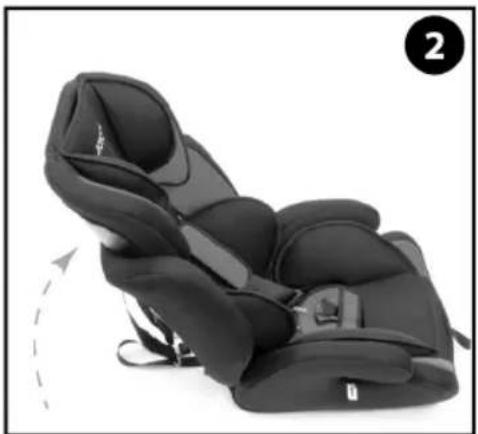
Place both tongues on the back into the notches on the seat, and then raise the back up vertically. Press firmly on the back to ensure that both tongues of the back of the seat are securely in place. The tongues on the back must be pushed down as far as they will go into the seat (fig.1/2).
ADJUSTING THE SEAT BELTS FOR SAFETY GROUP I (For children weighing from 9 kg to 18 kg)
Check the height of the seat belts.
These must be adjusted to the height of the child.
If they do not fit properly (fig. 3) they should be adjusted according to the following guidelines:
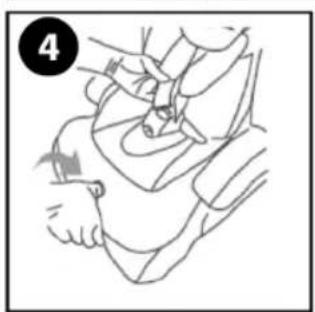
- Press the button to adjust the seat belt with one hand, and then pull forward seat belts, including covers, with the other hand in order to loosen (fig. 4).
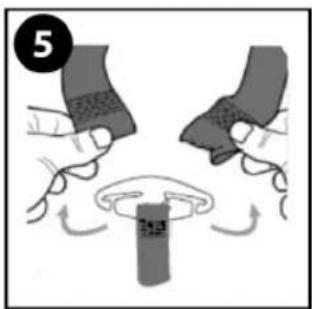
- Remove the seat belt from the rear metal buckle lock, positioned on the rear backrest (fig. 5).
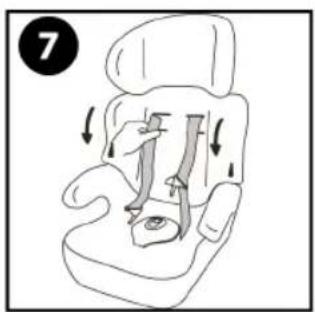
- From the back of the back seat, pull the seat belt cover out from its slots and put it back in another one of the two available slots according to the child's height (fig. 6/7).
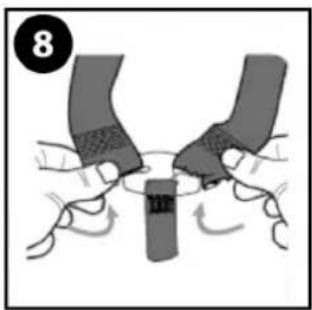
- Replace the rear seat belt metal lock buckle, positioned on the rear backrest (fig. 8).
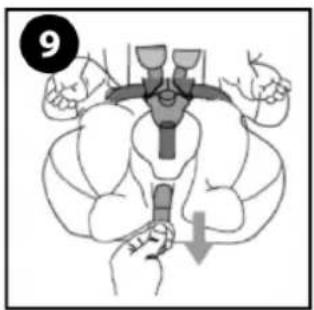
- Pull the belt adjustment if necessary to correctly position the seat belt over the child's shoulders (fig. 9).
NOTE: Make sure that the child is properly secured, that the buckle is not pressing on the child's stomach, that the harness is tight without causing discomfort and that the shoulder pads are at the right height for the shoulders.
Make sure the car seat belts are not twisted and that they are flat.
SEAT INSTALLATION Group I (For children weighing from 9 kg to 18 kg)
Follow the instructions shown on the label placed on the rear of the backrest. It is recommended that you attach the car seat to the rear passenger seat, facing forwards.
Ensure that the "seat" and the "backrest" are coupled properly. Do not user car seats in Group I in the event of separate seat and backrest.
- Position the child car seat so that it is not tilted, making sure that the back of the seat adheres to the car seat as much as possible (fig. 10/11).
- Place the car seat against the back seat of the vehicle. Lower the headrest as far as possible. Pull on the vehicle seat belt until it is completely loose. Feed both straps of the belt through the openings in the cover and the backrest shell making sure the waist strap passes under the arm rest of the car seat and that the diagonal strap rises vertically between the backrest and the head support. Bring the vehicle belt out through the opposite openings. Make sure that the waist strap of the belt passes under the arm rest and that the diagonal strap passes above the arm rest of the car seat. Fasten the vehicle seat belt, until you hear a distinct locking "click".
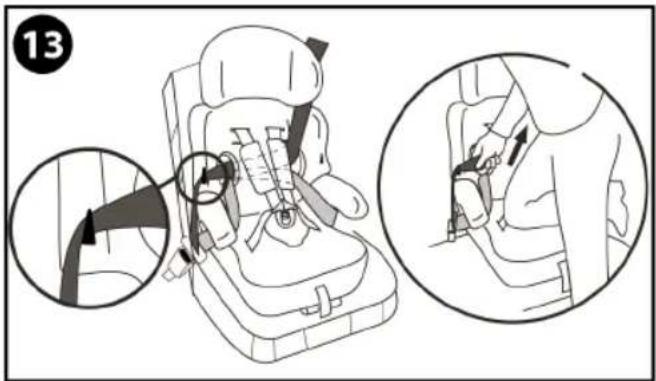
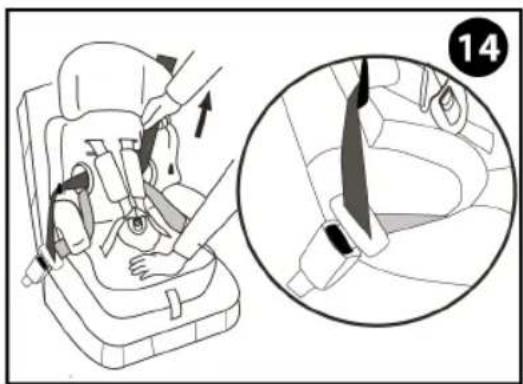
Push the car seat firmly against the back seat of the vehicle and tighten the belt as much as possible by pulling the waist strap and the diagonal strap towards the winder. (fig.13/14).
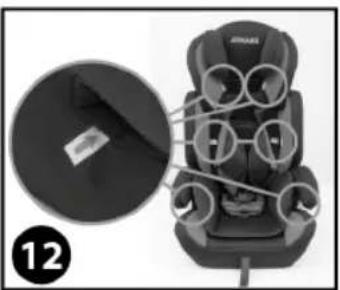
MAKE SURE THAT BOTH THE ABDOMINAL AND DIAGONAL BELT PASS THROUGH THE APPROPRIATE HOUSINGS INDICATED BY THE ARROW. THE RED ARROW INDICATES THE BELT'S CORRECT POSITION (fig.12).
Make sure the car seat belts are not twisted and that they are flat.
PLACING YOUR CHILD IN THE CHILD SEAT (Group I)
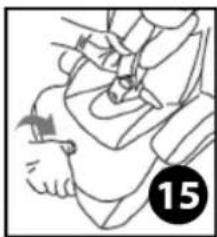
- Once the child seat is attached to the car seat, loosen the harness by pulling on the straps while pressing the harness adjuster button. (fig.15).
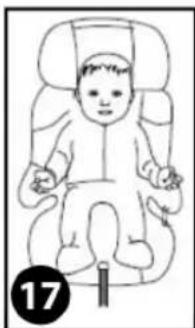
• To place the child in the seat, loosen the belts, releasing the buckle fastening mechanism, pressing the button intended for this and place the belts on the sides of the seat (fig. 16). - Position the child correctly in the seat (fig. 17)
- Reconnect the harness to the buckle until it clicks into place. (fig. 18)
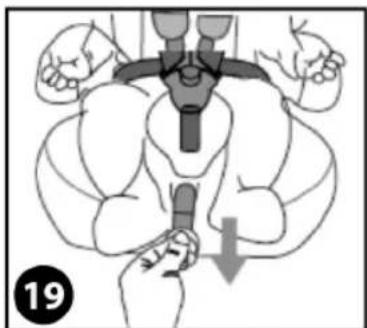
- Adjust the perfect grip of the seat belt on the child by pulling the seat belt adjustment belt (fig. 19)
- Make sure that the child is properly secured, that the buckle is not pressing on the child's stomach, that the harness is tight without causing discomfort and that the shoulder pads are at the right height for the shoulders. The baby's body should not be placed in an unnatural position. (fig.20)
INSTALLATION WITH BACK SEAT Group II and III
Group II: 15 kg-25 kg
Group III: 22 kg-36 kg
REMOVING THE SEAT BELTS
For children of weight Group II and III (15 kg - 36 kg), the harness must be removed and the vehicle's seat belt must be used to attach the child.
Only suitable if the vehicle is fitted with 3-point safety belts, approved to UN/ECE Regulation No. 16 or other equivalent standards.
- Remove the seat belt from the rear metal buckle lock, positioned on the rear backrest (fig. 21) and extract the seat belt from their slots.
- Open the harness buckle, in order to extract them from the front part of the seat. (fig.22).
- Lift the cover on the base of the seat and remove the metal hook which is attached to the belt part connected to the hooking mechanism (fig. 23).
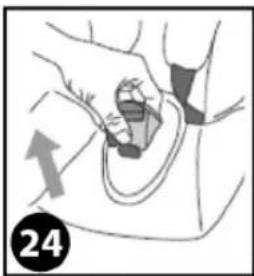
- Remove the hooking mechanism from the seat base (fig. 24).
- Remove the harness adjuster strap (fig. 25).
INSTALLATION
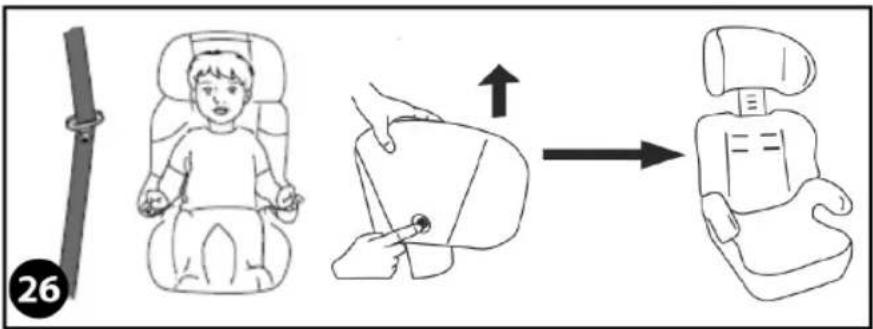
- Place the forward-facing child seat in the car, on the positions allowed in the car and adjust the headrest according to the child's height (fig. 26).
- After placing the child, pull the car belts to 3 points (lap and diagonal) by means of the buckle through indicated the steps (fig. 27) (under the armrests the lap belt and between the back and the headrest the diagonal belt), taking care not to twist them. Insert the car seat belt buckle into the attachment mechanism until you hear the locking "click" clearly.
MAKE SURE THAT BOTH THE ABDOMINAL AND DIAGONAL BELT PASS THROUGH THE APPROPRIATE HOUSINGS INDICATED BY THE ARROW. THE RED ARROW INDICATES THE BELT'S CORRECT POSITION (fig. 28).
INSTALLATION WITHOUT BACK SEAT (Only base / booster) Group III (22 kg-36 kg)
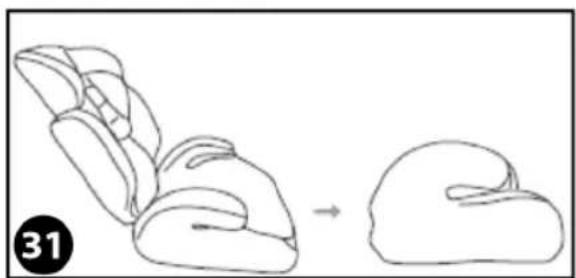
Remove the backrest from the booster
Hold the base with one hand; push the backrest backwards (fig. 29) and pull the backrest, with the other hand (fig. 30/31).
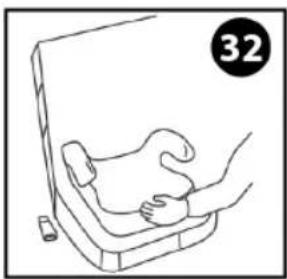
Place the forward-facing child seat in the car, on the positions allowed in the car (fig. 32).
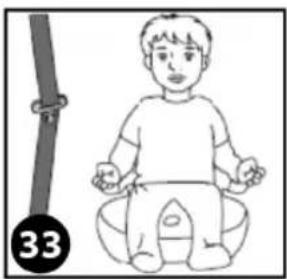
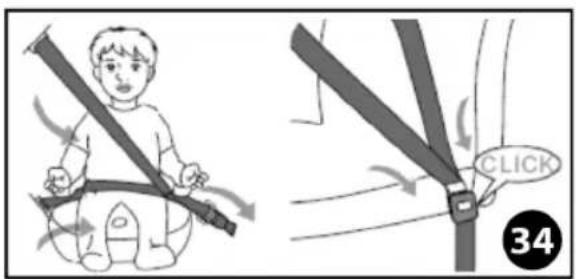
After placing the child, pull the car belts to 3 points (lap and diagonal) by means of the buckle. Under the arms, pull the abdominal seat belt and over the child's shoulder, pull the diagonal, not twisting them. Put the car seat buckle into the lock mechanism until you hear the locking "click". (fig. 33/34).
TO REMOVE THE FABRIC COVER
Completely remove the harness Group from the car seat as indicated into the section "REMOVING THE SEAT BELTS" and then carefully remove the cover from the base, the backrest and the headrest.
NOTE: Please be sure to use only original seat covers, as the seat cover is important to the proper functioning of the system.
The child seat must not be used without the seat cover.
The seat cover should not be replaced with any other than the one recommended by the manufacturer, because the cover constitutes an integral part of the restraint performance.
CLEANING AND MAINTENANCE
The cover can be removed and washed by hand with a mild detergent or in a washing machine's cycle for delicate items (30°C. The colours of the cover may fade if washed at more than 30°C. Do not spin, and never tumble dry in an electric clothes dryer (the fabric may separate from the padding).
The plastic parts can be cleaned using soapy water. Do not use harsh cleaning agents (such as solvents).
The harness can be removed and washed in lukewarm soapy water.
Please refer to the cleaning instructions on the fabric label, which illustrates the following washing symbols:
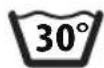
Wash cold water 30°C

Do not tumble dry

Do not iron

Do not bleach

Dry Flat
Specifications and designs are based on the last information available at the time of printing and subject to change without notice.
F
- I - COMPONENTI DEL SEGGIOLINO
- F - COMPOSANTS
- JOYCARE
- IMPORTANT: PLEASE READ THESE INSTRUCTIONS CAREFULLY BEFORE USE AND KEEP THEM FOR FUTURE REFERENCE. FOR YOUR CHILD'S SAFETY, READ THESE INSTRUCTIONS CAREFULLY. FAILURE TO FOLLOW THE CARSEAT INSTALLATION INSTRUCTIONS CAREFULLY COULD POSE A RISK TO YOUR BABY
- NOTICE
- APPLICABILITY
- IMPORTANT
- ASSEMBLING THE CAR SEAT
- ADJUSTING THE SEAT BELTS FOR SAFETY GROUP I (FOR CHILDREN WEIGHING FROM 9 KG TO 18 KG)
- SEAT INSTALLATION GROUP I (FOR CHILDREN WEIGHING FROM 9 KG TO 18 KG)
- PLACING YOUR CHILD IN THE CHILD SEAT (GROUP I)
- INSTALLATION WITH BACK SEAT GROUP II AND III
- REMOVING THE SEAT BELTS
- INSTALLATION
- INSTALLATION WITHOUT BACK SEAT (ONLY BASE / BOOSTER) GROUP III (22 KG-36 KG)
- REMOVE THE BACKREST FROM THE BOOSTER
- TO REMOVE THE FABRIC COVER
- CLEANING AND MAINTENANCE
- F
Brand : Joycare
Model : Sereno JC-1507
Category : Car seat