
CH 18DL - Hedge trimmers HITACHI - Free user manual and instructions
Find the device manual for free CH 18DL HITACHI in PDF.


| Product Type | Cordless Hedge Trimmer |
| Model | CH18DL |
| Power Source | 18 V rechargeable battery (BCL1815) |
| No-Load Speed | 1100 min⁻¹ |
| Cutting Capacity | 15 mm branch thickness |
| Blade Length | 520 mm |
| Weight | 2.4 kg |
| Charger Model | UC18YKL |
| Charging Time | Approx. 60 minutes |
| Sound Power Level | 80 dB(A) |
| Sound Pressure Level | 69 dB(A) |
| Vibration Level (no load) | 2.2 m/s² (K=1.5 m/s²) |
| Continuous Operating Time | Approx. 35 minutes |
| Switch Type | Dual trigger (main and sub handle) |
| Blade Case | Included |
| Motor Type | Brushed DC motor |
| Safety Features | Overload protection, battery protection, insulated grips |
| Maintenance | Blade sharpening and lubrication required |
| Included Accessories | Blade case, battery (BCL1815), charger (UC18YKL) |
| Application | Trimming hedges and garden trees |
| Charging Temperature Range | 0°C – 50°C |
Frequently Asked Questions - CH 18DL HITACHI
User questions about CH 18DL HITACHI
0 question about this device. Answer the ones you know or ask your own.
Ask a new question about this device
Download the instructions for your Hedge trimmers in PDF format for free! Find your manual CH 18DL - HITACHI and take your electronic device back in hand. On this page are published all the documents necessary for the use of your device. CH 18DL by HITACHI.
USER MANUAL CH 18DL HITACHI
natural_image
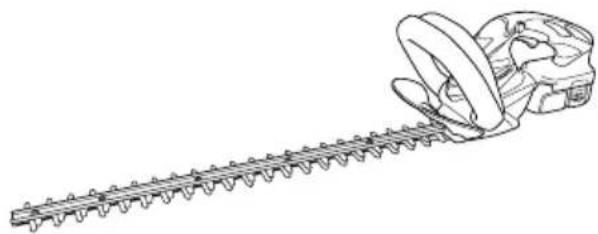
Line drawing of a hedge shower with serrated metal blades (no text or symbols)CH18DSL
natural_image
Line drawing of a hedgehog with serrated metal blades (no text or symbols)CH18DL
Read through carefully and understand these instructions before use.
Bruksanvisning
Brugsanvisning
Bruksanvisning
Käyttöohjeet
Handling Instructions
1
2
3
4
5
6
7
8
9
10
natural_image
Technical diagram of a mechanical component before and after assembly, showing a cross-section view with no visible text or symbols.11
12
13 14
15
| Svenska | Dansk | Norsk | Suomi | English | |
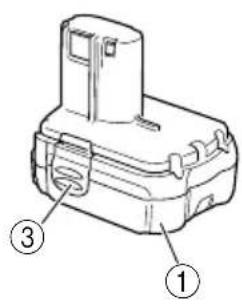
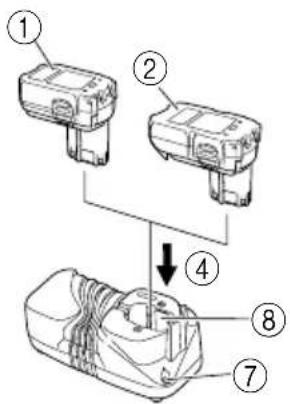
| 1 | 14,4 volts uppladdningsbart batteri (för CH14DL) | 14,4 V genopladeligt batteri (til CH14DL) | 14,4 V oppladbart batteri (for CH14DL) | 14,4 V ladattava paristo (mallille CH14DL) | 14.4 V Rechargeable battery (For CH14DL) |
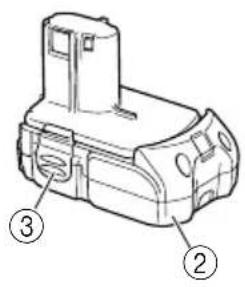
| 2 | 18 volts uppladdningsbart batteri (för CH18DL) | 18 V genopladeligt batteri (til CH18DL) | 18 V oppladbart batteri (for CH18DL) | 18 V ladattava paristo (mallille CH18DL) | 18 V Rechargeable battery (For CH18DL) |
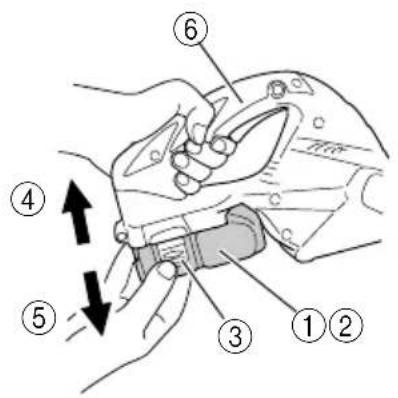
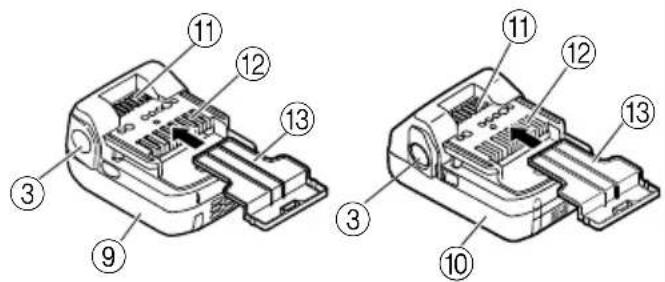
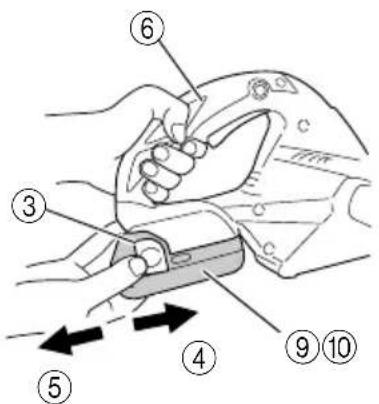
| 3 | Lås | Smæklås | Sperrehake | Salpa | Latch |
| 4 | Passa in | Ilæg | Sett i | Paina sisään | Insert |
| 5 | Dra ut | Træk ud | Dra ut | Ota ulos | Pull out |
| 6 | Handtag | Håndtag | Håndtak | Kahva | Handle |
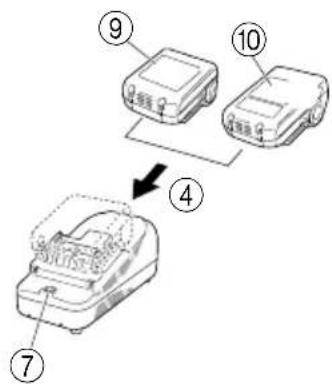
| 7 | Signallampa | Kontrollampe | Pilot-lys | Markkivalo | Pilot lamp |
| 8 | Hål för iläggning av det uppladdningsbara batteriet | Hul til tilslutning af det opladelige batteri | Hull for tilkopling av det oppladbare batteriet | Ladattavan pariston liitäntäaukko | Hole for connecting the rechargeable battery |
| 9 | 14,4 volts uppladdningsbart batteri (för CH14DSL) | 14,4 V genopladeligt batteri (til CH14DSL) | 14,4 V oppladbart batteri (for CH14DSL) | 14,4 V ladattava paristo (mallille CH14DSL) | 14.4 V Rechargeable battery (For CH14DSL) |
| 10 | 18 volts uppladdningsbart batteri (för CH18DSL) | 18 V genopladeligt batteri (til CH18DSL) | 18 V oppladbart batteri (for CH18DSL) | 18 V ladattava paristo (mallille CH18DSL) | 18 V Rechargeable battery (For CH18DSL) |
| 11 | Ventilationshål | Ventilationsåbninger | Ventilasjons hull | Tuuletusaukot | Ventilation holes |
| 12 | Poler | Terminaler | Tilkoblingspunkter | Navat | Terminals |
| 13 | Batteriskydd | Batteridæksel | Batteri deksel | Akun kansi | Battery cover |
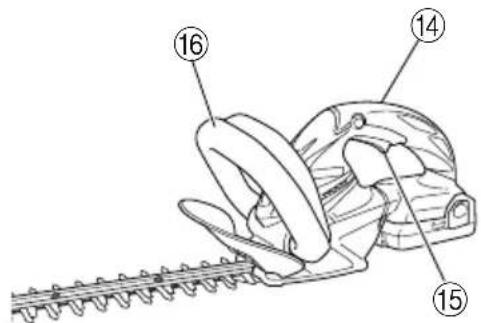
| 14 | Huvudhandtag | Hovedhåndtag | Hovedhåndtak | Pääkahva | Main handle |
| 15 | Avtryckare | Trigger | Utløser | Käynnistin | Trigger |
| 16 | Underhandtag | Lille håndtag | Bakre håndtak | Apukahva | Sub handle |
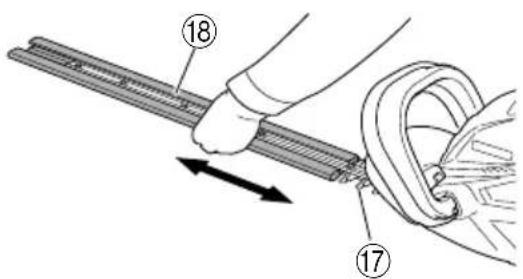
| 17 | Blad | Kniv | Blad | Terä | Blade |
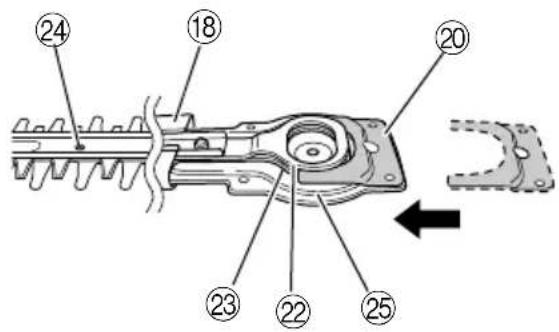
| 18 | Bladfodral | Knivkassette | Bladdeksel | Teräkotelo | Blade case |
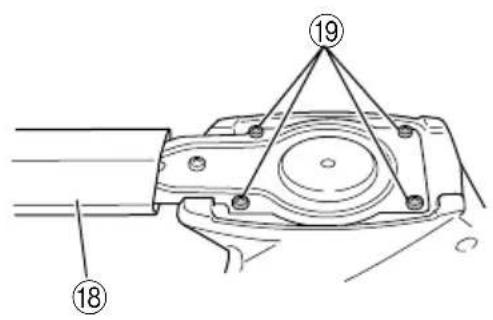
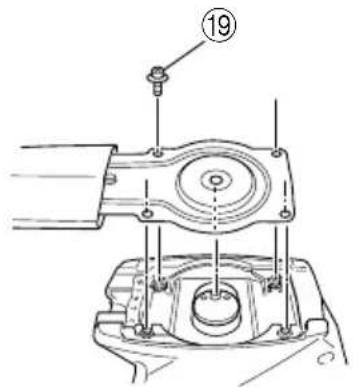
| 19 | Skruv | Skrue | Skrue | Ruuvi | Screw |
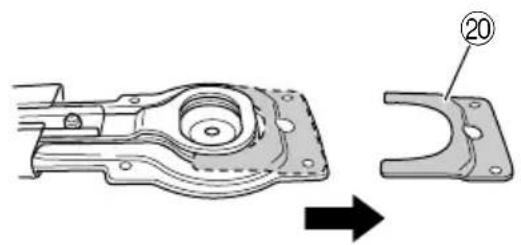
| 20 | Bricka | Afstandsstykke | Avstandsstykke | Välilevy | Spacer |
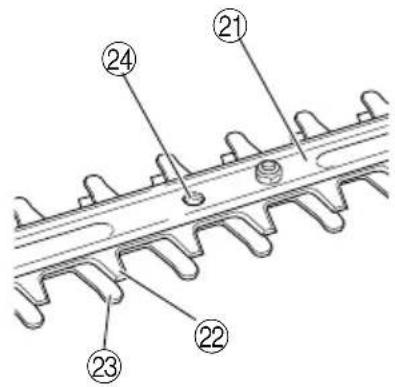
| 21 | Hållarplatta | Holderplade | Holderplate | Pidikelevy | Holder plate |
| 22 | Övre blad | ∅verste kniv | ∅vre kniv | Yläterä | Upper blade |
| 23 | Nedre blad | Nederste kniv | Nedre kniv | Alaterä | Lower blade |
| 24 | ø5 Hål | ø5-hul | ø5-hull | ø5 Reikä | ø5 hole |
| 25 | Hållare för blad | Knivholder | Bladholder | Teränpidike | Blade holder |
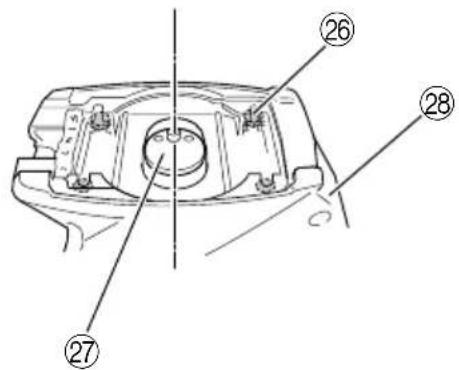
| 26 | Mutter | Møtrik | Mutter | Mutteri | Nut |
| 27 | Startvevskam | Drivhjul | Krank | Nokkapyörä | Crank cam |
| 28 | Kåpa | Kabinet | Hus | Kotelo | Housing |
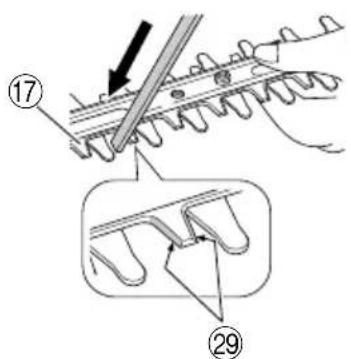
| 29 | Markytan | Jordforbunden flade | Overflate til jording | Maadoituspinta | Surface to be ground |
| Symboler⚠️VARNINGNedan visas de symbolersom används för maskinen.Se till att du förstår vad debetyder innan verktygetanvänds. | Symboler⚠️ADVARSELDet følgende viser symboler,som anvendes for maskinen.Vær sikker på, at du forstårderes betydning, inden dubegynder at bruge maskinen. | Symboler⚠️ADVERSELFølgende symboler brukesfor maskinen. Sørg for åforstå betydningen av dissesymbolene før maskinen tas ibruk. | |
 | Läs alla säkerhetsvarningaroch alla instruktioner.Underlåtenhet att följavarningarna ochinstruktionerna nedan kanresultera i elstötar, brandoch/eller allvarliga skador. | Læs alle sikkerhedsadvarslerog instruktioner.Det kan medføre elektriskstød, brand og/eller alvorligpersonskade, hvis alleadvarslerne oginstruktionerne nedenfor ikkeoverholdes. | Les alle advarsler ogsikkerhetsinstruksjoner.Hvis du ikke følger alleadvarsler og instruksjonerkan bruk av utstyret resulterei elektrisk støt, brann og/elleralvorlig personskade. |
 | Elverktyg skall inte användasi regn eller utsättas för fukt,eller förvaras utomhus vidregn. | Brug ikke elektrisk værktøj iregnvejr eller fugtigt vejr, ogefterlad det ikke udendørs,når det regner. | Ikke bruk elektriske verktøy iregn eller fuktige omgivelsereller la dem stå ute når detregner. |
 | Gäller endast EU-länderElektriska verktyg får intekastas i hushållssoporna!Enligt direktivet 2002/96/EGsom avser äldre elektrisk ochelektronisk utrustning ochdess tillämpning enligtnationell lagstiftning skauttjänta elektriska verktygsorteras separat och lämnastill miljövänlig återvinning. | Kun for EU-landeElværktøj må ikke bortskaffessom almindeligt affald!I henhold til det europæiskedirektiv 2002/96/EF ombortskaffelse af elektriske ogelektroniske produkter oggældende nationallovgivning skal brugtelværktøj indsamles separatog bortskaffes på en måde,der skåner miljøet mestmuligt. | Kun for EU-landKast aldri elektroverktøy ihusholdningsavfallet!I henhold til EU-direktiv 2002/96/EF om kasserte elektriskeog elektroniske produkter ogdirektivets iverksetting inasjonal rett, måelektroverktøy som ikkelenger skal brukes, samlesseparat og returneres til etmiljøvennliggjenvinningsanlegg. |
WARNING (CH14DSL/CH18DSL)
natural_image
Line drawing of a long, segmented mechanical or structural component with evenly spaced teeth (no text or symbols)natural_image
Diagram of a tree with conical branches and leaves, no text or symbols presentFig. 16
natural_image
Illustration of two workers using a manual power tool to cut through a slope (no text or symbols present)Fig. 18
ANMÄRKNING
80 dB (A) (CH18DSL/CH18DL)
69 dB (A) (CH18DSL/CH18DL)
Osäkerhet KpA: 3 dB (A)
Använd öronskydd.
ADVARSEL (CH14DSL/CH18DSL)
natural_image
Line drawing of a coiled spring or cable with no text or symbolsUDSKIFTNING AF KNIVEN
natural_image
Simple line drawing of a tree with leaves and branches, no text or symbols presentFig. 16
natural_image
Two technical illustrations showing a worker using a manual tool to cut a slope, and another holding a chain saw with an upward arrow (no text or symbols present)Fig. 18
BEMÄRK
80 dB(A) (CH18DSL/CH18DL)
69 dB(A) (CH18DSL/CH18DL)
Usikkerhed KpA: 3 dB (A)
Brug høreværn.
natural_image
Line drawing of a long, coiled mechanical component with evenly spaced teeth (no text or symbols)natural_image
Simple line drawing of a tree with leaves and branches, no text or symbols presentFig. 16
natural_image
Two technical illustrations showing a person using a power shaver to clean or install a cable, with arrows indicating direction of movement (no text or symbols present)Fig. 18
MERK
VEDLIKEHOLD OG INSPEKSJON
ADVARSEL
80 dB (A) (CH18DSL/CH18DL)
Målt A-veid lydtrykknivå: 68 dB (A) (CH14DSL/CH14DL)
69 dB (A) (CH18DSL/CH18DL)
Usikkerhet KpA: 3 dB (A)
Bruk hørselvern.
natural_image
Line drawing of a long, coiled mechanical component with evenly spaced teeth (no text or symbols)natural_image
Diagram of a tree with trunks and leaves, no text or symbols presentKuva 16
natural_image
Two illustrations showing a worker using a power shaver to cut a slope, and another holding a chainsaw with an upward arrow (no text or symbols)Kuva 18
HUOM
79 dB (A) (CH14DSL/CH14DL)
80 dB (A) (CH18DSL/CH18DL)
68 dB (A) (CH14DSL/CH14DL)
69 dB (A) (CH18DSL/CH18DL)
KpA-toleranssi: 3 dB (A)
Read all safety warnings and all instructions.
Failure to follow the warnings and instructions may result in electric shock, fire and/or serious injury.
Save all warnings and instructions for future reference.
The term "power tool" in the warnings refers to your mains-operated (corded) power tool or battery-operated (cordless) power tool.
1) Work area safety
a) Keep work area clean and well lit.
Cluttered or dark areas invite accidents.
b) Do not operate power tools in explosive atmospheres, such as in the presence of flammable liquids, gases or dust.
Power tools create sparks which may ignite the dust or fumes.
c) Keep children and bystanders away while operating a power tool.
Distractions can cause you to lose control.
2) Electrical safety
a) Power tool plugs must match the outlet.
Never modify the plug in any way.
Do not use any adapter plugs with earthed (grounded) power tools.
Unmodified plugs and matching outlets will reduce risk of electric shock.
b) Avoid body contact with earthed or grounded surfaces, such as pipes, radiators, ranges and refrigerators.
There is an increased risk of electric shock if your body is earthed or grounded.
c) Do not expose power tools to rain or wet conditions.
Water entering a power tool will increase the risk of electric shock.
d) Do not abuse the cord. Never use the cord for carrying, pulling or unplugging the power tool. Keep cord away from heat, oil, sharp edges or moving parts.
Damaged or entangled cords increase the risk of electric shock.
e) When operating a power tool outdoors, use an extension cord suitable for outdoor use.
Use of a cord suitable for outdoor use reduces the risk of electric shock.
f) If operating a power tool in a damp location is unavoidable, use a residual current device (RCD) protected supply.
Use of an RCD reduces the risk of electric shock.
3) Personal safety
a) Stay alert, watch what you are doing and use common sense when operating a power tool. Do not use a power tool while you are tired or under the influence of drugs, alcohol or medication.
A moment of inattention while operating power tools may result in serious personal injury.
b) Use personal protective equipment. Always wear eye protection.
Protective equipment such as dust mask, non-skid safety shoes, hard hat, or hearing protection used for appropriate conditions will reduce personal injuries.
c) Prevent unintentional starting. Ensure the switch is in the off position before connecting to power source and/or battery pack, picking up or carrying the tool.
Carrying power tools with your finger on the switch or energising power tools that have the switch on invites accidents.
d) Remove any adjusting key or wrench before turning the power tool on.
A wrench or a key left attached to a rotating part of the power tool may result in personal injury.
e) Do not overreach. Keep proper footing and balance at all times.
This enables better control of the power tool in unexpected situations.
f) Dress properly. Do not wear loose clothing or jewellery. Keep your hair, clothing and gloves away from moving parts.
Loose clothes, jewellery or long hair can be caught in moving parts.
g) If devices are provided for the connection of dust extraction and collection facilities, ensure these are connected and properly used.
Use of dust collection can reduce dust related hazards.
4) Power tool use and care
a) Do not force the power tool. Use the correct power tool for your application.
The correct power tool will do the job better and safer at the rate for which it was designed.
b) Do not use the power tool if the switch does not turn it on and off.
Any power tool that cannot be controlled with the switch is dangerous and must be repaired.
c) Disconnect the plug from the power source and/or the battery pack from the power tool before making any adjustments, changing accessories, or storing power tools.
Such preventive safety measures reduce the risk of starting the power tool accidentally.
d) Store idle power tools out of the reach of children and do not allow persons unfamiliar with the power tool or these instructions to operate the power tool.
Power tools are dangerous in the hands of untrained users.
e) Maintain power tools. Check for misalignment or binding of moving parts, breakage of parts and any other condition that may affect the power tools operation.
If damaged, have the power tool repaired before use.
Many accidents are caused by poorly maintained power tools.
f) Keep cutting tools sharp and clean.
Properly maintained cutting tools with sharp cutting edges are less likely to bind and are easier to control.
g) Use the power tool, accessories and tool bits etc. in accordance with these instructions, taking into account the working conditions and the work to be performed.
Use of the power tool for operations different from those intended could result in a hazardous situation.
5) Battery tool use and care
a) Recharge only with the charger specified by the manufacturer.
A charger that is suitable for one type of battery pack may create a risk of fire when used with another battery pack.
b) Use power tools only with specifically designated battery packs.
Use of any other battery packs may create a risk of injury and fire.
c) When battery pack is not in use, keep it away from other metal objects like paper clips, coins, keys, nails, screws, or other small metal objects that can make a connection from one terminal to another. Shorting the battery terminals together may cause burns or a fire.
d) Under abusive conditions, liquid may be ejected from the battery; avoid contact. If contact accidentally occurs, flush with water. If liquid contacts eyes, additionally seek medical help. Liquid ejected from the battery may cause irritation or burns.
6) Service
a) Have your power tool serviced by a qualified repair person using only identical replacement parts.
This will ensure that the safety of the power tool is maintained.
PRECAUTION
Keep children and infirm persons away.
When not in use, tools should be stored out of reach of children and infirm persons.
HEDGE TRIMMER SAFETY WARNINGS
Keep all parts of the body away from the cutter blade. Do not remove cut material or hold material to be cut when blades are moving. Make sure the switch is off when clearing jammed material. A moment of inattention while operating the shrub shear may result in serious personal injury.
○Carry the shrub shear by the handle with the cutter blade stopped. When transporting or storing the shrub shear always fit the cutting device cover.
Proper handling of the hedge trimmer will reduce possible personal injury from the cutter blades.
○Hold power tool by insulated gripping surfaces only, because the cutter blade may contact hidden wiring. Cutter blades contacting a "live" wire may make exposed metal parts of the power tool "live" and could give the operator an electric shock.
Keep cable away from cutting area. During operation the cable may be hidden in shrubs and can be accidentally cut by the blade.
PRECAUTIONS FOR CORDLESS HEDGE TRIMMER
-
Before starting work make sure there are no power cables in the work area. The blade could come into contact with the power cable causing electric shock, ground faults and other accidents.
-
Hold the tool firmly with both hands during use to prevent injury.
-
Keep your hands and all parts of the body away from the blade to prevent contact that could lead to injury.
-
Make sure the blade and all accessories are properly installed. Improper installation could cause the blade or accessories to come loose resulting in an injury.
-
Make sure the blade is not cracked, deformed or excessively worn before starting work. Do not use a blade in this condition as it could break and cause injury.
-
Do not use the tool to cut wire, metal plates or other hard objects. The tool could be damaged and cause injury.
-
If the tool does not work normally and is producing strange noise, turn it off immediately and have it inspected and repaired.
-
If the tool falls or strikes against an object, check the blade and the body for damage, cracking and deformation. Use of a damaged, deformed or cracked blade could result in injury.
-
Do not disassemble the blade. This may result in injury.
-
This product generates vibration during operation. This makes long continuous work physically strenuous so avoid a poor work posture and be sure to take frequent rests. Also during short work periods, stop work immediately to take a rest when your fingers, hands, arms or shoulders become tired.
-
Use gloves, or cloth to protect your hands when handling the blade. Careless handling may lead to injury.
-
Do not expose the blade to excessive pressure during cutting as the blade could be damaged.
-
The blade is extremely hot after cutting. Do not touch it to prevent burn injuries.
-
When working in high places, make sure that no one is standing below. They could be injured should you accidentally drop the tool or other object.
-
To prevent unforeseen accidents, never leave the tool running unattended on a stand or on the floor.
-
Do not expose the tool to insecticide and other chemicals. Such chemicals could cause cracking and other damage.
PRECAUTIONS FOR BATTERY AND CHARGER
-
Always charge the battery at a temperature of 0 – 40°C. Charging the battery at temperatures outside the range of 0 – 40°C may prevent proper charging and reduce battery life. The most suitable temperature for charging is that of 20 – 25°C.
-
When one charging is completed, leave the charger for about 15 minutes before the next charging of battery. Do not charge the battery more than 2 hours.
-
Do not allow foreign matter to enter the hole for connecting the rechargeable battery.
-
Never disassemble the rechargeable battery and charger.
-
Never short-circuit the rechargeable battery. Short-circuiting the battery will cause a great electric current and overheat. It results in burn or damage to the battery.
-
Do not dispose of the battery in fire. If the battery is burnt, it may explode.
CAUTION ON LITHIUM-ION BATTERY
To extend the lifetime, the lithium-ion battery equips with the protection function to stop the output.
In the cases of 1 to 3 described below, when using this product, even if you are pulling the switch, the motor may stop. This is not the trouble but the result of protection function.
- When the battery power remaining runs out, the motor stops.
In such case, charge it up immediately.
-
If the tool is overloaded, the motor may stop. In this case, release the switch of tool and eliminate causes of overloading. After that, you can use it again.
-
If the battery is overheated under overload work, the battery power may stop. In this case, stop using the battery and let the battery cool. After that, you can use it again.
Furthermore, please heed the following warning and caution.
WARNING
In order to prevent any battery leakage, heat generation, smoke emission, explosion and ignition beforehand, please be sure to heed the following precautions.
- Make sure that swarf and dust do not collect on the battery.
○During work make sure that swarf and dust do not fall on the battery.
○Make sure that any swarf and dust falling on the power tool during work do not collect on the battery.
○Do not store an unused battery in a location exposed to swarf and dust.
Before storing a battery, remove any swarf and dust that may adhere to it and do not store it together with metal parts (screws, nails, etc.).
-
Do not pierce battery with a sharp object such as a nail, strike with a hammer, step on, throw or subject the battery to severe physical shock.
-
Do not use an apparently damaged or deformed battery.
-
Do not use the battery in reverse polarity.
-
Do not connect directly to an electrical outlets or car cigarette lighter sockets.
-
Do not use the battery for a purpose other than those specified.
-
If the battery charging fails to complete even when a specified recharging time has elapsed, immediately stop further recharging.
-
Do not put or subject the battery to high temperatures or high pressure such as into a microwave oven, dryer, or high pressure container.
-
Keep away from fire immediately when leakage or foul odor are detected.
-
Do not use in a location where strong static electricity generates.
-
If there is battery leakage, foul odor, heat generated, discolored or deformed, or in any way appears abnormal during use, recharging or storage, immediately remove it from the equipment or battery charger, and stop use.
CAUTION
-
If liquid leaking from the battery gets into your eyes, do not rub your eyes and wash them well with fresh clean water such as tap water and contact a doctor immediately. If left untreated, the liquid may cause eye-problems.
-
If liquid leaks onto your skin or clothes, wash well with clean water such as tap water immediately. There is a possibility that this can cause skin irritation.
-
If you find rust, foul odor, overheating, discolor, deformation, and/or other irregularities when using the battery for the first time, do not use and return it to your supplier or vendor.
WARNING (CH14DSL/CH18DSL)
If an electrically conductive foreign object enters the terminals of the lithium ion battery, a short-circuit may occur resulting in the risk of fire. Please observe the following matters when storing the battery.
○Do not place electrically conductive cuttings, nails, steel wire, copper wire or other wire in the storage case.
○Either install the battery in the power tool or store by securely pressing into the battery cover until the ventilation holes are concealed to prevent short-circuits (See Fig. 4).
SPECIFICATIONS
POWER TOOL
| Model CH14DSL CH18DSL CH14DL CH18DL | ||||
| No-load speed 1100 min | -1 | |||
| Capacity * (Thickness of branch that can be trimmed.) | 15 mm | |||
| Blade size (Trimming width) 520 mm | ||||
| Rechargeable battery BSL1415 BSL1815 BCL1415 BCL1815 | ||||
| Usable charger UC18YGSL UC18YKL | ||||
| Weight 2.3 kg 2.3 kg 2.4 kg 2.4 kg | ||||
* Actual performance depends on the type of vegetation cut and the sharpness of the blade.
CHARGER
| Model UC18YGSL UC18YKL | ||
| Charging voltage | 4.4 - 18 V 7.2 - | 18 V |
| Weight 0.4 kg 0.4 | kg | |
STANDARD ACCESSORIES
| CH14DSL | CH18DSL | CH14DL | CH18DL | |
| 1Battery(BSL1415) | 1 | |||
| 2Battery(BSL1815) | 1 | |||
| 3Battery(BCL1415) | 1 | |||
| 4Battery(BCL1815) | 1 | |||
| 5Charger(UC18YGSL) | 1 | 1 | ||
| 6Charger(UC18YKL) | 1 | 1 | ||
| 7Blade case | 1 1 1 1 |
Standard accessories are subject to change without notice.
OPTIONAL ACCESSORIES (sold separately)
- Battery
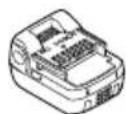
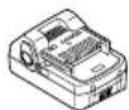
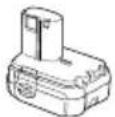
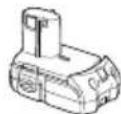
BSL1415 BSL1815 BCL1415 BCL1815
- Blade
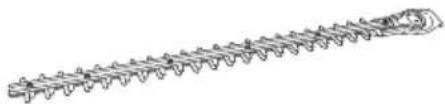
natural_image
Line drawing of a long, coiled mechanical component with evenly spaced teeth (no text or symbols)Optional accessories are subject to change without notice.
APPLICATIONS
○Fine trimming hedges
○Trimming and pruning garden trees
BATTERY REMOVAL/INSTALLATION
1. Battery removal
Hold the handle tightly and push the battery latch to remove the battery (see Figs. 1, 2 and 5).
CAUTION
Never short-circuit the battery.
2. Battery installation
Insert the battery while observing its polarities (see Fig. 2 and 5).
CHARGING
Before using the power tool, charge the battery as follows.
- Connect the charger's power cord to the receptacle. When connecting the plug of the charger to a receptacle, the pilot lamp will blink in red (At 1-second intervals).
2. Insert the battery into the charger.
Firmly insert the battery into the charger as shown in Fig. 5 and 6.
3. Charging
When inserting a battery in the charger, the pilot lamp will light up continuously in red. When the battery becomes fully recharged, the pilot lamp will blink in red (At 1-second intervals). (See Table 1)
(1) Pilot lamp indication
The indications of the pilot lamp will be as shown in Table 1, according to the condition of the charger or the rechargeable battery.
Table 1
| Indications of the pilot lamp | |||
| Pilot lamp(red) | Beforecharging | Blinks | Lights for 0.5 seconds. Does not light for 0.5 seconds. (off for 0.5 seconds) |
| Whilecharging | Lights | Lights continuously | |
| Chargingcomplete | Blinks | Lights for 0.5 seconds. Does not light for 0.5 seconds. (off for 0.5 seconds) | |
| Overheatstandby | Blinks | Lights for 1 second. Does not light for 0.5 seconds. (off for 0.5 seconds) | |
| Chargingimpossible | Flickers | Lights for 0.1 seconds. Does not light for 0.1 seconds. (off for 0.1 seconds)■ ■ ■ ■ ■ ■ ■ ■ ■ ■ ■ ■ ■ ■ ■ ■ ■ ■ ■ ■ ■ ■ ■ ■ ■ ■ ■ ■ ■ ■ ■ ■ ■ ■ ■ ■ ■ ■ ■ ■ ■ ■ ■ ■ ■ ■ ■ ■ ■ ■ ■ ■ ■ ■ ■ ■ ■ ■ ■ ■ ■ ■ ■ ■ ■ ■ ■ ■ ■ ■ ■ ■ ■ ■ ■ ■ ■ ■ ■ ■ ■ ■ ■ ■ ■ ■ ■ ■ ■ ■ ■ ■ ■ ■ ■ ■ ■ ■ ■ ■ ■ □□□□□□□□□□□□□□□□□□□□□□□□□□□□□□□□□□□□□□□□□□□□□□□□□□□□□□□□□□□□□□□□□□□□□□□□□□□□□□□□□□□□□□□□□□□□□□□□□□□□□○□□□□□□□□□□□□□□□□□□□□□□□□□□□□□□□□□□□□□□□□□□□□□□□□□□□□□□□□□□□□□□□□□□□□□□□□□□□□□□□□□□□□□□□□□□□□□□□□□□□ □□□□□□□□□□□□□□□□□□□□□□□□□□□□□□□□□□□□□□□□□□□□□□□□□□□□□□□□□□□□□□□□□□□□□□□□□□□□□□□□□□□□□□□□□□□□□□□□□□ □ □ □ □ □ □ □ □ □ □ □ □ □ □ □ □ □ □ □ □ □ □ □ □ □ □ □ □ □ □ □ □ □ □ □ □ □ □ □ □ □ □ □ □ □ □ □ □ □ □ ▢ ▢ ▢ ▢ ▢ ▢ ▢ ▢ ▢ ▢ ▢ ▢ ▢ ▢ ▢ ▢ ▢ ▢ ▢ ▢ ▢ ▢ ▢ ▢ ▢ ▢ ▢ ▢ ▢ ▢ ▢ ▢ ▢ ▢ ▢ ▢ ▢ ▢ ▢ ▢ ▢ ▢ ▢ ▢ ▢ ▢ ▢ ▢ ▢ ▢ ▩ ▩ ▩ ▩ ▩ ▩ ▩ ▩ ▩ ▩ ▩ ▩ ▩ ▩ ▩ ▩ ▩ ▩ ▩ ▩ ▩ ▩ ▩ ▩ ▩ ▩ ▩ ▩ ▩ ▩ ▩ ▩ ▩ ▩ ▩ ▩ ▩ ▩ ▩ ▩ ▩ ▩ ▩ ▩ ▩ ▩ ▩ ▩ ▩ ▩ ▢ ▢ ▢ ▢ ▢ ▢ ▢ ▢ ▢ ▢ ▢ ▢ ▢ ▢ ▢ ▢ ▢ ▢ ▢ ▢ ▢ ▢ ▢ ▢ ▢ ▢ ▢ ▢ ▢ ▢ ▢ ▢ ▢ ▢ ▢ ▢ ▢ ▢ ▢ ▢ ▢ ▢ ▢ ▢ ▢ ▢ ▢ ▢ ▢ □ □ □ □ □ □ □ □ □ □ □ □ □ □ □ □ □ □ □ □ □ □ □ □ □ □ □ □ □ □ □ □ □ □ □ □ □ □ □ □ □ □ □ □ □ □ □ □ □ △ △ △ △ △ △ △ △ △ △ △ △ △ △ △ △ △ △ △ △ △ △ △ △ △ △ △ △ △ △ △ △ △ △ △ △ △ △ △ △ △ △ △ △ △ △ △ △ △ △ ▝ ▝ ▝ ▝ ▝ ▝ ▝ ▝ ▝ ▝ ▝ ▝ ▝ ▝ ▝ ▝ ▝ ▝ ▝ ▝ ▝ ▝ ▝ ▝ ▝ ▝ ▝ ▝ ▝ ▝ ▝ ▝ ▝ ▝ ▝ ▝ ▝ ▝ ▝ ▝ ▝ ▝ ▝ ▝ ▝ ▝ ▝ ▝ ▝ ▝ △ △ △ △ △ △ △ △ △ △ △ △ △ △ △ △ △ △ △ △ △ △ △ △ △ △ △ △ △ △ △ △ △ △ △ △ △ △ △ △ △ △ △ △ △ △ △ △ △ ▩ ▩ ▩ ▩ ▩ ▩ ▩ ▩ ▩ ▩ ▩ ▩ ▩ ▩ ▩ ▩ ▩ ▩ ▩ ▩ ▩ ▩ ▩ ▩ ▩ ▩ ▩ ▩ ▩ ▩ ▩ ▩ ▩ ▩ ▩ ▩ ▩ ▩ ▩ ▩ ▩ ▩ ▩ ▩ ▩ ▩ ▩ ▩ ▩ ▸ ▸ ▸ ▸ ▸ ▸ ▸ ▸ ▸ ▸ ▸ ▸ ▸ ▸ ▸ ▸ ▸ ▸ ▸ ▸ ▸ ▸ ▸ ▸ ▸ ▸ ▸ ▸ ▸ ▸ ▸ ▸ ▸ ▸ ▸ ▸ ▸ ▸ ▸ ▸ ▸ ▸ ▸ ▸ ▸ ▸ ▸ ▸ ▸ ▸ ▪ ▪ ▪ ▪ ▪ ▪ ▪ ▪ ▪ ▪ ▪ ▪ ▪ ▪ ▪ ▪ ▪ ▪ ▪ ▪ ▪ ▪ ▪ ▪ ▪ ▪ ▪ ▪ ▪ ▪ ▪ ▪ ▪ ▪ ▪ ▪ ▪ ▪ ▪ ▪ ▪ ▪ ▪ ▪ ▪ ▪ ▪ ▪ ▪ ▪ ▫ ▫ ▫ ▫ ▫ ▫ ▫ ▫ ▫ ▫ ▫ ▫ ▫ ▫ ▫ ▫ ▫ ▫ ▫ ▫ ▫ ▫ ▫ ▫ ▫ ▫ ▫ ▫ ▫ ▫ ▫ ▫ ▫ ▫ ▫ ▫ ▫ ▫ ▫ ▫ ▫ ▫ ▫ ▫ ▫ ▫ ▫ ▫ ▫ ▫ ▪ ▪ ▪ ▪ ▪ ▪ ▪ ▪ ▪ ▪ ▪ ▪ ▪ ▪ ▪ ▪ ▪ ▪ ▪ ▪ ▪ ▪ ▪ ▪ ▪ ▪ ▪ ▪ ▪ ▪ ▪ ▪ ▪ ▪ ▪ ▪ ▪ ▪ ▪ ▪ ▪ ▪ ▪ ▪ ▪ ▪ ▪ ▪ ▪ ▸ ▸ ▸ ▸ ▸ ▸ ▸ ▸ ▸ ▸ ▸ ▸ ▸ ▸ ▸ ▸ ▸ ▸ ▸ ▸ ▸ ▸ ▸ ▸ ▸ ▸ ▸ ▸ ▸ ▸ ▸ ▸ ▸ ▸ ▸ ▸ ▸ ▸ ▸ ▸ ▸ ▸ ▸ ▸ ▸ ▸ ▸ ▸ ▸ ▩ ▩ ▩ ▩ ▩ ▩ ▩ ▩ ▩ ▩ ▩ ▩ ▩ ▩ ▩ ▩ ▩ ▩ ▩ ▩ ▩ ▩ ▩ ▩ ▩ ▩ ▩ ▩ ▩ ▩ ▩ ▩ ▩ ▩ ▩ ▩ ▩ ▩ ▩ ▩ ▩ ▩ ▩ ▩ ▩ ▩ ▩ ▩ ▩ ▦ ▩ ▩ ▩ ▩ ▩ ▩ ▩ ▩ ▩ ▩ ▩ ▩ ▩ ▩ ▩ ▩ ▩ ▩ ▩ ▩ ▩ ▩ ▩ ▩ ▩ ▩ ▩ ▩ ▩ ▩ ▩ ▩ ▩ ▩ ▩ ▩ ▩ ▩ ▩ ▩ ▩ ▩ ▩ ▩ ▩ ▩ ▩ ▩ ▩ ▧ ▪ ▪ ▪ ▪ ▪ \text{ } \text{ } \text{ } \text{ } \text{ } \text{ } \text{ } \text{ } \text{ } \text{ } \text{ } \text{ } \text{ } \text{ } \text{ } \text{ } \text{ } \text{ } \text{ } \text{ } \text{ } \text{ } \text{ } \text{ } \text{ } \text{ }\text{ } \text{ } \text{ } \text{ } \text{ } \text{ } \text{ } \text{ } \text{ } \text{ } \text{ } \text{ } \text{ } \text{ } \text{ } \text{ } \text{ } \text{ } \text{ } \text{ } \text{ } \text{ } \text{ } \text{ } \text{ } \\ \text{ } \text{ } \text{ } \text{ } \text{ } \text{ } \text{ } \text{ } \text{ } \text{ } \text{ } \text{ } \text{ } \text{ } \text{ } \text{ } \text{ } \text{ } \text{ } \text{ } \text{ } \text{ } \text{ } \text{ } \text{ } \text{ } \text{ } \text{ } \text{ } \text{ } \text{ } \text{ } \text{ } \text{ } \text{ } \text{ } \text{ } \text{ } \text{ } \text{ } \text{ } \text{ } \text{ } \text{ } \text{ } \text{ } \text{ } \text{ } \text{ } \text{ } | |
(2) Regarding the temperature of the rechargeable battery.
The temperatures for rechargeable batteries are as shown in Table 2, and batteries that have become hot should be cooled for a while before being recharged.
Table 2 Recharging ranges of batteries
| Rechargeable batteries | Temperatures at which the battery can be recharged |
| BSL1415, BSL1815, BCL1415, BCL1815 | 0°C – 50°C |
(3) Regarding recharging time
Depending on the combination of the charger and batteries, the charging time will become as shown in Table 3.
Table 3 Charging time (At 20°C)
| Battery\Charger | UC18YGSL UC18YKL |
| BSL1415, BSL1815 | Approx.40 min. - |
| BCL1415, BCL1815 | - Approx.60 min. |
-
Disconnect the charger's power cord from the receptacle
-
Hold the charger firmly and pull out the battery NOTE
After charging, pull out batteries from the charger first, and then keep the batteries properly.
Regarding electric discharge in case of new batteries, etc.
As the internal chemical substance of new batteries and batteries that have not been used for an extended period is not activated, the electric discharge might be low when using them the first and second time. This is a temporary phenomenon, and normal time required for recharging will be restored by recharging the batteries 2-3 times.
How to make the batteries perform longer.
(1) Recharge the batteries before they become completely exhausted.
When you feel that the power of the tool becomes weaker, stop using the tool and recharge its battery. If you continue to use the tool and exhaust the electric current, the battery may be damaged and its life will become shorter.
(2) Avoid recharging at high temperatures.
A rechargeable battery will be hot immediately after use. If such a battery is recharged immediately after use, its internal chemical substance will deteriorate, and the battery life will be shortened. Leave the battery and recharge it after it has cooled for a while.
CAUTION
○If the battery is charged while it is heated because it has been left for a long time in a location subject to direct sunlight or because the battery has just been used, the pilot lamp of the charger lights for 1 second, does not light for 0.5 seconds (off for 0.5 seconds). In such a case, first let the battery cool, then start charging.
When the pilot lamp flickers (at 0.2-second intervals), check for and take out any foreign objects in the charger's battery connector. If there are no foreign objects, it is probable that the battery or charger is malfunctioning. Take it to your authorized Service Center.
○Since the built-in micro computer takes about 3 seconds to confirm that the battery being charged with UC18YGSL is taken out, wait for a minimum of 3 seconds before reinserting it to continue charging. If the battery is reinserted within 3 seconds, the battery may not be properly charged.
- Connect the charger's power cord to the receptacle.
When connecting the plug of the charger to a receptacle, the pilot lamp will blink in red (At 1-second intervals).
- Insert the battery into the charger.
Firmly insert the battery into the charger till it contacts the bottom of the charger and checking the polarities as shown in Fig. 3.
CAUTION
If the batteries are inserted in the reverse direction, not only recharging will become impossible, but it may also cause problems in the charger such as a deformed recharging terminal.
3. Charging
When inserting a battery in the charger, the pilot lamp will light up continuously in red.
When the battery becomes fully recharged, the pilot lamp will blink in red (At 1-second intervals). (See Table 4)
(1) Pilot lamp indication
The indications of the pilot lamp will be as shown in Table 4, according to the condition of the charger or the rechargeable battery.
Table 4
(2) Regarding the temperature of the rechargeable battery.
The temperatures for rechargeable batteries are as shown in Table 2, and batteries that have become hot should be cooled for a while before being recharged.
(3) Regarding recharging time
Depending on the combination of the charger and batteries, the charging time will become as shown in Table 3.
NOTE
The charging time may vary according to temperature and power source voltage.
-
Disconnect the charger's power cord from the receptacle
-
Hold the charger firmly and pull out the battery NOTE
After charging, pull out batteries from the charger first, and then keep the batteries properly.
How to make the batteries perform longer.
(1) Recharge the batteries before they become completely exhausted.
When you feel that the power of the tool becomes weaker, stop using the tool and recharge its battery. If you continue to use the tool and exhaust the electric current, the battery may be damaged and its life will become shorter.
(2) Avoid recharging at high temperatures.
A rechargeable battery will be hot immediately after use. If such a battery is recharged immediately after use, its internal chemical substance will deteriorate, and the battery life will be shortened. Leave the battery and recharge it after it has cooled for a while.
CAUTION
When the battery charger has been continuously used, the battery charger will be heated, thus constituting the cause of the failures. Once the charging has been completed, give 15 minutes rest until the next charging.
○If the battery is recharged when it is warm due to battery use or exposure to sunlight, the pilot lamp blinks.
The battery will not be recharged. In such a case, let the battery cool before charging.
When the pilot lamp flickers (at 0.2-second intervals), check for and take out any foreign objects in the charger's battery installation hole. If there are no foreign objects, it is probable that the battery or charger is malfunctioning. Take it to your authorized Service Center.
FUNCTIONAL DESCRIPTION
- Switch ON (Fig. 7)
The blade starts moving by pulling the trigger of the main handle while holding the sub handle.
- Switch OFF (Fig. 7)
The blade stops moving by releasing the trigger of the main handle or the sub handle.
- Blade case (Fig. 8)
When the hedge trimmer blade is to be attached to or removed from the tool, or when the shear is not used, place the blade in the blade case to prevent injury.
WARNING
Be sure to turn the tool off and remove the battery from the tool before attaching and removing the blade case or blade cover.
CAUTION
To prevent injury, take care when placing the blade in the blade case.
REPLACING THE BLADE
The blade is a consumable that has to be replaced with a new blade when it loses sharpness.
Follow the steps below to replace the blade.
The tool shown in the illustration is the hedge trimmer, and it is used in examples to explain features.
Before replacement, turn the switch on and off until the teeth in the upper blade are positioned over the openings between the teeth in the lower blade.
At this time, be careful of the moving blade.
WARNING
Be sure to turn off the power switch and remove the battery from the tool to prevent accidents.
CAUTION
Before blade replacement, be sure to use gloves and attach the blade case or blade cover to prevent the blade from coming into direct contact with your hands or face.
1. Remove the blade
(1) Turn the tool over, remove the four screws using a Phillips screwdriver, remove the bottom plate and the blade (with blade case). (Fig. 9)
(2) Remove the spacer from the old blade. (Remove any cutting or dust from inside of the housing.) (Fig.10)
2. Getting a new blade ready
(1) A hole (ø5) used for positioning is located in the center of the blade. Adjust the parts including the upper and lower blades so that the holes in these parts are aligned.(Fig.11)
(2) When the parts are positioned correctly, attach the blade case to the new blade.
(3) Insert the spacer, which was removed in above step 1. between the upper and lower blades. (Fig. 12)
3. Rotate the crank cam with your hand and move it to the position shown in the figure. (Fig. 13)
(1) Adjust the crank cam so that its circular disc part comes just beside the unit as shown in the figure.
(2) If the nuts (located in four positions) are loose, press them into the groove of the housing.
4. Attach the new blade (Fig. 14)
(1) Align the central hole of the reversed new blade holder with the rounded projection in the center of the crank cam.
(2) With the spacer inserted between the blades, fix the blade holder using four screws.
NOTE
○Be sure to check blade operation after it has been attached. The blade and the crank cam has not been properly fitted if the blade does not operate correctly. Do the instructions over from the beginning.
○Be sure to use a blade (520 mm) designed for the tool. Do not use other blades.
HOW TO USE
WARNING
To prevent accidents, make sure there are no people in the work area.
Keep your hands and all parts of the body away from the blade to prevent contact that could lead to injury.
○Use protective goggles during work to prevent injury from twigs and wood chips.
○Do not use to tool to cut wire, metal plates or other hard objects. The tool could be damaged and cause injury.
Trimming hedges and garden trees CAUTION
○Use a pair of pruning shears to cut thick branches before using the hedge trimmer. Do not force the tool to prevent it from breaking.
○Stop the tool immediately if the blade stalls against a too heavy branch. Do not allow the motor to seize up as it could damage the motor.
○Use a sturdy ladder or step ladder when cutting tall garden trees.
○Use only for cutting shrub.
(1) Clear the area around the garden tree you want to prune and set up a stable platform to work from.
(2) Place the blade in the blade case to prevent accidental contact.
(3) Install the battery in the tool.
(4) Pull the trigger of the main handle while holding the sub handle to start trimming.
NOTE
○Lubricate (using sewing machine oil, mineral oil, etc.) the blade before starting and then every hour. Use an adequate amount of oil and wipe away excess oil.
During work (for example, when taking rests) do not leave the tool in a place exposed to direct sunlight or high temperature. This will prevent proper cooling and could result in damage.
○Do not use the tool for work that exceeds its capacity. Such operation could cause the motor to lock up or slow down and will damage it.
Trimming garden trees
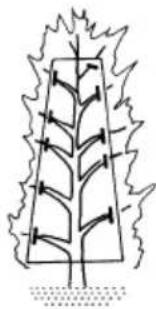
○Use a pair of pruning shears to remove 20 cm of branches that are 15 mm or thicker so that they do not interfere with trimming. (Fig. 16)
natural_image
Diagram of a tree with conical branches and leaves, no text or symbols presentFig. 16
○Trees with luxuriant foliage should be trimmed starting from the bottom and work up to achieve the desired shape. (Fig. 17)
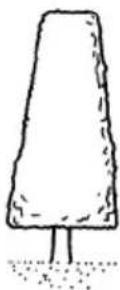
Fig. 17
Trimming hedges
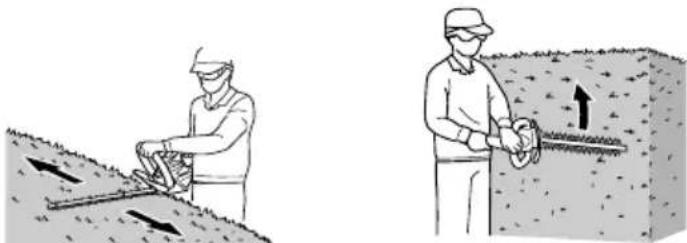
○Trim the top of hedges by moving the tool from right to left (or left to right) and trim the sides by starting from below and working up. (Fig. 18)
natural_image
Two illustrations showing a person using a power shaver to cut through a slope, and another holding a chainsaw with an upward arrow (no text or symbols present)Fig. 18
NOTE
○Do not use the tool for cutting the lawn or weeds. Grass or weeds could stick to the blade.
○Cut thick branches by gently pressing the blades against the branch.
Continuous operating time
Approx. 35 minutes (depending on the work conditions)
MAINTENANCE AND INSPECTION
WARNING
○Be sure to turn the tool off and remove the battery from the tool before making inspections or carrying out maintenance.
☐Do not disassemble to blade. Failure to heed this warning may result in injury.
○Use gloves, or cloth to protect your hands when handling the blade. Failure to heed this warning may result in injury.
1. Sharpening the blade (Fig. 15)
Move an iron file in the direction of the arrow for a rough sharpening then use an oil stone to give the blade a good finish.
(1) Use a fine iron file or one of intermediate coarseness.
(2) Coat the oil stone with machine oil (bicycle oil or the like).
(3) Use a whetstone to gently remove any burrs from the back of the blade edge.
When to sharpen the blade
While this will vary the type of trees that are trimmed and how often it is used, it is a good idea to sharpen the blade about once a year to maintain a sharp edge.
NOTE
Do not use water for cleaning the blade to prevent rust or other damage.
2. Lubricating the blade
During trimming, sap adhering to the blade edge will increase load and wear down the battery more rapidly. Use machine oil (or bicycle oil or the like) to lubricate the blade and wipe the blade with a cloth. To prevent the blade from rusting, be sure to lubricate the blade after use and when it will not be used for an extended period of time before placing it in the blade case.
3. Inspecting the mounting screws
Regularly inspect all mounting screws and ensure that they are properly tightened. Should any of the screws be loose, retighten them immediately. Failure to do so could result in serious hazard.
4. Maintenance of the motor
The motor unit winding is the very "heart" of the power tool.
Exercise due care to ensure the winding does not become damaged and/or wet with oil or water.
5. Cleaning on the outside
When the hedge trimmer is stained, wipe with a soft dry cloth or a cloth moistened with soapy water. Do not use chloric solvents, gasoline or paint thinner, for they melt plastics.
6. Storage
Store the hedge trimmer in a place in which the temperature is less than 40^ C and out of reach of children.
NOTE
Make sure that the battery is fully charged when stored for a long period (3 months or more). The battery with smaller capacity may not be able to be charged when used, if stored for a long period.
7. Service parts list
CAUTION
Repair, modification and inspection of Hitachi Power Tools must be carried out by a Hitachi Authorized Service Center.
This Parts List will be helpful if presented with the tool to the Hitachi Authorized Service Center when requesting repair or other maintenance.
In the operation and maintenance of power tools, the safety regulations and standards prescribed in each country must be observed.
MODIFICATIONS
Hitachi Power Tools are constantly being improved and modified to incorporate the latest technological advancements.
Accordingly, some parts may be changed without prior notice.
TROUBLESHOOTING
Use the inspections in the table below if the tool does not operate normally. If this does not remedy the problem, consult your dealer or the Hitachi Authorized Service Center.
| Symptom Possible cause Remedy | |||
| Charger | The Charge lamp does not go on. | The power plug is not connected to an AC outlet. | Connect the power plug to an AC outlet. |
| The battery is not properly connected to the charger. | Insert the battery so that it is properly seated in the charger. | ||
| The battery or charger electrodes are soiled. | Use a cotton swab or other tool to clean the electrodes. | ||
| The battery is extremely hot. | Allow the battery to properly cool before charging. | ||
| The Charge lamp does not go off after 4 hours of charging. | The battery or charger is faulty. | Disconnect the power plug and consult your dealer or the Hitachi Authorized Service Center. | |
| Tool | Does not operate. | The battery has not been properly installed. | Remove the storage battery from the battery compartment in the tool and check for foreign matter. Also check the battery electrodes for soiling. Make sure that the battery is pressed in until it clicks into place. |
| The blade has been incorrectly installed. | If the blade does not move but the motor is turning, the blade has probably been incorrectly installed. Make sure that the crank cam has been installed. | ||
| Foreign matter is lodged in the blade. | When there is foreign matter in the blade, remove the battery and use a pair of tongs or similar tool to remove it.Take great care since the tool may start operating when the foreign matter has been removed.Sap or rust may also prevent the blade from operating. Use a wire brush or similar tool to remove sap or rust. | ||
| The tool has been used for heavy work. | This is the effect of a function that protects the battery by turning off the motor when the tool is exposed to an excessive load. Release the switch and remove what caused the excessive load and pull back the switch to resume work. | ||
| The tool does not trim well. | The blade has become dull. | Use a wire brush or other tool to remove sap and rust and use a file or whetstone to sharpen the blade. If these efforts fail to make the blade sharper, the blade has reached the end of its service life. Replace the blade with a new one. | |
| Tool The tool does not trim well. The blade stopped because it was used to cut a branch whose width exceeded the blade's cutting capacity.NOTEWork that will repeatedly cause the blade to stop will eventually damage the motor. | Some garden trees have wood that is very hard and may be beyond the capacity of the tool even if it is of a width that is within normal capacity. Use a pair of pruning shear to remove thick branches before starting work. | ||
| An oblique cut may also exceed the capacity of the tool since the length of the cut increases. Be sure to trim thick branches at right angles. | |||
Important notice on the batteries for the Hitachi cordless power tools
Please always use one of our designated genuine batteries. We cannot guarantee the safety and performance of our cordless power tool when used with batteries other than these designated by us, or when the battery is disassembled and modified (such as disassembly and replacement of cells or other internal parts).
NOTE
Due to HITACHI's continuing program of research and development, the specifications herein are subject to change without prior notice.
Information concerning airborne noise and vibration
The measured values were determined according to EN60745 and declared in accordance with ISO 4871.
Measured A-weighted sound power level:
79 dB (A) (CH14DSL/CH14DL)
80 dB (A) (CH18DSL/CH18DL)
Measured A-weighted sound pressure level:
68 dB (A) (CH14DSL/CH14DL)
69 dB (A) (CH18DSL/CH18DL)
Uncertainty KpA: 3 dB (A).
Wear ear protection.
Vibration total values (triax vector sum) determined according to EN60745.
No load:
a_n=2.3 m/s^2, Uncertainty K=1.5 m/s^2(CH14DSL/CH14DL)
a_n=2.2 m/s^2, Uncertainty K=1.5 m/s^2(CH18DSL/CH18DL)
The declared vibration total value has been measured in accordance with a standard test method and may be used for comparing one tool with another.
It may also be used in a preliminary assessment of exposure.
WARNING
○The vibration emission during actual use of the power tool can differ from the declared total value depending on the ways in which the tool is used.
○Identify safety measures to protect the operator that are based on an estimation of exposure in the actual conditions of use (taking account of all parts of the operating cycle such as the times when the tool is switched off and when it is running idle in addition to the trigger time).
CH14DL / CH18DL
| Item No. | Part Name Q'TY | |
| 41 | NYLON NUT M5 6 | |
| 42 | DISTANCE PIECE 6 | |
| 43 | MACHINE SCREW(W/SP. WASHER) M5 x 14 | 6 |
| 44 B | LADE ASS'Y | 1 |
| 45 B | LADE CASE | 1 |
| 501 | CHARGER(UC18YKL) | 1 |
| Item No. | Part Name Q'TY | |
| 1 HITACHI LABEL 1 | ||
| 2 HOUSING (A) (B) SET 1 | ||
| 3 SUB HANDLE (A) 1 | ||
| 4 | MACHINE SCREW(W/WASHERS) M5 x 30 | 2 |
| 5 SPRING (C) 1 | ||
| 6 SUB HANDLE (B) 1 | ||
| 7 COLLAR 1 | ||
| 8 SPRING (D) 1 | ||
| 9 PUSH PIN 1 | ||
| 10 NUT M5 2 | ||
| 11 DUST FELT 1 | ||
| 12 SWITCH 2 | ||
| 13 SPRING (B) 1 | ||
| 14 TRIGGER 1 | ||
| 15 INTERNAL WIRE 1 | ||
| 16 PRINTED CIRCUIT BOARD ASS'Y 1 | ||
| 17 TERMINAL ASS'Y 1 | ||
| 18 INTERNAL WIRE (BROWN) 2 | ||
| 19 INTERNAL WIRE (RED) 1 | ||
| 20-1 | BATTERY (BCL1415) | 1 |
| 20-2 | BATTERY (BCL1815) | 1 |
| 21 TAPPING SCREW D4 x 10 | 2 | |
| 22 HOLDER SPRING 2 | ||
| 23 TERMINAL PIECE | 1 | |
| 24 MOTOR | 1 | |
| 25 FIRST GEAR | 1 | |
| 26 SHAFT (B) | 1 | |
| 27 WASHER D15 | 2 | |
| 28 FLANGE NUT M4 | 4 | |
| 29 SPACER 1 | ||
| 30 | MACHINE SCREW(W/SP. WASHER) M4 x 16 | 4 |
| 31 SHAFT (C) | 1 | |
| 32 NEEDLE ROLLER | 2 | |
| 33 CRANK CAM ASS'Y | 1 | |
| 34 FINAL GEAR | 1 | |
| 35 | TAPPING SCREW(W/FLANGE) D4 x 20 | 9 |
| 36 SHAFT (D) | 1 | |
| 37 NUT M4 2 | ||
| 38 NAME PLATE | 1 | |
| 39 PROTECTER | 1 | |
| 40 | MACHINE SCREW(W/WASHER) M4 x 12 | 2 |
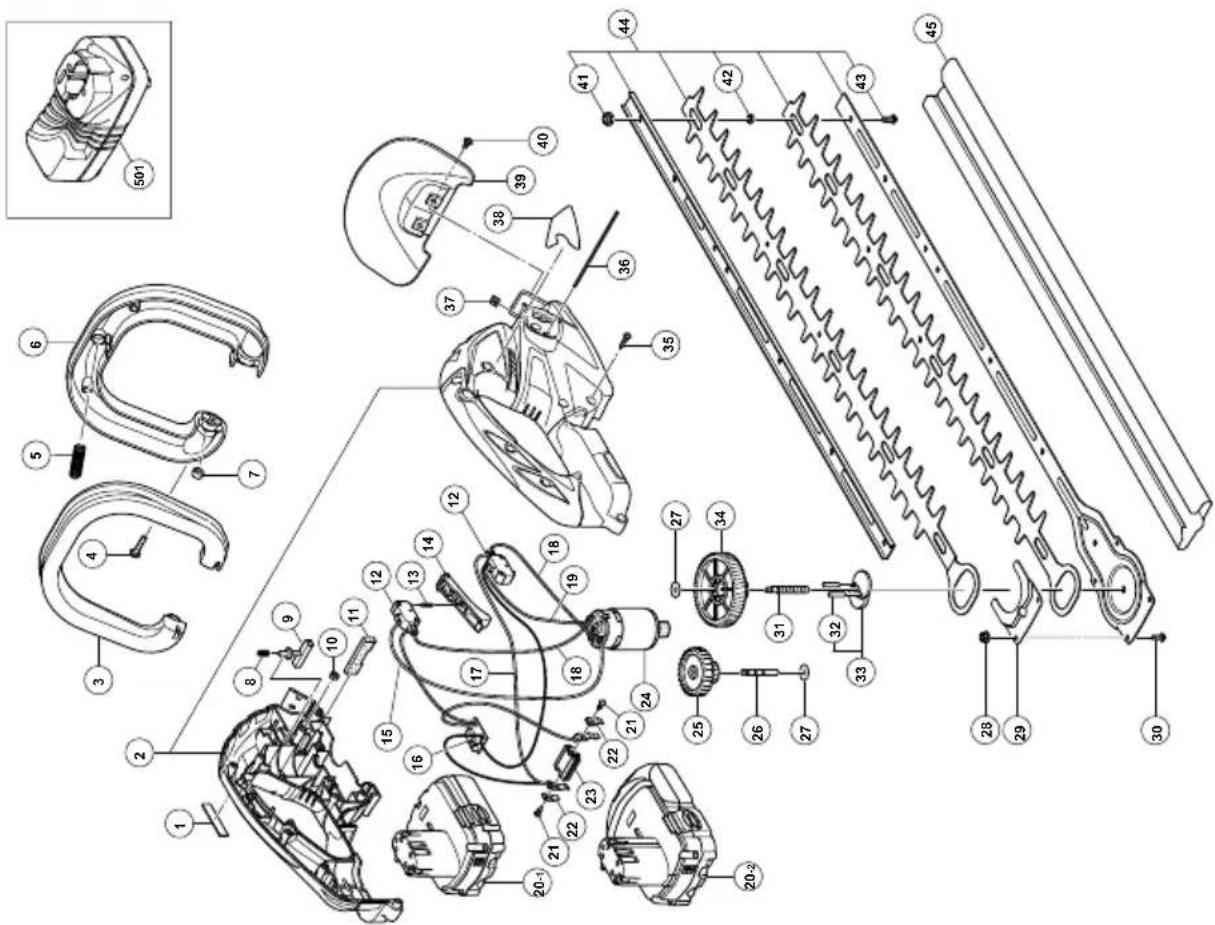
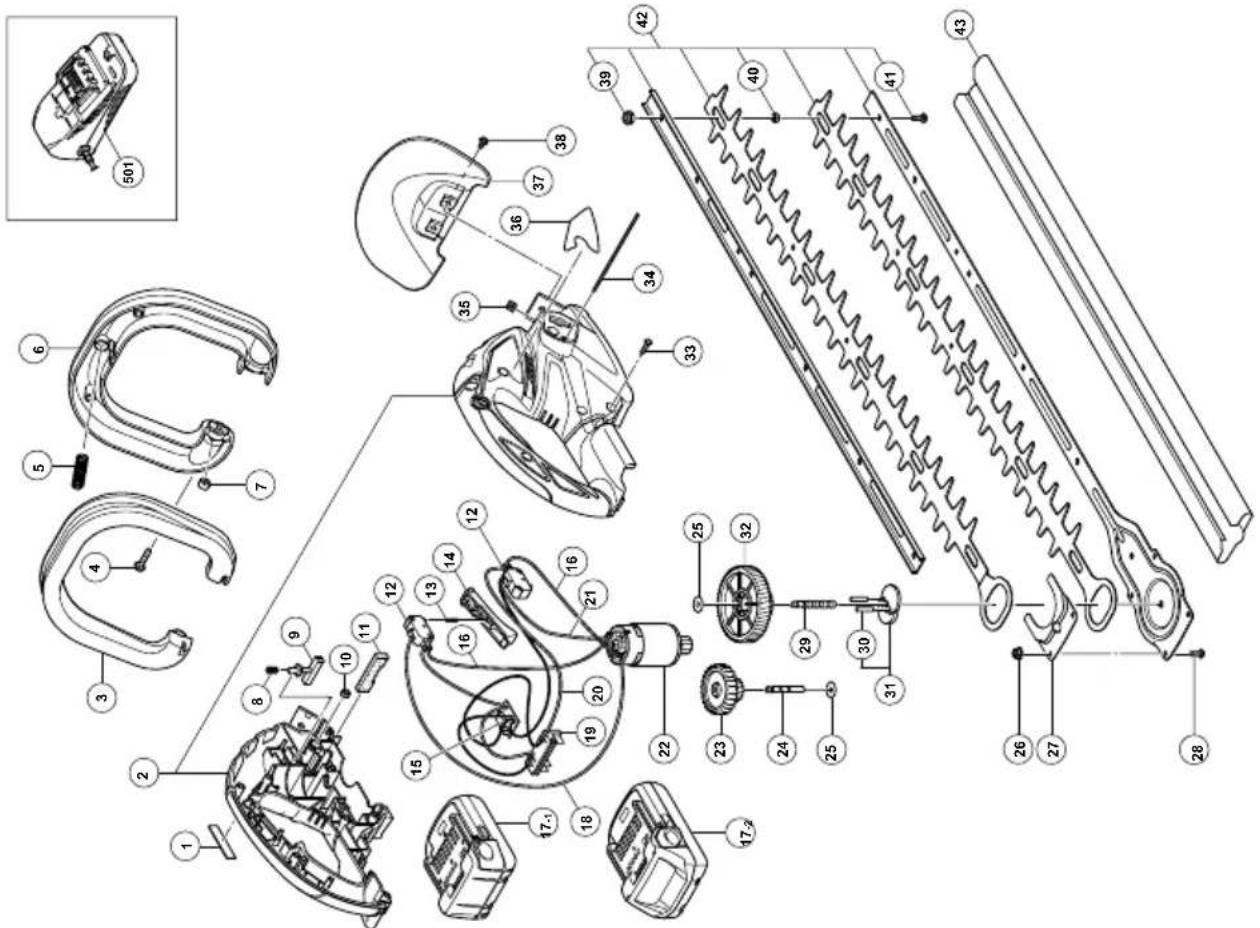
CH14DSL / CH18DSL
| Item No. | Part Name Q'TY | |
| 41 | MACHINE SCREW(W/SP. WASHER) M5 x 14 | 6 |
| 42 | BLADE ASS'Y | 1 |
| 43 | BLADE CASE | 1 |
| 501 | CHARGER (UC18YGSL) | 1 |
| Item No. | Part Name Q'TY | |
| 1 | HITACHI LABEL 1 | |
| 2 | HOUSING (A) (B) SET 1 | |
| 3 | SUB HANDLE (A) 1 | |
| 4 | MACHINE SCREW(W/WASHERS) M5 x 30 | 2 |
| 5 | PRING (C) 1 | |
| 6 | UB HANDLE (B) 1 | |
| 7 | COLLAR 1 | |
| 8 | PRING (D) 1 | |
| 9 | PUSH PIN 1 | |
| 10 | NUT M5 2 | |
| 11 | DUST FELT 1 | |
| 12 | WITCH 2 | |
| 13 | PRING (B) 1 | |
| 14 | TRIGGER 1 | |
| 15 | PRINTED CIRCUIT BOARD ASS'Y 1 | |
| 16 | LEAD WIRE (BROWN) L140 2 | |
| 17-1 | BATTERY (BSL1415) 1 | |
| 17-2 | BATTERY (BSL1815) 1 | |
| 18 | INTERNAL WIRE (BLACK) L115 1 | |
| 19 | BATTERY TERMINAL | 1 |
| 20 | INTERNAL WIRE (RED) L380 | 1 |
| 21 | INTERNAL WIRE (RED) L65 | 1 |
| 22 | MOTOR | 1 |
| 23 | FIRST GEAR | 1 |
| 24 | HAFT (B) | 1 |
| 25 | WASHER D15 | 2 |
| 26 | FLANGE NUT M4 | 4 |
| 27 | PACER 1 | |
| 28 | MACHINE SCREW(W/SP. WASHER) M4 x 16 | 4 |
| 29 | HAFT (C) | 1 |
| 30 | NEEDLE ROLLER | 2 |
| 31 | CRANK CAM ASS'Y | 1 |
| 32 | FINAL GEAR | 1 |
| 33 | TAPPING SCREW(W/FLANGE) D4 x 20 | 8 |
| 34 | $HAFT (D) | 1 |
| 35 | NUT M4 2 | |
| 36 | NAME PLATE | 1 |
| 37 | PROTECTER | 1 |
| 38 | MACHINE SCREW(W/WASHER) M4 x 12 | 2 |
| 39 | NYLON NUT M5 | 6 |
| 40 | DISTANCE PIECE 6 |
Hitachi Power Tools Norway AS
Kjeller Vest 7
Postboks 124, 2007 Kjeller, Norway
Tel: (+47) 6692 6600
Fax: (+47) 6692 6650
URL: http://www.markt.no
Hitachi Power Tools Sweden AB
Rotebergsvagen 2B
SE-192 78 Sollentuna, Sweden
Tel: (+46) 8 598 999 00
Fax: (+46) 8 598 999 40
URL: http://www.markt.se
Hitachi Power Tools Denmark AS
Lillebaeltsvej 90
DK-6715 Esbjerg N, Denmark
Tel: (+45) 75 14 32 00
Fax: (+45) 75 14 36 66
URL: http://www.markt.dk
Hitachi Power Tools Finland OY
Tupalankatu 9
FIN-15680 Lahti, Finland
Tel: (+358) 20 7431 530
Fax: (+358) 20 7431 531
URL: http://www.markt.fi
| Svenska | EF-DEKLARATION BETRÄFFANDE LIKFORMIGHET | Suomi EY | ILMOITUS YHDENMUKAISUUDESTA |
| Vi tillkännagiver med eget ansvar att denna produkt överensstämmer med standard eller standardiserings dokument EN60745, EN60335, EN55014 och EN61000 i enlighet med direktiven 2004/108/EF, 2006/95/EF, 2006/42/EF och 2000/14/EF.Den europeiska standardansvarige på Hitachi Koki Europe Ltd. är auktoriserad att utarbeta den tekniska filen.2000/14/EFTyp av utrustning: HäcksaxTypnamn: CH14DSL, CH14DL, CH18DSL, CH18DLKonformitetsbedömningsmetod: Annex VIUppmätt ljudstyrkenivå: 79 dB (CH14DSL/CH14DL),80 dB (CH18DSL/ CH18DL)Garanterad ljudstyrkenivå: 88 dB (CH14DSL/CH14DL),89 dB (CH18DSL/ CH18DL)Vår designavdelning sparar den tekniska dokumentationen för framtida behov.Denna deklaration gäller för CE-märkningen på produkten. | Yksinomaisella vastuudella vakuutamme, että tämä tuote vastaa tai normitettuja dokumentteja EN60745, EN60335, EN55014 ja EN61000 ohjeiden 2004/108/EY, 2006/95/EY, 2006/42/EY ja 2000/14/EY mukaisesti.Hitachi Koki Europe Ltd.:n eurooppalaisten standardien johtaja on valtuutettu laatimaan tekniset asiakirjat.2000/14/EYLaitteen tyyppi: PensasleikkuriTyyppinimi: CH14DSL, CH14DL, CH18DSL, CH18DLYhdenmukaisuuden määritystoimenpiteet: Annex VIMitattu äänenpainetaso: 79 dB (CH14DSL/CH14DL),80 dB (CH18DSL/ CH18DL)Taattu äämempanetaso: 88 dB (CH14DSL/CH14DL),89 dB (CH18DSL/ CH18DL)Teknisiä tietoja pidetään yllä suunnitteluosastomme tarpeitten mukaan.Tämä ilmoitus sovelletaan tuotekohtaiseen CE-merkintään. | ||
| Dansk | EF-OVERENSS TEMMELSESERKLÆRING | English | EC DECLARATION OF CONFORMITY |
| Vi erlkærer os fuldstændige ansvarlige for, at dette produkt modsvarer gældende standard eller standardiserings dokumenter EN60745, EN60335, EN55014 og EN61000 i overensstemmelse med direktiver 2004/108/EF, 2006/95/EF, 2006/42/EF og 2000/14/EF.Chefen for europæiske standarder hos Hitachi Koki Europe Ltd. er autoriseret til at kompilere den tekniske fil.2000/14/EFUdstyrstype: HækkesaksTypenavn: CH14DSL, CH14DL, CH18DSL, CH18DLProcedure for fastsættelse af ensartethed: Bilag VIMålt lydstyrkeniveau: 79 dB (CH14DSL/CH14DL),80 dB (CH18DSL/CH18DL)Garanteret lydstyrkeniveau: 88 dB (CH14DSL/CH14DL),89 dB (CH18DSL/CH18DL)Den tekniske dokumentation opbevares på foranledning af vores designafdeling.Denne erklæring qælder produkter, der er mærket med CE. | We declare under our sole responsibility that this product is in conformity with standards or standardization documents EN60745, EN60335, EN55014 and EN61000 in accordance with Directives 2004/108/EC, 2006/95/EC, 2006/42/EC and 2000/14/EC.The European Standards Manager at Hitachi Koki Europe Ltd. is authorized to compile the technical file.2000/14/ECType of equipment: Hedge TrimmerType name: CH14DSL, CH14DL, CH18DSL, CH18DLConformity assessment procedure: Annex VIMeasured sound power level: 79 dB (CH14DSL/CH14DL),80 dB (CH18DSL/ CH18DL)Guaranteed sound power level: 88 dB (CH14DSL/CH14DL),89 dB (CH18DSL/ CH18DL)The technical documentation is kept by the need of our design department.This declaration is applicable to the product affixed CE marking. | ||
| Norsk EF's ERKLÆRING OM OVERENSSTEMMELSE | |||
| Vi erklærer herved at vi påtar oss det fulle ansvar for at dette produktet er i overensstemmelse med normer eller standardiseringsdokumentene EN60745, EN60335, EN55014 og EN61000 i samsvar med direktivene 2004/108/EF, 2006/95/EF, 2006/42/EF og 2000/14/EF.Lederen for europeiske standarder ved Hitachi Koki Europe Ltd. har fullmakt til å utarbeide det tekniske dokumentet.2000/14/EUTstyrstype: HekksaksTypenavn: CH14DSL, CH14DL, CH18DSL, CH18DLProsedyre for konformitetsvurdering: Annex VIMålt lydeffektnivå: 79 dB (CH14DSL/CH14DL),80 dB (CH18DSL/CH18DL)Garantert lydeffektnivå: 88 dB (CH14DSL/CH14DL),89 dB (CH18DSL/CH18DL)Den tekniske dokumentasjonen oppbevares av designavdelingen i tilfelle de får behov for den.Denne erklæringen gjelder produktets påklistrede CE-merking. | |||
| Representative office in EuropeHitachi Power Tools Europe GmbHSiemensring 34, 47877 Willich 1, F. R. GermanyTechnical file at:Hitachi Koki Europe Ltd.Clonshaugh Business & Technology Park, Dublin 17, IrelandHead office in JapanHitachi Koki Co., Ltd.Shinagawa Intercity Tower A, 15-1, Konan 2-chome,Minato-ku, Tokyo, Japan | |||