
HH36 - Pressure washer HUSQVARNA - Free user manual and instructions
Find the device manual for free HH36 HUSQVARNA in PDF.


| Product Type | Pressure Washer |
| Model | HH36 |
| Brand | Husqvarna |
| Motor Type | Electric, 120V/60Hz |
| Maximum Pressure | 2000 PSI (13.8 MPa) |
| Flow Rate | 1.5 GPM (5.7 L/min) |
| Water Supply | Cold water, garden hose connection |
| Power Cord Length | 35 ft (10.7 m) |
| High-Pressure Hose Length | 25 ft (7.6 m) |
| Weight | 30 lbs (13.6 kg) |
| Dimensions (L x W x H) | 20 x 15 x 18 inches (51 x 38 x 46 cm) |
| Nozzle Types | Quick-connect: 0°, 25°, 40°, soap nozzle |
| Detergent Tank | Built-in, 0.5 gallon (1.9 L) |
| Wheels | Large pneumatic wheels for easy mobility |
| Storage | Integrated hose and cord storage |
| Safety Features | Auto shut-off trigger, thermal relief valve |
| Maintenance | Pump oil check, nozzle cleaning, filter cleaning |
| Spare Parts Availability | Nozzles, hoses, pump components, spark plug (if applicable) |
| Repairability Index | 7/10 (user-serviceable parts and manuals) |
| Warranty | 3 years limited warranty |
Frequently Asked Questions - HH36 HUSQVARNA
User questions about HH36 HUSQVARNA
0 question about this device. Answer the ones you know or ask your own.
Ask a new question about this device
Download the instructions for your Pressure washer in PDF format for free! Find your manual HH36 - HUSQVARNA and take your electronic device back in hand. On this page are published all the documents necessary for the use of your device. HH36 by HUSQVARNA.
USER MANUAL HH36 HUSQVARNA
natural_image
Line drawing of a pressure pump with attached motors and wheels (no text or symbols)
Model Number ____
Revision
Serial Number
Date Purchased ____
Copyright © 2019. Briggs & Stratton Corporation
Milwaukee, WI, USA. All rights reserved.
Husqvarna® is a registered trademark of Husqvarna AB.
Used under license.
Table of Contents
Symbols and Meanings ...... 2
Equipment Description 3
Features and Controls .... 4
Operation....6
Maintenance....12
Storage 15
Troubleshooting 16
Warranty 18
Register Your Product
To ensure prompt and complete warranty coverage, register your product online at www.onlineproductregistration.com.
Symbols and Meanings
| Signal Meaning | |
| DANGER | Indicates a hazard which, if not avoided, will result in death or serious injury. |
| WARNING | Indicates a hazard which, if not avoided, could result in death or serious injury. |
| CAUTION | Indicates a hazard which, if not avoided, could result in minor or moderate injury. |
| NOTICE | Indicates information considered important, but not hazard-related. |
| Symbol | Name Explanation | |
 | Safety Alert Symbol | Indicates a potential personal injury hazard. |
 | Read Operator's Manual | Failure to follow warnings, instructions and operator's manual could result in death or serious injury. |
 | Toxic Fumes | Engine exhaust contains carbon monoxide, a poisonous gas that could kill you in minutes. You cannot smell it or see it. |
 | Fire | Fuel and its vapors are extremely flammable which could cause burns or fire resulting in death or serious injury.Engine exhaust could cause fire resulting in death or serious injury. |
| Symbol | Name Explanation | |
 | Fluid Injection | High-pressure water could cut through skin resulting in serious injury and possible amputation. |
 | Spray, Flying Objects | Risk of eye injury. Spray could splash back or propel objects resulting in serious injury. |
 | Hot Surface | Contact with muffler area could cause burns resulting in serious injury. |
 | Electric Shock | Contact with power source could cause electrical shock resulting in death or serious injury. |
 | Kickback | Recoil starter kickback will pull hand and arm toward engine faster than you can let go which could cause broken bones, sprains or bruises resulting in serious injury. |
 | Chemical Burn | Chemicals could cause burns resulting in death or serious injury. |
 | Slippery Surface/Fall | Slippery wet surfaces could cause you to fall resulting in death or serious injury. |
 | Fall | Kickback from spray gun could cause you to fall resulting in death or serious injury. |

WARNING! This product can expose you to chemicals including gasoline engine exhaust, which is known to the State of California to cause
cancer, and carbon monoxide, which is known to the State of California to cause birth defects or other reproductive harm.
For more information go to www.P65Warnings.ca.gov.

WARNING! This product contains lead and lead compounds, known to the state of California to cause birth defects or other reproductive harm.
Wash your hands after handling this product. Cancer and Reproductive Harm - www.P65Warnings.ca.gov.
Equipment Description

Read this manual carefully and become familiar with your product. Know its applications, its limitations, and any hazards involved. Save these instructions for future reference.
To aid in outdoor cleaning projects, this engine-driven, high-pressure cleaning machine uses a variety of spray tips and detergent.
Know how to stop the product and reduce pressure quickly. Keep operating area clear and do not allow children to operate pressure washer.
Stay alert—watch what you are doing. Do not operate pressure washer when fatigued or under the influence of alcohol or drugs.
Every effort has been made to ensure that information in this manual is accurate and current. However, we reserve the right to change, alter, or otherwise improve the product and this document at any time without prior notice.
NOTICE If you have questions about intended use, contact an authorized service dealer. This equipment is designed to be used with Briggs & Stratton® authorized parts only.
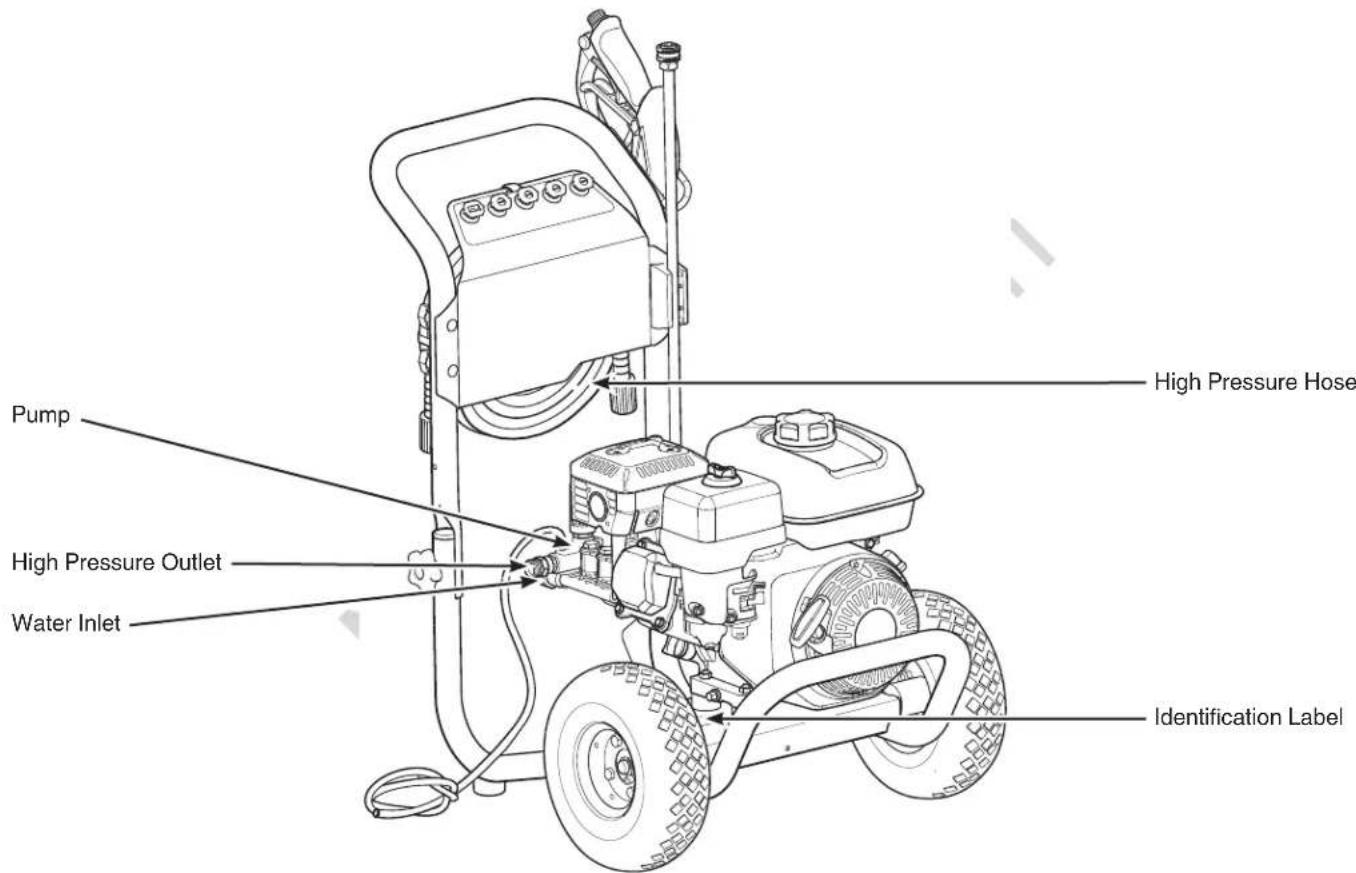
High Pressure Hose — Connect one end to water pump and the other end to spray gun.
High Pressure Outlet — Connection for high pressure hose.
Identification Label — Provides model and serial number of pressure washer.
Pump — Ceramic coated stainless steel plungers, triplex pump that develops high pressure.
Water Inlet — Connection for garden hose.
Features and Controls
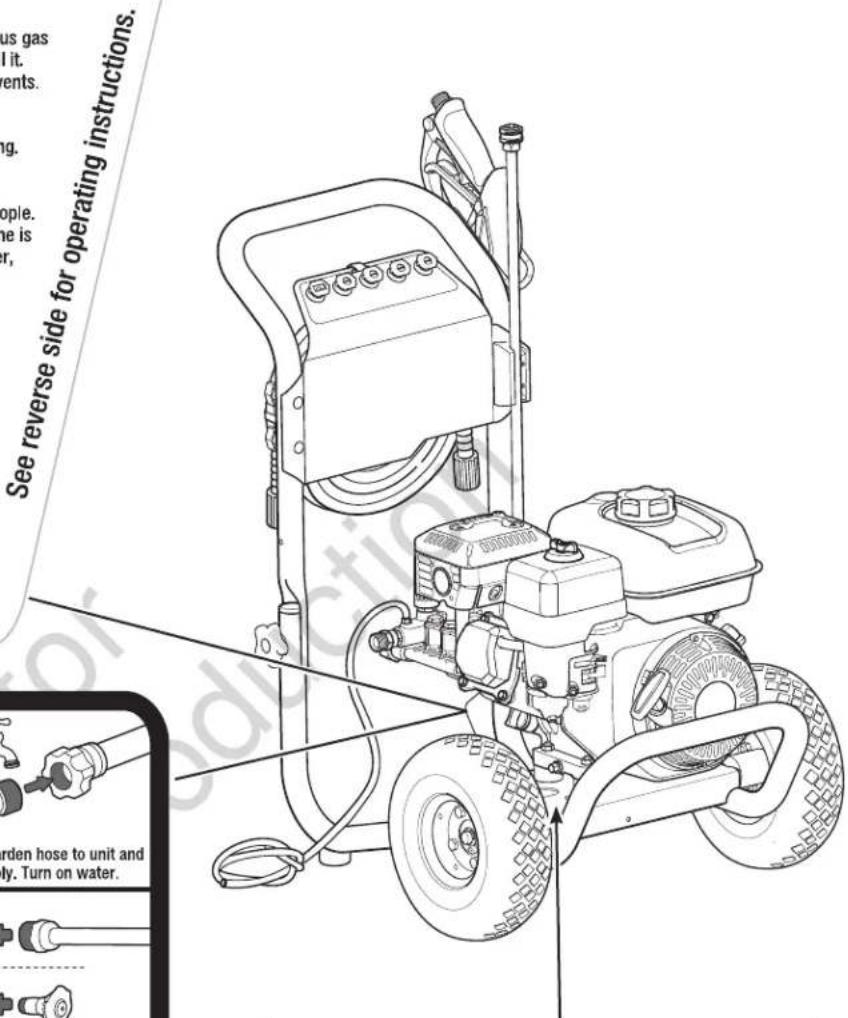
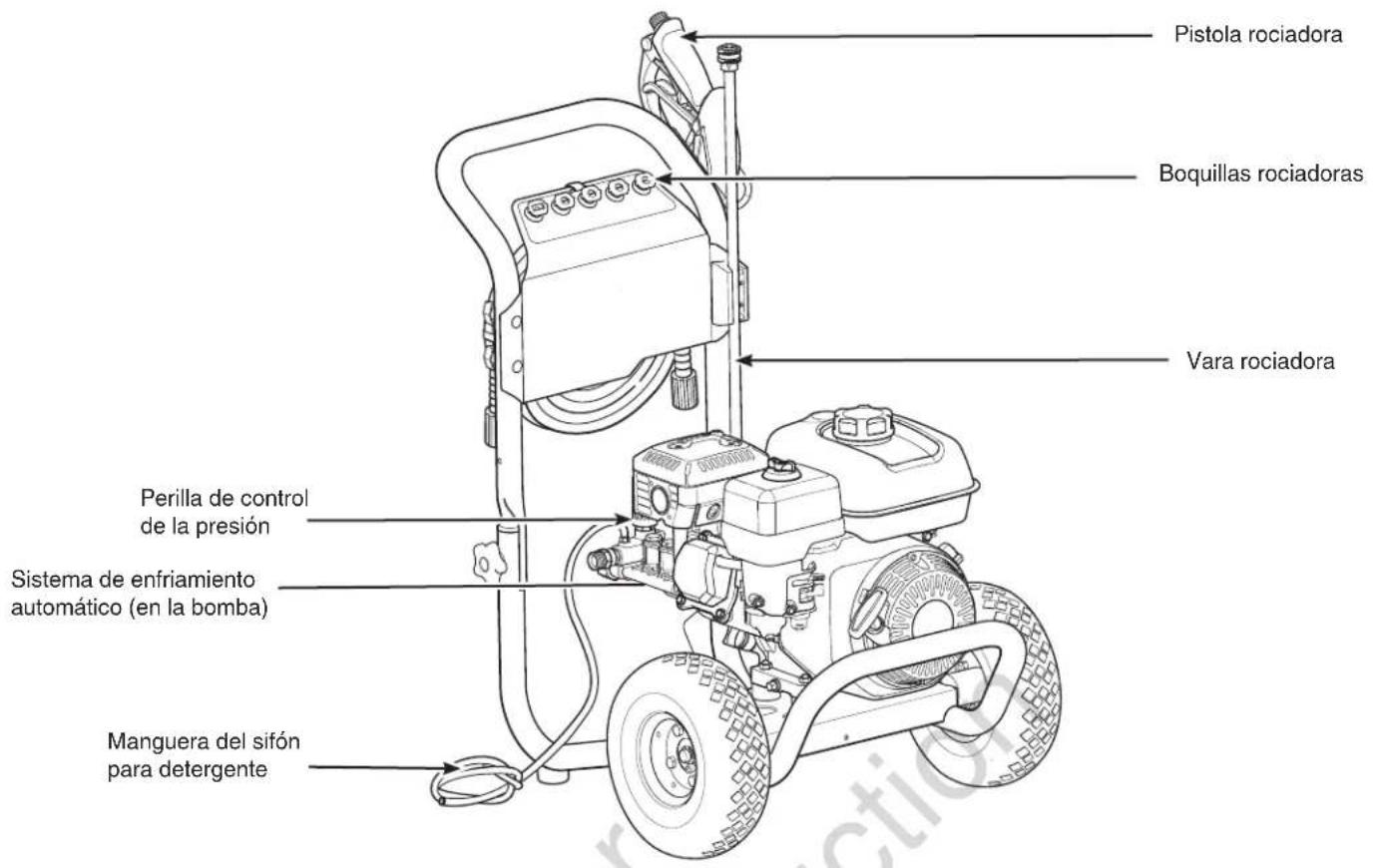
Compare the illustrations with your pressure washer to familiarize yourself with the locations of various controls and product warnings.
WARNING

Failure to read and follow the operator's manual, all warnings and operating instructions could result in death or serious injury.

Engine exhaust contains carbon monoxide, a poisonous gas that could kill you in minutes. You cannot see or smell it. Only use outside far away from windows, doors and vents.

Gasoline is flammable. Allow engine to cool at least 2 minutes before refueling. Do not spray flammable liquids.

High pressure could cut through skin. Never spray people. Spray gun traps high water pressure, even after engine is shut down and water is disconnected. Squeeze trigger, to release high pressure, every time engine stops.

Rapid retraction of starter cord (kickback) could pull hand and arm toward engine faster than you can let go. Pull starter cord slowly until resistance is felt and then pull rapidly to avoid kickback. Gun kicks back — Hold with both hands.

Spray could splash back or propel objects. Wear safety goggles and protective clothing. Safety glasses do not provide full protection.

Muffler could cause burns. Do not touch hot parts. Avoid hot exhaust gases.
Do Not Remove This Tag
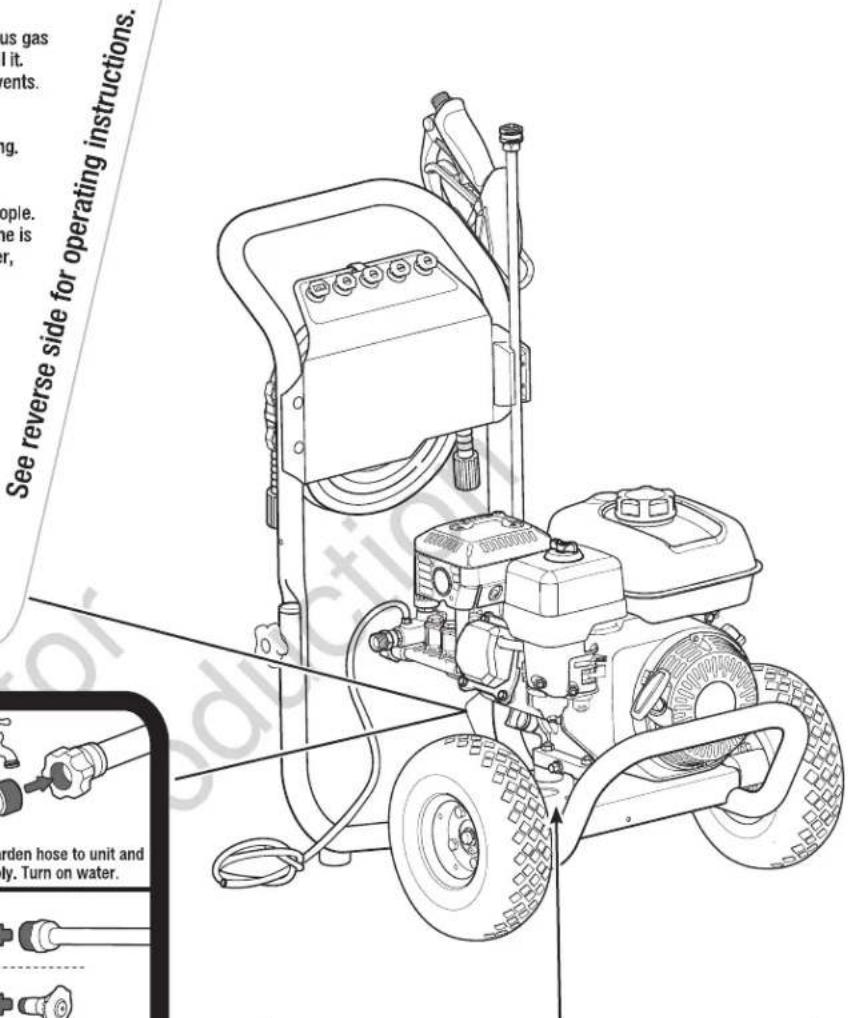
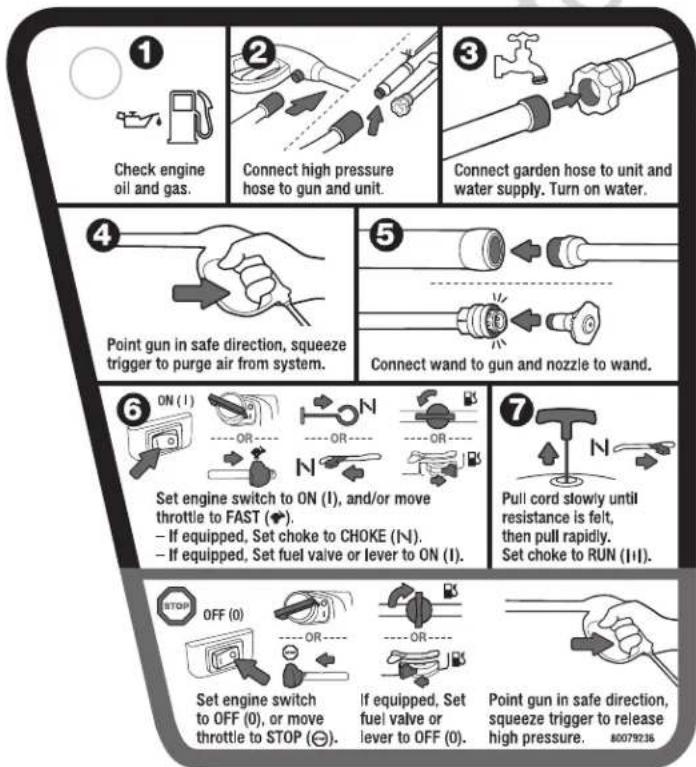
WARNING
Fire Hazard. Operation of this equipment may create sparks that can start fires around dry vegetation. A spark arrestor may be required. The operator should contact local fire agencies for laws or regulations relating to fire prevention requirements. 80008183
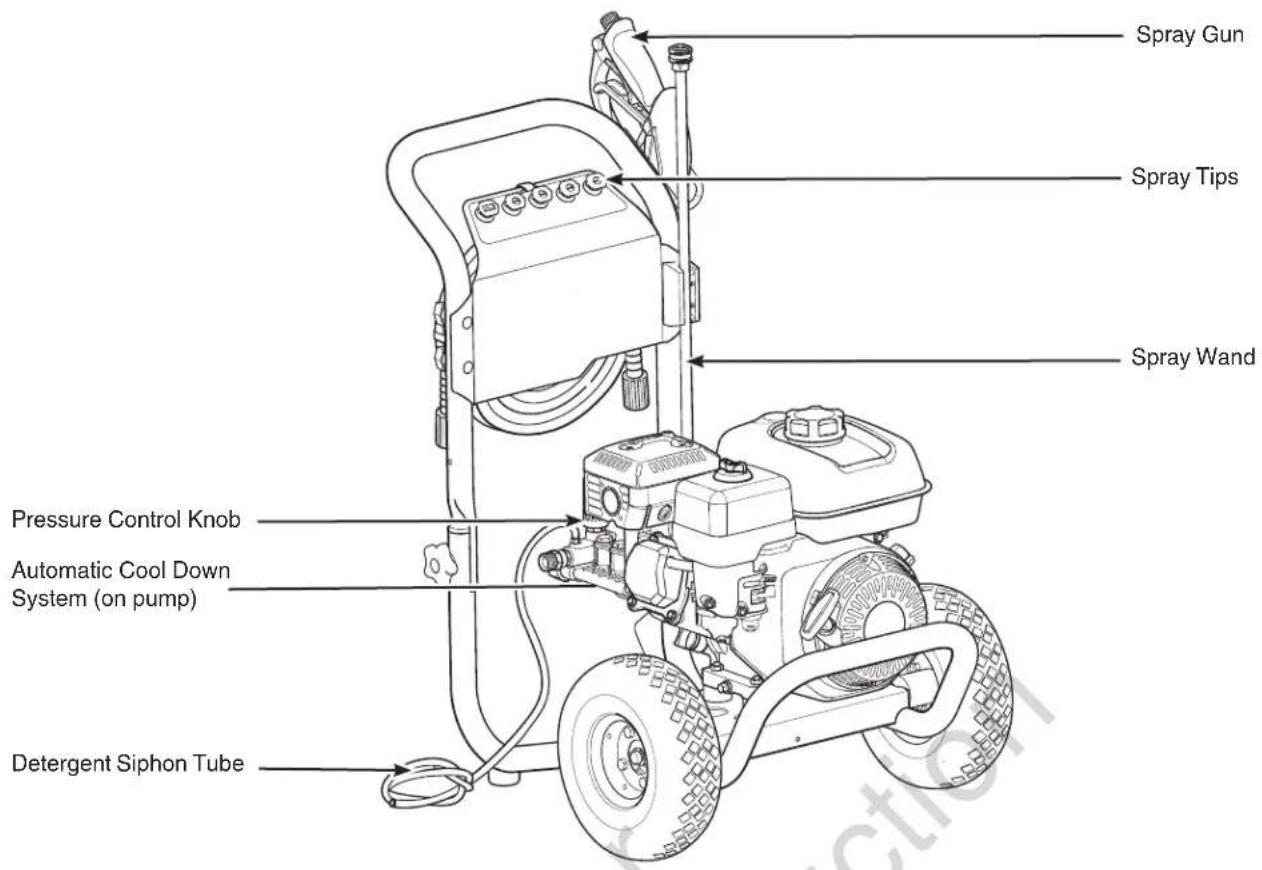
Automatic Cool Down System — Prevents internal pump damage by discharging warm water to the ground.
Detergent Siphon Tube — Use to siphon pressure washer safe detergent into the low pressure stream.
Pressure Control Knob — Varies pressure of high pressure spray.
Spray Wand — Allows you to switch between spray tips.
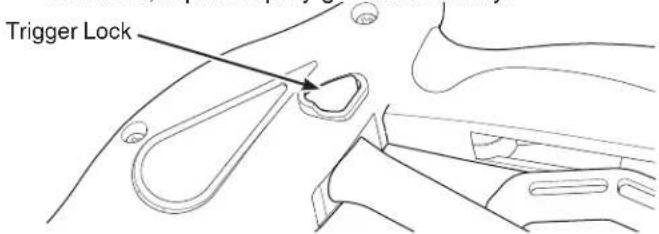
Spray Gun — Controls spray using trigger. Includes trigger lock.
Spray Tips — Multiple patterns for various cleaning applications.
Operation
Step 1: Safe Location
Before starting the pressure washer, there are two equally important safety concerns regarding carbon monoxide poisoning and fire that must be addressed.
Operation Location to Reduce the Risk of Carbon Monoxide Poisoning
The engine exhaust of all fossil fuel burning equipment, such as a pressure washer, contains carbon monoxide, a poisonous gas that could kill you in minutes. You cannot smell it, see it, or taste it. Even if you do not smell exhaust fumes, you could still be exposed to carbon monoxide gas.
By law, it is required in many states to have a carbon monoxide alarm in operating condition in your home. A carbon monoxide alarm is an electronic device that detects hazardous levels of carbon monoxide. When there is a buildup of carbon monoxide, the alarm will alert the occupants by flashing a visual indicator light and an alarm. Smoke alarms cannot detect carbon monoxide gas.
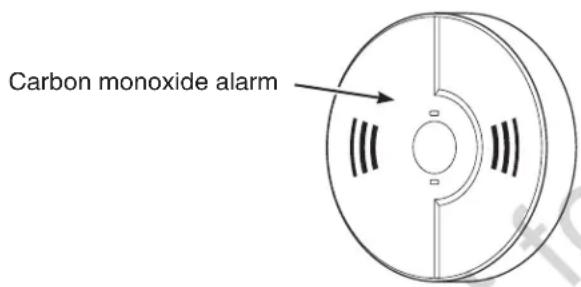

WARNING! Engine exhaust contains carbon monoxide, a poisonous gas that could kill you in minutes. You cannot smell it, see it, or taste it.
Even if you do not smell exhaust fumes, you could still be exposed to carbon monoxide gas.
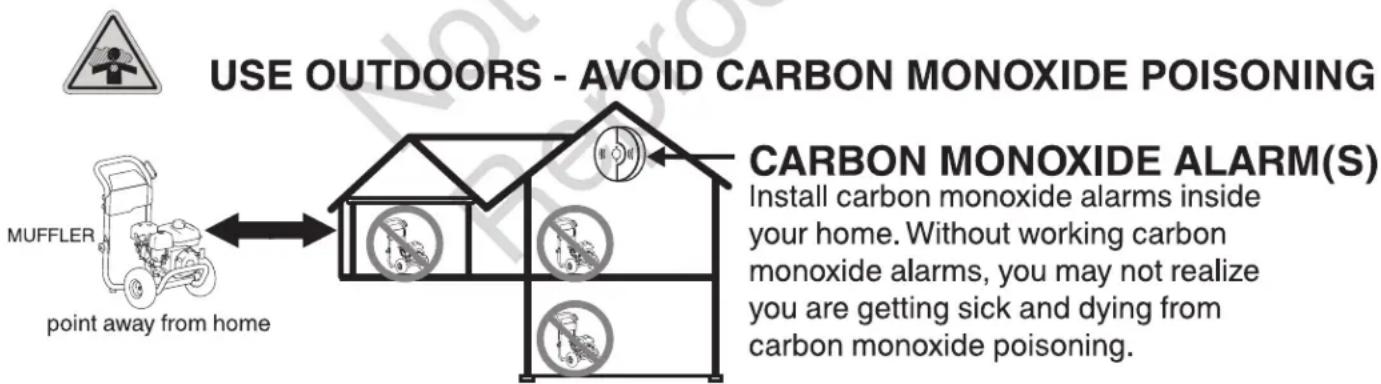
- Operate this product only outdoors, far away from windows, doors and vents to reduce the risk of carbon monoxide gas accumulating and the potential of being drawn towards occupied spaces.
- Install battery-operated carbon monoxide alarms or plug-in carbon monoxide alarms with battery back-up according to the manufacturer's instructions. Smoke alarms cannot detect carbon monoxide gas.
- Do not run this product inside homes, garages, basements, crawlspaces, sheds, or other partially-enclosed spaces even if using fans or opening doors and windows for ventilation. Carbon monoxide can quickly build up in these spaces and can linger for hours, even after this product has shut off.
- Point exhaust away from all homes and occupied spaces.
- If you start to feel sick, dizzy, or weak while using this product, get to fresh air right away. See a doctor. You may have carbon monoxide poisoning.
Operation Location to Reduce the Risk of Fire

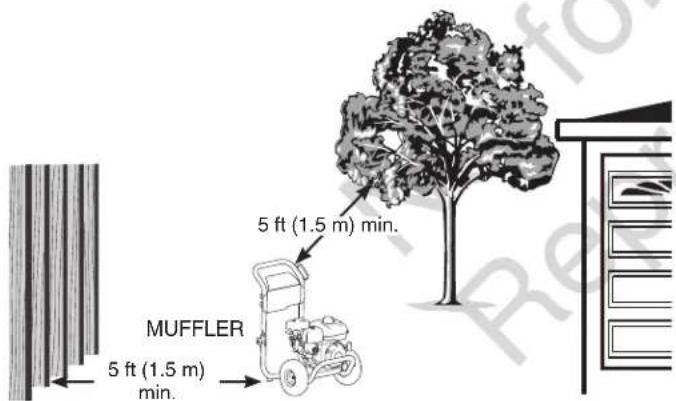
WARNING! Exhaust heat/gases could ignite combustibles, structures or damage fuel tank causing a fire, resulting in death or serious injury.
- Pressure washer must be at least 5 ft. (1.5 m) from any structure, overhang, trees, windows, doors, and any wall opening, shrubs, or vegetation over 12 in. (30.5 cm) in height.
- Do not place pressure washer under a deck or other type of structure that may confine airflow. Smoke alarm(s) must be installed and maintained indoors according to the manufacturer's instructions /recommendations.
• Carbon monoxide alarms cannot detect smoke. - It is a violation of California Public Resource Code Section 4442, to use or operate the engine on any forest-covered, brush-covered, or grass-covered land unless the exhaust system is equipped with a spark arrester, as defined in Section 4442, maintained in effective working order. Other states or federal jurisdictions may have similar laws, reference Federal Regulation 36 CFR Part 261.52.
- Contact the original equipment manufacturer, retailer, or dealer to obtain a spark arrester designed for the exhaust system installed on this engine.
- Replacement parts must be the same and installed in the same position as the original parts.
Step 2: Oil and Fuel
Check Oil Level
- Make sure pressure washer is on a level surface.
- Refer to engine operator's manual and follow oil and fuel recommendations and instructions.
Transporting
Do not tip engine or equipment at an angle which causes fuel to spill.
Step 3: Set Up
Clean Debris
Clean any accumulated debris. Keep area around muffler free from any debris.
- Use a soft bristle brush to loosen caked on dirt or oil.
- Use a damp cloth to wipe exterior surfaces clean.
Lubricate O-rings
Lubricate all connections shown to extend the life of the o-rings.
- Inspect and clean connecting surfaces prior to lubrication and assembly. Replace o-rings that are damaged or missing. See Common Service Parts.
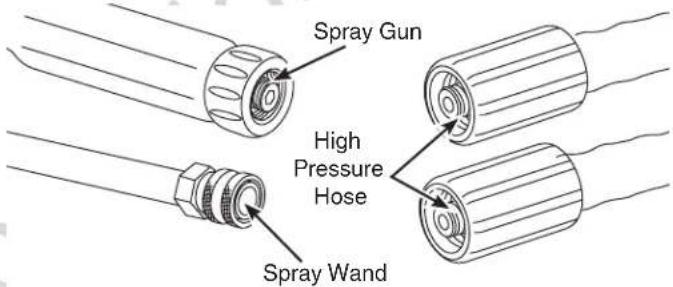
NOTICE Never repair leaking connections with sealant of any kind. Replace o-ring.
- Use a small brush or cotton swab to apply a light coating of grease directly to o-rings.
Check / Connect Gun and Hose
- If spray gun trigger depresses without pressing trigger lock or if spray gun remains depressed when released, replace spray gun immediately.
-
If high pressure hose is damaged, exposing inner mesh, replace immediately.
-
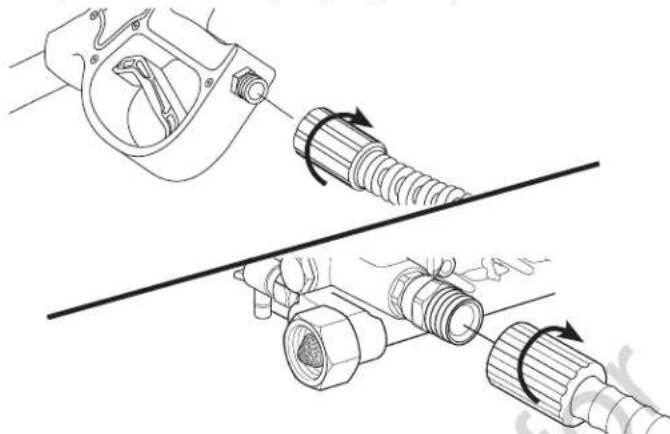
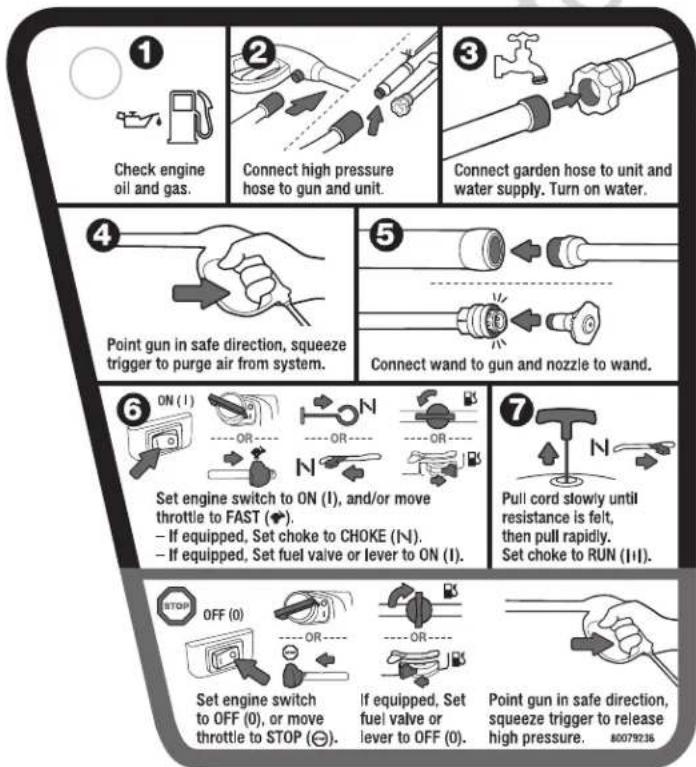
Attach high pressure hose to spray gun and high pressure outlet on pump. Tighten by hand.
natural_image
Diagram showing two mechanical components with rotating connectors, connected by a diagonal line (no text or symbols)
WARNING! The high pressure fluid could cut through skin and its underlying tissues, resulting in serious injury and possible amputation. Never
attach spray wand directly to high pressure hose.
Check Water Inlet Screen / Connect Garden Hose
- Inspect inlet screen. Remove debris or replace if damaged.
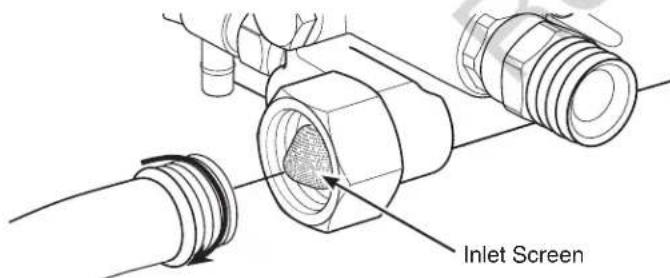
- Run water through garden hose (not to exceed 50 ft (15 m) to clean out debris, then connect to water inlet.
NOTICE There must be at least 10 ft (3 m) of unrestricted garden hose between the pressure washer inlet and any device, such as a vacuum breaker, to prevent pump damage.
- Turn on water, point spray gun in safe direction, press trigger lock and depress trigger to purge pump system of air.
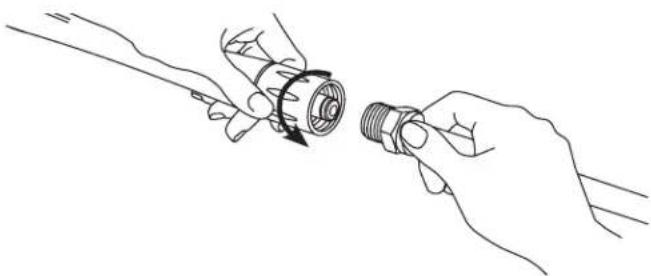
- Attach spray wand to spray gun. Tighten by hand.
natural_image
Line drawing of two hands holding a connector with a rotating knob (no text or symbols)Step 4: Spray Tips
- Select desired spray tip:
| Low Pressure Black Soap Use to apply detergent | Delicate Rinse White, 40° Green, 25° Cars / Vans / Trucks / Outdoor Furniture | ||
| General Rinse Yellow, 15° Siding / Patios Decks Driveways / Garage Floors | Maximum Rinse Red, 0° Paint Removal / Oil Stains / Rust Removal |
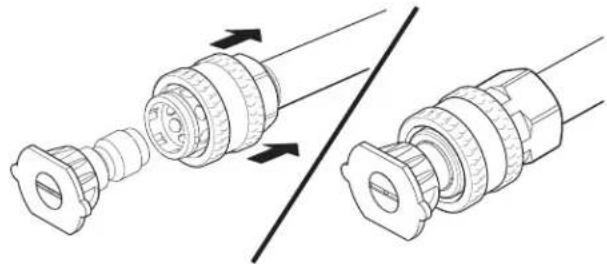
- Pull spray wand quick connect collar back, insert spray tip and release. Tug spray tip to ensure it is secure.
natural_image
Technical illustration of a mechanical component with two views showing internal assembly (no text or symbols)Step 5: Start Up
NOTICE Do not start engine without water supply connected and turned on.
- Level product before starting.

WARNING! Risk of eye injury. Spray could splash back or propel objects, resulting in serious injury.
- Always wear indirect vented (chemical splash) safety goggles when using or near this product. (Safety glasses do not provide full protection).
• Always wear protective clothing such as long-sleeved shirts, long pants and closed-toed shoes.

WARNING! Recoil starter kickback (rapid retraction) will pull hand and arm toward engine faster than you can let go, which could cause
broken bones, fractures, bruises, or sprains and result in serious injury.
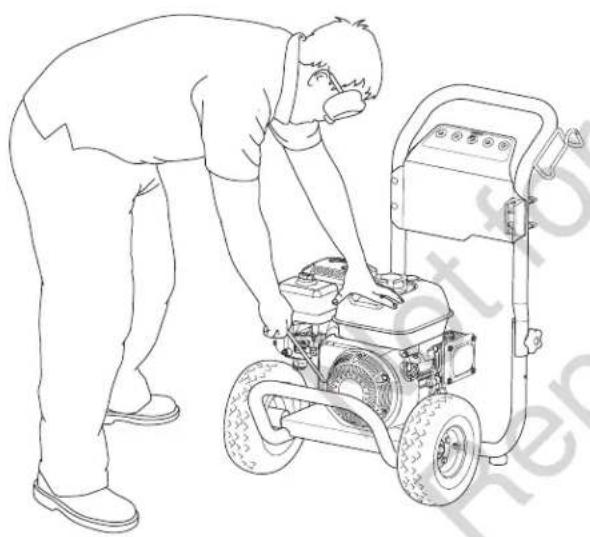
- Position yourself as shown below, and start engine according to instructions given in engine operator's manual.
natural_image
Line drawing of a person using a power tool on a wheeled cart (no text or symbols)
WARNING! High-pressure water could cut through skin resulting in serious injury and possible amputation.
- Do not direct discharge at self or others.
- Call physician immediately if cut by fluid. Do not treat as a simple cut.
- Do not touch spray tips while spraying.


WARNING! Use of pressure washer could create slippery surfaces causing you to fall, resulting in death or serious
injury. Kickback from spray gun could cause you to fall resulting in death or serious injury. Operate pressure washer from a stable surface.
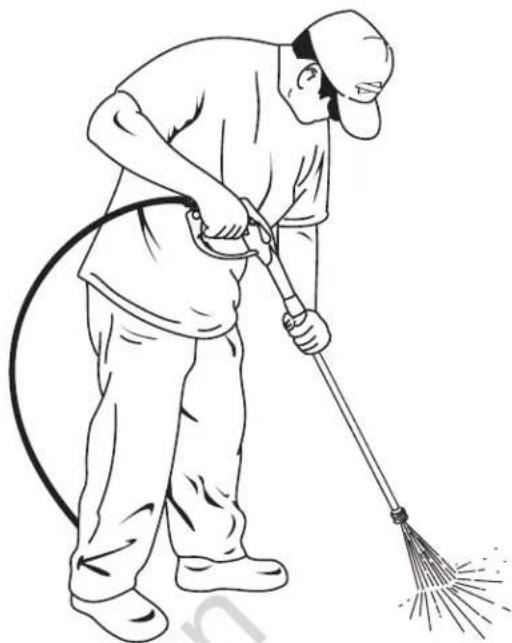
- Firmly grasp spray gun with both hands, point spray gun in safe direction, press trigger lock and depress trigger to begin spraying.
natural_image
Line drawing of a worker sweeping a surface with a broom (no text or symbols)- Apply high pressure spray to a small area first, then check the surface for damage. If no damage is found, it is okay to continue cleaning.
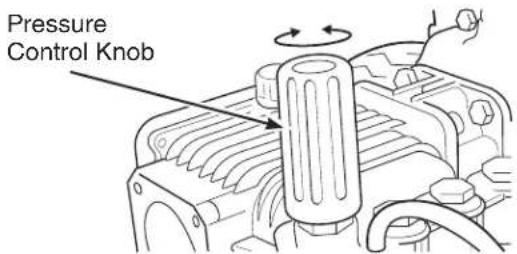
- Increase (decrease) spray pressure by turning pressure control knob clockwise (counterclockwise). Use lower pressure to wash items such as a car or boat. Use higher pressure to strip paint and degrease driveways.

WARNING! Risk of electrocution. Contact with power source could cause electric shock or burn resulting in death or serious injury. Never spray
near power source.
Usage Tips
- For most effective cleaning, keep spray tip 8 to 24 in (20 to 61 cm) away from cleaning surface.
- Do not use high pressure spray tips closer than 6 in (15 cm) to prevent damage to the cleaning surface.
- Start at the top of the area to be rinsed, working down with long, even, overlapping strokes.
Step 6: Applying Detergent

WARNING! Chemicals could cause burns resulting in death or serious injury.
- Follow chemical manufacturer's label instructions for proper use and handling of the chemical.
- Only use products marketed for use with pressure washers.
- Never spray acids or flammable liquids.
Check Detergent Siphoning Tube
Clean detergent tube if clogged or replace if leaking.
To apply detergent, follow these steps:
- Prepare detergent per pressure washer detergent manufacturer's instructions.
- Insert detergent siphon tube into pressure washer detergent.
- Install black detergent spray tip. See Spray Tips.
- Apply per manufacturer's instructions.
NOTICE Detergent cannot be applied with the high pressure spray tips (White, Green, Yellow or Red).
Step 7: Shut Down
- Release spray gun trigger and let engine idle for one minute.
- Turn engine off according to instructions given in engine operator's manual.

WARNING! Spray gun traps high water pressure, even after engine shut down and water disconnection, which could result in serious
injury.
- Point spray gun in safe direction. Press trigger lock and depress trigger to relieve high water pressure.
Step 8: Clean Up
- Turn off water and purge system.
- Disconnect and drain all hoses, spray gun and spray wand.
- Empty pump of all liquids by pulling recoil handle about six times.
NOTICE If storing in freezing temperatures or more than 30 days, see Storage.
Maintenance
Maintenance Schedule
Follow the hourly or calendar intervals, whichever occurs first. See the engine operator's manual for instructions on how to properly maintain the engine.
| Every 8 Hours or Daily (see Operation Section) |
| Check engine oil level |
| Clean debris |
| Lubricate o-rings |
| Check spray gun |
| Check high pressure hose |
| Check / clean water inlet screen |
| Check detergent siphoning tube |
| Every 50 Hours |
| Change pump oil |
General Recommendations
Regular maintenance will improve the performance and extend the life of the pressure washer. See any authorized dealer for service.
Pump Oil Maintenance
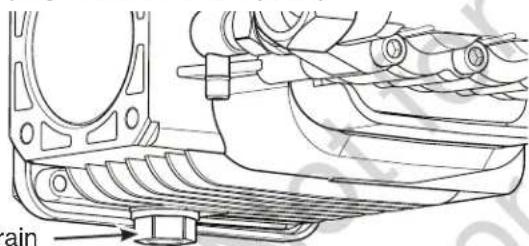
- Clean around oil drain plug at bottom of pump, remove plug and drain oil completely.
natural_image
Technical line drawing of a mechanical component with no visible text or symbolsPump Oil Drain
- Reinstall oil drain plug and tighten firmly.
- Clean area around pump oil dipstick and remove dipstick. Fill pump with SAE 30 weight oil (approximately 10 oz. (0.3 liters)) to the point of overflowing.
- Install pump oil dipstick and wipe up any spilled oil.
Detergent Siphoning Check Ball
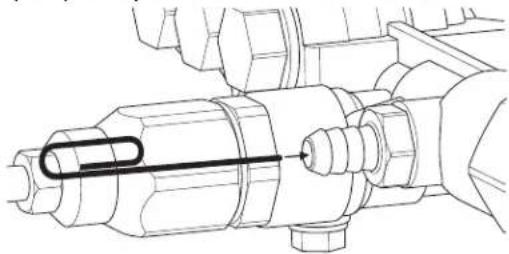
The check ball in detergent siphoning system may become stuck from dried soap or minerals in water. The check ball can be freed by performing the following:

WARNING! Chemical Burn Hazard. Chemicals could cause burns resulting in death or serious injury. Follow chemical manufacturer's label
instructions for proper use and handling of the chemical. Following Shut Down, remove detergent siphoning hose from barbed fitting on pump.
- Insert paper clip, or similar device, into barbed fitting on pump and push down until ball moves.
natural_image
Technical line drawing of a mechanical assembly with no visible text or symbols- Reinstall detergent siphoning hose.
Spray Tip Maintenance
Clean an obstructed spray tip to correct a pulsing sensation when squeezing the spray gun trigger.
- Following Shut Down, remove spray tip from spray wand.
- Use a paper clip, or similar device, to free foreign material.
Engine Maintenance
See the engine operator's manual for instructions on how to properly maintain the engine.
Common Service Parts
Pump Saver™ 6039
O-ring Maintenance Kit 705001
Water Inlet Screen.... B2384GS
Engine Oil Bottle 100005 or 100028
Contact an authorized service dealer or BRIGGSandSTRATTON.com for a full list of parts and diagrams.
Storage

WARNING! Fuel and its vapors are extremely flammable, which could cause burns or fire, resulting in death or serious injury. Do not store
fuel near ignition source.
- Place detergent siphon tube in water and flush detergent from system by running pressure washer with black spray tip.
Protecting Fuel System
- Treat or drain fuel from pressure washer as fuel can become stale when stored over 30 days.
Stale fuel causes acid and gum deposits to form in the fuel system or on essential carburetor parts. To keep fuel fresh, use a fuel stabilizer.
There is no need to drain gasoline from the engine if a fuel stabilizer is added according to instructions. Run the engine for 2 minutes to circulate the stabilizer throughout the fuel system before storage.
If gasoline in the engine has not been treated with a fuel stabilizer, it must be drained into an approved container. Then run the engine until it stops from lack of fuel. The use of a fuel stabilizer in the storage container is recommended to maintain freshness.
Protecting the Pressure Washer
- Turn off water and purge system.
- Disconnect and drain all hoses, spray gun and spray wand.
- Empty pump of all liquids by pulling recoil handle about six times.
NOTICE Store spray gun indoors and keep from freezing.
Protecting the Pump
- Treat pump with Pump Saver.
Use Pump Saver to protect pump from damage caused by mineral deposits and freezing. It also lubricates pistons and seals. See Common Service Parts.
Read and follow all Pump Saver warnings and instructions.
If Pump Saver is not available, connect a 3 ft. (1 m) section of garden hose to water inlet. Pour RV-antifreeze (antifreeze without alcohol) into hose. Pull recoil handle twice. Disconnect hose.
NOTICE You must protect your product from freezing temperatures. Failure to do so will permanently damage your pump and spray gun rendering your product inoperable.
- Store unit in a clean and dry area.

WARNING! Storage covers could cause a fire resulting in death or serious injury. Do not place a storage cover over a hot pressure washer. Let
product cool before installing cover.
Troubleshooting
| Problem Cause Correction | ||
| Pump has following problems: failure to produce pressure, loss of pressure, low water volume. | 1. Low pressure spray tip installed.2. Inadequate water supply.3. Clogged inlet hose screen.4. Spray tip is obstructed.5. Connections leak.6. High pressure hose or spray gun leaks. | 1. Replace with high pressure spray tip.2. Provide adequate water flow.3. Check and clean inlet hose screen.4. Clean spray tip. See Spray Tip Maintenance.5. Tighten connections or replace o-rings.6. Replace. |
| Detergent fails to mix with spray. | 1. High pressure spray tip installed.2. Check ball stuck in detergent siphoning system.3. Detergent siphoning tube is clogged or cracked. | 1. Replace with low pressure black spray tip.2. Free check ball. See Detergent Siphoning Check Ball.3. Clean or replace detergent siphoning tube. |
| Engine will not start; starts and runs rough or shuts down during operation. | 1. Out of fuel.2. Flooded with fuel.3. Dirty air filter.4. Spark plug wire not connected to spark plug. | 1. Fill fuel tank.2. Wait 5 minutes before starting.3. Clean or replace air filter.4. Connect wire to spark plug. |
For all other issues, see an authorized dealer.
Specifications
Pressure and Flow 3600 PSI (248 bar) @ 2.5 GPM (9.5 L/min)*
Water Supply Temperature 41°F (5°C) - 100°F (38°C)
min Water Supply Flow Rate 3.5 GPM (13.25 L/min)
min Water Supply Pressure 20 PSI (1.38 bar)
*This pressure washer is rated in accordance to the Pressure Washer Manufacturers' Association (PWMA) standard PW101-2010 (Testing and Rating Performance of Pressure Washers).
HUSQVARNA WARRANTY POLICY
LIMITED WARRANTY
Husqvarna® is a registered trademark of Husqvarna AB and is used under license to Briggs & Stratton Corporation. Briggs & Stratton warrants that, during the warranty period specified below, it will repair or replace, free of charge, any part that is defective in material or workmanship or both. Transportation charges on product submitted for repair or replacement under this warranty must be borne by purchaser. This warranty is effective for and is subject to the time periods and conditions stated below. For warranty service, find the nearest Authorized Service Dealer in our dealer locator map at BRIGGSANDSTRATTON.COM. The purchaser must contact the Authorized Service Dealer, and then make the product available to the Authorized Service Dealer for inspection and testing.
There is no other express warranty. Implied warranties, including those of merchantability and fitness for a particular purpose, are limited to the warranty period listed below, or to the extent permitted by law. Liability for incidental or consequential damages are excluded to the extent exclusion is permitted by law. Some states or countries do not allow limitations on how long an implied warranty lasts, and some states or countries do not allow the exclusion or limitation of incidental or consequential damages, so the above limitation and exclusion may not apply to you. This warranty gives you specific legal rights and you may also have other rights which vary from state to state or country to country. ^**
WARRANTY PERIOD
Item Consumer Use Commercial Use
Equipment 24 months 3 months
Engine* 24 months 3 months
Frame 36 months 3 months
* Applies to Briggs & Stratton engines only. Warranty coverage of non-Briggs & Stratton engines is provided by that engine manufacturer. Emissions-related components are covered by the Emissions Warranty Statement.
** In Australia - Our goods come with guarantees that cannot be excluded under the Australian Consumer Law. You are entitled to a replacement or refund for a major failure and for compensation for any other reasonably foreseeable loss or damage. You are also entitled to have the goods repaired or replaced if the goods fail to be of acceptable quality and the failure does not amount to a major failure. For warranty service, find the nearest Authorized Service Dealer in our dealer locator map at BRIGGSandSTRATTON.COM, or by calling 1300 274 447, or by emailing or writing to salesenquires@briggsandstratton.com.au, Briggs & Stratton Australia Pty Ltd, 1 Moorebank Avenue, NSW, Australia, 2170.
The warranty period begins on the date of purchase by the first retail or commercial consumer. “Consumer use” means personal residential household use by a retail consumer. “Commercial use” means all other uses, including use for commercial, income producing or rental purposes. Once a product has experienced commercial use, it shall thereafter be considered as a commercial use product for purposes of this warranty.
Save your proof of purchase receipt. If you do not provide proof of the initial purchase date at the time warranty service is requested, the manufacturing date of the product will be used to determine the warranty period. Product registration is not required to obtain warranty service on Briggs & Stratton products.
ABOUT YOUR WARRANTY
Warranty service is available only through Briggs & Stratton Authorized Service Dealers. This warranty covers only defects in materials or workmanship. It does not cover damage caused by improper use or abuse, improper maintenance or repair, normal wear and tear, or stale or unapproved fuel.
Improper Use and Abuse - The proper, intended use of this product is described in the Operator's Manual. Using the product in a way not described in the Operator's Manual or using the product after it has been damaged will not be covered under this warranty. Warranty coverage will also not be provided if the serial number on the product has been removed or the product has been altered or modified in any way, or if the product has evidence of abuse such as impact damage or water/chemical corrosion damage.
Improper Maintenance or Repair - This product must be maintained according to the procedures and schedules provided in the Operator's Manual, and serviced or repaired using genuine Briggs & Stratton parts or equivalent. Damage caused by lack of maintenance or use of non-original parts is not covered by warranty.
Normal Wear and Tear - Like most mechanical devices, your unit is subject to wear even when properly maintained. This warranty does not cover repairs when normal use has exhausted the life of a part or the equipment. Maintenance and wear items such as filters, belts, cutting blades, and brake pads (except engine brake pads) are not covered by warranty due to wear characteristics alone, unless the cause is due to defects in material or workmanship.
Stale or Unapproved Fuel - In order to function correctly, this product requires fresh fuel that conforms to the criteria specified in the Operator's Manual. Engine or equipment damage caused by stale fuel or the use of unapproved fuels (such as E15 or E85 ethanol blends) is not covered by warranty.
Other Exclusions - This warranty excludes damage due to accident, abuse, modifications, alterations, improper servicing, freezing or chemical deterioration.
Attachments or accessories that were not originally packaged with the product are also excluded. There is no warranty coverage on equipment used for primary power in place of utility power or on equipment used in life support applications. This warranty does not include used, reconditioned, second-hand, or demonstration equipment or engines. This warranty also excludes failures due to acts of God and other force majeure events beyond the manufacturer's control.
80081746_EN Rev -
Husqvarna®
natural_image
Line drawing of a portable pressure water heater with attached pump and wheels (no text or symbols)
Copyright © 2019. Briggs & Stratton Corporation
Failure to read and follow the operator's manual, all warnings and operating instructions could result in death or serious injury.

Engine exhaust contains carbon monoxide, a poisonous gas that could kill you in minutes. You cannot see or smell it. Only use outside far away from windows, doors and vents.

Gasoline is flammable. Allow engine to cool at least 2 minutes before refueling. Do not spray flammable liquids.

High pressure could cut through skin. Never spray people. Spray gun traps high water pressure, even after engine is shut down and water is disconnected. Squeeze trigger, to release high pressure, every time engine stops.

Rapid retraction of starter cord (kickback) could pull hand and arm toward engine faster than you can let go. Pull starter cord slowly until resistance is felt and then pull rapidly to avoid kickback. Gun kicks back — Hold with both hands.

Spray could splash back or propel objects. Wear safety goggles and protective clothing. Safety glasses do not provide full protection.

Muffler could cause burns. Do not touch hot parts. Avoid hot exhaust gases.
Do Not Remove This Tag
WARNING
Fire Hazard. Operation of this equipment may create sparks that can start fires around dry vegetation. A spark arrestor may be required. The operator should contact local fire agencies for laws or regulations relating to fire prevention requirements. 80008183
natural_image
Diagram showing a hand operating a fuel pump with attached hoses and tubing, no text or symbols present
natural_image
Line drawing of two hands holding a connector with a circular arrow indicating rotation (no text or symbols)Paso 4: boquillas rociadoras
natural_image
Technical illustration of a mechanical component with two views showing internal assembly (no text or symbols)natural_image
Line drawing of a person operating a power tool with a mounted machine (no text or symbols)
natural_image
Line drawing of a person sweeping with a broom, no text or symbols presentnatural_image
Technical line drawing of a mechanical assembly with no visible text or symbols

- Table of Contents
- Register Your Product
- Equipment Description
- Features and Controls
- WARNING
- Operation
- Step 1: Safe Location
- Operation Location to Reduce the Risk of Carbon Monoxide Poisoning
- Operation Location to Reduce the Risk of Fire
- Step 2: Oil and Fuel
- Check Oil Level
- Transporting
- Step 3: Set Up
- Clean Debris
- Lubricate O-rings
- Check / Connect Gun and Hose
- Check Water Inlet Screen / Connect Garden Hose
- Step 4: Spray Tips
- Step 5: Start Up
- Usage Tips
- Step 6: Applying Detergent
- Check Detergent Siphoning Tube
- To apply detergent, follow these steps:
- Step 7: Shut Down
- Step 8: Clean Up
- Maintenance
- Maintenance Schedule
- General Recommendations
- Pump Oil Maintenance
- Pump Oil Drain
- Detergent Siphoning Check Ball
- Spray Tip Maintenance
- Engine Maintenance
- Common Service Parts
- Storage
- Protecting Fuel System
- Protecting the Pressure Washer
- Protecting the Pump
- Specifications
- HUSQVARNA WARRANTY POLICY
- LIMITED WARRANTY
- WARRANTY PERIOD
- ABOUT YOUR WARRANTY
- Husqvarna®
- Paso 4: boquillas rociadoras
Brand : HUSQVARNA
Model : HH36
Category : Pressure washer