
C562 CM - Microphone AKG - Free user manual and instructions
Find the device manual for free C562 CM AKG in PDF.


| Product Type | Boundary condenser microphone |
| Polar Pattern | Omnidirectional (hemispherical when installed in boundary) |
| Frequency Response | 20 Hz to 20 kHz (installed in very large boundary) |
| Sensitivity at 1000 Hz | 20 mV/Pa (-33 dBV) re 1 V/Pa (measured on 1.5 x 1.5 m boundary) |
| Maximum Sound Pressure Level (1% THD) | 130 dB SPL |
| Equivalent Noise Level (A-weighted) | 16 dB(A) |
| Signal-to-Noise Ratio (re 1 Pa, A-weighted) | 78 dB |
| Electrical Impedance | ≤600 ohms |
| Recommended Load Impedance | ≥2000 ohms |
| Power Supply | 9 to 52 V phantom power (IEC 61938) |
| Current Consumption | Approx. 2 mA |
| Connector | Phantom power adapter with integrated male 3-pin XLR |
| Cable Length | 20 in. (50 cm) fixed cable with TS mini jack plug; plus adapter cable with female TS mini jack plug |
| Dimensions (Diameter x Height) | 0.8 dia. x 0.12 (1.1) in. (20 dia. x 3 (28) mm) |
| Net Weight (without cable) | Approx. 1.1 oz. (30 g) |
| Mounting Method | Flush mount in boundary (desk, table, wall, ceiling) with knurled nut |
| Included Accessories | Microphone with mounting hardware (knurled nut), fixed cable with mini jack plug, phantom power adapter with XLR connector and cable with female mini jack plug |
| Optional Accessories | Refer to AKG catalog or www.akg.com |
| Compliance | ROHS compliant; Declaration of Conformity available at www.akg.com |
Frequently Asked Questions - C562 CM AKG
User questions about C562 CM AKG
0 question about this device. Answer the ones you know or ask your own.
Ask a new question about this device
Download the instructions for your Microphone in PDF format for free! Find your manual C562 CM - AKG and take your electronic device back in hand. On this page are published all the documents necessary for the use of your device. C562 CM by AKG.
USER MANUAL C562 CM AKG
USER INSTRUCTIONS....p. 10 Please read the manual before using the equipment!
natural_image
Close-up of a metallic industrial sensor or probe component with a black cable and four circular ports (no visible text or symbols)Seite
natural_image
Illustration of a person standing on a platform with a large screen and directional arrows, no text or symbols present.natural_image
Line drawing of a person standing at a podium with a downward arrow, no text or symbols presentnatural_image
Top-down view of a meeting table with chairs and an oval table, no text or symbols presentnatural_image
Simple line drawing of a seesaw with an arrow indicating downward motion (no text or symbols)natural_image
Simple line drawing of a beam with a downward load, no text or symbols presentSiehe Abb. 7.
1 Safety and Environment....11
Safety 11
Environment 11
2 Description 12
Introduction 12
Packing List....12
Optional Accessories 12
Brief Description 12
3 Powering 13
4 Installation....14
5 Use....15
6 Specifications....17
- Please make sure that the piece of equipment your microphone will be connected to fulfills the safety regulations in force in your country and is fitted with a ground lead.

Safety
- When scrapping the equipment, separate the case, circuit boards, and cables, and dispose of all components in accordance with local waste disposal rules.
- The packaging of the equipment is recyclable. To dispose of the packaging, make sure to use a collection/recycling system provided for that purpose and observe local legislation relating to waste disposal and recycling.
Environment
2 Description
Introduction
Thank you for purchasing an AKG product. This Manual contains important instructions for setting up and operating your equipment. Please take a few minutes to read the instructions below carefully before operating the equipment. Please keep the Manual for future reference.
Packing List
- C 562 CM microphone with mounting hardware (knurled nut) and fixed 20-in. (50-cm) cable with mini jack plug
- Phantom power adapter with XLR connector and 20-in. (50-cm) cable with female mini jack plug
Optional Accessories
- For optional accessories, refer to the current AKG catalog or folder, or visit www.akg.com. Your dealer will be glad to help.
Brief Description
The C 562 CM is a boundary microphone designed to be installed in a sound reflecting surface such that the diaphragm will be flush with the surface and face the sound source. This prevents comb filter effects or other interference that may arise when a microphone is placed close to a reflecting surface.
You can install the C 562 CM in a desk top, table top, wall, or ceiling. (In order for the microphone to function properly, the microphone body should not make contact with any grounded metal parts.)
The polar pattern of the microphone is approximately hemispherical. When installed in a reflective surface, the C 562 CM's sensitivity is 6 dB higher than that of a convention al omnidirectional microphone. Using an omnidirectional pressure transducer, the C 562 CM is much less susceptible to mechanical and wind noise than a cardioid.
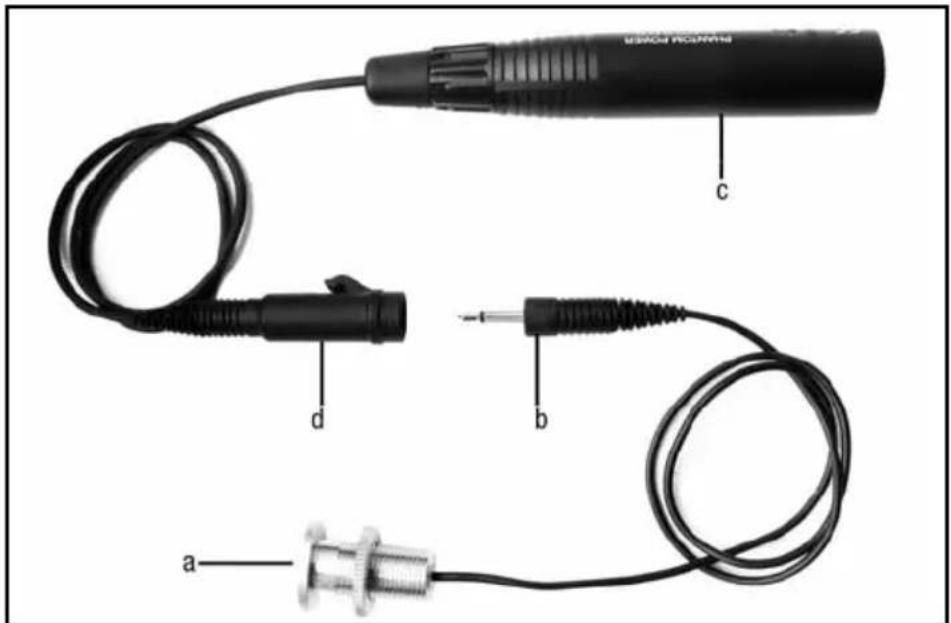
Fig. 1: C 562 CM and phantom power adapter.
Refer to fig. 1.
The C 562 CM comprises the flush mount microphone (a) with a 20-in. (50-cm) fixed cable terminated in a TS mini jack plug (b) and a separate phantom power adapter (c) with 20-in. (50-cm) fixed cable and female TS mini jack plug (d). The phantom power adapter features a low-impedance, electronically balanced output and can be connected to balanced or unbalanced inputs.
The C 562 CM provides low self-noise yet high headroom. The microphone requires a phantom power source providing 9 to 52 V as per IEC 61938.
- Do not connect the microphone to any power supply other than a phantom power source (input with phantom power or external IEC standard phantom power supply) with a floating connector, using a balanced cable with studio grade connectors to IEC 268-12 only. This is the only way to ensure safe and reliable operation.

You can install the microphone in a panel with a maximum thickness of 6/8" (19 mm).
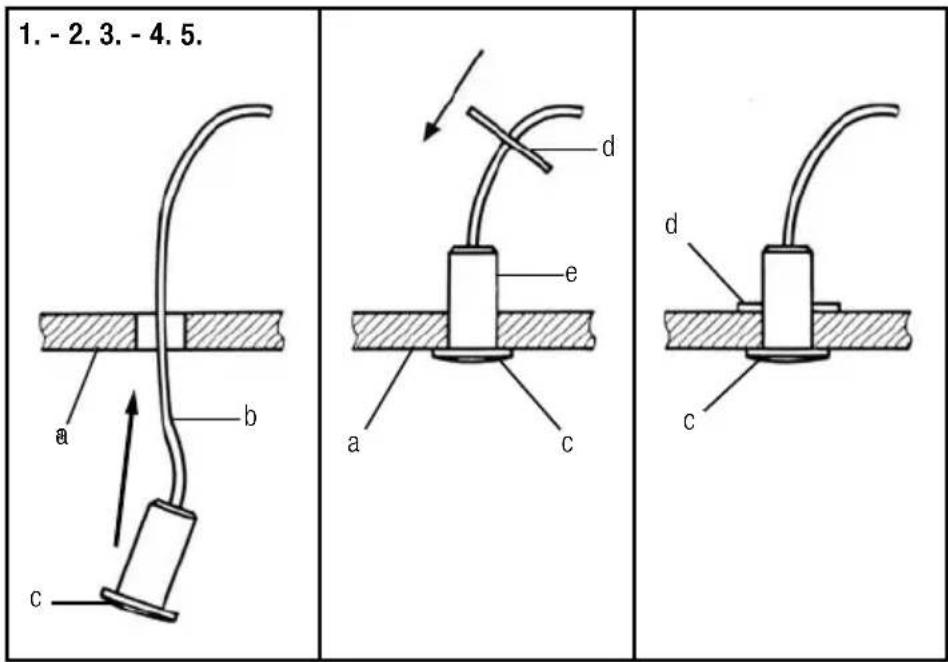
Fig. 2: Installing the micro-phone in a boundary.

Refer to fig. 2. 1. Drill a hole 12'' (12.5 mm) in diameter in the boundary (a).
2. Thread the cable (b) though the hole from the front and push the microphone (c) all the way in.
3. Press the microphone (c) against the boundary (a).
4. Slip the knurled nut (d) over the jack plug and cable and onto the microphone shaft (e).
5. Tighten the knurled nut (d) to the point that the microphone (c) is firmly held in place.
The C 562 CM is small, easy to install, inconspicuous, and provides outstanding recording quality. It is therefore an excellent choice for close-miking people shying away from microphones and applications where no microphone must be visible for visual or esthetic reasons.
natural_image
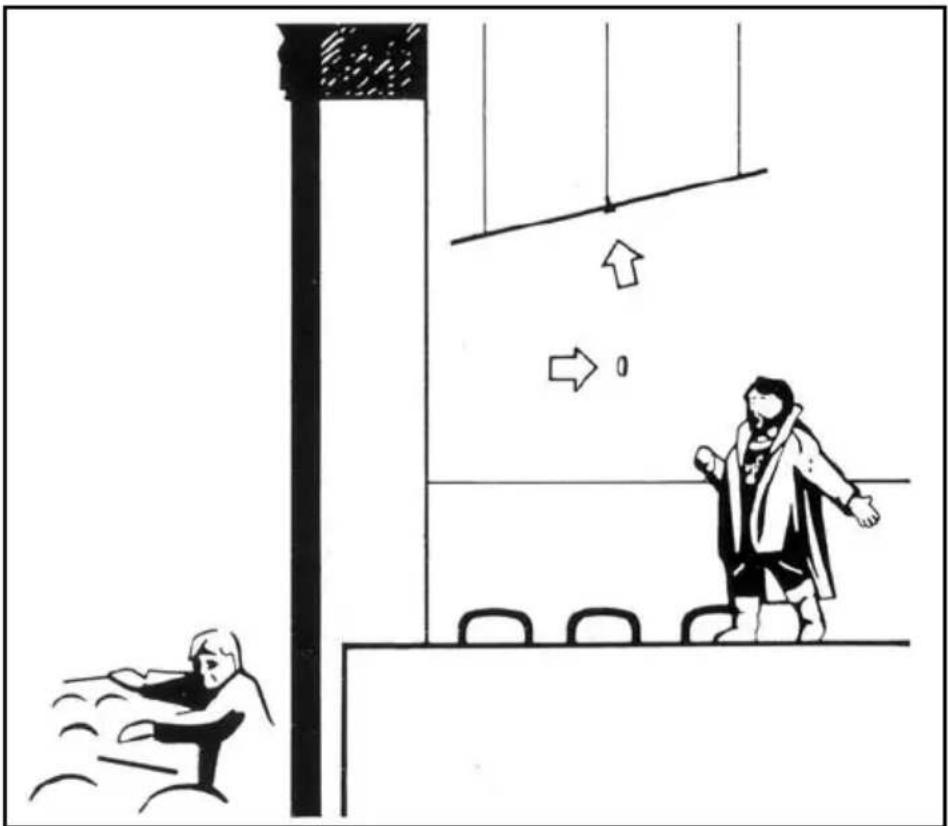
Illustration of a person standing on a platform with a large screen and directional arrows, no text or symbols present.- Install the microphone in a reflective wall (covered with no wallpaper of sound absorbing material) near the sound source. The wall should be as even and reflective as possible.
natural_image
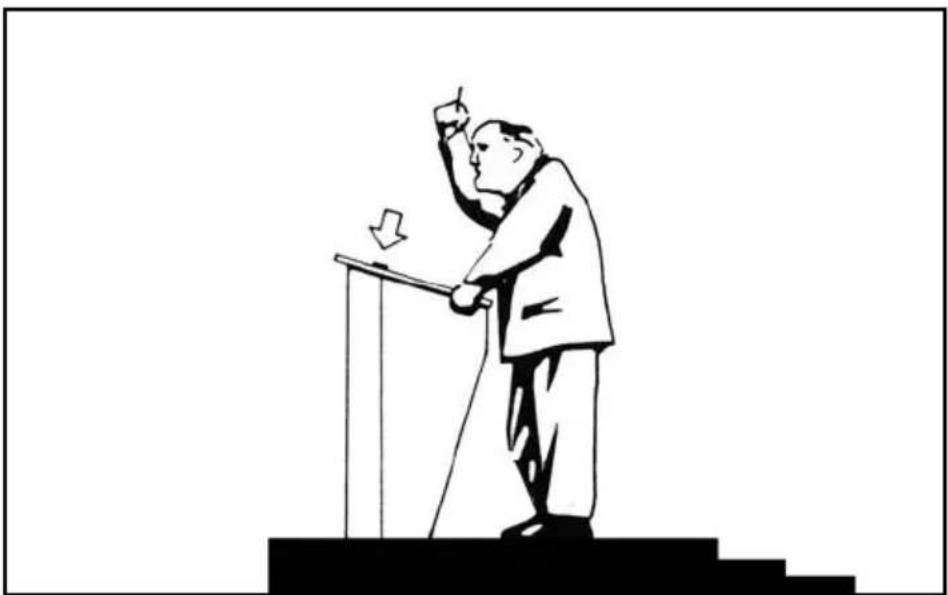
Illustration of a man standing at a podium with a raised fist, pointing upward (no text or symbols present)- Install the microphone directly in the lectern or pulpit. Due to the wide pickup angle of the microphone, the talker is free to move without causing wide variations in signal level. Also, the microphone will be practically invisible.
Example 1: Theater stage miking
Fig. 3: Installation in stage decoration parts.
Refer to fig. 3.
Example 2: Lectern or pulpit
Fig. 4: Installation in a lectern or pulpit.
Refer to fig. 4.
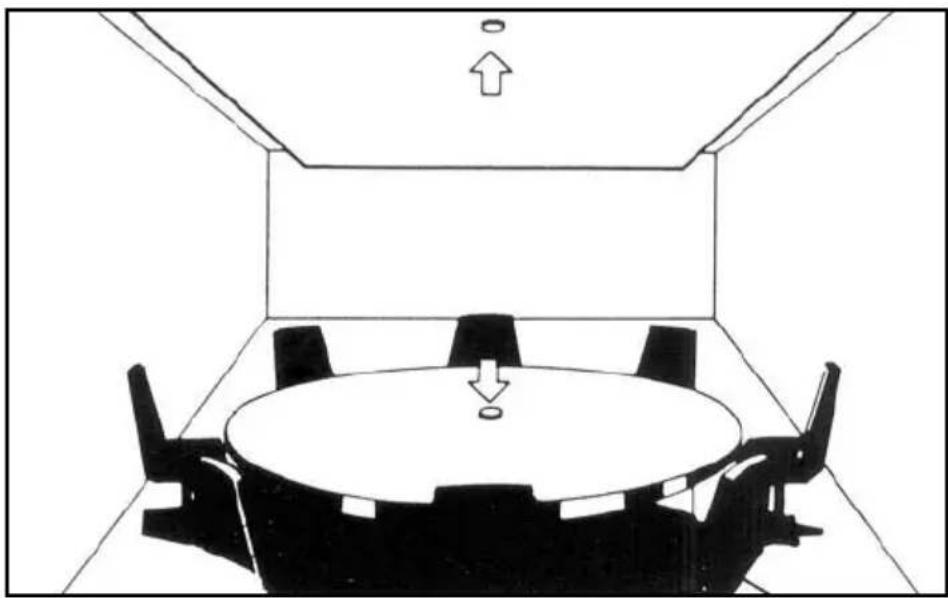
Example 3: Conference room
natural_image
Top-down view of a meeting table with chairs and an oval table, no text or symbols presentFig. 5: Installation in a conference table and ceiling.
Refer to fig. 5.
- In a conference room, you can install either a single microphone in a conference table or one or more microphones in a reflective ceiling panel.
More hints
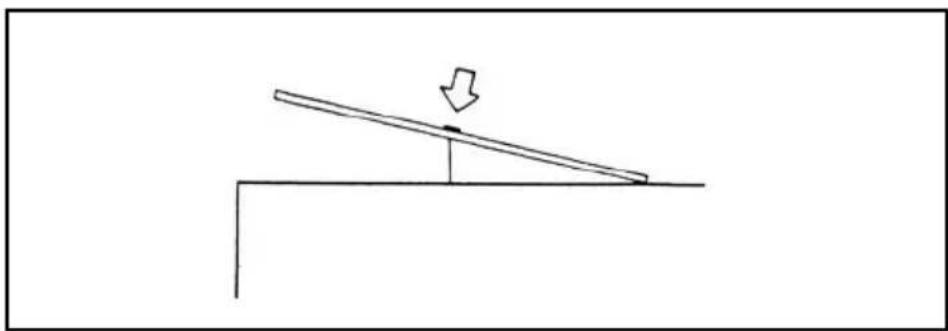
Fig. 6: Minimizing sound pickup from unwanted sources.
Refer to fig. 6.
natural_image
Simple line drawing of a seesaw with an arrow indicating downward motion (no text or symbols)- The hemispherical polar pattern may cause unwanted sounds from unexpected directions to be picked up. Unless the boundary is too large or permanently installed, simply turn the panel with the microphone away from the unwanted source. Alternatively, you can place suitably sized (4x4 ft. / 1x1 m) plexiglass panels or thick-pile carpet between the microphone and the unwanted sound source(s).
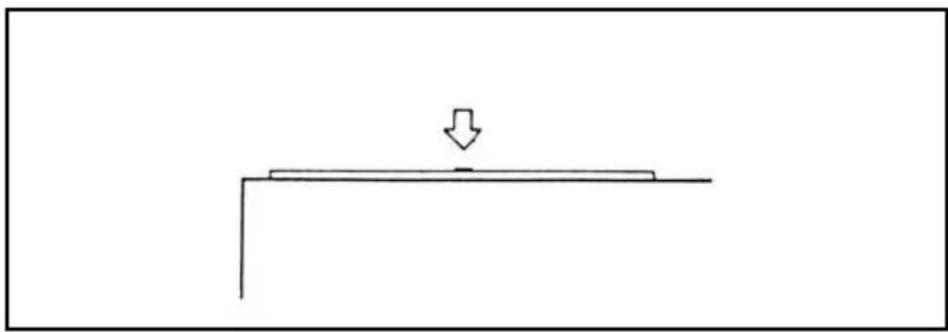
Fig. 7: Reducing mechanical noise.
Refer to fig. 7.
natural_image
Simple line drawing of a beam with a downward load, no text or symbols present- You can reduce mechanical noise to a minimum by placing a layer of sound absorbing material (e.g., soft foam) beneath the reflective panel.
Type: condenser microphone (self-polarized)
Polar pattern: omnidirectional (hemispherical)
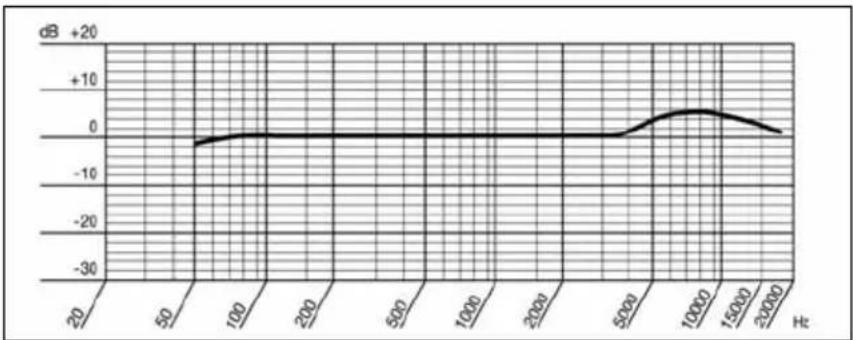
Frequency response: 20 Hz to 20 kHz (installed in very large boundary)
Sensitivity at 1000 Hz: 20 mV/Pa (-33 dBV) re 1 V/Pa (measured on 1.5 x 1.5 m boundary)
Max. sound pressure level for 1% THD: 130 dB SPL
Equivalent noise level to IEC 60268-4 (A-weighted): 16 dB(A)
S/N ratio re 1 Pa (A-weighted): 78 dB
Electrical impedance: ≤ 600 ohms
Recommended load impedance: ≥ 2000 ohms
Powering: 9 to 52 V phantom power to IEC 61938
Current consumption: approx. 2 mA
Connector: phantom power adapter with integrated male 3-pin XLR connector
Size: 0.8 dia. x 0.12 (1.1) in. (20 dia. x 3 (28) mm)
Net weight: approx. 1.1 oz. (30 g) (without cable)
This product conforms to the standards listed in the related Declaration of Conformity. To order a free copy of the Declaration of Conformity for this product, visit http://www.akg.com or contact sales@akg.com.
Frequency Response
line
| % | dB | | --- | ----- | | 20 | -5.0 | | 50 | -4.0 | | 100 | -3.0 | | 200 | -2.0 | | 500 | -1.0 | | 1000| 0.0 | | 2000| 0.0 | | 5000| 0.0 | | 10000| 5.0 | | 15000| 3.0 | | 20000| 1.0 |Polar Diagram
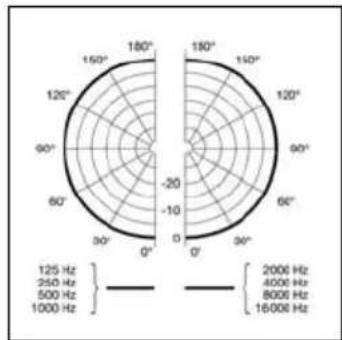
radar
| Frequency (Hz) | Value | |---|---| | 2000 | 16000 | | 4000 | 8000 | | 8000 | 500 | | 1250 | 250 | | 150 | 125 | | 180 | -15 |Dimensioned Drawing
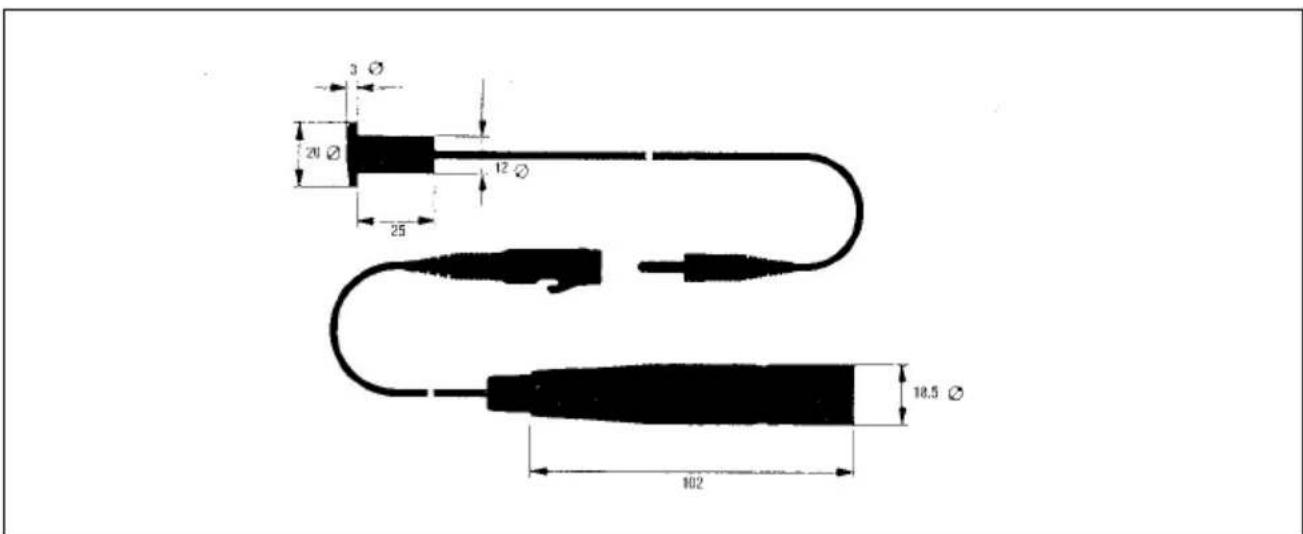
Page
natural_image
Illustration of a person standing near a structure with directional arrows indicating motion (no text or symbols)natural_image
Line drawing of a man standing at a podium with a downward arrow, raising one hand (no text or symbols)natural_image
Simple line drawing of a meeting table with chairs and an oval table, no text or symbols presentnatural_image
Simple line drawing of a seesaw with an arrow indicating downward motion (no text or symbols)natural_image
Simple line drawing of a beam with a downward load, no text or symbols presentnatural_image
Illustration of a person standing near a structure with directional arrows indicating motion (no text or symbols)natural_image
Line drawing of a person standing at a podium with a downward arrow, no text or symbols presentnatural_image
Interior view of a meeting room with a round table and chairs, no visible text or symbolsnatural_image
Simple line drawing of a seesaw with an arrow indicating downward motion (no text or symbols)natural_image
Simple line drawing of a beam with a downward load, no text or symbols presentVedi fig. 7.
natural_image
Illustration of a person standing near a structure with directional arrows indicating motion (no text or symbols)natural_image
Line drawing of a man standing at a podium with a downward arrow, raising one hand (no text or symbols)natural_image
Top-down view of a meeting table with chairs and an oval table, no text or symbols presentnatural_image
Simple line drawing of a seesaw with an arrow indicating downward motion (no text or symbols)Fig. 6: Eliminar sonidos molestos
Véase fig. 6.
natural_image
Simple line drawing of a beam with a downward load, no text or symbols presentVéase fig. 7.
radar
| Frequency (Hz) | Value | |---|---| | 125 Hz | 0 | | 250 Hz | 0 | | 500 Hz | 0 | | 800 Hz | 0 | | 1600 Hz | 0 | The chart displays a polar plot of angular frequency values for each frequency range. The frequency values are labeled on the left side of the chart. The data is presented in a circle format with two full angular positions (0° and 180°).Croquis
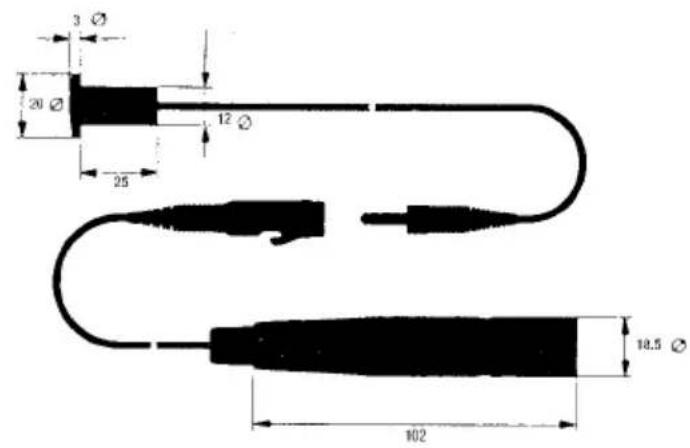
Página
natural_image
Illustration of a person observing from behind a building with a large wall and directional arrows (no text or symbols)natural_image
Line drawing of a person standing at a podium with a raised hand, pointing upward (no text or symbols present)natural_image
Top-down view of a meeting table with chairs and an oval table, no text or symbols presentnatural_image
Simple line drawing of a seesaw with an arrow indicating downward motion (no text or symbols)natural_image
Simple line drawing of a beam with a downward load, no text or symbols presentVeja fig. 7.
For other products and distributors worldwide visit www.akg.com



ROHS OK
H A Harman International Company
Technische Änderungen vorbehalten. Specifications subject to change without notice. Ces caractéristiques sont susceptibles de modifications. Ci riserviamo il diritto di effettuare modifiche tecniche. Nos reservamos el derecho de introducir modificaciones técnicas. Especificações sujeitas a mudanças sem aviso prévio.
Printed in China (P.R.C.) 02/10/9100 U 07460


Brand : AKG
Model : C562 CM
Category : Microphone