
R43SE - Lawn mower engine HUSQVARNA - Free user manual and instructions
Find the device manual for free R43SE HUSQVARNA in PDF.
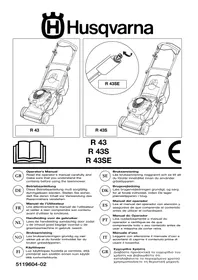


| Product type | Lawn mower engine |
| Brand | HUSQVARNA |
| Model | R43SE |
| Power supply | Unleaded petrol, 4-stroke engine oil SAE 30 |
| Start type | Electric (battery) and manual recoil starter |
| Battery | Lead-acid rechargeable, charging time 24 h |
| Battery runtime | Recharged automatically by the engine when running |
| Fuel tank capacity | Not specified, recommendation: fill with funnel |
| Oil tank capacity | FULL mark on dipstick |
| Cutting type | Collection with grass catcher, mulching possible with mulching insert |
| Cutting height | Adjustable by lever (multiple positions) |
| Cutting width | Not specified, standard estimate 46–53 cm |
| Drive speed | Forward with drive bail (model R43SE) |
| Grass catcher full indicator | Yes, ball indicator on the catcher |
| Sound level | Not specified, ear protection recommended |
| Safety | Engine brake (safety bail CPO), spark plug disconnection before maintenance, safety flap |
| Maintenance | Oil change every 25 h, air filter cleaning, spark plug change every 100 h |
| Cleaning | Brush and dry cloth; do not use water or solvents |
| Spare parts | Blade, blade bolt, battery, spark plug, filters |
| Weight | Not specified, estimate 35–45 kg |
Frequently Asked Questions - R43SE HUSQVARNA
User questions about R43SE HUSQVARNA
0 question about this device. Answer the ones you know or ask your own.
Ask a new question about this device
Download the instructions for your Lawn mower engine in PDF format for free! Find your manual R43SE - HUSQVARNA and take your electronic device back in hand. On this page are published all the documents necessary for the use of your device. R43SE by HUSQVARNA.
USER MANUAL R43SE HUSQVARNA
Read the operator's manual carefully and make sure that you understand the contents before using the lawnmower.
Operating Instructions
If not used properly this lawnmower can be dangerous! This lawnmower can cause serious injury to the operator and others, the warnings and safety instructions must be followed to ensure reasonable safety and efficiency in using this lawnmower. The operator is responsible for following the warning and safety instructions in this manual and on the lawnmower. Never use the mower unless the grassbox or guards provided by the manufacturer are in the correct position.
Explanation of Symbols on your Husqvarna R 43, 43S and 43SE

Warning

Read the user instructions carefully to make sure you understand all the controls and what they do.
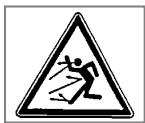
Always keep the lawnmower on the ground when mowing. Tilting or lifting the lawnmower may cause stones to be thrown out.
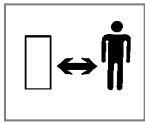
Keep bystanders away. Do not mow whilst people especially children or pets are in the mowing area.
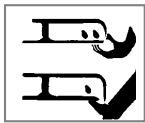
Beware of severing toes or hands. Do not put hands or feet near a rotating blade.
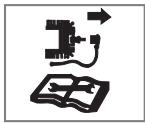
Disconnect the spark plug before attempting any maintenance, cleaning or adjustment, or if you are going to leave the lawnmower unattended for any period.
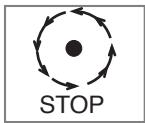
Blade continues to rotate after the machine is switched off. Wait until all machine components have completely stopped before touching them.
General
- Never allow children or people unfamiliar with these instructions to use the mower. Local regulations may restrict the age of the operator.
- Only use the lawnmower in the manner and for the functions described in these instructions.
- Never operate the lawnmower when you are tired, ill or under the influence of alcohol, drugs or medicine.
- The operator or user is responsible for accidents or hazards occurring to other people or their property.
Fuel Safety
WARNING - Petrol is highly flammable
- Store fuel in a cool place in a container specifically designed for the purpose. In general plastic containers are unsuitable.
- Refuel outdoors only and do not smoke while refuelling.
- Add fuel BEFORE starting the engine. Never remove the cap of the fuel tank or add fuel while the engine is running or when the engine is hot.
- If petrol is spilled, do not attempt to start the engine but move the machine away from the area of spillage and avoid creating any source of ignition until petrol vapours have dissipated.
- Replace all fuel tanks and container caps securely.
- Move the product away from the fuelling area before starting.
Safety Procedures when Charging the Battery (R 43SE)
- Check the charger cable regularly for damage or deterioration due to age.
- Do not use the lawnmower if the charging cable is not in good condition.
- Do not attempt to charge other products with the charger from this unit.
- Do not attempt to use this battery with any other charger.
- Charging should only be carried out in a safe location where neither battery nor cord cable can be trodden on or tripped over.
- Location should be well-ventilated.
- During charging, the battery charger becomes warm. This is normal and means the charger is operating properly.
- Do not cover the battery charger with anything during charging.
- Ensure that neither the charger nor the battery are exposed to moisture.
- Avoid extreme temperatures.
- The charger will not operate below freezing point nor above 40°C.
- Do not short circuit the battery terminals.
Preparation
- Do not mow barefoot or in open sandals. Always wear suitable clothing, gloves, and stout shoes.
- The use of ear protection is recommended.
- Make sure the lawn is clear of sticks, stones, bones, wire and debris; they could be thrown by the blade.
- Before using the machine and after any impact, check for signs of wear or damage and repair as necessary.
- Replace worn or damaged blades together with their fixings in sets to preserve balance.
- Have faulty silencers replaced.
Safety Precautions
Use
- Do not operate the engine in a confined space where exhaust fumes (carbon monoxide) can collect.
- Use the lawnmower only in daylight or good artificial light.
- Avoid operating your lawnmower in wet grass, where feasible.
- Take care in wet grass, you may lose your footing.
- On slopes, be extra careful of your footing and wear non-slip footwear.
- Mow across the face of slopes, never up and down.
- Exercise extreme caution when changing direction on slopes.
- Mowing on banks and slopes can be dangerous. Do not mow on banks or steep slopes.
- Do not walk backwards when mowing, you could trip. Walk never run.
- Never cut grass by pulling the mower towards you.
- Release the Operator Presence control to stop the engine before pushing the mower across surfaces other than grass and when transporting the lawnmower to and from the area to be mowed.
- Never operate the lawnmower with damaged guards or without guards in place. Do not overspeed the engine or alter governor settings. Excessive speed is dangerous and shortens lawnmower life.
- Disengage all blade and drive clutches before starting.
- Keep hands and feet away from the cutting means at all times and especially when switching on the engine.
- Do not tilt lawnmower when starting the engine.
- Do not put hands near the grass discharge chute whilst engine is running.
- Never pick up or carry a lawnmower while the engine is running.
- Spark plug wire may be hot - handle with care.
- Do not attempt any maintenance on your lawn mower when the engine is hot.
- Release the Operator Presence Control, to stop the engine, and wait until the blade has stopped:-
- before leaving the mower unattended for any period;
- Release the Operator Presence Control, to stop the engine, wait until the blade has stopped, disconnect the spark plug lead and wait until the engine has cooled:-
- before refuelling
- before clearing a blockage;
- before checking, cleaning or working on the appliance;
- if you hit an object. Do not use your lawnmower until you are sure that the entire lawnmower is in a safe operating condition;
- if the lawnmower starts to vibrate abnormally. Check immediately. Excessive vibration can cause injury.
- Reduce the throttle setting during engine shut down and, if the engine is provided with a shut-off valve, turn the fuel off at the conclusion of mowing.
Maintenance and storage
- Keep all nuts, bolts and screws tight to be sure the lawnmower is in safe working condition.
- Check the grass collector frequently for wear or deterioration.
- Replace worn or damaged parts for safety.
- Only use the replacement blade, blade bolt, spacer and impeller specified for this product.
- Never store the lawnmower with fuel in the tank inside a building where fumes can reach an open flame or spark.
- Allow the engine to cool before storing in any enclosure.
- To reduce fire hazard, keep the engine, silencer, battery compartment and fuel storage area free of grass, leaves or excessive grease.
- If the fuel tank has to be drained, this should be done outdoors.
- Be careful during adjustment of the machine to prevent entrapment of the fingers between moving blades and fixed parts of the machine.
Assembly Instructions
Handle Assembly
Fitting the Lower handle to the Lawnmower
- Remove handle knobs.
- Fit the lower handle ensuring that the formed ends are located properly in corresponding slots either side of the lawnmower. (A1)
- Secure the handle with the plastic washers and handle knobs provided. Make sure that the Lower Pull Cord Guide is on the right-hand side when viewed from the rear.
Fitting the Upper Handle to the Lower Handle
- Attach the upper handlebar.
- Insert the bolts from the inside. (A2)
Note: Place washer between wing nut and handlebar.
Recoil Starter
- Disconnect the spark plug lead.
- Pull the Operator Presence Control to release the brake on the engine. (B1 - R 43) (B2 - R 43S/SE)
- Locate cord in the pull cord guide on the lower handle. (B3)
- Locate cord in the pull cord guide on the upper handle. (B4)
You must release the brake by pulling the OPC lever to the handle before pulling out the cord.
Assembly Instructions
Grassbox Assembly
Assembling the Grassbox Screen
- Do not cut or separate the 3 parts of the grassbox screen.
- Fold the screen sides inwards. (C1)
- Align the matching tabs and slots and press firmly together. Ensure clips are engaged. The assembled screen should appear as illustrated. (C2)
Fitting the Grassbox Screen to the Grassbox Lower
Locate the tabs on the bottom of the grassbox screen into the slots in the base of the grassbox lower and push home. (C3)
Fitting the Grassbox Lid
- Place the upper lid onto the lower grassbox. (C4)
- Align the clips with the slots. Push the two halves together, starting from the rear of the box and working forward. (C5) Ensure that all clips are securely connected.
Fitting Fully Assembled Grassbox to Lawnmower
- Lift the safety flap. Locate the lugs of the fully assembled grassbox into the slots in the top of the deck. Fit the location studs on the safety flap into the location holes on the grassbox lid. (C6)
- Removal is the reverse procedure.
Please note: Ensure no gap remains between the safety flap and the grassbox.
Where grass collection is not required, you can use the lawnmower without the grassbox.
Ensure the safety flap is fully closed.
Grass Collection Indicator
- IMPORTANT! The machine must be running for the grass collection indicator to operate. Follow the instructions in the 'Use - Starting and Stopping' section.
- Your lawnmower has a grass collection indicator that tells you when the grassbox needs emptying. When the indicator is visible, grass is being collected. (C7)
- When the indicator starts to drop, it's time to empty the grassbox. (C8)
- Release the OPC lever and remove the grassbox for emptying.
Emptying the Grassbox
- Hold the grassbox as illustrated. (C9)
- Loose grass will automatically clear on restarting the machine. If the ball indicator does not rise, then manually clean out the discharge chute.
- Ensure the discharge chute is clean and free from debris.
Engine Notes
Oil
- Check oil level periodically and after every five hours of operation.
- Add oil as necessary to keep the level to the FULL mark on the dipstick.
- Use a good quality SAE 30 four stroke oil.
- To fill with oil:-
a) Remove oil filler cap.(D1) b) Fill to the FULL mark on the dipstick.(D2)
- Change the oil after the first five hours operation and thereafter every 25 working hours.
- Always change the oil while the engine is warm - but not hot - never attempt any maintenance on a hot engine.
Petrol
- Use fresh regular grade lead free petrol.
- NEVER USE LEADED PETROL
Using leaded petrol will make the exhaust smoke and cause irreparable damage to engines fitted with a catalytic converter.
- Do not fill the fuel tank when the engine is hot.
- Do not fill the fuel tank while smoking.
- Do not fill the fuel tank while the engine is running.
- To avoid introducing dirt into the fuel system, wipe all grass and dirt from the petrol filler cap before unscrewing it.
- It is recommended that you fill the tank through a funnel with a filter.
- Wipe away spillages before starting.
Please note: move the product away from the fuelling area before starting.
Starting - Priming the Engine
Please note: When starting the engine for the first time, fill with oil and petrol as described above in the Oil and Petrol section.
Priming is usually unnecessary when restarting a warm engine. However, cool weather may require priming to be repeated.
Starting the engine for the first time
- Advance engine speed control to FAST as illustrated in the Use - starting and stopping section.
- Push primer bulb (F) firmly five times.
- Follow instructions in the Use - starting and stopping section.
- If engine fails to start after three pulls of the pull cord, push primer bulb three times and repeat step 3.
Starting engine thereafter
- Move the engine speed control to the FAST position and push the primer bulb firmly three times before starting the engine. (If the engine stopped because it ran out of fuel, refuel the engine and push the primer bulb three times.)
Use
Starting & Stopping R 43
Starting
- Connect the spark plug lead.
- Move the Engine Speed Control to the FAST position before starting. (G1)
- Pull the operator presence control (OPC) to release the brake on the engine and the blade. (G2)
- Pull the recoil starter fully towards you until you feel full resistance, return the handle slowly, then pull the handle firmly towards you to its full extent. (G3)
- After the engine has started, allow it to run for 30 seconds before commencing use.
Stopping
- Release the OPC lever. (G2)
THROTTLE CONTROL (if fitted)
- Fig. G4 represents the FAST (run) position.
- Fig. G5 represents the SLOW (idle) position.
Starting & Stopping R 43S
Starting
- Follow steps 1-2 for the R 43.
- Pull the operator presence control (OPC) to release the brake on the engine and the blade. (G6)
- Follow steps 4-5 for the R 43.
Engaging the Drive
- Forward drive is engaged and disengaged with the Powerdrive lever at the top of the handle. (G7)
- Releasing the Powerdrive lever stops the forward drive automatically.
Stopping
- Release the powerdrive lever. (G7)
- Release the OPC lever. (G6)
Starting & Stopping R 43SE
Starting
- Follow steps 1-3 for the R 43S
- Turn the key and hold until the engine starts. (G8) The key will return to the original position when released.
- If the engine fails to start when you turn the key, your battery may need charging.
Engaging the Drive - See R 43S
Stopping - See R 43S
How to Mow
- Due to engine lubrication limitations, the mower should not be used on slopes in excess of 30° .
- Start mowing from the outside edge of the lawn, mowing in strips in alternate directions
- Mow twice a week in the growing season, your lawn will suffer if more that one third of its length is cut at one time and this may also result in poor collection.
Please Note:-
Do not overload your Lawnmower
When mowing in long thick grass a first cut with the cutting height adjusted to its highest setting, see Cutting Height, will help reduce engine overload and will help prevent damage to your lawnmower.
Cutting Height Adjustment
- Pull the height adjustment lever away from the location slots and move it to the selected position.(H).
Using as a mulcher
- Your lawnmower is supplied with a mulching plug.
- Stop your lawnmower as described in Use - starting and stopping, and disconnect the spark plug.
- Lift safety flap. Twist and slide mulching plug into rear discharge chute. (J)
- Ensure mulching plug is securely fitted. (K)
- The mulching plug prevents grass from being collected by blocking the collection chute on the underside of the deck.
- Ensure the safety flap is positioned correctly.
Maintenance
IMPORTANT
Release the Operator Presence Control, to stop the engine, wait until the blade has stopped and disconnect the spark plug lead:-
- before clearing a blockage;
- before checking, cleaning or working on the appliance
IMPORTANT
Never use water for cleaning your lawnmower. Do not clean with chemicals, including petrol, or solvents - some can destroy critical plastic parts.
Cleaning
- Disconnect the spark plug lead.
- Turn machine on its side with the exhaust uppermost.
- Remove grass from under the deck with a brush. (L1 and L2)
- Using a soft brush - remove grass clippings from the engine air intakes and exhaust (L3), cutting height adjustment area, around the wheels (L4) and the grass collector.
- Wipe over the surface of your lawnmower with a dry cloth.
Cutting System
Removing the Blade
- Disconnect the spark plug lead.
- Turn machine on its side with the exhaust uppermost.
- Use spanner to loosen blade bolt by turning anticlockwise. (M)
- Remove the blade bolt, blade, and spacer washer.
- Inspect for damage and clean as necessary.
Fitting the Blade
- Fit the blade to the machine with the sharp edges pointing away from the machine.
- Re-assemble blade bolt through blade and spacer washer.
- Hold firmly and tighten blade bolt firmly with a spanner. Do not over tighten.
IMPORTANT
Do not attempt any maintenance on your lawnmower when the engine is hot.
Always handle the blade with care - sharp edges could cause injury. USE GLOVES. Renew your metal blade after 50 hours mowing or 2 years whichever is the sooner - regardless of condition. If the blade is cracked or damaged replace it with a new one.
Maintenance
How to Charge the Battery (R 43SE)
N1 - Wiring Loom
N2 - Charging Point
N3 - Cap
- Stop your lawnmower.
- Disconnect the spark plug.
- Remove the cap from the charging point at the bottom of the wiring loom. (N)
- Plug the charger lead into the connection on the battery loom. (N)
- Plug the battery charger into a domestic electric socket.
- Charging will then commence.
- Charge for 24 hours.
- After charging, disconnect the charger from the socket and the charging point. (N)
- Replace the cap on the charging point. (N)
- The unit is now ready for use.
ENVIRONMENTAL INFORMATION
Husqvarna Outdoor Products are manufactured under an Environmental Management System (ISO 14001) using, where practical, components manufactured in the most environmentally responsible manner, according to company procedures, and with the potential for recycling at the end of the products' life.
- Packaging is recyclable and plastic components have been labelled (where practical) for categorised recycling.
- Awareness of the environment must be considered when disposing of 'end-of-life' product. If necessary, contact your local authority for disposal information.
BATTERY DISPOSAL
- The battery should be taken to an Approved Service Centre or your local Recycling Station.
- Do NOT dispose of used battery with household waste
- Lead/Acid batteries can be harmful and should be disposed of through the recognised recycling facility in accordance with European Regulation
- Do NOT dispose of battery to water.
- Do NOT incinerate
DISPOSAL OF FUELS AND LUBRICATING OILS
- Wear protective clothing when handling any fuels and lubricants.
- Avoid contact with skin.
- Remove petrol and engine oil before transporting the product.
- Contact your local authority for information of your nearest Recycling/Disposal Station.
- Do NOT dispose of used fuels/oils with household waste
- Waste fuels/oils are harmful, but can be recycled and should be disposed of through the recognised facilities.
- Do NOT dispose of used fuels/oils to water.
- Do NOT incinerate
Battery Replacement
- The battery is located underneath a cover behind the engine.
- Stop the lawnmower and disconnect the spark plug.
- Remove the screws from the cover.
- Remove the cover to gain access to the battery. IMPORTANT: Replacement batteries will need to be charged before use.
Ensure that neither the charger nor the battery are exposed to moisture.
The battery pack can be replaced by unclipping the battery from its housing and disconnecting the battery pack from the battery leads.
General Guidance on Rechargeable Battery
- Charging time is 24 hours.
- Under normal usage, the battery will be charged during the running of the engine.
- To keep in prime condition, the battery should be charged at least once every six months.
- Exceeding the charging period may shorten the battery life.
- Protect the electric cable. Never carry the battery charger by the electric cable only.
- If after an extended usage period the battery quickly runs down after a full 24-hour charging period, a replacement battery is probably needed.
- Do not attempt to open the main body casing.
- Clean only with a dry soft cloth.
- Never use a damp cloth or flammable liquids such as petrol, white spirits, thinners, etc.
- Dispose of old batteries safely.
The engine brake cable should always be adjusted to stop the engine within 3 seconds.
CAUTION! For adjustment, contact your authorized service dealer.
At the End of the Mowing Season
- Replace blade, bolts, nuts, or screws, if necessary.
- Clean your lawnmower thoroughly.
- Ask your local Service Centre to clean the air filter thoroughly and carry out any service or repairs required.
- Drain engine of oil and petrol.
Storing your Lawnmower
- Do not store your lawnmower immediately after use.
- Wait until the engine has cooled to avoid a potential fire hazard.
- Clean your lawnmower.
- Store in a cool, dry place where your lawnmower is protected from damage.
Maintenance
Service Recommendations
Your product is uniquely identified by a silver and black product rating label.
We strongly recommend that your product is serviced at least every twelve months, more often in a professional application.
Engine Maintenance Schedule
Follow the hourly or calendar intervals, whichever occur first. More frequent service is required when operating in adverse conditions.
First 5 hours - Change oil.
Every 5 hours or daily - Check oil level. Clean finger guard. Clean around muffler.
Every 25 hours or every season - Change oil if operating under heavy load or high ambient temperature.
Service air cleaner.
Every 50 hours or every season - Change oil. Inspect spark arrester, if equipped.
Every 100 hours or every season - Clean cooling system*. Replace spark plug.
- Clean more often under dusty conditions, or when airborne debris is present or after prolonged operation cutting tall, dry grass.
Engine Servicing & Guarantee
The engine fitted to your lawnmower is guaranteed by the Engine Manufacturer. To obtain further information contact your dealer.
Fault Finding
Engine Will Not Start
- Ensure OPC Lever is in the start position.
- Check that the throttle control lever is in the 'fast' position.
- Check that there is sufficient fuel in the tank and the cap air vent is clear.
- Remove and dry the spark plug.
- Petrol may be stale, replace. Once petrol has been replaced, it may take a little time for fresh petrol to filter through.
- Check that the blade bolt is tight. A loose bolt could cause difficult starting.
- If the engine will still not start, immediately disconnect the spark plug lead.
- CONSULT YOUR LOCAL APPROVED SERVICE CENTRE.
Engine Will Not Turn Over (43SE only)
- Ensure OPC Lever is in the start position.
- Battery flat - start your lawnmower manually.
- If the engine will still not turn over, immediately disconnect the spark plug lead.
- CONSULT YOUR LOCAL APPROVED SERVICE CENTRE.
Lack of Engine Power and/or Overheating
- Check that the throttle control lever is in the 'fast' position.
- Disconnect the spark plug lead and allow the engine to cool down.
- Clean grass clippings and debris from around the engine and air inlets and the underside of the deck including the chute.
- Clean the engine air filter (Ask your local Approved Service Centre to clean the engine air filter thoroughly).
- Petrol may be stale, replace. Once petrol has been replaced, it may take a little time for fresh petrol to filter through.
- If the engine still lacks power and/or is overheating, immediately disconnect the spark plug lead.
- CONSULT YOUR LOCAL APPROVED SERVICE CENTRE.
Excessive Vibration
- Disconnect the spark plug lead.
- Check that the blade is correctly fitted.
- If the blade is damaged or worn replace it with a new one.
- If vibration persists, immediately disconnect the spark plug lead.
- CONSULT YOUR LOCAL APPROVED SERVICE CENTRE.
Excessive vibration
To adjust the blade
- 1.
- Move the machine's throttle to the FAST position before starting. (G1)
- Press the operator presence control (OPC) to disengage the blade and the drive. (G2)
- Pull the starter handle firmly towards you until you feel resistance, then return the handle to its original position, and then pull it quickly towards you to start the engine. (G3) 5. Once the engine starts, let it run for 30 seconds before engaging the blade.
Stopping
- Release the OPC - operator presence control lever (G2)
Engage the drive
PwTc5 wpc-AaAeTe to aol.
Husqvarna Outdoor Products
Aycliffe Industrial Park
NEWTON AYCLIFFE
Co.Durham DL5 6UP
ENGLAND
Telephone - (00) 44 1325 300303 Fax - (00) 44 1325 310339
Our policy of continuous improvement means that the specification of products may be altered from time to time without prior notice.


- OPERATING INSTRUCTIONS
- EXPLANATION OF SYMBOLS ON YOUR HUSQVARNA R 43, 43S AND 43SE
- GENERAL
- FUEL SAFETY
- WARNING - PETROL IS HIGHLY FLAMMABLE
- SAFETY PROCEDURES WHEN CHARGING THE BATTERY (R 43SE)
- PREPARATION
- SAFETY PRECAUTIONS
- USE
- MAINTENANCE AND STORAGE
- ASSEMBLY INSTRUCTIONS
- HANDLE ASSEMBLY
- FITTING THE LOWER HANDLE TO THE LAWNMOWER
- FITTING THE UPPER HANDLE TO THE LOWER HANDLE
- RECOIL STARTER
- GRASSBOX ASSEMBLY
- ASSEMBLING THE GRASSBOX SCREEN
- FITTING THE GRASSBOX SCREEN TO THE GRASSBOX LOWER
- FITTING THE GRASSBOX LID
- FITTING FULLY ASSEMBLED GRASSBOX TO LAWNMOWER
- GRASS COLLECTION INDICATOR
- EMPTYING THE GRASSBOX
- ENGINE NOTES
- OIL
- PETROL
- STARTING - PRIMING THE ENGINE
- STARTING THE ENGINE FOR THE FIRST TIME
- STARTING ENGINE THEREAFTER
- STARTING & STOPPING R
- STARTING
- STOPPING
- THROTTLE CONTROL (IF FITTED)
- STARTING & STOPPING R 43S
- ENGAGING THE DRIVE
- STARTING & STOPPING R 43SE
- ENGAGING THE DRIVE - SEE R 43S
- STOPPING - SEE R 43S
- HOW TO MOW
- PLEASE NOTE
- DO NOT OVERLOAD YOUR LAWNMOWER
- CUTTING HEIGHT ADJUSTMENT
- USING AS A MULCHER
- MAINTENANCE
- IMPORTANT
- CLEANING
- CUTTING SYSTEM
- REMOVING THE BLADE
- FITTING THE BLADE
- HOW TO CHARGE THE BATTERY (R 43SE)
- N1 - WIRING LOOM
- N2 - CHARGING POINT
- N3 - CAP
- ENVIRONMENTAL INFORMATION
- BATTERY DISPOSAL
- DISPOSAL OF FUELS AND LUBRICATING OILS
- BATTERY REPLACEMENT
- ENSURE THAT NEITHER THE CHARGER NOR THE BATTERY ARE EXPOSED TO MOISTURE
- GENERAL GUIDANCE ON RECHARGEABLE BATTERY
- THE ENGINE BRAKE CABLE SHOULD ALWAYS BE ADJUSTED TO STOP THE ENGINE WITHIN 3 SECONDS
- CAUTION! FOR ADJUSTMENT, CONTACT YOUR AUTHORIZED SERVICE DEALER
- AT THE END OF THE MOWING SEASON
- STORING YOUR LAWNMOWER
- SERVICE RECOMMENDATIONS
- ENGINE MAINTENANCE SCHEDULE
- ENGINE SERVICING & GUARANTEE
- FAULT FINDING
- ENGINE WILL NOT START
- ENGINE WILL NOT TURN OVER (43SE ONLY)
- LACK OF ENGINE POWER AND/OR OVERHEATING
- EXCESSIVE VIBRATION
- TO ADJUST THE BLADE
- ENGAGE THE DRIVE
Brand : HUSQVARNA
Model : R43SE
Category : Lawn mower engine