
HP2031 - Drill MAKITA - Free user manual and instructions
Find the device manual for free HP2031 MAKITA in PDF.


| Brand | Makita |
| Model | HP2031 |
| Product Type | 2-Speed Hammer Drill |
| Drilling Capacities (Concrete) | 20 mm (Hi speed) |
| Drilling Capacities (Steel) | 8 mm (Hi), 13 mm (Lo) |
| Drilling Capacities (Wood) | 25 mm (Hi), 40 mm (Lo) |
| No Load Speed (Hi) | 0 – 2,900 min⁻¹ |
| No Load Speed (Lo) | 0 – 850 min⁻¹ |
| Blows per Minute (Hi) | 0 – 32,000 bpm |
| Blows per Minute (Lo) | 0 – 9,400 bpm |
| Overall Length | 388 mm |
| Net Weight | 2.5 kg |
| Power Supply | Single-phase AC, voltage as per nameplate (e.g., 230 V) |
| Insulation Class | Double insulation (Class II) |
| Chuck Type | Keyless (sleeve) chuck |
| Side Grip | 360° adjustable auxiliary handle |
| Depth Gauge | Adjustable drilling depth limiter |
| Speed Control | Variable speed trigger |
| Reversing Switch | Forward/reverse rotation |
| Speed Change Lever | 2-speed mechanical gearbox (Lo/Hi) |
| Action Mode Change | Hammer drilling or rotary drilling |
| Lock Button | For continuous operation |
| Safety Features | Double insulation, lock button, auto-off switch |
| Maintenance | Periodic inspection of carbon brushes; service by authorized Makita center |
| Accessories Included | Side grip, depth gauge, chuck key (for HP2030 only; HP2031 uses keyless chuck) |
| Noise Level | Sound pressure 97 dB(A), sound power 110 dB(A) |
| Vibration Level | Weighted acceleration 10 m/s² |
Frequently Asked Questions - HP2031 MAKITA
User questions about HP2031 MAKITA
0 question about this device. Answer the ones you know or ask your own.
Ask a new question about this device
Download the instructions for your Drill in PDF format for free! Find your manual HP2031 - MAKITA and take your electronic device back in hand. On this page are published all the documents necessary for the use of your device. HP2031 by MAKITA.
USER MANUAL HP2031 MAKITA
2-Speed Hammer Drill
Instruction Manual
2-Gang Schlagbohrmaschine
Betriebsanleitung
natural_image
Line drawing of a drill bit with handle and screw base (no text or symbols)
1
2
3
4
5
6
7
8
Symbols
The followings show the symbols used for the tool. Be sure that you understand their meaning before use.
Symbole
□ Only for EU countries
Do not dispose of electric equipment together with household waste material!
In observance of European Directive 2002/96/EC on waste electrical and electronic equipment and its implementation in accordance with national law, electric equipment that have reached the end of their life must be collected separately and returned to an environmentally compatible recycling facility.
□ Nur für EU-Länder
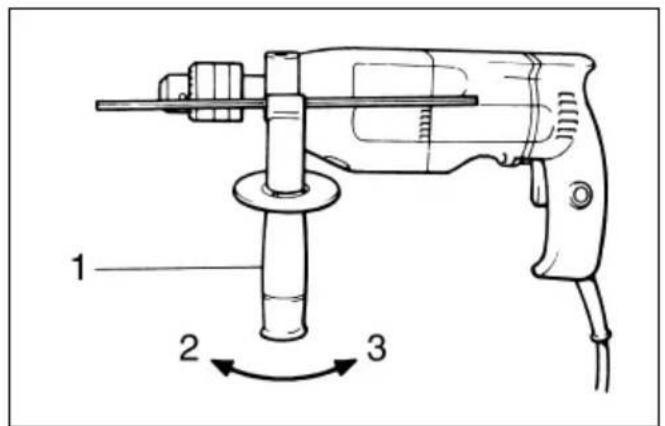
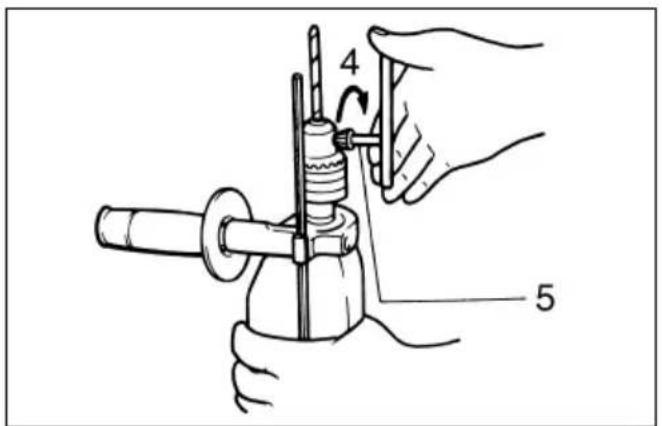
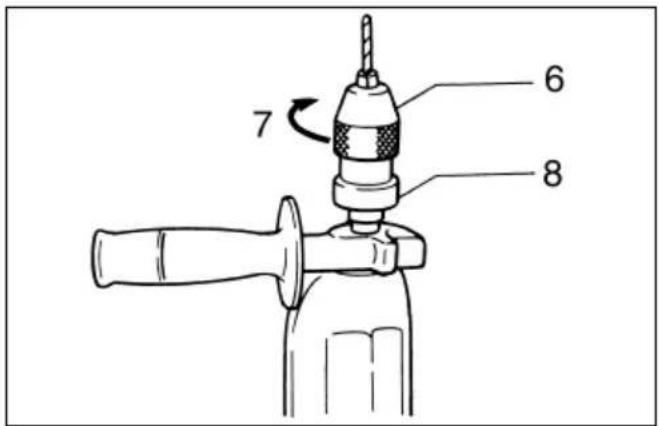
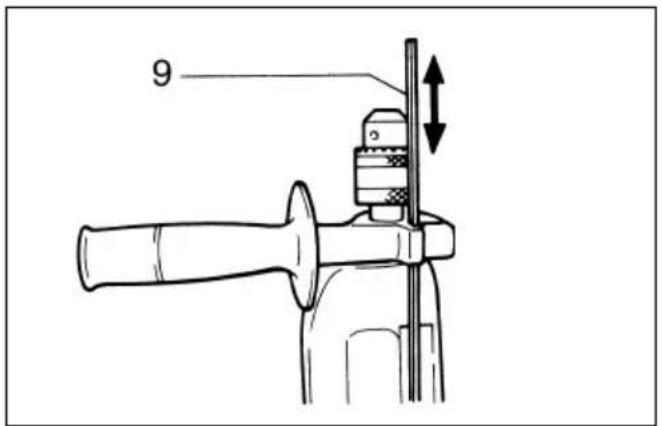
| Explanation of general view | ||
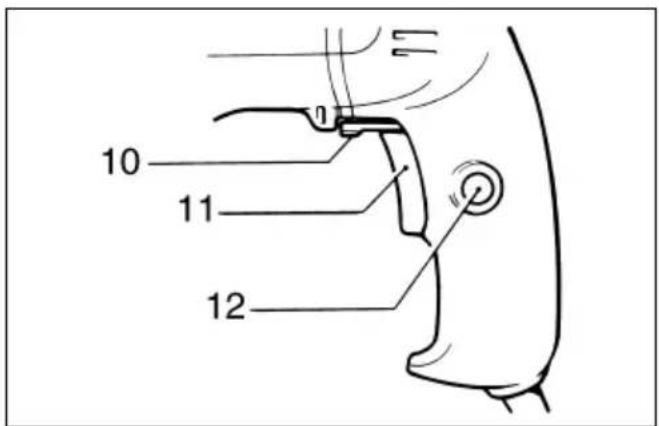
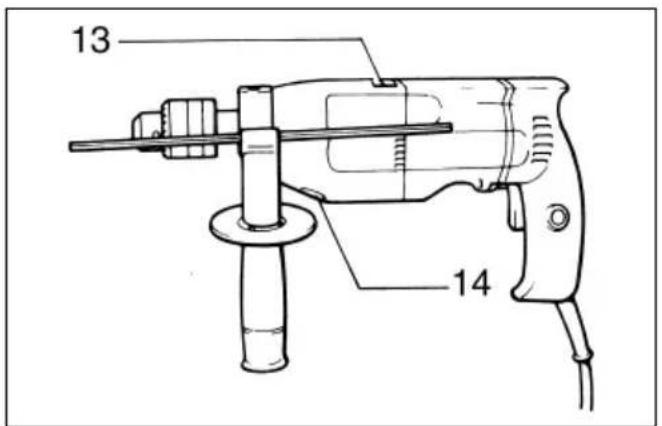
| 1 Side grip | 7 Tighten | 13 Action mode change lever |
| 2 Loosen | 8 Ring | 14 Speed change lever |
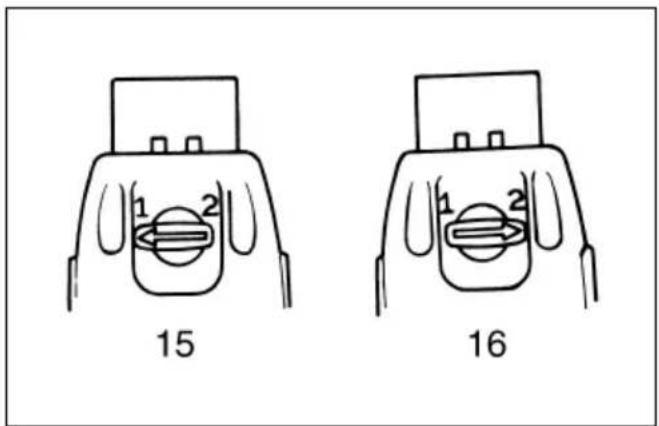
| 3 Tighten | 9 Depth gauge | 15 Position 1 |
| 4 Tighten | 10 Reversing switch | 16 Position 2 |
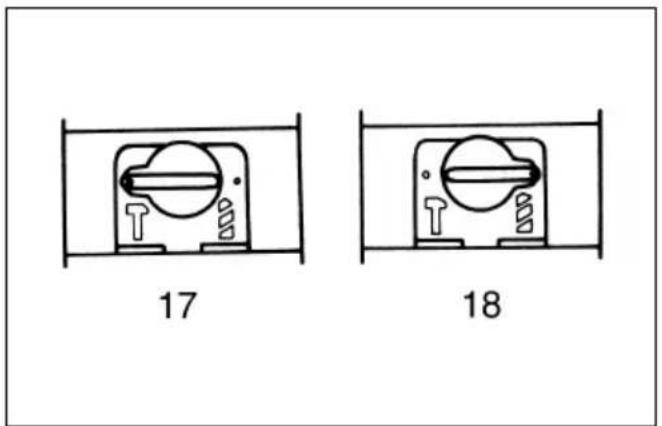
| 5 Chuck key | 11 Switch trigger | 17 For hammer drilling |
| 6 S l e e v e | 12 Lock button | 18 For drilling |
SPECIFICATIONS
Model HP2030 HP2031
| Capacities: | ||
| Concrete | Hi: 20 mm Lo: — | |
| Steel | Hi: 8 mm Lo: 13 mm | |
| Wood | Hi: 25 mm Lo: 40 mm | |
| No load speed (min ^-1 ) | Hi: 0 – 2,900 Lo: 0 – 850 | |
| Blows per minute | Hi: 0 – 32,000 | Lo: 0 – 9,400 |
| Overall length | 372 mm | 388 mm |
| Net weight | 2.3 kg | 2.5 kg |
- Due to our continuing program of research and development, the specifications herein are subject to change without notice.
- Note: Specifications may differ from country to country.
Power supply
The tool should be connected only to a power supply of the same voltage as indicated on the nameplate, and can only be operated on single-phase AC supply. They are double-insulated in accordance with European Standard and can, therefore, also be used from sockets without earth wire.
SAFETY INSTRUCTIONS
Warning! When using electric tools, basic safety precautions should always be followed to reduce the risk of fire, electric shock and personal injury, including the following. Read all these instructions before attempting to operate this product and save these instructions.
For safe operation:
- Keep work area clean
Cluttered areas and benches invite injuries. - Consider work area environment
Don't expose power tools to rain. Don't use power tools in damp or wet locations. Keep work area well lit. Don't use power tools in presence of flammable liquids or gases. - Guard against electric shock
Prevent body contact with grounded surfaces (e.g. pipes, radiators, ranges, refrigerators). -
Keep children away
Do not let visitors contact tool or extension cord. All visitors should be kept away from work area. -
Store idle tools
When not in use, tools should be stored in dry, high, or locked-up place, out of the reach of children. - Don't force tool
It will do the job better and safer at the rate for which it was intended. - Use right tool
Don't force small tools or attachments to do the job of a heavy duty tool. Don't use tools for purposes not intended; for example, don't use circular saw for cutting tree limbs or logs. - Dress properly
Do not wear loose clothing or jewelry. They can be caught in moving parts. Rubber gloves and non-skid footwear are recommended when working outdoors. Wear protective hair covering to contain long hair. - Use safety glasses and hearing protection
Also use face or dust mask if cutting operation is dusty. - Connect dust extraction equipment
If devices are provided for the connection of dust extraction and collection facilities, ensure these are connected and properly used. - Don't abuse cord
Never carry tool by cord or yank it to disconnect it from receptacle. Keep cord from heat, oil and sharp edges. - Secure work
Use clamps or a vise to hold work. It's safer than using your hand and it frees both hands to operate tool. - Don't overreach
Keep proper footing and balance at all times.
14. Maintain tools with care
Keep tools sharp and clean for better and safer performance. Follow instructions for lubricating and changing accessories. Inspect tool cords periodically and, if damaged, have repaired by authorized service facility. Inspect extension cords periodically and replace if damaged. Keep handles dry, clean and free from oil and grease.
15. Disconnect tools
When not in use, before servicing, and when changing accessories such as blades, bits and cutters.
16. Remove adjusting keys and wrenches
Form the habit of checking to see that keys and adjusting wrenches are removed from tool before turning it on.
17. Avoid unintentional starting
Don't carry plugged-in tool with finger on switch. Be sure switch is off when plugging in.
18. Outdoor use extension cords
When tool is used outdoors, use only extension cords intended for use outdoors and so marked.
19. Stay alert
Watch what you are doing. Use common sense. Do not operate tool when you are tired.
20. Check damaged parts
Before further use of the tool, a guard or other part that is damaged should be carefully checked to determine that it will operate properly and perform its intended function. Check for alignment of moving parts, binding of moving parts, breakage of parts, mounting, and any other conditions that may affect its operation. A guard or other part that is damaged should be properly repaired or replaced by an authorized service center unless otherwise indicated elsewhere in this instruction manual. Have defective switches replaced by and authorized service center. Do not use tool if switch does not turn it on and off.
21. Warning
The use of any other accessory or attachment other than recommended in this operating instruction or the catalog may present a risk of personal injury.
22. Have your tool repaired by an expert
This electric appliance is in accordance with the relevant safety rules. Repairing of electric appliances may be carried out only by experts otherwise it may cause considerable danger for the user.
ADDITIONAL SAFETY RULES
-
Always be sure that the tool is switched off and unplugged before carrying out any work on the tool.
-
Keep hands away from moving parts.
-
Do not touch any metal parts of the tool to prevent electrical shock if you drill into a "live" wire.
SAVE THESE INSTRUCTIONS.
OPERATING INSTRUCTIONS
Side grip (Fig. 1)
The side grip (auxiliary handle) can be secured in any position throughout 360°. It should always be used to ensure operating safety.
Installing or removing the drill bit
Important:
Always be sure that the tool is switched off and unplugged before installing or removing the bit.
For HP2030 (Fig. 2)
After inserting the bit into the chuck, place the chuck key in each of the three holes, and tighten in clockwise direction. Be sure to tighten all three holes evenly.
For HP2031 (Fig. 3)
After inserting the bit into the chuck, hold the ring firmly and turn the sleeve clockwise to tighten the chuck.
Adjusting the drilling depth (Fig. 4)
The drilling depth can be adjusted using the depth gauge.
Note:
The depth gauge cannot be used at the position where the depth gauge strikes against the gear housing.
Switching ON and OFF (Fig.5)
Caution: Before plugging in the tool, always check to see that the switch trigger actuates properly and returns to the "OFF" position when released.
To switch on, press the trigger. To switch off, release the trigger.
Continuous running (Fig.5)
Press the trigger and at the same time push the lock button. To stop this lock position, press the trigger and release it.
Variable trigger speed control (Fig. 5)
The speed varies from 0 to maximum, depending on the pressure applied to the trigger. The more the trigger is pressed, the faster the tool runs.
Reversing switch (Fig. 5)
Important:
Only reverse the direction of rotation when the motor stops completely.
To change the direction of rotation:
Position ⬇: right hand rotation
Position ⬇: left hand rotation
Speed change lever (Fig. 6 & 7)
Two rpm ranges can be preselected with the speed change lever. Turn the speed change lever to the position 1 or position 2.
Position 1: 0 - 850 min ^1
Position 2: 0 - 2,900 min ^-1
Hammer drilling (Fig. 6 & 8)
When drilling in concrete, granite, tile, etc., turn the action mode change lever to the position of symbol. Be sure to use a tungsten-carbide tipped bit.
Drilling (Fig. 6 & 8)
When drilling in wood, metal or plastic materials, turn the action mode change lever to the position of symbol.
MAINTENANCE
CAUTION:
Always be sure that the tool is switched off and unplugged before carrying out any work on the tool.
To maintain product safety and reliability, repairs, maintenance or adjustment should be carried out by a Makita Authorized Service Center.
Noise and Vibration
of Models HP2030/HP2031
The typical A-weighted noise levels are
sound pressure level: 97 dB (A)
sound power level: 110dB (A)
- Wear ear protection. -
The typical weighted root mean square acceleration value is 10 m/s^2 .
EC-DECLARATION OF CONFORMITY
We declare under our sole responsibility that this product is in compliance with the following standards or standardized documents,
HD400, EN50144, EN55014, EN61000,
in accordance with Council Directives, 73/23/EEC, 89/336/EEC and 98/37/EC.
Yasuhiko Kanzaki
CE94

Director
MAKITA INTERNATIONAL EUROPE LTD.
Michigan Drive, Tongwell, Milton Keynes, Bucks MK15 8JD, ENGLAND
Übersicht
HD400, EN50144, EN55014, EN61000.
Yasuhiko Kanzaki
CE94

Direktor
MAKITA INTERNATIONAL EUROPE LTD.
Michigan Drive, Tongwell, Milton Keynes,
Bucks MK15 8JD, ENGLAND
Model HP2030 (Rys. 2)
Model HP2031 (Rys. 3)
modelów HP2030/HP2031
Michigan Drive, Tongwell, Milton Keynes,
Bucks MK15 8JD, ENGLAND
Michigan Drive, Tongwell, Milton Keynes,
Bucks MK15 8JD, ENGLAND
Makita Corporation
Anjo, Aichi Japan