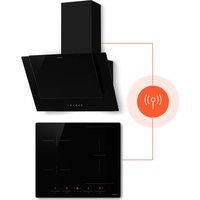
HaloSync - Cooker Klarstein - Free user manual and instructions
Find the device manual for free HaloSync Klarstein in PDF.


| Product type | Induction hob with integrated hood |
| Brand | Klarstein |
| Model | HaloSync |
| Article number | 10047836 |
| Hob dimensions (W x D x H) | 900 x 520 x 60 mm |
| Recess dimensions (W x D) | 860 x 490 mm |
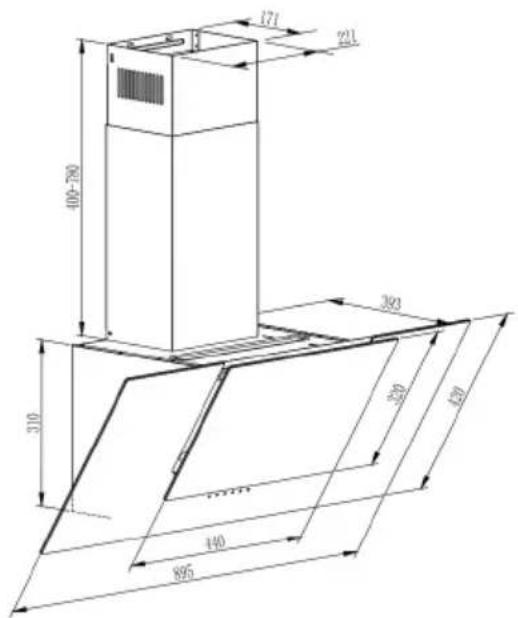
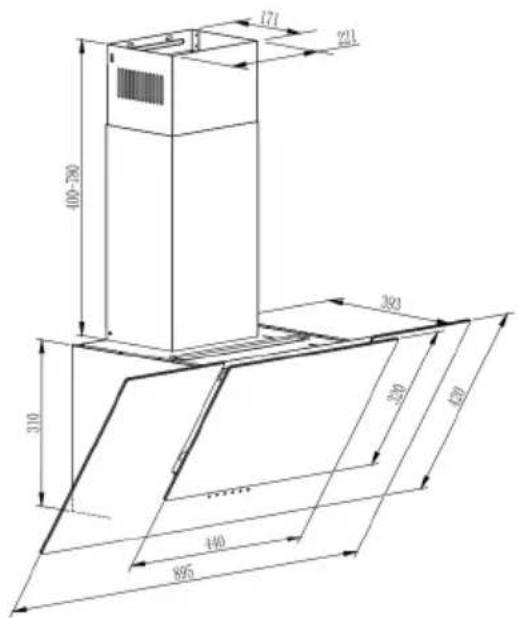
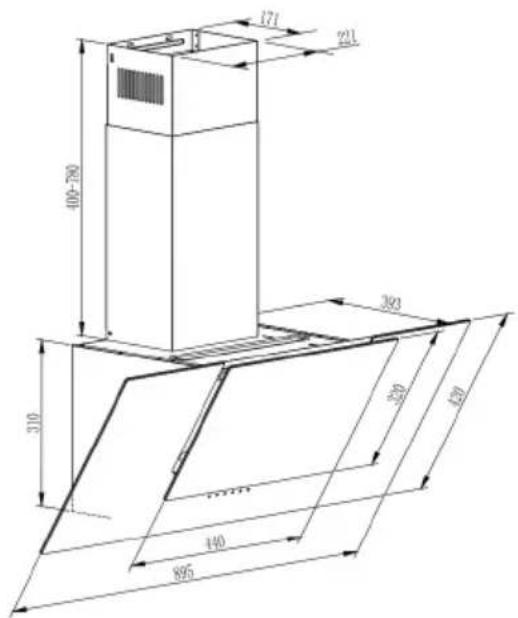
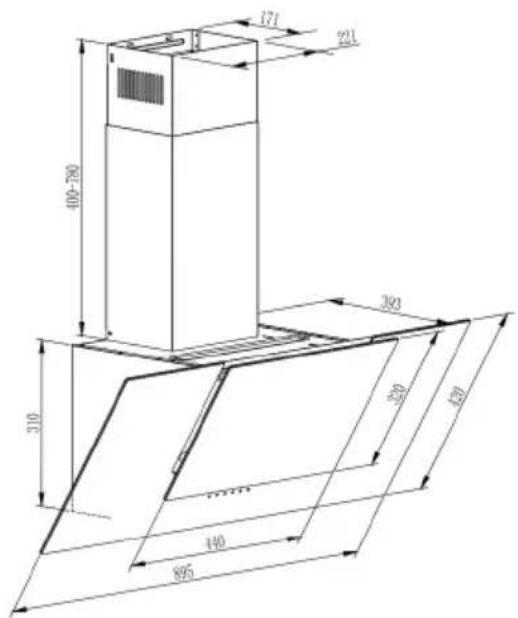
| Hood dimensions (W x D x H) | 595 x 393 x 710 ~ 1090 mm |
| Hob power supply | 220-240 V ~ 50/60 Hz |
| Hob total power | 9400 W |
| Hood power supply | 230 V ~ 50 Hz |
| Hood total power | 93 W |
| Number of cooking zones | 5 (including one flexible zone) |
| Technology | Induction |
| Main functions | Boost, keep warm, Stop&Go, timer, child lock, flexible zone, automatic hood connection |
| Hood speeds | 4 adaptive speeds |
| Hood lighting | LED 1 x 3 W |
| Filters | Grease filter (dishwasher safe), optional charcoal filter (replace every 6 months) |
| Maintenance and cleaning | Ceramic hob cleaner, scraper for residues, monthly cleaning of grease filter |
| Safety | Automatic shut-off, overheating protection, overflow protection, child lock, residual heat indicator (H), pacemaker compatibility to be checked |
| Warranty | 24 months |
Frequently Asked Questions - HaloSync Klarstein
User questions about HaloSync Klarstein
0 question about this device. Answer the ones you know or ask your own.
Ask a new question about this device
Download the instructions for your Cooker in PDF format for free! Find your manual HaloSync - Klarstein and take your electronic device back in hand. On this page are published all the documents necessary for the use of your device. HaloSync by Klarstein.
USER MANUAL HaloSync Klarstein
area
| Category | Value | | -------- | ----- | | 1 | 100 | | 2 | 100 | | 3 | 100 | | 4 | 100 | | 5 | 100 | | 6 | 100 | | 7 | 100 | | 8 | 100 | | 9 | 100 | | 10 | 100 | | 11 | 100 | | 12 | 100 | | 13 | 100 | | 14 | 100 | | 15 | 100 | | 16 | 100 | | 17 | 100 | | 18 | 100 | | 19 | 100 | | 20 | 100 | | 21 | 100 | | 22 | 100 | | 23 | 100 | | 24 | 100 | | 25 | 100 | | 26 | 100 | | 27 | 100 | | 28 | 100 | | 29 | 100 | | 30 | 100 | | 31 | 100 | | 32 | 100 | | 33 | 100 | | 34 | 100 | | 35 | 100 | | 36 | 100 | | 37 | 100 | | 38 | 100 | | 39 | 100 | | 40 | 100 | | 41 | 100 | | 42 | 100 | | 43 | 100 | | 44 | 100 | | 45 | 100 | | 46 | 100 | | 47 | 100 | | 48 | 100 | | 49 | 100 | | 50 | 100 | | 51 | 100 | | 52 | 100 | | 53 | 100 | | 54 | 100 | | 55 | 100 | | 56 | 100 | | 57 | 100 | | 58 | 100 | | 59 | 100 | | 60 | 100 | | 61 | 100 | | 62 | 100 | | 63 | 100 | | 64 | 100 | | 65 | 100 | | 66 | 100 | | 67 | 100 | | 68 | 100 | | 69 | 100 | | 70 | 100 | | 71 | 100 | | 72 | 100 | | 73 | 100 | | 74 | 100 | | 75 | 100 | | 76 | 100 | | 77 | 100 | | 78 | 100 | | 79 | 100 | | 80 | 100 | | Note: The actual values are not provided in the code. I have used the label 'Value' as a placeholder for the value detection. You would need to run the code to get the actual values from the code list. Please note that the actual values would be the result of this example. You would need to run the code to get the actual values from the code list. You would need to run the code to get the actual values from the code list. You would need to run the code to get the actual values from the code list. You would need to run the code to get the actual values from the code list. You would need to run the code to get the actual values from the code list. You would need to run the code to get the actual values from the code list. You would need to run the code to get the actual values from you would need to run the code. You would need to run the code to get the actual values from you would need to run the code.INHALT
PRODUKTDATENBLATT INDUKTIONSKOCHFELD
natural_image
Pure electrical circuit lines without any symbols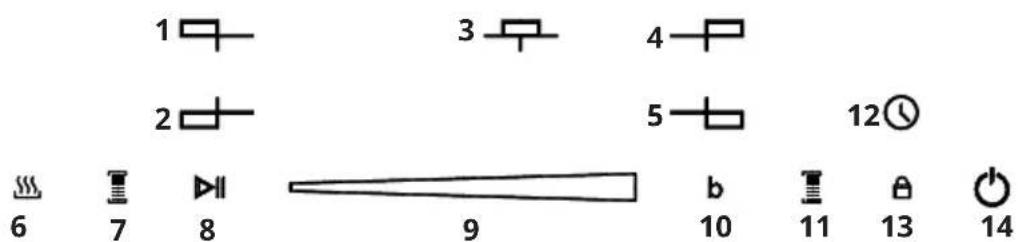
natural_image
Simple line drawing of a cooking pot with a U-shaped magnet attached (no text or symbols)natural_image
Three identical cooking pots with crossed-out X marks, placed horizontally on a surface (no text or symbols)zerkratzen.
natural_image
Simple line drawing of a cooking pot with crossed arrows indicating pressure or heat (no text or symbols)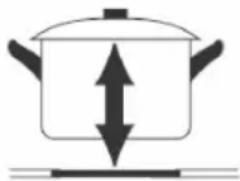
natural_image
Simple line drawing of a cooking pot with upward and downward arrows indicating direction (no text or symbols)natural_image
Diagram showing a rectangular object with vertical measurement lines and two circular shapes with dots, both enclosed by dashed outlines (no text or symbols)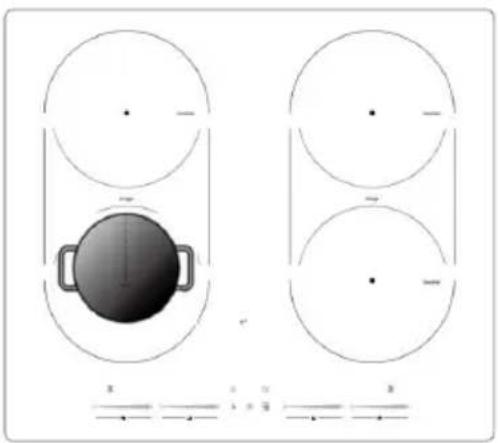
natural_image
Diagram showing two circular objects with handles placed above and below a vertical line, alongside a larger circle with dots inside, both enclosed in concentric ovals (no text or symbols)natural_image
Pure geometric diagram of a T-shaped structure with no text, numbers, or symbolsAbmessungen
EINBAU DER DUNSTABZUGSHAUBE
BEDIENUNG DUNSTABZUGSHAUBE
Bedienfeld


PRODUKTDATENBLATT DUNSTABZUGSHAUBE
natural_image
Symbol of a trash bin with crossed lines and a blank rectangular base (no text or labels)Congratulations on purchasing this device. Please read the following instructions carefully and follow them to prevent possible damages. We assume no liability for damage caused by disregard of the instructions and improper use. Scan the QR code to get access to the latest user manual and more product information.

CONTENTS
Product Data Sheet Induction hob 48
Safety Instructions Induction hob 49
Technical Data Induction hob 52
Induction hob Operating Principle 52
Product Overview Induction hob 53
Hob Installation 54
Mains connecting and wiring diagram 58
Operation induction hob 60
Using the flexible area 67
Device Protection induction hob 69
Heat settings 71
Care and Cleaning 72
Troubleshooting 74
Technical Data range hood 77
Safety Instructions range hood 78
Installation range hood 81
Operation range hood 85
Connect induction hob and range hood 85
Cleaning and Maintenance Range hood 86
Product Data Sheet range hood 87
Disposal Considerations 88
Manufacturer & Importer (UK) 88
PRODUCT DATA SHEET INDUCTION HOB
| Symbol Value Unit | ||||
| Model identification 10047836 | ||||
| Type of hob Built-In Hob | ||||
| Number of cooking zones and/or areas | 5 | |||
| Heating technology (induction cooking zones and cooking areas, radiant cooking zones, solid plates) | Induction cooking zone | |||
| For circular cooking zones or area: diameter of useful surface area per electric heated cooking zone, rounded to the nearest 5 mm | ∅ | Front LeftRear LeftFront RightRear Right | 18181818 | cm |
| For non-circular cooking zones or areas: length and width of useful surface area per electric heated cooking zone or area, rounded to the nearest 5 mm | LW | Flexible 19x39 cm | ||
| Energy consumption per cooking zone or area calculated per kg | EC Electric Cooking Hob | Flexible Front Left Rear Left Front Right Rear Right | 201156191185187 | Wh/kg |
| Energy consumption for the hob calculated per kg | EC Electric Cooking Hob | 190 Wh/kg | ||
SAFETY INSTRUCTIONS INDUCTION HOB
Electrical Shock Hazard
- Disconnect the device from the power supply before any maintenance or repairs are carried out on the device.
- Connection to a good earth wiring system is essential and mandatory.
- Alterations to the domestic wiring system must only be made by a qualified electrician. Failure to follow this advice may result in electrical shock or death.

CAUTION
Risk of injury! Panel edges are sharp. Failure to use caution could result in injury or cuts.
General Instructions
- Read these instructions carefully before installing or using this appliance.
- No combustible material or products should be placed on this appliance at any time.
- Please make this information available to the person responsible for installing the appliance as it could reduce your installation costs.
- In order to avoid a hazard, this appliance must be installed according to these instructions for installation.
- This appliance is to be properly installed and earthed only by a suitably qualified person.
- This appliance should be connected to a circuit which incorporates an isolating switch providing full disconnection from the power supply.
- Failure to install the appliance correctly could invalidate any warranty or liability claims.
- This appliance can be used by children aged from 8 years and above and persons with reduced physical, sensory or mental capabilities or lack of experience and knowledge if they have been given supervision or instruction concerning use of the appliance in a safe way and understand the hazards involved.
- Children shall not play with the appliance. Cleaning and user maintenance shall not be made by children without supervision.
- If the supply cord is damaged, it must be replaced by the manufacturer, its service agent or similarly qualified persons in order to avoid a hazard.
WARNING
Risk of electric shock! To reduce the risk of electric shock, switch off the appliance immediately if the surface (hob surface made of glass ceramic or similar material that protects live parts) is cracked.
- Metallic objects such as knives, forks, spoons and lids should not be placed on the hob surface since they can get hot.
- Do not use a steam cleaner to clean your cook-top.
- The appliance is not intended to be operated by means of an external timer or separate remote-control system.
- The cooking process has to be supervised. A short term cooking process has to be supervised continuously.
- Never leave the appliance unattended while cooking, as cooking with oil or fat in particular can be dangerous and result in the outbreak of a fire. Never try to extinguish a grease fire with water! Instead, switch off the appliance and cover the flame with a fire blanket or a pot lid.

WARNING
Risk of fire! Do not store other items on the cooking surfaces, except pans and pots.
Electrical Shock Hazard
- Do not cook on a broken or cracked cook-top. If the cook-top surface should break or crack, switch the appliance off immediately at the mains power supply (wall switch) and contact a qualified technician.
- Switch the cook-top off at the wall before cleaning or maintenance. Failure to follow this advice may result in electrical shock or death.
Health Hazard
- This appliance complies with electromagnetic safety standards. However, persons with cardiac pacemakers or other electrical implants (such as insulin pumps) must consult with their doctor or implant manufacturer before using this appliance to make sure that their implants will not be affected by the electromagnetic field.
- Failure to follow this advice may result in death.
CAUTION
Risk of burns! During use, accessible parts of this appliance will become hot enough to cause burns. Do not let your body, clothing or any item other than suitable cookware contact the Induction glass until the surface is cool.
- Keep children away.
- Handles of saucepans may be hot to touch. Check saucepan handles do not overhang other cooking zones that are on.
- Keep handles out of reach of children.
- Failure to follow this advice could result in burns and scalds.

WARNING
Risk of injury! The razor-sharp blade of a cook-top scraper is exposed when the safety cover is retracted. Use with extreme care and always store safely and out of reach of children. Failure to use caution could result in injury or cuts.
General Instructions
- Never leave the appliance unattended when in use. Boil over can cause smoking and greasy spill overs that may ignite.
- Never use your appliance as a work or storage surface.
- Never leave any objects or utensils on the appliance.
- Do not place or leave any magnetizable objects (e.g. credit cards, memory cards) or electronic devices (e.g. computers, MP-3 players) near the appliance, as they may be affected by its electromagnetic field.
- Never use your appliance for warming or heating the room.
- After use, always turn off the cooking zones and the cook-top as described in this manual (i.e. by using the touch controls).
- Do not rely on the pan detection feature to turn off the cooking zones when removing the pans.
- Do not allow children to play with the appliance or sit, stand, or climb on it.
- Do not store items of interest to children in cabinets above the appliance. Children climbing on the cook-top could be seriously injured.
- Do not leave children alone or unattended in the area where the appliance is in use.
- Children or persons with a disability which limits their ability to use the appliance should have a responsible and competent person to instruct them in its use. The instructor should be satisfied that they can use the appliance without danger to themselves or their surroundings.
- Do not repair or replace any part of the appliance unless specifically recommended in the manual. All other servicing should be done by a qualified technician.
- Do not place or drop heavy objects on your cook-top.
- Do not stand on your cook-top.
- Do not use pans with jagged edges or drag pans across the Induction glass surface as this can scratch the glass.
- Do not use scourers or any other harsh abrasive cleaning agents to clean your cook-top, as these can scratch the Induction glass.
- This appliance is intended to be used in household and similar applications such as:
- staff kitchen areas in shops,
- offices and other working environments;
- farm houses;
- by clients in hotels, motels and other residential type environments and
- bed and breakfast type environments.
- The appliance and its accessible parts become hot during use.
- Care should be taken to avoid touching heating elements.
• Children less than 8 years of age shall be kept away unless continuously supervised.
TECHNICAL DATA INDUCTION HOB
| Item number 10047836 | |
| Cooking zones 5 zones | |
| Power supply 220-240 V ~ 50-60 Hz | |
| Total output 9400 W | |
| Power consumption in standby mode | |
| Power consumption in off mode | |
| Product size LxWxH (mm) 900x520x60 | |
| Built-in dimension AxB (mm) 860x490 |
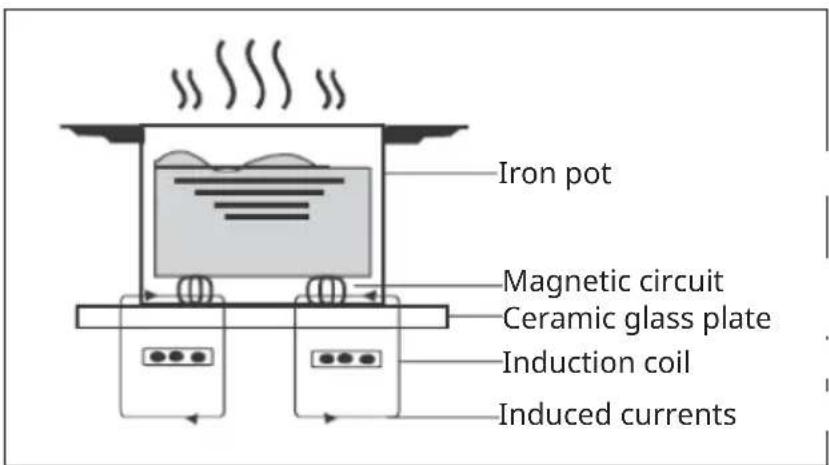
INDUCTION HOB OPERATING PRINCIPLE
Induction cooking is a safe, advanced, efficient, and economical cooking technology. It works by electromagnetic vibrations generating heat directly in the pan, rather than indirectly through heating the glass surface. The glass becomes hot only because the pan eventually warms it up.
PRODUCT OVERVIEW INDUCTION HOB

natural_image
Pure electrical circuit lines without any symbols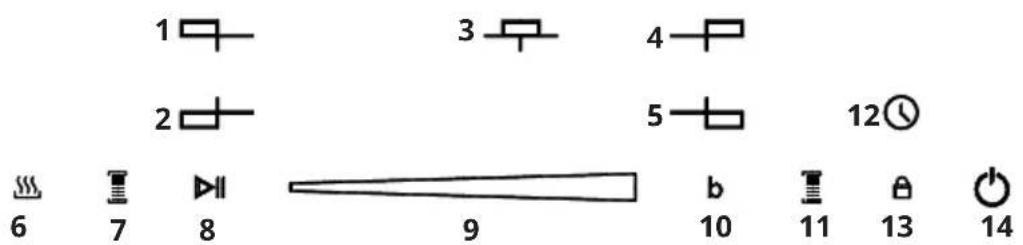
| 1 Top Left Heat Zone 8 Stop&Go function button | |||
| 2 Bottom Left Heat Zone 9 Slider control | |||
| 3 Centre Heat Zone 10 Boost | |||
| 4 | Top Right Heat Zone | 11 | Right flex zone button |
| 5 Bottom Right Heat Zone 12 Timer button | |||
| 6 Keep Warm button 13 Child-lock button | |||
| 7 Left flex zone button 14 On/Off button | |||
HOB INSTALLATION
Selection of installation equipment
- Cut out the work surface according to the sizes shown in the drawing.
- For the purpose of installation and use, a minimum of 50 mm space shall be preserved around the hole.
- Be sure the thickness of the work surface is at least 30 mm. Please select heat-resistant and insulated work surface material (Wood and similar fibrous or hygroscopic material shall not be used as work surface material unless impregnated) to avoid the electrical shock and larger deformation caused by the heat radiation from the hotplate.
As shown below.
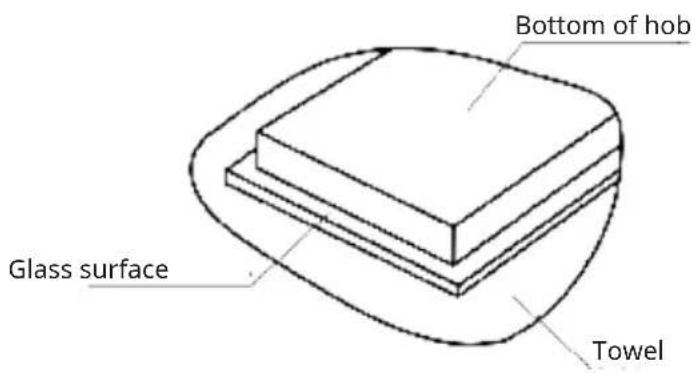
Note: The safety distance between the sides of the hob and the inner surfaces of the worktop should be at least 3 mm.
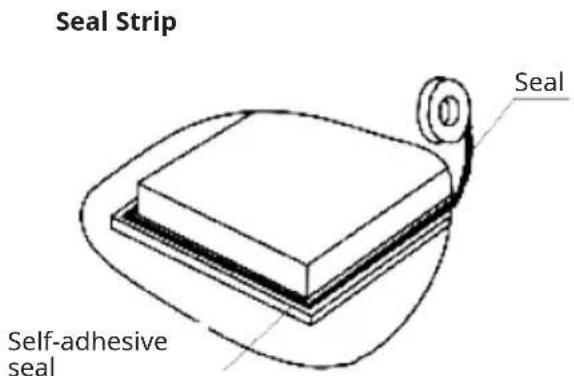
- Apply the strip seal, supplied with the hop, which is for sealing it onto the work surface.
- Do not use silicone. Apply the seal to the edge of the bottom of the hob, leaving about 3mm from the edge of glass.
- Apply the seal all around the circumference.
Before Installing the Hob
Make sure that:
- The work surface is square and level, and no structural members interfere with space requirements.
- The work surface is made of a heat-resistant and insulated material.
- If the hob is installed above an oven, the oven has a built-in cooling fan.
- The installation will comply with all clearance requirements and applicable standards and regulations.
- A suitable isolating switch providing full disconnection from the mains power supply is incorporated in the permanent wiring, mounted and positioned to comply with the local wiring rules and regulations.
- The isolating switch must be of an approved type and provide a 3 mm air gap contact separation in all poles (or in all active [phase] conductors if the local wiring rules allow for this variation of the requirements).
- The isolating switch will be easily accessible to the customer with the hob installed.
- You consult local building authorities and by-laws if in doubt regarding installation
- You use heat-resistant and easy-to-clean finishes (such as ceramic tiles) for the wall surfaces surrounding the hob.
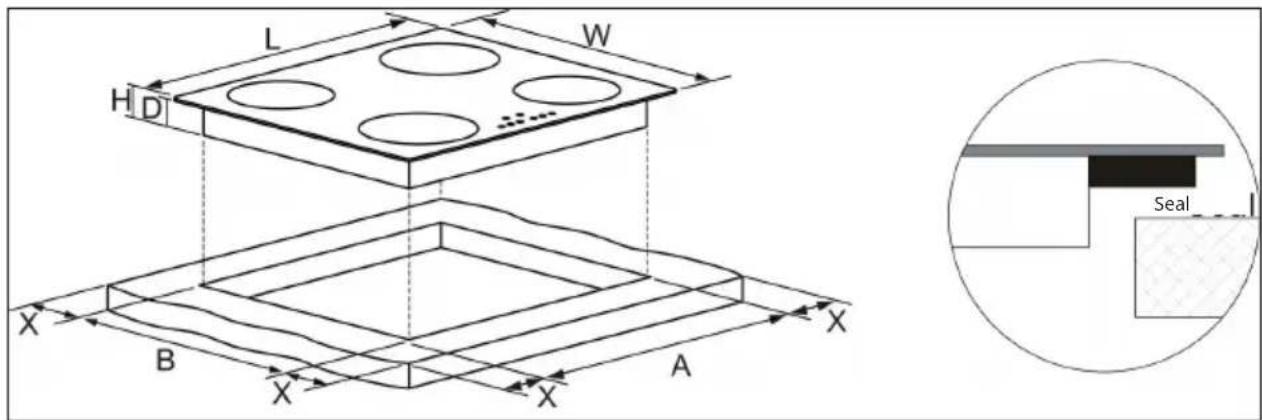
| Model L W | H | D | A | B | X | |||
| 10047836 | 900 | mm | 520 | mm | 60 mm | 56 mm | 860 mm | 490 mm |
Make sure that the hob is well ventilated and that the air inlet and outlet are not blocked. Ensure that the hob is in good working order. As shown below:
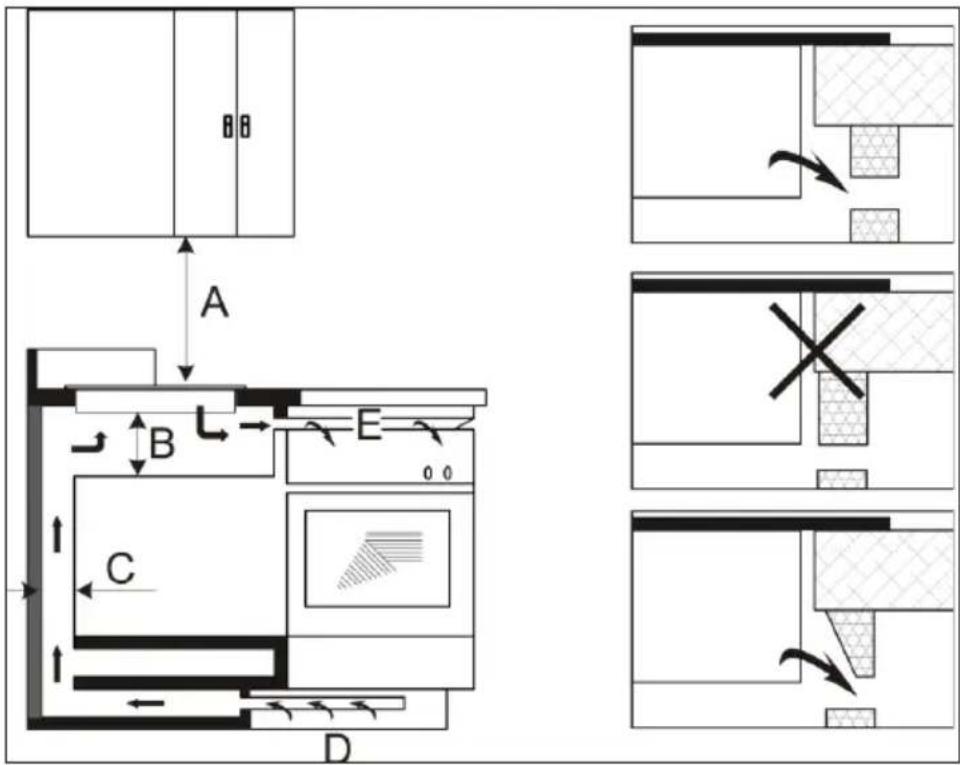
| A (mm) B (mm) C (mm) D E | |||
| 760 50 min. 20 min. Air intake Air exit 5 mm |
- The hob must be installed by qualified personnel. We have professionals at your service. Never attempt to conduct the installation yourself.
- Do not install the hob above cooling equipment, dishwashers or tumble dryers.
- The hob must be installed in such a way as to ensure better heat radiation and enhance its reliability.
- The wall and the area above the work surface must be able to withstand heat.
- To avoid damage, ensure that the sandwich layer and adhesive are heat-resistant.
- Do not use a steam cleaner.
- This hob can only be connected to a supply with a system impedance of no more than 0.427 ohms. If necessary, please consult your supply authority for system impedance information.
Before locating the fixing brackets
The appliance should be placed on a stable, smooth surface (use the packaging). Do not apply force to the controls protruding from the hob. Fix the hob on the work surface by screw four brackets on the bottom of hob (see picture) after installation.
Locating the fixing brackets
- Fix the brackets on the left side and right side by screw.
- Put the induction hob in the cut-out cabinet.

WARNING
Risk of injury! The induction hotplate must be installed by qualified personnel or technicians. We have professionals at your service. Please never conduct the operation by yourself.
After Installing the Hob
Make sure that:
- The power supply cable is not accessible through cupboard doors or drawers.
- There is adequate flow of fresh air from outside the cabinet to the base of the hob.
- If the hob is installed above a drawer or cupboard space, a thermal protection barrier is installed below the base of the hob.
- The isolating switch is easily accessible by the customer.
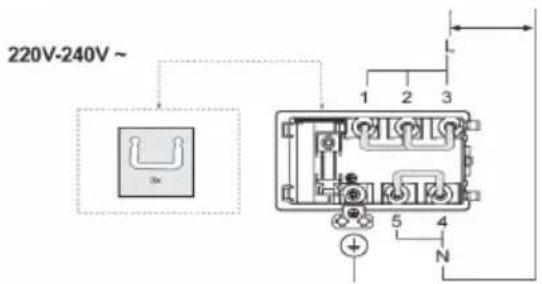
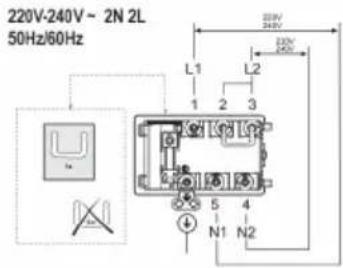
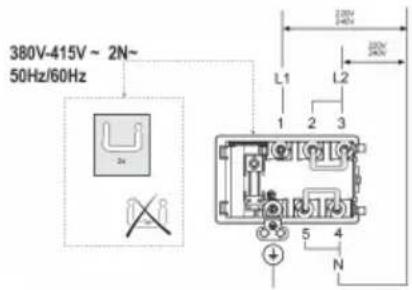
MAINS CONNECTING AND WIRING DIAGRAM
Connecting the Hob to the Mains Power Supply

WARNING
Risk of injury! This hob must be connected to the mains power supply only by a suitably qualified person.
Before connecting the hob to the mains power supply, check that:
- The domestic wiring system is suitable for the power drawn by the hob.
- The voltage corresponds to the value given in the rating plate
- The power supply cable sections can withstand the load specified on the rating plate.
To connect the hob to the mains power supply, do not use adapters, reducers, or branching devices, as they can cause overheating and fire. The power supply cable must not touch any hot parts and must be positioned so that its temperature will not exceed 75 °C at any point.
Note: Check with an electrician whether the domestic wiring system is suitable without alterations. Any alterations must only be made by a qualified electrician.
Cautions
- The hob should not be installed directly above a dishwasher, fridge, freezer, washing machine or clothes dryer, as the humidity may damage the hob electronics.
- The induction hotplate shall be installed such that better heat radiation can be ensured to enhance its reliability.
- The wall and induced heating zone above the table surface shall withstand heat.
- To avoid any damage, the sandwich layer and adhesive must be resistant to heat.
- A steam cleaner is not to be used.
- If the cable is damaged or to be replaced, the operation must be carried out the by after-sale agent with dedicated tools to avoid any accidents.
- If the appliance is being connected directly to the mains an omnipolar circuit-breaker must be installed with a minimum opening of 3 mm between contacts.
- The installer must ensure that the correct electrical connection has been made and that it is compliant with safety regulations.
- The cable must not be bent or compressed.
- The cable must be checked regularly and replaced by authorised technicians only.
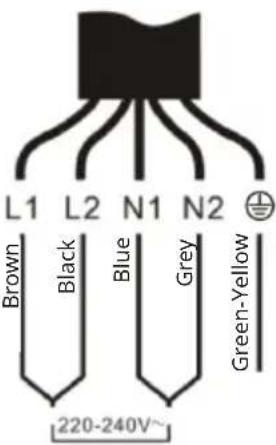
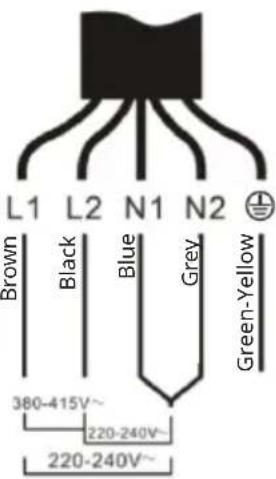
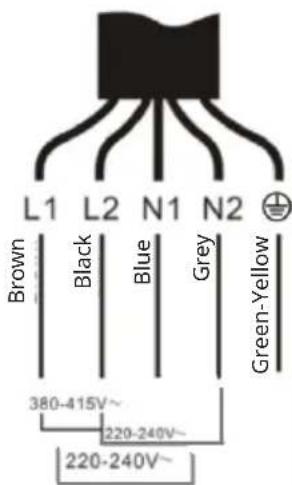
OPERATION INDUCTION HOB
Touch Controls
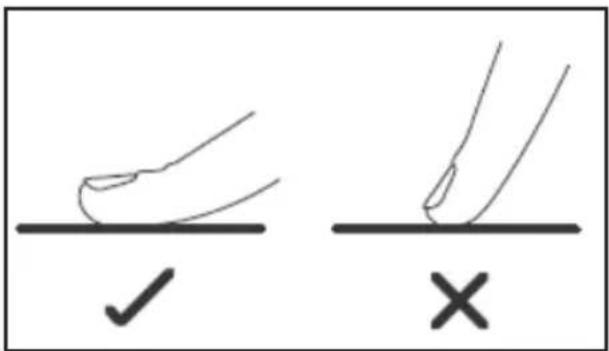
- The controls respond to touch, so you don't need to apply any pressure.
- Use the ball of your finger, not its tip.
- You will hear a beep each time a touch is registered.
- Make sure the controls are always clean, dry, and that there is no object (e.g. a utensil or a cloth) covering them. Even a thin film of water may make the controls difficult to operate.
Choosing the right Cookware
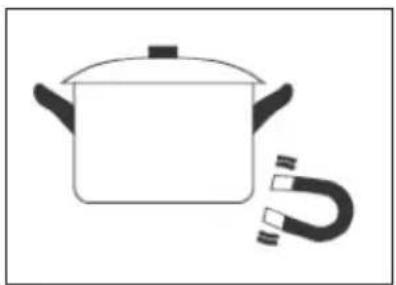
Note: Only use cookware with a base suitable for induction cooking. Look for the induction symbol on the packaging or on the bottom of the pan.
You can check whether your cookware is suitable by carrying out a magnet test. Move a magnet towards the base of the pan. If it is attracted, the pan is suitable for induction.
natural_image
Simple line drawing of a cooking pot with a U-shaped magnet attached (no text or symbols)If you do not have a magnet:
- Put some water in the pan you want to check.
- If does not flash in the display and the water is heating, the pan is suitable.
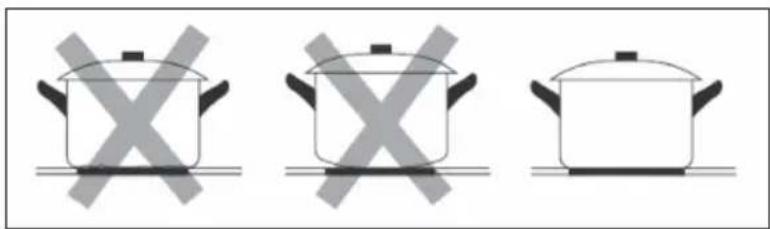
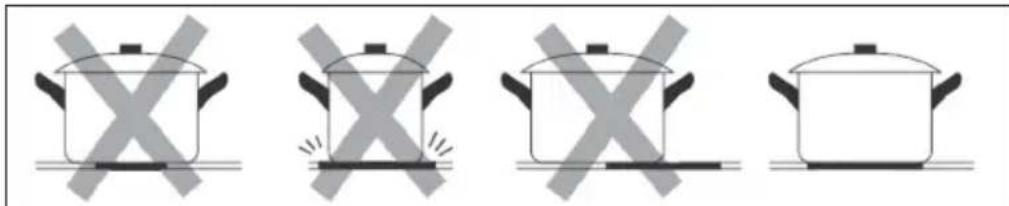
Cookware made from the following materials is not suitable: pure stainless steel, aluminium or copper without a magnetic base, glass, wood, porcelain, ceramic, and earthenware. Do not use cookware with jagged edges or a curved base.
natural_image
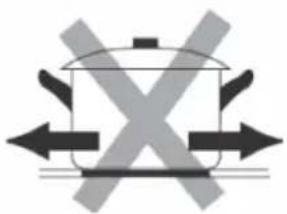
Three identical cooking pots with crossed-out X marks, placed on a flat surface (no text or symbols)Make sure that the base of your pan is smooth, sits flat against the glass, and is the same size as the cooking zone. Use pans whose diameter is as large as the graphic of the zone selected. Using a pot a slightly wider energy will be used at its maximum efficiency. If you use smaller pot efficiency could be less than expected. Pot less than 140 mm could be undetected by the hob. Always centre your pan on the cooking zone. Always lift pans off the Induction hob – do not slide, or they may scratch the glass.
natural_image
Four identical cooking pots with crossed-out X marks, shown in sequence (no text or symbols)Pan Dimension
The cooking zones are, up to a limit, automatically adapted to the diameter of the pan. However the bottom of this pan must have a minimum of diameter according
natural_image
Simple line drawing of a cooking pot with crossed arrows indicating pressure or heat (no text or symbols)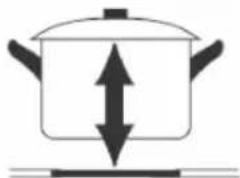
natural_image
Simple line drawing of a cooking pot with upward and downward arrows indicating direction (no text or symbols)to the corresponding cooking zone. To obtain the best efficiency of your hob, please place the pan in the centre of the cooking zone.
| Cooking zone The base diameter of induction cookware | ||
| 180 mm 140 180 | ||
| 290 mm 200 290 | ||
| 190x390 mm 250 390 | ||
Note: The measurements given above may vary according to the quality of the pan used.
Start cooking
After turning on the appliance, the buzzer will beep once and all the indicators will light up for one second, then turn off. This indicates that the appliance has entered standby mode.
- Pressing the ON/OFF control for one second, all indicators will show “-”.
- Place a suitable pan on the cooking zone you wish to use. Ensure that both the bottom of the pan and the cooking zone surface are clean and dry.
Setting the heat level of the cooking zone
-
When you touch the heating zone selection control, an indicator light next to the key will flash.
-
Select a heat setting by touching the slider control.
Note: If you don't choose a heat setting within 1 minute, the induction hob will automatically switch off. You will need to start again with step 1. You can change the heat setting at any time while cooking.
When you have finished cooking
- Touch the heating zone selection that you want to turn off.
- Turn off the cooking zone by touching the slider control. Make sure the display shows "0".
- Turn the whole cooktop off by touching the "ON/OFF" control.
CAUTION
Beware of hot surfaces! "H" will show which cooking zone is hot to touch. It will disappear when the surface has cooled down to a safe temperature. It can also be used as an energy saving function if you want to heat further pans, use the hotplate that is still hot.
Boost function
You can use the boost function to increase the power of the relevant cooking zone for a maximum of 5 minutes. This function can reduce the cooking time, which is great for cooking in a hurry!
To use the boost function when the hob is operating, follow the steps below:
- Press the zone selection button to activate the zone for which you want to use the boost function. The display then starts flashing. The function can work in any cooking zone.
- Touch the boost button. The display will show "P" to indicate that the zone is boosting.
Note: The maximum operating period of the boost function is 5 minutes. When the boost finishes, the cooking zone returns to level 9 automatically.
To cancel the boost function
After 5 minutes the boost function is automatically cancelled. Follow the procedure below, if you want to cancel the boost function earlier:
- If you want to cancel the boost function within five minutes, select the cooking zone where the boost is active.
- Touch the slider control to cancel the boost function and to select the desired level.
Child-lock function
You can lock the controls to prevent unintentional use (e.g. children accidentally turning on the cooking zones) by activating the Child-lock function.
When the controls are locked, all other touch control buttons are disabled except for the ON/OFF and Child Lock buttons.
To lock the controls
Press the child-lock control button for 3 seconds. The timer indicator will show "Lo" and the child-lock function will then be active.
To unlock the controls
- Ensure that the hob is switched on.
- Press and hold the child-lock control knob for around 3 seconds. "Lo" will disappear from the timer display, the child-lock function is then inactive.
- You can now use your hob.
Note: In child-lock mode, all control buttons are disabled except for the ON/OFF button and the child lock button. You can always switch off the hob with the ON/OFF control in an emergency, but you must unlock the hob the next time you use it.
Timer
When the hob is on, you can use the timer in two different ways:
- You can use it as a minute-minder. In this case, the timer will not switch off any of the cooking zones when the set time has elapsed.
- You can set it to switch off one or more zones when the set time has elapsed.
- You can set the minute minder/timer for up to 99 minutes.
Using the timer as a minute minder
- You can only set the minute minder once the cooking zone power setting has finished.
- Touch the timer control and "10" will appear in the timer display, with "0" blinking.
- Set the time by touching the slider control.
- Touch the timer control again and "1" will flash.
- Set the time using the slider control.
- Once the timer is set, it will begin counting down immediately. The display will show the remaining time.
- The buzzer will beep for 30 seconds and the timer indicator will show "--" when the set time has finished.
Setting the timer for switching off one cooking zone
Activation
- Touch the heating zone selection control that you want to set the timer for. The indicator is flashing.
- Press the timer control. "0" will start flashing and "10" will appear in the timer display.
- Set the time by touching the slider control.
- Touch the timer control again and "1" will start flashing.
- Once the time has been set, the countdown will begin immediately. The display will show the remaining time.
Note: A red dot will appear in the bottom right corner of the power level indicator to show that the zone is selected.
- When the cooking timer expires, the corresponding cooking zone will be switched off automatically.
Note: Other cooking zones that were turned on previously will continue to operate.
Setting the timer for switching off more than one cooking zone
- When you set a timer for several cooking zones, the relevant zones are indicated by red dots. The timer display shows the minimum timer. The corresponding zone's dot blinks.
- Once the timer has expired, the relevant zone will switch off. Then the new minimum timer will be shown and the dot of the corresponding zone will flash.
Note: If you touch the heating zone selection control, the corresponding timer will be shown in the timer indicator.
Cancelling the timer
- Touch the heating zone selection control that you want to cancel the timer for.
- When touching the timer control, the indicator will flash.
- Touch the slider control to set the timer to "00", the timer is then cancelled.
Keep warm function
Activation
- Touch the heating zone selection control that you wish to use for keeping warm; an indicator light will flash.
- Pressing the keep warm button the display will show .
Deactivation
- Touch the heating zone selection control and an indicator light will flash next to the selected key.
- Sliding the control will cancel the warm function and allow you to select the desired level.
- The function can be used with any cooking zone.
- The keep warm function lasts for 8 hours unless exited.
- In the heat preservation process, the pans should have lids.
Stop & Go function
Make cooking easy! When you are cooking, the doorbell rings, the phone rings or a child shouts from another room. Do you need to leave the kitchen? Dinner could burn or take longer to cook if you switch everything off.
The Stop & Go function can switch off all zones. When you return, one more touch of the button will restart the hob where it left off, allowing you to continue cooking.
Activate the Stop & Go function
- To activate the Stop & Go function, make sure, that the induction hob is in the working state.
- Then press the Stop & Go function button once. The cooking zone indicator will show "II". The operation of the induction hob will be deactivated within the scope of all cooking zones and the hob will power off after one minute.
- The range hood will continue to work.
Deactivate the Stop & Go function.
To cancel the Stop & Go function, press the Stop & Go function button again after returning. All the programme settings will then return to their original values and the Stop & Go indicator "II" will disappear from all the displays.
USING THE FLEXIBLE AREA
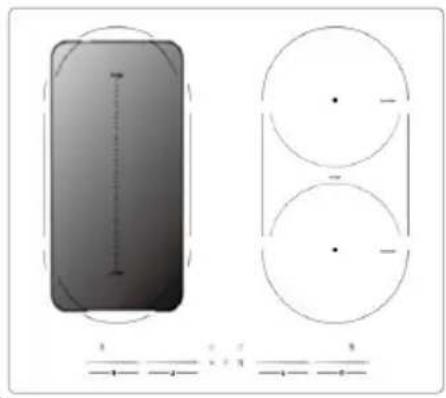
- This area can be used as a single zone or split into two different zones according to your cooking needs at any time.
- The free area comprises two independent inductors that can be controlled separately.
Use the flexible area as one big zone
To activate the free area as a single big zone, touch the flex zone button. When touching the flex zone button, the indicator will show and "5"
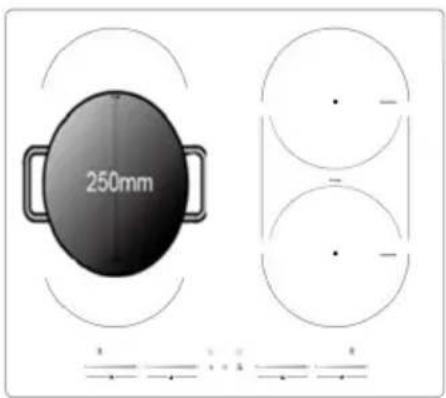
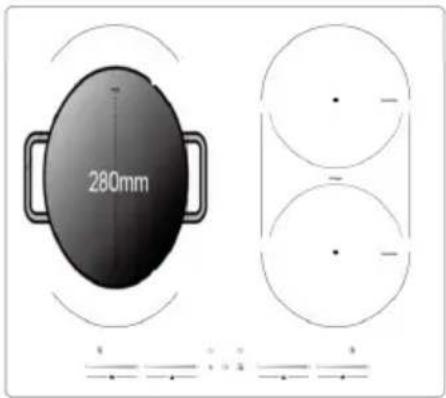
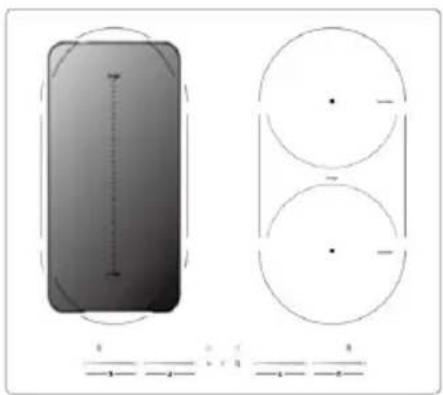
When using the flexible are as a big zone, we recommend using the following cookware:
Cookware: 250 mm or 280 mm diameter cookware (square or oval cookware are acceptable)
natural_image
Two abstract geometric diagrams: a rectangle with vertical lines and a circle with two dots, both without any text or symbols.Note: We do not recommend other options except for the three operations above as otherwise the heating of the appliance might be affected.
Use the flexible area as two separate zones
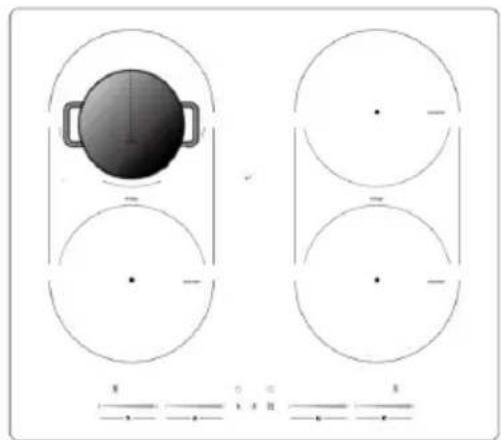
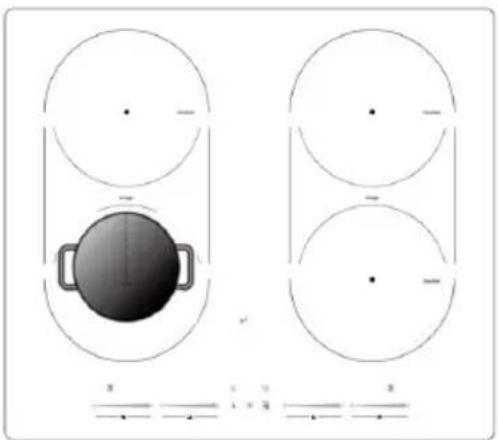
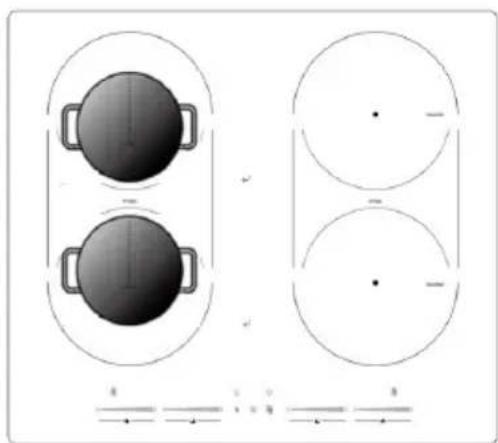
If you want to use the flexible area as two different zones, there are two heating options available.
- Place a pan on either the top or bottom left-hand side of the flexible zone.
natural_image
Diagram showing two identical circular shapes with internal geometric elements, no text or symbols present.- Put two pans on both sides of the flexible zone.
natural_image
Diagram showing two circular objects with handles inside ovals, separated by a horizontal line and a vertical line below (no text or symbols)Note: Make sure that the pan used is bigger than 14 cm.
DEVICE PROTECTION INDUCTION HOB
Detection of pan and small articles
If the display flashes alternately with the heat setting:
- you have not placed a pan on the correct cooking zone or,
- the pan you're using is not suitable for induction cooking or,
- the pan is too small or not properly centred on the cooking zone.
- NO heating takes place unless there is a suitable pan on the cooking zone. The display will automatically turn off after 1 minute if no suitable pan is placed on it.
No heating takes place unless there is a suitable pan on the cooking zone. The display will automatically turn off after 1 minute if no suitable pan is placed on it. When an unsuitable size or non-magnetic pan (e.g. aluminum), or some other small item (e.g. knife, fork, key) has been left on the hob, the corresponding cooking zone will automatically turn off in 1 minute.
Over-temperature protection
A built-in temperature sensor can monitor the temperature inside the hob. If an excessive temperature is detected, the hob will automatically stop operating.
Overflow protection
For your safety, the programmer will automatically shut down if you spill boiling liquid or spill a wet cloth on the touch control panel. All control buttons except the ON/OFF and child lock buttons will be disabled unless you wipe the touch control area dry.
Residual heat warning
When the hob has been in use for some time, there will be some residual heat. The letter "H" appears in the power setting display to warn you not to touch it.
This can also be used as an energy-saving function: if you want to heat other pans, use the hot plate that is still hot.
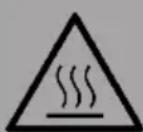
CAUTION
Risk of burns! During use, accessible parts of this appliance will become hot enough to cause burns. Do not let your body, clothing or any item other than suitable cookware contact the Induction glass until the surface is cool.
Auto Shutdown protection
Auto shut down is a safety protection function for your induction hob. The hob will shut down automatically if you forget to finish your cooking. The default working time for various power levels are shown in the below table:
| Power level | 1-3 4-6 | 7-9 | |
| Default working time (hours) | 8 4 2 |
When the pot is removed, the induction hob can stop heating immediately and the hob automatically switch off after 1 minute.

Caution! Danger of personal injury
People with a pacemaker should consult with their doctor before using this unit.
HEAT SETTINGS

WARNING
Take care when frying as the oil and fat heat up very quickly. At extremely high temperatures oil and fat will ignite spontaneously and this presents a serious fire risk.
Heat settings
The following settings are guidelines only. The exact setting will depend on several factors, including your cookware and the amount you are cooking. Experiment with your induction hob to find the settings that suit you best.
| Heat settings Suitability | |
| 1-2 Delicate warming | for small amounts of foodMelting chocolate, butter and foods that burn quicklyGentle simmering, slow warming |
| 3-4 Reheating, rapid | simmering, cooking rice |
| 5-6 Pancakes | |
| 7-8 Cooking pasta | |
| 9 Stir-frying, searing, | bringing soup to the boil, boiling water |
CARE AND CLEANING
Note: Always switch off the device and let it cool down before cleaning.
| What? How? Important! | ||
| Everyday soiling on glass (fingerprints, marks, stains left by food or non-sugary spillovers on the glass) | 1. Switch the power to the cook-top off.2. Apply a cook-top cleaner while the glass is still warm (but not hot!)3. Rinse and wipe dry with a clean cloth or paper towel.4. Switch the power to the cook-top back on. | ·When the power to the cook-top is switched off, there will be no “hot surface” indication but the cooking zone may still be hot! Take extreme care.·Heavy-duty scourers, some nylon scourers and harsh/ abrasive cleaning agents may scratch the glass. Always read the label to check if your cleaner or scourer is suitable.·Never leave cleaning residue on the cook-top: the glass may become stained. |
| Boilovers, melts, and hot sugary spills on the glass. | Remove the dirt with a carpet knife, razor blade or hob scraper suitable for Induction glass cook-tops, but be careful not to burn yourself on the hot hob.1. Switch the power to the cook-top off.2. Hold the blade or utensil at a 30° angle and scrape the soiling or spill to a cool area of the cook-top.3. Clean the soiling or spill up with a dish cloth or paper towel.4. Follow steps 2 to 4 for “Everyday soiling on glass” above. | ·Remove the stains and splashes immediately, as they are more difficult to remove once they have become cold.·Attention: Risk of injury! As soon as the hob scraper’s safety cover is removed, the sharp blade sticks out. Handle it carefully so that you do not injure yourself. Always store the scraper with the safety cover on, out of the reach of children. Always store the scraper with the protective cover on, out of the reach of children. |
| Spillovers on the touch controls | 1. Switch the power to the cook-top off.2. Soak up the spill.3. Wipe the touch control area with a clean damp sponge or cloth.4. Wipe the area completely dry with a paper towel.5. Turn the hotplate back on. | • The cook-top may beep and turn itself off, and the touch controls may not function while there is liquid on them. Make sure you wipe the touch control area dry before turning the cook-top back on. |
TROUBLESHOOTING
| Problem Possible causes | Possible solutions | |
| The cooktop cannot be turned on. | No power. Make sure the cooktop is connected to the power supply and that it is switched on. Check whether there is a power outage in your home or area. If you've checked everything and the problem persists, call a qualified technician. | |
| The touch controls are unresponsive. | The controls are locked. Unlock the controls. | |
| The touch controls are difficult to operate. | There may be a slight film of water over the controls or you may be using the tip of your finger when touching the controls. | Make sure the touch control area is dry and use the ball of your finger when touching the controls. |
| The glass is being scratched. | Rough-edged cookware. Unsuitable, abrasive scourer or cleaning products being used. | Use cookware with flat and smooth bases. See “Choosing the right cookware”. See “Care and cleaning”. |
| Some pans make crackling or clicking noises. | This may be caused by the construction of your cookware (layers of different metals vibrating differently). | This is normal for cookware and does not indicate a fault. |
| The induction hob makes a low humming noise when used on a high heat setting. | This is caused by the technology of induction cooking. | This is normal, but the noise should quieten down or disappear completely when you decrease the heat setting. |
| Fan noise coming from the induction hob. | A cooling fan built into your induction hob has come on to prevent the electronics from overheating. It may continue to run even after you've turned the induction hob off. | This is normal and requires no action. Do not disconnect the device from the power supply while the device's fan is still running. |
| Pans do not become hot and appears in the display. | 1. The induction hob cannot detect the pan because it is not suitable for induction cooking.2. The induction hob cannot detect the pan because it is too small for the cooking zone or not properly centred on it. | Use cookware suitable for induction cooking. See section „Choosing the right cookware“. Centre the pan and make sure that its base matches the size of the cooking zone. |
| The induction hob or a cooking zone has turned itself off unexpectedly, a tone sounds and an error code is displayed (typically alternating with one or two digits in the cooking timer display). | Technical fault. Please make a | note of the error code, switch off the device or disconnect the device from the power supply and contact customer service or a qualified electrician. |
| The appliance does not work | Break in power supply Please check that the main power supply is normal; whether the leakage protection switch is off; if there is a blown fuse, replace it with a new one; if the main power supply is normal, check whether the plug is properly connected with the socket; if the hob has a wire connection type, disconnect the power supply, check whether the wire is loose; disconnect the power supply, check whether the main plug is off; if the above reasons can be excluded, should the appliance be faulty, send it to the service centre for repair. | |
| During heating, the appliance stops working | Off-Timer is set Check whether the delay off function timer is set. If the delay off function is set, the unit will stop when the delay off time has elapsed. | |
Failure Display and Inspection
The induction hob is equipped with a self diagnostic function. With this test the technician is able to check the function of several components without disassembling or dismounting the hob from the working surface.
| Error Code | Possible causes What to do | |
| U | No pan or pan unsuitable No | pan, please place the correct pan. PCB synchronisation or drive circuit error, please return to service centre for repair. |
| F7/F8 Abnormal supply voltage Please inspect whether power supply is normal. Power on after the power supply is normal. | ||
| F4/F5 Temperature sensor of the IGBT failure | Please contact the supplier. | |
| F1/F2/Fb | Temperature sensor failure Please contact the supplier. | |
| F3/F6/FA | Bad induction hob heat radiation | Please restart after the induction hob has cooled down. |
| F0 PCBA co | mmunication failure | Please contact the supplier. |
The above are the judgment and inspection of common failures.
Please do not disassemble the unit by yourself to avoid any dangers and damages to the induction hob and please contact the supplier.
TECHNICAL DATA RANGE HOOD
| Article number 10047835 | |
| Power supply 230 V~ 50 Hz | |
| Light power 1x3 W | |
| Motor power 90 W | |
| Total Power 93 W | |
| Motor 1 | |
| Diameter of outlet adaptor 150 mm | |
| Dimensions in mm (LxWxH) 595x393x710 ~ 1090 |
SAFETY INSTRUCTIONS RANGE HOOD
- Thank you for purchasing this range hood. Please read the instruction manual carefully before you use the range hood, and keep it in a safe place.
- The installation work must be carried out by a qualified electrician or competent person. Before you use the range hood, make sure that the voltage (V) and the frequency (Hz) indicated on the range hood are exactly the same as the voltage and the frequency in your home.
- The manufacturer and the agent will not bear any responsibility for the damage caused by inappropriate installation and usage.
- Children under the age of 8 must not use the range hood.
- The appliance is not intended for commercial use, but only for household and similar environments.
- The range hood and its filter mesh should be cleaned regularly in order to keep it in good working order.
- Before cleaning, switch the power off at the main supply.
- Clean the range hood according to the instruction manual and keep the range hood from the danger of burning.
- Prohibit putting the range hood by fire.
- If the appliance does not function normally, contact the manufacturer or a specialist company.
- This device may be only used by children 8 years old or older and persons with limited physical, sensory and mental capabilities and / or lack of experience and knowledge, provided that they have been instructed in use of the device by a responsible person who understands the associated risks.
- If the supply cord is damaged, it must be replaced by the manufacturer, its service agent or similarly qualified persons in order to avoid a hazard.
- If the range hood is used at the same time as appliances burning gas or other fuels, the room must be adequately ventilated.
- Do not flambé under the range hood. Accessible parts may become hot when used with cooking appliances.
Important hints on installation
- The air must not be discharged into a flue that is used for exhausting fumes from appliances burning gas or other fuels (not applicable to appliances that only discharge the air back into the room).
- Regulations concerning the discharge of air have to be fulfilled.
Important notes about the extraction mode

WARNING
Risk of poisoning from exhaust gases sucked back. Never operate the device in extraction mode simultaneously with an open flue appliance when there is not adequate airflow guaranteed.
Open flue combustion equipment (for example, gas, oil, wood or coal-fired heaters, tankless water heaters, water heaters) pulls combustion air from the room and runs it through an exhaust pipe or chimney to the outside. In the extraction mode, indoor air is removed from the kitchen and the adjacent rooms - without sufficient air intake this creates a vacuum. Toxic gases from the chimney or extraction flue can thereby be sucked back into the living spaces.
- Always ensure that a sufficient supply of fresh air is guaranteed and that the air can circulate.
- An air supply / extractor box alone does not ensure compliance with the limit value.
Safe operation is only possible when the negative pressure in the room where the appliance is located does not exceed 4 Pa (0.04 mbar). This can be achieved when the air required for combustion can flow through openings that are not closable, for example in doors, windows, in conjunction with an air supply / extractor box or through other technical measures. In any case, consult a qualified chimney sweep who can assess the entire ventilation of your house and propose appropriate measures for adequate ventilation.
If the hood is used exclusively in the recirculation mode, unrestricted operation is possible.
Important note on disassembly of the device
- Disassembly is similar to installation/assembly in reverse order.
• Take a second person to help you during disassembly to avoid injuries.
OVERVIEW RANGE HOOD
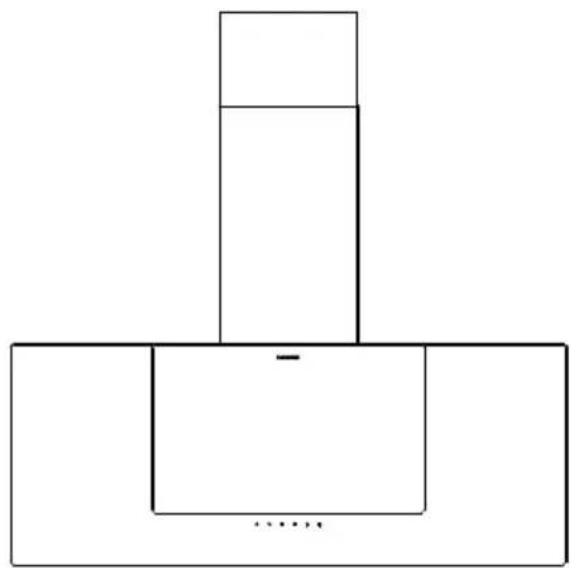
natural_image
Pure geometric diagram of a T-shaped structure with no text, numbers, or symbolsDimensions
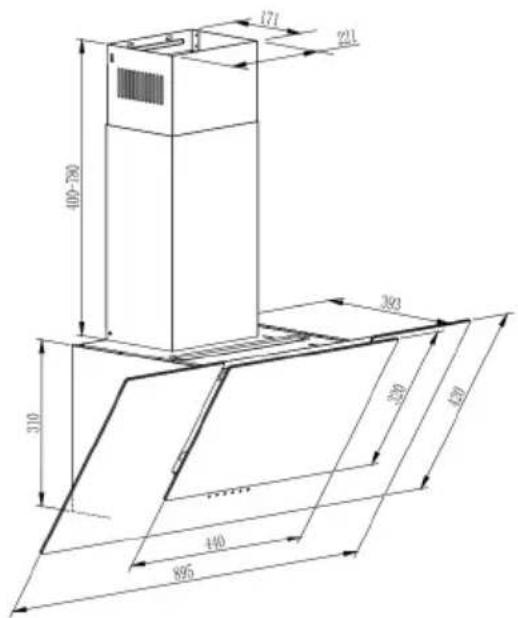
INSTALLATION RANGE HOOD
Installation (Vent outside)
Note: When the range hood and appliance supplied with energy other than electricity are simultaneously in operation, the negative pressure in the room must be not exceed 4 Pa ( 4 × 10^-5 Bar).
Installation (Vent inside)
If you do not have an outlet to the outside, exhaust pipe is not required and the installation is similar to the one show in section "Installation (Vent outside)".
Important Information for the Installation of Exhaust Air Ducts
The following rules must be strictly observed to ensure optimum air extraction. Failure to follow these instructions will reduce performance and increase the noise level of the range hood.
- Lay the exhaust pipe as short and straight as possible.
- Do not use a smaller exhaust duct and do not confine it.
- If flexible ducts are used, the duct must always be mounted tightly in order to minimise pressure loss.
- All installation work may only be carried out by a qualified electrician or a qualified person.
- Do not connect the exhaust duct of the range hood to an existing ventilation system used for another appliance, such as a chimney.
- The angle of the exhaust pipe bend should not be less than 120^ . Align the pipe horizontally. Alternatively, the duct should go up from the starting point and be led to an outer wall.
- After installation, make sure that the range hood is level to prevent grease from accumulating on one side.
- Make sure that the exhaust duct selected for the installation complies with the relevant standards and is fire-resistant.
The minimum distance is 750 mm from the range hood to a gas hob, and is 650 mm to an electric hob. If the installation instructions for gas hobs specify a greater distance, this must be taken into account.
Note: Two or more persons are required to install or move this appliance. Failure to do so can cause physical injuries.
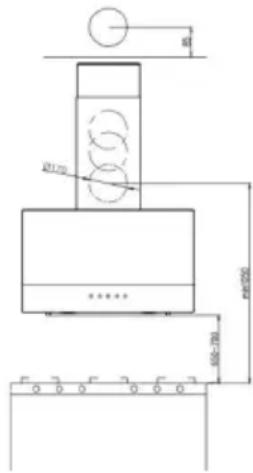
Installation of the ductwork (ducted hoods only)
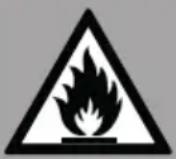
WARNING Risk of fire
To reduce the risk of fire, use metal ductwork is preferred.
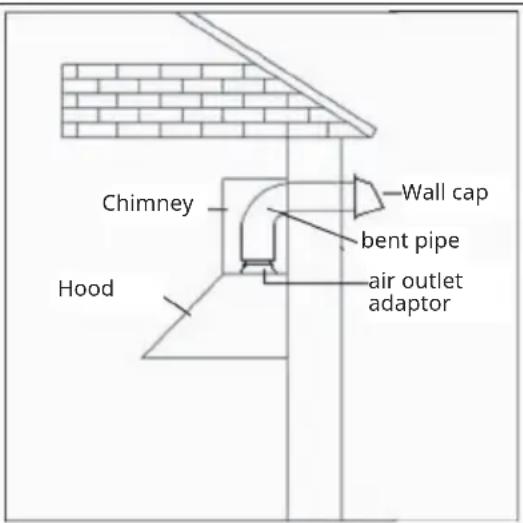
- Decide on the route for the ductwork between the hood and the outside.
- A straight, short duct run will enable the hood to perform at its best.
- Long duct runs, elbows and transitions will reduce its performance. Use as few of these as possible. Larger ducting may be required for optimal performance with longer duct runs.
- Ensure that the air is not discharged into a flue used for exhausting fumes from gas or other fuel-burning appliances. Regulations concerning the discharge of air must be fulfilled.
- Install the wall cap. Connect the round metal ductwork to the cap and work back towards the hood's location. Use duct tape to seal the joints between the sections of the ductwork.
Electrical installation
All electrical wiring must be carried out by a qualified person in accordance with all applicable codes and standards. This range hood must be properly earthed.
Turn off the electrical power at the service entrance before starting work. If the supply cord is damaged, it must be replaced by the manufacturer, their service agent, or a similarly qualified person, in order to avoid creating a hazard.
Installation
The minimum distance from the cooker to the hood must be at least 650 mm. For best capture of cooking impurities, a maximum distance of 750 mm above the cooker is highly recommended. Distances greater than 750 mm above the cooker are at the installer's and user's discretion, provided that the ceiling height and flue length permit this.
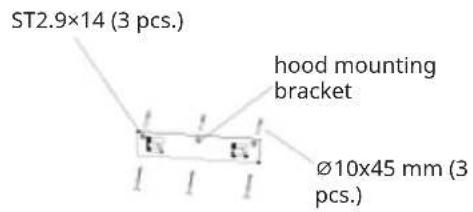
- Drill three holes in the wall and insert three plastic tubes ( 10x45). Use three ST2.9x14 screws to fix the hood body to the top.
-
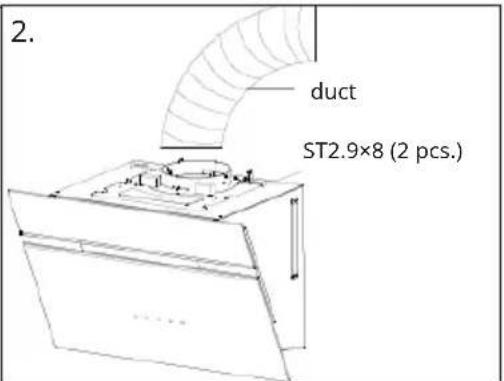
Fix the discharge ducting into the air outlet adapter and use two ST2.9x8 screws to fasten it.
-
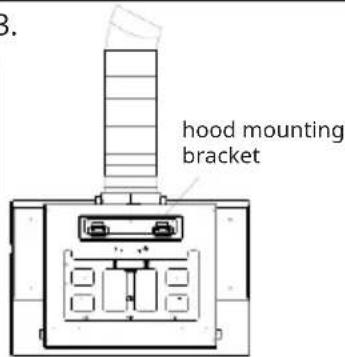
Hang the hood on the appliance using the hood bracket.
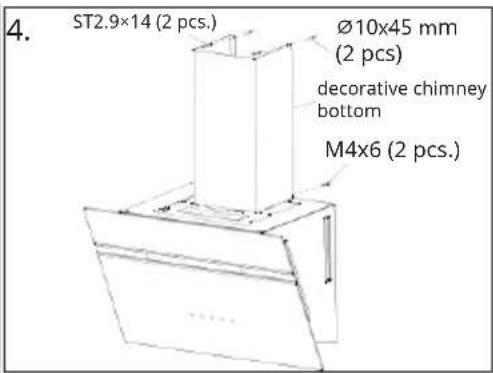
- Drill two holes in the wall and insert two plastic tubes (ø10x45). Use two ST2.9x414 fixings to fix the chimney cover above and two M4x6 fixings to fix the chimney cover underneath.
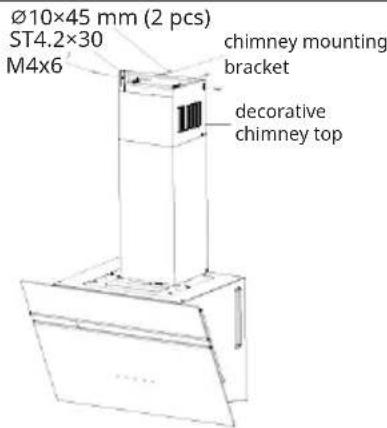
- Carefully slide the decorative chimney top down into the decorative chimney base. Place the decorative chimney bottom carefully into the recessed area of the hood body top. Drill two holes in the wall and attach two plastic tubes ( 10 × 45 mm). Secure the chimney mounting bracket to the wall using two ST4.2x30 screws. Level the hood and secure the chimney with two chimney bracket screws (M4x6).
-
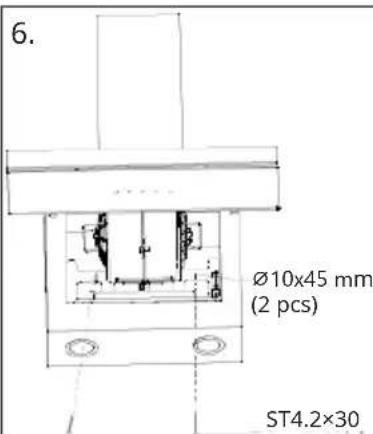
Drill two holes in the wall and insert two plastic tubes (∅10x45). Use two ST4.2x30 screws to fix the hood body underneath.
-
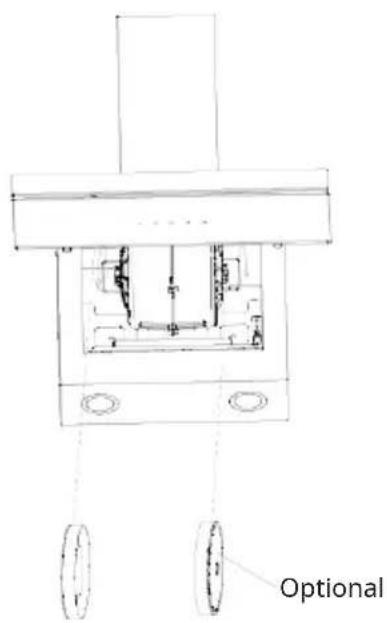
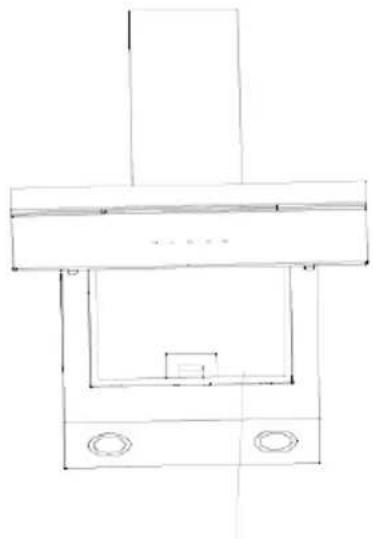
Install filters
- To remove the grease filter, press down on the metal latch. This will release the filter from the hood. Tilt the filter down and remove it.
- To install the grease filter, align the aluminium filter with the slots in the hood. Press in the plastic latch, slide the filter into position and release. Ensure that the filter is securely locked in place after installation.
- Install the charcoal filter (optional) and lock it in place until you hear a click.
- Install the grease filter after installing the charcoal filter.
natural_image
Technical line drawing of a mechanical assembly with mounting holes and a central component (no text or symbols)Aluminium Cassette Filter
- The range hood speed automatically adjusts to the speed of the induction hob.
- The LED light works independet from the induction hob and can be operated separately.
CONNECT INDUCTION HOB AND RANGE HOOD
For the first time after installation, the induction hob and range hood should be switched on at the same time within 30 seconds to pair them. Both appliances have an infrared sensor that allows them to be paired.
The range hood has four speed levels. Once paired, the range hood's speed level automatically adjusts according to the hob's power level.
CLEANING AND MAINTENANCE RANGE HOOD
Turn off the range hood before cleaning and maintenance and unplug the appliance from the wall outlet. The exterior surfaces are susceptible to scratches and stains. Therefore, do not use abrasive cleaners and wipe away any alkaline or acidic residue (lemon juice, vinegar) immediately after cleaning.
Stainless Steel Surfaces
The stainless steel must be cleaned regularly to ensure a long service life. Use stainless steel cleaner. Always wipe along the grain of the stainless steel to prevent scratching.
Control Panel
The control panel can be cleaned with a damp cloth and a mild dishwashing detergent. Before cleaning, make sure the cloth is clean and well wrung. Use a dry, soft cloth to remove excess moisture after cleaning.
Monthly Cleaning for Grease Filter
Clean the filter every month can prevent any risk of fire. The filter collects grease, smoke and dust, so the filter is directly affecting the efficiency of the range hood. If not cleaned, the grease residue (potential flammable) will saturate on the filter. Clean it with household cleaning detergent.
Non-Ducted Recirculation charcoal filter
The non-ducted recirculation charcoal filter should be changed every 6 months.
PRODUCT DATA SHEET RANGE HOOD
Information according to Regulation (EU) No. 65/2014
Measurement and calculation methods according to EN 61591:1997+A1:2006+A2:2
011+A11:2014+A12:2015
| Item number 10047836 | |||
| Description Symbol Value Unit | |||
| Annual Energy Consumption AEC | hood | 16.3 kWh/Year | |
| Energy Efficiency class A+ | |||
| Fluid Dynamic Efficiency FDE | hood | 26.6 | |
| Fluid Dynamic Efficiency class B | |||
| Lighting Efficiency LE | hood | 95.4 Lux/W | |
| Lighting Efficiency class A | |||
| Grease Filtering Efficiency GFE | hood | 83.7 % | |
| Grease Filtering Efficiency class C | |||
| Air flow at minimum and maximum speed in normal use, intensive or boost excluded | 188 / 518 m3/h | ||
| Air flow at intensive or boost setting | - | m3/h | |
| Airborne acoustical A-weighted sound power emissions at minimum and maximum speed available in normal use | 42 / 65 | dB | |
| Airborne acoustical A-weighted sound power emissions at intensive or boost setting | - | dB | |
| Power consumption in off mode | Po | - | W |
| Power consumption in standby mode | Ps | 0.48 W | |
| Contact details | Chal-Tec GmbH, Mühlenstraße 25, 10243, Berlin, Germany | ||
| Minimum duration of the guarantee offered by the supplier: 24 months | |||
| Additional information: | |||
| This appliance complies with EU Ecodesign and Energy Labelling regulations. Full product information, including the technical datasheet and energy label for your specific model, is available in the EU Product Database for Energy Labelling (EPREL). Please scan the QR code on your energy label or visit the EPREL website with the model identifier provided in the product label. https://eprel.ec.europa.eu/ | |||
| For Great Britain:Hereby, Chal-Tec GmbH declares that the equipment is in compliance with the relevant statutory requirements. The full text of the declaration of conformity & Statement of compliance are available at the following internet address: http://use.berlin | |||
DISPOSAL CONSIDERATIONS
natural_image
Symbol of a trash bin with crossed lines indicating no waste, and a solid black rectangle below (no text or labels)If there is a legal regulation for the disposal of electrical and electronic devices in your country, this symbol on the product or on the packaging indicates that this product must not be disposed of with household waste. Instead, it must be taken to a collection point for the recycling of electrical and electronic equipment. By disposing of it in accordance with the rules, you are protecting the environment and the health of your fellow human beings from negative consequences. For information about the recycling and disposal of this product, please contact your local authority or your household waste disposal service.
MANUFACTURER & IMPORTER (UK)
Chal-Tec GmbH, Mühlenstraße 25, 10243 Berlin, Germany. Contact: info@electronic-star.de
Estimado cliente:
ÍNDICE
natural_image
Pure electrical circuit lines without any symbols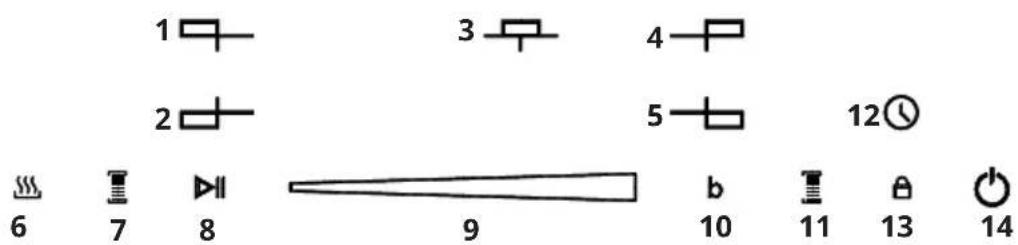
| Modelo L | W | H | D | A | B | X | ||||
| 10047836 | 900 | mm | 520 | mm | 60 mm | 5 | 6 mm | 860 mm 490 mm 50 mm |
natural_image
Simple line drawing of a cooking pot with a U-shaped magnet attached (no text or symbols)natural_image
Three identical cooking pots with crossed-out X marks, no text or symbols presentnatural_image
Simple line drawing of a cooking pot with crossed arrows indicating pressure or heat (no text or symbols)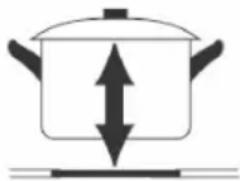
natural_image
Simple line drawing of a cooking pot with upward and downward arrows indicating direction (no text or symbols)USO DEL ÁREA FLEXIBLE
natural_image
Diagram showing a rectangular object with vertical measurement lines and two circular shapes with dots, both enclosed by dashed circular boundaries (no text or symbols)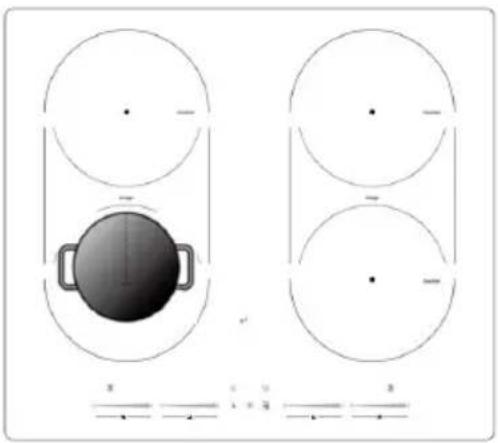
natural_image
Diagram showing two identical circular shapes with internal geometric patterns and dimension lines (no text or symbols)natural_image
Diagram showing two circular objects with handles inside ovals, separated by a vertical line and a horizontal line below (no text or symbols)natural_image
Pure geometric diagram of a T-shaped structure with no text, numbers, or symbolsDimensiones
natural_image
Technical line drawing of a mechanical component with mounting holes and a central square feature (no text or symbols)Filtro de cassette de aluminio
natural_image
Symbol of a trash bin with crossed lines indicating no waste or discharge, and a solid black rectangle below (no text or labels)SOMMAIRE
natural_image
Pure electrical circuit lines without any symbols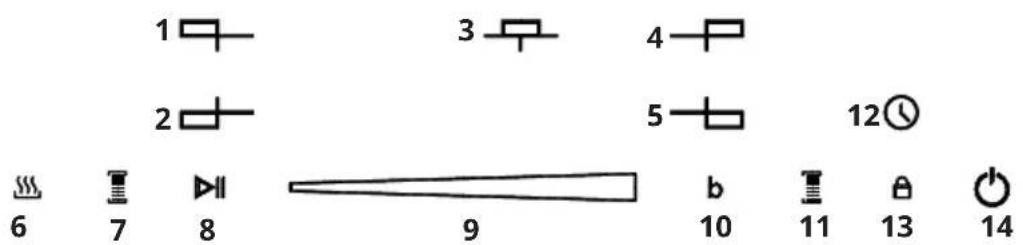
| Modèle L I | H P A B X | ||||||
| 10047836 900 mm 520 | mm | 60 mm 5 | 6 mm 860 | mm 490 mm | 50 mm |
natural_image
Simple line drawing of a cooking pot with a U-shaped magnet attached (no text or symbols)natural_image
Three identical cooking pots with crossed-out X marks, no text or symbols presentnatural_image
Simple line drawing of a cooking pot with crossed arrows indicating pressure or heat (no text or symbols)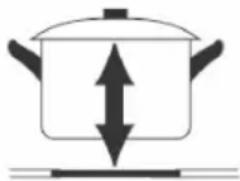
natural_image
Simple line drawing of a cooking pot with upward and downward arrows indicating direction (no text or symbols)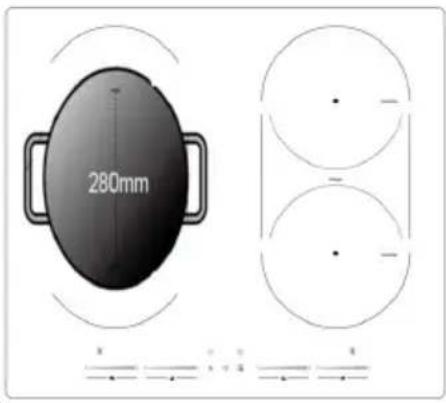
natural_image
Two abstract geometric diagrams: a rectangle with vertical dashed lines and a double circle with dots, both enclosed by dashed circular outlines (no text or symbols)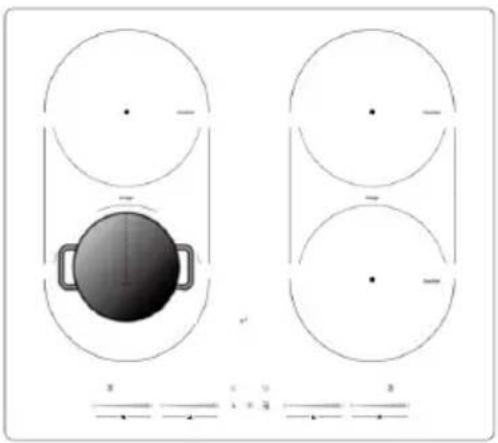
natural_image
Diagram showing two identical circular shapes with internal geometric patterns and dimension lines (no text or symbols)natural_image
Diagram showing two circular objects with handles inside ovals, separated by a vertical line and a horizontal line below (no text or symbols)natural_image
Pure geometric diagram of a T-shaped structure with no text, numbers, or symbolsDimensions
INSTALLATION DE LA HOTTE
INDICE
natural_image
Pure electrical circuit lines without any symbols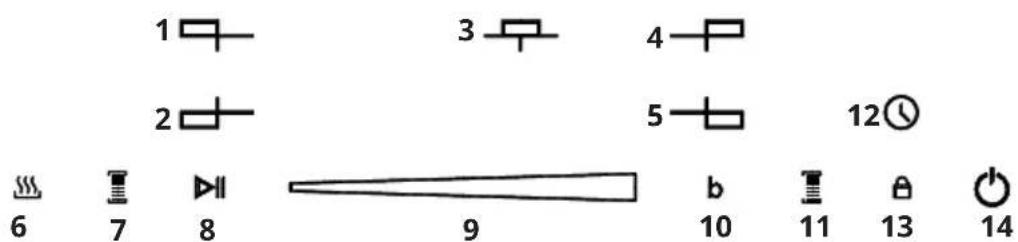
natural_image
Simple line drawing of a cooking pot with a U-shaped magnet attached (no text or symbols)natural_image
Three identical cooking pots with crossed-out X marks, no text or symbols presentnatural_image
Four identical cooking pots with crossed-out X marks, shown in sequence (no text or symbols)natural_image
Simple line drawing of a cooking pot with crossed arrows indicating pressure or heat (no text or symbols)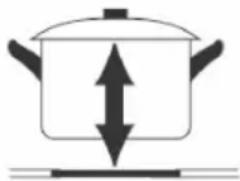
natural_image
Simple line drawing of a cooking pot with upward and downward arrows indicating direction (no text or symbols)natural_image
Two abstract geometric diagrams: a rectangle with vertical lines and a circle with two dots, both enclosed by dashed circular outlines (no text or symbols)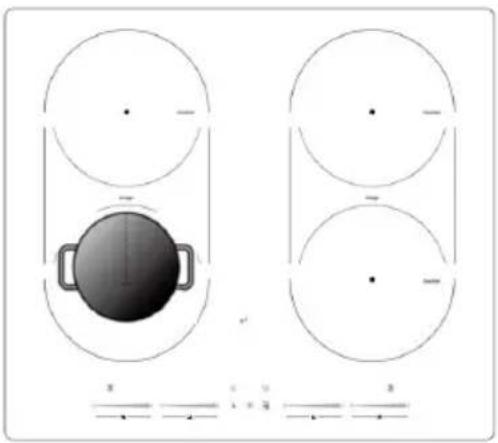
natural_image
Diagram showing two identical circular shapes with internal geometric patterns and dimension lines (no text or symbols)natural_image
Diagram showing two circular objects with handles inside ovals, separated by a vertical line and a horizontal line below (no text or symbols)natural_image
Pure geometric diagram of a T-shaped structure with no text, numbers, or symbolsDimensioni
natural_image
Symbol of a trash bin with crossed lines indicating no waste, and a solid rectangle below (no text or labels)
- INHALT
- EINBAU DER DUNSTABZUGSHAUBE
- BEDIENUNG DUNSTABZUGSHAUBE
- Bedienfeld
- PRODUKTDATENBLATT DUNSTABZUGSHAUBE
- CONTENTS
- SAFETY INSTRUCTIONS INDUCTION HOB
- Electrical Shock Hazard
- CAUTION
- General Instructions
- WARNING
- Health Hazard
- TECHNICAL DATA INDUCTION HOB
- INDUCTION HOB OPERATING PRINCIPLE
- PRODUCT OVERVIEW INDUCTION HOB
- HOB INSTALLATION
- Selection of installation equipment
- Before Installing the Hob
- Make sure that:
- Before locating the fixing brackets
- Locating the fixing brackets
- After Installing the Hob
- MAINS CONNECTING AND WIRING DIAGRAM
- Connecting the Hob to the Mains Power Supply
- Cautions
- OPERATION INDUCTION HOB
- Touch Controls
- Choosing the right Cookware
- Pan Dimension
- Start cooking
- Setting the heat level of the cooking zone
- When you have finished cooking
- Boost function
- To use the boost function when the hob is operating, follow the steps below:
- To cancel the boost function
- Child-lock function
- To lock the controls
- To unlock the controls
- Timer
- Using the timer as a minute minder
- Setting the timer for switching off one cooking zone
- Activation
- Setting the timer for switching off more than one cooking zone
- Cancelling the timer
- Keep warm function
- Deactivation
- Stop & Go function
- Activate the Stop & Go function
- Deactivate the Stop & Go function.
- USING THE FLEXIBLE AREA
- Use the flexible area as one big zone
- Use the flexible area as two separate zones
- DEVICE PROTECTION INDUCTION HOB
- Detection of pan and small articles
- If the display flashes alternately with the heat setting:
- Over-temperature protection
- Overflow protection
- Residual heat warning
- Auto Shutdown protection
- Caution! Danger of personal injury
- HEAT SETTINGS
- CARE AND CLEANING
- TROUBLESHOOTING
- Failure Display and Inspection
- TECHNICAL DATA RANGE HOOD
- SAFETY INSTRUCTIONS RANGE HOOD
- Important hints on installation
- Important notes about the extraction mode
- Important note on disassembly of the device
- OVERVIEW RANGE HOOD
- INSTALLATION RANGE HOOD
- Installation (Vent outside)
- Installation (Vent inside)
- Important Information for the Installation of Exhaust Air Ducts
- Installation of the ductwork (ducted hoods only)
- WARNING Risk of fire
- Electrical installation
- Installation
- Install filters
- CONNECT INDUCTION HOB AND RANGE HOOD
- CLEANING AND MAINTENANCE RANGE HOOD
- Stainless Steel Surfaces
- Control Panel
- Monthly Cleaning for Grease Filter
- Non-Ducted Recirculation charcoal filter
- PRODUCT DATA SHEET RANGE HOOD
- DISPOSAL CONSIDERATIONS
- MANUFACTURER & IMPORTER (UK)
- Estimado cliente:
- ÍNDICE
- USO DEL ÁREA FLEXIBLE
- SOMMAIRE
- INSTALLATION DE LA HOTTE
- INDICE
Brand : Klarstein
Model : HaloSync
Category : Cooker