78143 - Sander Sthor - Free user manual and instructions
Find the device manual for free 78143 Sthor in PDF.


User questions about 78143 Sthor
0 question about this device. Answer the ones you know or ask your own.
Ask a new question about this device
Download the instructions for your Sander in PDF format for free! Find your manual 78143 - Sthor and take your electronic device back in hand. On this page are published all the documents necessary for the use of your device. 78143 by Sthor.
USER MANUAL 78143 Sthor
natural_image
Black and white photo of a STMOR 202 electric power grinder with visible branding (no text-heavy elements)CE
text_image
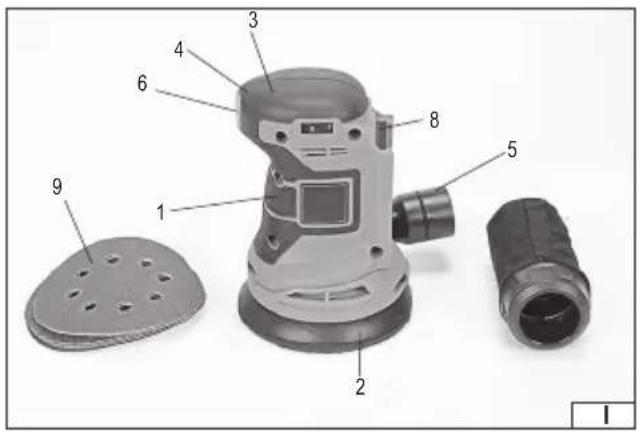
Labeled diagram of a sander with numbered parts including slide, bulb, and plastic housing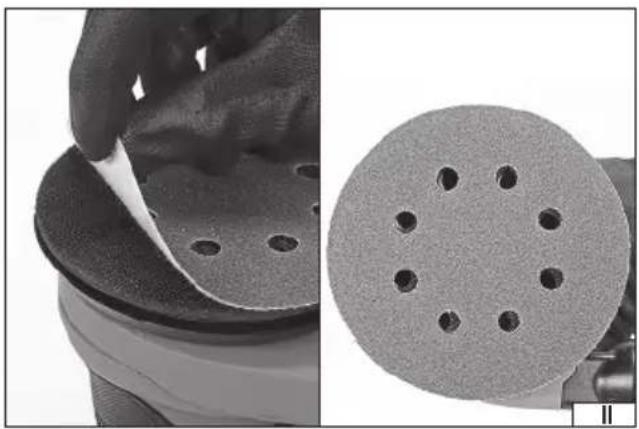
natural_image
Close-up of a hand using a sponge on a circular surface, with a close-up view showing the same material (no text or symbols visible)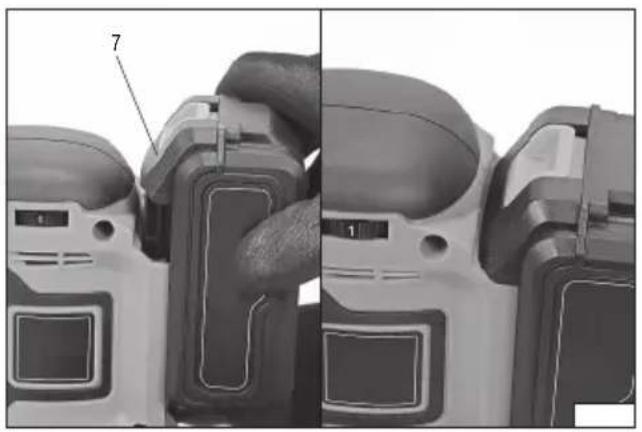
natural_image
Close-up of a mechanical device with labeled parts (7 and 1), no readable text or symbols beyond labels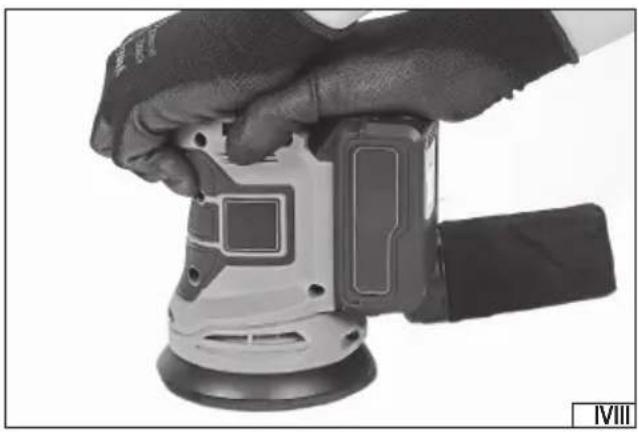
natural_image
Close-up of a hand using a power filter on a workbench (no visible text or symbols)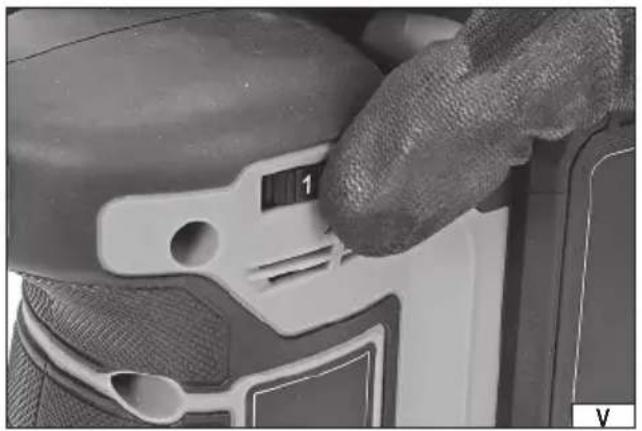
natural_image
Close-up of a mechanical device with a gloved hand cleaning the part (no visible text or symbols)PL EN DE RU UA LT LV CZ SK HU RO ES FR IT NL GR BG
PL
- housing
- plate
- main handle
- additional handle
- dust extraction outlet
- electric power switch
- battery
- battery socket
- sanding sheet
DE
Read the operating instruction
Wear protective goggles
Wear hearing protectors
This symbol indicates that waste electrical and electronic equipment (including batteries and storage cells) cannot be disposed of with other types of waste. Waste equipment should be collected and handed over separately to a collection point for recycling and recovery, in order to reduce the amount of waste and the use of natural resources. Uncontrolled release of hazardous components contained in electrical and electronic equipment may pose a risk to human health and have adverse effects for the environment. The household plays an important role in contributing to reuse and recovery, including recycling of waste equipment. For more information about the appropriate recycling methods, contact your local authority or retailer.
The orbital sander is a power tool designed primarily for finishing work in woodworking and, to a lesser extent, for sanding metal surfaces, especially in corners and areas with difficult access. The cordless power supply means the sander offers great mobility. Commercially available abrasive sheets, paper or canvas with appropriately shaped surface, are used for sanding. Under no circumstances should the tool be used for working with materials other than those listed above, e.g. for sanding gypsum-based plasterboard, fibre-reinforced putty, etc. Proper, reliable and safe operation of the sander requires its correct use, therefore:
Read the entire instructions manual before the first use of the tool and keep it for future reference. Caution! Dust generated during the sanding of some surfaces may be harmful to health and even toxic.
The above remark applies, among others, to the sanding of surfaces covered with paints containing lead, certain types of wood, certain metals (e.g. lead) and materials, therefore, effective dust extraction, dust masks and other skin and respiratory protection measures should be used during work. The supplier shall not be liable for any damage resulting from failure to comply with the safety instructions and recommendations specified in this instructions manual.
EQUIPMENT
The sander is supplied complete. The battery and charging station are not included.
TECHNICAL DATA
| Parameter Unit Value | ||
| Type 78143 | ||
| Rated voltage [VDC] 20 | ||
| Number of oscillations [min | -1] 5,000 – 10000 | |
| Sole plate dimensions [mm] ø125 | ||
| Abrasive sheet size [mm] ø125 | ||
| Weight [kg] 0.85 | ||
| Noise level | ||
| - sound pressure L_pA ± K_pA | [dB(A)] | 77.1 ± 3.0 |
| - sound power L_wA ± K_wA | [dB(A)] | 88.1 ± 3.0 |
| Vibration a_h ± K | [m/s2] | 7.511 ± 1.5 |
| Protection rating | IPX0 | |
| Battery type | Li-Ion |
The declared noise emission value has been measured using the standard test method and can be used to compare one tool to another. The declared noise emission value can be used in the preliminary exposure assessment.
The declared total vibration value has been measured using the standard test method and can be used to compare one tool to another. The declared total vibration value can be used in the initial exposure assessment.
Caution! The vibration emission during tool operation may differ from the declared value, depending on the manner the tool is used. Caution! Safety measures to protect the operator, which are based on an assessment of exposure under actual conditions of use (including all parts of the work cycle, such as the time when the tool is switched off or idle and the activation time), must be specified.
GENERAL WARNINGS FOR THE SAFETY OF POWER TOOLS
Warning! Read all safety warnings, illustrations and specifications provided with this power tool. Failure to do so may result in electric shock, fi re or serious injury.
Keep all warnings and instructions for future reference.
The term “power tool” used in warnings applies to all tools driven by power both wired and wireless.
Workplace safety
Keep the workplace well-lit and clean. Disorder and poor lighting can be causes of accidents.
Do not work with power tools in an environment with an increased risk of explosion, containing flammable liquids, gases or vapors. Power tools generate sparks that can ignite dust or fumes.
Children and third persons should not be allowed to enter the workplace. Loss of concentration can result in loss of control.
EN
Electrical safety
The plug of the electric cable must match the power socket. You must not modify the plug in any way. Do not use any plug adapters with earthed power tools. An unmodified plug that fits the outlet reduces the risk of electric shock.
Avoid contact with earthed surfaces such as pipes, radiators and coolers. Grounding the body increases the risk of electric shock.
Do not expose power tools to contact with atmospheric precipitation or moisture. Water and moisture that gets inside the power tool increases the risk of electric shock.
Do not overload the power cable. Do not use the power cord to carry, pull or unplug the power plug from the power outlet.
Avoid contact of the power cable with heat, oils, sharp edges and moving parts. Damage or entanglement of the power cord increases the risk of electric shock.
In the case of working outside closed rooms, use extension cords intended for work outside closed rooms. The use of an extension cord adapted for outdoor use reduces the risk of electric shock.
When using a power tool in a humid environment is unavoidable as a protection against supply voltage use a residual current device (RCD). The use of RCD reduces the risk of electric shock.
Personal safety
Stay alert, pay attention to what you do and keep common sense while working with the power tool. Do not use a power tool when you are tired or under the influence of alcohol or medication. Even a moment of inattention while working can lead to serious personal injury.
Use personal protective equipment. Always wear eye protection. The use of personal protective equipment such as dust masks, anti-slip safety shoes, helmets and hearing protection reduce the risk of serious personal injury.
Prevent accidental operation. Make sure that the electric switch is in the “off” position before connecting to the power supply and / or battery, lifting or moving the power tool. Moving the power tool with the finger on the switch or powering the power tool, when the switch is in the “on” position can lead to serious injuries.
Before turning on the power tool remove any keys and other tools that were used to adjust it. The key left on the rotating parts of the power tool can lead to serious injuries.
Do not reach and do not lean too far. Keep the right attitude and balance all the time. This will allow easier control over the power tool in case of unexpected work situations.
Dress accordingly. Do not wear loose clothing or jewelry. Keep your hair and clothing away from moving parts of the power tool. Loose clothing, jewelry or long hair can be caught by moving parts.
If the devices are fitted for the connection of dust extraction or dust collection, make sure that they are connected and used properly. The use of dust extraction reduces the risk of dust hazards.
Do not let the experience acquired from frequent use of the tool resulted in carelessness and ignoring safety rules.
Carefree action can cause serious injuries in a fraction of a second.
Use and care of the power tool
Do not overload the power tool. Use the power tool appropriate for the selected application. The right power tool will provide a better and safer job if used according to the designed load.
Do not use the power tool, if the electric switch does not allow switching on and off. Power tool, which cannot be controlled by means of a power switch is dangerous and must be returned for repair.
Disconnect the plug from the power socket and / or remove the battery if it is detachable from the power tool before adjusting, changing accessories or storing the tool. Such preventive measures will allow you to avoid accidentally turning on the power tool.
Keep the tool out of the reach of children, do not let people who do not know how to operate the power tool or these instructions use a power tool. Power tools are dangerous in the hands of untrained users.
Maintain power tools and accessories. Check the tool for mismatches or jams of moving parts, damage to parts and any other conditions that may affect the operation of the power tool. Damage must be repaired before using the power tool. Many accidents are caused by incorrectly maintained tools.
Keep cutting tools sharp and clean. Properly maintained cutting tools with sharp edges are less prone to jamming and are easier to control when working.
Use power tools, accessories and inserted tools etc. in accordance with these instructions, taking into account the type and conditions of work. The use of tools for work other than designed is likely to result in a dangerous situation.
Handles and gripping surfaces must be dry, clean and free from oil and grease. Slippery handles and gripping surfaces do not allow for safe operation and control of the tool in dangerous situations.
Repairs
Repair the power tool only in authorized facilities using only original spare parts. This ensures proper operation safety of the power tool.
EN
ADDITIONAL SAFETY INSTRUCTIONS
Warnings related to sanding
Toxic dust may form during the sanding of some surfaces e.g., surfaces coated with lacquer with the addition of lead. Inhalation of toxic dust may pose a risk to the sander operator or bystanders. In this case, use appropriate personal protective equipment such as dust masks, work in well-ventilated rooms and use external dust extraction systems.
EQUIPMENT INSTALLATION
Attaching the sandpaper sheet (II)
CAUTION! Install the abrasives when the supply voltage is disconnected. Remove the battery from the tool socket!
The sander can be used only with sandpaper or cloth attached only with the Velcro on the sole plate. The sandpaper sheet should have one side adapted to be fastened using Velcro. In this case, the dimensions of the sheet should correspond to the tool sole plate size given in the table.
Secure the sheet so that it does not protrude beyond the sole plate and the holes in the sheet, match the holes in the tool sole plate. This will allow for the effective extraction of dust generated during operation.
Dust extraction
The tool is equipped with a dust extraction system. The use of a dust extraction system improves efficiency and safety at work. Connect a flexible hose connected to a dust extraction system such as an industrial vacuum cleaner to the dust extraction outlet. Do not use household vacuum cleaners as dust extraction systems. Household vacuum cleaners are not suitable for extracting dust generated during operation with a tool and such use can lead to damage to the vacuum cleaner.
The adapter for connecting the hose to the dust extraction outlet must be purchased separately. The connection must be made in such a manner that the flexible hose does not interfere with manoeuvring the tool during operation. A dust collection bag has been included with the product. During operation, periodically check how full the bag is and empty it so that it does not overflow.
Only one of the following STHOR Li-Ion 20 V batteries can be used to power the tool: 78250, 78252, which can only be charged using STHOR chargers 78260 or 78261. It is forbidden to use other batteries with a different rated voltage and not matching the device battery socket. It is forbidden to modify the socket or battery to make them match.
Slide the battery into the socket with the contacts facing inside the tool until the battery latch engages. Make sure that the battery will not slide out on its own during operation. Disconnect the battery by pressing and holding the latch and then pulling the battery out of the tool housing.
PRODUCT OPERATION
Preparing for operation
All the assembly steps described above must be carried out before beginning operation.
Sander operation
Where required, the processed material must be secured, e.g. with vices or clamps, in such a manner that it cannot move during work. Improper securing of the material may cause uncontrolled movement during work, which increases the risk of serious injury. Wear personal protective equipment, such as eye and hearing protection, a dust mask, safety gloves and appropriate work clothing.
Make sure to carry out all assembly and adjustment steps.
Make sure that the power switch is in the "off" position, then connect the battery to the tool.
Slide the battery into the socket guides until the latch (III) engages. A properly fitted battery cannot be removed other than by pressing and holding the latch button and then sliding the battery out of the socket.
Grasp the sander with both hands by the main and auxiliary handle and hold it in a safe position so that the sole plate and abrasive sheet do not come into contact with any object (IV). Turn the switch to the on – I position. Allow the sander to reach its nominal speed and only then apply it to the workpiece.
The sander is turned off when the power switch is set to the off - O position.
The sander should be held in a safe position until finishing the work completely. It is forbidden to stop the tool sole plate by pressing it against the workpiece surface. Then put the sander down, disconnect the battery from the tool and proceed with maintenance.
Sander operation tips
It is forbidden to hold the sander in any other way but by the handles. Improper grip will not ensure safe operation and may obscure ventilation openings. This can lead to overheating of the tool.
The sandpaper sheet must be selected according to the type of sanded surface. It is recommended to consult the dealer or the manufacturer of the abrasive sheets for advice on their intended use.
Do not reuse the used abrasive sheet. Do not use damaged abrasive sheets. Sheets with cracks, tears, cavities, or other damages
EN
may disintegrate during operation and cause injuries. Select the sandpaper grit size according to the type of work. Use coarser sheets for sanding and peeling. Use a smoother sheet for finishing works.
It is recommended to start with a coarse-grit sandpaper sheet and finish with a finer-grit sandpaper sheet. Sanding in this manner will be faster and lead to a better end result.
Do not use the sandpaper sheet used once to sand metal for wood sanding. Do not use the sandpaper sheet used once to sand the coating for wood sanding.
Move the sander towards and away from you, and gradually to a side. Wood should be sanded along the grain. Sanding should be started with coarse-grit sandpaper, then use increasingly finer-grit sandpapers until the desired effect is achieved. Avoid checking the condition of the processed wood surface with your bare hand. This can cause injury from splinters and burrs generated during work. Do not stop the sander in one place; this will cause uneven work results. Do not apply excessive pressure on the sanded surface during sanding. The pressure should be uniform throughout the entire working time. The sander should be guided in such a way that the sandpaper sheet adheres to the sanded object with the entire surface. Do not press the sander against the processed surface too hard. Excessive pressure can cause the sander to overheat and damage the processed surface and in particular even tearing of the sandpaper sheet or damage the tool sole plate.
The sandpaper grit size must be selected according to the processed surface. Too high grit size of the sandpaper will produce scratches on the processed material surface.
Take regular breaks during operation to check the condition of the abrasive sheet. If the abrasive sheet is found to have been clogged with dust generated during work, or that the abrasive grain has worn, replace the sheet with a new one.
The sander has an adjustable motor rotational speed, which translates into the number of sole plate oscillations. Adjustments are made using the knob (V). The higher the number shown on the dial, the higher the set speed. The speed adjustment should be adapted to the type of surface to be worked on and the grit of the abrasive sheet. Higher rotational speed results in faster and more accurate surface finishing, however, it can lead to overheating or even burning of the worked surface, especially when using too much pressure.
MAINTENANCE AND OVERHAUL
ATTENTION! Before any adjustment, technical service or maintenance operations unplug the tool. Once the operations have been finished, the technical conditions of the tool must be assessed by means of external evaluation and inspection of the following elements: body and handle, conductor with a plug and deflection, functioning of the electric switch, patency of ventilation slots, sparking of brushes, noise level of functioning of bearings and gears, start-up and smoothness of operation. During the guarantee period, the user cannot dismantle the electric tools or change any sub-assemblies or elements, since it will cancel any guarantee rights. All irregularities detected at overhaul or during functioning of the tools are a signal to have the tool repaired at a service shop. Once the functioning has been concluded, the casing, ventilation slots, switches, additional handle and protections must be cleansed with a stream of air (at a pressure not exceeding 0.3 MPa), with a brush or a cloth without any chemical substances or cleaning liquids. Tools and handles must be cleansed with a clean cloth.
GERÄTEBESCHREIBUNG
DECLARATION OF CONFORMITY
0123/78143/EC/2023
We declare and guarantee with full responsibility that the following products:
Cordless orbital sander; 20 V d.c. 5 000-10 000 min ^-1 : ø125 mm; item no. 78143
meet requirements of the following European Standards / Technical Specifications:
EN 62841-1:2015
EN 62841-2-4:2014
EN IEC 55014-1:2021
EN IEC 55014-2:2021
and fulfill requirements of the following European Directives:
2006/42/EC Machinery and safety elements
2014/30/EU Electromagnetic compatibility (EMC) Directive
2011/65/EU Restriction of the Use of Certain Hazardous Substances
Serial number: concern all serials numbers of item(s) mentioned in this declaration
The last two digits of the year in which the CE marking was affixed: 23
Year of production: 2023
The person authorized to compile the technical file:
Tomasz Zych
(Place and date of issue)
text_image
TOTA SPÓŁNA SIECYNA SPECIALISTA DS. TECHNICZNYCH TOMASZ ZYCH(Name and signature of authorized person)
TOYA S.A.