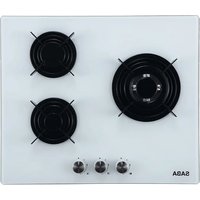
TGV60B3F/C - Cooker SABA - Free user manual and instructions
Find the device manual for free TGV60B3F/C SABA in PDF.


| Product type | Gas hob |
| Brand | SABA |
| Model | TGV60B3F/C |
| Dimensions (W x D x H) | 600 x 510 x 100 mm |
| Estimated weight | 12 kg |
| Electrical supply | 220-240 V~, 50-60 Hz, 2 W (ignition) |
| Compatible gas type | Natural gas (G20) or LPG (G30) |
| Number of burners | 3 |
| Burner types | Triple ring, semi-rapid, auxiliary |
| Total power | 6.35 kW |
| Energy efficiency | 56.9 % |
| Hob material | Glass |
| Ignition system | Continuous ignition with safety device |
| Safety device | Automatic gas shut-off if flame extinguished |
| Gas connection | Thread G1/2 |
| Maintenance | Regular cleaning with soft cloth and dish soap; removable burners |
| Spare parts | Available for at least 3 years |
| Repairability | Repair by certified technician, original parts recommended |
| Included accessories | Brackets, foam, screws, injectors, seal, gas connector, manual |
Frequently Asked Questions - TGV60B3F/C SABA
User questions about TGV60B3F/C SABA
0 question about this device. Answer the ones you know or ask your own.
Ask a new question about this device
Download the instructions for your Cooker in PDF format for free! Find your manual TGV60B3F/C - SABA and take your electronic device back in hand. On this page are published all the documents necessary for the use of your device. TGV60B3F/C by SABA.
USER MANUAL TGV60B3F/C SABA
natural_image
Top-down view of a SABA gas stove with three circular vented fans and three cross-shaped switches (no text or symbols on the fan itself)FR
GB
Instructions techniques
flowchart
graph LR
    A["Air intake with exhaust"] --> B["→"]
    B --> C["Warning: no exhaust, no air intake"]
    C --> D["→"]
    D --> E["Warning: no air intake, no phone call"]
natural_image
Cartoon illustration of a child reacting to a large cartoon smartphone with a frowning face (no text or symbols)Attention
natural_image
Cartoon illustration of a smiling face on a rectangular board with a hand pointing to it (no text or symbols)natural_image
Simple diagram with a circle, an arrow, a star, and a dot (no text or symbols)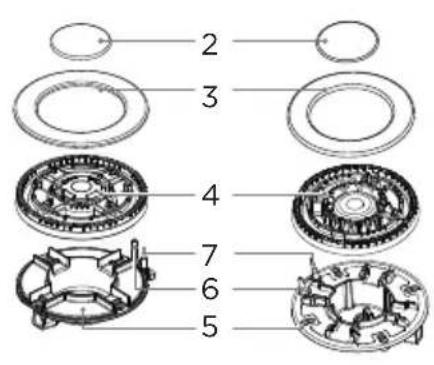
ESPACES REQUIS LORS DE L'INSTALLATION DE LA PLAQUE DE CUISSON SOUS UNE HOTTE ASPIRANTE
natural_image
Simple line drawing of a hand holding a pen above a laptop with a black X mark (no text or symbols)
natural_image
Circular black-and-white icon depicting two hands, one touching the other, with no text or symbols.natural_image
Technical line drawing of a mechanical component with exploded view and rotation arrow (no text or symbols)natural_image
Technical illustration of a mechanical connector or fitting (no text or symbols visible)https://sav-client.conforama.fr
09 69 32 05 05
FR

Thank you for choosing our gas cooktop.
To use this appliance correctly and prevent any potential risk, read these instructions before using the appliance.
Keep these instructions in a place where you can find them easily.
If you are unsure of any of the information contained in these instructions, please contact our customer care centre.
The manufacturer shall not be responsible for any damages to persons or property caused by incorrect installation or use of the appliance.
The appliance has been certified for use in countries other than those marked on the appliance.
The manufacturer also reserves the right to make any modifications to the products as may be considered necessary or useful, also in the interests of the user, without jeopardising the main functional and safety features of the products themselves.
The appliance is designed for a domestic environment and not a commercial one.
TABLE OF CONTENTS
Safety Warning
Safety Instructions 3
Installation 5
Child and People Safety 7
During Use 8
Cleaning and Service 12
Environmental Information 12
Instructions for use and maintenance
Description of the appliance 14
Description of the appliance 15
How to Use the appliance 15
Safety and Energy saving advice 17
Cleaning and Maintenance 21
Technical instructions
Using instructions 25
Positioning 28
Installing the appliance 29
Gas Connection 31
Gas Specification 38
Electrical Connection 39
Gas adjustment 40
Trouble shooting 43
Disposal of old electrical appliances 46
Safety Instructions
- Please take the time to read this Instruction Manual before installing or using the appliance.
- This instruction booklet must be kept with the appliance for any future reference.
- If the appliance is sold or transferred to another person, ensure the booklet is passed on to the new user.
- The manufacturer declines any liability should these safety measures not be observed.
- The following marks are made to be easily understood so that you can prevent any accident caused by misuse in advance, and use the appliance more conveniently.
- Read the following contents thoroughly and ensure you understand them.
 Danger/Warning Danger/Warning | Neglect of this mark may result in severe personal injury or death. |
 Caution Caution | Neglect of this mark may result in minor personal injury or property damage. |
- The following marks are used in the Instruction Manual as follows:

Caution
No Fire Tool

No Access

Must Do
Danger
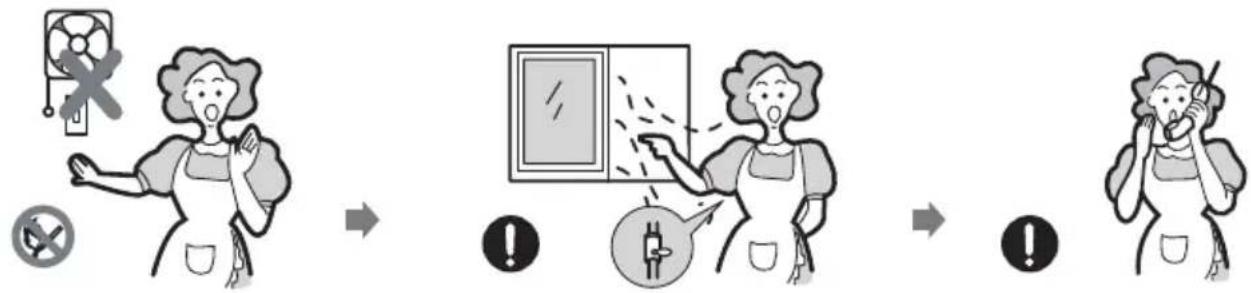
- If gas seems to leak, take the actions as follow:
— Do not turn on the light.
- Do not switch on/off any electrical appliance and do not touch any electric plug.
— Do not use a telephone.
- Stop using the product and close the middle valve.
- Open the window to ventilate.
- Contact our service centre by using a phone outside.
flowchart
graph LR
    A["Cooking"] --> B["Cleaning"]
    B --> C["Smoking"]
    C --> D["Smoking"]
GB
* The fuel gas contains mercaptan, so that you can smell the gas leak (smell of rotten garlic or egg) even where only 1/1000 of the gas is in the air.
Installation
Warning
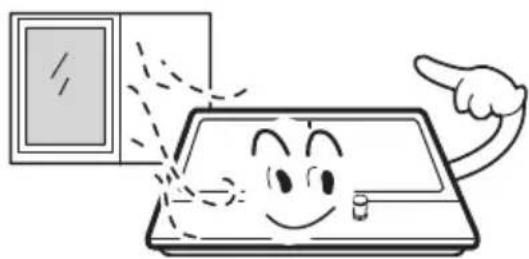
This appliance shall be installed in accordance with regulations in force and only used in a well ventilated space.
natural_image
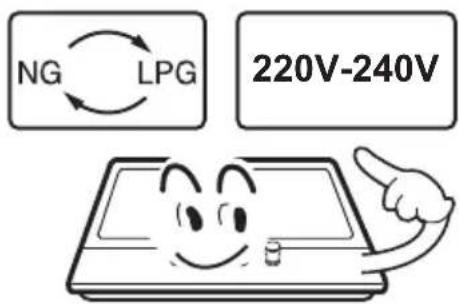
Cartoon illustration of a smiling computer monitor with a pointing hand, next to a window (no text or symbols)Prior to installation, ensure that the gas and electrical supply complies with the type stated on the rating plate.
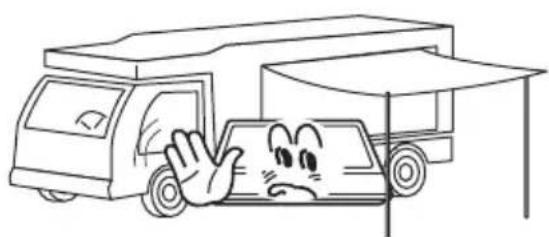
Where this appliance is installed in marine craft or in caravans, it should not be used as a space heater.
natural_image
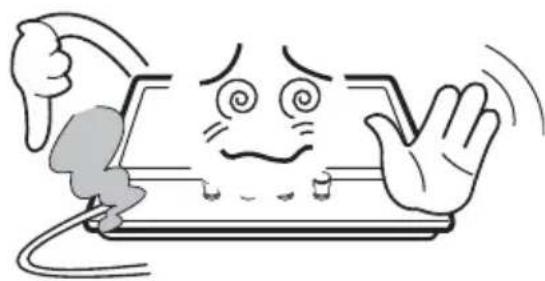
Cartoon illustration of a smiling car with a hand waving, next to a covered truck (no text or symbols)The gas pipe and electrical cable must be installed in such a way that they do not touch any parts or the appliance.
natural_image
Cartoon illustration of a sad face emerging from a computer monitor with thumbs and index finger (no text or symbols)Caution
- This appliance should be installed by a qualified technician or installer.
- The adjustment conditions for this appliance are stated on the label or data plate.
- Remove all packaging before using the appliance.
• After unpacking the appliance, make sure the product is not damaged and that the connection cord is in perfect condition. Otherwise, contact the dealer before installing the appliance. - The adjacent furniture and all materials used in the installation must be able to withstand a minimum temperature of 85^ C above the ambient temperature of the room it is located in, whilst in use.
- In the event of burner flames being accidentally extinguished, turn off the burner control and do not attempt to re-ignite the burner for at least one minute.
- The use of a gas cooking appliance results in the production of heat and moisture in the room in which it is installed.
Ensure that the kitchen is well ventilated: keep natural ventilation holes open or install a mechanical ventilation device (mechanical extractor hood). - Prolonged intensive use of the appliance may call for additional ventilation, for example opening of a window, or more effective ventilation, for example increasing the level of mechanical ventilation where present.
Child and People Safety
Warning
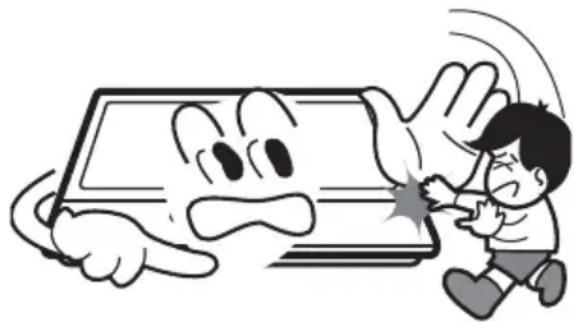
- Do not allow children to play near or with the appliance.
- The appliance gets hot when it is in use.
• Children should be kept away until it has cooled.
natural_image
Cartoon illustration of a child reacting to a large cartoon smartphone with a frowning face (no text or symbols)Caution
- This appliance is designed to be operated by adults.
- Children can also injure themselves by pulling pans or pots off the appliance.
- This appliance is not intended for use by children or other persons whose physical, sensory or mental capabilities or lack of experience and knowledge prevents them from using the appliance safety without supervision or instruction by a responsible person to ensure that they can use the appliance safety.
During Use
Warning
| Only use the appliance for preparing food. | 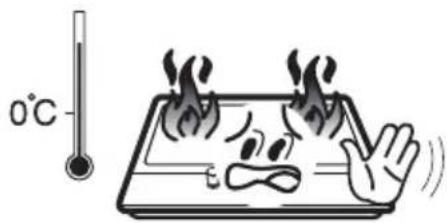 |
| Do not modify this appliance. Burner panel is not designed to operate from an external timer or separate remote control system. | 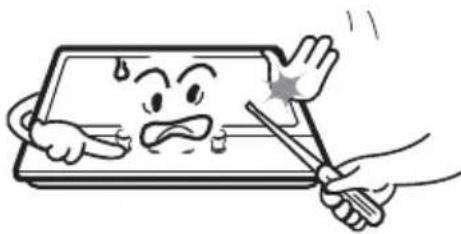 |
| The use of a gas cooking appliance results in the production of heat and moisture in the room in which it is installed. Ensure that the kitchen is well ventilated: keep natural ventilation holes open or install a mechanical ventilation device (mechanical extractor hood). | 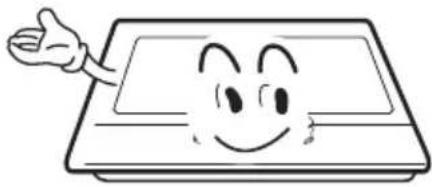 |
| Do not use this appliance if it comes in contact with water. Do not operate this appliance with wet hands. | 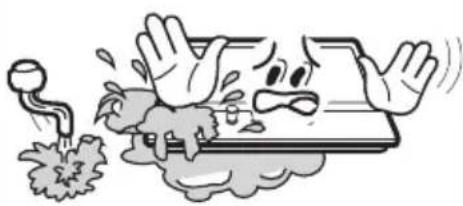 |
| The heating and cooking surfaces of the appliance become hot when they are in use, take all due precautions. | 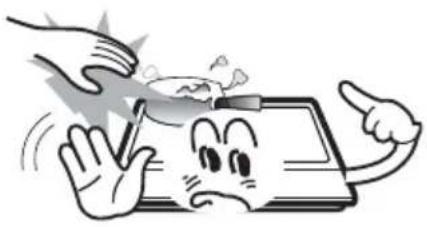 |
| Do not use large cloths, tea towels or similar as the ends could touch the flames and catch fire. | 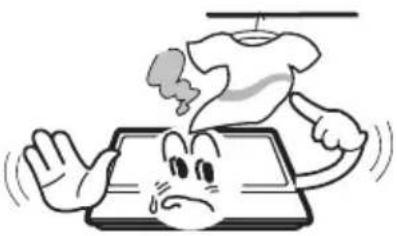 |
| Never leave the appliance unattended when cooking. | 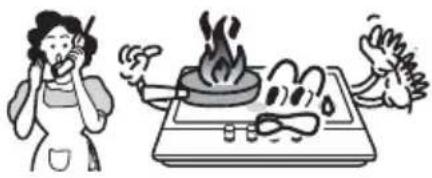 |
| Unstable or misshapen pans should not be used on the appliance as they can cause an accident by tipping or spillage. | 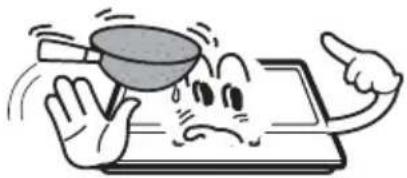 |
| Do not use or store flammable materials in the storage drawer near this appliance. | 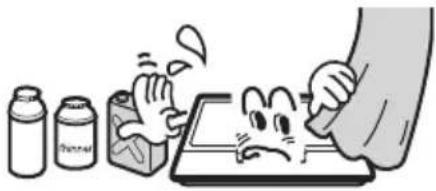 |
| Perishable food, plastic items and aerosols may be affected by heat and should not stored above or below the appliance. | 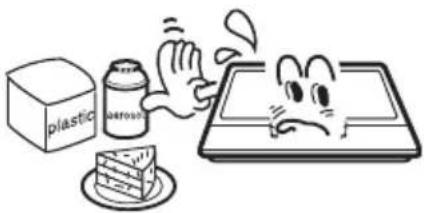 |
| Do not spray aerosols in the vicinity of this appliance while it is in operaiton. | 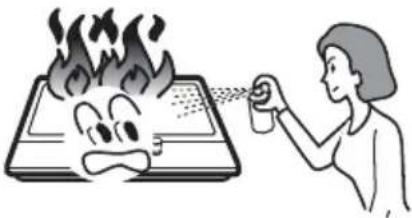 |
| Ensure the control knobs are in the ‘•’ position when not in use. | 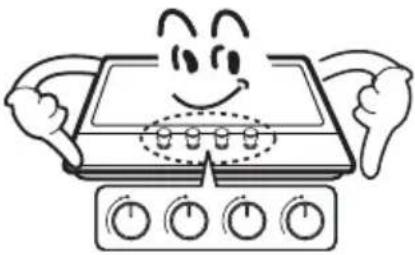 |
Caution
- This appliance is intended for domestic cooking only. It is not designed for commercial or industrial purposes.
- Prolonged intensive use of the appliance may call for additional ventilation, for example opening of a window, or increasing the level of mechanical ventilation where present. Use heatresistant pot holders or gloves when handling hot pots and pans.
-
Do not let pot holders come near open flames when lifting cookware.
• Take care not to let pot holders or gloves get damp or wet, as this causes heat to transfer through the material quicker with the risk of burning yourself. -
Only ever use the burners after placing pots and pans on them. Do not heat up any empty pots or pans.
- Never use plastic or aluminium foil dishes on the appliance.
- When using other electrical appliances, ensure the cable does not come into contact with the appliance surfaces of the cooking appliance.
- If you have any mechanical parts eg. an artificial heart in your body, consult a doctor before using the appliance.
- Do not use a tea towel or similar materials in place of a pot holder. Such cloths can catch fire on a hot burner.
- When using glass cookware, make sure it is designed for top plate cooking. If the surface is made of glass-cracked, switch off the appliance to avoid defeat electrocution.
- To minimise the possibility of burns, ignition offlammable materials and spillage, turn cookware handles toward the side or center of the top plate without extending over adjacent burners.
• Always turn burner controls off before removing cookware. - Carefully watch foods being fried at a high flame setting.
• Always heat fat slowly and watch as it heats. - Foods for frying should be as dry as possible. Frost on frozen foods or moisture on fresh foods can cause hot fat to bubble up and over the sides of the pan.
- Never try to move a pan of hot fat, especially a deep fat fryer. Wait until the fat is completely cool.
WARNING : This appliance should be used for cooking only. It must not be used for other purposes, such as heating a room.
Cleaning and Service
Warning
| Never use abrasive or caustic cleaning agents. | 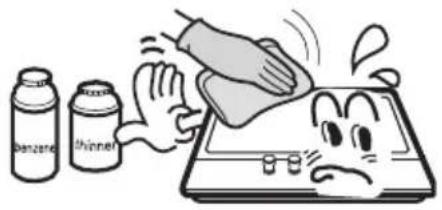 |
| This appliance should only be repaired or serviced by an authorised Service Engineer and only genuine approved spare parts should be used. | 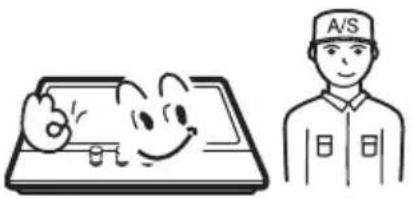 |
Caution
- Before attempting to clean the appliance, it should be disconnected from the mains and cooled.
- You should not use a steam jet or any other high pressure cleaning equipment to clean the appliance.
Environmental Information
• After installation, please dispose of the packaging with due regard to safety and the environment.

natural_image
Cartoon illustration of a smiling face on a rectangular board with a hand gesture (no text or symbols)- When disposing of an old appliance, make it unusable, by cutting off the cable.
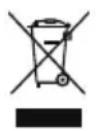
Correct Disposal of This Product (Waste Electrical & Electronic Equipment)
- This marking shown on the product or its literature, indicates that it should not be disposed with other household wastes at the end of its working life. To prevent possible harm to the environment or human health from uncontrolled waste disposal, please separate this from other types of wastes and recycle it responsibly to promote the sustainable reuse of material resources.
- Household users should contact either the retailer where they purchased this product, or their local government office, for details of where and how they can take this item for environmentally safe recycling.
- Business users should contact their supplier and check the terms and conditions of the purchase contract. This product should not be mixed with other commercial wastes for disposal.
Description of the appliance
| Model TGV60N3F/C | TGV60B3F/C |
| Top Plate Glass | |
| Dimension (W*D*H) 600 x 510 x 100 | |
| Ignition device Continuous Ignition Type | |
| Gas Connection G1/2 thread | |
| Electric supply 220-240 V~ 50 Hz-60 Hz, 2 W | |
| Burner Feature Triple-Crown(1), Semi-rapid(1), Auxiliary (1) | |
| ΣQn 6,35 kW | |
| Information for domestic gas hobs | ||||
| Model | TGV60N3F/C TGV60B3F/C | |||
| Gas hobType of hob | ||||
| Number of burners | 3 | |||
| Energy efficiency by burner | Couronne triple | Semi - rapid | Auxiliary | % |
| 52.59 61.2 | N/A | |||
| Energy efficiency by hob | 56.9 % | |||
Description of the appliance
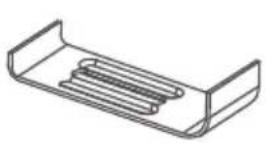



Bracket (4) Sponge(4) Screw (4)
Injector (3)
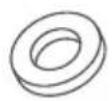
Seal (1)
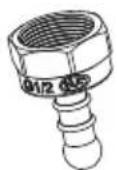
Gas-pipe bend (1)
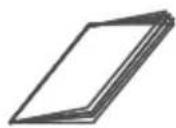
Instruction Manual (1)
How to Use the appliance
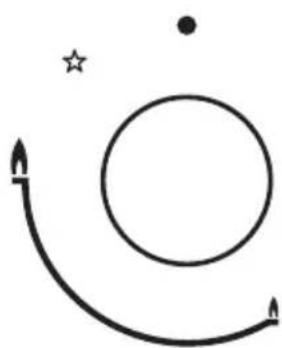
The following symbols will appear on the control panel, next to each control handle :
(●) Black circle: gas off
(▲) Large flame: maximum setting
( ^ ) Small flame: minimum setting
natural_image
Simple diagram with a circle, an arrow, a star, and a dot (no text or symbols)- The minimum setting is at the end of the anticlockwise rotation of the control handle.
- All operation positions must be selected between the maximum and minimum position.
- The symbol on the control panel, next to the control handle will indicate which burner it operates.
Automatic ignition with flame failure safety device
The appliance is fitted with a flame failure safety device on each burner, which is designed to stop the flow of gas to the burner head in the event of the flame going out.
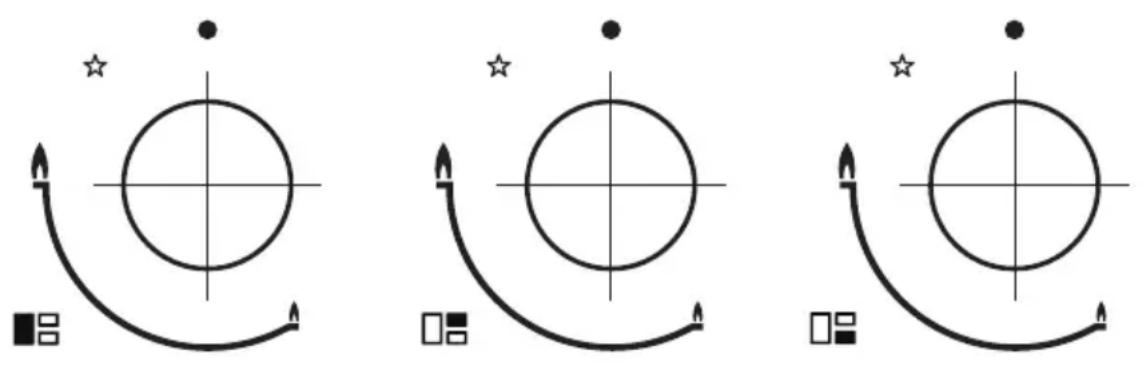
Automatic ignition with flame failure safety device
The appliance is fitted with a flame failure safety device on each burner, which is designed to stop the flow of gas to the burner head in the event of the flame going out.
To ignite a burner:
- Press in the control knob of the burner that you wish to light and turn it anti-clockwise to the maximum position.
- If you keep the control knob depressed, the automatic ignition for the burner will operate.
- You should hold down the control knob for 15 seconds after the flame on the burner has lit. If after 15s the burner has not lit, stop operating the device and open the compartment door and/or wait at least 1 min before attempting a further ignition of the burner.
• After this 15-second interval, to regulate the flame you should continue turning the control knob anti-clockwise until the
flame is at a suitable level. The operating position MUST be at a position between the maximum and minimum position.
- To switch the burner off, turn the control knob fully clockwise to the gas off position.
- In case of power failure, the burners can be lit by carefully using a match.knob fully clockwise to the gas off position.
- In case of power failure, the burners can be lit by carefully using a match.
Safety and Energy saving advice
- The diameter of the bottom of the pan should correspond to that of the burner.
| BURNERS | PANS | |
| min. max. | ||
| Triple-Crown 200 mm 240 mm | ||
| Semi-Rapid 160 mm 180 mm | ||
| Auxiliary 120 mm 160 mm | ||

Do not use cookware that overlaps the edge of the burner.
| NO YES | |
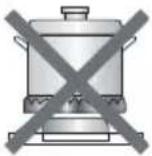 Do not use small diameter cookware on large burners.The flame should never come up the sides of the cookware. Do not use small diameter cookware on large burners.The flame should never come up the sides of the cookware. | 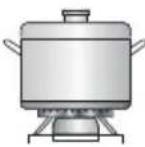 Always use cookware that is suitable for each burner, to avoid wasting gas and discolouring the cookware. Always use cookware that is suitable for each burner, to avoid wasting gas and discolouring the cookware. |
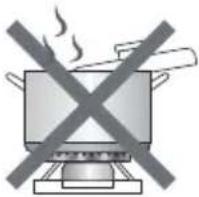 Avoid cooking without a lid or with the lid half off.-as this wastes energy Avoid cooking without a lid or with the lid half off.-as this wastes energy | 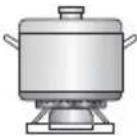 Place a lid on the cookware. Place a lid on the cookware. |
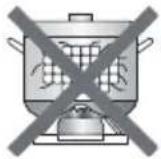 Do not use a pan with a convex or concave bottom. Do not use a pan with a convex or concave bottom. | 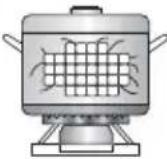 Only use pots,saucepans and frying pans with a thick,flat bottom. Only use pots,saucepans and frying pans with a thick,flat bottom. |
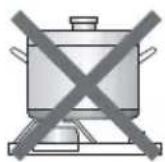
Do not place cookware on one side of a burner, as it could tip over.cookware.

Do not use cookware with a large diameter on the burners near the controls, which when placed on the middle of the burner may touch the controls or be so close to them that they increase the temperature in this area and may cause damage.
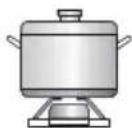
Always place the cookware right over the burners, not to one side.
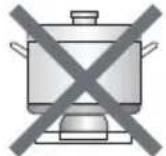 Never place cookware directly on top of the burner. Never place cookware directly on top of the burner. | 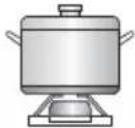 Place the cookware on top of the trivet. Place the cookware on top of the trivet. |
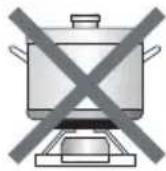 Do not place anything, eg. flame tamer, asbestos mat, between pan and pan support as serious damage to the appliance may result. Do not place anything, eg. flame tamer, asbestos mat, between pan and pan support as serious damage to the appliance may result. | |
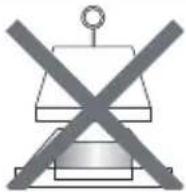 Do not use excessive weight and do not hit the cooktop with heavy objects. Do not use excessive weight and do not hit the cooktop with heavy objects. | 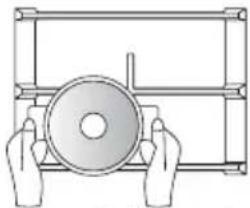 Handle cookware carefully when they are on the burner. Handle cookware carefully when they are on the burner. |

- It is not recommended to use roasting pans, frying pans or grill stones heated simultaneously on several burners because the resulting heat buildup may damage the appliance.
- Do not touch the top plate and trivet whilst in use for a certain period after use.
- As soon as a liquid starts boiling, turn down the flame so that it will barely keep the liquid simmering.
Cleaning and Maintenance

- Cleaning operations must only be carried out when the appliance is completely cool.
- The appliance should be disconnected from your mains supply before commencing any cleaning process.
- Clean the appliance regularly, preferably after each use.
- Abrasive cleaners or sharp objects will damage the appliance surface; you should clean it using water and a little washing up liquid.
- Regarding the instructions for cleaning surfaces in contact with food thanks to refer to the below paragraph of the manual.
The minimum period of availability of spare parts for the appliance is 3 years.
| Usable Unusable | ||
 Soft cloth Soft cloth | 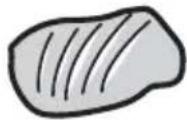 Nylon Brush Nylon Brush |  Metal Brush Metal Brush |
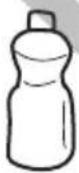 Edible Oil Edible Oil |  Acidic/Alkali Detergent Acidic/Alkali Detergent | |
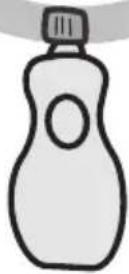 Neutral Detergent Neutral Detergent | 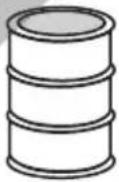 Abrasive Abrasive | 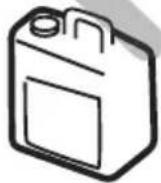 Thinner/Benzene Thinner/Benzene |
Pan support, Control handles
• Take off the Pan support.
- Clean these and the control handles with a damp cloth, washing up liquid and warm water. For stubborn soiling, soak beforehand.
• Dry everything with a clean soft cloth.
Top plate
- Regularly wipe over the top plate using a soft cloth well wrung-out in warm water to which a little washing up liquid has been added.
-
Dry the top plate thoroughly after cleaning.
-
Thoroughly remove saltyfoods or liquids from the hob as soon as possible to avoid the risk of corrosion.
- Stainless steel parts of the appliance may become discoloured over time. This is normal because of the high temperatures. Each time the appliance is used these parts should be cleaned with a product that is suitable for stainless steel.
Burners
- Remove the burner lids and Flame Spreaders by pulling them upwards and away from the top plate.
- Soak them in hot water and a little detergent or washing up liqui.
• After cleaning and washing them, wipe and dry them carefully. Make sure that the flame holes are clean and completely dry. - Wipe the fixed parts of the burner cup with a damp cloth and dry afterwards.
- Gently wipe the ignition device and flame supervision device with a well wrung-out cloth and wipe dry with a clean cloth.
- Before placing the burners back on the top plate, make sure that the injector is not blocked.
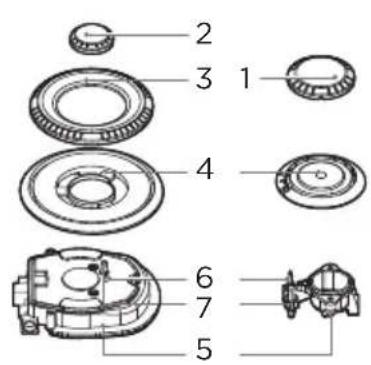
- Re-assemble the Auxiliary, Semi-Rapid, Rapid and Triple-Crown burners as follows:

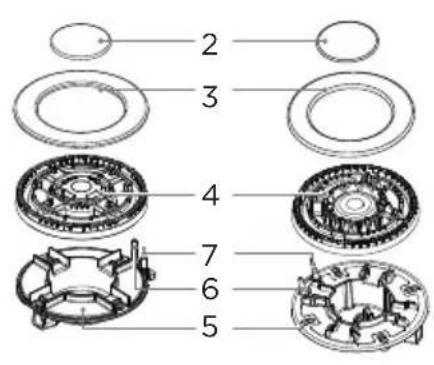
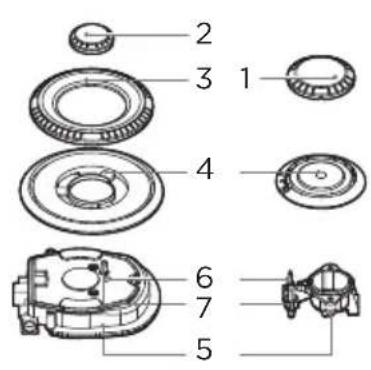
-
Place the flame spreader (4) on to the burner cup (5) so that the ignition device and the flame supervision device extend through their respective holes in the flame spreader. The flame spreader must click into place correctly.
-
Position the burner lid (1,2,3) onto the flame speader (4) so that the retaining pins fit into their respective recesses.

- Replace parts in the correct order after cleaning.
- Do not mix up the top and bottom.
- The locating pins must fit exactly into the notches.
Using instructions
Warnings
- Do not modify this appliance.
- This appliance must be installed by an authorised technician or installer.
- Prior to installation, ensure that the local distribution conditions (nature of the gas and gas pressure) and the adjustment of the appliance are compatible.
- The adjustment conditions for this appliance are stated on the label (or data plate).
- This appliance is not connected to a combustion products evacuation device. It should be installed and connected in accordance with current installation regulations. Particular attention should be given to the relevant requirements regarding ventilaton.
- Before installing, turn off the gas and electricity supply to the appliance.
- All appliances containing any electrical components must be earthed.
- Ensure that the gas pipe and electrical cable are installed in such a way that they do not touch any parts of the appliance which may become hot.
- Gas pipe or connector shouldn't be bent or blocked by any other appliances.
- Check the dimensions of the appliance as well as the
dimensions of the gap to be cut in the kitchen unit.
- The panels located above the work surface, directly next to the appliance, must be made of non-flammable material. Both the stratified surfacing and the glue used to secure it should be heat resistant, to prevent deterioration.
- Turn on appliance tap and light each burners.
- Check for a clear blue flame without yellow tipping.
- If burners shows any abnormalities check the following :
—Burner lid on correctly
—Flame spreader positioned correctly
—Burnervertically aligned with injector nipple
- A full operational test and a test for possible leakages must be carried out by the fitter after installation.
- The flexible hose shall be fitted in such a way that it cannot come into contact with a moveable part of the housing unit and does not pass through any space susceptible of becoming congested.
- Grease cranes produced at the factory to meet the requirement of all life hob.
- The burner flame must be regular. Avoid any air draft. If the flame shows abnormality, clean the burner. Should the abnormality continue, contact the after-sales service.
- Regarding the information pertaining to the installation, handling, servicing and disposal of the appliance, thanks to refer to the below paragraph of the manual.
- WARNING: The appliance and its accessible parts become hot during use.
- Care should be taken to avoid touching heating elements.
- Children less than 8 years of age shall be kept away unless continuously supervised.
- WARNING: Unattended cooking on a hob with fat or oil can be dangerous and may result in fire.
- NEVER try to extinguish a fire with water, but switch off the appliance and then cover flame e.g. with a lid or a fire blanket.
- WARNING: Danger of fire: do not store items on the cooking surface.
- The knob must not be activated for more than 15 seconds. If the burner fails to light after 15 seconds, stop using the knob, open the door of the room, and wait at least one minute before trying to ignite the burner again.
- WARNING: To prevent from explosion and fire risk, do not place flammable products or items soiled with flammable products inside, nearby or on the appliance.
- WARNING: If the surface is cracked, switch off the appliance to avoid the possibility of electric shock.
- A steam cleaner is not to be used.
- Regarding the information pertaining to the installation, handling, servicing and disposal of the appliance, thanks to refer to the below paragraph of the manual.
- This appliance is in compliance with the European Directives 2016/426/EC relating to gas appliances, 2014/35/EC relating to electrical safety and 2014/30/ EC relating to electromagnetic compatibility.
Positioning
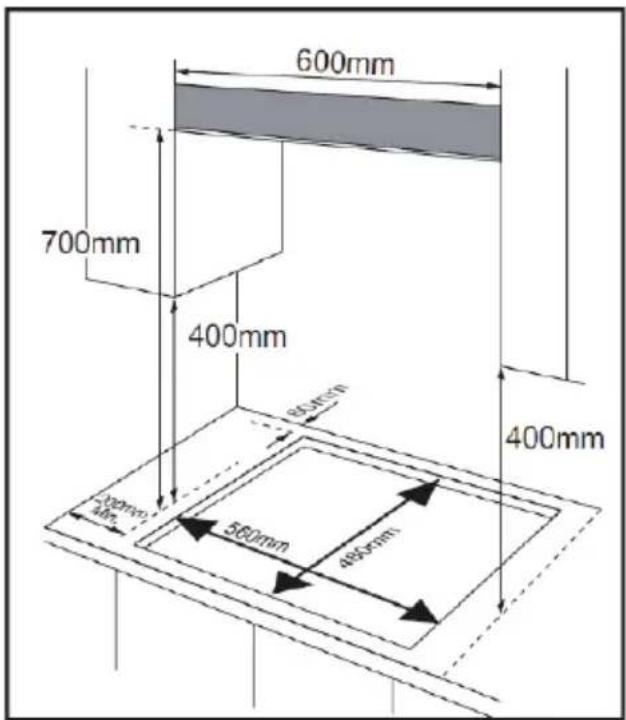
CLEARANCES REQUIRED WHEN FITTING THE HOB WITH A COOKER HOOD ABOVE
- This appliance is to be built into a kitchen unit or 600mm worktop, providing the following minimum distances are allowed;
- The edges of the hob must be a minimum distance of 60 mm from a side or rear wall.
- 700 mm between the highest point of the hob surface (including the burners) and the underside of any horizontal surface directly above it.
-
400 mm between the hob surfaces, providing that the underside of the horizontal surface is in line with the outer edge of the hob. If the underside of the horizontal surface is lower than 400 mm, then it must be at least 50 mm away from the outer edges of the hob.
-
50 mm clearance around the appliance and between the hob surface and any combustible materials.
- You must have a gap of at least 25 mm and at most 74 mm between the underneath of the appliance and any surface that is below it.
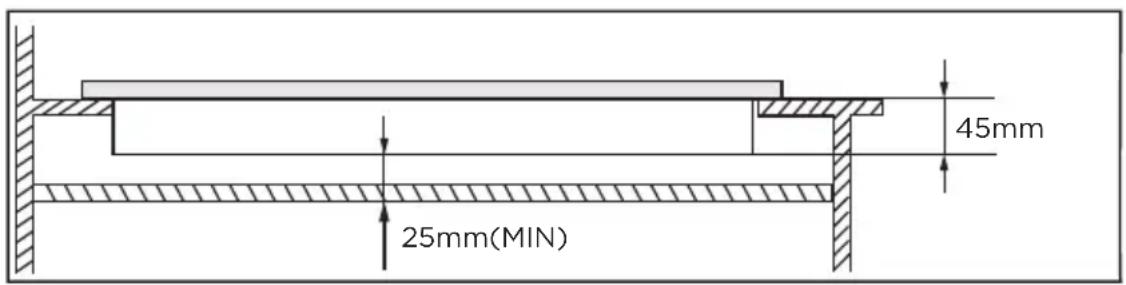
- An oven must have forced ventilation to install a hob above it.
- Check the dimensions of the oven in the installation manual.
- The cut out size must obey the indication.
Installing the appliance
- Remove the pan supports, the burner lid and flame spreader and carefully turn the appliance upside down and place it on a cushioned mat.
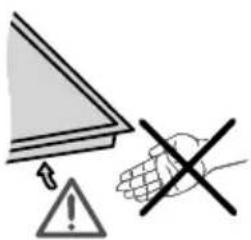
Take care that the Ignition devices and flame supervision devices are not damaged in this operation.
- Apply the sponge provided around the edge of the appliance.
- Do not leave a gap in the sealing agent or overlap the thickness.
natural_image
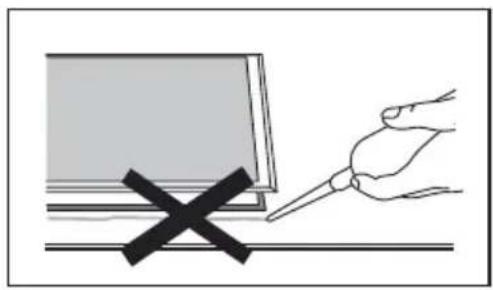
Simple line drawing of a hand holding a pen above a laptop with a black X mark (no text or symbols)Do not use a silicon sealant to seal the appliance against the aperture. This will make it difficult to remove the appliance from the aperture in future, particularly if it needs to be serviced.
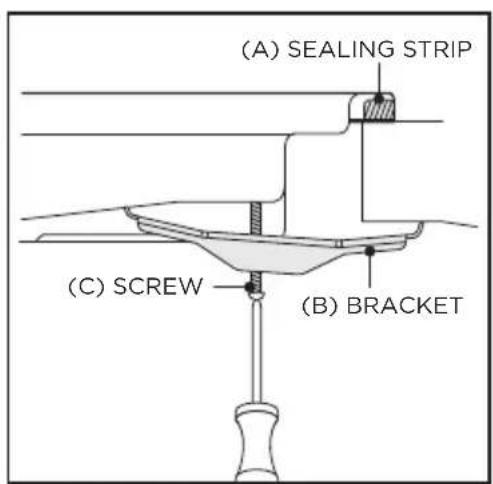
(A) SEALING STRIP
(B) BRACKET
(C) SCREW
- Place the bracket (B) over the holes that match the size of the screws. There are one set of screw holes in each corner of the hob (H).
Slightly tighten a screw (C) through the bracket (B) so that the bracket is attached to the hob, but so that you can still adjust the position.
- Carefully turn the hob back over and then gently lower it into the aperture hole that you have cut out.
- On the underneath of the hob, adjust the brackets into a position that is suitable for your worktop.
Then fully tighten the screws (C) to secure the hob into position.
Gas Connection

- This appliance must be installed and connected in accordance with installation regulations in force in the country in which the appliance is to be used.
- This appliance is supplied to run on LPG and natural gas. Conversion for use on LPG and natural gases must only be undertaken by a qualified person.
Gas supply replacement and installation guidelines:
LPG > NG
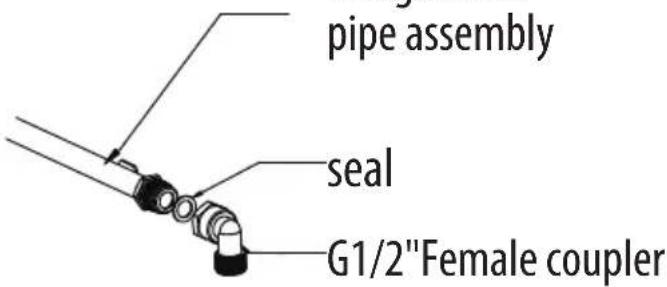
NG > LPG
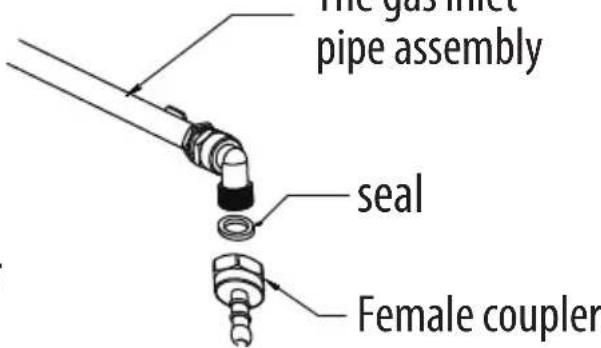
The gas inlet pipe assembly
seal
Female coupler

natural_image
Circular black-and-white warning sign with two white hands, no text or symbols presentInstallation of appliance
Note: Wear protective gloves to fit the hob.
Black nut of manifold
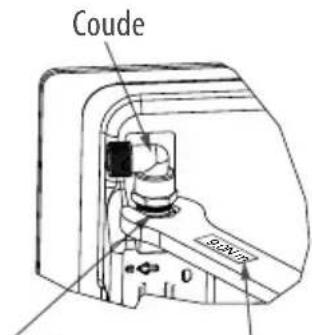
Torque:
9±1N.m
Caution!
If necessary to adjust or install the elbow, it is allowed only torque wrench with 9 ± 1 N.m, and work on the Black nut of manifold instead of on the elbow.
(1) Adjusting the direction of elbow
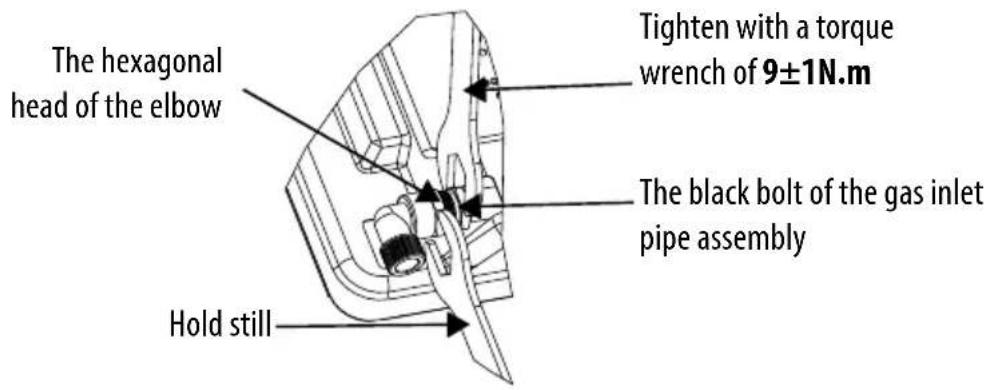
After loosening the elbow, adjust the elbow interface to the required direction as required, and keep the hexagonal head of the elbow motionless with a wrench. Use a 9 ± 1 N.m torque wrench to tighten the black bolt of the gas inlet pipe assembly. Ensure that the torque of the wrench is within the required range to prevent elbow breakage or damage caused by excessive force.
After the installation is tightened, check whether the parts are in good condition and test the air tightness to ensure the tightness of the installation. The installer is responsible for the results of the process.
(2) Installing the gas hob
This appliance should be installed by a registered Gas Safe Engineer!
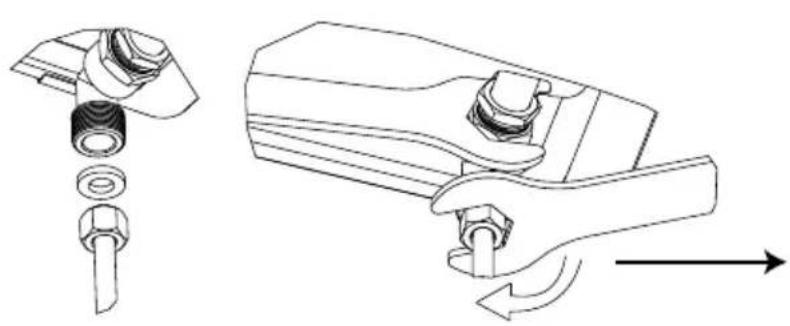
natural_image
Technical line drawing of a mechanical component with exploded view and rotation arrow (no text or symbols)Do not use too much force when tightening; Otherwise, it will cause elbow fracture or rubber ring deformation and leakage. Note that the torque wrench must be used to tighten with a torque of 10N.m. The maximum torque cannot exceed 20N.m.
Gas connection
The gas connection must be located in position where the stop tap is accessible.
The end of the inlet connection point of the gas hob has a 1/2" thread that allows for:
■ A fixed connection
■ Connection using a flexible pipe
The watertight seal supplied must be inserted between the manifold outlet and the gas supply.
You must prevent the pipe from coming into contact with moving parts of the kitchen unit (for example, a drawer) and prevent access to any spaces which might become obstructed.

Danger of leaks!
If any connection is handled, check the seal.
The manufacturer is not liable for any connection leaking, after being handled.
- It is the law that all gas appliances are installed by competent persons in accordance with the current edition of the Gas Safety Installation and Use Regulations.
- It is in your interest and that of safety to ensure compliance with the law.
- In the UK, GASSAFE registered installers work to safe standards of practice. The hob must also be installed in accordance with the current edition of BS 6172. Failure to install the cooker correctly could invalidate the warranty, liability claims and lead to prosecution.
Gas connection
• Preliminary remarks
The entire length of the connecting pipe must remain accessible and must be changed before its expiry date (indicated on the pipe). Whatever the means of connection chosen, make sure of its tightness, after installation, with soapy water.
If the hob is installed above an oven or if the proximity of other heating appliances risks heating and damaging the connection, it is essential to use a rigid tube to make the connection.
If a flexible pipe is used (e.g. for butane gas), the latter must not be installed in a place where there is a risk of contact with moving parts of furniture and must not pass through a place likely to be obstructed.
Gas connection (continued)
• Possible Connections
GAS DISTRIBUTED BY PIPELINE (NATURAL GAS)
Use one of the 3 types of connection:
- connection by rigid tube (gas standard name G1/2).
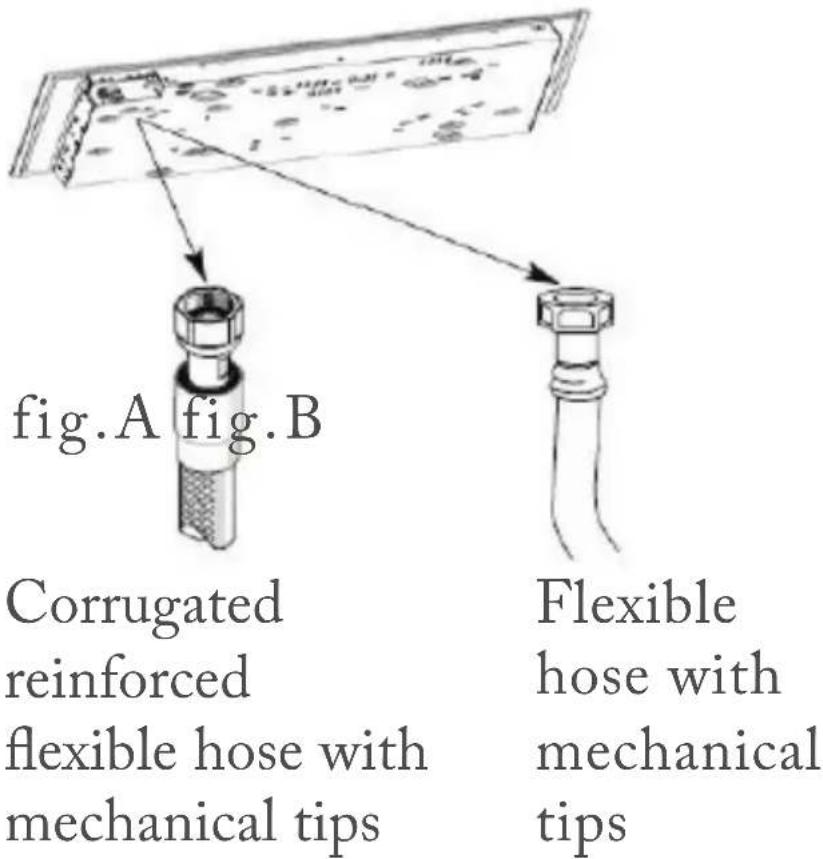
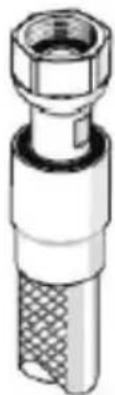
Make the connection directly to the end of the elbow mounted on the appliance, or - connection by corrugated reinforced flexible hose with mechanical tips (fig. A on the previous page).
You can also use a flexible pipe in stainless steel (of "Gazinox" type) available from your local distributor, or - connection by flexible pipe with mechanical tips (fig. B on the previous page).
These pipes must have a maximum length of 2 metres and a validity date that has not expired.
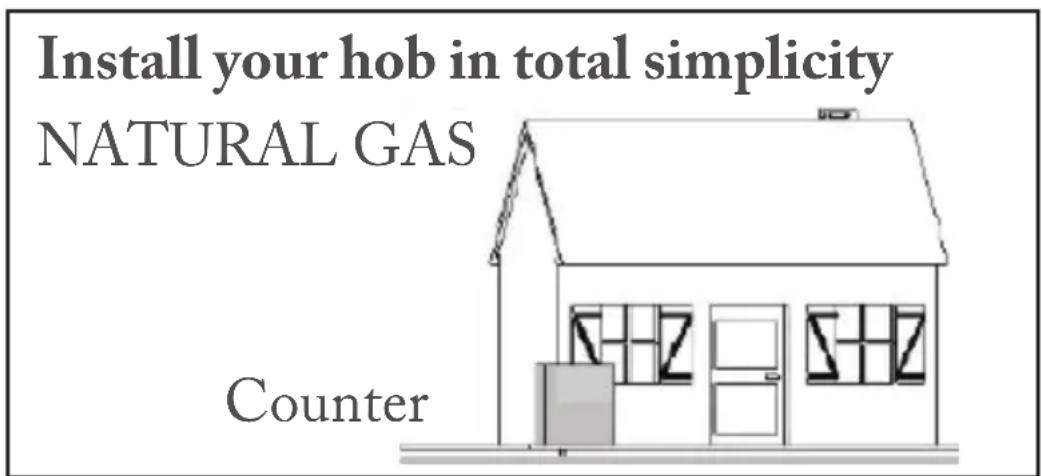
Install your hob in total simplicity Gas connection (continued)
• Possible Connections
For the safety of the user, we recommend a connection either by rigid tube if this is possible, or with a corrugated reinforced flexible pipe (maximum length 2 metres)(fig. A).
In the case of an existing installation where the fitting of a rigid tube is impossible, it is always possible to perform the connection with a flexible pipe (maximum length 2 metres) fitted with two clamps: one on the connector (fig. B), and the other on the expansion valve, without forgetting to put a sealing washer in place between the connector and the elbow of the table.
BUTANE/PROPANE
Mandatory Expansion Valve
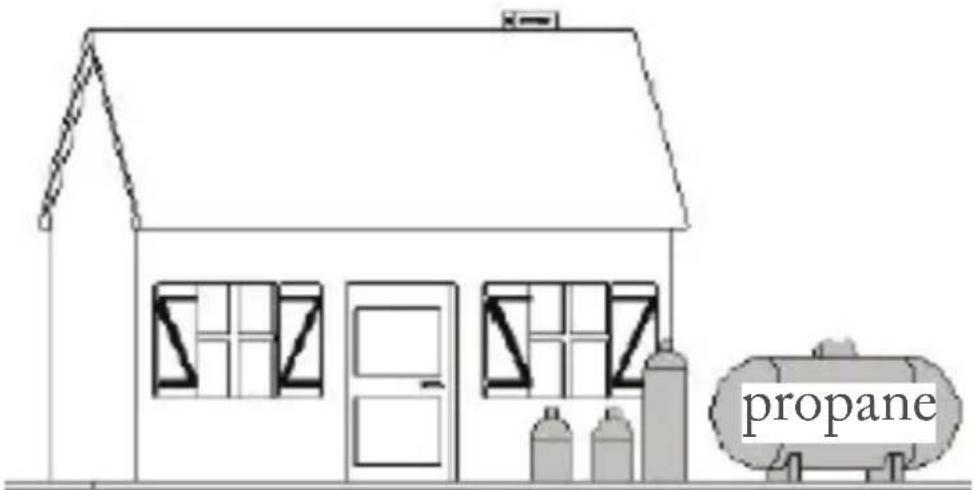
butane propane
natural_image
Technical illustration of a mechanical connector or fitting (no text or symbols visible)fig. A
Corrugated reinforced flexible pipe with mechanical tips
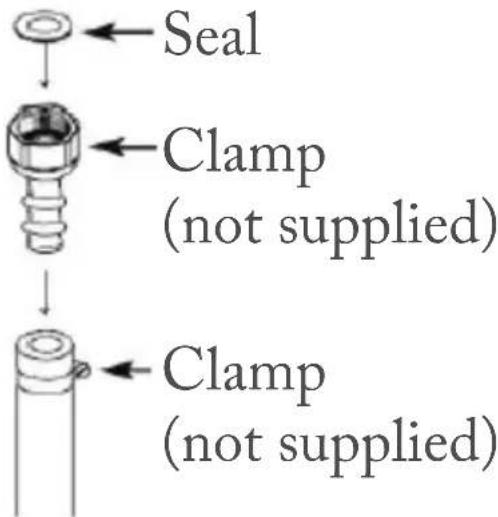
fig. B
connection by flexible pipe
WARNING:
Temperatures above 30^ C can cause overheating of the pipe. To avoid this, make sure that no heating appliance is located nearby.
Tighten the connector with a torque not exceeding 2.5 m/daN (m/kgF).
In France, you must use a tube or a pipe bearing the stamp «NF Gaz».
Gas Specification
| Gas type & pressure | Heat input and orifice size marked(mm) | |||
| Wok burner | Rapid burner | Semi-rapid | Auxiliary-rapid | |
| 3.6kW (262g/h) | / | 1.75kW (127g/h) | 1.0kW (73g/h) | |
| G30 29mbar | 0.97 / 0.66 | 0.5 | ||
| G20 20mbar | 1.41 / 0.781 | 0.5 | ||
Electrical Connection
• This appliance must be earthed.
- This appliance is designed to be connected to a AC electricity supply 220-240 V CA, 50 Hz-60 Hz.
- The wires in the mains lead are coloured in accordance with the following code;
$$ \begin{array}{l} - \text { Green } / \text { yellow } = \text { Earth } \ - \text { Blue } = \text { Neutral } \ - \text { Brown } = \text { Live } \ \end{array} $$

- The wire which is coloured green and yellow must be connected to the terminal which is marked with the letter E or by the earth symbol.
WIRING DIAGRAM
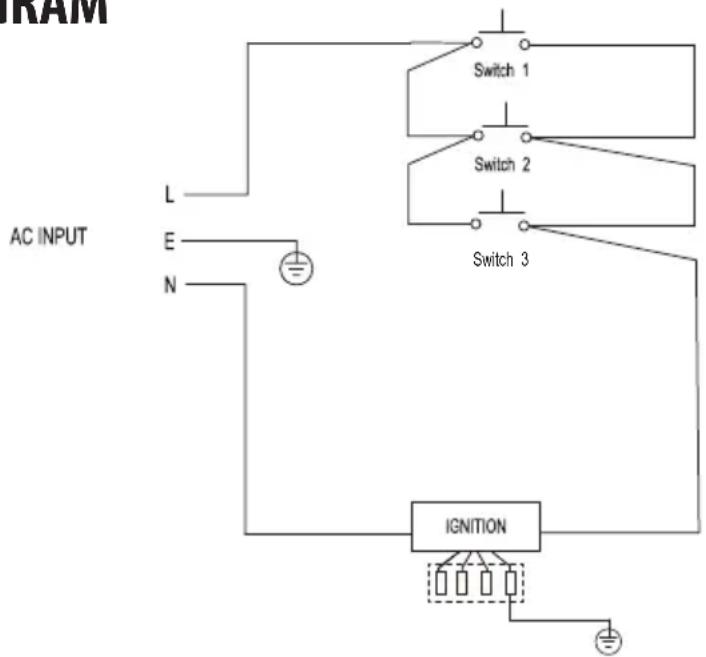
flowchart
graph TD
    A["AC INPUT"] --> B["L"]
    A --> C["E"]
    A --> D["N"]
    B --> E["Switch 1"]
    C --> F["Switch 2"]
    D --> G["Switch 3"]
    E --> H["IGNITION"]
    F --> H
    G --> H
    H --> I["Ground"]
    style A fill:#f9f,stroke:#333
    style H fill:#ccf,stroke:#333
When the power cord is damaged it must be replaced by the manufacturer to produce, customer service agent or similarly qualified personnel.
Gas adjustment
• Take precautions on the operations and adjustments to be carried out when converting from one gas to another.
- All work must be carried out by a qualified technician.
- Before you begin, turn off the gas and electricity supply to the appliance.
1. Change the injector of the burners.
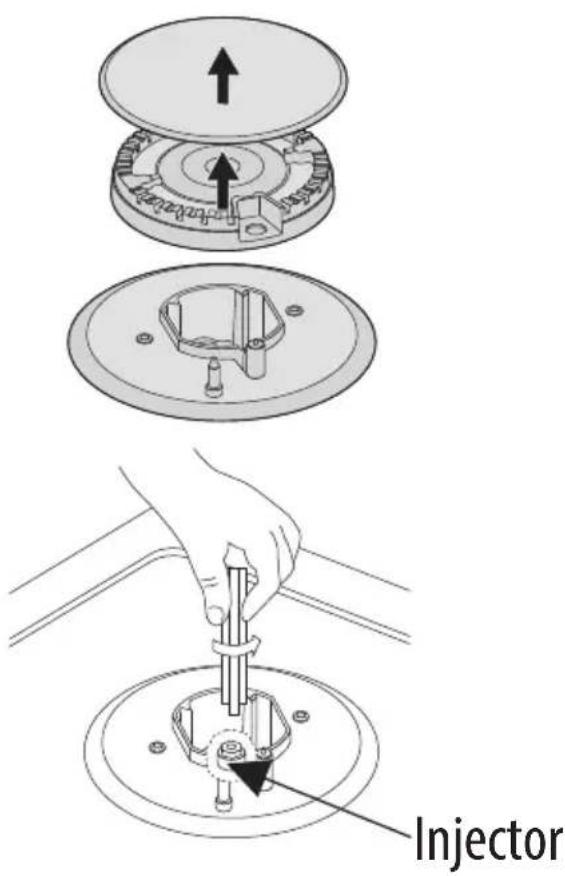
Remove the pan support, Burner lid and Flame spreader.
Unscrew the injector using a 7mm box spanner and replace it with the stipulated injector for new gas supply. Carefully reassemble the all components.
After injectors are replaced, it is advisable to strongly tighten the injector in place.
- Adjustment of minimum level of the flame.
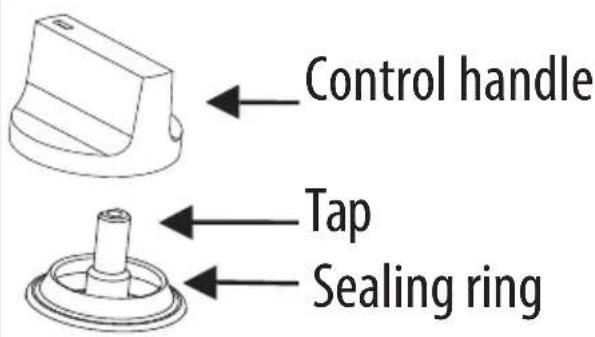
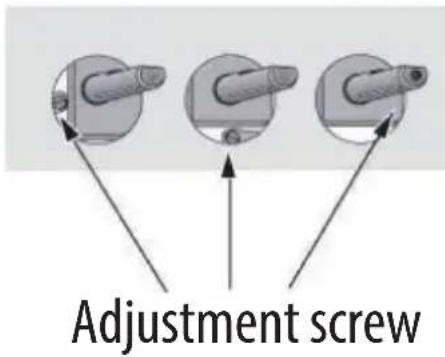
- Turn the taps down to minimum.
- Remove the knob from the tap and place a small bladed screwdriver in the centre of the tap shaft.
- The correct adjustment is obtained when the flame has a length of about 3 - 4 mm.
- For butane/ propane gas, the adjusting screw must be tightly screwed in.
- Refit the control knob.
Make sure that the flame does not go out by quickly turning from maximum flow to minimum flow. If it does then remove the control knob and make further adjustments to the gas flow, testing it again once the adjustment has been made. - Repeat this process for each one of the gas taps.

- Do not dismantle the tap shafe: in the event of a malfunction, change the whole tap.
- Before placing the burners back on the top place, make sure that the injector is not blocked.
- A full operational test and a test for possible leakages must be carried out after gas conversion, (such as soap water or gas detector)
- After completing conversion, a qualified technician or installer has to mark "V" on the right gas category to match with the setting in rating plate. Remove the previous setting "V" mark.
Trouble shooting
- Repairs should be performed by a licensed technician only. Improper repair may result in considerable dangerto you and others.
• However, some minor problems can be resolved as follows :
| Problem Probable cause Solution | |
| Not ignited No spark Check the electrical supply | |
| Badly ignited The gas supply is not completely open. | Open the gas supply completely. |
| Noise made when combusted and ignited | The burner lid is badly assembled. | Assemble the burner lid correctly. |
| Flame goes out when in use. | The flame supervision device is contaminated with alien substance. | Clean the flame supervision device. |
| Product being cooked has boiled over and extinguished the flame. | Turn off burner knob.Wait one minute and reignite zone. | |
| A strong draught may have blown the flame out. | Please turn off zone and check cooking area for draught such as open windows. Wait one minute and reignite zone | |
| Yellow Flame | The holes in the flame spreader are clogged. | Clean the flame spreader. |
| Different gas is used. | Check the gas used. | |
| Unstable Flame The burner lid is badly assembled. | Assemble the burner lid correctly. | |
| Gas Smell Gas leakage Stop using the | product and close the middle valve.Open the window to ventilate. Contact our service centre by using a phone outside. |

- If problem is not solved, please contact customer care centre.
Disposal of old electrical appliances
European directive 2012/19/EU on Waste from Electrical and Electronic Equipment (WEEE), requires that used household appliances are not thrown into the normal municipal waste stream.
Used appliances must be collected separately in order to optimize the rate of recovery and recycling of materials that compose them, and to reduce the impact on human health and on the environment. The crossed bin symbol is affixed to all the products to remind you of the obligations of separated collection.
The crossed out “wheeled bin” symbol on the product reminds you of your obligation, that when you dispose of the appliance, it must be separately collected.
Consumers should contact their local authority or retailer for information concerning the correct disposal of their old appliance.
This instruction book is also available on our website:
www.conforama.fr
If you have a problem with your product, before going to your Conforama store, please get in touch with our aftersales services for electrical household appliances: https://sav-client.conforama.fr 09 69 32 05 05

SABA is a German brand born in 1923 in the heart of the black forest.
Pioneers in electrical equipment, it continues its search for quality by offering smart products that will accompany you on a daily life.
This product has been manufactured and sold under the responsibility of CONFORAMA FRANCE S.A..
SABA, and the SABA logo are trademarks used under license by CONFORAMA FRANCE S.A. – further information at www.saba-brand.com.
All other products, services, companies, trademarks, trade or product names and logos referenced herein are the property of their respective owners.

natural_image
Pure geometric grid pattern with curved lines, no text or symbols presentCONFORAMA France SA

- Instructions techniques
- Attention
- TABLE OF CONTENTS
- Safety Warning
- Instructions for use and maintenance
- Technical instructions
- Safety Instructions
- Danger
- Installation
- Warning
- Caution
- Child and People Safety
- During Use
- Cleaning and Service
- Environmental Information
- Correct Disposal of This Product (Waste Electrical & Electronic Equipment)
- Description of the appliance
- How to Use the appliance
- Automatic ignition with flame failure safety device
- Safety and Energy saving advice
- Cleaning and Maintenance
- Pan support, Control handles
- Top plate
- Burners
- Using instructions
- Warnings
- Positioning
- Installing the appliance
- Gas Connection
- Caution!
- Adjusting the direction of elbow
- Installing the gas hob
- • Preliminary remarks
- Gas connection (continued)
- GAS DISTRIBUTED BY PIPELINE (NATURAL GAS)
- Install your hob in total simplicity Gas connection (continued)
- BUTANE/PROPANE
- Mandatory Expansion Valve
- WARNING:
- Electrical Connection
- Gas adjustment
- Change the injector of the burners.
- Trouble shooting
- Disposal of old electrical appliances
Brand : SABA
Model : TGV60B3F/C
Category : Cooker