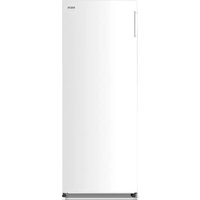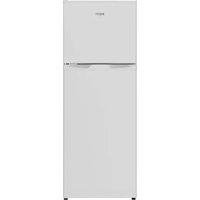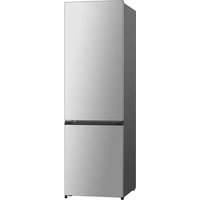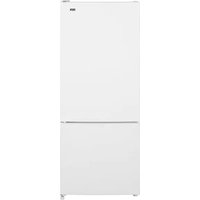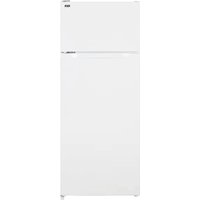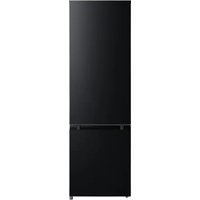
CB2623BK - Fridge FAR - Free user manual and instructions
Find the device manual for free CB2623BK FAR in PDF.


| Product Type | Ventilated fridge-freezer |
| Brand | FAR |
| Model | CB2623BK |
| Total volume | 262 L |
| Fridge volume | Not specified (total volume 262 L) |
| Freezer volume | Not specified (freezing capacity 3 kg/24h) |
| Annual energy consumption | 204 kWh/year |
| Climate class | N, ST (16°C to 38°C) |
| Refrigerant | R600a (81 g) |
| Insulation blowing gas | Cyclopentane |
| Electric shock protection | Class I |
| Power supply | 220-240 V~ 50 Hz, single-phase |
| Freezing capacity | 3 kg/24h |
| Freezer star rating | 4 stars (suitable for freezing fresh foods) |
| Defrost | Automatic (fridge compartment), manual (freezer if frost) |
| Interior lighting | LED (replacement by professional) |
| Door reversibility | Yes, reversible (left/right) |
| Adjustable feet | Yes, for leveling |
| Thermostat | Mechanical adjustment (MIN to MAX) |
| Temperature indicator | Coldest zone with OK symbol |
| Supplied accessories | Vegetable bin, drawers, glass shelves, door bins, ice cube tray |
| Cleaning and maintenance | Clean interior with baking soda; do not use solvents; dust back annually |
| Safety | Child lock not mentioned; do not use electrical appliances inside; maintain ventilation openings |
| Spare parts and repairability | Parts available for 10 years; professional repair recommended |
| Warranty | Legal guarantee of conformity 2 years |
| Country of origin | Not specified (manufactured for Conforama) |
Frequently Asked Questions - CB2623BK FAR
User questions about CB2623BK FAR
0 question about this device. Answer the ones you know or ask your own.
Ask a new question about this device
Download the instructions for your Fridge in PDF format for free! Find your manual CB2623BK - FAR and take your electronic device back in hand. On this page are published all the documents necessary for the use of your device. CB2623BK by FAR.
USER MANUAL CB2623BK FAR
natural_image
Exterior view of a modern black refrigerator with two doors and a side shelf (no visible text or symbols)MANUEL D'INSTRUCTIONS
Power off the refrigerator, and remove all articles from the door trays.
natural_image
Illustration of various plastic bottles and containers with a diagonal line crossing over them (no text or symbols)natural_image
Illustration of hands holding a rectangular object with arrows indicating upward movement (no text or symbols)natural_image
Diagram of a door handle with an arrow indicating clockwise motion (no text or symbols)Dépannage
Thank you for choosing FAR quality. This product has been developed by our team of professional and according to European regulations in force. In order to get the most out of your new appliance, we recommend that you read this instruction manual carefully and keep it for future reference.
TABLE OF CONTENTS
Important safety instructions......GB-3
Installation important! GB-10
Product overview GB-11
Installation instructions GB-12
Door reversing ....GB-15
Operating instructions ......GB-17
Storing of food GB-17
Temperature indicator GB-25
Troubleshooting GB-23
Cleaning and maintenance......GB-24
Troubleshooting ....GB-28
Customer service....GB-31
Technical specifications ....GB-32
Disposal of your old appliance ....GB-33
Explanation of symbols
| Icon Type Meaning | ||
 | WARNING | Warns against risks which could, if left unheeded, cause danger to life and limb, injuries or material damage. |
 | RISK OF ELECTRIC SHOCK | Warns of risks which could, if left unheeded, cause damage to life and limb through electric shock. |
 | RISK OF FIRE | Warns that fires could start if the warning is left unheeded. |
 | CAUTION | Risk of injuries or material damage. |
 | IMPORTANT / REMARK | Information regarding the correct use of the appliance. |
Important safety instructions

This refrigerating appliance is not intended to be used as a built-in appliance. To mitigate the risks associated with explosion, fire, fatalities, electric shock, personal injury, or scalding when using this product, it is imperative to adhere to fundamental safety measures, as outlined below.
- This appliance is for private household use only.
- This appliance can be used by children aged from 8 years and above and persons with reduced physical, sensory or mental capabilities or lack of experience and knowledge if they have been given supervision or instruction concerning use of the appliance in a safe way and understand the hazards involved. Children shall not play with the appliance. Cleaning and user maintenance shall not be made by children without supervision.
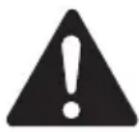
WARNING
- WARNING: Keep ventilation openings, in the appliance enclosure or in the built-in structure, clear of obstruction.
- WARNING: Do not use mechanical devices or other means to accelerate the defrosting process, other than those recommended by the manufacturer.
- WARNING: Do not damage the refrigerant circuit.
- WARNING: Do not use electrical appliances inside the food storage compartments of the appliance, unless they are of the type recommended by the manufacturer.
- If the supply cord is damaged, it must be replaced by the manufacturer, its service agent or similarly qualified persons in order to avoid a hazard.
- WARNING: Connect to potable water supply only.
- WARNING: Fill with potable water only.
- WARNING: To avoid a hazard due to instability of the appliance, it must be fixed in accordance with the instructions.
- Do not store explosive substances such as aerosol cans with a flammable propellant in this appliance.
- The appliance shall be connected to the water mains using new hose-sets supplied with the appliance, old hose-sets should not be reused.
- Regarding the information pertaining to the installation, handing, maintenance, servicing and
the appliance, thanks to refer to the paragraph "INSTALLATION INSTRUCTIONS" "CLEANING AND MAINTENANCE" "TROUBLESHOOTING" of the manual.
- Regarding the information for replacing of the lamps of the appliance, thanks to refer to the paragraph "INSTALLATION INSTRUCTIONS" of the manual.
- WARNING: Do not locate multiple portable socketoutlets or portable power supplies at the rear of the appliance.
- WARNING: When positioning the appliance, ensure the supply cord is not trapped or damaged.
- Children aged from 3 to 8 years are allowed to load and unload refrigerating appliances.
To avoid contamination of food, please respect the following instructions:
- Opening the door for long periods can cause a significant increase of the temperature in the compartments of the appliance.
- Clean regularly surfaces that can come in contact with food and accessible drainage systems.
- Clean water tanks if they have not been used for 48h; flush the water system connected to a water supply if water has not been drawn for 5 days.
- Store raw meat and fish in suitable containers in the refrigerator, so that it is not in contact with or drip onto other food.
—Two-star frozen-food compartments are suitable for storing pre-frozen food, storing or making icecream and making ice cubes.
-One-, two- and three-star compartments are not suitable for the freezing of fresh food.
- If the refrigerating appliance is left empty for long periods, switch off, defrost, clean, dry, and leave the door open to prevent mould developing within the appliance.
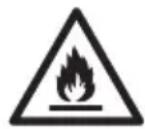
WARNING:
Risk o□r□□□ ammable materials
If the refrigerant circuit is damaged:
-Avoid naked flames and sources of ignition.
-Thoroughly ventilate the room in which the appliance is situated.
If you are discarding an old freezer or refrigerator with a lock / catch fitted to the door, ensure that it is left in a disabled condition to prevent the entrapment of young children when playing.
As old refrigeration equipment may contain CFC's which will damage the ozone layer, when disposing of any refrigeration equipment please contact your local waste disposal department for advice on the correct method of disposal.
Unplug the appliance from the mains socket when not in operation and before cleaning.
Do not insert oversized food as this could cause incorrect operation.
Extreme caution must be used when moving the appliance.
Do not give children ice-cream and water ices direct from the freezer as the low temperature may cause “freezer burns” on the lips.
This appliance must be installed on the ground, on a flat, horizontal surface, making sure that the ventilation openings are completely clear.
Replacing certain parts of your household electrical appliance may lead to a danger. Please ensure that you have the necessary skills and own all tools required to carry out the self-repair operations safely. Otherwise, please contact a qualified professional.
Please according to local regulations regarding disposal of the appliance for its flammable blowing gas. Before you scrap the appliance, please take off the doors to prevent children trapped.
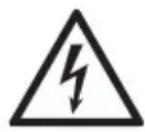
RISK OF ELECTRIC SHOCK
- The power cord must not be lengthened.
- Make sure that the power plug is not crushed or damaged. A crushed or damaged power plug may overheat and cause a fire.
- Make sure that you can access the main plug of the appliance.
- Do not pull the main cable.
- If the power plug socket is loose, do not insert the power plug. There is a risk of electric shock or lire.
- The freezer is only supplied with power supply of single phase alternating current of 220 - 240V\~50Hz. If fluctuation of voltage in the district of user is so large that the voltage exceeds the above scope, for safety sake, be sure to apply A.C. Automatic voltage regulator of more than 350W to the freezer. The freezer must employ a special power socket instead of common one with other electric appliances. Its plug must match the socket with ground wire.

CAUTION
Failure to comply with the safety information and instructions may result in injury.
- Never put frozen food in your mouth immediately after taking it out of the freezer.
- Avoid prolonged skin contact with frozen food, ice and the pipes in the freezer compartment.
- Do not store explosive substances such as aerosol cans with a flammable propellant in this appliance. Also do not place flammable products near the product.
- Do not store beer, drinks or other liquids in bottles or tightly closed containers in the freezer compartment!
- The appliance is not suitable for the storage and cooling of medicines, blood plasma, laboratory preparations or similar substances and products underlying the Medical Device Directive 2007/47/EC.
- Plastic parts that come into contact with oils/acids (animal or vegetable) over a long period of time or frequently age more quickly and can crack or break.
Installation important!

IMPORTANT / REMARK
- Unpack the appliance and check if there are damages on it. Do not connect the appliance if it is damaged. Report possible damages immediately to the place you bought it. In this case retain packing.
- It is advisable to wait at least four hours before connecting the appliance to allow the oil to flow back in the compressor.
- Adequate air circulation should be allowed around the appliance reducing the risk of overheating. To achieve sufficient ventilation, follow the instructions relevant to installation.
- Wherever possible the back of the product should not be close to a wall to avoid touching or catching warm parts (compressor, condenser) to prevent the risk of a lire, follow the instructions relevant to installation.
- The appliance must not be located close to radiators or cookers.
- Make sure that the mains plug is accessible after the installation of the appliance.
- Any electrical work required to do the servicing of the appliance should be carried out by qualified electrician or competent person. This product must be serviced by an authorized Serviced Center, and only genuine spare parts must be used.
Product overview
Make sure all parts are included in the device packaging. If you have a problem with your device or parts, contact a local service center or the store where you purchased the product.
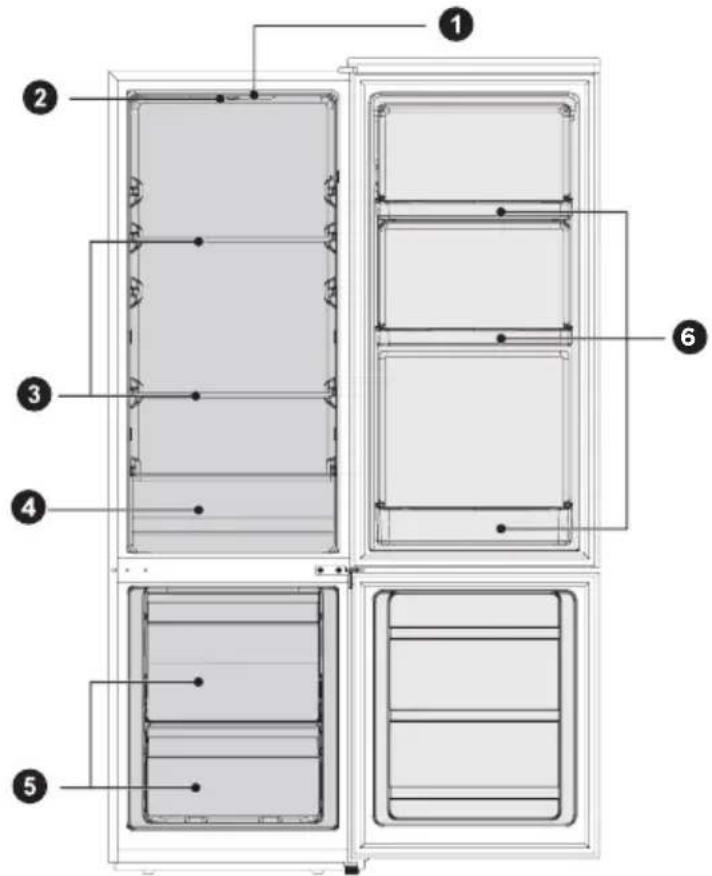
1 LED light 4 Vegetable crisper
2 Temperature control 5 Drawer
3 Shelf 6 Door tray
- For the most efficient use of energy, please keep the all internal items such as trays, drawers, shelves and ice cube box on the position supplied by manufacturer.
- This refrigerating appliance needs to be installed independently and cannot be used as a built-in. Otherwise, it will cause problems such the performance and life of the appliance are reduced. And the manufacturer does not provide basic appliance warrant.
Installation instructions
□□□□□□□
Remove the exterior and interior packing. Wipe the outside thoroughly with a soft, dry cloth and the inside with a wet, lukewarm cloth.
Avoid placing the cabinet in a narrow recess or near any heat source, direct sunlight, or moisture.
Keep free air circulation around the cabinet. When installing the appliance, ensure 10cm of free space appliance, both sides, 10cm at the top of the appliance, and no less than 7.5cm at the rear of the appliance.
Before connecting your refrigerator to the power supply, check that the voltage stated on the rating label of your appliance corresponds to the voltage in your home. A different voltage could damage the appliance.
The appliance must be grounded. The manufacturer is not responsible for damages that may occur as a result of usage without grounding.
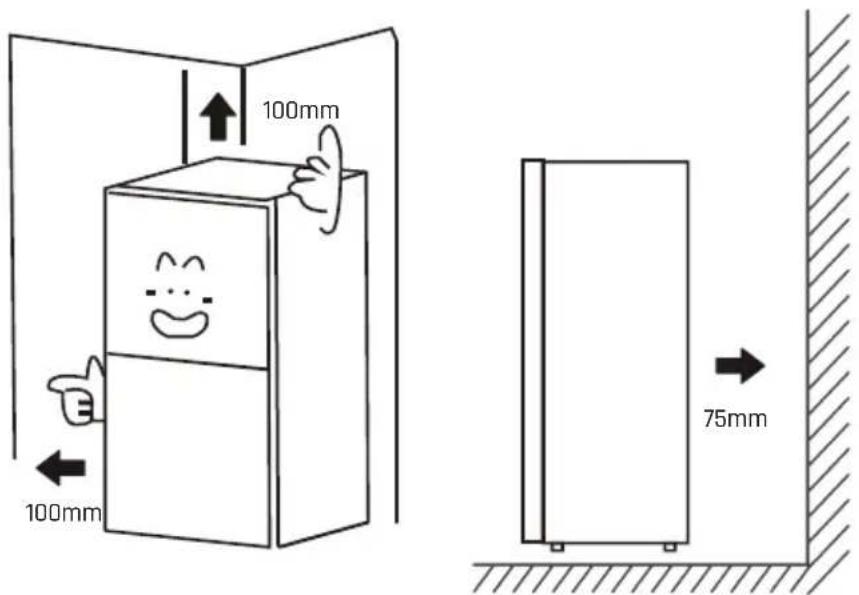
Leveling feet
To avoid vibration, the appliance must be leveled.
- If required, adjust the leveling feet to compensate for the uneven floor.
- The front should be slightly higher than the rear to aid in door closing.
- Leveling feet can be turned easily by tipping the cabinet slightly.
- Turn the leveling feet counter clockwise to raise the unit, clockwise to lower it.
Changing the light

The replacement or maintenance of the LED lamps is intended to be made by the manufacturer, its service agent or similar qualified person.
Moving the appliance
- Remove all items from the appliance.
- Pull the power plug out, insert and fix it into the power plug hook at the rear or on top of the appliance.
- Tape parts such as shelves and the door to prevent from falling off while moving the appliance.
- Move the appliance with more than two people carefully. When transporting the appliance over a long distance, keep the appliance upright.
- After installing the appliance, connect the power plug into a socket out to switch on the appliance.
Changing the light
- Do not place the appliance near cookers, radiators or other heat sources. If the ambient temperature is high, the compressor will run more frequently and for longer resulting in increased energy consumption.
- Ensure that there is sufficient ventilation at the base of the appliance, on the sides of the appliance and at the back of the appliance.
- Please also observe the spacing dimensions in the chapter "Installation".
- The arrangement of drawers, shelves and trays as shown in the product overview offers the most efficient use of energy and should be retained as far as possible.
- To obtain a larger storage space (e.g. for large refrigerated/frozen goods), the middle drawers and shelves can be removed. The top and bottom drawers and shelves should be removed last if necessary.
- An evenly filled refrigerator/freezer compartment contributes to optimal energy use.
- Allow warm food to cool before placing it in the refrigerator/freezer compartment. Food that has already cooled down increases energy efficiency.
- Allow frozen food to defrost in the refrigeration compartment The coldness of the frozen food reduces the energy consumption in the refrigerator compartment and thus increases the energy efficiency.
- Open the door only as briefly as necessary to minimise cold loss. Opening the door briefly and closing it properly reduces energy consumption.
- Setting the temperature no colder than necessary contributes to optimal energy use.
- The door gaskets of your appliance must be perfectly intact so that the doors close properly and energy consumption is not increased unnecessarily
Door reversing
Based on the location where you plan to use your refrigerator, you may find it more convenient to reverse the position of the door.

To avoid injury to yourself or your property, we recommend that someone assist you during the door reversal process.
Preparing to reverse the door position
You will need: A standard screwdriver, a Phillips screwdriver, and the included Allen wrench.
- Make sure that your refrigerator is unplugged and empty.
- Have someone available to assist you in the process.
- Keep all of the parts you remove to reuse them later.
Step
- Power off the refrigerator, and remove all articles from the door trays.
- Remove the top hinge cover, then remove the top hinge screws, top hinge, and hole cap which is fixed on another side.
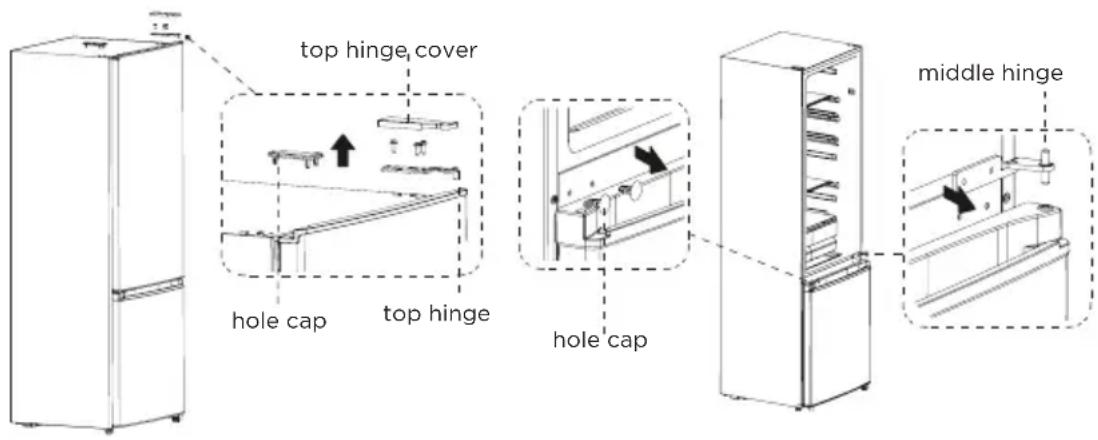
- Remove the refrigerating door, the middle hinge and the hole caps.
- Remove the freezer door, remove the bottom hinge, and adjustable foot on another side.
- Exchange the fixed position of the adjustable foot and the bottom hinge, then fix them again.
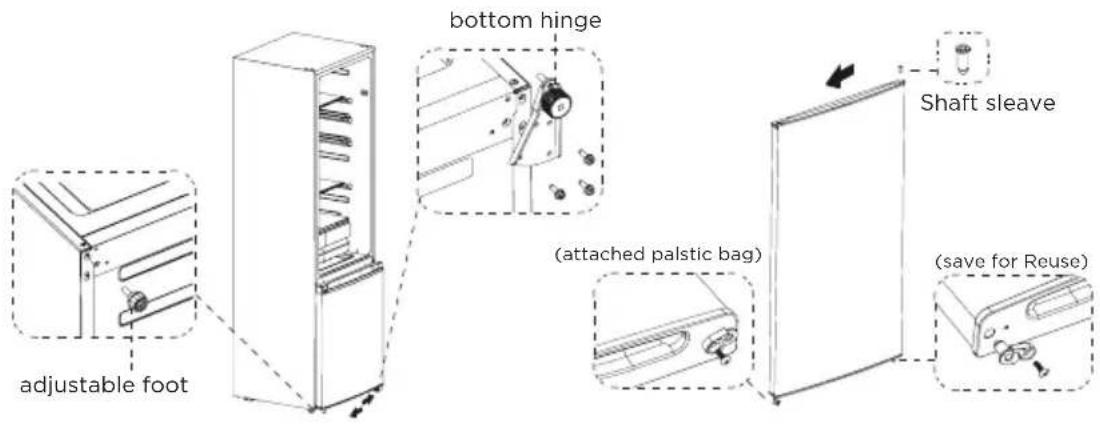
- Remove the screws and stoppers which are fixed on the bottom cover of the refrigerating door.
- Take out the stopper from the attached palstic bag, fix the stopper with screws on another side of the bottom cover of the refrigerating door.
natural_image
Line drawing of a refrigerator interior showing front and side views with no text or symbols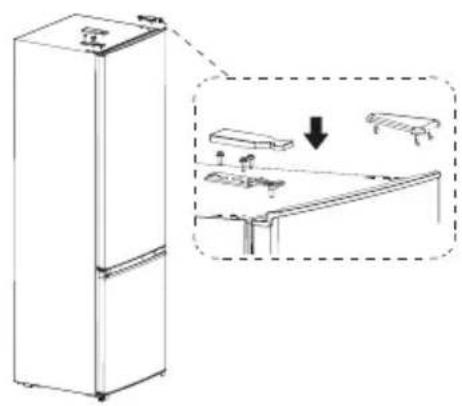
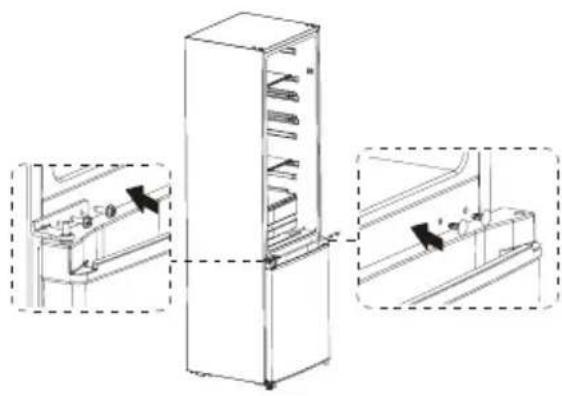
- Place the freezer door from top to bottom.
- Fix the middle hinge with screws and install 2 hole caps.
- Unscrew the shaft of the top hinge and install it on the other side.
- Put the refrigerating door on the middle hinge, assemble the top hinge on another side, fix the hinge cover on the top hinge and fix hole cap, as below pictures shows.
Operating instructions
Use and functions
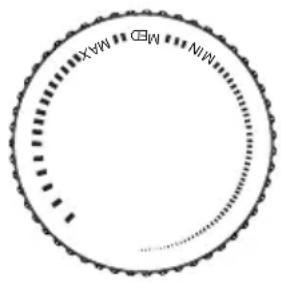
- Turn the temperature control knob to “MAX”, the internal temperature of the refrigerator becomes lower.
- Turn the temperature control knob to "MIN", the internal temperature of the refrigerator becomes higher.
- Please adjust the temperature between "MAX" and "MIN".
Storing of food
Your appliance has the accessories as the “Product Overview” showed in general, which provide guidance on the proper method for storing food. The glass shelves and crisper can be removed to store food if needed.
Note: Food must not touch directly with the surface inside the appliance, and should be stored in proper containers.
Storing food in the refrigerator compartment
The fridge and freezer compartment help to extend the storage times of fresh, perishable foods. Fresh food care for best results:
- Store foods that are very fresh and of good quality.
- Ensure that food is well wrapped or covered before it is stored.
- This will prevent food from dehydrating, deteriorating in colour or taste loss, and oder transfer, and will help maintain freshness.
- Vegetables and fruits do not need to be wrapped if they are stored in the vegetable container of the fridge compartment.
- Make sure that strong smelling foods are wrapped or covered and stored away from foods such as butter, milk and cream which can be tainted by strong odours.
- Cool hot foods down before placing it in the fridge compartment
Dairy foods and eggs
- Most pre-packed dairy foods have a recommended use by /best before/best by/ date stamped on them. Store them in the fridge compartment and consume up within the recommended time.
- Butter can become tainted by strong smelling foods, so it is best stored in a sealed container.
- Eggs should be stored in the fridge compartment.
Red meat
- Place fresh red meat on a plate and loosely cover with plastic wrap or foil.
- Store cooked and raw meat on separate plates. This will prevent contamination from juices lost by the raw meat.
Fish and seafood
- Refrigerate on a plate loosely covered with plastic wrap, waxed paper or foil.
- Whole fish should be rinsed in cold water to remove loose scales and dirt and then patted dry with paper towels. Place whole fish orfillets in a sealed plastic bag.
- Keep shellfish chilled at all times and consume within 1-2 days.
Cooked food
- These should be stored in suitable covered containers so that the food will not dry out.
- Keep for only 1-2 days.
Vegetable container
- The vegetable container is ideal for storing fresh fruit and vegetables.
- Take care not to store the following items at temperatures below 7^ C for long periods: Citrus fruits, melons, aborigines, pineapples, papayas, curettes, passion fruits, cucumbers, peppers and tomatoes.
- Undesirable changes will occur at low temperatures such as flesh softening, browning and/or accelerated decay.
- Do not refrigerate avocados (until ripe), bananas and mangoes.
Refrigerated food
For optimized storage, please refer to the storage time shown in the table below.
| Food Location Storage | time | |
| Butter, cheese Upper door rack 1 month | ||
| Eggs Door rack 2-4 weeks | ||
| Fruit, vegetables, salad Crisper 3-5 days | ||
| Meat, sausage, cheese, milk | Lower area (lowest shelf / crisper cover) | 1-4 days |
| Dairy products, canned food, cans | Upper area or door rack | 1 week |
| Drinks, bottles, tubes | Door rack | 3 days |
Freezing and storing food in the freezer compartment
- To store deep-frozen food.
- To make ice cubes.
- To freeze food.
Purchasing frozen food
- Packaging must not be damaged.
- Consume up before the 'use by /best before/best by' date.
- If possible, transport deep-frozen food in an insulated bag and place it promptly in the freezer compartment.
Storing frozen food
Store at -18^ C or colder. Avoid opening the freezer compartment door unnecessarily.
Freezing fresh food
Freeze fresh and undamaged food only.
To retain the best possible nutritional value, flavour and color of vegetables, blanch them before freezing. Aubergines, peppers, zucchini and asparagus do not require blanching.
Note: Keep food to be frozen away from food which is already frozen.
The following foods are suitable for freezing
Cakes and pastries, fish and seafood, meat, game, poultry, vegetables, fruit, herbs, eggs without shells, dairy products such as cheese and butter, ready meals and leftovers such as soups, stews, cooked meat and fish, potato dishes, soufflés and desserts.
The following foods are not suitable for freezing
Types of vegetables, which are usually consumed raw, such as lettuce or radishes, eggs in shells, grapes, whole apples, pears and peaches, hardboiled eggs, yoghurt, soured milk, sour cream, and mayonnaise.
Packing frozen food
To prevent food from losing its flavor or drying out, place food in airtight packaging.
- Place food in packaging.
- Remove air.
-
Seal the wrapping.
-
Label the packaging with the contents and the date of freezing. Suitable packaging: Plastic film, tubular film made of polyethylene, and aluminum foil.
Recommended storage times of frozen food in the freezer compartment
These times vary depending on the type of food. The food that you freeze can be preserved from 1 to 12 months (minimum at -18°C).
| Food Storage time | |
| Bacon, casseroles, milk 1 month | |
| Bread, ice cream, sausages, pies, prepared shellfish, oily fish | 2 month |
| Non-oily fish, shellfish, pizza, scones and muffins | 3 month |
| Ham, cakes, biscuits, beef and lamb chops, poultry pieces | 4 month |
| Butter, vegetables (blanched), eggs whole and yolks, cooked crayfish, minced meat (raw), pork (raw) | 6 month |
| Fruit (dry or in syrup), egg whites, beef (raw), whole chicken, lamb (raw), fruit cakes | 12 month |
Never forget
- Fresh foods with a ‘use by /best before/best by’ date must be frozen before this date expires.
- Check that the food was not previously frozen. Fully thawed frozen food must not be re-frozen.
- Once defrosted, food should be consumed quickly.
Helpful hints and tips
We recommend that you follow the tips below to save energy.
- Try to avoid keeping the door open for long periods.
- Ensure the appliance is away from any sources of heat (direct sunlight, electric oven, cooker, etc.).
- Don't set the temperature colder than necessary.
- Don't store warm food or evaporating liquid in the appliance.
- Place the appliance in a well-ventilated and humidity-free room.
- Please refer to Refer to the “Installation Instruction” chapter.
- The “Product Overview” shows the optimal combination for the drawers, crisper and shelves.
Hints for freezing
- When first starting up or after a period out of use, let the appliance run at least 2 hours on the higher settings before putting food in the compartment.
- Prepare food in small portions to enable it to be rapidly and complete frozen and to make it possible to subsequently thaw only the quantity required.
- Wrap up the food in in airtight materials such as aluminum foil or polyethylene food wraps.
- Do not allow fresh, unfrozen food to touch the food which is already frozen to avoid temperature rise of the latter.
- Iced products, if consumed immediately after removal from the freezer compartment, will probably cause frost burns to the skin.
- It is recommended to label and date each frozen package in order to keep track of the storage time.
Hints for the storage of frozen food
Ensure that frozen food has been stored correctly by the food retailer. Once defrosted, food deteriorates rapidly and must not be re-frozen. Do not exceed the storage period indicated by the food manufacturer.
Switching ollour appliance
If the appliance needs to be switched off for an extended period, the following steps should be taken to prevent mold formation:
- Remove all food;
- Remove the power plug from the mains socket;
- Clean and dry the interior thoroughly;
- Ensure that all the doors are wedged open slightly to allow air circulation.
Temperature indicator
In order to help you get the correct adjustment of your device, it is equipped with a temperature gauge placed in the coldest area of the refrigerator.
For optimal food storage, especially in the coldest area, make sure that “OK” appears on the temperature indicator.
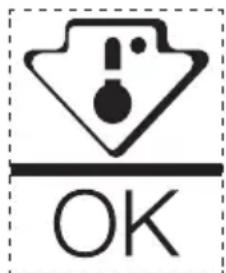
The symbol on the left side indicates the coldest area of your refrigerator and specifies its height.
If"OK" is not displayed, the average temperature in this area is too high. You ought to adjust the thermostat to a colder setting.
For every modification of your thermostat, allow sufficient time for the internal temperature of the unit to stabilize before making another change, if necessary. Adjust the thermostat gradually gradually and wait at least 12 hours before re-checking.
NOTE: After charging the device for fresh food or after repeated or prolonged door openings, it is normal that the inscription “OK” indicator not to appear. Wait at least 12 hours before readjusting the thermostat.
Cleaning and maintenance

CAUTION
- Disconnect the appliance from the electrical supply before undertaking any routine maintenance. Allow at least 5 minutes before restarting the appliance, as frequent starting may damage the compressor.
- Do not use mechanical devices or other means to accelerate the defrosting process, other than those recommended by the manufacturer.
- Do not try to repair, disassemble or modify the appliance by yourself.
- In case of repair, please contact our customer service.
- Eliminate the dust on the back of the appliance at least once a year to avoid fire hazards, as well as increased energy consumption.
- Check the door gasket regularly to make sure there is no debris.
- Clean the door gasket with a soft cloth dampened with soapy water or diluted detergent.
- The interior of the product should be cleaned regularly to avoid odor.
- Use a soft cloth or sponge to clean the inside of the product, with two tablespoons of baking soda and a quart of warm water. Then rinse with water and wipe clean. After cleaning, open the door and let it dry naturally before turning on the power.
-
For areas that are difficult to clean in the product (such as narrow splits, gaps or corners), it is recommended to wipe them regularly.
-
For areas that are difficult to clean in the product (such as narrow splits, gaps or corners), it is recommended to wipe them regularly with a soft rag, soft brush, etc. and when necessary, use some auxiliary tools (such as thin sticks) to ensure no contaminants or bacterial accumulation in these areas.
- Wipe the outer surface of the product with a soft cloth dampened with soapy water, detergent, etc., and then wipe dry.
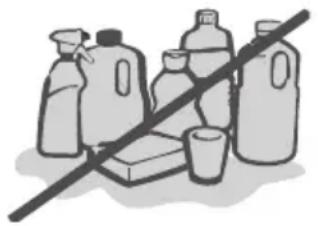
- Do not use hard brushes, steel wools, wire brushes, abrasives (such as toothpaste), organic solvents (such as alcohol, acetone, banana oil, etc.), boiling water, acid or alkaline items, which may damage the fridge surface and interior. Boiling water and organic solvents such as benzene may deform or damage plastic parts.
natural_image
Illustration of various household items including bottles, a cup, and a cross-shaped line (no text or symbols)- Do not rinse directly with water or other liquids during cleaning to avoid short circuits or damage to electrical insulation after immersion.
Defrosting
Although this appliance automatically defrosts, frost may form on the freezer compartment's interior walls if the freezer door is opened frequently or left open for too long. If the frost is too thick, select a time with minimal food stock and proceed as follows:
Remove all food and accessory baskets, unplug the appliance from the mains power and leave the doors open. Ventilate the room thoroughly to accelerate the thawing process.
Once defrosting is completed, clean your freezer as described above.
CAUTION!
Don't use sharp objects to remove frost from the freezer.
Only after the interior is completely dry should the appliance be switched back on and plugged back into the mains socket.
ATTENTION: The appliance shall run continuously once it is started. Generally, Interrupting its operation frequently may impair its service life.
Cleaning the door tray
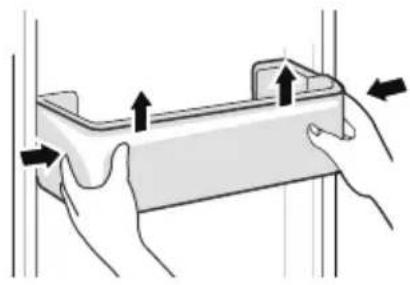
According to the direction arrow in the figure below, use both hands to squeeze the tray, and push it upward to take it out.
After washing the tray, you can adjust its installation height in accordance with your requirement.
natural_image
Illustration of hands holding a rectangular object with arrows indicating force or movement (no text or symbols)Cleaning the glass shelf
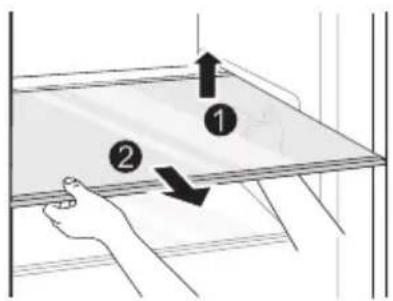
As the innermost part of the refrigerator liner where it contacts the shelves has a backstop, you should raise the shelves upward to take it out.
Adjust or clean the shelves according to your requirement.
Cleaning the vegetable drawer
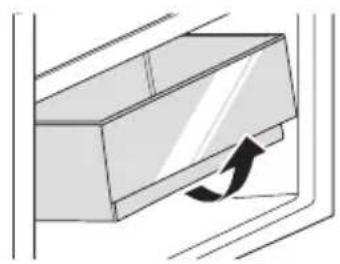
Remove the contents of the drawer. Hold the handle of the vegetable drawer and pull it out completely until it stops.
Lift the vegetable drawer up and remove it by pulling it out.
natural_image
Diagram of a door handle with an arrow indicating clockwise motion (no text or symbols)Troubleshooting
If you have a problem with your appliance, first review the following table and try the suggestions provided.
| Problem Cause Solution | ||
| Not operate | ·The power supply is not turned on and the plug is not firmly inserted.·Low voltage, a power failure, or a tripped circuit can disrupt the appliance's operation. | ·Insert the power cord plug firmly.·Check the power supply at home. |
| Fridge/Freezer is over-cooling | ·Temperature control is not set correctly. | ·Set the temperature higher. |
| Compressor working for a long time | ·Door is stuck with objects.·Putting too much food in at one time.·Door gasket deformed. | ·This is normal.·Do not put too much food in at one time.·Wait until the food has cooled down before putting it in.·Do not open the door too often.·Need to defrost. |
| Door does not close properly | ·When the appliance is operating, heat is dissipated to the outside through the metal tubes inside the compartment.·Higher ambient temperatures in the summer cause the temperature of the outer wall to rise. | ·Do not put in too much food.·Place the appliance stably.·Heat the door gasket, then cool it for restoration (with an electrical drier or hot water for heating). |
| Outer wall is hot | ·There are metal tubes inside the beams, and the heat released from the tubes prevents condensation. | ·Higher temperature on the outer wall is normal.·Increase the heat dissipation space, or put the appliance in a ventilated and cool place. |
| Cross or vertical beams are hot | ·There are metal tubes inside the beams, and the heat released from the tubes prevents condensation. | ·This is normal. |
| Odors | ·Food spoilage.·Food with strong odors.·The interior compartment is dirty. | ·Clean and remove any spoiled food.·Make sure strong smelling food is wrapped in airtight packaging.·Clean the interior compartment |
| The actual temperature differs from the set temperature | ·When warm food is put in, the temperature will rise temporarily.·After setting a new temperature, it will take some time for the temperature in the compartment to reach the set temperature when the door is not opened.·After the temperature stability, the actual temperatures at different locations within the compartment are different, with a deviation of about ±3°C. | ·This is normal.·Wait for some time before testing the actual temperature. |
| Condensation forms on the outside | ·Condensation may form when the humidity in the room is high. | ·This is normal.·Wipe off the condensation using a dry cloth. |
| Condensation forms inside the fridge and drawers | ·The fridge maintains a high humidity to keep vegetables and other food items fresh.·Humidity is too high in the room and doors have been opened frequently.·The door gasket are not tight. | ·Wipe off the condensation using a dry cloth.·Do not open doors as frequently or do not keep them open too long.·Check the door gasket, clean or correct position. |
If the problem persists, please contact the service center.
Customer service
We decline liability for any damage or accident derived from any use of this appliance which is not in conformity with the instructions contained in this manual.
In accordance with Article L. 217 of the Consumer Code, your product benefits from a legal guarantee of conformity of 2 years.
Duration of availability of spare parts: 10 years.
Purchase of the device in a Conforama store:
If you need access to the list of spare parts and technical documentation for your product, please go to https://sav-pieces.conforama.fr. There you will be able to buy spare parts for repairing your product or having it repaired.
If you have a problem with your product, before going to your Conforama store, please get in touch with our aftersales services for electrical household appliances:
https://sav-client.conforama.fr/

09 69 32 05 05
From Monday to Saturday, 08:30 to 19:00
Price of a local call
This instruction manual is also available on our website: www.conforama.fr
Technical specifications
Flash the QR code on the energy label or below to access its main information.
| Model Website QR Code | ||
| CB2623BK | https://eprel.ec.europa.eu/qr/2435213 |  |
| Total Volume: | 262L |
| Energy Consumption: | 204kWh/an |
| Energy consumption E32: | 0.900kWh/24h |
| Freezing capacity: | 3kg/24h |
| Climate Class: | N,ST |
| Refrigerant: | R600a, 81g |
| Protection against electrical shock: | I |
| Insulation blowing gas: | CYCLOPENTANE |
Temperate(N): ‘this refrigerating appliance is intended to be used at ambient temperatures ranging from 16 °C to 32 °C.
Subtropical(ST): ‘this refrigerating appliance is intended to be used at ambient temperatures ranging from 16 °C to 38 °C’.
Disposal of your old appliance

European directive 2012/19/EU on Waste from Electrical and Electronic Equipment (WEEE), requires that used household appliances are not thrown into the normal municipal waste stream. Used appliances must be collected separately in order to optimize the rate of recovery and recycling of materials that compose them, and to reduce the impact on human health and on the environment. The crossed bin symbol is affixed to all the products to remind you of the obligations of separated collection.
ENGLISH