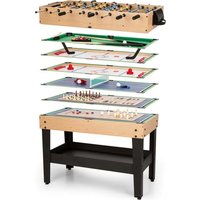
Game-Star - Toys OneConcept - Free user manual and instructions
Find the device manual for free Game-Star OneConcept in PDF.


| Product type | 14-in-1 multi-activity game table |
| Dimensions (L x W x H) | Approximately 122 x 61 x 80 cm |
| Weight | Approximately 35 kg |
| Power supply | None (manual game) |
| Material | MDF wood, metal, felt |
| Recommended age | 8 years and up |
| Number of players | 1 to 4 players depending on game |
| Main features | Foosball, American 8-ball pool, shuffleboard, table tennis, table hockey, chess, checkers, backgammon, dominoes, marbles, ring toss, horseshoes, playing cards, magnetic games |
| Safety | Not suitable for children under 3 years. Assembly by two adults required. Small parts. |
| Care and cleaning | Clean with a soft, dry cloth. Do not use abrasive products. |
| Spare parts and repairability | Spare parts available (screws, figures, balls, etc.); full list in the manual. |
| Warranty | 2 years |
| Box contents | Game table, 2 pool cues, 16 pool balls, triangle, chalk, 2 table tennis rackets, net, balls, pucks, pushers, foosball figures, dice, cups, chess and checkers set, dominoes, cards, etc. |
Frequently Asked Questions - Game-Star OneConcept
User questions about Game-Star OneConcept
0 question about this device. Answer the ones you know or ask your own.
Ask a new question about this device
Download the instructions for your Toys in PDF format for free! Find your manual Game-Star - OneConcept and take your electronic device back in hand. On this page are published all the documents necessary for the use of your device. Game-Star by OneConcept.
USER MANUAL Game-Star OneConcept
INHALTSVERZEICHNIS
Einzelteile 4
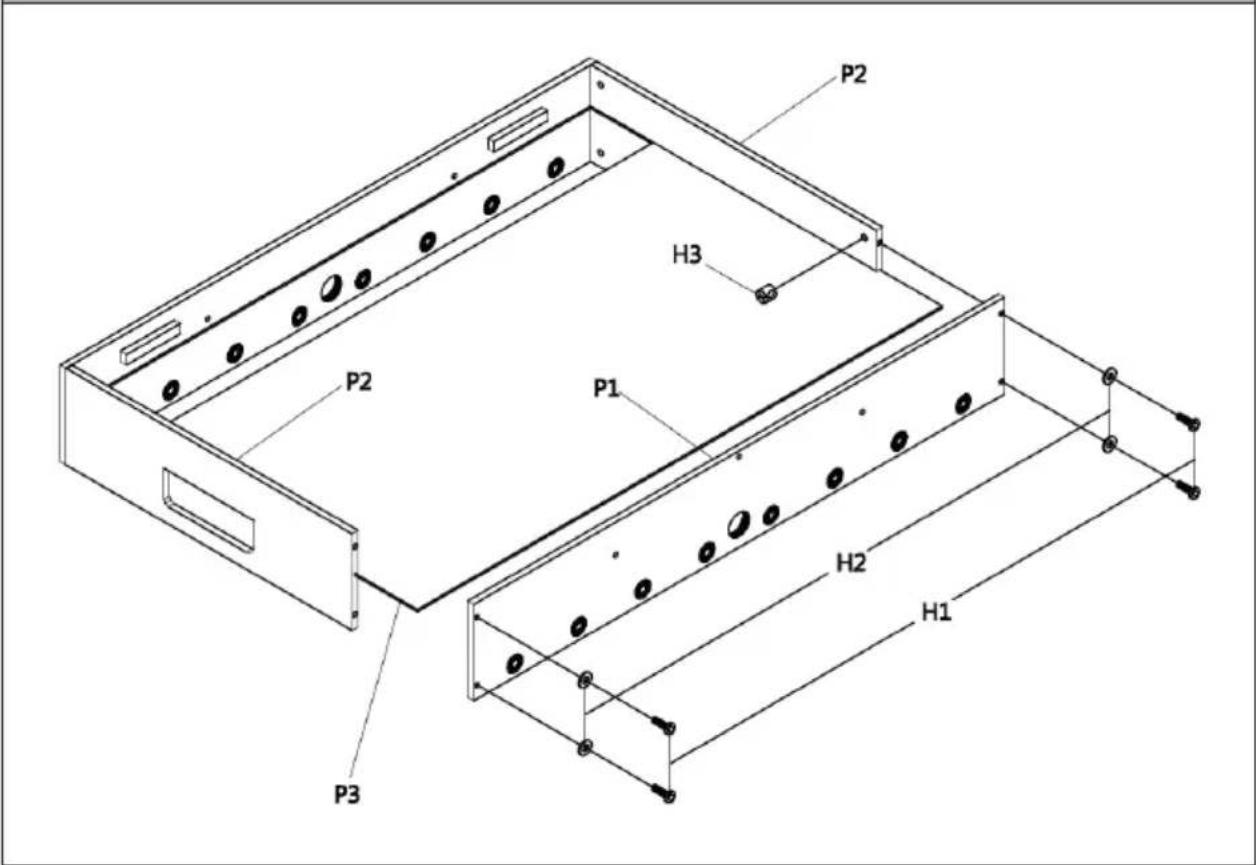
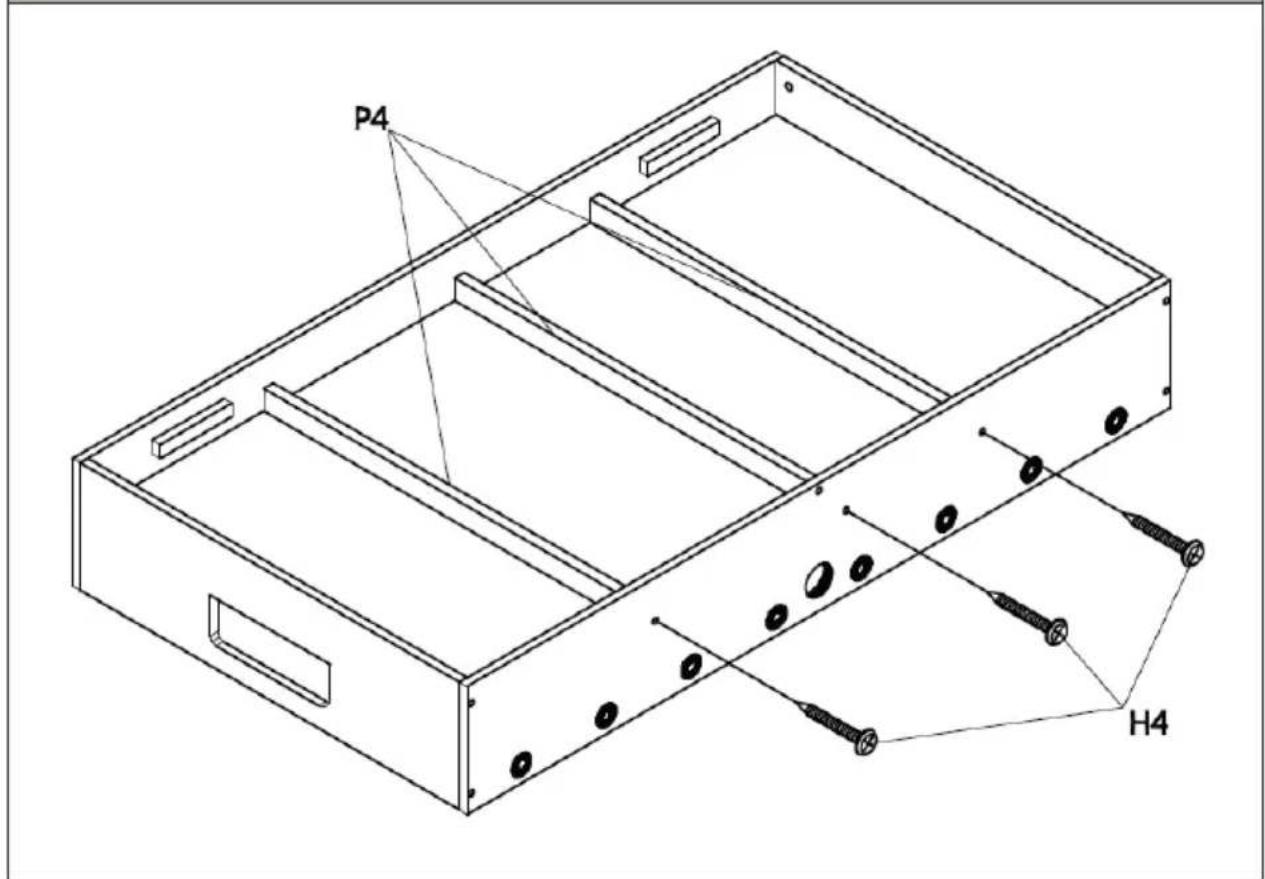
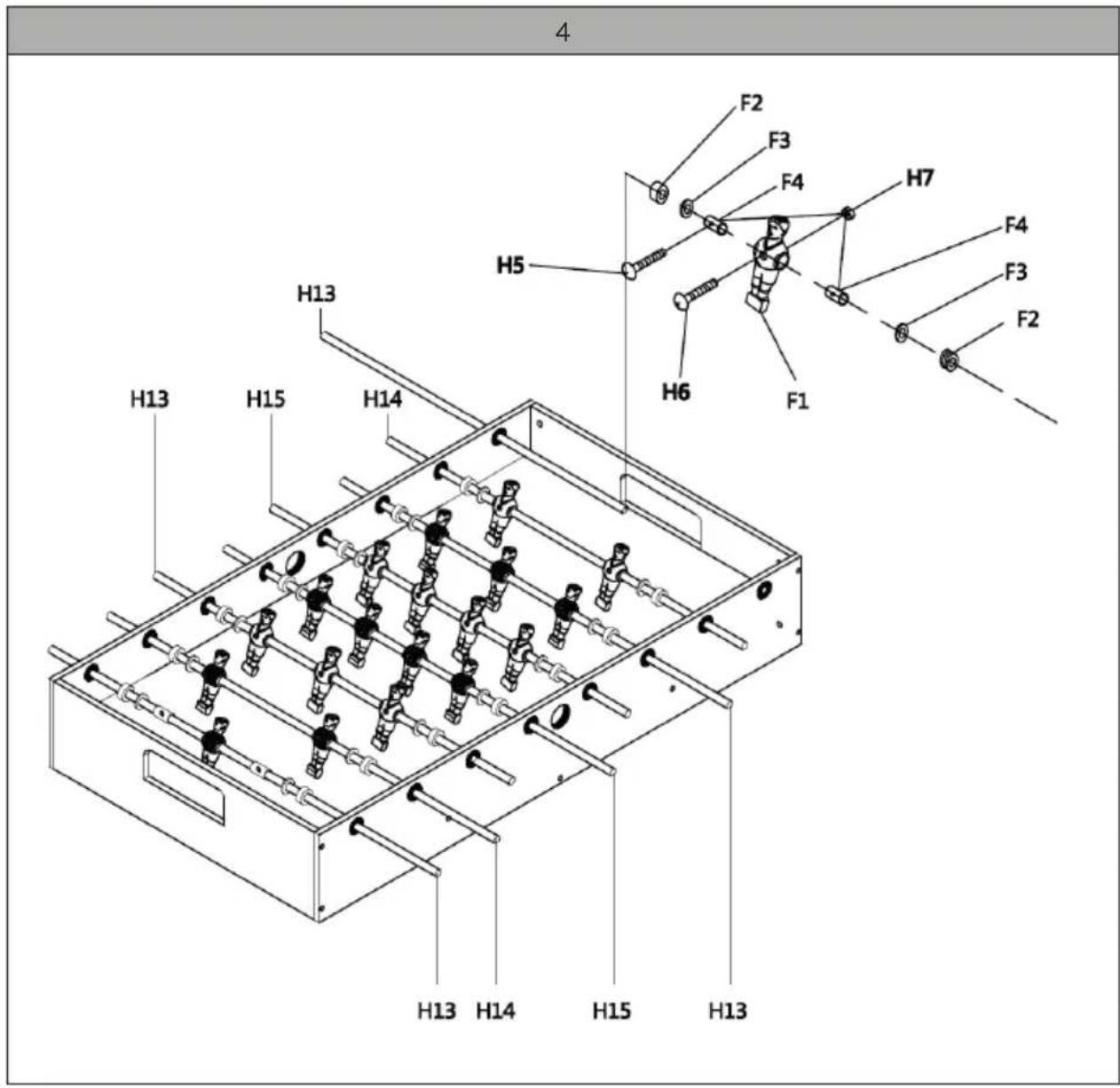
Montage 7
2
3
5
natural_image
Technical line drawing of a four-fifteen ball football feeder with no text or symbolsnatural_image
Checkerboard pattern with alternating black and white squares (no text or symbols)Berlin Brands Group UK Limited
PO Box 42
272 Kensington High Street
London, W8 6ND
United Kingdom
Dear customer,
Congratulations on the purchase of your unit. Please read the following instructions carefully and follow them to prevent potential damage. We accept no liability for damage caused by disregarding the instructions and improper use. Please scan the QR code to access the latest operating instructions and further information about the product.

CONTENTS
Individual parts 28
Assembly 31
Games and Rules 40
Manufacturer & importer (UK) 50
SAFETY INSTRUCTIONS
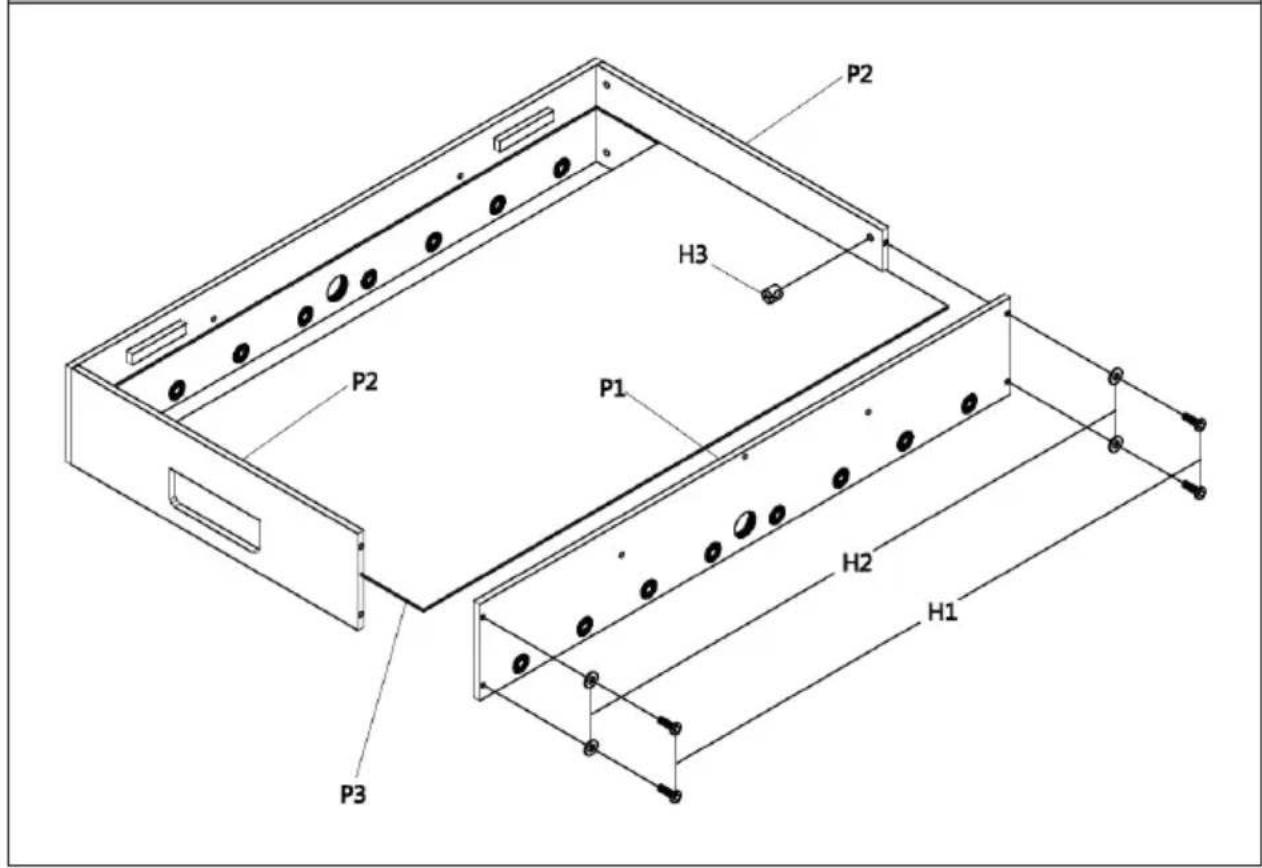
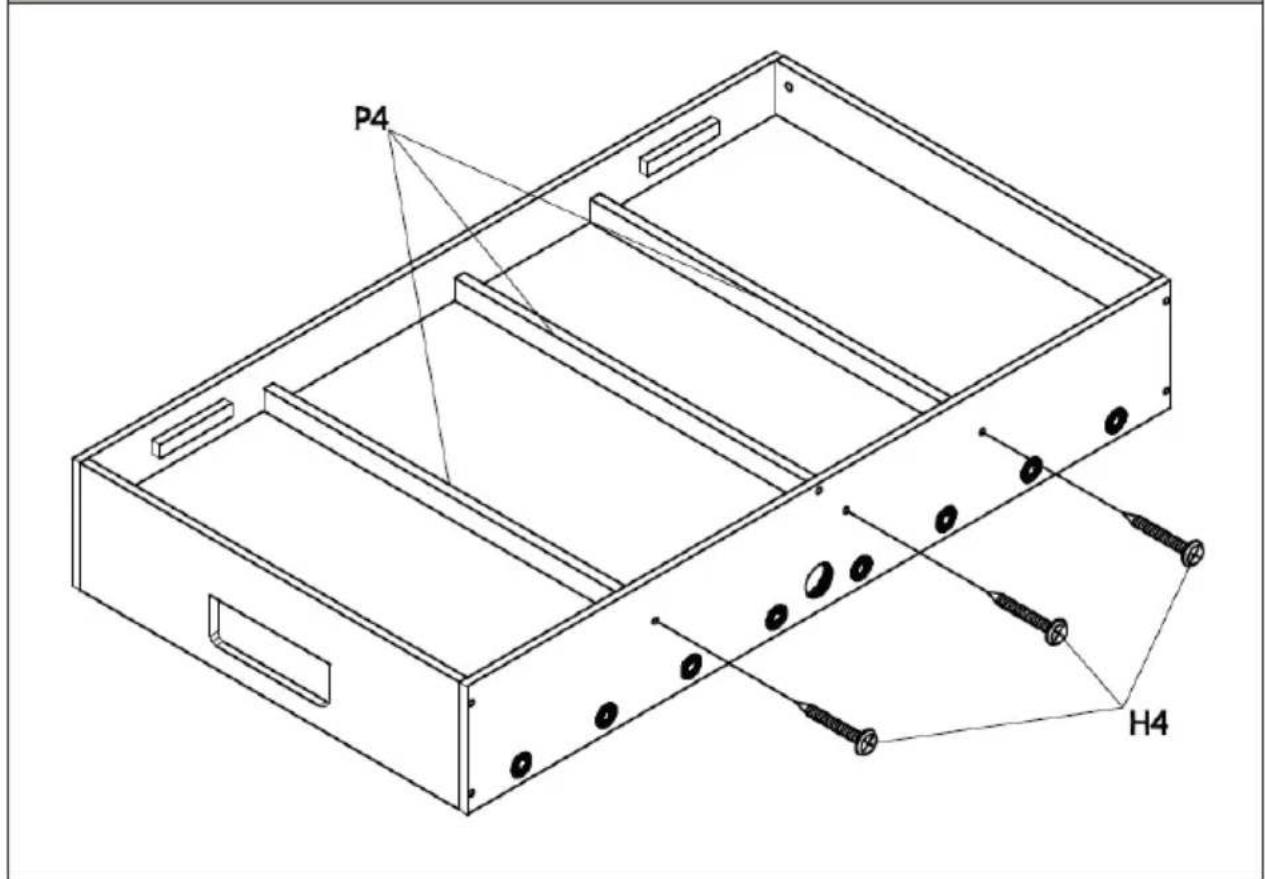
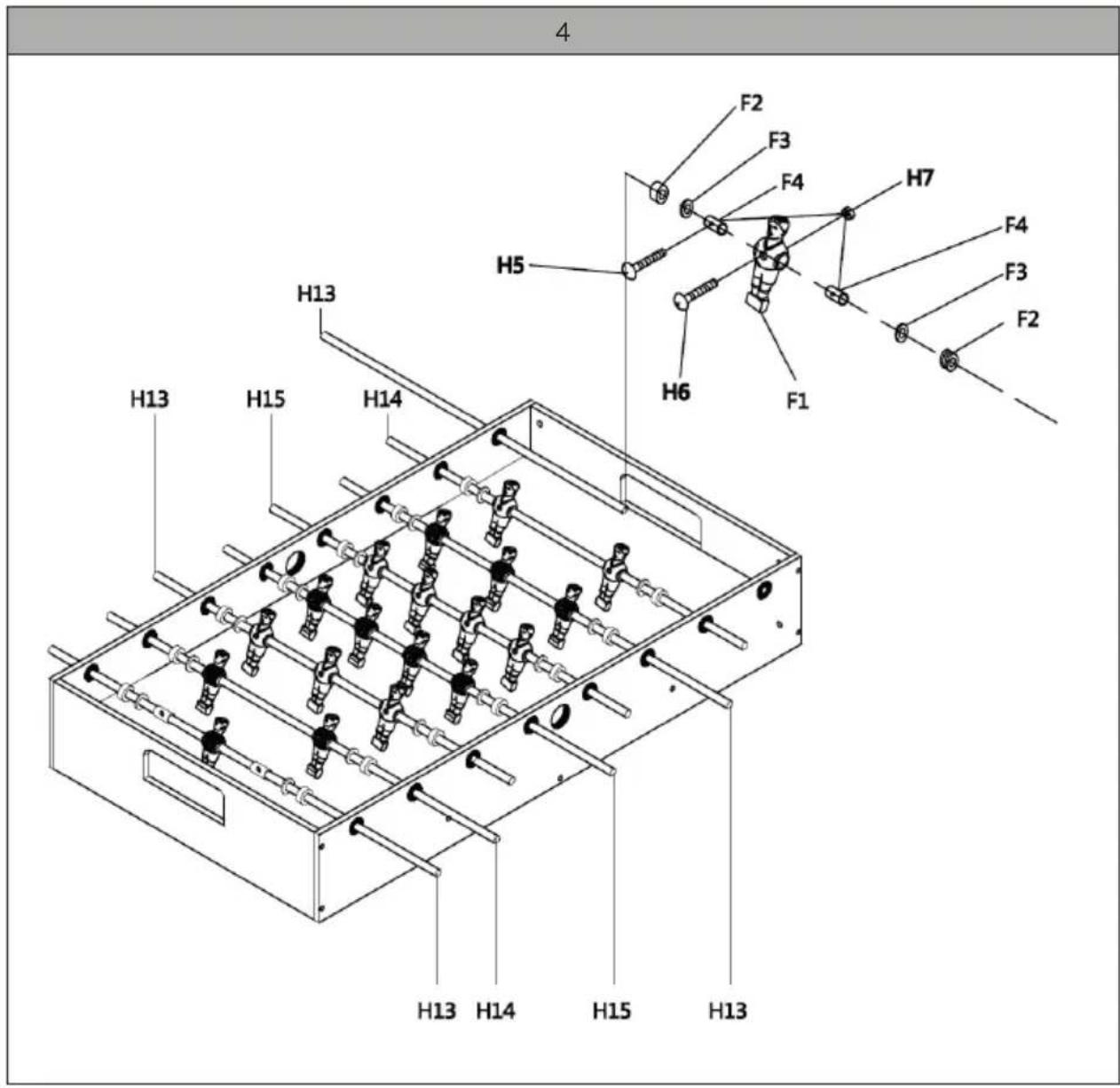
- Observe the assembly steps.
- The game table must be set up by at least 2 people.
• After assembly, check that all screws are tight. - The game table is not suitable for children aged 0-3 years. There is a risk of small parts being swallowed.
- The football table structure may only be dismantled by adults.
- The game table must not be used as a climbing frame. Sitting, standing or lying on the table is not allowed.
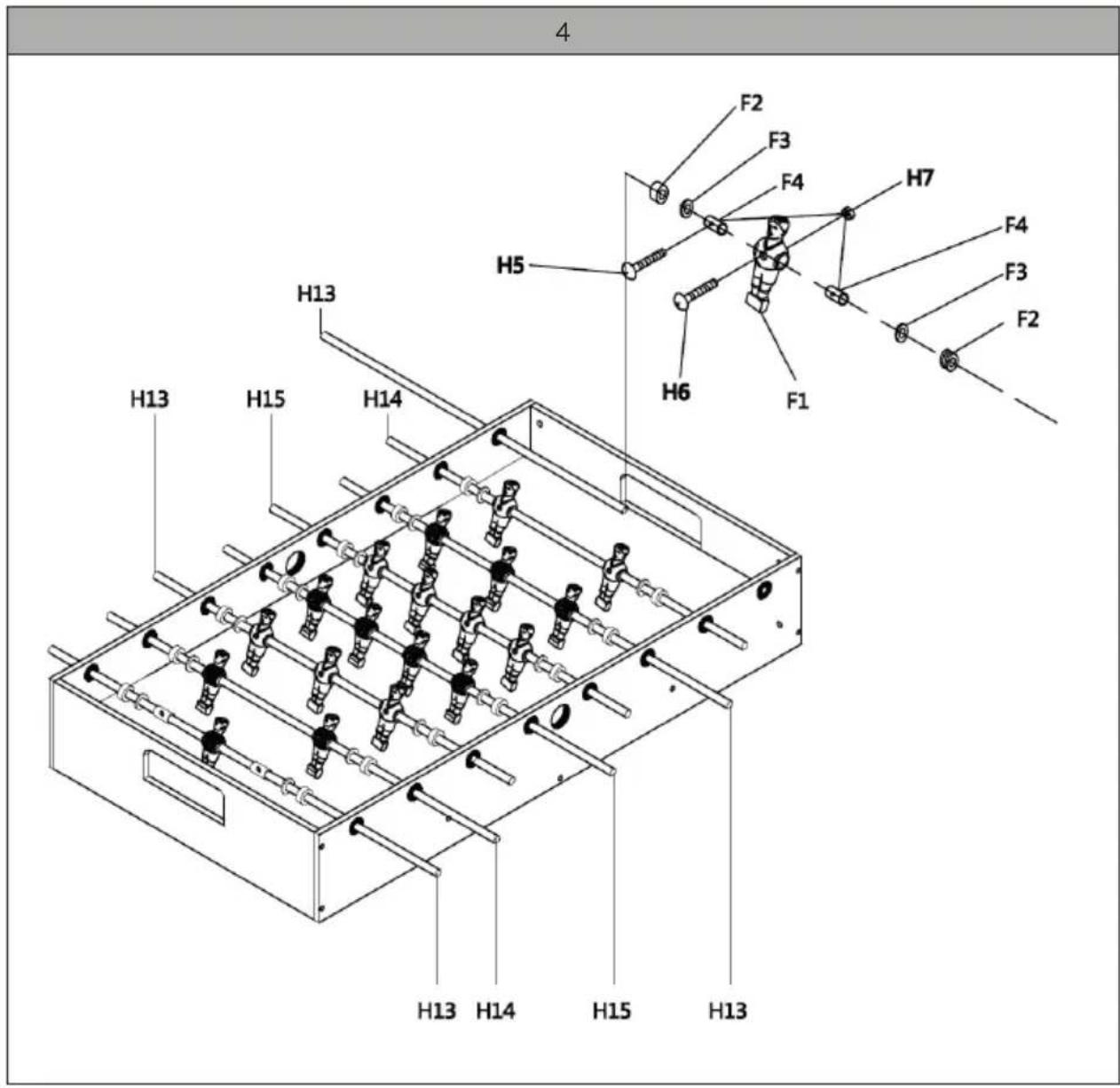
INDIVIDUAL PARTS
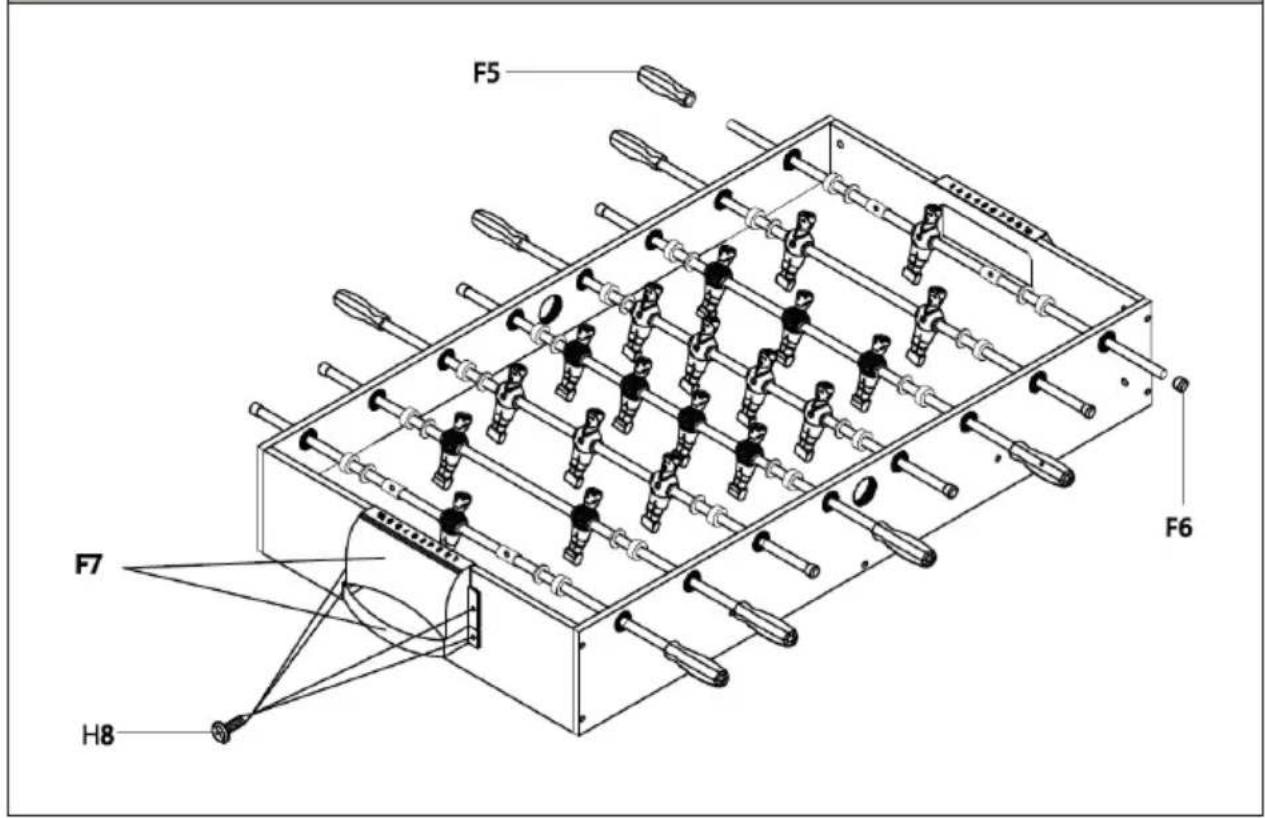
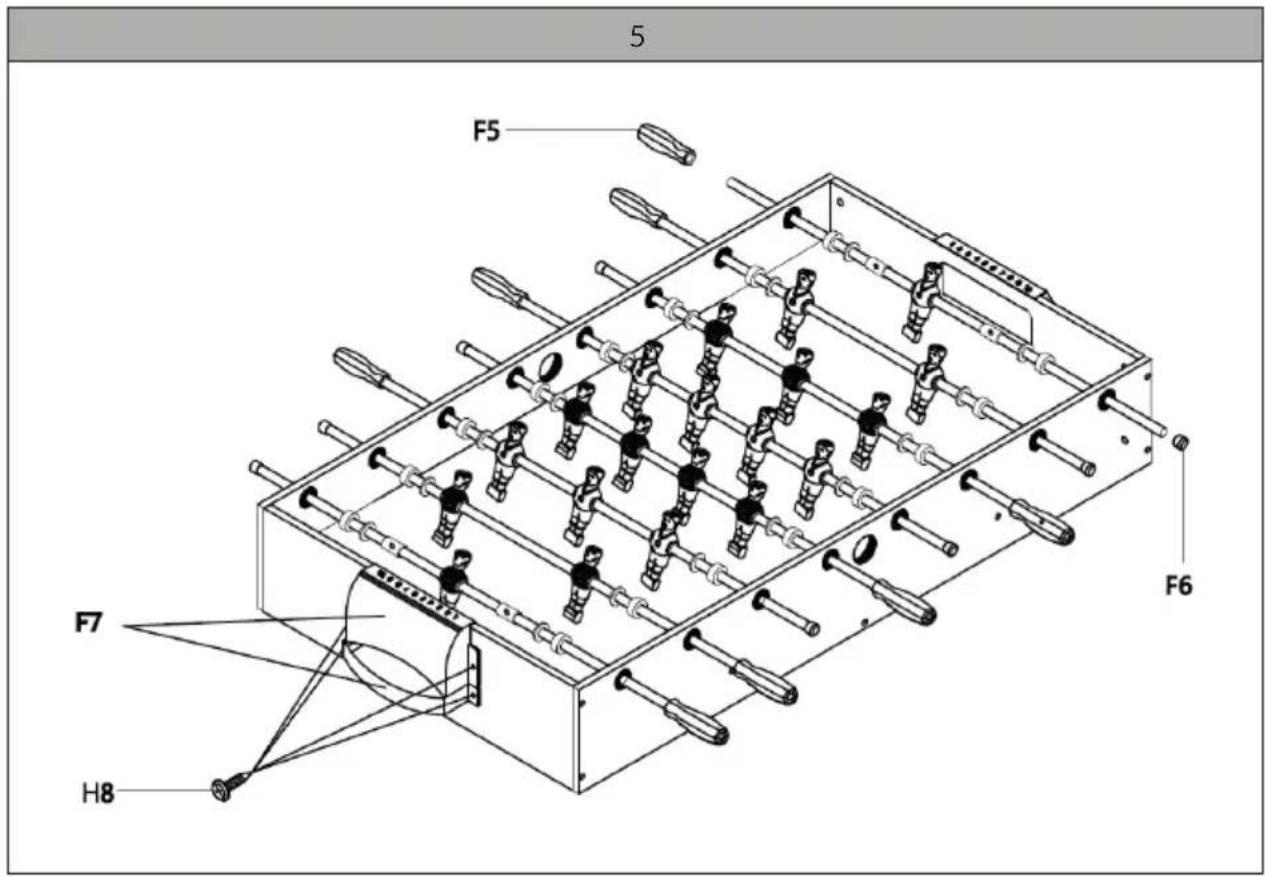
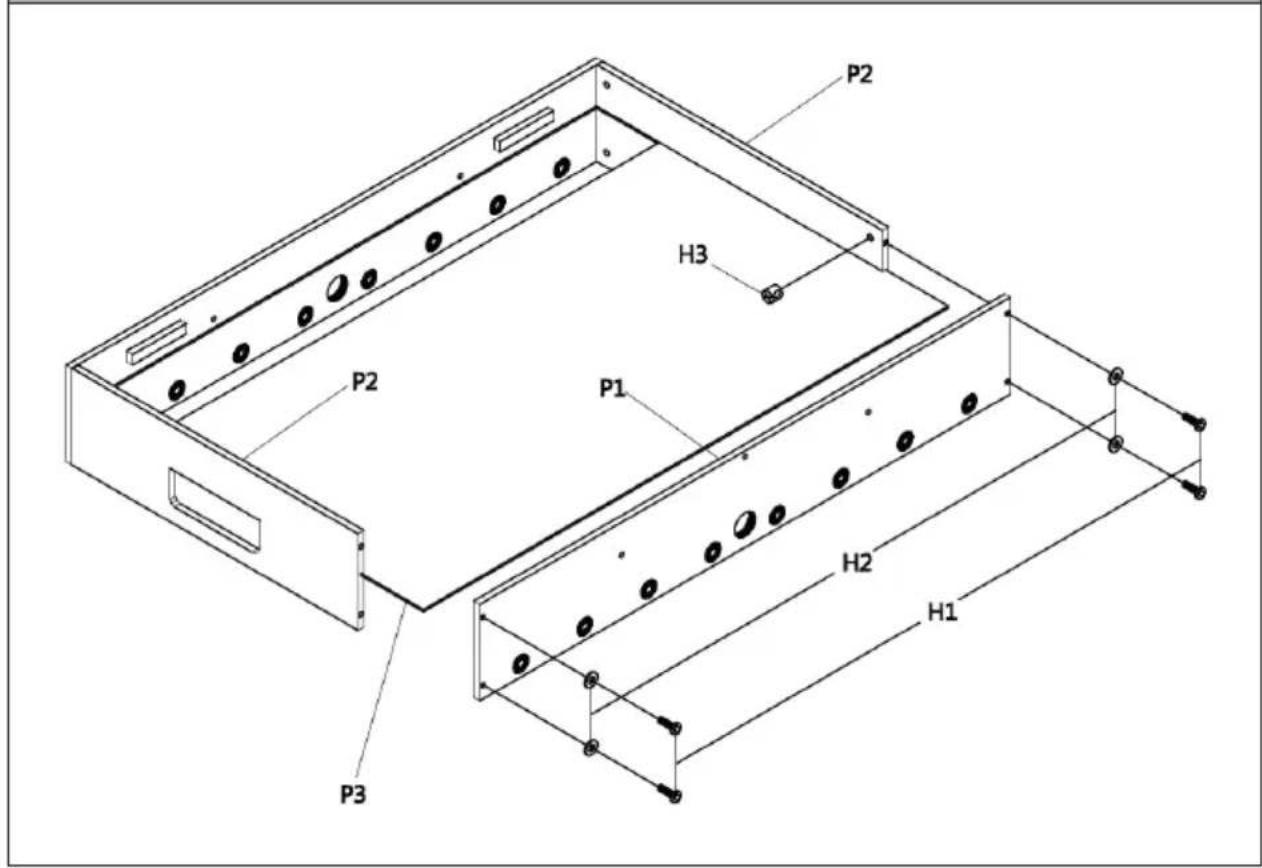
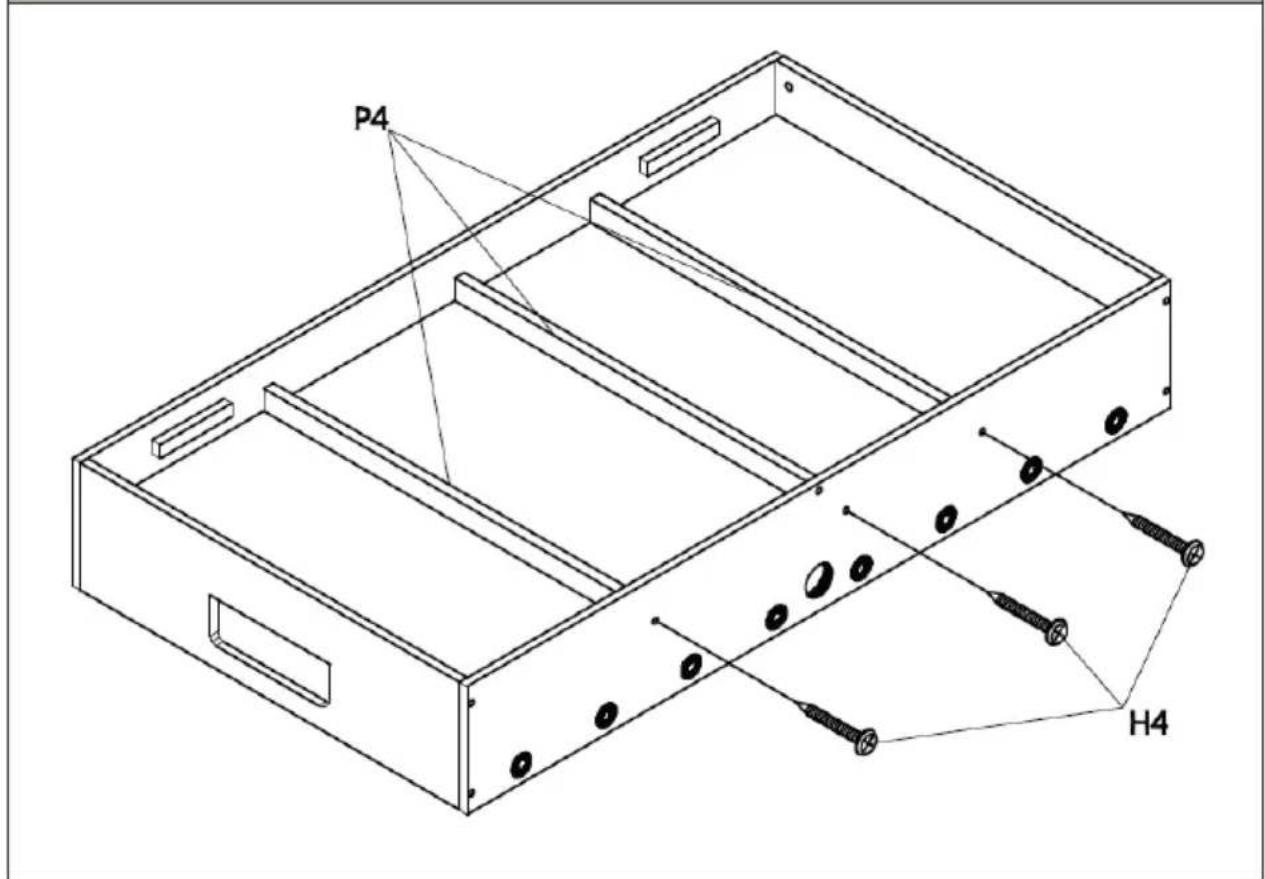
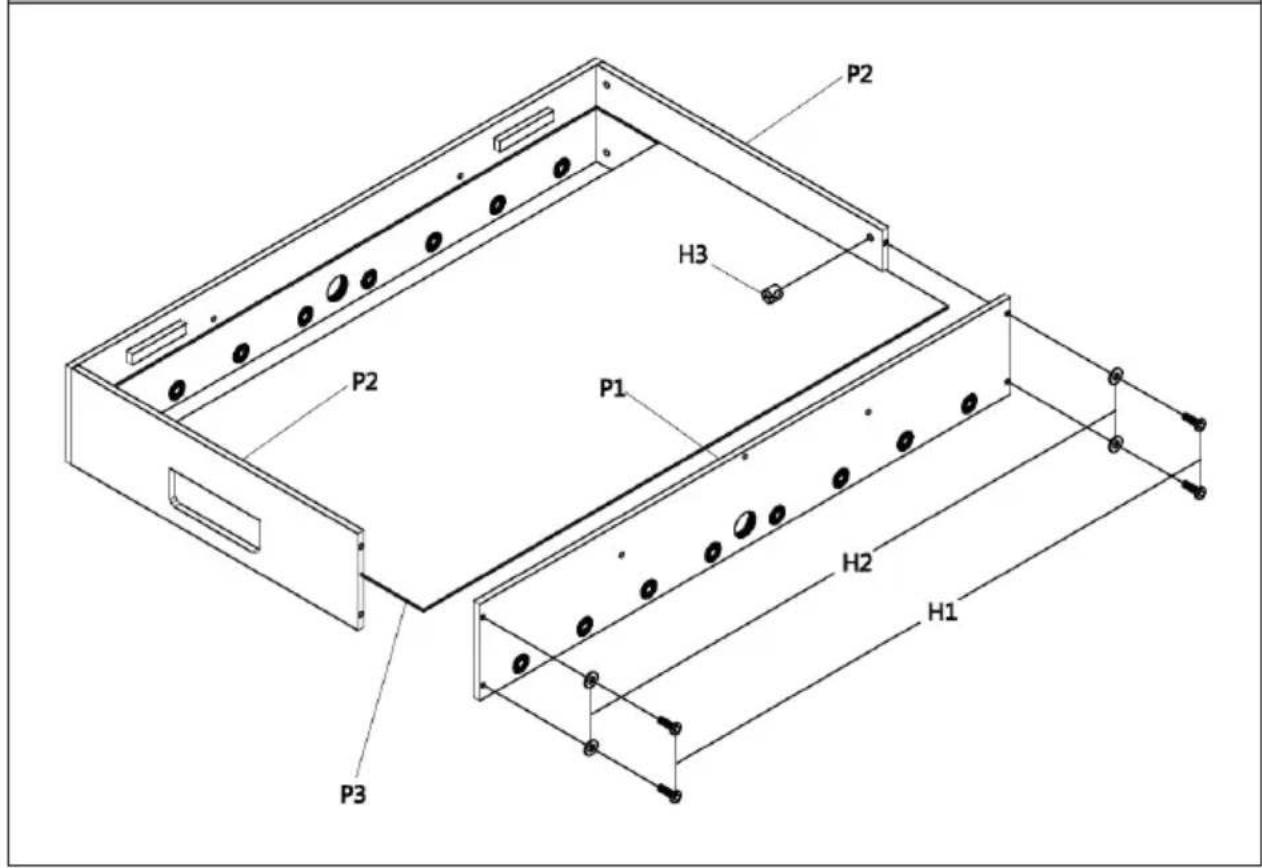
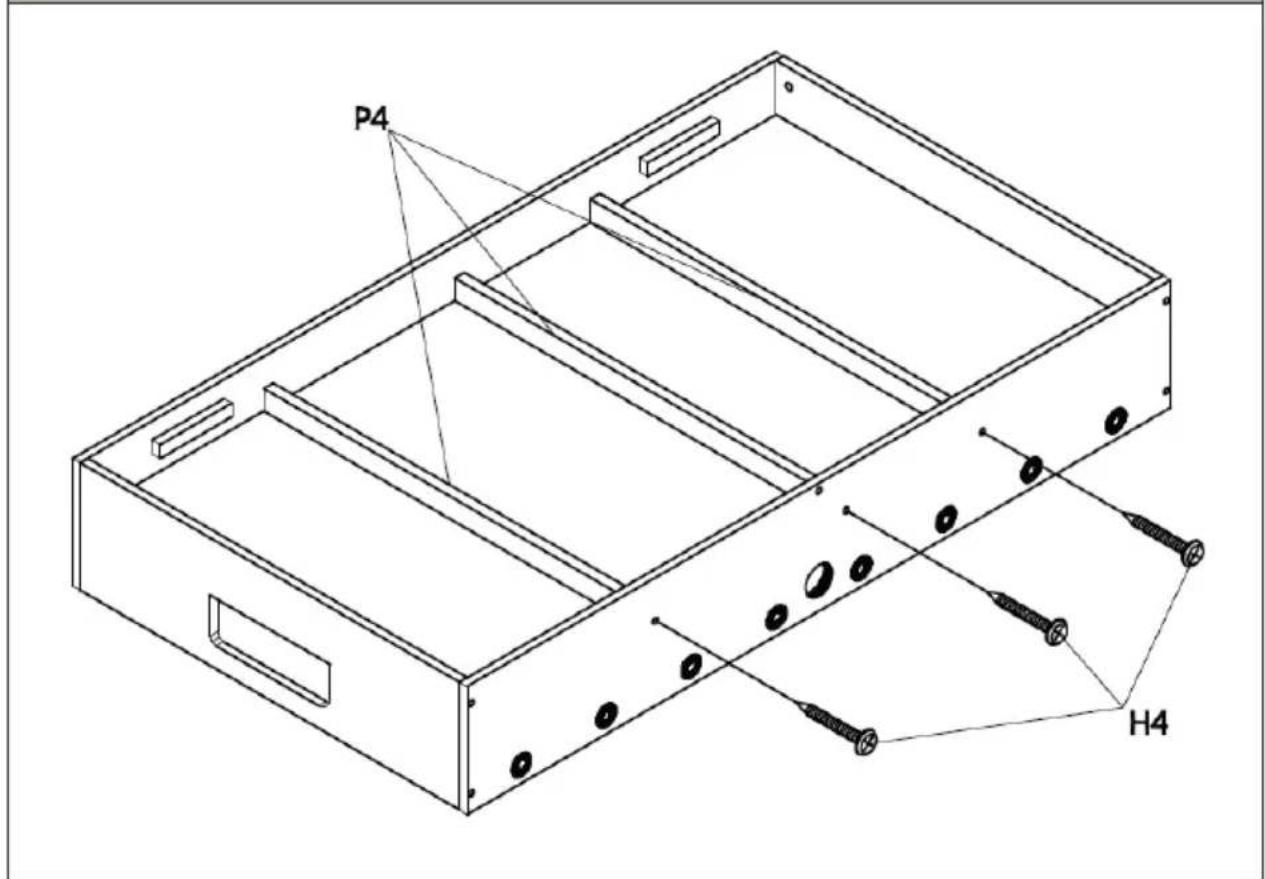
P1 X2 X2 | P2 X2 X2 | P3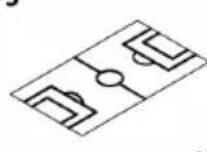 X1 X1 | P4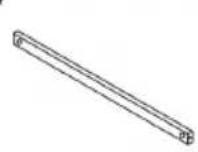 X3 X3 |
| Side wall End wall Playing surface Support struts | |||
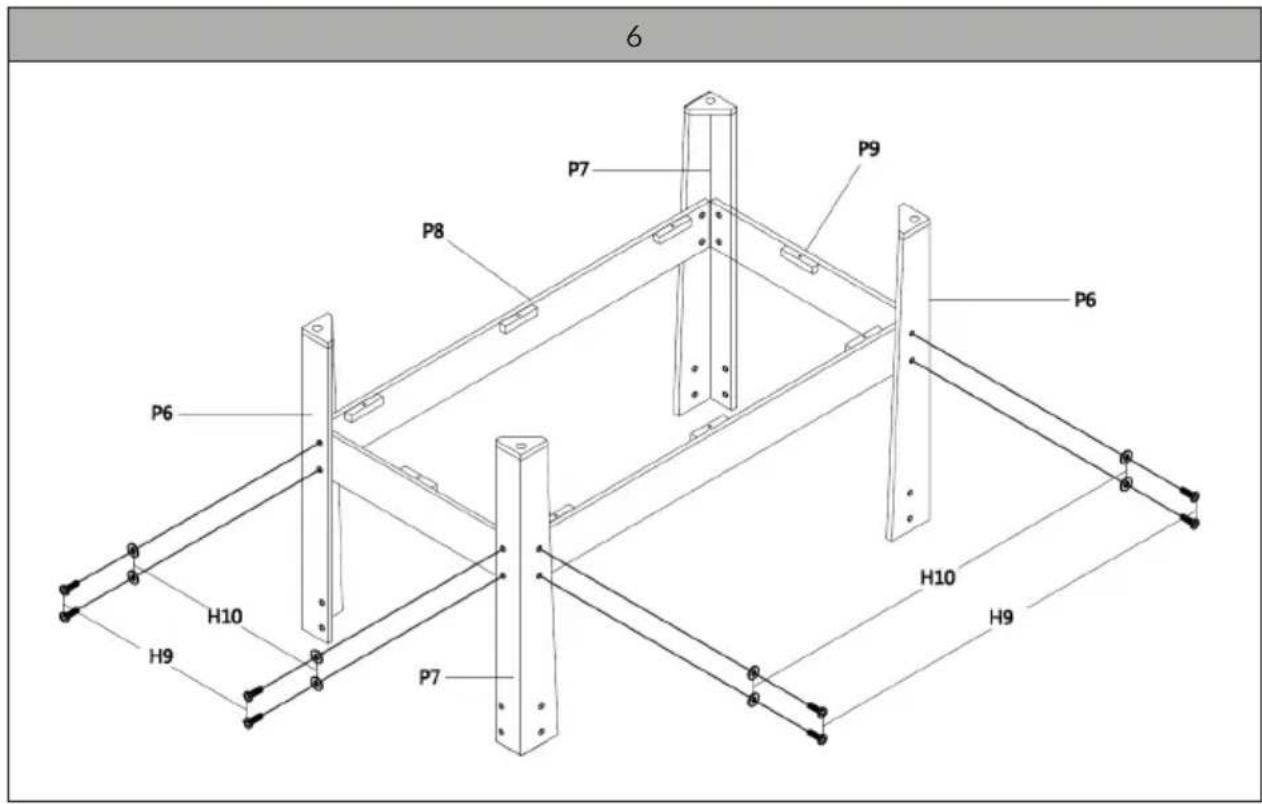
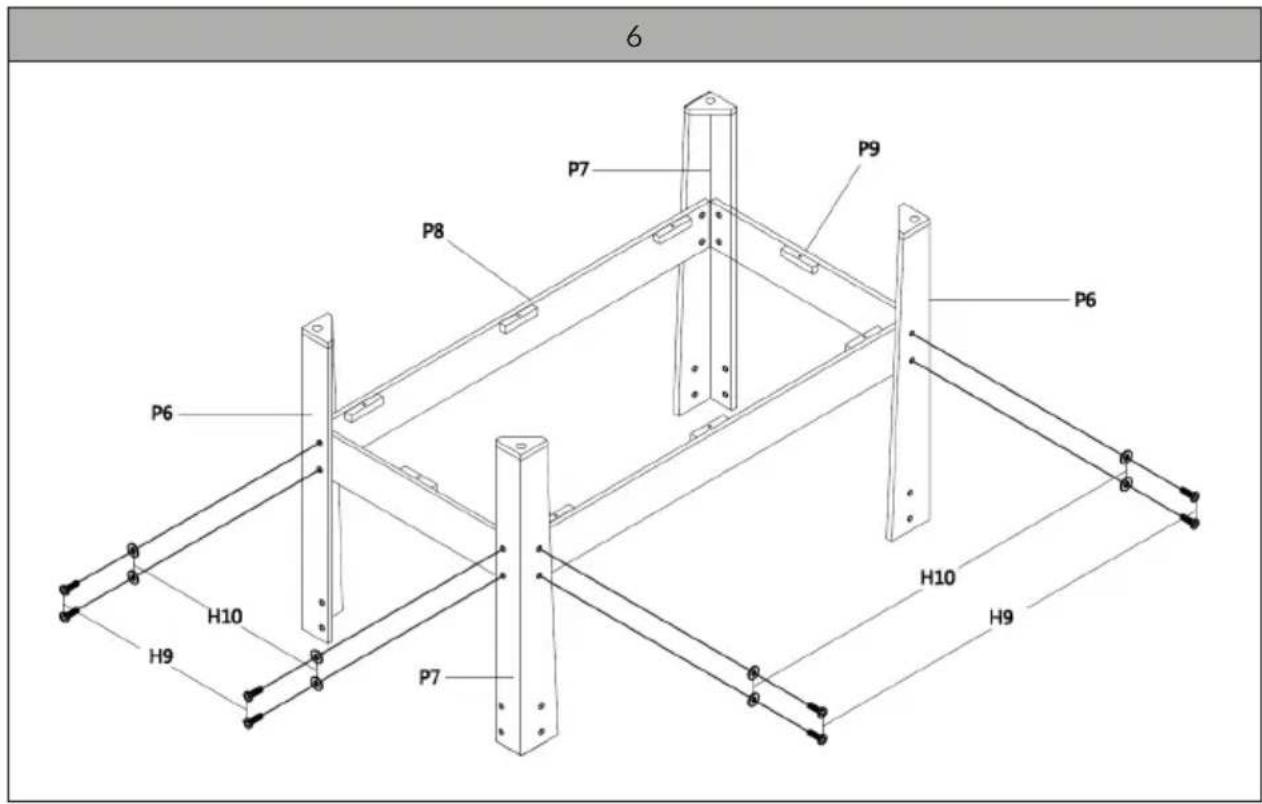
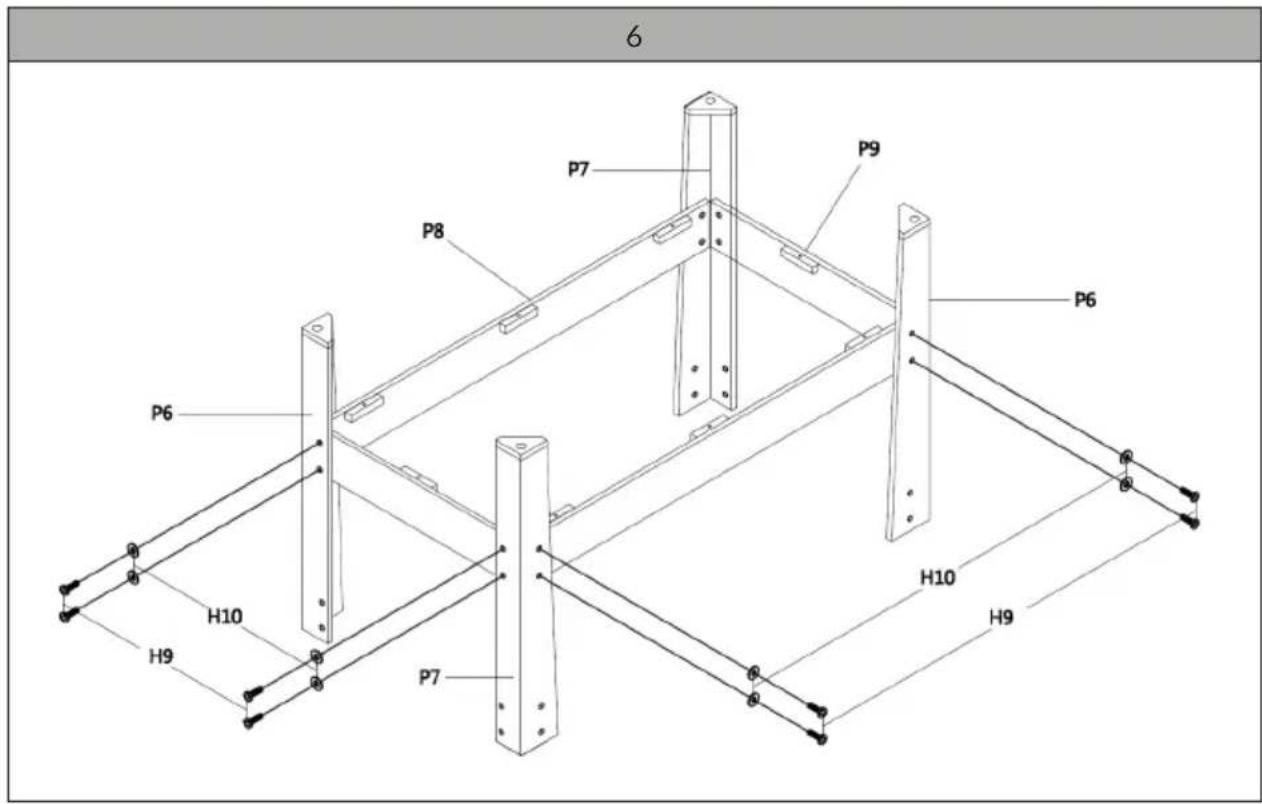
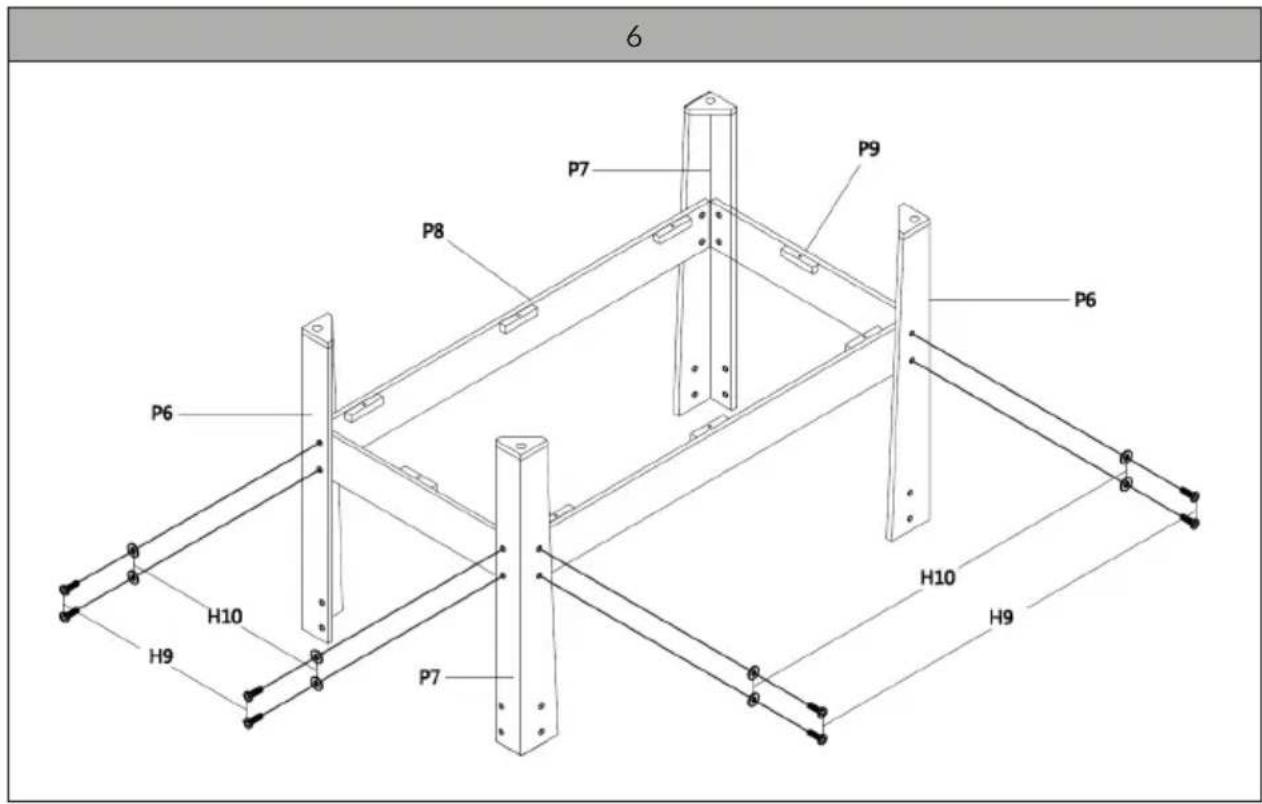
P5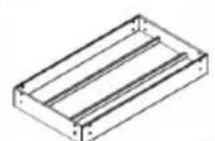 X1 X1 | P6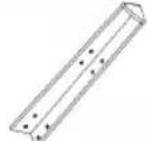 X2 X2 | P7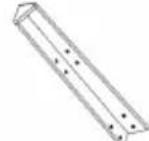 X2 X2 | P8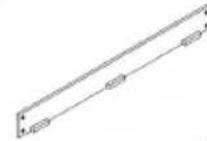 X2 X2 |
| Billiard table Right table leg Left table leg Table leg brace long side | |||
P9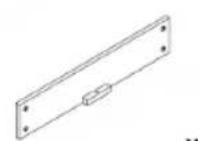 X2 X2 | P10 X1 X1 | P11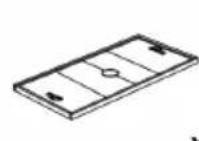 X1 X1 | P12 X1 X1 |
| Table leg brace end side | Rack Hockey and tennis | Shuffleboard | |
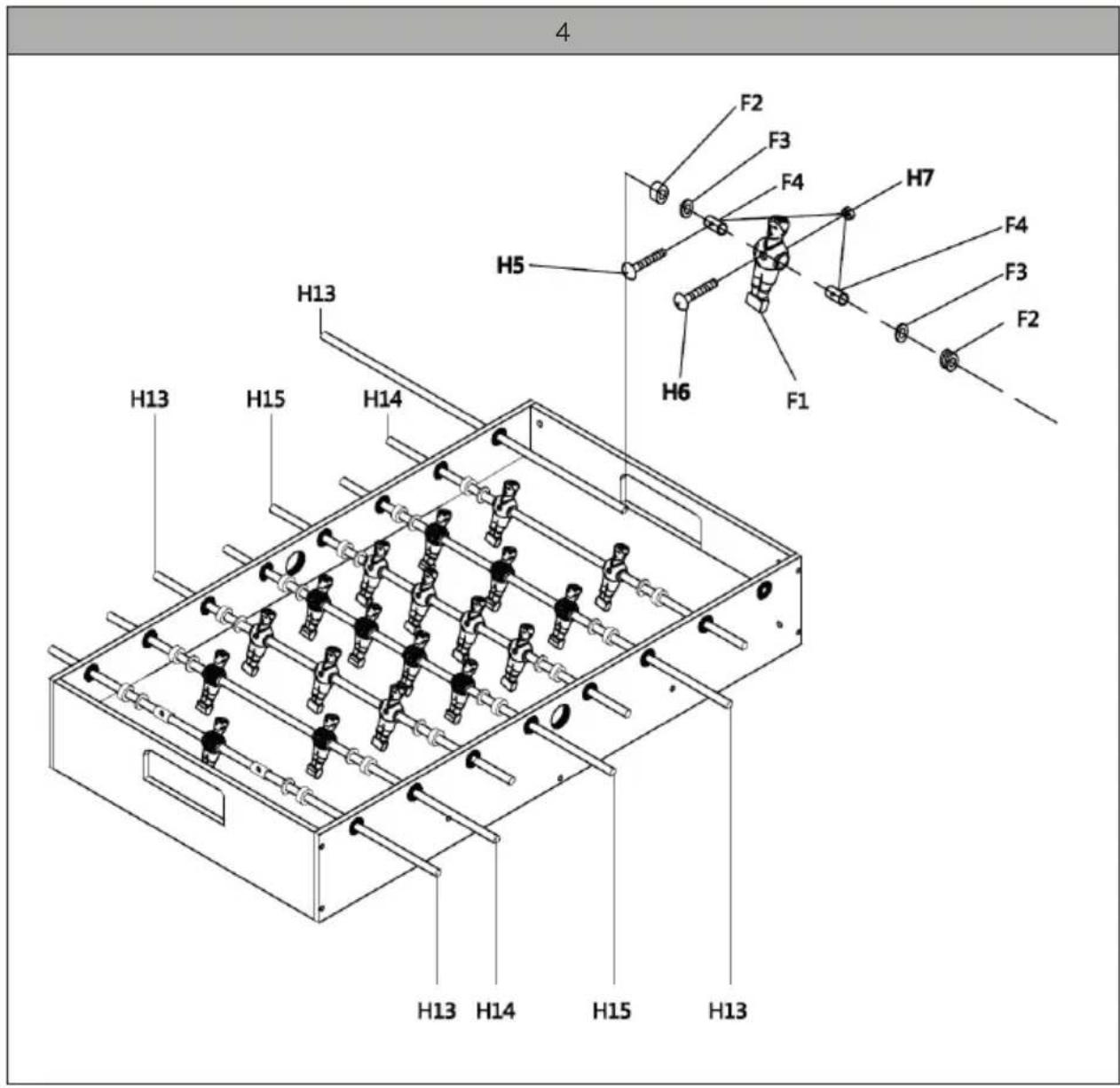
F1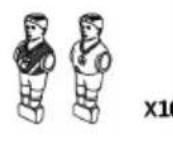 | F2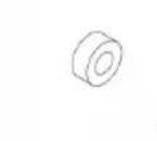 X16 X16 | F3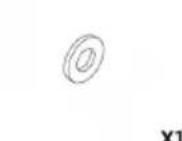 X6 X6 | F4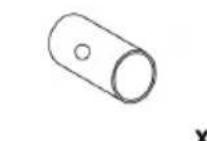 X4 X4 |
| Playing pieces Spacer Washer Stop ring | |||
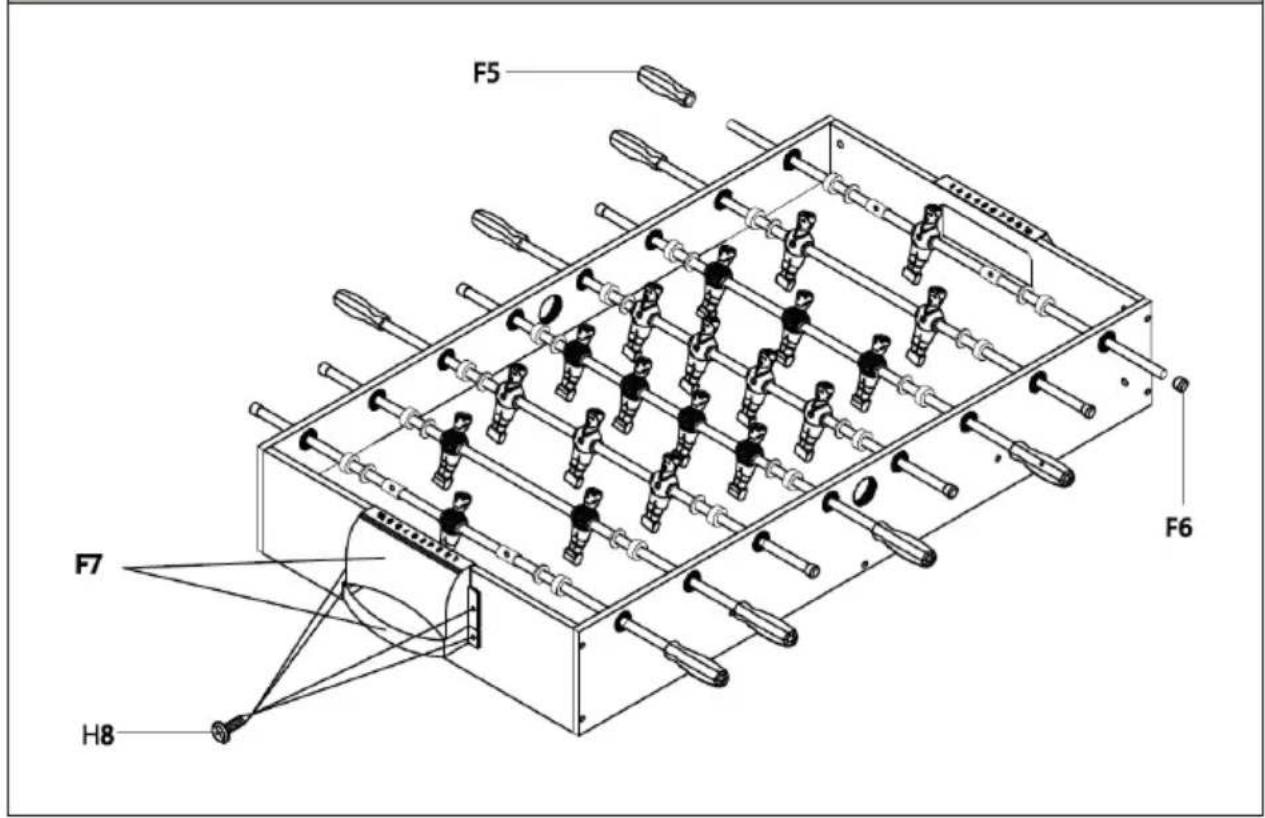
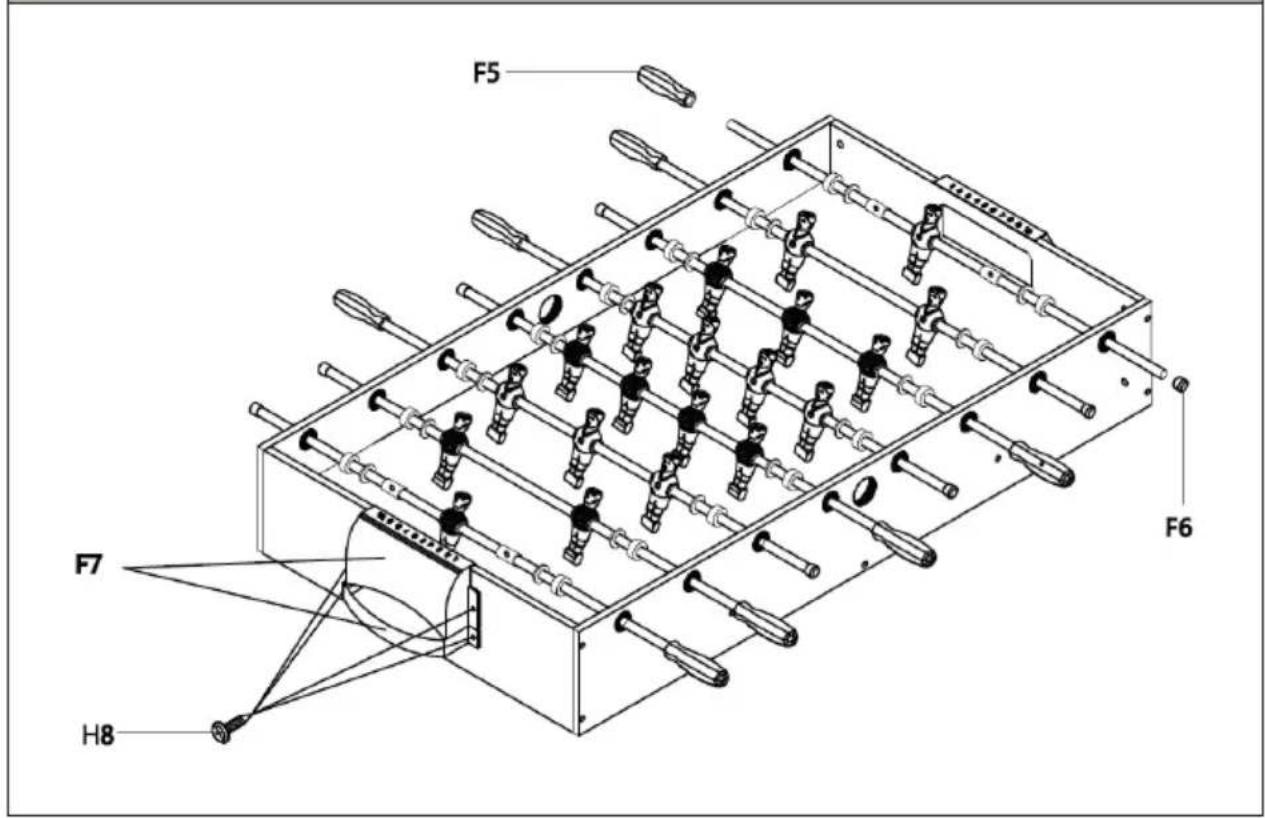
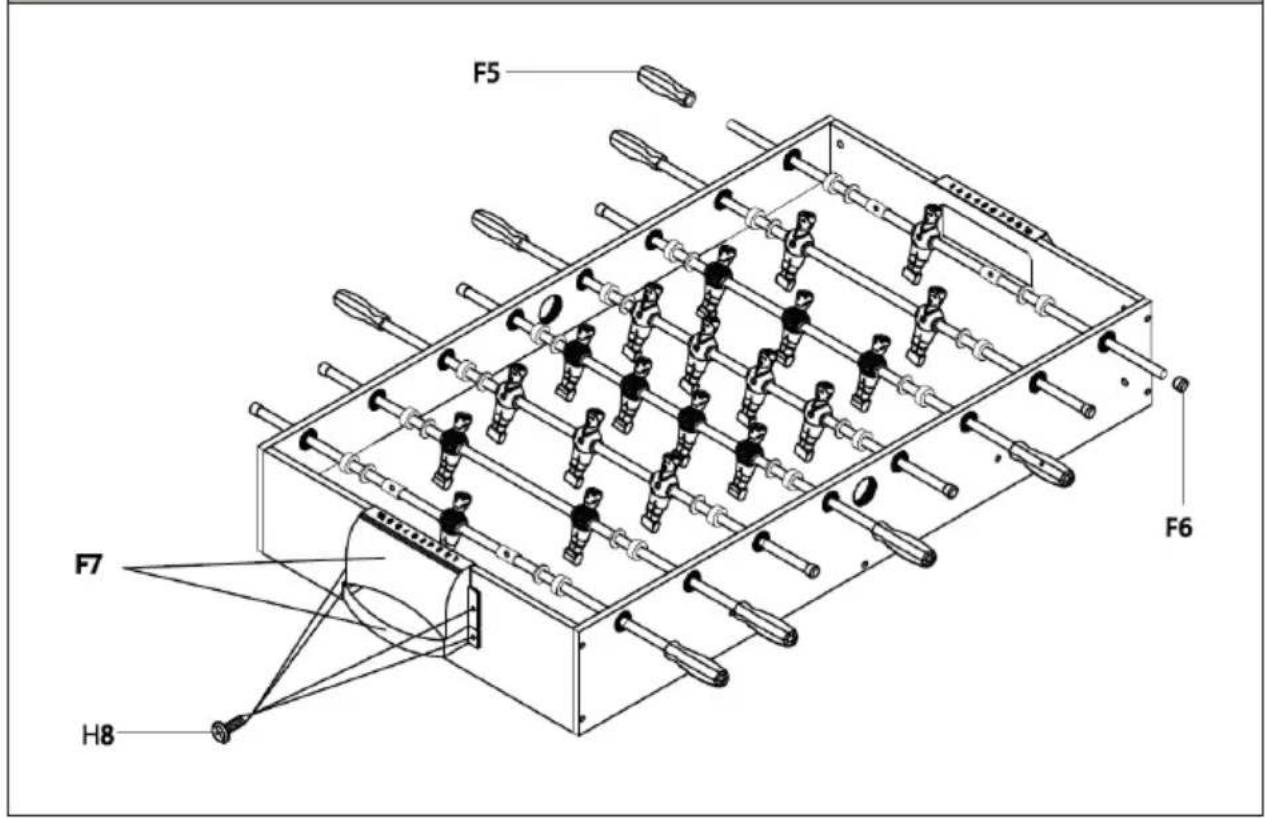
F5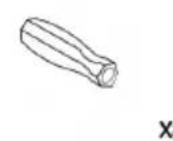 8 8 | F6 X8 X8 | F7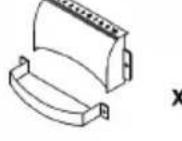 2 2 | F8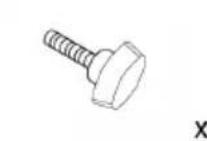 2 2 |
| Handles End cap Goal Adjusting screw | |||
H1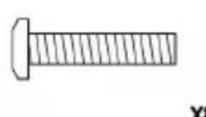 | H2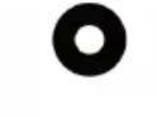 X8 X8 | H3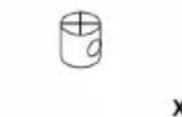 8 8 | H4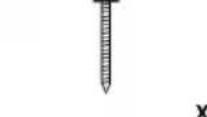 6 6 |
| Screw 3/16" x 1-3/4" | Washer 3/16" | Bolt 2/16" | Screw TM 3.5 x 1-3/4" |
H5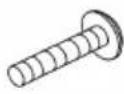 X4 X4 | H6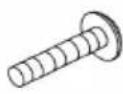 X22 X22 | H7 X26 X26 | H8 X8 X8 |
| ScrewTM3 x 18 | ScrewTM3 x 22 | Nut3 mm | ScrewT3.5 x 1/2" |
| H9[4K40]X16 | H10 X16 X16 | H11[TCST]X16 | H12 X16 X16 |
| Screw1/4" x 7/8" | Washer1/4" | Screw1/4" | Washer 5/16" |
H13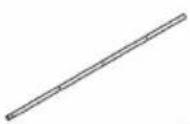 X4 X4 | H14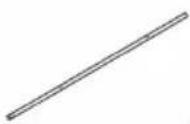 X2 X2 | H15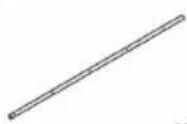 X2 X2 | H16 X8 X8 |
| 3-pc rod 2-pc rod 4-pc rod Screw | T3.5 x 7/8" | ||
A1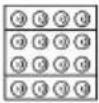 X1 X1 | A2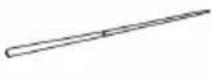 X2 X2 | A3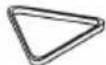 X1 X1 | A4 X1 X1 |
| Billiard balls Cue Triangle Brush | |||
A5 X2 X2 | A6 X2 X2 | A7[3D46]X2 | A8 X2 X2 |
| Chalk Hand slider Puck Table tennis | rackets | ||
A9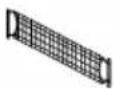 X1 X1 | A10 X2 X2 | A11[TD20]X1 | A12[66X]X1 |
| Table tennis net Table tennis balls Bowling pin Bowling ball | |||
A13 X3 X3 | A14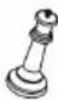 X1 X1 | A15 X1 X1 | A16 X1 X1 |
| Shuffle puck Set of chess pieces | Set Checker pieces | 5-pc dice set | |
A17 X1 X1 | A16 X1 X1 | A19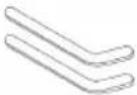 X2 X2 | A20 X4 X4 |
| Set of playing cards | Dice cup Hockey sticks Horseshoe | ||
A21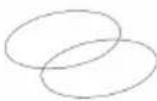 X6 X6 | A22 X1 X1 | A23 X1 X1 | A24 |
| Ring toss Mikado sticks Set of dominoes Magnetic | dartboard | ||
A25 X1 X1 | A26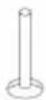 X1 X1 | A27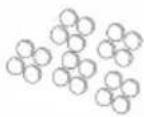 X1 X1 | A28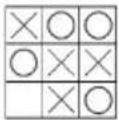 X1 X1 |
| Set of magnetic arrows | Ring post Marble set Tic tac toe | ||
A29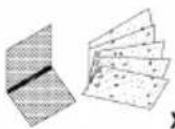 C1 C1 | A30 X4 X4 | A31 X4 X4 | A32 X2 X2 |
| 14-in-1magnetic travel board games | Adjusting screw for table leg | Storage bag Football | |
T1 X1 X1 | |||
| Allen key | |||
1
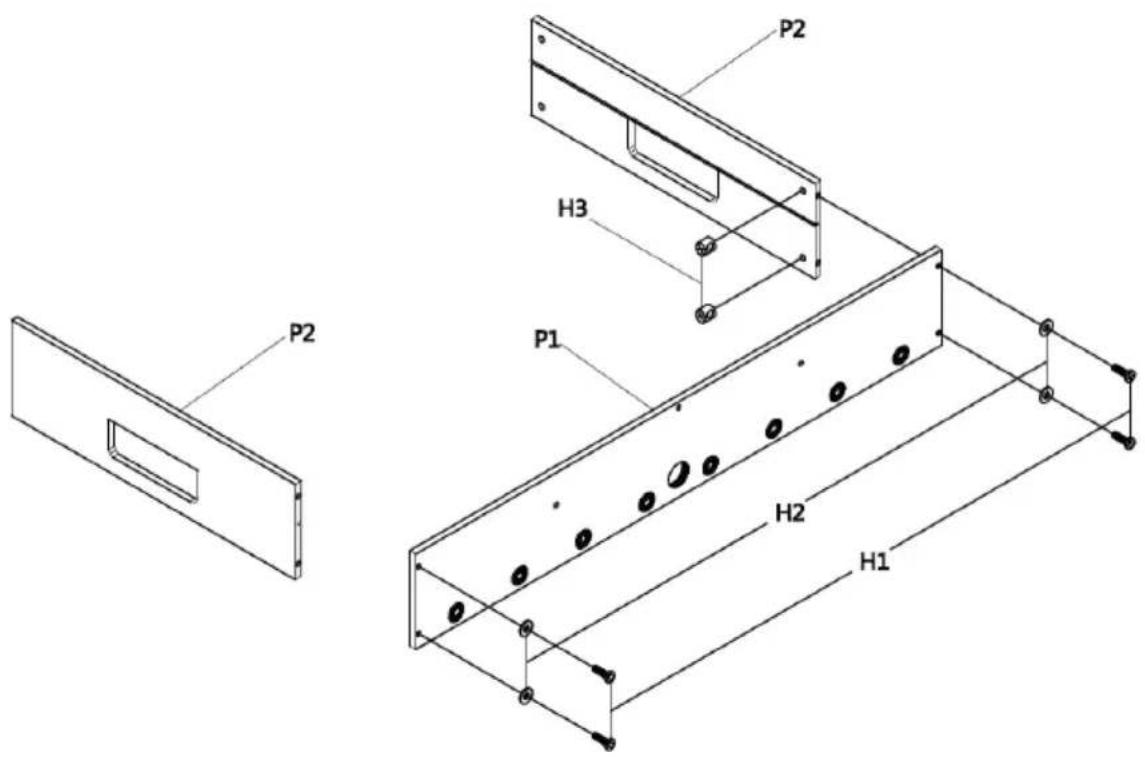
2
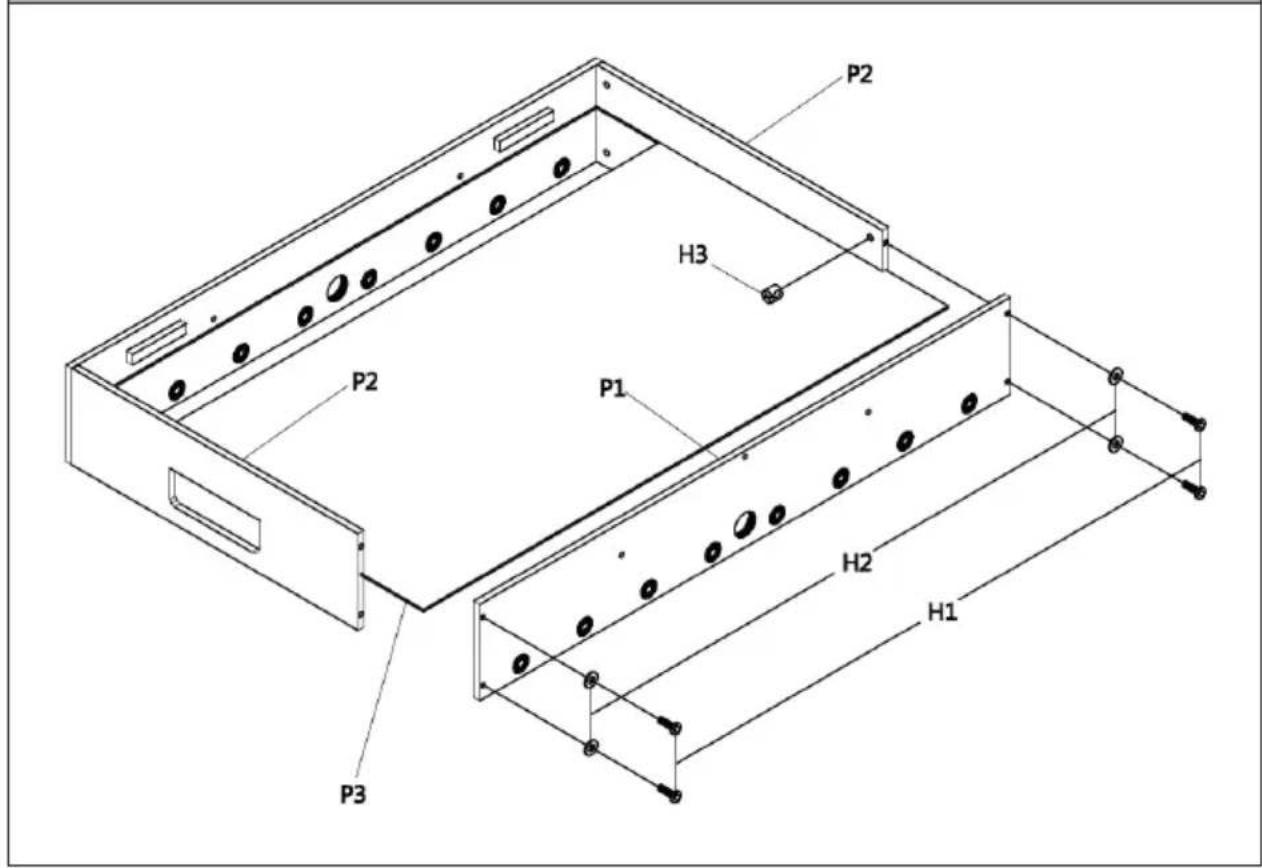
3
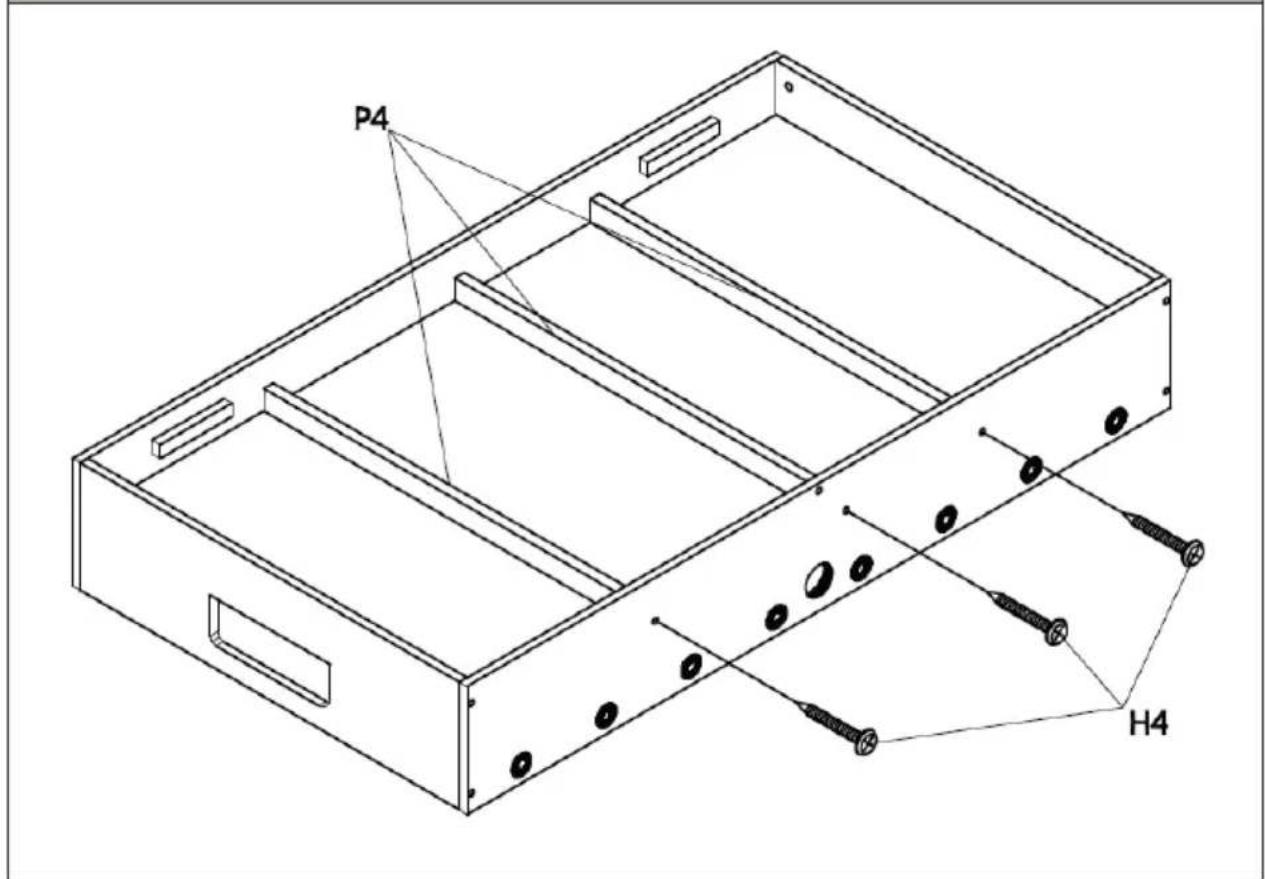
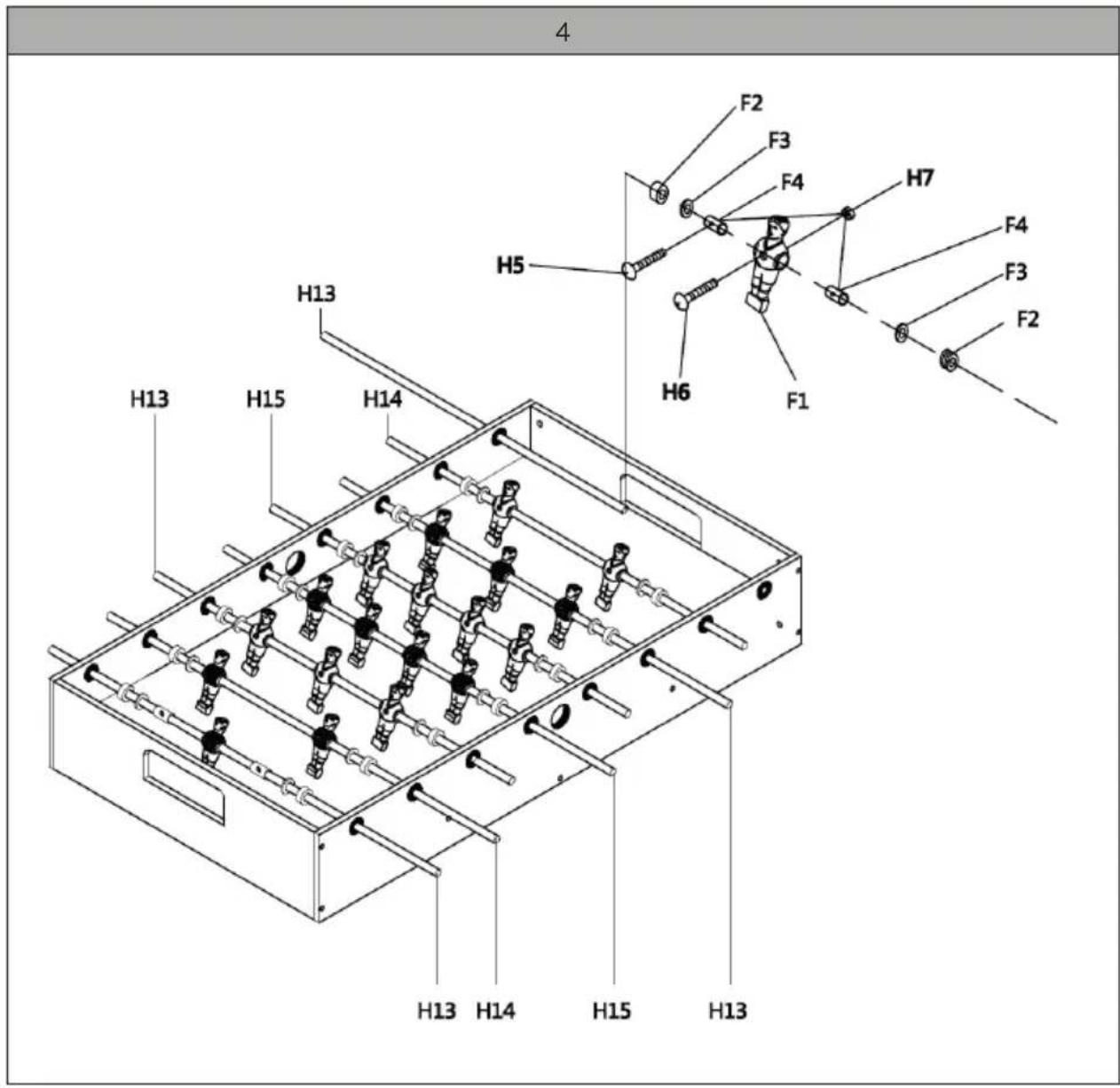
5
natural_image
Technical line drawing of a four-fifteen ball football feeder with no text or symbolsGAMES AND RULES
Table football (foosball)
Table football can be played either by two teams of two or by two individual players.
Aim of the game
To be the first team (or player) to score a given number of goals, or to score the most goals in a given period.
Rules of the game - To start the game, the thrower rolls the ball through the throw-in hole. A goal is scored when the ball enters the opponent's goal. A ball that goes into the goal but bounces back onto the playing surface or leaves the table still counts as a goal. Spinning the rods is not allowed. If the ball leaves the court and strikes an object that is not part of the table, the ball is declared "out of bounds" and should then be put back into play by the team (or player) who originally put the ball into play. If the ball in a throw-in bowl then bounces back onto the playing surface, it is still considered to be "in play".
Billiards
The term billiards refers to games played on a rectangular table covered with felt. Pool is the most popular billiards game in the USA. Billiard games can be played either by two individual players or by two teams of two. The players try to get object balls into the pockets of the table by hitting them with the cue ball.
8 Ball
The most frequently played billiards game is "8 Ball". The object of this game is for a player (or team) to get either the balls numbered 1 to 7 (solid coloured) or 9 to 15 (striped coloured) into the pockets. First, the balls are placed in a triangular shape (rack) with the 1-ball at the front corner point of the rack on the so-called base point and set up with the 8-ball in the middle. The first player places the cue ball behind a line called the "head line" (in the first quarter of the table) and then drives the cue ball with the cue into the object balls, the "break". The cue ball must strike against the header or the second ball. The player who sinks the first ball chooses full or half. The game is won by the player who sinks all his object balls and then the 8-ball into a pocket he or she announces. Note: If a player sinks the 8-ball on the break, he or she automatically wins the game.
Table shuffleboard
The aim of the game is to push discs into the scoring diagram at the opposite end of the board. Players (or team members) play at opposite ends of the board and games are played until one player (or team) scores 15 points.
Rules
The person who starts and the puck colour are determined by coin toss. The winner of the throw may choose "colour" or "hammer" (the last puck shot in a round), but not both. The team without the hammer shoots first. Players take turns shooting until all pucks have been shot. Points are counted and the game continues from the opposite end of the board. The team that scored points on the previous round shoots first on the next round. If no point was scored in the previous round, the hammer moves to the other team. This means that the team that had the hammer in the previous round (in which no point was scored) must shoot first in the next round. Play continues until one team has scored 15 points.
Scoring points - option 1
The order of play and the allocation of the weight colours are determined by a coin toss. The winner of the throw can choose either the colour or the "hammer" - the last weight in a round - but not both. The team without the hammer shoots first. The players take turns until all weights have been shot. Points are added and play continues from the opposite end of the table. The team that scored points in the previous round shoots first in the next round. If no point was scored in the previous round, the hammer moves to the other team. This means that the team that had the hammer in the previous round (in which no point was scored) must shoot first in the next round. Play continues until one team has scored 15 points.
Scoring points - option 2
Only one team per round scores. The team that has placed a weight closest to the end of the table (away from the shooter) scores. All their weights between the end of the table (away from the shooter) and the opponent's weight closest to the end of the table (away from the shooter) are added together to calculate the score for that round. A weight counts one point if it is between the short foul line and the "2" line. Weights that are completely in the range "2" or "3" count 2 points each.
Chess
Chess is a board game for two people.
Accessories
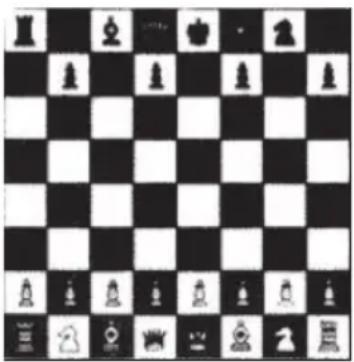
A square board divided into 64 squares (8 x 8), with alternating light and dark squares. Each player has a set of 16 pieces (32 in total) consisting of: 2 rooks, 2 knights, 2 bishops, a king, a queen and 8 pawns. The figures should be placed as shown:
Aim of the game
The aim of the game is to "checkmate" the opponent, i.e. to attack his or her king so that there is no possible move to escape the check.
Rules
The players sit opposite each other so that each player has a bright square in the right-hand corner. At the beginning of the game, players toss a coin to assign colours (white always plays first). Then they play one after the other. The allowed movements for each character are:
A piece may only move in one direction per turn. Only one piece per square is allowed, and only the knight can jump over another piece. Only a pawn or knight can move in the first round.
When a king is attacked, it is in "check". The player whose king has been placed in check must move it out of check on the next turn, either by capturing the attacking piece, by placing one of his or her playing pieces between the attacking piece and the king, or by moving his or her king. If the player cannot do any of these things, the king is "checkmate" and the game is over.
Rules for the individual game pieces
King - The king can move horizontally, vertically or diagonally to the immediately adjacent square
Queen - The queen may move as far as she likes in horizontal, vertical and diagonal directions, but without jumping over other pieces
Rook - A rook may move any distance on lines and rows, i.e. horizontally and vertically, but without jumping over other pieces
Bishop - The bishop moves diagonally across the board as far as desired
Knight - In combination of one square forward or backward then two squares sideways or one square sideways then two squares forward or backward (Note: the knight always moves to a square of the opposite colour)
Pawn - The pawn moves one space forward, with the possibility of moving two spaces on the first move. The pawn attacks a square to the diagonal in front of its position. When a pawn reaches the last square on the opposite side, it is converted into any piece of the player's choice, except a king.
Checkers
Checkers is a board game for two people.
Equipment
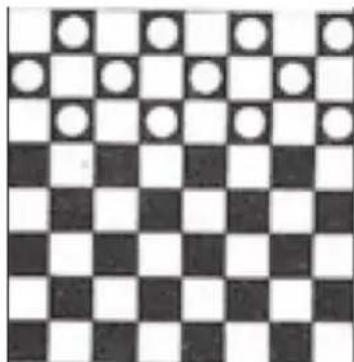
A square board divided into 64 squares (8 x 8) with coloured alternating light and dark squares and a set of 12 checker pieces per player (one light and one dark set). The pieces should be placed as shown:
natural_image
Checkerboard pattern with alternating black and white squares (no text or symbols)Subject of the game
A player must capture all the opponent's pieces or place their own pieces so that the opponent cannot make a move.
The basics
The players sit opposite each other so that each player has a dark square at the left end of their front row. Each player places his or her pieces in the dark squares of the first three rows on his side of the board. The player with the darker stones always makes the first move. Moves are made diagonally. Only one move can be made per game round. Pieces can only be moved to an empty square.
If one of your pieces is diagonally opposite one of your opponent's pieces and the square on the opposite side is empty, you must jump over the opponent's piece and take it off the board (capture it). In this way, it is possible to jump several times in one round - from free space to free space - and capture several of your opponent's pieces in the process. As soon as a player's stone reaches the far side of the board, it becomes a "king" (this is represented by stacking two stones on top of each other). A king can move forward as well as backward. Kings can be captured like any other pieces.
The subtleties
You must make your move with the first piece you touch, unless you have announced that you want to arrange your pieces on the squares. If you touch an unplayable piece, you get a "warning", and if you commit a second offence, you lose the game.
You have to make your move within five minutes. If you do not make a move, the appointed timekeeper will say "time". You then have one minute to make your move, otherwise you lose the game.
Backgammon
Backgammon is a game for two players.
Accessories
A backgammon board, 30 "men" (also called checkers, stones or counters), at least one (preferably two) pairs of dice, dice cups and a doubling cube (for advanced play). The board should be set up as shown:
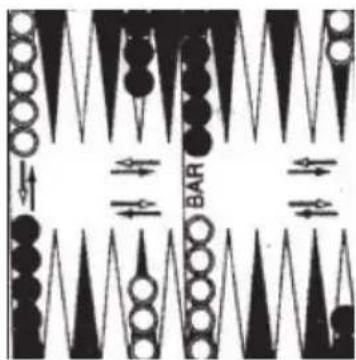
Aim of the game
Move all your men into your "home field". You do this by placing them according to the rolls of the dice. The player who removes all of his or her men from the board (by "rolling the dice") wins.
The basics
The board is divided into 24 points with 12 points per side. Furthermore, each side is divided into a home field and an outfield. Each home field and outfield has two sections, with six points in each section. The order of play is determined by rolling a die. The player with the highest roll moves first. Players move the men according to the individual numbers shown on the two dice and not according to the total number rolled. Both numbers of the throw must be set if possible. If the player cannot place a throw, the opponent continues to play. If the player rolls doubles, four times the value of a die must be bet. The players roll the dice again and again, each with their own dice, until the game is over.
The subtleties
You can hit a single enemy man standing on a point and replace him with your own man ("hit"). If two or more men stand on a point, they are safe and cannot be beaten (the point is blocked). Your opponent cannot land on a blocked point, but can pass it with his or her men. When a man is beaten, he is put on the bar (in the middle of the board). He must re-enter the opponent's home field according to the numbers rolled before the player can make any other move. If a man cannot enter because both entry points rolled are blocked, it is the opponent's turn again.
All your men must be in your home field before you can start rolling the dice. If possible, you must bet your entire roll. For example, if you roll a five but have no men on your five point, you must take a man from the highest point where you have a man. If a man is hit in your home field while you are rolling the dice, that man must be put on the bar and then rolled back in. You cannot continue the dice roll until you have brought this man back to your home field.
Table tennis
Scoring points
The first player or team of two to score 21 points wins the game. However, a two-point margin is required to win, so a match could be taken to a very high total score before the winner is decided. As a rule, the overall winner is determined after winning two out of three matches. In international championships, it is three out of five games. In other words, losing the first game doesn't mean you're out - two wins in the following games can still make you the overall winner.
Side selection and serving
Flip a coin to assign the table sides and the serve. After each game, the sides are swapped. In the event of a tie, for example after winning one game each, the players swap sides as soon as the first player has reached 10 points in the final game.
The serve
The serving player holds the ball in his or her free hand and throws it straight up. When the ball falls, it is hit with the racket so that it bounces once against one's own half of the table and lands in the opponent's half of the table after only one bounce. If the serve touches the net, it is a fault. The serve is repeated.
If the ball touches the net and lands on the ground, you lose the point. If the serve goes into the net, you also lose the point. You keep the serve until five points are scored. Then the other player serves for the next five points. If the score is 20-20, the serve changes sides after each point (a game must be won with a gap of two points). The server - The server is the player who starts the game by putting the ball in play.
The backstroke
The return player is the player who receives the ball from the server and then returns it over the net. If you are the return player, remember that the ball must not hit twice in your half of the table. You may only hit the ball once to hit it back. Try to hit the ball at its highest point. That gives you a better angle to bring it back to the opponent's side. The return stroke may touch the net when the ball finally goes over the net. If the ball goes all the way into the net, you lose a point. If the returned ball touches the edge of the table directly in front of your opponent, it still counts as "in" (as long as the ball hits the edge as it falls). If the ball hits the side of the table top, it is not considered an edge ball and does not count.
Scoring a point
You score a point if your opponent cannot return the hit. A ball may hit the white line at the end of the table (baseline) or the line on the side of the table (sidelines) and still count. Your serve may also hit the edge of the table and still count. You can also score by knocking the ball off the table so that it hits your opponent's paddle before it touches the floor or wall. It may seem strange that you can win a point by missing the table, but this rule is there to stop volleying.
Losing a point
Miss the ball when trying to serve or return the ball. Hit the ball into the net (or let it touch the top of the net so that it falls back into your half of the table). Hit the ball too far in length or width (so that it hits the floor or wall first). Hit the ball before it lands in your half of the table (volleying is not allowed). Bounce the ball twice in your half of the table before hitting it. Move the table or touch the net during the game.
Note: You may hit the ball around the side of the net to put the ball on your opponent's side.
Sliding hockey
Sliding hockey is a two-player game that requires one puck and one stick each.
Aim of the game
To score a predetermined number of points or to score the most points in a predetermined amount of time.
Rules
Flip a coin to determine who starts the game. The game starts when the puck is placed on the playing surface. The players hit the puck with their sticks and try to shoot it into the opponent's goal. A point is awarded when the puck is shot into the opponent's goal.
Dominoes
Aim of the game
Play all the dominoes out of your hand and onto the table.
Rules
Shuffle all the dominoes with the eyes facing down. Each player draws the prescribed number of dominoes from the pile. In a 2-player game, each player draws 7 dominoes. For games with three or more players, each player should draw 5 dominoes. The player with the highest "double" domino plays first. This is usually double six (six-six). As soon as the starting player has put down a double stone, his or her turn is over and the game continues clockwise around the table.
Each player must place a domino from their hand at a matching end of the domino chain currently being played. If a player cannot play dominoes, he or she must draw stones from the pile until he or she can play.
If the pile is empty and the player cannot play a stone, he or she must pass and loses a turn. When all players have passed, the game ends. The player with the lowest score is the winner.
Counting points
Points are awarded to each player according to the total number of eyes on all the unlaid dominoes held by each player. The player with the lowest score is the winner.
Marbles
Rules
The marble game consists of rolling or throwing marbles, either to hit a designated target marble, or to hit the other players' marbles. Decide whether you want to keep won marbles forever or whether each player gets their marbles back at the end of the game. Draw a circle on the floor. Each player should place an agreed number of marbles in the circle. Players stand behind a line drawn some distance away. The aim of the game is to knock out the marbles that are in the circle.
Players take turns rolling, throwing or flicking a marble into the circle to knock out marbles. If you hit a marble out of the circle, you have caught it. If a shot marble stops in the circle, it is left there and it is the next player's turn. If the shot marble does not stay in the circle, you can pick it up again and shoot it again. The game continues until all the marbles in the circle have been won. The person with the most marbles wins.
Ring toss
The player has four rings, which he or she throws onto an upright stick. The game can be played alone, against another player or in teams.
Horseshoe game
Points are scored by throwing horseshoes at a pole. A thrown horseshoe can completely circle the pole (a "ringer") or land near the pole. The game is played by two people or two teams consisting of two people each. Drawing in a row (vertical, horizontal or diagonal) wins.
Playing cards
Various card games, including individual games and group games.
MANUFACTURER & IMPORTER (UK)
Manufacturer:
Chal-Tec GmbH, Wallstrasse 16, 10179 Berlin, Germany.
Importer for Great Britain:
Berlin Brands Group UK Limited
PO Box 42
272 Kensington High Street
London, W8 6ND
United Kingdom
Estimado cliente:
ÍNDICE
Piezas 52
Montaje 55
Juegos y reglas 64
Fabricante e importador (RU) 74
2
3
natural_image
Technical line drawing of a four-fifteen ball football feeder with no text or symbolsJUEGOS Y REGLAS
Futbolín
Tema del juego
natural_image
Checkerboard pattern with alternating black and white squares (no text or symbols)Tema del juego
Berlin Brands Group UK Limited
PO Box 42
272 Kensington High Street
London, W8 6ND
United Kingdom
Cher client, chère cliente,
SOMMAIRE
Pièces détachées 76
Montage 79
2
3
5
natural_image
Technical line drawing of a four-fifteen ball football feeder with no text or symbolsJEUX ET RÈGLES DU JEU
Baby-foot
But du jeu
natural_image
Checkerboard pattern with alternating black and white squares (no text or symbols)But du jeu
Berlin Brands Group UK Limited
PO Box 42
272 Kensington High Street
London, W8 6ND
United Kingdom
Gentile cliente,
INDICE
2
3
5

natural_image
Technical line drawing of a four-fifteen ball fokter with metal legs and bolts, labeled F8 (no text or symbols on the diagram itself)GIOCHI E REGOLE
Calcio balilla (biliardino)
Scopo del gioco
natural_image
Checkerboard pattern with alternating black and white squares (no text or symbols)Scopo del gioco
PRODUTTORE E IMPORTATORE (UK)
Produttore:
Chal-Tec GmbH, Wallstraße 16, 10179 Berlino, Germania.
Berlin Brands Group UK Limited
PO Box 42
272 Kensington High Street
London, W8 6ND
United Kingdom

pie
| Category | Value (%) | |---|---| | Total | 80 | | Other | 40 |


- INHALTSVERZEICHNIS
- Dear customer,
- CONTENTS
- SAFETY INSTRUCTIONS
- INDIVIDUAL PARTS
- GAMES AND RULES
- Table football (foosball)
- Aim of the game
- Billiards
- Ball
- Table shuffleboard
- Rules
- Scoring points - option 1
- Scoring points - option 2
- Chess
- Accessories
- Rules for the individual game pieces
- Checkers
- Equipment
- Subject of the game
- The basics
- The subtleties
- Backgammon
- Table tennis
- Scoring points
- Side selection and serving
- The serve
- The backstroke
- Scoring a point
- Losing a point
- Sliding hockey
- Dominoes
- Counting points
- Marbles
- Ring toss
- Horseshoe game
- Playing cards
- MANUFACTURER & IMPORTER (UK)
- Manufacturer:
- Importer for Great Britain:
- Estimado cliente:
- ÍNDICE
- JUEGOS Y REGLAS
- Futbolín
- Tema del juego
- Cher client, chère cliente,
- SOMMAIRE
- JEUX ET RÈGLES DU JEU
- Baby-foot
- But du jeu
- Gentile cliente,
- INDICE
- GIOCHI E REGOLE
- Calcio balilla (biliardino)
- Scopo del gioco
- PRODUTTORE E IMPORTATORE (UK)
- Produttore:
Brand : OneConcept
Model : Game-Star
Category : Toys