CRIS36SS600 - Basket FABER - Free user manual and instructions
Find the device manual for free CRIS36SS600 FABER in PDF.


| Brand | Faber |
| Model | CRIS36SS600 |
| Product Type | Sliding kitchen hood |
| Width | 36 inches (91.4 cm) |
| Power Supply | 220-240 V, 50/60 Hz |
| Number of Speeds | 3 (low, medium, high) |
| Lighting | Halogen or LED GU10 bulbs (depending on version) |
| Grease Filters | Metallic, dishwasher safe |
| Charcoal Filters | Replaceable, part # FILTER1 |
| Duct Diameter | 6 inches (circular) |
| Minimum Installation Height | 24 inches (61 cm) above cooking surface |
| Ducting | Metal recommended, vented to the outside |
| Automatic Operation | Automatic on/off with opening/closing of sliding panel |
| Removable Front Panel | Optional trim strip (black, white, or custom) |
| Warranty | 1 year parts and labor |
| Country of Manufacture | Not specified (Faber, international brand) |
Frequently Asked Questions - CRIS36SS600 FABER
User questions about CRIS36SS600 FABER
0 question about this device. Answer the ones you know or ask your own.
Ask a new question about this device
Download the instructions for your Basket in PDF format for free! Find your manual CRIS36SS600 - FABER and take your electronic device back in hand. On this page are published all the documents necessary for the use of your device. CRIS36SS600 by FABER.
USER MANUAL CRIS36SS600 FABER
natural_image
Technical line drawing of a mechanical component with a circular top and base plate (no text or symbols)NEW CRISTAL
Installation Instructions Use and Care Information
READ AND SAVE THESE INSTRUCTIONS BEFORE YOU START INSTALLING THIS RANGEHOOD
WARNING: - TO REDUCE THE RISK OF A RANGE TOP GREASE FIRE:
a) Never leave surface units unattended at high settings. Boilovers cause smoking and greasy spillovers that may ignite. Heat oils slowly on low or medium setting.
b) Always turn hood ON when cooking at high heat or when flambeing food (i.e. Crepes Suzette, Cherries Jubilee, Peppercorn Beef Flambé).
c) Clean ventilating fans frequently. Grease should not be allowed to accumulate on fan or filter.
d) Use proper pan size. Always use cookware appropriate for the size of the surface element.
WARNING: - TO REDUCE THE RISK OF INJURY TO PERSONS IN THE EVENT OF A RANGE TOP GREASE FIRE, OBSERVE THE FOLLOWING*:
a) SMOTHER FLAMES with a close-fitting lid, cookie sheet, or metal tray, then turn off the burner. BE CAREFUL TO PREVENT BURNS. If the flames do not go out immediately EVACUATE AND CALL THE FIRE DEPARTMENT.
b) NEVER PICK UP A FLAMING PAN - You may be burned.
c) DO NOT USE WATER, including wet dishcloths or towels - a violent steam explosion will result.
d) Use an extinguisher ONLY if:
- You know you have a Class ABC extinguisher, and you already know how to operate it.
- The fire is small and contained in the area where it started.
- The fire department is being called.
- You can fight the fire with your back to an exit.
* Based on "Kitchen Firesafety Tips" published by NFPA
WARNING - TO REDUCE THE RISK OF FIRE OR ELECTRIC SHOCK, do not use this fan with any solid-state speed control device.
WARNING - TO REDUCE THE RISK OF FIRE, ELECTRICAL SHOCK, OR INJURY TO PERSONS, OBSERVE THE FOLLOWING:
- Use this unit only in the manner intended by the manufacturer. If you have any questions, contact the manufacturer.
- Before servicing or cleaning unit, switch power off at service panel and lock the service disconnecting means to prevent power from being switched on accidentally. When the service disconnecting means cannot be locked, securely fasten a prominent warning device, such as a tag, to the service panel.
CAUTION: For General Ventilating Use Only. Do Not Use To Exhaust Hazardous or Explosive Materials and Vapors.
WARNING - TO REDUCE THE RISK OF FIRE, ELECTRICAL SHOCK, OR INJURY TO PERSONS, OBSERVE THE FOLLOWING:
- Installation Work And Electrical Wiring Must Be Done By Qualified Person(s) In Accordance With All Applicable Codes And Standards, Including Fire-Rated Construction.
- Sufficient air is needed for proper combustion and exhausting of gases through the flue (chimney) of fuel burning equipment to prevent backdrafting. Follow the heating equipment manufacturer's guideline and safety standards such as those published by the National Fire Protection Association (NFPA), and the American Society for Heating, Refrigeration and Air Conditioning Engineers (ASHRAE), and the local code authorities.
- When cutting or drilling into wall or ceiling, do not damage electrical wiring and other hidden utilities.
- Ducted fans must always be vented to the outdoors.
ALL WALL AND FLOOR OPENINGS WHERE THE RANGEHOOD IS INSTALLED MUST BE SEALED.
This rangehood requires at least 24" of clearance between the bottom of the rangehood and the cooking surface or countertop. This hood has been approved by UL at this distance from the cooktop.
This minimum clearance may be higher depending on local building codes. For gas cooktops and combination ranges, a minimum of 30" is recommended and may be required.
The maximum depth of overhead cabinets is 13". Overhead cabinets on both sides of this unit must be a minimum of 18" above the cooking surface or countertop. Consult the cooktop or range installation instructions given by the manufacturer before making any cutouts.
MOBILE HOME INSTALLATION The installation of this rangehood must conform to the Manufactured Home Construction and Safety Standards, Title 24 CFR, Part 3280 (formerly Federal Standard for Mobile Home Construction and Safety, Title 24, HUD, Part 280). See Electrical Requirements.
VENTING REQUIREMENTS
Determine which venting method is best for your application. Ductwork can extend either through the wall or the roof.
The length of the ductwork and the number of elbows should be kept to a minimum to provide efficient performance. The size of the ductwork should be uniform. Do not install two elbows together. Use duct tape to seal all joints in the ductwork system. Use caulking to seal exterior wall or floor opening around the cap.
Flexible ductwork is not recommended. Flexible ductwork creates back pressure and air turbulence that greatly reduces performance.
Make sure there is proper clearance within the wall or floor for exhaust duct before making cutouts. Do not cut a joist or stud unless absolutely necessary. If a joist or stud must be cut, then a supporting frame must be constructed.
WARNING - To Reduce The Risk Of Fire, Use Only Metal Ductwork.
CAUTION - To reduce risk of fire and to properly exhaust air, be sure to duct air outside – Do not vent exhaust air into spaces within walls or ceilings or into attics, crawl spaces, or garages.
Cold Weather installations
An additional back draft damper should be installed to minimize backward cold air flow and a nonmetallic thermal break should be installed to minimize conduction of outside temperatures as part of the vent system. The damper should be on the cold air side of the thermal break. The break should be as close as possible to where the vent system enters the heated portion of the house.

WARNING
- Venting system MUST terminate outside the home.
- DO NOT terminate the ductwork in an attic or other enclosed space.
- DO NOT use 4" laundry-type wall caps.
- Flexible-type ductwork is not recommended.
- DO NOT obstruct the flow of combustion and ventilation air.
- Failure to follow venting requirements may result in a fire.

WARNING
- Electrical ground is required on this rangehood.
- If cold water pipe is interrupted by plastic, nonmetallic gaskets or other materials, DO NOT use for grounding.
- DO NOT ground to a gas pipe.
- DO NOT have a fuse in the neutral or grounding circuit. A fuse in the neutral or grounding circuit could result in electrical shock.
- Check with a qualified electrician if you are in doubt as to whether the rangehood is properly grounded.
- Failure to follow electrical requirements may result in a fire.
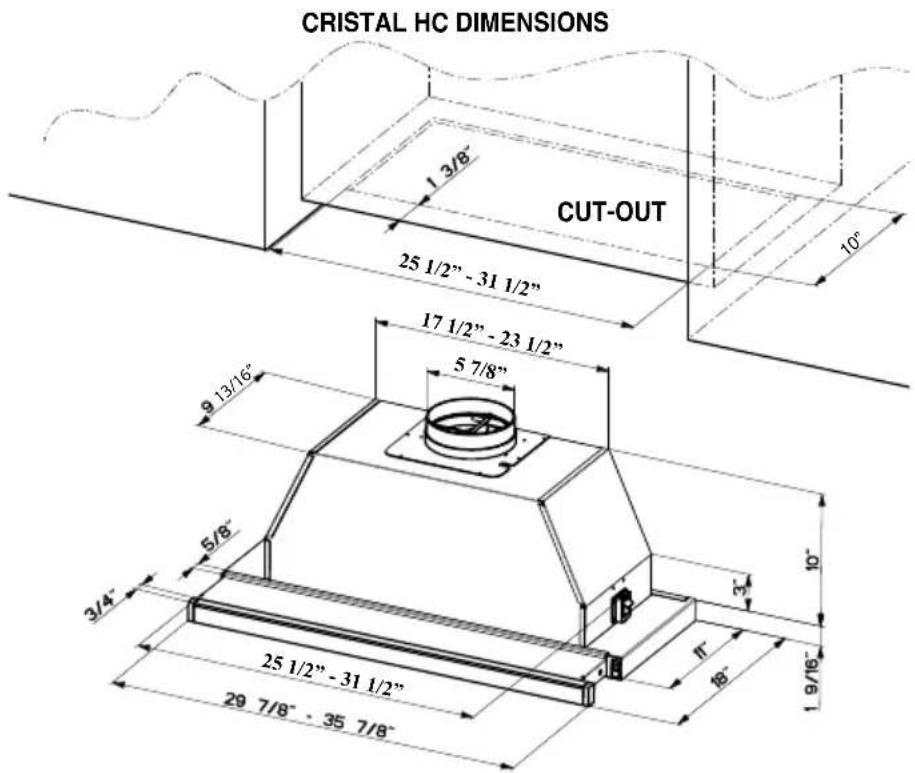
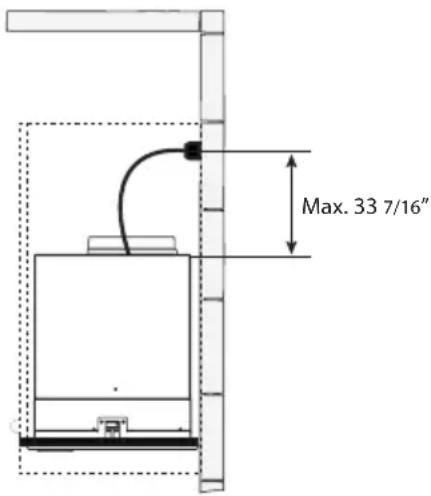
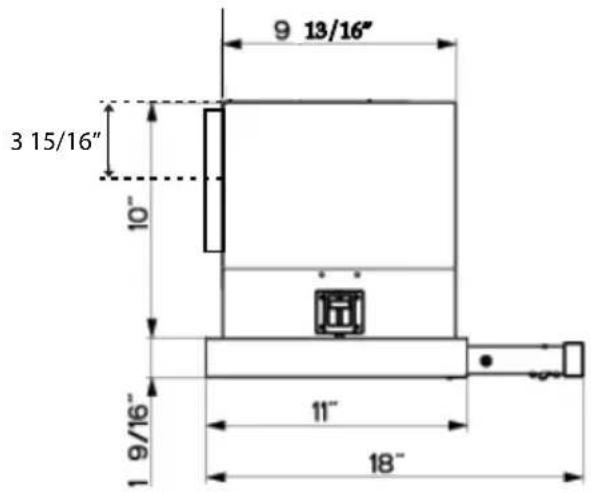
Pre-Planning Your Installation - Important: The recommended height to install this hood off the cooktop is a minimum of 24" and a maximum of 30" for maximum effectiveness. Also consult the cooktop manufacturer's recommendation. NOTE: If direct rear venting, use the side dimensional diagram below on the right. For top venting (comes standard in this position), use the left dimensional diagram. Refer to page 5 for directions for direct rear venting.
CRISTAL HC SIDE DIMENSIONS (TOP VENT - STANDARD)
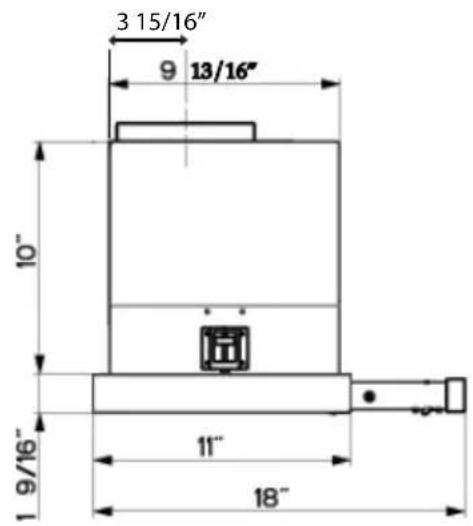
CRISTAL HC SIDE DIMENSIONS (DIRECT REAR VENT OPTION)
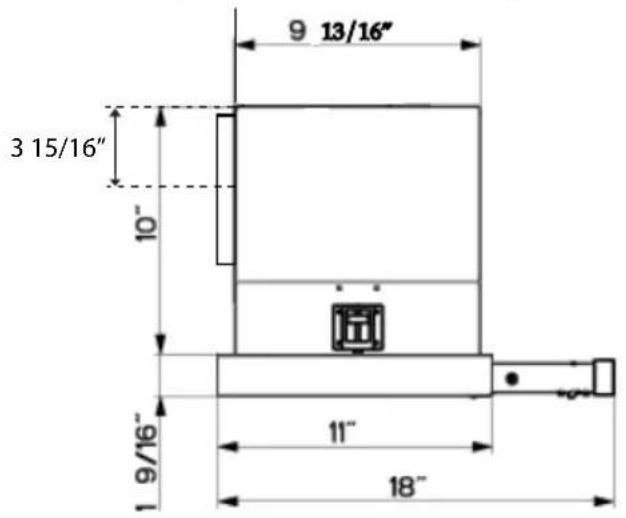
FRONT TRIM OPTIONS
The Cristal HC comes with a stainless steel front strip installed. Optional black and white kits are available for purchase. For a custom front strip, a local cabinet shop can make a strip to match your cabinets.
CUSTOM FRONT TRIM DIMENSIONS

PLAN THE DUCTWORK
TOOLS NEEDED FOR INSTALLATION
- Saber Saw or Jig Saw
- Drill
• 1 1/4" Wood Drill Bit
• Pliers
• Phillips Screwdriver
• Wire Stripper or Utility Knife - Metal Snips
• Measuring Tape or Ruler - Level
- Pencil
• Caulking Gun - Duct Tape
PARTS SUPPLIED FOR INSTALLATION
• 1 Backdraft Damper
• 1 Vent Grate (for recirculating installations only)
• 1 Vinyl Trim
• 1 Literature Package
PARTS NEEDED FOR INSTALLATION
• 2 Conduit Connectors
• Power Supply Cable
• 1 Wall or Roof Cap
• All Metal Ductwork
The Cristal HC slideout rangehood is designed to offer wide flexibility of installations. The rangehood can be ducted vertically or horizontally through a 6" round vent. The unit can also be installed in a recirculating configuration. The unit comes standard in the top venting position. FIGURES 1 and 2 show vertical and horizontal installations for this unit. FIGURE 3 shows recirculating installation.
The Cristal HC requires 6" round ductwork. To ensure that the blower performs to its highest possible capacity, ductwork should be as short and straight as possilbe.
For satisfactory performance the duct run should not exceed 50 equivalent feet if ducted using the required minimum 6" round duct. The equivalent feet in FIGURE A for each piece of duct in the system An example is given in FIGURE B. For best results, use no more than three 90° elbows. Make sure that there is a minimum of 24" of straight duct between elbows if more than one is used. Do not install two elbows together. If you must elbow right away, do it as far away from the hood's exhaust opening as possible.
| 45° Elbow | 3.0 feet |
| 90° Elbow | 5.0 feet |
| 90° Flat Elbow | 12.0 feet |
| Wall Cap | 0.0 feet |
| FIGURE A | |
| 9 Feet Straight Duct | 9.0 feet |
| 2 - 90° Elbows | 10.0 feet |
| Wall Cap | 0.0 feet |
| Total System | 19.0 feet |
| FIGURE B | |
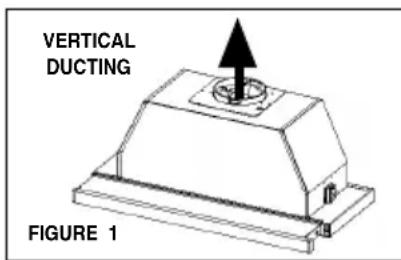
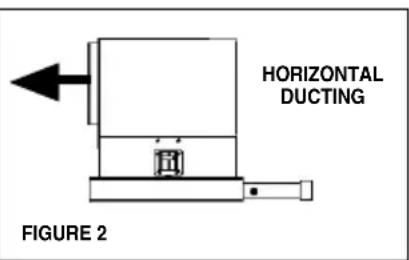
For direct rear venting (FIGURE 2), you must change the blower position. Remove the 12 screws that hold the metal housing to the rangehood body. Remove the 4 screws that hold the blower housing to the metal housing. Rotate the blower 90 degrees toward the back and then flip it over 180 degrees. Be sure that the power supply cable is properly positioned. Replace all screws, making sure that they are firmly fastened.
RECIRCULATING INSTALLATIONS
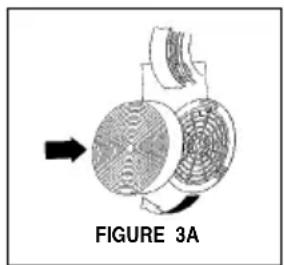
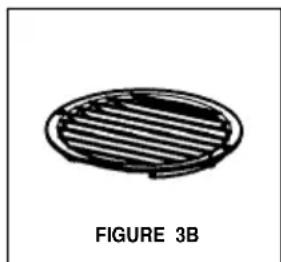
For recirculating installations (FIGURE 3), Charcoal Filters are necessary. Remove all four grease filters and set aside. Attach one charcoal filter to each end of the blower. Each charcoal filter attaches to the black grid on the side of the blower. Rotate the filter clockwise to install and counterclockwise to remove (FIGURE 3A). Replace all four grease filters. Some ductwork must be installed to exhaust the rangehood back into the kitchen, either at the top of the cabinet or at the face of the soffit. A plastic vent grate (FIGURE 3B) supplied with the rangehood can be used to cover the duct opening. This duct work must not terminate into a dead air space.

natural_image
Simple line drawing of a circular object with horizontal grooves, labeled 'FIGURE 3B' below (no other text or symbols)Version 06/14 - Page 5
OPTIONAL ACCESSORIES FOR PURCHASE SEPARATELY ACCESSOIRES EN OPTION POUR ACHETER SÉPARÉMENT
- Charcoal Filters
For non-vented installations only, replace charcoal filters as needed part # FILTER1
"When used in recirculation mode, to Reduce the Risk of Fire and Shock use only conversion kit Model FILTER 1"
- CFM Reducer Kit
To reduce cfm to below 300 cfm for use in make up air environments part # CFMRED
- Front Trim Kits
Replace stainless trim on the slide out hood with a black or white trim (available in 30" or 36")
CRTRIM30WH (30" white)
CRTRIM30BK (30" black)
CRTRIM36WH (36" white)
CRTRIM36BK (36" black)
- Filtres à charbon
- Disconnect and move freestanding range from cabinet opening to provide easier access to upper cabinet and rear wall. Put a thick, protective covering over cooktops, set-in ranges or countertops to protect from damage or dirt.
- Determine and clearly mark with a pencil the center line of the cabinet on the wall and on the underside of the cabinet where the rangehood will be installed.
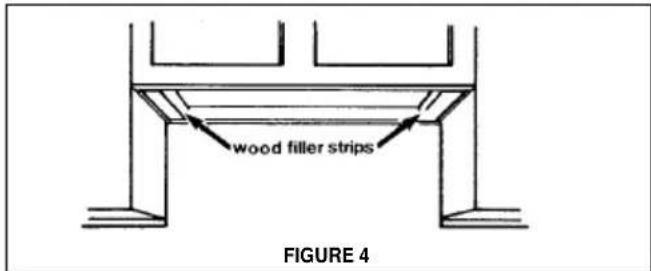
- If the cabinet bottom is recessed, wood blocks need to be installed to insure proper alignment with the cabinet bottom. Wood blocks should be flush or recessed 1/16" to 1/8" within the cabinet bottom as indicated in FIGURE 4.
- Determine the proper cutouts for the ductwork. Make all necessary cuts in the walls or cabinets for the ductwork. Install the ductwork before mounting the rangehood.
- Determine and make the proper cutout for the Power Supply Cable. Use a 1 1/4" Drill Bit to make this hole. Run the Power Supply Cable through the wall or cabinet. DO NOT turn on the power until installation is complete. Use caulking to seal around the wire opening.
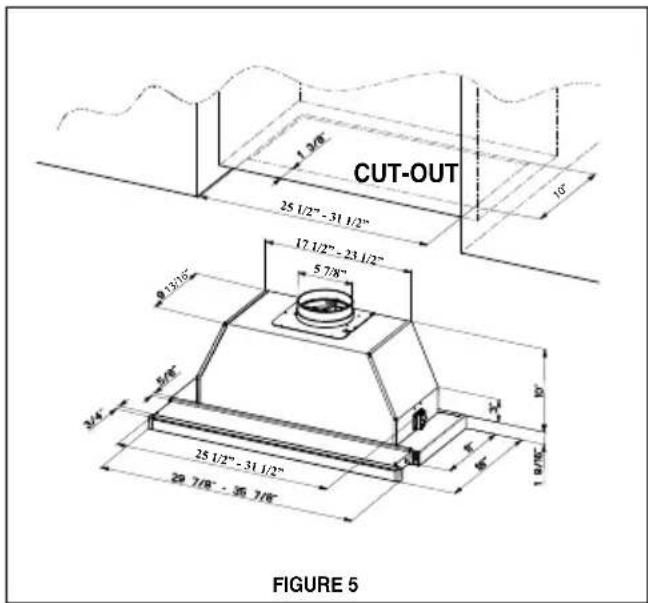
MAKE THE CUT-OUT OPENING (FIGURE 5)
WHERE THE RANGEHOOD WILL BE INSTALLED.
INSTALL THE RANGEHOOD
- Remove the rangehood from the carton and place on a flat surface. Cover the surface to prevent accidental damage. Remove all parts including the backdraft damper, plastic grille and literature package before discarding the carton. Remove the grease filters and set aside.
-
Place the round damper into the exhaust opening of the rangehood and press down.
-
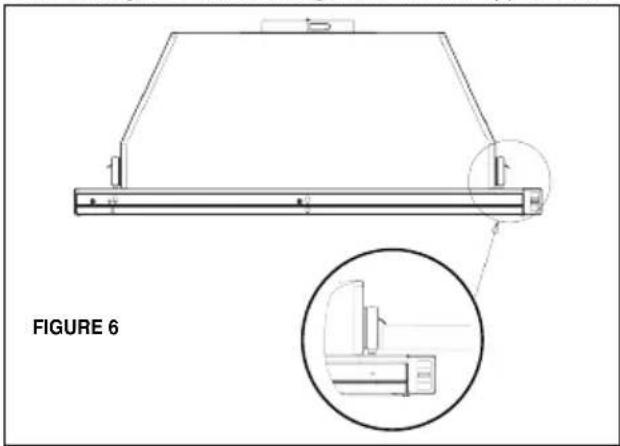
The rangehood mounts to the cabinet by two spring loaded brackets, one on each side of the rangehood (FIGURE 6). Lift the rangehood into the cutout opening in the cabinet. Be careful not to damage the cabinet, rangehood or other appliances.
natural_image
Technical line drawing of a mechanical component with an inset magnified detail (no text or symbols)- The spring loaded brackets are factory set to accommodate a thickness between 1 3/16" and 2 1/4". If your cabinet bottom is less than 1 3/16" thick, the spring loaded brackets can be removed and repositioned down from the top setting to the bottom setting by removing the four phillips screws.
- Tighten the rangehood to the cabinet by rotating the screws with a phillips screw driver.
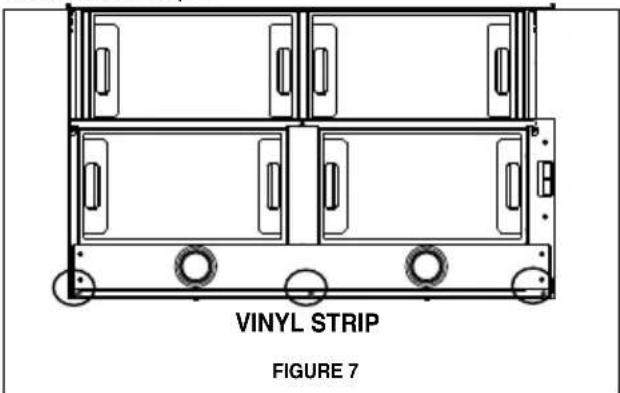
- A grey vinyl strip (FIGURE 7) is included to cover the underside of any remaining exposed cabinet. Attach the grey vinyl strip to the bottom of the back of the rangehood with the three screws provided. If necessary, the strip can be cut to fit the cabinet depth.
- Remove the cover from the field wiring compartment with
7
ELECTRICAL INSTALLATION WITH CONNECTION CABLE
GROUNDING INSTRUCTIONS This appliance must be grounded. In the event of an electrical short circuit, grounding reduces the risk of electric shock by providing an escape wire for the electric current. This appliance is equipped with a cord having a grounding wire with a grounding plug. The plug must be plugged into an outlet that is properly installed and grounded.
WARNING - Improper grounding can result in a risk of electric shock. Consult a qualified electrician if the grounding instructions are not completely understood, or if doubt exists as to whether the appliance is properly grounded.
Do not use an extension cord. If the power supply cord is too short, have a qualified electrician install an outlet near the appliance.
ELECTRICAL INSTALLATION WITH OPTIONAL WIRING BOX
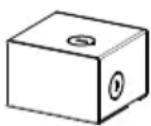
For Permanent wiring Installation-Use only with Listed rangehood Wiring Box kit sku # WIREBOX, manufactured by Faber.
Direct Connect Wiring Box Accessory sku # WIREBOX (purchased separately)
FRONT TRIM OPTIONS
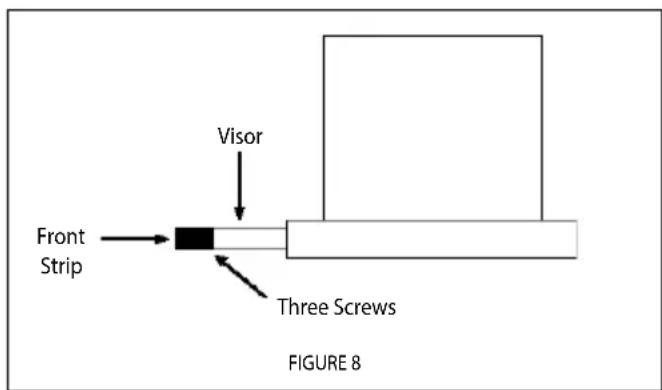
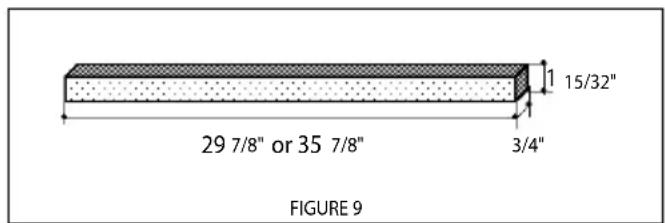
The New Cristal comes with a stainless front strip installed. Optional black and white strips are available as accessories for purchase. To change the front strip, remove the three phillips screws located behind the strip (FIGURE 8). If necessary, the front strip can be adjusted by loosening the three phillips screws and sliding the strip up or down. Tighten screws when you have the strip properly placed.
For a custom front strip, a local cabinet shop can make a strip to match your cabinets. The front strip dimensions are given in FIGURE 9.
USE AND CARE INFORMATION
For Best Results
Start the rangehood several minutes before cooking to develop proper airflow. Allow the rangehood to operate for several minutes after cooking is complete to clear all smoke and odors from the kitchen.
USE AND CARE INFORMATION
Rangehood Control Panel
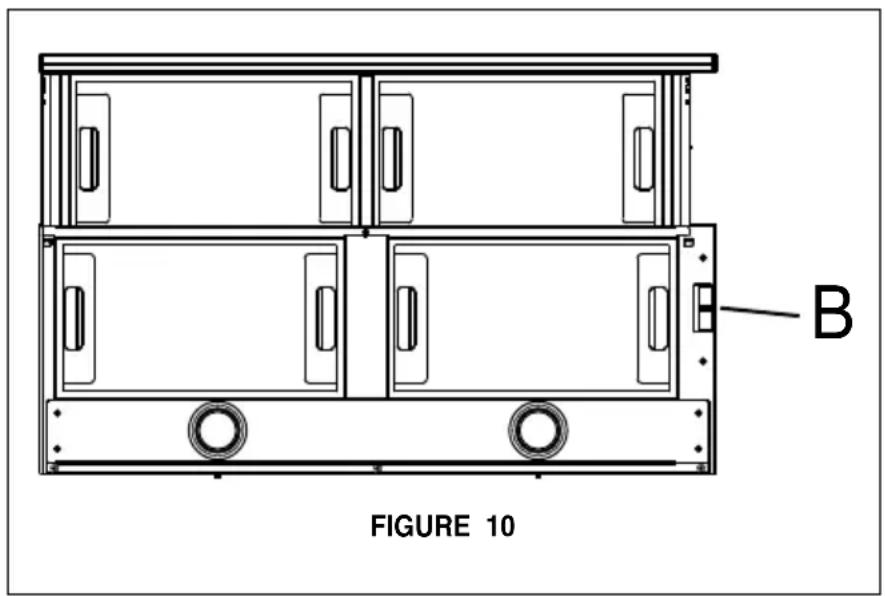
All controls are located on the right side of the rangehood.
Light On/Off Switch
TheOn/Off switch for the halogen light is located behind the front trim. Moving the switch to the 1 Position turns the light On. Moving the switch to the 0 position turns the light off.
Blower Speed Switch
B in FIGURE 10 shows the speed control switch for the blower. Moving the switch to the 1 Position turns the blower on LOW. Moving the switch to the 2 Position turns the blower on MEDIUM. Moving the switch to the 3 Position turns the blower on HIGH. Moving the switch to the 0 Position turns the blower off.
Automatic Operation
As long as the blower and light switches are on, the blower and light will automatically operate when the visor is opened and shut off when the visor is closed.
Cleaning metal grease filters
The metal grease filters can be cleaned in hot detergent solution or washed in the dishwasher. They should be cleaned every 2 months use, or more frequently if use is particularly heavy.
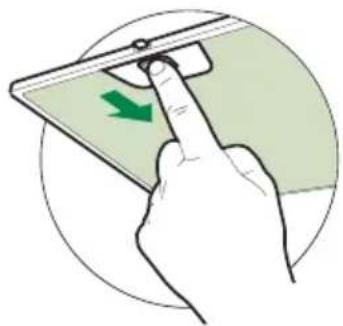
- Open the visor by pulling it.
- Remove the filter, pushing the lever towards the back of the unit and at the same time pulling downward.
- Wash the filter without bending it, leave it to dry thoroughly before replacing (if the surface of the filter changes color over time, this will have absolutely no effect on its efficiency).
- Replace, taking care to ensure that the handle faces forward.
- Cleaning in dishwasher may dull the finish of the metal grease filter.
- Close the visor.
natural_image
Hand inserting a green arrow on a smartphone screen (no text or symbols visible)Replacing Activated Charcoal Filter
The Activated Charcoal Filters are not washable and cannot be regenerated, and must be replaced approximately every 4 months of operation, or more frequently with heavy usage.
- Open the visor by pulling it.
- Remove the Filter, pushing it towards the back of the unit and at the same time pulling downward.
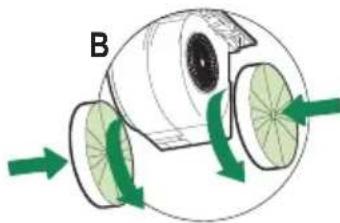
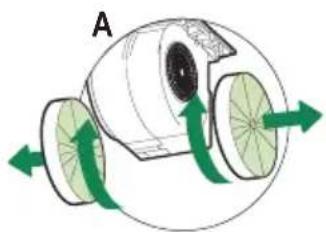
- Remove the saturated Activated Charcoal Filters, as indicated (A).
• Fit the new Filters, as indicated (B). - Replace, taking care to ensure that the handle faces forwards.
- Close the visor.
natural_image
Diagram of a mechanical device with rotating blades and green arrows indicating motion (no text or symbols)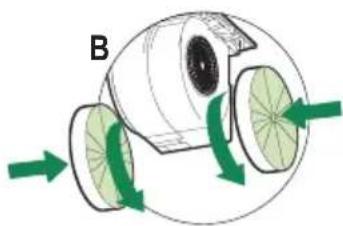
natural_image
Diagram of a biological or mechanical system with green arrows indicating rotational or directional movement (no text or symbols)Lighting unit
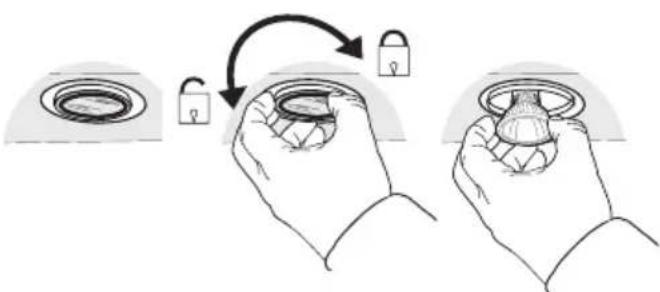
- Turn off electrical supply before replacing bulbs, and make sure bulbs are cool to touch before proceeding.
- Remove the lamp at the base and turn slightly to the left and the pull out from the connector and turn slightly to the left.
- Replace the lamp with a new one of the same type, making sure that you insert the two pins properly into the housings on the lamp holder.
- Once the bulb pins are in place turn slightly to the right to secure.
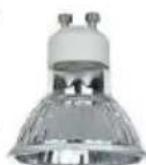
Gu10 self-ballasted led lamps – listed in ac-
cordance with ul 1993/nmx-j-578/1-ance/csa c22.2 No. 1993
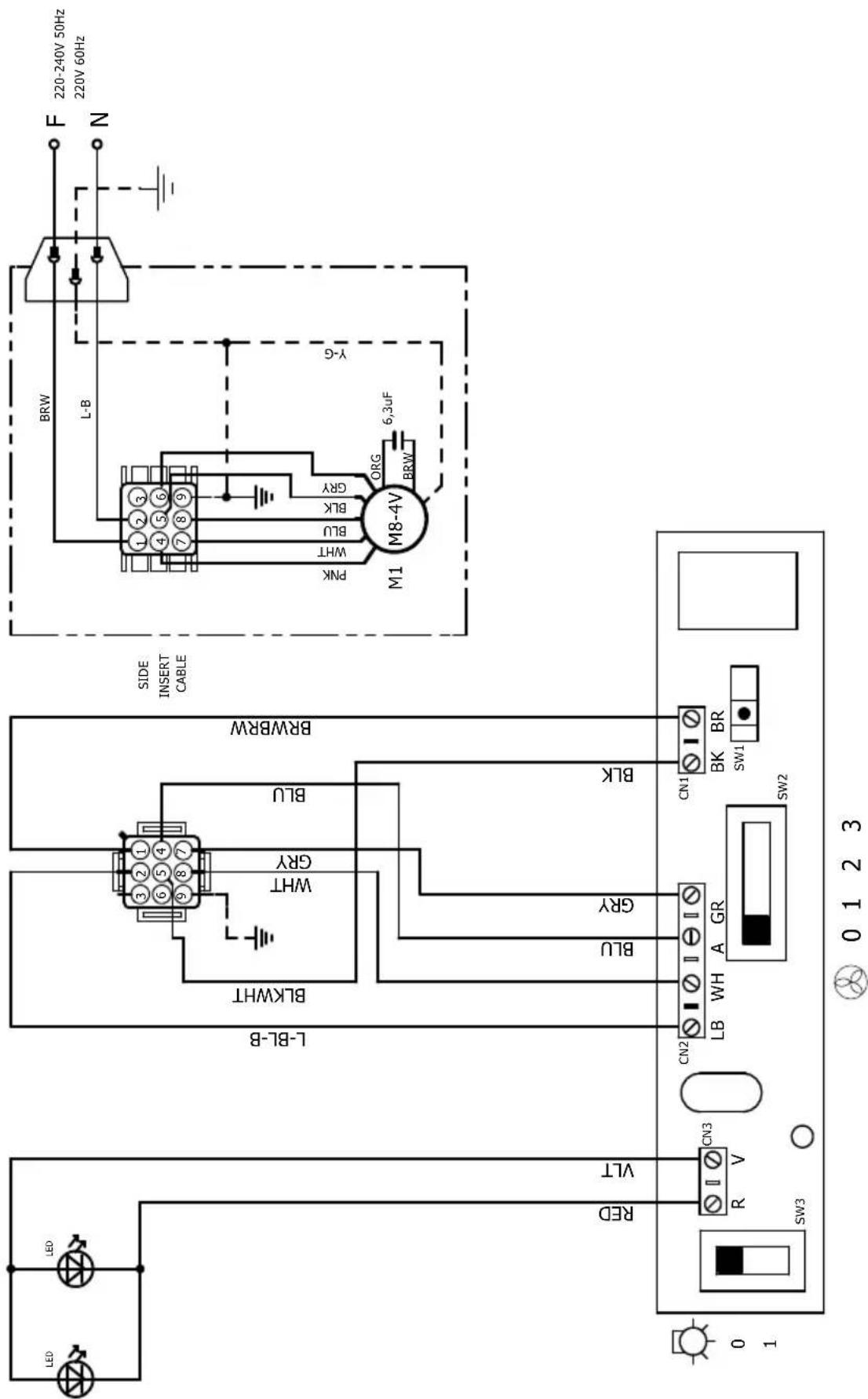
Wiring Diagram
FABER
FABER CONSUMER WARRANTY & SERVICE
All Faber products are warranted against any defect in materials or workmanship for the original purchaser for a period of 1 year from the date of original purchase (requires proof of purchase). This warranty covers labor and replacement parts. Faber, at its option, may repair or replace the product or components necessary to restore the product to good working condition. To obtain warranty service, contact the dealer from whom you purchased the range hood, or the local Faber distributor. If you cannot identify a local Faber distributor, contact us at (508) 358-5353 for the name of a distributor in your area.
The following is not covered by Faber's warranty:
- Service calls to correct the installation of your range hood, to instruct you how to use your range hood, to replace or repair house fuses or to correct house wiring or plumbing.
- Service calls to repair or replace range hood light bulbs, fuses or filters. Those consumable parts are excluded from warranty coverage.
- Repairs when your range hood is used for other than normal, single-family household use.
- Damage resulting from accident, alteration, misuse, abuse, fire, flood, acts of God, improper installation, installation not in accordance with electrical or plumbing codes or Faber documentation, or use of products not approved by Faber.
- Replacement parts or repair labor costs for units operated outside the United States or Canada, including any non-UL or C-UL approved Faber range hoods.
- Repairs to the hood resulting from unauthorized modifications made to the range hood.
- Expenses for travel and transportation for product service in remote locations and pickup and delivery charges. Faber range hoods should be serviced in the home.
THIS WARRANTY DOES NOT ALLOW RECOVERY OF INCIDENTAL OR CONSEQUENTIAL DAMAGES, INCLUDING, WITHOUT LIMITATION, DIRECT, INDIRECT, INCIDENTAL, SPECIAL OR CONSEQUENTIAL DAMAGES, PERSONAL INJURY/WRONGFUL DEATH OR LOST PROFITS FABER WARRANTY IS LIMITED TO THE ABOVE CONDITIONS AND TO THE WARRANTY PERIOD SPECIFIED HEREIN AND IS EXCLUSIVE. EXCEPT AS EXPRESSLY SPECIFIED IN THIS AGREEMENT, FABER DISCLAIMS ALL EXPRESS OR IMPLIED CONDITIONS, REPRESENTATIONS, AND WARRANTIES INCLUDING, WITHOUT LIMITATION, ANY IMPLIED WARRANTIES OF MERCHANTABILITY OR FITNESS FOR A PARTICULAR PURPOSE.
This warranty gives you specific legal rights that may vary from state to state.
Model#:
Serial #: ____
January 4, 2016
VEUILLEZ LIRE ET CONSERVER LA PRÉSENTE NOTICE AVANT DE COMMENCER L'INSTALLATION DE LA HOTTE DE CUISINE
AVERTISSEMENT : POUR RÉDUIRE LE RISQUE D'UN FEU DE GRAISSE SUR LA TABLE DE CUISSON :
DIMENSIONS LATÉRALES - CRISTAL HC
(OPTION DE VENTILATION DIRECTEMENT À L'ARRIÈRE)
GARNITURE AVANT EN OPTION
PLANIFIER LA CANALISATION
OUTILS REQUIS POUR L'INSTALLATION
INSTALLATIONS AVEC RECYCLAGE
natural_image
Diagram of a mechanical component with internal mesh structure, labeled FIGURE 3A (no text or symbols on the diagram itself)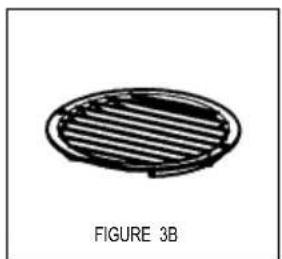
natural_image
Simple line drawing of an oval-shaped object with horizontal lines, labeled 'FIGURE 3B' below (no other text or symbols)Version 06/14 - Page 5
OPTIONAL ACCESSORIES FOR PURCHASE SEPARATELY ACCESSOIRES EN OPTION POUR ACHETER SÉPARÉMENT
- Charcoal Filters
For non-vented installations only, replace charcoal filters as needed part # FILTER1
"When used in recirculation mode, to Reduce the Risk of Fire and Shock use only conversion kit Model FILTER 1"
- CFM Reducer Kit
To reduce cfm to below 300 cfm for use in make up air environments part # CFMRED
- Front Trim Kits
Replace stainless trim on the slide out hood with a black or white trim (available in 30" or 36")
CRTRIM30WH (30" white)
CRTRIM30BK (30" black)
CRTRIM36WH (36" white)
CRTRIM36BK (36" black)
- Filtres à charbon
INSTALLER LA HOTTE
natural_image
Technical line drawing of a mechanical component with an inset magnified detail (no text or symbols)natural_image
Hand inserting a green arrow on a smartphone screen, enclosed in a circular frame (no text or symbols)natural_image
Diagram of a mechanical device with rotating wheels and green directional arrows indicating motion (no text or symbols)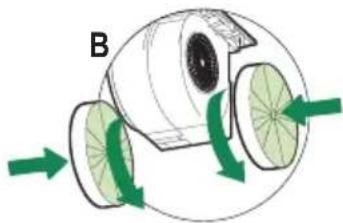
natural_image
Diagram of a biological or mechanical structure with green arrows indicating rotational or directional movement (no text or symbols)Système d'éclairage
OPCIONES DE MOLDURA DELANTERA
PLANEAR EL CONDUCTO
natural_image
Diagram of a mechanical component with cross-section view, labeled FIGURE 3A (no text or symbols on the diagram itself)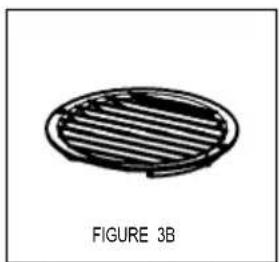
natural_image
Simple line drawing of a circular object with horizontal grooves, labeled 'FIGURE 3B' below (no other text or symbols)Version 06/14 - Page 5
ACCESORIOS OPCIONALES PARA LA COMPRA POR SEPARADO ACCESORIOS
INSTALE LA CAMPANA
natural_image
Technical line drawing of a mechanical component with two views (top and side), labeled as FIGURE 6, showing no text or symbols.natural_image
Hand inserting a green arrow on a smartphone screen, enclosed in a circular frame (no text or symbols)natural_image
Diagram of a mechanical device with green arrows indicating rotational or directional motion (no text or symbols)