
Royal PKS 1840/1 - Saw EINHELL - Free user manual and instructions
Find the device manual for free Royal PKS 1840/1 EINHELL in PDF.


| Product type | Electric chainsaw |
| Brand | Einhell |
| Model | Royal PKS 1840/1 |
| Rated power | 1800 W |
| Supply voltage | 230 V ~ 50 Hz |
| Maximum cutting length | 40 cm |
| Cutting speed | 9 m/s |
| Oil tank capacity | 200 ml |
| Weight (without guide bar and chain) | 3.9 kg |
| Chain brake | Stopping time 0.1 second |
| Safety category | II (double insulation) |
| Guaranteed sound power level | 106 dB(A) |
| Sound pressure level | 84 dB(A) |
| Vibration (rear handle) | 4.6 m/s² |
| Vibration (front handle) | 3.5 m/s² |
| Guide bar length | 40 cm |
| Replacement chain | Ref. 45.003.11 |
| Replacement guide bar | Ref. 45.003.31 |
| Lubrication system | Automatic |
| Switch | With start lock |
| Hand guard | Front and rear |
| Spike bumper | Yes |
| Recommended extension cord | Approved rubber cable |
| Warranty | 2 years |
| Recommended use | Wood cutting |
Frequently Asked Questions - Royal PKS 1840/1 EINHELL
User questions about Royal PKS 1840/1 EINHELL
0 question about this device. Answer the ones you know or ask your own.
Ask a new question about this device
Download the instructions for your Saw in PDF format for free! Find your manual Royal PKS 1840/1 - EINHELL and take your electronic device back in hand. On this page are published all the documents necessary for the use of your device. Royal PKS 1840/1 by EINHELL.
USER MANUAL Royal PKS 1840/1 EINHELL
GB Operating Instructions Electric Chainsaw
© Important information about these instructions

A warning triangle marks all those instructions which are important for safety reasons. Always observe these as failure to do so could result in serious injury! The illustrations referred to in the text are to be found inside the front cover pages. Keep these open while reading the instructions.
3
natural_image
Illustration of a wooden folding chair and a saw cutting tool (no text or symbols)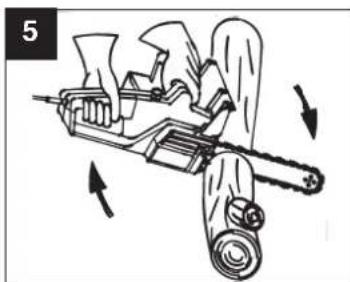
natural_image
Mechanical device diagram showing a lever mechanism with arrows indicating motion (no text or symbols)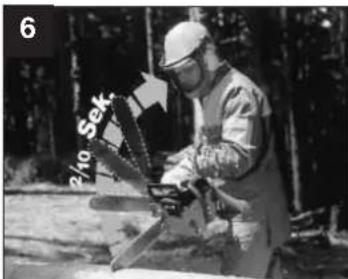
natural_image
Diagram of a chain saw cutting through a gear with arrows indicating motion (no text or symbols)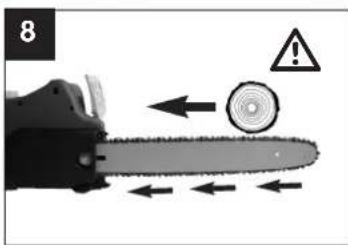
natural_image
Diagram of a chainsaw with directional arrows indicating motion, no text or symbols present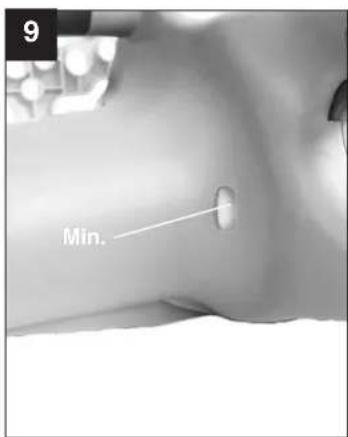
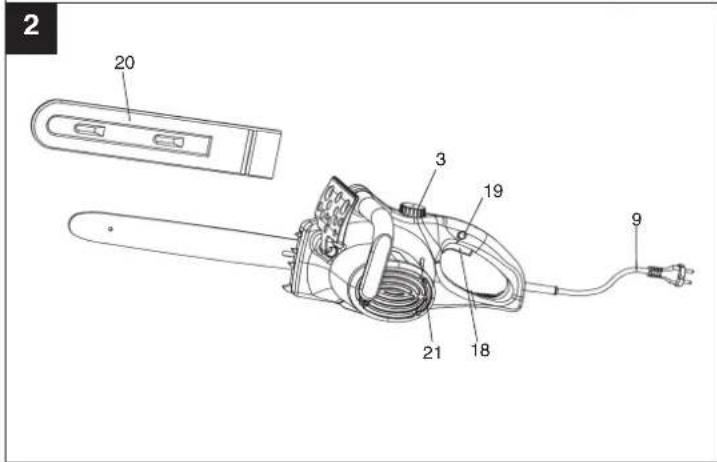
1 F r ont grip
2 F ront finger guard
3 Oil tank cap
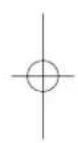
4 O il outlet
5 Sword guide
6 Chain tensioning screw
7 Saw chain
8 Chain bar
9 Mains cable
10 Rear grip
11 Rear finger guard
12 Chain wheel
13 Chain tensioning bolt
14 Chain tensioning borehole
15 Hood
16 Hexagonal screw
17 Claw stop
18 ON/OFF switch
19 Safety lock-off
20 Chain guard
21 Oil gauge
22 Sea
2. Technical data
| Type PKS 1635/1 PKS 1840/1 | ||
| Power Supply 230 V ~ 50 Hz 230 V ~ 50 Hz | ||
| Power rating: 1600 W 1800 W | ||
| Cutting length, max.: 35 cm 40 cm | ||
| Cutting speed at rated rpm: 9 m/s 9 m/s | ||
| Oil tank capacity: | 200 ml | 200 ml |
| Weight without sword + chain: | 3.9 kg 3.9 kg | |
| Chain brake: | 0.1 s | 0.1 s |
| Protection class: | II / ☐ | II / ☐ |
| Guaranteed sound power level under load: | 106 dB(A) | 106 dB(A) |
| Sound pressure level under load: | 84 dB(A) | 84 dB(A) |
| Acceleration Rear grip under load: | 4,4 m/s ^2 | 4,6 m/s ^2 |
| (calculated acc. to EN 50144) Front grip under load | 3,3 m/s ^2 | 3,5 m/s ^2 |
3. Explanation of the signs
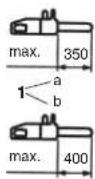

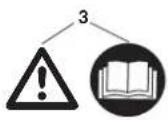
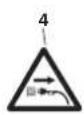
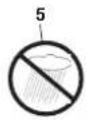
- Maximum cutting length:
a) PKS 1635/1, max. 350 mm
b) PKS 1840/1, max. 400 mm - Wear protective headgear, goggles and ear muffs
- Caution! Read the operating instructions and follow the warnings and safety instructions
- If the cable is damaged, unplug the machine immediately!
- Protect from the damp
GB
4. Safety instructions

The safety instructions must be observed when using the machine. For your own safety and the safety of others, please read this information carefully before using the machine and keep it in a safe place for reference. Use the chainsaw only to saw wood or objects made of wood. Any other types of use are at your own risk and could well be dangerous. The manufacturer cannot be held liable for damage caused by improper or incorrect usage.
Safety instructions and accident prevention
To prevent the incorrect handling of the chainsaw, please read the
operating instructions in their entirety before using the machine for the first time. All the information on the handling of the chainsaw is relevant to your personal safety. Ask a professional to show you how to use the machine!
● Switch the machine off before releasing the chain brake.
● To prevent damage to your hearing, wear ear muffs; helmets with a visor are particularly advantageous.
● Make sure you have a firm footing when working with the chainsaw.
● Always switch off the machine before putting it down.
● Always pull the plug out of the power socket before doing any work on the machine.
● Only plug in when the machine is switched off.
- The chainsaw must be used only by one person at a time. All other persons must stay clear of the chainsaw's area of swing. Children and pets in particular must be kept well away at all times.
● The saw must not be touching anything when it starts up.
● Hold the chainsaw firmly in both hands when working with it!
● The chainsaw must not be operated by children and young people. The only exception to this rule are young persons of 16 years and over who can use the chainsaw under supervision as part of their training. Lend the saw only to those persons who are familiar with this type of machine and know how to handle it. Always pass on the operating instructions along with the chainsaw!
● The chainsaw may be operated only by persons who are rested and in good health, i.e. in good physical condition. If you start to tire, have a
break in good time. The chainsaw may not be used after the consumption of alcohol.
- If the machine is not going to be used for a while it must be set aside in such a way that no other person is endangered.
● Before making a cut, always set the claw stop before you start to saw.
● The power cable must always be behind the saw operator.
● The power cable must always lead away from the rear of the machine.
● Use only original accessories.
● Machines used outdoors must be connected up to an earth-leakage circuit-breaker. - When using an extension cable outdoors:
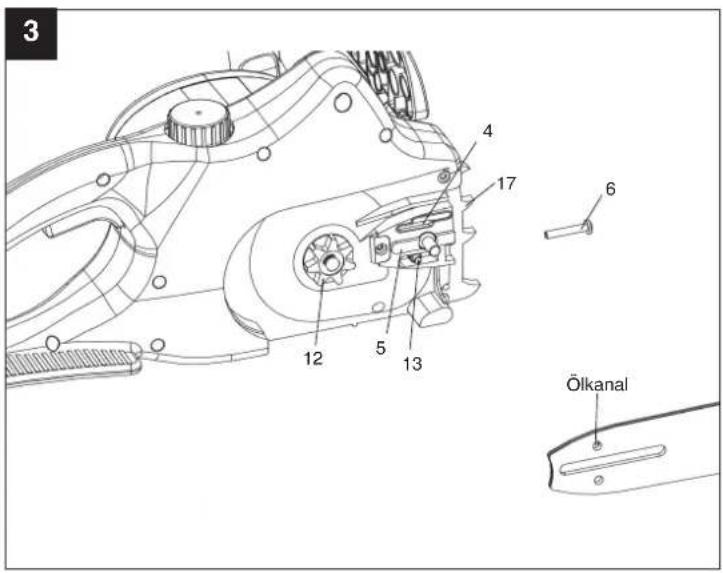
Check that it is approved for outdoor use and is marked accordingly - Use a strong support when sawing converted timber and thin branches (sawing trestle, Fig. 4). Do not stack the timber and do not have it held by a second person or with your foot.
● Logs must be secured in position.
● On sloping ground, always work facing upwards. - Pull the saw out of the wood only when the saw chain is running.
- If you are performing several cuts, switch off the chainsaw in between cuts.
- Pay extra attention when cutting splintered wood. Sawed off pieces of wood may be catapulted in any direction (risk of injury!).
- Do not use the chainsaw to remove or sweep away small pieces of wood or similar objects.
- Leave branch lopping work to trained personnel! Risk of injury!
● Pay special attention to branches under tension. Do not cut through freely suspended branches from underneath.
● Never stand on the trunk when lopping off branches.
● The chainsaw may not be used for forest work, i.e. for felling and lopping off branches in the forest. Because of the cable connection the saw operator does not have the necessary mobility and his safety is not guaranteed!
● Always stand to the side of the tree being felled. - When retreating after making the back cut, watch out for falling branches.
- On slopes the saw operator should stand to the upper or left or right side the trunk or lying tree, never by its bottom.
● To prevent injury, damaged power cables may only be replaced by the manufacturer or the customer service center.
GB
In order to prevent kick-back, please follow these safety instructions:
● Never start cutting with the tip of the chain bar! Always keep a close eye on the tip of the chain bar!
● Never cut with the tip of the chain bar! Be careful, when continuing cuts you are already working on!
● Always start cuts with the chainsaw already running!
● Make sure that the saw chain is always properly sharpened.
● Never cut through more than one branch at a time! When lopping off branches, be careful not to touch any other branches.
- When cross-cutting, pay attention to trunks standing very close to each other. If possible use a sawing trestle.
5. Transporting the chainsaw
Before transporting the chainsaw, always remove the plug from the power socket and slide the chain guard over the rail and chain. If several cuts are to be performed with the chainsaw, the saw must be switched off between cuts.
6. Before starting up
The voltage and current supply must comply with the ratings on the type plate. Before commencing work, always check that the chainsaw works properly and is safe to operate. Check also that the chain lubrication and the oil gauge are in good working order (see Fig. 9). When the oil level is approx. 5 mm from the bottom mark (marked with „Min“ in the illustration), you must top up with oil. When the oil level is above this mark you can work without worry. Switch on the chainsaw and hold it above light-colored ground. Be careful not to allow the chainsaw to touch the ground. For safety reasons it is best to keep a clearance of at least 20 cm. If you now see growing traces of oil, the chain lubrication system is working correctly. If there are no traces of oil at all, try cleaning the oil outlet (4), the upper chain tensioning borehole and the oil duct, or contact your Customer Service. (Be sure to read the section „Filling in chain oil and chain lubrication“ on this point). Check the chain tension and retention if necessary (see the section „Tensioning the saw chain“ on this point). Make sure the chain brake is working properly (see also the section „Releasing the chain brake“).
7. Assembling the chain bar and saw chain
The machine must be unplugged.
- Important: The front finger guard (2) must always be in the top (vertical) position.
The chain bar and saw chain are delivered separately. To assemble, first unscrew the nut (16) and remove the brake housing hood (15). The chain tensioning bolt (13) must be in the center of the guide (5). If necessary, tighten the chain tensioning bolt with the chain tensioning screw (6). To prevent injury on the sharp cutting edges, always wear gloves when assembling tensioning and checking the chain.
Before assembling the chain bar with the saw chain, check the cutting direction of the teeth! The running direction is marked with an arrow on the hood (15). To determine the direction of cut, it may be necessary to turn over the saw chain (7). Hold the chain bar (8) vertically with the tip pointing upwards and put on the saw chain (7), beginning at the tip of the bar. Then assemble the chain bar with the saw chain as follows: Place the chain bar with the saw chain on the sword guide (5) and chain tensioning bolt (13). Place the saw chain round the chain wheel (12) and make sure it is correctly mounted (see Figure 1/Item 7). Place the hood (15) on top and tighten gently with the nut (16).
Now the saw chain has to be correctly tensioned:
8. Tensioning the saw chain
Always pull the power plug before doing any work on the machine!
Wear safety gloves!
Make sure the saw chain (7) is inside the guide groove of the chain bar (8)!
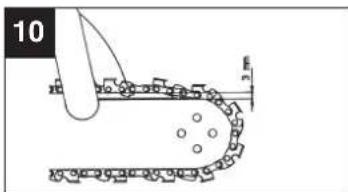
Using a Phillips screwdriver, turn the chain tensioning screw (6) clockwise until the saw chain is correctly tensioned. While the bolt (16) is being tightened, the chain bar must then be pushed upwards. Check the chain tension again (see Fig. 10). Do not tension the chain too tightly. With the chain bar cold, you should be able to lift
it by approx. 3 mm at the center of the guide rail. Tighten the nut (16) securely. When warm, the saw chain will expand and sag. This means that it may fall off during operation. Re-tension if necessary. If the saw chain is re-tensioned when hot, it must be loosened again when the sawing work has been completed.
When warm, the saw chain will expand and slacken and there is a danger of it jumping off the rail altogether. Retension if necessary. If the saw chain is retensioned when hot, it must be loosened again
GB
when the sawing work has been completed. Otherwise, the contraction which takes place as the chain cools would result in excessively high tension. A new saw chain requires a running-in period of approx. 5 minutes. Chain lubrication is very important at this stage. After running in, check chain tension and retention if necessary.
9. Filling in chain oil
To prevent dirt getting inside the tank, clean the oil tank cap (3) before opening. Check the contents of the oil tank during sawing work by checking the oil gauge (21). Close the oil tank cap (3) tightly and wipe away any spills.
10. Chain lubrication
To prevent excessive wear, the saw chain and chain bar must be evenly lubricated during operation. Lubrication is automatic. Never work without chain lubrication. If the chain runs dry, the entire cutting apparatus will quickly become severely damaged. It is therefore important to check both chain lubrication and the oil gauge before every use (Fig. 9). Never use the saw when the oil level is below the "Minimum" mark (Fig. 9).
● Minimum - When only approx. 5 mm of oil is visible at the lower rim of the oil gauge (21), you must top up with oil.
● Maximum - Top up with oil until the window is full.
11. Checking the automatic lubrication
Before commencing work, check the automatic chain lubrication and oil gauge. Switch on the chainsaw and hold it above light-colored ground. Be careful not to allow the chainsaw to touch the ground. For safety reasons it is best to keep a clearance of at least 20 cm. If you now see growing traces of oil, the chain lubrication system is working correctly. If there are no traces of oil at all, try cleaning the oil outlet (4), the upper chain tensioning borehole (14) and the oil duct, or contact your Customer Service (Fig. 3).
12. Chain lubricants
The service life of saw chains and chain bars depends to a large extent on the quality of the lubricant used. Old oil must not be used! Use only environment-friendly chain lubricant. Store chain lubri-
cant only in containers which comply with the regulations.
13. Chain bar
The chain bar (8) is subjected to especially severe wear and tear at the nose and on the bottom. To avoid one-sided wear and tear, turn the chain bar over (8) every time you sharpen the chain.
14. Chain wheel
The chain wheel (12) is subjected to especially high wear and tear. If you notice deep wear marks on the teeth, the chain wheel must be replaced. A worn chain wheel curtails the service life of the saw chain. Have the chain wheel replaced by a specialist dealer or your Customer Service.
15. Chain guard
The chain guard (20) must be clipped onto the chain and sword as soon as the sawing work has been completed and whenever the machine has to be transported.
16. Chain brake
In the event of kick-back, the chain brake will be actuated via the front finger guard (2). The front finger guard (2) is pushed forwards by the back of the hand and this causes the chain brake to stop the chainsaw, or rather the motor, within 0.10 s.
17. Releasing the chain brake
To be able to use your chainsaw again, you must release the saw chain again. First switch off the machine. Then push the front finger guard (2) back into the vertical position until it locks in place. The chain brake is now fully functional again.
18. Sharpening the saw chain
You can have your saw chain sharpened fast and correctly by specialist dealers, from whom you can also obtain chain sharpening equipment to enable you to sharpen the chain yourself. Please follow the corresponding operating instructions.
Take care of your tools. Keep your tools sharp and clean to enable you to work well and safely.
Follow the maintenance regulations and the instructions for changing tools.
19. Starting up


Always wear safety goggles, ear muffs, protective gloves and heavy-duty work clothes!
Never use the chainsaw when standing on a ladder, in a tree or in any other instable places. Do not use above shoulder height and do not saw with one hand.
Use the saw only with approved extension cables which have the prescribed insulation and connections designed for outdoor use (approved rubber-sheathed cables) and which fit the machine plug. To switch on, hold the front grip (1) with your left hand, with your right hand holding the rear grip (10). To switch on: Simultaneously press the safety lock-off (19) and ON/OFF switch (18). Check to ensure the chain brake is working properly.

If the chainsaw does not run, the chain brake must be released at the front linger guard (2). Be sure to read the sections „Chain brake“ and „Releasing the chain brake“ on this point.
After switching on, the chainsaw will run immediately at high speed.
To switch off: Release the ON/OFF switch (18). Only put down the chain saw after the chain has stopped rotating!
After working with the chainsaw, you should always: Clean the saw chain and chain bar. Attach the chain guard.
Machine protection

Never use the machine in the rain or in damp conditions.

If the extension cable is damaged, pull the power plug immediately. Never work with a damaged cable.
Check the machine for damage. Before using your tool again, check the safety devices or any slightly damaged parts to ensure that they are in good working order. Make sure the moving parts are working correctly. All the parts must be correctly assembled and meet all the conditions required to ensure that the machine works correctly. Any damaged safety devices and parts must be properly repaired or replaced immediately by a Customer Service workshop or the company ISC-GmbH, unless there are instructions to the contrary in this operating manual.
Notes on working practice
Kick-back
- When cross-cutting always set the claw stop against the timber you want to saw (see Fig. 4).
● Always set the claw stop before cross-cutting. Only then switch on the machine and start sawing into the wood. Pull the machine upwards at the rear and lead the direction with the front grip. Use the claw stop as a fulcrum. To reposition for further cutting, exert slight pressure on the front grip. Pull the saw back slightly during this process. Position the claw stop further down the cut and pull up the rear grip once again (see Fig. 5).
● Plunge cuts and horizontal cuts may only be carried out by professionals (high risk of kick-back; see Fig. 6).
- For horizontal cuts, position the saw at the smallest possible angle. This requires extreme caution, as the claw stop cannot be applied in this case.
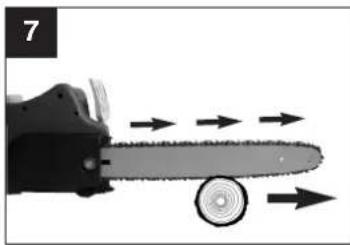
- If the chain gets stuck when sawing with the upper side it may be thrust toward the operator. For this reason you should saw wherever possible with the bottom side, as the chainsaw will then be thrust away from the body towards the wood (see Fig. 7 and 8).
- When lopping off branches, the chainsaw should be supported wherever possible against the trunk. Do not cut with the tip of the chain bar (risk of kick-back; see Fig. 6).
● Watch out for trunks rolling towards you. Kick-back!
- The chainsaw is likely to recoil if the tip of the chain bar (especially the top quarter) accidentally touches wood or any other solid objects. In this case the saw will move uncontrollably and will be hurled towards the operator at full power (risk of injury!).
GB

Fig. 6
You can avoid accidents by not sawing with the tip of the chain bar as this may cause the saw to rear up suddenly. Always use the complete safety equipment and clothes when working with the saw.

Make sure your work piece is firmly secured.
Use clamps to stop the work piece from slipping. This also makes it easier to operate the machine with both hands.
Kick-back will result in an uncontrollable motion of the saw. This represents the danger of severe injuries. Never saw with a slack or blunt chain. A poorly sharpened chain increases the risk of kickback. Never saw above shoulder height.
20. Tips on chainsaw use
Sawing up wood
(See Fig. 4 and 5)
To saw up wood, please observe the safety regulations and proceed as follows: Make sure the wood to be sawed cannot slip. Clamp short pieces of wood in place before sawing. Saw only wood or wooden objects. When sawing, make sure that no stones or nails are touched as these could be thrown out and damage the saw chain. Avoid bringing the running saw into contact with wire fences or the ground. When lopping off branches, support the machine as far as possible and do not saw with the tip of the chain bar. Watch out for obstacles such as tree stumps, roots, ditches and hillocks as these could cause you to fail.
Remember:
The chainsaw must be running before it comes into contact with the wood!
To switch on: Press the safety lock-off (19) and ON/OFF switch (18). Place the lowest claw (17) on the wood. Raise the chainsaw by the rear grip (10) and saw into the wood. Move the chainsaw back a little and place the claw (17) further down. Be careful when sawing splintered wood as pieces of wood may be ripped off.
To switch off: Release the ON/OFF switch. Pull the plug out of the power socket.

Remove the chainsaw from the wood only with the saw chain still running. Anyone who saws without a stop can be pulled forward.
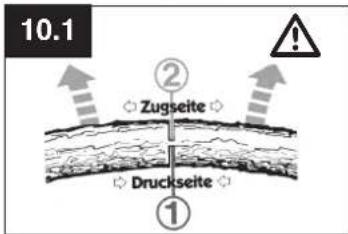
Wood under tension

Fig. 10.1: Top side of trunk under tension Danger: Tree will rear up!
Fig. 10.2: Bottom side of trunk under tension
Danger: Tree will move downwards!
Fig. 10.3: Thick trunks and high tension Danger: Tree will move suddenly and with immense force!
Fig. 10.4: Both sides of trunk under tension
Danger: Tree will move sideways!
Felling trees
To fell trees, observe all the safety regulations and proceed as follows:
The chainsaw may be used to fell only trees which are smaller in diameter than the length of the chain bar. Never try to extract a jammed saw with the motor still running. If the saw chain gets jammed, release it using a wooden wedge.

Remember:
Danger zone: Falling trees can bring down other trees with them. The danger zone is therefore twice the length of the tree being felled. (Fig. 11)

Important:
Prior to cutting you must plan and provide for an escape area (A). This escape area must be located behind the expected felling direction (B) (Fig. 13).

Important:
Before performing the final cut, make sure there are no spectators, animals or obstacles in the felling path.
Felling trees is dangerous and requires practice. If you are a beginner or inexperienced, do not try to teach yourself but seek professional training. (Fig. 12)
Felling direction:
- First estimate the direction of fall, taking into account the centre of gravity of the crown and the wind direction. The chainsaw must be running before it comes into contact with the wood.
GB
Switch on the chainsaw. Saw an undercut in the tree in the direction of fall and then make a horizontal cut (back cut) on the side opposite to the undercut.
● Make the undercut: This will give the tree direction and guidance.
- Check the direction of fall: If you have to correct the undercut, always recut over the entire width.
- Call out „Timber!"
- Only now make the back cut, which must be higher than the sole of the undercut. Insert wedges in good time.
- Leave the bridge in place as it will function as a hinge. If you cut through the bridge, the tree will fall randomly.
● Fell the tree by driving a wedge into the back cut, not by sawing through it.
- When the tree falls, step back and watch the crown. Wait for the crown to stop swinging. Do not continue working under branches which have got stuck.
repaired by an authorized Customer Service work- shop. In the event of any inquiries and spare parts orders, always quote the type designation and the 9- digit order number.
Storage
Keep your chainsaw in a safe place. The unused machine should be stored clean, on a flat surface and in a dry place which is inaccessible to children.
Do not fell trees:
- if you can no longer distinguish details within the danger zone, e.g. owing to fog, rain, snow drifts or twilight,
- if the direction of fall cannot be reliably estimated owing to wind or gusts of wind. Felling work on sloping ground, black ice, frozen or dewy ground is safe only if you can get a firm foothold.
Pull the plug out of the power socket. To fell the tree, you must drive a wedge into the back cut. When retreating after making the back cut, watch out for falling branches.
To switch off:
Accessories:
Use only original spare parts:
Chain bar PKS 1635/1 45.001.31
Cahin bar PKS 1840/1 45.003.31
Saw chain PKS 1635/1 45.001.11
Saw chain PKS 1840/1 45.003.11
Maintenance and cleaning
Always pull the plug out of the power socket before doing any work on the machine!
Keep the cooling vents on the motor housing clean and unobstructed at all times. Only the maintenance work described in these operating instructions may be carried out. Any other maintenance work must be carried out by our Customer Service. Do not modify the chainsaw in any way as this could jeopardize its safety. Should the machine fail despite our careful manufacturing and inspection procedures, have it
GB
Troubleshooting
Please read the safety information on page 8 and 9.
| Fault Cause Remedy | ||
| Motor does not run No electricity | Check socket, cable and plug. Chain brake Damaged cable: Have repaired by Customer Service. It is prohibited to patch the cable with insulating tape. Damaged switches have to be replaced by a Customer Service workshop. See section 16 and 17 „Chain brake“ and „Releasing the chain brake“. | |
| Chain does not move Chain brake | Check the chain brake, release if necessary. | |
| Poor cutting performance Blunt chain | Sharpen the chain Chain wrongly fitted Check that the chain is fitted correctly Chain tension Check the chain tension | |
| Saw works only with difficulty Chain tension Check the chain tension Chain jumps off sword | ||
| Chain becomes hot Chain lubrication Check oil level | Check chain lubrication | |
Never use tools with defective On/Off switches.
In the case of all other types of technical faults, please contact an authorized Customer Service workshop, our Central Service Department, or your local dealer.
18. Afiar as correntes de serra
104
The product described in these instructions comes with a 2-year warranty covering defects. This 2-year warranty period begins with the passing of risk or when the customer receives the product.
For warranty claims to be accepted, the product has to receive the correct maintenance and be put to the proper use as described in the operating instructions. Your statutory rights of warranty are naturally unaffected during these 2 years.
This warranty applies in Germany, or in the respective country of the manufacturer's main regional sales partner, as a supplement to local regulations. Please note the details for contacting the customer service center responsible for your region or the service address listed below.
NL GARANTIE
Eschenstraße 6 · D-94405 Landau/Isar (Germany)
Info-Tel. 0180-5 120 509 • Telefax 0180-5 835 830
Unit 5 Morpeth Whart
Twelve Quays
Birkenhead, Mirral
CH 41 1NG
Tel. 0151 6491500. Fax 0151 6491501
P: Einbell Portugal Ltda
Aparado 2105
① Einfall University Ltd
Etniati Hungary Vicia, Boto: 1
Vajda Peter 12 U.6000 Rudencet
H-1069 Budapest Tel. 01 3039401 Fax 01 2101179
TR Semok
Bertak making bicari yu ranavi ld. rli
Allay Cressa grab Yascomin Sok, Nv. 19
TB 34843 Maltene - Istanbul
Tel. 0216 4594865. Fax 0216 4429325
Vobler s.r.o
Zupna 4
SK-95301 Zlate Moravce
Tel. 37 6426255, Fax 37 26256
© Turkestan
Technical & Commercial Company
Halai Trading Co. LLC
BOB 3282, Nakosal Rd. Delra, Spon No. 15
UAE-Dubal
Tel. 04 2279554, Fax. 04 2217696
(in) Albez Abzar Co. Li
No. 111. Beaten Passage, Imam Khomeini Ave.
IR-11146 Teheran
Tel 021 6716072. Fax 021 6727177
(64) Einhell Bih d.o.o
Parkyzi Cori: 96
BA-72250 Vitez
⑦ Eurasia Industrial and Automotive Supply
Besseper Sir.
Duracaville
ZA-Vereeniging 1930
Tel 16 455 571 2, Fax 16 455 571 6
D
The reprinting or reproduction by any other means, in whole or in part, of documentation and papers accompanying products is permitted only with the express consent of ISC GmbH.
F
- © Important information about these instructions
- Technical data
- Explanation of the signs
- GB
- Safety instructions
- Safety instructions and accident prevention
- Transporting the chainsaw
- Before starting up
- Assembling the chain bar and saw chain
- Tensioning the saw chain
- Filling in chain oil
- Chain lubrication
- Checking the automatic lubrication
- Chain lubricants
- Chain bar
- Chain wheel
- Chain guard
- Chain brake
- Releasing the chain brake
- Sharpening the saw chain
- Starting up
- Always wear safety goggles, ear muffs, protective gloves and heavy-duty work clothes!
- After switching on, the chainsaw will run immediately at high speed.
- Machine protection
- Notes on working practice
- Kick-back
- Fig. 6
- Tips on chainsaw use
- Sawing up wood
- (See Fig. 4 and 5)
- Remember:
- Felling trees
- Important:
- Felling direction:
- Storage
- Do not fell trees:
- To switch off:
- Accessories:
- Maintenance and cleaning
- Troubleshooting
- Afiar as correntes de serra
- NL GARANTIE
- D
- F
Brand : EINHELL
Model : Royal PKS 1840/1
Category : Saw