
RDSA290M30WN - Refrigerator-freezer BEKO - Free user manual and instructions
Find the device manual for free RDSA290M30WN BEKO in PDF.
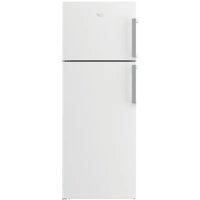


| Brand | Beko |
| Model | RDSA290M30WN |
| Product type | Refrigerator-freezer |
| Total capacity (estimated) | 290 L |
| Refrigerator capacity (estimated) | 200 L |
| Freezer capacity (estimated) | 90 L |
| Dimensions (H x W x D) (estimated) | 172 x 60 x 65 cm |
| Weight (estimated) | 58 kg |
| Power supply | 220-240 V, 50 Hz |
| Climate class | N-ST (+10°C to +38°C) |
| Refrigerant gas | R600a (flammable) |
| Refrigerator defrost type | Automatic |
| Freezer defrost type | Manual |
| Interior lighting | LED, energy class G |
| Special features | Ice maker, adjustable shelves, vegetable crisper |
| Autonomy in case of power failure (freezer) | Up to 19 hours |
| Cleaning and maintenance | Clean interior with baking soda; annual condenser dusting |
| Spare parts availability | 10 years after purchase |
| Safety | Use of flammable gas; avoid ignition sources; repairs by qualified technician |
Frequently Asked Questions - RDSA290M30WN BEKO
User questions about RDSA290M30WN BEKO
0 question about this device. Answer the ones you know or ask your own.
Ask a new question about this device
Download the instructions for your Refrigerator-freezer in PDF format for free! Find your manual RDSA290M30WN - BEKO and take your electronic device back in hand. On this page are published all the documents necessary for the use of your device. RDSA290M30WN by BEKO.
USER MANUAL RDSA290M30WN BEKO
Refrigerator-Freezer type I
Instruction of use
Refrigerator-Freezer type I
Instruction of use
Refrigerator-Freezer type I
Refrigerator-Freezer type I
Instruction of use
In order to ensure a normal operation of your refrigerating appliance, which uses a completely environmentally friendly refrigerant the R600a (flammable only under certain conditions) you must observe the following rules:
- Do not hinder the free circulation of the air around the appliance.
- Do not use mechanical devices in order to accelerate the defrosting, others than the ones recommended by the manufacturer.
- Do not destroy the refrigerating circuit.
- Do not use electric appliances inside the food keeping compartment, other than those that might have been recommended by the manufacturer.
WARNING!
In order to ensure the normal operation of your refrigerator that uses the environmentally friendly refrigerant R600a (flammable), you need to follow the following rules:
- Do not obstruct the free circulation of air around the appliance.
- Do not use mechanical devices to accelerate the defrosting process, unless recommended by the manufacturer.
- Do not damage the refrigerant circuit.
- Do not use electrical appliances inside the food storage compartments, unless they are of the type recommended by the manufacturer.
Electrical requirements /2
Transportation instructions /2
Installation instructions /2
Getting to know your appliance /3
Suggested arrangement of food in the appliance /3
Temperature control and adjustment /3
Before operating /4
Storing frozen food /4
Freezing fresh food /4
Making ice cubes /4
Defrosting /4
Replacing the interior light bulb /5
Repositioning the door /6
Cleaning and care /5
Do's and don'ts /6
Troubleshooting /7
BiH
Contents
Transportation instructions /23
Instructions for transportation /23
Get to know your device /24
Suggestions for storing food in the device /24
Temperature control and adjustment /25
Before operation /25
Before operation /25
Storing fresh food /25
Place on the floor /26
Leveling /26
Replacing the internal lamp /26
Cleaning and maintenance /26
Troubleshooting /27
Direction/Do not tilt /27
Problems and solutions /28
RU
Contents
Safety before use /29
Electrical requirements /30
Transport instructions /30
Installation instructions /30
General information about the refrigerator /31
Recommended placement
Putting food in the refrigerator /31
Temperature adjustment /32
Before starting work /32
Storage of frozen products /32
Freezing fresh products /33
Freezing food /33
Defrosting /33
Replacing the light bulb inside the refrigerator /34
Cleaning the refrigerator and caring for it /34
Precautions /35
What should and should not be done /35
Troubleshooting /36
Warranty card /37
Attention aux points /38
Odyieyia nμεταφρa /38
Odyieyia thv Eykataoan /38
VwpiTe Tn oukeun aac /39
Bumorn do eNeKtponocTaayHn/60
Ihctpykuia 3 TpaHcnpTyBaHHa /60
IHCtpyckia 3i BCTaHOBneHHra /60
3araJIbHI BiIDOMocTi npo XOJIoNJIbHnK /61
PekomeHIOBaHn cnoci6 po3MiueHHn npOyKtIB y xoIOnbHuKy /61
Peryniobahn Temnepatyp /62
Ipeed nowaTkom po60tn/62
36epirahnnaamopoxeHnx npodykTIB /62
3amopoxybaHHcBIXnx npoDyktib /62
3amopokyBaHHaNbody/63
PozmopoxybaHHa/63
3aɪna Jæmnoʊkɪ BcepeɪnHi XɔJIoDɪŋbHɪka /64
YHHeHHXoJOnJIbHNka iDorJ4 3a Hm/64
IpehenabiuybaHHn DBeprT /64
Uo cni i yoro He moxha po6ntn /64
UcyHeHH HeCnpaBHOCTe /65
HU
Table of contents
This product is equipped with a lighting source of the "G" energy class. The lighting source in this product shall only be replaced by professional repairers.
BiH
Congratulations on your choice of a BEKO
Quality Appliance, designed to give you many years of service.
Safety first!
Do not connect your appliance to the electricity supply until all packing and transit protectors have been removed.
- Leave to stand for at least 4 hours before switching on, to allow compressor oil to settle, if transported horizontally.
- If you are discarding an old appliance with a lock or latch fitted to the door, ensure that it is left in a safe condition to prevent the entrapment of children.
- This appliance must only be used for its intended purpose.
- Do not dispose of the appliance on a fire. Your appliance contains non CFC substances in the insulation which are flammable. We suggest you contact your local authority for information on disposal and available facilities.
- We do not recommend use of this appliance in an unheated, cold room. (e.g. garage, conservatory, annex, shed, out-house etc.)
To obtain the best possible performance and trouble free operation from your appliance it is very important to read these instructions carefully. Failure to observe these instructions may invalidate your right to free service during the guarantee period.
Please keep these instructions in a safe place for easy reference.
Original spare parts will be provided for 10 years, following the product purchasing date.

INFORMATION

ENERG

The model information as stored in the product data base can be reached by entering following website and searching for your model identifier (*) found on energy label.
SUPPLIER'S NAME
MODEL IDENTIFIER

https://eprel.ec.europa.eu/

This appliance is not intended for use by person with reduced physical, sensory or mental capabilities or lack of experience and knowledge unless they have been given supervision or instruction concerning use of the appliance by a person responsible for their safety.
Children should be supervised to ensure that they do not play with the appliance.
Electrical requirements
Before inserting the plug into the wall socket, make sure that the voltage and the frequency shown on the rating plate inside the appliance correspond to your electricity supply. We recommend that this appliance is connected to the mains supply via a suitably switched and fused socket in a readily accessible position.
Warning! This appliance must be earthed. Repairs to electrical equipment should only be performed by a qualified technician. Incorrect repairs carried out by an unqualified person can pose risks that may have critical consequences for the user of the appliance.
ATTENTION!
This appliance operates with R600a, which is an environmentally friendly but flammable gas. During transportation and installation of the product, care must be taken not to damage the cooling system. If the cooling system is damaged and there is a gas leak from the system, keep the product away from open flames and ventilate the room for a while.
WARNING - Do not use mechanical devices or other means to accelerate the defrosting process, other than those recommended by the manufacturer.
WARNING - Do not damage the refrigerant circuit.
WARNING - Do not use electrical appliances inside the food storage compartments of the appliance, unless they are of the type recommended by the manufacturer.
WARNING - If the supply cord is damaged, it must be replaced by the manufacturer, its service agent, or similarly qualified persons in order to avoid a hazard.
Transportation instructions
- The appliance should be transported only in an upright position. The packing as supplied must be intact during transportation.
- If during transport the appliance has been positioned horizontally, it must not be operated for at least 4 hours to allow the system to settle.
- Failure to comply with the above instructions could result in damage to the appliance, for which the manufacturer will not be held liable.
- The appliance must be protected against rain, moisture, and other atmospheric influences.
Important!
- Care must be taken while cleaning/carrying the appliance not to touch the bottom of the condenser metal wires at the back of the appliance, as this could cause injury to fingers and hands.
- Do not attempt to sit or stand on top of your appliance as it is not designed for such use. You could injure yourself or damage the appliance.
- Make sure that the mains cable is not caught under the appliance during and after moving, as this could damage the cable.
- Do not allow children to play with the appliance or tamper with the controls.
Installation instructions
- Do not keep your appliance in a room where the temperature is likely to fall below 10 degrees C (50 degrees F) at night and/or especially in winter, as it is designed to operate in ambient temperatures between +10 and +38 degrees C (50 and 100 degrees F). At lower temperatures the appliance may not operate, resulting in a reduction in the storage life of the food.
- Do not place the appliance near cookers or radiators or in direct sunlight, as this will cause extra strain on the appliance's functions. If installed next to a source of heat or freezer, maintain the following minimum side clearances:
From Cookers 30 mm
From Radiators 300 mm
From Freezers 25 mm
- Make sure that sufficient room is provided around the appliance to ensure free air circulation (Item 2).
- Put the back airing lid to the back of your refrigerator to set the distance between the refrigerator and the wall (Item 3).
EN
Instruction for use
- The appliance should be positioned on a smooth surface. The two front feet can be adjusted as required. To ensure that your appliance is standing upright, adjust the two front feet by turning them clockwise or anticlockwise until firm contact is secured with the floor. Correct adjustment of the feet prevents excessive vibration and noise (Item 4).
- Refer to the "Cleaning and Care" section to prepare your appliance for use.
Getting to know your appliance (Item 1)
1 - Freezer shelf 2 - Thermostat and lamp housing 3 - Adjustable cabinet shelves 4 - Wine bottle support 5 - Defrost water collection channel - Drain tube 6 - Crisper cover 7 - Crisper 8 - Adjustable front feet 9 - Dairy compartment 10 - Jars shelf 11 - Bottle shelf
Suggested arrangement of food in the appliance
Guidelines for obtaining optimum storage and hygiene:
- The fridge compartment is for the short-term storage of fresh food and drinks.
- The freezer compartment is rated and suitable for the freezing and storage of pre-frozen food.
The recommendation for ⭐⭐⭐⭐ storage, as stated on the food packaging, should be observed at all times. 3. Dairy products should be stored in the special compartment provided in the door liner. 4. Cooked dishes should be stored in airtight containers. 5. Fresh wrapped produce can be kept on the shelf. Fresh fruit and vegetables should be cleaned and stored in the crispers. 6. Bottles can be kept in the door section. 7. To store raw meat, wrap it in polythene bags and place it on the lowest shelf. Do not allow it to come into contact with cooked food to avoid contamination. For safety, only store raw meat for two to three days.
- For maximum efficiency, the removable shelves should not be covered with paper or other materials to allow free circulation of cool air.
- Do not keep vegetable oil on door shelves. Keep the food packed, wrapped, or covered. Allow hot food and beverages to cool before refrigerating. Leftover canned food should not be stored in the can.
- Fizzy drinks should not be frozen, and products such as flavored water ices should not be consumed too cold.
- Some fruit and vegetables suffer damage if kept at temperatures near 0°C. Therefore, wrap pineapples, melons, cucumbers, tomatoes, and similar produce in polythene bags.
- High-proof alcohol must be stored upright in tightly closed containers. Never store products that contain an inflammable propellant gas (e.g., cream dispensers, spray cans, etc.) or explosive substances. These are an explosion hazard.
Temperature control and adjustment
Operating temperatures are controlled by the thermostat knob and may be set at any position between 1 and 5 (the coldest position).
If the thermostat knob is in position "0" the appliance is off. In this case neither the lamp for inside lighting will light.
The average temperature inside the fridge should be around +5°C (+41°F).
Therefore adjust the thermostat to obtain the desired temperature. Some sections of the fridge may be cooler or warmer (such as salad crisper and top part of the cabinet) which is quite normal. We recommend that you check the temperature periodically with a thermometer to ensure that the cabinet is kept to this temperature. Frequent door openings cause internal temperatures to rise, so it is advisable to close the door as soon as possible after use.
Before operating
Final Check
Before you start using the appliance check that:
- The feet have been adjusted for perfect levelling.
- The interior is dry and air can circulate freely at the rear.
- The interior is clean as recommended under "Cleaning and care."
- The plug has been inserted into the wall socket and the electricity is switched on. When the door is open the interior light will come on.
And note that:
- You will hear a noise as the compressor starts up. The liquid and gases sealed within the refrigeration system may also make some (noise), whether the compressor is running or not. This is quite normal.
- Slight undulation of the top of the cabinet is quite normal due to the manufacturing process used; it is not a defect.
- We recommend setting the thermostat knob midway and monitor the temperature to ensure the appliance maintains desired storage temperatures (See section Temperature Control and Adjustment).
- Do not load the appliance immediately after it is switched on. Wait until the correct storage temperature has been reached. We recommend checking the temperature with an accurate thermometer (see Temperature Control and Adjustment).
Storing frozen food
Your freezer is suitable for the long-term storage of commercially frozen foods and can also be used to freeze and store fresh food. If there is a power failure, do not open the door. Frozen food should not be affected if the failure lasts for less than 19 hours. If the failure is longer, then the food should be checked and either eaten immediately or cooked and then re-frozen.
Freezing fresh food
Please observe the following instructions to obtain the best results.
Do not freeze too large a quantity at any one time. The quality of the food is best preserved when it is frozen right through to the core as quickly as possible.
Do not exceed the freezing capacity of your appliance in 24 hours.
Placing warm food into the freezer compartment causes the refrigeration machine to operate continuously until the food is frozen solid. This can temporarily lead to excessive cooling of the refrigeration compartment.
When freezing fresh food, keep the thermostat knob at medium position. Small quantities of food up to 1/2 kg (1 lb) can be frozen without adjusting the temperature control knob.
Take special care not to mix already frozen food and fresh food.
Making ice cubes
Fill the ice cube tray 3/4 full with water and place it in the freezer. Loosen frozen trays with a spoon handle or a similar implement; never use sharp-edged objects such as knives or forks.
Defrosting
A) Fridge compartment
The fridge compartment defrosts automatically. The defrost water runs to the drain tube via a collection container at the back of the appliance (Item 5). During defrosting, water droplets may form at the back of the fridge compartment where a concealed evaporator is located. Some droplets may remain on the liner and refreeze when defrosting is completed. Do not use pointed or sharp-edged objects such as knives or forks to remove the droplets which have refrozen.
If, at any time, the defrost water does not drain from the collection channel, check that no food particles have blocked the drain tube. The drain tube can be cleared with a pipe-cleaner or similar implement.
Check that the tube is permanently placed with its end in the collecting tray on the compressor to prevent the water spilling on the electric installation or on the floor (Item 6).
B) Freezer compartment
Defrosting is very straightforward and without mess, thanks to a special defrost collection basin.
Defrost twice a year or when a frost layer of around 7 (1/4") mm has formed. To start the defrosting procedure, switch off the appliance at the socket outlet and pull out the mains plug.
All food should be wrapped in several layers of newspaper and stored in a cool place (e.g. fridge or larder).
Containers of warm water may be placed carefully in the freezer to speed up the defrosting.
Do not use pointed or sharp-edged objects, such as knives or forks to remove the frost. Never use hairdryers, electrical heaters or other such electrical appliances for defrosting. Sponge out the defrost water collected in the bottom of the freezer compartment. After defrosting, dry the interior thoroughly. Insert the plug into the wall socket and switch on the electricity supply.
Replacing the interior light bulb
To change the Bulb/LED used for illumination of your refrigerator, call your Authorised Service.
The lamp(s) used in this appliance is not suitable for household room illumination. The intended purpose of this lamp is to assist the user to place foodstuffs in the refrigerator/freezer in a safe and comfortable way.
The lamps used in this appliance have to withstand extreme physical conditions such as temperatures below -20°C .
Repositioning the door
Proceed in numerical order (Item 7).
Cleaning and care
- We recommend that you switch off the appliance at the socket outlet and pull out the mains plug before cleaning.
- Never use any sharp instruments or abrasive substances, soap, household cleaner, detergent or wax polish for cleaning.
- Use lukewarm water to clean the cabinet of the appliance and wipe it dry.
- Use a damp cloth wrung out in a solution of one teaspoon of bicarbonate of soda to one pint of water to clean the interior and wipe it dry.
- Make sure that no water enters the temperature control box.
- If the appliance is not going to be used for a long period of time, switch it off, remove all food, clean it and leave the door ajar.
- We recommend that you polish the metal parts of the product (i.e. door exterior, cabinet sides) with a silicone wax (car polish) to protect the high quality paint finish.
- Any dust that gathers on the condenser, which is located at the back of the appliance, should be removed once a year with a vacuum cleaner.
- Check door seals regularly to ensure they are clean and free from food particles.
- Never:
- Clean the appliance with unsuitable material; eg petroleum based products.
- Subject it to high temperatures in any way,
- Scour, rub etc., with abrasive material.
- Removal of dairy cover and door tray :
- To remove the dairy cover, first lift the cover up by about an inch and pull it off from the side where there is an opening on the cover.
- To remove a door tray, remove all the contents and then simply push the door tray upwards from the base.
- Make sure that the special plastic container at the back of the appliance which collects defrost water is clean at all times. If you want to remove the tray to clean it, follow the instructions below:
- Switch off at the socket outlet and pull out the mains plug.
- Gently uncrimp the stud on the compressor, using a pair of pliers, so that the tray can be removed.
Instruction for use
- Lift it up. Clean and wipe it dry.
- Reassemble, reversing the sequence and operations.
- Large accumulation of ice will impair the performance of the freezer.
Do's and don'ts
Do- Clean and defrost your appliance regularly (See "Defrosting") Do- Keep raw meat and poultry below cooked food and dairy products. Do- Take off any unusable leaves on vegetables and wipe off any soil. Do- Leave lettuce, cabbage, parsley and cauliflower on the stem. Do- Wrap cheese firstly in greaseproof paper and then in a polythene bag, excluding as much air as possible. For best results, take out of the fridge compartment an hour before eating. Do- Wrap raw meat and poultry loosely in polythene or aluminium foil. This prevents drying. Do- Wrap fish and offal in polythene bags. Do- Wrap food with a strong odour or which may dry out, in polythene bags, or aluminium foil or place in airtight container. Do- Wrap bread well to keep it fresh. Do- Chill white wines, beer, lager and mineral water before serving. Do- Check contents of the freezer every so often. Do- Keep food for as short a time as possible and adhere to "Best Before" and "Use by" etc. dates. Do- Store commercially frozen food in accordance with the instructions given on the packets. Do- Always choose high quality fresh food and be sure it is thoroughly clean before you freeze it. Do- Prepare fresh food for freezing in small portions to ensure rapid freezing. Do- Wrap all food in aluminium foil or freezer quality polythene bags and make sure any air is excluded.
Do- Wrap frozen food immediately after purchasing and put it in to the freezer as soon as possible. Do- Defrost food in the fridge compartment.
Don't store bananas in your fridge compartment. Don't store melon in your fridge. It can be chilled for short periods as long as it is wrapped to prevent it flavouring other food. Don't cover the shelves with any protective materials which may obstruct air circulation. Don't store poisonous or any dangerous substances in your appliance. It has been designed for the storage of edible foodstuffs only. Don't consume food which has been refrigerated for an excessive length of time. Don't store cooked and fresh food together in the same container. They should be packaged and stored separately. Don't let defrosting food or food juices drip onto food. Don't leave the door open for long periods, as this will make the appliance more costly to run and cause excessive ice formation. Don't use sharp edged objects such as knives or forks to remove the ice. Don't put hot food into the appliance. Let it cool down first. Don't put liquid-filled bottles or sealed cans containing carbonated liquids into the freezer, as they may burst. Don't exceed the maximum freezing loads when freezing fresh food. Don't give children ice-cream and water ices direct from the freezer. The low temperature may cause 'freeze burns' on lips. Don't freeze fizzy drinks. Don't try to keep frozen food which has thawed; it should be eaten within 24 hours or cooked and refrozen. Don't remove items from the freezer with wet hands.
Troubleshooting
If the appliance does not operate when switched on, check:
- That the plug is inserted properly in the socket and that the power supply is on. (To check the power supply to the socket, plug in another appliance).
- Whether the fuse has blown/circuit breaker has tripped/main distribution switch has been turned off.
- That the temperature control has been set correctly.
- That the new plug is wired correctly, if you have changed the fitted, moulded plug. If the appliance is still not operating at all after above checks, contact the dealer from whom you purchased the unit.
Please ensure that above checks have been done, as a charge will be made if no fault is found.
The symbol on the product or on packaging indicates that this product may not be treated as household waste. Instead it shall be handed over to the applicable collection point for the recycling of electrical and electronic equipment. By ensuring this product is disposed of correctly, you will help prevent potential negative consequences for the environment and human health, which could otherwise be caused by inappropriate waste handling of this product. For more detailed information about recycling of this product, please contact your local city office, your household waste disposal service or the shop where you purchased the product.
https://eprel.ec.europa.eu/
This device is intended for use by persons with reduced physical, motor or mental capabilities, or lack of experience, unless they are supervised or instructed in the use of the device by a person responsible for their safety. Children should be under constant supervision to ensure that they do not play with the device.
https://eprel.ec.europa.eu/
https://eprel.ec.europa.eu/
This device is intended for use by persons with reduced physical, sensory or mental capabilities, or lack of experience and knowledge, unless they are supervised or given instructions for the use of the device by a person responsible for their safety.
Children should be supervised to ensure that they do not play with the device.
Electrical connection
Before connecting the appliance to the mains, check that the voltage and frequency indicated on the rating plate of the appliance correspond to the voltage and frequency in your home. We recommend that you connect the appliance to a socket that is suitable for it and has sufficient space around it.
Warning!
The appliance must be earthed
Electrical parts and repairs must only be carried out by a qualified electrician. Repairs carried out by unauthorized persons may pose a risk to the user.
WARNING!
This device operates with R600a refrigerant, which is environmentally friendly but flammable. During transport and installation of the device, be careful not to damage the cooling system. If the cooling system is damaged and refrigerant leaks, keep the device away from heat sources and ventilate the room for a while.
Caution - Do not use mechanical devices or other means to speed up the defrosting process. Use only the recommendations from the manufacturer.
Caution - Do not damage the refrigerant circuit.
Caution - Do not use electrical appliances inside the food storage compartments, other than those recommended by the manufacturer.
Transport instructions
- The appliance must be transported only in a vertical position. The unit in which it is stored must not be tilted during transport.
- If during transport the appliance has to be placed in a horizontal position, it must not be used for at least 4 hours to allow the system to stabilize.
3. If the above instructions are not followed, damage to the appliance may occur, for which the manufacturer is not responsible. 4. The appliance must be protected from moisture and other atmospheric influences.
Important!
- When installing/placing the appliance, do not touch the metal pipes of the condenser with your hands, as you may damage them. - Do not stand or sit on the appliance, as it is not designed for that. You may injure yourself or damage the appliance. Be careful when transporting or placing the appliance, so that the cables do not get under it, which could cause damage. Do not allow children to play with the appliance or to press the control buttons themselves.
Installation instructions
- Do not place the appliance in rooms where the temperature may drop below 10°C (50°F) during the night or in winter, because the appliance is designed to operate in rooms with temperatures between +10 and +38°C (50 and 100°F). At lower temperatures, the appliance may not work, which could shorten the lifespan of the device.
- Do not place the appliance near heat sources or radiators, or directly exposed to sunlight, as this will cause increased operation of the appliance. If the appliance is placed near a heat source or a freezer, keep the following minimum distances:
Distance from radiator: 300 mm, from freezer: 25 mm. 3. Make sure the appliance has enough free space for air circulation. (Fig. 2). - Place the rear ventilation grille of the appliance to determine the distance between the appliance and the wall. (Fig. 3).
- The appliance must be placed on a stable and level surface. The two front feet can be adjusted in height if necessary. To ensure the appliance is in the correct position, turn the front feet in the direction of the clock hands or in the opposite direction until they make firm contact with the floor. Properly adjusted feet will reduce noise and vibration. (Fig. 4).
- Refer to the chapter "Cleaning and Maintenance" to prepare the appliance for use.
Getting to know the appliance (Fig. 1)
1 - Roller for freezer 2 - Thermostat (for interior lighting) 3 - Shelf for defrosting 4 - Shelf for wine 5 - Drain hose for defrost water - drain plug 6 - Cap/plug 7 - Plug 8 - Feet for leveling 9 - Compartment for dairy products
10 - Roller for eggs 11 - Roller for bottles
Instructions for storing food in the appliance
Instructions for optimal use of space and shelves:
1. The refrigerator compartment is intended for storing fresh food and drinks for a short period. 2. The freezer compartment is marked as suitable for freezing and storing previously frozen food.
Food storage recommendations ✦ ✦ ✦
Food should be placed according to the instructions on the food packaging. 3. Dairy products should be stored in the designated compartment on the door shelves. 4. Cooked food should be stored in containers with hermetic sealing.
- Fresh perishable products can be stored in the refrigerator. Fresh fruits and vegetables should be cleaned and stored in the drawers for fruits and vegetables. 6. They can be stored on the door shelves.
- Fresh meat should be wrapped in airtight packaging and placed on the lowest shelf. Do not allow it to come into contact with cooked food to avoid contamination. Due to safety, store it for at most 2 to 3 days.
- For maximum efficiency, do not cover the shelves with paper or other materials, as this would hinder free circulation of cold air.
- Do not store hot food on the shelves. Store food covered, wrapped, or sealed.
Let hot food and drinks cool down before placing them in the refrigerator. Leftovers from canned food should not be stored in the can. 10. Frozen food should not be refrozen, and thawed food should not be consumed after a certain time. 11. Some vegetables and fruits lose quality at temperatures above 0°C; therefore, avocados, bananas, potatoes, onions, and citrus fruits should be stored in a cool place. 12. Alcoholic drinks with a high alcohol content must be stored in well-sealed, upright bottles. Never store products that contain flammable gases (e.g., spray cans) or explosive materials. There is a risk of explosion.
Temperature control and adjustment
The operating temperature is adjusted with the thermostat knob; it can be set to any position between 1 and 5 (highest setting).
The recommended temperature inside should be around +5°C (+41°F)
Therefore, set the thermostat to ensure the correct temperature. Some sections in the refrigerator may be colder or warmer (such as the drawers for vegetables and fruits and the upper shelves), which is quite normal. It is recommended to periodically check the temperature with a thermometer to ensure the refrigerator is maintained at the recommended temperature. Frequent opening of the door causes an increase in the internal temperature, so it is recommended to close the door as soon as possible after use.
Before use
Final check
Before using the appliance, check:
- The empty shelves are positioned so that they are evenly spaced.
- The interior is clean and the air can circulate freely.
- The interior is clean as recommended in the "Cleaning and maintenance" section. 4. The plug is correctly connected to the socket. When you open the door, the interior light will turn on.
Note:
- You will hear a sound when the compressor starts working. The noise and sound may also occur in different systems, regardless of whether the compressor is working or not. This is completely normal.
- The slight vibration of the compressor is not a defect.
7. It is recommended that the thermostat be set to medium and that the internal temperature be monitored to ensure that the appliance maintains the desired temperature. The temperature control is for adjustment. 8. Do not place the appliance near a heat source. Wait until the interior reaches the desired temperature. It is recommended to check the temperature with a thermometer. The temperature control is for adjustment.
Storing frozen food
Your freezer is designed for storing frozen food and can also be used for freezing and storing fresh food. If there is a power outage, do not open the door.
Food should remain frozen if the power outage lasts less than 19 hours. If the outage lasts longer, check the food and discard any that has thawed, then refreeze.
Freezing fresh food
You can follow the instructions to get the best results.
Do not freeze excessive amounts. The quality of food is best preserved if it is frozen as quickly as possible. Do not exceed the capacity of the freezing compartment within 24 hours.
FOOD STORAGE: The food will freeze if the compressor is not working properly. This can lead to premature freezing. When freezing fresh food, the thermostat should be at the middle position. Small quantities or food up to 1/2 kg (1 lb) can be frozen without adjusting the thermostat.
Please pay attention to ensure that the frozen food does not come into contact with fresh food.
Preparation of ice cubes
Fill the ice cube tray up to 3/4 with water and place it in the freezer. Remove the ice cubes by twisting the tray or using a blunt object; never use sharp objects such as knives or forks.
Defrosting
A) Refrigerator compartment
The refrigerator compartment defrosts automatically. Water that collects during defrosting flows through the drain hole at the back of the refrigerator into the drain tube (5). During defrosting, water may form at the back of the refrigerator because the drain is clogged. Some water may freeze again after defrosting. Do not remove it with sharp or pointed objects such as knives or forks. If at any time the water does not drain from the collection tray, check that the drain tube is not blocked. The drain tube can be cleaned with a pipe cleaner or a soft object.
Check that the end of the tube is permanently placed in the water collection tray of the compressor to prevent water from dripping onto the electrical installation or the floor (6).
B) Freezer compartment
Defrosting is very easy and without any problems thanks to the special tray for collecting defrost water.
Defrosting should be done twice a year or when the ice layer is thicker than 7 mm (1/4"). To start the defrosting procedure, first unplug the appliance. Remove the food from the freezer, place it in containers, wrap it in paper, and put it in a cool place (e.g., freezer or refrigerator).
To speed up the defrosting process, place a pot of hot water in the freezer compartment.
Replacing the interior light bulb
Contact a qualified service technician to replace the light bulb that illuminates the interior. The bulb used in this appliance is for interior lighting. The bulb replacement is to help the user place food in the refrigerator safely and conveniently. The bulbs used in this product must withstand extreme conditions, such as temperatures below -20°C.
Cleaning and maintenance
- Always unplug the appliance before cleaning it.
- Never use sharp objects or abrasive substances, scouring pads, cleaning agents for household use, detergents, or polishing agents.
- Use lukewarm water for cleaning and then dry the appliance with a soft cloth.
- Use a damp cloth soaked in a solution of bicarbonate soda (one coffee spoon per 1/2 liter of water) to clean the interior, and then dry it well.
- Be careful that water does not enter the temperature control box. 6. If you do not use the appliance for a long period, unplug it, remove the food, clean it, and leave the door open.
- It is recommended that metal parts inside be wiped with a soft cloth and oil to protect the final layer of high-quality paint.
- Dust accumulated on the condenser located at the back of the appliance should be cleaned once or twice a year with a vacuum cleaner.
- Regularly check the door gaskets to ensure they are clean and free of food residues.
- Never:
- Do not clean the appliance with inappropriate agents, e.g., those based on benzene.
- Do not immerse the appliance in high temperature.
- Do not rub or scrub it with abrasive agents.
- Inserting the plug for milk products and the plug for the doors:
- To remove the plug for milk products, first lift the plug about 2.5 cm and then pull it away from the door to see the opening of the plug.
- To insert the door plugs, remove all items and then insert the plug by positioning it upwards.
- Remove the drip tray for collecting defrost water regularly to keep it clean. If you want to remove the tray for cleaning, follow the instructions below:
- Unplug the appliance from the power outlet. Carefully remove the plug and the compressor cover with a screwdriver so that you can remove the tray.
- Fill the tray.
- Clean it and dry it. Put the tray back in place in reverse order.
- To remove the plugs, pull them as much as possible and remove them completely.
If the device does not work when it is switched on, check:
- Check that the power cord is properly inserted into the socket and that there is power supply to the socket. (To check the power supply, plug another appliance into the same socket.) - Check the fuse; it may be blown, the circuit breaker may have tripped, or the main distribution board may be switched off. - The temperature control knob may not be set correctly. - If you have replaced the plug, check that it is wired correctly.
If this unit does not work, contact the service center.
Make sure you have performed the checks listed above, because if there is no defect, the service will charge you.

The symbol on the product or its packaging indicates that the product must not be treated as household waste. It should be taken to an appropriate collection point for recycling electrical and electronic equipment. By ensuring that the product is disposed of correctly, you will help prevent potential negative consequences for the environment and human health, which could otherwise be caused by improper disposal of the product. For more detailed information about recycling this product, please contact your local authorities, your household waste disposal service, or the shop where you purchased the product.
Congratulations on your purchase of the high-quality BEKO refrigerator, which will serve you for a long time.
Safety first!
Do not plug the refrigerator into the mains until you have removed all packaging and transport restraints.
- If you have transported the refrigerator horizontally, do not switch it on after unpacking for at least 4 hours to allow all systems to settle.
- If you are discarding an old refrigerator and it has a lock or latch on the door, make sure it is disabled so that children playing cannot accidentally get trapped inside. The refrigerator should only be used for its intended purpose.
- When disposing of an old refrigerator, do not attempt to burn it. Refrigerators contain flammable materials. We recommend that you contact your local authorities for information on where you can dispose of old refrigerators.
- We do not recommend using the refrigerator in an unheated, cold place (for example, in a garage, warehouse, outbuilding, under a canopy, in an annex, etc.). To ensure the most efficient and trouble-free operation of the refrigerator, it is important to read this instruction manual carefully. Failure to follow our recommendations may void your right to free service during the warranty period.
Please keep this instruction manual in a safe place so that it can be easily found when needed.
Original spare parts will be available for 10 years from the date of purchase of the product.

INFORMATION
ENERGY
MODEL IDENTIFIER
SUPPLIER'S NAME
For information on the model in the database, please use the following website and enter the model identifier indicated on the energy efficiency label.
https://eprel.ec.europa.eu/
The appliance is not intended for use by persons with reduced physical or mental capabilities, or lack of experience and knowledge, unless they have been given supervision or instruction concerning use of the appliance by a person responsible for their safety.
Children should be supervised to ensure that they do not play with the appliance.
Electrical requirements
Before inserting the plug into the wall socket, ensure that the voltage and frequency indicated on the rating plate inside the refrigerator match the voltage and frequency of your household electrical supply.
We recommend connecting the refrigerator to the electrical supply through a socket that is properly installed in an easily accessible location.
Warning! The refrigerator must be grounded. Repair of electrical equipment should be carried out only by a qualified specialist. Improper repair performed by an unqualified person may result in danger, and the refrigerator may become hazardous during operation.
WARNING!
The refrigeration system of the refrigerator contains gas R600a, which does not harm the environment but is easily flammable. During transportation and installation of the refrigerator, take care not to damage the cooling system. If damage occurs and there is a gas leak from the cooling system, keep the refrigerator away from open flames and ventilate the room thoroughly.
WARNING - Do not use any mechanical devices or other means to accelerate the defrosting process, other than those recommended by the manufacturer.
WARNING - Do not damage the refrigerant circuit.
WARNING - Do not use electrical appliances inside the food storage compartments of the appliance, unless they are of the type recommended by the manufacturer.
WARNING - To avoid hazards, if the supply cord is damaged, it must be replaced by the manufacturer, its service agent, or similarly qualified persons.
Transport instructions
- The refrigerator must be transported only in a vertical position. The factory packaging must not be damaged during transport.
- If the refrigerator has been placed horizontally during transport, do not use it for at least 4 hours to allow all its systems to return to normal. The manufacturer is not responsible for damage to the refrigerator if the above recommendations are violated.
- The refrigerator must be protected from rain, moisture, and other atmospheric influences.
Important note!
Care should be taken when cleaning or moving the refrigerator, and do not touch the metal parts of the condenser at the back of the refrigerator, as this could damage your fingers or hands. Do not sit or stand on the refrigerator. It is not designed for this. You could get injured or damage the refrigerator. - Make sure the power cord is not under the refrigerator after moving it, as it could be damaged. Do not allow children to play with the refrigerator or fiddle with the handles and control knobs.
Installation instructions
1. Do not place the refrigerator in a room where the temperature may drop below 10°C, especially in winter, as the refrigerator is designed to operate at ambient temperatures between +10 and +38°C. At lower temperatures, the refrigerator may not work, and the storage time of food in it should be reduced.
Operating instructions
2. Do not install the refrigerator near heat sources, radiators, heaters, or in direct sunlight, as this will cause additional load on the refrigerator's compressor. If you are forced to install the refrigerator next to a heat source or freezer, ensure the following minimum distances: from heat sources 30 mm, from radiators 300 mm, from freezers 25 mm. 3. Try to ensure that there is enough free space around the refrigerator and that air circulates freely (see fig. 2). - Install the ventilation cover on the back of the refrigerator to ensure the necessary distance between the refrigerator and the wall (see fig. 3). 4. The refrigerator must stand on a flat surface. The two front legs must be adjusted accordingly. To achieve a strictly vertical position of the refrigerator, adjust the legs by turning them clockwise or counterclockwise until they are stable on the floor. Correct adjustment of the refrigerator legs prevents excessive vibration and noise (see fig. 4). 5. Refer to the section "Cleaning the refrigerator and caring for it" to prepare the refrigerator for operation.
About the refrigerator (Fig. 1)
- Freezer shelf
- Thermostat box and interior light bulb
- Removable shelves 4. Shelf for bottles 5. Drain tube for collecting defrost water 6. Lid of the vegetable drawer 7. Vegetable drawer
- For dairy products
- Shelves for bottles
Recommended arrangement of products in the refrigerator
Recommendations for optimal storage and compliance with sanitary standards:
- The refrigerator compartment is intended for short-term storage of fresh products and drinks.
- The freezer compartment has a freezing capacity of three stars and is intended for storage of frozen products. Storage recommendations for frozen products are indicated on their packaging and should be followed in all cases.
- Dairy products should be stored in a special compartment on the inside of the door. 4. Prepared dishes should be stored in tightly closed containers.
- Fresh products in packaging can be stored on the shelf. Fresh fruits and vegetables should be clean and stored in the vegetable drawer. 6. Bottles can be stored in a special compartment on the door.
- Store raw meat in plastic bags on the lowest shelf. Do not allow contact between raw meat and cooked dishes to avoid contamination. For safety reasons, store raw meat for only two to three days. 8. For maximum efficiency of the refrigerator, the shelves should not be covered with paper or other materials that obstruct free circulation of cold air. 9. Do not store vegetable oil on the shelves on the inside of the door. Store products wrapped or covered. Cool hot dishes and drinks before placing them in the refrigerator. Opened canned goods should not be stored in the cans.
- Do not freeze carbonated drinks; drinks made from carbonated water should not be consumed too cold.
Operating instructions
- Some fruits and vegetables deteriorate at temperatures close to 0°C. Therefore, keep pineapples, melons, cucumbers, tomatoes, and similar products in plastic bags.
- Strong alcoholic drinks should be stored in upright, tightly closed containers. Never store in the refrigerator products containing easily flammable gas (for example, spray cans, aerosols, etc.) or explosive substances. This can be dangerous.
Temperature adjustment
The temperature inside the refrigerator is regulated by a thermostat, which can be set to any position between 1 and 5 (maximum low temperature).
The average temperature inside the refrigerator compartment should be +5°C.
Set the thermostat to a position that provides the desired temperature. In different places inside the refrigerator compartment (for example, the vegetable drawer or the upper part of the compartment), the temperature may be higher or lower, which is quite normal.
We recommend periodically checking with a thermometer to ensure the required temperature is maintained inside the refrigerator.
When the refrigerator door is frequently opened, warm air enters the refrigerator and the temperature inside rises. Therefore, do not leave the refrigerator door open and try to close it as quickly as possible.
Please note that:
- You may hear sounds when the compressor is running. Liquid and gas inside the cooling system may also produce some sounds, regardless of whether the compressor is running or not. This is quite normal.
- The top part may vibrate slightly. This is normal and not a defect.
- We recommend setting the thermostat to a medium position and monitoring the temperature for a while to ensure the refrigerator maintains the required storage temperature (see section "Temperature adjustment").
- Do not load the refrigerator immediately after switching it on. Wait until the required temperature is established inside. We also recommend checking the temperature with an accurate thermometer (see section "Temperature adjustment").
Storage of frozen products
The refrigerator is designed for reliable storage of industrially frozen food products, and can also be used for freezing and storing fresh products.
In case of power failure, do not open the refrigerator door.
Frozen products will suffer if the power is interrupted for less than 19 hours. If the power is off for a longer period, you should check the stored products immediately and use them or cook and refreeze them.
Freezing fresh food
Please follow the recommendations below for best results.
Do not freeze large quantities of food at once. Food is better preserved if it is frozen through as quickly as possible.
Do not overload the freezer compartment more than necessary for daily use.
If you place warm food in the freezer compartment, the refrigerator's cooling unit will have to run continuously until the food is frozen. This may lead to excessive temperature drop in the refrigerator compartment. When freezing fresh food, set the thermostat to the middle position. Small portions of food (up to 0.5 kg) can be frozen without changing the thermostat setting.
Be especially careful not to store frozen and fresh food together.
Freezing ice cubes
Fill the ice cube tray with water up to 3/4 full and place it in the freezer compartment. Remove the ice cubes using the handle of a spoon or another suitable tool; never use sharp or pointed objects such as knives or forks.
Defrosting
A) Refrigerator compartment
The refrigerator compartment defrosts automatically. The thawed water flows to the drain tube through the collection container at the back of the refrigerator (see fig. 5).
During defrosting, water may collect at the back of the refrigerator compartment, where the evaporator is located. It may remain on the evaporator wall and freeze again when defrosting is complete. Do not remove the frozen ice with sharp or pointed objects such as knives or forks. If at any time you notice that the thawed water is not draining from the collection container, check whether the drain tube is clogged with food particles. The drain tube can be cleared with any suitable cleaning tool (see fig. 6).
It is advisable to store raw meat and poultry on the lower shelves, below the shelves where cooked dishes and dairy products are placed.
It is advisable to wash vegetables and fruits before use.
It is advisable not to trim the roots and outer leaves of vegetables, and to keep the outer leaves of cabbage.
It should be wrapped in parchment paper, then placed in a plastic bag, removing all air from the bag. To improve the taste qualities of the cheese, it is recommended to take it out of the refrigerator an hour before consumption.
It should be placed raw meat in a plastic bag or aluminum foil, without wrapping it tightly. This prevents drying out.
It should be placed fish and offal in plastic bags.
It should be wrapped strongly smelling products or products that may dry out in plastic bags or aluminum foil, or store them in a tightly closed container.
It should be carefully wrapped bread to keep it fresh.
It should be cooled white wines and mineral water before use.
It should be regularly checked products stored in the freezer.
It should be stored products for as short a time as possible and strictly observe the storage periods.
It should be stored ready frozen products in accordance with the instructions indicated on the packaging.
It should be always choose fresh products of high quality and carefully wash them before freezing.
It should be cut fresh products into small portions so that they freeze faster.
It should be wrapped all products in aluminum foil or special plastic bags for freezing and remove all air from the packaging.
It should be as soon as possible wrap only newly purchased frozen products and place them in the freezer.
It should be thawed frozen products in the refrigerator compartment.
It should not be stored bananas in the refrigerator.
Do not store food in the refrigerator for a long time. It can be cooled for a short time if it is wrapped so that its smell does not permeate other products.
Do not cover the shelves with any protective materials that could obstruct air circulation.
Do not store poisonous or dangerous substances in the refrigerator. The refrigerator is intended only for storing food products.
Do not consume food products that have been stored in the refrigerator beyond the permissible time.
Do not store ready meals and fresh products together in the same container. They should be placed in different containers and stored separately.
Do not allow liquid from defrosting products to drip onto other products stored in the refrigerator.
Do not leave the refrigerator door open for a long time, as this will lead to increased energy consumption.
Do not use sharp objects such as knives or forks to remove ice.
Do not put hot food in the refrigerator. Let it cool down first.
Do not place bottles filled with liquid or unopened cans with carbonated drinks in the freezer, as they may burst.
Do not overload the freezer beyond its capacity when freezing fresh products.
Do not give children ice cream or frozen fruit juice directly from the freezer. They may freeze their lips.
Do not freeze carbonated drinks.
Do not store thawed products for a long time; they must be used within 24 hours, or cooked and frozen again.
Do not take products out of the refrigerator with wet hands.
Preservation of rights
If the refrigerator does not work when it is turned on, make sure:
- that the plug is inserted into the electrical outlet correctly and that the electricity is not turned off. (To check for the presence of current in the outlet, plug another electrical appliance into it);
- that the fuse has not blown, the switch has not tripped, or the main switch on the distribution board has not been turned off; - that the thermostat is set correctly;
- that the new plug, used instead of the factory one, is installed correctly.
If the refrigerator still does not work after you have performed the checks described above, consult the dealer from whom you purchased the refrigerator.
Please make sure you have checked everything you could, because otherwise it may turn out that you have paid money in vain if no damage is found.

The symbol on the product or its packaging indicates that the product must not be disposed of with household waste. Instead, it should be handed over to the appropriate collection point for the recycling of electrical and electronic equipment. By ensuring proper disposal of this product, you help prevent potential negative consequences for the environment and human health, which could otherwise arise from incorrect handling of its waste. For more detailed information on recycling this product, contact your local city administration, household waste disposal service, or the store where you purchased the product.
This appliance is intended for household use only and should not be used for commercial purposes.
Congratulations on your purchase!
We recommend that you read this manual carefully before using the appliance and keep it for future reference.
If the appliance is not working properly, unplug it and contact the service center within 4 hours of the malfunction, so that the technician can repair it. - If you discard the appliance, remove the door and leave the shelves in place, so that children cannot get trapped inside. This appliance must be used only for the purpose for which it was designed. Do not place the appliance in water. Your appliance contains only non-CFC materials which are environmentally friendly. Please contact your local authorities for information on disposal and recycling facilities for this product. - Do not use the appliance in a damp or wet place (e.g., garage, basement, bathroom, laundry room, etc.). To get the best performance from your appliance without problems, it is very important to read the instructions carefully. Failure to follow these instructions may void your warranty and prevent you from receiving proper technical service during the warranty period.
Please keep these instructions for future reference so that you can consult them easily.

INFORMATION
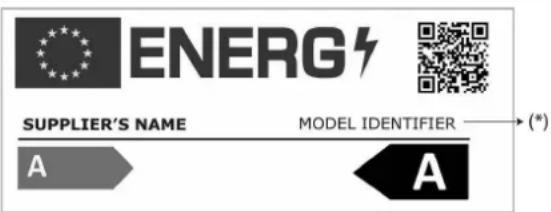
The product described is stored in the database for products, which is available at the following website and can be identified by the model identifier of the appliance (*) of your unit, as mentioned on the energy label.
https://eprel.ec.europa.eu/
This appliance is not intended for use by persons (including children) with reduced physical, sensory or mental capabilities, or lack of experience and knowledge, unless they have been given supervision or instruction concerning use of the appliance by a person responsible for their safety.
Children should be supervised to ensure that they do not play with the appliance.
Installation warnings
Before installing the appliance on the wall, ensure that the position and frequency of the holes correspond to the specifications on the data plate inside the appliance and match the values of the electrical network. We recommend that this appliance be connected to the power supply through a suitable switch and a suitable fuse, which is easily accessible.
Warning! This appliance must be earthed.
Electrical repairs must be carried out only by a qualified technician. Attempted repairs by unqualified persons may involve risks that could have serious consequences for the user of the appliance.
CAUTION
This appliance operates with R600a, which is a flammable but non-toxic gas. During transport and installation of the product, care must be taken to avoid damaging the cooling system. If the cooling system is damaged and there is a gas leak from the system, keep the product away from sources of ignition and ventilate the room.
WARNING - Do not use mechanical devices or other means to accelerate the defrosting process, other than those recommended by the manufacturer.
WARNING - Do not damage the refrigerant circuit.
WARNING - Do not use electrical appliances inside the food storage compartments of the appliance, unless they are of the type recommended by the manufacturer.
WARNING - If the power cord is damaged, to avoid hazards, it must be replaced by the manufacturer, its service agent, or similarly qualified persons.
Transport instructions
- The appliance must be installed and used in accordance with the manufacturer's instructions. The installation of the appliance, as shown by the manufacturer, must be carried out by a qualified person. 2. If during the installation the appliance has been damaged, it must not be put into operation for at least
4 hours, so that the system can return to its normal state. 3. Failure to follow the instructions may cause damage to the appliance, for which the manufacturer is not responsible. 4. The appliance must be protected from rain, humidity, and other atmospheric influences.
Important note!
https://eprel.ec.europa.eu/
This device is intended for use by persons with physical, sensory, or mental disabilities, as well as by persons without experience or knowledge, unless they are strictly instructed by a competent person regarding the operation and safety measures.
Do not leave children to play with the device without supervision.
Electrical requirements
Before connecting the device to the electrical grid, make sure that the voltage and frequency of the grid correspond to the requirements for the operation of your device.
Warning! This device must be grounded.
Repairs to the electrical system must only be carried out by qualified technicians. Incorrect repairs by unqualified persons pose a risk of injury or damage to the device.
Warning!
This device operates with R600a, a safe but flammable gas. During transport and installation of the device, be careful not to damage the cooling system. If the cooling system is damaged and gas leaks from the system, keep the device away from open flames and ventilate the room thoroughly.
Warning - Do not use any devices to speed up the defrosting process, except those recommended by the manufacturer.
Warning - Be careful of a damaged cooling circuit.
Warning - Do not place electrical devices in the refrigerator/freezer, unless this is explicitly mentioned by the manufacturer.
Warning: The appliance must be connected to the power supply by the manufacturer, an authorized service representative, or a qualified specialist to avoid any risk.
Transport instructions
1. The appliance must be transported only upright. The packaging must remain undamaged during transport. 2. If the appliance has been transported horizontally during transport, it must not be switched on for at least 4 hours to allow the system to stabilize.
3. Failure to follow the instructions for use may lead to serious damage to the appliance, for which the manufacturer is not responsible. 4. The appliance must be protected from dust, moisture, and other atmospheric influences.
Important!
When cleaning the appliance, be careful not to touch the condenser metal fins, as this may cause injury to your hands and fingers. Do not stand on the appliance, as it is not designed for such use. You may injure yourself or damage the appliance. Be careful for damage to the power cord during transport and installation. Do not allow children to play with the appliance or its controls.
Installation instructions
- Do not install the appliance in a room where the temperature drops below 10°C during the night, especially in winter, as it is designed to operate at temperatures between +10 and +38°C.
- Do not place the refrigerator/freezer near a stove, heater, or in direct sunlight, as this causes increased energy consumption. If installed near a heat source, maintain the following distances:
From the stove: 30 mm
From radiators: 300 mm
From the freezer: 25 mm
- Ensure that there is sufficient space around the refrigerator/freezer to allow free air circulation. (Fig. 2) Place the appliance's rear panel away from the wall, and in this way separate the appliance from the wall (Fig. 3).
BG
Instructions for use
- The appliance is designed for surface mounting. The two front feet can be adjusted via the upper part of the foot and the height of the appliance can be adjusted by turning the leveling feet. The leveling of the appliance prevents excessive vibrations and noise (Fig. 4).
- Follow the instructions "Cleaning and Care" to prepare the appliance for use.
Familiarization with the appliance (Fig. 1)
1 - Freezer shelf; 2 - Thermostat and interior light; 3 - Door shelves; 4 - Bottle holders; 5 - Drain hole; 6 - Container lid for vegetables and fruits; 7 - Container for storing vegetables and fruits; 8 - Front feet; 9 - Container with lid; 10 - Container; 11 - Bottle container
Precautions when storing food
The main precautions for optimal storage are as follows:
1. This appliance is intended for short-term storage of fresh food and beverages. 2. Containers marked with a suitable symbol are for freezing and storing food. 3. Cooked food must be stored in airtight containers. 4. Packaged products can be placed on the shelves. Fresh fruits and vegetables should be stored in the special compartments provided for them. 5. Bottles can be placed in the door compartment.
- For storing raw meat, wrap it in plastic bags and place it on the lowest shelves. Do not allow it to come into contact with cooked food to avoid contamination. For safety, store raw meat for no more than 2-3 days.
- For maximum efficiency, the lower shelves should be covered with paper or other material to ensure free circulation of cold air.
- Do not store vegetable oil on the door shelves of the refrigerator. Store food packaged or covered. Check the upper food and beverages before freezing them. Do not store open canned food in the can. 9. Do not freeze carbonated drinks. 10. Some fruits and vegetables deteriorate if stored at temperatures around 0°C. For this reason, store them in plastic bags such as bananas, cucumbers, tomatoes, etc.
- High-alcohol beverages must be stored in an upright position in tightly closed bottles. Never store products that contain flammable gases (such as sprays, creams, etc.) or explosive substances. They present a risk of explosion.
Temperature control and adjustment
The operating temperature is controlled by the thermostat and can be set to any position between 1 and 5.
The average temperature inside the refrigerator should be about +5°C.
We recommend checking the temperature with a thermometer to achieve the best temperature. Frequent opening of the door affects the internal temperature, so it is important to close the door immediately after use.
Prei pa6ota
PocneHa npOBepka
Prei Da BkHouHte Baun ypei, uverete se, ye:
- Kraayeta ca reguliran in polozhenie do perfektno nivelirane. 2. Vtreshnosta na sud i vazduh moze svobodno da cirkulira za ureda.
- Vtreshnosta e cista, spored preporakite na "Pochistvane i grinja"
- Vkluchvate ucelata kum kontaktaha na ei. Preka. Zeleniot i crveniot indikator ne svetnat i kompresorot zapochva da raboti.
Obrete vnimanie na slednoto:
- Moze da se cuе zvuk, koga se vkluci kompresorot. Tehnostta i gazovete vo ohladuvachot i sistemata mozat da shumet nekoe vreme, što e sasvim normalno.
- Normalno e da se pojavi kapka na gornata strana na vašiot ured, toa e od vlagata na proizvodstvenata tehnologija, toa ne e defekt.
- Preporachuvame da napravite proba Termostatot na sredno položenie da izmeri temperaturata, za da se uverite, de uredot podržuva legalna temperatura za sušenje. (Videte "Kontrol na temperatura i nastrojki")
- Ne zareduvajte vašiot ured vednaš po vklučuvanje. Izičekajte dodeka postigne želena temperatura. Preporachuvame merenje na temperatura so točen termometar. (Videte "Kontrol na temperatura i nastrojki")
Čuvanje na zamrznata hrana
https://eprel.ec.europa.eu/
Ovoj aparat ne e namenet za upotreba od lica so namaleni fizički, senzorni ili mentalni sposobnosti, ili so nedostatok na iskustvo i znaenje, osven ako ne se pod nadzor ili upateni za upotreba na aparatot od lica odgovorni za nivnata bezbednost. Deca treba da bidat nadziruvani za da ne se igraat so aparatot.
Priklučok na električna mreža
Insert the plug into a properly grounded electrical outlet. Make sure the voltage and frequency of the current match the values indicated on the nameplate inside the refrigerator. We recommend connecting the refrigerator to the power supply through an outlet that is properly installed in an easily accessible place. Warning! The refrigerator must be grounded. Electrical repairs must be performed only by a qualified specialist. Improper repair performed by an unqualified person is associated with a risk, and the refrigerator may become unsafe to use.
Warning!
The refrigerator cooling system contains circulating gas R600a, which has no harmful effect on the environment, but is easily flammable. During transportation and installation of the refrigerator, be careful not to damage the cooling system. If the cooling system is damaged and gas leaks from the cooling system, make sure there are no sources of open flame near the refrigerator, and ventilate the room well.
WARNING - Do not use mechanical devices to speed up the defrosting of the refrigerator or to remove ice from the freezer compartment, except for those recommended in this instruction.
WARNING - Do not damage the cooling system.
WARNING - Do not install electrical appliances inside the refrigerator, except for those recommended by the refrigerator manufacturer.
WARNING - If the refrigerator is damaged, do not use it. Contact the manufacturer, a service specialist, or a person with similar qualifications.
Transportation instructions
- The refrigerator must be transported in a vertical position.
The factory packaging must not be damaged during transportation.
- If the refrigerator was transported horizontally, do not use it for at least 4 hours so that all its systems return to normal.
- The manufacturer is not responsible for damage to the refrigerator if the above recommendations are not followed.
- The refrigerator must be protected from rain, moisture, and other atmospheric influences.
Important note!
Be careful when cleaning or moving the refrigerator and do not touch the metal parts of the condenser in the back part of the refrigerator, as you could damage your fingers and hands. - Do not sit or stand on the refrigerator. It is not designed for that. You could get injured or damage the refrigerator. Make sure the electrical cord is not pinched under the refrigerator during and after moving it, otherwise it could be damaged. Do not allow children to play with the refrigerator or with its handles and control knobs.
Installation instructions
1. Do not place the refrigerator in rooms where the temperature may drop below 10°C or in damp, humid places, as the refrigerator is designed to operate at ambient temperatures between +10°C and +38°C. At lower temperatures, the refrigerator may not operate and the shelf life of products in it will be reduced.
2. Do not install the refrigerator near heat sources or radiators, or in direct sunlight, as this will cause increased energy consumption of the refrigerator. If you are forced to install the refrigerator next to a heat source or freezer, provide the following minimum distances: from heat sources 30 mm, from radiators 300 mm, from freezers 25 mm
UA
Operating instructions
- Make sure there is enough free space around the refrigerator and that air circulates freely (see Fig. 2).
Install the ventilation grille on the back of the refrigerator to ensure the necessary distance between the refrigerator and the wall (see Fig. 3). 4. The refrigerator must stand on a level surface. The front legs must be adjusted accordingly. To achieve a strictly vertical position of the refrigerator, adjust the legs by turning them clockwise or counterclockwise until they stand firmly on the floor.
Correct adjustment of the refrigerator legs prevents vibration and noise (see Fig. 4).
- Refer to the section "Refrigerator setup and care" to prepare the refrigerator for operation.
General information about the refrigerator:
(Fig. 1)
1 - Shelf of freezer compartment 2 - Thermostat box and interior light bulb 3 - Removable shelves 4 - Crisper 5 - Egg tray 6 - Vegetable drawer 7 - Bottle rack 8 - Adjustable legs 9 - Dairy product compartment 10 - Shelf for cans 11 - Shelf for bottles
Recommended way to place products in the refrigerator.
Recommendations for optimal storage and maintaining sanitary standards:
- The cold compartment is intended for short-term storage of fresh products and beverages.
- The freezer chamber is designed for freezing and is intended for storing frozen products.
Recommendations for storing frozen products are indicated on their packaging and should be followed in all cases.
- Prepared dishes should be stored in a tightly closed container.
- Raw products in packaging can be stored on the shelves. Raw meats and fish should be placed and stored on the bottom shelf.
- The drawers can be stored in a special compartment on the door.
- Store raw meat in sealed bags on the bottom shelf. Do not allow raw meat to come into contact with cooked dishes to avoid contamination. For safety, store raw meat for only two to three days. For maximum efficiency of the refrigerator, the shelves should not be covered with paper or other material that prevents free circulation of air. Do not keep vegetable oil on the shelves on the inside of the door. Store products covered, packaged, or under a lid. Cool hot products or drinks before placing them in the refrigerator. Opened canned goods should not be stored in the cans.
- Do not freeze carbonated drinks, and drinks with carbonation should not be consumed too cold.
- Some vegetables and fruits are sensitive to temperatures close to 0°C. Therefore, keep avocados, bananas, oranges, tomatoes, and similar products in sealed bags.
- Alcoholic drinks should be stored vertically in tightly closed containers. Never store in the refrigerator products that contain easily flammable substances (for example, drinks with alcohol, aerosols, etc.) or explosive substances. This can be dangerous.
Temperature adjustment.
The temperature inside the refrigerator is regulated by the thermostat, which can be set in any position between 1 and 5 (maximum low temperature).
The average temperature inside the refrigerator compartment should be +5°C. Therefore, set the thermostat to a position that ensures the required temperature. In different places inside the refrigerator compartment (for example, at the bottom near the vegetable drawer or in the upper part of the compartment), the temperature may be higher or lower, which is normal.
We recommend periodically checking with a thermometer that the required temperature is maintained inside the refrigerator.
In case of frequent opening of the refrigerator door, cold air escapes and the temperature inside rises, so do not leave the door open and try to close it quickly.
Before starting work
OctaHH nepeBipka
IpeD noaTkom ekcnnyataui xonodnHnka nepeBipTe HactynHe:
1.ПерединжкmaOTb 6yTN BiDperyIbObaHITak,цo63a6e3neuYBaTn CTiNe KnoJoxeHHXOIOINbHNka. 2. BCEpeHnHi xoJIoIbHnKa Mae 6yTu cyXO, NOBITpr3a Hm IOBnHHO cIrpKuJIHOBaTn BiNbHO. 3. XoIOnIbHnK BCEpeHi Mae 6yTu NcTo BmTum, Ra peKOMeHdyETbcra y ro3di i, "Husen HxOOnIbHnKa i DorJrA 3a Hm". 4. 4. Te n b noBHeH 6yTn BCTaBHeH y po3eKty Ta eNeKtpuHn CTpym BBIMKHyTu. KoN BiDnHIObCra DBepzTa XOJOnIbHOro BiDJIeHHa, MaE 3aropTncb IamNoUka BHyTpIshBoO OCBITneHHa.
3BepHITb yBary Ha Te, 10:
- Bn 6yndeTe uTyN uym npn BBIMKHeHHi KOMnpecopa. Pidna Ta ra3 BCEpeDnHi cnCTem OXoIOnJKeHHa TakoK MoKyTb CTBOpJBaTH DeAkn Shm, He3aJIeXHo BiD TORO, ppaIOc KOMnpecop Hn Hi. Lc zuikom HopMaJIbHo.
- Bépxn aactnHa 6ynde Tpoxn Bi6pyBaTn. Lc HOpMaIbHo i He c DeΦeKToM.
- Мп радимо BCTaHOBHTN TepMOCTaT B cepeHHe NOLOXeHHI i DeaKm Yac cnoctepiratn 3a TempepaTPOU, 0o6 nepecbiDHTncb, 1O OxIoOnJIbHNK NiITpIMyE notpi6Hy TemnepaTpy 36epiraHn (INB. po3dIn «PerynIOBaHNr TemnepaTpN".
- He 3aBaHTaKyIte XoIoOnJIbHNk OJpa3y nicra BBIMKHeHry. 3aueKaITe, DOKN BcepeDiHi He BCTaHOBITbcr Notpi6Ha TemnepaTpy. MnpaIMo nepeBiprtn TemnepaTpy ToCHHM TepMOMeTpOM(INB. po3dIn «PerynIOBaHNr TemnepaTpN".
36epirahnra 3amopoxeHnx npoaykTIB
XoIoOnIbHnK po3paXOBaHn Ha TpNBaJIe 36epexeHHx XapOvBnx npOdyKTiB, 3AmOpoxeHHx IpOMncIOBm CnOCo6om, a TaKoK MoKe 6yTu BnKOpNCtAHn DJIa 3AmOpoxeHHia 36epirAHn CBIXNx npOdyKTiB. B pa3i nepe6oIB i3 eNeKtpONocTauHnM He BiIkPbAte DBepzTa xoJOnIbHnKa. 3amOpoxeHi npOdyKTn He nocTpaxkDaHTb, RaKio eJeKTPonocTauHnHa nepepBaHo MeHwe, HIX Ha 19 roDInH.
KcO CTpyM HeMaE 6IbU TpNbAHH qac,To cnIepeBipNTn npOdykTN, 0o 36epiraOTbcra I HeraHOBnKOpNCtATn ix a6o npOBapNTn i 3aMOPo3NTN 3HOBy.
3amopoxyBaHHcBixnx npodykTIB
He 3amopoxyTe npOdyKTn Ondpa3y B haTObenki KInbkocti 3a OIN pa3.
Ice cubes are stored so that they can be easily removed. Do not overload the freezer compartment with more than the maximum capacity.
If you place warm products in the freezer compartment, the refrigeration unit must operate continuously until the products are frozen. During this time, the temperature in the refrigerator compartment may drop. After freezing fresh products, set the thermostat to the middle position. Small quantities of products (up to 0.5 kg) can be frozen without changing the thermostat position.
Be especially careful not to store frozen and fresh products together.
Freezing
Fill the ice cube tray with water up to 3/4 full and place it in the freezer compartment. Remove the ice cubes by hand or with a similar tool; never use sharp or pointed objects.
Defrosting:
A) Refrigerator compartment
The refrigerator compartment defrosts automatically. The thawed water flows through a drain pipe into a collection container at the rear of the refrigerator (see Fig. 5).
During defrosting, water droplets may accumulate in the rear part of the refrigerator compartment, where the evaporator is located. They may remain on the evaporator and freeze again when defrosting ends. Do not remove frozen droplets with sharp or pointed objects, such as knives or screwdrivers. If you notice that the thawed water does not drain from the collection container, check whether the drain pipe is blocked by food particles. The drain pipe can be cleaned with any suitable tool.
Changing the door
Perform this in the sequence shown in the diagram (Fig. 7).
After this, do not do it again.
Tips - Regularly clean and defrost the refrigerator (see section "Defrosting").
Tips - Store fresh meat and poultry on the lower shelves, below the shelves where cooked dishes and dairy products are stored.
Tips - Wash vegetables from the ground and dry them before storing.
Do not use metal containers for freezing, as they can damage the product and affect its taste and color.
To freeze, place the product in the freezer first, and then put it in a plastic bag, removing all air from the bag. To improve the taste of the product, it is recommended to cool it in the refrigerator for an hour before freezing.
Place meat and poultry in a plastic bag or aluminum foil, but do not wrap them too tightly. This prevents drying out.
Operating instructions
Place fruits and vegetables in a plastic bag.
Wrap products with a strong smell, as well as products that can dry out, in a plastic bag or aluminum foil, or store them in a tightly closed container.
Carefully wrap bread to keep it fresh.
Cool white wine and mineral water before serving.
Check products stored in the freezer regularly.
Store products for the shortest possible time and strictly follow the storage times.
Store frozen ready meals according to the instructions on the packaging.
Always choose fresh products of high quality and wash them thoroughly before freezing.
Cut fresh products into small portions so that they freeze faster.
Wrap all products in aluminum foil or special freezer bags and remove all air from the packaging.
Freeze purchased frozen products as soon as possible and place them in the freezer.
Do not refreeze thawed products in the cold compartment.
Do not store bananas in the refrigerator. Do not store melons in the refrigerator. You can cool a drink for a short time if it is covered so that its smell does not transfer to other products.
Do not cover the shelves with protective materials, as they can obstruct air circulation.
Do not store poisonous or unsafe substances in the refrigerator.
The refrigerator is intended only for storing fresh products.
Do not use products that have been stored in the refrigerator beyond the allowed time.
Do not store cooked dishes and raw products together in one container. They must be placed in different containers and stored separately.
Do not allow liquid from products that are thawing to drip onto other products stored in the refrigerator.
Do not keep the refrigerator door open for a long time, as this will lead to additional costs in its operation.
Do not use sharp or pointed objects, such as knives or screwdrivers, to remove frost.
Do not place hot products in the refrigerator. You must first let them cool down.
Do not put fish, filled with water, or unsealed cans of carbonated water in the freezer, as they may burst.
Do not overload the freezer during freezing of fresh products.
Do not give children ice cream or fruit ice directly from the freezer. They may freeze their lips.
Do not freeze carbonated drinks.
After defrosting, the products must be used within a day or cooked and frozen again.
Do not touch frozen products with wet hands.
Troubleshooting
If the refrigerator does not work when switched on, check:
- The plug is correctly inserted and the power supply is present. (To check the presence of current, plug another device into this socket);
- The fuse has not blown, the circuit breaker has not tripped, and the main switch is in the on position;
- If the appliance is new, used for the first time, and installed correctly, but the refrigerator still does not work after performing the checks listed above, contact the seller from whom you purchased the refrigerator.
Before contacting, check everything again, because otherwise it may turn out that you will have to pay for a service call that will not be needed.

The symbol on the product or its packaging indicates that this product must not be treated as household waste. Instead, it should be taken to the appropriate collection point for recycling electrical and electronic equipment. By ensuring this product is disposed of correctly, you will help prevent potential negative consequences for the environment and human health, which could otherwise be caused by inappropriate waste handling of this product. For more detailed information about recycling of this product, please contact your local city office, your household waste disposal service or the shop where you purchased the product.
Manufacturer: 'S.C. Arctic S.A.' Gaesti, str.13 Decembrie No210, Romania
Importer in Ukraine: LLC "Beko Ukraine", address: Business Park "Europasa" 01033, Kyiv, str. Sim'yi Prakhovykh, 58/10, 1st floor, tel/fax: 0-800-500-4-3-2.
Service life: 10 years
https://eprel.ec.europa.eu/
- REFRIGERATOR-FREEZER TYPE I
- WARNING
- BIH
- CONTENTS
- RU
- HU
- TABLE OF CONTENTS
- SAFETY FIRST
- INFORMATION
- ENERG
- ELECTRICAL REQUIREMENTS
- ATTENTION
- TRANSPORTATION INSTRUCTIONS
- IMPORTANT
- INSTALLATION INSTRUCTIONS
- EN
- INSTRUCTION FOR USE
- GETTING TO KNOW YOUR APPLIANCE (ITEM 1)
- SUGGESTED ARRANGEMENT OF FOOD IN THE APPLIANCE
- TEMPERATURE CONTROL AND ADJUSTMENT
- BEFORE OPERATING
- FINAL CHECK
- AND NOTE THAT
- STORING FROZEN FOOD
- FREEZING FRESH FOOD
- MAKING ICE CUBES
- DEFROSTING
- FRIDGE COMPARTMENT
- FREEZER COMPARTMENT
- REPLACING THE INTERIOR LIGHT BULB
- REPOSITIONING THE DOOR
- CLEANING AND CARE
- DO'S AND DON'TS
- TROUBLESHOOTING
- ELECTRICAL CONNECTION
- THE APPLIANCE MUST BE EARTHED
- TRANSPORT INSTRUCTIONS
- GETTING TO KNOW THE APPLIANCE (FIG. 1)
- INSTRUCTIONS FOR STORING FOOD IN THE APPLIANCE
- BEFORE USE
- NOTE
- PREPARATION OF ICE CUBES
- REFRIGERATOR COMPARTMENT
- CLEANING AND MAINTENANCE
- ENERGY
- IMPORTANT NOTE
- OPERATING INSTRUCTIONS
- ABOUT THE REFRIGERATOR (FIG. 1)
- RECOMMENDED ARRANGEMENT OF PRODUCTS IN THE REFRIGERATOR
- TEMPERATURE ADJUSTMENT
- PLEASE NOTE THAT
- STORAGE OF FROZEN PRODUCTS
- FREEZING ICE CUBES
- PRESERVATION OF RIGHTS
- CONGRATULATIONS ON YOUR PURCHASE
- INSTALLATION WARNINGS
- WARNING! THIS APPLIANCE MUST BE EARTHED
- CAUTION
- BG
- INSTRUCTIONS FOR USE
- FAMILIARIZATION WITH THE APPLIANCE (FIG. 1)
- PRECAUTIONS WHEN STORING FOOD
- PREI PA6OTA
- ČUVANJE NA ZAMRZNATA HRANA
- PRIKLUČOK NA ELEKTRIČNA MREŽA
- UA
- GENERAL INFORMATION ABOUT THE REFRIGERATOR
- (FIG. 1)
- RECOMMENDED WAY TO PLACE PRODUCTS IN THE REFRIGERATOR
- BEFORE STARTING WORK
- OCTAHH NEPEBIPKA
- BEPHITB YBARY HA TE
- EPIRAHNRA 3AMOPOXEHNX NPOAYKTIB
- AMOPOXYBAHHCBIXNX NPODYKTIB
- FREEZING
- CHANGING THE DOOR
- AFTER THIS, DO NOT DO IT AGAIN
Brand : BEKO
Model : RDSA290M30WN
Category : Refrigerator-freezer