Air Force 4 Max - Compressor SCHEPPACH - Free user manual and instructions
Find the device manual for free Air Force 4 Max SCHEPPACH in PDF.


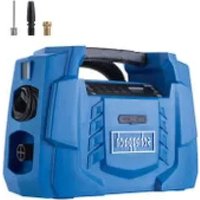
| Product type | Air compressor |
| Brand | Scheppach |
| Model | Air Force 4 Max |
| Max motor power | 1100 W |
| Max operating pressure | 8 bar |
| Effective air flow at 7 bar | 25 l/min |
| Effective air flow at 4 bar | 55 l/min |
| Effective air flow at 1 bar | 85 l/min |
| Compressor rotation speed | 4300 rpm |
| Power supply | 220-240 V ~ 50 Hz |
| Service mode (duty cycle) | S3 15% (1.5 min run / 8.5 min rest) |
| Protection type | IP20 |
| Protection class | II |
| Net weight | 5 kg |
| Sound pressure level (LpA) | 75.3 dB(A) |
| Guaranteed sound power level (LwA) | 97 dB(A) |
| Main functions | Tire inflation, blowing, spraying (with accessories) |
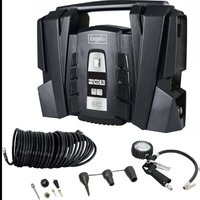
| Included accessories | Compressed air hose, inflation handle with pressure gauge, valve adapters, balloon needle, blow nozzle |
| Maintenance and cleaning | Clean with a damp cloth and a little black soap; do not use solvents; drain condensation regularly |
| Safety | Wearing goggles and hearing protection mandatory; use a 30 mA residual current circuit breaker; do not expose to rain |
| Wear parts | Belt, coupling (not included in delivery) |
| Warranty | Statutory warranty from receipt (defective parts replaced free of charge) |
Frequently Asked Questions - Air Force 4 Max SCHEPPACH
User questions about Air Force 4 Max SCHEPPACH
0 question about this device. Answer the ones you know or ask your own.
Ask a new question about this device
Download the instructions for your Compressor in PDF format for free! Find your manual Air Force 4 Max - SCHEPPACH and take your electronic device back in hand. On this page are published all the documents necessary for the use of your device. Air Force 4 Max by SCHEPPACH.
USER MANUAL Air Force 4 Max SCHEPPACH
natural_image
Black and white photo of a Scheppach air pressure expander with coiled tubing and pressure gauge (no visible text or symbols on main subject)
Air Force 4 Max
| DE | DruckluftkompressorOriginalbedienungsanleitung | 4 |
| FR | CompresseurTraduction des instructions d'origine | 20 |
| GB | Air compressorTranslation of the original operating manual | 36 |
| IT | Compressore di ariaTraduzione delle istruzioni per l'uso originali | 52 |
| ES | Compresor de aire comprimidoTraducción del manual de instrucciones original | 68 |
natural_image
Line drawing of a hand pressing down on a mechanical device component (no text or symbols)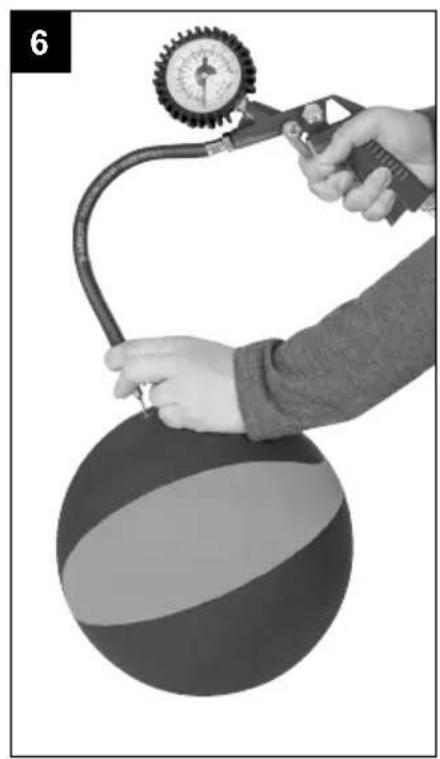
natural_image
Person using a pressure gauge to lift a large sphere, no text or symbols visible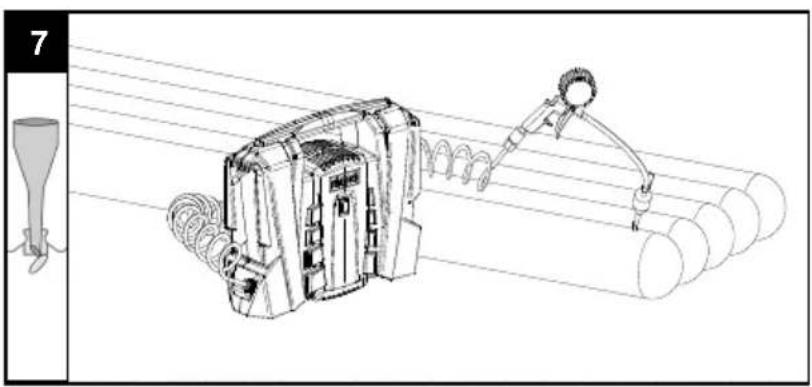
natural_image
Technical line drawing of a mechanical device with coiled pipes and a suspended arm (no text or symbols)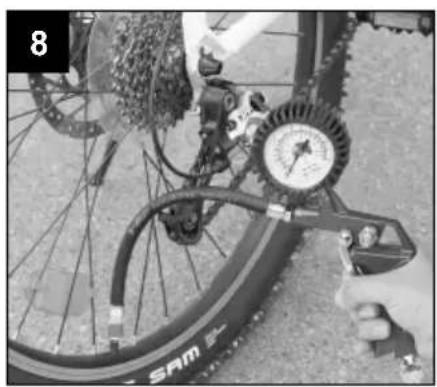
natural_image
Close-up of a bicycle tire with a pressure gauge and hand adjusting the wheel (no visible text or symbols)Günzburger Straße 69
D-89335 Ichenhausen
Verehrter Kunde,
Günzburger Straße 69
D-89335 Ichenhausen
Chers clients,
Explanation of the symbols
 | Before commissioning, read and observe the operating manual and safety instructions! |
 | Wear eye protection! |
 | Wear hearing protection! |
 | Warning against hot surfaces! |
 | Warning against electrical voltage! |
 | Warning! The device is equipped with an automated start-up con-trol. Keep third-parties away from the working range of the device! |
 | Protection class II |
 | Do not expose the machine to rain. The device may only be sta-tioned, stored and operated in dry ambient conditions. |
 | Can be used for pumping up tyres |
 | Can be used for operating compressed air tools |
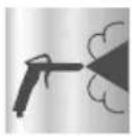 | Can be used for operating compressed air guns |
Table of contents: Page:
- Introduction ...... 39
- Device description....40
- Unpacking 40
- Proper use....41
- Safety instructions....41
- Technical data 45
- Residual risks....46
- Before commissioning....46
- Attachment and operation....47
- Electrical connection....48
- Cleaning, maintenance and storage 49
- Disposal and recycling 50
- Troubleshooting....51
1. Introduction
Manufacturer:
scheppach
Günzburger Straße 69
D-89335 Ichenhausen
Dear customer,
We hope your new tool brings you much enjoyment and success.
Note:
In accordance with the applicable product liability laws, the manufacturer of this device assumes no liability for damage to the device or caused by the device arising from:
- Improper handling
- Failure to comply with the operating instructions.
• Repairs carried out by third parties, unauthorised specialists.
• Installing and replacing non-original spare parts,
- Improper use
- Failures of the electrical system in the event of the electrical regulations and VDE provisions 0100, DIN 57113 / VDE0113 not being observed.
Note:
Read the whole text of the operating manual before assembly and commissioning. This operating manual should help you familiarise yourself with your power tool and teach you how to use it for its intended purpose.
The operating manual include important instructions for the safe, proper and economic operation of the power tool, for avoiding danger, for minimising repair costs and downtimes and for increasing the reliability and extending the service life of the power tool.
In addition to the safety instructions in this operating manual, you must also observe the regulations applicable to the operation of the power tool in your country.
Keep the operating manual package with the power tool at all times and store it in a plastic cover to protect it from dirt and moisture. They must be read and carefully observed by all operating personnel before starting the work. The power tool may only be used by personnel who have been trained to use it and who have been instructed with respect to the associated hazards. The required minimum age must be observed.
In addition to the safety instructions in this operating manual and the separate regulations of your country, the generally recognised technical rules relating to the operation of identical devices must also be observed.
We accept no liability for accidents or damage that occur due to a failure to observe this manual and the safety instructions.
2. Device description
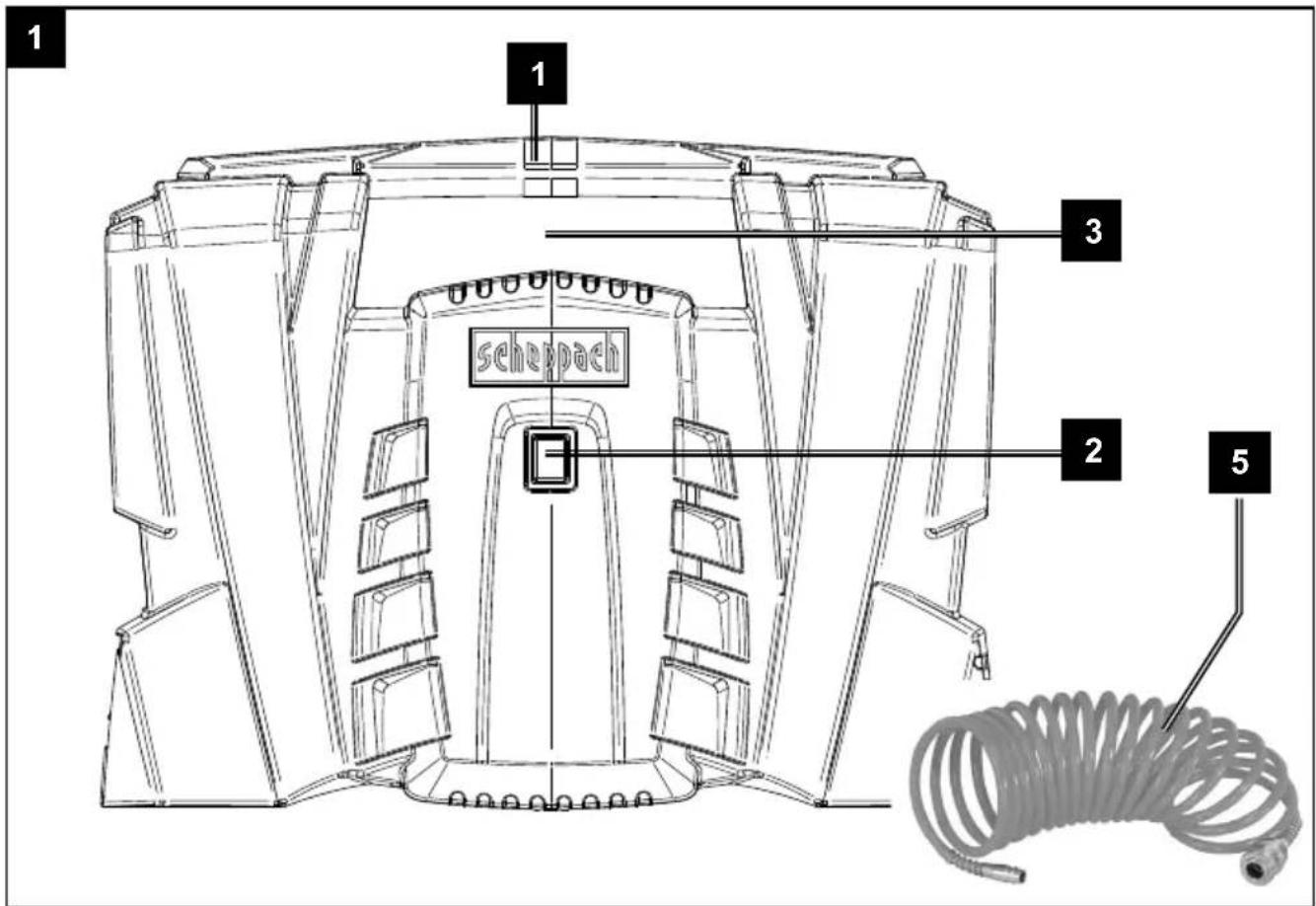
- Transport handle
- ON/OFF switch
- Compressor housing
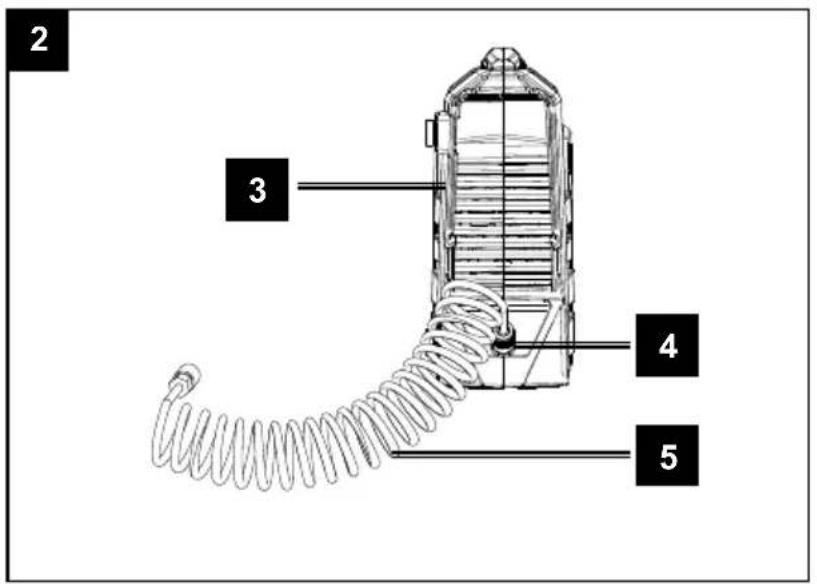
- Quick coupling
- Compressed air hose
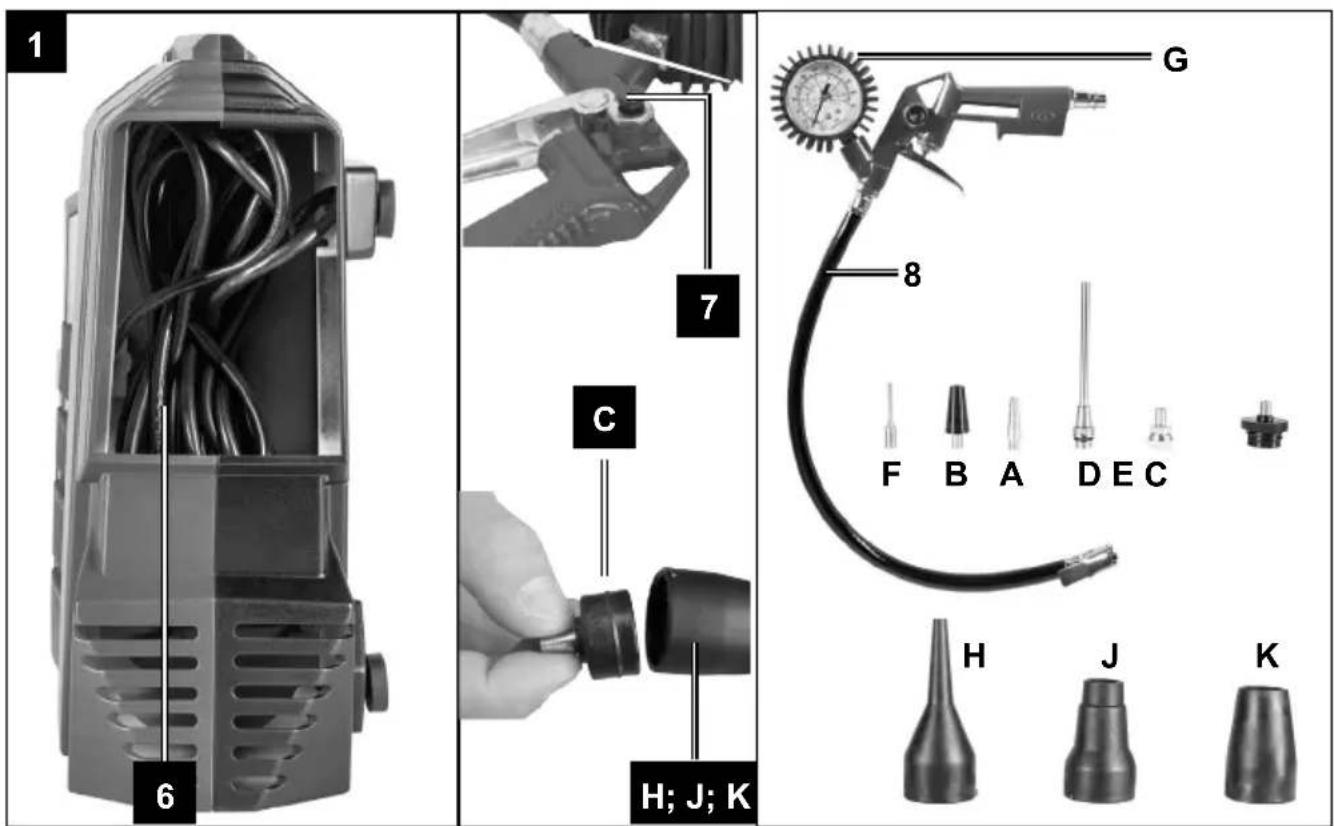
- Mains cable
- Vent valve
- Hose with valve adapter
C. Adapter for H, J, K
D. Blow-out adapter
E. Valve adapter, e.g. For bicycle valves
F. Ball needle
G. Tyre inflation device
H. Deflating adapter
J. Screw-on valve adapter
K. Universal adapter
A. Universal adapter, for valves with diameter approx. 6 mm
B. Universal adapter, for valves with diameter approx. 9 mm
3. Unpacking
ATTENTION!
The device and the packaging are not children's toys! Do not let children play with plastic bags, films or small parts! There is a danger of choking or suffocating!
- Open the packaging and carefully remove the device.
- Remove the packaging material, as well as the packaging and transport safety devices (if present).
- Check whether the scope of delivery is complete.
- Check the device and accessory parts for transport damage.
- If possible, keep the packaging until the expiry of the warranty period.
4. Proper use
The compressor is used to generate compressed air for pneumatically powered tools that can be operated with an air rate of up to 85 l/min. (e.g. tyre inflaters, air blow guns). Due to the limited air flow rate, it is not possible to operate tools with a very high compressed air consumption (e.g. orbital sanders, straight grinders and impact screwdriver).
The compressor may only be operated in a dry and well ventilated indoor space.
The machine may only be used in the intended manner. Any use beyond this is improper. The user/operator, not the manufacturer, is responsible for damages or injuries of any type resulting from this.
Please note that our equipment was not designed with the intention of use for commercial or industrial purposes.
We assume no guarantee if the device is used in commercial or industrial applications, or for equivalent work.
5. Safety instructions
⚠ Attention! The following basic safety measures must be observed when using this compressor for protection against electric shock, and the risk of injury and fire.
Read and observe these instructions before using the device.
Safe work
- Keep the work area orderly
- Disorder in the work area can lead to accidents.
- Take environmental influences into account
- Do not expose electric tools to rain.
- Do not use electric tools in a damp or wet environment. There is a risk of electric shock!
- Make sure that the work area is well-illuminated.
-
Do not use electric tools where there is a risk of fire or explosion.
-
Protect yourself from electric shock
- Avoid physical contact with earthed parts (e.g. pipes, radiators, electric ranges, cooling units).
- Keep away from children!
- Do not allow other persons to touch the equipment or cable, keep them away from your work area.
- Securely store unused electric tools
- Unused electric tools should be stored in a dry, elevated or closed location out of the reach of children.
6. Do not overload your electric tool
- They work better and more safely in the specified output range.
7. Wear suitable clothing
- Do not wear wide clothing or jewellery, which can become entangled in moving parts.
- Rubber gloves and anti-slip footwear are recommended when working outdoors.
- Tie long hair back in a hair net.
8. Do not use the cable for purposes for which it is not intended
- Do not use the cable to pull the plug out of the outlet. Protect the cable from heat, oil and sharp edges.
9. Take care of your tools
- Keep your compressor clean in order to work well and safely.
- Follow the maintenance instructions.
- Check extension cables regularly and replace them when damaged.
- Check the connection cable of the electric tool regularly and have it replaced by a recognised specialist when damaged.
10. Pull the connector out of the socket
- When the electric tool is not in use or prior to maintenance and when replacing tools such as saw blades, bits, milling heads.
11. Avoid inadvertent starting
- Make sure that the switch is switched off when plugging the plug into an outlet.
12. Use extension cables for outdoors
- Only use approved and appropriately identified extension cables for use outdoors.
- Only use cable reels in the unrolled state.
13. Remain attentive at all times
- Pay attention to what you are doing. Remain sensible when working. Do not use the electric tool when you are distracted.
14. Check the electric tool for potential damage
- Protective devices or other parts with minor damage must be carefully inspected to ensure that they function correctly and as intended prior to continued use of the electric tool.
- Check whether the moving parts function faultlessly and do not jam or whether parts are damaged. All parts must be correctly mounted and all conditions must be fulfilled to ensure fault-free operation of the electric tool.
- Damaged protective devices and parts must be properly repaired or replaced by a recognised workshop, insofar as nothing different is specified in the operating manual.
- Damaged switches must be replaced at a customer service workshop.
- Do not use any faulty or damaged connection cables.
- Do not use any electric tool on which the switch cannot be switched on and off.
15. Have your electric tool repaired by a qualified electrician
- This electric tool conforms to the applicable safety regulations. Repairs may only be performed by an electrician using original spare parts. Otherwise accidents can occur.
16. Attention!
- For your own safety, only use accessories and additional equipment that are indicated in the operating manual or have been recommended or indicated by the manufacturer. Use of other tools or accessories that those recommended in the operating manual or in the catalogue could represent a personal danger to you.
17. Noise
- Wear hearing protection when using the compressor.
18. Replacing the connection line
- If the connection line is damaged, it must be replaced by the manufacturer or an electrician to avoid danger. Danger due to electrical shocks
19. Filling tyres
- ATTENTION! The manometer has not been officially calibrated! Check the tyre pressure immediately after filling using a suitable pressure gauge, e.g. at a petrol station.
20. Street-legal compressors in construction site operation
- Ensure that all hoses and fixtures are suitable for the maximum permissible working pressure of the compressor.
21. Set-up location
- Only set up the compressor on a flat surface.
22. Attention!
- This device can be used by children from 8 years of age as well as by persons with reduced physical, sensory or mental capabilities or with a lack of experience or knowledge, if they are supervised or if they have been trained in the safe use of the device and understand the resultant hazards.
- Children may not play with the device.
- Cleaning and maintenance may not be carried out by children.
-
It is recommended to equip the feed hoses with a safety cable in case of pressure above 7 bar, e.g. using a wire cable.
-
Avoid over-stressing the piping system by using flexible hose connections to prevent kinking.
-
Use a residual current circuit breaker with a trigger current of 30 mA or less. Using a fault-current circuit breaker reduces the risk of an electric shock.
⚠ WARNING! This power tool generates an electromagnetic field during operation. This field can impair active or passive medical implants under certain conditions. In order to prevent the risk of serious or deadly injuries, we recommend that persons with medical implants consult with their physician and the manufacturer of the medical implant prior to operating the power tool.
ADDITIONAL SAFETY INSTRUCTIONS
Safety instructions for working with compressed air and blasting guns
- Ensure there is sufficient distance to the product, at least 2.50 m, and keep the compressed air tools / compressed air attachments away from the compressor during operation.
- The compressor pump and lines can become very hot during operation. Touching these parts will burn you.
- The air which is sucked in by the compressor must be kept free of impurities that could cause fires or explosions in the compressor pump.
- When releasing the hose coupling, hold the hose coupling piece with your hand. This way, you can protect yourself against injury from the rebounding hose.
- Wear safety goggles and a respirator when working with the compressed air pistol. Dusts are harmful to health! Minor injuries can be caused by foreign objects and blown away parts.
- Do not blow at people with the blow-out pistol and do not clean clothes while being worn. Danger of injury!
Safety instructions when using spraying attachments (e.g. paint sprayers):
- Keep the spray attachment away from the compressor when filling so that no liquid comes into contact with the compressor.
- Never spray in the direction of the compressor when using the spraying attachments (e.g. paint sprayers). Moisture can lead to electrical hazards!
- Do not process any paints or solvents with a flash point below 55^ C. Risk of explosion!
- Do not heat up paints or solvents. Risk of explosion!
- If hazardous liquids are processed, wear protective filter units (face guards). Also, adhere to the safety information provided by the manufacturers of such liquids.
- The details and designations of the Ordinance on Hazardous Substances, which are displayed on the outer packaging of the processed material, must be observed. Additional protective measures are to be undertaken if necessary, particularly the wearing of suitable clothing and masks.
- Do not smoke during the spraying process and/or in the work area. Risk of explosion! Paint vapours are easily combustible.
- Never set up or operate the equipment in the vicinity of a fire place, open lights or sparking machines.
- Do not store or eat food and drink in the work area. Paint vapours are harmful to your health.
- The work area must exceed 30 ~m^3 and sufficient ventilation must be ensured during spraying and drying.
- Do not spray against the wind. Always adhere to the regulations of the local police authority when spraying combustible or hazardous materials.
- Do not process media such as white spirit, butyl alcohol and methylene chloride with the PVC pressure hose. These media will destroy the pressure hose.
- The work area must be separated from the compressor so that it cannot come into direct contact with the working medium.
6. Technical data
Mains power connection 220 - 240 V\~ 50 Hz
Motor output in W max. 1100
Operating mode S3 15%
Compressor speed 4300 min
Operating pressure approx. 8 bar
Theo. intake capacity l/min approx. 180
Effective output rate at 7 bar approx. 25 l/min
Effective output rate at 4 bar approx. 55 l/min
Effective output rate at 1 bar approx. 85 l/min
Protection category IP20
Protection class II
Device weight in kg 5
*S3 15% = periodical intermediate duty with a duty cycle of 15% (1.5 min based on a 10 minute period)
The noise emission values have been determined in accordance with EN ISO 3744.
Wear hearing protection.
Excessive noise can result in a loss of hearing.
Noise data
⚠ Warning: Noise can have serious effects on your health. If the machine noise exceeds 85 dB (A), please wear suitable hearing protection.
Sound power level during work L_wA 97 dB(A)
Sound pressure level L_pA 75.3 dB(A)
Uncertainty K_wA/pA 2.04 dB(A)
7. Residual risks
Comply with the stipulated maintenance and safety instructions in the operating instructions.
Remain attentive at all times when working, and keep third parties at a safe distance from your work area.
Even when the device is being used properly, there will always be certain residual hazards that cannot be completely ruled out. The following potential hazards can arise due to the type and design of the device:
- Unintentional starting up of the product.
- Damage to hearing if the stipulated hearing protection is not worn.
- Dirt particles, dust etc. can get irritate the eyes or face despite wearing safety goggles.
• Inhaling swirled up particles.
8. Before commissioning
- Before connecting the machine, make certain that the data on the type plate matches with the mains power data.
- Check the device for transport damage. Report any damage immediately to the transport company which was used to deliver the compressor.
• Install the compressor near the point of consumption. - Avoid long air lines and supply lines (extension cables).
• Make sure that the intake air is dry and free of dust. - The compressor may only be used outdoor briefly when the ambient conditions are dry.
- The compressor must always be kept dry and must not be left outdoors after work is complete.
- Do not deploy the compressor in damp or wet areas.
- Operate the compressor only in suitable areas (well ventilated, ambient temperature +5°C to 40°C). There must be no dust, acids, vapours, explosive gases or inflammable gases in the room.
- The compressor is designed to be used in dry rooms. It is prohibited to use the compressor in areas where work is conducted with sprayed water.
9. Attachment and operation
⚠ Attention!
Always make sure the device is fully assembled before commissioning!
9.1 Mains connection
- The compressor is equipped with a mains cable with protective contact plug. This can be connected to any 220 - 240 V\~ 50 Hz protective contact socket, with fuse protection of at least 16 A.
- Before commissioning, ensure that the mains voltage matches with the operating voltage and the machine's power rating on the type plate.
- Long supply cables, extensions, cable reels, etc. cause a drop in voltage and can impede motor start-up.
- In the case of temperatures below +5°C, motor starting can be endangered by sluggishness.
9.2 ON/OFF switch (fig. 1)
- The compressor is switched on by setting the switch (2) to position I.
- The compressor is switched off by setting the switch (2) to position 0.
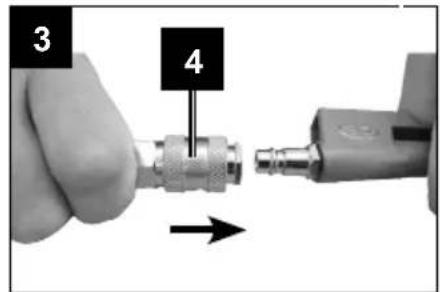
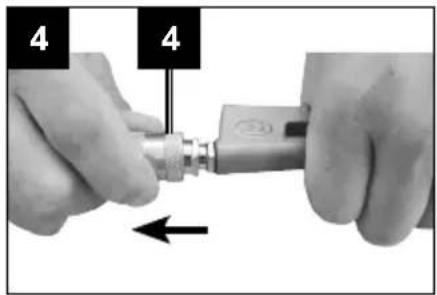
9.3 Establishing connections (fig. 2 - 4)
⚠ Attention! Switch the device off for this.
When doing so, hold the coupling firmly in order to avoid injuries due to the hose springing back.
- Connect the compressed air hose (5) with the quick coupling (4) of the compressor
- Connect the fitting of your compressed air tool to the compressed air hose (5) of the compressor.
- To disconnect this coupling again, pull the quick coupling (4) back at the compressed air hose (5).
9.4 Using the tyre inflation device (fig. 1, 6, 7, 8)
The compressed air tyre inflation device (G) is used to inflate car tyres. With the corresponding accessories it can also be used to inflate and regulate bicycle tyres, inflatable dinghies, air mattresses, balls etc. Pressure can be released by actuating the vent valve (7).
⚠ Attention!
The manometer has not been officially calibrated!
After inflating, please check the air pressure with a calibrated device.
9.5 Using the air blow gun
You can also use the tyre inflation device (G) as an air blow gun to clean out cavities and to clean soiled surfaces and work equipment.
To do so, please first remove the hose with the valve adapter (8).
Now screw the blow-out adapter (D) to the tyre inflation device (G).
9.6 Using the adapter set
The adapter set enables you to use the following additional capabilities of the tyre inflation device:
- Pumping up balls with the help of the ball needle (F).
- The valve adapter (E) enables bicycle tyres to be inflated.
- Filling pools, air mattresses or boats with the help of the additional adapter (K).
- Filling items with threaded valves (e.g. boats) with the screw-on valve adapter (J).
- Deflating large volume items. The deflating adapter (C) can be used for this.
- The two conical universal adapters (A/B) can likewise be used for inflating air mattresses.
10. Electrical connection
The electrical motor installed is connected and ready for operation. The connection complies with the applicable VDE and DIN provisions. The customer's mains connection as well as the extension cable used must also comply with these regulations.
When working with spray attachments and during temporary use outdoors, the device must be connected to a residual current circuit breaker with a trigger current of 30 mA or less.
Damaged electrical connection cable.
The insulation on electrical connection cables is often damaged.
This may have the following causes:
- Pressure points, where connection cables are passed through windows or doors.
- Kinks where the connection cable has been improperly fastened or routed.
- Places where the connection cables have been cut due to being driven over.
• Insulation damage due to being ripped out of the wall outlet. - Cracks due to the insulation ageing.
Such damaged electrical connection cables must not be used and are life-threatening due to the insulation damage.
Check the electrical connection cables for damage regularly. Ensure that the connection cables are disconnected from electrical power when checking for damage.
Electrical connection cables must comply with the applicable VDE and DIN provisions. Only use connection cables with the designation H05VV-F.
The printing of the type designation on the connection cable is mandatory.
AC motor
- The mains voltage must be 220 - 240 V\~.
- Extension cables up to 25 m long must have a cross-section of 1.5 mm ^2 .
Connections and repair work on the electrical equipment may only be carried out by electricians.
Please provide the following information in the event of any enquiries:
• Type of current for the motor
• Machine data - type plate
• Engine data - type plate
11. Cleaning, maintenance and storage
⚠ Attention!
Pull out the mains plug before carrying out any cleaning and maintenance work! Risk of injury from electric shock!
⚠ Attention!
Wait until the equipment has cooled down completely! Danger of burning!
⚠ Attention!
Always depressurise the equipment before carrying out any cleaning and maintenance work! Danger of injury!
11.1 Cleaning
- Keep the device as free of dust and dirt as possible. Rub the device clean with a clean cloth or blow it off with compressed air at low pressure.
• We recommend that you clean the device directly after every use. - Clean the device at regular intervals using a damp cloth and a little soft soap. Do not use any cleaning products or solvents; they could attack the plastic parts of the device. Make sure that no water can penetrate the device interior.
- The hose and injection tools must be disconnected from the compressor before cleaning. The compressor must not be cleaned with water, solvents or similar.
11.2 Storage (fig. 1, 2)
Attention! Pull out the mains plug and ventilate the equipment and all connected pneumatic tools. Store the compressor in such a way that it cannot be used by unauthorised persons.
⚠ Attention!
Store the compressor only in a dry location which is not accessible to unauthorised persons. Always store upright, never tilted!
11.2.1 Power plug, hose and accessories
- The mains cable (6) can be stowed in the storage compartment of the compressor.
- The pressure hose can be stowed in the tools compartment.
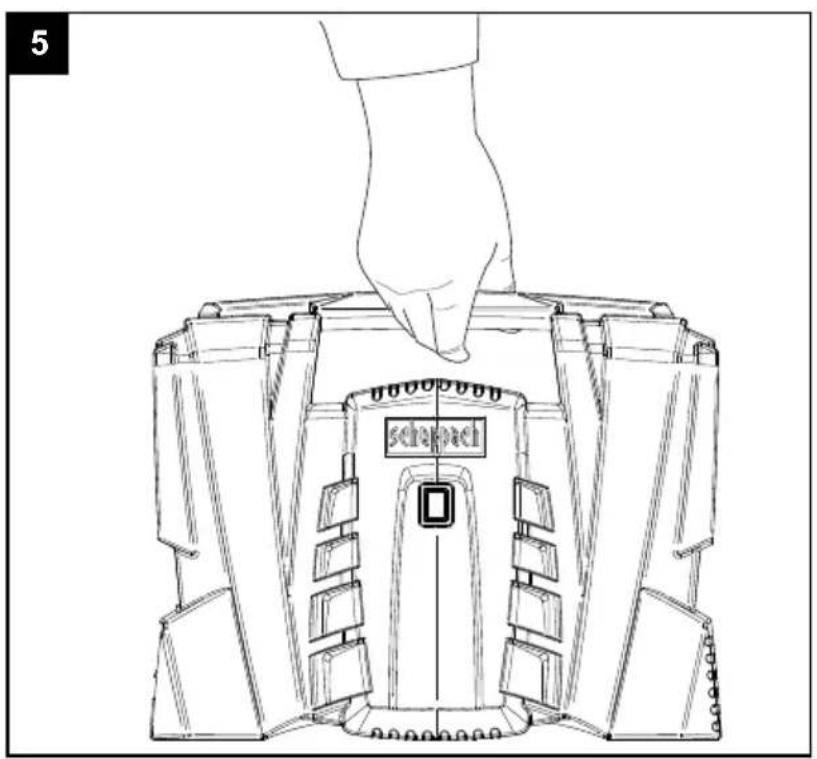
11.3 Transport (fig. 5)
The unit can be transported with the handle (1).
11.4 Service information
With this product, it is necessary to note that the following parts are subject to natural or usage-related wear, or that the following parts are required as consumables.
Wearing parts*: belt and coupling
* may not be included in the scope of supply!
12. Disposal and recycling

The device is supplied in packaging to avoid transport damages. This packaging is raw material and can thus be used again or can be reintegrated into the raw material cycle. The device and its accessories are made of different materials, such as metals and plastics. Take defective components to special waste disposal sites. Check with your specialist dealer or municipal administration!
Old devices must not be disposed of with household waste!
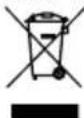
This symbol indicates that this product must not be disposed of in household waste as per Waste Electrical and Electronic Equipment directive (2012/19/EU) and national laws. This product must be handed over at the intended collection point. This can be done, for example, by returning it when purchasing a similar product or delivering it to an authorised collection point for the recycling of old electrical and electronic devices. Improper handling of old devices can have negative effects on the environment and on human health due to potential hazardous materials which are often contained in old electrical and electronic devices. By disposing of this product properly, you are also contributing to the effective use of natural resources. Information about collection points for old devices can be found at your municipal authority, the local disposal provider, an authorised location for the disposal of old electrical and electronic devices or your waste collection service.
13. Troubleshooting
| Fault Possible cause Remedy | ||
| The compressor does not start. | Mains voltage is not available. | Check the cable, mains plug, fuse and socket. |
| Mains voltage is too low. | Make sure that the extension cable is not too long. Use an extension cable with large enough wires. | |
| Outside temperature is too low. | Never operate with an outside temperature of below +5°C. | |
| Motor is overheated. | Allow the motor to cool down. If necessary, remedy the cause of the overheating. | |
| The compressor starts but there is no pressure. | Non-return valve leaking R | Replace the non-return valve. |
| The seals are damaged. | Check the seals and have any damaged seals replaced by a service centre. | |
| The compressor starts, pressure is shown on the pressure gauge, but the tools do not start. | The hose connections have a leak. | Check the compressed air hose and tools and replace if necessary. |
| A quick coupling has a leak. | Check quick coupling, replace if necessary. | |
Günzburger Straße 69
89335 Ichenhausen
Egregio cliente,
Günzburger Straße 69
Power switch
Garantiebedingungen
Homepage: https://www.scheppach.com/de/service
CE - Declaration of Conformity
Standard references:
EN 1012-1; EN60335-1; EN 55014-1; EN55014-2; EN 61000-3-2; EN 61000-3-3
This declaration of conformity is issued under the sole responsibility of the manufacturer.
The object of the declaration described above fulfils the regulations of the directive 2011/65/EU of the European Parliament and Council from 8th June 2011, on the restriction of the use of certain hazardous substances in electrical and electronic equipment.
Apparent defects must be notified within 8 days from the receipt of the goods. Otherwise, the buyer's rights of claim due to such defects are invalidated. We guarantee for our machines in case of proper treatment for the time of the statutory warranty period from delivery in such a way that we replace any machine part free of charge which provably becomes unusable due to faulty material or defects of fabrication within such period of time. With respect to parts not manufactured by us we only warrant insofar as we are entitled to warranty claims against the upstream suppliers. The costs for the installation of the new parts shall be borne by the buyer. The cancellation of sale or the reduction of purchase price as well as any other claims for damages shall be excluded.
Garantie FR

- Air Force 4 Max
- Verehrter Kunde,
- Chers clients,
- Table of contents: Page:
- Introduction
- Manufacturer:
- Dear customer,
- Note:
- Device description
- Unpacking
- ATTENTION!
- Proper use
- Safety instructions
- Safe work
- Do not overload your electric tool
- Wear suitable clothing
- Do not use the cable for purposes for which it is not intended
- Take care of your tools
- Pull the connector out of the socket
- Avoid inadvertent starting
- Use extension cables for outdoors
- Remain attentive at all times
- Check the electric tool for potential damage
- Have your electric tool repaired by a qualified electrician
- Attention!
- Noise
- Replacing the connection line
- Filling tyres
- Street-legal compressors in construction site operation
- Set-up location
- Attention!
- ADDITIONAL SAFETY INSTRUCTIONS
- Safety instructions for working with compressed air and blasting guns
- Safety instructions when using spraying attachments (e.g. paint sprayers):
- Technical data
- Wear hearing protection.
- Noise data
- Residual risks
- Before commissioning
- Attachment and operation
- ⚠ Attention!
- Mains connection
- ON/OFF switch (fig. 1)
- Establishing connections (fig. 2 - 4)
- Using the tyre inflation device (fig. 1, 6, 7, 8)
- Using the air blow gun
- Using the adapter set
- Electrical connection
- Damaged electrical connection cable.
- AC motor
- Cleaning, maintenance and storage
- Cleaning
- Storage (fig. 1, 2)
- Power plug, hose and accessories
- Transport (fig. 5)
- Service information
- Disposal and recycling
- Old devices must not be disposed of with household waste!
- Troubleshooting
- Egregio cliente,
- Garantiebedingungen
- CE - Declaration of Conformity
- Standard references:
- Garantie FR
Brand : SCHEPPACH
Model : Air Force 4 Max
Category : Compressor