Brus - Water dispenser Stelton - Free user manual and instructions
Find the device manual for free Brus Stelton in PDF.


User questions about Brus Stelton
0 question about this device. Answer the ones you know or ask your own.
Ask a new question about this device
Download the instructions for your Water dispenser in PDF format for free! Find your manual Brus - Stelton and take your electronic device back in hand. On this page are published all the documents necessary for the use of your device. Brus by Stelton.
USER MANUAL Brus Stelton
natural_image
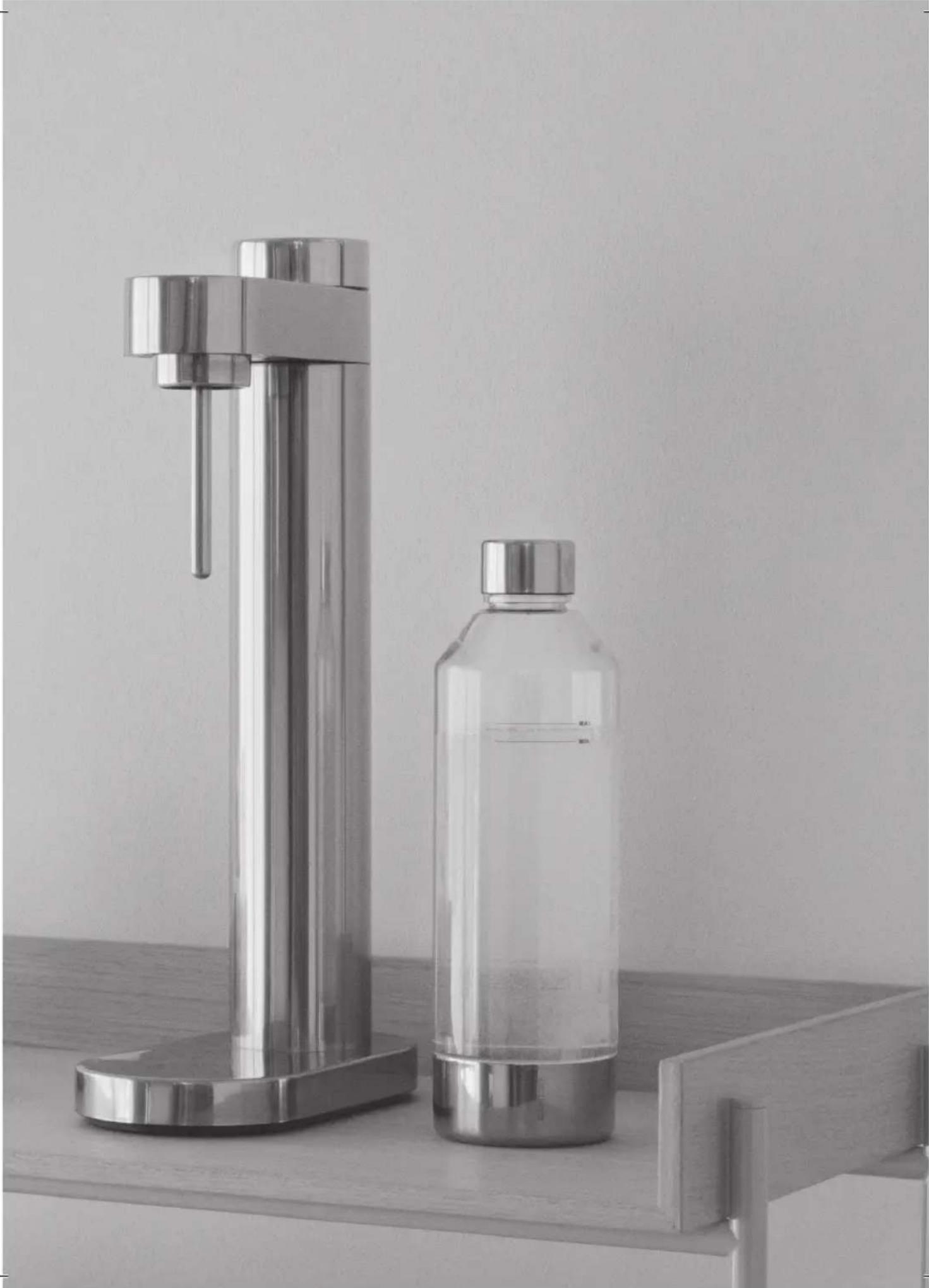
Modern glass water dispenser with a vertical stand and digital label (no readable text or symbols)Brus
carbonator | kulsyremaskine | Wassersprudler | carbonateur
stelton
text_image
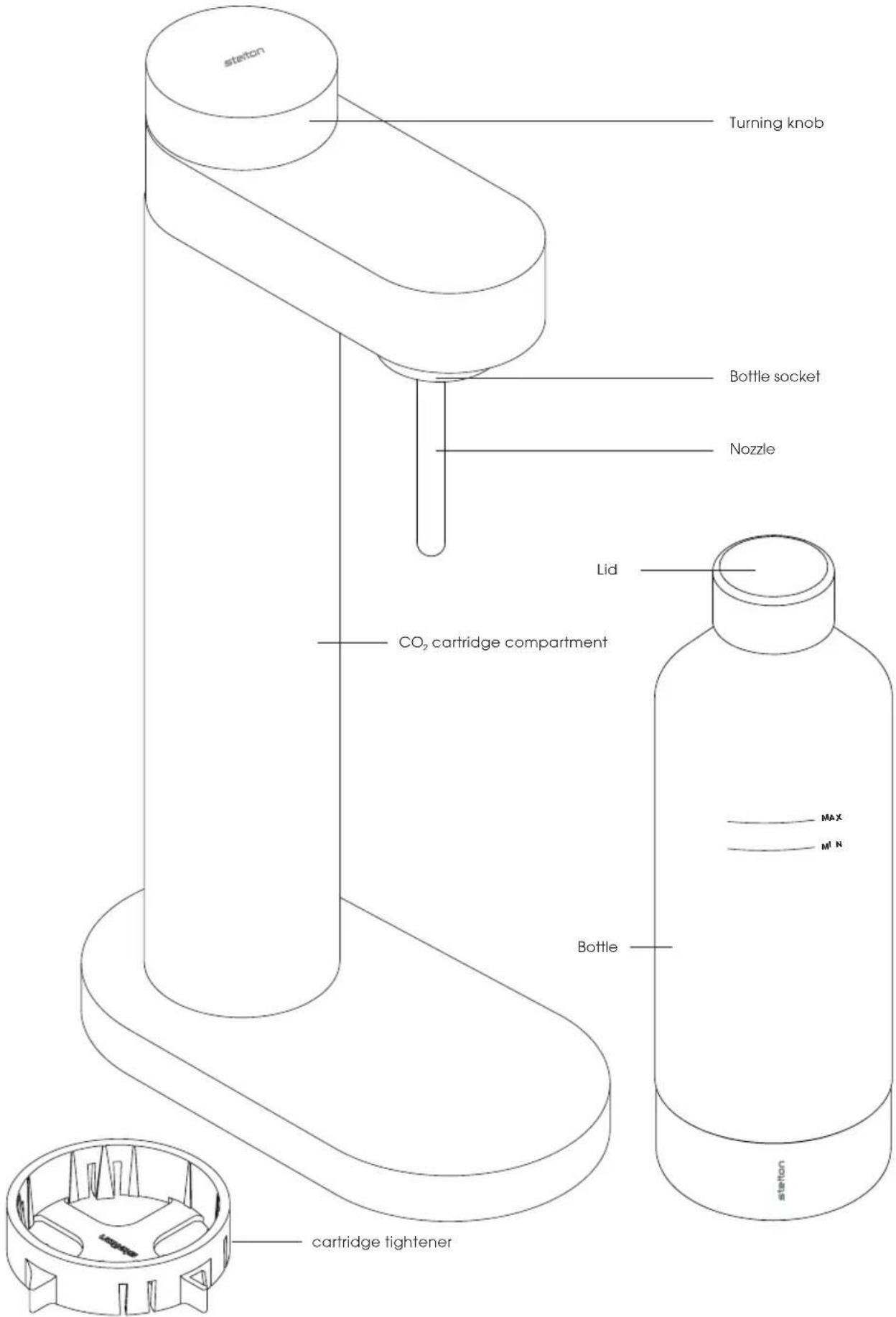
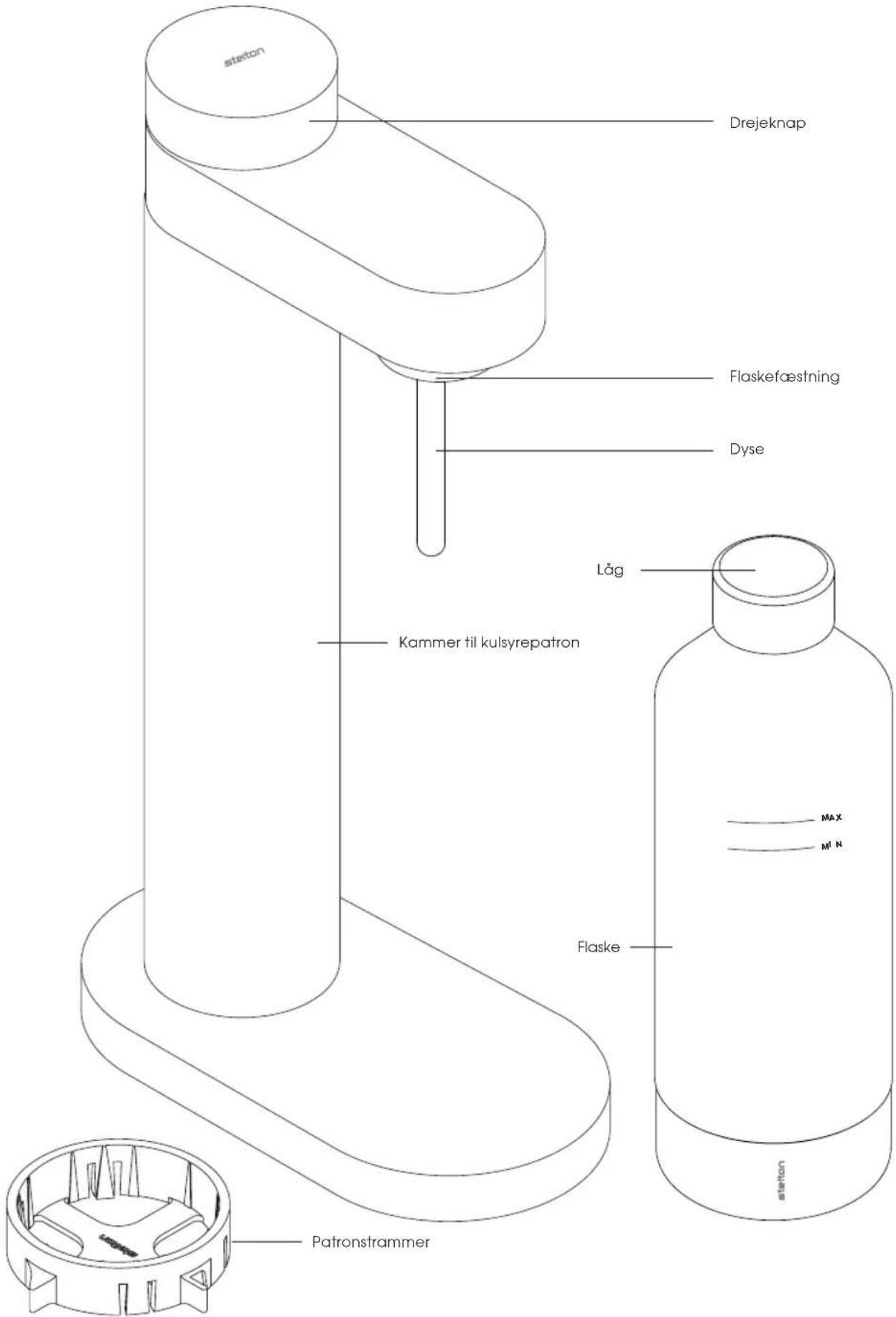
steflon Turning knob Bottle socket Nozzle Lid CO₂ cartridge compartment Bottle MAX M N cartridge tightener steflonRead the user and safety instructions in this manual before using your Brus carbonator for the first time.
User instructions
Brus carbonator is compatible with a standard screw-in cartridge: 425 g / 60 L food-grade CO _2 cartridge, thread type M18 x 1.5.
Not compatible with AU/NZ or Quick Connect cartridges. CO _4 cartridges are purchased separately in supermarkets and department stores.
Installation of CO2 cartridge
Use of the cartridge tightener is not required but recommended to ensure proper sealing.
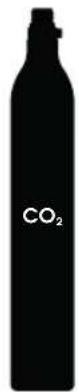
425 g
∅ 60 mm
M18 x 1,5.
Scan QR code for video guide

natural_image
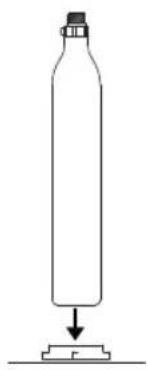
Simple line drawing of a vertical cylindrical object with a base, no text or symbols presentPush the CO_2 cartridge firmly into the cartridge tightener.
natural_image
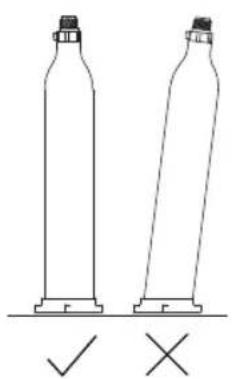
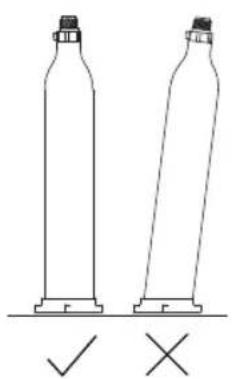
Two identical line drawings of a bottle with cap, one marked with a checkmark and the other with an 'X' symbol (no text or labels on the bottles themselves)Make sure the CO_2 cartridge is positioned horizontally in the cartridge tightener.
natural_image
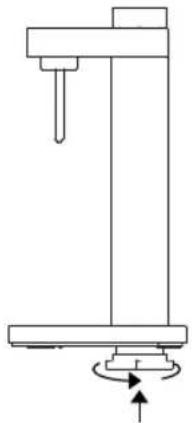
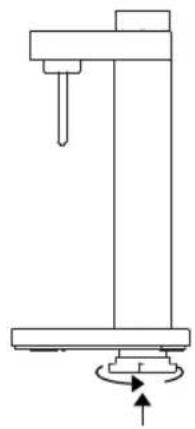
Pure mechanical diagram showing a vertical support with a base and a circular component below (no text or symbols)Screw the CO_2 cartridge into the machine
Tighten it to ensure proper sealing.
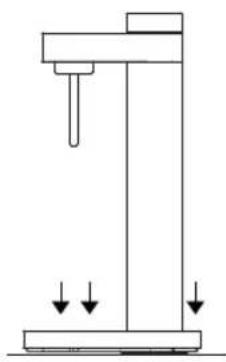
natural_image
Simple line drawing of a mechanical device with downward arrows indicating force or movement (no text or symbols)Place the machine on the table and press down on the base to ensure it stands securely.
The tool can remain attached to the CO_2 cartridge while in use and can be reused.
natural_image
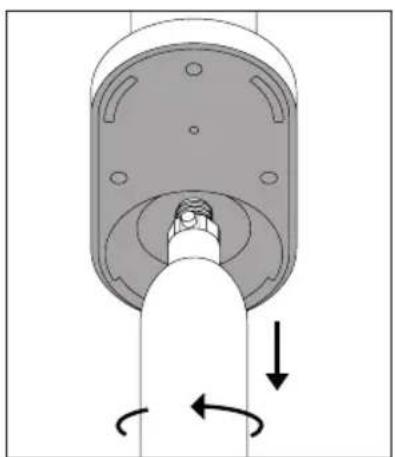
Mechanical component diagram showing a rotating shaft and housing with directional arrows indicating rotation (no text or symbols)Replacing the CO_2 cartridge
- Turn the carbonator upside down so that the bottom is visible.
- Unscrew the CO₂ cartridge by turning it counterclockwise.
- Remove the empty cartridge and then follow the steps under "Installation of CO _2 cartridge" to insert a new one.
- Remember to keep the cartridge tightener
Amount of carbonation
The amount of carbonation depends on your taste. With the Brus carbonator, you can adjust the carbonation level as desired.
• Always use cold water (approx. 5^ C / 41^ F) for the best result. Warm water binds CO_2 less effectively.
- When the cartridge is nearly empty, the knob must be turned slightly longer for the same result. Never carbonate longer than recommended.
- Before removing the bottle, use the manual pressure release. This action prevents excess carbonation from escaping the system during use and thereby extends the lifespan of the CO _2 cartridge when used as instructed.
Carbonation levels
Regular sparkling water: Turn the knob for 3-4 seconds. (Recommended)
Strong sparkling water: You may turn the knob for up to 5 seconds.
WARNING: Carbonate for no longer than 5 seconds. Stop if you hear a hissing sound.
Adding flavour
The Brus carbonator must only be used with clean drinking water. Carbonating other liquids can damage the machine and make it unsafe to use.
If you want flavour, it should be added after carbonation – for example, with juice or syrup.
Always clean the bottle thoroughly if it has contained anything other than water. Residues of sugar or additives can enter the machine and cause damage.
Overflow of water
What happens if the water exceeds the MAX line?
natural_image
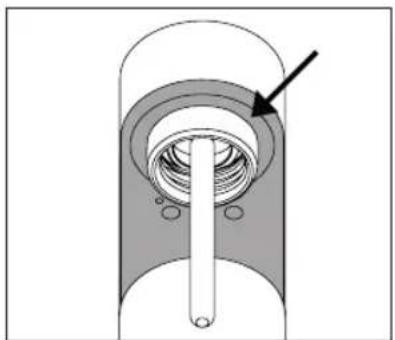
Cross-sectional diagram of a mechanical component with internal structure and an arrow indicating a specific part (no text or symbols present)When CO_2 is released, the water in the bottle rises. If the bottle is overfilled, the water will overflow into the machine, causing water to run out from both the bottom and the top.
Make sure not to fill the bottle above the MAX line or below the MIN line on the Brus bottle. Exceeding the MAX line can cause water to flow through the pressure relief valves during carbonation, resulting in leaks from top to bottom.
Always keep the water level between the MIN- and MAX-lines.
WARNING: Overfilling the bottle can be dangerous and harmful to your BRUS carbonator.
Scan QR code for video guide

text_image
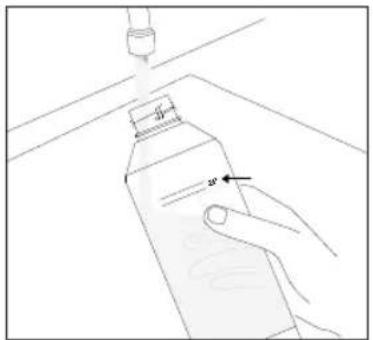
Diagram showing a hand pouring liquid from a bottle with labeled arrows indicating flow directionStep 1 - Fill the bottle with water
Fill the bottle with cold, clean water up to the fill line. If you exceed the MAX line, water will come out from both the top and the bottom of the machine during use.
Recommended water temperature: 5°C (41°F).
Do not let the water temperature exceed 40^ C ( 104^ F).
natural_image
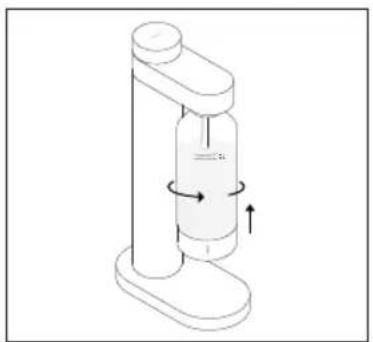
Diagram of a mechanical device with rotating components and directional arrows (no text or symbols)Step 2 - Screw in the bottle
Insert the bottle into the thread and turn it counterclockwise to lock it in place.
Make sure the bottle is properly secured before use and that the nozzle tip is submerged in the water.
natural_image
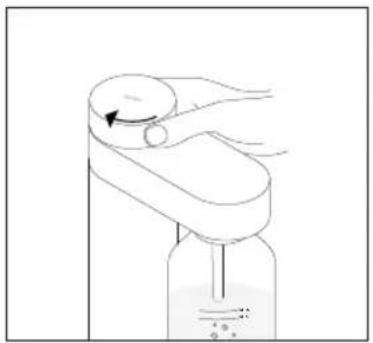
Line drawing of a hand using a dropper to lift liquid (no text or symbols)Step 3 - Add carbonation
Turn the knob clockwise for 3-4 seconds for regular sparkling water.
Stop immediately if you hear a hissing sound during this time.
WARNING: Carbonate only clean drinking water. Using other liquids may cause the pressure relief valve to stick and make the machine unsafe to use.
natural_image
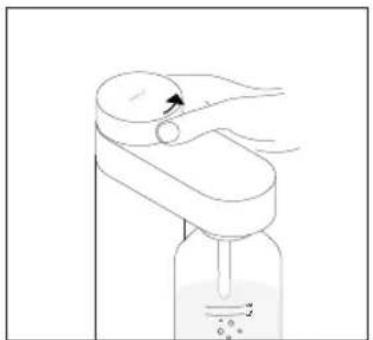
Line drawing of a hand pouring liquid from a bottle into a container (no text or symbols)Step 4 - Release excess pressure
Turn the knob counterclockwise back to the starting position. The machine will automatically release a small amount of pressure.
Turn the knob slightly further counterclockwise to release the remaining pressure. You will hear a hissing sound.
If you can unscrew the bottle without hearing a hiss and the water is carbonated, the pressure has already been released.
WARNING: Do not let go of the knob while turning. Hold it firmly and turn slowly to avoid sudden movements that could damage the machine.
natural_image
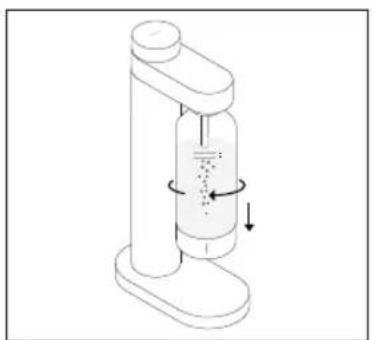
Diagram of a mechanical device with a rotating shaft and directional arrows indicating motion (no text or symbols)Step 5 - Unscrew the bottle
Turn the bottle clockwise to unscrew it.
Enjoy the water as it is, or add flavour afterwards.
WARNING: If the pressure has not been released manually, it will be released with a hissing sound when the bottle is removed.
Warranty
The warranty for your machine is only valid if it has been treated in accordance with the recommended use, maintenance and safety instructions.
Safety instructions for the Brus bottle
- Use only clean drinking water. Other liquids can damage the machine and make it unsafe.
- Never fill above the MAX line. Water can enter the machine and cause leaks.
- The bottles are not dishwasher safe and can withstand water temperatures up to 40^ .
- Do not freeze the bottles.
- Replace the bottle no later than 2 years after first use.
- Never use bottles that are discoloured, deformed, or cracked.
- Rinse the bottle thoroughly before each use.
- Avoid drinking directly from the bottle to reduce bacterial contamination of the machine.
- Use only Brus bottles with your machine.
Flaskesymboler

Fødevaregodkendt
Safety instructions for the carbonator and CO_2 cartridge
- Never transport the machine with the cartridge installed.
- Keep your Brus carbonator out of reach of children. For safety reasons, operation of this machine is strictly limited to persons aged 15 years and above.
- Do not place the machine near heat sources such as hotplates, radiators, or direct sunlight.
- Use only approved CO_2 cartridges and make sure the cartridge is always properly tightened.
- Use only Brus bottles with your Brus carbonator. Other bottles can be dangerous.
- Never release CO_2 without a filled Brus bottle attached.
- Never inject CO_2 into an empty bottle.
• Always use the machine in an upright position. - Never fill a Brus bottle above the MAX line or below the MIN line.
- Do not use the machine if it is damaged. Contact the retailer.
- Never use a deformed, defective, or damaged CO_2 cartridge. Contact the place of purchase for a replacement cartridge.
- Damage caused by improper use, including a broken nozzle or dropping the machine, is not covered by the warranty.
Maintenance
Cleaning the Brus bottle
- Clean your bottle in warm water (do not exceed 40°C) with a mild detergent and rinse thoroughly. Use a bottle brush for optimal cleaning inside.
- Store empty bottles without their caps to avoid moisture inside the bottle.
- Never use strong solvents or cleaning agents.
- If the bottle has been used for anything other than water (e.g., juice), it must be cleaned thoroughly, otherwise the machine may be damaged.
Cleaning the Brus carbonator
- Clean your carbonator with a damp microfiber cloth. A mild soap can also be used if necessary.
- Never use strong solvents or cleaning agents.
- Never wash your carbonator in the dishwasher.
Descaling
To ensure optimal performance, the carbonator should be descaled regularly depending on the hardness of the water.
- Fill the Brus bottle with descaling solution mixed with water according to the manufacturer's instructions. Fill up to the MAX line.
- Leave the bottle mounted in the machine for at least 2 hours to allow the limescale to dissolve. Do not turn the carbonation knob. Contact between CO_2 and the solution can cause foaming.
- Remove the bottle containing the descaling solution. Then briefly turn the knob to ensure the nozzle is working correctly.
- Wipe the nozzle clean with a cloth. Rinse the bottle thoroughly, fill it with clean water, and carbonate once to flush the system.
- Repeat the process if the result is not satisfactory.
Warning: Never use strong cleaning agents or any chemicals other than the recommended descaling product or a vinegar solution.
Warranty claim
Right to complain according to applicable legislation. Complaints must be accompanied by a machine-stamped receipt/purchase receipt including the date of purchase. In the event of a complaint, the carbonator must be returned to the place of purchase.
Stelton A/S
Christianshavns Kanal 4 DK-1406 Copenhagen
Denmark www.stelton.dk
Disposal of the carbonator

When disposing of the Brus carbonator or Brus bottles, applicable national and international legislation states that the machine must be disposed of through a municipal recycling facility.
Technical data
Brus carbonator
Carbonator with bottle included
Carbonation cartridge not included Bottle volume (MAX indicator): 900 ml.
Operating pressure: 7 - 9 bar
Max. water temperature: 40°C (104°F)
Min. water temperature: 1°C (34°F)
We reserve the right to make ongoing changes and improvements to the instruction manual.
Frequently Asked Questions
- Is it normal for water to drip from the spout after carbonation?
Water may drip from the spout after use. This is normal.
· I can't release the pressure by turning the knob counterclockwise?
The knob is turned clockwise and back (counterclockwise) to the starting position when you have finished carbonating. The BRUS carbonator will automatically release a small amount of pressure when the knob is turned back to the start position. Turning the knob further counterclockwise will release the remaining pressure.
If the machine cannot release pressure, it is defective.
· My BRUS bottle is deformed?
The bottle can only withstand a minimum temperature of 1°C (34°F) and a maximum temperature of 40°C (104°F).
Exceeding these temperatures will deform and damage the bottle and may pose a safety risk.
- How many litres of sparkling water can one CO _2 cartridge make?
A standard 425 g / 60 L food-grade CO _2 cartridge makes approximately 60 litres of lightly carbonated water.
IMPORTANT: Results can vary depending on water temperature, machine usage, and personal carbonation preference.
· Why does my BRUS carbonator make a hissing sound?
The hissing sound indicates excess CO _2 being released when the water has reached maximum carbonation.
Stop carbonating immediately if you hear a hissing sound.
· Why does ice form on the nozzle when I carbonate?
Carbonating water below refrigerator temperature (5°C / 41°F) can cause ice to form on the nozzle during carbonation, blocking it. In this case, stop immediately and wait until the ice melts before resuming carbonation.
Alternatively, allow the water to reach a higher temperature before carbonating. Carbonating water close to freezing (1°C / 33.8°F) is not recommended.
- I feel there isn't much CO_2 coming out of the nozzle?
See the section on descaling. The parts in contact with water can be descaled.
The inside of the machine cannot be descaled since no water enters it during proper use.
Note that a nearly empty CO 2 cartridge can also affect how much CO 2 is released.
- My CO₂ cartridge loosens and doesn't stay tight?
If the CO_2 cartridge loosens, remove it and clean off any dirt or grease.
If there are impurities, moisture, or grease on the top of the cartridge, it may fail to seal properly.
After cleaning, reinsert the CO _2 cartridge and tighten it securely.
It should not loosen during normal use.
If the machine is unused for a long period, you may need to retighten the cartridge before using it again.
- When I use the machine, water appears on the table (even though I haven't filled past the MAX line)?
Check that the cartridge is tightened properly. Use the included cartridge tightener if necessary.
A loose cartridge can cause leaks and water on the table.
· My machine uses CO _2 too quickly?
Carbonate for only 3–5 seconds. Check that the cartridge is properly tightened so all CO _2 goes into the bottle. Carbonating longer than recommended greatly reduces how much sparkling water each cartridge can make.
A standard cartridge produces about 60 litres of mild sparkling water (about 3 seconds of carbonation).
For example, carbonating for 6 seconds reduces the capacity to about 30
litres per cartridge and even less the longer you carbonate.
DK - Brus kulsyremaskine
natural_image
Simple line drawing of a vertical cylindrical object with a base, no text or symbols presentSkub CO _2 - patronen fast ned i patronstrammeren
natural_image
Two identical line drawings of a bottle with cap, one marked with a checkmark and the other with an 'X' symbol (no text or labels on the bottles themselves)Sørg for, at CO₂-patronen sidder vandret i patronstrammeren
natural_image
Pure mechanical diagram showing a vertical support with a base and a circular component below (no text or symbols)natural_image
Simple line drawing of a mechanical device with downward arrows indicating force or movement (no text or symbols)natural_image
Mechanical component diagram showing a rotating shaft and housing with directional arrows indicating rotation (no text or symbols)natural_image
Cross-sectional diagram of a mechanical component with internal structure and an arrow indicating a specific part (no text or symbols present)natural_image
Simple line drawing of a vertical cylindrical object with a base, no text or symbols present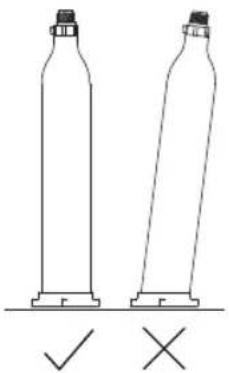
natural_image
Two identical line drawings of a bottle with cap, one marked with checkmark and the other with cross (no text or symbols)natural_image
Pure mechanical diagram showing a vertical support with a base and a circular arrow indicating rotation (no text or symbols)natural_image
Simple line drawing of a mechanical device with downward arrows indicating force or movement (no text or symbols)natural_image
Mechanical component diagram showing a rotating shaft and housing with directional arrows indicating rotation (no text or symbols)natural_image
Cross-sectional diagram of a mechanical component with internal structure and an arrow indicating a specific part (no text or symbols present)text_image
Diagram showing a hand pouring liquid into a bottle with labeled arrows indicating flow directionnatural_image
Diagram of a mechanical device with rotating components and directional arrows (no text or symbols)natural_image
Line drawing of a hand using a dropper to lift liquid (no text or symbols)natural_image
Diagram of a hand pouring liquid into a bottle with a funnel (no text or symbols)natural_image
Diagram of a mechanical device with a rotating shaft and directional arrows indicating motion (no text or symbols)natural_image
Simple line drawing of a vertical cylindrical object with a base, no text or symbols presentnatural_image
Two identical bottle illustrations with a checkmark below, no text or symbols presentnatural_image
Pure mechanical diagram showing a vertical support with a circular base and upward arrow, no text or symbols present.natural_image
Simple line drawing of a mechanical device with downward arrows indicating force or movement (no text or symbols)natural_image
Mechanical component diagram showing a rotating shaft and housing with directional arrows indicating rotation (no text or symbols)natural_image
Cross-sectional diagram of a mechanical component with a central shaft and internal structure (no text or symbols)text_image
Diagram showing a hand pouring liquid from a bottle with labeled arrows indicating flow directionnatural_image
Diagram of a mechanical device with rotating components and directional arrows (no text or symbols)natural_image
Line drawing of a hand using a dropper to lift liquid, no text or symbols presentnatural_image
Line drawing of a hand pouring liquid from a bottle into a container (no text or symbols)Étape 4 - Libérez la pression excessive
natural_image
Diagram of a mechanical device with a rotating shaft and directional arrows indicating motion (no text or symbols)natural_image
Black-and-white still life photo of two empty glasses on a wooden table with a coin base (no text or symbols visible)