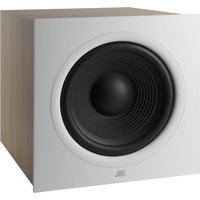
Stage 220P - Subwoofer JBL - Free user manual and instructions
Find the device manual for free Stage 220P JBL in PDF.


| Product Type | Active subwoofer |
| Model | JBL Stage 220P |
| Speaker | 300 mm (12\") ribbed polycellulose long-throw |
| Amplifier | 250 W RMS (500 W dynamic) |
| Frequency Response | 29 Hz - 150 Hz |
| Crossover Frequency | 50 Hz - 150 Hz variable, 24 dB/octave slope |
| Controls | Auto power, filter (crossover), volume, phase |
| Inputs | 1 LFE line-level input (RCA) |
| Subwoofer Design | BassReflex via two rear-firing tuned ports |
| Power Mode | Auto (standby < 0.5 W) or Permanent On |
| Power Supply | 100-120 V / 220-240 V, 50/60 Hz (selectable) |
| Power Consumption | < 0.5 W (standby), 335 W max |
| Dimensions (H x W x D) | 361 x 350 x 385 mm |
| Product Weight | 18.7 kg |
| Shipping Weight | 23.3 kg |
| Finish | Espresso or Latte |
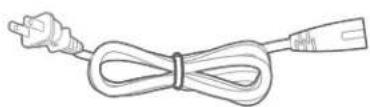
| Supplied Accessories | 4 carpet spikes, power cord |
| Care and Cleaning | Wipe with a soft dry cloth. Do not use abrasive products. |
| Safety | Class II appliance (double insulation). Disconnect before cleaning. |
| Spare Parts and Repairability | Contact JBL after-sales service or an authorized technician. |
Frequently Asked Questions - Stage 220P JBL
User questions about Stage 220P JBL
0 question about this device. Answer the ones you know or ask your own.
Ask a new question about this device
Download the instructions for your Subwoofer in PDF format for free! Find your manual Stage 220P - JBL and take your electronic device back in hand. On this page are published all the documents necessary for the use of your device. Stage 220P by JBL.
USER MANUAL Stage 220P JBL
THANK YOU FOR CHOOSING THIS JBL® PRODUCT
Your new JBL ^® powered subwoofer incorporates a high-performance transducer and built-in amplifier that delivers the powerful, dynamic and accurate low-frequency performance that makes your film soundtracks and music come alive. And with adjustable crossover, phase controls and automatic turn on/off, it is also simple to connect and set up.
INCLUDED ITEMS
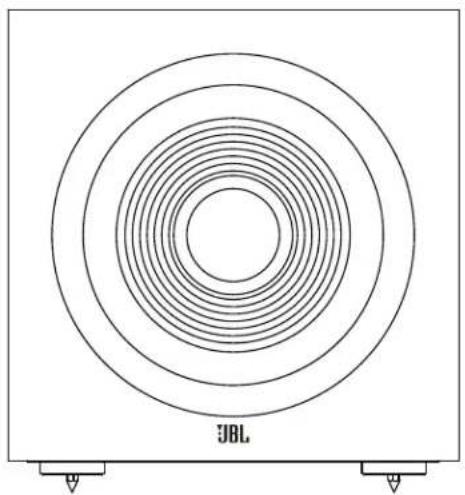
natural_image
Concentric circular pattern with base labeled 'JBL' (no other text or symbols)We're confident that this JBL subwoofer will provide every note of enjoyment that you expect - and that when you think about purchasing additional audio equipment for your home, car or office, you will once again choose JBL products.
This quick-start guide contains all the information you need to set up, connect and adjust your new subwoofer. For more in-depth information, go to our web site: www.jbl.com.
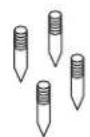
4X
natural_image
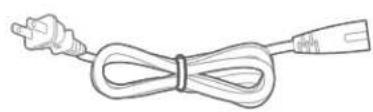
Line drawing of a cord with a plug and cable (no text or symbols)1X
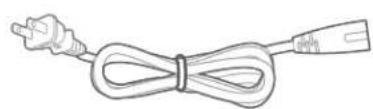
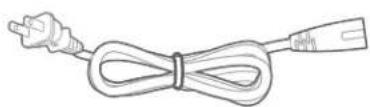
Note: Type of power plug varies by regions.
SUBWOOFER REAR-PANEL CONTROLS AND CONNECTION
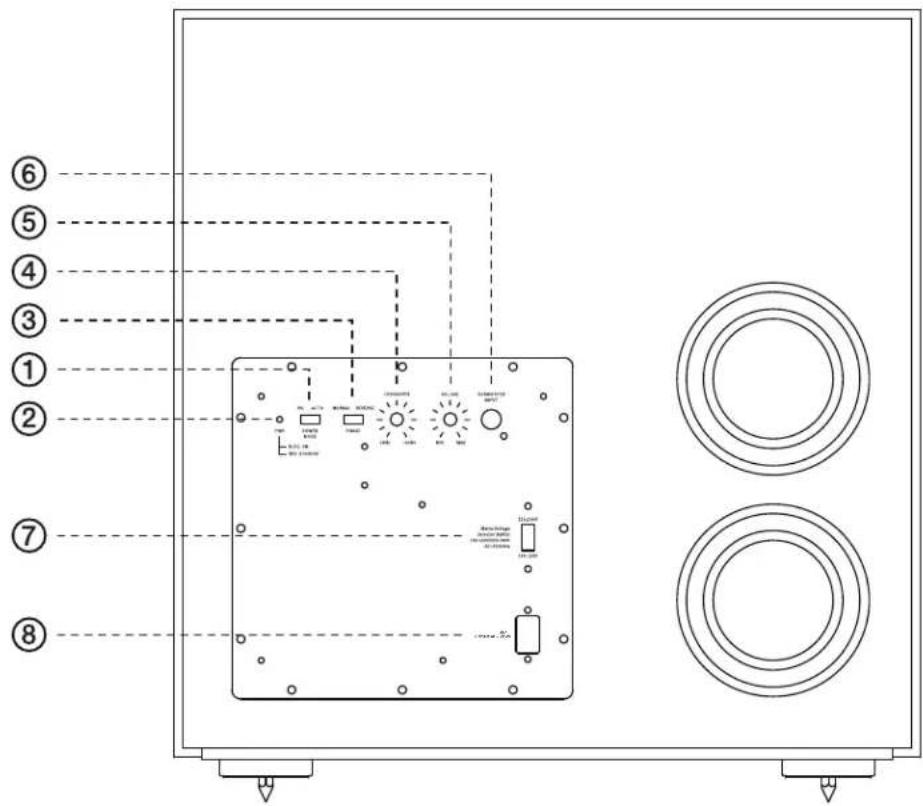
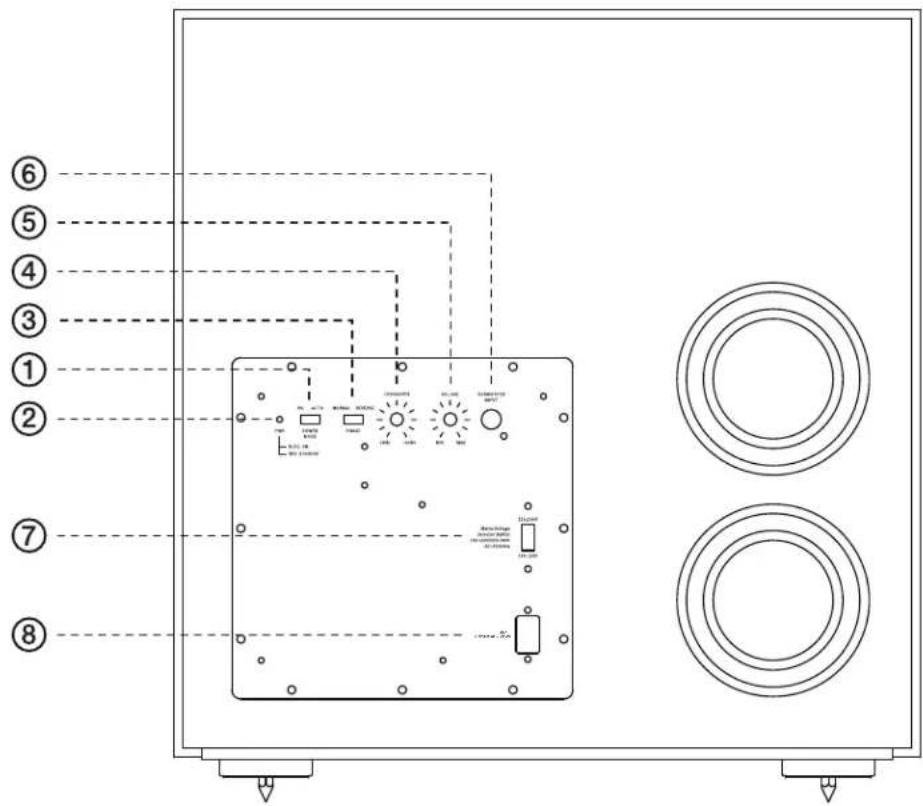
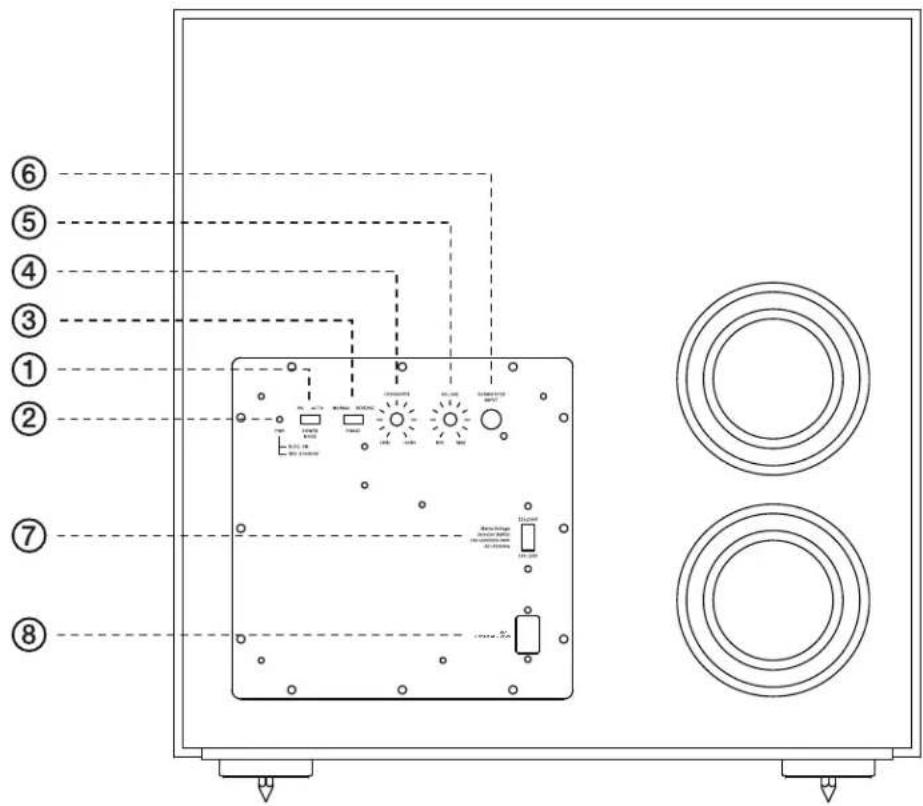
1) Power Mode:
When switched to 'Auto' position, the subwoofer will then be in Standby mode. It will automatically turn on when an audio signal is detected and will return to the Standby mode when no audio signal is detected after approximately 15 minutes. Setting this switch to 'On' keeps the subwoofer powered until the power cord is pulled out. In 'Standby' mode, the power consumption is lower than 0.5W.
2) Power Mode Indicator:
When the Power Indicator is in the 'On' position, this LED indicates whether the subwoofer is in the On or Standby state.
- When the LED glows blue, the subwoofer is turned On.
- When the LED glows red, the subwoofer is in the Standby mode.
3) Phase Switch:
This switch determines whether the subwoofer transducer's piston-like action moves in and out in phase with the main speakers. If the subwoofer were to play out of phase with the main speakers, the sound waves from the main speakers could partially cancel out the sound waves from the subwoofer, reducing bass performance and sonic impact. This phenomenon depends in part on the placement of all the speakers relative to the listening position and to each other in the room.
4) Crossover Control:
This control determines the highest frequency at which the subwoofer reproduces sounds. The higher you set the Crossover control, the higher in frequency the subwoofer will operate and the more its bass will "overlap" that of the speakers. This adjustment helps achieve a smooth transition of bass frequencies between the subwoofer and the speakers for a variety of different rooms and subwoofer locations.
5) Volume:
Use this control to adjust the subwoofer's volume. Turn the knob clockwise to increase the volume; turn the knob counterclock-wise to decrease the volume.
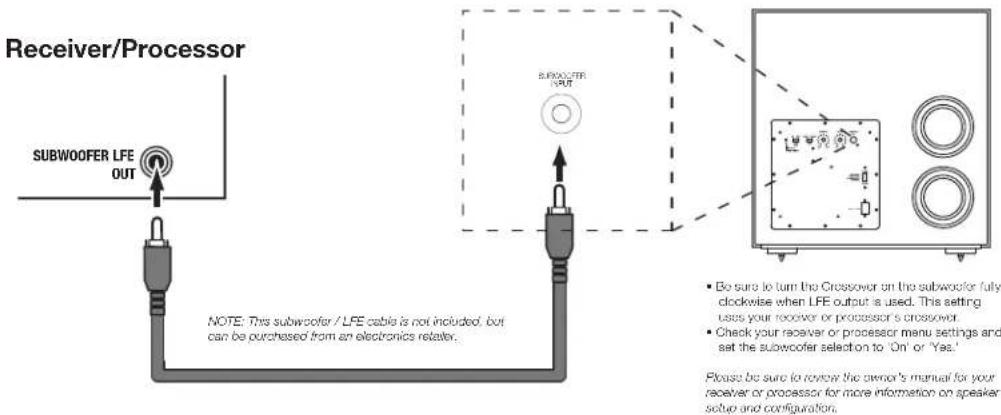
Connect the subwoofer to the dedicated subwoofer / LFE output of a receiver/processor.
7) Main Voltage Selector Switch:
Set this switch up to select voltage 220-240V.
Set this switch down to select voltage 100-120V.
Noted: Must select correct mains voltage before power cord plug in.
8) Power Input:
After you have made and verified the subwoofer's input connection, plug the power cord into an active, unswitched electrical outlet for proper operation of the subwoofer.
DO NOT plug the power cord into the accessory outlets found on some audio components.
PLACING THE SUBWOOFER
The performance of a subwoofer is directly related to its placement in the listening room and its physical position relative to the other speakers in the system.
While it is true that in general our ears do not hear directional sounds at the low frequencies where subwoofer's operate, when installing a subwoofer within the limited confines of a room, the reflections, standing waves and absorptions generated within the room will strongly influence the performance of any subwoofer system. As a result, the specific location of the subwoofer in the room does become important to the amount and quality of bass that is produced.
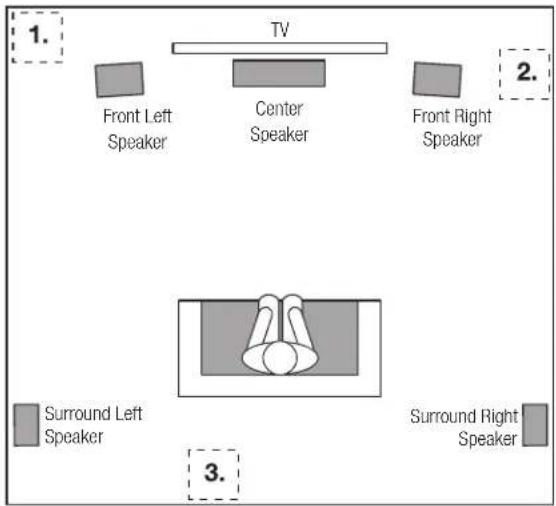
For example, placing the subwoofer next to a wall generally will the increase the amount of bass in the room; placing it in a corner (1) generally will maximize the amount of bass in the room. However, corner placement can also increase the destructive effect of standing waves on bass performance. This effect can vary depending on the listening position - some listening positions may yield very good results while others may have far too much (or too little) bass at certain frequencies.
In many rooms, placing the subwoofer along the same plane as the left and right speakers (2) can produce the best integration between the sound of the subwoofer and that of the left and right speakers. In some rooms, the best performance could even result from placing the subwoofer behind the listening position (3).
We strongly recommend that you experiment with placement before choosing a final location for your subwoofer. One way you can determine the best location for the subwoofer is by temporarily placing it in the listening position and playing music with strong bass content. Move around to various locations in the room while the system is playing (putting your ears where the subwoofer would be placed), and listen until you find the location where the bass performance is best. Place the subwoofer in that location.
CONNECTING THE SUBWOOFER
TO A RECEIVER OR PREAMP/PROCESSOR WITH A LOW-PASS FILTERED DEDICATED SUBWOOFER OUTPUT (LFE)
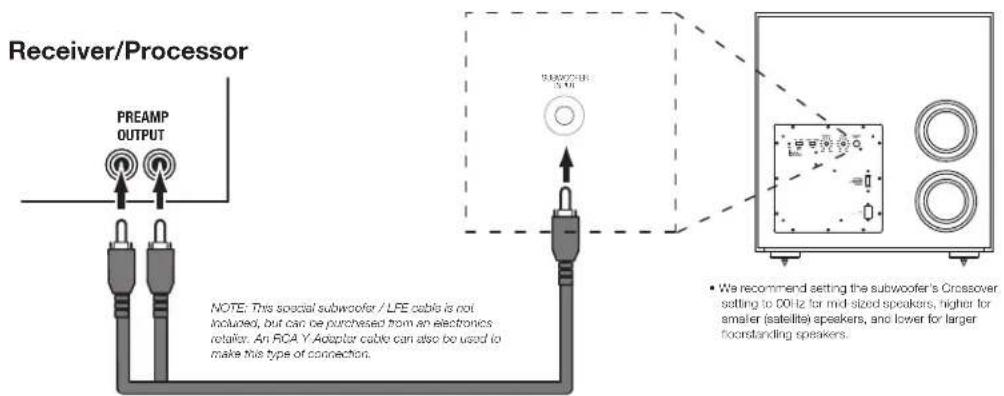
TO A RECEIVER OR PREAMP/PROCESSOR WITH PREAMP OUTPUTS
STAGE 200P
| Type: 10" Powered Subwoofer | |
| Low Frequency Driver: 10" Polycellulose Ribbed High Excursion | |
| Amplifier Power: 150W RMS (300W Dynamic) | |
| Frequency Response: 32Hz-150Hz | |
| Crossover Frequencies: 50Hz-150Hz (variable) 24dB/octave | |
| Controls: 50Hz-150Hz | |
| Controls: Auto Power, Crossover, Level, Phase | |
| Inputs: One (1) Line-Level LFE Input | |
| Enclosure Tuning: Bass-Reflex via Dual Rear-Firing Tuned Ports | |
| Power Requirements: 120V, 60Hz (US) 220-230V, 50/60Hz (EU) | |
| Power Consumption: <0.5W (standby) / 205W/1.6A (max - 230V) / 205W/3.15A (max - 120 V) | |
| Finish: Espresso or Latte | |
| Dimensions (HxWxD): 16.4in x 15.9in x 17.5in(416mm x 405mm x 444mm) | |
| Product Weight: 31.8 lbs. (14.4 kg) | |
| Shipping Weight: 40.3lbs. (18.3kg) | |
| Shipping Units of Measure: Each |
OPERATING THE SUBWOOFER
TURNING THE SUBWOOFER ON AND OFF
Plug the subwoofer into an unswitched wall outlet. Now set the subwoofer's Power Mode to the 'Auto' position. The subwoofer will automatically turn itself on when it receives an audio signal, and it will go into Standby mode after it has received no audio signal for approximately 15 minutes. The subwoofer's LED will glow blue when the subwoofer is on and will glow red when the subwoofer is in Standby.
If you will not be using the subwoofer for an extended period - for instance, if you're going on vacation - The power cord must be removed to turn the subwoofer off.
SUBWOOFER ADJUSTMENTS: CROSSOVER
The Crossover control adjusts the subwoofer's built-in low-pass filter crossover between 50Hz and 150Hz. The higher you set the Crossover control, the higher in frequency the subwoofer will operate and the more its bass will 'overlap' that of the speakers. This adjustment helps achieve a smooth transition of bass frequencies between the subwoofer and the speakers for a variety of different rooms and subwoofer locations.
To set the Crossover control, listen for the smoothness of the bass. If the bass seems too strong at certain frequencies, try a lower Crossover control setting. If the bass seems too weak at certain frequencies, try a higher Crossover control setting.
SUBWOOFER ADJUSTMENTS: VOLUME
Use the volume control to set the subwoofer's volume. Turn the knob clockwise to increase the subwoofer's volume; turn the knob counterclockwise to decrease the volume. Once you have balanced the subwoofer's volume with that of the other speakers in your system, you shouldn't have to change the volume control setting.
Notes on Setting Subwoofer Volume:
- Sometimes the ideal subwoofer volume setting for music is too loud for films, while the ideal setting for films is too quiet for music. When setting the subwoofer volume, listen to both music and films with strong bass content and find a 'middle ground' volume level that works for both.
STAGE 220P
| Type: 12" Powered Subwoofer | |
| Low Frequency Driver: | 12" (300mm) Polycellulose Ribbed High Excursion |
| Amplifier Power: 250W RMS (500W Dynamic) | |
| Frequency Response: 29Hz-150Hz | |
| Crossover Frequencies: 50Hz-150Hz (variable) 24dB/octave | |
| Controls: 50Hz-150Hz | |
| Controls: Auto Power, Crossover, Level, Phase | |
| Inputs: One (1) Line-Level LFE Input | |
| Enclosure Tuning: Bass-Reflex via Dual Rear-Firing Tuned Ports | |
| Power Requirements: 120V, 60Hz (US) 220-230V, 50/60Hz (EU) | |
| Power Consumption: | <0.5W (standby) / 335W/1.6A (max - 230V) / 335W/3.15A (max - 120V) |
| Finish: Espresso or Latte | |
| Dimensions (HxWxD): | 14.2in x 13.8in x 15.2in(361mm x 350mm x 385mm) |
| Product Weight: 41.2 lbs. (18.7 kg) | |
| Shipping Weight: 51.4 lbs. (23.3kg) | |
| Shipping Units of Measure: Each | |
- If your subwoofer always seems too loud or too quiet, you may want to place it in a different location. Placing the subwoofer in a corner will tend to increase its bass output, while placing it away from any walls or corners will tend to lessen its bass output.
SUBWOOFER ADJUSTMENTS: PHASE
The Phase switch determines whether the subwoofer driver's piston-like action moves in and out in phase with the speakers. If the subwoofer were to play out of phase with the speakers, the sound waves from the speakers could partially cancel out the waves from the subwoofer, reducing bass performance and sonic impact. This phenomenon depends in part on the placement of all the speakers relative to each other and the listener(s) in the room.
Although in most cases you should leave the Phase switch in the 'Normal' position, there is no absolutely correct setting for the Phase switch. When the subwoofer is properly in phase with the speakers, the sound will be clearer and have maximum impact, and percussive sounds like drums, piano and plucked strings will sound more life-like. The best way to set the Phase switch is to listen to music that you know well and to set the switch in the position that gives drums and other percussive sounds maximum impact.
USING THE SUPPLIED CARPET SPIKES
Four metal spikes are supplied for use when you place the subwoofer on a carpeted surface. Do not use these spikes when placing subwoofer on non-carpeled surfaces.
To insert the spikes:
- Gently lay the subwoofer on its side (not its front or back) on a soft, nonabrasive surface.
- Screw each spike into the threaded insert in each foot. Make sure all four spikes are screwed in completely for stability.
Note: NEVER drag the subwoofer to move it. Always carefully lift the subwoofer and carry it to its new location.

This equipment is a Class II or double insulated electrical appliance
本设备为Ⅱ类或双绝缘电器
STAGE 200P/220P
MERCI D'AVOIR CHOISI CE PRODUIT JBL®
natural_image
Concentric circular pattern with base labeled 'JBL' (no other text or symbols)natural_image
Line drawing of a cord with a plug and cable, no text or symbols present1X
natural_image
Concentric circular pattern with base labeled 'JBL' (no other text or symbols)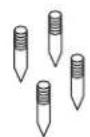
4X
natural_image
Line drawing of a cord with a plug and cable (no text or symbols)1X
注:电源插头的类型因地区而异。
低音炮后面板控件和连接
1) 电源模式:
natural_image
Concentric circular pattern with base labeled 'JBL' (no other text or symbols)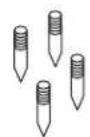
4X
natural_image
Line drawing of a cord with a plug and cable (no text or symbols)1X
附註:電源插頭類型因地區而異。
重低音喇叭後面板控制鈕和連接
1) 電源模式:
Note 1: "Exceeding 0.1 wt%" and "exceeding 0.01 wt %" indicate that the percentage content of the restricted substance exceeds the reference percentage value of presence condition.
Note 2: "o" indicates that the percentage content of the restricted substance does not exceed the percent age of reference value of presence.
Note 3: The "—" indicates that the restricted substance corresponds to the exemption.
STAGE 200P/220P
파워드 서브우퍼

200P/220P
natural_image
Concentric circular pattern with base labeled 'JBL' (no other text or symbols)natural_image
Line drawing of a cord with a plug and cable (no text or symbols)1) 전원 모드:
natural_image
Simple line drawing of a rectangular frame with two side supports and a central label 'JBL' (no other text or symbols)200P/220P
natural_image
Concentric circular pattern with base labeled 'JBL' (no other text or symbols)natural_image
Line drawing of a cord with two connectors, no text or symbols present1) パワーモード:
natural_image
Concentric circular pattern with base labeled 'JBL' (no other text or symbols)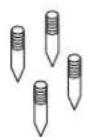
4X
natural_image
Line drawing of a cord with a plug and cable (no text or symbols)1X
1) Modo Power:
Para colocar as ponteiras:
Harman International Industries, Incorporated. 8500 Balboa Blvd, Northridge, CA 91329, UNITED STATES. European Representative: Harman International Industries, Incorporated. EMEA Liaison Office, Danzigerkade 16G, 1013 AP Amsterdam, The Netherlands. UK Business Address: Ground Floor, Westside 2, London Road, Apsley, Hemel Hempstead, Hertfordshire, HP3 9TD, United Kingdom. © 2024 Harman International Industries, Incorporated. All Rights Reserved. JBL is a trademark of Harman International Industries, Incorporated registered in the United States and other countries. Features, Specifications, and Appearance subject to change without notice.
CE UK CA

For additional languages, please visit JBL.com/Specialty Audio/ EN Pour les autres langues, veuillez visiter JBL.com/Specialty-Audio/ FR Para obtener otros diomas, visite JBL.com/Specialty-Audio/ ES Informations in welkore Sprachen lindest du unter JBL.com/Specialty Audio/ DE Para autre lingua, vislare JBL.com/Specialty Audio/ IT Voor andere talan kun je terecht op JBL.com/Specialty Audio/ NL Untuk banasa lainnya, slakan kunungji JBL.com/Specialty-Audio/ ID 他の音語で読むには、JBL.com/Specialty-Audio/ にアクセスしてください 추가 언어에 대해서는 JBL.com/Specialty Audio/ 예시 확인하면서! 処略其他語言,請访问 JBL.com/Specialty-Audio/ CH Para outres idiomas, acease JBL.com/Specialty-Audio/ PT 処略其他語言,請访问 JBL.com/Specialty-Audio/ CH