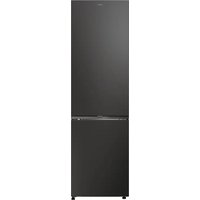
CCUBT5519DW - Fridge CANDY - Free user manual and instructions
Find the device manual for free CCUBT5519DW CANDY in PDF.


User questions about CCUBT5519DW CANDY
0 question about this device. Answer the ones you know or ask your own.
Ask a new question about this device
Download the instructions for your Fridge in PDF format for free! Find your manual CCUBT5519DW - CANDY and take your electronic device back in hand. On this page are published all the documents necessary for the use of your device. CCUBT5519DW by CANDY.
USER MANUAL CCUBT5519DW CANDY
General Indications for Usage
BG 2
CS 10
DA 17
DE 24
EL ....31
EN 39
ES 46
FI ....53
FR 60
HR 67
HU 74
IT 81
NL 88
NO 95
PL 102
PT 109
RO 116
SK 123
SL 130
SR 137
SV 144
RU 151
UA 160
AR 168
Revision A
BG 2
ИНСТАЛИРАНЕ 3
text_image
Two labeled diagrams showing a checkmark and a cross symbol inside water-filled containers, likely indicating inspection or rejection.text_image
Two labeled diagrams showing a checkmark and a cross symbol inside water-filled containers, likely indicating inspection or verification.text_image
Two labeled diagrams showing a checkmark and a cross symbol inside water-filled containers, likely indicating inspection or verification.text_image
Two labeled diagrams showing a checkmark and a cross symbol inside water-filled containers, likely indicating inspection or verification.Before first use....39
Environmental conditions....39
Leveling the appliance ....39
Moving the appliance ....40
TIPS FOR FOOD STORAGE....40
Tips for storing food in the fridge 40
Tips for freezing fresh food....41
Tips for storing food in the freezer 41
CARE AND CLEANING 41
General 41
Replacing the LED-lamps....42
Door opening alarm....42
Non-use for long periods 42
Power interruption 42
Availability of spare parts 42
TROUBLESHOOTING 43
INSTALLATION
WARNING! The appliance is heavy. Always handle with at least two persons.
Before first use
Remove all packaging materials.
Clean the appliance with water and a mild detergent and dry it with soft cloth.
➢ Check if power supply, socket and fusing are appropriate to the rating plate.
➢ Check if the power socket is earthed and no multi-plug or extension is present.
➢ Check if the power plug is accessible after the appliance has been positioned.
➢ Refrigerator and freezer temperature are automatically set at 4^ C and -18°C respectively. These are the recommended settings. If desired, you can change these temperature manually. See Adjust the temperature.
Environmental conditions
This appliance should be installed in a room that is dry and well ventilated.
Do not install the appliance near other heat-emitting appliances (ovens, refrigerators) without isolation or exposed to direct sunlight.
If this appliance is situated in a cold environment (such as a shed, outhouse or garage), the performance will be affected and this may damage the food.
Install this product in a position where the ambient temperature is not lower or higher than the operating temperature: in this case the appliance does not work properly.
- Extended temperate (SN): 'this refrigerating appliance is intended to be used at ambient temperatures ranging from 10 °C to 32 °C'.
- Temperate (N): 'this refrigerating appliance is intended to be used at ambient temperatures ranging from 16 °C to 32 °C'.
- Subtropical (ST): 'this refrigerating appliance is intended to be used at ambient temperatures ranging from 16 °C to 38 °C'.
- Tropical (T): 'this refrigerating appliance is intended to be used at ambient temperatures ranging from 16 °C to 43 °C'.
Levelling the appliance (only for appliances that are equipped with levelling feet)
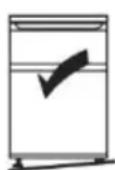
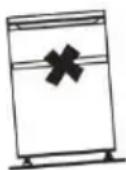
The appliance should be placed on a flat and solid surface
40. Tilt the appliance slightly backwards.
41. Turn the feet clockwise to raise the refrigerator.
42. Turn the feet counter clockwise to lower the refrigerator.
Moving the appliance
- Remove all food and unplug the appliance.
- Secure shelves and other moveable parts in the fridge and in the freezer with adhesive tape.
- Do not tilt the refrigerator more than 45^ to avoid damaging the refrigerating system.
TIPS FOR FOOD STORAGE
Position different food in different compartments according to be below table:
| Refrigerator compartment | Type of food |
| Door or balconies of fridge compartment | Foods with natural preservatives, such as jams, juices, drinks, condimentsDo not store perishable foods |
| Crisper drawers (salad drawer) | Fruits, herbs and vegetables should be placed separately in the crisper binDo not store bananas, onions, potatoes, garlic in the refrigerator |
| Fridge shelf – middle | Dairy products, eggs |
| Fridge shelf – top | Foods that do not need cocking, such as ready-to-eat foods, deli meats, leftovers |
| Freezer drawer(s)/tray | Foods for long-term storageBottom drawer for raw meat, poultry, fishMiddle drawer for frozen vegetables, chipsTop tray for ice cream, frozen fruit, frozen baked goods |
It's suggested to set the temperature at 4^ in the fridge compartment, and, whether possible, at -18^ in the freezer compartment.
For most food categories, the longest storage time in the fridge compartment is achieved with colder temperatures. Since some particular products (as fresh fruits and vegetables) may be damaged with colder temperatures, it is suggested to keep them in the crisper drawers, whenever present. If not present, maintain an average setting of the thermostat.
For frozen food, refer to the storage time written on the food packaging. This storage time is achieved whenever the setting respects the reference temperatures of the compartment (one-star -6°C, two stars -12°C, three stars -18°C)
Tips for storing food in the fridge
Keep your fridge temperature below 5°C.
Hot food must be cooled to room temperature before storing in the appliance.
- Foods stored in the refrigerator should be washed and dried before storing.
Food to be stored should be properly sealed to avoid odour or taste alterations. It is advisable to keep food covered with materials that are tasteless, impermeable to air and water, non-toxic and free of pollution, to avoid contamination or odour transfer.
It is recommended not to obstruct the air outlets of the refrigerator compartment.
Do no store excessive quantities of food. Leave spaces between foods to allow cold air flowing around them, for a better and more homogenous cooling.
Leave a gap between foods and the inner walls, allowing air flowing. In special way don't
store foods against the rear wall, as food could freeze.
The ageing process of some fruit and vegetables (such as melons, papaya, banana, pineapple etc) can be accelerated in the refrigerator; therefore, it is not advisable to store them in the refrigerator. However, the ripening of strongly greed fruits can be promoted for a certain period. Onions, garlic, ginger and other root vegetables should also be stored at room temperature.
Tips for freezing fresh food
The freezer compartment is suitable for freezing fresh food and storing frozen and deep-frozen food for a long time
Place the fresh food to be frozen in the freezer compartment
The maximum amount of food that can be frozen in 24 hours is specified on the rating plate
The freezing process lasts 24 hours: during this period do not add other food to be frozen
Tips for storing food in the freezer
Keep the freezer temperature at -18°C
Hot foot must be cooled to room temperature before storing in the freezer compartment
➢ Food cut into small portions will freeze faster and will be easier to defrost and cook. The recommended weight for each portion is less than 2.5 kg
It is better to pack the food before putting it into the freezer.
Defrosted food cannot be re-frozen unless it is first cooked
Do not load excessive quantities of fresh food in the freezer compartment
➢ Food can be stored in the freezer at a temperature of at least -18^ C for 2 to 12 months, depending on its properties (e.g. meat: 3-12 months, vegetables 6-12 months). Do not exceed the food storage time recommended by the manufacturers.
CARE AND CLEANING
WARNING! Disconnect the appliance from the power supply before cleaning
General
The appliance should be cleaned every four weeks for good maintenance and to prevent bad stored food odours.
Clean the inside and housing of the appliance with lukewarm water and some neutral soap.
➢ Rinse and dry with soft cloth.
Clean the accessories only with lukewarm water and neutral detergent. Make sure that all soap is rinsed off and all parts are dry before replacing them inside the appliance.
Do not clean any of the parts of the appliance in a dishwasher.
Allow at least 5 minutes before restarting the appliance as frequent starting may damage the compressor.
Replacing the LED-lamps
The internal light is a LED type. To replace the lamp, please contact the customer service. See Troubleshooting.
Door opening alarm
When the appliance door is left open for more than 3 minutes, the door opening alarm will sound. The alarm can be silenced by closing the door or by pressing the SET key (this will not affect the temperature setting, it will just mute the alarm).
Non-use for long periods
If the appliance is not used for an extended period of time:
- Take out the food and unplug the power cord.
- Clean the appliance as described in the "Care and cleaning – General" section.
- Keep the door and freezer drawers/door open to prevent the creation of bad odors inside.
Power interruption
In the event of power cut, food should remain safely cold for see rating plate. Follow these tips during a prolonged power interruption, especially in summer:
Open the door/drawer as few times as possible.
Do not put additional food into the appliance during a power interruption.
If prior notice of a power interruption is given and the interruption duration is longer than the amount of hours indicated on the rating plate, make some ice and put it in the top of the refrigerator compartment.
The storage period and edible quality of food will be reduced. Any food that defrosts should be either consumed, or cooked and refrozen (where suitable) in order to prevent health risks.
Availability of spare parts
➢ Thermostats, temperature sensors, printed circuit boards and light sources are available for a minimum period of 7 years after placing the last unit of the model on the market.
➢ Door handles, door hinges, trays and baskets for a minimum period of 7 years and door gaskets for a minimum period of 10 year, after placing the last unit of the model on the market.
TROUBLESHOOTING
In case of a problem please check all shown possibilities and follow below instructions before contacting an after sales service.
| Problem | Possible cause | Possible solution |
| The appliance does not work | The appliance is turned off | Press the ON/OFF key to turn on the appliance |
| Mains plug is not connected in the mains socket | Connect the mains plug | |
| Fuse has blown or is defective | Check the fuse and replace it if necessary | |
| Socket is defective | Mains malfunctions should be corrected by an electrician | |
| The appliance runs frequently or runs for a too long period of time | The indoor or outdoor temperature is too high | It is normal for the appliance to run longer |
| The appliance has been off power for a period of time | Normally, it takes 8 to 12 hours for the appliance to cool down completely | |
| A door/drawer of the appliance is not tightly closed | Close the door/drawer and ensure the appliance is located on a level ground and there is no food or container jarring the door | |
| The inside of the refrigerator is dirty and/or smells | The inside of the refrigerator needs cleaning | Clean the inside of the refrigerator |
| Food of strong odour is stored in the refrigerator | Wrap the food thoroughly | |
| Moisture formation on the inside of the refrigerator | The climate is too warm and too damp | Increase the temperature |
| A door/drawer of the appliance is not tightly closed. | Close the door/drawer | |
| Food containers or liquids are left open | Let hot foods cool to room temperature and cover foods and liquids | |
| Moisture accumulates on the refrigerators outside the surface or between the doors/door and drawer | The climate is too warm and too damp | This is normal in damp climate and will change when the humidity decreases |
| The door/drawer is not closed tightly | Ensure that the door/drawer is tightly shut | |
| Strong ice and frost in the freezer compartment | The goods were not adequately packaged | Always pack the goods well |
| A door/drawer of the appliance is not tightly closed | Close the door/drawer | |
| Unusual noises | The appliance is not at level | Re-adjust the feet |
| The appliance is touching the wall or other objects | Slightly move the appliance | |
| UI Led's are flashing | One of the sensors is out of range | Contact the assistance |
| An alarm is beeping | The fridge storage compartment door is open | Close the door or silence the alarm manually |
| The interior lighting or cooling system does not work | The LED-lamp is out of order | Please call the service for changing the lamp |
During operation, the side walls and perimeter of the freezer compartment may be hot: this is normal and is due to the normal working cycle of the product.
To contact the technical assistance, visit our website: https://corporate.haier-europe.com/en/
Under the section “website”, choose the brand of your product and your country. You will be redirected to the specific website where you can find the telephone number and form to contact the technical assistance.
For further information about the product, please consult https://eprel.ec.europa.eu/ or scan the QR on the energy label supplied with the appliance
ES....46
INSTALACIÓN......46
text_image
Two hand-drawn diagrams showing a checkmark and a cross symbol inside water-filled containers, likely indicating inspection or status.text_image
Two labeled diagrams showing a checkmark and a cross symbol inside liquid containers, likely indicating inspection or verification status.text_image
Two labeled diagrams showing a checkmark inside a container and a cross inside a container, likely indicating inspection or cancellation.text_image
Two labeled diagrams showing a checkmark and a cross symbol inside water-filled containers, likely indicating inspection or rejection.text_image
Diagram showing two containers with checkmarks and a cross symbol, likely indicating inspection or status indicators.text_image
Two labeled diagrams showing a checkmark and a cross symbol inside liquid containers, likely indicating inspection or verification status.text_image
Two labeled diagrams showing a checkmark and a cross symbol inside water-filled containers, likely indicating inspection or verification.Flytte apparatet
text_image
Two hand-drawn diagrams showing a checkmark and a cross symbol inside water containers, likely indicating inspection or cancellation.text_image
Two labeled diagrams showing a checkmark inside a container and a cross inside a container, likely indicating selection or confirmation.Substituir as lâmpadas LED
text_image
Two labeled diagrams showing a checkmark and a cross symbol inside water containers, likely indicating inspection or status.Mutarea aparatului
text_image
Two hand-drawn diagrams showing a checkmark and cross symbol inside water-filled containers, likely indicating inspection or verification status.Presúvanie spotrebiča
text_image
Two labeled diagrams showing a checkmark and a cross symbol inside water-filled containers, likely indicating inspection or status.Premikanje naprave
natural_image
Two identical containers with checkmarks and a cross symbol, no text or labels presentPomeranje uređaja
- Izvadite svu hranu i isključite uređaj.
- Lepljivom trakom osigurajte police i druge pokretne delove u frižideru i u zamrzivaču.
- Nemojte naginjati frižider više od 45° kako biste izbegli oštećenje rashladnog sistema.
SAVETI ZA ČUVANJE HRANE
Različite vrste hrane stavljajte u različite pregrade u skladu sa sledećom tabelom:
| Pregrada u frižideru | Vrsta hrane |
| Pregrade u vratima frižidera | Hrana s prirodnim konzervansima kao što su džemovi, sokovi, pića, začiniNemojte čuvati kvarljivu hranu |
| Providne fioke (salatna fioka) | Voće, začinske biljke i povrće treba stavljati zasebno u providnu pregraduU frižideru nemojte čuvati banane, luk, krompir, beli luk |
| Polica u frižideru – srednja | Mlečni proizvodi, jaja |
| Polica u frižideru – gornja | Hrana koja se ne kuva kao što su gotova jela, delikatesn meso, ostaci hrane |
| Fioka(e) u zamrzivaču | Hrana koja se dugo čuvaDonja fioka za sirovo meso, živinsko meso, ribuSrednja fioka za smrznuto povrće, krompirGornja fioka za sladoled, smrznuto voće, smrznuta peciv |
Preporučuje se da se temperatura frižidera podesi na 4 °C a, kad god je moguće, temperatura zamrzivača na -18 °C.
Za većinu kategorija hrane koju je potrebno duže držati u pregradi frižidera, najbolje je čuvati je na nižim temperaturama. S obzirom da neki proizvodi (kao što su sveže voće i povrće) mogu biti oštećeni na nižim temperaturama, preporučuje se čuvanje u providnim fiokama ako postoje. Ako ne postoje, održavajte prosečna podešavanja termostata.
Kada je reč o smrznutoj hrani, na pakovanju treba videti koje je vreme čuvanja. To vreme čuvanja važi kada se poštuju referentne temperature pregrade (jedna zvezdica -6 °C, dve zvezdice -12 °C, tri zvezdice -18 °C).