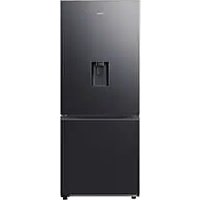
RT18DG6300SR - Freezer SAMSUNG - Free user manual and instructions
Find the device manual for free RT18DG6300SR SAMSUNG in PDF.


User questions about RT18DG6300SR SAMSUNG
0 question about this device. Answer the ones you know or ask your own.
Ask a new question about this device
Download the instructions for your Freezer in PDF format for free! Find your manual RT18DG6300SR - SAMSUNG and take your electronic device back in hand. On this page are published all the documents necessary for the use of your device. RT18DG6300SR by SAMSUNG.
USER MANUAL RT18DG6300SR SAMSUNG
Free Standing Appliance
Contents
Safety information 4
What you need to know about the safety instructions 4
Important safety symbols and precautions: 5
State of California Proposition 65 Warning 5
Important safety precautions 5
Severe warning signs for transportation and site 7
Critical installation warnings 7
Installation cautions 9
Critical usage warnings 9
Usage cautions 12
Cleaning cautions 13
Critical disposal warnings 14
Installation 15
Refrigerator at a glance 15
Step-by-step installation 17
Operations 27
Main panel 27
SmartThings 32
SMART GRID Function (Demand Response) 35
Special features 38
Maintenance 40
Door reversal (applicable models only) 40
Handle and care 53
Cleaning 55
Replacement 56
Troubleshooting 57
General 57
Do you hear abnormal sounds from the refrigerator? 60
SmartThings 62
Smart Grid 63
LIMITED WARRANTY (U.S.A.) 64
SAMSUNG REFRIGERATOR 64
Warranty Information (CANADA) 67
If your refrigerator needs service 67
Limited Warranty for Original Purchaser 67
Obligation to the Original Owner 68
Exclusions of the Warranty 68
Regulatory Notice 69
FCC Notice 69
IC Notice 70
Open Source Announcement 71
Safety information
Before using your new Samsung Refrigerator, please read this manual thoroughly to ensure that you know how to operate the features and functions that your new appliance offers safely and efficiently.
What you need to know about the safety instructions
- This appliance is not intended for use by persons (including children) with reduced physical, sensory or mental capabilities, or lack of experience and knowledge, unless they have been given supervision or instruction concerning use of the appliance by a person responsible for their safety. Children should be supervised to ensure that they do not play with the appliance.
- Because the following instructions cover various models, the characteristics of your refrigerator may differ slightly from the refrigerator described in this manual.
- If you have any question, contact us at 1-800-SAMSUNG or find help and information online at www.samsung.com.
- Refrigerant squirting out of the pipes could ignite or cause an eye injury. When refrigerant leaks from the pipe, avoid any naked flames and move anything flammable away from the product and ventilate the room immediately.
- Failing to do so may result in fire or explosion.
- Improper use of the grounding plug can result in a risk of electric shock. If it is necessary to use an extension cord, use only a 3-wire extension cord that has a 3-blade grounding plug and a 3-slot receptacle that will accept the plug on the appliance. The marked rating of the extension cord should be AC 115-120 V, 10 A, or more. If a grounding adapter is used, make sure the receptacle box is fully grounded.
Important safety symbols and precautions:
Please follow all safety instructions in this manual. This manual uses the following safety symbols.

WARNING
Hazards or unsafe practices that may result in severe personal injury, property damage, and/or death.

CAUTION
Hazards or unsafe practices that may result in severe personal injury and/or property damage.

NOTE
Useful information that helps users understand or benefit from the refrigerator.
These warning signs are here to prevent injury to you and others.
Please follow them carefully.
After reading this section, keep it in a safe place for future reference.
State of California Proposition 65 Warning

WARNING
Cancer and Reproductive Harm - www.P65Warnings.ca.gov.
Important safety precautions
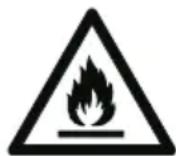
WARNING; Risk of fire / flammable materials

WARNING
- R-600a is used as a refrigerant. This product contains flammable gas (Refrigerant R-600a), contact your local authority in regard to safe disposal of this product.
- In order to avoid the creation of a flammable gas-air mixture if a leak in the refrigerating circuit occurs, the size of the room in which the appliance may be sited depends on the amount of refrigerant used. The room must be 35.3 ft ^3 in size for every 8 g of R-600a refrigerant inside the appliance.
-
The installation location should not be exposed to direct sunlight and not placed near any electric appliance or heat source, e.g. stove, oven or hob, radiator, etc.
-
If you use two products side by side, for safety reason, be sure to use certified products in explosive gas atmospheres.
- Never start up an appliance showing any signs of damage. If in doubt, consult your dealer.
- If the supply cord is damaged, it must be replaced by the manufacturer, its service agent or similarly qualified persons in order to avoid a hazard.
- The socket must be easily accessible so that the appliance can be quickly disconnected from the supply in an emergency. It must be outside the area of the rear of the appliance.
- Do not store explosive substances such as aerosol cans with a flammable propellant in this appliance.
- New hose-sets supplied with the appliance are to be used and that old hose-sets should not be reused.
- When positioning the appliance, ensure the supply cord is not trapped or damaged.
- Do not locate multiple portable socket-outlets or portable power supplies at the rear of the appliance.

WARNING
- Fill with potable water only.
- Keep ventilation openings, in the appliance enclosure or in the built-in structure, clear of obstruction.
- Do not use mechanical devices or other means to accelerate the defrosting process, other than those recommended by the manufacturer.
- Do not damage the refrigerant circuit.
- Do not use electrical appliances inside the food storage compartments of The appliance, unless they are of the type recommended by the manufacturer.
- Connect to potable water supply only.

WARNING
- Risk of child entrapment. Before you throw away your old refrigerator or freezer:
- Take off the doors.
- Leave the shelves in place so that children may not easily climb inside.
This appliance is intended to be used in household and similar applications such as
- staff kitchen areas in shops, offices and other working environments;
- farm houses and by clients in hotels, motels and other residential type environments;
• bed and breakfast type environments;
• catering and similar non-retail applications.
Severe warning signs for transportation and site

WARNING
- When transporting and installing the appliance, care should be taken to ensure that no parts of the refrigerating circuit are damaged.
- Refrigerant leaking from the pipe work could ignite or cause an eye injury. If a leak is detected, avoid any naked flames or potential sources of ignition and air the room in which the appliance is standing for several minutes.
- This appliance contains a small amount of isobutane refrigerant (R-600a), a natural gas with high environmental compatibility that is, however, also flammable.
Critical installation warnings

WARNING
- Do not install the refrigerator in a damp location or place where it may come in contact with water.
- Deteriorated insulation on electrical parts may cause an electric shock or fire.
- Do not place this refrigerator in direct sunlight or expose it to the heat from stoves, room heaters, or other appliances.
- Do not plug several appliances and the refrigerator into the same multiple power strip. The refrigerator should always be plugged into its own individual electrical outlet which has a voltage rating that matches the voltage listed on the refrigerator's rating plate.
- This provides the best performance and also prevents overloading of house wiring circuits, which could overheat the wires and cause a fire hazard.
- If the wall socket is loose, do not insert the power plug.
- There is a risk of electric shock or fire.
- Do not use a power cord that has cracks or abrasion damage along its length or at either end.
- Do not bend the power cord excessively or place heavy objects on it.
- Do not pull or excessively bend the power cord.
- Do not twist or tie the power cord.
- Do not hook the power cord over a metal object, place a heavy object on the power cord, insert the power cord between objects, or push the power cord into the space behind the appliance.
- When moving the refrigerator, be careful not to roll over or damage the power cord. - This may result in an electric shock or fire.
- Never unplug your refrigerator by pulling on the power cord. Always grip the plug firmly and pull straight out from the outlet.
- Damage to the cord may cause a short-circuit, fire, and/or electric shock.
- Do not install this appliance near a heater or flammable material.
- Do not install this appliance in a location where gas may leak.
This may result in an electric shock or fire.
- This refrigerator must be properly located and installed in accordance with the instructions in this manual before you use it.
- Connect the power plug in the proper position with the cord hanging down.
- If you connect the power plug upside down, the wire can get cut off and cause a fire or electric shock.
- Make sure that the power plug is not crushed or damaged by the back of the refrigerator.
- Keep the packing materials out of reach of children.
- There is a risk of death from suffocation if a child puts the packing materials on his or her head.
- The appliance must be positioned so that the plug is accessible after installation.
Failing to do so may result in an electric shock or fire due to electric leakage. - Do not install this appliance in a humid, oily or dusty location, or in a location exposed to direct sunlight or to water (rain drops).
- Deteriorated insulation on electrical parts may cause an electric shock or fire.
- If large amounts of dust or water enter the refrigerator, disconnect the power plug and contact a Samsung Electronics service center.
- Otherwise there is a risk of fire.
- Do not stand on top of the appliance or place objects (such as laundry, lighted candles, lighted cigarettes, dishes, chemicals, metal objects, etc.) on the appliance.
- This may result in an electric shock, fire, problems with the product, or injury.
- You need to remove all the protective plastic film before you initially plug the product in.
- Children should be supervised to ensure that they do not play with the snap rings used for door adjustment or the water tube clips.
- There is risk of death by suffocation if a child swallows a snap ring or water tube clip. Keep the snap rings and water tube clips out of children's reach.
- The refrigerator must be safely grounded.
- Always make sure that you have grounded the refrigerator before attempting to investigate or repair any part of the appliance. Power leakages can cause severe electric shock.
- Never use gas pipes, telephone lines, or other potential lightning attractors as an electrical ground.
- You must ground the refrigerator to prevent any power leakages or electric shocks caused by current leakage from the refrigerator.
- Current leakage may result in an electric shock, fire, explosion, or problems with the product.
- Plug the power plug into the wall socket firmly. Do not use a damaged power plug, damaged power cord, or loose wall socket.
- This may result in an electric shock or fire.
- Only a qualified technician or service company should be allowed to change the fuse in the refrigerator.
- Failing to do so may result in an electric shock or personal injury.
Installation cautions

CAUTION
- Allow sufficient space around the refrigerator and install it on a flat surface.
- Keep the ventilation space in the appliance enclosure or mounting structure clear of obstructions.
- After you have installed the refrigerator and turned it on, allow the appliance to stand for 2 hours before loading it with food.
- It is strongly recommended you have a qualified technician or service company install the refrigerator.
- Failing to do so may result in an electric shock, fire, explosion, problems with the product, or injury.
• Overloading one door may make the refrigerator fall, causing physical injury.
Critical usage warnings

WARNING
- Do not insert the power plug into a wall socket with wet hands.
- This may result in an electric shock.
- Do not store articles on the top of the appliance.
- When you open or close the door, the articles may fall and cause personal injury and/or material damage.
- Do not insert hands, feet, or metal objects (such as chopsticks, etc.) into the bottom or the back of the refrigerator.
- This may result in an electric shock or injury.
- Any sharp edges may cause a personal injury.
- Do not touch the inside walls of the freezer or products stored in the freezer with wet hands.
- This may cause frostbite.
- Do not put a container filled with water on the refrigerator.
- If spilled, there is a risk of fire or electric shock.
- Do not keep volatile or flammable objects or substances (benzene, thinner, propane gas, alcohol, ether, LP gas, and other such products) in the refrigerator.
- This refrigerator is for storing food only.
- This may result in fire or explosion.
• Children should be supervised to ensure that they do not play with the appliance. - Keep fingers out of "pinch point" areas. Clearances between the doors and cabinet are necessarily small. Be careful when you open the doors if children are in the area.
- Do not let children hang on the door or door bins. A serious injury may occur.
- Do not let children go inside the refrigerator. They could become trapped.
- Do not insert your hands into the area under the appliance.
-
Any sharp edges may cause personal injury.
-
Do not store pharmaceutical products, scientific materials, or temperature sensitive products in the refrigerator.
- Products that require strict temperature controls must not be stored in the refrigerator.
- Do not place or use electrical appliances inside the refrigerator/freezer, unless they are of a type recommended by the manufacturer.
- If you smell smoke, pull out the power plug immediately, and then contact a Samsung Electronics service center.
- If large amounts of dust or water enter the refrigerator, disconnect the power plug and contact your Samsung Electronics service center.
- Otherwise there is a risk of fire.
- Do not let children step on a drawer.
- The drawer may break and cause them to slip.
- Do not leave the doors of the refrigerator open while the refrigerator is unattended and do not let children enter the refrigerator.
- Do not allow babies or children to go into a drawer.
- It can cause death from suffocation by entrapment or personal injury.
- Do not overfill the refrigerator with food.
- When you open the door, an item may fall out and cause personal injury or material damage.
- Do not spray volatile material such as insecticide onto the surface of the appliance.
- As well as being harmful to humans, it may also result in an electric shock, fire, or problems with the product.
- Never put fingers or any objects into the water dispenser outlet, ice chute, or ice maker bucket.
- It may cause a personal injury or material damage.
- Do not use or place any substances sensitive to temperature such as flammable sprays, flammable objects, dry ice, medicine, or chemicals near or inside the refrigerator.
- Do not use a hair dryer to dry the inside of the refrigerator. Do not place a lighted candle in the refrigerator to remove bad odors.
- This may result in an electric shock or fire.
- Fill the water tank and ice cube trays with potable water only (tap water, mineral water, or purified water).
- Do not fill the tank with tea, juice, or a sports drink. They can damage the refrigerator.
- Do not stand on top of the appliance or place objects (such as laundry, lighted candles, lighted cigarettes, dishes, chemicals, metal objects, etc.) on the appliance. This may result in an electric shock, fire, problems with the product, or injury. Do not put a container filled with water on the appliance.
- If spilled, there is a risk of fire or electric shock.
- Never stare directly at the UV LED lamp for long periods of time.
This may result in eye strain due to the ultraviolet rays. - Do not put a fridge shelf into the refrigerator upside down. The shelf stopper will not work.
- The glass shelf could fall and cause personal injury.
- Keep fingers out of “pinch point” areas. Clearances between the doors and cabinet are necessarily small. Be careful when you open the doors if children are in the area.
- If a gas leak is detected, avoid any naked flames or potential sources of ignition, and air the room in which the appliance is standing for several minutes.
- Do not touch the appliance or power cord.
- Do not use a ventilating fan.
- A spark may result in an explosion or fire.
- Use only the LED Lamps provided by the manufacturer or its service agents.
- Bottles should be stored tightly together so that they do not fall over or out.
- This product is intended only for the storage of food in a domestic environment.
- Never put fingers or any objects into the water dispenser outlet, ice chute, or ice maker bucket.
- This can cause a personal injury or material damage.
- Do not attempt to repair, disassemble, or modify the refrigerator yourself.
- Unauthorized modifications can cause safety problems. To reverse an unauthorized modification, we will charge the full cost of parts and labor.
- Do not use any fuse (such as cooper, steel wire, etc.) other than a standard fuse.
- If your refrigerator needs to be repaired or reinstalled, contact your nearest Samsung service center.
- Failing to do so may result in an electric shock, fire, problems with the product, or injury.
- If the interior or exterior LED lamp has gone out, contact your nearest Samsung service center.
- If the refrigerator emits a burning smell or smoke, unplug the refrigerator immediately and contact a Samsung service center.
- Failing to do so may result in an electric or fire hazards.
- Pull the power plug out of the socket before changing the interior lamps of the refrigerator.
- Otherwise, there is a risk of electric shock.
- If you experience difficulty changing a non-LED light, contact a Samsung service center.
- If the product is equipped with LED lamps, do not disassemble the Lamp Covers and LED lamps yourself.
- Contact a Samsung service center.
- Plug the power plug into the wall socket firmly.
- Do not use a damaged power plug, damaged power cord, or loose wall socket.
- This may result in an electric shock or fire.
Usage cautions

CAUTION
- Do not re-freeze frozen foods that have thawed completely.
-
Use only the ice maker provided with the refrigerator.
• To get the best performance from the product: -
Do not place food too close to the vents at the rear of the refrigerator as this can obstruct free air circulation in the refrigerator compartment.
- Wrap food up properly or place it in airtight containers before putting it into the refrigerator.
- Please observe maximum storage times and expiration dates of frozen goods.
- Do not put glass containers or bottles or carbonated beverages into the freezer.
- The container may freeze and break, and this may result in injury.
• Service Warranty and Modification.
- Any changes or modifications performed by a 3rd party on this finished appliance are not covered under Samsung warranty service, nor is Samsung responsible for safety issues that result from 3rd party modifications.
- Do not block the air vents inside the refrigerator.
- If the air vents are blocked, especially with a plastic bag, the refrigerator can be over cooled. If a cooling period lasts too long, the water filter may break and cause water leakage.
- If the refrigerator is disconnected from the power supply, you should wait for at least five minutes before plugging it back in.
- If large amounts of water enter the refrigerator, pull out the power plug and contact a Samsung service center.
- Do not strike or apply excessive force to any glass surface.
- Broken glass may result in a personal injury and/or property damage.
- Fill the water tank and ice cube trays with potable water only (tap water, mineral water, or purified water).
- Do not fill the tank with tea, juice, or a sports drink. They can damage the refrigerator.
- If the refrigerator is flooded, shut off the power to the refrigerator and contact your nearest Samsung service center.
- There is a risk of electric shock or fire.
natural_image
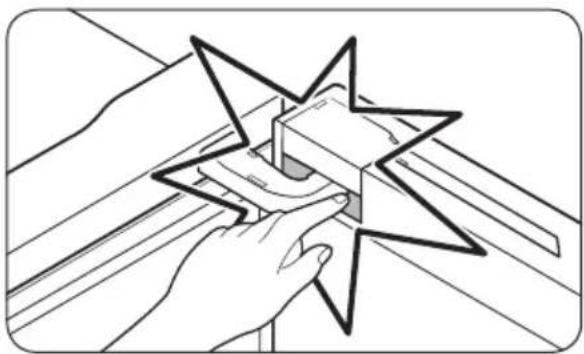
Illustration of hands assembling a star-shaped mechanical component (no text or symbols)- Be careful that your fingers do not get caught in the door or the space between the door and the door hinge.
- Do not keep vegetable oil in your refrigerator's door bins. The oil can solidify, making it foul-tasting and difficult to use. In addition, the open container can leak and the leaked oil can cause the door bin to crack. After opening an oil container, it is best to keep the container in a cool and shaded place such as a cupboard or pantry.
- Examples of vegetable oil: olive oil, corn oil, grape-seed oil, etc.
Cleaning cautions

CAUTION
- Do not spray water directly on the inside or outside of the refrigerator.
- There is a risk of fire or electric shock.
- Do not use a hair dryer to dry the inside of the refrigerator.
- Do not place a lighted candle in the refrigerator to remove bad odors.
- This may result in an electric shock or fire.
- Do not spray cleaning products directly on the display.
- Printed letters on the display may come off.
- If any foreign substance such as water has entered the appliance, unplug the power plug and contact your nearest Samsung service center.
- Failing to do so may result in an electric shock or fire.
- Use a clean, dry cloth to remove any foreign matter or dust from the power plug blades.
Do not use a wet or damp cloth when cleaning the plug. - Otherwise, there is a risk of fire or electric shock.
- Do not clean the appliance by spraying water directly onto it.
- Do not use benzene, thinner, or Clorox (bleach) to clean the refrigerator.
- They may damage the surface of the appliance and may cause a fire.
- Never put fingers or any objects into the dispenser outlet.
- This can cause a personal injury or material damage.
- Before cleaning or performing maintenance, unplug the appliance from the wall socket.
- Failing to do so may result in an electric shock or fire.
- Use a clean sponge or soft cloth and a mild detergent in warm water to clean the refrigerator.
- Do not use abrasive or harsh cleansers such as window sprays, scouring cleansers, flammable fluids, muriatic acid, cleaning waxes, concentrated detergents, bleaches, or cleansers containing petroleum products on exterior surfaces (doors and cabinet), plastic parts, door and interior liners, and gaskets.
- These can scratch or damage the material.
- Do not clean glass shelves or covers with warm water when they are cold. Glass shelves and covers may break if exposed to sudden temperature changes or impacts such as bumping or dropping.
Critical disposal warnings

WARNING
• Children trapped inside a refrigerator can hurt themselves or suffocate to death.
- Please dispose of the packaging material from this product in an environmentally friendly manner.
- Ensure that none of the pipes on the back of the refrigerator are damaged prior to disposal.
- This product contains R-600a, a flammable gas, which is used as the refrigerant. Contact your local authorities regarding safe disposal of this product.
- When disposing of this refrigerator, remove the door/door seals and door latch so that small children or animals cannot become trapped inside. Children should be supervised to ensure that they do not play with the appliance.
- If trapped inside, the child could be injured or suffocate to death.
- Cyclopentane is used in the insulation. The gases in the insulation material require a special disposal procedure. Please contact your local authorities in regard to the environmentally safe disposal of this product.
- Keep all packaging materials well out of the reach of children, as packaging materials can be dangerous to children.
- If a child places a bag over his or her head, the child could suffocate.
Installation
Follow these instructions carefully to ensure the proper installation of this refrigerator and to prevent accidents before using it.

WARNING
- Use the refrigerator only for its intended purpose as described in this manual.
- Any servicing must be performed by a qualified technician.
- Dispose of the product packaging material in compliance with the local regulations.
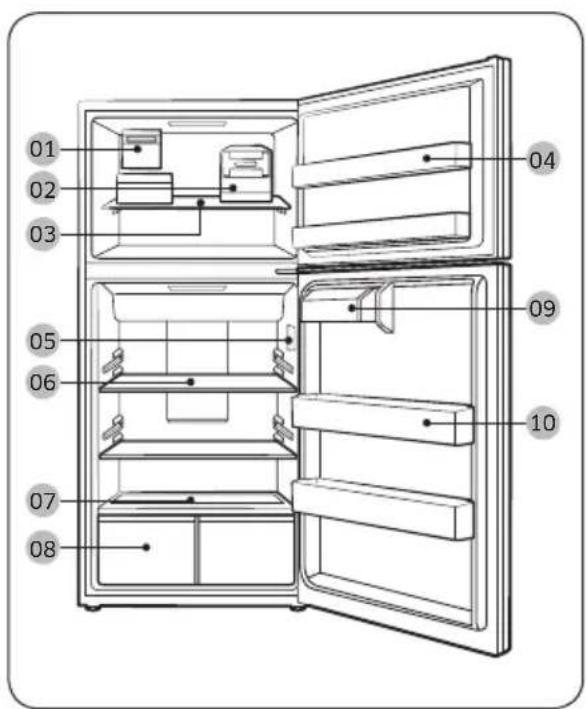
Refrigerator at a glance

NOTE
The illustrations of the refrigerator and its component parts shown in this manual may differ from your actual refrigerator and its component parts, depending on the model and your country.
text_image
01 02 03 04 05 06 07 08 09 1001 Auto Ice Maker *
02 Twist Ice Maker **
03 Freezer shelf
04 Freezer door bin
05 Main panel
06 Refrigerator shelves
07 Vegetable shelf
08 Vegetable Drawer
09 Dairy bin
10 Fridge door bin
* There are models that include the Auto Ice Maker, and there are some models that allow Auto Ice Maker installation after separate purchase of the Auto Ice Maker kit.
** applicable models only
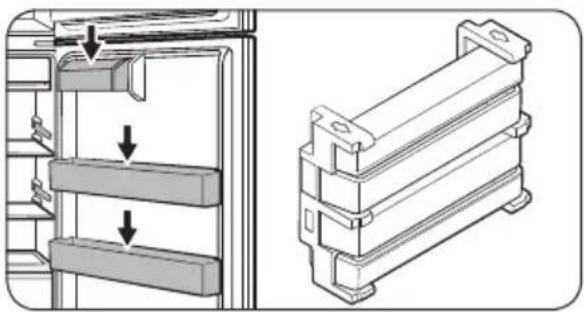
Door bins
natural_image
Technical illustration of a mechanical assembly with two views: top shows internal components, bottom shows a 3D model of a multi-layered housing (no text or symbols)Your refrigerator ships with door bins of different types and sizes. If the door bins for your refrigerator were packaged separately, assemble them in the correct position according to the figure.
NOTE
The actual refrigerator and provided component parts of your refrigerator may differ from the illustrations in this manual, depending on the model and the country.
Step-by-step installation
STEP 1 Select a site
Select a site that:
- Has a solid, level surface without carpeting or flooring that may obstruct ventilation
• Is away from direct sunlight - Has adequate room for opening and closing the door
• Is away from any heat sources - Provides room for maintenance and servicing
- Has a temperature range between 50^ (10 °C) and 109^ (43 °C)
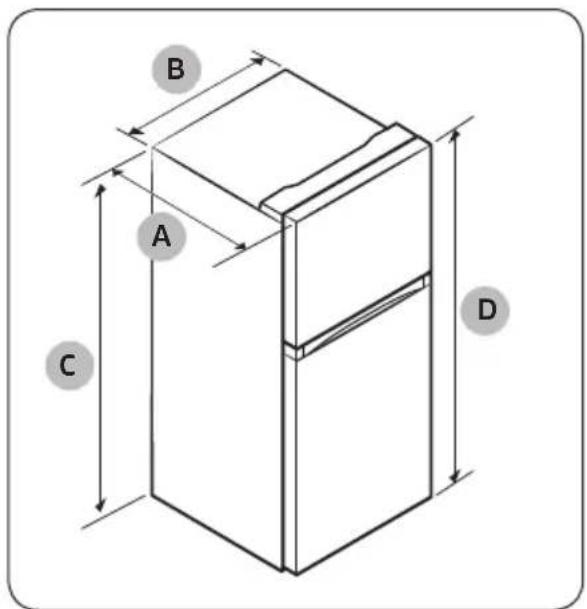
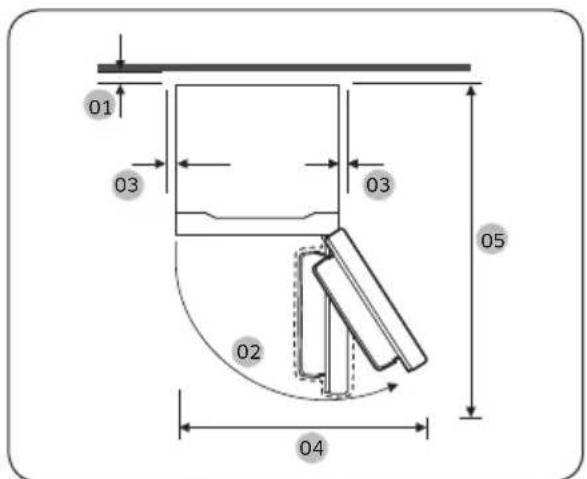
Clearance
See the pictures and table below for space requirements for installation.
text_image
B A C D| Model RT18* RT21* | ||
| Depth "A" | 31 ^7/_8 " (810 mm) | 31 ^7/_8 " (810 mm) |
| Width "B" | 28 ^3/_4 " (729 mm) | 32 ^7/_8 " (836 mm) |
| Height "C" | 65 ^3/_4 " (1669 mm) | 66 ^3/_4 " (1694 mm) |
| Overall Height "D" | 66 ^3/_4 " (1697 mm) | 67 ^3/_4 " (1722 mm) |
text_image
01 03 03 05 02 04| Model RT18* RT21* | ||
| 01 | more than 2" (50 mm) recommended | |
| 02 121° 121° | ||
| 03 | more than 1" (25 mm) recommended | |
| 04 | 44" (1117 mm) | 50 ^2/_5 " (1280 mm) |
| 05 | 57 ^7/_8 " (1470 mm) | 59 ^7/_8 " (1521 mm) |
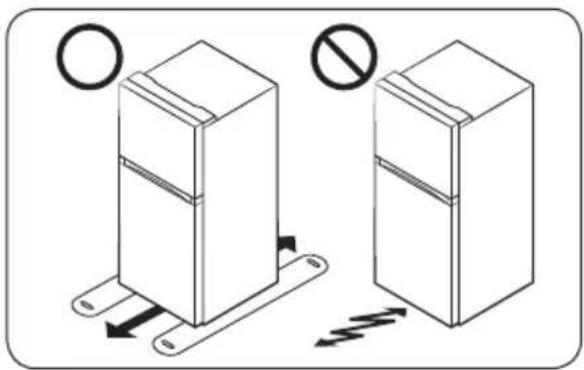
STEP 2 Flooring
natural_image
Diagram showing two refrigerator units with a circular symbol and a prohibition sign, no text or labels present.- The surface you install the refrigerator on must support a fully loaded refrigerator. (Approximately 200 lb or 90 kg.)
• To protect the floor, put a large piece of cardboard along the path to the refrigerator's final installation location. - Once the refrigerator is in its final position, do not move it unless necessary to protect the floor. If you have to move the refrigerator, place thick paper or cloth such as old carpets along the path of movement.
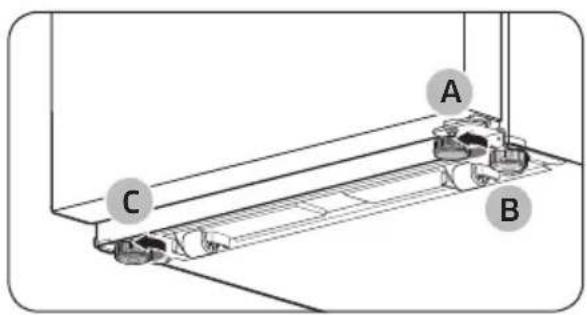
STEP 3 Leveling the refrigerator
text_image
A B CThe refrigerator comes with 3 leveling legs, 1 on the door and 2 on the unit. Level the refrigerator by manually adjusting the leveling leg (A) on the door and the leveling leg (C) on the opposite side of the unit. The other leveling leg (B) on the unit is for stability purposes.
Turn the leveling legs clockwise to lower the position, or turn counter clockwise to raise.
CAUTION
- In all cases including door reversal, to prevent the refrigerator from tipping, make sure the leveling leg (A) on the door is on the floor and fully supporting the weight of the door.
- Using only 2 legs on the unit can cause the refrigerator to tip over.
text_image
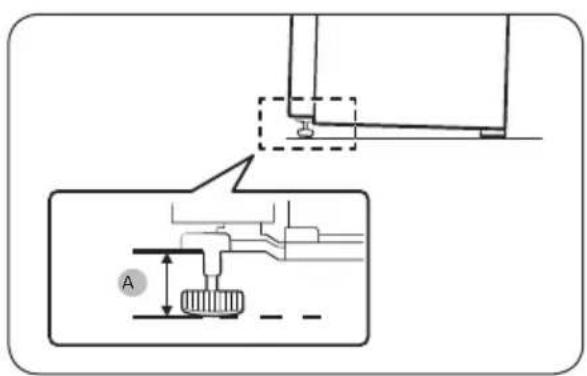
Technical diagram showing mechanical assembly with labeled component 'A' and dashed outline annotationLeave the legs at least (A) mm from the floor as shown.
• (A) 39 mm for RT18*
• (A) 43 mm for RT21*
STEP 4 Install the ice maker and connect the water line (Applicable models only)
If your model supports the optional Auto Ice Maker (part type: RA-TIMO63PP/AA) installation, you can purchase and install the Auto Ice Maker separately.
- To purchase the Auto Ice Maker, visit the Samsung website (www.samsung.com) or contact your retailer.
- To use the ice maker, you must connect the water line to it. For the ice maker to operate properly, a water pressure of 20 - 125 psi (138 - 862 kPa) is required.
- For detailed instructions on the installation of the Auto Ice Maker, refer to the installation manual enclosed with the Auto Ice Maker kit.

CAUTION
Do not install or uninstall the Auto Ice Maker while the refrigerator is operating.
STEP 5 Connect the water line (Applicable models only)
You must connect a water line from the main water supply to your refrigerator to use the water dispenser or the auto ice maker.

CAUTION
- To prevent burns and product damage, do not connect the water line to a hot water source.
- Do not install the water line in areas where temperatures fall below the freezing point.
- If water is not supplied to the refrigerator, make sure to turn the ice maker off.

NOTE
- All installations must be in accordance with local plumbing code requirements.
- To purchase additional water filters, contact the manufacturer or the retailer of the filter.
- We recommend using a kit that contains copper tubing and a 6 mm ( ^1/_4 ) compression nut.
- The water filter must be replaced as instructed by the manufacturer or the retailer.
- Leaving the water line disconnected may cause the water valve to produce a buzzing sound over time.
Water pressure
The water pressure supplied to the refrigerator must meet the following requirements:
| Minimum Maximum | |
| 20 psi (138 kPa) 125 psi (862 kPa) | |
If the refrigerator is installed in an area where minimum water pressure cannot be met, you can install a booster pump to compensate for the low water pressure.
Connect the water supply line to the main water supply

NOTE
- Only connect the water line to potable water.
- Water line installation kits are available at extra cost from your retailer. We recommend using a water line installation kit that contains copper tubing and a 1/4 ” (6 mm) compression nut.
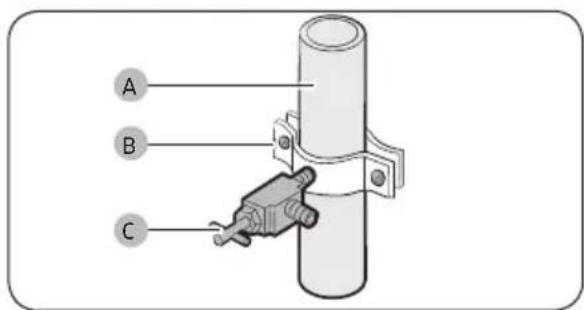
text_image
A B C- Shut off the main water supply.
- Insert the pipe clamp (B) and the shutoff valve (C) into the cold water line (A).
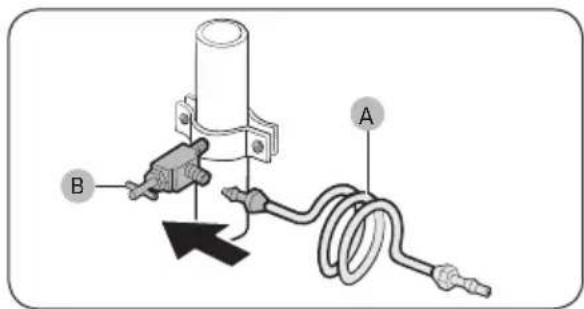
text_image
Diagram of a mechanical or electrical component with labeled parts A and B, showing connections and directional arrows.- Connect the water line installation kit (A) to the shutoff valve (B).
Connect the water supply line to the refrigerator
There are several items you must purchase to complete this connection. You may find these items sold as a kit at your local hardware store.
| Copper Tubing | ^1/_4" copper tubing ^1/_4" compression nut (1 pc)Ferrule (2 pcs) |
| Plastic Tubing | ^1/_4" plastic tubing with molded end (Bulb) ^1/_4" compression nut (1 pc) |
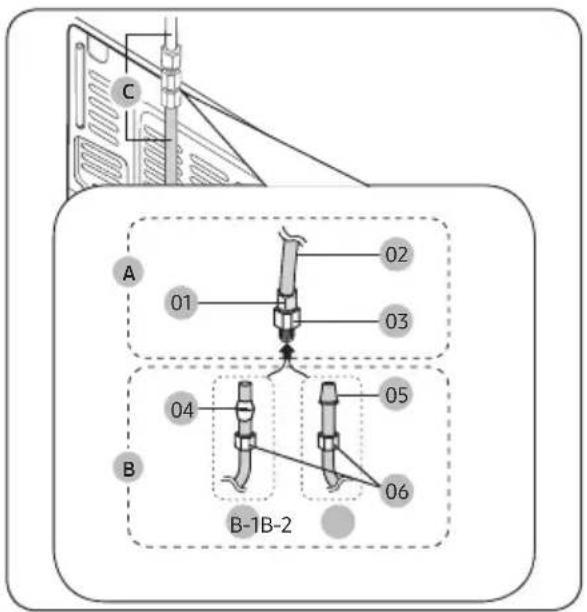
text_image
C A 01 02 03 04 05 06 B B-1B-2| A The water line from the refrigerator | |
| 01 | Compression nut (1/4") (Assembled) |
| 02 Plastic tubing (Assembled) | |
| 03 | Compression fitting(Assembled) |
| B The water line from the main water supplyNOTEYou can choose the water line from the main water supply to be copper tubing (B-1) or plastic tubing (B-2). | |
| B-1 | Copper tubing (Not supplied) |
| B-2 | Plastic tubing (Not supplied) |
| 04 Ferrule (Not supplied) | |
| 05 Molded end (Bulb) | |
| 06 | Compression nut (1/4") (Not supplied) |
| C Water lineNOTEAssemble water lines must be kept straight. | |
-
Connect the water line from the main water supply (B) to the assembled compression fitting (03).
-
If you are using copper tubing (B-1), slip the compression nut (06) (not supplied) and ferrule (04) (not supplied) on the copper tubing (B-1) (not supplied) as shown in the figure.
- If you are using plastic tubing (B-2), insert the molded end (Bulb) (05) of the plastic tubing (B-2) (not supplied) into the compression fitting (03).

CAUTION
- If you use plastic tubing (B-2), do not use it without the molded end (Bulb) (05).
-
Leaving the water line disconnected may cause the water valve to produce a buzzing sound over time. If this is the case, make sure that the ice making function is turned off and do not attempt to use the water dispenser.
-
Tighten the compression nut (06) onto the compression fitting (03). Do not over-tighten the compression nut (06).
- Turn the water on and check for any leakage. If you find water drops or leakage in the connection areas, turn off the main water supply. Check the connections and, if necessary, tighten.
- After you turn on the refrigerator, let the ice maker make ice for 1 to 2 days. Over that period of time, throw out the first 1 or 2 buckets of ice the ice maker makes to ensure all impurities have been removed from the water line.

CAUTION
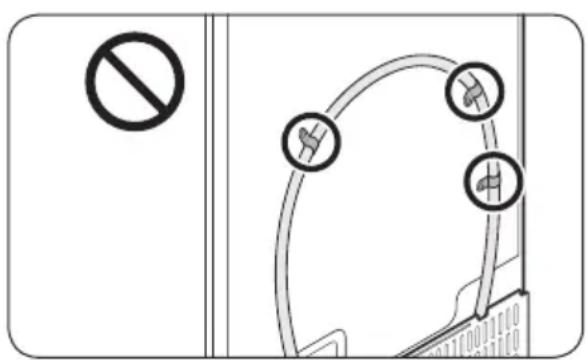
text_image
Diagram showing a prohibition symbol and three circular icons with arrows pointing to a device or device interior, likely indicating a safety or monitoring mechanism.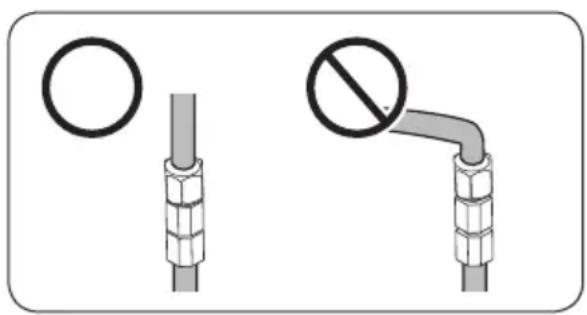
text_image
Safety warning illustration showing a pipe with a circular symbol and a prohibition sign for no hazard- Do not mount the water filter or water line on any part of the refrigerator. This may damage the refrigerator.
- If you have to relocate the refrigerator after connecting the water line, make sure the joined section of the water line is straight.
NOTE
If you have to repair or disassemble the water line, cut off 14 " of the plastic tubing to make sure you get a snug, leak-free connection.
Install a Water Filter
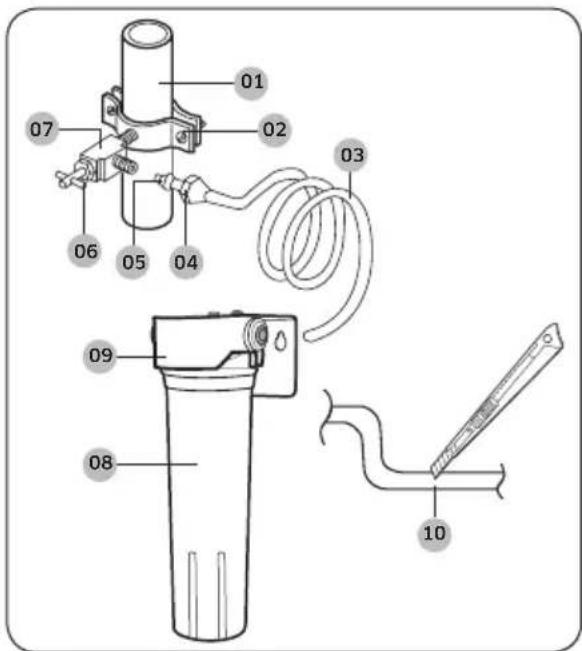
The water filter and the water filter installation kit containing necessary parts illustrated in this section are not provided. You must purchase the water filter and the water filter installation kit at a local hardware store.
To connect to the water supply line
text_image
Technical diagram of a mechanical device with numbered components and labeled parts01 Cold water line
02 Pipe clamp
03 Plastic line
04 Compression nut
05 Compression sleeve
06 Packing nut
07 Shut off valve
08 Filter cartridge
09 Cartridge holder
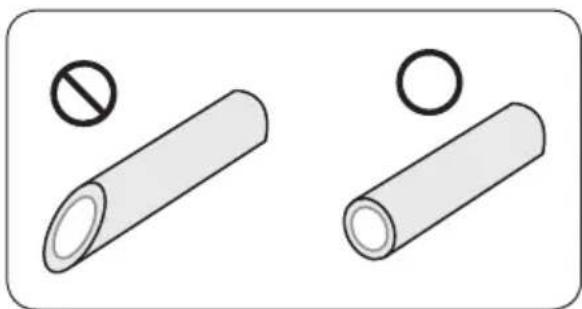
10 Cut vertically by 90 degrees
- Shut off the main water line and turn the ice maker off.
- Locate the nearest cold potable water line.
- Follow the instructions mentioned in the water filter installation kit.
- After connecting the water line to the inlet of the cartridge holder with the plastic line fully inserted, insert and tighten the filter cartridge.
- Turn on the water line and flush 11 liters of water (approximately 6 minutes) through the filter before use.
natural_image
Two cylindrical objects with circular holes and a prohibition symbol, no text or labels presentCAUTION
- The water line must be connected outside of the refrigerator.
- Do not use copper lines.
- If cutting the tubing for resizing, make sure the ends of the tubing are vertically clean cut.
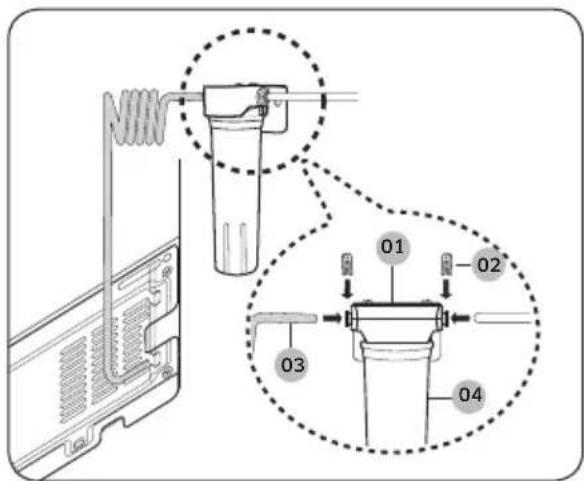
To connect the water line to the refrigerator
text_image
Technical diagram showing mechanical assembly with labeled components and dashed circular annotations01 Cartridge holder
02 Plastic clip
03 Plastic line
04 Filter cartridge
-
Connect the plastic line from the rear of the refrigerator to the outlet of the cartridge holder until the plastic line is fully inserted.
-
Clamp both ends of the cartridge holder using the plastic clips.
-
Turn the water line on and check for leaks.

CAUTION
• Use only potable water.
• The filter cartridge is not provided. You must purchase it at a local hardware store.
- When moving the refrigerator for line connection, use caution so that you don't step on the power cord or water line.
STEP 6 Initial settings
By completing the following steps, the refrigerator should be fully functioning.
- Plug the power cord into the wall socket to turn the refrigerator on.
- Open the door, and check if the interior light lights up.
- Set the temperature to the coldest setting, and wait for about an hour. Then, the freezer should be slightly chilled, and the motor should be running smoothly.
- Wait until the refrigerator reaches the set temperature. The refrigerator is now ready for use.
STEP 7 Final check
When installation is complete, confirm that:
- The refrigerator is plugged into an electrical outlet and grounded properly.
- The refrigerator is installed on a flat, level surface with a reasonable clearance from the wall or the cabinet.
- The refrigerator is level and is sitting firmly on the floor.
- The door opens and closes freely, and the interior light turns on automatically when you open the door.
Main panel
Type A
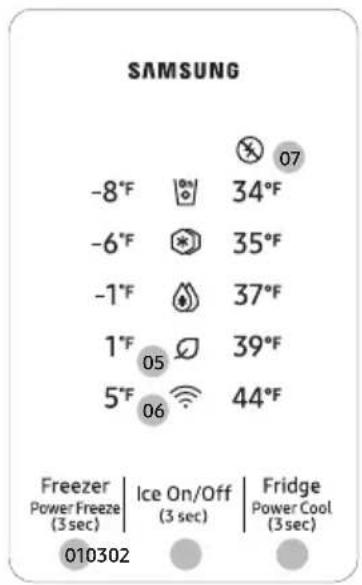
text_image
SAMSUNG -8°F 34°F -6°F 35°F -1°F 37°F 1°F 05 39°F 5°F 06 44°F Freezer | Ice On/Off | Fridge Power Freeze (3 sec) (3 sec) Power Cool (3 sec) 010302Type B
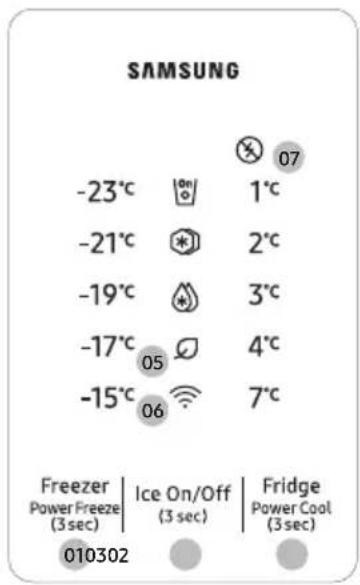
text_image
SAMSUNG -23°C 1°C -21°C 2°C -19°C 3°C -17°C 4°C -15°C 7°C 05 06 Freezer | Ice On/Off | Fridge Power Freeze (3 sec) (3 sec) Power Cool (3 sec) 010302Type C
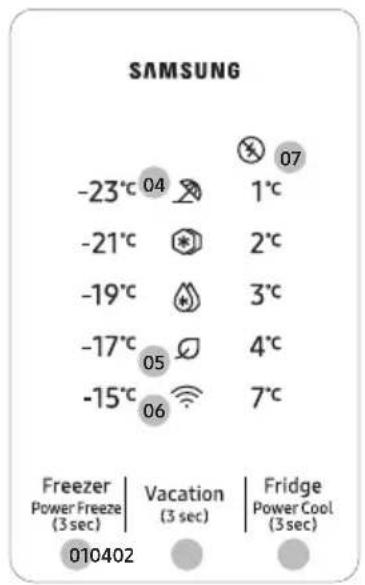
text_image
SAMSUNG -23°C 04 -21°C -19°C -17°C 05 -15°C 06 07 1°C 2°C 3°C 4°C 7°C Freezer Power Freeze (3 sec) Vacation (3 sec) Fridge Power Cool (3 sec) 01040201 Freezer / Power Freeze 02 Fridge / Power Cool
03 Ice On/Off * 04 Vacation *
05 AI Energy Mode 06 Network connection
07 Peak Demand Off *
* applicable models only

NOTE
If the door is left open for 5 minutes, the internal light will blink for 5 minutes and turn off. It is to alert deaf and hard of hearing users that a door is open. Note that this function is normal.
01 Freezer / Power Freeze (3 sec)
| Freezer | You can use this button to set the freezer temperature.·Press Freezer repeatedly to select a desired temperature between 5 °F (-15 °C) and -8 °F (-23 °C).- The temperature indicator displays the currently set or selected temperature. |
| Power Freeze | Power Freeze speeds up the freezing process at maximum fan speed. The freezer keeps running at full speed for 50 hours and then returns to the previous temperature. To freeze large amounts of food, activate Power Freeze for at least 20 hours before putting food in the freezer.·To activate Power Freeze, press and hold Freezer for 3 seconds to select Power Freeze.The corresponding indicator ( lights up, and the refrigerator will speed up the freezing process for you.When the Power Freeze process is complete, the corresponding indicator turns off and the freezer returns to the previous temperature setting.To deactivate Power Freeze, press and hold Freezer for 3 seconds again. The freezer returns to the previous temperature setting, and the indicator turns off.NOTEUsing Power Freeze increases energy consumption. Make sure you turn it off and return to the previous temperature if you do not intend to use it. |
02 Fridge / Power Cool (3 sec)
| Fridge | You can use this button to set the fridge temperature.·Press Fridge repeatedly to select a desired temperature between 44 °F (7 °C) and 34 °F (1 °C).- The temperature indicator displays the currently set or selected temperature. |
| Power Cool | Power Cool speeds up the cooling process at maximum fan speed. The fridge keeps running at full speed for several hours and then returns to the previous temperature.·To activate Power Cool, press and hold Fridge for 3 seconds.The corresponding indicator ( lights up, and the refrigerator will speed up the cooling process for you.·To deactivate Power Cool, press and hold Fridge for 3 seconds again. The fridge returns to the previous temperature setting, and the indicator turns off.·To cool large amounts of food completely, make sure you have activated Power Cool at least 24 hours in advance.NOTEUsing Power Cool increases energy consumption. Make sure you turn it off and return to the previous temperature if you do not intend to use it. |
03 Ice On/Off (applicable models only)
By default, the refrigerator is set to make ice with the ice maker indicator on.
To disable this function, press and hold Ice On/Off for 3 seconds.
We recommend disabling the function in the following cases:
- The ice bucket is already full of ice.
- You want to decrease power consumption.

NOTE
Please note the following for the models requiring a separate purchase of the Auto Ice maker kit.
- If the Auto Ice Maker is not installed, the Ice On/Off button is disabled. The button is enabled when the Auto Ice Maker is installed.
04 Vacation (applicable models only)
If you are going on vacation or a business trip, or if you do not intend to use the fridge for an extended time, use the Vacation mode.
• To activate Vacation mode, press and hold Vacation for 3 seconds.
The Vacation indicator (✗) will turn on and the display of the fridge temperatures will turn off. The fridge temperature will be controlled under 17 °C, but the freezer remains active as previously set.
- To deactivate Vacation mode, press and hold Vacation again for 3 seconds. The fridge temperature will return to the previous setting.
NOTE
- Make sure to remove foods in the fridge before using the Vacation mode.
- The Vacation mode will be disabled if you adjust the temperature.
05 AI Energy Mode
The (icon appears when the AI Energy Mode is operating.
You may turn on or off the AI Energy Mode in the SmartThings app.
06 Network connection
You can control and monitor your refrigerator on the SmartThings app. For more information, see the SmartThings section.
NOTE
If the refrigerator is not connected to the SmartThings app, the Wi-Fi (icon) blinks to alert you when opening the door. If you see the blinking Wi-Fi (icon, we recommend that you connect your refrigerator to the SmartThings app.
07 Peak Demand Off
- Displays the status of the Peak Demand function.
- For more information on the Peak Demand function, see the SMART GRID Function (Demand Response) section.
Turning on or off the Wi-Fi
To turn the Wi-Fi on or off, press and hold Fridge for 10 seconds. The Wi-Fi (💡) icon turns on or off to display the Wi-Fi status.
- Wi-Fi Off: The Wi-Fi ( ) icon blinks for 5 seconds and then turns off.
- Wi-Fi On: The Wi-Fi ( ) icon blinks for 5 seconds and then turns on.

NOTE
- You must turn on the Wi-Fi to connect the refrigerator to the SmartThings app.
- For more information, see the SmartThings section.
Activating or deactivating the Sabbath mode
The Sabbath mode stays active for 85 hours once it is activated. After that, it will be deactivated automatically.
- To activate, press and hold Freezer for 10 seconds to enter Sabbath mode. Then the refrigerator operates in Sabbath mode where the buttons, the display, and the room lamps are all under control.
- To deactivate, press and hold the buttons again for 3 seconds to exit Sabbath mode.

NOTE
Even after the refrigerator powers off and restarts, the Sabbath mode remains active. To exit, you must deactivate it first.
Activating or deactivating the Cooling Off mode
The Cooling Off mode (also called the Shop mode) is designed for retailers to display refrigerators on a retail floor.
In the Cooling Off mode, the refrigerator's fan motor and lights operate normally, but the compressors do not run, so neither the refrigerator nor the freezer becomes cold.
- Press and hold Freezer and Fridge simultaneously for 7 seconds.
- First, all the indicators blink, and then six of the temperature indicators (-6 °F, -1 °F, 1 °F, 35 °F, 37 °F, 39 °F / -17 °C, -19 °C, -21 °C, 4 °C, 3 °C, 2 °C) blink.
-
While six of the temperature indicators are blinking, press Freezer again to activate or deactivate the Cooling Off mode.
-
When the Cooling Off mode activates, the refrigerator chimes and the temperature indicators will light up sequentially from bottom to top.
- When the Cooling Off mode deactivates, the temperature indicator returns to normal.
SmartThings
Installation
Visit the Google Play Store, Galaxy Apps, or Apple App Store and search for "SmartThings". Download and install the SmartThings app provided by Samsung Electronics to your smart device.

NOTE
- The supporting software version of the SmartThings app is subject to change according to the OS supporting policy the manufacturer provides. In addition, as for the SmartThings app or the functions that the app supports, the new application update policy on the existing OS version can be suspended because of usability or security reasons.
- The SmartThings app is subject to change without notice to improve usability or performance. As the mobile phone OS version is updated every year, the SmartThings is also updated continually according to the latest OS. If you have enquiries regarding the items mentioned above, please contact us at st.service@samsung.com
- Recommended encryption systems include WPA/TKIP and WPA2/AES. Any newer or non-standard Wi-Fi authentication protocols are not supported.
- Wireless networks may be affected by the surrounding wireless communication environment.
- If your Internet service provider has registered the MAC address of your PC or modem for identification, your Samsung Smart Refrigerator may fail to connect to the Internet. If this happens, contact your Internet service provider for technical assistance.
- The firewall settings of your network system may prevent your Samsung Smart Refrigerator from accessing the Internet. Contact your Internet service provider for technical assistance. If this symptom continues, contact a local Samsung service center or retailer.
- To configure the wireless access point (AP) settings, see the user manual of the AP (Router).
- Samsung Smart Refrigerators support IEEE 802.11 b/g/n (2.4 GHz) protocols. (IEEE 802.11 n is recommended.)
- Unauthorized Wi-Fi wireless routers may fail to connect to applicable Samsung Smart Refrigerators.
Samsung account
You are required to register your Samsung account to use the app. If you don't have a Samsung account, follow the app's on-screen instructions to create a free Samsung account.
Getting started
Turn on the device you want to connect, open the SmartThings app on your phone, and then follow the instructions below.
If a pop-up appears saying that a new device has been found, tap ADD NOW.
If a pop-up doesn't appear, tap the + button, and then select the device you want to connect from the list of available devices.
If your device isn't in the list of available devices, tap Supported Devices, select the device type (Refrigerator), and then select the specific device model.
Follow the instructions in the app to set up your device. Once setup is complete, your refrigerator will appear as a "card" on your Devices screen.
Integrated control
You can monitor and control your refrigerator at home and on the go.
- Tap the refrigerator icon on the SmartThings Dashboard or tap the Devices icon at the bottom of the Dashboard, and then tap the refrigerator "card" to open the Refrigerator page.
- Check the operation status or notifications related to your refrigerator, and then change options or settings if necessary.

NOTE
Some options or settings of the refrigerator may not be available for remote control.
| Category Item Description | ||
| Monitor & Control | Fridge temperature | You can set and monitor the desired temperature of the fridge. |
| Power Cool | You can turn Power Cool on or off, and check the current settings. | |
| Freezer temperature | You can set and monitor the desired temperature of the freezer. | |
| Power Freeze | You can turn Power Freeze on or off, and check the current settings. | |
| Alarms | Abnormally high temperature | This alarm triggers when the temperature of the refrigerator is abnormally high. |
| Door opening | This alarm triggers if the door is open for a specific time. | |
| AI Energy Mode | You can turn on or off the AI Energy Mode under the Energy menu in the SmartThings app.You can check the status of the AI Energy Mode on the SmartThings app.On some models, theicon appears on the main panel to indicate that AI Energy Mode is operating.Turning on the AI Energy Mode decreases energy consumption, but it may also reduce the cooling performance. | |
SMART GRID Function (Demand Response)
(applicable models only)
When the refrigerator operates in SMART GRID (Demand Response) mode, the Energy Management function can control energy usage or delay the operation of some functions to save money when energy prices or demand are the highest.
In addition, to use the Smart Grid (Demand Response) function, you must register for the service with your electric company. The company must have an EMS (Energy Management System) that supports SEP (Smart Energy profile).

NOTE
- You can deactivate the SMART GRID (Demand Response) function at any time using the Peak Demand Off function.
- You can monitor your energy consumption or turn energy-related features on and off using the SmartThings app. You must install the SmartThings app on your mobile device and connect the refrigerator to a Wi-Fi connection to use this feature.
Using the SMART GRID (Demand Response) Function
This feature monitors energy prices and demand information from your utility company and sends notifications to the refrigerator to run high energy consuming tasks during off-peak times when electricity costs and demand are lower.
If the refrigerator receives the SMART GRID (Demand Response) signal (DAL or TALR), the refrigerator will operate in Delay Appliance Load (DAL) or Temporary Appliance Load Reduction (TALR) mode.
| ☒ | ☒ | ||
| -8^ | 34^ | -23^ | 1^ |
| -6^ | 35^ | -21^ | 2^ |
| -1^ | 37^ | -19^ | 3^ |
| 1^ | 39^ | -17^ | 4^ |
| 5^ | 44^ | -15^ | 7^ |
| ☒ | ☒ | ||
| -8^ | 34^ | -23^ | 1^ |
| -6^ | 35^ | -21^ | 2^ |
| -1^ | 37^ | -19^ | 3^ |
| 1^ | 39^ | -17^ | 4^ |
| 5^ | 44^ | -15^ | 7^ |
DAL TALR
Delay Appliance Load (L3)
The refrigerator responds to a DAL signal by providing a moderate load reduction for the duration of the delay period. This function controls functions that consume a lot of energy such as adjusting the Cooling system, running the defrost cycle, and making ice.
- DAL mode is automatically deactivated after it lasts for the amount of time stipulated by the DAL signal (max. 4.5 hours) or when the Peak Demand Off function is activated.
Temporary Appliance Load Reduction (L4)
The refrigerator responds to a TALR signal by aggressively reducing the load for a short time period. This function reduces energy consumption by stopping the compressor and controlling the functions that consume a lot of energy such as the defrost cycle and making ice.
- TALR mode is automatically deactivated after it lasts for the received duration (max. 15 minutes), or when the Peak Demand Off function is activated. The mode is immediately deactivated and the refrigerator returns to the normal state when the door is opened or closed, or the dispenser is used.
Peak Demand Off (Override mode)
When you want the refrigerator to ignore the SMART GRID (Demand Response) signal from the utility company, you can activate Peak Demand Off (Override mode).
When you activate Peak Demand Off (Override mode), the refrigerator ignores the SMART GRID (Demand Response) signal and is not controlled by the utility company.
You can activate or deactivate this mode from the main panel or on the SmartThings app.
Activating and deactivating Peak Demand Off (Override mode)
- Press and hold Ice On/Off (Main panel type A and B) or Vacation (Main panel type C) for 10 seconds.
- A buzzer sounds and the Peak Demand Off (Override mode) 📧icon turns on.
- If the refrigerator receives a SMART GRID (Demand Response) signal from the utility company, all of the fridge temperature indicators turn on.
- You can still adjust the temperature while the refrigerator receives a SMART GRID (Demand Response) signal.
- To deactivate Peak Demand Off (Override mode), press and hold Ice On/Off (Main panel type A and B) or Vacation (Main panel type C) for 10 seconds.
- A buzzer sounds and the Peak Demand Off (Override mode) ☒con turns off.
Energy management functions available on the SmartThings app
Energy consumption monitoring (for the past and current month) Shows the accumulated power consumption. Power consumption data is updated every 10 minutes.
NOTE
The energy consumption report may differ from the power consumption specifications of the product depending on the operating environment and the stored food.
- Demand response monitoring
- Activating/deactivating Peak Demand Off (Override) mode
- Defrost Delay
- Delay Defrost saves energy by delaying the defrost operation in a 24-hour cycle to a time specified by the user. To change the delay time, use the Delay Defrost menu on the app. By default, the delay time is set as below:
| November 1 to April 30 6 AM to | 10 AM |
| May 1 to October 31 3 PM to 7 | PM |
Provision for Open Access to the Connected Product Requirements
-
SGIP Open Standards (Smart Energy Profile 2.0 - http://www.csep.org/)
-
Energy Consumption Reporting
-
Demand Response
-
Samsung OPEN API
-
Operational Status, User Settings & Messages
- ICE Maker Status
- Door Open Alarm
- DR Status
- Delay Defrost Capability
- Set Schedule of the Defrost Delay
- Get Schedule of the Defrost Delay
- Delete Schedule of the Defrost Delay
- Defrost Delay On/OFF
Special features
Your refrigerator and its special functions may differ from the images and functions presented in this section depending on your model and country.
Ice making (applicable models only)
Twist ice maker
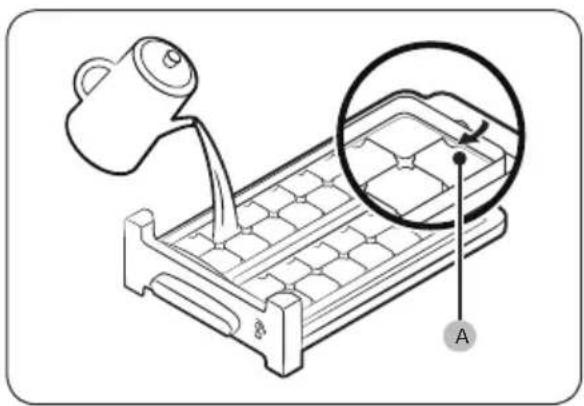
natural_image
Diagram of a lamp illuminating a grid-patterned tray with an inset showing a magnified view of the tray (no text or symbols)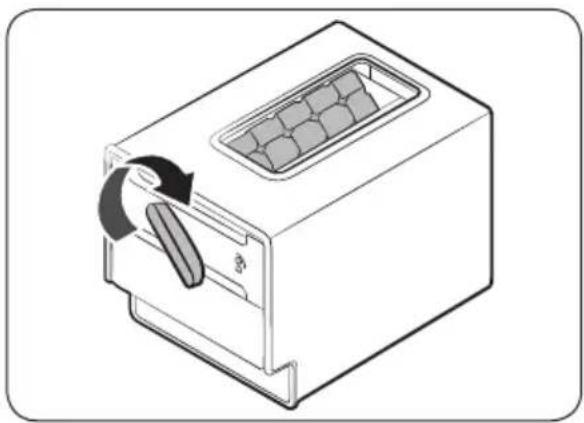
natural_image
Diagram of a microwave oven with a rotary knob and handle, showing internal compartments (no text or symbols)- Open the freezer door, and slide open the ice tray.
- Fill the tray with water up to the maximum level (A) marked on the inner rear of the tray.
- Slide the tray back into position.
NOTE
The ice making time depends on your temperature settings.
NOTE
• Make sure the ice bucket is in place under the ice tray.
- To dispense the ice cubes, turn the handle of the bin to the right to empty half of the ice cubes into the bin. Then, turn it to the left to empty the other half.
• Take out the bin by slightly twisting and pulling to the front.
Auto ice maker (applicable models only)
For first-time use
- Let the ice maker make ice for 1-2 days.
- Discard the first 1-2 buckets of ice to remove impurities in the water supply system.
- When the upper ice tray is full, use the lower ice tray.
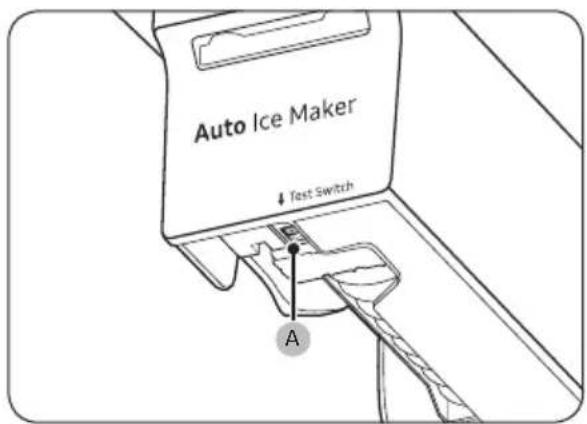
text_image
Auto Ice Maker ↓ Test Switch AIf the auto ice maker does not make ice, remove the ice bucket and press Test Switch (A) to check if the auto ice maker operates properly.
Door reversal (applicable models only)

WARNING
- Tilting/laying the refrigerator requires minimum of 2 people.
- Disconnect power source and water line before reversing the doors.
- If the unit is allowed to lay on its back or side for more than an hour, let it stand for 15 minutes after it is returned to the upright position before plugging it in.
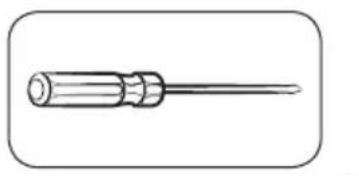
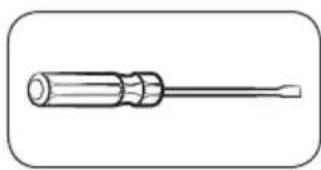
Tools required (not provided)
natural_image
Simple line drawing of a screwdriver with a cylindrical head and threaded shaft (no text or symbols)Phillips screwdriver Flat-head screwdriver
natural_image
Simple line drawing of a screwdriver (no text or symbols)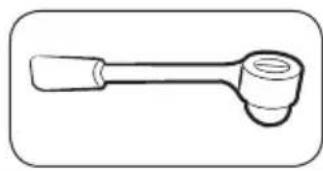
natural_image
Simple line drawing of a mechanical lever or handle (no text or symbols)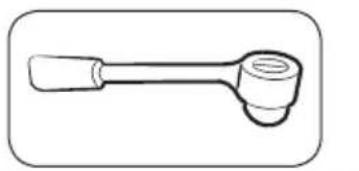
natural_image
Simple line drawing of a mechanical lever (no text or symbols)^5/16 " (8 mm) socket wrench (for bolts)
^3/8 " (10 mm) socket wrench (for bolts)
natural_image
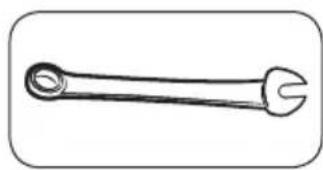
Line drawing of a wrench with a flared end and pointed tip (no text or symbols)^7/_16 " (11 mm) spanner (for hinge shaft)
natural_image
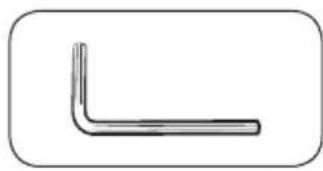
Simple L-shaped metal bracket diagram without any text or symbols^3/_16 " (5 mm) Allen wrench (for middle hinge)
Accessories (provided)
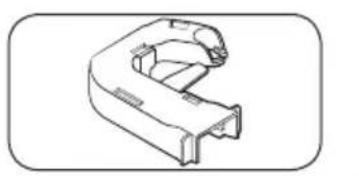
natural_image
Technical line drawing of a mechanical component (no text or symbols)Hinge Cover (L) Middle-Hinge Screw cap Bottom-Hinge Screw cap
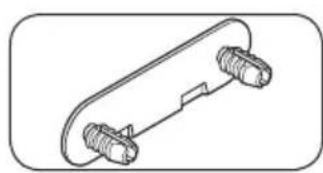
natural_image
Pure technical line drawing of a mechanical component with threaded ends and a central slot (no text or symbols)
natural_image
Pure electrical circuit lines without any symbols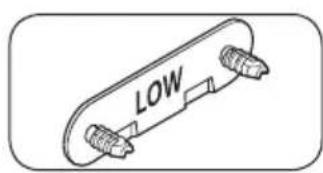
text_image
LOW
CAUTION
Throughout the entire reversing procedure, keep all the small parts (screws, caps, etc.) of the refrigerator away from children or infants for safety reasons.
Step-by-step instructions
STEP 1 Remove the doors
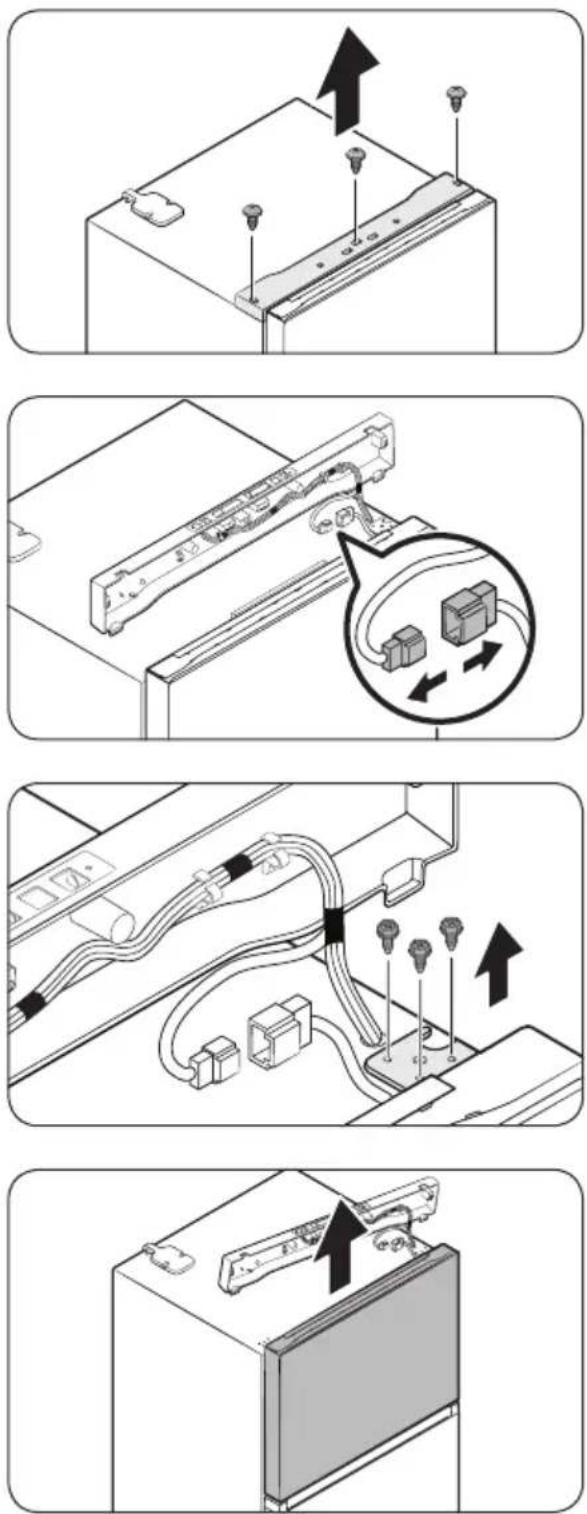
-
Use a Phillips screwdriver to loosen the screws (x3) in three holes on the top table. Then, gently pull out the top table.
-
Decouple the wire connectors.
-
Loosen the bolts on the top hinge.
-
Gently lift up the freezer door to remove it.
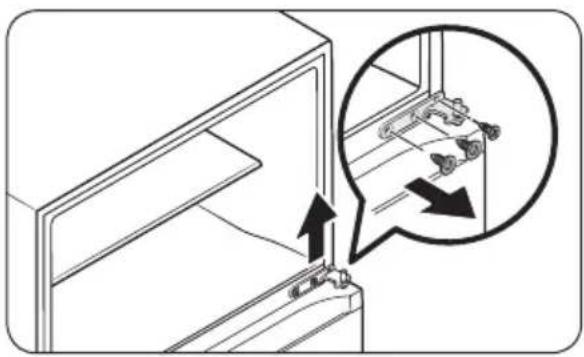
natural_image
Diagram showing a door frame with an arrow pointing to a wall-mounted device, and a magnified inset illustrating the mechanism (no text or symbols present)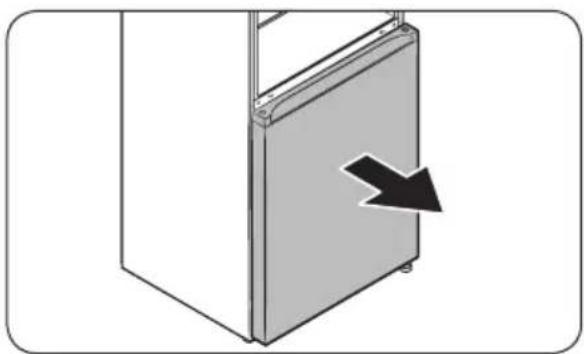
natural_image
Diagram of a door with an arrow indicating direction, no text or symbols present-
Use the screwdriver and the wrench to loosen the bolts and remove the middle hinge.
-
Gently slide the fridge door out of the hinge shaft, and then pull up to remove.
STEP 2 Remove the hinge and the door shaft
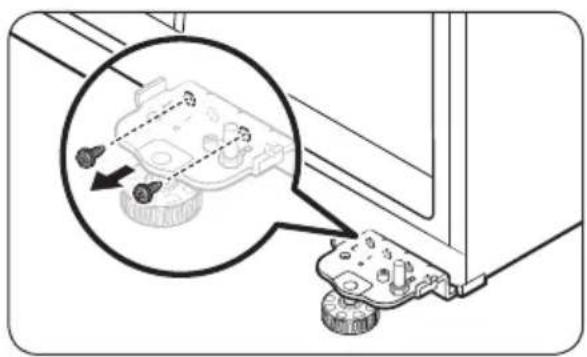
natural_image
Diagram showing a mechanical assembly with a magnified inset of a vehicle component (no text or symbols present)- Use the screwdriver to remove the screw on the bottom hinge.
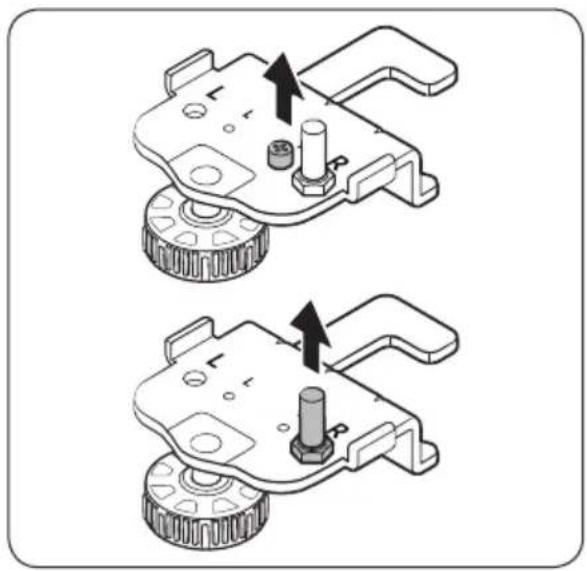
natural_image
Mechanical assembly diagram showing two stages of a mechanical component with arrows indicating motion direction (no text or symbols)- Use the screwdriver to remove the hinge bolt. Then, use the wrench to remove the door shaft.
STEP 3 Reverse the auto closer (freezer door only)
Now stand the refrigerator back upright with care, and then do the following.
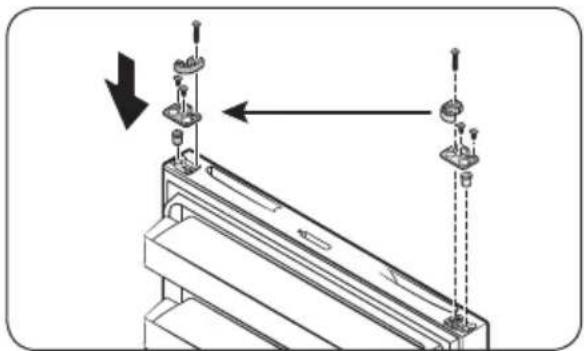
natural_image
Technical diagram showing mechanical assembly with two vertical supports and directional arrows indicating motion (no text or symbols)- Remove the auto closer and the stopper from the bottom of the fridge door. Then, reinsert them on the opposite side of the fridge door as shown.
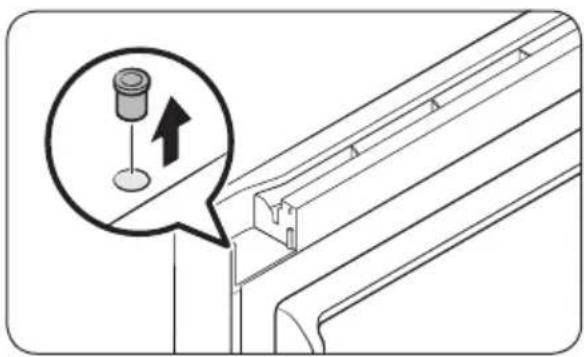
natural_image
Technical diagram of a mechanical assembly with a magnified inset showing a component (no text or symbols)- Use a flat-head screwdriver to remove the hinge grommet.
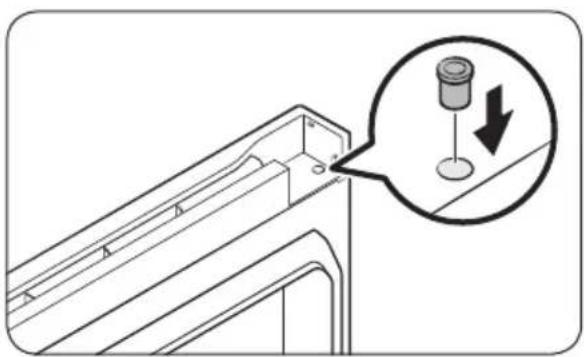
natural_image
Technical line drawing of a structural bracket with an inset showing a cylindrical component and a downward arrow (no text or symbols)- Reinsert the hinge grommet on the opposite side.
STEP 4 Reverse the bar cover and the top hinge
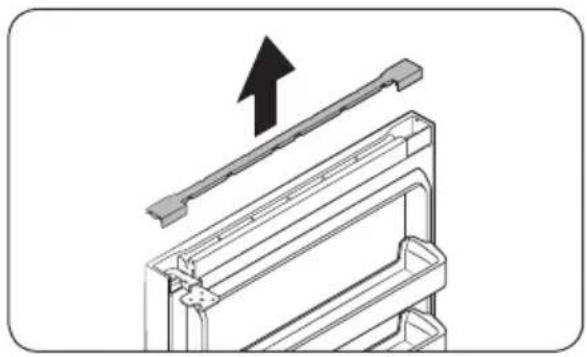
natural_image
Technical diagram of a mechanical assembly with an upward arrow indicating motion (no text or symbols present)- Pull up to remove the bar cover on the top of the freezer door.

natural_image
Technical diagram of a mechanical clamp or bracket assembly with an arrow indicating direction (no text or symbols present)- Remove the top hinge with its cover.
natural_image
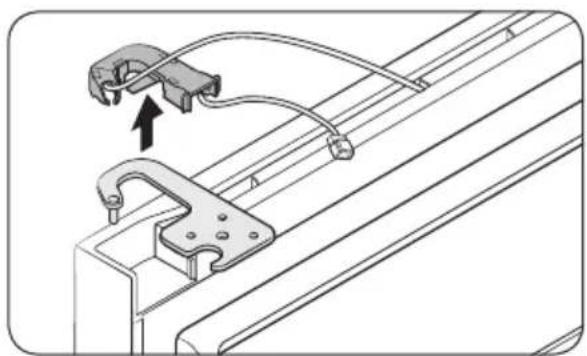
Technical line drawing of a mechanical clamp or bracket assembly with no visible text or symbols- Separate the top hinge from the hinge cover.
natural_image
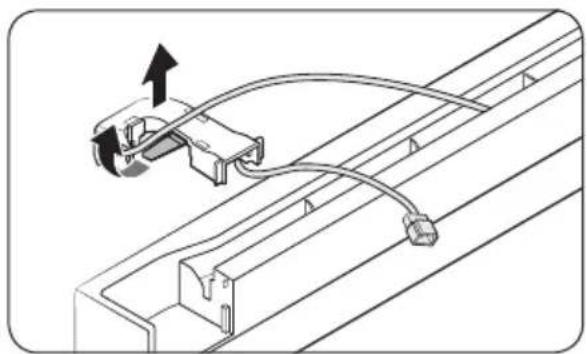
Technical line drawing of a mechanical assembly with wires and components (no text or symbols)- Arrange the door wire in the hinge cover.
natural_image
Technical line drawing of a mechanical component with directional arrows indicating movement or force (no text or symbols)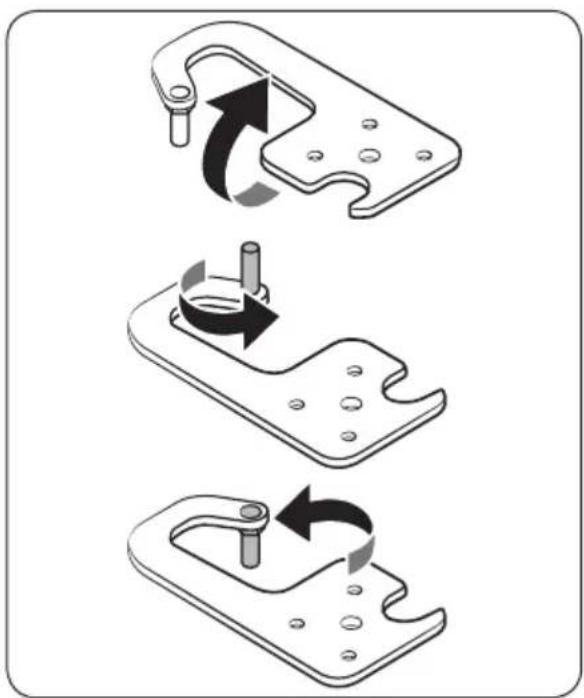
flowchart
graph TD
    A["Step 1: Insert a clamp or bracket"] --> B["Step 2: Rotation of the clamp or bracket"]
    B --> C["Step 3: Receiving the clamp or bracket"]
-
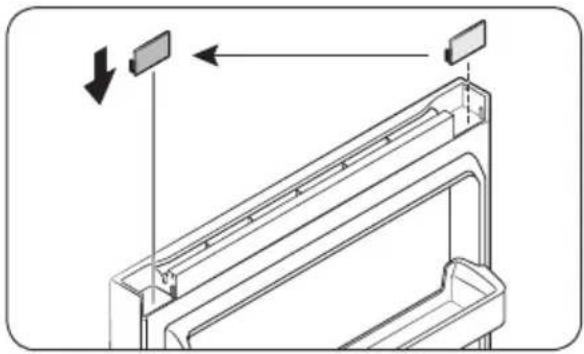
Remove the cap spacer, and then reinsert it on the opposite side.
-
Remove the door shaft from the top hinge, flip it 180 degrees as shown, and then reinsert it.
STEP 5 Reattach the doors on the opposite side
natural_image
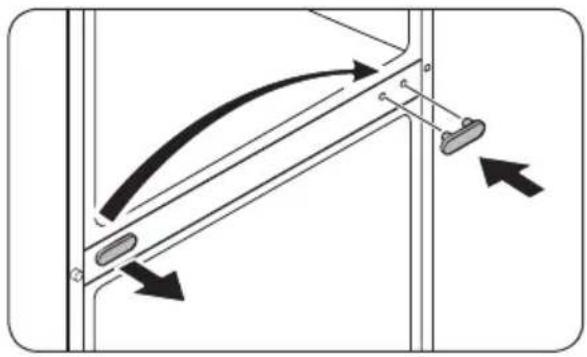
Pure mechanical diagram showing a lever mechanism with arrows indicating motion direction (no text or symbols)- Use a flat-heat screwdriver to remove the middle-hinge screw cap, and then reinsert it on the opposite side.
text_image
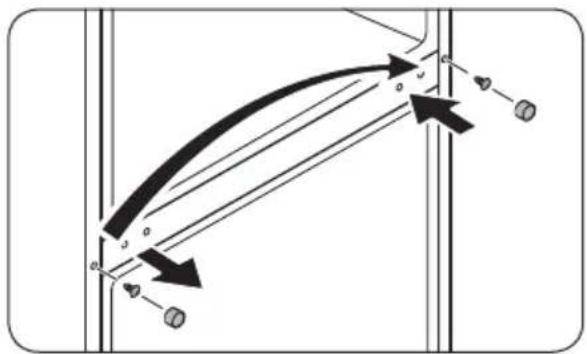
Diagram showing directional arrows and labeled points on a vertical structure, possibly illustrating a physics or engineering concept.- Use the flat-heat screwdriver to remove the flange-screw cap to reveal the flange screw. Use a Phillips screwdriver to remove the flange screw, and then tighten it on the opposite side. Finally, close the flange-screw cap on the opposite side.
natural_image
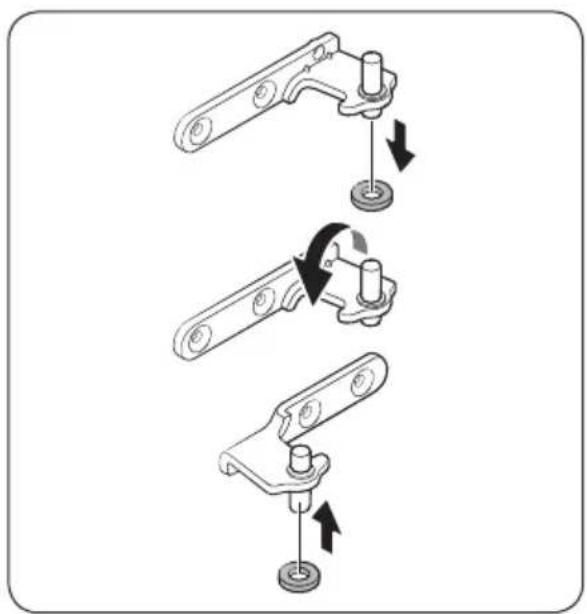
Three-step mechanical assembly diagram showing progressive assembly of a bracket with mounting holes (no text or symbols)- Remove the grommet ring from the middle-hinge shaft, and then reinsert the ring on the other side of the shaft. See the figure for visual reference.
natural_image
Diagram showing a mechanical assembly with a magnified inset highlighting a component (no text or symbols present)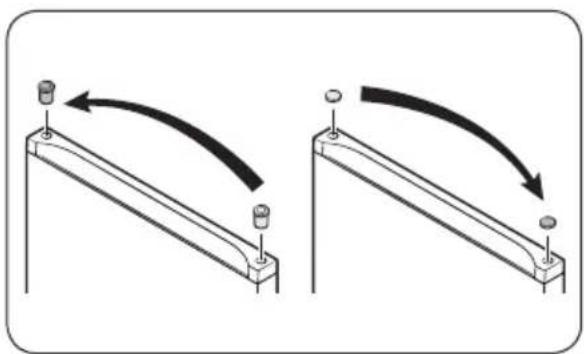
natural_image
Two identical diagrams showing a mechanical or electrical component with arrows indicating direction (no text or symbols present)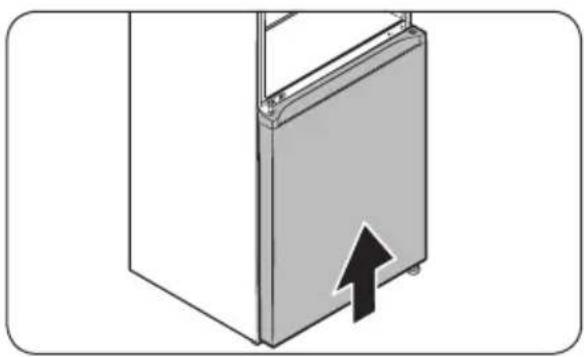
natural_image
Diagram of a door frame with an arrow pointing to the front panel (no text or symbols)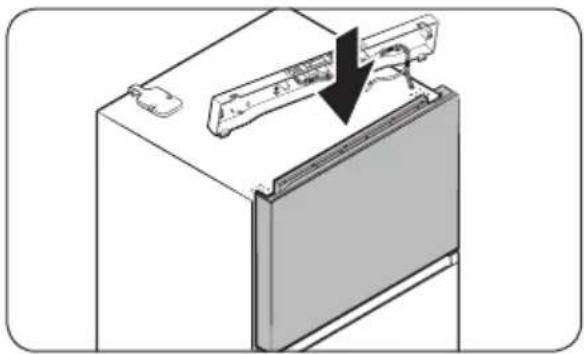
natural_image
Diagram of a refrigerator with a door handle and a black arrow pointing to the lid (no text or symbols present)-
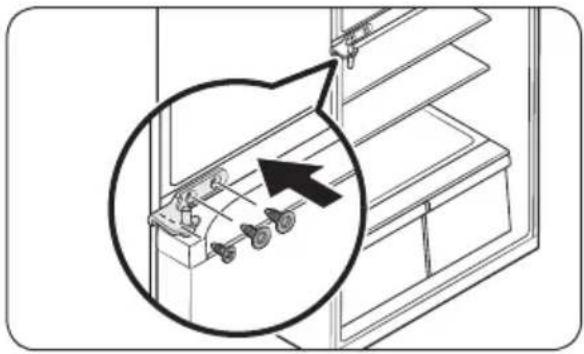
Reverse the middle hinge and insert it on the opposite side. Then, tighten the hinge with the screws.
-
Use the flat-head screwdriver to remove both the hinge grommet on one side and the hinge-hole cap on the other side. Reinsert them on their respective opposite side.
-
Gently slide the fridge door into the correction position so that it fits.
-
Gently slide the freezer door into the correction position so that it fits.
STEP 6 Reverse the bottom hinge
natural_image
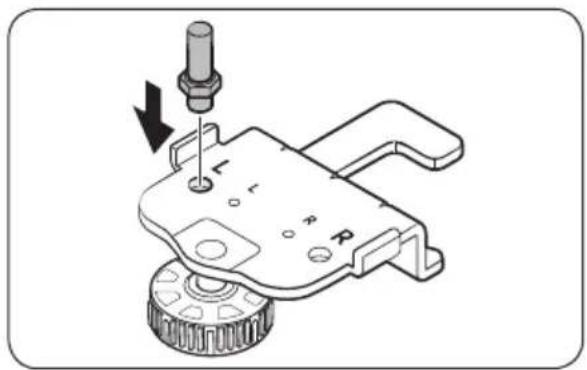
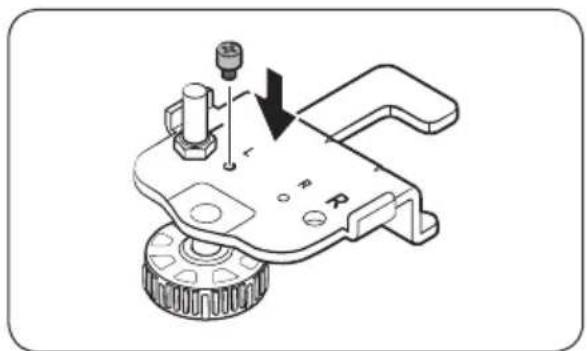
Mechanical assembly diagram showing a tool inserted into a housing with a gear base, no text or symbols present- Insert the door shaft into the bottom hinge plate from the top as shown, and then tighten it until it is securely in place.
natural_image
Mechanical assembly diagram showing a gear and adjustment knob with no visible text or symbols- Insert the hinge bolt into the bottom hinge plate from the top as shown, and then tighten it until it is securely in place.
natural_image
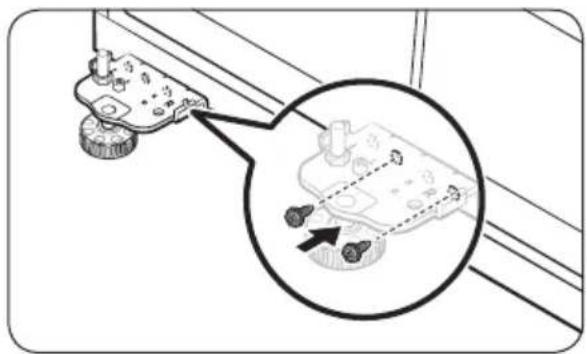
Diagram showing a mechanical component with an inset magnified view highlighting a detail of a component (no text or symbols present)- Position the bottom hinge plate on the opposite side, and then use two screws to secure and attach the hinge plate as shown.
STEP 7 Reattach the remaining parts
natural_image
Technical diagram showing a mechanical bracket with a downward arrow indicating force or direction (no text or symbols present)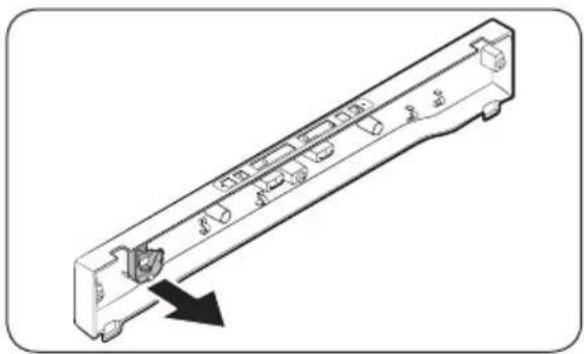
natural_image
Technical line drawing of a mechanical component with internal parts and an arrow indicating direction (no text or symbols)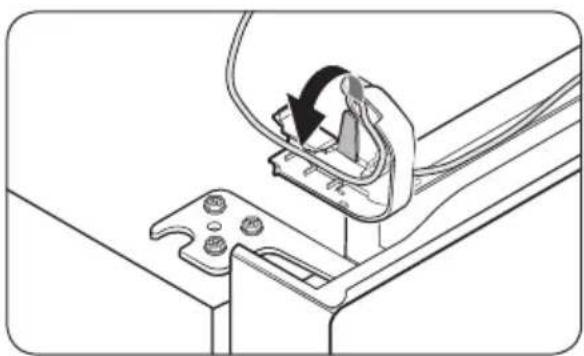
natural_image
Technical line drawing of a mechanical assembly with a clamping tool inserted (no text or symbols)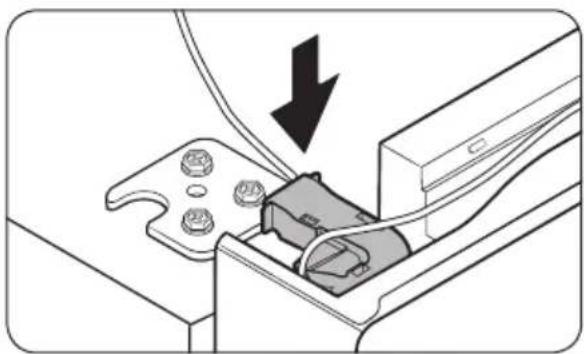
natural_image
Diagram of a mechanical assembly with a black arrow indicating a downward force or force, no text or symbols present.-
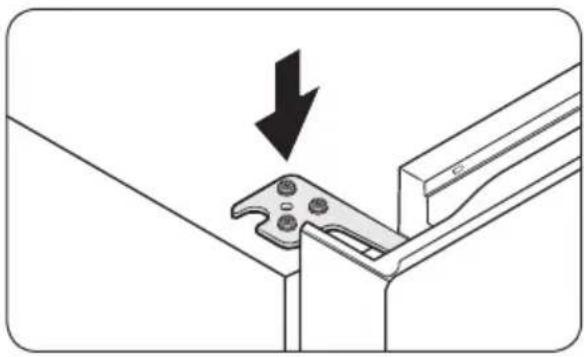
Insert and tighten the top hinge on the opposite side.
-
Detach the hinge cover manually from the top table.
-
Arrange the door wire in the hinge cover before placing the hinge cover onto the top hinge.
natural_image
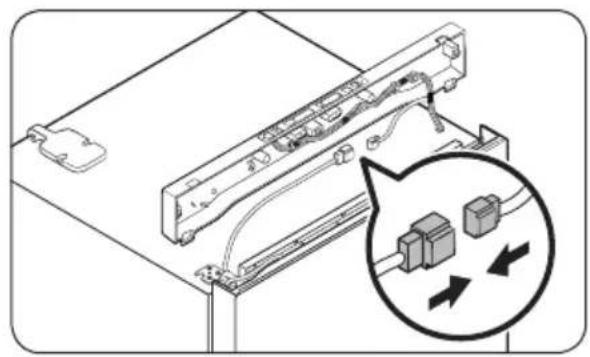
Technical diagram of a mechanical assembly with an inset showing internal components (no text or symbols)- Connect the wire connectors.
natural_image
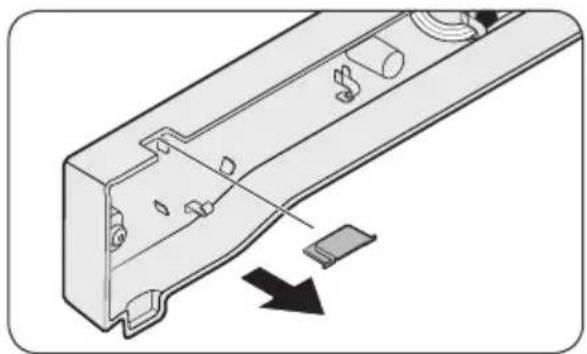
Technical illustration of a mechanical component with a directional arrow indicating movement or force (no text or symbols present)- Remove the hinge hole cap from the top table, and then reinsert it on the opposite side.
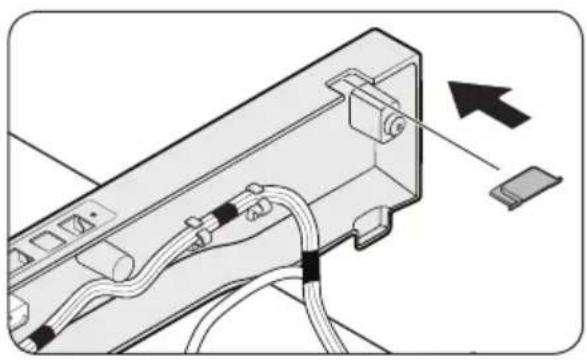
natural_image
Diagram of a device rear panel with cable routing and a separate connector (no text or symbols)- Insert the top table, and then fix it firmly to the refrigerator using the screws (x3).
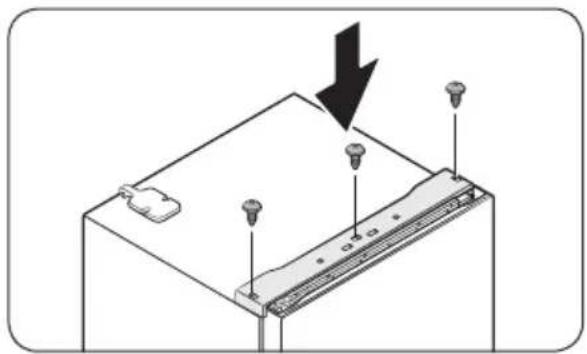
natural_image
Diagram of a device with screw holes and a downward arrow indicating a process (no text or symbols present)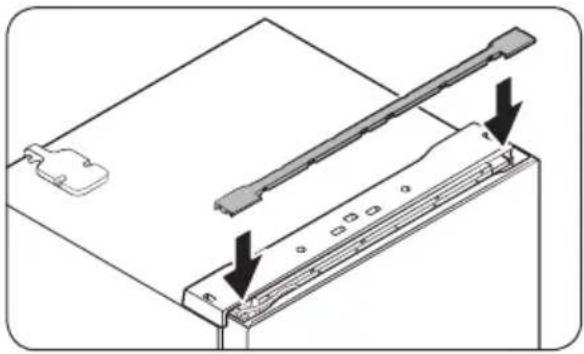
natural_image
Diagram of a computer monitor with an attached cable and two arrows indicating assembly or connection (no text or symbols present)- Insert the bar cover.
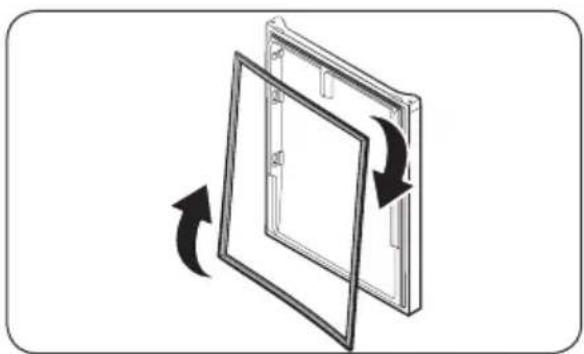
natural_image
Diagram showing a door frame with arrows indicating rotation or movement (no text or symbols)- Remove the fridge door and freezer door gaskets. Turn them clockwise by 180 degrees, and then reattach them.

NOTE
In the future, you might want to return the doors to their initial position (before the doors were reversed). In that case, refer to the instructions on the previous pages, but switch the doors, hinges, and covers back to their initial positions.
Handle and care
Shelves (fridge/freezer)
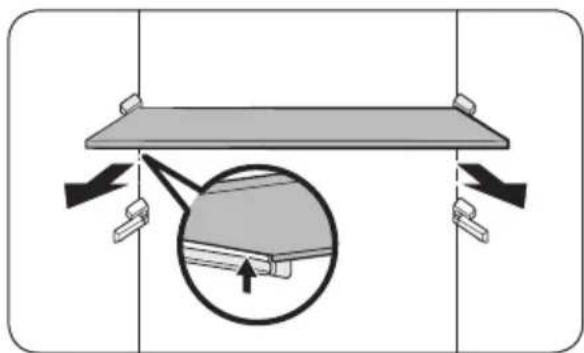
natural_image
Diagram showing a slide with arrows indicating direction and an inset magnified view of a slide inside a container (no text or symbols)To remove the shelf, hold it with both hands and lift to release from the rear hooks. Then, pull it halfway to the front.
Vegetable drawers
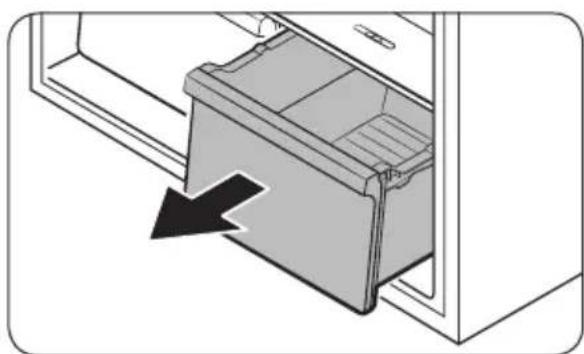
natural_image
Diagram of a refrigerator interior showing a door and drawer with an arrow indicating left-side motion (no text or symbols)Gently lift up the front of the drawer, and then slide it out.
Vegetable shelf
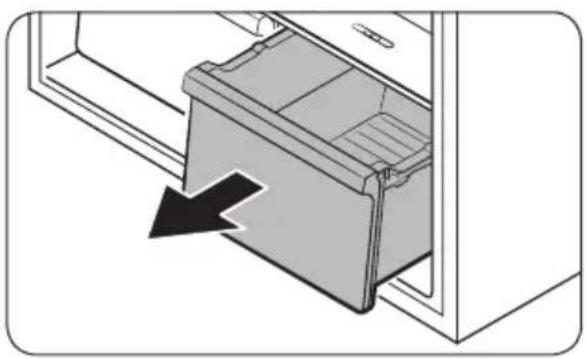
natural_image
Diagram of a refrigerator interior showing a door opening and a black arrow indicating the direction (no text or symbols present)- Gently lift up the front of the drawer, and then slide it out.
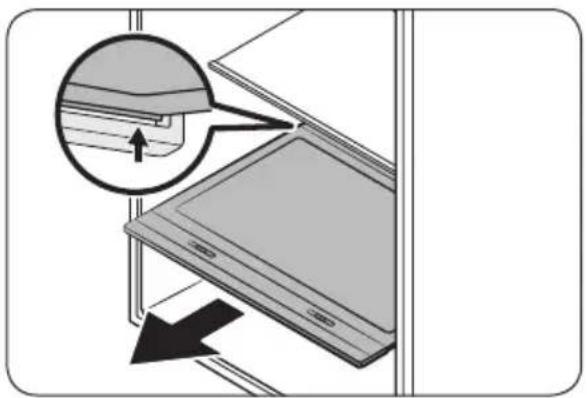
natural_image
Diagram showing a device with an arrow pointing to a component, no text or symbols present- Hold the vegetable shelf with both hands, and then slide it out.
Door bins
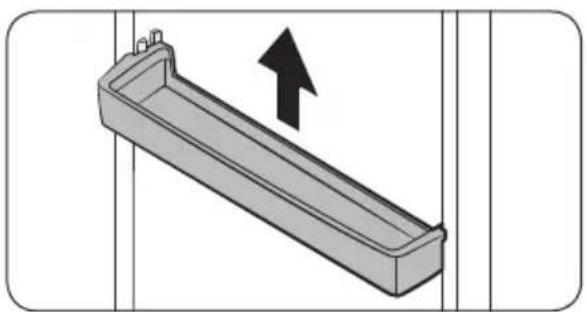
natural_image
3D diagram of a rectangular plastic tray with an arrow indicating upward motion (no text or symbols)Lift up the door shelf slightly, and then pull it out.
CAUTION
To prevent accidents, empty the door bins before removing.
Cleaning

WARNING
- Do not use benzene, thinner, home/car detergent, or Clorox™ to clean your refrigerator. They may damage the surface of the refrigerator and cause a fire.
- Do not spray water onto the refrigerator. This may cause electric shock.
Regularly use a dry cloth to remove all foreign substances such as dust or water from the power plug terminals and contact points.
- Unplug the power cord.
- Use a moistened, soft, lint-free cloth or paper towel to clean the refrigerator's interior and exterior.
- When done, use a dry cloth or paper towel to dry well.
- Plug in the power cord.
Rubber seals
If the rubber seals of a door become dirty, the door may not close properly and reducing refrigerator performance and efficiency. Use a mild detergent and damp cloth to clean the rubber seals. Then, dry well with a cloth.
Rear panel
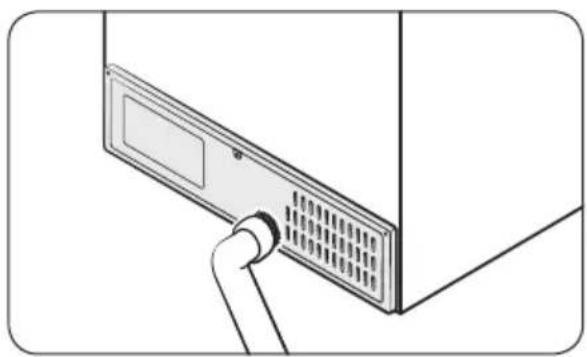
natural_image
Diagram of a device rear panel with a pipe inserted, showing ventilation grilles and a label (no text or symbols present)To keep cords and exposed parts of the rear panel free of dirt, vacuum the panel once or twice a year.

CAUTION
Do not remove the rear panel cover. Electric shock may occur.
Replacement
LED Lamps
To replace the lamps of the refrigerator, contact a local Samsung service center.

WARNING
The lamps are not user-serviceable. Do not attempt to replace a lamp yourself. This can cause electric shock.
Troubleshooting
If you encounter a problem with the refrigerator, first check the tables starting below, and then try the suggested solutions. If none of the suggested solutions resolve your problem, please visit our website at www.samsung.com or call Samsung Customer Care at 1-800-SAMSUNG (726-7864).
General
Temperature
| Symptom Possible causes Solution | ||
| Fridge/freezer does not operate.Fridge/freezer temperature is warm. | Power cord is not plugged in properly. | Properly plug in the power cord. |
| Temperature control is not set correctly. | Set the temperature lower. | |
| Refrigerator is located near a heat source or in direct sunlight. | Keep the refrigerator away from direct sunlight or a heat source. | |
| Not enough clearance between refrigerator and sides/rear. | Make sure there are at least 2" (50 mm) from the rear and 1" (25 mm) from the side. | |
| The refrigerator is overloaded. Food is blocking the refrigerator vents. | Do not overload the refrigerator. Do not allow food to block ventilation. | |
| Fridge/freezer is over-cooling. | Temperature control is not set correctly. | Set the temperature higher. |
| Interior wall is hot. | Refrigerator has heat-proof piping in the interior wall. | To prevent condensation from forming, the refrigerator has heat-proof piping in the front corners. If the ambient temperature rises, this equipment may not work effectively. This is not a system failure.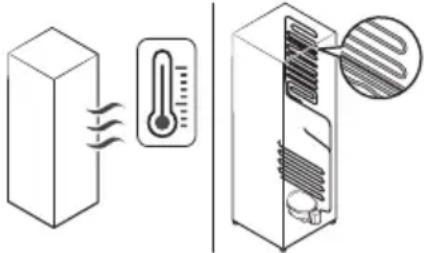 |
Odors
| Symptom Possible causes Solution | ||
| Refrigerator has odors. | ·Spoiled food. | ·Clean the refrigerator and remove any spoiled food. |
| ·Food with strong odors. | ·Make sure strong smelling food is wrapped airtight. | |
Frost
| Symptom Possible causes Solution | ||
| Frost around the vents. | ·Food is blocking the vents. | ·Make sure no food blocks the refrigerator vents. |
| Frost on interior walls. | ·Door is not closed properly. | ·Make sure food does not block the door. Clean the door gasket. |
Condensation
| Symptom Possible causes Solution | ||
| Condensation forms on the interior walls. | • If door is left open, moisture enters the refrigerator. | • Remove the moisture and do not leave the door open for extended periods of time or open the door frequently. |
| • Food with high moisture content. | • Make sure food is wrapped airtight. | |
Alarm
| Symptom Possible causes Solution | ||
| An alarm sounds. | If the temperature inside the fridge or freezer rises and stays high for a long time, the display will blink and an alarm will sound until the fridge or freezer cools down to a normal temperature.If the door is left open for more than two minutes, the alarm sounds until the door is closed. | Press any button to turn off the alarm. Contact a local Samsung service centre if the alarm sounds again after 12 hours. |
Auto Ice Maker (applicable models only)
| Symptom Possible causes Solution | ||
| The ice maker does not produce ice. | · The freezer room is not cold enough. | · Make sure the cold air outlet is not clogged. |
| · The ice maker is turned off. | · Make sure the ice maker is turned on. Press and hold Ice On/Off for 3 seconds, and check if the corresponding indicator turns on. | |
| · The wire connector of the ice maker is not connected properly. | · Make sure the wire connector from the wire housing is connected properly. | |
| · The water line flowing to the ice maker is bent or kinked. | · Make sure the water line in the rear of the refrigerator is not bent or kinked. | |
Do you hear abnormal sounds from the refrigerator?
Before calling for service, review the information below. Note that you will be charged for any service calls related to normal operating sounds in which no defects were found. If you have any questions about sounds your refrigerator is making, please call Samsung Customer Care at 1-800-SAMSUNG (726-7864).
These sounds are normal.
- When starting or ending an operation, the refrigerator may make sounds similar to a car engine ignition. As the operation stabilizes, the sounds will decrease.
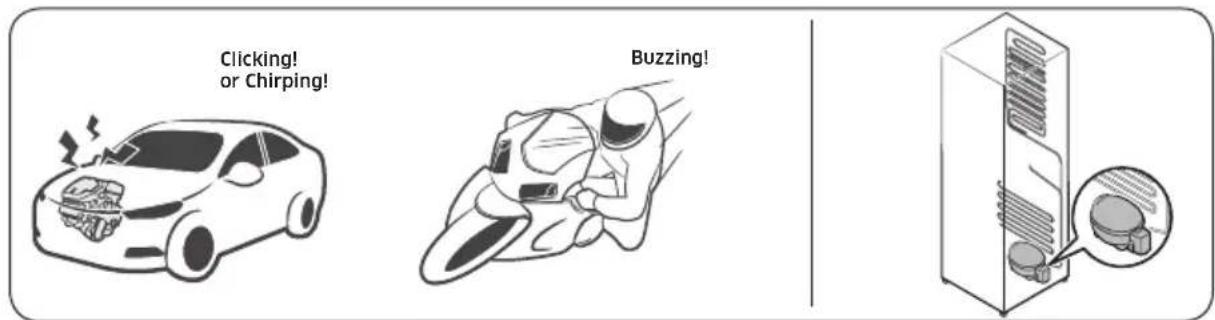
text_image
Clicking! or Chirping! Buzzing!- While the fan is operating, these sounds may occur. When the refrigerator reaches the set temperature, no fan sound will occur.
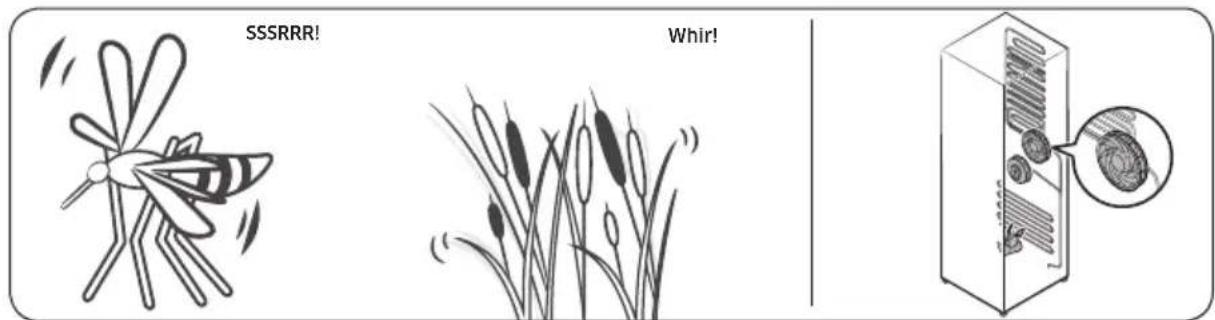
text_image
SSSRRR! Whir!- During a defrost cycle, water may drip on the defrost heater, causing sizzling sounds.
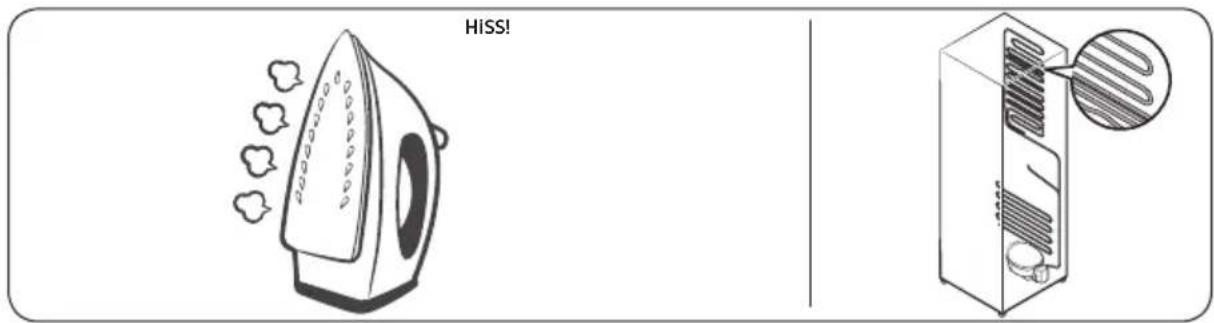
text_image
HISS!- As the refrigerator cools or freezes, refrigerant gas moves through sealed pipes, causing bubbling sounds.
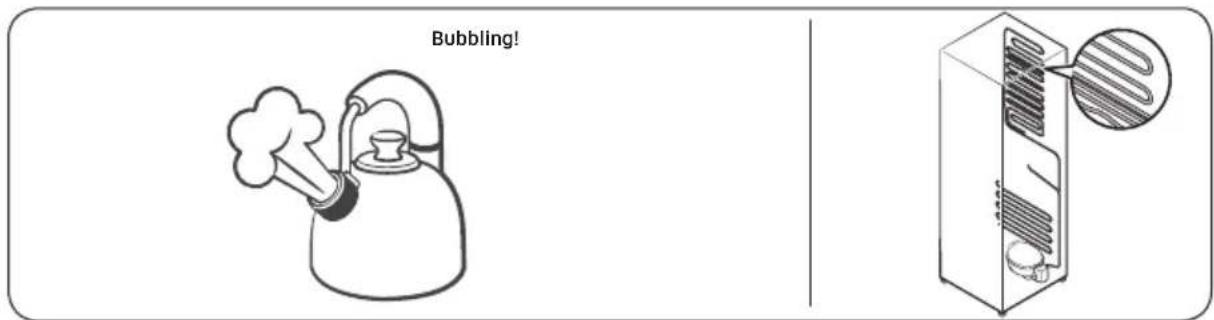
text_image
Bubbling!- As the refrigerator temperature increases or decreases, plastic parts contract and expand, creating knocking noises. These noises occur during the defrosting cycle or when electronic parts are working.
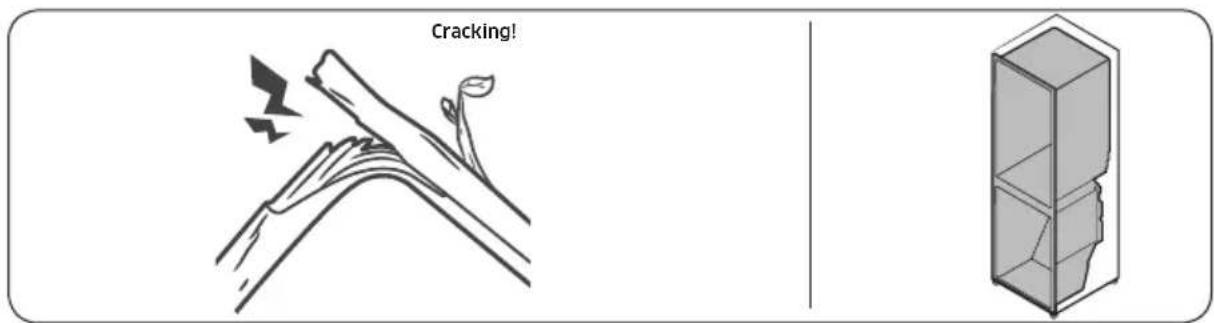
text_image
Cracking!- For ice maker models: When the water valve opens to fill the ice maker, buzzing sounds may occur.
- Pressure equalizing during the opening and closing of the refrigerator door may cause whooshing sounds.
SmartThings
| Symptom Action | |
| Could not find “SmartThings” in the app market. | The supporting software version of the SmartThings app is subject to change according to the OS supporting policy the manufacturer provides. In addition, as for the SmartThings app or the functions that the app supports, the new application update policy on the existing OS version can be suspended because of usability or security reasons. |
| The SmartThings app fails to operate. | The SmartThings app is available for applicable models only.The old Samsung Smart Refrigerator app cannot connect with Samsung Smart Home models. |
| The SmartThings app is installed but is not connected to my refrigerator. | You must log into your Samsung account to use the app.Make sure that your router is operating normally.If you have not connected your refrigerator to the SmartThings App after the app was installed, you must make the connection using the device registration function of the app. |
| Could not log into the app. | You must log into your Samsung account to use the app.If you don’t have a Samsung account, follow the app’s onscreen instructions to create one. |
| An error message appears when I try to register my refrigerator. | Easy Connection may fail because of the distance from your access point (AP) or electrical interference from the surrounding environment. Wait a moment and try again. |
| The SmartThings app is successfully connected to my refrigerator but does not run. | Exit and restart the SmartThings app or disconnect and reconnect the router.Unplug the power cord of the refrigerator, and then plug it in again after 1 minute. |
Smart Grid
(applicable models only)
| Symptom Action | |
| What Do I Need to use the Energy Management and Smart Grid functions? | To use the Smart Grid (Demand Response) and Energy Management functions on your refrigerator, you need the following:DevicesA wireless access point (router)A Samsung Energy Management-supported refrigeratorA smartphoneRegistrationConnect your refrigerator to your home Wi-Fi network.Register for the EMS service with your electric company.Your electric company must have an EMS (Energy Management System) supporting SEP (Smart Energy profile).AppDownload the SmartThings app from the Google Play Store, Apple App Store, or Samsung Galaxy Apps.Install and run the SmartThings app on your smartphone. |
| Why isn't the Energy Management function working normally? | Make sure that your home router is operating normally with proper Internet service and connection.Make sure that the refrigerator is connected to the AP (router).CheckpointsConnect your smartphone to the router (AP, Access Point), and then check if you can browse the Internet on the smartphone. |
| Why isn't the Delay Defrost Capability working normally? | Make sure that your home router is operating normally with proper Internet service and connection. |
SAMSUNG REFRIGERATOR
LIMITED WARRANTY TO ORIGINAL CONSUMER PURCHASER WITH PROOF OF PURCHASE
This SAMSUNG brand product, as supplied and distributed by Samsung Electronics America, Inc. (SAMSUNG) and delivered new, in the original carton to the original consumer purchaser, is warranted by SAMSUNG against manufacturing defects in materials or workmanship for the limited warranty periods, starting on the date of delivery to the original consumer purchaser:
One (1) year parts and labor
Five (5) years parts and labor on Sealed Refrigeration System Only (Compressor, Evaporator, Condenser, Drier, and Connecting Tubing)
Ten (10) years part and Five (5) years labor on Digital Inverter Compressor Only
This limited warranty is valid only on products purchased and used in the United States that have been installed, operated, and maintained according to the instructions attached to or furnished with the product. To receive warranty service, the purchaser must contact SAMSUNG at the address or phone number provided below for problem determination and service procedures. Warranty service can only be performed by a SAMSUNG authorized service center. The original dated bill of sale and/or proof of delivery must be presented upon request as proof of purchase to SAMSUNG or SAMSUNG's authorized service center to receive warranty service.
SAMSUNG will provide in-home service within the contiguous United States during the warranty period at no charge, subject to availability of SAMSUNG authorized servicers within the customer's geographic area. If in-home service is not available, SAMSUNG may elect, at its option, to provide transportation of the product to and from an authorized service center. If the product is located in an area where service by a SAMSUNG authorized servicer is not available, you may be responsible for a trip charge or required to bring the product to a SAMSUNG authorized service center for service.
To receive in-home service, product must be unobstructed and accessible to the service agent.
During the applicable warranty period, a product will be repaired, replaced, or the purchase price refunded, at the sole option of SAMSUNG. SAMSUNG may use new or reconditioned parts in repairing a product, or replace the product with a new or reconditioned product. Replacement parts and products are warranted for the remaining portion of the original product's warranty or ninety (90) days, whichever is longer. All replaced parts and products are the property of SAMSUNG and you must return them to SAMSUNG.
This limited warranty covers manufacturing defects in materials or workmanship encountered in normal household, noncommercial use of this product and shall not cover the following: damage that occurs in shipment, delivery, installation, and uses for which this product was not intended; damage caused by unauthorized modification or alteration of the product; product where the original factory serial numbers have been removed, defaced, changed in any way, or cannot be readily determined; cosmetic damage including scratches, dents, chips, and other damage to the product's finishes; damage caused by abuse, misuse, pest infestations, accident, fire, floods, or other acts of nature or God; damage caused by use of equipment, utilities, services, parts, supplies, accessories, applications, installations, repairs, external wiring or connectors not supplied or authorized by SAMSUNG; damage caused by incorrect electrical line current, voltage, fluctuations and surges; damage caused by failure to operate and maintain the product according to instructions; in-home instruction on how to use your product; and service to correct installation not in accordance with electrical or plumbing codes or correction of household electrical or plumbing (i.e., house wiring, fuses, or water inlet hoses). The cost of repair or replacement under these excluded circumstances shall be the customer's responsibility.
Visits by an authorized servicer to explain product functions, maintenance or installation are not covered by this limited warranty. Please contact SAMSUNG at the number below for assistance with any of these issues.
EXCLUSION OF IMPLIED WARRANTIES
IMPLIED WARRANTIES, INCLUDING THE IMPLIED WARRANTIES OF MERCHANTABILITY OR FITNESS FOR A PARTICULAR PURPOSE, ARE LIMITED TO ONE YEAR OR THE SHORTEST PERIOD ALLOWED BY LAW. Some states do not allow limitations on how long an implied warranty lasts, so the above limitations or exclusions may not apply to you. This warranty gives you specific rights, and you may also have other rights, which vary from state to state.
LIMITATION OF REMEDIES
YOUR SOLE AND EXCLUSIVE REMEDY IS PRODUCT REPAIR, PRODUCT REPLACEMENT, OR REFUND OF THE PURCHASE PRICE AT SAMSUNG'S OPTION, AS PROVIDED IN THIS LIMITED WARRANTY. SAMSUNG SHALL NOT BE LIABLE FOR SPECIAL, INCIDENTAL OR CONSEQUENTIAL DAMAGES, INCLUDING BUT NOT LIMITED TO TIME AWAY FROM WORK, HOTELS AND/OR RESTAURANT MEALS, REMODELING EXPENSES, LOSS OF REVENUE OR PROFITS, FAILURE TO REALIZE SAVINGS OR OTHER BENEFITS REGARDLESS OF THE LEGAL THEORY ON WHICH THE CLAIM IS BASED, AND EVEN IF SAMSUNG HAS BEEN ADVISED OF THE POSSIBILITY OF SUCH DAMAGES. Some states do not allow exclusion or limitation of incidental or consequential damages, so the above limitations or exclusions may not apply to you. This warranty gives you specific rights, and you may also have other rights, which vary from state to state.
SAMSUNG does not warrant uninterrupted or error-free operation of the product. No warranty or guarantee given by any other person, firm, or corporation with respect to this product shall be binding on SAMSUNG.
To obtain warranty service, please contact SAMSUNG at:
Samsung Electronics America, Inc.
85 Challenger Road
Ridgefield Park, NJ 07660
If your refrigerator needs service
Do not hesitate to call any Samsung Authorized Service Center nearby giving them your name, address and telephone number if your product is not functioning properly.
Limited Warranty for Original Purchaser
This Samsung product is warranted by Samsung Electronics Canada Inc. (hereafter referred to as SECA) against manufacturing defects in material or workmanship for the following periods:
Labor: 1 year (in-home)
Parts: 1 year
Inverter Compressor: 10 years (Part only)
SECA further warrants that if this product fails to operate properly within the specified warranty period and the failure is due to improper workmanship or defective material, SECA will repair or replace the product at its option. In-home service is not available in all areas. Contact us to find out if in-home service is currently available in your area by using the contact information at the back of this warranty.
All warranty repairs or part replacements must be performed by a SECA Authorized Service Center. (To find the nearest SECA Service Center, call 1-800-SAMSUNG (7267864) or visit our web site at www.samsung.com/ca)
Obligation to the Original Owner
The original dated sales receipt must be retained by the customer and is the only acceptable proof of purchase. It must be presented to a SECA Authorized Service Center at the time service is requested before warranty services are rendered. On all carry-in models, transportation to and from the Authorized Service Center is the responsibility of the customer.
Exclusions of the Warranty
This warranty does not cover damage due to accident, fire, flood, and/or other Acts of God, misuse, incorrect line voltage, improper installation, improper or unauthorized repairs, commercial use, or damage that occurs during shipping. Customer adjustments which are explained in this owners manual are not covered under the terms of this warranty. This warranty will automatically be voided for any unit found with a missing or altered serial number. This warranty is valid only on products purchased and used in Canada.
SAMSUNG CUSTOMER CARE CENTER
Samsung Electronics Canada Inc.
2050 Derry Road West
Mississauga, Ontario L5N 0B9
Canada
www.samsung.com/ca/support (English)
www.samsung.com/ca_fr/support (French)
FCC Notice

FCC CAUTION:
Any changes or modifications not expressly approved by the party responsible for compliance could void the user's authority to operate the equipment.
This appliance contains the transmitter module.
This device complies with Part 15 of FCC Rules. Operation is Subject to the following two conditions:
(1) This device may not cause harmful interference, and
(2) This device must accept any interference received including interference that cause undesired operation.
For products available in the US and Canadian markets, only channels 1\~11 are available. You cannot select other channels.
FCC STATEMENT:
This equipment has been tested and found to comply within the limits for a Class B digital device, pursuant to part 15 of the FCC Rules. These limits are designed to provide reasonable protection against harmful interference in a residential installation.
This equipment generates, uses, and can radiate radio frequency energy and, if not installed and used in accordance with the instructions, may cause harmful interference to radio communications. However, there is no guarantee that interference will not occur in a particular installation. If this equipment does cause harmful interference to radio or television reception, which can be determined by turning the equipment off and on, the user is encouraged to try to correct the interference by one or more of the following measures:
- Reorient or relocate the receiving antenna
- Increase the separation between the equipment and receiver
- Connect the equipment to an outlet that is on a different circuit than the receiver.
- Consult the dealer or an experienced radio/TV technician for help.
FCC RADIATION EXPOSURE STATEMENT:
This equipment complies with FCC radiation exposure limits set forth for an uncontrolled environment.
This equipment should be installed and operated so there is at least 8 inches (20 cm) between the radiator and your body. This device and it's antennas must not be co-located or operated in conjunction with any other antenna or transmitter except in accordance with FCC multi-transmitter product procedures.
IC Notice
This appliance contains the transmitter module.
The term “IC” before the radio certification number only signifies that Industry Canada technical specifications were met. Operation is subject to the following two conditions: (1) this device may not cause interference, and (2) this device must accept any interference, including interference that may cause undesired operation of the device.
This Class B digital apparatus complies with Canadian ICES-003.
For products available in the US and Canadian markets, only channels 1\~11 are available. You cannot select other channels.
IC RADIATION EXPOSURE STATEMENT:
This equipment complies with IC RSS-102 radiation exposure limits set forth for an uncontrolled environment. This equipment should be installed and operated so there is at least 8 inches (20 cm) between the radiator and your body. This device and it's antennas must not be co-located or operated in conjunction with any other antenna or transmitter except in accordance with FCC multi-transmitter product procedures.
SAVE THESE INSTRUCTIONS
Open Source Announcement
The software included in this product contains open source software.
The following URL http://opensource.samsung.com/opensource/SMART_TP1_0/seq/0 leads to open source license information as related to this product.
text_image
QR code image containing encoded data, no visible human-readable text
text_image
QR code image containing encoded data, no visible human-readable textScan this with your smartphone
Scan the QR code* or visit www.samsung.com/spsn to view our helpful How-to Videos and Live Shows
* Requires reader to be installed on your smartphone
Contact SAMSUNG WORLD WIDE
If you have any questions or comments relating to Samsung products, please contact the SAMSUNG Customer Care Center.
| Country Contact Center Website | ||
| U.S.A | 1-800-SAMSUNG (726-7864)1-844-SAM-PAYS (726-7297) | www.samsung.com/us/support |
| CANADA | 1-800-SAMSUNG(726-7864)1-844-SAM-PAYS (726-7297) | www.samsung.com/ca/support (English)www.samsung.com/ca_fr/support (French) |


Refrigerador
Manual del usuario
Open Source Announcement 69
natural_image
Illustration of hands assembling a star-shaped mechanical component (no text or symbols)natural_image
Technical illustration of a mechanical assembly with two views: top shows internal components, bottom shows a 3D model of a multi-layered housing (no text or symbols)text_image
Diagram showing two refrigerator doors with directional arrows and a prohibition sign, indicating no movement or clearance.text_image
Technical diagram showing mechanical assembly with labeled component 'A' and dashed outline annotationtext_image
Diagram showing a mechanical or electrical component with labeled parts A and B, including a coiled cable and directional arrow.text_image
Diagram showing a prohibition symbol and three circular arrows with arrows indicating movement or flow, likely illustrating a safety or safety mechanism.text_image
Safety warning illustration showing a circular object and a prohibition sign on a pipe with embedded pipes.text_image
Technical diagram of a mechanical device with numbered components and labeled partsnatural_image
Two cylindrical objects with circular holes and a prohibition symbol, no text or labels presentPRECAUCIÓN
text_image
Technical diagram showing a mechanical assembly with labeled components (01, 02, 03, 04) and dashed circular annotations.natural_image
Diagram of a lamp illuminating a grid-patterned tray with an inset showing a magnified view of the tray (no text or symbols present)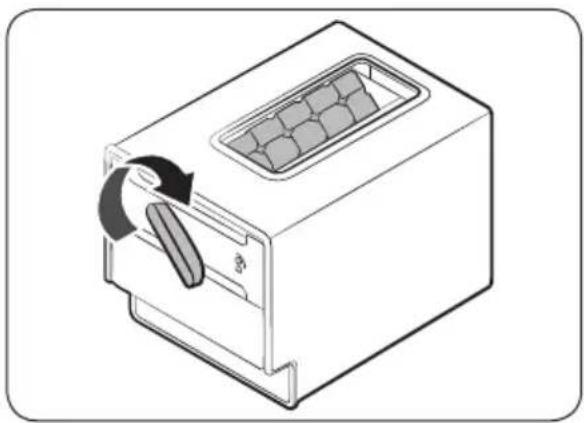
natural_image
Diagram of a microwave oven with a rotary knob and handle, showing internal compartments (no text or symbols)natural_image
Simple line drawing of a screwdriver with a cylindrical head and threaded shaft (no text or symbols)natural_image
Simple line drawing of a screwdriver (no text or symbols)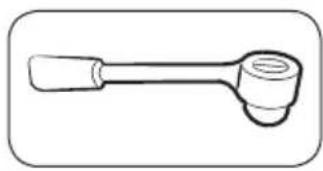
natural_image
Simple line drawing of a mechanical tool or wrench (no text or symbols)Llave de tubo de 516 " (8 mm) (para pernos)
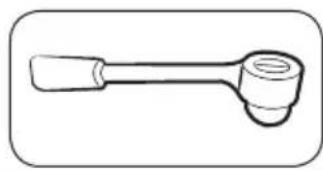
natural_image
Simple line drawing of a mechanical tool or knob (no text or symbols)natural_image
Line drawing of a wrench with a flared end and pointed tip (no text or symbols)natural_image
Simple L-shaped metal bracket diagram without any text or symbolsLlave Allen de ^3/_16 " (5 mm) (para la bisagra del medio)
natural_image
Technical line drawing of a mechanical component (no text or symbols)natural_image
Diagram showing a door frame with an arrow pointing to a wall-mounted fixture, and a magnified inset highlighting the component (no text or symbols present)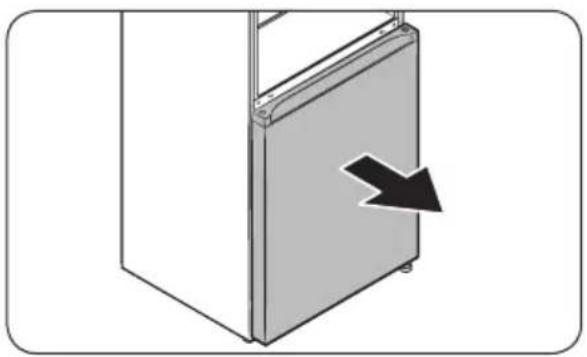
natural_image
Diagram of a door with an arrow indicating direction, no text or symbols presentnatural_image
Diagram showing a mechanical assembly with a magnified inset of a vehicle component (no text or symbols present)natural_image
Mechanical assembly diagram showing two stages of a mechanical component with arrows indicating motion direction (no text or symbols)natural_image
Technical diagram showing mechanical assembly with two vertical supports and directional arrows indicating motion (no text or symbols)natural_image
Technical diagram of a mechanical assembly with a magnified inset showing a component (no text or symbols)natural_image
Technical line drawing of a structural bracket with an inset showing a cylindrical component and a downward arrow (no text or symbols)natural_image
Technical diagram of a mechanical assembly with an upward arrow indicating motion (no text or symbols present)natural_image
Technical diagram of a mechanical clamp or bracket assembly with an arrow indicating direction (no text or symbols present)natural_image
Technical line drawing of a mechanical clamp or bracket assembly with no visible text or symbolsnatural_image
Technical line drawing of a mechanical assembly with wires and components (no text or symbols)natural_image
Technical line drawing of a mechanical component with directional arrows indicating movement or force (no text or symbols)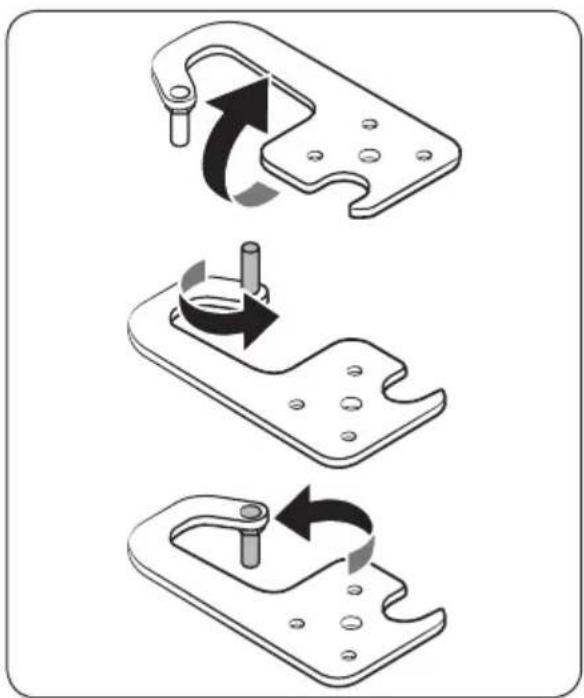
flowchart
graph TD
    A["Step 1: Insert a clamp or bracket"] --> B["Step 2: Rotation of the clamp or bracket"]
    B --> C["Step 3: Receiving the clamp or bracket"]
natural_image
Diagram showing mechanical linkage with arrows indicating motion direction (no text or symbols)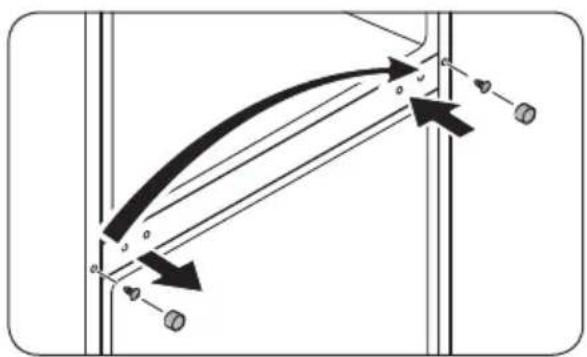
text_image
Diagram showing directional arrows and labeled points with symbols like 'a' and 'b', likely illustrating a physics or engineering concept.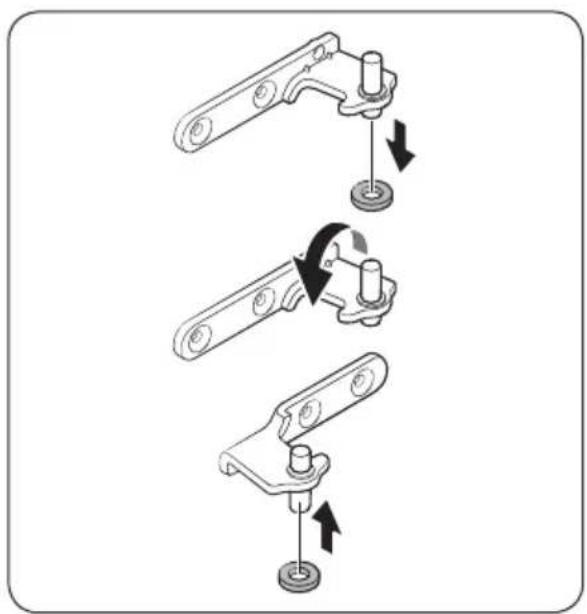
natural_image
Three-step mechanical assembly diagram showing progressive assembly of a bracket with mounting holes (no text or symbols)natural_image
Diagram showing a mechanical assembly with a magnified inset highlighting a specific component (no text or symbols present)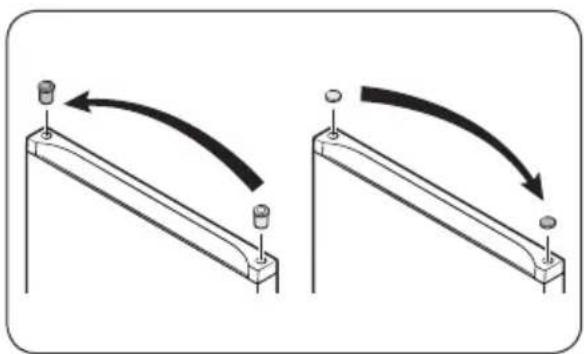
natural_image
Two identical diagrams showing a mechanical or electrical component with arrows indicating direction (no text or symbols present)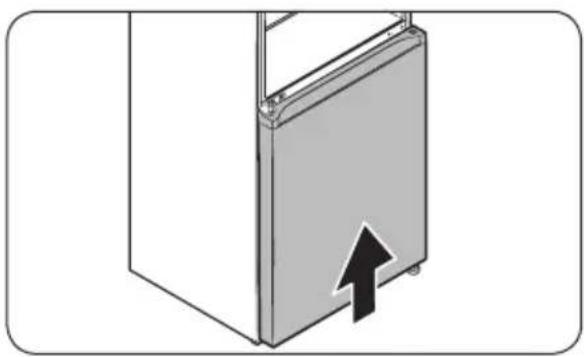
natural_image
Diagram of a door frame with an arrow pointing to the side panel (no text or symbols present)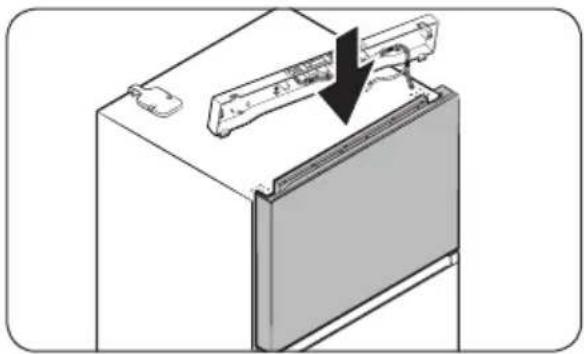
natural_image
Diagram of a refrigerator with a door handle and a black arrow pointing to the lid (no text or symbols present)natural_image
Mechanical assembly diagram showing a tool pressing into a gear with a downward arrow indicating motion (no text or symbols present)natural_image
Mechanical assembly diagram showing a gear and adjustment knob with no visible text or symbolsnatural_image
Diagram showing a mechanical component with a magnified inset highlighting a detail of a component (no text or symbols present)natural_image
Technical diagram showing a mechanical bracket with a downward arrow indicating force or direction (no text or symbols present)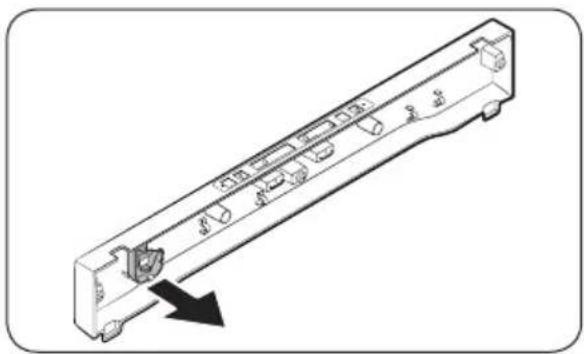
natural_image
Technical line drawing of a mechanical component with no visible text or symbols
natural_image
Technical line drawing of a mechanical assembly with a clamping tool inserted (no text or symbols)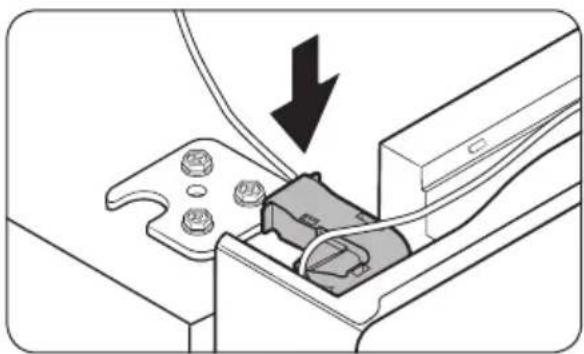
natural_image
Diagram of a mechanical assembly with a black arrow indicating a downward force or force, no text or symbols present.natural_image
Technical diagram of a mechanical assembly with an inset showing internal components (no text or symbols)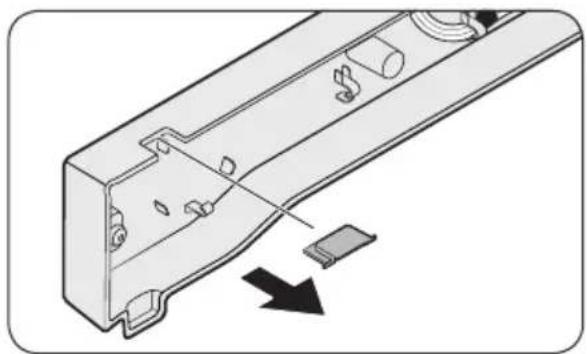
natural_image
Technical illustration of a mechanical component with a directional arrow indicating movement or force (no text or symbols present)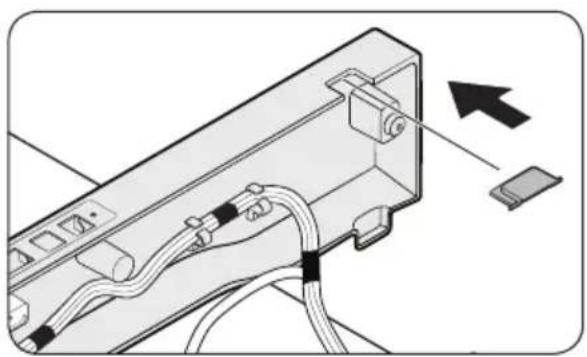
natural_image
Diagram of a device rear panel with cable routing and a separate electronic component (no text or symbols visible)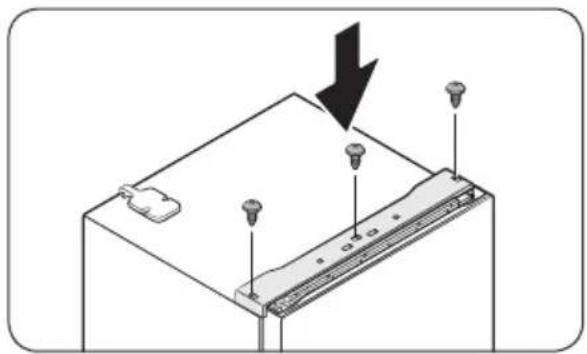
natural_image
Diagram of a device with screw holes and a downward arrow indicating a process (no text or symbols present)natural_image
Diagram of a computer monitor with an attached cable and two arrows indicating assembly or connection (no text or symbols present)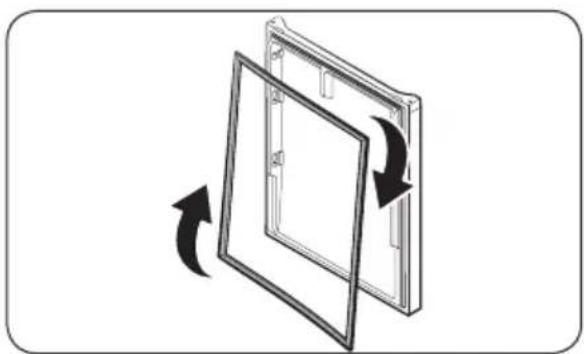
natural_image
Diagram showing a door frame with arrows indicating rotation or movement (no text or symbols)natural_image
Diagram showing a slide with arrows indicating direction and an inset magnified view of the slide's internal structure (no text or symbols)natural_image
Diagram of a refrigerator interior showing a door and drawer with an arrow indicating left-side motion (no text or symbols)natural_image
Diagram of a refrigerator interior showing a door opening and a black arrow indicating the direction (no text or symbols present)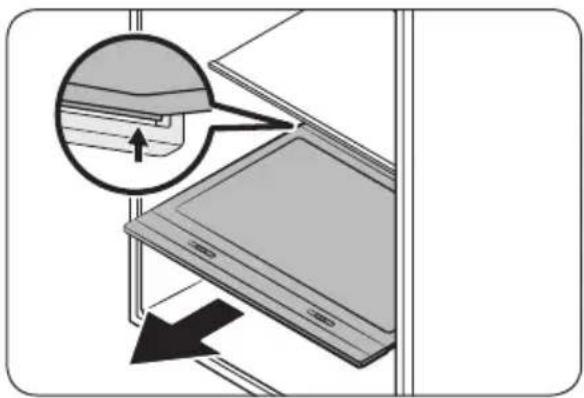
natural_image
Diagram showing a device with an arrow pointing to a component, no text or symbols presentnatural_image
3D diagram of a rectangular plastic container with an arrow indicating upward motion (no text or symbols)natural_image
Diagram of a computer monitor rear panel with a cable inserted, showing ventilation slots and a scroll wheel (no text or symbols)text_image
Aleteo RunrúnRidgefield Park, NJ 07660
Open Source Announcement
The software included in this product contains open source software.
The following URL http://opensource.samsung.com/opensource/SMART_TP1_0/seq/0 leads to open source license information as related to this product.
text_image
QR code image containing encoded data, no visible human-readable textNotas
text_image
QR code image containing encoded data, no visible human-readable textScan this with your smartphone
Scan the QR code* or visit www.samsung.com/spsn to view our helpful How-to Videos and Live Shows
* Requires reader to be installed on your smartphone
Contacte a SAMSUNG WORLD WIDE
Open Source Announcement 69
natural_image
Illustration of hands assembling a star-shaped mechanical component (no text or symbols)natural_image
Technical illustration of a mechanical assembly with two views: top shows internal components, bottom shows a 3D model of a multi-layered component (no text or symbols)text_image
Diagram showing two refrigerator doors with a prohibition sign indicating no movement or damage, and directional arrows indicating movement.text_image
Technical diagram showing mechanical assembly with labeled component 'A' and detail viewtext_image
Diagram showing a mechanical or electrical component with labeled parts A and B, including a coiled cable and directional arrow.text_image
Diagram showing a prohibition symbol and three circular icons with arrows pointing to a device or barrier, likely indicating a safety or safety hazard.text_image
Safety warning illustration showing a pipe with a circular symbol and a prohibition sign for no pollutiontext_image
Technical diagram of a mechanical device with numbered components and labeled partsnatural_image
Two cylindrical objects with circular holes and a prohibition symbol, no text or labels presentATTENTION
text_image
Technical diagram showing a mechanical assembly with labeled components (01, 02, 03, 04) and a dashed circular annotation highlighting parts.natural_image
Diagram of a lamp illuminating a grid-patterned tray with an inset showing a magnified view of the tray (no text or symbols present)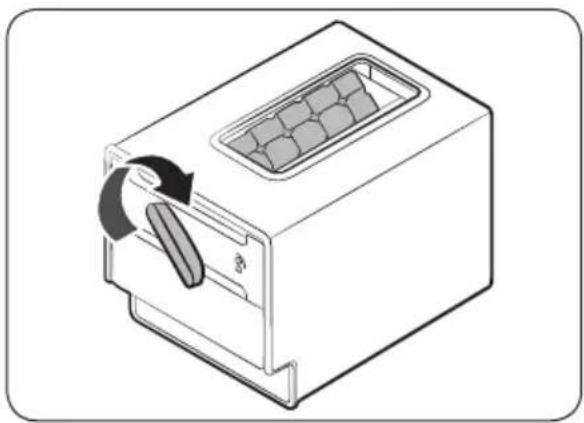
natural_image
Diagram of a microwave oven with a rotary knob and handle, showing internal compartments (no text or symbols)natural_image
Simple line drawing of a screwdriver with no text or symbolsnatural_image
Simple line drawing of a screwdriver (no text or symbols)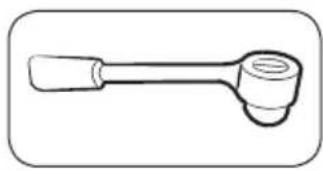
natural_image
Simple line drawing of a mechanical tool or wrench (no text or symbols)natural_image
Simple line drawing of a mechanical tool or wrench (no text or symbols)natural_image
Line drawing of a wrench with a flared end and pointed tip (no text or symbols)natural_image
Simple L-shaped line drawing with no text or symbolsAccessoires (fournis)
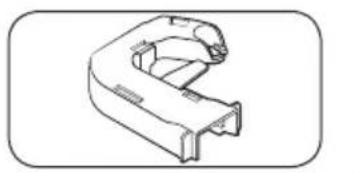
natural_image
Technical line drawing of a mechanical component (no text or symbols)natural_image
Diagram showing a door frame with an arrow pointing to a wall-mounted device, and a magnified inset illustrating the mechanism (no text or symbols present)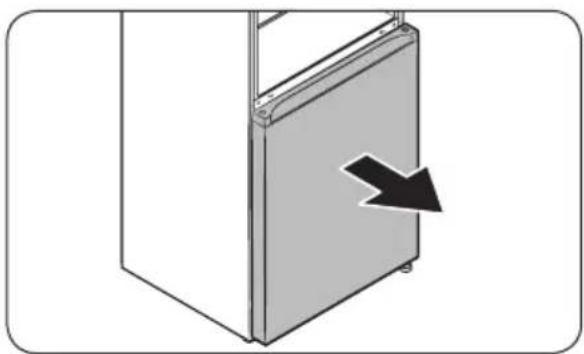
natural_image
Diagram of a door panel with an arrow indicating direction (no text or symbols present)natural_image
Diagram showing a mechanical assembly with a magnified inset of a vehicle component (no text or symbols present)natural_image
Mechanical assembly diagram showing two stages of a mechanical component with arrows indicating motion direction (no text or symbols)natural_image
Technical diagram showing mechanical assembly with two vertical supports and directional arrows indicating motion (no text or symbols)natural_image
Technical line drawing of a mechanical bracket with an inset showing a cylindrical component and an upward arrow (no text or symbols)natural_image
Technical line drawing of a structural bracket with an inset showing a cylindrical component and a downward arrow (no text or symbols)natural_image
Technical diagram of a mechanical assembly with an upward arrow indicating motion (no text or symbols present)natural_image
Technical diagram of a mechanical clamp or bracket assembly with an arrow indicating direction (no text or symbols present)natural_image
Technical line drawing of a mechanical clamp or bracket assembly with no visible text or symbolsnatural_image
Technical line drawing of a mechanical assembly with wires and components (no text or symbols)natural_image
Technical line drawing of a mechanical component with directional arrows indicating movement or force (no text or symbols)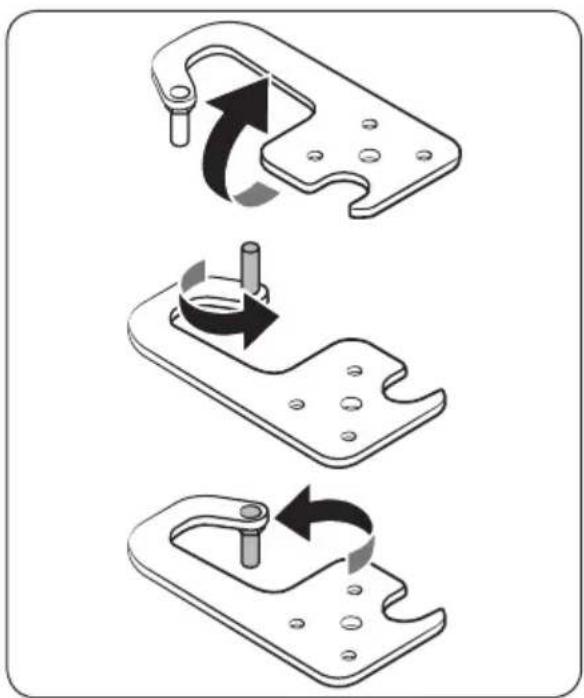
natural_image
Three-step diagram showing a mechanical assembly with arrows indicating rotational motion (no text or symbols)natural_image
Diagram showing mechanical linkage with arrows indicating motion direction (no text or symbols)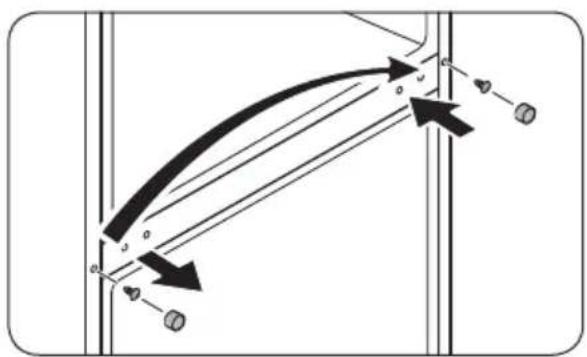
text_image
Diagram showing directional arrows and labeled points with symbols like 'a' and 'b', likely illustrating a physics or engineering concept.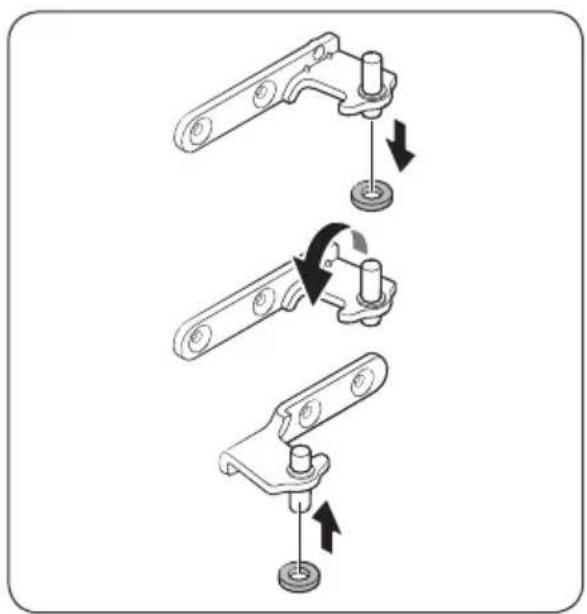
natural_image
Three-step mechanical assembly diagram showing progressive alignment of a lever mechanism (no text or symbols)natural_image
Diagram showing a mechanical assembly with a magnified inset highlighting a specific component (no text or symbols present)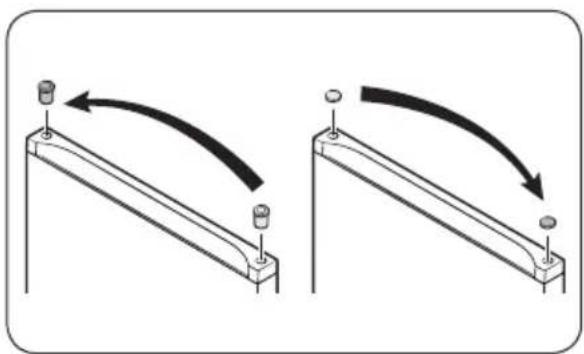
natural_image
Two identical diagrams showing a mechanical or electrical component with arrows indicating direction (no text or symbols present)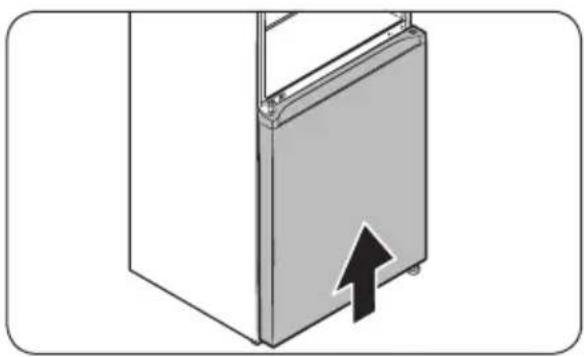
natural_image
Diagram of a door frame with an arrow pointing to the side panel (no text or symbols present)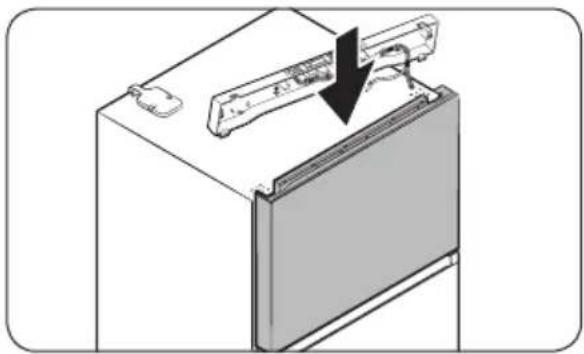
natural_image
Diagram of a refrigerator with a door handle and a black arrow pointing to the lid (no text or symbols present)natural_image
Mechanical assembly diagram showing a pin inserted into a housing with a gear base, no text or symbols presentnatural_image
Mechanical assembly diagram showing a gear and adjustment knob with no visible text or symbolsnatural_image
Diagram showing a mechanical component with a magnified inset highlighting a detail of its internal structure (no text or symbols present)natural_image
Technical diagram showing a mechanical bracket with a downward arrow indicating force or direction (no text or symbols present)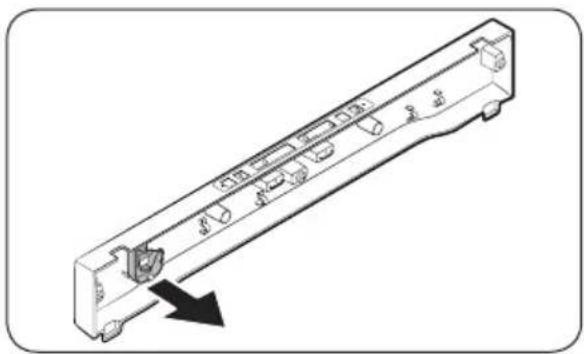
natural_image
Technical line drawing of a mechanical component with internal parts and an arrow indicating direction (no text or symbols)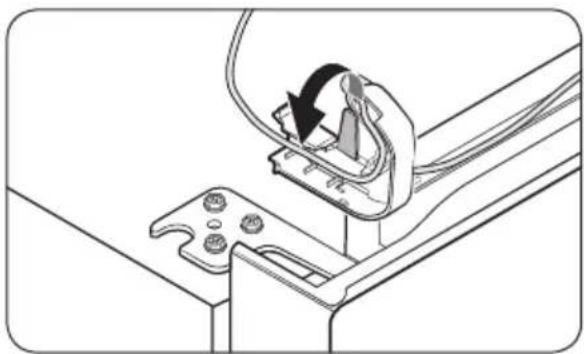
natural_image
Technical line drawing of a mechanical assembly with a clamping tool inserted into a housing (no text or symbols)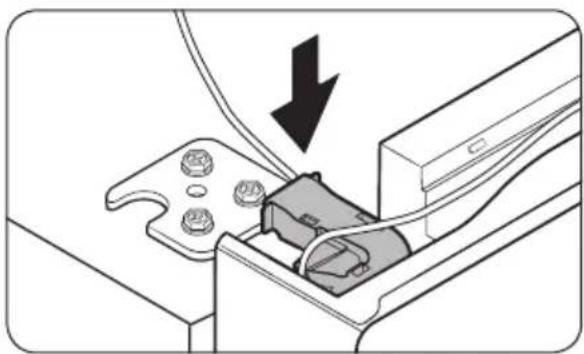
natural_image
Diagram of a mechanical assembly with a black arrow indicating a downward force or force, no text or symbols present.natural_image
Technical diagram of a mechanical assembly with an inset showing internal components (no text or symbols)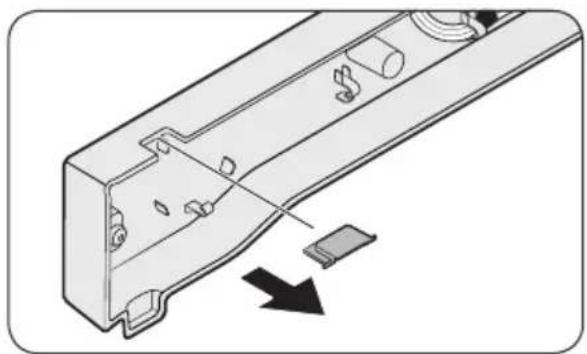
natural_image
Technical illustration of a mechanical component with a directional arrow indicating movement or force (no text or symbols present)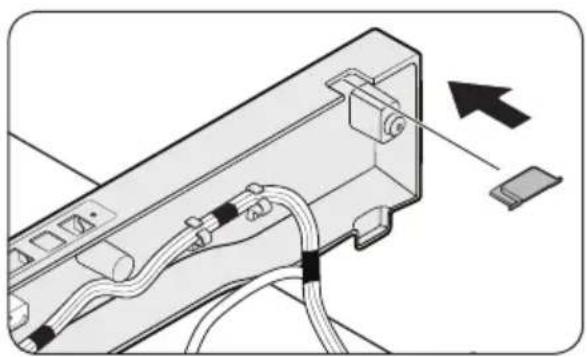
natural_image
Diagram of a device rear panel with cable routing and a separate electronic component (no text or symbols visible)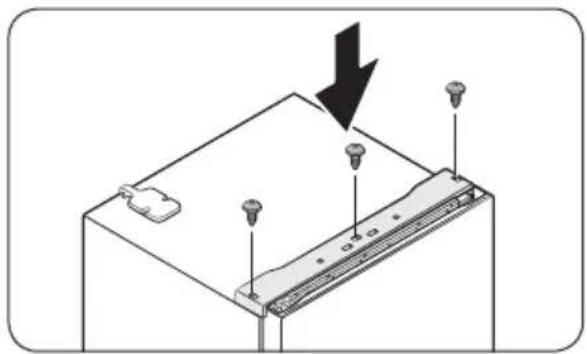
natural_image
Diagram of a device with screw holes and a downward arrow indicating compression or disassembly (no text or symbols present)natural_image
Diagram of a computer monitor with an attached cable and two arrows indicating assembly or connection (no text or symbols present)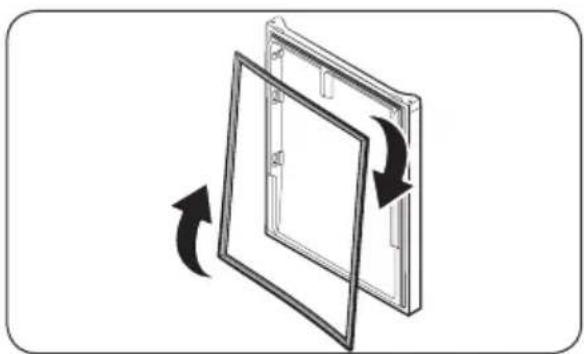
natural_image
Diagram showing a door frame with arrows indicating rotation or movement (no text or symbols)natural_image
Diagram showing a slide with arrows indicating direction and an inset magnified view of the slide's internal structure (no text or symbols)natural_image
Diagram of a refrigerator interior showing a door and drawer with an arrow indicating left-side motion (no text or symbols)natural_image
Diagram of a refrigerator interior showing a door opening and a black arrow indicating the direction (no text or symbols present)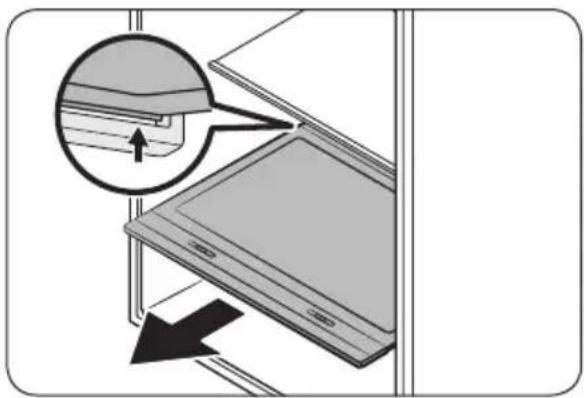
natural_image
Diagram showing a device with an arrow pointing to a component, no text or symbols presentBacs de la porte
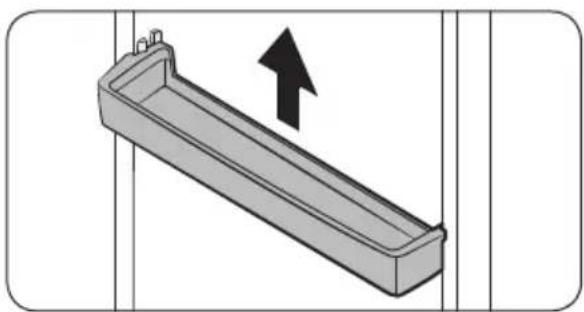
natural_image
3D diagram of a rectangular plastic container with an arrow indicating upward motion (no text or symbols)natural_image
Diagram of a computer monitor with ventilation slots and a cable inserted (no text or symbols)natural_image
Illustration of a steam iron with steam bubbles (no text or symbols)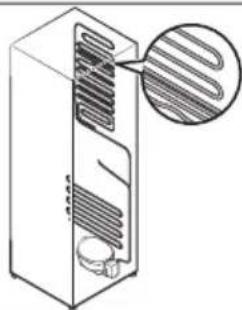
natural_image
Diagram of a vertical refrigerator with heat exchanger and cooling unit, showing internal airflow patterns (no text or labels)natural_image
Simple line drawing of a kettle emitting smoke (no text or symbols)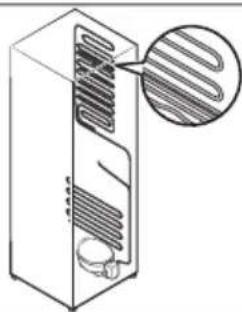
natural_image
Isometric line drawing of a vertical container with internal heat exchanger and a magnified inset showing internal flow (no text or symbols)natural_image
Simple line drawing of a tree with leaves and a lightning bolt above it (no text or symbols)
natural_image
3D diagram of a rectangular prism with internal compartments, no text or symbols presentSamsung Electronics Canada Inc.
2050 Derry Road West,
Mississauga, Ontario L5N 0B9
Canada
www.samsung.com/ca/support (English)
www.samsung.com/ca_fr/support (French)
Avis de la FCC
MISE EN GARDE DE LA FCC :
Open Source Announcement
The software included in this product contains open source software.
The following URL http://opensource.samsung.com/opensource/SMART_TP1_0/seq/0 leads to open source license information as related to this product.
text_image
QR code image containing encoded data, no visible human-readable textMémo
text_image
QR code image containing encoded data, no visible human-readable textScan this with your smartphone
Scan the QR code* or visit www.samsung.com/spsn to view our helpful How-to Videos and Live Shows
* Requires reader to be installed on your smartphone