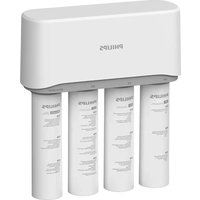
AUT3268 - Water filter PHILIPS - Free user manual and instructions
Find the device manual for free AUT3268 PHILIPS in PDF.



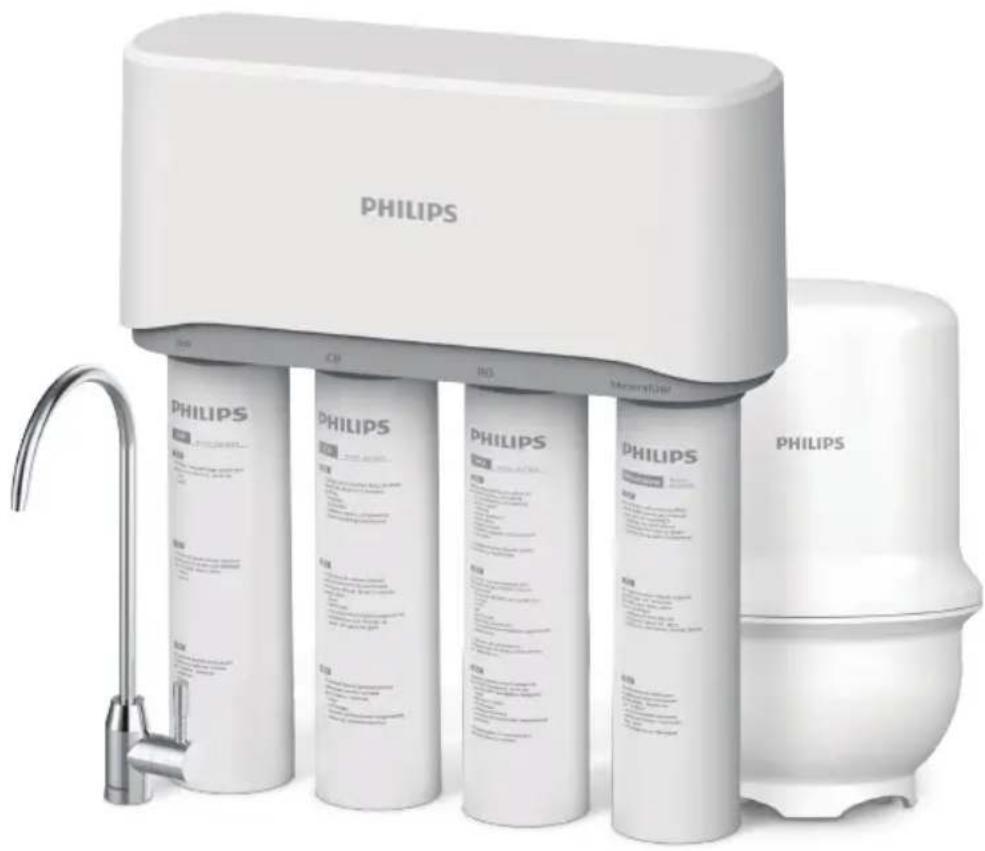
| Product type | Under-sink reverse osmosis water filter |
| Brand | Philips |
| Model | AUT3268 |
| Dimensions (L x W x H) | 378 x 130 x 425 mm |
| Net weight (unit + tank) | 5.8 kg |
| Tank capacity | 11 L |
| Filtered water flow rate | 2 L/min |
| Inlet water pressure | 0.3 - 0.7 MPa (3 - 7 bar) |
| Inlet water temperature | 5°C - 38°C |
| Maximum inlet TDS | 1500 ppm |
| Maximum inlet water hardness | 15 °HF |
| PP filter lifespan | 6-12 months |
| CB filter lifespan | 6-12 months |
| RO filter lifespan | 24-36 months |
| Remineralizing filter lifespan | 6-12 months |
| Applicable water source | Tap water compliant with European Directive 98/83 |
| Warranty | 2 years (defective parts, excluding consumables) |
| Package contents | Manifold, 4 filters, tank, 3-way valve, hoses, faucet, hardware, manual |
Frequently Asked Questions - AUT3268 PHILIPS
User questions about AUT3268 PHILIPS
0 question about this device. Answer the ones you know or ask your own.
Ask a new question about this device
Download the instructions for your Water filter in PDF format for free! Find your manual AUT3268 - PHILIPS and take your electronic device back in hand. On this page are published all the documents necessary for the use of your device. AUT3268 by PHILIPS.
USER MANUAL AUT3268 PHILIPS
Under-the-sink filtration
AUT3268
III. Product overview and installation illustration 2
IV. Installation 3
Install the three-way ball valve 4
Install the faucet 6
Install system manifold 6
Connect the water inlet and 7
the three-way ball valve
Connect the water outlet and 8
the faucet
Connect the drain water outlet and 8
the drain connector
Connect the water tank with the system 9
Check if the system is installed properly, 9
and turn on the three-way ball valve
V. Using the system 11
Before the first-time use 11
VI. Maintenance 11
Routine maintenance 11
Filter lifetime 12
Filter cartridge replacement 12
VII. Precautions 13
Warning 13
VIII. Troubleshooting 15
IX. Guarantee & Service 16
X. Packing list 17

For more languages, scan QR code
I. Product introduction
Congratulations on your purchase and welcome to Philips! The reverse osmosis membrane has a deep filtration level down to 0.0001 micron, which effectively removes viruses, bacteria, heavy metals, pesticides, water hardness, volatile organic compounds, chlorine, and more, giving you great tasting water.* QuickTwist filter design allows you to replace the filter cartridges effortlessly.
Read this user manual carefully before you use the appliance. Save it for future reference.
* The substances removed or reduced by this system are not necessarily in all users' water.
II. Product specification
| Product name | Philips reverse osmosis under-the-sink water filtration system |
| Product model | AUT3268 |
| Filtered water flow rate | 2L/min |
| Filtration capacity | PP filter/CB filter/Mineralizer: 6-12 monthsRO filter: 24-36 months |
| Inlet water pressure 0.3-0.7 MPa** | |
| Water tank capacity | 11L |
| Inlet water temperature | 5°C-38°C |
| Maximum inlet water TDS 1500 ppm | *** |
| Dimensions 378*130*425mm | |
| Net weight 5.8 kg (machine+tank) | |
| Maximum inlet water hardness 15 °HF*** | |
| Applicable water source | Municipal tap water, which meets all European Directive on Water for Human Consumption 98/83 requirements and its national transpositions in the various EU member states. |
** When the inlet water pressure exceeds 0.7 MPa, a pressure relief valve should be installed before the system. When the inlet water pressure is below 0.3 MPa, a pressure booster should be installed before the system. The pressure relief valve and extra pressure booster need to be purchased separately.
*** If the TDS of inlet water exceeds 1500 ppm, or the hardness exceeds 15 °HF, the lifetime of the filters may be impacted. Please consult with your dealer about installing prefilters before the system.
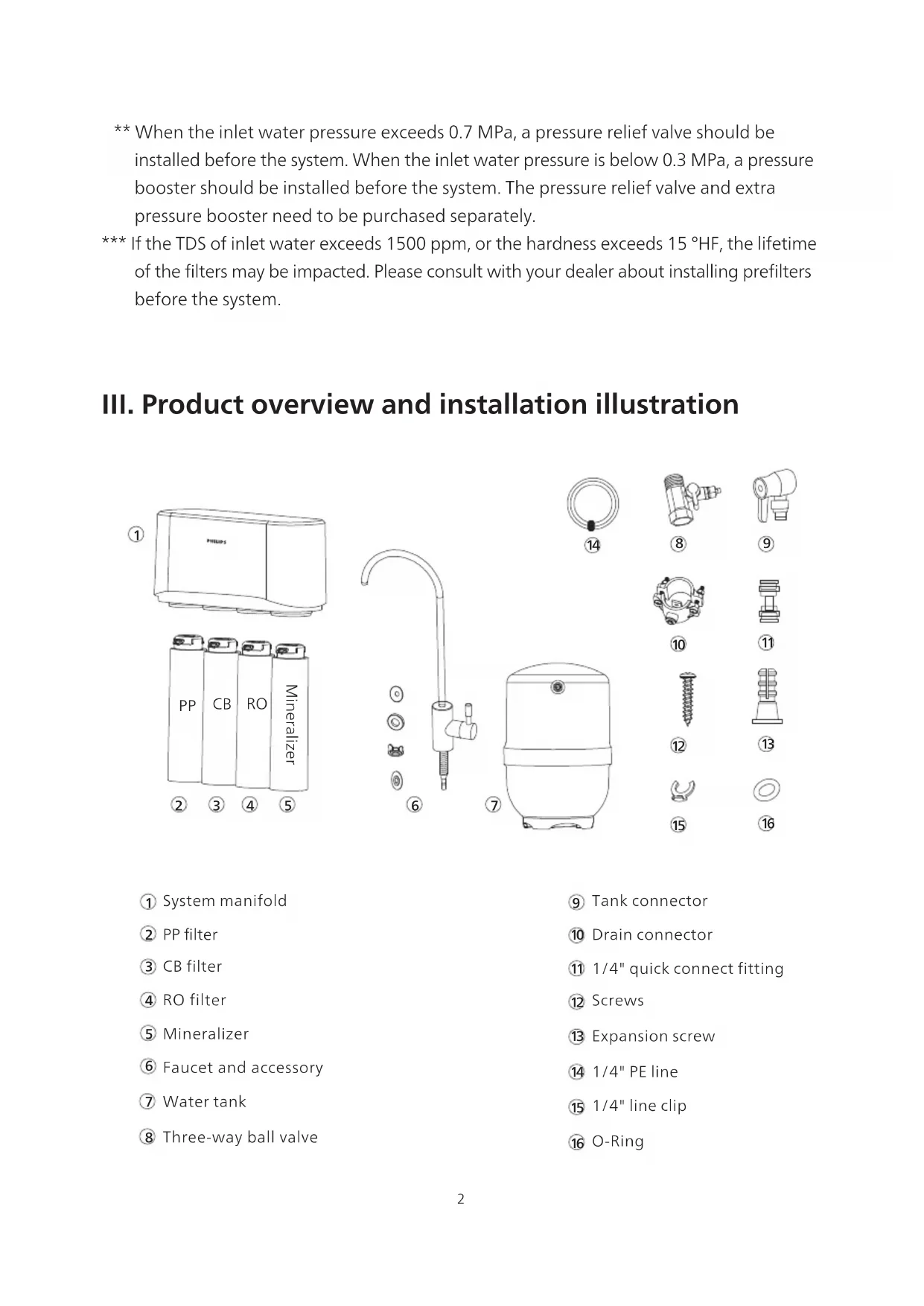
III. Product overview and installation illustration
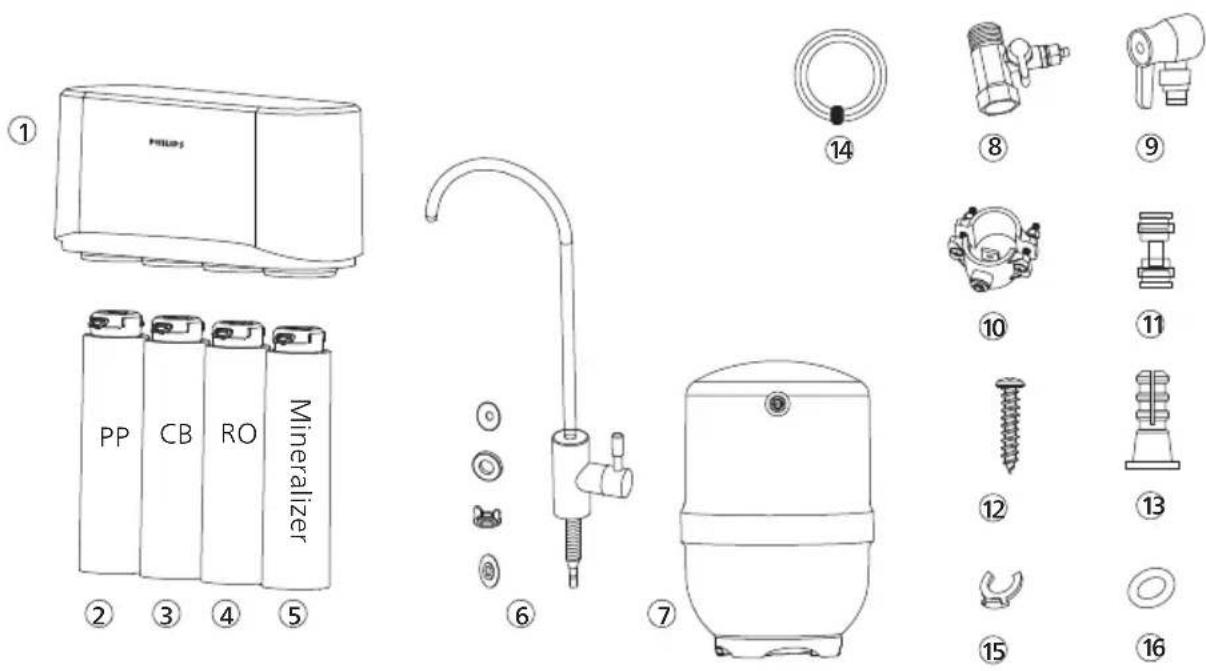
① System manifold
② PP filter
③ CB filter
④ RO filter
⑤ Mineralizer
⑥ Faucet and accessory
⑦ Water tank
⑧ Three-way ball valve
⑨ Tank connector
⑩ Drain connector
⑪ 1/4" quick connect fitting
⑫ Screws
⑬ Expansion screw
⑭ 1/4" PE line
⑮ 1/4" line clip
⑯ O-Ring
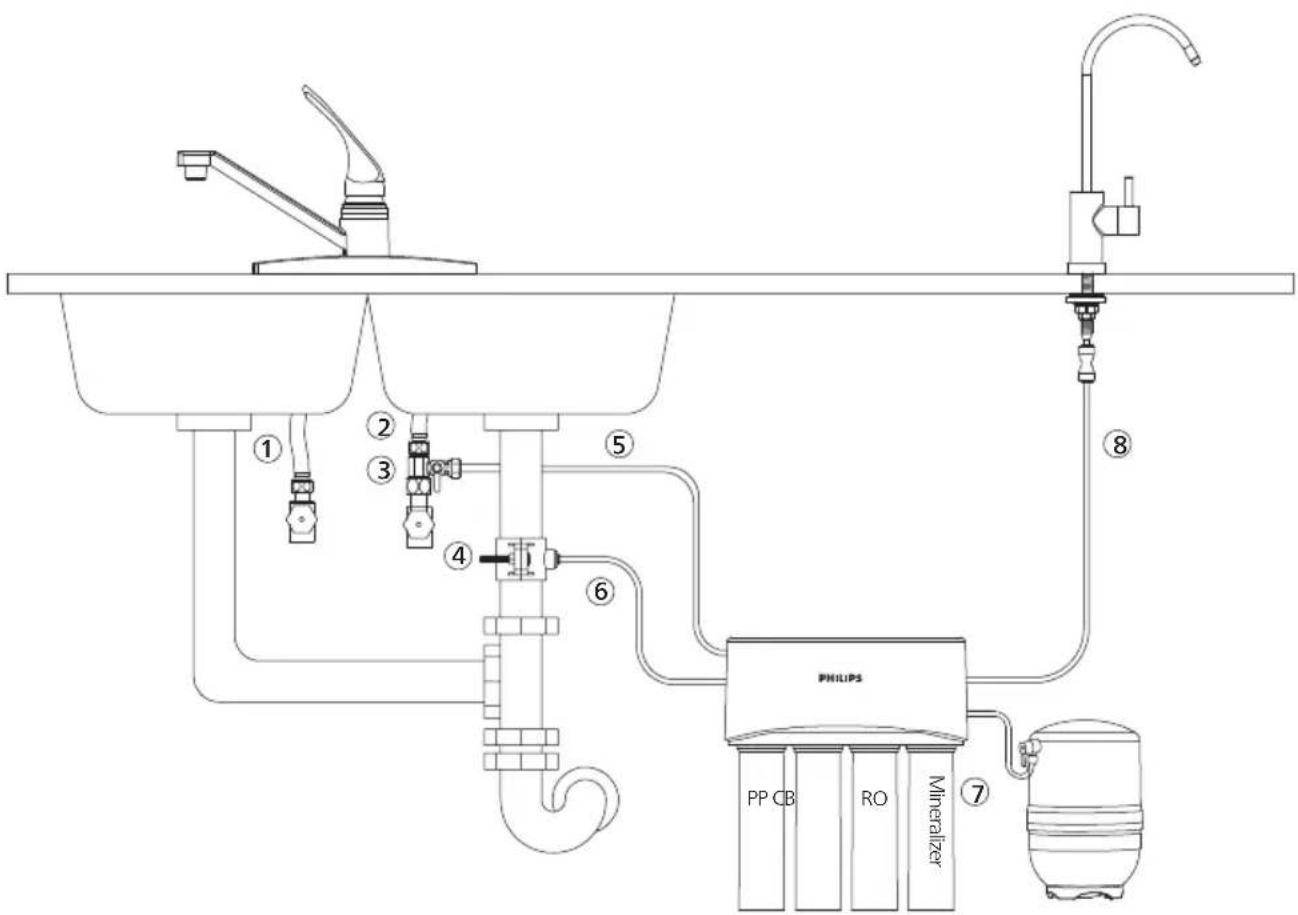
① Hot
⑤ Cold water inlet to manifold
② Cold
⑥ Drain outlet to manifold
③ Three-way ball valve
⑦ Water tank to manifold
④ Drain connector
⑧ Faucet to manifold
IV. Installation
Note:
- Before installation, it is important to check the condition of the system to make sure it has not been damaged during transport. - Unpack the system and its accessories. Remove the protective packaging material. Recyclable materials have been used for the packaging and should be disposed of in the appropriate recycling bins or at the specific local recycling center.
Warning: Keep plastic bags out of the reach of children, as they may be dangerous.
- Check if anything is missing according to the packing list and the overview. - Given that the system will improve the quality of your drinking water, all tools to be used in the installation process should be clean, rust and grease-free.
- The installation process should be carried out under appropriate hygienic conditions, taking all necessary precautions concerning materials and components that will come into contact with water to be treated or consumed.
- Avoid external contamination of the system through improper handling, using gloves, sanitizing gel, and washing hands as often as is necessary during the installation process, first use, and system maintenance.
- The system and installation shall comply with applicable local regulations.
- This product cannot be disposed of with other domestic waste products.
At the end of the product's service life, it should be returned to the place of purchase, or at a local recycling center, indicating that it contains electric and electronic components. The appropriate collection and treatment of the product, which no longer are to be used, contributes to the preservation of natural resources and avoids any potential public health risks.
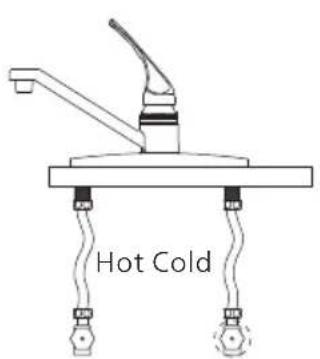
1. Install the three-way ball valve
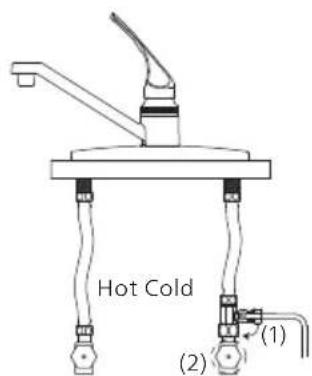
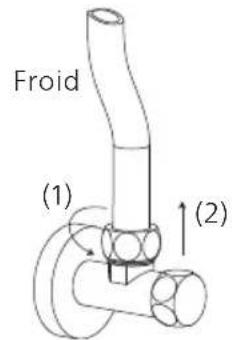
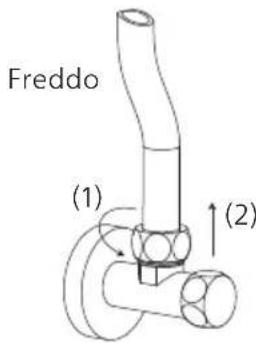
a. Turn off the cold water supply. Turn on the kitchen cold water faucet to release the pressure and allow water to drain from the line. Disconnect the cold water hose from the cold water valve.
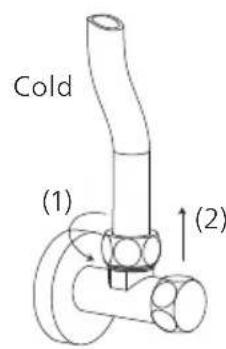
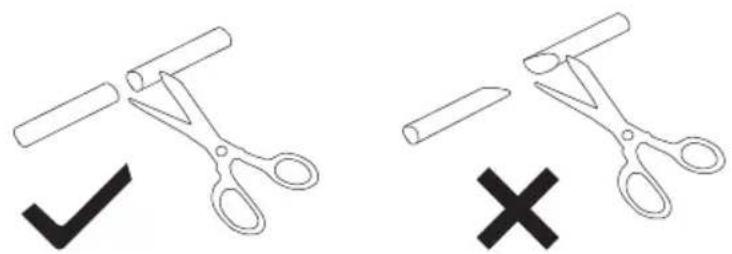
b. Measure the length of the 1/4" pipe and cut it accordingly with a pipe cutter.
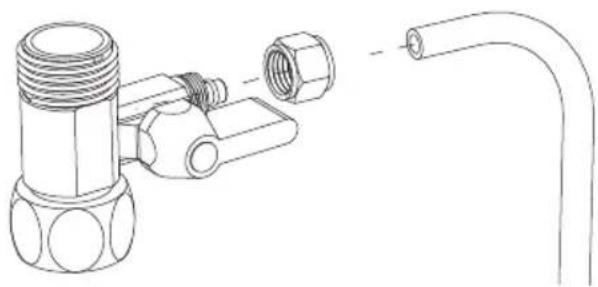
Slide the nut of the three-way ball valve onto the 1/4" PE pipe and insert the pipe into the opening of the three-way ball valve. Tighten the nut with a wrench.
natural_image
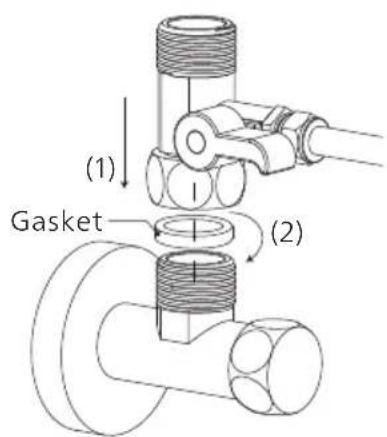
Technical line drawing of a mechanical pipe fitting with threaded end and connecting rod (no text or symbols)c. Install the three-way ball valve on the cold water valve. Please don't miss the gasket inside the three-way ball valve during installation.
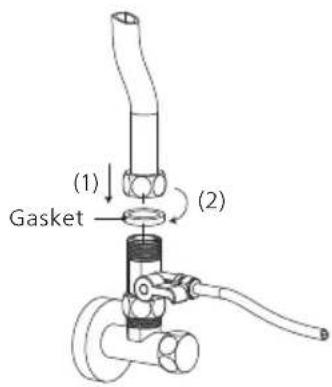
d. Connect the cold water hose with the three-way ball valve and screw it tightly with a wrench. Please don't miss the gasket in the cold water hose during installation.
e. Switch off the three-way ball valve. Turn on the cold water supply. Wipe the connections with a tissue to see if there is leakage. If the tissue stays dry, it means the three-way ball valve is installed properly.
2. Install the faucet
Note:
Select an appropriate installation position. The environment where the faucet is installed should adhere to any appropriate hygiene and sanitation conditions.
Make sure the faucet sits flat on top of the sink or countertop surface.
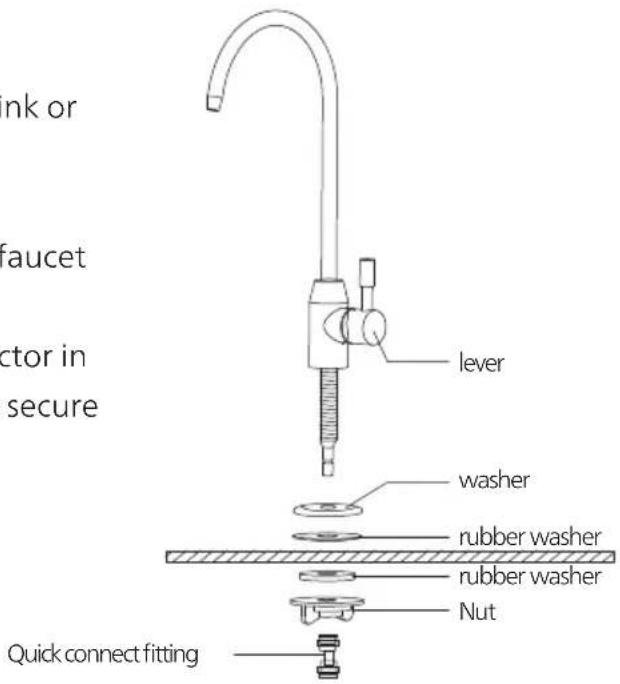
a. Drill a hole with a diameter of about 20 mm. Skip this step if there is already a hole in the sink or the countertop surface.
b. Install the faucet according to the diagram. Screw the faucet stem nut all the way up the faucet stem, and tighten it to secure the faucet.
c. Connect the faucet cable to the faucet connector in the back of the system and tighten the nut to secure the cable.
3. Install system manifold
Note:
Please check if there is sufficient space for installing the system itself, its accessories, connections, and for servicing and repair. Under no circumstances should the system be installed outdoors. The environment where the system is installed should adhere to any appropriate hygiene and sanitation conditions. Avoid any external dripping liquids from pipes or drains etc. onto the system.
This system should be placed on a stable and flat surface. Keep the system away from heat. It shall not be placed in a place that may have inflammable gas leakage.
Wall mounting (optional step)
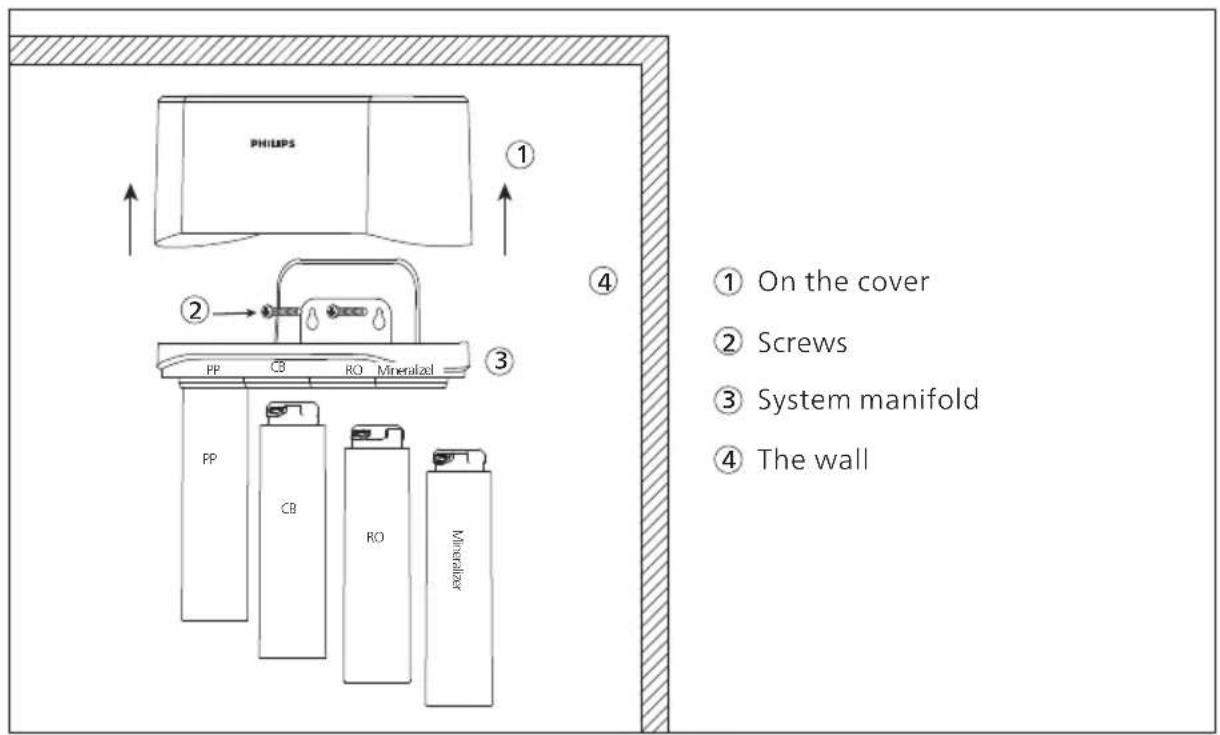
a. Select an easily accessible area under the sink to mount the system manifold.
b. Take off the cover, mark wall placement for mounting screws using the built-in bracket on the back of the manifold. Ensure holes are as level as possible. (Note: At least 40cm from holes to the floor to allow ample space for filter replacement)
c. Drill 2 pilot holes for mounting brackets using 1/4" drill bit for the system manifold. Note: Do not drill into anything beyond the cabinet wall.
d. Insert expansion screws and mounting screws into the wall leaving approximately 3/8" of each screw exposed.
e. Mount the manifold on the wall to ensure it fits properly. Then take down the manifold.
f. Remove the packaging of the filter cartridges, insert them into the manifold according to the order, and turn them clockwise to lock them in place.
4. Connect the water inlet and the three-way ball valve
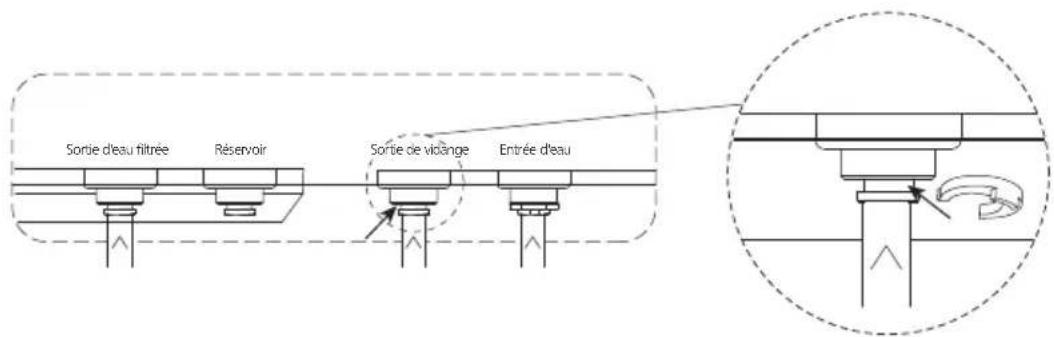
Insert the other end of the 1/4" pipe which has been connected with the three-way ball valve into the water inlet hole in the back of the system. Use a clip to secure the pipe at the hole.
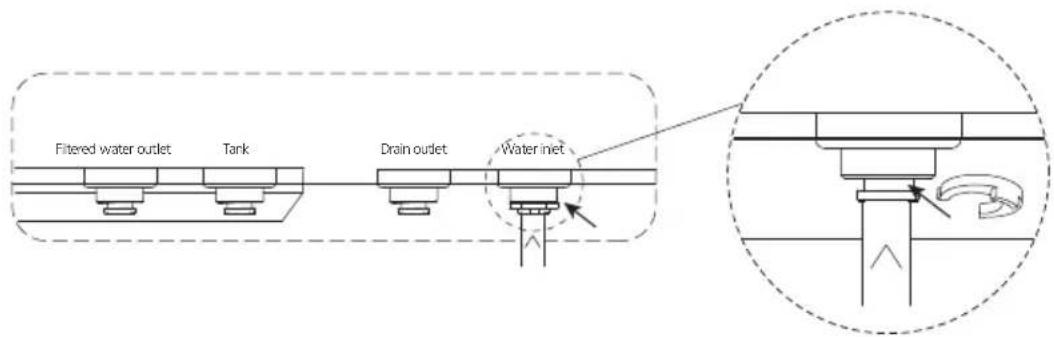
Note: The inlet water pressure should be within 0.3-0.7 MPa. If the pressure is too low, a pressure booster should be installed prior to the system. If the pressure is too high, a pressure relief valve should be installed prior to the system.
5. Connect the water outlet and the faucet
After you measure the length of the 1/4" pipe you need to connect the system and the faucet, cut the 1/4" pipe with a pipe cutter. Insert one end of the pipe into a quick connect fitting, and connect the quick-connect fitting on the stem of the faucet.
Insert the other end of the 1/4" pipe into the filtered water outlet hole in the back of the system until it stops. Use a clip to secure the pipe at the hole.
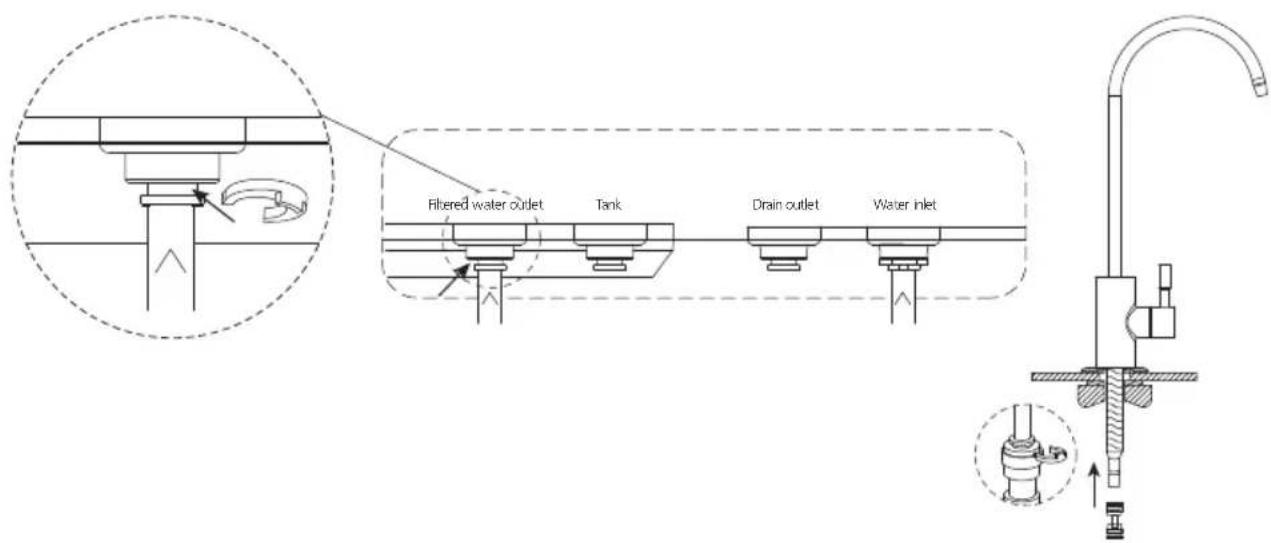
6. Connect the drain water outlet and the drain connector
Identify the drain outlet location. Drill a 6.5mm hole on the drain pipe. Install the drain connector according to the diagram. Securely tighten the nuts. Cut a section of 1/4" pipe. Insert one end of the pipe into the drain outlet hole in the back of the system until it stops. Use a clip to secure the pipe at the hole. Insert the other end of the pipe into the drain connector.
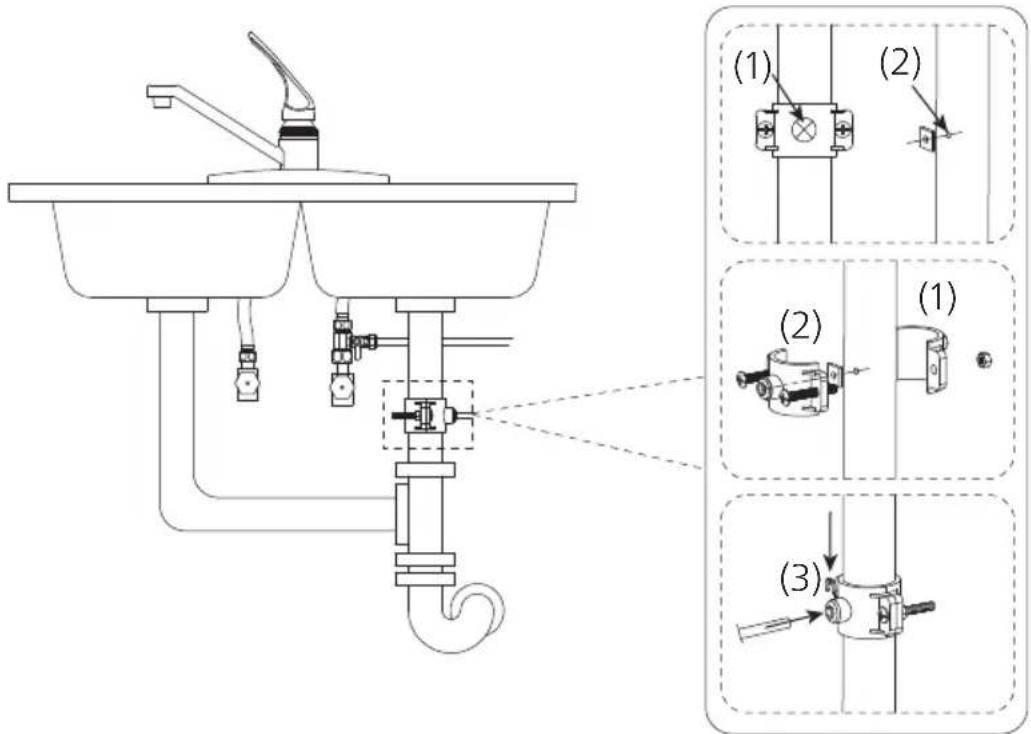
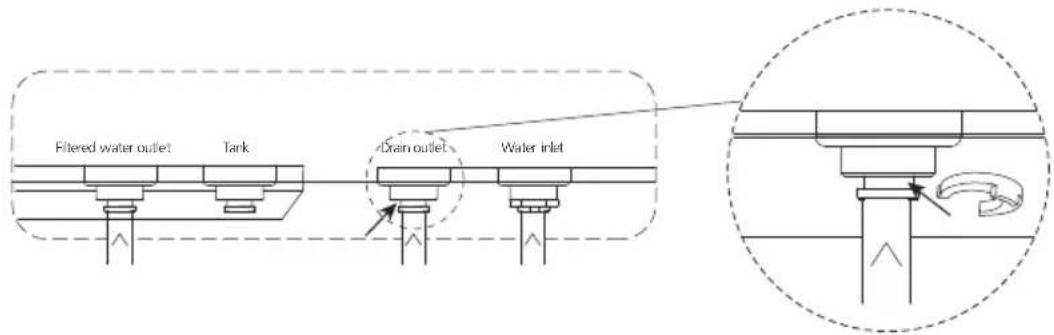
Note: The inlet water pressure should be within 0.3-0.7 MPa. If the pressure is too low, a pressure booster should be installed prior to the system. If the pressure is too high, a pressure relief valve should be installed prior to the system.
7. Connect the water tank with the system
Install the water tank ball valve on the water tank by turning it clockwise.
Cut a section of 1/4" pipe. Insert one end of the pipe into the water tank ball valve, and insert the other end of the pipe in the water tank connector in the back of the system until it stops.
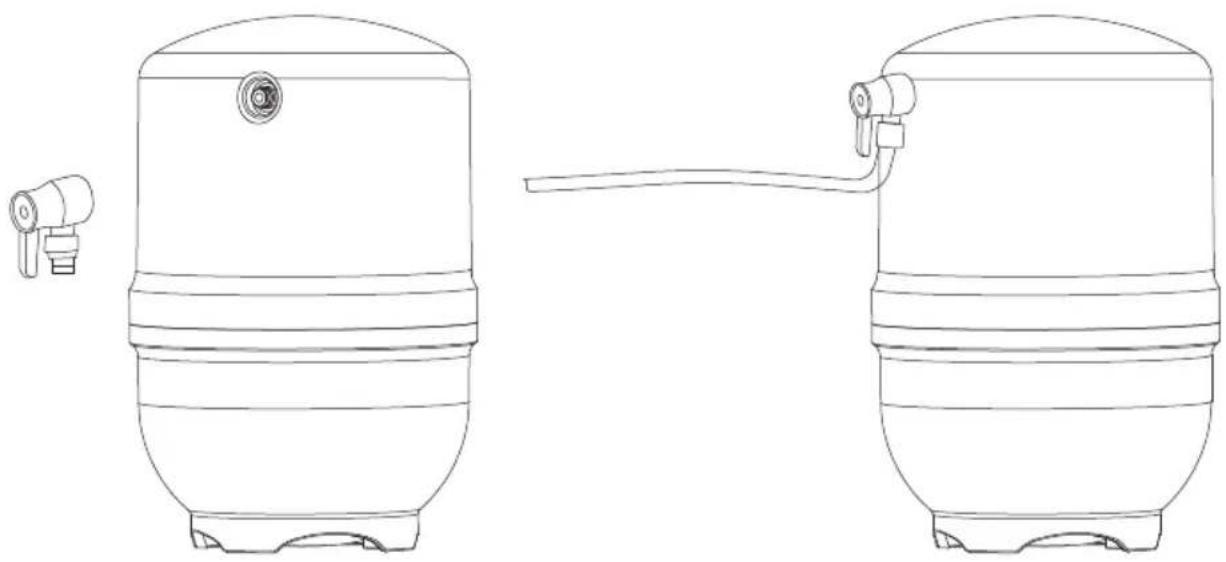
natural_image
Line drawing of two water pumps with different internal structures and a pipe connection (no text or symbols)- Check if the system is installed properly, and turn on the three-way ball valve
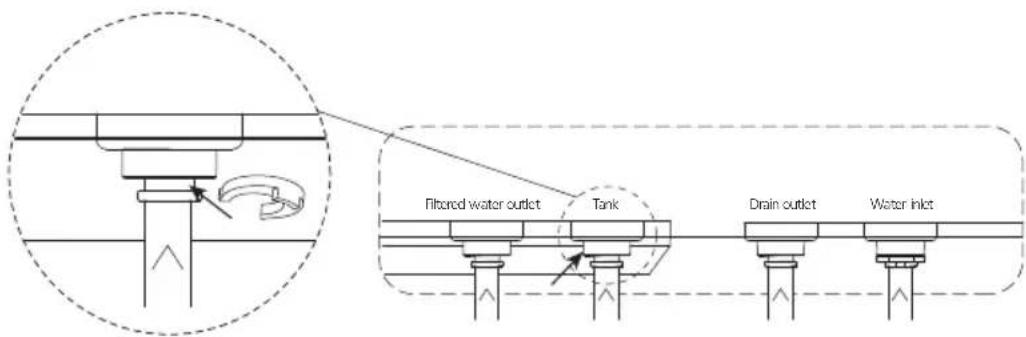
Place the manifold and water tank in a proper area as follow. Then install the cover onto the manifold.
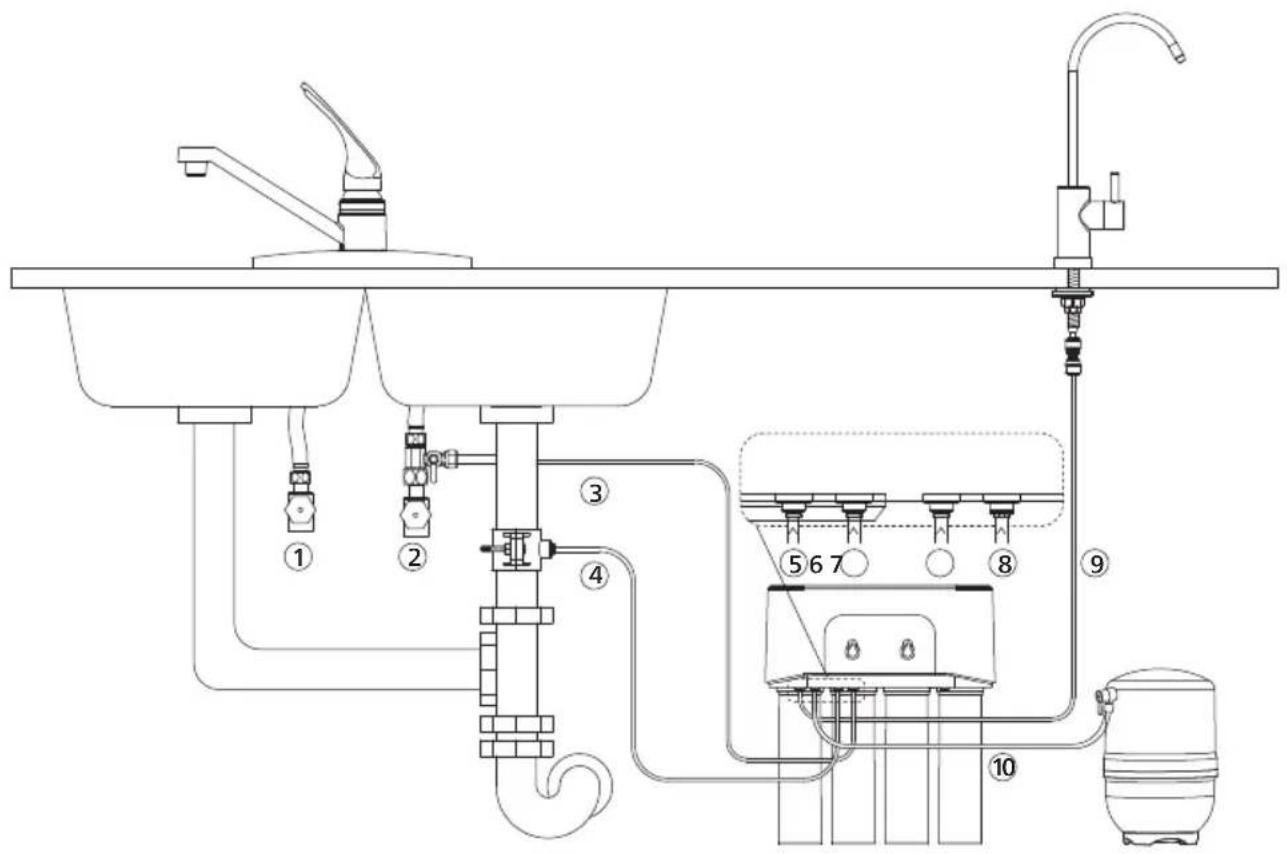
① Hot
② Cold
③ Water inlet pipe
④ Drain outlet pipe
⑤ Filtered water outlet
⑥ Tank
⑦ Drain outlet
⑧ Water inlet
⑨ Faucet
⑩ Water tank connector
V. Using the system
1. Before the first-time use
a. Turn off the water tank ball valve and turn on the faucet.
b. Check if there is leakage on all the connections.
c. Follow the instructions to flush thoroughly.
Flush the filters:
- Turn off the water tank ball valve. Turn on the faucet to let water flow through the system for 30 mins.
Flush the water tank
- Turn off the faucet. Turn on the water tank ball valve and let it be filled with water. This will take 1-2 hours depending on the inlet water pressure. Once the water tank is full, the system will stop filtering water.
- Turn on the faucet and empty the water tank to flush the water. Once it's empty, turn off the faucet, and the water tank will be filled again.
- Repeat the steps above 2 times.
Now the system is ready to use.
Note:
The flow rate will be less than your kitchen faucet. Water will run to the drain while the RO filter system is filtering water – even when not in use. This is normal.
Water going to drain will stop automatically when the water tank is at capacity.
VI. Maintenance
1. Routine maintenance
- Organic solvent such as gasoline etc. shall not be used for wiping the housing of the device. If cleaning is required, please gently wipe the surface of the product with a wet cloth.
- If the system is not used for more than 2 days, turn on the faucet for more than 5 minutes to flush the system.
- If the system will not be used for an extended period, take out the filter cartridges, seal them with plastic wraps, and store them in the refrigerator (not in the freezer). Turn off the three-way ball valve, turn on the faucet to empty the water tank, and turn off the water tank ball valve. Before using it again, repeat step c and step e in chapter V.
2. Filter lifetime
Note
For the best performance, please change your filter cartridge according to the filter replacement cycle suggested below. When a significantly lower flow rate is observed, we recommend changing the filters as well.
This system can only work with Philips filters.
| Filter Filter lifetime | |
| PP Filter | 6-12 months* |
| CB Filter | 6-12 months* |
| RO filter | 24-36 months* |
| Mineralizer Filter | 6-12 months* |
* The actual lifetime of the filter cartridge depends on the local tap water quality and daily usage. The recommended replacement cycle is an average based on different local tap water quality. If the local tap water quality is below the average, the actual lifetime of the cartridge would differ from the recommended replacement cycle. If the filter cartridge is blocked, please replace it.
3. Filter cartridge replacement
a. Turn off the three-way ball valve and the water tank ball valve.
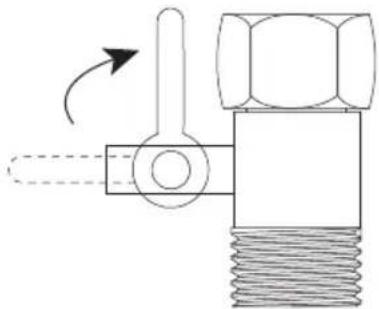
natural_image
Pure mechanical diagram showing a valve and bolt assembly without any text, numbers, or symbolsb. Turn on the faucet to release the pressure.
c. Turn the filter that needs to be replaced anticlockwise and pull it out.
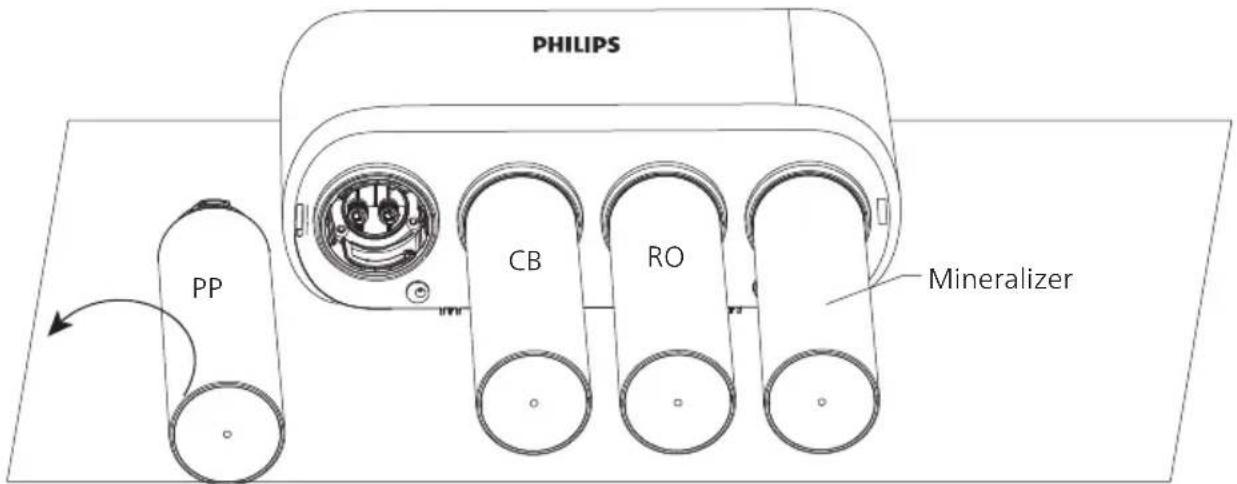
d. Remove the packaging of the new filter, insert the cartridge in the system, and then turn it clockwise tightly.
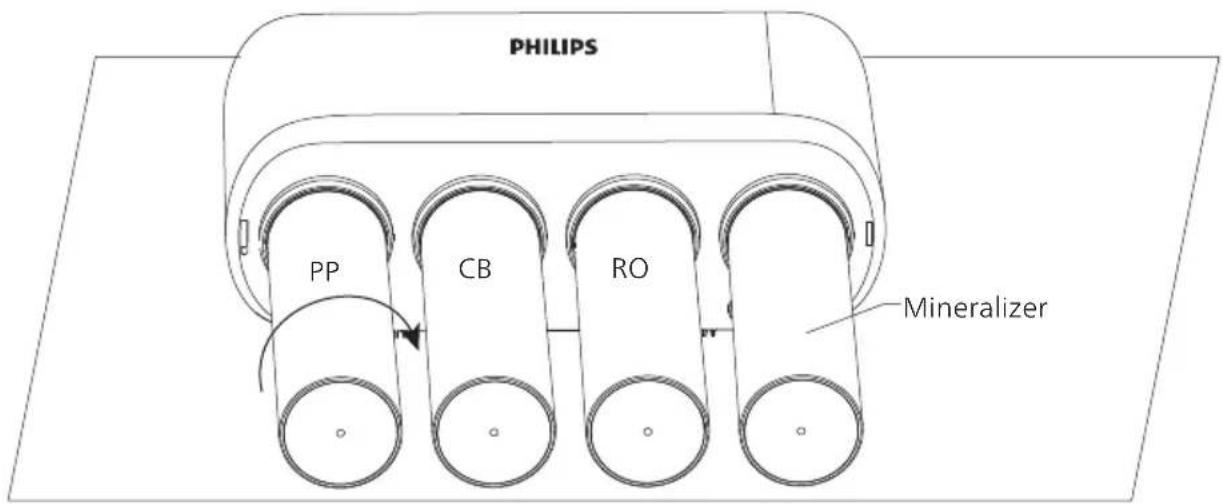
e. Turn on the three-way ball valve and the faucet. Allow water to flow for 1.5 hours to flush the new filters.
f. Turn off the faucet and turn on the water tank ball valve to fill the water tank. After that, the system is ready to use.
VII. Precautions
1. Warning
- This is NOT a water purifier. Always use municipal tap water as the water source. Do not use water that is microbiologically unsafe or of unknown quality without adequate disinfection before or after the system.
- This system is not intended for use by persons (including children) with reduced physical sensory or mental capabilities, or lack of experience and knowledge unless they have been given supervision or instruction concerning the use of the appliance by a person responsible for their safety. Children should be supervised to ensure that they do not play with the system.
- Be sure to handle the system gently and carefully. Do not attempt to modify or repair the system yourself, otherwise, the warranty becomes invalid.
- This device is intended for domestic use only.
- The inlet water temperature of the system should be within 5-38°C. When the inlet water temperature exceeds 38°C, the filter could be damaged and become invalid.
If the inlet water temperature is lower than 5^ C, it may cause freezing and the parts of the system to rupture, resulting in water leakage.
- Do not reverse the installation order of the filter cartridges to avoid affecting the filter performance of the system.
- If the system is abnormal or faulty, stop using it immediately. Close the inlet water valve, and turn on the faucet to empty the system. Events of faults include:
- Leakage
· The product is cracked or damaged
· There is an abnormal sound
· The machine does not work
Please contact consumer care for inspection immediately.
- If not using the system for an extended period, turn off the water supply, and turn on the faucet to release the internal pressure to avoid damage to the system.
VIII. Troubleshooting
| Problem | Possible cause Solution | |
| There is leakage. | The components are damaged. | Turn off the three-way wall valve, and contact consumer care. |
| The pipes or filters are not connected properly. | Check whether the filters are not installed in place or pipes are not screwed tightly. | |
| No water comes out from the faucet. | The cold water valve or three-way ball valve is not turned on. | Turn on the valve to test again. |
| The flow rate gets slower. | The pipes are twisted or bend seriously. | Check all the water pipes, including inlet water pipe, drain water pipe, pure water pipe and water tank pipe to make sure water can go through the pipes smoothly. |
| The three-way ball valve is not turned on completely. | Make sure the three-way ball valve is turned on completely. | |
| Filter is clogged. | Replace a new filter or contact the consumer care. | |
| Inlet water pressure is low. | Wait until the inlet water pressure gets stable, or install a pressure boost before the system if the inlet water pressure is constantly lower than 0.3MPa. | |
| No water runs to the drain | The drain water pipe is twisted or the RO filter is damaged. | Change the drain water pipe or RO filter. Contact consumer care if necessary. |
| Poor outlet water quality. | Filter has reached the end of life. Replace the filter. | |
| The system hasn't been used for some time. | Check routine maintenance in chapter VI. | |
| Poor outlet water quality. | The inlet water quality is poor. | Always use municipal tap water as the water source. Do not use water that is microbiologically unsafe or of unknown quality without adequate disinfection before or after the system. Install a prefilter before the system if the inlet water quality is constantly poor. |
IX. Guarantee & Service
If you need information or if you have any problems, please visit www.philips.com or contact the consumer care center in your country. If there is no consumer care center in your country, go to a local dealer. Within two years from the date of purchase, you will receive free warranty service for any damage caused by the manufacturing process, or components under normal operation confirmed by our maintenance service. The warranty service does not include frequently replaced consumable components, auxiliary devices, transportation fees, and door-to-door service. Please show the proof of purchase to the service personnel during maintenance.
X. Packing list
| System manifold 1X | |
| PP Filter 1X | |
| CB filter 1X | |
| CB filter 1X | |
| Mineralizer 1X | |
| Water tank 1X | |
| Water tank ball valve 1X | |
| Three-way ball valve 1X | |
| 1/4" PE pipe 1X | |
| Screw 2X | |
| Expansion screw 2X | |
| Faucet and accessory 1X | |
| User manual 1X | |
| Clip 7X | |
| Drain connector 1X | |
| Quick connect fitting 1X | |
| 1/4" Ring (Spare part) 2X |
ES
Contenido
natural_image
Technical line drawing of a mechanical pipe fitting with threaded end and attached tubing (no text or symbols)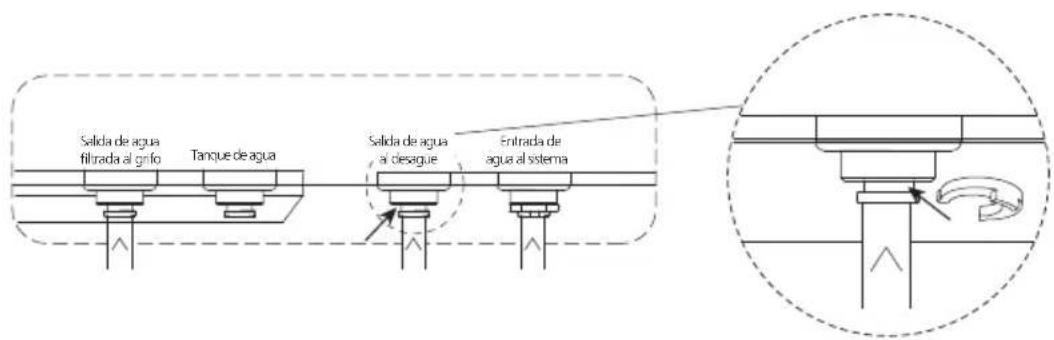
natural_image
Line drawing of two water pumps with a hose, one with a small pump and the other connected to a cylindrical tank (no text or symbols)This system can only work with Philips filters.
natural_image
Pure mechanical diagram showing a valve and bolt assembly without any text, numbers, or symbols- This product cannot be disposed of with other domestic waste products. At the end of the product's service life, it should be returned to the place of purchase, or at a local recycling center. The appropriate collection and treatment of the product, which no longer are to be used, contributes to the preservation of natural resources and avoids any potential public health risks.
natural_image
Technical line drawing of a mechanical pipe fitting with threaded connectors and a curved pipe (no text or symbols)2. Installer la robinetterie
Remarque:
natural_image
Line drawing of two water pumps with a hose, shown from different angles (no text or symbols)natural_image
Technical diagram of a mechanical valve assembly with a bolt and nut, showing motion direction (no text or labels)- This product cannot be disposed of with other domestic waste products.
At the end of the product's service life, it should be returned to the place of purchase, or at a local recycling center. The appropriate collection and treatment of the product, which no longer are to be used, contributes to the preservation of natural resources and avoids any potential public health risks.
1. Installare la valvola a sfera a tre vie
natural_image
Technical line drawing of a mechanical pipe fitting with threaded end and connecting rod (no text or symbols)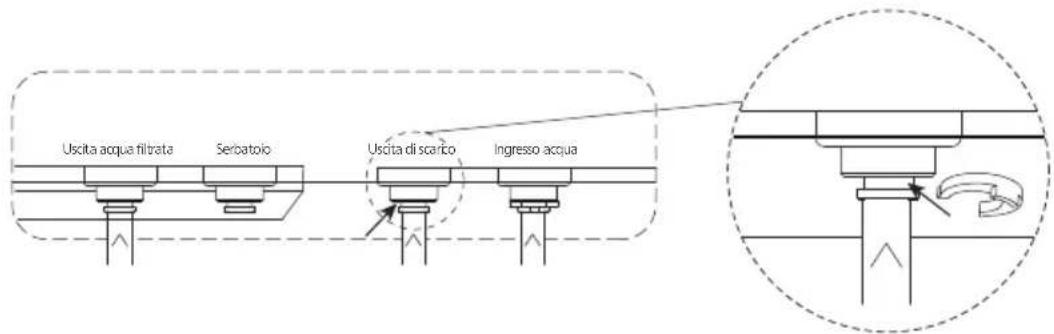
natural_image
Line drawing of two water pumps with different internal structures and a pipe connection (no text or symbols)natural_image
Pure mechanical diagram showing a valve and bolt assembly without any text or symbols① Горячая
natural_image
Technical line drawing of a mechanical pipe fitting with threaded connectors and a curved pipe (no text or symbols)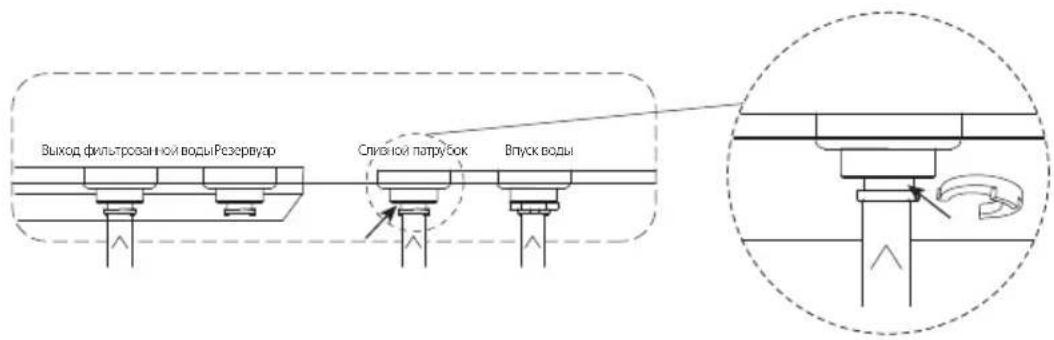
natural_image
Line drawing of two identical water pumps with different internal structures and a side-mounted pipe connection (no text or symbols)natural_image
Pure mechanical diagram showing a bolt and nut assembly without any text, numbers, or symbolsnatural_image
Technical line drawing of a mechanical pipe fitting with threaded end and flanged ends (no text or symbols)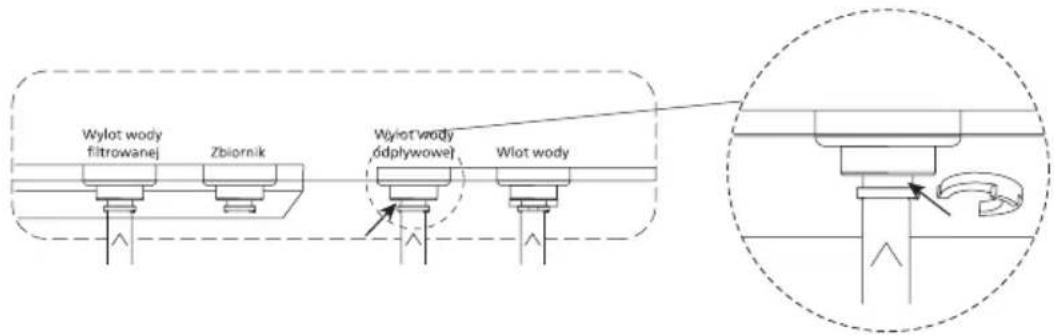
natural_image
Line drawing of two water pumps with different internal structures and a pipe connection (no text or symbols)natural_image
Pure mechanical diagram showing a valve and bolt assembly without any text, numbers, or symbolsSpecifications are subject to change without notice www.philips.com/water
© 2023 AquaShield
All rights reserved.
Philips and the Philips Shield Emblem are registered trademarks of Koninklijke Philips N.V. and are used under license.
This product has been manufactured by and is sold under the responsibility of Hong Kong AquaShield Health Technology Company Limited and Hong Kong AquaShield Health Technology Company Limited is the warrantor in relation to this product.
Rev D MAY 23


- Product introduction
- Product specification
- Product overview and installation illustration
- Installation
- Note:
- Install the three-way ball valve
- Install the faucet
- Install system manifold
- Wall mounting (optional step)
- Connect the water inlet and the three-way ball valve
- Connect the water outlet and the faucet
- Connect the drain water outlet and the drain connector
- Connect the water tank with the system
- Using the system
- Before the first-time use
- Maintenance
- Routine maintenance
- Filter lifetime
- Note
- Filter cartridge replacement
- Precautions
- Warning
- Guarantee & Service
- Packing list
- ES
- Contenido
- Installer la robinetterie
- Remarque:
- Installare la valvola a sfera a tre vie
- Specifications are subject to change without notice www.philips.com/water
Brand : PHILIPS
Model : AUT3268
Category : Water filter