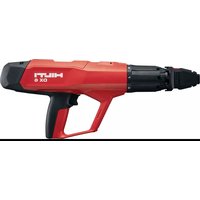
DX 6-F8 - Drill HILTI - Free user manual and instructions
Find the device manual for free DX 6-F8 HILTI in PDF.



| Product Type | Powder-actuated nailer (fastening tool) |
| Brand | Hilti |
| Model | DX 6-F8 |
| Weight | 3.37 kg (7.43 lb) |
| Length (nailer) | 475 mm (18.7 in) |
| Fastener length | 13 mm to 72 mm (0.5 in to 2.8 in) |
| Maximum recommended firing rate | 700 shots/h |
| Required pressing force | 174 N to 200 N (39 lb to 45 lb) |
| Driving stroke | 19 mm (0.7 in) |
| Ambient temperature (storage and use) | -15 °C to 50 °C (5 °F to 122 °F) |
| Power source | DX 6 cartridges (titanium gray or black) |
| Compatible cartridge types | DX 6 titanium gray (strong) and black (extra thick) |
| Main functions | Driving nails and studs into concrete, steel, and sand-lime brick |
| Power adjustment | 8 levels (1 = low, 8 = high) via adjustment ring |
| Bluetooth (optional) | Frequency 2,400-2,483.5 MHz, max power -27.2 dBm |
| Maintenance and cleaning | Regular cleaning with Hilti brush and spray; check piston and buffer every 2,500-3,000 shots |
| Service interval | Every 30,000 shots |
| Safety | Do not point at yourself or others; wear PPE (safety glasses, hard hat, gloves, ear protection); unload before maintenance |
| Spare parts and repairability | Piston, buffer, barrels, magazines available; repair by Hilti service center |
| General information | 88-page user manual available as PDF; C.I.P. certification (PTB S 1035) |
Frequently Asked Questions - DX 6-F8 HILTI
User questions about DX 6-F8 HILTI
0 question about this device. Answer the ones you know or ask your own.
Ask a new question about this device
Download the instructions for your Drill in PDF format for free! Find your manual DX 6-F8 - HILTI and take your electronic device back in hand. On this page are published all the documents necessary for the use of your device. DX 6-F8 by HILTI.
USER MANUAL DX 6-F8 HILTI
text_image
Labeled diagram of a handheld device with numbered parts, including a zoomed-in inset showing the control panel.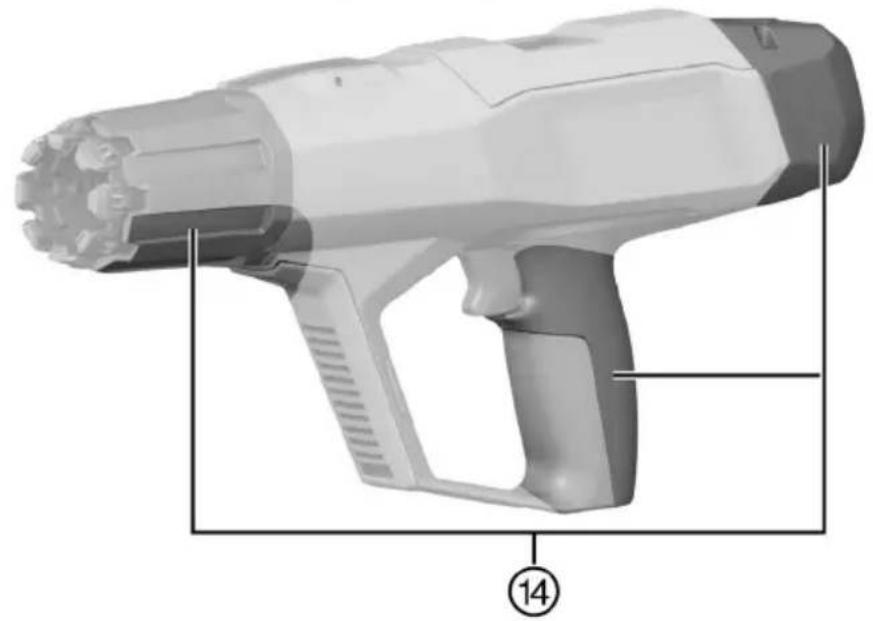
natural_image
3D rendered image of a handheld electric shaver with labeled parts (no text or symbols on the device itself)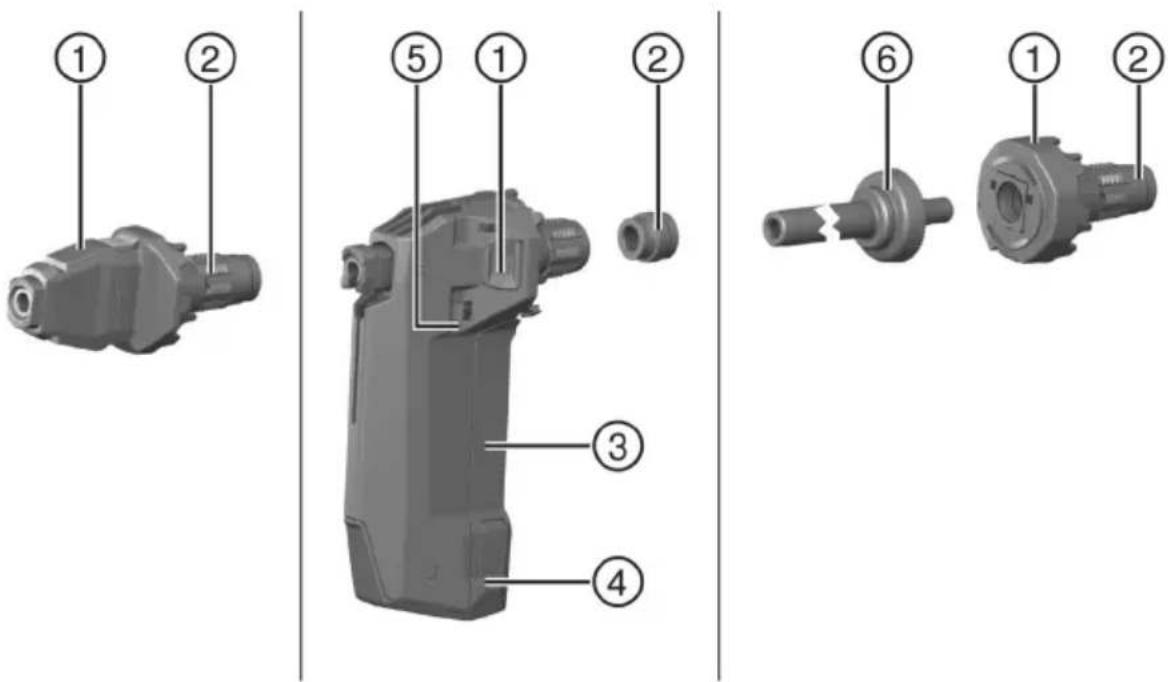
7
natural_image
3D rendering of a handheld electric spray gun with a labeled arrow pointing to the tip (no text or symbols on the device itself)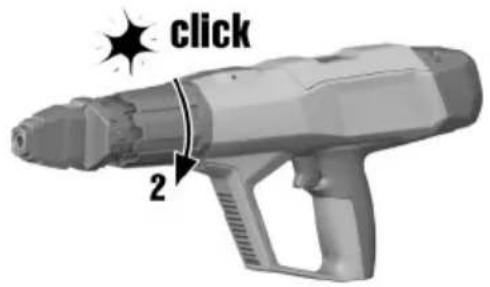
text_image
click 28
natural_image
3D rendering of a firearm with labeled parts (no text or symbols on the object itself)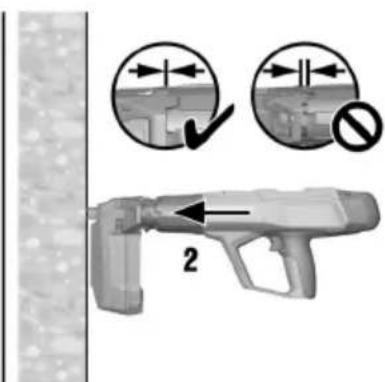
text_image
Diagram showing a spray gun with directional arrows and a prohibition sign, alongside a close-up of the spray bottle structure.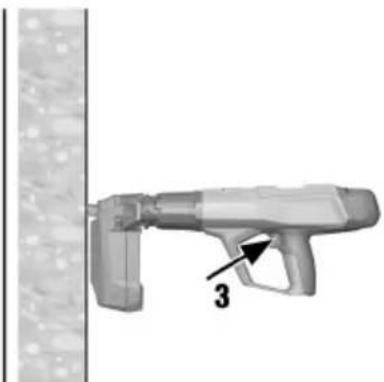
natural_image
3D rendering of a handheld tool with a numbered arrow pointing to part 3, against a textured wall background (no text or symbols)9
text_image
Technical diagram showing two mechanical assembly steps with numbered components and directional arrows indicating motion or movement.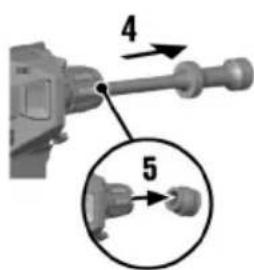
text_image
4 5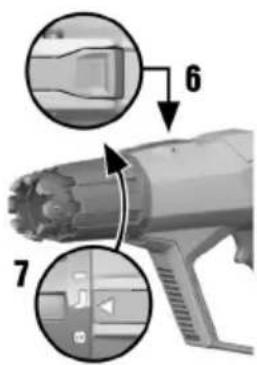
text_image
Technical diagram of a handheld device with labeled parts and directional arrows indicating assembly or operation.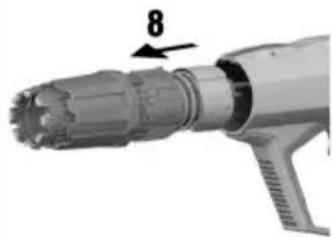
natural_image
Close-up of a handheld electric shaver with a labeled component (no text or symbols visible)10
natural_image
Mechanical assembly diagram showing a shaft and two connected rods with cross-sectional views (no text or labels)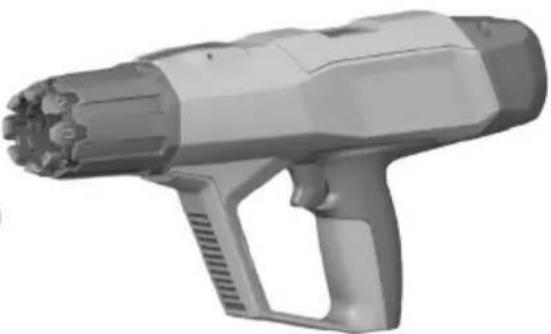
natural_image
3D rendered image of a handheld electric spray gun (no text or symbols visible)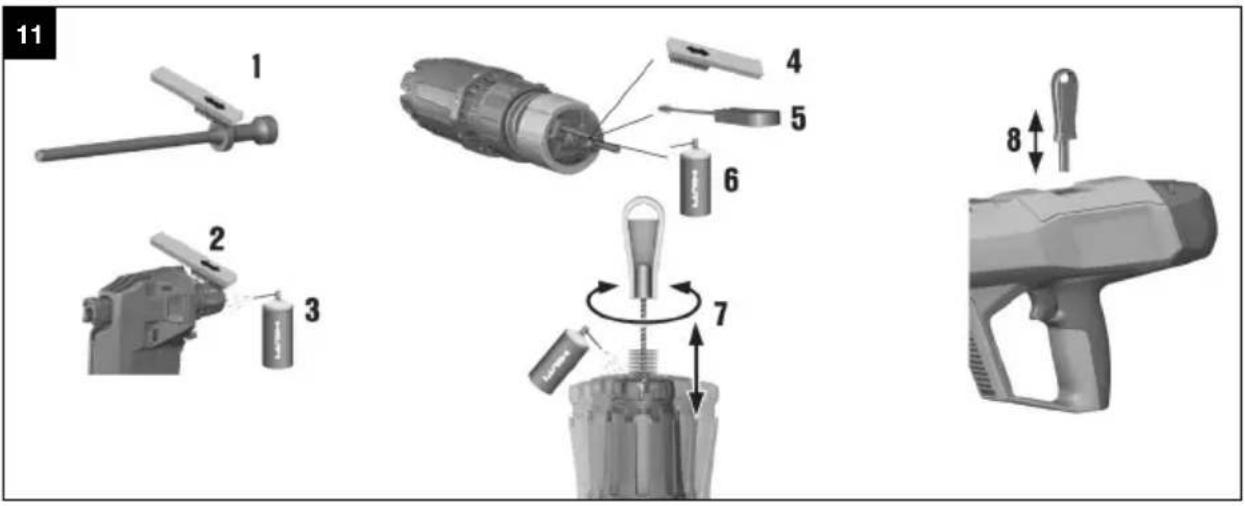
text_image
11 1 2 3 4 5 6 7 8DX 6
en Original operating instructions 1
fr Notice d'utilisation originale 19
es Manual de instrucciones original 39
pt Manual de instruções original 59
Original operating instructions
1 Information about the operating instructions
1.1 About these operating instructions
- Read these operating instructions before the product is used or operated for the first time. This is a prerequisite for safe, trouble-free handling and use of the product.
- Observe the safety instructions and warnings in these operating instructions and on the product.
• Always keep the operating instructions with the product and make sure that the product is accompanied by these operating instructions only, when the product is given to other persons.
1.2 Explanation of symbols used
1.2.1 Warnings
Warnings alert persons to hazards that occur when handling or using the product. The following signal words are used:

DANGER
DANGER!
- Draws attention to imminent danger that will lead to serious personal injury or fatality.

WARNING
WARNING!
- Draws attention to a potential threat of danger that can lead to serious injury or fatality.

CAUTION
CAUTION!
- Draws attention to a potentially dangerous situation that could lead to personal injury or damage to the equipment or other property.
1.2.2 Symbols in the operating instructions
The following symbols are used in these operating instructions:

Comply with the operating instructions

Instructions for use and other useful information

Dealing with recyclable materials

Do not dispose of electric equipment and batteries as household waste
1.2.3 Symbols in illustrations
The following symbols are used in illustrations:

These numbers refer to the illustrations at the beginning of these operating instructions.
3
The numbering reflects the sequence of operations shown in the illustrations and may deviate from the steps described in the text.

Item reference numbers are used in the overview illustration and refer to the numbers used in the key in the product overview section.

These characters are intended to specifically draw your attention to certain points when handling the product.
1.3 Product-dependent symbols
1.3.1 Symbols
The following symbols are also used:

If applied on the product, the product has been certified by this certification body for the US and Canadian markets according to the applicable standards.
1.3.2 Obligation symbols
The following obligation symbols are used on the product:

Warning! Observe the instructions.

Wear a hard hat

Wear eye protection

Wear ear protection
1.3.3 Information shown on the display
The following information may be shown on the display:

This symbol indicates the battery's state of charge. When the battery is empty, the maintenance symbol appears.

The "maintenance" symbol indicates that maintenance is due. It appears after 5 years, when 30,000 fasteners have been driven, or when the battery is empty. Our recommendation: Consult Hilti Service.

The "fasteners driven" counter indicates when the next service is due. One segment stands for 500 fasteners driven. There are 5 segments in total, representing 2,500 fasteners driven.

This symbol indicates whether Bluetooth is switched on. If the symbol is not shown on the display then Bluetooth is switched off.
1.4 Product information
HILTI products are designed for professional users and only trained, authorized personnel are permitted to operate, service and maintain the products. This personnel must be specifically informed about the possible hazards. The product and its ancillary equipment can present hazards if used incorrectly by untrained personnel or if used not in accordance with the intended use.
The type designation and serial number are printed on the rating plate.
Write down the serial number in the table below. You will be required to state the product details when contacting Hilti Service or your local Hilti organization to inquire about the product.
Product information
| Fastening tool DX 6 | |
| Generation 01 | |
| Serial no. |
2 Safety
2.1 Safety instructions
Basic safety precautions
WARNING! Read all safety instructions and other instructions. Failure to comply with the safety instructions and instructions can cause serious injuries.
Keep all safety instructions and instructions for future reference.
- Do not tamper with or modify the fastening tool in any way.
▶ Use only fastening tools and items of equipment that are compatible with each other (base plates, fastener guides, magazines, pistons and accessories) and consumables (fasteners and cartridges).
▶ Check the fastening tool and accessories for damage.
- Moving parts must be in full working order; make sure that they cannot jam. Comply with the instructions on cleaning and oiling in these operating instructions → page 14.
- All parts must be correctly installed to ensure faultless operation of the fastening tool. Damaged parts must be properly repaired or replaced by Hilti Service unless otherwise stated in the operating instructions.
▶ Use only Hilti DX cartridges, or other suitable cartridges that meet the minimum safety requirements. → page 7
▶ Use the fastening tool only for the applications defined in the section headed "Intended use" → page 6. Do not attempt to drive fasteners into unsuitable base materials, for example material that is too thin, too hard, or too brittle. Driving a fastener into these materials can cause the fastener to break, splinter the material or be driven right through. Examples of unsuitable materials are:
Weld seams in steel, cast iron, glass, marble, plastic, bronze, brass, copper, insulating material, hollow brick, ceramic brick, thin sheet metal (< 4 mm) and cellular concrete.
- Comply with the Hilti 'Direct Fastening Technology Manual' or the corresponding local Hilti 'Technical Guide to Fastening Technology'. Always also comply with the operating instructions of the fastener to be used.
Requirements to be met by users
▶ Only appropriately trained persons who have been duly authorized and informed of the possible hazards are allowed to operate or service this fastening tool.
▶ Wear your personal protective equipment while the tool is in use.
▶ Wear suitable eye protection and a hard hat.
▶ Wear protective gloves. The fastening tool can get hot in use.
▶ Wear ear protectors. The ignition of a propellant charge can damage the hearing.
▶ Wear non-skid shoes.
Safety at the workplace
- Keep the workplace tidy. Objects which could cause injury should be removed from the working area. Disorder in the working zone can lead to accidents.
▶ Make sure that the working area is well lit and, when working in an enclosed space, make sure it is adequately ventilated.
Personal safety
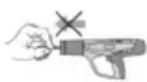
▶ Never press the nosepiece of the fastening tool against your hand or any other part of the body! Never point the fastening tool toward other persons! → page 9
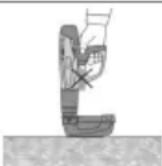
- Do not compress the fastening tool with your hand on the magazine or fastener guide, piston or piston guide or a loaded fastener. Compressing the fastening tool by hand can make the fastening tool ready to fire, even without a fastener guide installed. This gives rise to a risk of serious injury for yourself and others.
▶ Everyone in the vicinity must wear ear protection, eye protection and a hard hat.
- Stay alert, watch what you are doing and use common sense when operating a direct fastening tool. Do not use the fastening tool when you are tired or under the influence of drugs, alcohol or medication. Stop working if you experience pain or feel unwell. A moment of inattention while operating the fastening tool can result in serious injury.
- Avoid working in awkward body positions. Make sure you work from a safe stance and stay in balance at all times.
- Keep the arms slightly bent while operating the fastening tool, do not straighten the arms.
- Keep other people away from the working area, especially children.
Use and care of direct fastening tools
▶ Use the fastening tool only for its intended use and only when it is in faultless condition. Do not attempt to use the tool for purposes for which it is not intended.
- Do not use the fastening tool in places where there is a risk of fire and explosion.
Before driving fasteners, check behind the object to make sure that no-one is present in line with the fasteners to be driven. Danger of fasteners penetrating right through!
▶ Make sure that the nosepiece of the fastening tool is never pointed toward yourself or other persons.
- Hold the fastening tool only by the gripping surfaces provided for the purpose.
- Keep the gripping surfaces dry, clean and free from oil and grease.
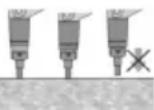
▶ Pull the trigger only when the fastening tool is at right angles to and pressed fully against the work surface.
HILTI
▶ Before starting work, check the selected energy setting.
- Carry out a test by driving fasteners into the base material you are working on → page 10.
- When driving fasteners, always hold the fastening tool at right angles to the work surface. This reduces the risk of a fastener being deflected by the base material.
- Do not drive fasteners into existing holes except in situations where this is recommended by Hilti.
- Do not re-use a fastener that was used beforehand - risk of injury! Use a new fastener.
- Do not attempt to re-drive a fastener that was not driven in deeply enough! The fastener could break.
▶ Never leave a loaded fastening tool unattended.
▶ Always unload the fastening tool (remove cartridges and fasteners) before cleaning, maintenance and care, changing the fastener guide, before work breaks and before storing the tool.
▶ Transport and store the fastening tool in the Hilti case intended for the purpose.
- Store fastening tools that are not in use in a dry, secure place where they are inaccessible to children.
▶ Always position the nosepiece of the fastening tool on smooth, flat surfaces free of obstructions and fully supported by the sub-structure.
▶ Comply with the specifications for distances from edges and spacing between fasteners (see the section headed "Minimum distances" → page 7).
Before driving fasteners, check that there is no electrical wiring, water piping or gas piping behind the surface into which you want to drive them.
For detailed information, request a copy of the Hilti 'Direct Fastening Technology Manual' or the corresponding local Hilti 'Technical Guide to Fastening Technology' from your Hilti Store.
Thermal safety rules
- Do not exceed the maximum fastener driving rate recommended in the section headed "Technical data".
▶ If the fastening tool overheats or if the cartridge strip deforms or melts, remove the cartridge strip and allow the fastening tool to cool down. - Do not dismantle the fastening tool while it is hot. Allow the fastening tool to cool down.
Risk of explosion with cartridges
▶ Use only cartridges that are suitable and approved for use with the fastening tool.
Remove the cartridge strip when you are going to take a break and when you have finished the job, and before you transport the fastening tool.
- Do not use force to remove fasteners and/or cartridges from the magazine strip or the fastening tool.
- Store unused cartridges in accordance with the storage specifications for cartridges for powder-actuated fastening tools (e.g. dry, temperature between 5 °C and 25 °C) in a locked storage facility.
- Do not leave unused or partly used cartridge strips lying around. Collect the used cartridge strips and store the cartridge strips at a suitable location.
▶ Follow all instructions relating to safety, handling and storage in the safety data sheet of the cartridges.
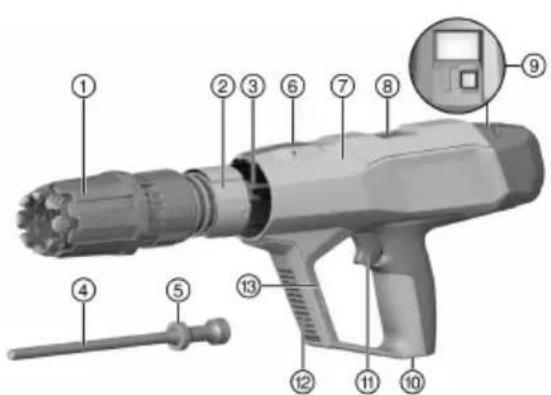
3.1 Product overview (fastening tool) 1
text_image
Labeled diagram of a handheld electric tool with numbered parts and an inset showing a digital display.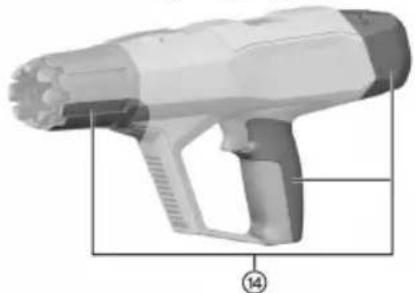
natural_image
Exterior view of a handheld electric spray gun (no text or symbols visible)① Selector ring for driving energy
② Guide sleeve
③ Exhaust gas piston return unit
④ Piston
⑤ Piston rings
⑥ Release button for selector ring for driving energy
⑦ Housing
⑧ Cartridge barrel (ejection)
⑨ Operating button at display
→ DX 6 with * red operating button
→ DX 6 with NFC: black operating button
⑩ Cartridge barrel (insertion)
⑪ Trigger
⑫ Air vents
⑬ Installation interface for accessories
⑭ Gripping surfaces
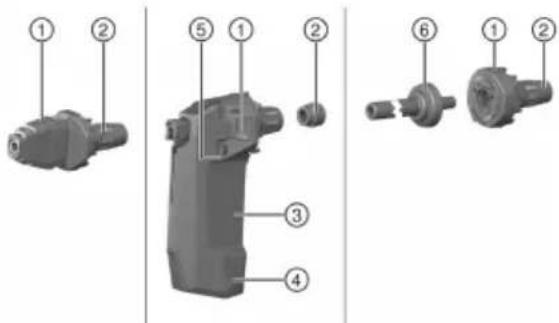
3.2 Product overview (fastener guides) 2
text_image
Technical diagram of a mechanical component with numbered parts for identification① Release button (fastener guide)
② Buffer
③ Magazine shutter
④ Release button (magazine shutter)
⑤ Nail detector with reload indicator (red)
⑥ Interchangeable fastener guide nosepiece
3.3 Controls on the fastening tool
The controls on the fastening tool are as follows:
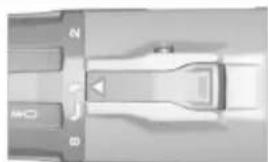
natural_image
Close-up of a mechanical component with labeled ports (N, O, J, S) and a central fastener (no readable text or symbols)Release button for selector ring for driving energy
The button unlocks the selector ring for driving energy or is used for removal of the exhaust gas piston return unit.
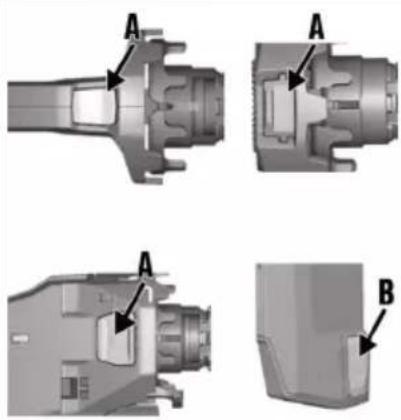
natural_image
Technical illustration of four mechanical component views (A and B) with no visible text or symbolsRelease button for fastener guide (A)
The button unlocks the fastener guide (single-fastener tool and magazine) so that the fastener guide can be changed or the fastening tool cleaned.
Release button for magazine shutter (B)
The button unlocks the magazine shutter so that fasteners can be inserted.
3.4 Intended use
The product described is a fastening tool for use in applications in which hardened nails, studs and fasteners are driven into concrete, steel and sand-lime block.
Use the product only in combination with the equipment designed for use with the fastening tool. Fastener guides, pistons and fasteners must be compatible with one another.
Use the product only with spare parts and accessories from Hilti and with cartridges and fasteners from Hilti, or other suitable cartridges and fasteners.
3.5 Bluetooth
Option: For products with Bluetooth
The Bluetooth ^® word mark and logos are registered trademarks owned by Bluetooth SIG, Inc and any use of such marks by Hilti Corporation is under license.
Bluetooth is a wireless data transfer system by which the two Bluetooth-enabled products can communicate with each other over a short distance.
This product has a Bluetooth Low Energy module. The module enables communication and data transfers between smart phones and Hilti gateway. The module is used for checking the status of the product and can submit data attributes such as location of the receiving device, runtime, total application count, application count during interval and timestamp of transfer.

Information about the connectivity functions offered can be found in the respective Hilti application (app).
3.5.1 Data transmission via Bluetooth
The data transmission interval can vary, depending on the available power source of the product. The signal range can vary greatly depending on external conditions, including the receiving device used. The Bluetooth range can be significantly less inside closed rooms and through metallic barriers (e.g. walls, shelving units, cases, etc.). Depending on ambient conditions, several transmission intervals may be required before the product is detected.
If the product is not detected, check the following:
- Is the distance to the mobile terminal device too great?
→ Reduce the distance between the mobile terminal device and the product.
3.5.2 Installing and setting up the app
In order to be able to use the connectivity functions, you first have to install the respective Hilti app.
(1.) Download the app from the corresponding app store (Apple App Store, Google Play Store).

You will require a user account on the corresponding app store to do this.
(2.) When you start the app for the first time, either log in with your account or register.
(3.) The display of your mobile terminal device will show you all the subsequent steps required to connect the product to the mobile device.

In addition, be sure to study all the notes on operation in the app. This will give you a better overview of how the connection is made and how the functions are used.
3.6 Information about the app

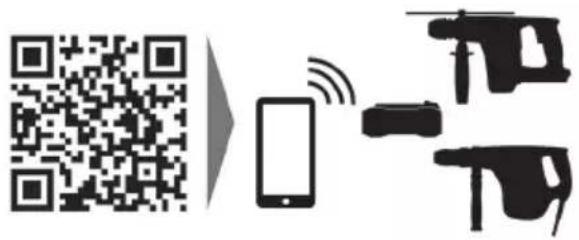
To find out more about the app, to download it and start it, scan the QR code in the case.
3.7 Requirements to be met by cartridges

WARNING
Risk of injury by unexpected explosion! Use of cartridges that do not meet the minimum safety requirements can lead to a build-up of unburned powder. A sudden explosion and severe injuries to the operator and bystanders can result.
▶ Use only cartridges that meet the minimum safety requirements of your local statutory regulations!
- Adhere to the maintenance intervals as stated and have the fastening tool cleaned regularly by HiltiService!
Use only the Hilti DX cartridges listed in this table, or other suitable cartridges that are compliant with the minimum safety requirements:
- It is a requirement for EFTA countries that the cartridges must be CE-compliant and must bear the CE mark of compliance.
- It is a requirement for the United Kingdom that the cartridges must be UKCA-compliant and must bear the UKCA mark of compliance.
- It is a requirement for the USA that the cartridges must be compliant with the stipulations set out in ANSI A10.3-2020.
- It is a requirement for the non-European member states of the C.I.P. that the cartridges must have C.I.P. approval for the DX fastening tool used.
- It is a requirement for the remaining countries that the cartridges must have passed the firing-residues test in accordance with EN 16264 and must have a manufacturer's declaration to this effect.
Cartridges
| Ordering designation Color Power level | ||
| DX 6 cartridge titanium-gray strong | ||
| DX 6 cartridge black extra-strong |
3.8 Minimum distances and edge distances
You must always observe certain minimum distances and spacing when driving fasteners. They can differ, depending on the product.

Comply with the instructions for use in the operating instructions of the fastener used, in the Hilti Direct Fastening Technology Manual or the corresponding local Hilti 'Technical Guide to Fastening Technology'.
Fastening to concrete or steel
| Description | Concrete | Steel |
| minimum distance from the edge of the base material to fastener | the 2.8 in(≥ 70 mm) | ≥ 0.6 in(≥ 15 mm) |
| minimum center-to-center distance between fasteners | ≥ 3.1 in(≥ 80 mm) | ≥ 0.8 in(≥ 20 mm) |
| minimum base-material thickness | ≥ 3.9 in(≥ 100 mm) | Follow the instructions in the operating instructions of the fastener! |
3.9 Information about the field of applications
See the Hilti product page for more information about the areas of application.
4 Technical data
| DX 6-F8 DX 6-F10 DX 6-MX | |||
| Weight | 7.43 lb(3.37 kg) | 7.45 lb(3.38 kg) | 8.00 lb(3.63 kg) |
| Length (fastening tool) | 18.7 in(475 mm) | 18.7 in(475 mm) | 19.1 in(485 mm) |
| Length (fastener) | 0.5 in ... 2.8 in(13 mm ... 72 mm) | 0.5 in ... 2.8 in(13 mm ... 72 mm) | 0.5 in ... 2.8 in(13 mm ... 72 mm) |
| Recommended maximum fastening rate | 700 fastener driving operations/h | 700 fastener driving operations/h | 700 fastener driving operations/h |
| Required contact pressure | 39 lb ... 45 lb(174 N ... 200 N) | 39 lb ... 45 lb(174 N ... 200 N) | 39 lb ... 45 lb(174 N ... 200 N) |
| Compression stroke | 0.7 in(19 mm) | 0.7 in(19 mm) | 0.7 in(19 mm) |
| Ambient temperature (storage and use) | 5 °F ... 122 °F(-15 °C ... 50 °C) | 5 °F ... 122 °F(-15 °C ... 50 °C) | 5 °F ... 122 °F(-15 °C ... 50 °C) |
| DX 6 IE-L DX 6 IE-XL | ||
| Weight | 7.56 lb(3.43 kg) | 7.67 lb(3.48 kg) |
| Length (fastening tool) | 21.5 in(547 mm) | 23.9 in(607 mm) |
| Length (fastener) | 0.8 in ... 5.5 in(20 mm ... 140 mm) | 0.8 in ... 7.9 in(20 mm ... 200 mm) |
| Recommended maximum fastening rate | 700 fastener driving operations/h | 700 fastener driving operations/h |
| Required contact pressure | 39 lb ... 45 lb(174 N ... 200 N) | 39 lb ... 45 lb(174 N ... 200 N) |
| Compression stroke | 0.7 in(19 mm) | 0.7 in(19 mm) |
| Ambient temperature (storage and use) | 5 °F ... 122 °F(-15 °C ... 50 °C) | 5 °F ... 122 °F(-15 °C ... 50 °C) |
4.1 Bluetooth
Option: For products with Bluetooth
| Frequency | 2,400 MHz ... 2,483.5 MHz |
| Maximum emitted transmission power | -27.2 dBm |
4.2 Noise and vibration information
The noise values listed were determined under the following conditions:
Vibration information in accordance with EN 2006/42/EG
| Vibration emission | < 8.2 ft/s ^2 (< 2.5 m/s ^2 ) |
5 Preparations at the workplace
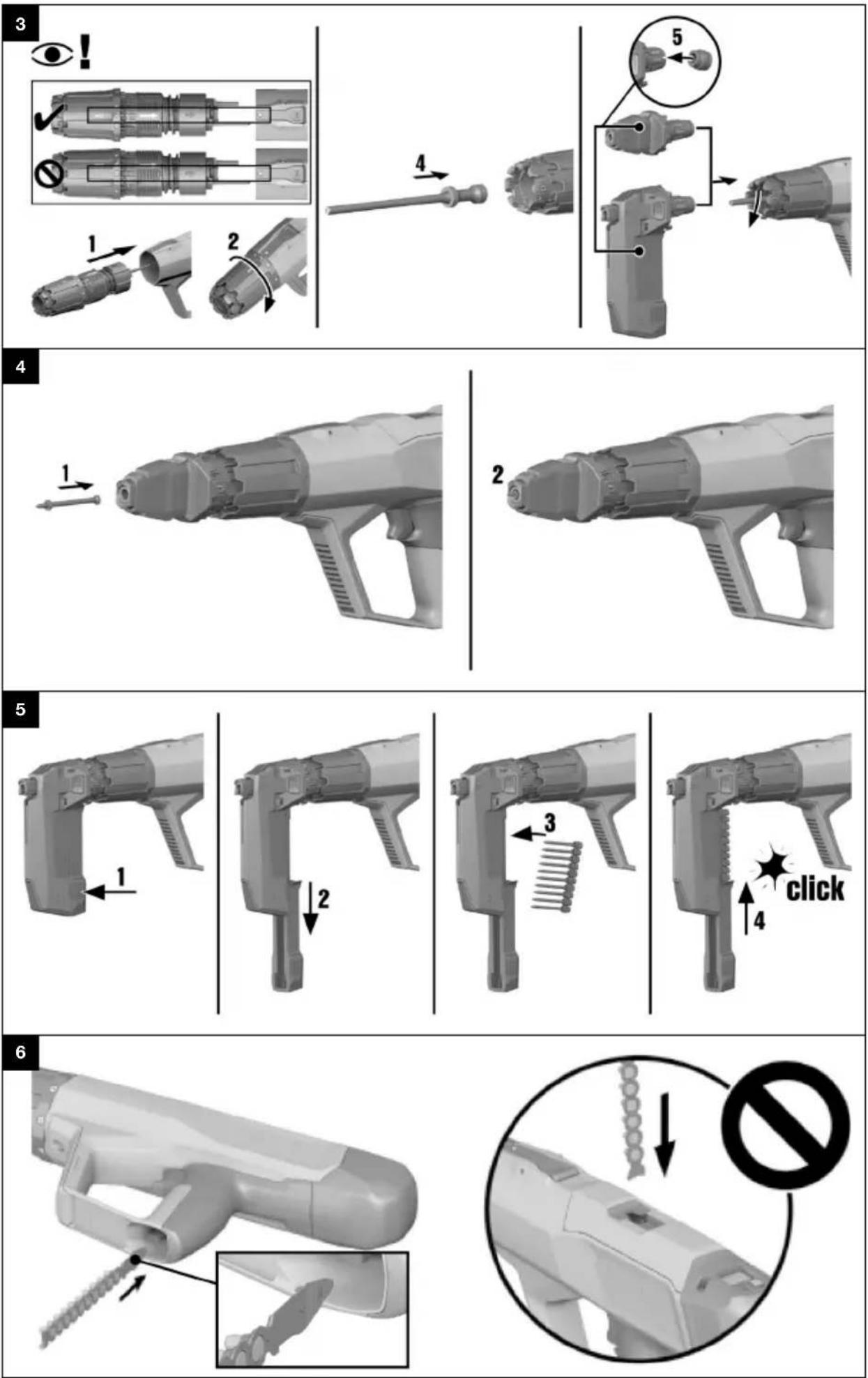
5.1 Assembling the fastening tool 3
- Make sure that there are no cartridge strips in the fastening tool.
- Bring the arrow marks into alignment and insert the exhaust gas piston return unit into the housing.
- Insert the fastener guide or the magazine centered into the exhaust gas piston return unit.
- Fit the piston.
- Position the buffer on the fastener guide or the magazine.
- Insert the fastener guide or the magazine centered and not tilted into the exhaust gas piston return unit.
- Turn the fastener guide or the magazine clockwise until it engages.
The fastener guide or the magazine is locked.
5.2 Fall arrest

WARNING
Risk of injury by falling tool and/or accessory!
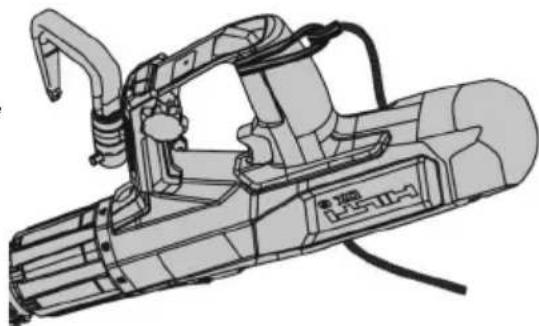
▶ Use only the Hilti tool tether recommended for your product.
Prior to each use, always check the attachment point of the tool tether for possible damage.

Comply with the national regulations for working at heights.
As drop arrester for this product, use only the Hilti tool tether #2261971.
▶ Use the loop to secure the tool tether to the product as shown in the illustration. Check that it holds securely.
- Secure the carabiner to a load-bearing structure. Check that the carabiner holds securely.

Comply with the operating instructions of the Hilti tool tether.
natural_image
Technical line drawing of a mechanical device with hoses and components (no text or symbols)5.3 Scaffold hook (accessory)
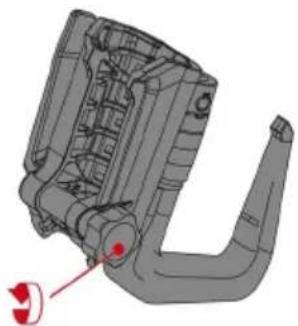
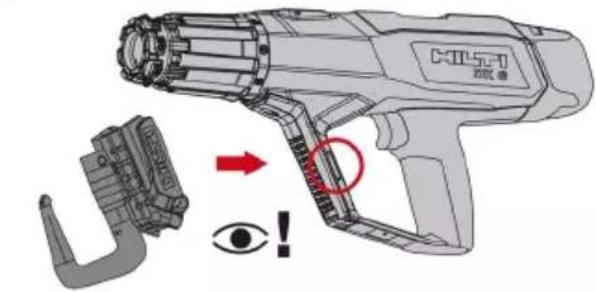
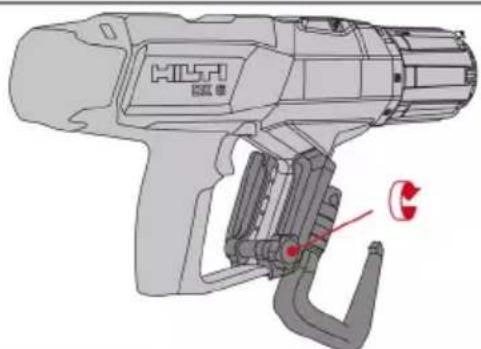
The Hilti scaffold hook (accessory) can be installed and used for hooking the product to a railing or a tool-belt for a short time. To install the accessory, follow the installation instructions provided with the accessory.

There is a copy of the installation instructions at the end of these operating instructions.
The fastening tool must additionally be secured with the Hilti tool tether.
6 Operation

WARNING
Risk of injury by accidental triggering! A loaded fastening tool can be made ready to fire at any time. Accidental triggering can endanger you and others.
▶ Always unload the fastening tool (cartridges and fasteners) whenever you interrupt work with the fastening tool.
Before all maintenance, cleaning and setup activities, always make sure that there are no cartridges and no fasteners in the fastening tool.
WARNING
Hazard due to hot surfaces! The fastening tool can become hot in use.
▶ Wear protective gloves.
If resistance is unusually high when you insert the cartridge strip, check whether the cartridge strip is compatible with this fastening tool.
Observe the safety instructions and warnings in these operating instructions and on the product.
Safety-related instructions for use
| Illustration showing example | Description |
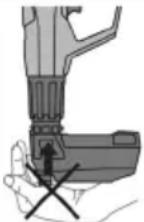 | Do not press the nosepiece of the fastening tool against any part of the body!Pressing the nosepiece against a part of the body (a hand, for example) can make the fastening tool ready to fire. As a result, there would be the risk fastener being fired into a part of the body. |
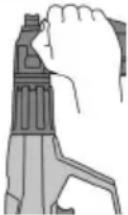 | Do not pull back the magazine or other fastener guides by hand!Pulling the magazine back by hand can make the fastening tool ready to find a result, there would be the risk of a fastener being fired into a part of the body. |
6.1 Loading cartridge strips 6
▶ Push the cartridge strip, narrow end first, into the grip of the fastening tool from below until the full length of the cartridge strip is inside the fastening tool.

To use a cartridge strip in which some cartridges have already been used:
Pull the fully inserted cartridge strip by hand up and out of the fastening tool until the first unused cartridge is in position in the cartridge chamber
6.2 Loading the single-fastener tool 4
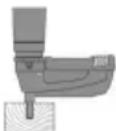
▶ Push the fastener into the fastener guide from the front until the washer of the fastener is held in place in the fastener guide.
6.3 Loading the magazine tool 5

Fasteners can be driven until the magazine is completely empty. When there are no fasteners in the magazine, the magazine fastening tool can no longer be fully pressed against the work surface.
- When there are three or fewer fasteners left in the magazine → Another ten-fastener strip of fasteners can be loaded.
-
When there are two or fewer fasteners left in the magazine → The reload indicator (red) appears in the nail detector.
-
Open the magazine by pressing the release button (magazine shutter).
- Insert the strip of ten fasteners into the magazine.
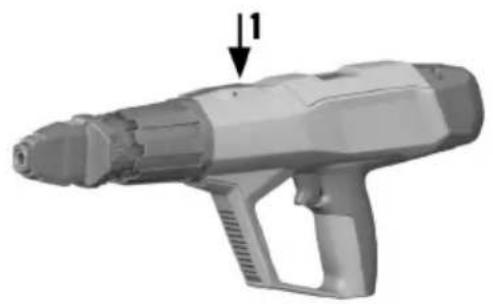
6.4 Setting driving energy 7
Select the energy setting that suits the application. If no empirical values are available, always start with the minimum driving energy.
-
Press and hold down the release button for the selector ring for driving energy.
-
Turn the selector ring for driving energy to the desired energy level.

Energy levels:
- 1 = lowest energy
-
8 = highest energy
-
Check whether the fastener was correctly driven in accordance with the operating instructions of the fastener.
6.5 Driving fasteners 8
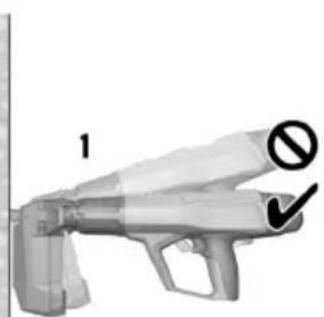
- Position the fastening tool.
- Hold the fastening tool perpendicular to the working surface and then press it at right angles against the surface.
- Press the trigger to drive the fastener.
6.6 Unloading the single-fastener tool
- Pull the cartridge strip up and out of the fastening tool.
- Pull the fastener out of the fastening tool.
6.7 Unloading the magazine tool
- Pull the cartridge strip up and out of the fastening tool.
- Pull the magazine shutter down and remove the nail strip.
6.8 Resetting the cleaning indicator

The cleaning indicator consists of 5 bars. Each bar stands for 500 fastenings.
The cleaning indicator is designed to indicate the correct cleaning intervals when the following cartridges are used:
• DX 6 cartridge titanium-gray
- DX 6 cartridge, black
▶ Press the operating button at the display and hold it down for 10-12 seconds.
▶ The cleaning indicator is reset.
7 Troubleshooting

WARNING
Risk of explosion! Cartridges may fire (explode) if handled improperly.
- Do not use force to remove cartridges from the fastening tool or the magazine strip.

WARNING
Hazard due to hot surfaces! The fastening tool can become hot in use.
▶ Wear protective gloves.
7.1 Fastening tool jams and does not extend

DANGER
Risk of injury by unsecured fastening tool! If the fastening tool jams in the compressed state or if a cartridge does not fire, the fastening tool might be loaded with the safety off. Unintentional triggering can cause severe injuries.
- At all times, make sure that the fastening tool is not pointing toward you or anyone else.
▶ Take your finger off the trigger and do not hold your hand in front of the muzzle of the fastener guide. -
Keep a fastening tool with the safety off under observation at all times.
-
Keep the fastening tool pressed against the work surface for at least 10 seconds and trigger the fastening tool again.
HILTI
- Lift the fastening tool away from the working surface.
Be sure not to point it toward yourself or other persons!
- Try to pull the fastener guide to its initial position by hand.
Take your hand off the trigger and do not hold your hand in front of the muzzle!
- Immediately pull the cartridge strip out of the fastening tool.
▶ If the cartridge strip cannot be removed:
- Allow the fastening tool to cool down at a safe location under observation.
-
At all times, make sure that the fastening tool is not pointing toward you or anyone else.
▶ Contact Hilti Service. -
Service the tool. → page 13
7.2 Cartridge does not fire when fastening tool is above operating temperature
At all times, make sure that the fastening tool is not pointing toward you or anyone else!
- Keep the fastening tool pressed against the work surface for at least 10 seconds and trigger the fastening tool again.
- If the cartridge still does not fire, wait for 10 seconds and then lift the fastening tool away from the work surface.
- Immediately pull the cartridge strip out of the fastening tool.
▶ If the cartridge strip cannot be removed:
-
Allow the fastening tool to cool down at a safe location under observation.
▶ Contact Hilti Service. -
Service the tool. → page 13
-
Move the cartridge to a safe location.
- Dispose of the cartridges that have not fired.
- Comply with the locally applicable disposal regulations.
- Allow the fastening tool to cool down and resume work with a new cartridge strip.
7.3 The cartridge does not fire when the fastening tool is at operating temperature
- Stop using the tool immediately.
- Unload the fastening tool (cartridges and fasteners) and dismantle the fastening tool. → page 13
- Check that you are using the correct combination of fastener guides, piston, fasteners and cartridge.
- Check the buffer, piston and fastener guides for wear; replace the components as necessary.
- Clean and oil the fastening tool. → page 14
If the problem persists after the measures described above have been taken, further use of the fastening tool is not permissible.
▶ Have the fastening tool checked and, if necessary, repaired by Hilti Service.

Dirt and residues build up in the tool under normal operating conditions and functional parts are also subject to wear.
Service the tool at regular intervals. Check the piston and buffer daily if the fastening tool is used intensively, or at the latest after every 2500 to 3000 fasteners. The interval corresponds to the regular cleaning cycle of the fastening tool. The service and cleaning cycles are based on typical tool use.
The fastener counter shows how many fasteners have been driven since the cleaning indicator was last reset. One segment stands for 500 fasteners driven.
When 30,000 fasteners have been driven, have the tool serviced by Hilti Service.
8 Care and maintenance
8.1 Care of the fastening tool
For cleaning, use only the cleaning accessories supplied by Hilti, or material of equivalent quality. Do not, under any circumstances, use spray cleaning equipment, compressed air, high-pressure cleaning equipment, solvents or water for cleaning.

CAUTION
Risk of damage to the fastening tool! Foreign bodies can jam in the fastening tool and damage the fastening tool when a cartridge is fired.
▶ Prevent foreign bodies from penetrating into the interior of the fastening tool.
- Clean the exterior of the fastening tool with a slightly damp cloth at regular intervals.
8.2 Maintenance

WARNING
Dangerous substances! The deposits inside DX tools contain substances that may present a health hazard.
- Do not inhale dust or dirt while cleaning.
- Keep dust and dirt away from foodstuffs.
- Wash your hands after cleaning the fastening tool.
-
Clean the fastening tool and use Hilti spray as stated in the operating instructions. This will help prevent malfunctions.
-
Regularly check all external parts of the fastening tool for damage.
- Regularly check all operating controls to ensure that they work properly.
- Use the fastening tool only with suitable cartridges and the recommended energy setting → page 10.
▶ Use of the wrong cartridges or excessively high power settings can lead to premature failure of the fastening tool.
8.3 Servicing the tool
Service the tool in the following situations:
- If energy fluctuations occur (evidenced by irregularities in fastener penetration depth).
- If cartridge misfires occur (the cartridge is not fired).
- If the tool becomes noticeably less easy to operate.
▶ If the required contact pressure increases noticeably.
▶ If the trigger resistance increases.
▶ If the selector ring for driving energy has become difficult to turn.
▶ If the cartridge strip is difficult to remove.
- If the fastener counter indicates that a tool service is necessary.
8.3.1 Disassembling the fastening tool 9

WARNING
Risk of injury by accidental triggering! A loaded fastening tool can be made ready to fire at any time. Accidental triggering can endanger you and others.
▶ Always unload the fastening tool (cartridges and fasteners) whenever you interrupt work with the fastening tool.
Before all maintenance, cleaning and setup activities, always make sure that there are no cartridges and no fasteners in the fastening tool.
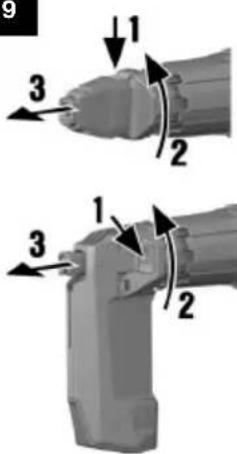
- Press and hold down the release button of the fastener guide.
- Turn the fastener guide counter-clockwise as far as it will go.
- Pull out the fastener guide with piston.
- Pull the piston out of the fastener guide.
- Remove the buffer by bending it sharply out of the fastener guide.
- Press and hold down the release button for the selector ring for driving energy.
- Turn the selector ring for driving energy counter-clockwise to the removal position.
- Pull the exhaust gas piston return unit out of the housing.
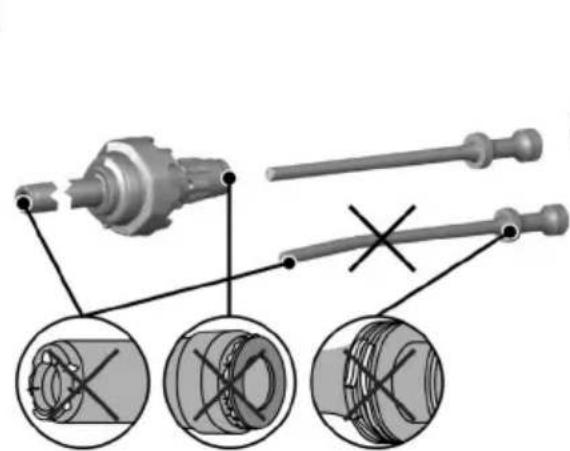
8.3.2 Checking piston and buffer 10

WARNING
Risk of injury! A faulty buffer or piston or a faulty base plate leads to an increased risk of malfunctions.
▶ Check the piston and buffer for wear and replace them if damaged.
▶ Do not tamper with or modify the piston.
- Do not attempt to repair a faulty piston yourself, for example by grinding the tip.
- The piston must be replaced in the following cases:
▶ The piston is broken.
The piston is badly worn or chipped (e.g. a segment of more than 90° of the circumferential ring-shaped elevation at the piston tip broken away)
▶ The piston rings are cracked or missing.
The piston is bent (check by rolling the piston on a smooth, flat surface).
- The buffer must be replaced in the following cases:
▶ The metal ring of the buffer is loose or broken.
▶ The buffer no longer holds on the fastener guide.
The rubber is badly worn at certain points under the metal ring.
8.3.3 Cleaning and oiling fastening tool 11

Use only Hilti spray. The use of other lubricants can cause malfunctions or damage the fastening tool.
- Unload the fastening tool (cartridges and fasteners) and dismantle the fastening tool. → page 13
- Use the flat brush supplied for the purpose to clean the piston rings until the piston rings move freely.
- Use the flat brush to clean the lock of the fastener guide.
- Oil the lock of the fastener guide and then wipe the lock lightly with a cloth.
- Use the large round brush supplied for the purpose to clean the inside of the exhaust gas piston return unit.
- Oil the lock of the exhaust gas piston return unit on the inside.
- Use the flat brush to clean the back end of the exhaust gas piston return unit and the pins.
- Oil the pins and then wipe the pins lightly with a cloth.
- Use the tapered brush supplied for the purpose to clean the tapered cartridge chamber.
- Clean the cartridge barrel with the cleaning rod supplied for the purpose.
8.3.4 Final check of the fastening tool
- After carrying out care and maintenance, check that all protective and safety devices are fitted and that they function faultlessly.
- Reset the cleaning indicator. → page 11
9 Problems with the fastening tool
Before you start troubleshooting, make sure there are no cartridges in the fastening tool. If the cartridges cannot be removed, contact Hilti Service.
If the trouble you are experiencing is not listed in this table or you are unable to rectify the problem by yourself, please contact Hilti Service.
| Malfunction | Possible cause | Action to be taken | |
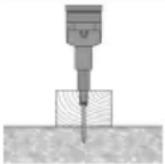 The piston gets stuck in the base material The piston gets stuck in the base material | The fastener is too short. ▶ Use | a longer fastener. | |
| The fastener has no washer. ▶ Use | Use a fastener with washer for applications on wood. | ||
| Too much driving energy. | ▶ Turn the selector ring for driving energy to reduce driving energy. | ||
| Higher force required to press the tool against the surface | Build-up of combustion residues. | ▶ Service the tool.▶ Clean the cartridge chamber.▶ Insert new cartridge strip. | |
| Malfunction | Possible cause | Action to be taken | |
| Trigger resistance increases | Build-up of combustion residues. | ► Contact Hilti Service. | |
| Selector ring for driving energy is difficult to turn | Build-up of combustion residues. | ► Service the tool.► Clean the cartridge chamber.► Insert new cartridge strip. | |
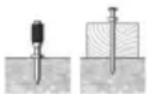 The fastener is not driven deep enough The fastener is not driven deep enough | Incorrect piston position in the magazine-type fastening tool (piston not in initial position when firing triggered) | ► Remove the cartridge strip and service the tool.↑ Check piston and buffer.→ page 14. | |
| Driving energy too low ► Turn the energy to increase driving energy.► Use an extra-strong cartridge. | |||
| Piston bounce because driving energy is too high. | ► Turn the selector ring for driving energy to reduce driving energy. | ||
 Piston jamming in exhaust gas piston return unit Piston jamming in exhaust gas piston return unit | The piston is damaged. ► Change the piston. | ||
| Abraded material from buffer inside the exhaust gas piston return unit. | ► Check the piston and buffer and replace if necessary.► Contact Hilti Service if the problem persists. | ||
| Build-up of combustion residues. | ► Service the tool.► Clean the cartridge chamber.► Insert new cartridge strip. | ||
 Exhaust gas piston return unit jammed. The fastening tool remains compressed. Exhaust gas piston return unit jammed. The fastening tool remains compressed. | Build-up of combustion residues. | ► Service the tool.► Clean the cartridge chamber.► Insert new cartridge strip. | |
| Jamming due to dirt or fragments of concrete. | ► Free the jammed components.→ page 11 | ||
| ► Contact Hilti Service if the fault / error persists. | |||
 No fastener driven: The fastening tool fired, but no fastener was driven No fastener driven: The fastening tool fired, but no fastener was driven | Incorrect piston position in the magazine-type fastening tool (piston not in initial position when firing triggered) | ► Remove the cartridge strip and service the tool.↑ Check piston and buffer.→ page 14. | |
| Piston bounce because driving energy is too high. | ► Turn the selector ring for driving energy to reduce driving energy. | ||
 Fastening tool cannot be fired Fastening tool cannot be fired | Fastening tool was not pressed fully against the working surface. | ► Press the fastening tool fully against the working surface. | |
| The magazine is not loaded. | ► Load the magazine. | ||
| Plastic fragments in the magazine. | ► Open the magazine, remove the nail strip and plastic fragments. | ||
| Incorrect piston position in the magazine-type fastening tool (piston not in initial position when firing triggered) | ► Remove the cartridge strip and service the tool.↑ Check piston and buffer.→ page 14. | ||
| Nails in the magazine are not correctly positioned. | ► Reload the fastening tool. | ||
| Fastener guide is not correctly engaged. | ► Turn the fastener guide or the magazine until it engages with an audible click.→ page 9. | ||
| Piston bounce because driving energy is too high. | ► Turn the selector ring for driving energy to reduce driving energy. | ||
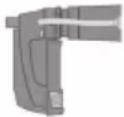 The piston jams in the fastener guide The piston jams in the fastener guide | The piston and/or buffer are damaged. | ► Unscrew the magazine, check the piston and buffer and replace if necessary. | |
| Plastic fragments in the magazine. | ► Open the magazine, remove the nail strip and plastic fragments. | ||
| Too much driving energy ► Turn | the selector ring for driving energy to reduce driving energy | ||
| Piston bent because tool fired without fastener | ► Avoid firing the tool without a fastener loaded.► Check the straightness of the piston; replace if necessary. | ||
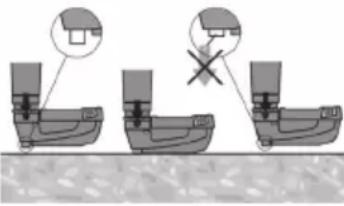 The fastener guide in the magazine jams The fastener guide in the magazine jams | The magazine is damaged. ► Replace the magazine. | ||
9.1 Problems with fasteners
| Malfunction | Possible cause | Action to be taken | |
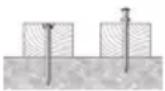 Fastener driving depth varies Fastener driving depth varies | Incorrect piston position ▶ Remove the cartridge strip and service the tool.▶ Check the piston and buffer an replace if necessary. | ||
| Excessive build-up of foreign matter on the fastening tool. | ▸ Clean the fastening tool.▸ If necessary, have the fastening tool checked by Hilti Service. | ||
| Piston bounce because driving energy is too high. | ▸ Turn the selector ring for driving energy to reduce driving energy | ||
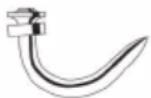 The fastener bends The fastener bends | Hard material (steel, concrete). ▶ | Turn the selector ring for driving energy to increase driving energy.▸ Use a shorter nail.▸ Use a nail with a higher application limit.▸ For concrete: Use the DX-Kwik method (predrilling) → see the 'Direct Fastening Technology Manual'. | |
| Hard and/or large aggregates in the concrete. | ▸ Use the DX-Kwik method (predrilling). | ||
| A rebar is located just below the concrete surface. | ▸ Drive the fastener at a different position. | ||
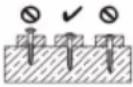 The fastener is not driven flush The fastener is not driven flush | Wrong fastener. | ▸ Match the length of the fastener to the thickness of the component. | |
| Wrong power setting. | ▸ Change the energy setting on the fastening tool. | ||
| Hard and/or large aggregates in the concrete. | ▸ Use the DX-Kwik method (predrilling). | ||
| Malfunction | Possible cause | Action to be taken | |
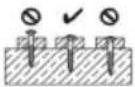 The fastener is not driven flush The fastener is not driven flush | A rebar is located just below the concrete surface. | ► Drive the fastener at a different position. | |
| Hard material (steel, concrete). ► | Turn the selector ring for driving energy to increase driving energy.► Use a shorter nail.► Use a nail with a higher application limit.► For concrete: Use the DX-Kwik method (predrilling) → see the 'Direct Fastening Technology Manual'. | ||
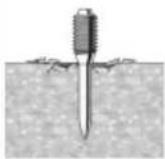 Concrete spalling Concrete spalling | Hard and/or large aggregates in the concrete. | ► Use the DX-Kwik method (predrilling). | |
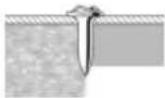 Damaged fastener head Damaged fastener head | Too much driving energy. ► Turn | the selector ring for driving energy to reduce driving energy | |
| The wrong piston has been fitted. | ► Make sure that the correct piston / fastener combination is used. | ||
| The piston is damaged. | ► Change the piston. | ||
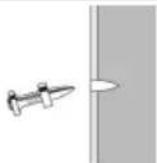 The nail doesn't penetrate deeply enough The nail doesn't penetrate deeply enough | Driving energy too low | ► Turn the selector ring for driving energy to increase driving energy.► Use an extra-strong cartridge. | |
| The application limits have been exceeded (very hard material). | ► Use a nail with a higher application limit. | ||
| The system is unsuitable. | ► Use a more powerful system , e.g. DX 76 (PTR). | ||
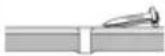 The fastener doesn't hold in the base material The fastener doesn't hold in the base material | Thin supporting steel (4-5 mm) ► | Use a different energy setting.► Use a nail suitable for thin supporting steel. | |
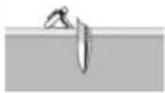 Fastener breakage(shear breakage) Fastener breakage(shear breakage) | Driving energy too low | ► Turn the selector ring for driving energy to increase driving energy.► Use an extra-strong cartridge. | |
| The application limits have been exceeded (very hard material). | ► Use a more powerful system, e.g. DX 76 (PTR), with corresponding suitable fasteners. | ||
| Malfunction | Possible cause | Action to be taken | |
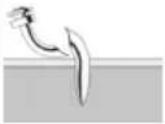 Fastener breakage(with deformation) Fastener breakage(with deformation) | Driving energy too low ▶ Turn the | the selector ring for driving energy to increase driving energy.▶ Use an extra-strong cartridge. | |
| The application limits have been exceeded (very hard material). | ▶ Use a more powerful system, e.g. DX 76 (PTR), with corresponding suitable fasteners. | ||
| Too much driving energy. ▶ Turn | the selector ring for driving energy to reduce driving energy | ||
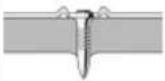 The head of the nail punches through the material fastened The head of the nail punches through the material fastened | Too much driving energy ▶ Turn | the selector ring to reduce driving energy.▶ Use a less powerful cartridge (titanium-gray). | |
9.2 Problems with the cartridges
| Malfunction | Possible cause | Action to be taken |
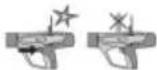 The cartridge strip doesn't advance The cartridge strip doesn't advance | The cartridge strip is damaged. ▶ | Change the cartridge strip. |
| Excessive build-up of foreign matter on the fastening tool. | ▸ Clean the fastening tool.▸ If necessary, have the fastening tool checked byHilti Service. | |
| Fastening tool damaged. | ▸ ContactHilti Service. | |
| Wrong cartridge strip used | ▸ Use only cartridge strips of a type intended for use with the fastening tool. | |
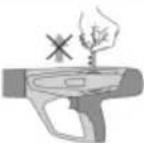 Cartridge strip is difficult to remove. Cartridge strip is difficult to remove. | Fastening tool overheated. | ▸ Allow the fastening tool to cool down under constant observation.▸ Subsequently, carefully remove the cartridge strip from the fastening tool. |
| Build-up of combustion residues. | ▸ Service the tool.▸ Clean the cartridge chamber.▸ Insert new cartridge strip. | |
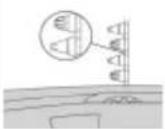 The cartridge doesn't fire The cartridge doesn't fire | Bad cartridge. | ▸ Pull the cartridge strip through to the next cartridge. |
| Fastening tool dirty. | ▸ Service the tool. | |
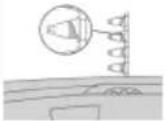 The cartridge strip melts The cartridge strip melts | Fastening tool was pressed against the working surface for too long. | ▸ Remove cartridge strip and insert a new cartridge strip instead.▸ Fire the fastening tool sooner after pressing it against the working surface. |
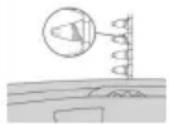 The cartridge strip melts The cartridge strip melts | Fastener driving rate too high (fastening tool overheated). | ▸ Stop using the tool immediately▸ Remove cartridge strips and allow the fastening tool to cool down.▸ Do not exceed the recommended maximum fastener driving rate (see the section headed "Technical data"). |
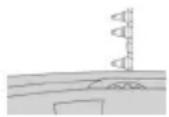 A cartridge detaches itself from the cartridge strip A cartridge detaches itself from the cartridge strip | Fastener driving rate too high (fastening tool overheated). | ▸ Stop using the tool immediately▸ Remove cartridge strips and allow the fastening tool to cool down.▸ Do not exceed the recommended maximum fastener driving rate (see the section headed "Technical data"). |
10 Disposal
Most of the materials from which Hilti tools and appliances are manufactured can be recycled. The materials must be correctly separated before they can be recycled. In many countries, your old tools, machines or appliances can be returned to Hilti for recycling. Ask Hilti Service or your Hilti representative for further information.
11 Manufacturer's warranty
▶ Please contact your local Hilti representative if you have questions about the warranty conditions.
12 C.I.P. test confirmation
The following applies to C.I.P. member states outside the EU and EFTA judicial areas: The Hilti DX 6 has been system and type tested. As a result, the tool bears the rectangular PTB approval mark showing approval number S 1035. Hilti thus guarantees compliance with the approved type.
13 Further information
For more information on operation, technology, environment and recycling, follow this link: qr.hilti.com/manual?id=2232123&id=2253454
This link is also to be found at the end of the documentation, in the form of a QR code.
text_image
Labeled diagram of a handheld electric tool with numbered parts and an inset showing a control panel.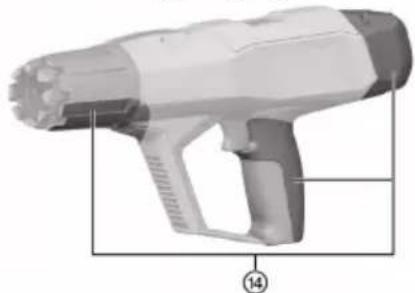
natural_image
3D rendered image of a handheld electric shaver with labeled parts (no text or symbols on the device itself)text_image
Technical diagram of a mechanical component with numbered parts labeled 1 through 6natural_image
Top-down view of a mechanical component with no visible text or symbolsnatural_image
Technical illustration of four mechanical component views labeled A and B, showing internal structures without any text or symbols.natural_image
Technical line drawing of a mechanical device with hoses and components (no text or symbols)text_image
Labeled diagram of a handheld electric tool with numbered parts and an inset showing the control panel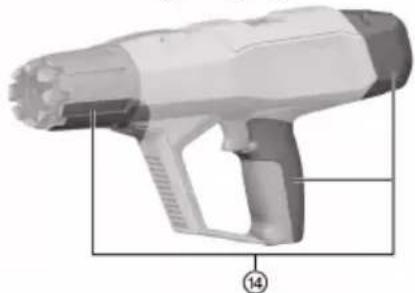
natural_image
3D rendering of a handheld electric tool with labeled parts (no text or symbols on the device itself)text_image
Technical diagram of a mechanical component with numbered parts labeled 1 through 6natural_image
Top-down view of a mechanical component with no visible text or symbolsnatural_image
Technical line drawing of a mechanical device with no visible text or symbolstext_image
Exploded view diagram of a handheld device with numbered parts and a control panel insettext_image
Technical diagram of a mechanical component with numbered parts labeled 1 through 6natural_image
Technical illustration of four mechanical component views (A and B) showing internal structures without any text or symbols.natural_image
Technical line drawing of a mechanical device with hoses and components (no text or symbols)natural_image
Icon of a person using a computer inside a circle, with a right-pointing arrow (no text or symbols)
text_image
QR code image containing encoded data, no visible human-readable text1
DX 6 F8
DX 6 MX
DX 6 IE
DX 6 GR
DX 6 F10
natural_image
3D mechanical component diagram showing internal structure with no visible text or symbols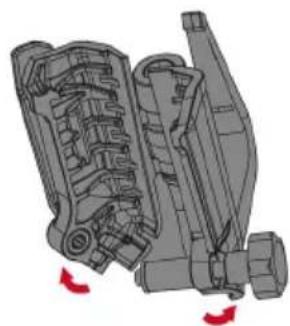
natural_image
Mechanical assembly diagram showing internal components and red directional arrows indicating motion (no text or labels)2
text_image
Diagram of a HIL-5T electric drill with labeled parts and warning symbols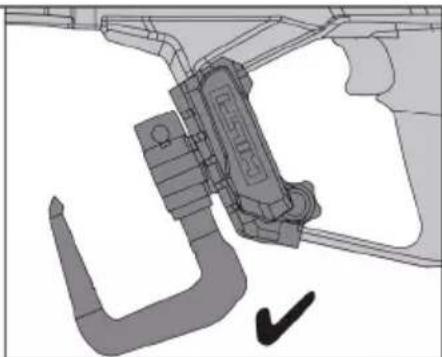
natural_image
Technical diagram of a mechanical assembly with no visible text or symbols3
natural_image
Technical illustration of a HLT1 electric drill bit with red directional arrows indicating motion (no text or symbols)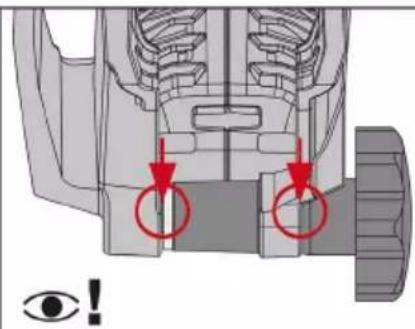
text_image
Technical diagram of a mechanical assembly with red arrows indicating specific components and an eye symbol in the corner.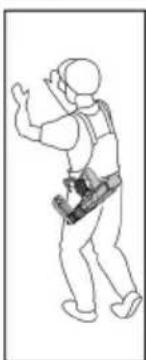
natural_image
Line drawing of a person in full-body safety gear waving (no text or symbols)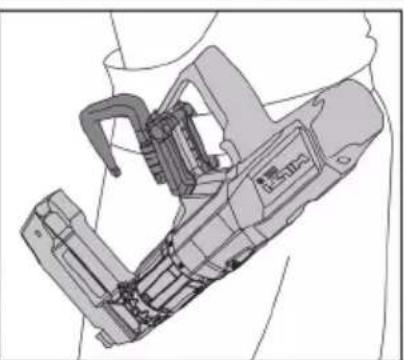
natural_image
Technical line drawing of a mechanical device with no visible text or symbols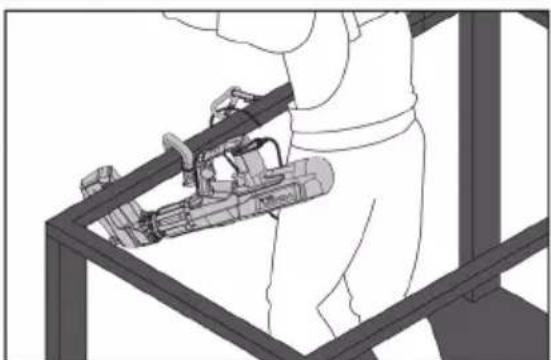
natural_image
Line drawing of a person using a pressure tool on a structural frame (no text or symbols)
text_image
HILTIHilti Corporation
LI-9494 Schaan
Tel.:+423 234 21 11
Fax:+423 234 29 65
www.hilti.group