CJ14DL - Saw HiKOKI - Free user manual and instructions
Find the device manual for free CJ14DL HiKOKI in PDF.


| Product type | Cordless jigsaw |
| Brand | HiKOKI |
| Model | CJ14DL |
| Voltage | 14.4 V |
| Max. cutting depth (wood) | 135 mm |
| Max. cutting depth (mild steel) | 10 mm |
| No-load speed | 0 – 2400 min⁻¹ |
| Stroke | 26 mm |
| Min. cutting radius | 25 mm |
| Battery type | Lithium-ion (3.0 Ah, model BCL1430) |
| Weight (with battery) | 2.3 kg |
| Charger | UC18YG or UC18YRL (depending on version) |
| Orbital setting | 4 positions (0 to III) |
| Angular cutting | Up to 45° on both sides |
| Included blade | No. 41 |
| Standard accessories | Blade, hex key, anti-splinter device, chip cover, charger, battery, plastic case |
| Power source | Rechargeable Li-ion battery |
| Maintenance | Clean with a dry cloth or cloth moistened with soapy water; do not use solvents |
| Safety | Overload protection, automatic stop, battery with protection |
| Repairability | Replacement parts available; have repairs done by an authorized HiKOKI service center |
| Warranty | Complies with statutory regulations; covers manufacturing defects |
| Noise level | Sound pressure 83 dB(A); sound power 94 dB(A); uncertainty K=3 dB(A) |
| Vibrations (wood) | ah, CW = 6.0 m/s²; uncertainty K = 4.6 m/s² |
| Vibrations (sheet metal) | ah, CM = 4.7 m/s²; uncertainty K = 1.5 m/s² |
Frequently Asked Questions - CJ14DL HiKOKI
User questions about CJ14DL HiKOKI
0 question about this device. Answer the ones you know or ask your own.
Ask a new question about this device
Download the instructions for your Saw in PDF format for free! Find your manual CJ14DL - HiKOKI and take your electronic device back in hand. On this page are published all the documents necessary for the use of your device. CJ14DL by HiKOKI.
USER MANUAL CJ14DL HiKOKI
natural_image
Line drawing of a manual saw cutting tool (no text or symbols)CJ18DL
Read through carefully and understand these instructions before use.
2
3
4
5
6
7
8
9
10
11
12
13
14
15 16
natural_image
Line drawing of a hand using a camera to cut a flat surface (no text or symbols)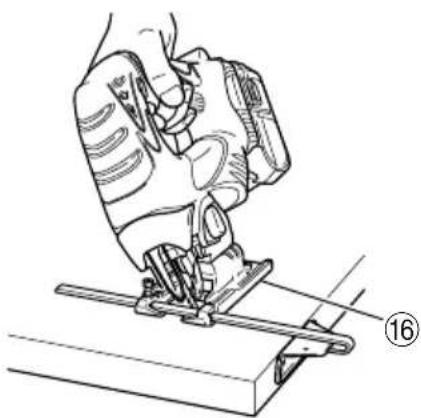
natural_image
Line drawing of a hand using a sewing machine to cut or mark a piece of material (no text or symbols present)17 18
19 20
| English Deutsch Français Italiano | ||||
| 1 | Rechargeable battery Akkumulator Batterie rechargeable | Batteria ricaricabile | ||
| 2 | Latch Schnapper Loquet | Fermo | ||
| 3 | Handle Handgriff Poignée Impugnatura | |||
| 4 | Pull out Herausziehen Tirer | Estrarre | ||
| 5 | Insert Einsatz Insérer | Inserire | ||
| 6 | Lever Hebel Levier Leva | |||
| 7 | Blade Blatt | Lame | Lama | |
| 8 | Blade holder | Sägeblatthalter | Support de lame | Portalama |
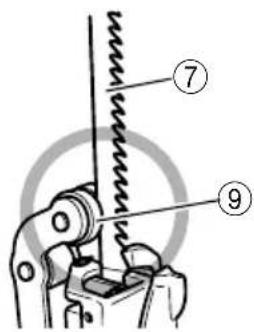
| 9 | Roller | Führungsrolle | Rouleau | Rullo |
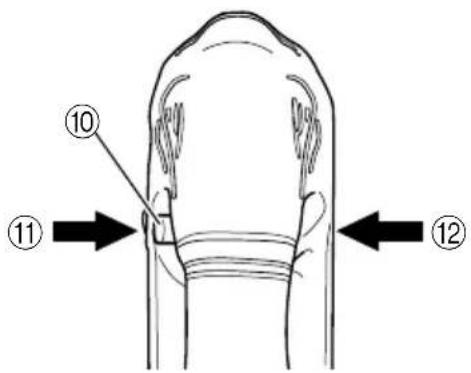
| 10 | Lock off button | Absperrtaste Bouton de verrouillage | Tasto di blocco | |
| 11 | Lock | Schließen | Blocage | Blocco |
| 12 | Free | Lösen | Libérer | Libero |
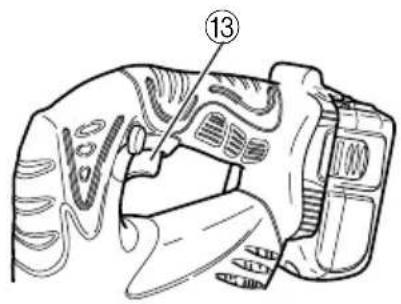
| 13 | Switch | Umschalten | Interrupteur | Interruttore |
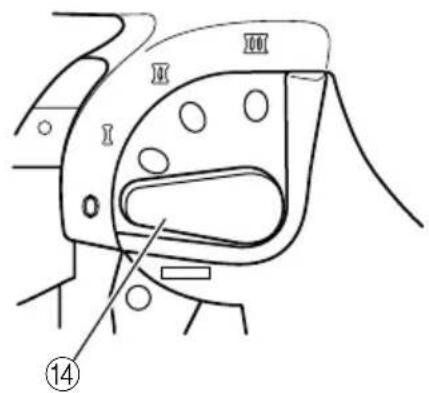
| 14 | Change knob | Wechselring | Bouton de changement | Rotella di cambio |
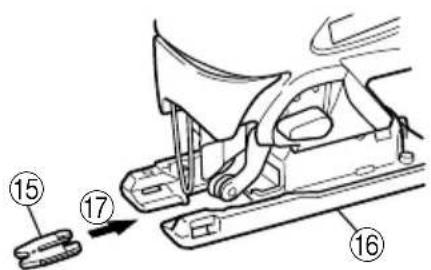
| 15 | Splinter guard | Splitterschutz | Anti-éclats | Pará-schegge |
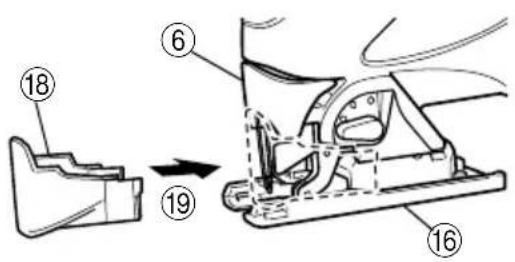
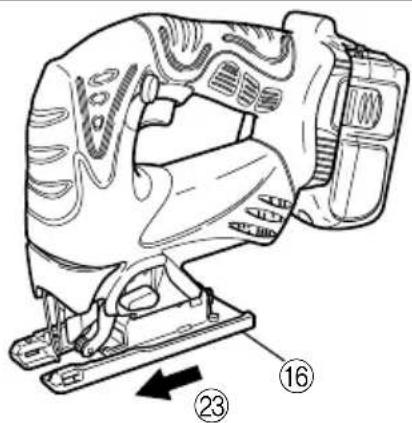
| 16 | Base | Grundplatte | Base | Base |
| 17 | Insert Einsatz Insérer | Inserire | ||
| 18 | Chip cover | Schnipseldeckel | Couvercle d'éclats | Raccoglitrucioli |
| 19 | Insert Einsatz Insérer | Inserire | ||
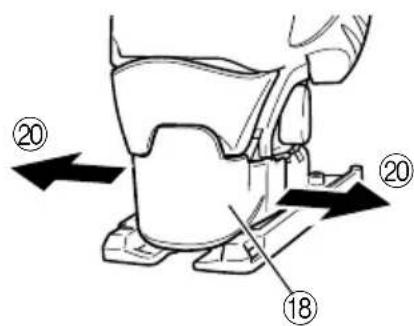
| 20 | Open Öffnen | Ouvrir | Apri | |
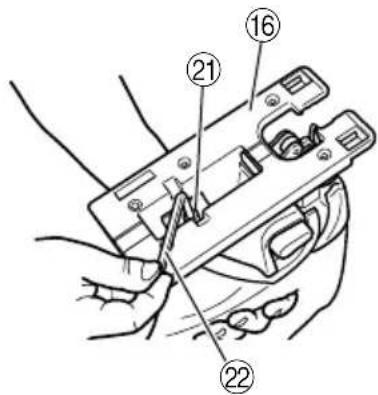
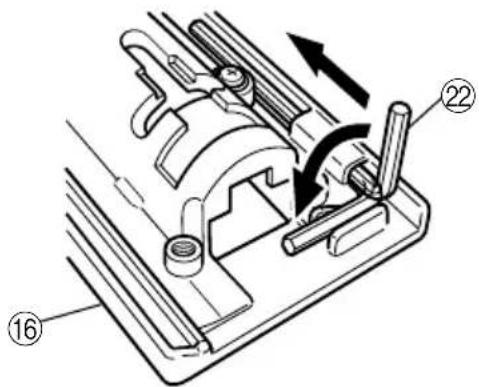
| 21 | Base bolt | Grundplattenschraube | Boulon de la base | Bullone base |
| 22 | Hexagonal bar wrench | Sechskantinnenschüssel | Clef à six pans | Chiave esagonale maschia |
| 23 | Forward | Vorwärts | Avant | Avanti |
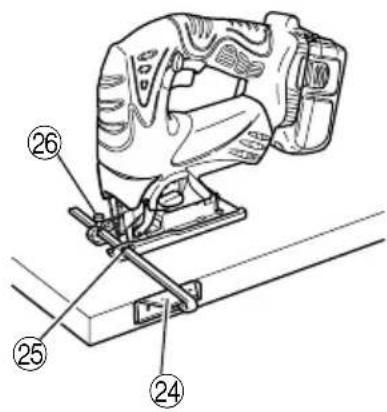
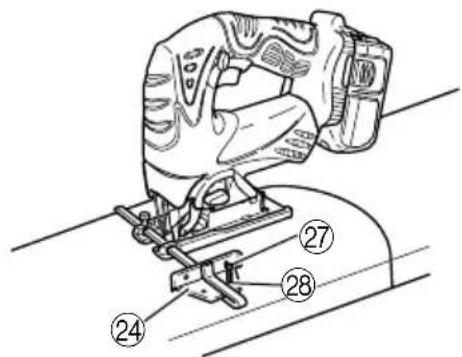
| 24 | Guide | Führung | Guide | Guida |
| 25 | Attachment hole | Anbringungsloch | Orifice de fixation | Foro di attacco |
| 26 | M5 bolt M5-Schraube | Boulon M5 | Bullone M5 | |
| 27 | Nail or screw | Nagel oder Schraube | Clou ou vis | Chiodo o vite |
| 28 | Guide hole | Führungsloch | Orifice de guidage | Foro di guida |
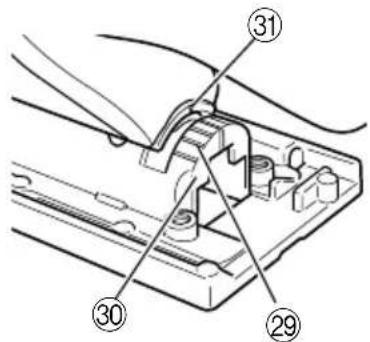
| 29 | Scale Skala | Echelle | Scala | |
| 30 | Semi-circular part | Halbkreisförmiger Teil | Section semi-circulaire | Parte semicircolare |
| 31 | ▽-mark | ▽-Markierung | Repère ▼ | Segno a ▼ |
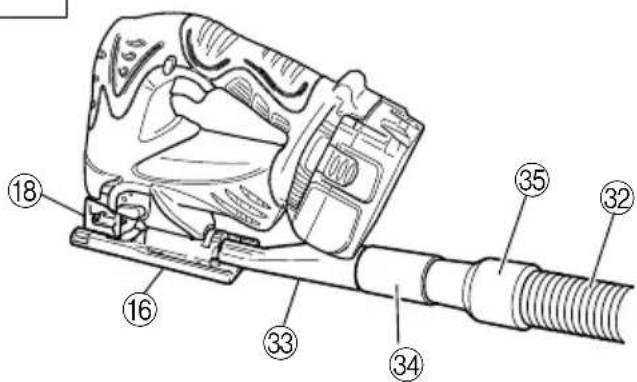
| 32 | Cleaner Staubsauger | Nettoyeur | Dispositivo di pulizia | |
| 33 | Dust collector | Staubsammler | Collecteur à poussière | Raccoglipolvere |
| 34 | Adapter | Adapter | Adaptateur | Adattatore |
| 35 | Nose | Nase | Bec | Estremità anteriore |
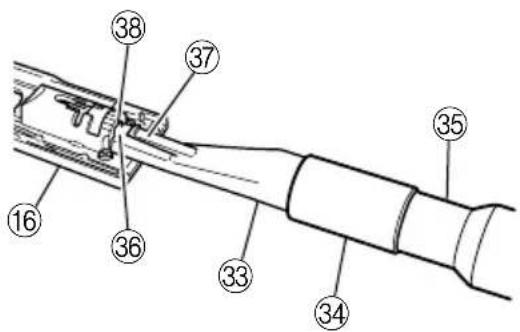
| 36 | Rear hole | Hinteres Loch | Orifice arrière | Foro posteriore |
| 37 | Hook | Haken | Crochet | Gancio |
| 38 | Notch | Kerbe | Rainure | Scanalatura |
| Nederlands Español | Português Ελληνικά | |||
| 1 | Oplaadbare batterij Batería | recargable | Bateria recarregável | Επαναφορτιζόμενη μπαταρία |
| 2 | Vergrendeling Enganche | Lingüeta | Μάνδαλο | |
| 3 | Handgreep Asidero | Cabo | Χερούλι | |
| 4 | Uittrekken Sacar | Retirar | Βραβήξτε έξω | |
| 5 | Insteken Insertar | Inserir | Εισχωρήστε | |
| 6 | Hendel Palanca | Alavanca | Μοχλός | |
| 7 | Zaagblad Cuchilla | Lâmina | Λεπίδα | |
| 8 | Bladhouder Portacuchilla | Suporte de lamina | Στήριγμα λεπίδας | |
| 9 | Geleiderol Rodillo | Cilindro | Κύλινδρος | |
| 10 | Ontgrendelknop Botón de desbloqueo | Botão de bloqueio | Κουμπί απασφάλισης | |
| 11 | Vergrendelen Bloquear | Bloquear | Κλείδωμα | |
| 12 | Vrij Liberar | Libertar | Ελεύθερο | |
| 13 | Schakelaar Interruptor | Interruptor | Διακόπτης | |
| 14 | Omstelknop | Perilla de cambio | Botão de câmbio | Κουμπί αλλαγής |
| 15 | Anti-splinterstuk | Protector contra astillas | Proteção contra lascas | Προφυλακτήρας σχίζας |
| 16 | Zaagtafel Base | Base | Βάση | |
| 17 | Insteken Insertar | Inserir | Εισχωρήστε | |
| 18 | Spaankast Cubierta de virutas | Capa contra fragmentos | Κάλυμμα ρινισμάτων | |
| 19 | Insteken Insertar | Inserir | Εισχωρήστε | |
| 20 | Open | Abrir | Abrir | Ανοικτό |
| 21 | Bout voetplaat | Perno de base | Parafuso da base | Μπουλόνι βάσης |
| 22 | Inbussleutel | Ilave macho hexagonal | Chave de barra sextavada | Εξάγωνο κλειδί ́Αλεν |
| 23 | Voorwaarts | Avanzar | Para a frente | Προώθηση |
| 24 | Geleider | Guía | Guia | Οδηγός |
| 25 | Bevestigingsgat | Orificio de fijación | Furo de fixação | Τρύπα σύνδεσης |
| 26 | M5 bout Perno M5 | Parafuso M5 | M5 Μπουλόνι | |
| 27 | Spijker of schroef | Clavo o tornillo | Prego ou parafuso | Καρφί ή βίδα |
| 28 | Geleidegat | Orificio de guía | Furo-guia | Τρύπα οδηγός |
| 29 | Schaal | Escala | Escala | Κλίμακα |
| 30 | Halfcirkelvormig gedeelte | Parte semiciruclar | Parte semicircular | Ημικυκλικό τμήμα |
| 31 | ▽-markering | Marca ▼ | Marca ▼ | ▽-σημάδι |
| 32 | Reiniger | Limpiador | Limpador | Καθαριστής |
| 33 | Stofzak | Colector de polvo | Coletor de poeira | Συλλέκτης σκόνης |
| 34 | Adapter | Adaptador | Adaptador | Προσαρμογέας |
| 35 | Neus | Punta | Ponta | Άκρο |
| 36 | Achtergat Orificio trasero | Furo traseiro | Πίσω τρύπα | |
| 37 | Haak | Gancho | Gancho | Άγκιστρο |
| 38 | InkepingSymbols⚠ WARNINGThe following show symbols used for the machine. Be sure that you understand their meaning before use. | MuescaSymbole⚠ WARNUNGDie folgenden Symbole werden für diese Maschine verwendet. Achten Sie darauf, diese vor der Verwendung zu verstehen. | EncaixeSymboles⚠ AVERTISSEMENTLes symboles suivants sont utilisés pour l’outil. Bien se familiariser avec leur signification avant d’utiliser l’outil. | ΕγκοπήSimboli⚠ AVVERTENZADi seguito mostriamo i simboli usati per la macchina. Assicurarsi di comprenderne il significato prima dell’uso. |
 | Read all safety warnings and all instructions.Failure to follow the warnings and instructions may result in electric shock, fire and/or serious injury. | Lesen Sie sämtliche Sicherheitshinweise und Anweisungen durch.Wenn die Warnungen und Anweisungen nicht befolgt werden, kann es zu Stromschlag, Brand und/oder ernsthaftenVerletzungen kommen. | Lire tous les avertissements de sécurité et toutes les instructions.Tout manquement à observer ces avertissements et instructions peut engendrer des chocs électriques, des incendies et/ou des blessures graves. | Leggere tutti gli avvertimenti di sicurezza e tutte le istruzioni.La mancata osservanza degli avvertimenti e delle istruzioni potrebbe essere causa di scosse elettriche, incendi e/o gravi lesioni. |
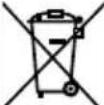 | Only for EU countriesDo not dispose of electric tools together with household waste material!In observance of European Directive 2002/96/EC on waste electrical and electronic equipment and its implementation in accordance with national law, electric tools that have reached the end of their life must be collected separately and returned to an environmentally compatible recycling facility. | Nur für EU-LänderWerfen Sie Elektrowerkzeuge nicht in den Hausmüll!Gemäss Europäischer Richtlinie 2002/96/EG über Elektro- und Elektronik-Altgeräte und Umsetzung in nationales Recht müssen verbrauchte Elektrowerkzeuge getrennt gesammelt und einer umweltgerechtenWiederververitung zugeführt werden. | Pour les pays européens uniquementNe pas jeter les appareils électriques dans les ordures ménagères!Conformément à la directive européenne 2002/96/EG relative aux déchets d’équipements électriques ou électroniques (DEEE), et à sa transposition dans la législation nationale, les appareils électriques doivent être collectés à part et être soumis à un recyclage respectueux de l’environnement. | Solo per Paesi UENon gettare le apparecchiature elettriche tra i rifiuti domestici.Secondo la Direttiva Europea 2002/96/CE sui rifiuti di apparecchiature elettriche ed elettroniche e la sua attuazione in conformità alle norme nazionali, le apparecchiature elettriche esauste devono essere raccolte separatamente, al fine di essere reimpiegate in modo eco-compatibile. |
 | Symbolen⚠ WAARSCHUWINGHieronder staan symbolen afgebeeld die van toepassing zijn op deze machine. U moet de betekenis hiervan begrijpen voor gebruik. | Símbolos⚠ ADVERTENCIAA continuación se muestran los símbolos usados para la máquina. Asegúrese de comprender su significado antes del uso. | Símbolos⚠ AVISOA seguir aparecem os símbolos utilizados pela máquina. Assimile bem seus significados antes do uso. | Σύμβολα⚠ ΠΡΟΣΟΧΗΤα παρακάτω δείχνουν τα σύμβολα που χρησιμοποιούνται στο μηχάνημα. Βεβαιωθείτε ότι κατανοείτε τη σημασίας τους πριν τη χρήση. |
 | Lees alle waarschuwingen en instructies aandachtig door.Nalating om de waarschuwingen en instructies op te volgen kan in een elektrische schok, brand en/of ernstig letsel resulteren. | Lea todas las instrucciones y advertencias de seguridad.Si no se siguen las advertencias e instrucciones, podría producirse una descarga eléctrica, un incendio y/o daños graves. | Leia todas as instruções e avisos de segurança.Se não seguir todas as instruções e os avisos, pode provocar um choque eléctrico, incêndio e/ou ferimentos graves. | Διαθάζετε όλες τις προειδοποιήσεις ασφαλείας και όλες τις οδηγίες.Η μη τήρηση των προειδοποιήσεων και οδηγιών μπορεί να προκαλέσει ηλεκτροπληξία, πυρκαγιά καιή σοβαρό τραιματισμό. |
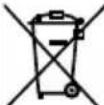 | Alleen voor EU-landen Geef elektrisch gereedschap niet met het huisvuil mee!Volgens de Europese richtlijn 2002/96/EG inzake oude elektrische en elektronische apparaten en de toepassing daarvan binnen de nationale wetgeving, dient gebruikt elektrisch gereedschap gescheiden te worden ingezameld en te worden afgevoerd naar een recycle bedrijf dat voldoet aan de geldende milieu-eisen. | Sólo para países de la Unión Europea¡No deseche los aparatos eléctricos junto con los residuos domésticos!De conformidad con la Directiva Europea 2002/96/CE sobre residuos de aparatos eléctricos y electrónicos y su aplicación de acuerdo con la legislación nacional, las herramientas eléctricas cuya vida útil haya llegado a su fin se deberán recoger por separado y trasladar a una planta de reciclaje que cumpla con las exigencias ecológicas. | Apenas para países da UE Não deite ferramentas eléctricas no lixo doméstico!De acordo com a directiva europeia 2002/96/CE sobre ferramentas eléctricas e electrónicas usadas e a transposição para as leis nacionais, as ferramentas eléctricas usadas devem ser recolhidas em separado e encaminhadas a uma instalação de reciclagem dos materiais ecológica. | Μόνο για τις χώρες της ΕΕ Μην πετάτε τα ηλεκτρικά εργαλεία στον κάδο οικιακών απορριμμάτων!Σύμφωνα με την ευρωπαϊκή οδηγία 2002/96/EK περίη ηλεκτρικών και ηλεκτρονικών συσκευών και την ενσωμάτωσή της στο εθνικό δίκαιο, τα ηλεκτρικά εργαλεία πρέπει να συλλέγονται ξεχωριστά και να επιστρέφονται για ανακύκλωση με τρόπο φιλικό προς το περιβάλλον. |
GENERAL POWER TOOL SAFETY WARNINGS
WARNING
Read all safety warnings and all instructions.
Failure to follow the warnings and instructions may result in electric shock, fire and/or serious injury.
Save all warnings and instructions for future reference.
The term "power tool" in the warnings refers to your mains-operated (corded) power tool or battery-operated (cordless) power tool.
1) Work area safety
a) Keep work area clean and well lit.
Cluttered or dark areas invite accidents.
b) Do not operate power tools in explosive atmospheres, such as in the presence of flammable liquids, gases or dust.
Power tools create sparks which may ignite the dust or fumes.
c) Keep children and bystanders away while operating a power tool.
Distractions can cause you to lose control.
2) Electrical safety
a) Power tool plugs must match the outlet.
Never modify the plug in any way.
Do not use any adapter plugs with earthed (grounded) power tools.
Unmodified plugs and matching outlets will reduce risk of electric shock.
b) Avoid body contact with earthed or grounded surfaces, such as pipes, radiators, ranges and refrigerators.
There is an increased risk of electric shock if your body is earthed or grounded.
c) Do not expose power tools to rain or wet conditions.
Water entering a power tool will increase the risk of electric shock.
d) Do not abuse the cord. Never use the cord for carrying, pulling or unplugging the power tool. Keep cord away from heat, oil, sharp edges or moving parts.
Damaged or entangled cords increase the risk of electric shock.
e) When operating a power tool outdoors, use an extension cord suitable for outdoor use.
Use of a cord suitable for outdoor use reduces the risk of electric shock.
f) If operating a power tool in a damp location is unavoidable, use a residual current device (RCD) protected supply.
Use of an RCD reduces the risk of electric shock.
3) Personal safety
a) Stay alert, watch what you are doing and use common sense when operating a power tool. Do not use a power tool while you are tired or under the influence of drugs, alcohol or medication.
A moment of inattention while operating power tools may result in serious personal injury.
b) Use personal protective equipment. Always wear eye protection.
Protective equipment such as dust mask, non-skid safety shoes, hard hat, or hearing protection used for appropriate conditions will reduce personal injuries.
c) Prevent unintentional starting. Ensure the switch is in the off-position before connecting to power source and/or battery pack, picking up or carrying the tool.
Carrying power tools with your finger on the switch or energising power tools that have the switch on invites accidents.
d) Remove any adjusting key or wrench before turning the power tool on.
A wrench or a key left attached to a rotating part of the power tool may result in personal injury.
e) Do not overreach. Keep proper footing and balance at all times.
This enables better control of the power tool in unexpected situations.
f) Dress properly. Do not wear loose clothing or jewellery. Keep your hair, clothing and gloves away from moving parts.
Loose clothes, jewellery or long hair can be caught in moving parts.
g) If devices are provided for the connection of dust extraction and collection facilities, ensure these are connected and properly used.
Use of dust collection can reduce dust related hazards.
4) Power tool use and care
a) Do not force the power tool. Use the correct power tool for your application.
The correct power tool will do the job better and safer at the rate for which it was designed.
b) Do not use the power tool if the switch does not turn it on and off.
Any power tool that cannot be controlled with the switch is dangerous and must be repaired.
c) Disconnect the plug from the power source and/or the battery pack from the power tool before making any adjustments, changing accessories, or storing power tools.
Such preventive safety measures reduce the risk of starting the power tool accidentally.
d) Store idle power tools out of the reach of children and do not allow persons unfamiliar with the power tool or these instructions to operate the power tool.
Power tools are dangerous in the hands of untrained users.
e) Maintain power tools. Check for misalignment or binding of moving parts, breakage of parts and any other condition that may affect the power tools operation.
If damaged, have the power tool repaired before use.
Many accidents are caused by poorly maintained power tools.
f) Keep cutting tools sharp and clean.
Properly maintained cutting tools with sharp cutting edges are less likely to bind and are easier to control.
g) Use the power tool, accessories and tool bits etc. in accordance with these instructions, taking into account the working conditions and the work to be performed.
Use of the power tool for operations different from those intended could result in a hazardous situation.
5) Battery tool use and care
a) Recharge only with the charger specified by the manufacturer.
A charger that is suitable for one type of battery pack may create a risk of fire when used with another battery pack.
b) Use power tools only with specifically designated battery packs.
Use of any other battery packs may create a risk of injury and fire.
c) When battery pack is not in use, keep it away from other metal objects like paper clips, coins, keys, nails, screws, or other small metal objects that can make a connection from one terminal to another.
Shorting the battery terminals together may cause burns or a fire.
d) Under abusive conditions, liquid may be ejected from the battery; avoid contact. If contact accidentally occurs, flush with water. If liquid contacts eyes, additionally seek medical help.
Liquid ejected from the battery may cause irritation or burns.
6) Service
a) Have your power tool serviced by a qualified repair person using only identical replacement parts.
This will ensure that the safety of the power tool is maintained.
PRECAUTION
Keep children and infirm persons away.
When not in use, tools should be stored out of reach of children and infirm persons.
PRECAUTIONS FOR CORDLESS JIG SAW
-
Always charge the battery at a temperature of 0 – 40°C. A temperature of less than 0°C will result in over charging which is dangerous. The battery cannot be charged at a temperature greater than 40°C. The most suitable temperature for charging is that of 20 – 25°C.
-
Do not use the charger continuously. When one charging is completed, leave the charger for about 15 minutes before the next charging of battery.
-
Do not allow foreign matter to enter the hole for connecting the rechargeable battery.
-
Never disassemble the rechargeable battery and charger.
-
Never short-circuit the rechargeable battery. Short-circuiting the battery will cause a great electric current and overheat. It results in burn or damage to the battery.
-
Do not dispose of the battery in fire. If the battery burnt, it may explode.
-
Do not insert object into the air ventilation slots of the charger. Inserting metal objects or inflammables into the charger air ventilation slots will result in electrical shock hazard or damaged charger.
-
Bring the battery to the shop from which it was purchased as soon as the post-charging battery life becomes too short for practical use. Do not dispose of the exhausted battery.
-
Using an exhausted battery will damage the charger.
-
If the machine is used continuously at low speed, an extra load is applied to the motor which can result in motor seizure. Always operate the power tool so that the blade is not caught by the material during operation. Always adjust the blade speed to enable smooth cutting.
CAUTION ON LITHIUM-ION BATTERY
To extend the lifetime, the lithium-ion battery equips with the protection function to stop the output.
In the cases of 1 and 2 described below, when using this product, even if you are pulling the switch, the motor may stop. This is not the trouble but the result of protection function.
-
When the battery power remaining runs out (The battery voltage drops to about 12V (CJ18DL) / about 8V (CJ14DL)), the motor stops. In such case, charge it up immediately.
-
If the tool is overloaded, the motor may stop. In this case, release the switch of tool and eliminate causes of overloading. After that, you can use it again.
Furthermore, please heed the following warning and caution.
WARNING
In order to prevent any battery leakage, heat generation, smoke emission, explosion and ignition beforehand, please be sure to heed the following precautions.
- Make sure that swarf and dust do not collect on the battery.
During work make sure that swarf and dust do not fall on the battery.
○Make sure that any swarf and dust falling on the power tool during work do not collect on the battery.
○Do not store an unused battery in a location exposed to swarf and dust.
Before storing a battery, remove any swarf and dust that may adhere to it and do not store it together with metal parts (screws, nails, etc.).
-
Do not pierce battery with a sharp object such as a nail, strike with a hammer, step on, throw or subject the battery to severe physical shock.
-
Do not use an apparently damaged or deformed battery.
-
Do not use the battery in reverse polarity.
-
Do not connect directly to an electrical outlets or car cigarette lighter sockets.
-
Do not use the battery for a purpose other than those specified.
-
If the battery charging fails to complete even when a specified recharging time has elapsed, immediately stop further recharging.
-
Do not put or subject the battery to high temperatures or high pressure such as into a microwave oven, dryer, or high pressure container.
-
Keep away from fire immediately when leakage or foul odor are detected.
-
Do not use in a location where strong static electricity generates.
-
If there is battery leakage, foul odor, heat generated, discolored or deformed, or in any way appears abnormal during use, recharging or storage, immediately remove it from the equipment or battery charger, and stop use.
CAUTION
- If liquid leaking from the battery gets into your eyes, do not rub your eyes and wash them well with fresh clean water such as tap water and contact a doctor immediately.
If left untreated, the liquid may cause eye-problems.
- If liquid leaks onto your skin or clothes, wash well with clean water such as tap water immediately.
There is a possibility that this can cause skin irritation.
- If you find rust, foul odor, overheating, discolor, deformation, and/or other irregularities when using the battery for the first time, do not use and return it to your supplier or vendor.
SPECIFICATIONS
Cordless Jig Saw
| Model CJ14DMR CJ14DL CJ18DMR CJ18DL | |||||
| Voltage 14.4V 18V | |||||
| Max. Cutting Depth | Wood 135 mmMild Steel 10 mm | ||||
| No-Load Speed 0 – 2400min | -1 | ||||
| Stroke 26 mm | |||||
| Min. Cutting Radius 25 mm | |||||
| Rechargeable battery | 2.0 Ah | EB14B:Ni-Cd(12 cells) (15 cells) x | EB1820L: Ni-Cd | x | |
| 3.0 Ah | x | BCL1430: Li-ion(4 or 8 cells) (10 cells)x | x | EBM1830: Li-ion | |
| Weight 2.5 kg 2.3 kg 2.7 kg 2.4 kg | |||||
Charger
| Model | UC18YG | UC18YRL | |
| Charging voltage | 7.2 – 18 V | 7.2 – 18 V | |
| Charging time | 2.0 Ah : Ni-Cd | 50 min. | 30 min. |
| 3.0 Ah : Li-ion | x | 45 min. | |
| Weight | 0.3 Kg | 0.6 Kg | |
Charge time is approximate. Actual charge time may vary.
"x" Indicates that the battery pack is not compatible with that specific charger.
STANDARD ACCESSORIES
| CJ14DMR (2BGK) CJ14DL (2LRK) CJ18DMR (2BGK) CJ18DL (2MRK) | 1 Blades (No. 41) ......Refer to Table 3 for use of the blades.2 Hexagon bar wrench ......3 Splinter guard ......4 Chip cover ......5 Charger ...... 16 Battery ...... 27 Plastic case ...... |
| CJ14DMR (BGK) CJ14DL (LRK) CJ18DMR (BGK) CJ18DL (MRK) | 1 Blades (No. 41) ......Refer to Table 3 for use of the blades.2 Hexagon bar wrench ...... 13 Splinter guard ...... 14 Chip cover ...... 15 Charger ...... 16 Battery ...... 17 Plastic case ...... |
| CJ14DMR (NN) CJ14DL (NN) CJ18DMR (NN) CJ18DL (NN) | Without charger, battery, plastic case |
Standard accessories are subject to change without notice.
OPTIONAL ACCESSORIES ... Sold separately
(1) Various types of blades Refer to Table 3 for use of the blades.
(2) Guide
(3) Sub base
(4) Dust collector
Optional accessories are subject to change without notice.
APPLICATIONS
○ Cutting various lumber and pocket cutting
○ Cutting mild steel plate, aluminum plate, and copper plate
○ Cutting synthetic resins, such as phenol resin and vinyl chloride
○ Cutting thin and soft construction materials
○ Cutting stainless steel plate (with No. 97 blade)
BATTERY REMOVAL/INSTALLATION
1. Battery removal
Hold the handle tightly and push the battery latch to remove the battery (See Fig. 1).
CAUTION
Never short-circuit the battery.
2. Battery installation
Insert the battery while observing its polarities (See Fig. 1).
CHARGING
Before using the cordless jig saw, charge the battery as follows.
1. Connect the charger's power cord to a receptacle
When the power cord is connected, the charger's pilot lamp will blink in red (At 1-second intervals).
2. Insert the battery into the charger
Insert the battery firmly, until it contacts the bottom of the charger compartment.
CAUTION
○If the battery is inserted in the reverse direction, not only recharging will become impossible, but it may also cause problems in the charger such as deformed recharging terminal.
3. Charging
When inserting a battery in the charger, charging will commence and the pilot lamp will light up continuously in red.
When the battery becomes fully recharged, the pilot lamp will blink in red (At 1-second intervals) (See Table 1).
(1) Pilot lamp indication
The indications of the pilot lamp will be as shown in Table 1, according to the condition of the charger or the rechargeable battery.
Table 1
| Indications of the lamps | |||
| Before charging | Blinks (RED) | Lights for 0.5 seconds. Does not light for 0.5 seconds. (off for 0.5 seconds) | |
| While charging | Lights (RED) | Lights continuously | |
| Charging complete | Blinks (RED) | Lights for 0.5 seconds. Does not light for 0.5 seconds. (off for 0.5 seconds) | |
| Charging impossible | Flikers (RED) | Lights for 0.1 seconds. Does not light for 0.1 seconds. (off for 0.1 seconds)■ ■ ■ ■ ■ ■ ■ ■ ■ ■ ■ ■ ■ ■ ■ ■ ■ ■ ■ ■ ■ ■ ■ ■ ■ ■ ■ ■ ■ ■ ■ ■ ■ ■ ■ ■ ■ ■ ■ ■ ■ ■ ■ ■ ■ ■ ■ ■ ■ ■ ■ ■ ■ ■ ■ ■ ■ ■ ■ ■ ■ ■ ■ ■ ■ ■ ■ ■ ■ ■ ■ ■ ■ ■ ■ ■ ■ ■ ■ ■ ■ ■ ■ ■ ■ ■ ■ ■ ■ ■ ■ ■ ■ ■ ■ ■ ■ ■ ■ ■ ■ □□□□□□□□□□□□□□□□□□□□□□□□□□□□□□□□□□□□□□□□□□□□□□□□□□□□□□□□□□□□□□□□□□□□□□□□□□□□□□□□□□□□□□□□□□□□□□□□□□□□□○□□□□□□□□□□□□□□□□□□□□□□□□□□□□□□□□□□□□□□□□□□□□□□□□□□□□□□□□□□□□□□□□□□□□□□□□□□□□□□□□□□□□□□□□□□□□□□□□□□□ □□□□□□□□□□□□□□□□□□□□□□□□□□□□□□□□□□□□□□□□□□□□□□□□□□□□□□□□□□□□□□□□□□□□□□□□□□□□□□□□□□□□□□□□□□□□□□□□□□ □ □ □ □ □ □ □ □ □ □ □ □ □ □ □ □ □ □ □ □ □ □ □ □ □ □ □ □ □ □ □ □ □ □ □ □ □ □ □ □ □ □ □ □ □ □ □ □ □ □ ▢ ▢ ▢ ▢ ▢ ▢ ▢ ▢ ▢ ▢ ▢ ▢ ▢ ▢ ▢ ▢ ▢ ▢ ▢ ▢ ▢ ▢ ▢ ▢ ▢ ▢ ▢ ▢ ▢ ▢ ▢ ▢ ▢ ▢ ▢ ▢ ▢ ▢ ▢ ▢ ▢ ▢ ▢ ▢ ▢ ▢ ▢ ▢ ▢ ▢ ▩ ▩ ▩ ▩ ▩ ▩ ▩ ▩ ▩ ▩ ▩ ▩ ▩ ▩ ▩ ▩ ▩ ▩ ▩ ▩ ▩ ▩ ▩ ▩ ▩ ▩ ▩ ▩ ▩ ▩ ▩ ▩ ▩ ▩ ▩ ▩ ▩ ▩ ▩ ▩ ▩ ▩ ▩ ▩ ▩ ▩ ▩ ▩ ▩ ▩ ▢ ▢ ▢ ▢ ▢ ▢ ▢ ▢ ▢ ▢ ▢ ▢ ▢ ▢ ▢ ▢ ▢ ▢ ▢ ▢ ▢ ▢ ▢ ▢ ▢ ▢ ▢ ▢ ▢ ▢ ▢ ▢ ▢ ▢ ▢ ▢ ▢ ▢ ▢ ▢ ▢ ▢ ▢ ▢ ▢ ▢ ▢ ▢ ▢ □ □ □ □ □ □ □ □ □ □ □ □ □ □ □ □ □ □ □ □ □ □ □ □ □ □ □ □ □ □ □ □ □ □ □ □ □ □ □ □ □ □ □ □ □ □ □ □ □ △ △ △ △ △ △ △ △ △ △ △ △ △ △ △ △ △ △ △ △ △ △ △ △ △ △ △ △ △ △ △ △ △ △ △ △ △ △ △ △ △ △ △ △ △ △ △ △ △ △ ▲ ▲ ▲ ▲ ▲ ▲ ▲ ▲ ▲ ▲ ▲ ▲ ▲ ▲ ▲ ▲ ▲ ▲ ▲ ▲ ▲ ▲ ▲ ▲ ▲ ▲ ▲ ▲ ▲ ▲ ▲ ▲ ▲ ▲ ▲ ▲ ▲ ▲ ▲ ▲ ▲ ▲ ▲ ▲ ▲ ▲ ▲ ▲ ▲ ▲ △ △ △ △ △ △ △ △ △ △ △ △ △ △ △ △ △ △ △ △ △ △ △ △ △ △ △ △ △ △ △ △ △ △ △ △ △ △ △ △ △ △ △ △ △ △ △ △ △ ▩ △ △ △ △ △ △ △ △ △ △ △ △ △ △ △ △ △ △ △ △ △ △ △ △ △ △ △ △ △ △ △ △ △ △ △ △ △ △ △ △ △ △ △ △ △ △ △ △ △ ▸ ▸ ▸ ▸ ▸ ▸ ▸ ▸ ▸ ▸ ▸ ▸ ▸ ▸ ▸ ▸ ▸ ▸ ▸ ▸ ▸ ▸ ▸ ▸ ▸ ▸ ▸ ▸ ▸ ▸ ▸ ▸ ▸ ▸ ▸ ▸ ▸ ▸ ▸ ▸ ▸ ▸ ▸ ▸ ▸ ▸ ▸ ▸ ▸ ▸ ▪ ▪ ▪ ▪ ▪ ▪ ▪ ▪ ▪ ▪ ▪ ▪ ▪ ▪ ▪ ▪ ▪ ▪ ▪ ▪ ▪ ▪ ▪ ▪ ▪ ▪ ▪ ▪ ▪ ▪ ▪ ▪ ▪ ▪ ▪ ▪ ▪ ▪ ▪ ▪ ▪ ▪ ▪ ▪ ▪ ▪ ▪ ▪ ▪ ▪ ▫ ▫ ▫ ▫ ▫ ▫ ▫ ▫ ▫ ▫ ▫ ▫ ▫ ▫ ▫ ▫ ▫ ▫ ▫ ▫ ▫ ▫ ▫ ▫ ▫ ▫ ▫ ▫ ▫ ▫ ▫ ▫ ▫ ▫ ▫ ▫ ▫ ▫ ▫ ▫ ▫ ▫ ▫ ▫ ▫ ▫ ▫ ▫ ▫ ▫ ▪ ▪ ▪ ▪ ▪ ▪ ▪ ▪ ▪ ▪ ▪ ▪ ▪ ▪ ▪ ▪ ▪ ▪ ▪ ▪ ▪ ▪ ▪ ▪ ▪ ▪ ▪ ▪ ▪ ▪ ▪ ▪ ▪ ▪ ▪ ▪ ▪ ▪ ▪ ▪ ▪ ▪ ▪ ▪ ▪ ▪ ▪ ▪ ▪ ▸ ▸ ▸ ▸ ▸ ▸ ▸ ▸ ▸ ▸ ▸ ▸ ▸ ▸ ▸ ▸ ▸ ▸ ▸ ▸ ▸ ▸ ▸ ▸ ▸ ▸ ▸ ▸ ▸ ▸ ▸ ▸ ▸ ▸ ▸ ▸ ▸ ▸ ▸ ▸ ▸ ▸ ▸ ▸ ▸ ▸ ▸ ▸ ▸ ▩ ▩ ▩ ▩ ▩ ▩ ▩ ▩ ▩ ▩ ▩ ▩ ▩ ▩ ▩ ▩ ▩ ▩ ▩ ▩ ▩ ▩ ▩ ▩ ▩ ▩ ▩ ▩ ▩ ▩ ▩ ▩ ▩ ▩ ▩ ▩ ▩ ▩ ▩ ▩ ▩ ▩ ▩ ▩ ▩ ▩ ▩ ▩ ▩ ▸ ▸ ▸ ▸ ▸ ▸ ▸ ▸ ▸ ▸ ▸ ▸ ▸ ▸ ▸ ▸ ▸ ▸ ▸ ▸ ▸ ▸ ▸ ▸ ▸ ▸ ▸ ▸ ▸ ▸ ▸ ▸ ▸ ▸ ▸ ▸ ▸ ▸ ▸ ▸ ▸ ▸ ▸ ▸ ▸ ▸ ▸ ▸ ▸ ▅ ▪ ▪ ▪ ▪ \textcircled{=} \textcircled{=} \textcircled{=} \textcircled{=} \textcircled{=} \textcircled{=} \textcircled{=} \textcircled{=} \textcircled{=} \textcircled{=} \textcircled{=} \textcircled{=} \textcircled{=} \textcircled{=} \textcircled{=} \textcircled{=} \textcircled{=} \textcircelbrack \textcircled{=} \textcircled{=} \textcircled{=} \textcircled{=} \textcircled{=} \textcircled{=} \textcircled{=} \textcircled{=} \textcircled{=} \textcircled{=} \textcircled{=} \textcircled{=} \textcircled{=} \textcircled{=} \textcircled{=} \textcircled{=} \textcircellbrack \textcircled{=} \textcircled{=} \textcircled{=} \textcircled{=} \textcircled{=} \textcircled{=} \textcircled{=} \textcircled{=} \textcircled{=} \textcircled{=} \textcircled{=} \textcircled{=} \textcircled{=} \textcircled{=} \textcircled{=} \textcircled{=} \mathrm{~} \mathrm{~} \mathrm{~} \mathrm{~} \mathrm{~} \mathrm{~} \mathrm{~} \mathrm{~} \mathrm{~} \mathrm{~} \mathrm{~} \mathrm{~} \mathrm{~} \mathrm{~} \mathrm{~} \mathrm{~} \mathrm{~} \mathrm{~} \mathrm{~} \mathrm{~} \mathrm{~}\mathrm{~}\mathrm{~}\mathrm{~}\mathrm{~}\mathrm{~}\mathrm{~}\mathrm{~}\mathrm{~}\mathrm{~}\mathrm{~}\mathrm{~}\mathrm{~}\mathrm{~}\mathrm{~}\mathrm{~}\mathrm{~}\mathrm{~}\mathrm{~}\mathrm{~}\mathrm{~}\mathrm{~}\mathrm{~}\mathrm{~}\mathrm{~}\mathrm{~} \mathrm{~}\mathrm{~}\mathrm{~}\mathrm{~}\mathrm{~}\mathrm{~}\mathrm{~}\mathrm{~}\mathrm{~}\mathrm{~}\mathrm{~}\mathrm{~}\mathrm{~}\mathrm{~}\mathrm{~}\mathrm{~}\mathrm{~}\mathrm{~}\mathrm{~}\mathrm{~}\mathrm{~}\mathrm{~}\mathrm{~}\mathrm{ ~}\mathrm{~}\mathrm{~}\mathrm{~}\mathrm{~}\mathrm{~}\mathrm{~}\mathrm{~}\mathrm{~}\mathrm{~}\mathrm{~}\mathrm{~}\mathrm{~}\mathrm{~}\mathrm{~}\mathrm{~}\mathrm{~}\mathrm{~}\mathrm{~}\mathrm{~}\mathrm{~}\mathrm{~}\mathrm{~}\mathrm{~}\mathrm{~}\mathrm{ ~}\mathrm{~} \mathrm{~}\mathrm{~}\mathrm{~}\mathrm{~}\mathrm{~}\mathrm{~}\mathrm{~}\mathrm{~}\mathrm{~}\mathrm{~}\mathrm{~}\mathrm{~}\mathrm{~}\mathrm{~}\mathrm{~}\mathrm{~}\mathrm{~}\mathrm{~}\mathrm{~}\mathrm{~}\mathrm{~}\mathrm{~}\mathrm{~}\mathrm{} \mathrm{~}\mathrm{~}\mathrm{~}\mathrm{~}\mathrm{~}\mathrm{~}\mathrm{~}\mathrm{~}\mathrm{~}\mathrm{~}\mathrm{~}\mathrm{~}\mathrm{~}\mathrm{~}\mathrm{~}\mathrm{~}\mathrm{~}\mathrm{~}\mathrm{~}\mathrm{~}\mathrm{~}\mathrm{~}\mathrm{~}\mathrm{~}\mathrm{ ~} \mathrm{~}\mathrm{~}\mathrm{~}\mathrm{~}\mathrm{~}\mathrm{~}\mathrm{~}\mathrm{~}\mathrm{~}\mathrm{~}\mathrm{~}\mathrm{~}\mathrm{~}\mathrm{~}\mathrm{~}\mathrm{~}\mathrm{~}\mathrm{~}\mathrm{~}\mathrm{~}\mathrm{~}\mathrm{~}\mathrm{~}\mathrm{~}\mathrm{} \mathrm{~}\nabla \nabla \nabla \nabla \nabla \nabla \nabla \nabla \nabla \nabla \nabla \nabla \nabla \nabla \nabla \nabla \nabla \nabla \nabla \nabla \nabla \nabla \nabla \nabla \nabla \nabla\] | |
NOTE: When standby for cooling battery, UC18YRL cools the overheated battery by cooling fan.
(2) Regarding the temperatures of the rechargeable battery
The temperatures for rechargeable batteries are as shown in the table below, and batteries that have become hot should be cooled for a while before being recharged.
Table 2 Recharging ranges of batteries
| ChargerRechargeable batteries | UC18YRL |
| Ni-Cd batteries -5°C – 55°C | |
| Li-ion batteries 0°C – 50°C |
4. Disconnect the charger's power cord from the receptacle
5. Hold the charger firmly and pull out the battery NOTE
Be sure to pull out the battery from the charger after use, and then keep it.
CAUTION
○If the battery is charged while it is heated because it has been left for a long time in a location subject to direct sunlight or because the battery has just been used, the pilot lamp of the charger lights up green. In such a case, first let the battery cool, then start charging.
When the pilot lamp flikers in red quickly (at 0.2-second intervals), check for and take out any foreign objects in the charger's battery installation hole. If there are no foreign objects, it is probable that the battery or charger is malfunctioning. Take it to your Authorized Service Center.
○Since the built-in micro computer takes about 3 seconds to confirm that the battery being charged with UC18YRL is taken out, wait for a minimum of 3 seconds before reinserting it to continue charging. If the battery is reinserted within 3 seconds, the battery may not be properly charged.
Before using the cordless jig saw, charge the battery as follows.
1. Connect the charger power cord to the receptacle
Connecting the power cord will turn on the charger.
2. Insert the battery into the charger
Insert the battery firmly while observing its direction, until it contacts the bottom of the charger (the pilot lamp lights up).
CAUTION
If the pilot lamp does not light up, pull out the power cord from the receptacle and check the battery mounting condition.
The pilot lamp goes off to indicate that the battery is fully charged.
The battery charging time becomes longer when a temperature is low or the voltage of the power source is too low.
When the pilot lamp does not go off even if more than 120 minutes have elapsed after starting of the charging, stop the charging and contact your HiKOKI AUTHORIZED SERVICE CENTER.
CAUTION
If the battery is heated due to direct sunlight, etc., just after operation, the charger pilot lamp may not light up. At that time, cool the battery first, then start charging.
3. Disconnect the charger power cord from the receptacle
4. Hold the charger tight and pull out the battery
Regarding electric discharge in case of new batteries, etc.
As the internal chemical substance of new batteries and batteries that have not been used for an extended period is not activated, the electric discharge might be low when using them the first and second time. This is a temporary phenomenon, and normal time required for recharging will be restored by recharging the batteries 2 – 3 times.
How to make the batteries perform longer
(1) Recharge the batteries before they become completely exhausted.
When you feel that the power of the tool becomes weaker, stop using the tool and recharge its battery. If you continue to use the tool and exhaust the electric current, the battery may be damaged and its life will become shorter.
(2) Avoid recharging at high temperatures.
A rechargeable battery will be hot immediately after use. If such a battery is recharged immediately after use, its internal chemical substance will deteriorate, and the battery life will be shortened. Leave the battery and recharge it after it has cooled for a while.
PRIOR TO OPERATION
1. Preparing and checking the work environment
Make sure that the work site meets all the conditions laid forth in the precautions.
2. Checking the battery
Make sure that the battery is installed firmly. If it is at all loose it could come off and cause an accident.
3. Dust produced in operation
The dust produced in normal operation may affect the operator's health. Either of following way is recommended.
a) Wear a dust mask
b) Use external dust collection equipment
When using the external dust collection equipment, connect the adapter with the hose from external dust collection equipment. (Fig. 19)
4. Changing blades
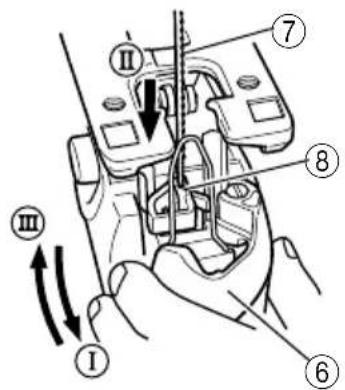
(1) Open the lever up to the stop. (Fig. 2-arrow I)
(2) Remove fitted blade.
(3) Insert new blade up to the stop in the blade holder. (Fig. 2-arrow II)
(4) Close the lever. (Fig. 2-arrow III)
CAUTION:
○Be sure to switch power OFF and disconnect the battery from the body when changing blades.
○Do not open the lever when plunger is moving.
NOTE:
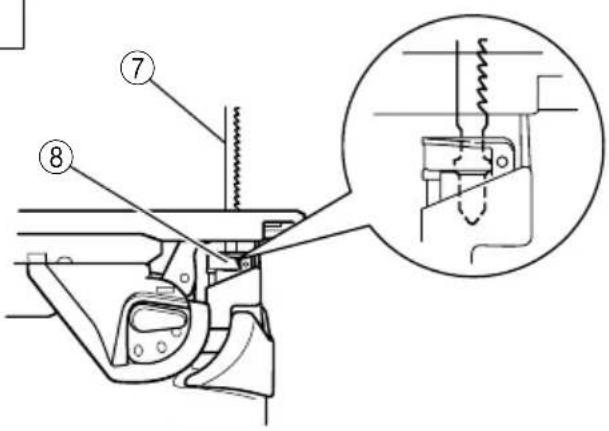
○Confirm the protrusions of blade inserted to the blade holder surely. (Fig. 3)
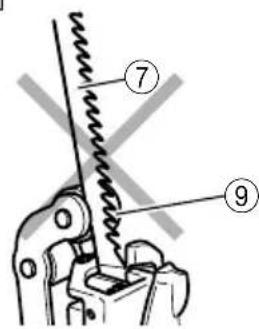
○Confirm the blade located between the groove of roller. (Fig. 4)
5. Adjusting the orbital operation
(1) This Jig Saw employs orbital operation which moves the blade back and forth, as well as up and down. Set the change knob shown in Fig. 7 to "0" to eliminate the orbital operation (the blade moves only up and down). The orbital operation can be selected in 4 steps from "0" to "III".
(2) For the hard material, such as a steel plate, etc., decrease the orbital operation. For the soft material, such as lumber, plastic, etc., increase the orbital operation to increase work efficiency. To cut the material accurately, decrease the orbital operation.
6. Cutting stainless steel plates
This Jig Saw can cut stainless steel plates by using No. 97 blade. Carefully read “Concerning cutting of stainless steel plates” for proper operation.
7. Splinter guard
Using the splinter guard when cutting wood materials will reduce splintering of cut surfaces.
Insert the splinter guard in the space on the base, and push it completely. (See Fig. 8)
8. Chip cover
Chip cover prevents chips from flying off and improves the efficiency of dust collector.
Insert the chip cover between the base and lever, and push with a slight pressure until it catches in place. (Fig. 9)
When removing chip cover, hold both sides of knob and slightly open until it can be removed from the Jig Saw. (Fig. 10)
NOTE:
There is a possibility that chip cover is frosted when cutting the metal.
9. Sub base
Using the sub base (made from steel) will reduce abrasion of aluminium base especially in cutting metals.
Using the sub base (made from resin) will reduce scratching of cut surface. Attach the sub base to the bottom surface of base by attached 4 screws.
10. Lighting up the lamp
To turn on the lamp, pull the trigger.
Release the trigger to turn off.
CAUTION:
Do not look in the light or see the source of light directly.
CUTTING
CAUTION on lithium-ion battery
To extend the lifetime, the lithium-ion battery equips with the protection function to stop the output. Therefore, if the tool is overloaded, the motor may stop. However, this is not the trouble but the result of protection function. In this case, release the switch of tool and eliminate the causes of overloading.
CAUTION:
○In order to prevent blade dislodging, damage or excessive wear on the Plunger, please make sure to have surface of the base plate attached to the work piece while sawing.
○At low speed do not cut a wood with a thickness of more than 10 mm or metal with a thickness of more than 1 mm.
1. Rectilinear cutting
When cutting on a straight line, first draw a marking gauge line and advance the saw along that line. Using the guide (sold separately) will make it possible to cut accurately on a straight line.
(1) Loosen the base bolt hexagonal bar wrench attached on base. (Fig. 11)
(2) Move the base fully forward (Fig. 12), and tighten the base bolt again.
(3) Attach the guide by passing it through the attachment hole on the base and tighten the M5 bolt. (Fig. 13)
(4) Set the orbital position to "0".
NOTE:
To ensure accurate cutting when using the Guide (Fig. 13), always set the orbital position to "0".
2. Sawing curved lines
When sawing a small circular arc, reduce the feeding speed of the machine. If the machine is fed too fast, it could cause the blade to break.
3. Cutting a circle or a circular arc
The guide also will be helpful for circular cutting.
After attaching the guide by same way noted as above, drive the nail or screw into the material through the hole on the guide, then use it for an axis when cutting. (Fig. 14)
NOTE:
Circular cutting must be done with the blade approximately vertical to the bottom surface of the base.
4. Cutting metallic materials
(1) Set the orbital position to "0" or "I".
(2) Cut the material at medium speed.
(3) Always use an appropriate cutting fluid (spindle oil, soapy water, etc.). When a liquid cutting fluid is not available, apply grease to the back surface of the material to be cut.
5. Pocket cutting
(1) In lumber
Aligning the blade direction with the grain of the wood, cut step by step until a window hole is cut in the center of the lumber. (Fig. 15)
(2) In other materials
When cutting a window hole in materials other than lumber, initially bore a hole with a drill or similar tool from which to start cutting.
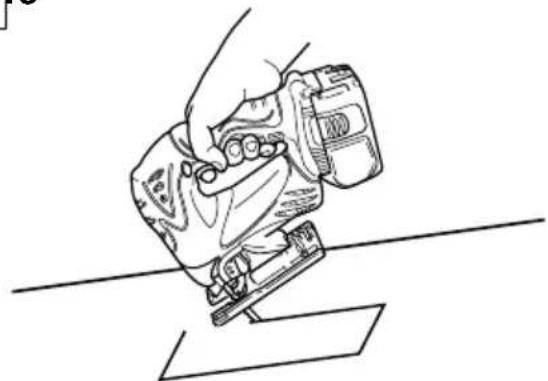
6. Angular cutting
The base can be swiveled to both sides by up to 45^ for angular cutting. (Fig. 16)
(1) Loosen the base bolt by hexagonal bar wrench attached on base and move the base fully forward. (Fig. 11, 12)
(2) Align the scale (from 0 degrees to 45 degrees by 15-degree increments) of the semi-circular part of the base with the [▽] mark on the gear cover. (Fig. 17)
(3) Tighten the M5 bolt again. (Fig. 11)
(4) Set the orbital position to "0".
NOTE:
Angular cutting can not be done when adopting chip cover or dust collector.
CONNECTING WITH CLEANER
By connecting with cleaner (sold separately) through dust collector (sold separately) and adapter (sold separately), most of dust can be collected.
(1) Remove the hexagonal bar wrench from the base.
(2) Move the base fully forward. (Fig. 11, 12)
(3) Attach the chip cover.
(4) Connect the dust collector with adapter. (Fig. 18)
(5) Connect the adapter with the nose of cleaner. (Fig. 18)
(6) Insert dust collector into the rear hole of the base until the hook catches in the notch. (Fig. 19)
(7) Press the hook to remove the dust collector.
NOTE:
Wear the dust mask additionally, if available.
CONCERNING CUTTING OF STAINLESS STEEL PLATES
CAUTION:
In order to prevent blade dislodging, damage or excessive wear on the Plunger, please make sure to have surface of the base plate attached to the work piece while sawing.
When cutting stainless steel plates, adjust the unit as described below:
1. Adjust the speed
| Blade | Thickness of material | Speed |
| No. 97 | 1.5 – 2.5 mm | Middle speed |
NOTE:
The higher the speed is, the quicker the material is cut. But the service life of the blade will be reduced in this case. When the speed is too low, cutting will take longer, although the service life will be prolonged. Make adjustments as desired.
2. Set the orbital position to "0"
NOTE:
When cutting use cutting fluid (oil base cutting fluid) to prolong the blade's service life.
SELECTION OF BLADES
○Accessory blades
To ensure maximum operating efficiency and results, it is very important to select the appropriate blade best suited to the type and thickness of the material to be cut. Three types of blades are provided as standard accessories. The blade number is engraved in the vicinity of the mounting portion of each blade. Select appropriate blades by referring to Table 3.
HOUSING THE HEXAGONAL BAR WRENCH
It is possible to house the hexagonal bar wrench on the base. (See Fig. 20)
MAINTENANCE AND INSPECTION
1. Inspecting the blade
Continued use of a dull or damaged blade will result in reduced cutting efficiency and may cause overloading of the motor. Replace the blade with a new one as soon as excessive abrasion is noted.
2. Inspecting the mounting screws
Regularly inspect all mounting screws and ensure that they are properly tightened. Should any of the screws be loose, retighten them immediately. Failure to do so could result in serious hazard.
3. Maintenance of the motor
The motor unit winding is the very “heart” of the power tool.
Exercise due care to ensure the winding does not become damaged and/or wet with oil or water.
4. Cleaning of the outside
When the cordless jig saw is stained, wipe with a soft dry cloth or a cloth moistened with soapy water. Do not use chloric solvents, gasoline or paint thinner, as they melt plastics.
5. Storage
Store the cordless jig saw in a place in which the temperature is less than 40^ C, and out of reach of children.
6. Service parts list
A: Item No.
B: Code No.
C: No. Used
D: Remarks
CAUTION
Repair, modification and inspection of HiKOKI Power Tools must be carried out by a HiKOKI Authorized Service Center.
This Parts List will be helpful if presented with the tool to the HiKOKI Authorized Service Center when requesting repair or other maintenance.
In the operation and maintenance of power tools, the safety regulations and standards prescribed in each country must be observed.
MODIFICATION
HiKOKI Power Tools are constantly being improved and modified to incorporate the latest technological advancements.
Accordingly, some parts (i.e. code numbers and/or design) may be changed without prior notice.
GUARANTEE
We guarantee HiKOKI Power Tools in accordance with statutory/country specific regulation. This guarantee does not cover defects or damage due to misuse, abuse, or normal wear and tear. In case of complaint, please send the Power Tool, undismantled, with the GUARANTEE CERTIFICATE found at the end of this Handling instruction, to a HiKOKI Authorized Service Center.
NOTE:
Due to HiKOKI's continuing program of research and development, the specifications herein are subject to change without prior notice.
Information concerning airborne noise and vibration
The measured values were determined according to EN60745 and declared in accordance with ISO 4871.
Measured A-weighted sound power level: 94 dB (A)
Measured A-weighted sound pressure level: 83 dB (A)
Uncertainty KpA: 3 dB (A).
Wear hearing protection.
Vibration total values (triax vector sum) determined according to EN60745.
Cutting wood:
Vibration emission value ah, CW = 6.0 m/s^2
Uncertainty K = 4.6 m/s ^2
Cutting sheet metal:
Vibration emission value ah, CM = 4.7 m/s^2
Uncertainty K = 1.5 m/s ^2
WARNING
○The vibration emission value during actual use of the power tool can differ from the declared value depending on the ways in which the tool is used.
To identify the safety measures to protect the operator that are based on an estimation of exposure in the actual conditions of use (taking account of all parts of the operating cycle such as the times when the tool is switched off and when it is running idle in addition to the trigger time).
Table 3 List of appropriate blades
| Material to be cut | Blade Material quality Thickness | No. 1 (Long) | No. 1 (Super Long) | No.11 | No. 12, 42 46 | No. 15 | No. 16, | No. 21 | No. 22 | No.41 No. | No. 97 | 123X |
| ss of material (mm) | ||||||||||||
| Lumber | General lumber | Below 105 1 | Below 10 55 2 | 10 ~ 20 55 40 | Below 65 | 10 ~ | 5 ~ | 10 ~ | ||||
| Plywood | 5 ~ Below 5 30 10 30 20 | 3 ~ | ||||||||||
| Iron plate | Mild steel plate | 3 ~ Below 2 6 | 3 | 1.5 ~ | 5 | 10 | ||||||
| Stainless steel plate | 1.5 ~ 2.5 | |||||||||||
| Nonferrous metal | Aluminium copper, brass | 3 ~ Below 12 | 3 | Below 5 | ||||||||
| Aluminium sash | Height up to 25 | Height up to 25 30 | Height up to 25 30 | |||||||||
| Plastics | Phenol resin, melamine, resin, etc. | 5 ~ 20 | Below 6 | 5 ~ 15 | Below 6 | 5 ~ 15 | ||||||
| Vinyl chloride, acryl resin, etc. | 5 ~ Below 30 10 20 | 5 ~ 5 | Below 30 20 | 5 ~ 15 | 3 ~ | 5 ~ | ||||||
| Foamed polyethylene, foamed styrol | 10 ~ Below 55 25 25 25 | 5 ~ Below 55 40 25 | 3 ~ 25 | 10 ~ | 3 ~ | 5 ~ | ||||||
| Pulp | Card board, corrugated paper | 10 ~ Below 55 25 55 40 | 10 ~ | 3 ~ | ||||||||
| Hardboard | 3 ~ Below 25 | Below 6 | 3 ~ 25 | |||||||||
| Fiberboard | Below 6 | |||||||||||
NOTE:
☐ The minimum cutting radius of No. 1 (Long), No. 1 (Super Long), No. 21, No. 22 and No. 41 blades is 100 mm.
Vibrationsemissionswert ah, CW = 6,0 m/s²
○ Le rayon de coupe minimal des lames No. 1 (Long), No. 1 (Super long), No. 21, No. 22 et No. 41 est de 100 mm.
Trillingsemissiewaarde ah, CW = 6,0 m/s²
natural_image
Line drawing of a quill pen with inkwell (no text or symbols)
natural_image
Line drawing of a quill pen with inkwell (no text or symbols)Siemensring 34, 47877 willich, Germany
Tel: +49 2154 49930
Fax: +49 2154 499350
URL: http://www.hikoki-powertools.de
Hikoki Power Tools Netherlands B.V.
Brabanthaven 11, 3433 PJ Nieuwegein, The Netherlands
Tel: +31 30 6084040
Fax: +31 30 6067266
URL: http://www.hikoki-powertools.nl
Hikoki Power Tools (U.K.) Ltd.
Precedent Drive, Rooksley, Milton Keynes, MK 13, 8PJ,
United Kingdom
Tel: +44 1908 660663
Fax: +44 1908 606642
URL: http://www.hikoki-powertools.uk
Hikoki Power Tools France S.A.S.
Hikoki Power Tools Belgium N.V./S.A.
Koningin Astridlaan 51, B-1780 Wemmel, Belgium
Tel: +32 2 460 1720
Fax: +32 2 460 2542
URL http://www.hikoki-powertools.be
Hikoki Power Tools Italia S.p.A
Via Piave 35, 36077, Altavilla Vicentina (VI), Italy
Tel: +39 0444 548111
Fax: +39 0444 548110
URL: http://www.hikoki-powertools.it
Hikoki Power Tools Ibérica, S.A.
C/ Puigbarral, 26-28, Pol. Ind. Can Petit, 08227 Terrassa
(Barcelona), Spain
Tel: +34 93 735 6722
Fax: +34 93 735 7442
URL: http://www.hikoki-powertools.es
- GENERAL POWER TOOL SAFETY WARNINGS
- WARNING
- Save all warnings and instructions for future reference.
- 1) Work area safety
- 2) Electrical safety
- 3) Personal safety
- 4) Power tool use and care
- PRECAUTION
- PRECAUTIONS FOR CORDLESS JIG SAW
- CAUTION ON LITHIUM-ION BATTERY
- CAUTION
- OPTIONAL ACCESSORIES ... Sold separately
- APPLICATIONS
- BATTERY REMOVAL/INSTALLATION
- Battery removal
- Battery installation
- CHARGING
- Connect the charger's power cord to a receptacle
- Insert the battery into the charger
- Charging
- Pilot lamp indication
- Regarding the temperatures of the rechargeable battery
- Disconnect the charger's power cord from the receptacle
- Hold the charger firmly and pull out the battery NOTE
- Connect the charger power cord to the receptacle
- Disconnect the charger power cord from the receptacle
- Hold the charger tight and pull out the battery
- Regarding electric discharge in case of new batteries, etc.
- How to make the batteries perform longer
- PRIOR TO OPERATION
- Preparing and checking the work environment
- Checking the battery
- Dust produced in operation
- Changing blades
- CAUTION:
- NOTE:
- Adjusting the orbital operation
- Cutting stainless steel plates
- Splinter guard
- Chip cover
- Sub base
- Lighting up the lamp
- CUTTING
- Rectilinear cutting
- Sawing curved lines
- Cutting a circle or a circular arc
- Cutting metallic materials
- Pocket cutting
- Angular cutting
- CONNECTING WITH CLEANER
- CONCERNING CUTTING OF STAINLESS STEEL PLATES
- Adjust the speed
- Set the orbital position to "0"
- SELECTION OF BLADES
- ○Accessory blades
- HOUSING THE HEXAGONAL BAR WRENCH
- MAINTENANCE AND INSPECTION
- Inspecting the blade
- Inspecting the mounting screws
- Maintenance of the motor
- Cleaning of the outside
- Storage
- Service parts list
- MODIFICATION
- GUARANTEE
- Information concerning airborne noise and vibration
- Hikoki Power Tools Netherlands B.V.
- Hikoki Power Tools (U.K.) Ltd.
- Hikoki Power Tools France S.A.S.
- Hikoki Power Tools Belgium N.V./S.A.
- Hikoki Power Tools Italia S.p.A
- Hikoki Power Tools Ibérica, S.A.
Brand : HiKOKI
Model : CJ14DL
Category : Saw