RF260BSE0 - Fridge TCL - Free user manual and instructions
Find the device manual for free RF260BSE0 TCL in PDF.



| Brand | TCL |
| Model | RF260BSE0 |
| Product Type | Double door refrigerator for home |
| Dimensions (H x W x D) | 1823 x 545 x 545 mm |
| Net weight | 50 kg |
| Power supply | 220-240 V ~ 50 Hz |
| Rated current | 0.6 A |
| Annual energy consumption | 213 kWh/year |
| Total net capacity | 260 L |
| Freezer capacity | 73 L |
| Freezing capacity | 3.3 kg/24h |
| Climate type | SN/N/ST |
| Refrigerant | R600a (43 g) |
| Noise level | 40 dB(A) |
| Interior lighting | LED, 1 W |
| Energy efficiency class | Not specified |
| Main functions | Silent compressor, concealed condenser, adjustable tempered glass shelves, transparent drawers, manual defrosting |
| Maintenance and cleaning | Clean once a month with a damp cloth and neutral detergent; defrost when frost layer is thick |
| Safety | Child safety (supervision required for children under 8), thermal switch, automatic shutdown in case of overheating |
| Spare parts and repairability | Repair by a professional only; spare parts available on request |
| Package contents | 1 refrigerator, 1 vegetable drawer cover, 1 vegetable drawer, 1 ice cube tray, 1 egg box, 3 door shelves, 3 freezer drawers, 1 user manual |
Frequently Asked Questions - RF260BSE0 TCL
User questions about RF260BSE0 TCL
0 question about this device. Answer the ones you know or ask your own.
Ask a new question about this device
Download the instructions for your Fridge in PDF format for free! Find your manual RF260BSE0 - TCL and take your electronic device back in hand. On this page are published all the documents necessary for the use of your device. RF260BSE0 by TCL.
USER MANUAL RF260BSE0 TCL
■Please carefully read the operation instructions before power on, and keep it properly.
■ The products may subject to changes without notice.

The Creative Life
Two-Door Household Refrigerator Operating Instructions
RF260BSE0
Thank you for buying TCL refrigerator. We hereby express our thanks.
Welcome to use TCL refrigerator. We will do our best to provide you with quality service.
Safety instructions P2
Product introduction P5
Handling and placement P6
Preparations prior to use P7
Operation keys P7
Temperature regulation P7
Food storage P8
Defrost P8
Ice-making P8
Self-induction temperature regulation P8
Disassembly and assembly method of accessory P9
Care and maintenance P9
Failure analysis P10
Non-failure P10
Technical parameter and packing list P11
-
This appliance is not intended for use by persons (including children) with reduced physical, sensory or mental capabilities, or lack of experience and knowledge, unless they have been given supervision or instruction concerning use of the appliance by a person responsible for their safety. Children should be supervised to ensure that they do not play with the appliance.
-
If the supply cord is damaged, it must be replaced by the manufacturer, its service agent or similarly qualified persons in order to avoid a hazard.
-
This appliance can be used by children aged from 8 years and above and persons with reduced physical, sensory or mental capabilities or lack of experience and knowledge if they have been given supervision or instruction concerning use of the appliance in a safe way and understand the hazards involved. Children shall not play with the appliance. Cleaning and user maintenance shall not be made by children without supervision.
-
WARNING: Keep ventilation openings, in the appliance enclosure or in the built-in structure, clear of obstruction.
-
WARNING: Do not use mechanical devices or other means to accelerate the defrosting process, other than those recommended by the manufacturer.
-
WARNING: Do not damage the refrigerant circuit.
-
WARNING: Do not use electrical appliances inside the food storage compartments of the appliance, unless they are of the type recommended by the manufacturer.
-
Do not store explosive substances such as aerosol cans with a flammable propellant in this appliance.
-
This appliance is intended to be used in household and similar applications such as
— Sta kitchen areas in shops, offices and other working environments;
— Farm houses and by clients in hotels, motels and other residential type environments;
— Bed and breakfast type environments;
— Catering and similar non-retail applications.
1. Warning
Warning: No barrier is allowed around the appliance or in the embedded structure in order to ensure the free ventilation.
Warning: It is forbidden to speed up the defrosting process with any mechanical equipment or by other method except for the method recommended by the manufacturer.
Warning: Never damage the refrigerating circuit.
Warning: Never use any electric apparatus in the food chamber of the appliance except for the type recommended by the manufacturer.
Warning: Never place the liquid beverage or food contained with glass container in the freezing chamber for fear of cracking.
Warning: If powered o, the refrigerator shall be powered on 5min later for fear of damaging the compressor.
Warning: If any live part, abnormal noise, smell, smoke or other abnormality is found during use, it is necessary to power o the appliance immediately and contact the after-sales service department of the Company timely.
Warning: Never place your finger or hand under the refrigerator, especially rear bottom of refrigerator; otherwise, you may be hurt by the sharp matter.
Warning: The children must not play or climb the refrigerator. The operation by the children must be supervised by their parents for fear of danger.
Warning: Never place your hand between the doors to open or close door for fear of jamming your finger. The door handle shall be used to open or close the door.
Warning: The door hinges and door body of waste refrigerators shall be removed to prevent children from entering into the door, causing accidents, and they shall be handed over to home appliance dealers/after-sales service organizations/recycling enterprises, and shall not be discarded without authorization.
Warning: Under the rated climate types SN, N and ST, the operating ambient range of the appliance is 10^ C\~ 38^ C; under the climate types SN, N, ST and T, the operating ambient range of the appliance is 10^ C\~ 43^ C. If the appliance operates outside the rated climate type (ambient temperature range), the appliance may not maintain the satisfying interior temperature.
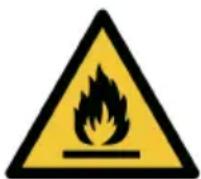
Warning: Risk of fire / flammable materials
Warning: When positioning the appliance, ensure the supply cord is not trapped or damaged.
Warning: Do not locate multiple portable socket-outlets or portable power supplies at the rear of the appliance.
Children aged from 3 to 8 years are allowed to load and unload refrigerating appliances. Opening the door for long periods can cause a significant increase of the temperature in the compartments of the appliance.
Clean regularly surfaces that can come in contact with food and accessible drainage systems. Clean water tanks if they have not been used for 48 h; flush the water system connected to a water supply if water has not been drawn for 5 days.
Store raw meat and fish in suitable containers in the refrigerator, so that it is not in contact with or drip onto other food.
Two-star frozen-food compartments are suitable for storing pre-frozen food, storing or making ice-cream and making ice cubes.
One-, two- and three-star compartments are not suitable for the freezing of fresh food. If the refrigerating appliance is left empty for long periods, switch o, defrost, clean, dry, and leave the door open to prevent mould developing within the appliance.
2. Cautions
Cautions: The power supply of this product must be uniform with the power supply mentioned on the nameplate, and the standard independent 3-hole socket shall be used (above 10A, and reliably grounded). One socket must not be shared by more than one appliance; otherwise, fire may be caused due to overheat.
Cautions: Never pull the power wire by hand. It is necessary to hold and unplug the power connector from the socket to disconnect the power supply. The power wire or connector must not be touched by the wet hand for fear of electric shock.
Cautions: The power wire must not be squeezed by the refrigerator or any heavy load, and the power wire shall not be bent extremely. The damage or peeling of power wire may result in fire or electric shock. If the power wire is broken or cut, please contact the after-sales service department immediately.
Cautions: No flammable or explosive matter or corrosive acid or alkaline matter is allowed in the refrigerator.
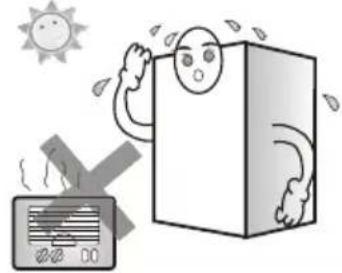
Cautions: The refrigerator must not be used in the rain or under the sunshine.
Cautions: It is forbidden to place the container with fluid on the refrigerator because the breakage or turnover of the container may a ect the electrical insulation of refrigerator and result in electric shock or fire.
Cautions: The refrigerator must not be disassembled or modified without permission. The repair of refrigerator must be performed by the specialist.
Cautions: In case of leakage of any flammable gas such as coal gas, it is necessary to close the leaking valve first and then open the window for ventilation, and forbidden to unplug the refrigerator connector immediately for fear of fire or explosion due to electric spark.
Cautions: Refrigerating appliances – in particular a refrigerator-freezer Type I – might not operate consistently (possibility of defrosting of contents or temperature becoming too warm in the frozen food compartment) when sited for an extended period of time below the cold end of the range of temperatures for which the refrigerating appliance is designed;
Cautions: The fact that eervescent drinks should not be stored in food freezer compartments or cabinets or in low-temperature compartments or cabinets, and that some products such as water ices should not be consumed too cold.
Cautions: The need to not exceed the storage time(s) recommended by the food manufacturers for any kind of food.
Cautions: The precautions necessary to prevent an undue rise in the temperature of the frozen food while defrosting the refrigerating appliance, such as wrapping the frozen food in several layers of newspaper.
Cautions: The fact that a rise in temperature of the frozen food during manual defrosting, maintenance or cleaning could shorten the storage life.
Cautions: The care required with regard to frozen food in storage in the event of an extended non-running of the refrigerating appliance (interruption of power supply or failure of the refrigerating system).
Cautions: The action to be taken when the refrigerating appliance is switched o and taken out of service temporarily or for an extended period (e.g. emptied, cleaned and dried, and the door(s) or lid(s) propped ajar).
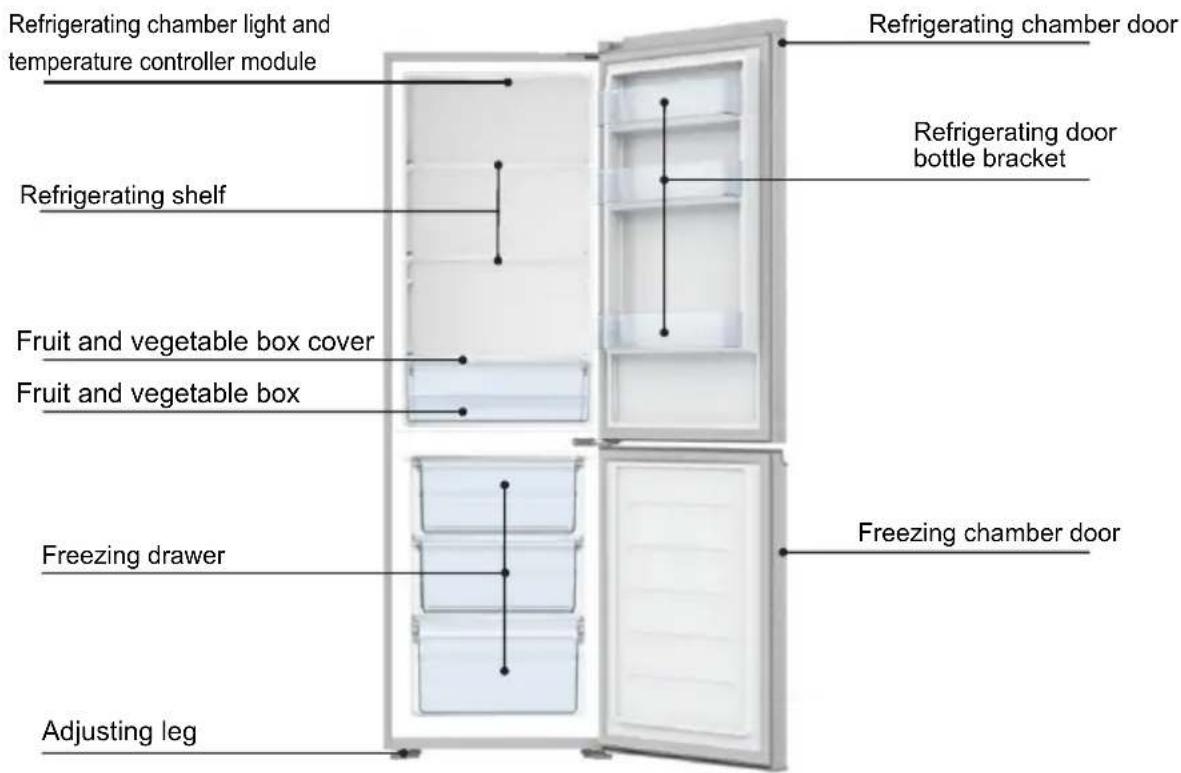
The product shown in figure just for reference
Features
--Environmental-friendly refrigerant, It applies materials without CFC, R600a environmental-friendly materials. 80% of the main materials can be recycled;
--Transparent drawers with novel appearances and their internal foods can be clear at a glance;
--The tempered glass refrigeration shelves are height adjustable, wear proof, heat-proof and practical;
--The concealed condenser applies flat back design. It has perfect and coordinated style which is simple, easy to clean and high utility rate of space;
--This product adopts the efficient mute compressor of international brand and special case foaming technology, and features low noise, low energy consumption, and is more suitable for family and commercial purposes.
Warm prompt:
If your product is improved product, it may not be totally same as that in the instructions. But it will not change the performance and method of application.
Please feel relieved about usage.
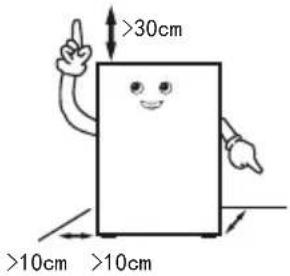
Certain space shall be left around the refrigerator, shown in the figure.
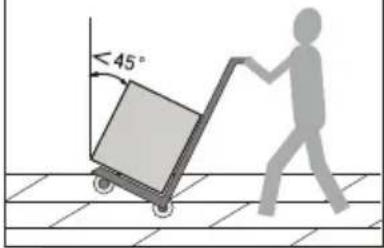
During handling, the door side of the refrigerator shall not contact with the handling tools
The refrigerator shall be placed in an environment which is dry, has good ventilation, far from direct sunshine and heat source.
natural_image
Illustration of a cardboard box with a surprised face and a warning sign, surrounded by sun and a monitor (no text or symbols)The refrigerator shall be placed on the flat and firm surface. If the ground is not flat, adjust the adjusting leg to keep it level.
natural_image
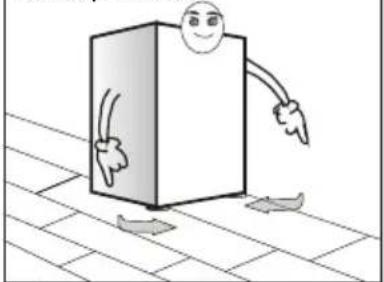
Cartoon illustration of a smiling rectangular box with arms and legs, standing on tiled floor with footprints (no text or symbols)Never place the refrigerator into a too cold environment that may get frozen.
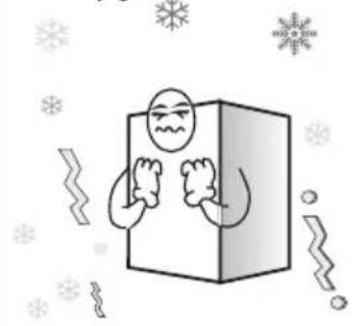
natural_image
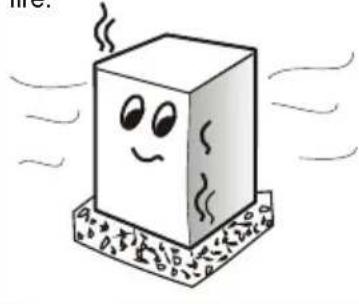
Cartoon illustration of a distressed character holding a box with snowflakes around (no text or symbols)Removing the foam base is beneficial for bottom heat dissipation and can avoid fire.
natural_image
Cartoon illustration of a smiling cube with steam rising, placed on a base with steam lines (no text or symbols)Warm prompt:
--When handling the refrigerator, at least two persons are required – one lifts the top of rear part, the other one handles the bottom (if one part is clamped, it is quite dangerous and may cause accident).
--When moving the refrigerator, the lower runner may damage and scratch the floor. If you need to move the refrigerator for a long distance, the internal accessories shall be fixed using adhesive tape. Otherwise, the accessories may get damaged due to crashing each other.
--Please place the refrigerator in the position with small vibration or little exposed to vibration. For users in the area where earthquake often occurs, please fix the refrigerator against the wall or pole. Otherwise, the falling of refrigerator will cause accident.
--Sufficient clearance shall be left around. If the clearance is too small or place goods on the top or close to the side, or paste on the sides, the heat dissipation of refrigerator will be a ected, and thus to cause unnecessary electric energy waste as well as burn out of the wall and other goods; the contact between the back and wall will cause vibration and noise;
--Adjust the front part and adjusting leg of the refrigerator to level it. Unlevel of the refrigerator will cause vibration and noise.
Preparations prior to use
- Remove all packing assemblies such as case fixing tape etc., especially the foam base.
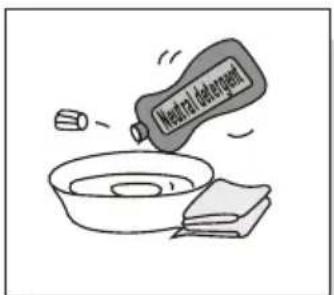
- Use warm wet cloth to clean both interior and exterior of the refrigerator, (neutral detergent can be added in warm water).
- After leveling and cleaning the refrigerator, stand it for about 2 hours before plugging the power plug for powering on, and cool the refrigerator for 2 to 3 hours before storing foods.
EN
Operation keys
Temperature regulation
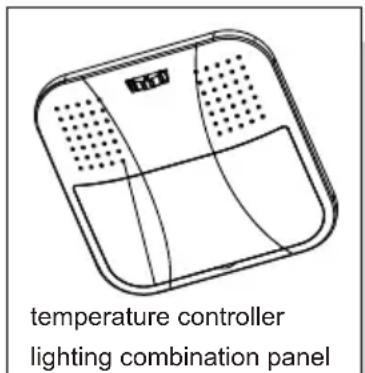
--The temperature inside the refrigerator is controlled by the temperature controller mounted in the refrigerating chamber, which is provided with 8 gears (0, 1, 2,.....7). Temperature controller lighting combination panel-- The temperature inside the refrigerator decreases gradually when the temperature control knob is turned from 0→7; conversely, the temperature increases gradually;
--The use may set the temperature control knob at different gears on the basis of refrigerator service environment and specific situations of stored foods;
--The temperature inside the refrigerator will vary as the temperature control knob is placed at different gears, and meanwhile the power consumption will show some differences;
--Upon overall consideration of preservation e ect and power consumption, the recommended regulated values are as follows:
2\~4 gears in summer, 4 gear in spring and autumn and 4\~6 gears in winter.
Operation keys
EN
Foods storage
Refrigerating chamber (2°C\~8°C)
--The refrigerating chamber is mainly used for storing short-term foods, like milk, eggs and bottled drink.
--Vegetables, melons and fruits shall be put into the fruit and vegetable box to prevent water loss.
--The cooked foods shall be put into the refrigerator after packaging with the preservative bags, to prevent the back from frosting and the power from increasing.
Freezing chamber (-22°C\~-15°C)
--The freezing chamber is used for the foods to be stored for long-term.
--Fish and meat to be frozen shall be cut into small pieces, packaged with preservative bags separately and then put into the frozen drawer.
--The glass container or the sealed container filled with liquid shall not be stored in the freezing chamber, to prevent the risk of burst due to freezing.
--The fresh foods shall not be stored together with the frozen foods.
Defrost
Defrost the refrigerating chamber
If thicker layer of frost is detected at the back of the refrigerating chamber and the refrigeration e ect is a ected, defrost the refrigerating chamber first. At defrosting, switch the temperature control knob to gear "0" and switch the knob to original state after the frost is gone.
Defrost the freezing chamber
If thicker layer of frost is detected on the evaporator of the freezing chamber, it is necessary to defrost. Pull out the plug and power o the refrigerator, take out the drawer in the freezing chamber and keep the refrigerator door under open state. After the frost is melting automatically, wipe o the water on the evaporator, the door gall and in the drawer with clean dry cloth, and then put the drawer back into the freezing chamber.
Note:
- Don't frost with metal tools, to avoid damaging the refrigerator.
- Don't frost the refrigerator with electric heater.
Ice-making (If the appliance has it)
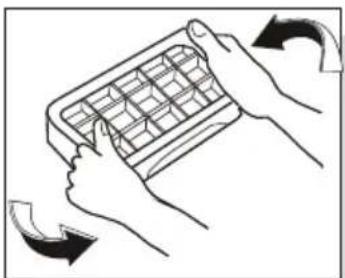
Fill the ice-making box with 4/5 water and put the box into the freezing chamber. After the water in the box turns into ice, twist the box slightly to separate the ice from the box. However, don't bend the box. When separating the ice, wrap the box with dry box to avoid finger frostbite.
natural_image
Illustration of hands holding a grid-based object with directional arrows indicating rotation (no text or symbols)Self-induction temperature regulation
When the ambient temperature is lower than 10^ C, the product will enable the electric heating compensation function automatically. Please feel free to use this product.
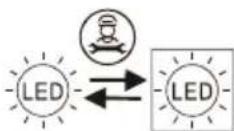
Replaceable (LED only) light source by a professional
Operation keys
Disassembly and assembly method of accessory
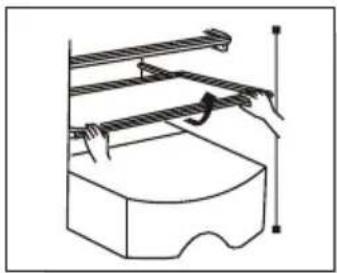
--Glass shelf in the refrigerating chamber: the height of the shelf is adjustable, which facilitates the storage of articles with different volumes. Pull the shelf outwardly and upwardly in a slight way to take out.
--Fruit and vegetable box: for storing vegetables and fruits. It can be taken out by pulling outwardly.
--Drawer in the freezing chamber: storing foods to be preserved for long-term, such as meat and fish. It can be taken out by pulling outwardly and lifting upwardly.
Kindly tips: It is recommended to put into the large piece of meat after being cut into small pieces, to avoid difficult cutting after being frozen. The quick-freezing foods shall be distributed uniformly and stored together after being frozen.
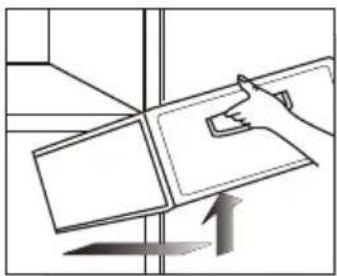
--Bottle pedestal at the refrigerating door: storing eggs, various bottled drinks and other sundries. It can be taken out by being lifted up slightly.
Note: Don't pull out the bottle pedestal at the refrigerating door forcibly during disassembly, to avoid damaging the refrigerator.
natural_image
Technical line drawing of a mechanical assembly with no visible text or symbolsTake out by pulling upwardly and outwardly in a slight way
natural_image
Diagram showing a hand pressing down on a panel with an upward arrow, no text or symbols presentTake out by pulling outwardly and upwardly in a slight way
Care and maintenance
It is suggested to maintain the refrigerator once per month;
--Unplug the power plug to prevent from electric shock;
--Use wet cloth or neutral detergent (cleanser essence) to wipe o the oil contamination and other dirt. Then completely wipe o the detergent.
--Do not use alkaline detergent, soap powder, gasoline and alcohol, talcum powder etc.; otherwise the coats or plastics may be damaged;
--Regularly clean the refrigerator body and clear the ground dusts to keep the refrigerator clean.
Inspections after maintenance:
- Whether there are damages to the power line and plug; 2.
Whether there are dusts on the power plug; 3. Whether there is abnormal heat on the plug; 4. Whether the socket is loose; 5.
Whether the plug is totally inserted.
Note:
If the power line and plug is damaged and there exist dusts, electric shock or fire may occur;
After unplugging the plug, 5 minutes must pass before re-plugging it;
Do not put your hands under the refrigerator to avoid getting hurt.
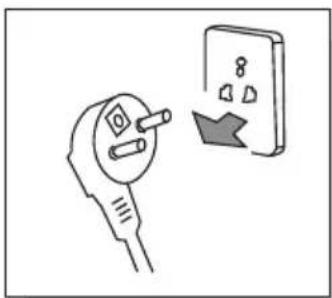
natural_image
Line drawing of an electric plug connected to a wall socket with a switch (no text or symbols)Unplug the refrigerator plug before cleaning
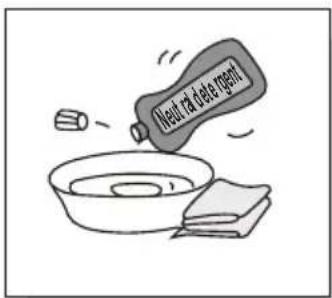
Please use neutral detergent
Failure analysis
EN
The following items shall be inspected before occurring failures which require maintenance:
Failures: Refrigerator does not work, The refrigeration e ect is poor
Causes:1. Check the connection of power supply. 2. Check whether the refrigerator is exposed to direct sunlight or whether there is heat source nearby. 3. Check whether there is heat dissipation space around refrigerator.
Remedies:1. Connect the power supply. 2. Move the refrigerator to a place without direct sunlight and heat source. 3. Leave sufficient space between refrigerator and wall.
Failures: Foods in refrigerating chamber are frozen
Causes:1. Check whether the setting temperature is too low. 2. Check whether foods with too much water are too close to the rear wall.
Remedies:1. Adequately increase the temperature. 2. Move the foods with too much water to the door side of glass shelf
Failures: There is abnormal sound in refrigerator
Causes:1. Check whether the bottom of refrigerator is stable. 2. Check whether the refrigerator is too close to the wall. 3. Check whether the refrigerator touches other objects.
Remedies:1. Adjust the bottom adjusting leg to stabilize the refrigerator. 2. Leave sufficient space around refrigerator. 3. Remove the obstacles.
Failures: There is abnormal odor in refrigerator
Causes:1. Check whether the foods are sealed for storage. 2. Check whether the refrigerator is clean. 3. Check whether the foods are stored for too long time.
Remedies:1. Sealed foods for storage. 2. Regularly clean the refrigerator. 3. Do not store foods for too long time.
Non-failures
Phenomenon: Fever or hot on two sides and spacing part surface between refrigerating chamber and freezing chamber.
Cause: Refrigerator pipes (condenser, anti-fog pipes) are on two sides and front part of refrigerator for heat dissipation and to prevent from condensation.
Phenomenon: The door is too tight and not easy to open
Cause: Reopening of the door immediately after closing it is hard because hot air enters the refrigerator and contracts to produce pressure difference. It is easy to open the door after a while.
Phenomenon: There is water ripple in refrigerator
Cause: When starting or stopping the compressor, the refrigerant will make such sound; Water produced after defrosting will also make such sound.
Phenomenon: There is "Click" sound or tick sound in refrigerator
Cause: Shrinkage and swelling of case will make such sound; When the case is cold or the door is opened, this sound will occur; Phenomenon: There is hum sound in refrigerator
Cause: Running of compressor will make such sound (if the refrigerator is not leveled, this sound will be louder)
Phenomenon: There is condensation or frosting freezing chamber door surface or food surface
Cause: Temperature or humidity around the refrigerator is high; The door is opened for too long time; The foods with too much water are not sealed or tightly wrapped
Phenomenon: There is condensation on the built-in light surface
Cause: Light will produce heat after being lit, and the door is opened for too long time. So there is temperature difference, and thus the light case will have condensation.
Phenomenon: There is condensation and water mist on body
Cause: Humidity around refrigerator is high, and the moisture in the air will gather in the case to form condensation
Technical parameter
EN
| Model | RF260BSEO | |||||
| Climate type | SN/N/ST | |||||
| Electric shock resistance | I | |||||
| Star sign | ||||||
| Total storage volume | 260L | |||||
| Storage volume of freezer | 73L | |||||
| Power type | 220-240V~/50Hz | |||||
| Rated current | 0.6A | |||||
| Power consumption | 213kWh/a | |||||
| Lamp power | 1W | |||||
| Weight | 50kg | |||||
| Dimension | 545x545x1823mm | |||||
| Refrigerant and charge amount | R600a,43g | |||||
| Level of noise | 40dB (A) | |||||
| Freezing Capacity | 3.3kg/24h |
Packing list
| Annex\Model | RF260BSE0 | ||||||
| Refrigerating shelf | 2 | ||||||
| Fruit and vegetable box cover | 1 | ||||||
| Fruit and vegetable box | 1 | ||||||
| ice-making box | 1 | ||||||
| Egg box | 1 | ||||||
| Refrigerating door bottle bracket | 3 | ||||||
| Freezing drawer | 3 | ||||||
| Operating instruction | 1 |
natural_image
Illustration of a distressed box with steam rising, accompanied by a sun and a digital display (no text or symbols)natural_image
Cartoon illustration of a smiling rectangular box with arms and legs, standing on tiled floor with arrows indicating movement (no text or symbols)natural_image
Cartoon illustration of a person with a frowning expression inside a box surrounded by snowflakes (no text or symbols)natural_image
Cartoon illustration of a smiling cube with steam rising from its base (no text or symbols)Conseils :
natural_image
Illustration of hands holding a grid-based object with directional arrows indicating rotation (no text or symbols)Autorégulation de la temperature
natural_image
Technical line drawing of a mechanical assembly with no visible text or symbolsnatural_image
Diagram showing a hand pressing down on a panel with an upward arrow, no text or symbols presentnatural_image
Line drawing of an electric plug connected to a wall socket with a switch (no text or symbols)natural_image
Illustration of a cartoon character standing beside a cardboard box with steam rising, under a sunny sky (no text or symbols)natural_image
Cartoon illustration of a smiling rectangular character standing on tiled floor with arrows indicating direction (no text or symbols)natural_image
Cartoon illustration of a person with surprised expression inside a box surrounded by snowflakes (no text or symbols)natural_image
Cartoon illustration of a smiling cube on a base with steam lines, no text or symbols presentHinweis:
natural_image
Illustration of hands holding a grid-based object with directional arrows indicating rotation (no text or symbols)natural_image
Technical line drawing of a mechanical assembly with no visible text or symbolsnatural_image
Diagram showing a hand pressing down on a panel with an upward arrow, no text or symbols presentnatural_image
Line drawing of an electric plug connected to a wall socket with a switch (no text or symbols)natural_image
Illustration of a person drying in a box under sunny weather, with a monitor and crossed-out device nearby (no text or symbols)natural_image
Cartoon illustration of a smiling rectangular box with arms and legs, standing on tiled floor with arrows indicating direction (no text or symbols)natural_image
Cartoon illustration of a character holding a box with snowflakes around (no text or symbols)natural_image
Cartoon illustration of a smiling cube with steam rising, placed on a base with steam lines (no text or symbols)Consejos:
natural_image
Illustration of hands holding a grid-based object with directional arrows indicating rotation (no text or symbols)natural_image
Pure technical line drawing of a mechanical assembly without any text, numbers, or symbolsnatural_image
Diagram showing a hand pressing down on a panel with an upward arrow, no text or symbols presentnatural_image
Line drawing of an electrical outlet with a plug and switch, showing a wall-mounted socket (no text or symbols)Use un detergente neutro
natural_image
Illustration of a cartoon box with a surprised face and a warning sign, no text or symbols present.natural_image
Cartoon illustration of a smiling rectangular box with arms and legs, standing on tiled floor with arrows indicating motion (no text or symbols)natural_image
Cartoon illustration of a character with a frowning expression inside a box, surrounded by snowflakes and decorative elements (no text or symbols)natural_image
Cartoon illustration of a smiling cube with steam rising from its base (no text or symbols)Notas:
natural_image
Illustration of hands holding a grid-based object with directional arrows indicating rotation (no text or symbols)natural_image
Technical line drawing of a mechanical assembly with no visible text or symbolsnatural_image
Diagram showing a hand pressing down on a panel with an upward arrow, no text or symbols presentnatural_image
Illustration of a plug and a wall socket with a switch, showing an electrical switch (no text or symbols)Desconecte o plugue da tomada antes de limpar a geladeira