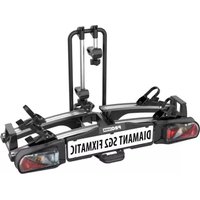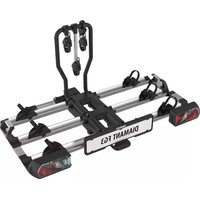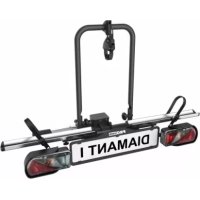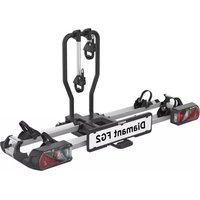
Diamant FG2 - Bike rack Pro-User - Free user manual and instructions
Find the device manual for free Diamant FG2 Pro-User in PDF.


| Product type | Bike rack for trailer hitch |
| Brand | Pro-User |
| Model | Diamant FG2 |
| Number of bikes | 2 |
| Material | Steel and aluminum |
| Weight (empty) | 17 kg |
| Maximum load | 60 kg |
| Max. bike wheelbase | 140 cm |
| Max. tire width | 8 cm |
| Distance between rails | 23 cm |
| Tow ball diameter | 50 mm (class A-50) |
| Required hitch material | Steel St52 or gray cast iron GG52 |
| Minimum D value | > 7.6 kN |
| Electrical supply | 7- or 13-pin socket (Jaeger) |
| Main functions | Tilting for trunk access, integrated license plate holder |
| Maintenance | Clean with warm water and soft cloth, no solvents |
| Storage | Dry, protected place if not used for extended periods |
| Spare parts | Available via after-sales service (references in manual) |
| Repairability | Replacement of worn parts by a professional possible |
| Warranty | Not specified in manual (contact manufacturer) |
| Optional accessories | Bike extension adapter (item 91749) for +1 bike |
Frequently Asked Questions - Diamant FG2 Pro-User
User questions about Diamant FG2 Pro-User
0 question about this device. Answer the ones you know or ask your own.
Ask a new question about this device
Download the instructions for your Bike rack in PDF format for free! Find your manual Diamant FG2 - Pro-User and take your electronic device back in hand. On this page are published all the documents necessary for the use of your device. Diamant FG2 by Pro-User.
USER MANUAL Diamant FG2 Pro-User
UK: Assembly instruction and safety regulations – page 45
natural_image
Technical line drawing of a mechanical device labeled FG2, showing internal components and mounting brackets (no readable text beyond label)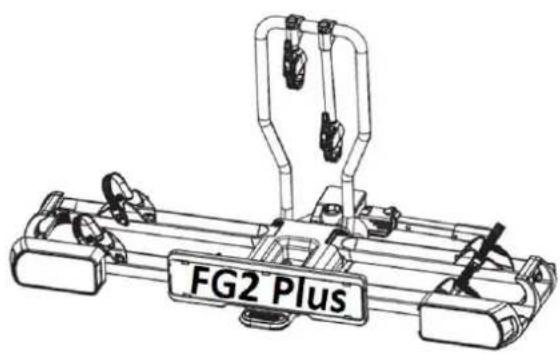
natural_image
Technical line drawing of a mechanical assembly labeled 'FG2 Plus' (no other text or symbols)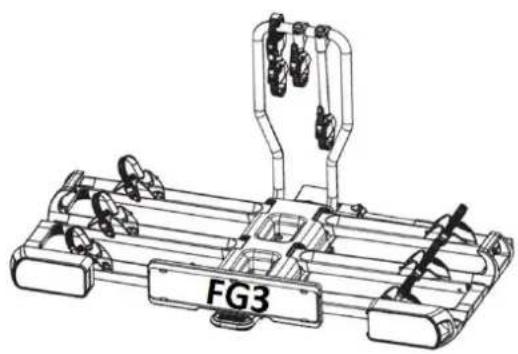
natural_image
Technical line drawing of a mechanical assembly with no visible text or symbols
text_image
PRO BIKE CARRIERS® USERINHOUD
Voorwoord 4
service@tradekar.com
VEILIGHEIDSVOORSCHRIFTEN - TOELICHTING OP DE CATEGORIEËN
text_image
Technical diagram of a device with labeled parts including lock, cable, and motor componentsA = fietsendrager
B = 2 sleutels
natural_image
Diagram of a vehicle's side panel with a curved arrow indicating rotation (no text or symbols)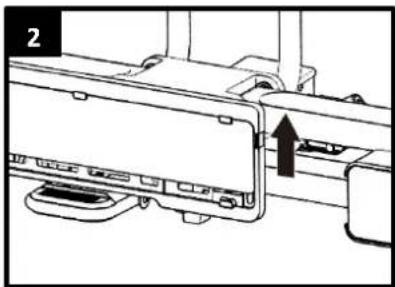
natural_image
Diagram of a mechanical assembly with a bracket and mounting base, showing a directional arrow (no text or symbols present)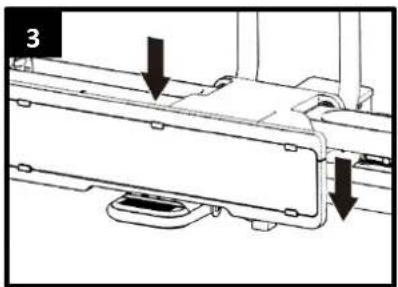
natural_image
Mechanical assembly diagram showing a bracket with two downward arrows indicating motion or force (no text or symbols present)MONTAGE VAN DE FRAMEHOUDERS OP DE FIETSENDRAGER
text_image
Technical diagram illustrating a mechanical device operation with six numbered steps for tool manipulation or assembly.MONTAGE VAN DE FIETSENDRAGER OP DE TREKHAAK
natural_image
Line drawing of a hand holding a tool near a diagonal line (no text or symbols)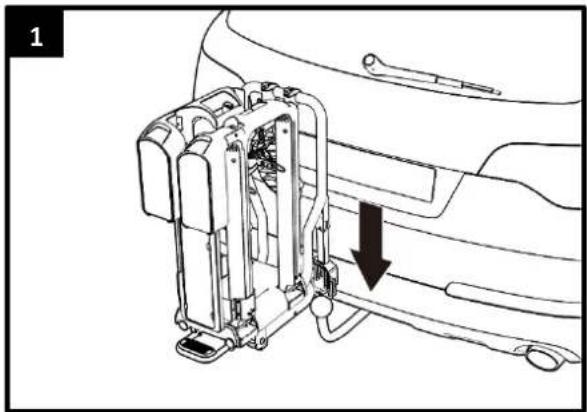
natural_image
Technical line drawing of a car interior showing a mechanical assembly with a downward arrow indicating motion (no text or symbols present)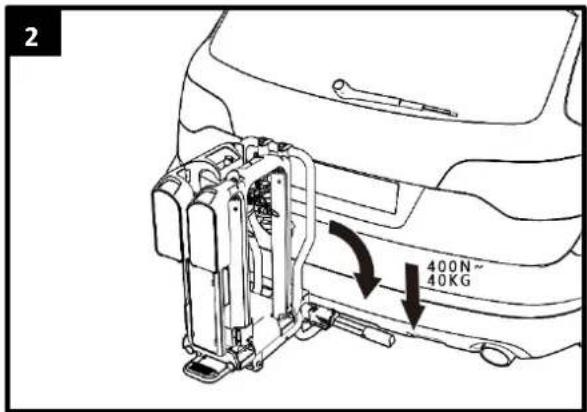
text_image
2 400N~ 40KG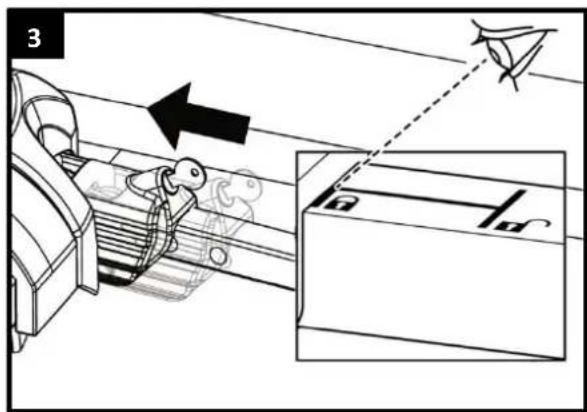
text_image
3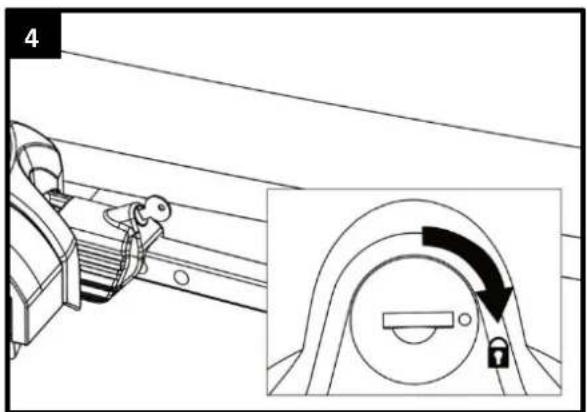
text_image
4
WAARSCHUWING!
natural_image
Diagram of a vehicle's internal components with directional arrows indicating movement (no text or symbols)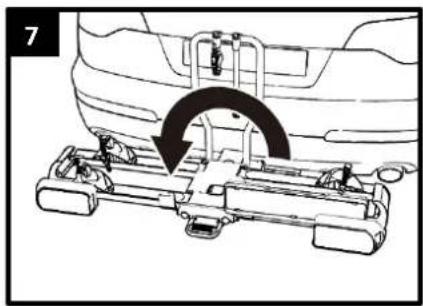
natural_image
Mechanical assembly diagram showing a car body with a rotating component and adjustment mechanism (no text or symbols)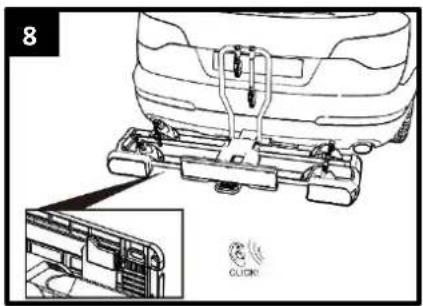
text_image
8 CLUTCHI
WAARSCHUWING!
natural_image
Diagram of a bicycle with no visible text or symbols, featuring a seat and bicycle body (no readable labels or text)
ADVIES
natural_image
Technical line drawing of a mechanical assembly with pipes and clamps (no text or symbols)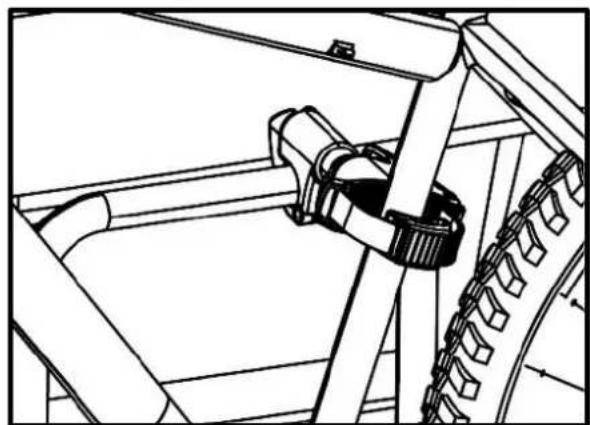
natural_image
Technical line drawing of a mechanical assembly with no visible text or symbols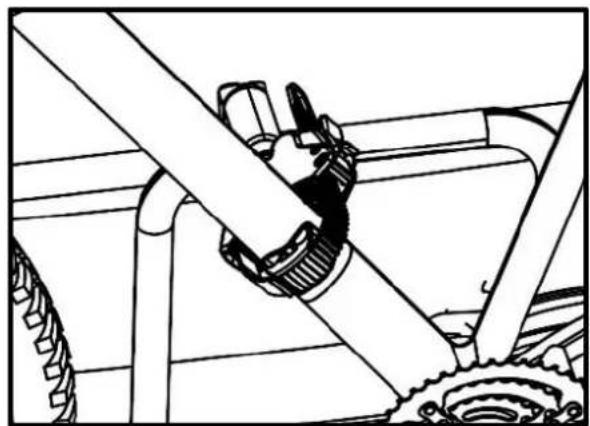
natural_image
Mechanical assembly diagram showing gear and shaft components (no text or labels)
natural_image
Technical illustration of a bicycle stationary system with three zoomed-in views showing mechanical components (no text or symbols)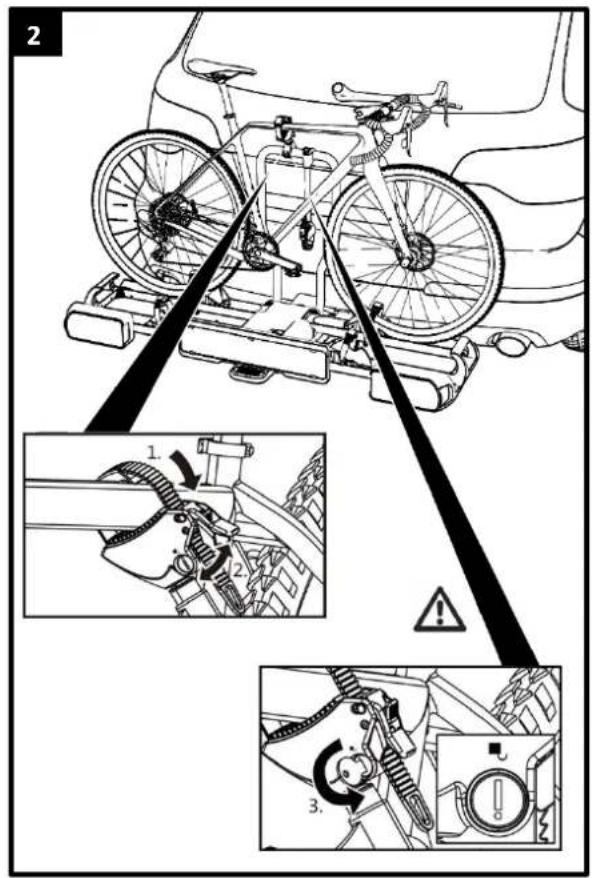
text_image
2 1 2 3.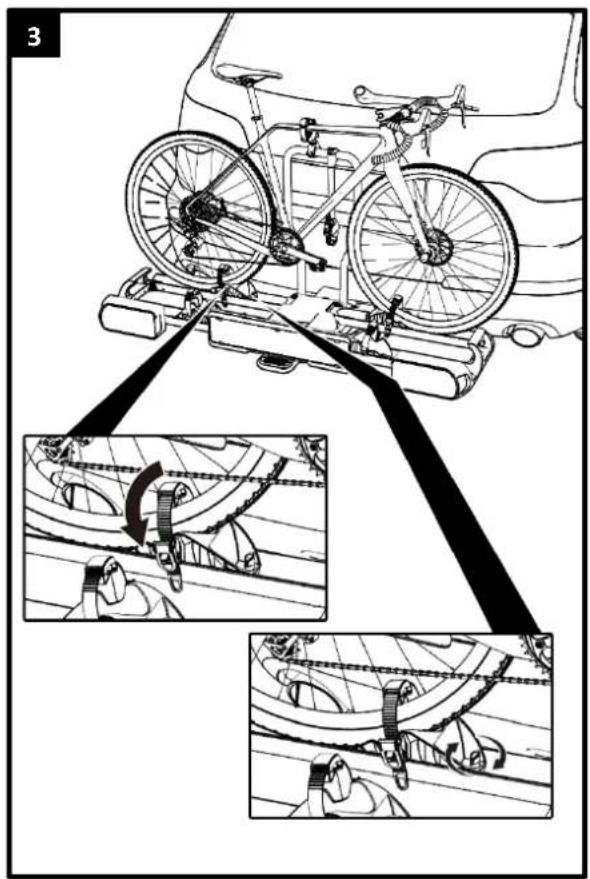
text_image
3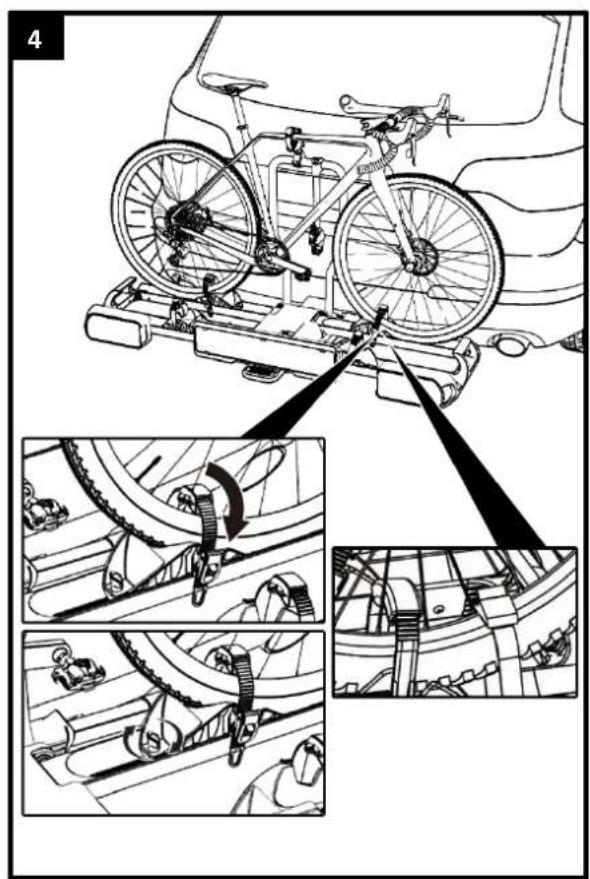
natural_image
Technical illustration of a bicycle undercarriage with mechanical components and close-ups of the wheel assembly (no text or symbols)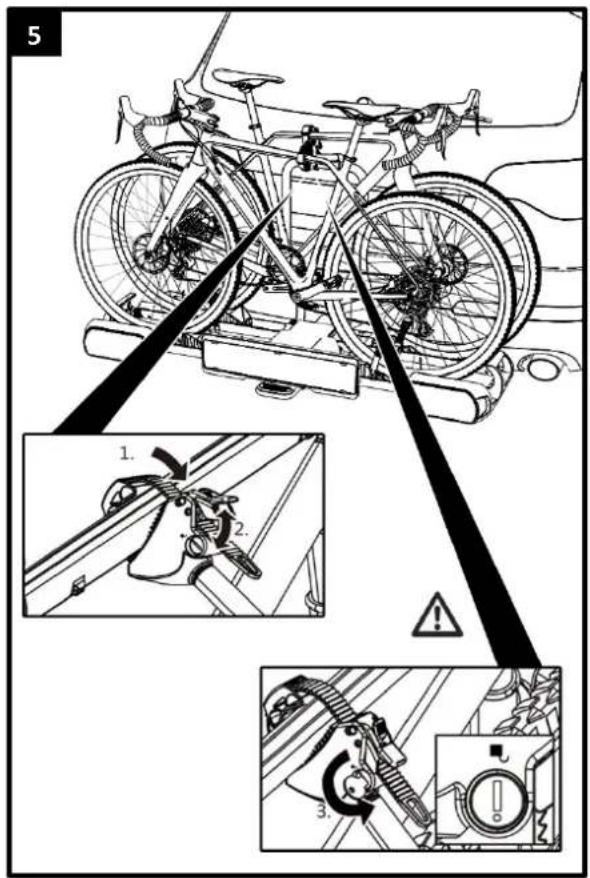
text_image
5 1. 2. 3.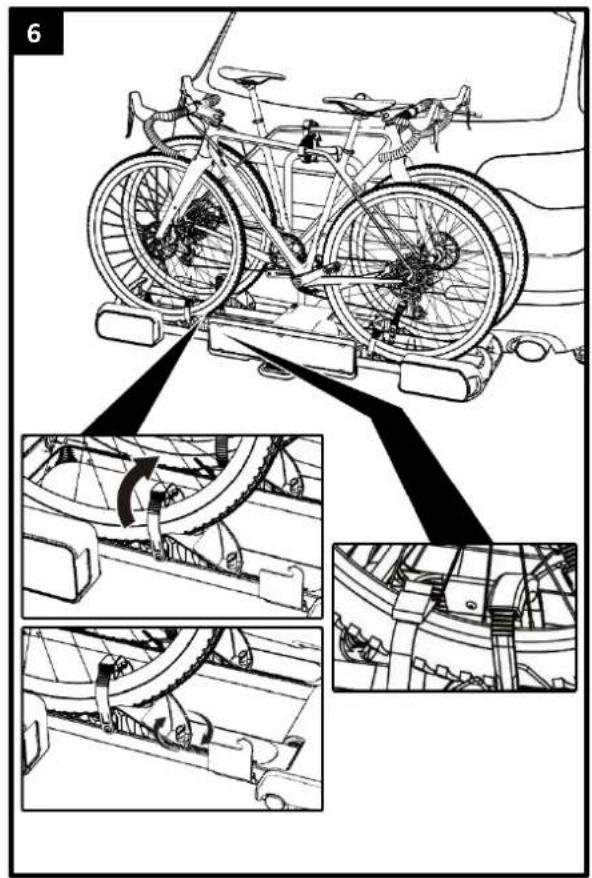
natural_image
Technical line drawing of a bicycle under load, showing front wheel assembly and three close-up insets (no text or symbols)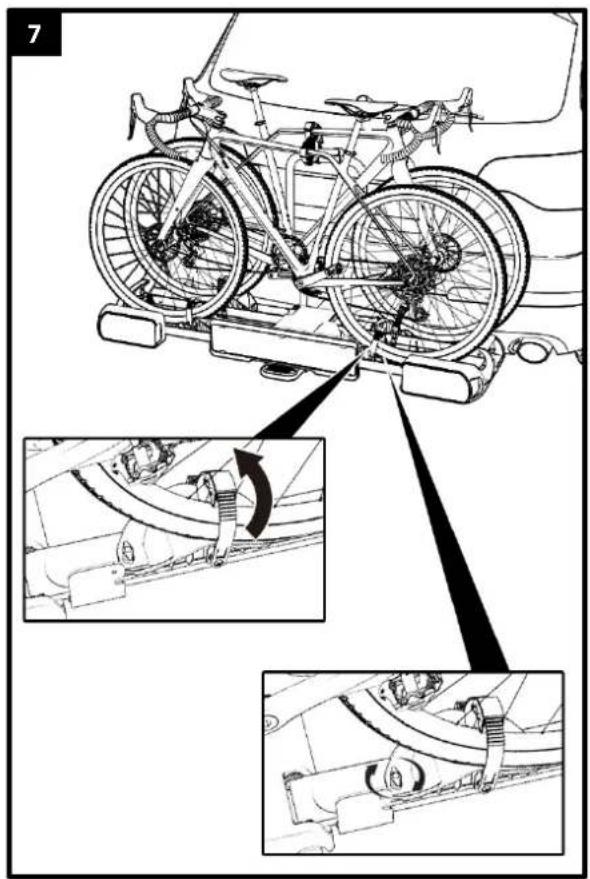
text_image
7
WAARSCHUWING!
natural_image
Line drawing of a bicycle frame assembly with an inset showing the wheel assembly (no text or symbols)natural_image
Line drawing of a car with a mounted bicycle frame and suspension bridge (no text or symbols)
VOORZICHTIG!
text_image
Diagram showing bicycle wheel assembly with labeled components and a hand interacting with the wheel, highlighting a key mechanism.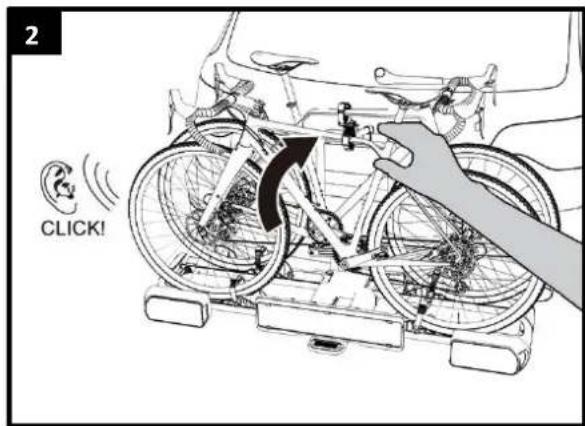
text_image
2 CLICK!
VOORZICHTIG!
natural_image
Technical diagram of a vehicle rearview assembly with mechanical components and a close-up inset showing internal structure (no text or symbols)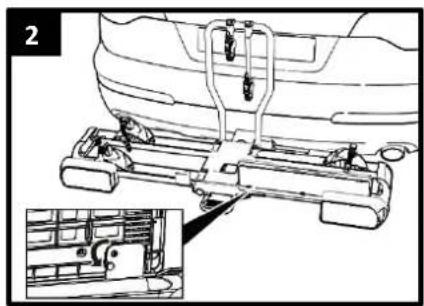
natural_image
Technical line drawing of a car front-mounted vehicle chassis with mounting bracket (no text or symbols)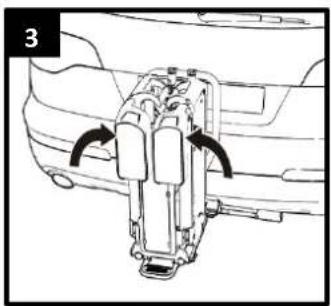
natural_image
Diagram of a vehicle interior showing a car trunk and dashboard with directional arrows indicating movement (no text or symbols)natural_image
Illustration of a hand placing a component into a multi-layered battery pack (no text or symbols visible)REINIGING EN ONDERHOUD
text_image
Technical diagram showing mechanical assembly with numbered components and a magnified inset view of a component detail.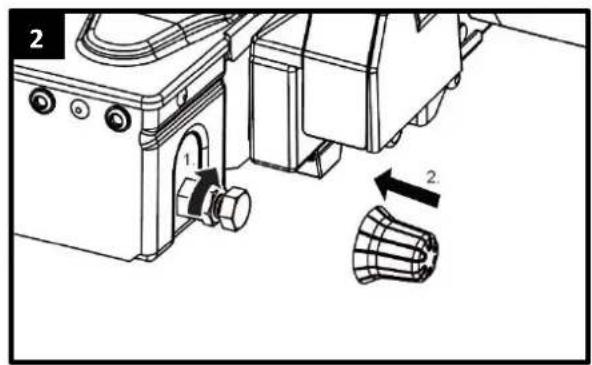
natural_image
Technical line drawing of a mechanical assembly with labeled parts (no text or symbols present)7/13 POLIGE STEKKER
text_image
Exploded view diagram of a mechanical device with numbered parts for identificationONDERDELENLIJST
service@tradekar.com
text_image
Technical diagram of a portable device with labeled parts including buttons, straps, and a display panelA = Fahrradträger
B = 2 Schlüssel
E = Rahmenhalter lang
natural_image
Diagram of a mechanical component with a curved arrow indicating rotation (no text or symbols)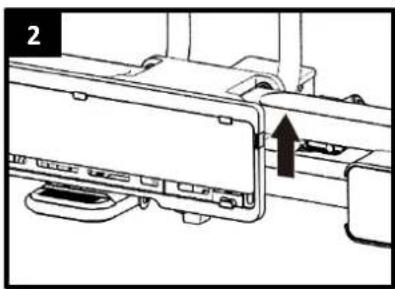
natural_image
Diagram of a mechanical device with a bracket and mounting base, showing a directional arrow (no text or symbols present)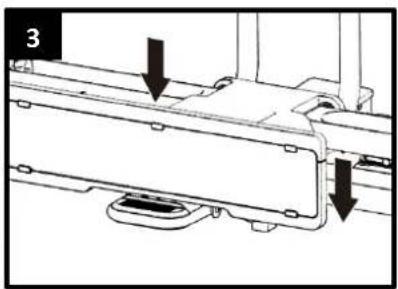
natural_image
Technical diagram of a mechanical assembly with two arrows indicating direction (no text or symbols present)MONTAGE DER RAHMENHALTER AM FAHRRADTRÄGER
text_image
Technical diagram illustrating the step-by-step installation of a mechanical device with labeled parts and directional arrows.natural_image
Line drawing of a hand gripping a piece of wood or metal (no text or symbols)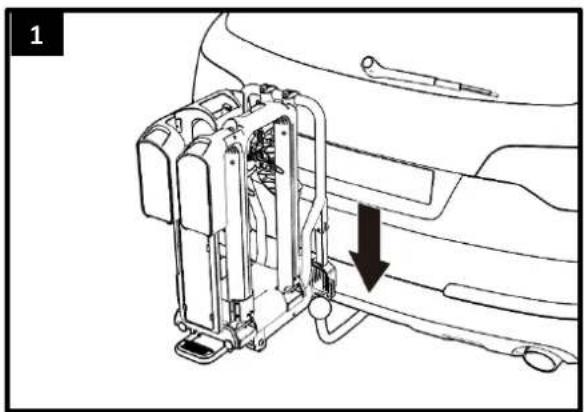
natural_image
Technical line drawing of a car interior showing internal compartments and a directional arrow (no text or symbols)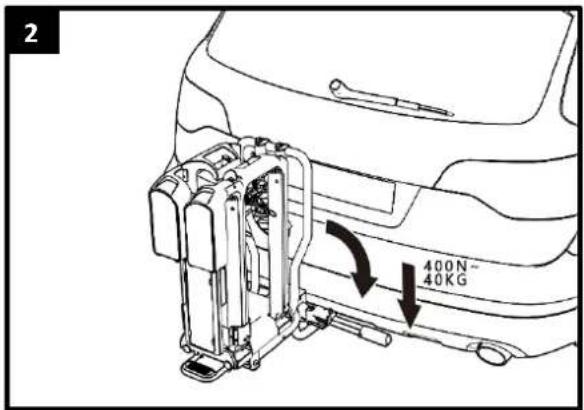
text_image
2 400N- 40KG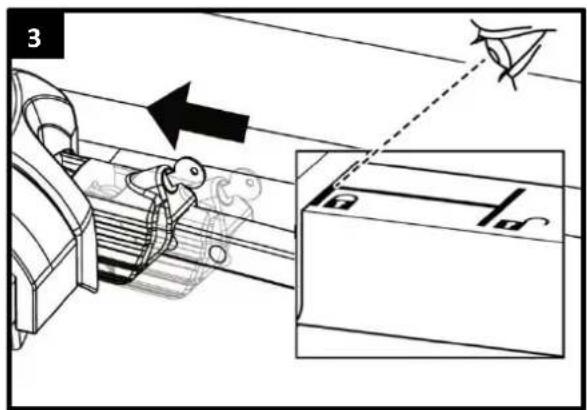
text_image
3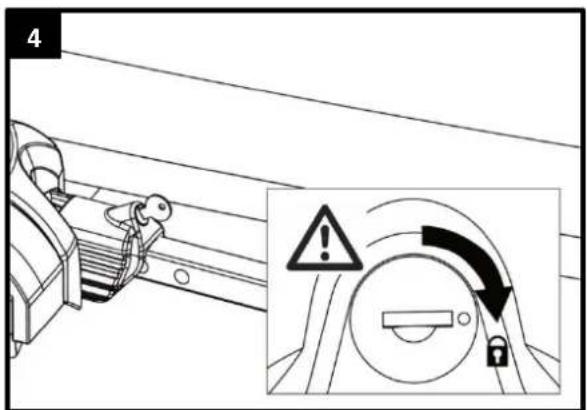
text_image
4
WARNUNG!
natural_image
Diagram of a vehicle's internal components with directional arrows indicating movement (no text or symbols)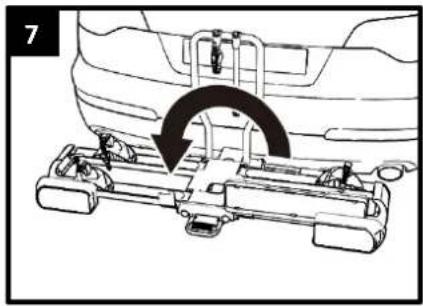
natural_image
Mechanical assembly diagram showing a vehicle's mounting bracket with a circular arrow indicating rotation (no text or symbols present)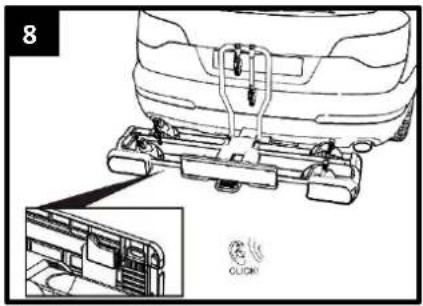
natural_image
Technical line drawing of a vehicle chassis with mounting bracket and side panel view (no text or symbols)
WARNUNG!
natural_image
Silhouette of a bicycle with red circular markings on the front wheel (no text or symbols)
HINWEIS
natural_image
Technical line drawing of a mechanical assembly with pipes and clamps (no text or symbols)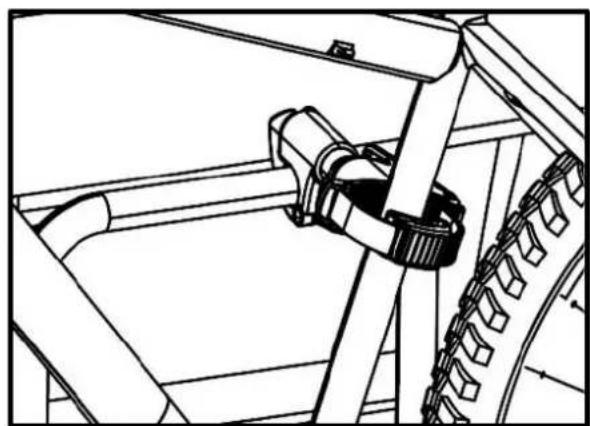
natural_image
Technical line drawing of a mechanical assembly with no visible text or symbols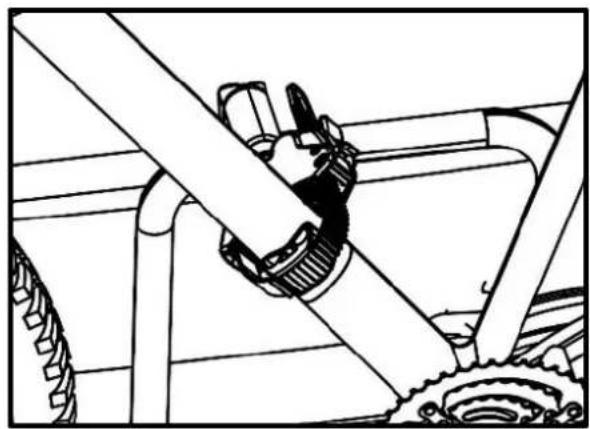
natural_image
Mechanical assembly diagram showing a gear and shaft mechanism (no text or symbols)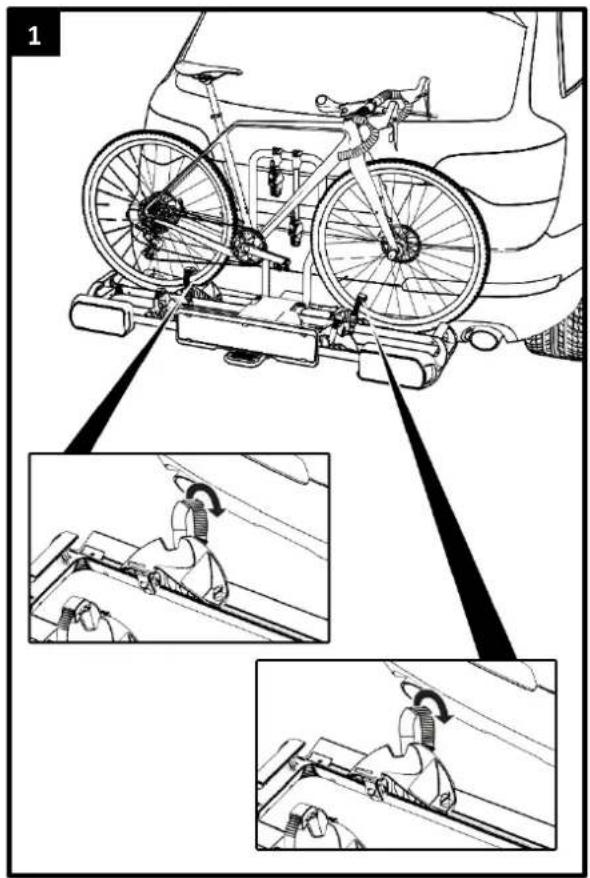
natural_image
Technical illustration of a bicycle stationary system with three zoomed-in views showing mechanical components (no text or symbols)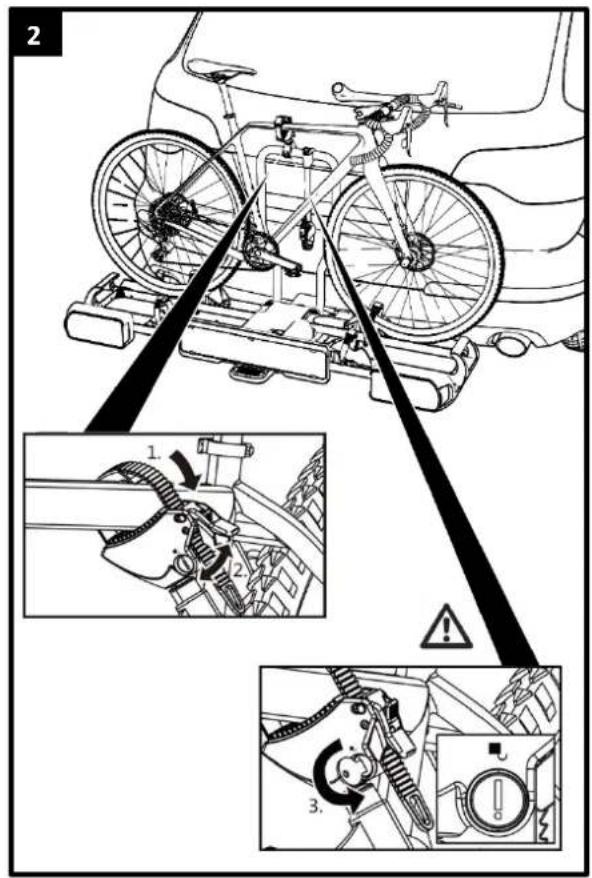
text_image
Technical diagram illustrating bicycle wheel assembly and mechanical control, with labeled parts and warning indicators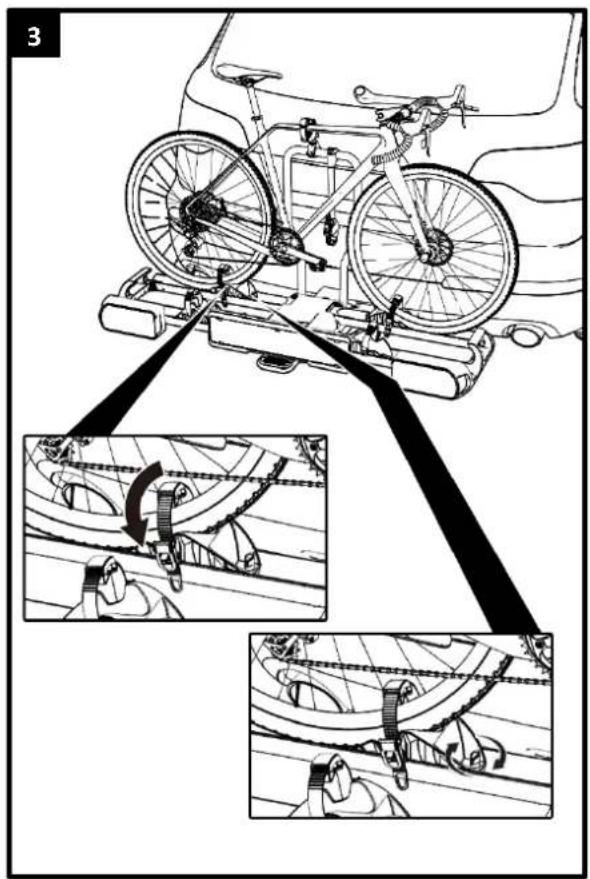
text_image
3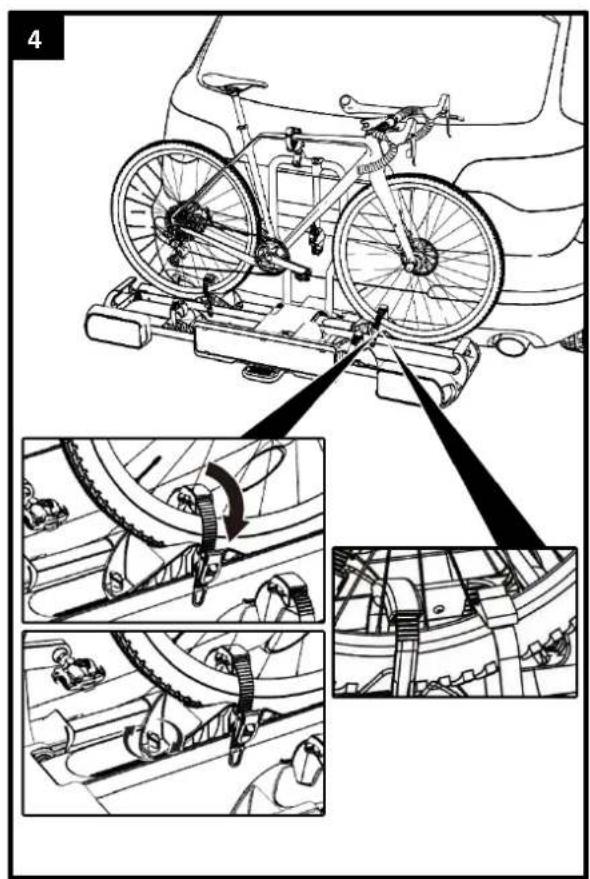
natural_image
Technical illustration of a bicycle lifters assembly with close-up insets showing mechanical components (no text or symbols)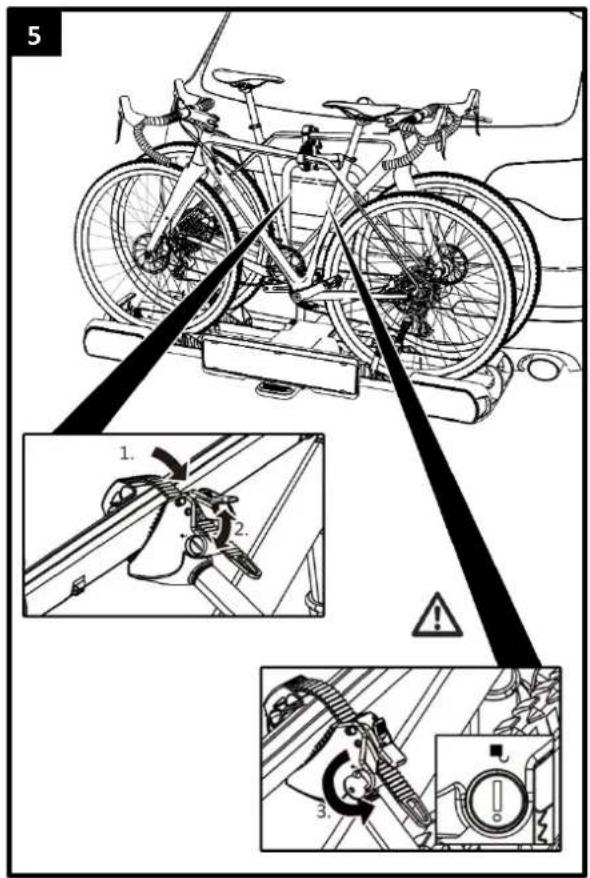
text_image
5 1. 2. 3.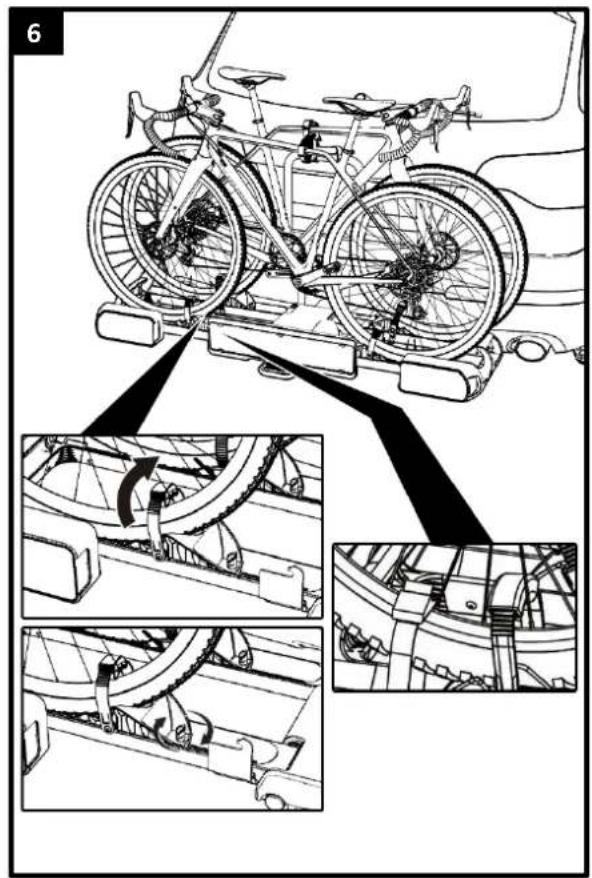
natural_image
Technical line drawing of a bicycle under load, showing front wheel assembly and three close-up insets (no text or symbols)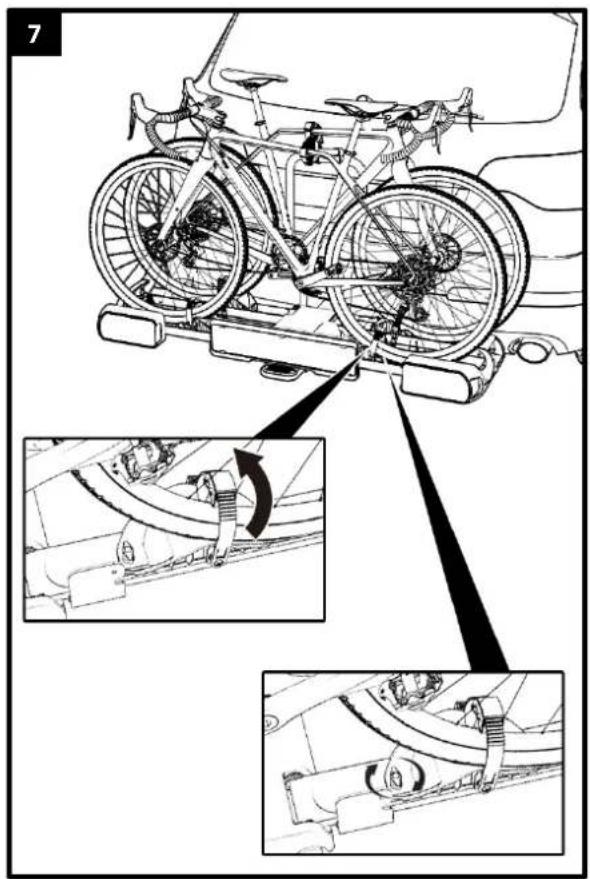
text_image
7
WARNUNG!
natural_image
Technical line drawing of a bicycle frame assembly with an inset showing the wheel assembly (no text or symbols)
WARNUNG!
natural_image
Line drawing of a car with a mounted bicycle assembly (no text or symbols)
VORSICHT!
natural_image
Diagram showing bicycle wheel assembly with hand and foot, no text or symbols present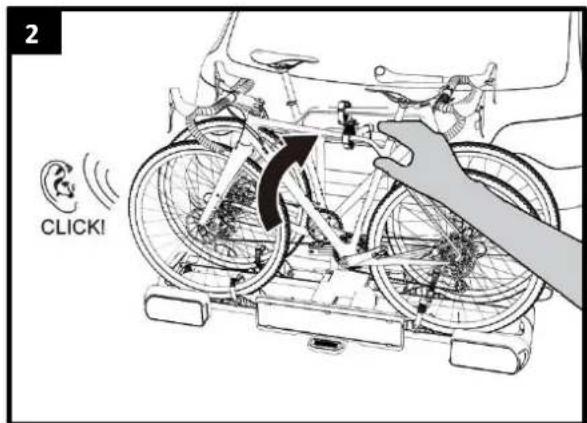
text_image
2 CLICK!
VORSICHT!
natural_image
Technical diagram of a vehicle chassis with attached mechanical components and a close-up inset showing internal structure (no text or symbols)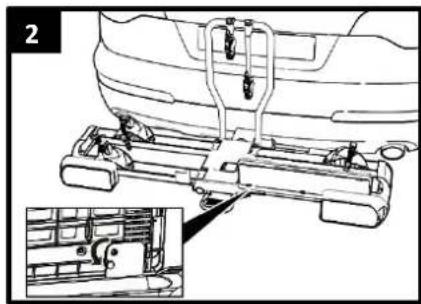
natural_image
Technical line drawing of a vehicle chassis with attached mechanical components, showing assembly and mounting detail (no text or symbols)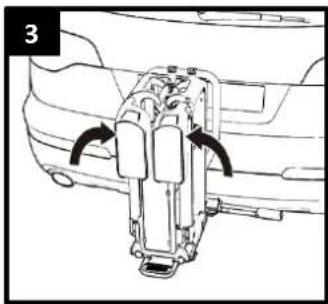
natural_image
Diagram of a car interior showing a vehicle's rearview structure with directional arrows indicating movement (no text or symbols present)natural_image
Illustration of a hand gripping multiple cylindrical objects (no text or symbols visible)text_image
Exploded view diagram of a mechanical device with numbered parts for identificationSTÜCKLISTE
Obligations regarding these fitting instructions 46
Proper use 46
Safety instructions – Explanation of the categories 47
Scope of delivery 48
Technical data 48
Coupling requirements 49
Safety instructions 50
Fitting the registration plate to the carrier 52
Fitting the frame holders to the carrier 52
Fitting the bike carrier to the trailer coupling 53
Mounting bicycles 56
Tilting the bike carrier, access to the luggage space 59
Dismantling the bike carrier 61
Cleaning and maintenance 61
Disposal 62
Adjustment of the quick connector 62
7/13 Plug assignment 63
Spare parts overview (Exploded drawing) 64
Spare parts overview (Table) 65
FOREWORD
The Pro-User Diamant FG Series bike carrier is part of the family of bike carriers manufactured by Tradekar Benelux BV.
These fitting instructions will assist you with the proper and safe fitting of the Pro-User Diamant FG bike carrier.
OBLIGATIONS REGARDING THESE FITTING INSTRUCTIONS
Every person who fits, cleans or disposes of this bike carrier must have taken note of and understood the complete contents of these fitting instructions.
Keep these fitting instructions readytohand and safe at all times.
Hand on these fitting instructions when removing or passing on the bike carrier.
PROPER USE
The bike carrier Pro-User Diamant FG can be extended with the extra bike adapter (article 91749).
The bike carrier must be mounted only on trailer couplings which meet the requirements specified in the chapter "Coupling requirements". The permissible carrying capacity of the bike carrier must not be exceeded under any circumstances.
Proper use also includes the observation of all information provided in these fitting instructions, and in particular the safety instructions. Any other form of use constitutes improper use, and can result in personal injury or material damage. Tradekar Benelux BV accepts no liability for damage resulting from improper use.
CONSUMER HELPDESK & SUPPORT

+31 (0)345-470998 (Monday till Friday 8:30-12:30)

service@tradekar.com
SAFETY INSTRUCTIONS - EXPLANATION OF THE CATEGORIES
You will find in these instructions the following categories of safety instructions:

WARNING!
Personal injury possible:
Instructions under the heading WARNING! warn of potentially impending danger. Failure to avoid such danger may result in serious or even fatal injuries

CAUTION!
Personal injury or material damage possible:
Instructions under the heading CAUTION! warn of possibly impending danger. Failure to avoid such danger may result in slight or minor injuries. The product or other nearby objects may be severely damaged.

ATTENTION!
Personal injury or material damage possible:
Instructions under the heading ATTENTION! warn of a potentially harmful situation. Failure to avoid such situations may result in damage to the product or other nearby objects.

NOTE!
Other instructions:
Useful tip. Facilitates the operation or fitting of the product or serves for better understanding.
The safety symbol used does not replace the text of the safety instruction. Read the safety instruction and follow it exactly!
SCOPE OF DELIVERY
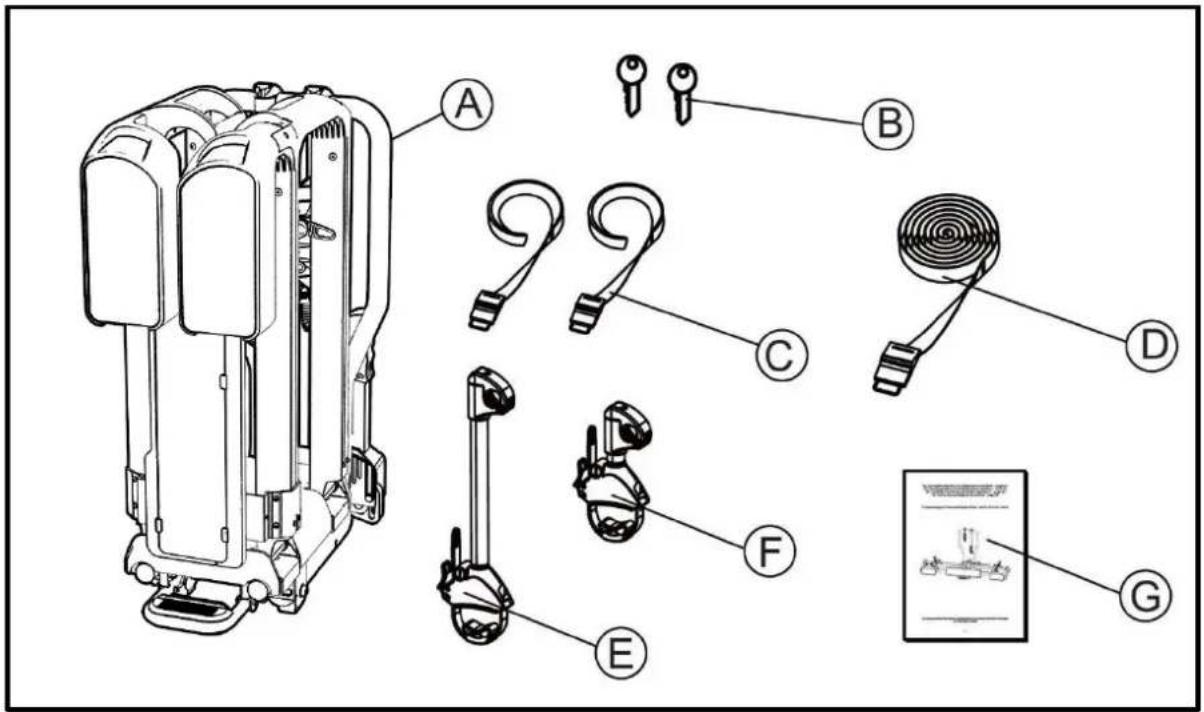
text_image
Technical diagram of a portable device with labeled parts including buttons, straps, and a display panelA = bike carrier
B = 2 keys
C = 2 safety straps for front wheels (1x extra for FG3)
D = 1 Safety strap for bicycle frame
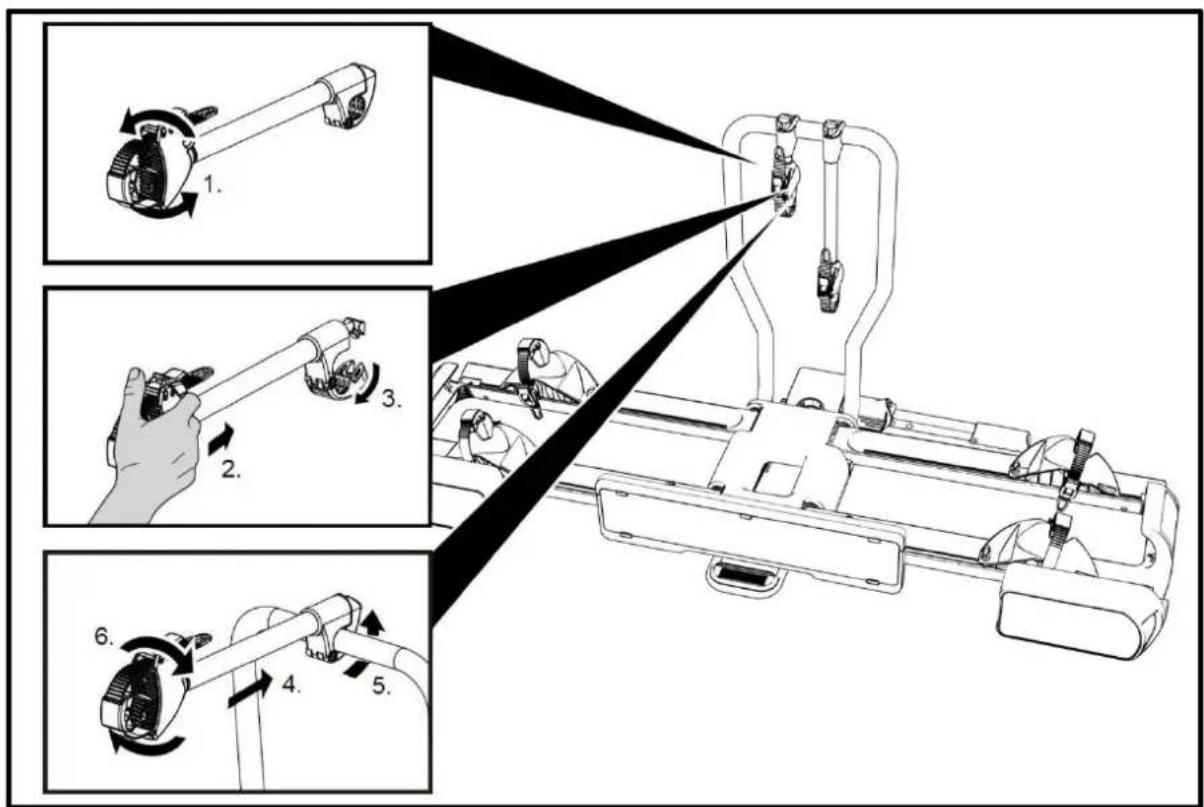
E = frame holder long
F = frame holder short (+ frame-frame holder for FG3)
G = assembly instruction and safety regulations
Unpack all the components and check for the presence of all parts.
TECHNICAL DATA
| Diamant | FG2 | FG2 Plus | FG3 | Extension |
| Itemnumber | 91759 | 91759 | 91764 | 91749 |
| Tiltable | Yes | Yes | Yes | |
| Material | Steel /aluminium | Steel / alu | ||
| No of bicycles | 2 | 2 | 3 | +1 |
| Own weight | 17kg | 18kg | 22kg | 2,5kg |
| Carrying capacity (max.) | 60kg | 60kg | 60kg | 15kg |
| Wheel base bicycle (max.) | 140cm | 140cm | 140cm | 120cm |
| Bicycle tire width (max.) | 8cm | 8cm | 8cm | 6cm |
| Wheel holder distance | 23cm | 23cm | 23cm | 14cm |
Please check the maximum permissible ball load. You can find it on the identification plate of the tow bar of your car (for most cars this is 75kg).
The total weight of the bike carrier with the bicycles cannot exceed the maximum permissible ball load of the tow bar (find calculation example below).
Diamant FG2:
| Max. permissible ball load | Weight bike carrier | Max. carrying capacity |
| 50kg | 17kg | 33kg |
| 60kg | 17kg | 43kg |
| 75kg | 17kg | 58kg |
| 90kg | 17kg | Max. 60kg |
Diamant FG2 +Extension:
| Max. permissible ball load | Weight bike carrier | Max. carrying capacity |
| 50kg | 19,5kg | 30,5kg |
| 60kg | 19,5kg | 40,5kg |
| 75kg | 19,5kg | 55,5kg |
| 90kg | 19,5kg | Max. 60kg |
COUPLING REQUIREMENTS

WARNING!
Personal injury is possible due to breakage of the trailer coupling.
The coupling could break if the bike carrier is fitted to a coupling made of a too soft material.
- Fit the bike carrier only to a coupling made of steel St52, grey cast iron GG52 or higher quality.
- Never fit the bike carrier to a coupling made of aluminium, other light metals or plastic.
- Only suitable for use on the coupling of a passenger car.
- Note the instructions of the coupling manufacture.
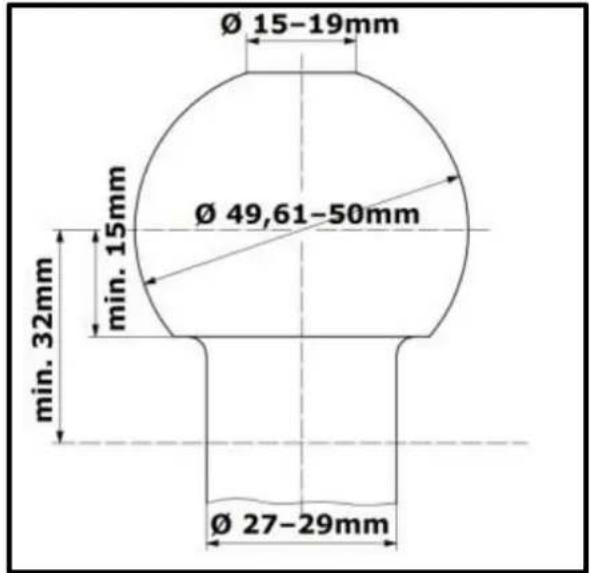
text_image
Ø 15-19mm Ø 49,61-50mm min. 32mm min. 15mm Ø 27-29mmFit the bike carrier only to trailer couplings with the following properties:
Material: min. steel St52 or grey cast iron GG52
D-value: >7,6 kN
Tow ball: ∅50mm (class A-50 according EC 94/20 or ECE R55)
SAFETY INSTRUCTIONS
Follow the fitting instructions carefully. Failure to follow the instructions can lead to personal injuries and material damage.
If you are not sure about correct fitting, ask your dealer or the manufacturer for further information. Neither the manufacturer nor dealer are liable for damages which are due to improper use or fitting.
Check the bike carrier and the load regularly: you are required to do so and may be held liable in case of damage.

NOTE
The legal regulations and provisions on the transport of goods on the back of your vehicle apply when driving with a mounted bicycle carried.

WARNING!
Personal injury or material damage due to changed vehicle driving characteristics.
Driving with the bike carrier fitted will affect the driving characteristics of your vehicle.
- Adjust your speed to the new driving characteristics.
- Never exceed a speed of 130 ~km / h .
- Avoid sudden and jerky steering movements.
- Remember that your vehicle is longer than usual.

WARNING!
Personal injury or material damage due to overloading.
Exceeding the max. carrying capacity of the bike carrier or the permissible bearing load of the trailer coupling or the permissible overall weight can lead to serious accidents.
- Observe the information on the max. carrying capacity, permissible bearing load and permissible overall weight of your vehicle. Never exceed these specifications.

WARNING!
Personal injury or material damage due to incompletely fitted bike carrier. Driving with a folded bike carrier can lead to accidents.
The moving parts of bike carrier constitute a source of danger if not properly fitted.
- Remove the bike carrier if it is not needed.
- Never drive with a folded bike carrier.

WARNING!
Personal injury or material damage due to loss of the bicycles. Carrying bicycles without using the safety straps can lead to accidents.
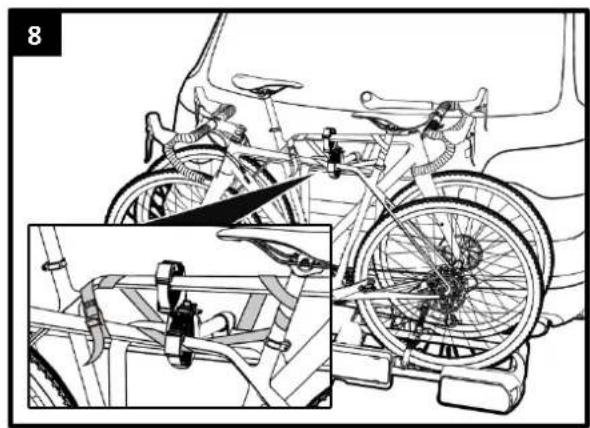
- Before the start of every journey, check the correct and firm attachment of the strap around the bikes and the frame holder bracket of the carrier (see Step 8 of chapter "Mounting bicycles").
- Before the start of every journey, check the correct and firm attachment of both straps around the front wheel, and the strap around the rear wheel of the bicycle.
- Tighten the straps if necessary.
- Before the start of every journey, check that the straps are not worn or damaged.
- Worn or damaged straps must be replaced with undamaged straps before the start of the journey. The straps used must be approved by Tradekar Benelux BV.

WARNING!
Personal injury or material damage due to projecting parts.
Parts projecting beyond the edge of the vehicle or bike carrier can cause personal injury or material damage when driving.
- Fit only such parts which do not project beyond the edge of the vehicle or bike carrier.

WARNING!
Personal injury or material damage due to tarpaulins.
Tarpaulins increase the air resistance. They can become loose and fly about leading to serious accidents.
- Never use tarpaulins or covers.

WARNING!
Personal injury or material damage due to loss of the bicycles.
After the attachment, the carrier first settles properly into the coupling after driving several kilometres.
- Check the attachment of the carrier for secure attachment after driving several kilometres.
- Redo the attachment if it is loose.

WARNING!
Personal injury or material damage due to the breaking off of the bike carrier.
Driving with a mounted bike carrier over difficult terrain can lead to the carrier breaking off.
Do not use the bike carrier when driving over difficult terrain.
Only suitable for use on the hitch of a passenger car.
Drive slowly over speed bumps: max. Speed 10 km/h.

ATTENTION!
Material damage due to opening tailgate.
The tailgate could impact against the bike carrier and be damaged.
- Switch off electric tailgates and operate them manually.
- Fold down the bike carrier before opening the tailgate.

ATTENTION!
Material damage due to hot exhaust gases.
Damage can be caused to the bike carrier or the bicycles if the exhaust pipe is too close.
- Fit an exhaust deflector if necessary.
FITTING THE REGISTRATION PLATE TO THE BIKE CARRIER
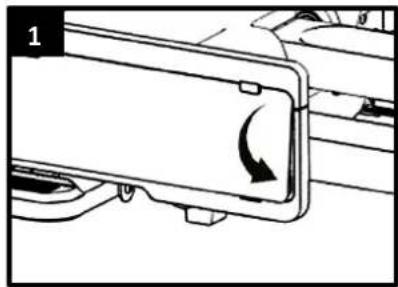
natural_image
Diagram of a mechanical component with a curved arrow indicating rotation (no text or symbols)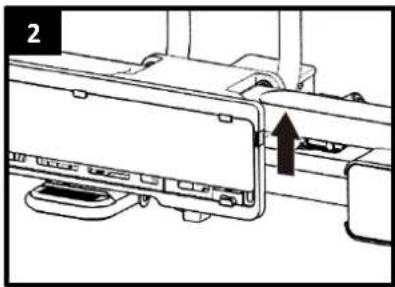
natural_image
Diagram of a printer or printer device with an arrow indicating a component or connection (no text or symbols present)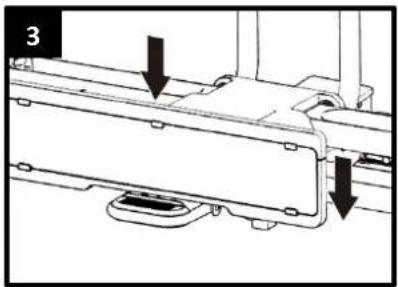
natural_image
Technical diagram of a mechanical assembly with two downward arrows indicating force or movement (no text or symbols present)FITTING THE FRAME HOLDERS TO THE BIKE CARRIER
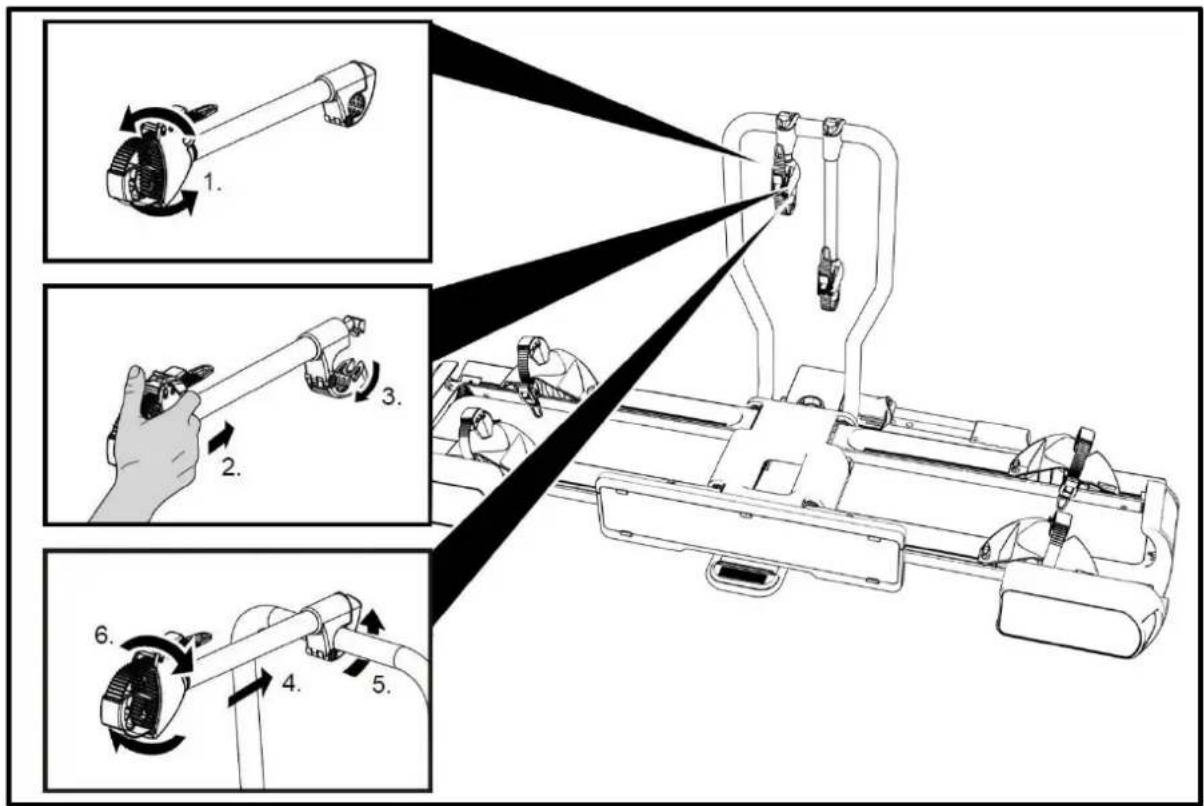
text_image
Technical diagram illustrating the step-by-step assembly of a mechanical device with labeled parts and directional arrows indicating motion.Park your vehicle on a level surface.
Apply the handbrake.

WARNING!
Personal injury or material damage due to damaged bike carrier.
Damage of the carrier, e.g. by bent parts, cracks or scratches, prevent the safe operation of the carrier.
- Do not fit the bike carrier if it is damaged in any way.
- Proceed as described in the chapter "Maintenance".

WARNING!
Personal injury or material damage due to loss of the bike carrier during the journey.
A faulty or defective connection between the bike carrier and trailer coupling can lead to the detachment of the bike carrier.
- Replace the trailer coupling if it is damaged.
- Clean the trailer coupling of dirt, dust and grease.

NOTE
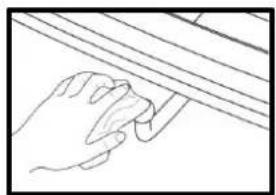
There is often a layer of paint on the coupling ball. For the best possible attachment of the bike carrier, this paint coating should be carefully removed. Note the instructions of the coupling manufacturer.
natural_image
Line drawing of a hand holding a tool against a striped surface (no text or symbols)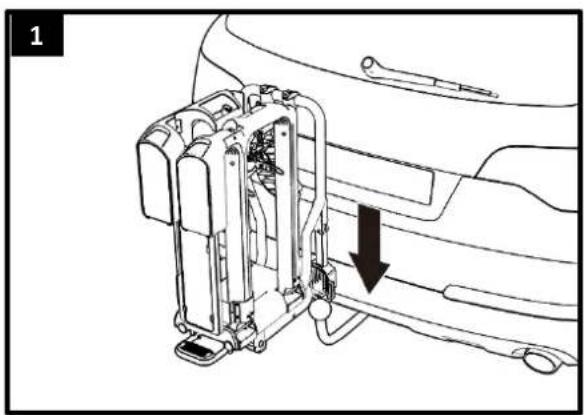
natural_image
Mechanical assembly diagram showing a bracket with internal components and a downward arrow indicating motion (no text or symbols)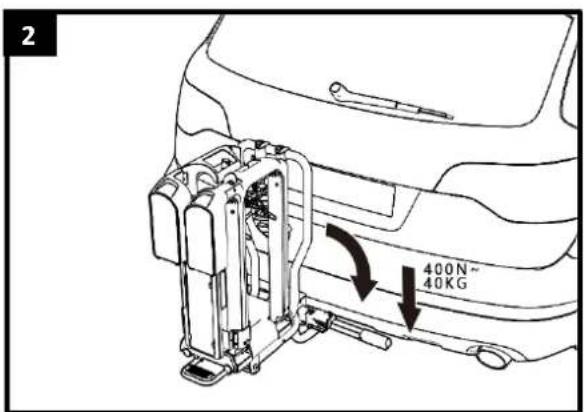
text_image
2 400N~ 40KG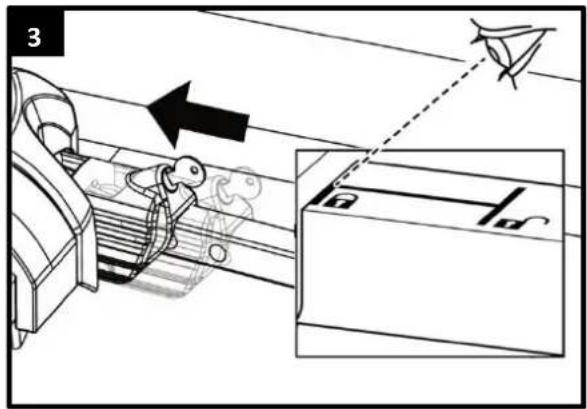
text_image
3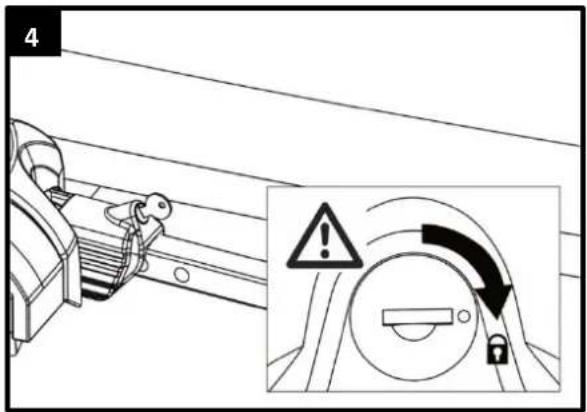
text_image
4
WARNING!
Personal injury or material damage due to unsecure bike carrier. If the lever is not secured by locking, the bike carrier could become detached from the vehicle during the journey
- Lock the bike carrier.
- Check that you have locked the lever and removed the key. Locking the bike carrier also prevents its possible loss by theft.

WARNING!
Personal injury or material damage due to loss of the bike carrier during the journey.
A loose connection between the bike carrier and trailer coupling can lead to detachment of the bike carrier.
- Check the bike carrier for secure attachment.
- Repeat steps 1 to 4 in the event of a loose connection. If this brings about no improvement, the quick connector may need to be adjusted, see chapter "Adjustment of the quick connector".
text_image
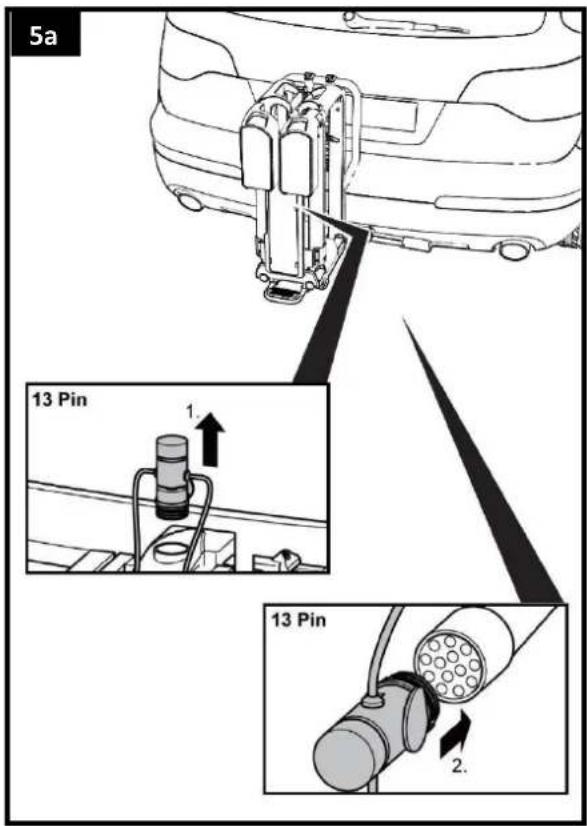
5a 13 Pin 1 13 Pin 2.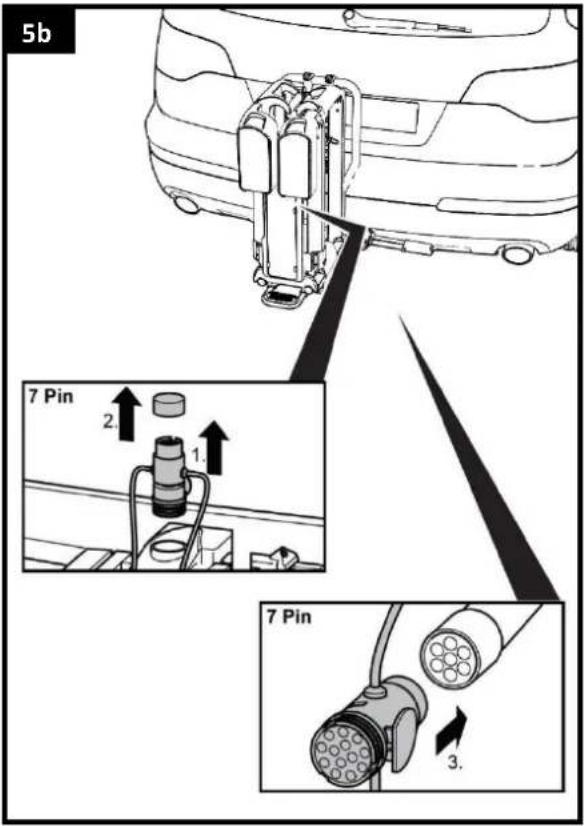
text_image
5b 7 Pin 2. 1. 7 Pin 3.
WARNING!
Personal injury due to not being seen by other road-users.
Driving with a defective lighting system can lead to accidents.
- Check the correct operation of the lighting system before the start of every journey.
- Replace any defective bulbs.
- Check the connection between the plug and coupling.
natural_image
Diagram of a vehicle's internal components with directional arrows indicating movement (no text or symbols)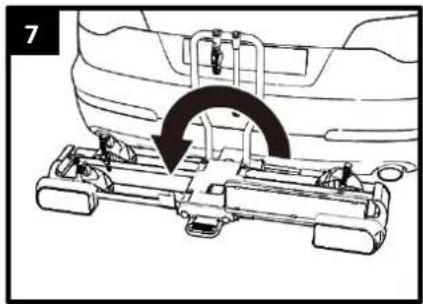
natural_image
Mechanical assembly diagram showing a car body with a rotating component and mounting bracket (no text or symbols)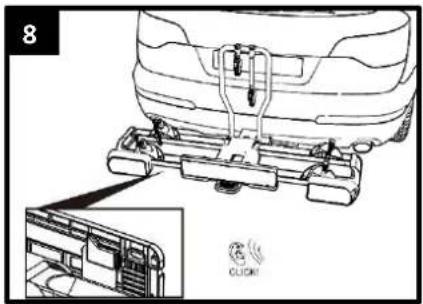
natural_image
Technical line drawing of a vehicle chassis with mounting bracket and side panel view (no text or symbols)
WARNING!
Personal injury or material damage due to unsecure registration plate holder.
If the registration plate holder is not secured by the locking bolt, it could become detached during the journey.
- Fold down the registration plate holder until it is heard to engage.
- Release the locking bolt and allow it to engage in the hole in the registration plate holder.
MOUNTING BICYCLES

ATTENTION!
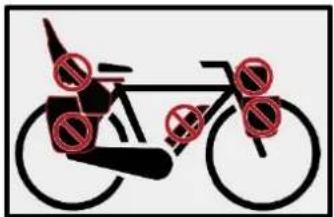
Personal injury or material damage possible due to loose parts. Improperly tightened parts on the bicycles can become loose during the journey.
- Remove all parts not firmly attached to the bicycle, such as e-bike battery, bicycle pump, bicycle bag, bicycle crate, bicycle basket, child seat, bottle or navigation device.
natural_image
Silhouette of a bicycle with red prohibition symbols on its side (no text or labels)
NOTE
In order to improve the driving characteristics of your vehicle, mount the heavier bicycle first. If carrying only one bicycle, this should be mounted in the rail closest to the rear of the vehicle.

NOTE
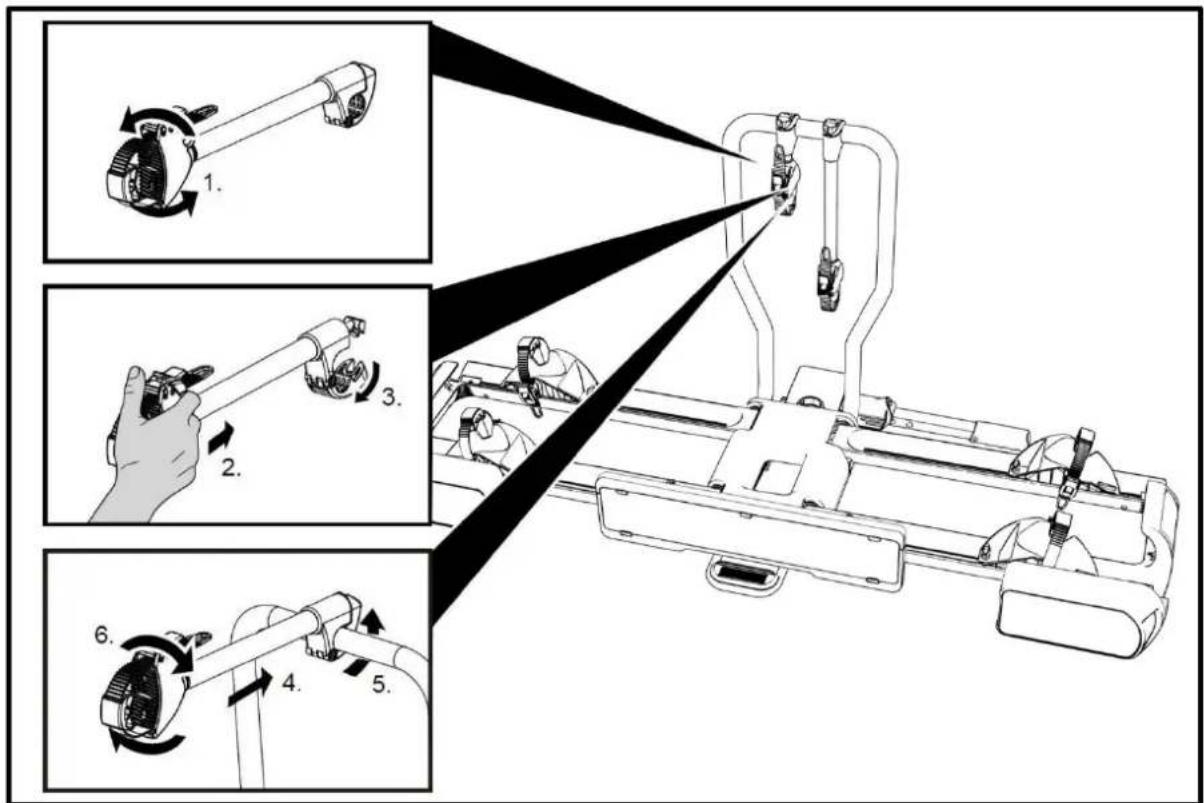
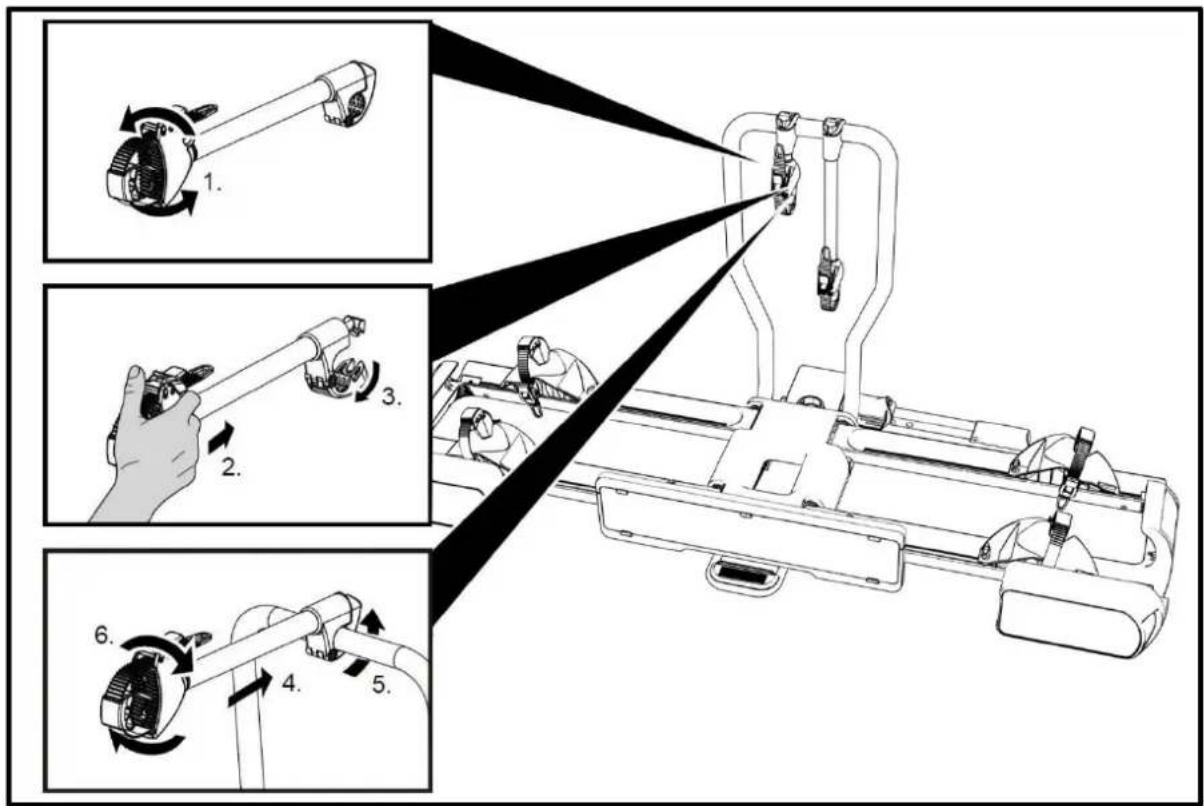
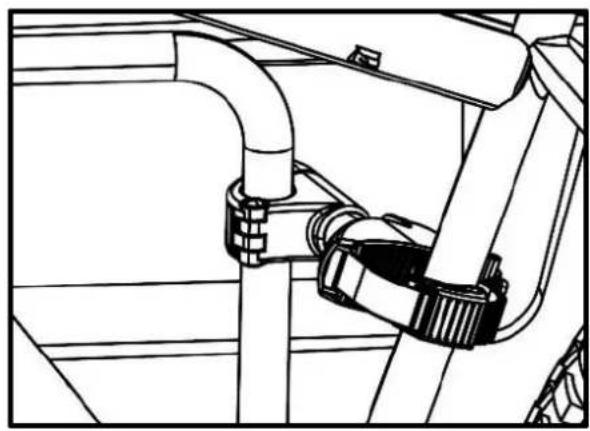
The frame holders are flexible to place on the U-tube, and are also flexible to place on your bicycle. Try the first time which position in your situation works best (and most stable affirmative is). It is important to place the frame holder as high as possible, giving maximum stability.
natural_image
Technical line drawing of a mechanical assembly with pipes and clamps (no text or symbols)
natural_image
Technical line drawing of a mechanical assembly with clamps and gears (no text or symbols)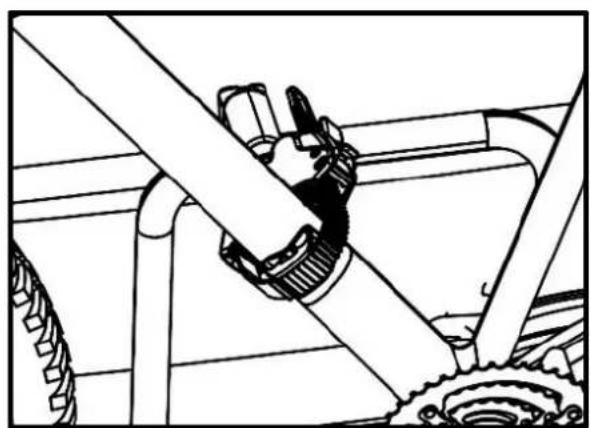
natural_image
Mechanical assembly diagram showing a gear and shaft mechanism (no text or symbols)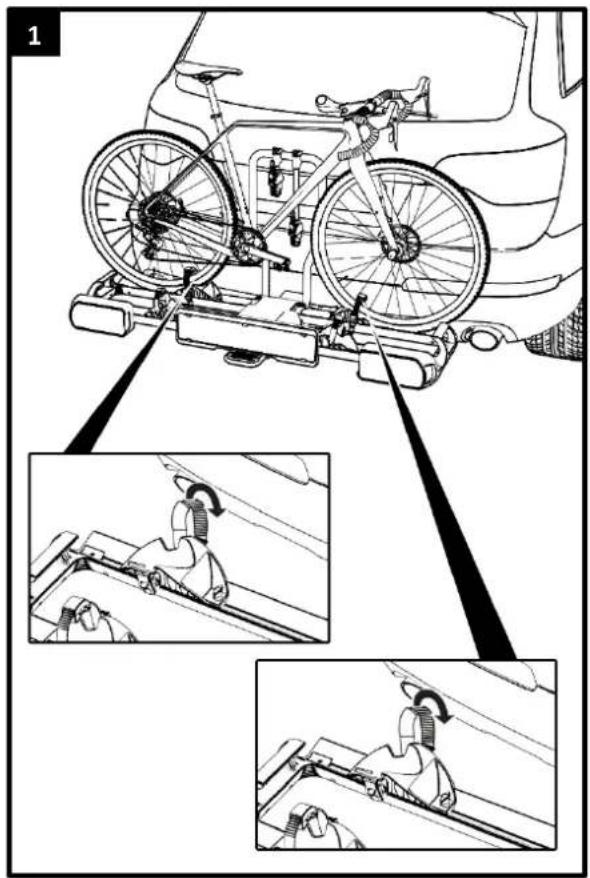
natural_image
Diagram of a bicycle stationary system with three views showing mechanical components and motion directions (no text or labels)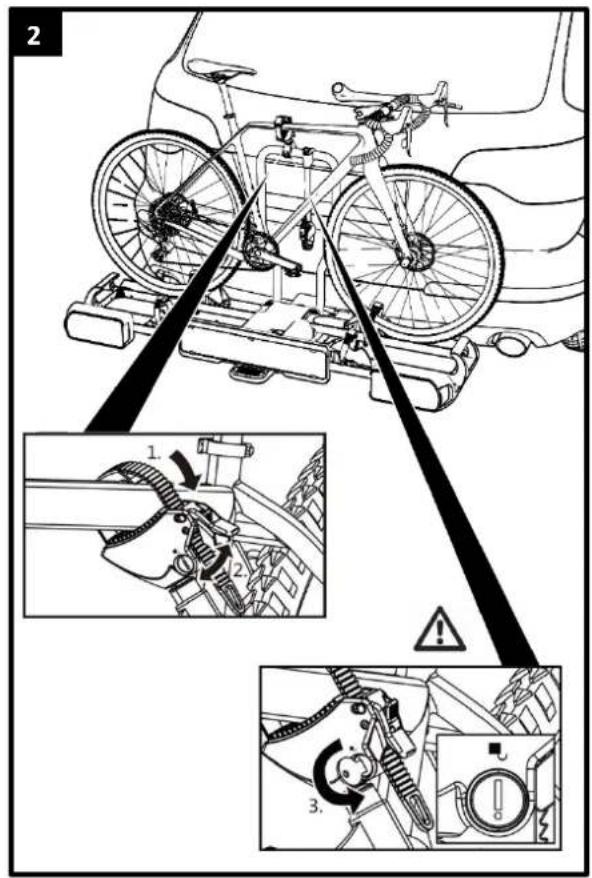
text_image
Technical diagram illustrating bicycle wheel assembly and mechanical control, with labeled parts and warning indicators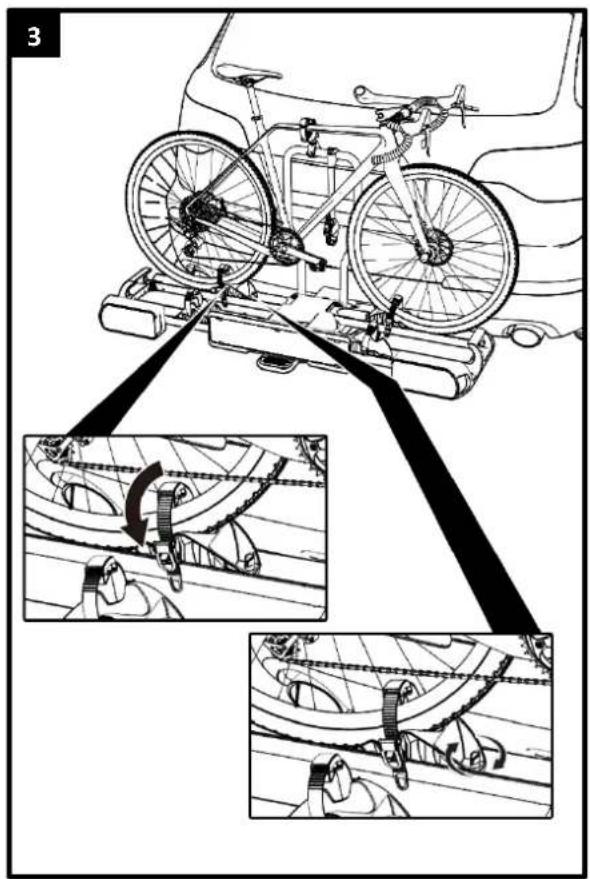
natural_image
Technical illustration of a bicycle undercarriage with mechanical components and close-up insets showing gear assembly (no text or symbols)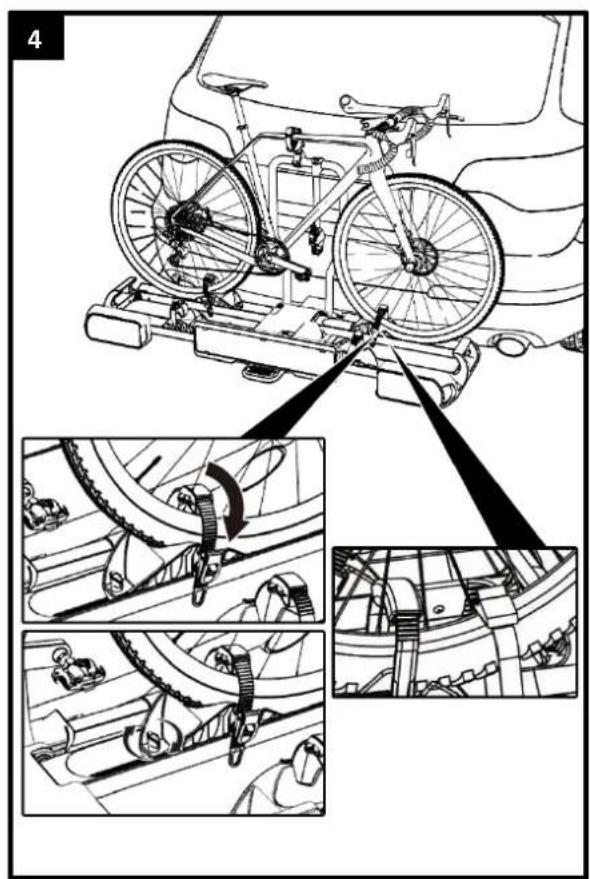
natural_image
Technical illustration of a bicycle undercarriage with mechanical components and close-ups of gear assembly (no text or symbols)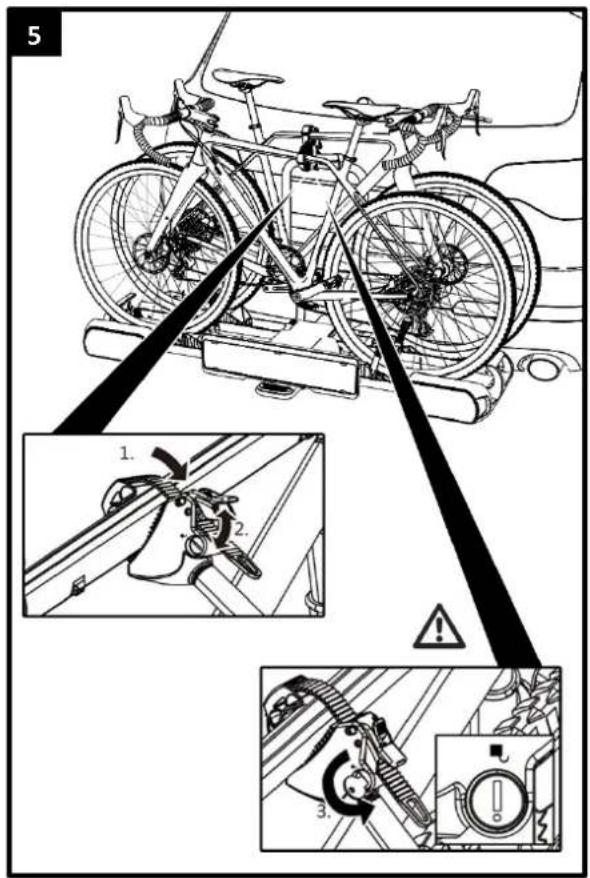
text_image
5 1. 2. 3.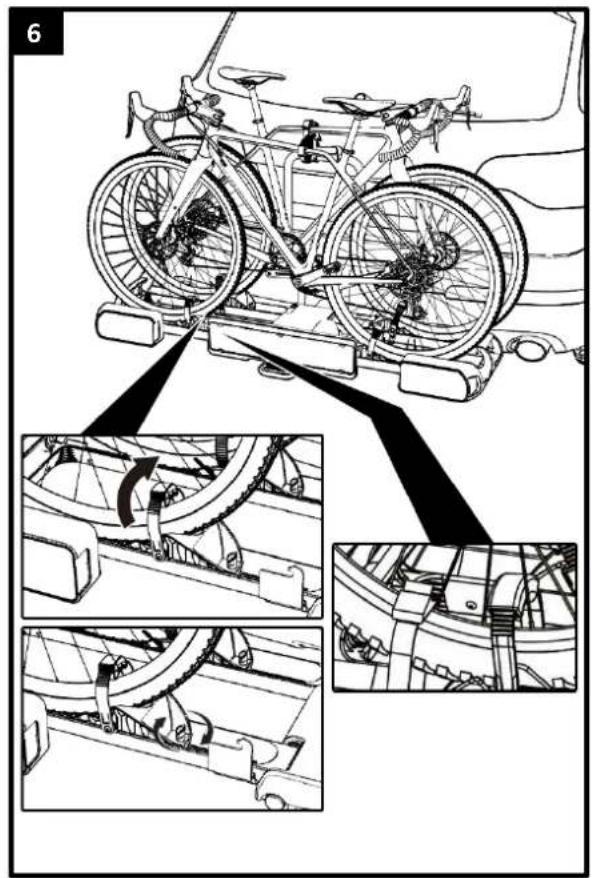
natural_image
Technical line drawing of a bicycle mounted on a vehicle chassis, showing structural components and assembly (no text or symbols)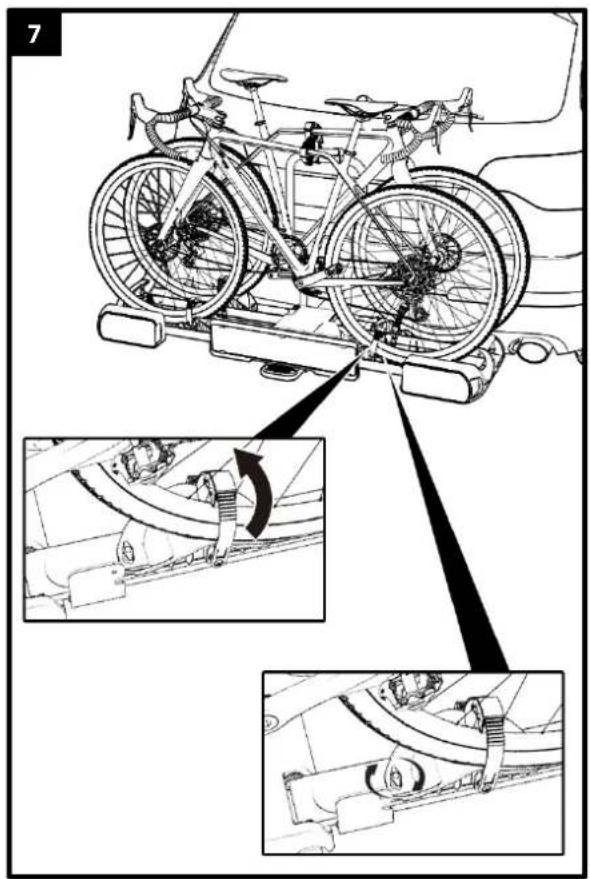
text_image
7
WARNING!
Personal injury or material damage due to loss of the bicycles.
Carrying bicycles without using the safety straps can lead to accidents.
- Before the start of every journey, check the correct and firm attachment of the strap around the bikes and the Frame holder bracket of the carrier (see step 8).
natural_image
Technical line drawing of a bicycle frame assembly with an inset showing the wheel assembly (no text or symbols)- Before the start of every journey, check the correct and firm attachment of both straps around the front wheel, and the strap around the rear wheel of the bicycle.
- Tighten the straps if necessary.
- Before the start of every journey, check that the straps are not worn or damaged.
- Worn or damaged straps must be replaced with undamaged straps before the start of the journey. The straps used must be approved by Tradekar Benelux BV.

WARNING!
Personal injury or material damage due to loss of a bicycle during the journey.
A loose connection between the bike carrier and bicycle can lead to detachment of the connection and loss of the bicycle.
- Check the bicycles for secure and complete attachment.
- Repeat steps 1 to 8 of this chapter in the event of a loose connection.
TILTING THE BIKE CARRIER, ACCESS TO THE LUGGAGE SPACE

ATTENTION!
Material damage due to opening tailgate.
The tailgate could impact against the bike carrier and be damaged.
- Switch off electric tailgates and operate them manually.
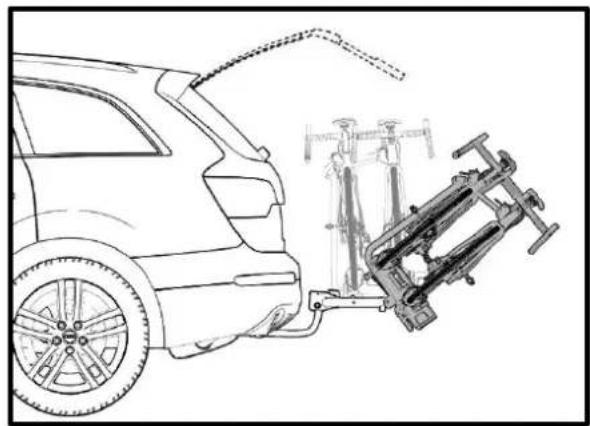
- Fold down the bike carrier before opening the tailgate.
natural_image
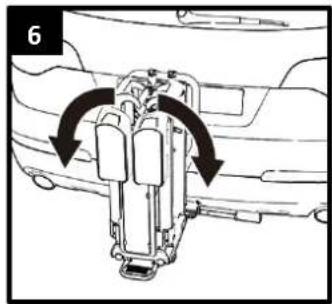
Line drawing of a car with a bicycle-mounted platform and suspension bridge (no text or symbols)
CAUTION!
Personal injury or material damage due to sudden folding down of the carrier.
Body parts or objects under or in front of the carrier when it is folded down may be trapped.
• Make sure that there is nothing under the carrier.
- Keep all body parts, and particularly your head, clear, and maintain a suitable safety distance.
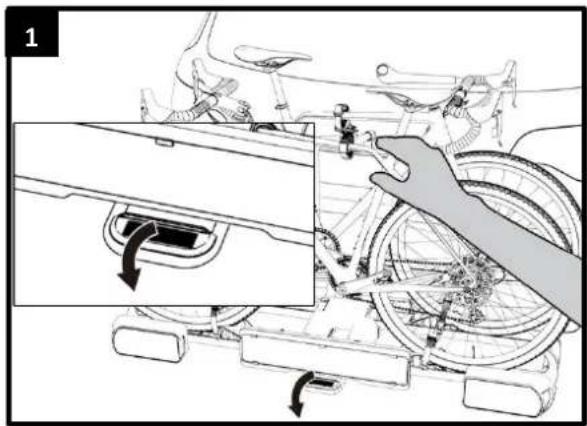
- Hold the carrier by the bicycle when folding it down. With your foot loosen the locking device and then tilt the carrier downward with your hand (see fig. 1)
natural_image
Diagram showing a bicycle wheel assembly with a hand interacting with the wheel, no text or symbols present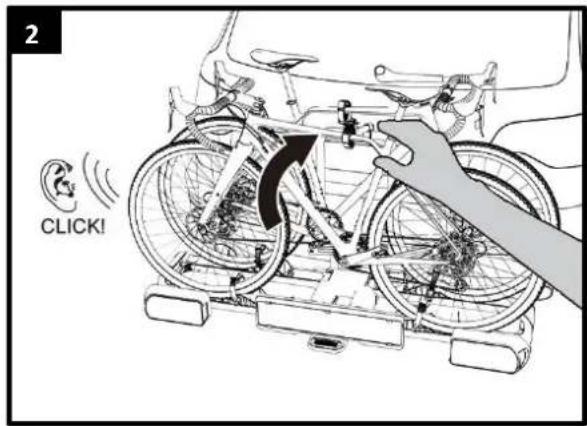
text_image
2 CLICK!
CAUTION!
Personal injury or material damage possible when folding up the carrier. Body parts or objects between the carrier and the vehicle when it is folded up may be trapped.
• Make sure that there is nothing between the carrier and the vehicle.
- Remove any objects between the carrier and the vehicle.

WARNING!
Personal injury or material damage possible due to loss of the bike carrier during the journey.
A bike carrier which is not folded up can result in detachment of the carrier or the coupling.
- Fold the carrier up before the start of the journey (see fig. 2 of this chapter).
- Check that the bike carrier is properly secured in this position.
DISMANTLING THE BIKE CARRIER
To dismantle the bike carrier, proceed in the reverse order to fitting:
- Unlock the license plate holder and turn it to the storage position.
- Fold the bike carrier together.
- Remove lighting connector from the car.
- Release the quick-release lever and pull the wearer of the device.
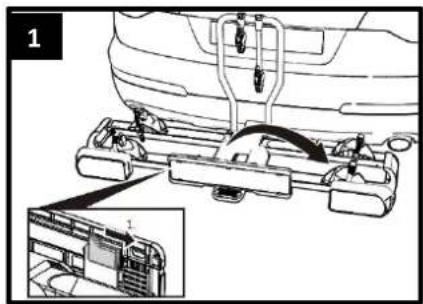
natural_image
Technical diagram of a vehicle chassis with attached mechanical components, showing internal assembly and mounting detail (no text or labels)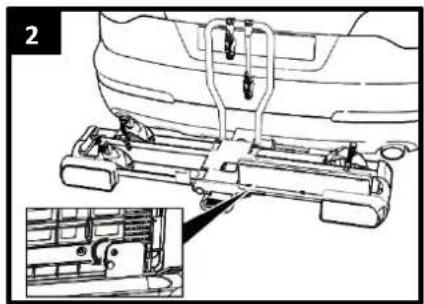
natural_image
Technical line drawing of a vehicle chassis with mounting bracket and internal components (no text or symbols)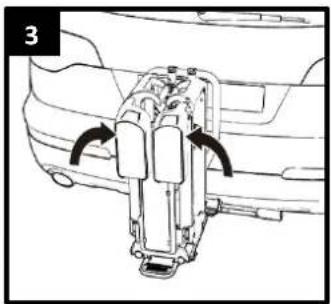
natural_image
Diagram of a car interior showing a vehicle's rearview structure with directional arrows indicating movement (no text or symbols present)The ingenious folding system makes it really easy to carry and to store.
natural_image
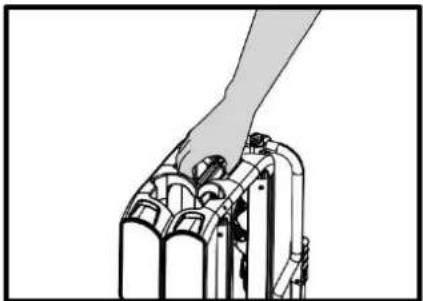
Illustration of a hand placing a cylindrical device into a multi-cylinder container (no text or symbols visible)CLEANING AND MAINTANANCE
Under normal conditions and use, the bike carrier only requires cleaning, and is otherwise maintenance free.
The bike carrier can be cleaned with a mild cleaning agent, with warm water and/or a soft cloth. First remove any coarse dirt and dust.
Do not use any solvents or similar cleaning agents, since these can damage the bike carrier.
Leave the bike carrier to dry on its own. Do not use any electrical driers or other heating equipment to speed up the drying process.
Clean the bike carrier regularly when used in coastal areas or in winter conditions in order to wash off any salt and prolong the service life of the bike carrier.
Store the bike carrier in a dry and protected area when not used for extended periods (e.g. over winter) in order to prolong the service life of the bike carrier. Check the bike carrier for wear before the start of every journey.
Defective parts and straps must be replaced.
The steel parts of the bike carrier are protected in the works against corrosion by a powder coating. If this paint coating is damaged, please have the damage rectified professionally as soon as possible.
Please refer to our customer service for the replacement of parts.
Any modification of original parts and materials or the construction of bike carrier can adversely affect its safety and serviceability.
DISPOSAL
Local regulations must be observed for the disposal of the product.
The packaging should also be sorted by type and disposed of in the relevant collection containers.
Further information is available from your communal disposal point.
ADJUSTMENT OF THE QUICK CONNECTOR
Carry out this maintenance operation only if the bike carrier cannot be fitted firmly to the trailer coupling, as described in the chapter "Fitting the bike carrier to the trailer coupling".
Remove the bike carrier from the trailer coupling, as described under "Dismantling the bike carrier".
- Loosen the locking nut slightly (fig. 1).
- Screw in the setting screw one quarter of a turn (fig. 1).
- Tighten the locking nut (fig. 2)
- Check whether the carrier is now firmly seated on the trailer coupling, as described under "Fitting the bike carrier to the trailer coupling". If not, repeat the above steps.
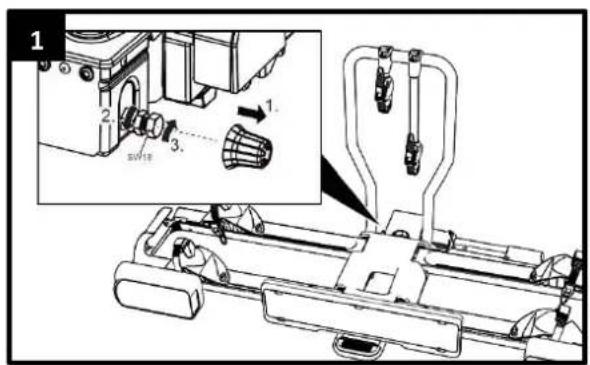
text_image
Technical diagram showing mechanical assembly with labeled parts and a zoomed-in detail view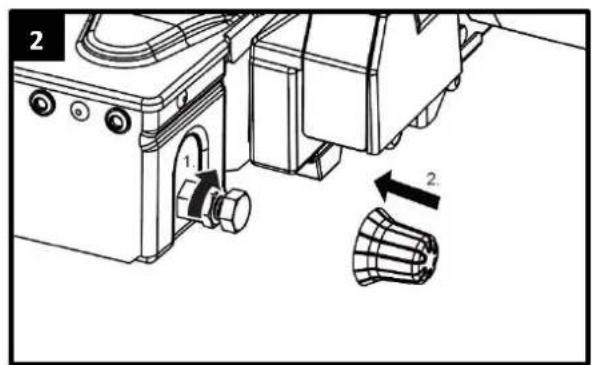
text_image
2 1. 2.7/13 PIN CONNECTOR
This bike carrier is equipped with a lighting system. This system can be connected to the tow bar power socket of your car. Seeing that there are different kinds of sockets that require different kinds of plugs, this carrier comes with the usual 7pin plug and the 13pin plug (Jaeger). As a result, the carrier can be used with any tow bar!
Both plugs are in one housing. Please cover the plug you don't use with the supplied cover.
This information is only for the retrofitting by a specialised dealer. A retrofitting by non trained persons is not permitted.
Universal system 7 pin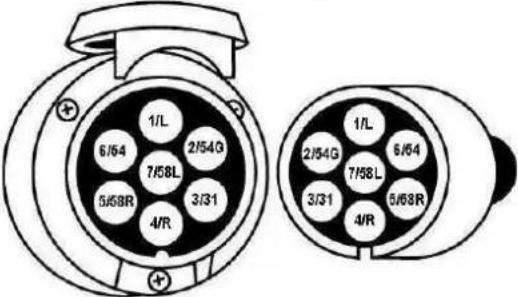 | 1/L2/54G3/314/R5/58R6/547/58L | Indicator leftRear fog lightGroundIndicator rightRear light rightStop lightsRear light leftThe reversing light is not working via the 7-pin plug! | yellowbluewhitegreenbrownredblack |
Jaeger system 13 pin(DIN 72.570)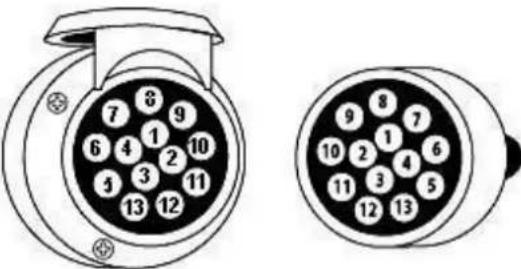 | 12345678910111213 | Indicator leftRear fog lightGroundIndicator rightRear light rightStop lightsRear light leftReversing lightNot usedNot usedNot usedGroundNot used | yellowbluewhitegreenbrownredblackgray |
12V Bulb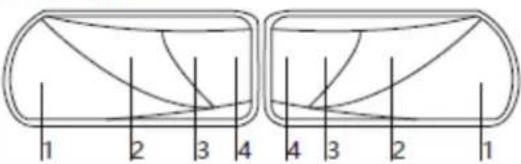 | 1234 | 12V 21/5W BAY15d12V 21W BAY15d orange12V 21W BAY15d12V C5W | |
text_image
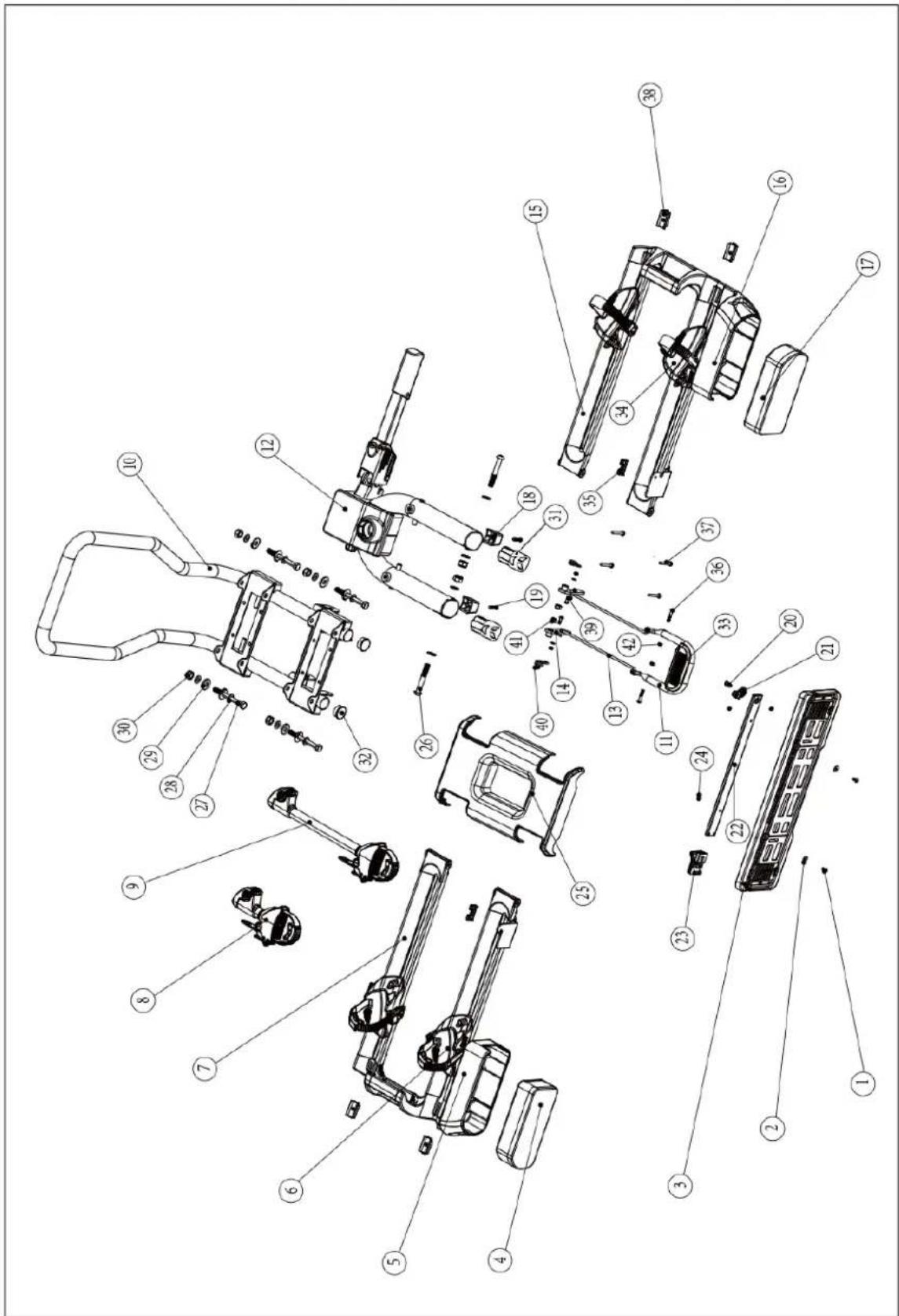
Exploded view diagram of a device with numbered parts for identificationPART LIST
| Pos nr. | Description | QTY | Remark |
| 1 | Inner-socket bolt | 2 | M5x10 |
| 2 | Washer | 6 | M5 |
| 3 | License plate holder | 1 | |
| 4 | Rearlight left | 1 | |
| 5 | Lamp protector (left) | 1 | |
| 6 | Plastic wheel stopper left | 2 | |
| 7 | Aluminium wheel holder frame left | 1 | |
| 8 | Frame holder short | 1 | |
| 9 | Frame holder long | 1 | |
| 10 | Mainframe with U-tube | 1 | |
| 11 | Footpedal tube | 1 | |
| 12 | Mainframe with quick connector | 1 | |
| 13 | Tilting mechanism operation rod | 2 | |
| 14 | Tilting mechanism locking hook | 2 | |
| 15 | Aluminium wheel holder frame right | 1 | |
| 16 | Lamp protector (right) | 1 | |
| 17 | Rearlight right | 1 | |
| 18 | Plastic support (long) | 2 | |
| 19 | Inner-socket bolt | 2 | M5x25 |
| 20 | Bolt | 1 | |
| 21 | Plastic License plate holder clip | 1 | |
| 22 | License plate holder fixation tube | 1 | |
| 23 | License plate holder locking | 1 | |
| 24 | Nylon nut | 4 | M5 |
| 25 | Plastic cover | 1 | |
| 26 | Bolt | 2 | M10x70 |
| 27 | Bolt | 4 | M10x95 |
| 28 | Washer | 12 | M10 |
| 29 | Plastic washer | 8 | |
| 30 | Nylon nut | 6 | M10 |
| 31 | Plastic tilting limit stop | 2 | |
| 32 | Plastic cover U-tube | 2 | |
| 33 | Footpedal plastic | 1 | |
| 34 | Plastic wheel stopper right | 2 | |
| 35 | Rubber cover | 2 | |
| 36 | Bolt | 2 | M6x25 |
| 37 | Screw | 4 | ST4.8x20 |
| 38 | Plastic cover wheel stopper | 4 | |
| 39 | Inner-socket bolt | 2 | M5x15 |
| 40 | Torsion spring | 2 | |
| 41 | Nylon nut | 2 | M8 |
| 42 | Nylon nut | 2 | M6 |
SOMMAIRE
Préface 67
service@tradekar.com
CONSIGNES DE SECURITE-EXPLICATION DES CATEGORIES
text_image
Technical diagram of a portable device with labeled parts including key, strap, and cable componentsA = Porte-vélo
B = 2 clés
Diamant FG2 + Expansion:
| Force de traction maximale de l’attache remorque | Le poids à vide du porte-vélo | Charge maximum |
| 50kg | 19,5kg | 30,5kg |
| 60kg | 19,5kg | 40,5kg |
| 75kg | 19,5kg | 55,5kg |
| 90kg | 19,5kg | Max. 60kg |
CONDITIONS D'ACCOUPLEMENT

AVERTISSEMENT!
natural_image
Diagram of a vehicle's side panel with a curved arrow indicating rotation (no text or symbols)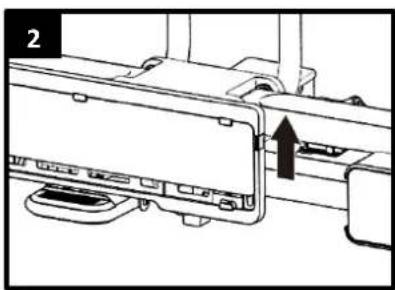
natural_image
Diagram of a device with an upward arrow indicating a component or connection (no text or symbols present)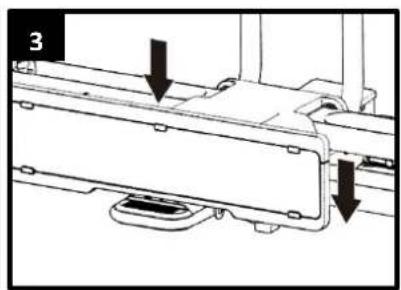
natural_image
Mechanical assembly diagram showing a bracket with two downward arrows indicating motion or force (no text or symbols present)SUPPORT DU CADRE
text_image
Technical diagram illustrating a mechanical device operation with numbered steps for tool manipulation and assembly.MONTAGE DU PORTE-VÉLO SUR L'ACCOUPLEMENT DE REMORQUE
natural_image
Line drawing of a hand gripping a piece of wood or metal (no text or symbols)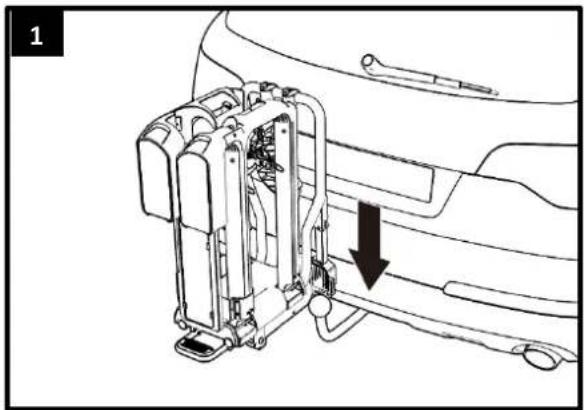
natural_image
Technical line drawing of a car interior showing internal components and a downward arrow indicating motion (no text or symbols)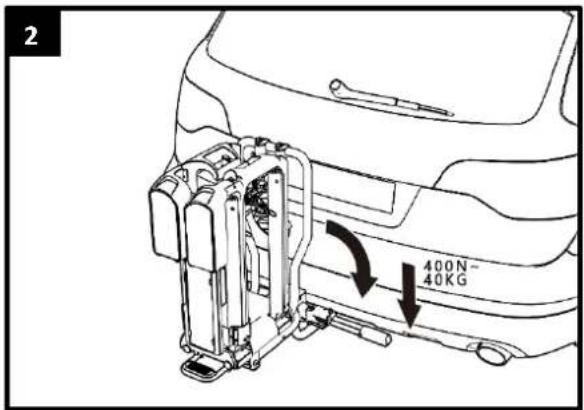
text_image
2 400N- 40KG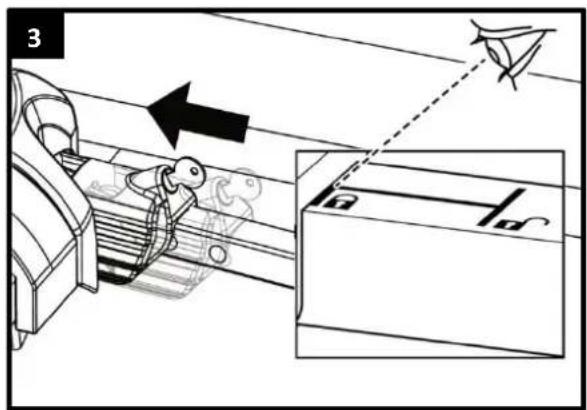
text_image
3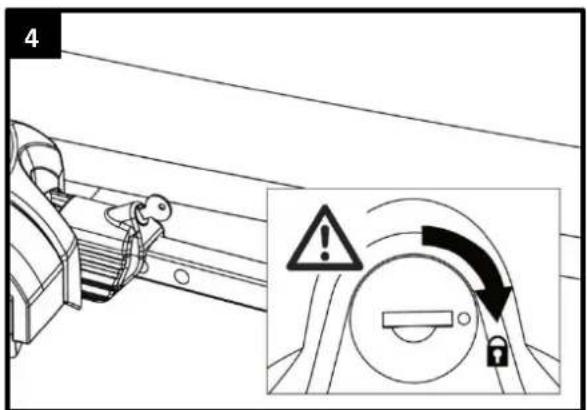
text_image
4
AVERTISSEMENT!
natural_image
Diagram of a vehicle's internal components with directional arrows indicating movement (no text or symbols)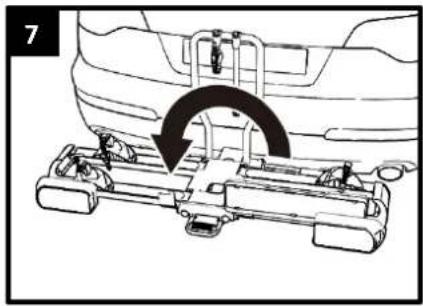
natural_image
Mechanical assembly diagram showing a vehicle's mounting bracket with a circular arrow indicating rotation (no text or symbols)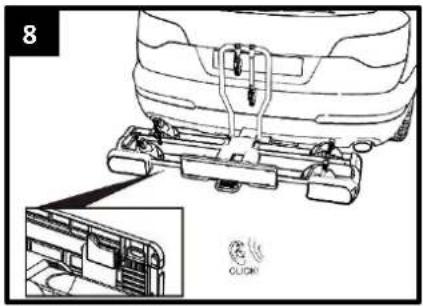
natural_image
Technical line drawing of a vehicle chassis with mounting bracket and side panel view (no text or symbols)
AVERTISSEMENT !
natural_image
Diagram of a bicycle with no visible text, numbers, or symbols on the diagram itself
REMARQUE
natural_image
Technical line drawing of a mechanical assembly with pipes and clamps (no text or symbols)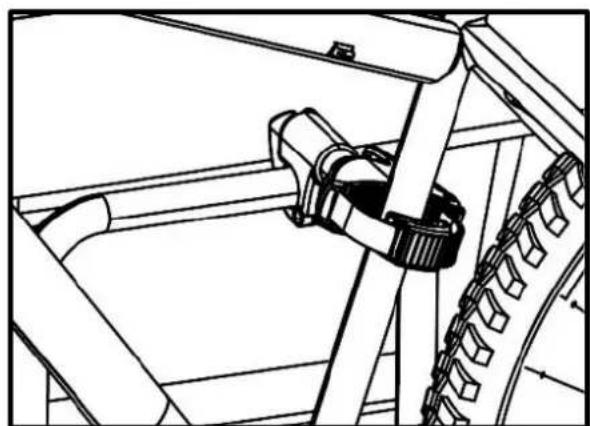
natural_image
Technical line drawing of a mechanical assembly with clamps and gears (no text or symbols)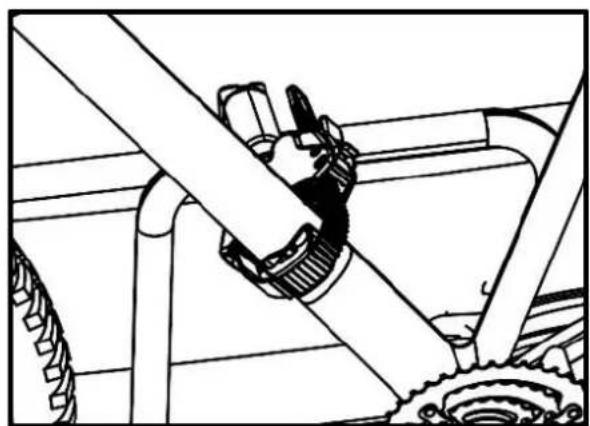
natural_image
Mechanical assembly diagram showing gear and shaft components (no text or labels)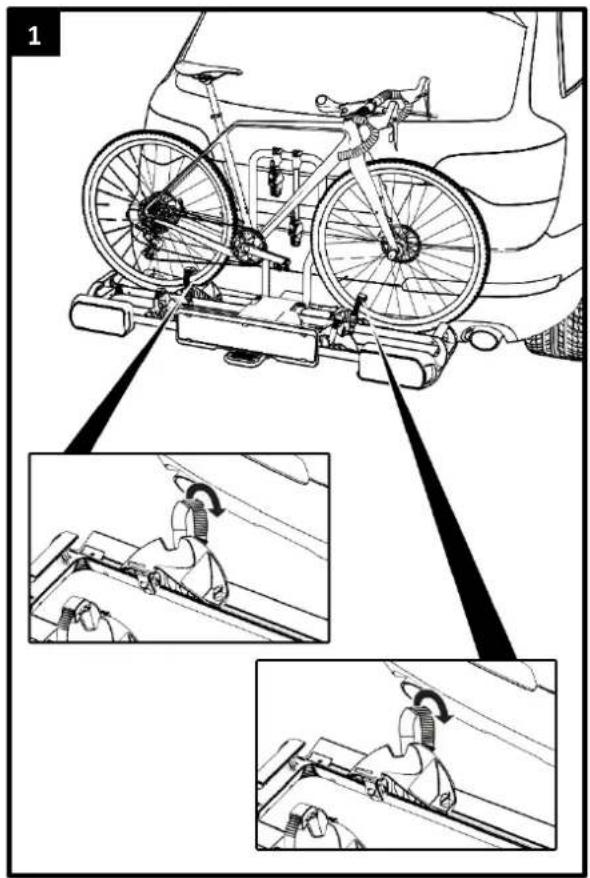
natural_image
Diagram of a bicycle stationary system with three views showing mechanical components and motion directions (no text or labels)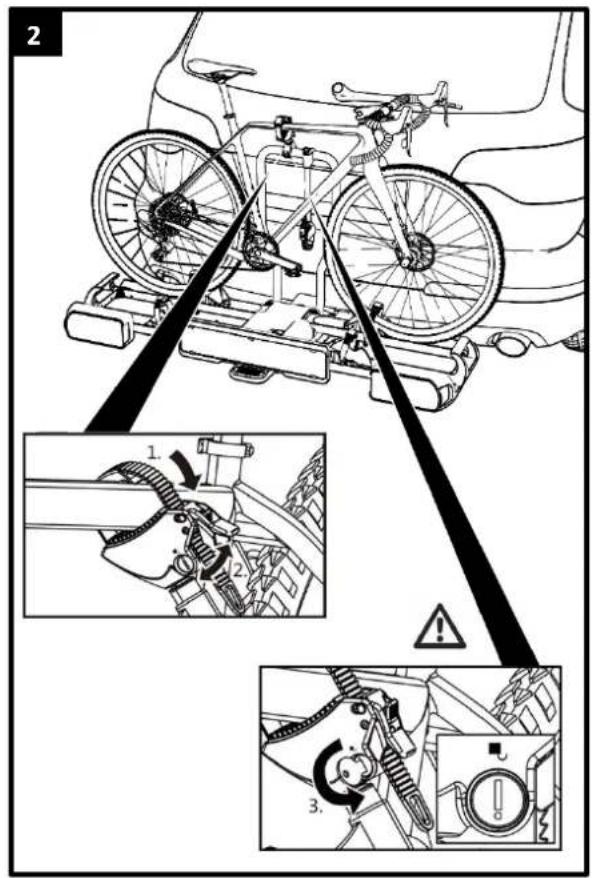
text_image
Technical diagram illustrating bicycle wheel assembly and mechanical control steps with labeled diagrams and warning indicators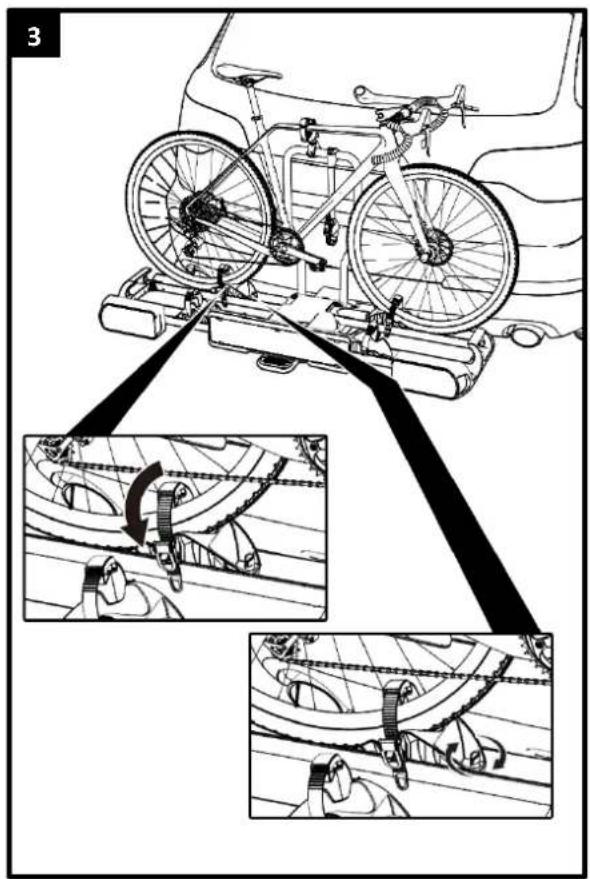
text_image
3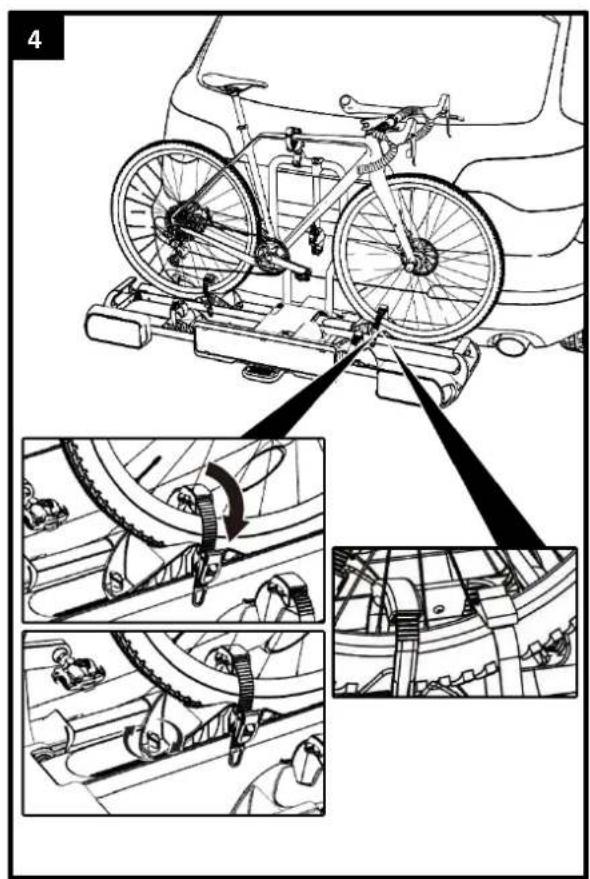
natural_image
Technical illustration of a bicycle undercarriage with mechanical components and close-ups of gear assembly (no text or symbols)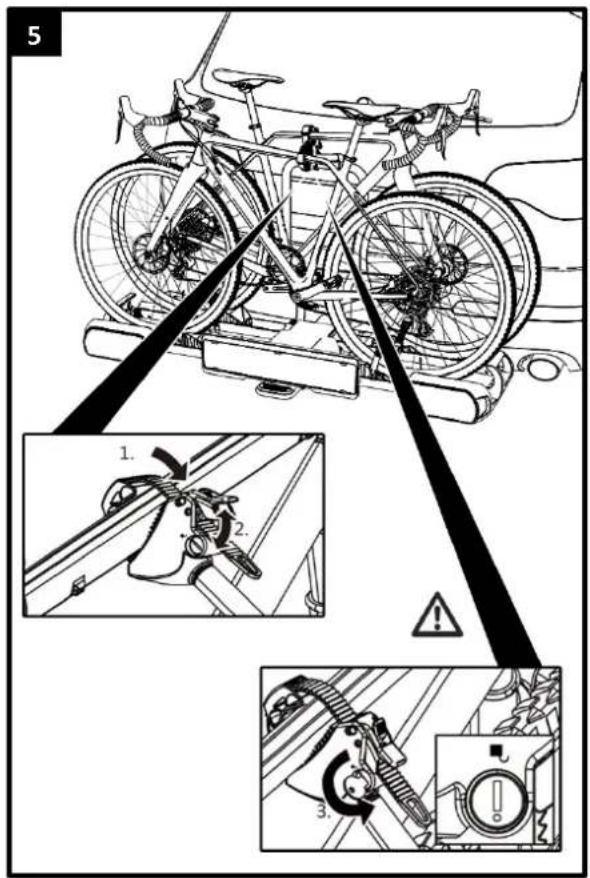
text_image
5 1. 2. 3.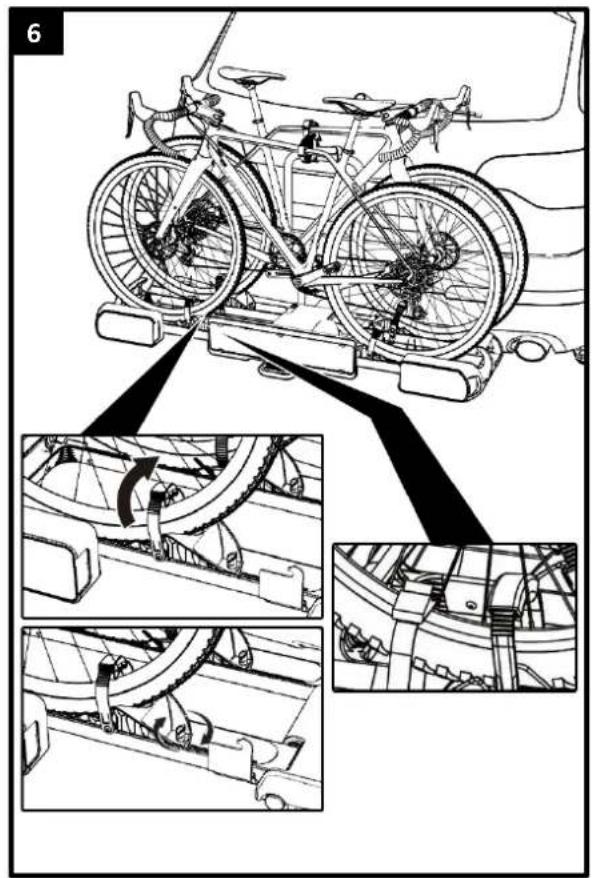
natural_image
Technical line drawing of a bicycle under load, showing front wheel assembly and three close-up insets (no text or symbols)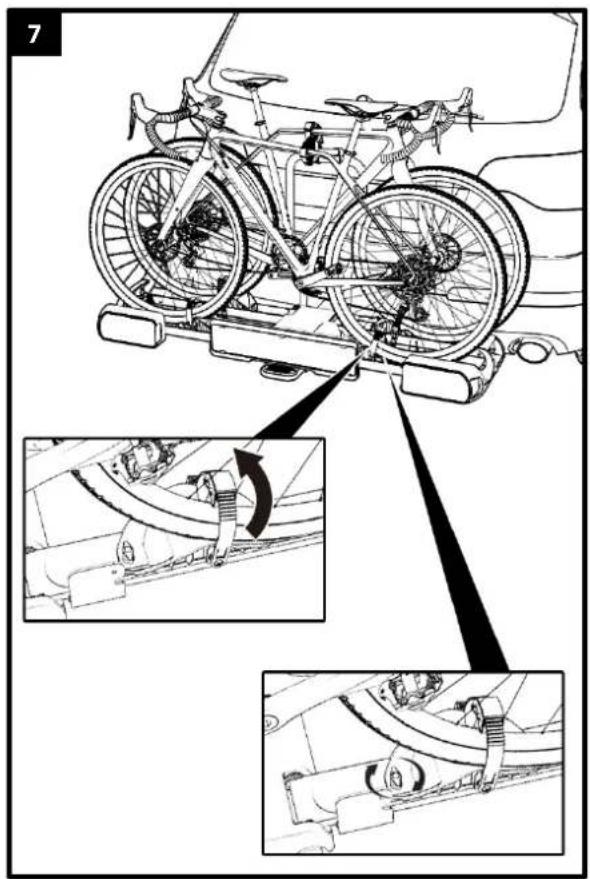
text_image
7
AVERTISSEMENT!
natural_image
Technical line drawing of a bicycle front view showing wheel assembly and rearview detail (no text or symbols)natural_image
Line drawing of a car with a mounted bicycle frame and a connecting rod, showing no text or symbols.
PRUDENCE!
text_image
Diagram showing bicycle wheel assembly with labeled components and directional arrows indicating motion or movement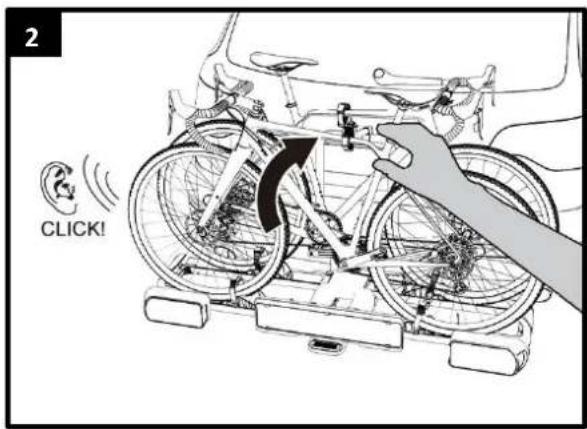
text_image
2 CLICK!
PRUDENCE!
natural_image
Technical diagram of a vehicle chassis with attached components and a close-up inset showing internal structure (no text or symbols)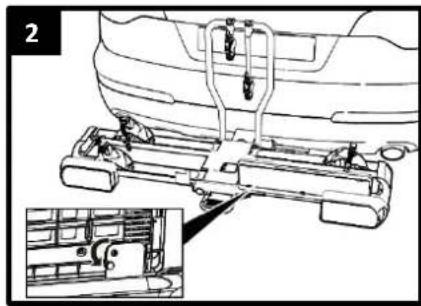
natural_image
Technical line drawing of a vehicle chassis with attached mechanical components and a close-up inset showing internal components (no text or symbols)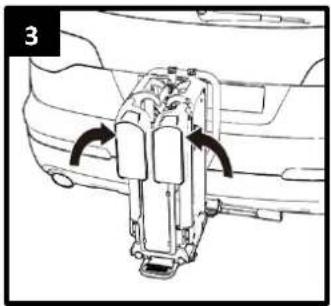
natural_image
Line drawing of a car interior showing a vehicle's rearview structure with directional arrows indicating movement (no text or symbols)natural_image
Illustration of a hand placing cylindrical components into a rack (no text or symbols)NETTOYAGE ET ENTRETIEN
text_image
Technical diagram showing mechanical assembly with numbered components and a magnified detail view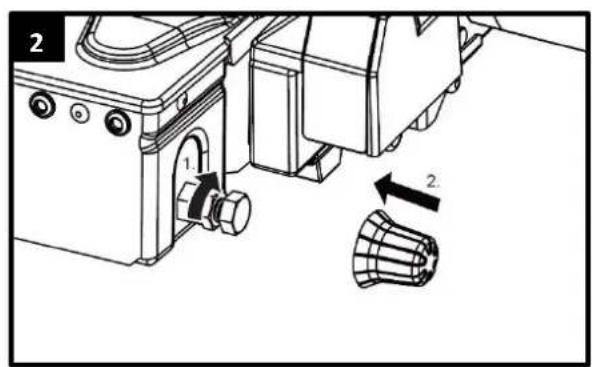
text_image
2 1. 2.PRISE MÂLE 7/13 BROCHES
text_image
Exploded view diagram of a mechanical device with numbered parts for identificationAPERÇU DES PIECES DE RECHANGE (TABLEAU)
Pro-User is part of Tradekar House of Leisure Brands
Tradekar Benelux BV
Ohmweg 1 +31 (0)345-470990
4104 BM CULEMBORG info@tradekar.com
The Netherlands www.pro-user.eu