
CMPPN23 - Stapler Craftsman - Free user manual and instructions
Find the device manual for free CMPPN23 Craftsman in PDF.


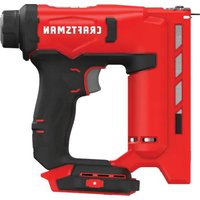
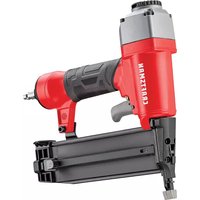
| Product Type | Pneumatic Stapler |
| Brand | Craftsman |
| Model | CMPPN23 |
| Height | 16 cm (6.3 in) |
| Width | 4 cm (1.7 in) |
| Length | 22 cm (8.9 in) |
| Weight | 0.91 kg (2 lb) |
| Power Supply | Pneumatic, operating pressure 60–100 PSI (4.1–6.9 bar) |
| Air Consumption | 1.56 SCF per 100 cycles |
| Magazine Capacity | 170 nails |
| Fastener Type | 23 gauge nails, lengths 13–25 mm (1/2–1 in) |
| Air Inlet | 1/4 in NPT (6.4 mm) |
| Lubrication | Pneumatic tool oil (SAE 20 non-detergent) |
| Main Functions | Dual trigger system, safety lock, depth adjustment by air pressure, nail level indicator |
| Maintenance and Cleaning | Lubricate daily, drain tanks, clean magazine and mechanism with compressed air |
| Safety | Mandatory safety glasses (ANSI Z87.1), do not use with oxygen or combustible gases, disconnect air before maintenance |
| Spare Parts and Repairability | Repairs by Craftsman authorized center; parts available via customer service |
| General Information | Limited 3-year warranty, 90-day satisfaction guarantee |
Frequently Asked Questions - CMPPN23 Craftsman
User questions about CMPPN23 Craftsman
0 question about this device. Answer the ones you know or ask your own.
Ask a new question about this device
Download the instructions for your Stapler in PDF format for free! Find your manual CMPPN23 - Craftsman and take your electronic device back in hand. On this page are published all the documents necessary for the use of your device. CMPPN23 by Craftsman.
USER MANUAL CMPPN23 Craftsman
IF YOU HAVE QUESTIONS OR COMMENTS, CONTACT US.
POUR TOUTE QUESTION OU TOUT COMMENTAIRE, NOUS CONTACTER.
SI TIENE DUDAS O COMENTARIOS, CONTÁCTENOS.
1-888-331-4569 WWW.CRAFTSMAN.COM
English (original instructions) 3
1 Primary trigger
2 Secondary trigger
3 Air Inlet with quick connect coupler
4 Rear exhaust
5 Magazine release
6 Magazine
7 Low nail indicator window
8 Nosepiece
Composants
WARNING: Read all safety warnings and all instructions. Failure to follow the warnings and instructions may result in electric shock, fire and/or serious injury.

WARNING: To reduce the risk of injury, read the instruction manual.
Intended Use
Your nailer is designed for professional fastening applications.
DO nOT use under wet conditions or in presence of flammable liquids or gases.
Your nailer is a professional power tool.
DO nOT let children come into contact with the tool. Supervision is required when inexperienced operators use this tool.
Definitions: Safety Alert Symbols and Words
This instruction manual uses the following safety alert symbols and words to alert you to hazardous situations and your risk of personal injury or property damage.
DANGER: Indicates an imminently hazardous situation which, if not avoided, will result in death or serious injury.
WARNING: Indicates a potentially hazardous situation which, if not avoided, could result in death or serious injury.
CAUTION: Indicates a potentially hazardous situation which, if not avoided, may result in minor or moderate injury.
(Und without word) Indicates a safety related message.
NOTICE: Indicates a practice not related to personal injury which, if not avoided, may result in property damage.
IMPORTANT SAFETY INSTRUCTIONS
WARNING: Only persons who have read and understand the tool operating/safety instructions should operate the tool.
WARNING: Actuating tool may result in flying debris, radiation material, or dust which could harm operator's eyes. Operator and others in work area MUST wear safety glasses with side shields. These safety glasses must conform to ANSI Z87.1 requirements (approved glasses have "Z87" printed or stamped on them). Employer is responsible for enforcing the usage of eye protection equipment by the tool operator and all other personnel in the work area.
WARNING: Always assume that the tool contains fasteners.
WARNING: (Air and Supply)
Do not use oxygen, combustible gases, or bottled gases as a power source for this tool as tool may explode, possibly causing injury.
- Do not use supply sources which can potentially exceed 200 p.s.i.g. (14 kg/cm ^2 ) as tool may burst, possibly causing injury.
- The connector on the tool must not hold pressure when air supply is disconnected. If a wrong fitting
is used, the tool can remain charged with air after disconnecting and thus will be able to drive a fastener even after the air line is disconnected possibly causing injury.
- Do not pull the trigger while connected to the air supply as the tool may cycle, possibly causing injury.
• Always disconnect air supply: 1.) Before making adjustments; 2.) When servicing the tool; 3.) When clearing a jam; 4.) When tool is not in use; 5.) When moving to a different work area, as accidental actuation may occur, possibly causing injury.
WARNING: When loading tool:
- Never place a hand or any part of body in fastener discharge area of tool.
- Never point tool at yourself or anyone else.
- Do not pull the triggers as accidental actuation may occur, possibly causing injury.
- Be careful when handling fasteners, especially when loading and unloading, as the fasteners have sharp points.
WARNING: Do not operate tool if:
• There is any damage to air hose or fitting.
• The tool leaks air.
- The tool has received a sharp blow, malfunctions or is dropped or damaged in any manner. Return tool to the nearest authorized service facility for examination, repair, or mechanical adjustment.
- Warning labels are missing or damaged.
- Tool is not in proper working order. Tags and physical segregation shall be used for control.
- Tool is without workpiece contact. A tool without workpiece contact can be fired unintentionally causing injury to an operator or a bystander.
WARNING: When operating the tool:
• Always handle the tool with care:
- Never engage in horseplay.
- Never pull the trigger unless nose is directed toward the work.
- Never point the tool at yourself or others.
- Keep others a safe distance from the tool while tool is in operation as accidental actuation may occur, possibly causing injury.
- Keep bystanders and children away while operating tool.
- Respect tool as a working implement.
- Stay alert, focus on your work and use common sense when working with tools.
- Do not use tool while tired, after having consumed drugs or alcohol, or while under the influence of medication.
- Do not overreach. Only use in a safe working place.
- Keep proper footing at all times.
- When working close to an edge of a workpiece or at steep angles use care to minimize chipping,
English
splitting or splintering, or free flight or ricochet of fasteners, which may cause injury.
- Do not drive fasteners on top of other fasteners or with the tool at an overly steep angle as this may cause deflection of fasteners which could cause injury.
- Do not load tool with fasteners when any one of the operating controls is activated.
- Use extra caution when driving fasteners into existing walls or other blind areas to prevent contact with hidden objects or persons on other side (e.g., wires, pipes.)
• The operator must not pull the trigger except during fastening operation as serious injury could result if the tool accidentally contacts someone or something, causing the tool to cycle. - Keep hands and body away from the discharge area of the tool. The tool may bounce from the recoil of driving a fastener and an unwanted second fastener may be driven possibly causing injury.
- Check operation of the trigger mechanism frequently. Do not use the tool if the trigger is not working correctly as accidental driving of a fastener may result. Do not interfere with the proper operation of the trigger mechanism.
- Never inadvertently pull or grasp the trigger when moving about, changing work location, when holstering or hanging tool, or when preparing work surface for fastening operation.
- This tool produces SPARKS during operation. NEVER use the tool near flammable substances, gases or vapors including lacquer, paint, benzine, thinner, gasoline, adhesives, mastics, glues or any other material that is -- or the vapors, fumes or byproducts of which are -- flammable, combustible or explosive. Using the fastenerer in any such environment could cause an EXPLOSION resulting in personal injury or death to user and bystanders.
WARNING: Bump Or Contact Actuation Trigger: When using the bump action trigger, be careful of unintentional double fires resulting from tool recoil. Unwanted fasteners may be driven if the contact trip is allowed to accidentally re-contact the work surface.
WARNING: TO AVOID DOUBLE FIRES:
Do not engage the tool against the work surface with a strong force.
- Allow the tool to recoil fully after each actuation.
- Use sequential action trigger.
- When bump actuating the nailer, always keep tool in control. Inaccurate placement of tool can result in misdirected discharge of a fastener.
WARNING: SEQUENTIAL ACTION TRIGGER
- When using the sequential action trigger, do not actuate the tool unless the tool is placed firmly against the workpiece.
WARNING: DEPTH ADJUSTMENT:
• To reduce risk of serious injury from accidental actuation when attempting to adjust depth, ALWAYS;
- Disconnect air supply.
- Avoid contact with trigger during adjustments.
Do not drive nails blindly into walls, floors or other work areas. Fasteners driven into live electrical wires, plumbing, or other types of obstructions can result in injury.
Sty alert, watch what you are doing and use common sense when operating a power tool. Do not use tool while tired or under the influence of drugs or alcohol. A moment of inattention while operating power tools may result in serious personal injury.
WARNING: After driving a fastener, tool may bounce back ("recoil") causing it to move away from the work surface. To reduce risk of injury always manage recoil by:
• Always maintaining control of tool.
- Allowing recoil to move tool away from work surface.
- Not resisting recoil such that tool will be forced back into the work surface. In "Contact Actuation Mode," if workpiece contact is allowed to re-contact work surface before the trigger is released, an unintended discharge of a fastener will occur.
- Keeping face and body parts away from tool.
WARNING: Disconnect tool:
- when not in use,
- When performing any maintenance or repairs,
- When clearing a jam,
- When elevating, lowering or otherwise moving tool to a new location,
- When tool is outside of the operator's supervision or control,
- When removing fasteners from the magazine.
WARNING: When maintaining the tool:
• Always shut off air supply, and disconnect tool from air supply when not in use.
- When working on air tools note the warnings in this manual and use extra care when evaluating problem tools.
Additional Safety Warnings
WARNING: Do not use this product to fasten electrical cables. Fastening electric wires / cables could result in electric shock or serious harm.
WARNING: Make sure there are no electrical cables, gas pipes, etc. that could cause a hazard if damaged by use of the tool.
English
WARNING: This tool is not intended for use in potentially explosive atmospheres and is not insulated from coming into contact with electrical power.
- Use the pneumatic tool only for the purpose for which it was designed.
- Do not use the tool as a hammer.
• Always carry the tool by the handle with hand off both triggers. - Never lift, pull, lower, or carry the tool by the air hose.
- Whipping hoses can cause severe injury. Always check for damaged or loose hoses or fittings.
- Never direct compressed air at yourself or anyone else.
• Compressed air can cause severe injury. - Do not alter or modify this tool from the original design or function without approval from CRAFTSMAN.
- Never clamp or tape the trigger in an actuated position.
- Ensure tool is always safely engaged on the workpiece and cannot slip.
- Never leave a tool unattended with the air hose attached.
TO PREVENT ACCIDENTAL INJURIES:
- Never place a hand or any other part of the body in fastener discharge area of tool while the air supply is connected.
- Never actuate the tool unless nose is directed at the work.
- Do not actuate the tool while loading.
- Keep hands and body parts away from the discharge area of the tool. While in use NEVER grasp the tool by the magazine or canister, a mis-driven fastener can exit the nose causing injury.
Additional Safety Information
WARNING: Never modify the power tool or any part of damage or personal injury could result.
WARNING: ALWAYS use safety glasses. Everyday glasses are NOT safety glasses. Also use face or dust mask if cutting operation is dusty. ALWAYS WEAR CERTIFIED SAFETY EQUIPMENT:
• ANSI Z87.1 eye protection (CAN/CSA Z94.3),
• ANSI S12.6 (S3.19) hearing protection,
• NIOSH/OSHA/MSHA respiratory protection.
WARNING: Some dust created by power sanding, sanding, grinding, drilling, and other construction activities
contains chemicals known to the State of California to cause cancer, birth defects or other reproductive harm. Some examples of these chemicals are:
- lead from lead-based paints,
• crystalline silica from bricks and cement and other masonry products, and
• arsenic and chromium from chemically-treated lumber.
Your risk from these exposures varies, depending on how often you do this type of work. To reduce your exposure to these chemicals: work in a well ventilated area, and work with approved safety equipment, such as those dust masks that are specially designed to filter out microscopic particles.
- Wear protective clothing and wash exposed areas with soap and water. Allowing dust to get into your
mouth, eyes, or lay on the skin may promote absorption of harmful chemicals. Direct particles away from face and body.
- Use the appropriate dust extractor vacuum to remove the vast majority of static and airborne dust. Failure to remove static and airborne dust could contaminate the working environment or pose an increased health risk to the operator and those in close proximity.
- Use clamps or other practical ways to secure and support the workpiece to a stable platform. Holding the work by hand or against your body is unstable and may lead to loss of control and injury.
• Air vents often cover moving parts and should be avoided. Loose clothes, jewelry or long hair can be caught in moving parts.
The label on your tool may include the following symbols. The symbols and their definitions are as follows:
BPM.....beats per minute
V....volts
min......minutes
===or DC......direct current
.../min.....per minute
RPM......revolutionsper minute
A.....amperes
Hz.....hertz
W.....watts
Wh.....watt hours
_0 .....no load speed n .....rated speed
⚠️......safety alert symbol
wearrespiratory protection
戴眼镜…… wear eye protection
☐ Class II Construction (double insulated)
O....wearhearing protection
readall documentation
avoid staring at light
\~ or AC......alternating current Ah......amphours
ASSEMBLY AND ADJUSTMENTS
WARNING: To reduce the risk of serious personal injury, turn unit off and remove air supply before making any adjustments or removing/installing attachments or accessories. An accidental actuation can cause injury.
TOOL SPECIFICATIONS
| Height (inch/meter) 6.3/0.16 |
| Width (inch/meter) 1.7/0.04 |
| Length (inch/meter) 8.9/0.22 |
| Weight (lbs/kg) 2/0.91 |
| Recommended Operating Pressure 60-100 psi (4.1 to 6.9 bar) |
| Air Consumption per 100 cycles 1.56 SCF |
| Loading capacity 170 nails |
| Lubrication Oil |
FASTENER SPECIFICATIONS
Model
Nail 23 gauge pin nails
Lengths 1/2" (13 mm) -1" (25 mm)
Air Inlet 1/4" NPT (6.4 mm)
NOTE: Use only CRAFTSMAN approved fasteners.
Trigger (Fig. A)
WARNING: Keep fingers AWAY from trigger when not driving fasteners to avoid accidental firing. Never carry tool with finger on trigger.
WARNING: Once the secondary trigger is pulled the too, will drive a fastenere every time the primary trigger is pulled.
This tool is equipped with with a dual trigger actuation system. the secondary trigger 2 must be depressed in order to depress the primary trigger 1. Each time the primary trigger is depressed the tool will fire a fastener.
Air Fitting (Fig. B, C)
The tool is equipped with a 1/4" (6.4 mm) male quick connector coupling. A 3/8" (9.5 mm) male quick connector coupling may be used when a 1/4" (6.4 mm) supply line is not available.
NOTE: A 3/8" (9.5 mm) supply line (and fittings) are required for maximum tool performance. IMPORTANT: Always use couplings that relieve all pressure from the tool when it is disconnected from the power supply. Always use hose connectors that shut off air supply from compressor when the tool is disconnected.
To Install an Air Fitting
- Wrap the male end of the fitting with thread seal tape prior to assembly to eliminate air leaks.
- To install a 1/4" (6.4 mm) fitting: screw it directly into the air inlet 3 and tighten firmly. NOTE: If a cap is in the air inlet, remove it prior to inserting the fitting.
- To install a 3/8" (9.5 mm) fitting: screw the fitting into the 3/8" (9.5 mm) adapter and then into the air inlet of the tool and tighten firmly.
Preparing the Tool
WARNING: Read the section titled IMPORTANT SAFETY INSTRUCTIONS at the beginning of this manual. Always wear proper eye [ANSI Z87.1 (CAN/CSA Z94.3)] and hearing protection [ANSI S12.6 (S3.19)] when operating this tool. Keep the fastener pointed away from yourself and others. For safe operation, complete the following procedures and checks before each use of the fastener.
NOTICE: To reduce the risk of damage to the tool, only use pneumatic tool oil or a non-detergent SAE 20 weight oil. Oil with additives or detergent will damage tool parts.
- Before you use the tool, be sure that the compressor tanks have been properly drained. NOTE: Use a filter and regulator when possible.
- Wear proper eye, hearing and respiratory protection.
- Remove all fasteners from the magazine.
- Check for smooth and proper operation of contact trip and pusher assemblies. Do not use tool if either assembly is not functioning properly. NEVER use a tool that has the contact trip restrained in the up position.
- Check air supply: Ensure air pressure does not exceed operating limits; 60 to 100 p.s.i.g., (4.1 to 6.9kg/cm^2 ).
- Lubricate tool:
- Use CRAFTSMAN pneumatic tool oil or a non-detergent S.A.E. 20 weight oil. DO NOT use detergent oil or additives as they will damage O-rings and rubber parts.
- Use a filter when possible.
- Add 5 to 7 drops of oil in the air fitting a least twice a day.
- Keep tool pointed away from yourself and others.
- Connect air hose.
- Check for audible leaks around valves and gaskets. Never use a tool that leaks or has damaged parts.
Using the Secondary Trigger (Fig. A)
WARNING: To reduce the risk of injury, Always wear proper eye [ANSI Z87.1 (CAN/CSA Z94.3)] and hearing protection [ANSI S12.6 (S3.19)] when operating this tool.
WARNING: Do not keep trigger depressed when tool is read-use. Serious personal injury may result.
WARNING: Disconnect air line from tool and remove followers from magazine before making adjustments. Serious personal injury may result.
The tool is locked off until the secondary trigger 2 is depressed.
OPERATION
WARNING: To reduce the risk of serious personal injury, turn unit off and remove air supply before making any adjustments or removing/installing attachments or accessories. An accidental actuation can cause injury.
Proper Hand Position (Fig. D)
WARNING: To reduce the risk of serious personal injury, ALWAYS use proper hand position as shown.
WARNING: To reduce the risk of serious personal injury, ALWAYS hold securely in anticipation of a sudden reaction.
Proper hand position requires one hand on the main handle 9.
Loading Fasteners (Fig. A, B, E)
WARNING: Keep the tool pointed away from yourself and others. Serious personal injury may result.
WARNING: Never load nails with the trigger or triggers activated. Personal injury may result.
- Read all Safety Warnings before using tool.
- Connect the tool to air supply.
- Push magazine release 5 and pull magazine 6 back. Make sure the primary and secondary trigger are released.
- Insert fasteners into the bottom of the magazine. For fasteners with arrows the direction arrow printed on the fasteners should point down into the bottom of magazine. NOTE: Make sure fasteners are placed firmly against lower ledge of magazine.
- Push magazine closed until it locks in place. Make sure the magazine snaps into place.
- Observe low nail indicator window 7 and reload when needed. NOTE: The tool will not fire when only a few fasteners are left in the magazine, reload fasteners to begin firing again.
Actuating Tool (Fig. A)
WARNING: To reduce the risk of injury, Always wear your eye [ANSI Z87.1 (CAN/CSA Z94.3)] and hearing protection [ANSI S12.6 (S3.19)] when operating this tool.
WARNING: A nail will fire each time the trigger is depressed which could result in accidental actuation.
- Place the nosepiece 8 against the work surface.
- Depress the secondary trigger 2 to unlock the trigger 1. Now depress the trigger. A fastener is fired each time the primary trigger is depressed.
CAUTION: Each time a fastener is fired, a blast of air will be exhausted from the rear exhaust. Keep your face away from this area.
Depth Adjustment
WARNING: To reduce the risk of serious personal injury, turn unit off and remove air supply before making any adjustments or removing/installing attachments or accessories. An accidental actuation can cause injury.
CAUTION: Air pressure in excess of that required can cause premature wear and/or damage to the tool.
The depth that a fastener is driven is controlled by the pressure of the air supply. The amount of air pressure required will vary depending on the length of the fastener and the material being fastened. Experiment with the air pressure setting to determine the lowest setting that will consistently perform the job at hand.
Clearing a Jammed Nail (Fig. A, B, E)
WARNING: Disconnect the tool from the air supply and remove fasteners from magazine before making adjustments or personal injury may result.
If a nail becomes jammed in the nosepiece, keep the tool pointed away from you and follow these instructions to clear:
- Disconnect air supply from tool.
- Push magazine release 5 and pull magazine 6 back. Remove fasteners.
- Remove no-mar pad 11 and then using hex wrench to remove two bolts 10 and nosepiece 8.
- Remove the jammed fastener.
- Examine the feed track and clear any damaged pins or pin fragments.
- Replace nosepiece and tighten bolts securely.
- Reattach air supply.
- Reload the tool (see Loading Fasteners).
nOTE: Should nails continue to jam frequently in nosepiece, have tool serviced by an authorized service center.
Cold Weather Operation
WARNING: To reduce the risk of serious personal injury, turn unit off and remove air supply before making any adjustments or removing/installing attachments or accessories. An accidental actuation can cause injury.
WARNING: Do not store tools in a cold weather environment to prevent frost or ice formation on the tools operating valves and mechanisms that could cause tool failure.
WARNING: Some commercial air line drying liquids are harmful to "O"-rings and seals – do not use these low temperature air dryers without checking compatibility.
When operating tools at temperatures below freezing:
- Make sure compressor tanks have been properly drained prior to use.
- Keep tool as warm as possible prior to use.
- Make certain all fasteners have been removed from magazine.
- Lower air pressure to 80 p.s.i.g. or less.
- Reconnect air and and load fasteners into magazine.
- Turn pressure up to operating level (not to exceed 120 p.s.i.g.) and use tool as normal.
- Always drain the compressor tanks at least once a daily.
Hot Weather Operation
Tool should operate normally. However, keep tool out of direct sunlight as excessive heat can deteriorate bumpers, o-rings and other rubber parts resulting in increased maintenance.
MAINTENANCE
WARNING: To reduce the risk of serious personal injury, turn unit off and remove air supply before making any adjustments or removing/installing attachments or accessories. An accidental actuation can cause injury.
ENGLISH
| Action Why How | ||
| Lubricate tool with 2–3 drops of CRAFTSMAN pneumatic Tool Oil. | Prevents failure of O-rings. | Insert drops into air inlet fitting. |
| Drain compressor tanks and hoses daily. | Prevents accumulation of moisture in compressor and nailer. | Open petcocks or other drain valves on compressor tanks. Allow any accumulated water to drain from hoses. |
| Clean magazine, magazine release and contact trip mechanism. | Permits smooth operation of magazine, reduces wear and prevents jams. | Blow clean with compressor air. The use of oils, lubricants periodically or solvents is not recommended as they tend to attract debris. |
| Before each use, check to insure all screws, nuts and fasteners are tight and undamaged. | Prevents jams, leaks and premature failure of tool parts. | Tighten loose screws or other fasteners using the appropriate hex wrench or screwdriver. |
Cleaning
WARNING: Blow dirt and dust out of all air vents with dry air at least once a week. To minimize the risk of eye injury, always wear ANSI Z87.1 approved eye protection when performing this procedure.
WARNING: Never use solvents or other harsh chemicals for cleaning the non-metallic parts of the tool. These chemicals may weaken the plastic materials used in these parts. Use a cloth dampened only with water and mild soap. Never let any liquid get inside the tool; never immerse any part of the tool into a liquid.
Accessories
WARNING: Since accessories, other than those carried by CRAFTSMAN, have not been tested with this product, use of such accessories with this tool could be hazardous. To reduce the risk of injury, only CRAFTSMAN recommended accessories should be used with this product.
Recommended accessories for use with your tool are available at extra cost from your local dealer or authorized service center. If you need assistance in locating any accessory, please contact CRAFTSMAN call 1-888-331-4569.
Repairs
WARNING: To assure product SAFETY and RELIABILITY, repairs, maintenance and adjustment (including brush inspection and replacement, when applicable) should be performed by a CRAFTSMAN factory service center or a CRAFTSMAN authorized service center. Always use identical replacement parts.
Register Online
Thank you for your purchase. Register your product now for:
- WARRANTY SERVICE: Registering your product will help you obtain more efficient warranty service in case there is a problem with your product.
- CONFIRMATION OF OWNERSHIP: In case of an insurance loss, such as fire, flood or theft, your registration of ownership will serve as your proof of purchase.
• FOR YOUR SAFETY: Registering your product will allow us to contact you in the unlikely event a safety notification is required under the Federal Consumer Safety Act.
• Register online at www.craftsman.com/registration
Three Year Limited Warranty
CRAFTSMAN will repair or replace, without charge, any defects due to faulty materials or workmanship for three years from the date of purchase. This warranty does not cover part failure due to normal wear or tool abuse. For further detail of warranty coverage and warranty repair information, visit www.craftsman.com or call
1-888-331-4569. This warranty does not apply to accessories or damage caused where repairs have been made or attempted by others. THIS LIMITED WARRANTY IS GIVEN IN LIEU OF ALL OTHERS, INCLUDING THE IMPLIED WARRANTY OF MERCHANTABILITY AND FITNESS FOR A PARTICULAR PURPOSE, AND EXCLUDES ALL INCIDENTAL OR CONSEQUENTIAL DAMAGES. Some states do not allow limitations on how long an implied warranty lasts or the exclusion or limitation of incidental or consequential damages, so these limitations may not apply to you. This warranty gives you specific legal rights and you may have other rights which vary in certain states or provinces.
90 DAY MONEY BACK GUARANTEE
If you are not completely satisfied with the performance of your CRAFTSMAN Power Tool or Nailer for any reason, you can return it within 90 days from the date of purchase with a receipt for a full refund – no questions asked.
LATIN AMERICA: This warranty does not apply to products sold in Latin America. For products sold in Latin America, see country specific warranty information contained in the packaging, call the local company or see website for warranty information.
FREE WARNING LABEL REPLACEMENT: If your warning labels become illegible or are missing, call 1-888-331-4569 for a free replacement.
Troubleshooting
| Problem Cause Correction | ||
| Trigger valve housing leaks air. O-ring cut or cracked. Replace O-ring. | ||
| Trigger valve stem leaks air. O-ring/seals cut or cracked. Replace trigger valve assembly. | ||
| Frame/nose leaks air. Loose nose screws. Tighten and recheck. | ||
| O-ring or gasket is cut or cracked. Replace O-ring or gasket. | ||
| Bumper cracked/worn. Replace bumper. | ||
| Frame/cap leaks air. Damaged gasket or seal. Replace gasket or seal. | ||
| Cracked/worn head valve bumper. Replace bumper. | ||
| Loose cap screws. Tighten and recheck. | ||
| Failure to cycle. Air supply restriction. | Check air supply equipment. | |
| Tool dry, lack of lubrication. | Use Air Tool Lubricant. | |
| Worn head valve O-rings. | Replace O-rings. | |
| Broken cylinder cap spring. | Replace cylinder cap spring. | |
| Head valve stuck in cap. | Disassemble/Check/Lubricate. | |
| Lack of power; slow to cycle. | Tool dry, lacks lubrication. | Use Air Tool Lubricant. |
| Broken cylinder cap spring. | Replace cap spring. | |
| O-rings/seals cut or cracked. | Replace O-rings/seals. | |
| Exhaust blocked . | Check bumper, head valve spring, muffler. | |
| Trigger assembly worn/leaks. | Replace trigger assembly. | |
| Dirt/tar build up on driver. | Disassemble nose/driver to clean. | |
| Cylinder sleeve not seated correctlyon bottom bumper. | Disassemble to correct. | |
| Head valve dry. | Disassemble/lubricate. | |
| Air pressure too low. | Check air supply equipment. | |
| Skipping fasteners; intermittent feed. | Worn bumper. | Replace bumper. |
| Tar/dirt in driver channel. | Disassemble and clean nose and driver. | |
| Air restriction/inadequate air flow through quick disconnect socket and plug. | Replace quick disconnect fittings. | |
| Worn piston O-ring. | Replace O-ring, check driver. | |
| Tool dry, lacks lubrication. | Use Air Tool Lubricant. | |
| Damaged pusher spring. Replace spring. | ||
| Low air pressure. | Check air supply system to tool. | |
| Loose magazine nose screws. | Tighten all screws. | |
| Fasteners too short for tool. Use only recommended fasteners. | ||
| Bent fasteners. | Discontinue using these fasteners. | |
| Wrong size fasteners. | Use only recommended fasteners. | |
| Leaking head cap gasket. | Tighten screws/replace gasket. | |
| Trigger valve O-ring cut/worn. | Replace O-ring. | |
| Broken/chipped driver. Replace driver (check piston O-ring). | ||
| Dry/dirty magazine. | Clean/lubricate use Air Tool Lubricant. | |
| Worn magazine. | Replace magazine. | |
| Fasteners jam in tool. | Driver channel worn. | Replace nose/check door. |
| Wrong size fasteners. | Use only recommended fasteners. | |
| Bent fasteners. | Discontinue using these fasteners. | |
| Loose magazine/nose screws. | Tighten all screws. | |
| Broken/chipped driver. Replace driver. | ||
FRAnÇAis
--- o CD...... corriente directa
.../min.....por minuto
Eje Central Lázaro Cárdenas No. 18 - Local (55) 5588 9377 D, Col. Obrera
MERIDA, YUC
Calle 63 #459-A - Col. Centro (999) 928 5038
MONTERREY, N.L.
Av. Francisco I. Madero 831 Poniente - Col. (818) 375 23 13 Centro
PUEBLA, PUE
17 Norte #205 - Col. Centro (222) 246 3714
QUERETARO, QRO
Av. San Roque 274 - Col. San Gregorio (442) 2 17 63 14
SAN LUIS POTOSI, SLP
natural_image
Pure geometric lines forming a symmetrical shape without any text, numbers, or symbolsCRAFTSMAN 701 East Joppa Road, Towson, MD 21286
Copyright © 2020
- Composants
- Intended Use
- Definitions: Safety Alert Symbols and Words
- IMPORTANT SAFETY INSTRUCTIONS
- WARNING: When loading tool:
- WARNING: Do not operate tool if:
- WARNING: When operating the tool:
- English
- WARNING: TO AVOID DOUBLE FIRES:
- WARNING: SEQUENTIAL ACTION TRIGGER
- WARNING: DEPTH ADJUSTMENT:
- WARNING: After driving a fastener, tool may bounce back ("recoil") causing it to move away from the work surface. To reduce risk of injury always manage recoil by:
- WARNING: Disconnect tool:
- WARNING: When maintaining the tool:
- Additional Safety Warnings
- TO PREVENT ACCIDENTAL INJURIES:
- Additional Safety Information
- ASSEMBLY AND ADJUSTMENTS
- FASTENER SPECIFICATIONS
- Trigger (Fig. A)
- Air Fitting (Fig. B, C)
- To Install an Air Fitting
- Preparing the Tool
- Using the Secondary Trigger (Fig. A)
- OPERATION
- Proper Hand Position (Fig. D)
- Loading Fasteners (Fig. A, B, E)
- Actuating Tool (Fig. A)
- Depth Adjustment
- Clearing a Jammed Nail (Fig. A, B, E)
- Cold Weather Operation
- Hot Weather Operation
- MAINTENANCE
- Cleaning
- Accessories
- Repairs
- Register Online
- Three Year Limited Warranty
- DAY MONEY BACK GUARANTEE
- FRAnÇAis
- MERIDA, YUC
- MONTERREY, N.L.
- PUEBLA, PUE
- QUERETARO, QRO
- SAN LUIS POTOSI, SLP
Brand : Craftsman
Model : CMPPN23
Category : Stapler