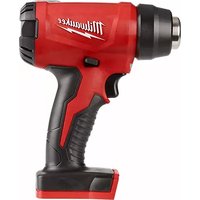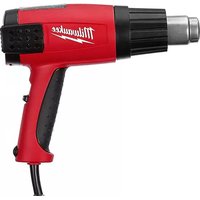
8988-20 - Heat gun MILWAUKEE - Free user manual and instructions
Find the device manual for free 8988-20 MILWAUKEE in PDF.


User questions about 8988-20 MILWAUKEE
0 question about this device. Answer the ones you know or ask your own.
Ask a new question about this device
Download the instructions for your Heat gun in PDF format for free! Find your manual 8988-20 - MILWAUKEE and take your electronic device back in hand. On this page are published all the documents necessary for the use of your device. 8988-20 by MILWAUKEE.
USER MANUAL 8988-20 MILWAUKEE
natural_image
Line drawing of a Milwaukee air purifier with control panel and handle (no text or symbols)Cat. No. / No de cat.
8988-20
VARIABLE TEMPERATURE HEAT GUN WITH LCD DISPLAY PISTOLET THERMIQUE À TEMPÉRATURE VARIABLE AVEC AFFICHEUR ACL
PISTOLA DE CALOR DE TEMPERATURA VARIABLE CON PANTALLA LCD

WARNING To reduce the risk of injury, user must read and understand operator's manual.
⚠ WARNING Read all safety warnings, instructions, illustrations and specifications provided with this power tool. Failure to follow all instructions listed below may result in electric shock, fire and/or serious injury. Save all warnings and instructions for future reference. The term "power tool" in the warnings refers to your mains-operated (corded) power tool or battery-operated (cordless) power tool.
WORK AREA SAFETY
- Keep work area clean and well lit. Cluttered or dark areas invite accidents.
- Do not operate power tools in explosive atmospheres, such as in the presence of flammable liquids, gases or dust. Power tools create sparks which may ignite the dust or fumes.
- Keep children and bystanders away while operating a power tool. Distractions can cause you to lose control.
ELECTRICAL SAFETY
- Power tool plugs must match the outlet. Never modify the plug in any way. Do not use any adapter plugs with earthed (grounded) power tools. Unmodified plugs and matching outlets will reduce risk of electric shock.
- Avoid body contact with earthed or grounded surfaces, such as pipes, radiators, ranges and refrigerators. There is an increased risk of electric shock if your body is earthed or grounded.
- Do not expose power tools to rain or wet conditions. Water entering a power tool will increase the risk of electric shock.
- Do not abuse the cord. Never use the cord for carrying, pulling or unplugging the power tool. Keep cord away from heat, oil, sharp edges or moving parts. Damaged or entangled cords increase the risk of electric shock.
- When operating a power tool outdoors, use an extension cord suitable for outdoor use. Use of a cord suitable for outdoor use reduces the risk of electric shock.
- If operating a power tool in a damp location is unavoidable, use a ground fault circuit interrupter (GFCI) protected supply. Use of an GFCI reduces the risk of electric shock.
PERSONAL SAFETY
- Stay alert, watch what you are doing and use common sense when operating a power tool. Do not use a power tool while you are tired or under the influence of drugs, alcohol or medication. A moment of inattention while operating power tools may result in serious personal injury.
- Use personal protective equipment. Always wear eye protection. Protective equipment such as a dust mask, non-skid safety shoes, hard hat or hearing protection used for appropriate conditions will reduce personal injuries.
-
Prevent unintentional starting. Ensure the switch is in the off-position before connecting to power source and/or battery pack, picking up or carrying the tool. Carrying power tools with your finger on the switch or energizing power tools that have the switch on invites accidents.
-
Remove any adjusting key or wrench before turning the power tool on. A wrench or a key left attached to a rotating part of the power tool may result in personal injury.
- Do not overreach. Keep proper footing and balance at all times. This enables better control of the power tool in unexpected situations.
- Dress properly. Do not wear loose clothing or jewelry. Keep your hair and clothing away from moving parts. Loose clothes, jewelry or long hair can be caught in moving parts.
- If devices are provided for the connection of dust extraction and collection facilities, ensure these are connected and properly used. Use of dust collection can reduce dust-related hazards.
- Do not let familiarity gained from frequent use of tools allow you to become complacent and ignore tool safety principles. A careless action can cause severe injury within a fraction of a second.
POWER TOOL USE AND CARE
- Do not force the power tool. Use the correct power tool for your application. The correct power tool will do the job better and safer at the rate for which it was designed.
- Do not use the power tool if the switch does not turn it on and off. Any power tool that cannot be controlled with the switch is dangerous and must be repaired.
- Disconnect the plug from the power source and/or remove the battery pack, if detachable, from the power tool before making any adjustments, changing accessories, or storing power tools. Such preventive safety measures reduce the risk of starting the power tool accidentally.
- Store idle power tools out of the reach of children and do not allow persons unfamiliar with the power tool or these instructions to operate the power tool. Power tools are dangerous in the hands of untrained users.
- Maintain power tools and accessories. Check for misalignment or binding of moving parts, breakage of parts and any other condition that may affect the power tool's operation. If damaged, have the power tool repaired before use. Many accidents are caused by poorly maintained power tools.
- Keep cutting tools sharp and clean. Properly maintained cutting tools with sharp cutting edges are less likely to bind and are easier to control.
- Use the power tool, accessories and tool bits etc. in accordance with these instructions, taking into account the working conditions and the work to be performed. Use of the power tool for operations different from those intended could result in a hazardous situation.
- Keep handles and grasping surfaces dry, clean and free from oil and grease. Slippery handles and grasping surfaces do not allow for safe handling and control of the tool in unexpected situations.
SERVICE
- Have your power tool serviced by a qualified repair person using only identical replacement parts. This will ensure that the safety of the power tool is maintained.
IMPORTANT SAFETY INSTRUCTIONS HEAT GUNS
Read These Instructions
DANGER
Danger when opening up the tool, as live parts are exposed. Before opening, unplug the tool to ensure disconnection from the mains. Before putting into operation, check power supply cord and connector as well as extension cable for electrical and mechanical damage.
- Incorrect use of the Hot Air Tool (eg. overheating of the material) can cause a fire and explosion hazard, especially near combustible materials and explosive gases. Do not apply to the same place for a long time. Heat can ignite flammable materials which are not in view.
- Fire and burn hazard! Do not touch the heating element housing and air nozzle when they are hot as they can cause burns. Let the tool cool down. Do not point the hot air flow in the direction of people or animals. Before replacing a nozzle or storage after use, place the tool vertical down on its standing surface and allow it to cool down completely. If the Hot Air Tool switches off autonomously in operation (thermal relay), switch tool off or disconnect the power supply from mains. Before reusing, let the tool cool down.
CAUTION
The voltage rating stated on the tool must correspond to the mains
- For personal protection on building sites strongly recommend the tool be connected to a RCCB (Residual Current Circuit Breaker).
- The tool must be operated under supervision. This tool may be used by children aged 8 or above and by persons with reduced physical, sensory or mental capabilities or lack of experience and knowledge if they are supervised or have been given instructions on how to use the tool safely and understand the hazards involved. Do not allow children to play with the tool. Children are not allowed to clean or carry out maintenance work on the tool without supervision.
- Protect tool from damp and wet.
- Repairs should only be carried out by authorized service points. Restricted to use with original accessories and spare parts.
- This appliance has a polarized plug (one blade is wider than the other). To reduce the risk of electric shock, this plug is intended to fit in a polarized outlet only one way. If the plug does not fit fully in the outlet, reverse the plug. If it still does not fit, contact a qualified electrician. Do not modify the plug in any way.
- Know your work environment. Hidden areas such as behind walls, ceilings, floors, soffit boards and other panels may contain flammable materials that may ignite when using the heat gun in these locations. Ignition of these materials may not be readily apparent and could result in property damage and personal injury. Check these areas before applying heat. If in doubt, use an alternate method. Pausing or lingering in one spot may ignite the panel or the material behind it. Keep heat gun moving to avoid excessive temperatures.
- Do not direct the heat gun air flow at clothing, hair or other body parts. Do not use as a hair dryer. Heat guns can produce 1200^ (650°C) or more of flameless heat at the nozzle. Contact with the air stream could result in personal injury.
- Do not use near flammable liquids or in explosive atmospheres, such as in the presence of fumes, gases or dust. The flameless heat from the heat gun may ignite the dust or fumes. Remove materials or debris that may become ignited from work area.
- Shield materials around the heated area to prevent property damage or fire.
- Keep a fire extinguisher nearby. Heat guns may ignite flammable materials left in the work area.
WARNING Hot Surfaces. Always hold the heat gun by the plastic enclosure. Do not touch nozzle, accessory tips or store heat gun until the nozzle has cooled to room temperature. The metal nozzle requires approximately 20 minutes to cool before it can be touched. Contact with the nozzle or accessory tip could result in personal injury. Place the heat gun in a clear area away from combustible materials while cooling to prevent flammable materials from igniting.
- Do not cut off air flow by placing nozzle too close to workpiece. Keep intake vents clean and clear of obstructions. Restricting air flow may cause the heat gun to overheat.
-
Place the heat gun on a stable, level surface when not hand held. Use the support pads or support stand. Place cord in a position that won't cause the heat gun to tip over.
-
Do not leave the heat gun unattended while running or cooling down. Inattention invites accidents.
- Store indoors in a dry location. Do not expose to or rain or moisture.
- Do not direct air flow directly on glass. The glass may crack and could result in property damage or personal injury.
• Always use common sense and be cautious when using tools. It is not possible to anticipate every situation that could result in a dangerous outcome. Do not use this tool if you do not understand these operating instructions or you feel the work is beyond your capability; contact Milwaukee Tool or a trained professional for additional information or training.
•Maintain labels and nameplates. These carry important information. If unreadable or missing, contact a MILWAUKEE service facility for a free replacement.
WARNING
Some dust created by power sanding, sawing, grinding, drilling, and other
construction activities contains chemicals known to cause cancer, birth defects or other reproductive harm. Some examples of these chemicals are:
- lead from lead-based paint
• crystalline silica from bricks and cement and other masonry products, and
• arsenic and chromium from chemically-treated lumber.
Your risk from these exposures varies, depending on how often you do this type of work. To reduce your exposure to these chemicals: work in a well ventilated area, and work with approved safety equipment, such as those dust masks that are specially designed to filter out microscopic particles.
IMPORTANT SAFETY INSTRUCTIONS FOR REMOVING PAINT
WARNING
Use extreme care when stripping paint. Peelings, residue and vapors of paint may contain lead, which is POISONOUS. Pre-1977 paint may contain lead and paint made before 1950 is likely to contain lead. Hand to mouth contact with paint peelings or residue from pre-1977 paint may result in lead ingestion. Exposure to even low levels of lead can cause irreversible brain and nervous system damage. Young and unborn children are especially vulnerable to lead poisoning. DO NOT REMOVE LEAD-BASED PAINT WITH A HEAT GUN. Before beginning your work, determine whether the paint you are removing contains lead. A local health department or a professional who uses a paint analyzer can check the paint for lead content. LEAD-BASED PAINT SHOULD BE REMOVED ONLY BY A PROFESSIONAL.
Persons removing paint should follow these guidelines:
- Work in a well ventilated area. If possible, move the workpiece outdoors. If working indoors, open windows and place an exhaust fan in a window. Be sure the fan is moving air from inside to outside. Proper ventilation will reduce the risk of inhaling chemicals found in the fumes or dust created by using a heat gun.
- Remove or cover any carpets, rugs, furniture, clothing, cooking utensils and air ducts to prevent property damage from the paint peelings.
- Place drop cloths in the work area to catch paint scrapings. Wear protective clothing such as hats, extra work shirts and overalls. Paint scrapings may contain chemicals that are hazardous.
- Work in one room at a time. Remove furnishings or cover them and place in the center of the room. Seal doorways with drop cloths to seal work area from the rest of the building.
- Children, pregnant or potentially pregnant women, and nursing mothers should not be near work area until all work is completed and work area is cleaned thoroughly.
- Wear a dust respirator mask or a dual filter (dust and fume) respirator mask which has been approved by the Occupational Safety and Health Administration (OSHA), the National Institute of Safety and Health (NIOSH), or the United States Bureau of Mines. These masks and replaceable filters are readily available at major hardware stores. Be sure the mask fits. Beards and facial hair may keep masks from sealing properly. Change filters often. DISPOSABLE PAPER MASKS ARE NOT ADEQUATE.
- Use caution when operating the heat gun. Keep the heat gun moving to prevent excessive temperatures. Excessive heat can cause paint and other materials to burn and cause fumes, which may be inhaled by the operator.
- Keep work environment clean. Keep food and drink away from work area. Wash hands, arms and face and rinse mouth before eating and drinking. Do not smoke, or chew gum or tobacco in the work area. Paint scrapings and dust created from removing paint may contain chemicals that are hazardous.
- Clean up all paint scraping and dust. DO NOT SWEEP, DRY DUST OR VACUUM. Wet mop floors. Use a wet cloth to clean all walls, sills and other surfaces where paint and dust have accumulated. Use a high phosphate detergent, trisodium phosphate (TSP), or a trisodium phosphate substitute to clean and mop the work area.
- Dispose of paint scrapings properly. Following each work session, place paint scrapings in a double plastic bag, close it with tape or twist ties and dispose.
- Remove protective clothing and work shoes in the work area to avoid transferring dust to other parts of the building. Wash work clothes separately. Wipe shoes off with a wet rag that is then washed with the work clothes. Wash hair and body thoroughly with soap and water.
SAVE THESE INSTRUCTIONS
EXTENSION CORDS
Grounded tools require a three wire extension cord. Double insulated tools can use either a two or three wire extension cord. As the distance from the supply outlet increases, you must use a heavier gauge extension cord. Using extension cords with inadequately sized wire causes a serious drop in voltage, resulting in loss of power and possible tool damage. Refer to the table shown to determine the required minimum wire size.
The smaller the gauge number of the wire, the greater the capacity of the cord. For example, a 14 gauge cord can carry a higher current than a 16 gauge cord. When using more than one extension cord to make up the total length, be sure each cord contains at least the minimum wire size required. If you are using one extension cord for more than one tool, add the nameplate amperes and use the sum to determine the required minimum wire size.
Guidelines for Using Extension Cords
- If you are using an extension cord outdoors, be sure it is marked with the suffix "W-A" ("W" in Canada) to indicate that it is acceptable for outdoor use.
- Be sure your extension cord is properly wired and in good electrical condition. Always replace a damaged extension cord or have it repaired by a qualified person before using it.
- Protect your extension cords from sharp objects, excessive heat and damp or wet areas.
| Recommended Minimum Wire Gauge For Extension Cords* | |||||
| Nameplate Amps | Extension Cord Length | ||||
| 25' 50' | 75' 100' | 150' | |||
| 0 - 2.0 | 18 | 18 | 18 | 18 | 16 |
| 2.1 - 3.4 | 18 | 18 | 18 | 16 | 14 |
| 3.5 - 5.0 | 18 | 18 | 16 | 14 | 12 |
| 5.1 - 7.0 | 18 | 16 | 14 | 12 | 12 |
| 7.1 - 12.0 | 16 | 14 | 12 | 10 | -- |
| 12.1 - 16.0 | 14 | 12 | 10 | -- | -- |
| 16.1 - 20.0 | 12 | 10 | -- | -- | -- |
*Based on limiting the line voltage drop to five volts at 150% of the rated amperes.
GROUNDING
WARNING
Improperly connecting the grounding wire can result in the risk of electric shock. Check with a qualified electrician if you are in doubt as to whether the outlet is properly grounded. Do not modify the plug provided with the tool. Never remove the grounding prong from the plug. Do not use the tool if the cord or plug is damaged. If damaged, have it repaired by a MILWAUKEE service facility before use. If the plug will not fit the outlet, have a proper outlet installed by a qualified electrician.
Grounded Tools (Three-Prong Plugs)
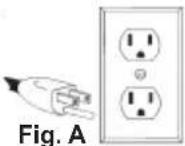
Tools marked "Grounding Required" have a three wire cord and three prong grounding plug. The plug must be connected to a properly grounded outlet (See Figure A). If the tool should electrically malfunction or break down, grounding provides a low resistance path to carry electricity away from the user, reducing the risk of electric shock.
The grounding prong in the plug is connected through the green wire inside the cord to the grounding system in the tool. The green wire in the cord must be the only wire connected to the tool's grounding system and must never be attached to an electrically "live" terminal.
Your tool must be plugged into an appropriate outlet, properly installed and grounded in accordance with all codes and ordinances. The plug and outlet should look like those in Figure A.
Double Insulated Tools (Two-Prong Plugs)
Tools marked "Double Insulated" do not require grounding. They have a special double insulation system which satisfies OSHA requirements and complies with the applicable standards of Underwriters Laboratories, Inc., the Canadian Standard Association and the National Electrical Code. Double Insulated tools may be used in either of the 120 volt outlets shown in Figures B and C.
SPECIFICATIONS
Cat. No....8988-20
Volts AC....120
Hertz 50/60
Max. Amps 12
Max. Watts 1440
Air flow CFM* 7.1-17.7
Air flow L/min 200-500
Temperature ..... 180°F - 1200°F (80°C - 650°C)
*Cubic feet per minute
SYMBOLOGY

Insulated

Volts

Alternating Current

Watts


UL Listing for Canada and U.S.
FUNCTIONAL DESCRIPTION
text_image
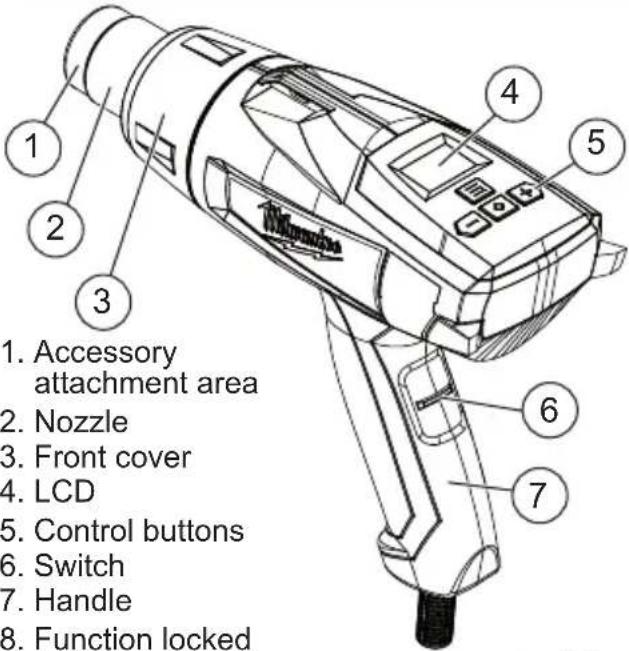
1. Accessory attachment area 2. Nozzle 3. Front cover 4. LCD 5. Control buttons 6. Switch 7. Handle 8. Function locked-
Accessory attachment area
-
Nozzle
-
Front cover
-
LCD
-
Control buttons
-
Switch
-
Handle
-
Function locked
-
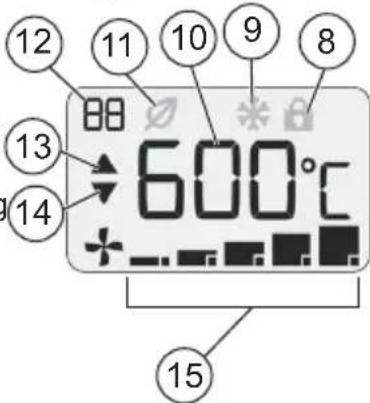
Cooling
10.Temperature
-
ECO mode
-
Configuration option
-
Temperature rising
-
Temperature cooling
-
Air flow level
text_image
12 11 10 9 8 13 600°C 14 + - 15⚠ WARNING To reduce the risk of injury, always unplug tool before changing or removing accessories. Only use accessories specifically recommended for this tool. Others may be hazardous. To reduce the risk of injury, do not remove or attach accessory tips until tool has cooled to room temperature.
Configuration Mode
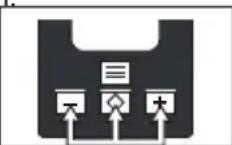
- To enter configuration mode, press and hold the - and -buttons then move the switch from the (0) position to the (1) position.
- The tool will turn on and the configuration option C0 will display on the LCD.
- Press the - or +button to cycle through the available options (C0, C1, C2, C3, C4, and C5).
- Press the ◇ button to select the desired configuration option. When selected, the configuration option number (C0, C1, C2, etc) will flash.
- Set the configuration option as desired.
- Press the ◇ button to save your selection and return to configuration mode.
- To exit configuration mode, push the switch to the (0) position.
NOTE: The function locked will appear when trying to go above set temperature or air volume.
(C0) Selecting the Temperature Unit
Use the C0 screen to set the desired temperature unit - Celsius (°C) or Fahrenheit (°F).
- Enter configuration mode.
- While in the C0 screen, use the and -buttons to set the desired temperature unit
-
Press the ◇ button to save your selection and return to configuration mode.
-
To exit configuration mode, push the switch to the (0) position.
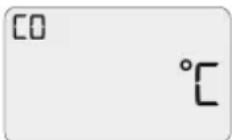
(C1) Setting the Lowest Operating Temperature Level
Use the C1 screen to set the lowest operating temperature level.
- Enter configuration mode.
- While in the C1 screen, use the and +buttons to set the lowest operating temperature level.
-
Press the ◇ button to save your selection and return to configur
-
To exit configuration mode, push the switch to the (0) position.
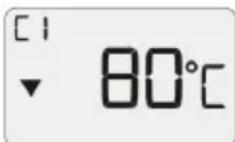
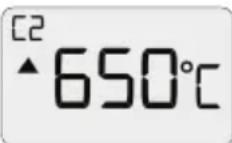
(C2) Setting the Highest Operating Temperature Level
Use the C2 screen to set the highest operating temperature level.
- Enter configuration mode.
- While in the C2 screen, use the and -buttons to set the highest operating temperature level.
-
Press the ◇ button to save your selection and return to configur
-
To exit configuration mode, push the switch to the (0) position.
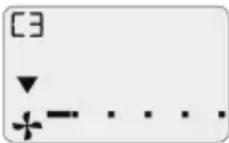
(C3) Setting the Lowest Air Flow Level
Use the C3 screen to set the lowest air flow level.
- Enter configuration mode.
- While in the C3 screen, use the and -buttons to set the lowest air flow level.
-
Press the ◇ button to save your selection and return to configura
-
To exit configuration mode, push the switch to the (0) position.
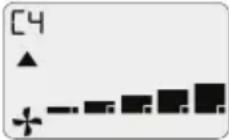
(C4) Setting the Highest Air Flow Level
Use the C4 screen to set the highest air flow level.
- Enter configuration mode.
-
While in the C4 screen, use the and buttons to set the highest air flow level.
-
Press the ◇ button to save your selection and return to configura
-
To exit configuration mode, push the switch to the (0) position.
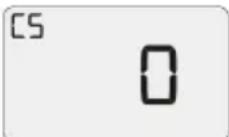
(C5) Setting the ECO Mode
The ECO mode (1) is activated automatically by the motion sensor and uses less energy.
The standby mode (2) needs to be manually set. The fan turns off to conserve electricity but keeps heating element active.
Use the C5 screen to set the ECO mode.
- Enter configuration mode.
- While in the C5 screen, use the - and + buttons to set the ECO mode (0, 1 or 2).
(0) = Off (default)
(1) = On (5 to 60 second delay before activation)
(2) = On (activated when tool tilted to 90°)
-
Press the ◇ button to save your selection and return to configuration mode.
-
To exit configuration mode, push the switch to the (0) position.
Resetting Configuration
- Slide the switch to the (0) position.
- Press and hold the -bot+ tons.
- Slide the switch to the (1) position.
- Configuration settings will be reset to factory defaults.
| Configuration | Default |
| C0 Celsius | |
| C1 80°C (lowest temperature level) | |
| C2 650°C (highest temperature level) | |
| C3 7.1 CFM (lowest air flow level) | |
| C4 17.7 CFM (highest air flow level) | |
| C5 ECO mode off | |
Installing/Removing Nozzles
- To install, slide the nozzle onto the heat gun nose.
- Adjust heat, air flow, distance and length of application as necessary.
- To remove, allow tool to cool to room temperature, then pull nozzle away from tool.
OPERATION
WARNING
To reduce the risk of injury, always wear safety goggles or glasses
with side shields. To reduce the risk of injury, always unplug tool before attaching or removing accessories or making adjustments. Use only specifically recommended accessories. Others may be hazardous.
Selecting Temperature
The proper amount of heat for each application depends on the temperature selected, distance between the nozzle and workpiece, and the length of time heat is applied. Experiment with scrap materials and start with the lowest temperature. Be cautious when working until the proper combination of heat, distance and time of application has been obtained.
Switch Operation
| Position Function(s) | |
| 0 Off | |
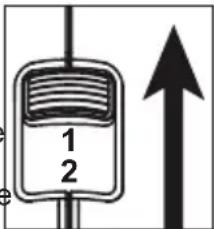
| 1 Air flow (maximum) active, heat off, cooling down | |
| 2 Air flow active, heat active | |
General Operation
-
To start the tool, grasp the handle firmly and slide the switch to the (2) position.
-
Allow the tool to heat up for approximately 3 minutes before beginning work.
-
To adjust the temperature, use the - and buttons.
-
To adjust the air flow, press the ◇ button to make the air flow symbol + flash, then use the -and + buttons.
-
Use a back and forth motion when applying heat unless concentrated heat is desirable.
-
When done, slide the switch to the (1) position and allow the nozzle to cool by placing the tool upright on a flat surface using the support stand areas.
-
Place the cord so the heat gun won't tip.
-
Let the tool to cool down.
-
To stop the tool, slide the switch to the (0) position.
text_image
1 2Hands-Free Use
The heat guns can be positioned upright on a stable surface, leaving both hands free for the application. Always place the tool upright on a flat surface using the support stand areas. Place the cord so the heat gun won't tip. The rear vent openings are designed to allow air flow even when the tool is resting on the end cap. Do not cover the vents with foreign materials such as clothing or rags.
APPLICATIONS
WARNING
To reduce the risk of heat damage and personal injury, shield com-
bustible materials and areas adjacent to workpiece. Protect yourself from hot paint scrapings and dust.
Removing Paint
Read the Important Safety Instructions for Removing Paint before proceeding with paint removal.
- Begin work with low temperature setting.
- Place nozzle approximately 1" away from work surface.
- Pass nozzle back and forth over a small area of workpiece.
- Gradually increase heat until paint starts to blister, then remove heat.
- Remove paint using a sharp-edged putty knife.
Creating Bends
Both variable temperature and dual temperature heat guns are ideal for creating bends in plexiglass that is used for guards and fixtures.
- To form a bend, use either a low or high temperature setting. When using a low temperature, hold the heat gun close to the workpiece and pass the nozzle back and forth slowly. When using a high temperature, hold the heat gun further away from the workpiece and pass the nozzle back and forth rapidly.
- Pass the nozzle over entire length of the surface to be bent. Applying heat to only part of the surface will make bending uneven.
Soldering
- Attach the air reduction or hook nozzle to the heat gun.
- De-burr the pipe and joint using sandpaper or steel wool.
- To solder with either lead or non-lead solder, coat the tip on both the copper pipe and the joint with flux. Then slip the joint over the pipe.
- Slip the accessory nozzle around the joint. With the heat gun at a high temperature setting, apply heat to the joint.
- When the flux bubbles, add solder and position heat gun so excess solder does not drip into the heat gun.
Heat Shrinking
- Attach the air reduction or hook nozzle to the heat gun.
- To heat shrink tubing, use a low temperature setting. Apply heat to the workpiece using a side to side motion until tubing has shrunk. Remove heat immediately.
MAINTENANCE
WARNING
To reduce the risk of injury, always unplug the tool before performing
any maintenance. Never disassemble the tool. Contact a MILWAUKEE service facility for ALL repairs.
Maintaining Tools
Keep your tool in good repair by adopting a regular maintenance program. Inspect your tool for issues such as undue noise, misalignment or binding of moving parts, breakage of parts, or any other condition that may affect the tool operation. Return the tool to a MILWAUKEE service facility for repair. After six months to one year, depending on use, return the tool to a MILWAUKEE service facility for inspection.
WARNING
To reduce the risk of personal in-jury, electric shock and damage, never immerse your tool in liquid or allow a liquid to flow inside it.
Cleaning
Clean dust and debris from vents. Keep handles clean, dry and free of oil or grease. Use only mild soap and a damp cloth to clean, since certain cleaning agents and solvents are harmful to plastics and other insulated parts. Some of these include gasoline, turpentine, lacquer thinner, paint thinner, chlorinated cleaning solvents, ammonia and household detergents containing ammonia. Never use flammable or combustible solvents around tools.
Repairs
For repairs, return the tool to the nearest authorized service center.
ACCESSORIES
WARNING
Use only recommended accessories. Others may be hazardous.
For a complete listing of accessories, go online to www.milwaukeeetool.com or contact a distributor.
SERVICE - UNITED STATES
1-800-SAWDUST (1.800.729.3878)
Monday-Friday, 7:00 AM - 6:30 PM CST
or visit www.milwaukeetool.com
Contact Corporate After Sales Service Technical Support with technical, service/repair, or warranty questions.
Email: metproductsupport@milwaukeeetool.com
Become a Heavy Duty Club Member at www.milwaukeeetool.com to receive important notifications regarding your tool purchases.
SERVICE - CANADA
Milwaukee Tool (Canada) Ltd
1.800.268.4015
Monday-Friday, 7:00 AM - 4:30 PM CST
or visit www.milwaukeetool.ca
LIMITED WARRANTY USA & CANADA
Every MILWAUKEE power tool* (see exceptions below) is warranted to the original purchaser only to be free from defects in material and workmanship. Subject to certain exceptions, MILWAUKEE will repair or replace any part on an electric power tool which, after examination, is determined by MILWAUKEE to be defective in material or workmanship for a period of five (5) years** after the date of purchase unless otherwise noted. Return of the power tool to a MILWAUKEE factory Service Center location or MILWAUKEE Authorized Service Station, freight prepaid and insured, is required. A copy of the proof of purchase should be included with the return product. This warranty does not apply to damage that MILWAUKEE determines to be from repairs made or attempted by anyone other than MILWAUKEE authorized personnel, misuse, alterations, abuse, normal wear and tear, lack of maintenance, or accidents.
Normal Wear: Many power tools need periodic parts replacement and service to achieve best performance. This warranty does not cover repair when normal use has exhausted the life of a part including, but not limited to, chucks, brushes, cords, saw shoes, blade clamps, o-rings, seals, bumpers, driver blades, pistons, strikers, lifters, and bumper cover washers.
*This warranty does not cover Air Nailers & Staplers; Airless Paint Sprayer; Cordless Battery Packs; Gasoline Driven Portable Power Generators; Hand Tools; Hoist – Electric, Lever & Hand Chain; M12™ Heated Gear; Reconditioned Product; and Test & Measurement Products. There are separate and distinct warranties available for these products. **The warranty period for Job Site Radios, M12™ Power Port, M18™ Power Source, Jobsite Fan and Trade Titan™ Industrial Work Carts is one (1) year from the date of purchase. The warranty period for the M18 FUEL™ 1" D-Handle High Torque Impact Wrenches, Drain Cleaning Cables, AIRSNAKE™ Drain Cleaning Air Gun Accessories, REDLITHIUM™ USB Laser Levels, TRAPSNAKE™ 25' Auger w/ CABLE DRIVE™, FORCE LOGIC™ Press Tool Accessories and Green Cross Line Laser is two (2) years from the date of purchase. The warranty period for the M18™ Compact Heat Gun, 8 Gallon Dust Extractor, M18™ Framing Nailers, M18 FUEL™ 1/2" Ext. Anvil Controlled Torque Impact Wrench w/ ONE-KEY™, M18 FUEL™ 1" High Torque Impact Wrench w/ ONE-KEY™, M18 FUEL™ 2 Gal. Compact Quiet Compressor, M12™ Laser Levels, 165' Laser Detector, M12™ 23GA Pin Nailer, M18 FUEL™ 1/4" Blind Rivet Tool w/ ONE-KEY™, M12 FUEL™ Low Speed Tire Buffer, M18 FUEL™ Random Orbital Polishers, M18™ Utility Fencing Stapler, and the 72" Laser Tripod is three (3) years from the date of purchase. The warranty period for the LED in the LED Work Light and the LED Upgrade Bulb for the Work Light is the lifetime of the product subject to the limitations above. If during normal use the LED or LED Bulb fails, the part will be replaced free of charge. Warranty Registration is not necessary to obtain the applicable warranty on a MILWAUKEE power tool product. The manufacturing date of the product will be used to determine the warranty period if no proof of purchase is provided at the time warranty service is requested. ACCEPTANCE OF THE EXCLUSIVE REPAIR AND REPLACEMENT REMEDIES DESCRIBED HEREIN IS A CONDITION OF THE CONTRACT FOR THE PURCHASE OF EVERY MILWAUKEE PRODUCT. IF YOU DO NOT AGREE TO THIS CONDITION, YOU SHOULD NOT PURCHASE THE PRODUCT. IN NO EVENT SHALL MILWAUKEE BE LIABLE FOR ANY INCIDENTAL, SPECIAL, CONSEQUENTIAL OR PUNITIVE DAMAGES, OR FOR ANY COSTS, ATTORNEY FEES, EXPENSES, LOSSES OR DELAYS ALLEGED TO BE AS A CONSEQUENCE OF ANY DAMAGE TO, FAILURE OF, OR DEFECT IN ANY PRODUCT INCLUDING, BUT NOT LIMITED TO, ANY CLAIMS FOR LOSS OF PROFITS. SOME STATES DO NOT ALLOW THE EXCLUSION OR LIMITATION OF INCIDENTAL OR CONSEQUENTIAL DAMAGES, SO THE ABOVE LIMITATION OR EXCLUSION MAY NOT APPLY TO YOU. THIS WARRANTY IS EXCLUSIVE AND IN LIEU OF ALL OTHER EXPRESS WARRANTIES, WRITTEN OR ORAL. TO THE EXTENT PERMITTED BY LAW, MILWAUKEE DISCLAIMS ANY IMPLIED WARRANTIES, INCLUDING WITHOUT LIMITATION ANY IMPLIED WARRANTY OF MERCHANTABILITY OR FITNESS FOR A PARTICULAR USE OR PURPOSE; TO THE EXTENT SUCH DISCLAIMER IS NOT PERMITTED BY LAW, SUCH IMPLIED WARRANTIES ARE LIMITED TO THE DURATION OF THE APPLICABLE EXPRESS WARRANTY AS DESCRIBED ABOVE. SOME STATES DO NOT ALLOW LIMITATIONS ON HOW LONG AN IMPLIED WARRANTY LASTS, SO THE ABOVE LIMITATION MAY NOT APPLY TO YOU, THIS WARRANTY GIVES YOU SPECIFIC LEGAL RIGHTS, AND YOU MAY ALSO HAVE OTHER RIGHTS WHICH VARY FROM STATE TO STATE.
This warranty applies to product sold in the U.S.A. and Canada only. Please consult the 'Service Center Search' in the Parts & Service section of MILWAUKEE's website www.milwaukeeetool.com or call 1.800.SAWDUST (1.800.729.3878) to locate your nearest service facility for warranty and non-warranty service on a Milwaukee electric power tool.
RÈGLES DE SÉCURITÉ GÉNÉRALES RELATIVES AUX OUTILS ÉLECTRIQUES
AVERTISSEMENT
Milwaukee Tool (Canada) Ltd
1.800.268.4015
Monday-Friday, 7:00 AM - 4:30 PM CST
www.milwaukeetool.ca
GARANTIE LIMITÉE -
AUX ÉTATS-UNIS ET AU CANADA
13135 West Lisbon Road
Brookfield, WI 53005 USA