
VHS110 Z22 - Vacuum Cleaner NILFISK - Free user manual and instructions
Find the device manual for free VHS110 Z22 NILFISK in PDF.



| Product type | Industrial vacuum for combustible dusts, zone 22 |
| Model | VHS110 Z22 |
| Brand | Nilfisk |
| Supply voltage | 230V / 110V / 100V (depending on version) |
| Rated power | 1.1 kW (230V) / 1.0 kW (110V/100V) |
| Max. vacuum | 2,240 mm H₂O (230V) / 2,090 mm H₂O (110V) / 2,040 mm H₂O (100V) |
| Max. airflow | 3,600 L/min (230V) / 3,407 L/min (110V) / 3,333 L/min (100V) |
| Sound level | 76 dB(A) |
| Vibrations | ≤ 2.5 m/s² |
| Protection | IP6x |
| Insulation class | F |
| Tank capacity | 37 L |
| Weight | 42 kg (230V) / 44 kg (110V) |
| Dimensions (L × W × H) | 570 × 560 × 1,240 mm |
| Hose diameter | 50 mm |
| Primary filter area | 1 m² |
| Absolute filter area (HEPA H14) | 1.1 m² |
| Absolute filter efficiency | 99.995% (MPPS, EN 1822) |
| Filter cleaning | PullClean system (manual shaking) |
| Automatic liquid shut-off | Yes (mechanical liquid shut-off) |
| Clogging indicator | Vacuum gauge (green/red zone) |
| ATEX certification | II3D Ex tc IIIC T 125°C Dc IP64 |
| Ambient temperature | 0°C to +40°C |
| Storage | -10°C to +40°C, humidity ≤ 85% |
Frequently Asked Questions - VHS110 Z22 NILFISK
User questions about VHS110 Z22 NILFISK
0 question about this device. Answer the ones you know or ask your own.
Ask a new question about this device
Download the instructions for your Vacuum Cleaner in PDF format for free! Find your manual VHS110 Z22 - NILFISK and take your electronic device back in hand. On this page are published all the documents necessary for the use of your device. VHS110 Z22 by NILFISK.
USER MANUAL VHS110 Z22 NILFISK
C421 I-GB-F-D-E EDITION 11/2020


I Italian
GB English
F French
D Deutsch
E Spanish
natural_image
Technical line drawing of a mechanical device with wheels and mounting brackets (no text or symbols)Translation of original instructions
Table of contents
Instructions for use....2
Operator's safety 2
General information for using the machine 2
Proper uses 2
Improper Use....2
Versions and variations 3
Important safety instructions 3
General recommendations....3
Identification plate marking....4
Residual Risks....4
EC Declaration of conformity....5
Description of the machine ....6
Machine Parts and Labels 6
Optional kits....6
Accessories 6
Packing and unpacking 6
Unpacking, moving, use and storage 7
Setting to work - connection to the power supply 7
Warning labels....7
Extensions....7
Grounding instructions 8
Dry applications....8
Vacuuming of liquids 8
Technical data 9
Dimensions....9
Safety devices 10
Controls and indicators.... 10
Inspections prior to starting 10
Starting and stopping 10
Emergency stopping....10
Operation....10
At the end of a cleaning session 11
Maintenance, cleaning and decontamination....12
Primary filter cleaning with PullClean system.... 12
Emptying the container.... 12
Emptying of the liquid container 13
Dust Bag....13
Paper Bag and Safe Bag for dust collection.... 13
Longopac® bag for dust collection 13
Replacement of dust bags.... 13
Main and absolute filter disassembly and replacement.... 14
Installation, cleaning and replacement of the separator (optional).... 14
Immersion Separator 15
Disposal....16
Wiring diagrams 17
Recommended spare parts 18
Troubleshooting 19
Instructions for use
Read the operating instructions and comply with the important safety recommendations identified by the word CAUTION!
Operator's safety

CAUTION!


Before starting the machine, it is absolutely essential to read these operating instructions and to keep them on hand for consultation.
The machine can only be used by people who are familiar with the way it works and who have been explicitly authorised and trained for the purpose.
Before using the machine, the operators must be informed, instructed and trained on how to work it and for which substances its usage is permitted including the safe method for removing and disposing of the vacuumed material.

CAUTION!

The use of the machine by people (including children) with limited physical and mental capacities or lacking in experience and knowledge is strictly forbidden, unless they are supervised by a person who is experienced in the use and safe handling of the machine.
Children must be supervised to make sure they will not play with the machine.

CAUTION!

Before using the machine, always check that any hazardous condition has been eliminated and inform the people in charge about any operational fault.
Check that all guards and protections are correctly mounted and that all safety devices are installed and efficient.
Repairs must only be carried out when the machine is at a standstill and disconnected from the electricity and air supply mains. Never ever carry out repairs without having first received the necessary authorization.

CAUTION!

Any changes made by the user without the Manufacturer's explicit authorization shall invalidate the warranty and hold the Manufacturer harmless from any and all liabilities for damages caused by faulty products.
General information for using the machine
Use the machine in accordance with the laws in force in the country where it is used.
Besides the operating instructions and the laws in force in the country where the device is used, the technical regulations for ensuring safe and correct operation must also be observed (Legislation concerning environmental and labour safety, i.e. European Union Directive 89/391/EC and successive Directives).
Do not perform any operation that could jeopardize the safety of people, property and the environment.
Comply with the safety indications and prescriptions in this instruction manual.
Proper uses
This vacuum cleaner consists of a vacuum unit, with a upstream filter unit and a container for collecting the vacuumed material.
■ This vacuum cleaner is suitable for commercial use in factories, workshops, for example, for hire and in any case for purposes other than normal domestic use.
■ This vacuum cleaner is suitable for cleaning and vacuuming dry materials in indoor environments only.
■ Always leave enough room around the vacuum cleaner to reach the controls easily.
■ The vacuum cleaner has been designed to be used by one operator only.
■ Take care not to generate dust clouds while cleaning the area, mostly around the vacuum cleaner itself.
■ This vacuum cleaner is designed to collect a combustible dust and/or dry particles in atmosphere classified as
■ Zone 22, with the following limitations:
- Minimum ignition energy (MIE) of the dust > 1mJ
- Kst value of the dust <300 bas m/s (St1, St2)
Improper Use

CAUTION!

The following use of the device is strictly forbidden:
■ Outdoors in case of atmospheric precipitation.
■ When not placed on horizontal level ground.
■ When the filter unit is not installed.
■ When the vacuum inlet and/or hose are turned to face parts of the human body.
■ Use without the cover on the vacuum unit.
■ When the dust container is not installed.
■ Use without the guards, protective covers and safety systems installed by the manufacturer.
CAUTION!
The following use of the device is strictly forbidden:
■ When the cooling vents are partially or totally clogged.
■ When the machine is covered with plastic or fabric sheets.
■ Use with the air outlet partially or totally closed.
■ When used in narrow areas where there is no fresh air.
■ When the cable or plug is damaged. If appliance is not working as it should, has been dropped, damaged, left outdoors or dropped into water, return it to an authorized service center.
■Vacuuming liquids with machine not equipped with specific original stopping systems.
■ Do not pull or carry by the cord, use the power cord as a handle, do not close a door on cord, or pull cord around sharp edges or corners. Do not run the appliance over the cord. Keep cord away from heated surfaces.
■ Vacuuming the following materials:
- Burning materials (embers, hot ashes, lit cigarettes, etc.).
- Naked flames.
- Combustible gas.
- Flammable liquids, aggressive fuels (gasoline, solvents, acids, alkaline solutions, etc.).
- Explosive dust/substances and/or ones liable to ignite in a spontaneous way (such as magnesium or aluminium dusts, etc.).
Note: Fraudulent use is not admitted.
Versions and variations
HEPA variants
This machine can be equipped with an upstream filter (HEPA). The procedures for servicing and emptying the machine including removing the dust container, must only be performed by authorized personnel wearing protective clothing. Do not use without the complete filter system in place.
CAUTION!
This machine is not suitable for vacuuming hazardous dust.
■ In the case of dust harmful to health, contact the local health and safety authorities, and observe national regulations in force both during use and disposal.
■ Radioactive substances are not included in the definition of the type of dust harmful to health described above.
Important safety instructions
To reduce the risk of fire, electric shock, or injury:
■ Do not leave the appliance unattended when plugged in. Unplug from outlet when not in use and before servicing.
■ To reduce the risk of electrical shock, do not use the vacuum cleaner outdoors. Do not use outdoors or on wet surfaces.
■ Do not allow this appliance to be used as a toy. This machine is for adult-use only. Close attention is necessary when used by or near children.
- Use only as described in this manual. Use only the manufacturer's recommended attachments.
■ Do not use with damaged cord or plug. If appliance is not working as it should, has been dropped, damaged, left outdoors or dropped into water, return it to a service center.
- Do not pull or carry by the cord, use cord as a handle, close a door on cord, or pull cord around sharp edges or corners. Do not run the appliance over the cord. Keep cord away from heated surfaces.
■ Do not unplug by pulling on cord. To unplug, grasp the plug, not the cord.
■ Do not handle plug, cord or appliance with wet hands.
■ Do not put any object into the openings. Do not use with any opening blocked; keep free from dust, lint, hair, and anything that may reduce airflow.
- Keep hair, loose clothing, fingers, and all parts of the body away from openings and moving parts.
■ Turn off all controls before unplugging.
■ Use extra care when cleaning stairs.
■ Do not pick up anything that is burning or smoking, such as cigarettes, matches, or hot ashes.
■ Do not use without dust bag/or filters in place.
■ Connect to a properly grounded outlet only. See grounding instructions.
General recommendations
CAUTION!
If an emergency situation occurs:
■ Accident
■ Breakdown
■ Filter breakage
■ Fire outbreak
■ etc.
Disconnect the machine from the power supply and ask for assistance from qualified personnel.
In case the user comes into contact with the vacuumed product, check the cautions shown on the safety technical sheet of the product, which must be made available from the employer.
[ NOTE ]
Check the place of work and substances tolerated for the machine suitable for liquids.
![NILFISK VHS110 Z22 - [ NOTE ] - 1](/content/2026/04/639984/images/c25db597489814a6f7ae49c0c03bedaeff59065357e45ec9c9366e0efa400211.jpg)
CAUTION!

The machines must not be used or stored outdoors, or in damp places.
Only versions with the level sensor can be used for liquids, if not, they can only be used to vacuum dry materials.

CAUTION!

Version for liquids.
If foam or liquid leaks out of the machine, turn it off immediately and contact qualified personnel for assistance.
[ NOTE ]
These devices must not be used in corrosive environment.
![NILFISK VHS110 Z22 - [ NOTE ] - 1](/content/2026/04/639984/images/7bbeea53677792c54ca0a7aff6b3c2db13da64d4b1e805d58512e5602c966b45.jpg)
CAUTION!

On all machines supplied without an electrical plug, the user must connect the free end of the cable in a non-explosive atmosphere, in a housing or using a plug protected by a mode recognized as suitable for the area of destination.
The plug shall be installed by a qualified electrician only.
Use this appliance on a nominal 120V circuit only, and be sure to install a suitable plug. Make sure that the appliance is connected to an outlet having the same configuration as the plug. No adaptor should be used with this appliance.
Check that the electric panel and cable glands are efficient to prevent dust infi Itrations.
Check that the hose clamps are correctly tightened.
In case of breakage, only use original Nilfisk spare parts. Any parts that need replacing must be replaced by trained personnel. Never perform any kind of disassembly, tampering and/or maintenance on the safety systems.
The motor and turbine ball bearings must be serviced by a Nilfi sk Service Center every 10,000 working hours or every 2 years. Contact the sales network or the machine manufacturer. The operator must not dismantle, tamper with and/or service the turbines.

CAUTION!

In the case of abnormal noise, faulty bearings or faulty rotating parts, stop the machine immediately, as there is the risk of explosion!
Do not start the vacuum cleaner again, as this could cause an explosion.
Repairs must be done by Nilfi sk Service Centers only.
Periodically check the inlet/outlet filters of the cooling air located on the motorhead (2, Fig. 5)
The above prescriptions, precautions and service operations must be observed, or the Nilfi sk Warranty for proper operation of ATEX machine Cat II 3D is void, the Nilfi sk ATEX Declaration of Conformity is no longer valid and the User is entirely responsible for the use of the vacuum cleaner.

CAUTION!

All maintenance and cleaning operations must be carried out when the machine is off and disconnected from the electrical mains.
They are designed to be used in areas classified as Zone 22.
Never use in Zone 20, Zone 21 and/or Zone 0, Zone 1 and/or Z2.
These vacuum cleaners are designed to vacuum occasionally dust and/or wet and dry particles in atmospheres classified as Zone 22, to clean places machines, especially in the foodstuff, chemical, pharmaceutical and textile industries.
They are not designed to be used for ST3 explosion class dust, that is to say dust with value of Kst > 300 bar m/s (ISO 6184/1 - IFA classification: http://staubex.ifa.dguv.de/?lang=e), nor dust with an ignition energy lower than 1 mJ. For these applications, refer to the immersion separator paragraph.
They are not designed to collect explosives or chemically unstable substances.
They are not designed to vacuum fluids with a low flash point (Flash Point lower than 55^ C), nor for incendiary substances ( T < 200^ C).
For these models, apart from following the instructions in the use and maintenance manual of the standard vacuum cleaner, specific precautions and maintenance are also required.
Identification plate marking

II3D Ex tc IIIC T 125°C Dc IP64
0^ C ≤ Ta ≤ 40^ C
Residual Risks
After carefully considering the risks that are present in all machine operating phases, necessary measures were adopted in order to eliminate the risks for the operators, as far as possible, and/or limit or reduce the risks deriving from hazards that cannot be completely eliminated at the source.
During operations and/or maintenance, operators are exposed to certain residual risks which, due to the nature of the operations themselves, cannot be completely eliminated. Therefore the installer is responsible for providing additional information and/or hazard signals based on the location of machine installation and the material that is handled.
■ Risks due to electrical hazards during maintenance

DANGER

Risk of electrocution if accessing the electrical equipment during maintenance without having deactivated the electrical power supply.

FORBIDDEN

It is forbidden to work on the electric equipment before disconnecting the machine or its parts from the electrical line.

MANDATORY

Have the electrical maintenance operations performed by qualified personnel. Perform the checks on the electric equipment as specified in the manual.
EC Declaration of conformity
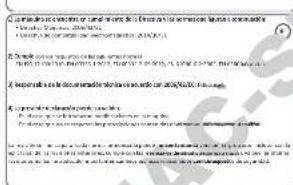
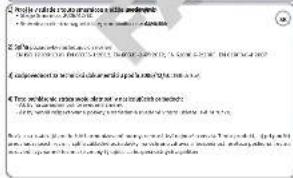
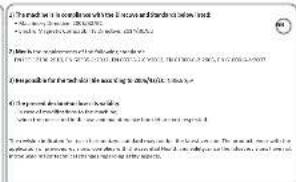
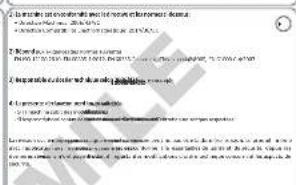
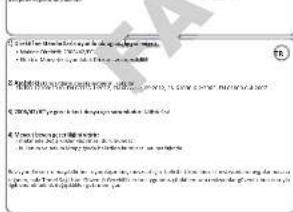
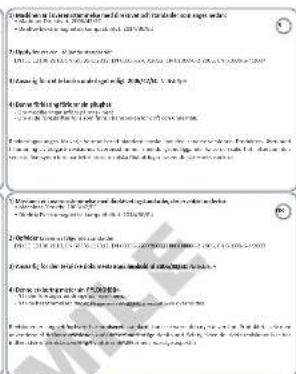
Every machine comes with a EC Declaration of conformity. See fac-simile in fig. 23.
[ NOTE ]
The Declaration of conformity is an important document and should be kept in a safe place to be presented to the Authorities on request.
Description of the machine
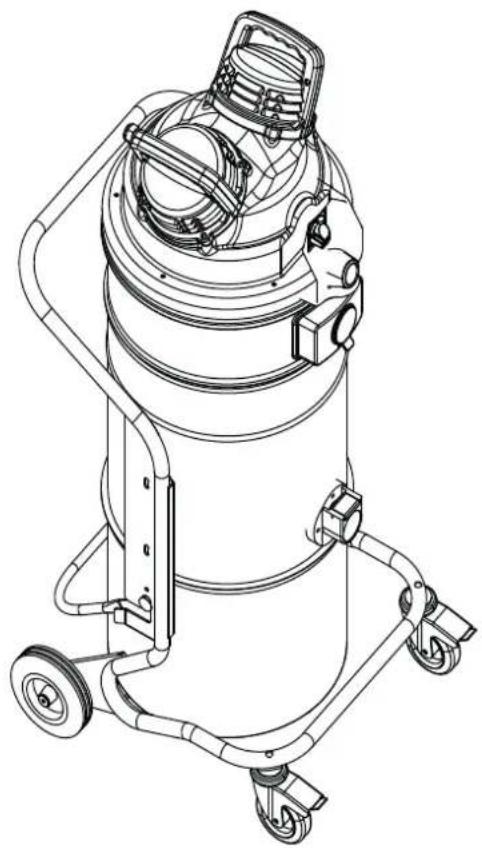
Machine Parts and Labels
Figure 1
-
Data plate which includes:
-
Manufacturer's name and address
- Technical data
- Serial number
• Year of manufacture
- Weight (kg)
- Panel power plate
Indicates that the panel must only be powered by the voltage indicated on the data plate.
- Vacuum inlet
- Air Outlet
- Manual motor starter
- Motorhead
- Band latches
- Container release handle
This machine creates a strong air flow which is drawn in through the vacuum inlet and blows out through the outlet.
Before turning on the machine, fit the vacuum hose into the inlet and then fit the required tool on to the end part (refer to the manufacturer's accessory catalogue or Service Centre).
The diameters of the authorized hoses are indicated in the Technical data table.
The machine is equipped with a primary filter which enables it to be used for the majority of applications.
In addition to the primary filter that retains the most common dust, a secondary filter (absolute filter) can be installed.
This machine is equipped with an internal baffle plate which subjects the vacuumed substances to a circular centrifugal movement that makes them drop into the container.
Optional kits
Various optional kits are available for converting the machine.
On request, the machine can be supplied with optional kits already installed. However, they can also be installed at a later date.
Please contact the sales network for further details.
Instructions describing how to fit the optional kits and the relative operation and maintenance manuals are supplied together with the optional kits.

CAUTION!

Use only supplied and authorised genuine spare parts.
Accessories
Various accessories are available; refer to the manufacturer's accessory catalogue.

CAUTION!

Use only genuine accessories supplied and authorised by the manufacturer.
The antistatic hoses must be grounded to prevent electrostatic charges. Using an ohmmeter, check for the correct galvanic connection (electrical continuity) between the hoses and the accessories being used. This is to prevent the operator being exposed to fire hazards and the risk of electric shocks.
All the machines that have the EXA acronym in the model description, are equipped with an inlet that allows for coupling only with Nilfisk EXA model accessories.
All EXA accessories are certified and do not have an independent function, thus are classified as components.
They can be used only with Nilfisk industrial vacuum cleaners or with other equipment from the same manufacturer, for their intended use, already equipped with Ex marking and related declaration of conformity, in compliance with the instruction indicated in their use and maintenance manual and in those of the equipment to which they are connected.
This correct coupling guarantees full compliance with the ATEX Directive without requiring further checks and/or certifications. If necessary, contact Nilfisk service centre only.

CAUTION!

Do not rub non-metal parts with clothes, rags, or fabrics of any kinds (cotton, wool, synthetic, paper, etc.) that can generate dangerous electrostatic charges.
For cleaning non metal parts, use wet clothes or rags in order to reduce the electrostatic charges.
In any case, cleaning procedures must be performed outside the area that has been classified as dangerous for risk of explosion.
Packing and unpacking
All the dispatched equipment has been thoroughly checked before being delivered to the haulage contractor.
On arrival, check the machine to see that it has not been damaged during transport. In case of damage, immediately lodge a complaint with the haulage contractor.
Dispose of the packing materials in compliance with the laws in force.
Figure 2
| Model A (mm) | B (mm) C | (mm) kg (*) | ||
| VHS110 Z22 | 700 | 790 | 1,440 | 57 |
(*) Weight with packing
Unpacking, moving, use and storage
To unpack the vacuum unit, remove the retainers with a hammer and a screwdriver.
Also remove the fastening devices placed by the manufacturer when packing, by using suitable tools.
Release the wheel brakes and remove the machine from the supporting platform, by using a ramp that can provide adequate capacity, and by driving the vacuum cleaner by the handle.
Operate on flat, horizontal surfaces.
The load-bearing capacity of the surface the machine is placed on must be suitable for bearing its weight.
If the device is to work in a fixed position, allow wide space around the device in order to ensure freedom of the movement and allow the maintenance staff to operate with ease.
CAUTION!
The manufacturer shall not be liable for any damages caused to the machine during lifting, when the lifting equipment supplied by the manufacturer is not used.
CAUTION!
When several supporting platforms are provided, the supporting platform to which the machine is anchored must be handled with a forklift truck that can provide adequate capacity. Then unpack the machine by laying it down on a flat and horizontal surface that can provide adequate capacity for the vacuum cleaner weight.
CAUTION!
When the device is operating, do not:
■ Crush, pull, damage or tread on the cable that connects to the electrical mains.
■ Only disconnect the cable from the electrical mains by removing the plug (do not pull the cable).
■ Only replace the electric power cable with one of the same type as the original: H07 RN-F, The same rule applies if an extension is used.
■ The cable must be replaced by the manufacturer's Service Centre staff or by equivalent qualified personnel.
The system safety officers must:
■ Prevent any improper use or manoeuvre.
■ Make sure that the safety devices are not removed or tampered with.
■ Check that all maintenance operations are regularly performed;
■ Make sure that no machine part (couplings, holes, etc.) is modified to attach additional devices;
■ Make sure that only original Nilfisk spare parts are used.
NOTE
The user shall be responsible for ensuring that installation complies with the all relevant local provisions. The equipment must be installed by qualified technicians who have read and understood the instructions herein.
Warning labels
Figure 3
Setting to work - connection to the power supply
CAUTION!
■ Make sure there is no evident sign of damage to the machine before starting work.
■ Before plugging the machine into the electrical mains, make sure the voltage rating indicated on the data plate corresponds to that of the electrical mains.
■ Connect the plug into a socket with a correctly installed ground contact/connection. Make sure that the machine is turned off.
■ The plugs and connectors of the connection cables must be protected against splashes of water.
■ Check that for proper connection to the electrical mains.
■ Use the machine only when the cables that connect to the electricity mains are in perfect condition (damaged cables could lead to electric shocks!).
■ Regularly check there are no signs of damage, excessive wear, cracks or ageing on the electric cable.
Labels:
-
Warning: Using an appropriate tester, check the grounding continuity between the plug ground pin and the final suction accessory.
-
Caution: Don't open while the voltage is applied.
Extensions
Extension cords are not allowed within a classified zone unless marked accordingly.
CAUTION!
The vacuum cleaner's power socket must be protected by a differential circuit-breaker with surge current limitation that shuts off the power supply when the current discharged to the ground exceeds 30 mA for 30 m/s or an equivalent protection circuit.
In case the socket that the vacuum cleaner is connected to could exceed 1000 V in case of a surge generated by a lightning, the user shall provide the appropriate protection.
CAUTION!
Never spray water on the vacuum cleaner: this could be dangerous for persons and could short circuit the power supply.
Grounding instructions
This equipment must be grounded. In case of malfunction or breakdown, grounding provides a path of least resistance for electric current to reduce the risk of electric shock. Ground the supplied cable with the appropriate clamp.
In case of breakage, only use original Nilfisk spare parts. Any parts that need replacing must be replaced by trained personnel. Never perform any kind of disassembly, tampering and/or maintenance on the safety systems.

CAUTION!

The above prescriptions, precautions and service operations must be observed, or the Nilfisk Warranty for proper operation is void, the Nilfisk Declaration of Conformity is no longer valid and the User is entirely responsible for the use of the machine.
Dry applications
[ NOTE ]
The supplied filters must be installed correctly as explained in section "Primary star filter replacement"
![NILFISK VHS110 Z22 - [ NOTE ] - 1](/content/2026/04/639984/images/16d4066c469a6a46f5dd61ea4f911c2aad4b7000361f5a27c33ae984db45f626.jpg)
CAUTION!

Comply with the safety regulations governing the vacuumed materials.
Vacuuming of liquids

CAUTION!

Comply with the safety regulations governing the vacuumed materials.

CAUTION!

■ Make sure the liquid stop device is working correctly before vacuuming liquids.
■ In case of foam, immediately stop working, turn off the machine and empty the container.
■ Regularly clean the liquid level limiting device and check to make sure that there are no signs of damage.
■ Dirty liquid vacuumed by the machine must be considered conductive.

CAUTION!

Do not use the machine if the liquid mechanical stop is not installed!
If it's used without the float, the machine may be seriously damaged.

CAUTION!

When vacuuming a mix of water and air, take care to avoid overloading the motor of the vacuum unit.
The machine vacuums liquids and deposits them into the container.
When the machine vacuums liquids it must be equipped with liquid mechanical stop.
The liquid mechanical stop requires a special container with relevant nozzle.
Before starting the machine, close the inlet on the filtering chamber with the relevant plug and fit the vacuum hose in the inlet on the dust container, then fit the required tool on to the end part of the hose (refer to the manufacturer's accessory catalogue or Service Centre).
The liquid mechanical stop stops the vacuuming operation (the vacuuming units remain activated) when the liquid container is full; it is then necessary to turn off the machine and empty the liquid container.
The machine does not switch off automatically.
Technical data
| Parameter | Units of measurement | VHS110 Z22 | ||
| Voltage @50/60 Hz V 230 110 100 | ||||
| Power rating (EN 60335-2-69) kW 1.1 1 | ||||
| Max vacuum mm H20 2,240 2,090 2,040 | ||||
| Maximum air flow rate without hose and reductions | L/m' 3600 | 3407 3333 | ||
| Maximum air flow rate (3 m ∅ 50 mm hose) | L/m' 3417 | 3083 3000 | ||
| Sound pressure level (Lpf) (EN60335-2-69) (*) | dB(A) | 76 | ||
| Vibration, ah (**) | m/s2 | ≤2.5 | ||
| Protection | IP | 6x | ||
| Insulation | Class | GB | ||
| Container capacity | L | 37 | ||
| Longopac® dust bag capacity L | - | |||
| Vacuum inlet (diameter) | mm | 50 | ||
| Allowed hoses | mm | 50 | ||
| Primary filter surface | m2 | 1 | ||
| Upstream absolute H filter surface | m2 | 1.1 | ||
| Blower absolute filter surface area | m2 | 1.1 | ||
| Absolute filter efficiency according to MPPS method (EN 1822) | % | 99.995 (H14) | 99.995 (H14) | 99.995 (H14) |
| Weight | kg 42 | 44 | ||
(*) Measurement uncertainty KpA < 1.5 dB (A). Noise emission values obtained according to EN-60335-2-69
(**) Total value of vibration output to the operator arm and hand
Dimensions
Figure 3
| Model | VHS110 Z22 |
| A (mm) | 570 |
| B (mm) | 560 |
| C (mm) | 1,240 |
[ NOTE ]
■ Storage conditions:
Temperature: -10^ ÷ +40^
Humidity: ≤ 85%
■ Operating conditions:
Maximum altitude: 800 m
(Up to 2,000 m with reduced performances)
Temperature: -10^ ÷ +40^
Humidity: ≤ 85%
Safety devices
Figure 5
- Cover
- Cooling air HEPA filter
- Brushless motor
Controls and indicators
Figure 6
- Container release handle
- Swivel caster with brake
- PullClean filter cleaning system
- Vacuum gauge
- Manual motor starter
- Band latches
- Power supply cord
- Push bar handle
Inspections prior to starting
Figure 7
- Vacuum inlet
Before starting, check that:
■ The filters are installed.
■ The closing band is properly tightened.
■ The vacuum hose and tools have been correctly fitted into the vacuum inlet (1).
■ In case of liquid application, the liquid mechanical stop is properly installed inside the liquid container:
■ The bag or safety container is installed, if applicable.

CAUTION!

Do not use the device if the filters are faulty.
Starting and stopping

CAUTION!

Lock the castor brakes before starting the vacuum cleaner.
Figure 8
■ Turn the manual motor starter (2) to the "I" position to start the vacuum cleaner. Turn the manual motor starter (2) to the "O" position to turn the vacuum cleaner off.
Machines equipped with system for vacuuming liquids
■ When the container is full, the liquid mechanical stop turns off the vacuuming; the vacuum unit remains on.
■ Do not let the vacuum unit running, after the liquid stop has been activated. Turn it off with the relevant switch.
Emergency stopping
Turn the switch to "0" to turn off the machine.

CAUTION!

The motors and internal components of the machine will still be electrically powered.
Operation
Check that the data on the machine's identification plate correspond to the Zone classification and to the maximum allowable temperature to avoid dust ignition in the work area.
Check that the vacuum cleaner specifications have not been modified, otherwise the Declaration of Conformity is no longer valid.
Static electricity can cause sparks, with the consequent risk of explosion! Therefore, make sure the electrical socket and plug are connected to earth.
Use an insulation tester to check the resistance of the earth connection from the inlet to the end of the vacuum pipe (and the antistatic hose connecting to the electrical mains on air compressed models): the resistance must be lower than 1 MΩ (106) Ohm.
Check the continuity of the ground view (green-yellow protective conductors) and make sure that they are in perfect conditions.
Check for loose electrical or mechanical connections.
Be sure that the machine is turned off before connecting it to an energy source. Connect the machine to an energy source outside the ATEX Zone (unclassified zone). If the machine has an ATEX electrical plug certified for the area it is used in, it can be connected to an ATEX certified socket in the same type of zone with the same rating.
The operator shall take care not to generate dust clouds while cleaning the area, mostly around the vacuum cleaner itself.
Do not remove hoses during operation, always wait until the machine has stopped.
If a preseparator must be used, check that it is well grounded. Only use antistatic hoses, both for vacuuming and connecting the preseparator. Do not use the machine to collect large objects or particles because their collision may cause sparks.
Do not rub or hit the floor with steel tools, as they can produce sparks under friction. Only use collectors and suction caps that can be replaced with original Nilfisk antistatic spare parts to clean the floor.
Checking the flow rate
Figure 9
Vacuum gauge (2): green zone (3), red zone (1)
■ when the vacuum cleaner is operating, the pointer of the vacuum gauge must remain in the green zone (3) to ensure that the speed of the intake air does not drop below the safety value of 20 m/sec;
■ if the pointer is in the red zone (1) it means that the speed of the air in the vacuum hose is less than 20 m/s and that the vacuum cleaner is not operating in safety conditions. The filters must be cleaned or replaced.
■ during normal operation conditions, close the vacuum hose. The pointer of the vacuum gauge must switch from the green zone (3) to the red zone (1).
CAUTION!
When the machine is operating, always check that the vacuum gauge pointer remains in the green zone (3). Consult the "Troubleshooting" chapter if faults occur.
CAUTION!
The air speed in the vacuum hose must not be less than 20 m/s. Condition indicated by the vacuum gauge pointer in the green zone (3).
CAUTION!
All machines can be used only with hoses whose diameters comply with the specifications in the "Technical Data" table.
CAUTION!
Consult the "Troubleshooting" chapter if faults occur.
At the end of a cleaning session
■ Turn off the machine and remove the plug from the socket.
■ Wind up the connection cable.
■ Empty the container and clean the machine as described in the “Maintenance, cleaning and decontamination” paragraph.
■ Wash the container with clean water if aggressive substances have been vacuumed.
■ Store the machine in a dry place, out of reach of unauthorised people.
■ Lock the castor brakes.
■ During transport and when not using the machine, close the vacuum inlet with the relevant plug (if equipped).
Maintenance, cleaning and decontamination

CAUTION!

Disconnect the machine from its power source before cleaning, servicing, replacing parts or converting it to obtain another version/variant.
■ Carry out only the maintenance operations described in this manual.
■ Use only original spare parts.
■ Do not modify the machine in any way.
Failure to comply with these instructions could jeopardize your safety. Moreover, such action would immediately void the EC declaration of conformity/ incorporation issued with the machine.

CAUTION!

For maintenance procedures not described in this manual, please contact the manufacturer's technical support or sales network.

CAUTION!

To guarantee the safety level of the machine, only original spare parts supplied by the manufacturer should be used.

CAUTION!

The precautions described below must be taken during all maintenance operations, including cleaning and replacing the primary and absolute filters.
■ To allow the user to carry out the maintenance operations, the machine must be disassembled, cleaned and overhauled as far as is reasonably possible, without causing hazards for the maintenance staff or other people. The suitable precautions include decontamination before disassembling the machine, adequate filtered ventilation of the exhaust air from the room in which it is disassembled, cleaning of the maintenance area, and suitable personal protection.
■ The external parts of the machine must be decontaminated by cleaning and vacuuming methods, dedusted or treated with sealant before being taken out of a hazardous zone.
■ All parts of the machine must be considered as contaminated when they are removed from the hazardous zone and appropriate actions must be taken to prevent dust from dispersing.
■ When maintenance or repair procedure are carried out, all the contaminated elements that cannot be properly cleaned, must be eliminated.
■ These elements must be disposed of in sealed bags in accordance with applicable regulations and local laws on the disposal of such material.
■ This procedure must also be followed for filter disposal (primary and absolute filters).
■ Compartments that are not dust-tight must be opened with suitable tools (screwdrivers, wrenches, etc.) and thoroughly cleaned.
■ A check must be carried out by the manufacturer or the personnel of the same at least once a year. For example: Check the air filters to find out whether the air-tightness of the machine has been impaired in any way and make sure that the electric control panel operates correctly.
Primary filter cleaning with PullClean system
Figure 10 - 11
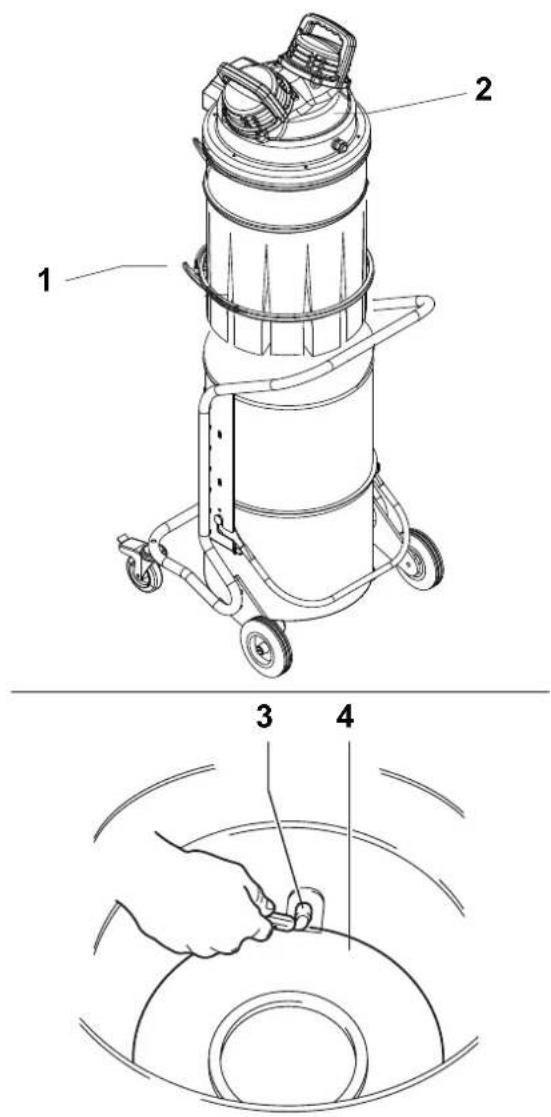
According to the quantity of vacuumed material, if the vacuum gauge pointer (1) goes from the green zone to the red zone, clean the primary filter by closing the inlet (4) and by opening the PullClean system flap (3), repeat the procedure 3 or 4 times, for 1 or 2 seconds each time.

CAUTION!

Perform this procedure with the machine running.
Wait before restarting the machine, to allow the dust to settle. Replace the filter element if the vacuum gauge pointer stays in the red zone even after the filter has been shaken (see "Primary and absolute filters disassembly and replacement").
[ NOTE ]
If the indicator is still in the red area. The vacuum hose or one of the accessories may be clogged, and not the filter. Clean these parts if this is the case.
Emptying the container

CAUTION!

Before proceeding with these operations, turn off the machine and remove the plug from the power socket. Check the machine filtration class.
Before emptying the container it is advisable to clean the filter (see "Cleaning the primary filter" paragraph).
■ Release the dust container with lever, then remove and empty it.
- Clean the machine as described in the “Maintenance, cleaning and decontamination” paragraph.
■ Wash the container with clean water if aggressive substances have been vacuumed.
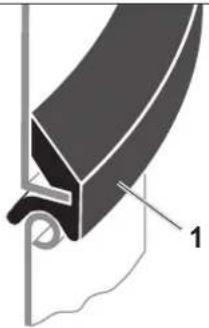
■ Make sure the gasket is in perfect condition and correctly positioned.
■ Place the container back in position and secure it again.
[ NOTE ]
After the cleaning session, leave the machine running for at least 60 seconds before turning it off. Avoid switching on/off too frequently.
Emptying of the liquid container
CAUTION!
Before proceeding with these operations, turn off the machine and remove the plug from the power socket. Check the machine filtration class.
Before emptying the container it is advisable to clean the filter (see "Cleaning the primary filter" paragraph).
■ Release the container with the lever and remove it, then remove the liquid stop device and empty it.
- Clean the machine as described in the “Maintenance, cleaning and decontamination” paragraph.
■ Wash the container with clean water if aggressive substances have been vacuumed.
■ Make sure the gasket is in perfect condition and correctly positioned.
■ Place the container back in position and secure it again.
[ NOTE ]
After the cleaning session, leave the machine running for at least 60 seconds before turning it off. Avoid switching on/off too frequently.
[ NOTE ]
The filter element will be wet after liquids have been vacuumed. A wet filter element can quickly become clogged if the machine is then used to vacuum dry substances. For this reason, make sure that the filter element is dry or replace it with another one before using the machine for dry materials.
Dust Bag
The machine can be equipped with dust collection bag. In this case, the machine must be equipped with optional accessories (depressor and grid). If the bag is not installed or is installed improperly, it could create health risks for people exposed.
Paper Bag and Safe Bag for dust collection
Figure 11
The machine can be equipped with dust collection bag. In this case, the machine must be equipped with a specific container and a cap on the side. If the bag is not properly installed, it could create health risks for people exposed.
[ NOTE ]
The safe bag system is suitable to collect toxic dust to ensure that the user does not come into contact with the product.
Longopac® bag for dust collection
Figure 12
The machine can be equipped with dust collection bag. In this case, the material is discharged by gravity when the vacuuming stops. The Longopac® bag can be cut, sealed or closed to the size required. If the bag is not properly installed, it could create health risks for people exposed.
Replacement of dust bags
CAUTION!
Before proceeding with these operations, turn off the machine and remove the plug from the power socket.
CAUTION!
■ These operations can only be carried out by trained and qualified personnel who must wear adequate clothing, in compliance with the laws in force.
■ Take care not to raise dust during this operation. Wear a P3 protective mask.
In case of hazardous and/or harmful dust, use only the bags recommended by the manufacturer (see "Recommended spare parts").
■ The bag must only be disposed of by qualified personnel and in compliance with the laws in force.
CAUTION!
Use only original Nilfisk bags.
CAUTION!
Only use bags suitable for the machine class you are using.
CAUTION!
Take care not to raise dust during this operation. Wear a P3 mask and other protective clothing plus protective gloves (DPI) suited to the hazardous nature of the dust collected, refer to the laws in force.
How to replace the Dust Bag
■ Close the inlet by using the relevant cap (if equipped).
■ Release the dust container.
■ Remove the dust bag and close it with a clamp, if necessary.
■ Place a new bag, taking care to wrap it around the outer wall of the dust container.
■ Set the dust container into the machine again.
How to replace the Paper Bag
Figure 11
■ Close the inlet by using the relevant cap (if equipped).
■ Release the dust container.
■ Remove the bag and close it with the relevant cap (1) as shown in the figure.
■ Insert a new bag, making sure the bag inlet is sealed.
■ Set the dust container into the machine again.
How to replace the Safe Bag
Figure 12
■ Remove and put the vacuum hose in a safe and dust-free place.
■ Close the inlet by using the relevant cap (if equipped).
■ Release the dust container.
■ Close the Safe Bag by pulling the "guillotine" seal (2).
■ Close the plastic bag hermetically using the relevant band (3).
■ Use the sticky tape (4) to close the bottom of the plastic bag.
■ Remove the relevant connection (5) of the bag from the inlet.
■ Insert a new safe bag, making sure the vacuum inlet is well connected to the bag attachment, to grant the sealing.
■ Wrap the plastic bag around the dust container external wall.
■ Place the dust container in the vacuum cleaner.
How to change the Longopac®
Figure 12
■ Turn the bag full of dust (1) on itself to obtain a section of coiled bags to be tightened with two clamps (2).
■ Place the two clamps at a distance of 50 mm between them, then with a pair of scissors cut between the two clamps.
■ Remove the bag full of dust (1) and place the new section of Longopac® (3).
Main and absolute filter disassembly and replacement

When the machine is used to vacuum hazardous substances, the filters become contaminated, therefore:
■ Work with care and avoid spilling the vacuumed dust and/or material;
■ place the disassembled and/or replaced filter in a sealed plastic bag;
■ close the bag hermetically;
■ dispose of the filter in accordance with the laws in force.

GB
Filter replacement is a serious matter. The filter must be replaced with one of identical characteristics, filtering surface and category.
Otherwise the machine will not operate correctly. Before proceeding with these operations, turn off the machine and remove the plug from the power socket.

Before performing these operations, clean the filter as described in the “Maintenance, cleaning and decontamination” paragraph.
Take care not to raise dust during this operation. Wear a P3 mask and other protective clothing plus protective gloves (DPI) suited to the hazardous nature of the dust collected, refer to the laws in force.

Reassemble with care to avoid trapping your hands between the vacuum unit and the container. Use gloves that provide protection against mechanical risks (EN 388) with a level of protection CAT. II.

Do not use the Class H filter again after having removed it from the machine.
Primary filter replacement, for machines equipped with PullClean cleaning system
Figure 13
■ Insert the deck.
■ Tighten the closing band (2).
■ Use the band latches (1) to remove the lid (2) together with the primary star filter.
■ Remove the old star filter from the cage.
■ Fit the new star filter.
■ Install the lid and the primary star filter in the reverse order of removal.
■ Dispose of the old star filter according to the laws in force.
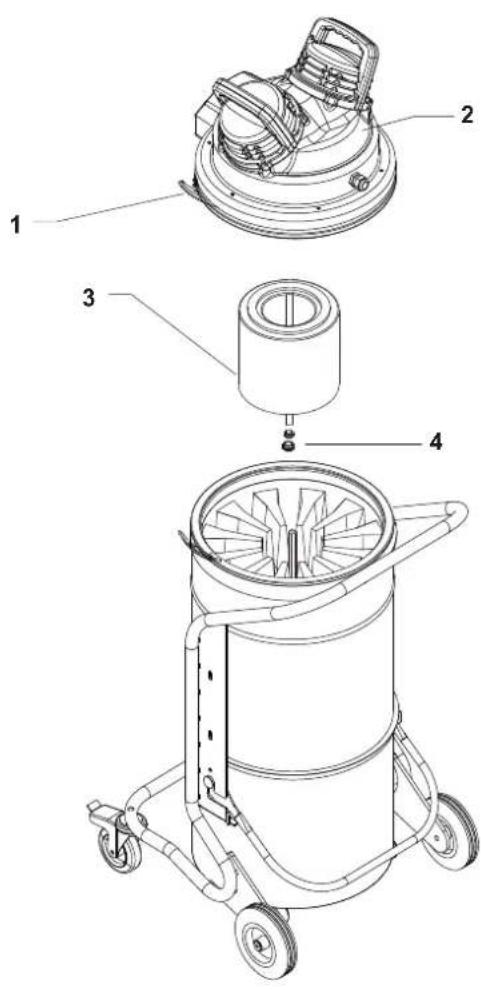
Upstream absolute filter replacement
Figure 14
■ Stop the vacuum cleaner.
■ Remove the absolute filter (3) by unscrewing the nut (4).
■ Cover the absolute filter (3) with a plastic bag, close the plastic bag hermetically and dispose of the filter in accordance with the laws in force.
■ Insert a new absolute filter (3) with the same filtering characteristics as the removed one.
■ Lock the absolute filter with the nut (4).
■ Close the cover hermetically by means of the band latches (1).
Installation, cleaning and replacement of the separator (optional)
Figure 15
[ NOTE ]
Instructions describing how to fit the optional kits and the relative operation and maintenance manuals are supplied together with the optional kits.
![NILFISK VHS110 Z22 - [ NOTE ] - 1](/content/2026/04/639984/images/6bb080ac5b96bada11ec874f2f7d4c0353cdf526a678171f1e2ce625150b2a66.jpg)
The projection screw (5) positioned on the filter holder ring supplied with the kit must be removed; failure to do this could cause the filter to break.
[ NOTE ]
If there is only a dust deposit on the separator (4) allow the dust to drop through the central hole.
The separator (4) should first be disassembled in order to be perfectly cleaned:
■ Use the band latches (1) to remove the lid (2) together with the primary star filter.
■ Unscrew the two screws (3) and remove it from the container.
■ Replace the part if it is excessively worn.
■ Reinstall the separator (4).
■ Lock it and fix it by means of the two screws (3).
■ Install the lid and the primary star filter in the reverse order of removal.
Immersion Separator
Figure 16
The immersion separator is designed to be used for St3 explosion class dust, that is to say dust with value of Kst > 300 bar m/s (ISO 6184/1 – IFA classification: http://staubex.ifa.dguv.de/?lang=e), and/or dust with an ignition energy lower than 1 mJ.
CAUTION!
The machine must be 100% suitable for the collection of combustible dust.
Nilfisk recommends an EX-certified model in accordance with Standard 2014/34/EU.
The machine must be equipped with an approved inertization system for use with water or oil to prevent the formation and reactivity of combustible gases.
CAUTION!
In addition to the above and for all applications involving MIE<1mJ, in addition to the use of the immersion separator, any national restrictions may be required by local regulations. Check with the appointed authorities. In addition, specific countermeasures must be taken on the machine or in the production process to be able to safely vacuum combustible dust.
Nilfisk customer service can suggest possible measures to increase safety when operating the machine.
Use
The immersion separator comprises two baskets: one on the bottom to collect the vacuumed dust, and one on the top to keep the coalescent filter in place.
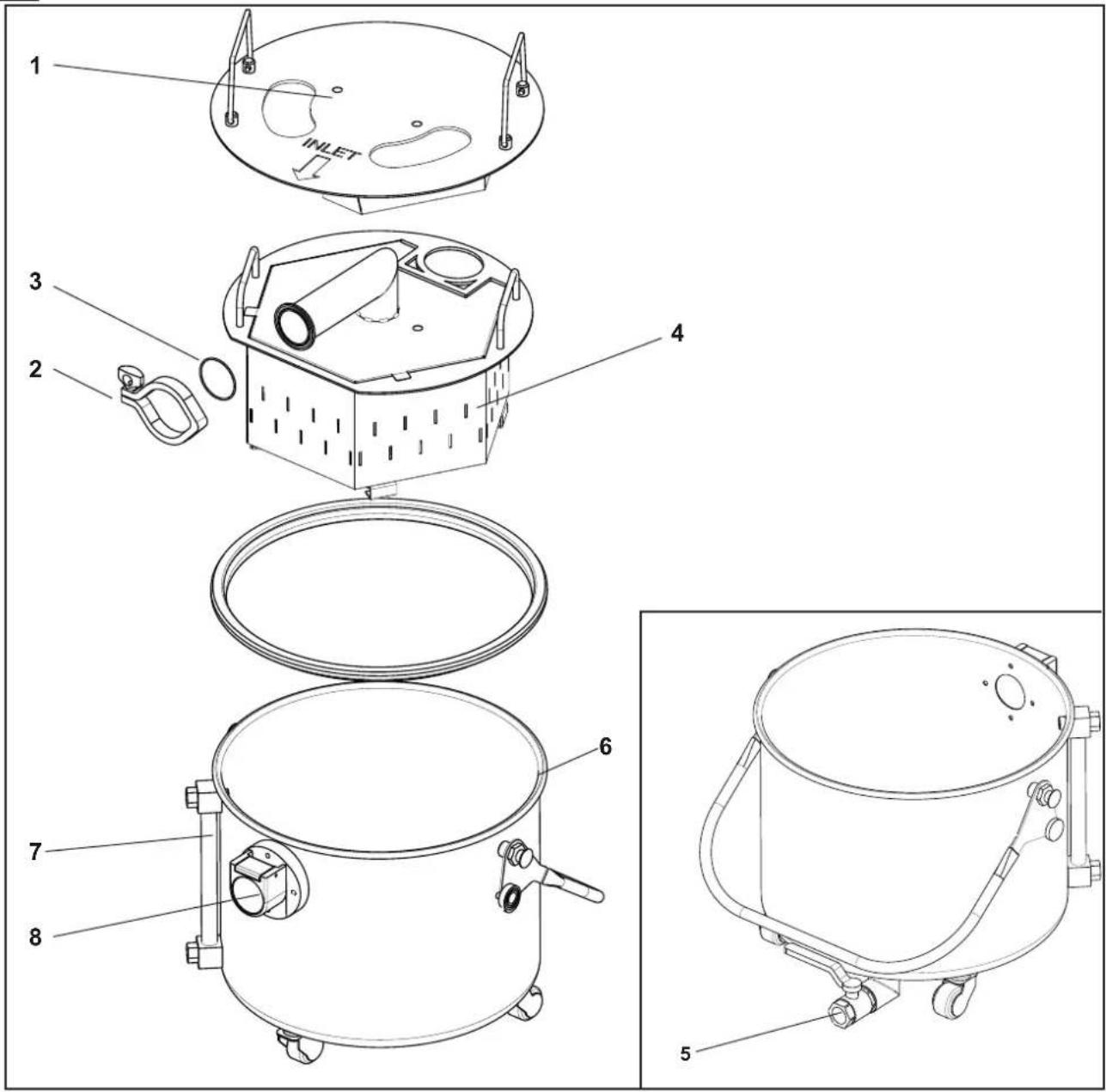
■ Remove the upper basket (1).
■ Unscrew the closing band (2), remove it and remove the clamp gasket (3).
■ Remove the collection basket (4) and make sure the exhaust valve (5) is closed.
■ Pour mineral oil (20 litres into the 460mm-diameter container or 11 litres into the 400mm-diameter container, use for example Mobil Velocite Oil no. 6) into the separator (6) and check that the level raises up to the min. mark on the level indicator (7).
■ Insert the collection basket (4) into the separator (6).
■ Restore the connection between basket (4) and separator (6), insert the clamp gasket (3) and place back the closing band (2).
- Put the filter basket back in place onto the internal flange of the separator.
■ Insert the separator under the filter chamber.
■ Connect the vacuum hose to the inlet (8) of the separator.
■ Turn on the machine and vacuum the dust.
■ Stop vacuuming dust when the oil level reaches the max. mark (about 6L of vacuumed dust with the 460mm-diameter container).
[ NOTE ]
The version equipped with a 400mm diameter collection container is equipped with an automatic stop device. Once the maximum level of collected material has been reached (approximately 4-5 L), the machine will stop vacuuming and the process must be interrupted.
Emptying the container
■ Switch off the machine and disconnect the vacuum hose.
■ Remove the separator and move the container to a suitable area for disposal/recovery of the material.
■ Place the separator on a workbench in a lifted position to allow easy emptying of the liquid.
■ Place a container near the drain valve (5).
■ Open the drain valve (5) and wait until the separator has fully emptied of the inerting liquid.
[ NOTE ]
It is advisable to interrupt the draining operation once the liquid has become muddy.
[NOTE]
It is advisable to install an additional filter on the container in order to further filter the inerting liquid to allow its correct disposal.
■ Remove the upper basket (1), unscrew and remove the clamp (2) and its gasket (3).
■ Using the lifting strap provided, slowly lift the material collection basket (4).
■ Wait a few seconds to allow more fluid liquid to drain through the slots at the base of the basket (4). If necessary, tilt it slightly.
■ Remove the top cover of the basket and, if necessary, the slush filter, if installed.
■ Wash all contaminated parts, taking care to rinse thoroughly with cold water to remove all traces of vacuumed material / inerting liquid.
■ Assemble the components in the reverse order of disassembly; before reassembling, thoroughly dry all the parts that were washed.
■ Restore the container and attach it to the machine before using it again.
[ NOTE ]
It is advisable to repeat this maintenance operation at regular and not too long intervals, even if small quantities of products are vacuumed and even if the maximum level of the container is not reached.
Too long intervals could create sedimentation at the base of the basket, which would require longer times for the maintenance operations described above.
![NILFISK VHS110 Z22 - [ NOTE ] - 1](/content/2026/04/639984/images/7b92dd9ed268dbac169e60842bcce20cebcc295b91d3d6c65708b04696e4a6bc.jpg)
CAUTION!

The maximum quantity of sludge inside the container bin shall not exceed the maximum weight of 9 kg (20 lb). This value depends on the type of material vacuumed. When this value is reached immediately empty the container.
How to use the slush filter
The system can also be used with a proper 300 mm-slush filter, to be installed inside the container. The filter separates and collects the slimy part, thus supplying a first level filtration.
The oil residue in the container can also be filtered with another 300 or 100 mm-slush filter, in order to make it reusable.
It is suggested to use this procedure for several working cycles (3/4 cycles approximately) and to fully change the oil when it loses its fluidity (high viscosity).
Inerting liquid for immersion separator kit
The system is designed to be used with water or oil, the characteristics of the inerting liquid must be adherent to the type of material used and the user must know and consider any reactions that they may have once they have come into contact with the liquid present in the container.
To vacuum metallic powders that could have particular reactions and create dangerous vapours or gases, such as hydrogen, (following the instructions in NFPA484) inerting liquids with the following specifications are recommended:
Mineral oil
Flash point > 100°C
Viscosity at 40°C ≤10 ctS
Density > 0.80 kg/l
Oils with the same specifications (e.g. „Mobil Velocite No.6“) can be found locally.

CAUTION!

Oil is combustible and should be handled in accordance with local regulations.

CAUTION!

The level of liquid in the collection container may have different levels of evaporation during use. Be sure to use the device only when the minimum level is guaranteed.

CAUTION!

Hydrogen is a flammable gas that is generated by the contact between metallic dust and water. Vacuuming these dusts, therefore, presents a risk of fire and explosion, for this reason the intervention of qualified personnel is required.
Tightness inspection
Hoses check
Figure 18
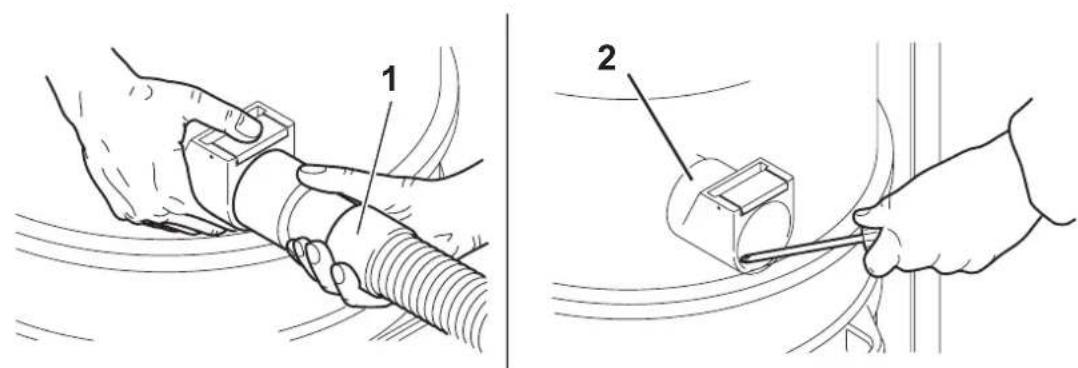
Make sure that connecting hoses are in a good condition and correctly fixed.
If the hoses are damaged, broken or badly connected to the unions, they must be replaced.
When sticky materials are treated, check for possible clogging along the hose, in the inlet and on the baffle plate inside the filtering chamber.
To clean, scrape the inlet from the outside to remove deposits.
Filtering chamber gasket check for machines equipped with dust container
Figure 18
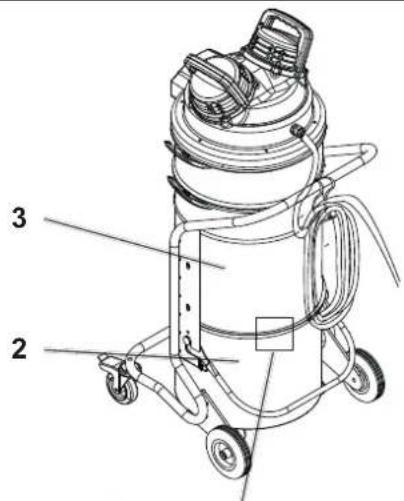
If the gasket between the container and the filtering chamber fails to guarantee a proper sealing:
■ Loosen the four screws that lock the filtering chamber against the machine structure.
- Allow the filtering chamber to go down until the sealing position is reached, and then tighten the screws.
If an optimal seal is not yet obtained or if there are tears, cracks, etc., the gasket must be replaced.
Filtering chamber gasket check for machines equipped with Longopac® system
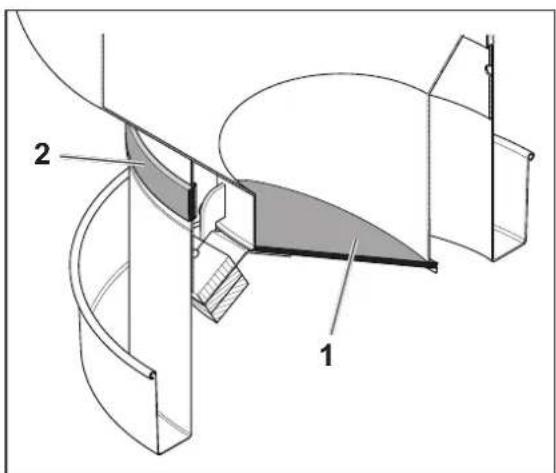
Figure 19
Ensure that the Longopac® bag is tight with the gasket.
Also check the tightness of the gasket positioned on the discharge clapet.
The gasket must be replaced if it is torn, cut, etc...
Disposal
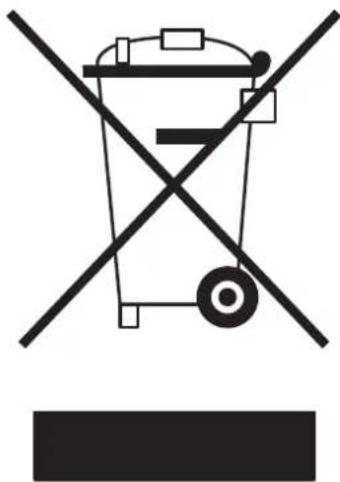
Figure 20
The crossed-out wheeled bin symbol on the equipment indicates that used electrical and electronic equipment must be collected and disposed of separately from household waste. The correct disposal of the equipment will help prevent potential negative consequences for the environment and human health.
Electrical and electronic household equipment must be disposed of at the separate collection points in the residence area. Please note that commercial electrical and electronic equipment should be disposed of separately from the municipal waste stream. We will be pleased to inform you about suitable disposal options.
Wiring diagrams
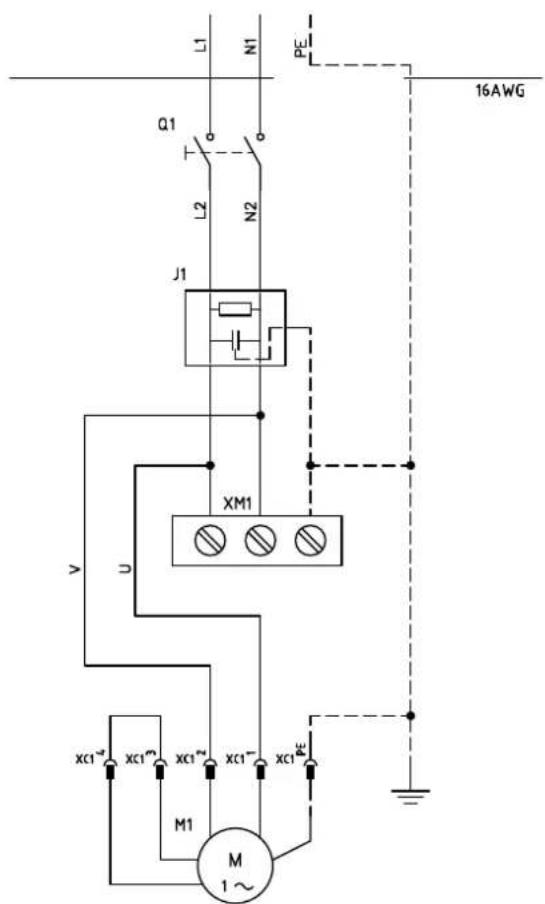
VHS110 Z22 V230
Figure 21
| Name | Code Description | Q.ty | |
| Q1 40 | 83901742 Switch 2 pole | 16A 1 | |
| J1 40 | 83901743 Rectifier filter |
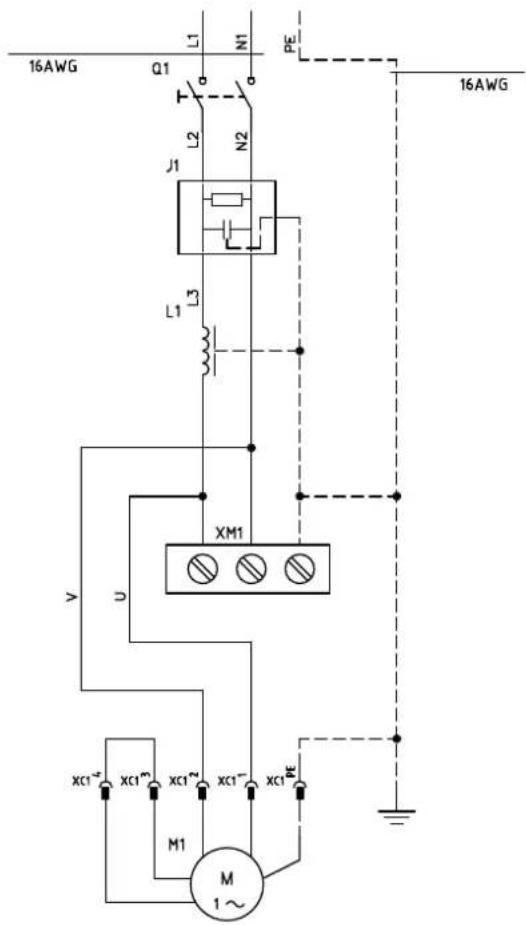
VHS110 Z22 V110
Figure 22
| Name | Code Description | Q.ty | |
| Q1 40 | 83901742 Switch 2 pole | 16A 1 | |
| J1 40 | 83901743 Rectifier filter | ||
| L1 40 | 83901740 Reactor 16A 1 |
GB
Recommended spare parts
The following is a list of spare parts that should be kept ready at hand in order to speed up maintenance operations.
Refer to the manufacturer's spare parts catalogue when ordering spare parts. Please contact the manufacturer's sales network when seeking spare parts for special machine variants or options.
| Name | Model VHS110 Z22 | ||
| V230 V110 | |||
 | Star filter 4081701208 | ||
 | Filter ring gasket Z8 17025 | ||
 | Filter chamber gasket 4081100183 | ||
 | Filter clamp 4084001291 | ||
 | Replacement upstream absolute (HEPA) filter Z8 17262 | ||
 | Brushless motor 4085300390 4085300392 | ||
 | Safe Bag Z8 40874 | ||
GB
Troubleshooting
| Problem Cause Remedy | ||
| The vacuum cleaner suddenly stops | Clogged primary filter Shake the filter. Replace it if necessary | |
| Clogged vacuum hose Check the vacuum hose and clean it. | ||
| Circuit breaker activation | Check the setting.Check the motor electrical input. Contact an authorised after-sales service centre if necessary. | |
| Thermal protector switch opening | Rotate the main switch to the OFF position and wait for a few minutes, in order to let the motor cool down, before than trying to turn the power on back. If the motor does not restart, please wait longer. If the issue persists, contact the manufacturer. | |
| Dust leaks from the vacuum cleaner | The filter is torn Replace it with another of identical type. | |
| Inadequate filter | Replace it with another of a suitable category and check. | |
| Electrostatic current on the vacuum cleaner | Missing or inefficient grounding | Check all ground connections. Especially check the connection at the vacuum inlet.See test for ground continuity on page 2 |
GB
GB
- Check that the connection of the earth wire is well executed
both in the socket and plug
Check with the aid of an electrician tester the grounding continuity between
the electric board and the last accessory.
- Do not open if an explosive atmosphere could be present.
- Do not open whilst voltage is applied.
14
15
16
17
18
natural_image
Pure diagram of a curved mechanical component with no text or symbols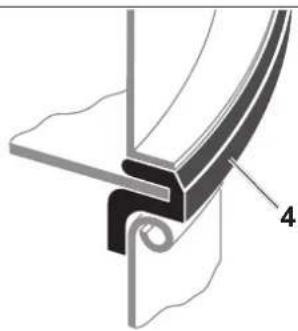
natural_image
Technical diagram of a mechanical joint or bracket assembly (no text or symbols visible)19
20
natural_image
Symbolic illustration of a trash bin crossed with a diagonal line, no text or labels present21
22
23

Nilfisk®
CEM 11/2020
Dichiarazione "CE" di conformità - Allegato il 1A 2006/42/EC
Le Declaration of Conformity - Enclosure || 14 - 2006/12/15
Ex - Conformal letterslarue - Achane || 14 - 2006/12/15
Déclaration de Conformité Co - Annexe 1 IA - 2006/42/EC
Déclaration de Conformité Co - Annexe II IA - 2006/42/EC
Declaración Se Corrómicales Ce - A 400 il 1A - 2006;42/EC
Problizení n Shocié 5e Smérérem, Larenského Sociolézeni
Prchlasenie o Zheda so Smornicami Europskoho Spolocnostva - Priloha II 1A. 2005/42/EC
Izjava o Ustreznosti s Smeričnami Evroške Skupnosti - Ohsje 114 - 2006/02/LC
Jinkljanja izra Ovresnikomstelnju Fe - Bil. com 114 - 2005/02/EC
Eu Konfamilbetserklaaring - Annass II 1A - 2006/42/EC.
Es Ateliz: Bas Certificates - Aptvarie II 1A - 2005/42/EC
Eukotavura Dohartricope - Kora cor. II 31 - 2005/42/F
Eu Vaatimustenmukalsuusvakuurtus - Aetus 14 - 2006/42/EC
Antikima Luropos Bendrijas Lt Direktavoms Declaradja: Liogojums 114 2006/42/LC
Dekaracia 7gozinn'Sci Fc - 7a2 Acznis I 14 - 2006/42/FC
Dedaración de Conformidade Ec - Anexo II 1A - 200G/42/EC
Eg-Mellmar-Halbors/Maring - Slaga II 14 - Acub/42/EC
Ek Szolgswössze, Helatkorat, Molósket II 14, 2006/42/EC
Lf Overensstemmelseserkæring Ufag II 14 2005/42/CC
Фільяєю місбівляє; Е. - Первоєм 11А - 2006/12/ЕС
Легозання о соответствии - призначення 11А - 2006/12/ЕС
AT Uygunuk Beyara - Srikte verl. II 1A - 2006/42/EC
Nilfisk S.p.A.
We declare under our main responsibility that the machine
A) Endager hermed under built answer at masking.
Aplodnom uz musu stolidku, ka mažina
Ve kinnitame ja kannisme enda vast, busel, et main Vokukamme omalla vastu. Il amme esta kons
Mes prizipojam, sesiune et minus piso albinis, se
[Illegible due to severe distortion and noise]
7018.
natural_image
Blank rectangular frame with rounded corners (no text or symbols)Nilfisk Sp.A. Director Product Portfolio