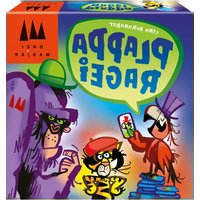
Plapparagei - Board game Schmidt - Free user manual and instructions
Find the device manual for free Plapparagei Schmidt in PDF.



| Product type | Board game |
| Brand | Schmidt |
| Model | Plapparagei |
| Number of players | 2 to 5 |
| Recommended age | From 8 years |
| Estimated game duration | 20 to 30 minutes |
| Box contents | 10 papo-color cards (35 parrots, 25 gorillas, 25 tigers), 5 color tokens (blue, yellow, green, purple, red) |
| Objective of the game | Be the first player to get rid of all your cards |
| Setup | Shuffle all cards, deal an equal number to each player, place 2 color tokens in the middle (forbidden colors), put the rest in the box |
| Main rule | Announce the color of the animal on the card played, unless that color is forbidden (then announce the color of the hat) |
| Papo-color card | Announce "Papo-" followed by a color that is neither forbidden nor present on the revealed card, then exchange one forbidden token with the announced one |
| Speech bubble rule | If a parrot with a bubble is played, repeat exactly the last announcement (unless it's a papoquet) |
| Two identical animals | Announce the species (parrot, gorilla, or tiger) instead of the color |
| Papoquet | If two parrots with at least one having a bubble, all players shout "Papoquet"; the slowest takes the played cards |
| Errors | Hesitation >3s, stuttering, wrong announcement: take all played cards under your pile |
| End of the game | The first player with no cards wins |
| Maintenance and cleaning | Store in the box away from humidity and dust. Clean cards with a dry cloth if necessary. |
| Safety | Small parts (cards, tokens). Keep out of reach of children under 3 years. |
| Spare parts and repairability | Not applicable (non-electric game). In case of loss, contact the manufacturer for replacement parts. |
Frequently Asked Questions - Plapparagei Schmidt
User questions about Plapparagei Schmidt
0 question about this device. Answer the ones you know or ask your own.
Ask a new question about this device
Download the instructions for your Board game in PDF format for free! Find your manual Plapparagei - Schmidt and take your electronic device back in hand. On this page are published all the documents necessary for the use of your device. Plapparagei by Schmidt.
USER MANUAL Plapparagei Schmidt
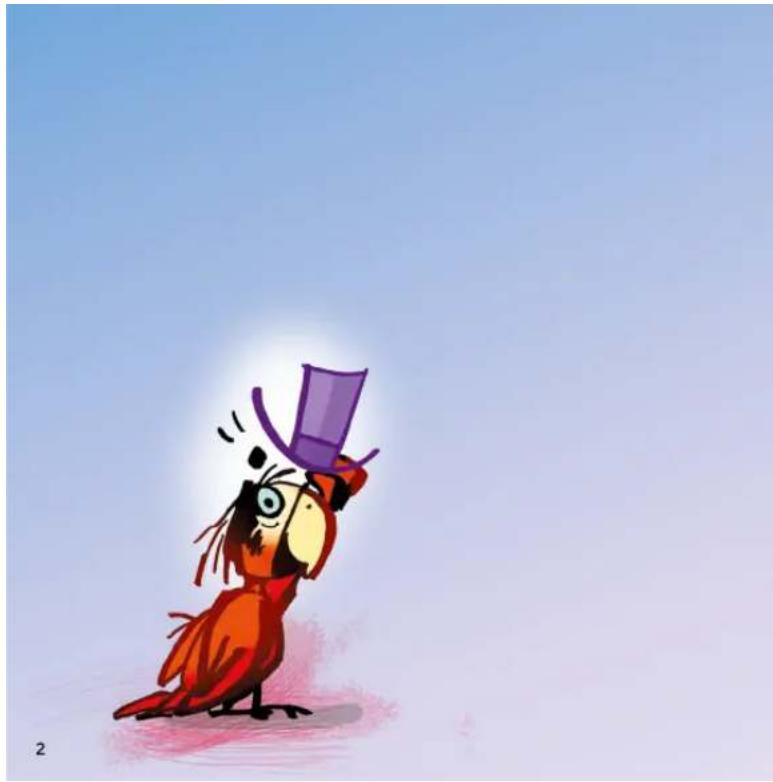
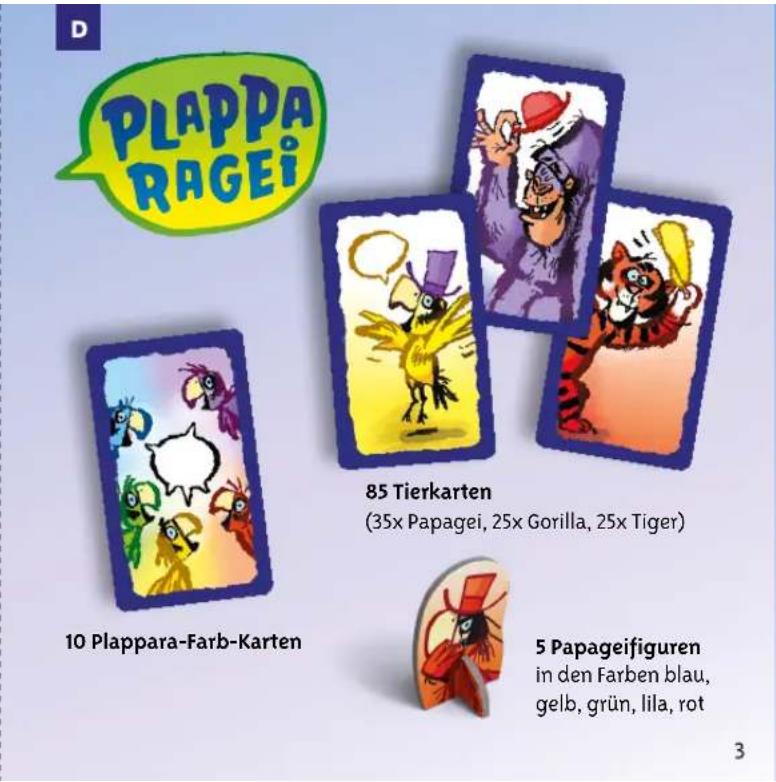
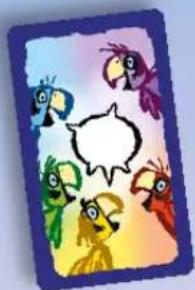
10 parrot colour cards
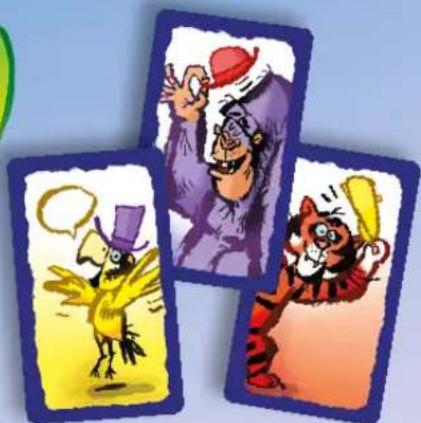
85 animal cards
(35x parrots, 25x gorillas, 25x tigers) 5 parrot pawns in the colours blue, yellow, green, purple, red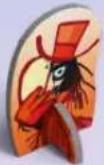
Preparing for the game
Shuffle all of the animal and parrot colour cards together. Deal out all cards equally to the players. Put surplus cards back into the box. Every player places their pile face down in front of them. Place 2 of the 5 parrot pawns next to each other in the middle of the table. These two colours are forbidden, but more about that later. The other three parrot pawns are left in the box. Also place the box close at hand in the middle of the table. The game is played clockwise. The youngest player begins.
Aim of the game
The aim of the game is to be the first to get rid of all of one's cards. The best way to do this is to make as few mistakes as possible with the tongue twisters. Anyone who says the wrong thing or takes too long to say it must take the cards from the centre of the table.
Playing the game
The player whose turn it is turns over the top card of their pile, places it in the middle of the table and says something without hesitating. Then it is the next player's turn and they do the same.
Important: you always form two discard piles regardless of the number of players. You discard alternately onto both piles.
What do you have to say?
1. Colour of the animal
Normally, if none of the other rules apply, you have to say the colour of the animal on the card you have just discarded.
Example: you play the right-hand card and have to say "yellow".
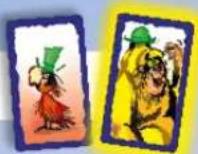
2. Animal colour is forbidden
A forbidden colour (parrot pawn is placed in the middle of the table) may not be called. If the animal on the card that you have played has the same colour as one of the parrot pawns placed in the middle of the table, you have to say the colour of the hat. You must not say the colour of the animal.
Example: you play the right-hand card. The green parrot pawn is in the middle of the table and therefore currently forbidden. So, you have to say the colour of the hat, i.e. "red".
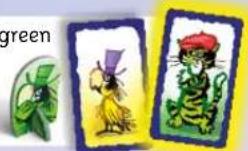
Attention: a forbidden colour can only change when a new Parrattle colour card is turned over (see section 4 Parrattle colour card).
3. Animal and hat colour are forbidden
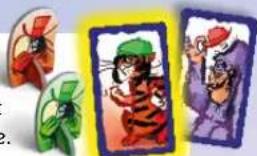
If both the animal and the hat colour are forbidden, you have to cluck your tongue.
Example: you play the left-hand card. Red and green are forbidden, therefore you may call neither the animal nor the hat colour. You have to cluck your tongue once.
4. Parrattle colour card
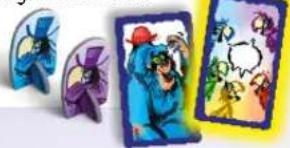
If you turn over a Parrattle colour card, you have to say "parra-" and a colour which is currently neither forbidden nor is shown on the open card of the pile. Then you swap one of the parrot pawns in the middle of the table with the pawn of the colour which you have just said. Now another two forbidden colours are being shown.
Example: you play the right-hand Parrattle colour card. A blue animal with a red hat is face up. Blue and purple are forbidden. Now you have to say parrayellow or parragreen because
these colours are neither forbidden nor shown. You decide on parrayellow and swap the blue pawn for the yellow one.
5. Speech bubble rule
If you turn over a card which shows a speech bubble next to a parrot, you have to say exactly the same as the player before you because a parrot copycats everything that is said.
Attention: the speech bubble rule overrules all other rules. See the special case "Parrattle" in section 6.
Example: you play the left-hand card. The parrot has a speech bubble, so you prattle what the player before you said. The player before you said "yellow" according to the normal rules, so, you have to say "yellow" too.
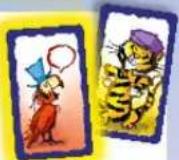
Example: you play the right-hand card, a parrot with a speech bubble. The player before you said "parrared" so you also have to say "parrared".
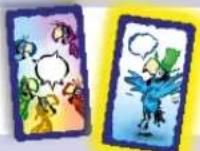
Special case: if you start a round with a parrot with a speech bubble, there is nothing to prattle. In this case, you have to say what has to be said according to the normal rules without a speech bubble.
Example: you play the right-hand card. You have begun a new round and have nothing to prattle. You say "blue" according to the normal rules.
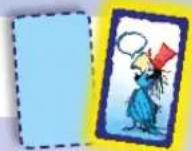
6. Two identical animals
Tip for your first game
When you play Parrattle for the first time, leave this "two identical animals" rule out until all the other rules are working smoothly.
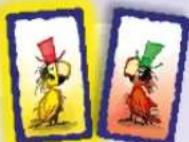
If you turn over a card which shows the same animal as on the pile next to it, you have to name the animal. The colour of the animal and the hat are irrelevant in this case.
Example: you play the left-hand card. Since both cards show a parrot, you must say "parrot".
Special case "Parrattle"
If two parrots are lying face up of which at least one has a speech bubble, this is a parrattle. It makes no difference whether you play the parrot with speech bubble, it is already face up on the table or both parrots have speech bubbles. A parrattle means that you do not prattle what the player before you said but all players are now addressed.
All players must say parrattle as quickly as possible. The slowest must take all the cards on the table and place them underneath their pile. They then start the next round.
Example: you play the left-hand card. There are now two parrots of which at least one has a speech bubble. Therefore, all players must now call out parrattle. The slowest player takes all the cards lying on the table and begins the next round.
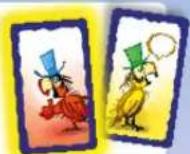
If several players were equally slow, the pile is divided up between the players. The player sitting closest to the player who started begins the next round.
Mistakes
When you say something wrong, hesitate for more than 3 seconds, stutter or say eh, mmmh or something similar, you must pick up all the cards on the table and place them under your pile. You begin a new round by forming the first discard pile. The forbidden colours do not change.
End of the game and the winner
The first player to get rid of all their cards ends the game and wins.
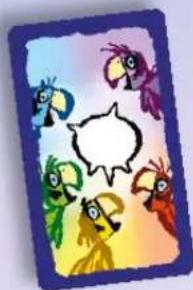
85 animal cards
85 animal cards
(35x parrot, 25x gorilla, 25x tiger)
Copyright:
DREI MAGIER
Author:
Lena Burkhardt

8+

2-6

20min


- PREPARING FOR THE GAME
- AIM OF THE GAME
- PLAYING THE GAME
- WHAT DO YOU HAVE TO SAY
- COLOUR OF THE ANIMAL
- ANIMAL COLOUR IS FORBIDDEN
- ANIMAL AND HAT COLOUR ARE FORBIDDEN
- PARRATTLE COLOUR CARD
- SPEECH BUBBLE RULE
- TWO IDENTICAL ANIMALS
- SPECIAL CASE "PARRATTLE
- MISTAKES
- END OF THE GAME AND THE WINNER
- DREI MAGIER
Brand : Schmidt
Model : Plapparagei
Category : Board game